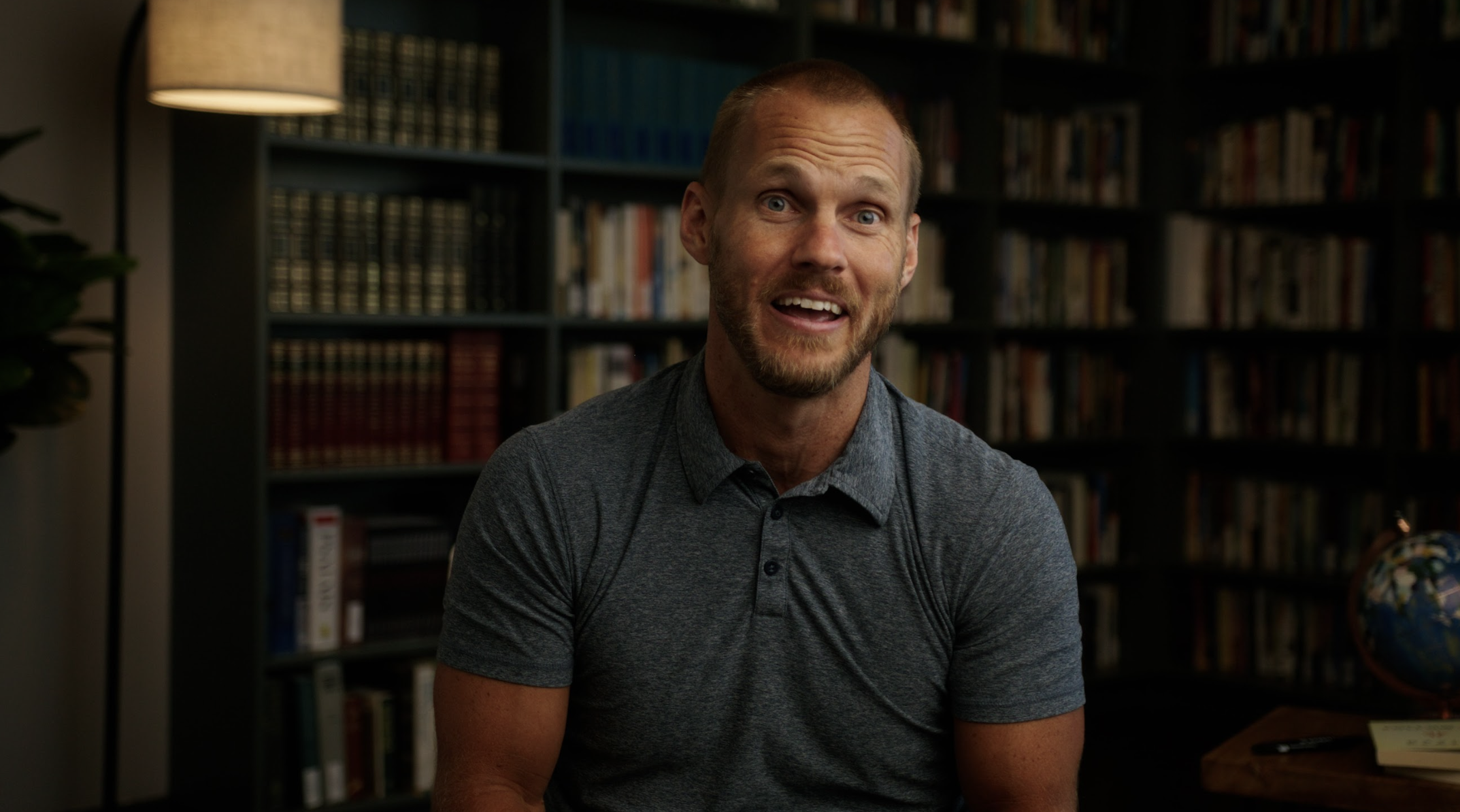
Episode 273 – From Phone Cases to Bullet Proof Vests with Josh Richardson

 Who protects the people who are meant to protect us?

First responders daily risk their lives for the sake of others and the people who put on those uniforms need others who will help keep them safe as they go about their  jobs.

That’s why Josh Richardson started Angel Armor with his brother JC. The two discovered something that many of us just don’t think about. Like any product in the modern world, Protective gear needs to adapt to what customers want.

The industry needs innovation and fresh ideas so that these frontline workers can do their jobs safely.  And that’s what angel armor is all about.  Using their innovative and entrepreneurial mindsets to create products that protect the protectors.

As you’ll hear in this episode, the two brothers grew up in an entrepreneurial home. Their parents started a different kind of protective equipment company: the brand Otterbox, which has become known to smartphone users around the world for their waterproof cases.

Josh joins us today to talk about his rollercoaster journey from growing up in a home that barely made it by to seeing the growth and success of his parents’ company. He’ll talk about how his own success with OtterBox took him down a dark path away from his faith and how the relentless pursuit of Jesus called him back. And he’ll share what all these experiences have taught him about running his business today.

Helpful Links:

https://plusnothing.com/

https://angelarmor.com/

Podcast Survey


All opinions expressed on this podcast, including the team and guests, are solely their opinions. Host and guests may maintain positions in the companies and securities discussed. This podcast is for informational purposes only and should not be relied upon as specific advice for any individual or organization.


Episode Transcript


Transcription is done by an AI software. While technology is an incredible tool to automate this process, there will be misspellings and typos that might accompany it. Please keep that in mind as you work through it.

Joseph Honescko: Who protects the people who are meant to protect us. First responders daily risked their lives for the sake of others. And the people who put on those uniforms need others who will help keep them safe as they go about their jobs. That’s why Josh Richardson started Angel Armor with his brother JC. The two discovered something that many of us just don’t think about. Like any product in the modern world. Protective gear, like vehicle armor or bulletproof vests. Needs to adapt to what customers want. The industry needs innovation and fresh ideas so that these frontline workers can do their job safely. And that’s what Angel Armor is all about. Using their innovative and entrepreneurial mindsets to protect the protectors. As you’ll hear in this episode, the two brothers grew up in an entrepreneurial home. Their parents started a different kind of protective equipment company, the brand Otterbox that has become known to smartphone users around the world for their waterproof cases. Josh joins us today to talk about his rollercoaster journey from growing up in a home that barely made it by to seeing the growth and success of his parents company. He’ll talk about how his own success with Otterbox took him down a dark path away from his faith and how the relentless pursuit of Jesus called him back. And he’ll share what all these experiences have taught him about running his business today. You’re listening to the Faith Driven Entrepreneur podcast. Let’s get into it.

Josh Richardson: So growing up in an entrepreneurial family, you know, my dad was a really struggling entrepreneur as I was growing up. And it was really neat because the church was actually bringing our family groceries and diapers just to make it by. So we were in a really unique position there where my dad was the struggling entrepreneur, really trying to make it work. And he was an injection molder, a toolmaker by trade. So we had these huge injection molding machines in our garage, and he was doing all this manufacturing work in our garage at our house. And I grew up always hearing about the struggles of building and running your own business, growing your business, and then it kind of shrinking back and, you know, depending on the fluctuations in the market. So it’s just a way that I was raised. And then in 1996, my dad said, Hey, we’re going to start our own company, building our own little plastic boxes, and we’re going to name it Otterbox. And so that was kind of the kick off into our next kind of phase, if you will, as a family, right where it’s like, hey, we’re going to start and build this business. And it was a family business. I remember my brother and I putting postage stamps on little mailers and sending those off and getting the word out to different mom and pop businesses about our little waterproof case.

Rusty Rueff: So I got to ask you, why did you call it Otter?

Josh Richardson: It’s so funny. So originally in the earlier days, when it was just the waterproof case, everybody knows the big pelican cases right. You can put, like your scuba gear in or your camera gear or your film gear. And so Pelican only had these giant cases. And so we were going to develop a small line of cases for like personal goods. And so it was kind of in that line, Hey, what’s like an animal kind of outdoors, fun plays around. And my mom actually, she’s super creative and amazing, so she’s like, the otter is like super cute, fun and has the most waterproof fur, right? So it’s waterproof, super fun, super cute. So let’s do Otter Otterbox, right? And it actually ended up being such a blessing because then go into the mobile protection space in the consumer goods space. It’s such a unique, like random name that it’s really recognizable. Right? So it was interesting when the PalmPilot first came out, the PalmPilot was like the very first, I guess you could call it a smartphone where you could hold it in your hand and have a little touch screen. And so that was really the first jump that we had in the technology. And so we had this little waterproof box, the government using the Palm Pilot. And they actually approached us because they were storing the PalmPilot in the waterproof case. They said, Hey, is there any way that we could use the Palm Pilot through the case? And so that’s when we began to see as a business. My dad and mom had the vision, Hey, this technology sector, this thing could really have legs. So we began to pivot into technology right shortly after then. And this thing called the BlackBerry came out and we heard about this guy named Steve, and he was going to make this thing called an iPod. Oh, whoa, Let’s do a case for the iPod. And then now he’s going to combine the iPod and a phone to make this thing called an iPhone. Right. And so it was a huge blessing in God’s timing in his favor for us to be perfectly positioned, in this case business with a background in injection molding and tooling for us to really catch this wave of technology. And really the rest is history. And there’s a lot in between there, but I’ll save that for a little bit later. So that’s kind of my background and grew up in the business, right? I mean, I was doing sales for Otterbox as a young kid. I was in the manufacturing floor and so was my brother. I mean, it’s a family business, right? It started in our garage.

Rusty Rueff: So you’re ten years old and dad’s an entrepreneur and he’s got his business. He’s doing that. What lessons were you picking up about how to be your own entrepreneur later in life?

Josh Richardson: One key thing that our family has always put into practice in that my mom and dad always preached about is people make the business right. So it’s all about the people and what type of people are we going to bring on and what type of people we’re going to be representing and running and growing the business. So it’s all about the people how are we treating, our people, what type of individuals are working for the business? And that’s been a key staple for us, right? We want people who are humble and hungry, willing to roll up their sleeves, willing to get after it and really get the work done to be sold out for the mission.

Rusty Rueff: So tell me about your own personal journey to decide that you were going to walk in the way of your own father and your own family, and then at some point you made your own decision to say that that’s going to be my life.

Josh Richardson: Man, it’s pretty crazy. So I’m going to give you a quick tidbit of my testimony. So I was saved in Promise Keepers in 1996. And my uncle, my dad’s brother was actually in leadership in Promise Keepers. So we got invited there. And it was just this incredible experience where I got my first encounter with the Holy Spirit and Jesus, where I’m like, Whoa, I’m all in. Shortly after that, my parents saved all their pennies. We were still really struggling financially, and they decided to put me into a Christian school. This Christian school actually kind of school church type of thing. They ended up really physically abusing me until I threw the baby out with the bath water. I’m like, If these people are about Jesus and these people are about God, like I’m out. Like many entrepreneurs that are listening to this and yourself, like I’m 100% in 100% out kind of guy. Like, that’s just how the Lord wired me. And so I totally rejected the faith. I was like, I’m out. And I started living a super crazy life of sin. So after high school took an offshoot of Otterbox called Cigar Caddy, took that business, took it outside of our founding an investor. We grew that off for three and a half years and sold that business. I had a successful exit there and then went back into otter and built one of our most profitable channels. Still today that still exists build out about a team of 25 people to travel and domestically all throughout the United States. And it was at that time I was still living a crazy life of sin. I actually had the opportunity moved to Hong Kong to start our Asia-Pacific office. And with the opportunity, I’m like, This is a perfect opportunity to run from all of my problems that I have just been building and building in my life through living this crazy life of sin. Right before I went to Hong Kong, I was actually invited to the National Prayer Breakfast in Washington, D.C. and a gentleman there who’s actually one of the founders of the prayer breakfast handed me a little gospel harmony, and it said The life of Jesus on it. And I knew in my spirit, Right, you better keep that. That’s pretty important. Josh, You better hang on to that. So I put it in my back pocket and shortly thereafter moved to Asia. And man I was living a crazy life of sin. And one thing that was kind of an issue for me is I was very successful professionally, but my personal life and my life with Jesus was a disaster, right? So it was just kind of snowballing. Super long story short, throughout that time period of me being in Asia for three and a half years, the Holy Spirit was consistently pursuing me, consistently pursuing me, pinging my heart, telling me, read a page that little gospel harmony, so I read some scripture, and then I go back to living the life of sin, read some scripture, go back to living a life of sin. And throughout this journey that I was having, we were building individual businesses in individual countries in 14 different countries. So I was gaining all this incredible professional experience, starting and building businesses in different cultures. But the fruit wasn’t there because I wasn’t walking with Jesus. Actually, it was rotten fruit because I was living a crazy life in sin. Super Long story short, for another conversation, I had to flee Asia for my life. So I take off from Asia. After three and a half years. I land back in the United States and the Lord was pursuing me the whole time. I said, Lord, this life that I’ve been living right, I’ve been super successful from the worldly perspective, but I’m a disaster like this path of materialism, partying, drinking, just indulging in everything, drugs, right? It’s gotten me almost killed. So I’m done. I gave away everything I had material wise said, Lord, I’m all yours. Spent the next few years really repairing my life. And it was during that time when I was repairing my life and relationships. My brother and I always said, We always want to prove to the world that we can start a business from scratch together, right? We grew up around the dinner table learning about entrepreneurship. We know how to do it. We started individual verticals within otter and it’s been really successful, but we want to do it for ourself. We were always raised to honor and love our law enforcement military. It’s been a pillar of our family, right? And so one of our current CEOs, he actually found a scientist who had this panel right in his office that had some bullet holes in it. And it turns out he developed a manufacturing process that kind of combined aerospace manufacturing and ballistics manufacturing. We found it super interesting.

Joseph Honescko: Hey, everybody, if you’ve been listening to the show for a while, you probably noticed that this one feels just a little different. We had a more narrative intro. We jumped right into the guest and overall cut the time down quite a bit. You could say we’re in a prototyping phase as we try to make the best podcast possible for you, our audience. And we can only do this if you give us your feedback. So if you can please take 2 minutes and go to faith driven entrepreneur dot org slash podcast survey to answer a few quick questions. We’ll also put the link in the show description. But if you can do that, it will help us make sure that we’re producing something that will continuously add value to your week. All right. Now back to the show.

Rusty Rueff: So yours is got so many elements of the prodigal son story to it, right? You go off and you come back. A different human being who’s broken now wants to be restored. You see this really cool. Let’s call it invention or process and how we could do this. So talk to us about how that worked for you, the transition from family leadership to co-founder.

Josh Richardson: Yeah, for sure. So the co-founder of Angel Armor is my brother, JC Richardson. Many people are like, Whoa, don’t go into business with family. Right. And for me, you know, for me, I wouldn’t want to do it with anybody else. Right. I mean, he’s my best friend. We do everything together. And, you know, I think the importance of really being a good co-founder and knowing a good co-founder is you have to know your strengths, right? And you have to stay in your lane and you have to be willing to take critical feedback and make compromises. So those are really key things. Like I’m very much forward facing. The Lord blessed me with strategic thinking, visionary, like these type of things. My brother is very operationally focused, very good in the numbers, very good in the spreadsheets, very good on the back end of the business, where I really thrive on the front end of the business. So how can we come together on the vision and the strategic initiatives of the business and both compromise so that we can get the best of both worlds? And when one person is not willing to take the other person’s advice or, you know, initiative or whatever it may be, and there’s push back like everything is, you know, it’s kind of like a marriage. I give 100% and you give 100%. And we’re willing to compromise on all of it, right, Because we’re both on the same team. We’re both in it for the win. And we love each other. We care for one another because the the relationship at the top will trickle down to the organization. If you don’t have a healthy cofounder ship, it’s tough, really, really difficult. And I have a lot of entrepreneurial friends who, you know, that’s the case. And I would say going from, you know, more of a leadership position, single leadership position in Asia to co-founder, I really enjoyed it. Right. I mean, it’s really good and it’s biblical. And my dad would always teach us, Josh, seek wisdom, always seek wisdom. None of us will ever arrive. It doesn’t matter if you run a $2 billion company or a $1 million company, it doesn’t matter. It is so critical for us to be seeking wisdom of wise men and women around us, of how to run a business, how to be a great husband or wife, how to be a better follower and disciple of Jesus. So speaking wisdom is everything.

Rusty Rueff: So you’ve been at it for a decade. Give us a sense of scale, how it’s moved, how the company’s grown. First of all, start with, you know, just the journey over the last ten years and where are we today? What’s the scale of the business?

Josh Richardson: Yep. Well, everybody who’s listening to this and yourself, I mean, we know it’s like everybody’s like, Oh, you started your own business. That’s awesome, right? I mean, it’s a slog, right? I mean, it is difficult to start your own business. And everybody always says, My dad says this. You know, it’s like everybody says it’s an overnight success. You know, it’s it’s never that case, right? I mean, it is a fight in the mud. And so for us, it was like the first five years. It was brutal and brutal. How do we take this technology? How do we develop and innovate into an industry that’s an old industry with old money and old big, you know, competitors who were owned by private equity firms and their funds a backing. I mean, it was very difficult. So throughout that first five years, we’re really finding our legs. What really is our target market? Who really is our target customer, Right? We swayed from military and now we really back dialed in on law enforcement. So law enforcement is really our target audience. And what we saw is a lot of people were really super focused on, you know, special forces and military. The huge money’s there, right, with these giant government contracts. And we saw, you know what? We have a heart for the patrolman who’s in a ten year old car driving around, has an old expired vest because ballistics expire. It’s an important part. After five years, the ballistic performance will degrade over time. So the raw material providers who are upstream from us, that’s DuPont de Nima, DSM, Honeywell, you know, those type of big, big players, they actually say, hey, the ballistic material needs to be replaced every five years. So many of these patrol guys are driving around with expired vests. You know, they’re the first line of defense. You know, they pull somebody over for not having, you know, their blinker on and the guy gets out shooting at them. Right. And so for us, we really had a heart for these guys. And it’s like, how can we innovate for these men and women of blue to really provide a super premium, innovative product at a cost effective price. And so that’s really when the business started to take off. And we we really have two arms to the business. The first arm of the business is vehicle armor. So there was a really cumbersome, expensive process of putting armor in a police vehicle. And so we got a pattern and developed a process of actually being able to just remove the weather, stripping by the window, rolling down the window, removing the weather, stripping and slipping the armor in between the door skin so you can up armor your vehicle in five or 15 minutes. It’s awesome.

Rusty Rueff: Yeah, that’s just a bunch of empty space. That.

Josh Richardson: Exactly. Interesting.

Rusty Rueff: Yeah, a piece of paper just lost down in there. Like I’m ever going to get that out.

Josh Richardson: Yeah, exactly. And many of us watch your movies, like, Oh, every police car has armor. Oh, well, actually, very, very small percentage of police vehicles have armor. So we’re really changing that. We’re leading the industry in aftermarket vehicle armor, which is just a great business. Right. It’s really exciting to be helping out the men and women in blue there. Then the other side of the business is really the body armor. So we do soft body armor. It gets super technical. So I’ll just use very high level terms, you know, soft body armor, which you typically see your police officer wearing. It just stops handguns. And then there’s something called a rifle plate which sits over your vitals, and that will stop rifle rounds. Right. And so in the past, really, rifle plates were only worn by SWAT teams or by special teams, if you will, or military. And then police officers would have a vest that sits in the trunk of their vehicle with a rifle plate in it. So if things got hairy, they could go to their trunk and put on a vest. Well, typically in a gunfight, you can’t say, hey, time out, time out to run to the trunk of my car and put on a rifle vest. Right. And so what we did is we were the first ones to really integrate rifle plates into a soft body armor vest so that you could be wearing all day rifle protection. And that’s kind of something that we trademarked and that we run off of and that we’re known for now. And so we always said we want to create products that we would feel comfortable putting our loved ones in. Right. I want to if I had a vest that I could send my son or my dad or my brother or my daughter out in the field on the street wearing this vest like I think, that’s a good product that we’re willing to market. And so we overbuild all of our ballistics, right? We’re not owned by a private equity firm. We’re not managed by a bottom line number. So we overbuild them. Right. So the performance of our ballistics is second to none. It’s unbelievable.

Rusty Rueff: Talk to us about, you know, where that innovation spirit comes from and then how do you operationalize that kind of innovation where every year, you know, we’re coming? But something new.

Josh Richardson: Yeah, well, it’s interesting coming from the consumer industry space, right where it’s like we talked about earlier. Each new year Samsung launched or each new year a new iPhones launched. And so it’s like we are in that super speedy, quick design and innovation like that’s in our blood. Right. And really, if you look at any business, innovation and product release is the lifeblood of a company, right? And so we really took our mentality from the consumer products industry into the law enforcement and military space where it’s like, you know, a lot of new innovative products are not released that often. And so it’s like, how can we be really innovating and really investing in our design time, in our design teams, in our design leadership so that we’re really coming out with quality products. Really where this starts is we design products from the voice of the customer. All of our products are built from feedback directly from police officers across the nation, right? Different regions, different job duties within a police department. So we really take pride in building all of our products off of the voice of the customer. And speed is everything right? We have to be getting these products to people in a timely manner. I mean, we need to be releasing products all throughout the year all the time, both because, you know, local law enforcement are thirsty and hungry and need innovation for protection. And also because like I said before, it’s the lifeblood of the business. We have to be giving the sales team not only new products constantly, but the promise of a really robust product roadmap and pipeline. So we spend a lot of time and investment on our product roadmap and things coming down the pipeline and also R&D going into building out that pipeline.

Rusty Rueff: So you’re doing something that’s very redemptive. I see, right? You’re saving people’s lives, you’re protecting them. Do you see your faith influence in your work?

Josh Richardson: For me, faith in work is one right. Our business is our way of evangelizing, witnessing, right? So it’s one. So the way that we’re treating people, the way that we’re talking every day, the way that we’re making tough decisions, is all through the lens of the life and teachings of Jesus and his principles, the principles in the Bible, right? It’s like, how are we living this out and coaching and building our business? Are we honoring the Lord in that, or how are we living? Are we as leaders or executive team, Are we obeying the word and are we living it out? And, you know, it’s all of us who have businesses who are listening to this. I mean, then a lot of our employees, they’re going through tough stuff, right? I mean, a lot life is not easy. And so really coming alongside employees, it is a ripe, ripe witnessing ground. Right. And the soil is tilled in our times today. The soil is tilled. We must be spreading seed, right. Telling people about Jesus and living it out, coming alongside them and loving them through all of their problems. It’s a really critical part and it is our ministry, it’s our outreach, and that’s why our family, we started the life and teachings of Jesus book it’s a little gospel harmony, and we give those to all of our employees. We encourage them to read them and read scripture, right? We’re shameless about our faith. We’re not a Christian business, but we’re shameless about our faith and telling people, Man, we’re followers of Jesus. We love Jesus and he is a good God, right? And we’re so thankful for his leadership in our life. And that’s why we are where we are.

Rusty Rueff: Okay. So that brings us to our final question, which are. My co-host, William, always gets to ask. It’s the best questions. I’m feeling really good that I get to ask it today since he’s not here. When we close out every show this way. What is God teaching you through His word recently? And you can define recently any way you want today, know this season of your life, whatever. But what’s God teaching you through his work?

Josh Richardson: You know, it’s interesting. I’m in the Bible study that I host. We’re reading Luke and then another Bible study, and we’re we’re in Revelation, right? And then this season of life that I’ve just been in, you know, it’s just transparently to everybody who’s listening. It’s been a tough season for me, you know? And so I’ve got a young family, beautiful wife, three year old girl, and a one year old boy. And it’s just there’s a lot going on and it’s been a tough season and the Lord’s really been speaking to me through his word and through this situation in life that, Josh, you were not in control. And I think many of us as entrepreneurs are control freaks. And I’m guilty as charged, right?

Rusty Rueff: Sure we are.

Josh Richardson: And so, you know, really releasing our businesses to him, Lord, your will be done. And I think that for me, I’ve always said that right. I’ve always said, Lord, your will be done right. But then when things start getting sideways or things start getting tough, it’s a little bit harder to say that. And then eventually you’re brought to your knees and you’re like, Lord, your will, your way is the perfect way, and that’s all I want. And so it’s been a blessing for me to get there and for him to be speaking to me and really teaching me that. And I just encourage everybody, you know, there was a really turning point in angel armor where we decided every morning we’re going to pray in our office. JC and I and our general manager at the time, we’re going to give the business to the Lord, Lord, it’s yours. We give the business to you. We’re praying for each individual employee. May the profits benefit your kingdom and it’s all for you. And that was the day that things really started to turn around. And I’m not sitting here preaching a prosperity gospel that’s going to happen to everybody. I’m just saying there is a freeing piece to owning a business and truly having it with open hands saying, Lord, this is yours and whatever you want to do with it, it’s all yours and all the glory be to you and not to me. So that’s really what I’ve been learning.

Joseph Honescko: Thanks for listening to the Faith Driven Entrepreneur podcast. Our ministry exists to equip and resource entrepreneurs just like you with content and community. We know entrepreneurship can be a lonely journey, but it doesn’t have to be. We’ve got groups that meet in churches, coffee shops, living rooms and boardrooms around the world. Find one in your area or volunteer to lead one and bring this global movement to your own backyard. There’s no cost, no catch, just connection. Find out more at faith driven entrepreneur talk.

Recent Episodes

Episode 272 – The In-N-Out Burger Legacy with Lynsi Snyder

In-N-Out Burger is one of the few local burger restaurants that has transcended into a cultural icon. What started as one of the first drive-thru restaurants ever in 1948, has grown into one of the most recognizable brands in the country with nearly 40,000 employees in millions of happy customers.

The restaurant was founded by Esther and Harry Snyder, a husband and wife team with a passion for excellent service and incredible quality. Now over 50 years later, their granddaughter Lynsi serves as the President of the company and carries on that legacy of loving employees, serving customers and boldly giving glory, and honor to God in the process.

Lynsi joins the show to talk about the in and out legacy as told in her new book, The Ins-N-Outs of In-N-Out Burger and to share how her faith has guided her leadership style through tragedy, challenges, and triumphs.

Important Links:

Innoutbook.com

faithdrivenentrepreneur.org/podcastsurvey


All opinions expressed on this podcast, including the team and guests, are solely their opinions. Host and guests may maintain positions in the companies and securities discussed. This podcast is for informational purposes only and should not be relied upon as specific advice for any individual or organization.


Episode Transcript


Transcription is done by an AI software. While technology is an incredible tool to automate this process, there will be misspellings and typos that might accompany it. Please keep that in mind as you work through it.

Joseph Honescko: All right. Your plane lands at LAX. It’s 10:00 at night, and you’re starving. Maybe you’re coming home or you’re visiting the West Coast for business or pleasure. Whatever it is, it really doesn’t matter. You know exactly where to go when you’re in California needing a quick bite that never disappoints you grab your bag and you head to in and out. For a few uninitiated listeners, In-N-Out is probably the only local burger joint that has transcended into a national brand. The first store opened all the way back in 1948, just a few miles east of Los Angeles in Baldwin Park. It started as a husband and wife team, Esther and Harry Snyder, and they were passionate about excellent service and incredible quality. Now, over 50 years later, their granddaughter, Lynsi, serves as the president of the company. Carrying on that legacy of loving employees, serving customers, and boldly giving glory and honor to God in the process. Despite only having locations in a small handful of states, In-N-Out has become a cultural icon with nearly 40,000 employees and millions of happy customers. Lynsi joins the show to talk about the In-N-Out legacy, as told in her new book, The Ins and Outs of In-N-Out Burger. This is the Faith Driven Entrepreneur podcast. Let’s get into it.

Lynsi Snyder: Gosh, I don’t know where to start. I just remember when I was little, I. For sure had in and out spread in our fridge and in and out milk. So I guess that wasn’t normal for people. But, you know, I wasn’t in the middle of everything as I got older. Understood. My family actually moved to Northern California, so kind of sheltered from the, you know, granddaughter of the company experience. I was treated pretty normal and was just another kid up there, which was great. In sixth grade, the middle of the year when my uncle passed away and we actually moved to Southern California for the rest of that year. And it was terrible. That’s when I was kind of exposed to being treated differently and being made fun of and, you know, some jealousy and all of that. And so my dad did not like that and decided to he would commute and moved us back up north. So so I had a great childhood on a ranch and, you know, drove four wheelers and caught frogs and snakes and did all those types of things. And and then I moved down here when I was 18, and it was a whirlwind because my dad passed away when I was 17. And so it was like losing my dad, turning 18, graduating, getting married. A lot.

Henry Kaestner: Faith has been a part of the in and out story for a long, long time. Just tell us about that.

Lynsi Snyder: So. It’s interesting because my mom and dad took me to church and raised me to know, you know, I knew the Lord young, my grandma, she didn’t have a huge faith impact on my life, but she impacted me in a lot of different ways. And the things I remember her saying about God, the things she said was just thanking God to have eyes, to see ears, to hear legs, to walk with it. You know, she would go through just being thankful to have those things. And I later realized part of it probably came from she had a her grandmother was basically blind and she had to push her all over the place in a wheelchair. She took care of her from a really young age. So, you know, I think her just appreciation for some of the simple things that we take for granted was very much in her heart. And she expressed that a lot. So you know she was, I believe, raised in the Methodist church. And, you know, I think she always had her faith. It was probably walked a little more silently because my grandpa was not a believer and he actually accepted the Lord on his deathbed. So praise God for that.

Henry Kaestner: Tell us about the different influences then on your own personal faith as you’ve grown as an adult.

Lynsi Snyder: Well, I think I think God just had a plan and made sure, you know, I, I knew I had this feeling when I was really little that when I had my mom and dad and, you know, had all those things a kid needed, like food, nourishment, protection, like love, I had those things. I still felt like something was missing. And, you know, I realized that that was God. And so once I acknowledged him, which was really young, again, I don’t even remember the moment, because my longest memory other than that time where it was like, What’s missing? I think since I was four, I believed and and talked to God and Jesus. So I was just immersed and learning about God, and I just always had that to fall back on because, you know, life took me some different directions and got me off the path at times. But I always I always came back.

Rusty Rueff: So your family’s faith is totally infused inside of the culture of the company. And one of the things that you do that I want you to talk a little bit about is no matter when somebody joins the company, they have to spend time working in the restaurant, right? They have to be out there. What are the benefits of that and what does it yield in the future for executives who kind of grow up in the company or come from the outside and they get that first experience of being on the grill?

Lynsi Snyder: Oh, I’m going to correct you there first. Experience is definitely not on the grill because that’s one of the highest positions in the store. That’s. That’s like running the ship. So, you know, some of the first spots to work in the store when you start would be in the dining room. And, you know, you watch a lot of training videos. So we will have someone from the outside, an executive or someone in a certain role. They’re going to watch training videos. They’re going to watch stuff about our history or culture. They’re going to go to some classes. And yes, they’ll get a uniform and they’ll be put in front of customers, greeting them, wiping down tables, you know, doing some of those things that our new associates would be doing. And they might familiarize them with some other positions and, you know, show them around and have them work some other spots. But, you know, it’s important because, you know, that’s who we are. That’s what we’re all about, is about serving our customers and the standards we have, you know, wrapped around quality and cleanliness and service. And so whether you’re working in the legal department or HR. Or somewhere else, you must know, you know, the store, the operation inside out, like you need to know about it. And you might not have worked all those positions that you need to understand and you need to understand the standards and all of those different areas and and why quality is so important and why we’ve done things a certain way for, you know, 75 years. And so it’s really, you know, training is a huge part of in and out And looking back to our founders, my grandparents and my dad, my uncle, and how they led the way for us and showed us this is what in and out is all about. And we take that seriously and want to continue it.

Rusty Rueff: And then as a as a part of that training, where does the faith element show up? But when do you first introduce that as a new employees coming into the culture.

Lynsi Snyder: Yeah. So the faith piece in the company didn’t actually become evident or actualized until my uncle put scriptures on various packaging of a product in 1988. We’ve traced it back to. There was a lot of debate over that year, and we finally landed on 1988 and he had gotten saved. And and this was really just a few years before he died, honestly. So it was. By the grace of God, you know, it’s just wonderful. He was just a big personality, a joyful guy. And I think that he was just that exuberant. He’s like, I want to share this. And we’re a family company. You know, I’m a Christian. I want to put the faith out there. I’m not going to be ashamed. And so it was so cool that he did that. And, you know, it really it really gave me, I guess, that freedom to just continue it and take it further.

Joseph Honescko: Hey, everybody. If you’ve been listening to the show for a while, you probably noticed that this one feels just a little different. We had a more narrative intro. We jumped right into the guest and overall cut the time down quite a bit. You could say we’re in a prototyping phase as we try to make the best podcast possible for you, our audience. And we can only do this if you give us your feedback. So if you can please take 2 minutes and go to faith driven entrepreneur dot org slash podcast survey to answer a few quick questions. We’ll also put the link in the show description, but if you can do that, it will help us make sure that we’re producing something that will continuously add value to your week. All right. Now back to the show.

Henry Kaestner: Have you ever thought about expanding to places where maybe there is a culture that would love the excellence of in and out? They’d love the brand that’s being an iconic American West Coast brand. But the thing that you actually look at is the ability to be able to export a culture that is God honoring in a way where you have so much interaction with customers and a chance to talk about why you do what you do.

Lynsi Snyder: Oh, we can’t because we don’t compromise our quality ever. And our stores receive delivery every other day from our warehouses. So we do our own meats, we get the trucks in and we actually have our own guys, you know, take the meat off the bones, do the whole process and put it in our own patty machine and send those out to the stores we have. We take in our produce, we take in everything and we, you know, make sure everything is inspected and tested and perfect and then we send it to our stores. So the freshness factor would not allow us to expand like that.

Wiliam Norvell: I think a lot of entrepreneurs probably face this decision, right? Growth versus quality, this is what we kind of what we’re talking about. What makes you hold firm in that and how do you stay true to it?

Lynsi Snyder: Yeah, I think, you know, for me, I’m a big protector and, you know, that goes both with, you know, protecting my family’s legacy and what they’ve started and what I feel I’ve been entrusted with. You know, there’s a stewardship sense with not just from my family, but from God. And then, you know, just just knowing that it’s not about, you know, always making more money or, you know, oh, this would make us more known or whatever it is, you know, And I think I don’t want to compromise and just wanting to protect and preserve what has been so successful and what’s so special. So it’s been really easy for me, honestly, to say no to a lot of, you know, new ideas or everybody else is doing mobile ordering. You should do mobile ordering, you know, there’ll be more sales or, you know, you should do liquid cheese for the animal fries. It’ll be faster, it’s cheaper. You know, we just say no, because if it’s something that’s going to cut a corner off of quality, then it’s a no. And it’s not just quality of the product, it’s quality of service. So for mobile ordering, you’re going to change the In and out experience you’re not going to have because part of the in and out experience is just being greeted with a smile. The service, you know, just taking care of the customer in that way, not just taking the order here, you know, it’s different. So, you know, of course, there’s a lot of things that are put in front of us, but it just feels, I don’t know, I guess, natural for me to just protect.

Wiliam Norvell: That makes a lot of sense. And I’m curious because, you know, family businesses, of course, of this size and scale, where are places that you feel like your vision and your personality have been able to shine? And and how have you reconciled those with maybe what was and what needs to be?

Lynsi Snyder: Yeah, that’s a great question. So, you know, some of the big things would be just the style of leadership, you know, from the era of my grandfather, even to my my uncle and my dad, there was a very, you know, fear and intimidation, get it done task driven, you know, boss associate type relationship there. And I think that that’s something that with the help of a wonderful team and people buying into my vision we’ve turned that ship around and we we strive to lead by the style of servant leadership. And you know, we’ve done tons of workshops on just caring and training versus teaching and I think really investing in our people. And so we invest in them and turn they invest in others. And it just kind of trickles all around. And, you know, we’re so focused on the family atmosphere. And I think I’ve definitely made an impact on the culture when it comes to just the closeness. And even though we’re getting larger and larger, you know, we have our our leaders are brought together multiple times each year. And I’ve created a tradition that’s been happening since 2009 where I host an event at my dad’s ranch, and we have all of the divisional managers and up there it’s called Club 48, and we get together and in the early years we would go grocery shopping together and cook together and, you know, have a campfire and do all these fun things. And of course, the new guys would get it pretty bad. But now it’s grown into something where our travel and events team actually does the shopping and helps us put together a lot of the activities because it’s grown from just a handful of people to now, you know, with everyone, probably around 70 people. And it’s special. It’s like a family reunion slash fraternity slash jackass maybe. And everyone just, you know, from different states, that wouldn’t normally interact or able to just kind of let their hair down and be at ease. And they can talk about work because we always do, but also get into each other’s lives and just relax and have fun. And we do different team building things. But I feel like I’ve really brought people together and having not just the culture of yes, that my uncle really started with, you know, the excellence and training. But I think the culture of love with our leadership, I feel like I’ve been able to kind of infuse that and and, you know, and for me, it comes from God’s love. Like, I feel so forgiven and I feel God’s grace and I feel so much of his love over my life because of, you know, knowing him and failing him and asking for forgiveness and failing him and then coming back and just knowing that his love reaches past anything we can imagine to different people. And so my goal is for people to experience God’s love working that I know. And hopefully that is even experienced in the atmosphere as a customer.

Henry Kaestner: That’s a great line. My goal is that my employees might experience God’s love by working in and out. And how many employees do you have? Again?

Lynsi Snyder: Over 38,000.

Henry Kaestner: That’s quite a it’s quite a congregation.

Rusty Rueff: To that point of, you know, God’s love working through the organization. I know that you have supported and started for in and out a foundation and that foundation, that slave to nothing. And then you personally have a foundation that you’ve created around the a ministry called the Army of Love. Tell us about both of those and why you started them. And then. How is that also showing up as a part of this reinforcing of God’s love being shared through the company?

Lynsi Snyder: Yeah. So my grandmother, my uncle, my mom basically started the In and out Burger Foundation, which is fighting child abuse back in the eighties. And so, you know, as I was leading, I just felt like, wow, you know, a lot of time has gone by and, you know, to whom much is given, much is required. I feel like in and out success just we need to do more. We need to have another cause. And my husband and I had talked about, you know, being involved with fighting substance abuse because it affected both of our lives. I lost my father. He lost his younger brother. And currently he had at the time had another younger brother on heroin, on the streets. And so, you know, we just both felt so passionate about doing something there. And so as we’re going down that road to start that foundation, God just put it on my heart to include human trafficking, you know, fighting that as well. So that’s where slave to nothing came from. That’s the number two, because there’s, you know, the two different causes there. So, you know, that was something that launched another one of our can drives because in April we had the can drive since the eighties where we put the cans out. We put the information about the Children’s Foundation in and out burger Foundation, and we have a 3 to 1 donation match. And so for these donations in and out, it’s going to give back. And, you know, all of our causes in and out puts the money towards it. We’re not taking from any of the donations. So so every penny that is donated goes directly to fight these. And so slave to nothing. It’s the same model we have two can drive for slave to nothing one for Human Trafficking Awareness Month in January Prevention and then also October for substance abuse. So now we have the can drives three different months out of the year and three different focuses, different fights. And so, you know, that’s just, you know, using the platform that God’s given us to try to change lives and make a difference. And, you know, the third part of our Mission purpose statement is actually assisting our communities to become stronger, safer, better place to live. And so it’s also fulfilling the third part of our Mission Purpose statement.

Henry Kaestner: I’m impacted by the fact that you’ve got by leading by example with your faith and saying things like you just said, to whom much is given, much is expected, is great leadership by example to 38,000. I’d tell you that about a third of your customers at least know that in and out is motivated by their faith, largely because the way that you print on your products, I mean, you can’t go there more than once or twice without seeing what’s unique about your faith. And so any thoughts that you have about being bold?

Lynsi Snyder: Yeah, you know, I think it sounds silly, but the Instagram account has been an area where I’ve been really bold with my faith, and that’s probably where I catch the most persecution and is on there as well. So I try to discipline myself to not read comments, but it’s, you know, posting Bible verses and just sharing about different things and even pieces of my story or my life on there and some of the maybe some podcast or some faith interviews even, you know, putting the link on. And so I think I try to be pretty transparent about everything. Now I know there’s certain things I can stand up or be more vocal about, but then. We might not have the same platform ten years from now if I really did that. So I’ve talked to some different pastors and leaders and they just say, hey, you know, pray about the ones to really be a strong voice for. And the others just fight behind the scenes. And so, you know, that’s just something through prayer and talking to my husband and kind of leaning on some other spiritual people that I trust and love and just getting counsel. I do. But as far as being bold in my faith, I think that I mean, you should be uncompromised, you know, just needs to be all out. And again, like, you know, within our training, we teach a lot of biblical principles. We teach a lot of things that come right out of the Bible. And and then we talk about some. We we actually make the connection. And so we don’t hear a lot from the inside being against that. Now, of course, there are some, but it’s not. There are people that are invested in the vision and get behind it because they’re usually good things. They’re good things that they know are going to make them better leaders. So I don’t know. I mean, I think for anyone as a believer in business, no matter what you do, just. Don’t compromise your faith and don’t shy away. I believe the days are while we know our days are numbered, but we’re looking at end times and we need to be a brighter light now more than ever and need to shine and not hide it under a basket.

Henry Kaestner: So I see that on the Instagram account. You do such a great job of sharing your faith, celebrating different milestones at the company, and then celebrating your friends. Your Instagram posts are very selfless. They’re recognizing in appreciating other people. I don’t know whether these are people are just friends or if they’re coworkers, but you do that a lot. Is that a deliberate management thing that you’re doing?

Lynsi Snyder: That’s just what I’m passionate about. I guess. People I love I love people. I know that, you know, God’s obviously first, but the most tangible way of loving him is loving others. And so I think I’m a pretty I’m definitely an outgoing people type person and I’m a big hugger and I just respect and love so many people around me. And, you know, I’ve lost the closest people to me. I mean, my dad and my uncle were so close to me and losing them young just made me appreciate the people around me. So I don’t want to take them for granted and I want them to know that I love them.

Wiliam Norvell: Yeah. Thank you so much for walking through that. And unfortunately we have to come to a close and we’d love to come back to God’s word in the Scripture. And that could be something you’re reading right now, could be something that’s been on your heart your whole life, but just love to see if you wouldn’t mind sharing some piece of God’s word that’s important to you with our audience.

Lynsi Snyder: You know, my goodness, there’s so many pieces. There’s a lot of verses that I can call out that have brought like freedom more freedom in my life. And, you know, just being transparent. And, you know, I think it’s Galatians, it says confessing our trespass to one another so that you may be healed. The fervent prayer of a righteous man is availeth much so just, you know, that’s something that I did a lot of. And I feel like that can be an area in even Christian leaders lives where they might just hold on to something and say, well, God has forgiven me, but there’s power and actually speaking these things out, releasing them. Because if there’s anything that holds you from sharing those things in your testimony, that means there’s shame attached to it. There’s fear, there’s shame. And, you know, to be more free, it’s really, again, the truth. The truth will set you free. And, you know, God’s love can cover absolutely everything. And because I’ve been a believer all of my life and I’ve made such huge mistakes and fallen away that I hope that my life can speak to other believers that maybe feel like they’ve lost hope or retired God’s grace, you know, where there’s just not enough for them anymore. So, yeah, I just know that loving him first. You know in Matthew, loving God and loving others, you know, loving our neighbors as ourself, that’s just my life goal. And I think that there’s so many ways we can live that out. And, you know, my kids should be able to share that about me and, you know, people around me. And if people around you don’t know that, then we have to go back to the drawing board.

Joseph Honescko: Thanks for listening to the Faith Driven Entrepreneur podcast. Our ministry exists to equip and resource entrepreneurs just like you with content and community. We know entrepreneurship can be a lonely journey, but it doesn’t have to be. We’ve got groups that meet in churches, coffee shops, living rooms and boardrooms around the world. Find one in your area or volunteer to lead one and bring this global movement to your own backyard. There’s no cost, no catch, just connection. Find out more at faith driven entrepreneur talk.

Recent Episodes

Episode 271 – Cracking the Code with Rusty Rueff and Pastor Terry Brisbane

In this special episode of the podcast, we’re flipping the mic over to our co-host: Rusty Rueff as we interview him and his pastor, Terry Brisbane.

The two have been close friends for years and offer unique insight into what it looks like for entrepreneurs to partner with their churches. They’ve also recently co-authored a book called “The Faith Code: A Future-Proof Framework for a Life of Meaning and Impact.”

They join the show to discuss the framework they’ve developed and to help us see how pastors and entrepreneurs could work more closely together.

Link to the Book: https://www.amazon.com/Faith-Code-Future-Proof-Framework-Meaning/dp/1640656553

Link to Life Apps Teachings:


All opinions expressed on this podcast, including the team and guests, are solely their opinions. Host and guests may maintain positions in the companies and securities discussed. This podcast is for informational purposes only and should not be relied upon as specific advice for any individual or organization.


Episode Transcript


Transcription is done by an AI software. While technology is an incredible tool to automate this process, there will be misspellings and typos that might accompany it. Please keep that in mind as you work through it.

Hello and welcome back to the Faith Driven Entrepreneur podcast. We’ve got a special guest for this episode who’s going to sound familiar? However, listen, before today, we’re flipping the mic over to our co-host, Rusty Rueff, as we interview him and his pastor, Terry Brisbane, about their new book, The Faith Code A future Proof Framework for a Life of Meaning and Impact. They’ll also help us see how pastors and entrepreneurs can work together more closely. Let’s listen in.

Henry Kaestner: Welcome back to the Feature Announcement podcast. This is a very special edition. It’s infrequent that we turn the tables a bit and we interview a co-host. In fact, I don’t think we’ve ever done that before in 300 or so episodes. And so today we have Rusty with us. Rusty is going to change seats, so to speak, and we’re going to talk to him and his great friend Terry Brisbane about a new book that Rusty has come out with. If you’ve been paying attention to podcasts over the years, you know that Rusty is a part time sermon deliverer from his church in Rhode Island is very, very thoughtful about the way that God has worked in his life and the way that God works in work and has put together a blog that’s got more than 3500 entries now or something like that. So he’s constantly reading, constantly reading God’s Word and trying to understand how that applies to work generally. And then as an entrepreneur specifically in this time, he’s brought Terry and his great friend and pastor into the mix as well, and they’re going to be talking about this book, Faith Code. So, guys, welcome to the program.

Terry Brisbane: Oh. Great to be here

Rusty Rueff: Good to be here on this side. This is nice to be on this side. And there’s no prep on this site. We just show up.

Henry Kaestner: That’s right. You show up. That’s right. That’s right. And I’ve got triple the prep today because not only you’re not here to help me, but William’s not here either. And yet I know your heart well enough, and I get a chance to meet Terry. We were just talking about before we went live six or seven years ago to get a sense of who you are and you learn so much about somebody by meeting their spouse, but also in meeting their friends, and their pastor. And that’s a great privilege that I’ve had because I got a chance to come and hang out with you and David Brickner. Maybe we’ll talk about that relationship here. And second. In fact, they would say, And so what are you going to get today? Today you’re going to learn a little bit more about Rusty, the guy that brings you these stories every week. And then you’re also going to get some frameworks about how to think about living, how to think about work. But most importantly, one of the things we can get to is this is kind of a timeless framework, and that brings us to God, the timeless God who loves us. And so oftentimes we miss this kind of core DNA that’s been implanted in us, and we just can kind of crack the code on that. It’ll bring us into a life of more peace, fulfillment, mission and shalom. So we’re going to talk about all those things. But before we get to that and the substance of the book in the frameworks, etc., how did you guys meet? I wouldn’t say you’re an unlikely friendship and it shouldn’t be that way. Entrepreneur should be great friends with their pastors all over. But you guys model that out. How’d you guys meet?

Rusty Rueff: Yeah, I’ll start and Terry can jump in. By the way, I totally agree with you, Henry. I mean, the relationship that I have with Terry as my pastor and my friend is a true gift from God. And I think anybody who doesn’t take advantage of having a relationship with their pastor that transcends just being somebody who, you know, you shake hands on Sundays on the way out the door, or you occasionally get an opportunity to talk to. I think you’re missing out on something that God wants to have for you. So here’s how it happened. So Patti and I had moved to the West Coast for me to come to work for Electronic Arts. And, you know, when we moved out here, we come from Connecticut and Connecticut. We’d really had a difficult time finding a church that felt like us. And maybe it was because where we lived or just New England sensibilities, what I would say we were looking for was what many people would recognize as a seeker friendly church that the Willow Creek Association, you know, was known for like I would go online when I’d go out of town and I would look for Willow Creek Association churches, because I knew when I went into that church that I would find a welcoming spirit, I would find God’s word. But I also knew that it would be a place where the arts and music would be integral to that. And that was really important to me, but also really important to my wife because my wife had grown up Catholic. And the Catholic Church in her mind was just a little bit, you know, I don’t know the right word to use, not engaging maybe.

Henry Kaestner: Some can be that way. Some have been really encouraged recently. Some have been really encouraging, but some can be not.

Rusty Rueff: Yes. And where she grew up in the Bronx and in New York, you know, it wasn’t a place where there were a lot of young people. Okay. I digress. So we’d been out here and we’d started to talk about, you know, we really need to be in a church and we’re living down in Burlingame and we were in the city on a weekend, and it was an afternoon either Saturday or Sunday. I can’t remember. I think it was a Saturday. And we drove past on 17th Street and Valencia. We drive past and I look out the window of the car and I see a long line of people outside a building and they were all hip and cool.

Henry Kaestner: Was that Mitchell’s ice cream?

Rusty Rueff: No, it wasn’t. It was Cornerstone Church. It was Cornerstone Church. Right. And then the next day, there was an article in the paper about this Generation X church. So we said there’s a place we should go visit. Not knowing anything about it other than, you know, this might be the place. So we went. And once we started going, we never stopped. Yeah. And so we’d been there. I don’t know. We call him PT Pastor Terry. You know PT, I don’t know how long we’d been there, but I said, you know, it’s time for us to connect into the church. This time we’ve been coming here and we’ve now started direct our tithes here. It’s time to connect. And so I reached out to PT’s assistant by email and said, We would like to meet the pastor. And, you know, they don’t know who we are, you know, And there’s like, okay, he can meet with you Wednesday night after a Wednesday night service that they were having. And I said, Great, we’ll come into the city for that. That would be fantastic. And I warned Patti, I said, look, here’s the way it’s going to work. We’re going to go up. We’re going to meet with them. We’re going to introduce ourselves. And we’re you get like 15 minutes and that’s it. And don’t expect anything else. Right. He’s busy. He’s got a lot of stuff going on. Don’t expect anything else. Well, lo and behold, we went, we met, and I think we spent like almost an hour and a half. And so that’s my side of the story.

Henry Kaestner: PT. What’s your side of the story?

Terry Brisbane: I mean, it’s hard to walk back in time and remember that moment the way Rusty does. I do know that I was joking with Rusty. If we were the young and hip church then we’re now the oldest, the older church now and not as hip. And yet we still retain many of the the values and loves that were existent when Rusty first connected with us, when the world was a whole lot younger. And I think we struck up a friendship. There was a chemistry there, and there’s a lot to explore in this question that you presented in post. Henry You know, because I’m sure every pastor and I’m sure others who are leaders wonder, how does this work? You know, how do some people get a chance to build a relationship and maybe others don’t? There’s a lot of nuance and there’s a lot of things to explore just in that alone. How does that happen? And should it? In my case, it became a growth point for my life. I liked Rusty. I thought he was a very interesting person and he represented not only a sincere love for the church, which I saw that he was a if I can use this term, it may be a little dated, but he was a churchman. That is, he even though he was a CEO or working in the business marketplace at the time, in a very influential position, he had a deep love for God’s Word and a love for the church. I mean, there were some convictions to him that I appreciated, and I recognize that he himself was an expert or yeah, that’s what I would call it, someone who was well versed and learned in the marketplace. And there were things that I also could learn from him after. So there was an initial chemistry of just, Hey, I like this guy and he’s a serious person. And then that evolved into more exploration. That created a friendship, even though he was able to do something that I also appreciated, he was still honoring the office of my role as a pastor, and I felt that there was a wonderful humility, and yet there was something about his life, his position, what his knowledge base was that I could learn from as well. And I guess what I’m saying is, if you put all those things together, the genuineness of faith, a kind of dispositional ease with one another, and then an ability for me also to learn something, right. It wasn’t just giving, although I would do that. You always, as a pastor, have to weigh out your priorities just like anybody who’s in business does as well. You know. Where do you place your emphasis? I have basic rules that I go by, and that’s a discussion in and of itself. How do you establish where to give your time, priority wise and to whom? And what does that look like from a spiritual standpoint? And what is our responsibility before Christ? In my case, disposition, and we had a nice, complimentary relationship over time, I began to view him as a trustworthy person and someone who deeply loved the church. And he, Rusty, didn’t try to impose his way of thinking about how things should be done. He just he just came to help be part of the community. And in so doing, it just treated the beginning at the embryo that ultimately allowed for what we’ve become now in this expression, which we didn’t envision at the time, you know, years later, couple of decades now, this has evolved or it’s flourished in the direction that we didn’t anticipate. And now we’re both being able to make contributions out of that relationship for the Lord and hopefully for the benefit of others, for the healing of many and for some who we know now are in the marketplace and are searching for a better understanding of life architecture and values and truth and how to be a follower of Jesus in these complicated times with tremendous anxiety. And yeah, a lot of things that can get us off course. So that’s my long answer. Right.

Rusty Rueff: And I want to add one thing that he did that I think really validated the relationship was as a pastor, as he said, you know, he has to make his choices about priority of time and people. And who do you trust and who would you invest your time with? What he did and Terry, I don’t think you and I have ever talked about this. He introduced me to an associate pastor. That’s true, Pastor J.R. And he said, Rusty, I want you to spend time with J.R. and I want J.R. to spend time with you. And I could have looked at that in two different ways. So the first way I could have looked at it is like, Whoa, whoa, whoa, wait a minute. I’m a senior executive of a well-known company. I’m trying to get connected into the church. I’ve got a bunch of talents. I’ve got some resources to bring here. You know, kind of like when you join a new board, you know, for a nonprofit or something, you have to make a decision, you know, how are you going to respond to how they’re going to interact with you? And so I could have gone at it in one way and said, well, come on. What’s this guy doing? You know, pushing me off. Instead, I looked at it the other way. I said he was willing to take I trusted a really trusted long term friend, senior leader of his team, and say to them, I want you to spend time with Rusty. I want you to devote time to him. And, Rusty, would you devote your time to J.R. And J.R. and I started meeting together once a week. He would drive down to my neck of the woods in Burlingame, in Millbrae, and we would get together once a week and we would have coffee and we would talk. And the Bible that I hold here in my hand, the one that I call my Holy Mess, which is soul written up and almost falling apart, you know, June 10th, 2003, from J.R.. You know, Rusty, thanks for the blessing. Love, J.R.. And through that relationship, there was a validation of, well, okay, this guy that just shows up out of nowhere, you know, is not a guy that’s just going to take my time and run away. He’s invested now in the church and in a member of my staff. And my staff is coming back and saying, you know, this guy, he’s the real deal. It’s great. And I think sometimes, Henry, what happens is, you know, we see some of these safeguards that I truly, honestly believe in my heart that pastors must have. Otherwise, you know, there’s an enemy out there that could take advantage of them. They must have these safeguards. And we can misinterpret that as they’re being standoffish or, you know, they’re not, you know, so open or engaging or any of those things. I’m so glad I didn’t take that path. What I looked at it was he’s investing in me in a way that I wouldn’t have imagined.

Henry Kaestner: Okay. So I want to get. At some point in time here to the framework that PT mentioned just a bit ago. But before we do that, I want to get a little bit more into your partnership. And it’s a leading question, and I’ll tell you where I’m going with it. I believe that one of the most missed opportunities we have is with entrepreneurs and business owners being in relationship with the pastoral staff at their church and vice versa, and that it’s been a miss, entreprenuers feel, that pastors don’t get them. Pastors don’t feel that entrepreneurs get them. And there is, especially in a church environment, I’ve heard this from others and I felt it myself, where that pastor is just not really interested in getting really involved in what I’m doing six days a week. But he is interested in having me get drawn closer to Jesus in terms of discipleship. And yet there’s this kind of this missing each other because where I learn about God and Jesus is in the workplace, that’s where I am in. I need some practicality. I need something that I can operationalize because I’m an entrepreneur. I want you guys to riff on that a little bit because I do it and I want it to be a little bit because I want to get to the framework in the book. But Rusty, because I’m closest to you, I have a good sense about what you’ve been able to pick up from Pastor Terry. Pastor Terry, I don’t know if I have the same sense from what you’ve learned by being in serious, committed relationship with somebody in the marketplace, what has that shown you in a way that’s made you and maybe I shouldn’t be so presumptuous about this, but. Well, maybe I should, because you’ve been spending 20 years in friendship with the guy. But what has made you a better pastor, a better disciple, a better friend in a better position to be able to minister to people in the marketplace?

Terry Brisbane: Okay. I’m going to answer that question from a different angle of approach. I want to suggest that not all pastors are uniformly the same. I know that’s you’re very well aware of that. Just like every business leader is different, every entrepreneur’s different. There’s probably more similarities, but there are distinct differences. Some are more by nature, I would say, people oriented. Love meeting needs, love, caring and take a very pastoral shepherding approach. Others such as myself, not that I would push those things aside, but my primary gifts tend towards leadership. And I’m a pastor and a CEO as well. So there are things that I’m responsible for that definitely overlap with business and the marketplace. It’s just that my world is a world of primarily being a doctor as well of the soul and a teacher of the way of Jesus. And that’s exactly how we constructed our book, by the way. We tried to stay in our place of predominant expertise, but that overlap is what I’m trying to get at. That’s where I found I could learn a lot. Now I’m in a nonprofit ministry, right? Church. My primary mandate is not to make money. I don’t answer to necessarily the same kind of shareholders or the same kind of a board. I have actually a little bit more autonomy to lead the church, predominantly as far as cornerstones concern its founding pastor in that regard as Cornerstone is in here in the city of San Francisco. But I had a lot that I could learn about principles, about the marketplace, about how to engage people who have I’m going to use this word people who have a degree of power and means no one trained me how to do that. That was not my world. In fact, if anything, I think I was uncomfortable with people who had an abundance of resources or power or perhaps a reputation because I didn’t want to cater to that and be a respecter of persons. And as a result, I think I may not have actually properly known how to engage the way that Rusty helped me. He didn’t even know he was doing it. But as time went on, because of his humility and genuineness but his skill sets, it allowed me to learn things about a kind of way of living that I was not necessarily as knowledgeable about. And I had to learn. I had to learn not to allow. I know this is going to sound super strange to maybe just some of the audience, but sometimes pastors are reluctant to reach out or push too far into a relationship with people maybe in the marketplace who are great leaders or who have an abundance of resource because it’s the exact opposite reason. They don’t want to feel like they’re catering to someone just because. Well, the Book of James talks about it because they are rich. And how do you do this at the same time, realizing that here’s a person who has gifting and capacities and a knowledge base that can not only help me to minister better to people across the board, but also can help me understand, you know, how to be a missionary in a city that’s filled with people who have an entrepreneurial heart. So how do I do that? But what I’m saying is this depending on the type of person we are, some people struggle with, I’m attracted to that person because of what they can give us. And I guess maybe part of me was afraid of that in my own heart. I didn’t want to be owned by anybody. I just wanted to be able to do what Jesus asked me to do, not as a respecter of persons. And so for me personally, that was one of the best things the Lord did through our relationship. It helped me to learn how to engage and how to be okay with that in my heart, because my initial tendency was, I don’t want to do this because, you know, why would I give this person preferential treatment?

Henry Kaestner: I think that I follow that. What have you learned generally about So you’re in a unique spot. Silicon Valley, San Francisco, known for the number of entrepreneurs in the innovation and the creativity that happens in the marketplace. Is there anything that you’ve learned about the needs of a Christ follower by engaging with Rusty or other business people? That helps you say, You know what, I actually need to camp out on this passage more in Ephesians because I have sense that when somebody is dealing with always trying to sell something to somebody or trying to raise capital or battling with channel conflict, I’ll fill in the blanks on these different things. My sense is that folks in the marketplace need to camp out on this more because, you know, there’s idols for all of us, Christ followers, and especially all that live in America. We’re all susceptible to elements of the American dream. But my sense is that people in the marketplace that are where I serve are particularly prone to this level. And I don’t know that I got that before really engaging with Rusty or somebody else.

Terry Brisbane: Yeah. I mean, it gave obviously greater insight to the unique challenges that are faced by entrepreneurs and business leaders in Rusty’s case. He is an executive, a leader working at a high level. Also watched him transition into the challenges of becoming a CEO and all the unique pressures that went along with that. It became apparent to me that they’re just like everybody else today. You know, you might be really skilled in one area of your life, but you might have another area where it’s very deficient. And I’m not suggesting that was Rusty, but it did give me insight to the fact that there are real needs here. There are real pressures that are being faced. We sometimes miss the fact that success not only has a price tag, but sometimes it’s illusionary. It may appear to others that you have everything you’ve achieved, but there are certain pitfalls that go along with that. You can become consumed and out of proportion. You can have a very weak soul. You can have relationships that are disintegrating. You can be filled with anxiety that is almost crippling. The pressure itself of succeeding. And then what do you do next even after you have. That’s a hard thing. Those are hard things. Those are real things. Those are things that if people aren’t careful, they’ll start to try to fill that. I’ll call it that tension, that pain, that stress. How about that? With things that are not helpful and we start to justify doing things that are very damaging to ourselves, easily fall into addictive patterns. We become toxic in our relationships. So I’ve learned a lot about that just by watching the pressure cooker that many of our audience is obviously having to deal with. And, you know, success is an interesting thing because what is success? Is it achieving? Is it getting the funding? Is it building? And what next? And we have an entire chapter. I’m just trying to go back to the book, but in the faith code, we talk about what is true riches and what do we do with what Jesus taught us there about what is really valuable, about how we love, how we work, the way we heal, you know, all these things, right? So, you know, we could go off on that.

Henry Kaestner: I want to go off on that. So much of the book revolves around what it means to live a good life. You know, the success that you see some of these Silicon Valley CEOs achieve. You write by in answering the question, it means constantly revisiting four phases of life. And here we come into it because I love frameworks. So you talk about framework, you talk about design perspective, evaluation. Talk about that a bit.

Terry Brisbane: Yeah. I mean, Rusty you are okay, if I just jump in and do that.

Rusty Rueff: Go ahead

Henry Kaestner: And I’d love for you to tell it for the listeners here. One of the things that’s really unique and I think really helpful about the way the book is set up is it starts off with a theological concept by PT and then Russ. He comes in and talks about some of the application about how he sees that working out in a business life. I think that that one two combo is really helpful. So yeah, let’s absolutely, let’s do that here. Why don’t you start. Rusty why do not you fill in?

Terry Brisbane: Yeah. And I want to also acknowledge that was beautifully phrased, the way that you framed the very book itself. Henry We both will overlap into the others lane periodically. So it’s not completely siloed and nor should it be. I mean, Rusty is wrestling with biblical principles at times, and there are times where I will jump into life management and business principles indirectly, leadership principles, certainly, because you all know we can’t lead anything beyond where we lead ourselves. However, having said that, we go back to the framework, we talk about the framework, we’re talking about basically the foundations, the foundational principles by which we live. We use a quote from Archimedes, the great Greek engineer, mathematician of ancient days. He talks about give me a lever long enough in a place to stand and I can move the earth. Of course, Jesus talked about if you have faith the size of the mustard seed, you can see that mount be moved. I mean, there’s a real similarity there. The idea of a place to stand. That’s what we talk about, frame. We talk about really our foundational principles. Jesus mentioned I will like I’m the one who hears these sayings of mine and these words and does them to a wise man who builds a house that truly lasts as true a business as well, I would imagine, because it has eternal consequence. And that’s part of the reason why we talk about futureproof. But that’s another discussion. The framework, the foundation, the way I describe it, the idea of design, it has to do with the sense of growing, building, cultivating. So think of a a good analogy would be you have a foundation that is solid. You start to build a framework and you can see the frame of what’s the structure, and then you have to fill it in. I like to think of the filling in as the perspectives that we talk about how do we tie things together so that these concepts encouraging everyone to engage on a daily life implementation approach. You know, how we love, how we work, how we relate, how we heal, how we deal with our own self-inflicted wounds, how we forgive all those things. Right? That’s the perspective piece. And then we talk about evaluation. And when I mean evaluation, we’re talking about honest reflection. We’re talking about a commitment to maintain quality and then, of course, a principle that so many business leaders would know and understand the idea of continual adjustment. We have to ask why? Because according to Jesus teachings of Scripture, we’re all prone to drift. And I include pastors and spiritual leaders. I can drift. So we need to constantly remind ourselves of our foundational principles, the structure that we’re building with our life, and then how that’s actually showing up. And then, like I said, we evaluate it. And then if I can anchor with this, we talk about having a steadfast commitment, but also. Cultivating a kind of vital optimism is anchored in the hope of Christ. That Joy. It goes beyond even our circumstances when we’re building on the right things in the right way. We’re being honest and humble. We’re being accountable. We’re bringing others in the conversation. The remarkable aspect of this will be that we will be shocked at the good that we can do for the Kingdom of God in ways seen in ways not seen in ways that will be obvious in the generation of our lifetime. Listen, here’s the part that goes in the future futureproof. It’s like an arrow shot through time. The Lord doesn’t return. First it will have an effect on generations, some of whom people we will never actually meet or see, who will become part of a connected faith story. And we will be part of that story. So it is worthy evaluating. And that’s the last part. That’s the capstone for me. And it requires, like I said, continually looking at our own hearts before the Lord and readjusting, making adjustments. And last one, I’ll add. It has to be seasonal, too, because every season is this unique transition point. And that means we revisit these principles in different seasons and stages of our life. If we can do that, the oddity would be if we didn’t have a life that had blessing in it that extended beyond our own lifetime.

Henry Kaestner: You said something in there. I think that was really, really important because you get at some of the ambiguity around things like how do we define success? What’s the point of it? How do we know if we’re there or are we going after the right thing or not? And in this concept, evaluation is what we’re doing. And if we have the right framework, does it leave us with this sense of vital optimism? So many different frameworks that lead with what the Earth would say, the world would say is success will leave the person who’s achieved it with the sense of a cynicism and just jaded ness. And you see that in collections of successful people that don’t know Jesus. And to some extent I find it creeping into my own life. And but there’s a joy. It was based on the rock. There’s a vital optimism, and we know how the story is going to end. We can look at all the things are going around us in terms of the geopolitical environment, and we can just find that, you know, if we haven’t designed with right framework, we can be left with a sense of depression or just like helplessness. If, however, we design the right way, we can say, Well, we’ve been successful on this because we’re left with this sense of vital optimism. And that’s that I want to spend time reflecting on that. I think that was great. Rusty, why don’t you comment on that, too? Why don’t you also talk about how you see that framework apply in the life of an entrepreneur? Because you know our audience so well.

Rusty Rueff: Yeah, sure. So what I love about yeah, let me say it. What I love about what we did is, you know, we took a metaphor of the technology world. You know, frameworks and platforms and applications and tried to turn it into something that, you know, we all could relate to and understand. And you know, what you walk away with, we hope is what Terry just talked about, how we internalize this faith code and how we’re being and our ability to have a wonderful gift from God to go directly to the source code. Right. Which we have in his scripture that we can constantly be testing ourselves against and going back to when we think that the framework is getting shaky or, you know, it’s not exactly where we want it to be. But at the same time, if that’s all we did, we’d be missing out because the other side of the framework is then the doing piece is externalizing the framework, taking it into our work, the things that we do, the relationships that we have, the cultural influence that we might have around us, our health, the way we have fun, we recreate, we enjoy our life. And if you think about it and you let the framework actually drive your life, you will carry everything about your being into your doing and you’re doing Henry will give you, which is what we write about in the faith code, a chapter called The Irresistible Attitude. Right to have an attitude of joy, of hope, of encouraging others, of feeling like life can be something that if we continue to tap into it, it can be abundant and joyful and flourishing, which is what the God of love wanted us to have. Right. I mean.

Henry Kaestner: A life have it to the full. Tell me about frameworks. I want to get into something because you introduce in a book. I think that’s interesting. So an original, maybe not the original, but an original framework that we see in Scripture Ten Commandments, where sometimes we look for a list of do’s and don’ts. But you have this great emphasis on grace and love throughout the book and even suggest that healthy framework as presented in the Ten Commandments is about grace and love and not just a sense of rigid do’s and don’ts. So I want to be careful about overstating what you guys are talking about in terms of frameworks. It’s this attitude towards joy and grace in the sense of this abundance, and with the result being joy and this vital optimism we talked about, but not necessarily this rigorous sense that’s constraining us. Can you unpack that both. Maybe PT you start off with it about how you view the Ten Commandments that might be different than most people who might interpret it as a list of do’s and don’ts?

Terry Brisbane: Well, first off, the Commandments were built like a constitution for a nation that didn’t have an identity, that it was absolutely a gift of grace. There’s no other way around it. It was as if God was giving them something that would allow them to have a framework to build something that even now, if you think about it, it’s still there in some form. It’s what God used to bring forth Messiah. Jesus. The law in its most condensed form. The commandments were actually words of grace. Even though they look like very constrictive rules, they were designed to help bless Israel as a people. And of course, the ultimate fulfillment of that is Christ. So we’re not trying to live in the Old Testament, but at the same time, you see the consistency even when we get to Jesus, it says he was full of grace and truth. It’s not one to the neglect of the other. This is this beautiful tension in the Scripture that is constantly being revealed to us. God deals with us out of the place of boundaries for our own well-being. Every one of those rules that God gave to Israel was designed for their blessing, not for their hurt. God never gives us things that are designed to cheat us. This is the thing. God’s commandments, as we’re told in the Scriptures, are not grivious. At its core, it’s not meant to keep us from some. That’s the lie. If you want to get back to that, that goes all the way back to the beginning. The first recorded human being and that family there that fell into the broken place in our sin and part of world. What was the suggestion that this boundary for you is to your detriment? But the truth of the matter is, God never does things to our detriment. His laws and rules and principles are boundaries designed to safeguard is no different than a guardrail on the side of a highway around a very dangerous cliff that’s designed to save me. People say I don’t want a guardrail. I don’t need that. Yeah, well, you can go your own way. But the Bible tells us our own way is the way of foolishness, and it leads to death. And ultimately, it is the loss of freedom, not the gaining of freedom. The beautiful thing is when we honor the law and walk, submitted to his truth. We gain freedom. We lose it when we go our own way because we so easily fall into bondage. What God is trying to do was spare his Old Testament church from the pain of the culture that would destroy it.

Henry Kaestner: So I love that what you’re getting at here is what’s the motives to why? And I don’t think I’ve ever spent much time thinking about why did we get to ten commands and know what the Ten Commandments are? But why? To guide us. And so you’ve given us a different perspective on that, which I get. It’s awesome. He gave it to us as a gift, as a love in grace.

Rusty Rueff: As a father.

Henry Kaestner: Who loves his children and knew that he loves his children. You have a four year old. You give them some rules because it’s for their own good. It’s not because you’re trying to constrain them, it’s because you want to see them flourish. And without those rules, they’re not going to flourish. So but it brings me to the question of motive and why. Okay. So now you’ve helped us understand a bit about why God, brought us the Ten Commandments. Why did the two of you write this book?

Rusty Rueff: Well, there’s a story behind it, because it originally started with a presentation that I made 20 plus years ago when the iPhone came out and we started to get applications and there’s an app for that. And I, I gave this presentation at Purdue. Are you building your life as a platform or an app? And it resonated. And because we were in conversation, because Terry and I we’re in constant conversation, you know, I shared with him, you know, I mean, this presentation and it did this and people commented on it. It was Terry’s idea. Along the way, he said, well, what if we turn that into a message series? And we did. We had a message series called Life Apps where he taught. And then he had me do a little video segment. It’s really cool videos that I would go out and shoot all around the Bay Area with the audio visual team that were just a like applications. And so we did that and then that went really well at the church was 12 part series. And then we kept talking about it, We kept talking and we kept talking and you know, one day we said, you know, we’ve done all this. Maybe we’ll turn it into a book. And it would have been a lot easier to go back and do another video segment than writing a book. But, you know, it took us eight years, eight years from the time we said we ought to write a book to, you know, getting that book out in September.

Henry Kaestner: Can the videos be found?

Rusty Rueff: Yeah, they’re on Cornerstone SF.

Henry Kaestner: if you really want them. You read the book, you know, like, Gosh, I need more of this. And I just I need more of Rusty. And I want to see what Rusty look like eight years ago, and I almost got the rusty Rusty. We did a we did a session, a podcast episode, maybe like number seven or eight where you said, Hey, I’ve written a framework on something and people continue to come in looking for that, right?

Rusty Rueff: Oh, yeah, that was number 16. It was episode 16 that we did together and I had just thrown out there, Hey, I’ve got this one page roadmap framework where you can distill the entire company and your goals and objectives and align the entire company on one page. And yeah, how many episodes are we now? 500 plus or whatever, you know, and we still get people.

Henry Kaestner: The problem is now when people ask it, you know, if it comes from episode six or episode number of 500, actually, I don’t think we have 500 but FDE and FDI combined, right? We probably do. Okay. So now I want to get back to the framework. So we’ve looked a little bit about why framework you went ahead and had this original series. It went well with people in the marketplace and like, let’s work on this and let’s go ahead and put together a book unless you want to make more comments on that, if I missed it, because otherwise, I mean, getting into acronym CARES, I like acronym, I like frameworks. Rusty you use CARES to talk about and define love.

Rusty Rueff: Yeah. One of the things you’ll find in the faith code is I love acronyms because I think acronyms we can remember, right? And it’s just a nice way of capsizing thing. And so, you know, we say that love cares. It’s obvious, right? Love cares. But if you take apart the word cares, what we say is it’s C A R E S. But first of all, love is creative. You know, we’re made in the image of God. And you think about, you know, the times when you really are expressing love at the highest level that you can, you know, with somebody else. Many times that involves creativity, right? That we love to be creative in our love. So love is creative. Secondly, we say that love is abundant. That we are to love abundantly. And that the resources of the world are limited. But our power to come up with new ways to be regenerative, if you will, with love, that’s not limited at all. So love, love should be abundant. Thirdly, we take the word R. We say love takes and encourages responsibility. And I think we all know that, you know, the people that love us the most and the people that we love the most, there’s a sense of responsibility that comes with that relationship. And there’s a sense of responsibility that comes with love. And, you know, we were given the ultimate love of God to forgive our sins. And that was a gift. But with a gift, you don’t just take a gift and throw it out. You take the gift and you take a responsibility with that gift. Fourthly, we say that love empowers. You know, love is not top down. You know it’s not. Do what I say. But really, love is bottoms up. So, you know, what do you think? And that people can bring all their gifts to bear. And then lastly, love stewards. You know, I love to acknowledge the fact that everything we have ultimately belongs to God and should be used for his purposes. And when we have many abundances and a lot of something or even a little of something. You can go back to that word responsibly. You know, we are to steward something that we get. So, you know, love is, you know, in this time of, you know, where we use the word generative, you know, all the time with generative AI, it’s regenerative, it’s a win win, and it’s a cycle that we can play over and over with that word cares. And that’s the concept we put out there. And, you know, if we do that, I think, you know, love can be a cycle for us and we can run it over and over and over and over. And it just gets better and better.

Henry Kaestner: So, so much more that we can talk about on this subject and maybe we can have the opportunity to because we’ve talked a bit about the relationship between an entrepreneur and a pastor, and I’m richer for the experience. So much of what we do, by the way, at faith driven entreprenuer for in partnering with the local church is one of the 12 marks and so many of our faith driven entrepreneur groups. In fact, most of them happen at a local church, which connotes some level of partnership with pastoral staff and how important it is that the entrepreneur is brought into the local church. We’ll talk more about that maybe on another podcast. We’ll also have an opportunity, hopefully to talk more about the faith. Go in the meantime, go on buy the book, buy the book, Get a sense for this future proof of concept and so many of you. And again, it’s so much fun. I told this to Rusty. I go to Uganda, I get off the plane, a woman picks me up and she says, I’m just jet lag and feel like I could use some encouragement. She says, I got to tell you, I love the podcast. You want to know who my favorite podcast co-host is? I’m sure she’s going to say it’s me. I’m sure of it. And of course she didn’t. She said, It’s rusty. So if you want to know more about Rusty in the way that he thinks about things, faith code, we’ve got to check it out. So just in a couple of minutes we’ve got left. I do want to finish out, as we do with our podcast, which is what are you hearing from God through his word? Both of you, PT I want you to go first and then Rusty circles out.

Terry Brisbane: Uh, two things. Probably the first one. In times like these Galatians six, you know, let us not be wearing what we are doing for in due time, we shall reap if we faint, not stay with the good thing. Watch your soul guard. Your heart is what I’m hearing. And that really does lead me into my other one, which just from Colossians two six. And now, even as you accepted Jesus as your Lord, here’s the phrase. Continue to follow him. I love that. Continue. you must continue to follow him. And for me, that again, goes back to something I alluded to earlier when we were having our discussion. Watch out for drift. Watch out for drift. A little folding of the hands. Be careful. Just because we know something doesn’t mean we’re going to do it. We need to practice what we want others to follow, and we want to make sure that we are taking seriously my own soul. So when I talk about how the Lord is also speaking to me, I think I’m hearing and I heard the phrase somewhere, but it’s been sitting with me. The goal is progression, not perfection. I want to keep growing. I want to keep that growing. Yet I want to keep pursuing vital optimism. I want to do what the Lord asks me to do. I want to be wearing, well, doing so. That’s what’s on my heart right now. I want to stick with it, run a good race.

Rusty Rueff: It’s awesome for me at Cornerstone in the summer, read a New Testament reading plan that Terry and the team put out and I follow along and I really got stuck in. Paul’s letters to the churches because I think Paul’s just amazing as he carries, you know, one message to another church and another, and he learns along the way and, you know, they just get richer and richer. And in second Corinthians 13 five, a, a verse grabbed me. It just grabbed me. And I haven’t been able to let go of it. And it is examine yourselves to see if your faith is really genuine, right to see if it’s really genuine. Test yourselves. If you cannot tell, the Jesus Christ is among you. It means that you have failed the test. And it just convicted me. And where I am right now is I am examining and I’m testing to make sure that Jesus Christ is among me and among the things that I’m doing. And. If he’s not, there’s no grading on the curve. It says here it’s pass fail. It’s pass fail. And it’s a new standard for me.

Henry Kaestner: There’s two things we got left. Let me suggest that is almost impossible to do that by ourselves. And that, I think is part of the lesson that I’ve seen in the way that you’ve been in relationship with PT with David, so that you can examine each other. It’s hard to do by yourself. I’m grateful for each of you. I’m grateful for Rusty, for our friendship. I’m grateful for the subject matter of the book and help him understand. So why did God give us a […..]? There’s so many different things I picked up from. Until next time, Rusty and I are signing off. God bless you all.

Recent Episodes

Episode 270 – Understanding the Times with Barna Group’s David Kinnaman

Entrepreneurs are deeply rooted in data and research.

And one of the best Christian sources for what’s going on in the world is the Barna Group.

On today’s podcast, we’re talking with Barna’s President David Kinnaman about what it means for us to understand the times.


All opinions expressed on this podcast, including the team and guests, are solely their opinions. Host and guests may maintain positions in the companies and securities discussed. This podcast is for informational purposes only and should not be relied upon as specific advice for any individual or organization.


Episode Transcript


Transcription is done by an AI software. While technology is an incredible tool to automate this process, there will be misspellings and typos that might accompany it. Please keep that in mind as you work through it.

Rusty Rueff: Hey there. And welcome back to the Faith Driven Entrepreneur podcast. Today’s guest, David Kinnaman, has been an incredible leader and a researcher in the church for decades. He’s the CEO of the Barna Group, a researching and communication organization that helps Christians understand the times and then know what to do. In this episode, he joins us to talk about how the church has changed drastically in recent years and how entrepreneurs find themselves in a very unique position to actually help. It’s a great episode. Let’s just dive right in.

Henry Kaestner: Welcome back to the faith driven entrepreneur. I am here with my buddies Rusty and William. Rusty, William. Greetings.

Rusty Rueff: Hey, Henry. Howdy.

William Norvell: Good day

Henry Kaestner: Indeed. So we are a couple of days removed from the watch party, and just super cool to hear the stories coming in from around the world of those that dialed in. I think probably the best two and a half hours of content that we’ve had thus far. And David Kinnaman is not a stranger to thinking really deeply about what’s going on in the church. I found out about him maybe later than many, but maybe before, we wrote the book in 2007 on Christian. He’s done work on looking at people in the marketplace. He, for one, found out that faith driven entrepreneurs tend not to be able to hold a tune as well as other Christians, but we tend to be 20% better looking than other Christians. And that’s all work that David has done with his team. And David is awesome to have you on. And I just there’s so many different ideas we’re going to ask a little bit about. And obviously I made up those statistics, but we are going to ask you.

David Kinnaman: I think it is accurate. So I think it’s good.

Henry Kaestner: At least with this group, right? At least with us. Okay. So we’re going to talk about the work that you have done, and that’s going to be the meat of what we do, because you’ve been very, very thoughtful about this space, and yet you represent a different type of entrepreneur than we’ve ever interviewed before. And I want you to just walk us through the story a little bit and what this has meant. You are an entrepreneur in an organization that does not bear your name. You’re standing on the shoulders of somebody else, and yet you have and everybody knows you and knows the work that you done have absolutely left your imprint on it. And this organization has become yours. It’s your reflections about what’s going on in the body of Christ right now. So it is very much your organization and everybody just absolutely they think. Barna and they think David Kinnaman And yet it wasn’t always that way. So how are you able to take over from an entrepreneur and instead of a race in his name off the door and putting years on able to work off of that legacy and yet very much make it your own because it is very much your own. Talk about that a little.

David Kinnaman: Yeah, Thanks a lot for the set up on that. And it’s fun to reflect back on all the ways that God has taken me from, you know, an intern here at this company and then the vice president and then George Barna, who is the founder of the company, named me president a couple of years before I acquired the business from him. And yeah, it’s a fun and somewhat circuitous path. I didn’t expect to be the leader of Barna. I actually thought I’d be a pastor. My dad was a very effective pastor in the Phoenix, Arizona area, and I went to school, majored in psychology, figured I’d go to seminary, and when I got a job at Barna straight out of university, I actually thought, Great, this will just be two, three years, four years, maybe max, and then I’ll go back into ministry. But the Lord has had this as a mission driven business for me to work at. It’s a for profit company. And, you know, it wasn’t easy. There were times where I wanted to quit, times where I, I think George and others around the team wanted to fire me. I sort of made it through some of the gauntlet of the early years. And then it’s a pretty small company, but a really well-known brand. And more than nine out of ten Christian leaders, faith leaders know a Barna and many, many millions of Americans, especially evangelicals and other Christians, know of Barna. And I had to do a lot of soul searching. Some of my friends and advisors said, Oh, you just go start your own thing. And others. Few people said I should rename it the Kinnaman company. But I was very clear that this was a great brand. It was sort of a brand in search of a business model because founders like George did a great job of establishing a clear brand presence, but not really an economic engine per se. That wasn’t just a sort of like a partner, junior partner model. And so it’s been a lot of fun. Boy, we’ve really taken hits in different ways during different seasons. Trying to tell people the truth through the research has not always been easy, but it has been a lot of fun. And I think I had a really realized that I was a really good second generation leader. I could take this on and really take it into some new places and build on the great work that George and his wife Nancy had done. But acquiring the business as some of the entrepreneurs who are listening will know acquiring a business from a founder is a little bit like buying one of their children, except they love their business more. And so we had some interesting negotiations, all in good faith and good spirits. But there were some interesting times in that path for sort of being a protege to taking on the business. And some of those transitions of leadership weren’t easy, but George did a fantastic job almost at every turn and really appreciate his counsel through those years.

Henry Kaestner: Okay, So you’re very gracious with all of that. And George was a great partner and that said some really complimentary things. And yet I want to actually push in that a little bit. Some number of the people that are listening right now can identify with you and some number can identify with George and that they’re older. They want to hand off to the next person. They want to do that. And yet they’re hearing like, how do I love my business more of my love, my kids, That can’t be true. And then they just really think about the heart and they’re like, Oh my goodness, maybe I would have a real problem letting go of my business. So. You’ve been very gracious about George, but maybe to talk from your specific experience or then just generally what some counsel you’d give to somebody that’s thinking about handling the business after their protege. Well.

David Kinnaman: Yeah, Well, I think some of the things we learned to that was I had to learn sort of how to think about the business. I mean, it was a real education for me. You know, in some ways, actually, I was trying to negotiate for just a minority position in the business to try to help him transition. And I actually would say that I believe God had me buy 80% of the company or none of the company. In other words, I was sort of like, hey, could I get ten, 20% over a period of time? And I would be a minority stakeholder. And I actually don’t think that would have worked because there was a reason why there was almost like a mantle of leadership, at least for this business, because of the way it actually works as a sort of a public brand and a, you know, sort of as you sort of said in the intro, How do you interpret the day? How do you think about the data? What does it mean? And actually, George Barna, it took him a few years to say this in this clear way, but we had lunch maybe five years after the transition has been 14 years now since I bought the business from him. And it’s been a lot, like I said, a really interesting road. And, you know, we’ve grown significantly since I purchased the business and it’s been a real pleasure. And you know, all those lessons you learn about what to do, what not to do and how do you keep business from going into the ditch. But about five years after I bought the business, he said, you know, I was realizing that pastors and leaders and some of our audience was responding to you, David, as they had to me in the past. And I felt like for the company to move forward, it needed a new voice. And that was, I think, really, really significant. And and again, I think we both did some things that were not great. I mean, I think there was moments where I felt like a young leader sort of ready to take over, you know, for him. And it took us almost two years to really figure that out. And it almost died on the vine because the transition took too long as I was negotiating for the business. But one of the best things that he did was he really stepped off the stage of Barna. He’s been very active in other things. He still has written and been engaged in other organizations, but he did a good job of not offering suggestions, critiques, advice. If anything, there were times where say, Hey, give me a little more input, but I was having to learn to trust my own instincts in that time and not sort of trust, you know, going back to my mentor for, you know, well, what would you do? And right away was like the first time I had to make payroll after the transition was like, Oh, wow, the weight of the responsibility of the business. And then it felt pretty heavy. It felt like, wow, this is something. And and then because of the work we do, it’s such a privilege. We consider it the tribe of Issachar in the pages of Scripture First chronicles 12:32 people who understood the times and knew what the people of God should do. And we sort of draw inspiration from that mission statement, from that verse. And I have felt that burden as well. And I’ve been doing a better and better through the number of years of sharing that load with others on my team and advisors and prayer partners. But this notion of how do we sort of provide eyes and ears to leaders, to entrepreneurs, to Christian leaders, and how do we do so in a way that reflects God’s intent and an accurate reflection of what’s really happening in our society? And, you know, you want your researchers to have good data and also good instincts to ask the right questions and to give really solid advice and input about what it means. So we learned so many lessons and boy, it’s a privilege. And again, I really appreciate your kind words about all that. It has been a really fun, fun season and looking back on now, you know, like it is funny because sometimes people would introduce me at sporting events as David Barna, and so that’s all fine by me. But yeah, it’s been fun. And now I’m actually in a season of life where the business is going well. It’s, you know, businesses are fragile and there’s always ups and downs, but we’re in a season now where we’re really picturing some new it’s a car related businesses that can be connected to Barna and orbit Barna and support Barna and do some new things. So we’re excited about that as well as we sort of imagine what God’s calling us to do next.

Henry Kaestner: And it’s awesome. Okay, so Rusty and William are going to ask you some questions about how the work that you’ve been doing and that you might be thinking about doing are going to impact what we as entrepreneurs look at in the marketplace. But before we do that, give us a fly over some of the trends that you’ve seen in the church over the last ten years that may or may not have anything to do with faith driven entrepreneurship but impact us as believers more broadly.

David Kinnaman: Yeah, well, I think it’s sort of the best of times. It is the worst of times for Christians in the United States and in some ways around the world. If you look just at the United States, there has been significant downward pressure over the last number of decades on Christianity. Christian identification, a big, big story in there is the faith journey of millennials and Generation Z, and there really their disaffection with faith. And so the best of times, the worst of times in some ways, that idea that Christianity is in steady decline is true. There are all sorts of ways in which skepticism towards organized religion and faith and Christianity are, you know, continue their sort of steady march. And at the same time, there is signs of hope. And so we actually see in the data, for example, like a rise of spiritual openness and 44% of Americans, nearly half say that they’re more open to God today than they were before the pandemic. That just last October was the data point for that. So those are two plus almost three years out from the pandemic, and 44% say that’s true. Three out of four Americans say they believe in a god or higher power. Nearly six out of ten say they’re Christian. So there’s a lot of kind of vitality to faith and Christianity and sort of at the same time, younger Christians are dealing with a much more skeptical generation. So I describe, you know, our current context as digital Babylon, where the algorithm is disciple, where we get so much content through our screens, through the smartphones that are in our pockets. And that’s really making it more difficult for people to be discipled in the way of Jesus because we’re just inundated with so many other competing stories and just ways of thinking about what is real and what is true. And at the same time, we’ve really one of my critiques of local churches is that we’ve sort of watered down discipleship to be a sort of a generalized thing where we want you to come to church on Sunday. We want you to believe most of the good stuff of Christian orthodoxy, but we actually don’t disciple people in their vocation and who they’re meant to be in the world. We can talk a little bit about that. But as an example, I think a lot of young entrepreneurs lose their faith because Christianity, as they see it through the local church, doesn’t seem to inspire them on that vocational journey, like God has made them to be different than what they sort of see as the leadership around them. That’s actually been sort of my stories. Like I actually realized that I’m I have a pastoral kind of an apostolic calling, but I’m an entrepreneur in that way. And, you know, again, the church has done many, many good things by me, but it really hasn’t known what to do with me as an entrepreneur, and it doesn’t really know what to do with entrepreneurs generally and the next generation of entrepreneurs especially. So I think those are some of our concerns as we sort of try to help, you know, reconnect those visions between entrepreneurship and Christian expression.

Rusty Rueff: Yeah, I think it’s fascinating. I mean, I see it right? We live in Silicon Valley, you know, we know enough faith driven entrepreneurs and their relationships with their church and their pastors. And it’s really hard. I mean, I’m very fortunate because I have a longstanding relationship with my pastor. We just finished a book together that we wrote, took us eight years to do it, but we don’t always speak the same language and we’ve learned from each other. And I think it’s tough as an entrepreneur because you think, you know, we were kind of taught, let’s go disrupt, let’s go innovate, let’s make this better. Right? And, you know, that may not be the fertile ground. You know, the church is not the place to go do that. The churches, yes, we should innovate, but maybe we shouldn’t disrupt. Maybe there’s a different way of getting that. And on a flip side, you know, a pastor has got to understand that, you know, there’s this tendency that that tension that they’re always working with when they’re going, come on, make it bigger, better, faster. I have a question for you as it relates to, you know, the power of research to the churches. I’m reading through right now the letters that Paul wrote to the churches. And basically he was the research. Right. So, you know, I have a feeling that, you know, what he picked up from the church in Corinth and the Corinthians, he carried some of that over to the Galatians, then he carried it over to the Ephesians. You know, look, if I’m seeing immorality here, you’re probably doing it there. And so he was a bit of the trend guy that carried one thing to the other receptivity of the church as it relates to trends and research and points, especially when it pushes them in a direction that they may not want to go to. How do you deal with that? Is that real, that this sort of reticence, you know, and just how open is the church to looking at real data and research to say, yeah, this should shape my vision?

David Kinnaman: Yeah, I mean, it’s a great question and I think it’s a mixed set of results that I see through nearly 30 years now, being a researcher and working, you know, to try to equip people with good data. First, I think God likes research so much. He’s got a whole book called Numbers in the Scriptures. And there’s also a number of places, as you sort of say, I think there’s a lot of great insights in the Scriptures about how God actually wants us to be, you know, to have eyes and ears, to listen to what the spirit is saying. In fact, that is our best source of data is God’s voice in our midst and in our leadership and how we respond to the data around us. And, you know, there’s a great example in the book of Numbers where, you know, Moses sends out the spies. And if you go back and read that section, pretty sure it is numbers 13, there’s basically a market research study. Moses commissions them to go figure out, you know, what’s the land like, What are the cities fortified or not? You know, what’s the condition of the crops? Tell us about the people and the inhabitants. It’s a demographic study. And again, there are many, many other examples, I think in Scripture Paul being a good one of sort of, you know, has his finger on the pulse of these early Christian communities of the franchise, so to speak, of those early Christian communities. And I’m convinced that for all of us as leaders and this is I think in some ways the measure of our faithfulness in life is the degree to which we’re willing to listen and respond to what God is putting in front of us. And the psychology of data and the psychology of research has been a fascinating one, as I’ve seen leaders respond well to research. It’s so fascinating. You know, when we do a bit of work and it really confirms some things that people are feeling. I mean, Henry mentioned this book earlier. UnChristian were originally titled that the brand of Christianity, where we’re looking at the negative perceptions of Christians among young non-Christians. And it really, I think, helped to confirm a lot of the reasons why for those of us at that time in our season, we’re recognizing that the church was viewed as against things and known for all the things that it was against rather than the things it was for. And so that research was very confirmatory to our experience, and that was interesting to see how as that just as one example, how when people began to react to that data, if it didn’t confirm their experiences, they went to this question of, well, how big was your sample size? How’d you ask the questions? This can’t be true. How old are you guys anyway? Barna can’t be trusted. And it was very interesting how the psychology of the confirmation bias, I think, works. One good example of that, actually, I think, is that a lot of Christian leaders should be very careful about describing their communities as sort of vastly unchurched. I mean, sometimes you’ll hear only 2% of people are attending church in our community. And most of those numbers, at least in North America, are greatly exaggerated. The percentage of Americans who are Christians, the percentage of Americans who are churchgoers, is still a massive amount. Tens of millions of people in our country are still committed Christians, and we should take advantage of this open window of opportunity. And we should be very careful, I think, not to sort of describe the reality around us with these sort of, you know, doom and gloom perspectives, because I think it actually if we’re being honest, sometimes we do that because it helps us sort of tell a good story and kind of talk about our mission. And, you know, we’re pushing back the darkness and it’s only, you know, 2% of the people in our church, in our community. And again, we just need to be very accurate and not just like by the numbers. There has to be, I think, real sense that we’re driven by a godly view of what is real. And I love Jim Collins talks about the Stockdale paradox in his book Good to Great. And it’s accepting the brutal reality of our present condition, for example, with Gen Z and young people, I think their way out of sync with what the church is doing and it’s partly on them and the church is way out of sync with what I think is happening in the lives of Gen Z. In other words, I actually think the church is woefully unprepared for Gen Z. Many of our workplaces, we’re not actually really prepared for the kinds of questions and engagement that I think this generation wants ask of us, rightly or wrongly. And so we have to be really clear on the brutal reality of what’s true. And then at the same time, we have to have hope and Stockdale was a prisoner of war. And so he had to accept the brutal reality of his imprisonment. But he also had hope and was eventually released from prison. I think that’s true for us as Christian leaders and as Christian entrepreneurs. As an entrepreneur, you know that when you’re at your best, you’re taking a really good, clear, hardheaded look at the numbers, at what’s working, what’s not working. And the best business leaders, you know, they make better decisions because they’re more able to both hold some picture of a preferable future. Henry has got 100 million entrepreneurs around the world. He’s trying to reach. I think that’s a beautiful picture. You know, this big vision you have. And then at the same time, you know, we were like, okay, well, what’s the truth about our current condition as a business? And the better we can be clear about that, I think the better God can use us in faithfulness and fruitfulness.

Rusty Rueff: And that’s really good. I know Henry’s got a question. I’m gonna let him jump in here, but I know you couldn’t. Nobody could have predicted what we went through with the pandemic, But, you know, just the seismic shift of church, right? That we all stepped away for a time frame. And as best I could see, it just hasn’t come back yet, you know? And church isn’t alone. You know, any place where people have to gather whether it’s performing arts or anything like that. What do you tell pastors right now from the trends you’re seeing and what you’re, you know, feeling in the water? You know, give them some hope here?

David Kinnaman: Well, first of all, I think we talked about sort of general trends. Pastors really are overwhelmed and a huge percentage of them considered quitting Two out of every five as of our last tracking said that they had given real and serious consideration to quitting in the last year. And a lot of that was because of their, you know, their have been spiritual frontline workers. So first, to give you hope, it’s like you’re not alone in feeling pretty overwhelmed. I know a lot of us as entrepreneurs feel that way, too. So any leader who’s had to respond to the massive amount of change, especially if you’re in the people convening business, if you’re in hospitality or theater going or concert going or live events, you know, travel has come mostly back. And in some places there’s pent up demand for travel, etc.. But churches have faced a pretty tough time and pastors and leaders have as well. They’re I actually think we’re we’re really at a ripe time for partnership between clergy and entrepreneurs, because clergy, more than ever, are admitting in our research that they are open to new models. They actually are saying, give us some new ideas. What could this look like? We realize that our discipleship efforts aren’t quite cutting it in the way we thought they were, like the pandemic sort of peeled back the layers and said, Oh, I guess people weren’t as into us as we thought. And I actually think that entrepreneurs are open to thinking about some new ways. And I do want to say that, you know, it’s true that the gap between leading a nonprofit or leading a church I’m on the board of a Christian university, and like a lot of these business men and women on the board, they’re like, Come on, just do this faster. Come on, be more entrepreneurial. And there’s reasons why leading an institution of higher education, for example, it is different. You can be entrepreneurial within that setting, but it’s different than leading an entrepreneurial organization and in a for profit place. But I do think there’s some opportunities for real partnership that the church would be healthier for doing and that we need, for example, a participant oriented church, that we need to create and facilitate and grow participants in gospel mission, not just consumers of Christian content. And if we’re being honest, a lot of pastors have actually been doing that because we’re really good at it. And it turns out that just creating consumers of Christian content doesn’t disciple people and doesn’t disciple entrepreneurs. And, you know, you don’t just give content to your young protege entrepreneurs. You’ve got to mentor them you got to shape and you got to like be in the trenches of business to shape them. And I think we’re seeing some really good opportunities for some new expressions of church and effective models of ministry and partnership between clergy and entrepreneurs and some really cool way. So I’m actually very encouraged about our current moment and sort of the hunger that we have for new models and more deeply a hunger for God.

William Norvell: That’s amazing. That’s really interesting, David, to think about. I’m going to ask you to go deeper on one of those. You give us some hope. Like there were some bad things. The church doesn’t get entrepreneurs. They never have. It’s a tough journey. But then you said some new models, like what’s working? What have you seen that’s interesting to bring entrepreneurs alongside their pastor, to bring entrepreneurs deeper into the the obviously what we know beautiful and amazing work that God has given to the local church. Where can people that maybe feel lost go to their church and say, hey, I’ve heard this is where I’m supposed to help,.

David Kinnaman: Right? Well.

William Norvell: Can I help here.

David Kinnaman: First of all, I think I want to acknowledge sort of the brutal reality of our present condition, which is it’s hard to change a Sunday morning oriented gathering business into a different kind of model. So first, we do need some new models, and I think there are some that are popping up. And at its best, I mean, local churches are doing really good. I mean, they pivoted really well during COVID. I think the church is stronger today because of their embracing certain modes of digital expression. I’m a fan of people going to church in person, but I also think the church is stronger if we acknowledge that there’s also a very vital part of our digital expression a digital church and online, and not just because we could sort of like, you know, stand in our pjs and watch the church service. But because it actually, you know, as I travel, you know, I’m able to like, stay up to date with our local church and, you know, like there’s really good things that happen from our church being digitally enabled. In fact, even before the pandemic, a lot of millennials and Gen Z were doing a kind of worship shifting. I mean, they’re taking in a lot more spiritual content than is available just on that Sunday morning. So I think the church is number one. It’s alive and well. There are tens of millions of Christians in this society. There seems to be some really cool moves of the Lord and student populations around the country. That’s a really great, great sign of spiritual vitality and resurgence. I think people are open to some new questions and new models of what it means to build disciples and to grow people in their faith. I actually think there’s a new generation of young leaders who are coming along, both young pastors and ministers, as well as young entrepreneurs who are saying, Is this all there is? Can we do this differently? And I think there’s going to be sort of less barriers. I mean, even in some of our global data around teenagers, some of the age old questions between Catholics and Protestants, it’s not that they are unimportant to young people, they just don’t get the barriers. Like, why are we fighting about this stuff? You know, we did some stuff in Ireland with teenagers and young adults. And again, it’s not to say that those deep divides that have cost people their very lives are gone. It’s just that they’re actually moving toward some new expressions. We did a huge global study on teenagers around the world. We interviewed nearly 25,000 teenagers, really high quality samples in 26 countries in 16 languages. And we ended up calling this the open generation because they’re very open, they’re open to Jesus, they’re open to spirituality now. They’re open to anything and everything, which is part of the problem. But they’re actually really interested in being part of a solution to deep seated problems like corruption and climate change and, you know, mental health issues. So I think there’s some really cool opportunities for us, this openness, this open moment. I feel like if you sort of look in a rearview mirror of sort of what’s happened over the last five years, I think it has stripped away, covid a lot of the racial challenges, the fragmentation politically, some of the economic uncertainty, the rise of mental health challenges, some of the ups and downs of local churches and the challenges that leaders have faced. I think we’re more open. I think that’s a, you know, the best word that I would have. That means we’re open to a lot of things. And some of those steps we might take aren’t always the right ones. But at an open moment, at least, people are willing to take steps. They’re willing to move. They’re willing to take a pilgrimage. They’re willing to go on a journey. They’re willing to ask themselves some good questions. They’re willing to think whether some of their presuppositions about the way life works are really right. And I think that open moment should be an open moment for all of us as entrepreneurs and as Christians.

William Norvell: I love that. I love that. And as entrepreneurs specifically, you may not have done any specific faith driven entrepreneur research which we may have to contract out later. We can talk about that after the show. But I’m curious if you have and the question for me that’s coming up is like I loved when you said, hey, people are using the wrong stats. Right? And we find that all the time, right? Somebody quotes a study from 40 years ago that’s been debunked, but it’s just become common lexicon, right? Like, you know, 80% of your heat escapes from your feet in your head or something in it turns out that was a study done by like military people that, like, didn’t have hats on. And it’s like, well, that’s why it happened. Right. But people still think that what are one or two just like fascinating insights that you feel like you are holding on to, that entrepreneurs need to know and say, hey, you have been equipped with that information. You need to know this about the current reality, and that should give you some hope and encouragement on your entrepreneurial journey.

David Kinnaman: Yeah, we actually have done quite a bit of work for entrepreneurs and about entrepreneurs. We did a study called Christians at Work, and that was a sort of a groundbreaking study where we looked at employ Christians. We’ve got some other studies that we’ve been working on, a study on the state of faith in work that’s coming up. And I actually think, you know, the journey of entrepreneurs is so important. They are people who create abundance in and around them when they’re working in their best giftedness and the best versions of themselves. They create abundance around them in resources and vision and, you know, a belief that there could be a better future for entrepreneurs are so critical in our culture and in our communities. And so one of the findings that we found in that was only about one in four Christians are what we call faith work integrators. And there was different definitions that we had, and it actually would apply even though we were looking at Christians at work, which represents the majority of Americans who are employed. Because so many people identified as Christians, we designed those questions to be useful in any kind of setting. So, you know, it’s simply like we believe that my work has purpose in the world. You know, I have a desire to sort of improve things around me. I don’t have them right in front of me. The definition of the faith work integrator. But there are pretty simple kind of low hanging fruit. In fact, the bar for it was actually pretty low. And we did another study about purpose oriented workers, and the same is actually a lower percentage. Only one in ten people are very purpose oriented in their work. But those who are purpose oriented or those who are faith work integrators and you don’t have to be a person of faith to be a faith work integrator. They’re more satisfied in their work, they’re more productive in their work. You know, it’s like when you focus in on purpose and integration in life, people are just they actually produce more, they’re more happy at work, they’re better employees. And it’s exactly the kind of picture that you would imagine as an entrepreneur to see and a kind of business that we all want to have. We want our our teams to be bought in to what it is that we do as a company, what difference that makes in the lives of people around us, and then how that changes the employees around us. And we’ve had we’ve had great stories and great examples of people coming to faith because they work a faith driven entrepreneurial environment of people, you know, understanding what it means to be formed in terms of their character, in terms of a good, healthy entrepreneurial environment. And so there’s just so many really cool findings that I think entrepreneurs can take to the bank as they’re trying to help identify who should be working here, how should we inspire people, how do we talk about our own purpose as a leader? How do we help get people, you know, thinking about what it is that they’re made to do and how can we be a great environment for them to grow in?

Henry Kaestner: Okay, I have so many questions to ask you and you got me going with. I completely understand the men of Issachar who understood the times, and I’m fascinated by that. I don’t know if I’ve ever been more interested in like what’s going on around me and just bewildered by it all. So a whole bunch of different questions come up, some of which have to do with faith driven entrepreneurship. Many of them don’t. I want to see if we can bring back something that we had done once before called Lightning Round because there’s so many of them. I’m not going to fit them all in. Joey are just faithful producers going to probably say maybe this is a different episode, but maybe it’s not going to see one get in here. And it’s as follows I’m going to go ahead. I’m going to bring up an issue and then you have 30 to 45 seconds to respond to it. And if you don’t like the issue, you can say pass. Okay, But we’re going to go through them all. I am fascinated by, again, what’s going on in the world right now. There’s a guy, Peter Zion, as best I can tell, not motivated by his faith. He sends out an email once every day during the work week to say, Here’s what’s going on with Frank and here’s what’s going on with Israel. And he can’t possibly be an expert in all of these things, but he nonetheless has opinions and all of them. But you and your team are experts on the things that I actually care about because it has all has this spiritual integration. So going to go right through them. Okay. And you can say pass if you want. Number one, from knowing you and your work. And there’s a lot, by the way, for our audience, it’s not just unchristian. I mean, it’s this the latest one, maybe maybe it’s not latest one, but the faith for exiles about, you know, the digital Babylon is amazing. And then you talk about you lost me and then there’s a whole bunch of other ones. You can just talk about them if you want. You can go ahead and say, Hey, you want to know more about that? Get this book is is better than this. Okay, here we go. Number one, men of Issachar who understand the times, what kind of disciplines do you and the team have to ask God if indeed what you’re hearing and seen is indeed what he is seeing and the message you want to tell.

David Kinnaman: Great question. I think first we have our statistical tools and we’ve got such an incredible team. The women and men of Barna are amazing colleagues and so they bring all of their background and I always try to commend them just for bringing their whole heart to the work. Sometimes that actually creates a bit of a traffic jam because we all care about every topic that we’re interviewing on. And so what questions do we ask and how do we how do we interpret the data? But I mean, we start there with our core discipline of research and asking the right questions and letting the data speak for itself and then analyzing it and saying, here’s some possible ways to interpret this. So, you know, and the we spend a lot of time in prayer and, you know, listening to our our audience and our customers try to interpret the data faithfully.

Henry Kaestner: Good, good. Okay. Thank you for any of that work. As you talk about Chronicles, I spend a lot of time in Chronicles, but Second Chronicles, you talk about the Good Kings of Judah and the mistakes they made by not seeking God out. So I love the fact that you’re saying, okay, we can have this analysis guide. We think this is what this is telling us. People are going to ask us what our interpretation is. Smite us if we’re wrong, right? Do you use those words? Smite us for wrong. Okay.

David Kinnaman: Could we do within within a range of sampling error, though?

Henry Kaestner: Okay. All right, good. All right. Number two, if I’m talking about faith in the workplace and I’m in Nashville, I said, what do you think is the Center for Faith in the marketplace in the United States? If I’m in Nashville, they’ll say, I don’t know Atlanta. And I say, no, If I’m in Atlanta, they’ll say, Dallas. If I’m in Dallas, they’ll say Dallas, right? Because it’s all about Dallas, right? It’s all about Texas. I’ll say, no. I would smite to you that the Center for the Faith and Work movement in the United States is in Silicon Valley, where there are new a resurgent, faith driven employee resource groups like Google, Facebook and Apple into it. They’re doing praise and worship apparently on Friday in the lunchroom at Dropbox. And Salesforce is called Faith Force. Are you seeing the same thing and is there something in Christian Trends? I remember when I was growing up, I grew up in Baltimore, but we would wear California fashion Quiksilver, Billabong, Ocean Pacific, all those things, right? Is there something to trends starting west and moving east, or is this just an aberration?

David Kinnaman: No, I think there is some truth that I’ll say a couple things. First of all, I am seeing the same thing. I’ve had a chance of interacting with a lot of believers in technology and in some of these other industries. I was located in Southern California for the last 30 years. I’m actually currently in Texas, moved a year ago for reasons that we’re not getting to for the minute, but being in California. So it’s a quick answer to the first question is yes, we’re seeing a lot of really interesting and fascinating trends in the workplace, in mainstream businesses and even in some of the places where most people would sort of imagine they’re, you know, dark as it could be, but Silicon Valley entertainment, you know, all sorts of really cool companies around the world, and many of them are headquartered in California. I’m a huge fan of California, was hard to leave. But also there were some reasons why I thought it was the right time for me to take a set of trust with what Laura was asking me to do. But California is an important area, and here’s the way I would describe this. I believe that in the past you can look at sources of financial, military and political power being located on the East Coast. Those continue to this day. You know, New York City, Washington, D.C., the Pentagon, all the rest. But I actually think that some of the most important ways that people’s lives are shaped, especially in digital Babylon, are technology, entertainment and design. The TED values, technology, entertainment and design that. There’s a reason why on our Apple devices, as designed by Apple in California, why people sort of, you know, gravitate towards the West Coast. And I think those are significant shapers of how human beings they always have been in certain ways. But now more than ever, those industries shape how people experience the world. I mean, you go to any country and on smartphones, even in the bush, even in the jungles, even in, you know, sort of very hard to reach places, people are streaming mostly North American entertainment onto their devices. And I think those things end up shaping a lot of how people imagine the world ought to be and for good and for bad. But I am a firm believer that the west coast of North America, that California continues to be and will be a really critical place for entrepreneurs and for leaders and for faithful Christians to really make a difference.

Henry Kaestner: Okay, cool. Because a dozen years ago. So the Mozilla CEO was forced out because he gave money to a pro-life cause. And then I started seeing some of those reverberations five or six years later, Christian leaders throughout the country starting to feel some of those pressures. But now I’m fine in California, very faith friendly, and I’m hopeful that that trend will go from west to east. Am I right in being optimistic and hopeful?

David Kinnaman: I think it’s both. I think there are ways that trends sort of travel west to east, but it’s much more a better way of describing it is that trends bubble up in these sort of domains of the Internet and chat rooms and gaming communities. And if you look at issues like sexuality and gender, a lot of those terms and terminology and some of the questions that we’re wrestling with today as a society come up in those venues and they bubbled up and they become, you know, sort of lightning rod issues. And so, you know, at the same time that I’m a huge fan of California and so many of the good things that come from the West Coast, you know, it’s also it’s a difficult environment to operate. And so you sort of imagine how can we as Christians make good sense of what it is God’s calling us to do, to act with courage and faithfulness and character in the places where God is calling us? And I think it’ll be a mixed bag. I think some of those trends might leak out to California, but also I think some of the challenges that come from some of the policies in that state.

Henry Kaestner: Okay, we can move on. We’re going to get ourselves back on track with an easy, simple question. Ten years from now, will pastors still be wearing tight jeans and designer shoes?

David Kinnaman: No, they won’t designer shoes. I think so. But the tight jeans are going out.

Henry Kaestner: Tight jeans are gone. Okay, good, good. Something to celebrate The next one, a little bit of a history buff. I love Bretton Woods and what it did in terms of bringing on board this global security, guaranteed safety of the seas and free markets and free trade. We’re seeing some of that kind of pulled back. Is that a threat or an opportunity to the church as we love on the rest of the world and the Western based missions movement?

David Kinnaman: I think it’s more of a threat. I think that nationalism and tribalism and fragmented politics are going to be a feature of the next number of years more than we would like to see. And that even though younger generations sort of feel very connected around the world to people that are their same age and the Internet and technology provides unprecedented sort of connection, I think the response of sort of more nationalism and xenophobia and fear of the other, those things are going to be features for a while, unfortunately.

Henry Kaestner: I was asked to speak on transformation once, and I decided right after the Ashbury revival to look into revivals. But I was never a great student. I never did great research. In fact, I did a lousy research, I am talking a guy who does great research and so, I want you to tell me how far off I am with the following. I looked at transformation. I thought the most important thing in transformational revivals. So I did some Wikipedia. So, you know, got to love my sources. I did some Wikipedia research on the origin of revivals, and the common trend I thought I saw was that it begins with a confession of sin. And so I got up in front of people and said, This is what the church has been missing. This is how it started in the Hebrides. This is how I started. Asbury Am I right or am I wrong?

David Kinnaman: That’s a subject I have no knowledge about. I mean, I’ve listened to some really good podcasts from John Tyson and others who are looking at this sort of current moment of awakening. But what are the characteristics of a revival? I couldn’t say. I will say that our data shows that there’s some openness in our society that is surprising given how, at least in the first 6 to 12 months of the pandemic, you know, pastors were expecting their service revival to break out and it didn’t happen. We were all sort of just like in shell shock. But I think there’s some real openness now, and I think that’s a good positive trend for people. But as to the like, the historical precedent of what makes for sort of the conditions of revival or how they break out, I don’t think that’s something I know enough about.

Henry Kaestner: Yeah, it’s fascinating. Okay, maybe for the future. Okay, Rusty, you’ve got a guest one bring it?

William Norvell: Yeah, it’s generative AI roll in the church, friend or foe?

David Kinnaman: More foe than friend, but mostly because I think the church takes a while to sort of know how to sort out technology. I wouldn’t say it’s neutral. I think there’s some really positive ways that AI can be used and it will be, you know, like it’s going to massively disrupt education. But I also think it’s a foe because we just we need a deeper theology of technology. We need to understand how we live faithfully in this context. And we’re living in a sort of a real time experiment about what it means to be human with technology. So, you know, for the first time in human history, these technologies connect us in ways that are almost science fiction. And I’ve actually been talking to some friends that we need more of a theology of dystopian reality to understand, like even in the pages of scripture, sometimes society sort of like loses its way. Sometimes there’s towers of Babel that are built. Sometimes we’re sort of under the thumb of, you know, these occupying forces. So how do we deal with all that and how do we live faithfully in light of that? I think A.I. is sort of the latest wave, you know, sort of digital technology and the Internet and smartphones and social media. I think we’re like lab rats. And so the best way we can be is to live very distinctively Christian lives in light of all that. So we need to be thinking well together and then actually living faithfully to those kinds of commitments that we make. But A.I. is going to represent, I think, a really interesting wave of our having as Christians to deal with those changes to be people of Issachar

Henry Kaestner: Yeah. Faith for Exiles is the book. Okay. Penultimate question before we hand it off to William for that. The ultimate question. You have been discipled, you disciple others. You’ve written on discipleship. But for you personally, what’s the singular thing that you saw advance your discipleship the most?

David Kinnaman: There are a lot of things, but one of the things that was so helpful as I was a youngest in my thirties, I realized that there were places in my scripture reading and just meditation that felt really, really thin. And I remember asking my pastor to spend time with me about every two weeks to mentor me in Scripture, reading a man of deep faith and prayer and and just, like, immersed in the word. And so we met for about a year and a half, Pastor Larry Reichert. He would say, Hey, I want you to read through the book of Matthew and just look at all the places where Jesus has authority. I want you to read through the Book of Proverbs and says, What would this look like in terms of your, you know, your business space And even some of the transition that we talked about before between George Barna, me actually the spiritual work God was doing at that time was in part just immersing myself in Scripture and just letting the words wash me and sort of reshape some of my imagination. And the book of Ecclesiastes came alive in a powerful way for me during that time. And so that was a really formative time to sort of like humble myself and submit to somebody in a very particular way to say like, I don’t actually think I’m as good at Scripture as I want to imagine myself to be. How could I grow? And that was the one thing that I think actually really shaped me and continues to to this day. But there’s many other ways that, God, I got a spiritual director. My wife passed away three years ago to cancer and that’s a huge story for, again, another time. But one of the responses I had was to go to counseling and therapy, but also to spiritual direction. And that person, Dwayne Groban, has been a dear friend and a wonderful counselor and sort of a spiritual guide through the ups and downs of, you know, diagnoses and moving and raising kids and entrepreneurship and all the rest. And so I couldn’t be a bigger fan of spiritual direction.

William Norvell: Well, thank you for sharing that. And that’s where we head towards the end of all of our episodes, is to bring it back to Scripture and God’s Word. And we’d be honored if you were [….], to share where God has you in Scripture these days. And that could be something you’ve been meditating during seasons or it could be something you read this morning. But we just love to see how amazing it is that God’s Word continues to be alive and moving every day.

David Kinnaman: It is a profound thing to be human and then to be read by this great book and these words of Scripture. And for me, I spent a lot of time the last year or two in the book on Second Corinthians, where Paul is something happened between first and Second Corinthians and he is a different person. He’s had some near-death experiences and he’s been deeply, deeply affected. And the very beginning of that he talks about the God of all comfort came to comfort us. And out of that comfort that we receive, we’re able to offer you comfort. And he talks about his dispairs that we thought we would die. In fact, we despaired of life, but it taught us not to rely on ourselves and instead to trust God. And the whole book is profound. Paul writes that we have these treasures and earth and vessels, the beautiful sections on giving later in the book and eight nine. And so it sort of it sets the whole argument about like his authority isn’t through, already knows or even his friendship or relationship with these people that he’s writing to. But he comes to them out of the authority of the suffering he’s endured and God showing up in faithfulness. And I feel like having lost my wife, Jill, to brain cancer in 2020, the Lord has walked very closely with me. And that and the God of all comfort times where I just despaired of life. You know, I’ve found something deeper and richer in the Lord. I would have despaired had I not believed that I would see the goodness of the Lord in the land of the living. Psalm 27. So I wouldn’t be standing here today without these living words that have spoken deep into my heart. And he continues to do so. Thank you for asking. I think it’s a great question.

Henry Kaestner: [….] Thank you for playing ball at the end. You’re a great blessing to us, to the to the body Christ. And I think we’re going to be increasingly looking to you because we need to find a signpost like what is going on here and where things are headed and then what role. You know, so men of Issachar, men who knew the times, but then also we know as a derivative that that God in his infinite sovereignty knew that this was going to be happening and that he’d have us all here now. So we can’t just be spectators, you know, God didn’t have us places on earth for this time to just watch what’s going on. We’re like, report back to him. He had us here for a mission and a purpose, and yet we need to make sense of it all so we know where to get involved. And you play such an incredibly important role and that in the body of Christ, thank you for your faithfulness, for getting out there and making it happen with excellence. Thank you for sharing some of the challenges that God walks you through. I mean, there’s a lot for one podcast and we’re just really grateful for your time.

David Kinnaman: Yes thanks so much, guys. Means a lot and happy to do it and can’t wait to come back.

Recent Episodes

Episode 269 – Navigating Complexity in Israel and Beyond with Bader Mansour and Mordechai Wiseman

What does it look like to lead in the midst of chaos, brokenness, and division?

The recent events in Israel and Gaza have made the brokenness of the world even more acute and visible.

There are a lot of thoughtful places where you might go to find perspective on politics, faith or even breaking news, but we wanted to bring something different to the table.

We’ve brought on two Faith Driven Entrepreneurs, Mordechai Wiseman and Bader Mansour, to talk about what it’s like to lead businesses in the face of tragedy.

Bader Mansour is the founder of NAZDAQ, a company that develops data solutions in Nazareth. He’ll get more into this but he comes from a unique perspective as a Palestinian and also an Israeli citizen, but most importantly a follower of Jesus of Nazareth. As an executive for a network of 17 churches and one of the founders of a local seminary, Bader is also a recognized national leader within the Arab-speaking Christian community.

Mordechai Wiseman is also featured in the story and will be highlighted in another one that will be released soon. In addition to running an investment fund and consulting firm, Mordechai is the founder and chairman of Israel Firstfruits, an economic development agency for the local community of faith in Israel. He is also founder of the Messianic Business Fellowship, which is the only national network for marketplace believers in Israel, both Jews & Arabs.

The two have worked together for many years, have a deep relationship that transcends ethnic roots, and are rooted in their love for Jesus.

They graciously join the podcast for a conversation about how their faith has informed their perspectives on leadership, identity, and the current conflict.

Find out more about the work they’re doing in this video that premiered at the Faith Driven Entrepreneur Conference.


All opinions expressed on this podcast, including the team and guests, are solely their opinions. Host and guests may maintain positions in the companies and securities discussed. This podcast is for informational purposes only and should not be relied upon as specific advice for any individual or organization.


Episode Transcript


Transcription is done by an AI software. While technology is an incredible tool to automate this process, there will be misspellings and typos that might accompany it. Please keep that in mind as you work through it.

Rusty Rueff: Welcome back, everyone, to the Faith Driven Entrepreneur podcast. We are currently experiencing a truly broken moment in history. We’re all aware of our humanity, our brokenness and the broken parts of this world. And the tragic events in Israel and Gaza over the past few weeks have made it even more acute and more visible. There’s a lot of thoughtful places where you might go to find perspectives on politics, faith, or even breaking news. But what we wanted to offer today and bring to the table is something different. As faith driven entrepreneurs, we have to navigate a complex world. And as if business itself isn’t complex enough. We have to manage and we have to lead and serve amidst complex and broken times. So we wanted to invite some friends who have both been part of a video series together. In fact, you saw both of these guys on a video we released at the Faith Driven Entrepreneur Conference just a few weeks ago. Both are founders. Both are based in Israel and offer unique perspectives that might help us as entrepreneurs lead our teams as those around us are asking questions and searching for truth. Bader Mansour, as you might remember from that event, is the founder of Nazdaq that’s in a N A Z D A Q, a company that develops data solutions in Nazareth. He’ll get more into this, but he comes from a unique perspective as a Palestinian and also an Israeli citizen. But most importantly, a follower of Jesus of Nazareth. As an executive for a network of 17 churches and one of the founders of a local seminary, Bader is also a recognized national leader within the Arab speaking Christian community. Mordechai Wiseman is also featured in this story and will be highlighted in another one that will be released soon. In addition to running an investment fund and a consulting firm. Mordechai is the founder and chairman of Israeli First Fruits, an economic development agency for the local community of faith in Israel. He’s also the founder of the Messianic Business Fellowship, which is the only national network for Marketplace believers in Israel. Both Jews and Arabs. He is a Jewish Israeli and he is a follower of Yeshua Jesus. Like most Israeli Jews, he served in the Israeli Defense Forces. His son is currently serving as well. Let’s listen in on this important conversation.

Henry Kaestner: Welcome back to the feature of in our podcast. We have a special edition today. I’m here with Rusty. And Rusty and I are going to wade into this amazing scene that’s going on right now in the Middle East. We are not going to be talking much at all about politics. This is not what we do here. This is a podcast that is meant to help the Body of Christ, particularly business owners and entrepreneurs, understand how much God loves them and what he is inviting them to as they participate in the marketplace. There are times when that mission that we were all on might seem relatively easy. It might seem sometimes when that mission is hard, there are times when the yoke is light, sometimes when it is heavy. But for today, we had this incredible opportunity to have this perspective of two dear brothers that we’ve known now for years. As Rusty said in the intro, we featured them on some great video stories for context, and they’ve graciously allowed us to spend some time with them as they process where God has them and how they are seeing him at work. The questions they have, the prayers they’re lifting up, and it’s a special privilege to be with them for their perspectives about all of those things. Hopefully with gold today that we will all know more about how God loves us and we would accept the invitation to participate in the work that He’s doing, building the world when it is easy and when it is hard, when there are clear points for us to follow and when things are a little bit muddier. So today we go to Israel with Mordy and Bader. Gentlemen, good morning. Thank you so much for being with us. I know it’s been a crazy couple of weeks. Mordy, I’m going to start with you. I know that you get a sense this summer we were at the Christian Economic Forum together and you were starting to really feel keenly that something was afoot. You’re troubled. You very eloquently shared with us at the Christian Economic Forum what was going on in Israel. And now we found ourselves a couple of months later in a precarious situation that you and and your friend Bader right in the middle of. And Mordy, what are you thinking about this evening? Israel time. What’s going on?

Mordechai Wiseman: Thank you, Henry. It’s a privilege and an honor to share with the FDE community. Yeah, It always seems like life in the Middle East is pregnant. There’s something’s going on or something’s about to happen. But it’s definitely, for me, at least since really early 2022 even 2021, there’s this growing sense of apprehension in terms of what’s lying ahead. And as you shared really with this latest government and some of the internal processes within Israel, I’ve been feeling grieved at things that I knew were coming but were hard to observe in real time sort of emerging before us. And then this crisis broke out eight days ago. And I think Israelis in general are reeling because we’ve never faced something quite like this and comes after eight months of internal conflict, nine months of internal conflict. So I guess the pressure of feeling squeezed now for a while, feeling like God is moving us in a, yeah, undeniable way towards a certain direction, and then a real spike in pressure. Actually not a lot of fun, but we have to trust that God is squeezing out of us things that He is seeking to either remove or to produce from our lives. I’m just hoping I’m producing light in salt.

Henry Kaestner: As you process all of this. You’re doing this in the midst of a number of family, including your son. You served in the IDF. Your son is in the IDF. What what are you praying for?

Mordechai Wiseman: My first prayer is mercy. The enemy seeks to steal, kill and destroy, and war is his favorite tool. And yet God will use the schemes of the enemy to advance his kingdom. He turns evil to good, and he will. So we have to believe that despite everything that is going on, God is doing something profound. And yet all we can do is pray for mercy. Pray for to be given the strength to stand up under the pressure to be used for good rather than participate in the orgy of death. It’s easy to get drawn into the male storm of pain and suffering and trauma. And to some degree, that’s what being in the world, yet not of it means. It means that we mourn with those who mourn. We feel the pain of our people. And yet we also have a different identity and a different reality that is within us. And that’s easy to say. It’s very hard to walk through. So, yeah, I’m a veteran and actually my son is the fourth generation of our family serving in the Israeli military. And it’s easy to worry. It’s not just.

Henry Kaestner: I would imagine it is.

Mordechai Wiseman: Yes. I mean, I have literally dozens and dozens of my friends serving right now of our tiny congregation of 400 people. Over 50 are under arms right now, either as enlisted or reservists. So it’s easy to surrender, to fear or worry. And it’s that daily choice to look to the Lord and trust him that he is in control. And it’s really not how do I change circumstances, but how do I respond in a way that glorifies God?

Henry Kaestner: Mordy, thank you, Bader I’m going to ask the same of you. Such a privilege to have you, as Rusty mentioned in the intro and your story at the most recent conference. So gave me more of a perspective of what it looks like to be a Palestinian Christian in Nazareth. How are you processing this? What are you praying for?

Bader Mansour: It has been a very heartbreaking situation, you know, being a Palestinian and an Israeli. At the same time, my news feed is mixed with Israeli sources and Palestinian sources for a long time. So first of all, there is the grief and the sadness of all the people that have been killed in the massacre that happened just Saturday, You know, watching the news. Heartbreaking. I have lots of friends that lost loved ones. Also from the Israeli side, it has been very heavy on us here. At the same time being, I have maybe the privilege or maybe the the problem of belonging to these two troubled people, you know, So I am also a Palestinian. I am also in grief for my Palestinian people as well, that first of all, this was something they produced, you know, something horrible like this. At the same time, we are seeing the developments that are happening, the war and that is going on, you know, in Gaza and also the innocent people being killed. And at the same time looking at the whole situation and the whole history, it’s not a you know, this is I don’t see this as event in itself. You know, this is a continuation of my own life. And then before I was born of a conflict, you know, in this country what I am and it has been very heavy. We are praying, Lord, for mercy, you know, on the people of Israel, mercy on the people of Gaza and the whole people of this region, you know, on the Palestinians, also on the West Bank, on the people who are also in the surrounding countries. We are praying that this will not escalate into a larger war. We are praying for our safety. You know, Palestinian Arabs who are Israeli citizens don’t serve in the army. So I don’t have immediate family in the army. But we are afraid. We are afraid. Our prayers are for the Lord to have mercy and to send peacemakers. We need more peacemakers to come and help us. We probably couldn’t solve it ourselves, and we need people to come and help us get this whole Israeli-Palestinian conflict resolved in such a way that maybe we couldn’t do it on our own. We need help. So this is what I am praying for God to send more peacemakers and for the peacemaker himself to intervene and be with us at this time.

Rusty Rueff: Amen. Amen. You know, we live in this as we as Henry said, we live in this complex time. Mordy and Bader, you guys are right in the middle of probably one of the most complex issues going on right now in the world. At the same time, we have a background that’s really developing all over the world around a sense of identity. You know, where does our identity reside? And we’ve mentioned, you know, the two of you come from very different backgrounds, Bader you are Palestinian Israeli, Mordy, you’re a Jewish Israeli. Can you share with us, both of you, how your faith has helped you think differently about those who have different worldly identities? You talk a little bit about that Mordy Do you want to start first?

Mordechai Wiseman: Well, I think, again, just to provide a little bit more nuance. Israel’s home not merely to Jews and Arabs, but actually both on the Jewish side and the Arab side, identities are highly complex. I won’t speak to all the Arab community, but you have Muslim Arabs, you have Christian Arabs, the Bedouins, Druze and the Jewish side. You have people from not only that were native born or born in this land, but who’ve come from dozens of countries. And we have Jews from what we would call Middle Eastern background or Sephardic. We have European Jews, we have Orthodox and so many different identities mixed in that even the idea of Israeli is highly complex. Now, as a believer, I’m not only Israeli and I’m not only a Jew and I’m not only an Ashkenazi Jew and belong within even other subgroups within Israel, but as a follower of Yeshua, I have this sort of overarching identity and we tend to think of things I think in hierarchical. And I sometimes I find that it’s unhelpful to say, Oh, my citizenship is in heaven. So that kind of like vetos, all the other identities, I think that’s not helpful actually in daily life. And we see in Revelation chapter seven, verse nine, that people from every nation, tribe and language will be standing before the throne. God created our ethnic identities, created our cultural identities. And so my kingdom identity, my identity as a Jew who follows Yeshua infuses is at the center of all those other identities, informs them, hopefully transforms them, redeems those and that richness, the diversity that God created and making us so different then gets elevated perhaps through our kingdom identity. And sometimes it’s a veto. Sometimes there’s something in my background that is just wrong. There’s a cultural sin, a heritage that we hold on to that is just not pleasing to the Lord and that needs to be removed. But more often than not, it’s something that needs to be fixed or healed or redeemed because the root of it comes from God. So maybe that’s overly theoretical, but as a believer, for example, I’m a combat guy, right? I’m a veteran. My son serves in the army. There’s a side of me that understands the need to fight against those who have a murderous worldview. And yet, as a child of God, highly aware of my own sin, to recognize that these Hamas terrorists are people who need God, they’re sick in the sense that they were raised on hate. We’re raised to believe that their highest calling is to not only die, but to kill for Allah. And, you know, the highest prayer for them would be that they would get revelation and be saved. Just as Saul of Tarsus very sincerely persecuted the early church. And yet I also recognize that I have a mandate to protect those who cannot protect themselves. And so here I am, a combat veteran. Jesus says blessed are the peacemakers, right? I have a calling to protect those around me, and yet I have to pray for their salvation, even as I have to take a step in standing against them. It’s that complexity in that nuance that is not immediately resolvable in the here and now. And yet I have to see God to, in every given moment, respond in a way that honors him. So that’s how my faith informs my identities.

Rusty Rueff: As beautiful as beautifully said, I mean, I’m really I’m emotionally struck there by what you said about Saul of Tarsus. And I think, boy, I wish we could stop. And everybody just think about that more often, that if you were a Christian at that time. Right. And you’re watching Saul and what he did, that there were people who were praying for him. Right. There must have been people who were praying to God, remove this person. Remove this person. And that his conversion from Saul to Paul, the blinding of the light, could have also been an answer to someone’s prayers. Never would have framed that without you speaking about that. Thank you so much for that. Bader anything to add here?

Bader Mansour: Yes, I think, you know, also my identity is probably more complicated. But, you know, I’m an Israeli and most of my, you know, newspapers or television I watch is Israeil television? I read Israeli newspapers, I speak Hebrew fluently. I’m an Israeli. I have lots of Israeli friends. And so I have lots of love to my country. I care about my country. At the same time, I am a Palestinian. Palestinians in 1948 were scattered. Some became refugees in the Gaza Strip, some became refugees in Lebanon and Jordan and some the West Bank and some stayed in Israel. I am one of them. You know, my parents in 1948 became Israeli citizens. So I am also an Israeli citizen, but yet I am a Palestinian. So I also have this sympathy and love to my people. You know, I love my country, but I love my people as well and feel for my people. And I also, you know, my prayer language or my home language is Arabic. And, you know, I am Christian Arab, but I also have lots of, you know, Muslim Arab friends and some are also religious, some are less religious. And I also read a lot of newspapers in Arabic and feed and have friends everywhere, also in Gaza, also in the West Bank, also everywhere. So to being able to see also the point of view of the Palestinians and trying to understand if there could be anything to be understood about this whole, I would say, barbaric attack. But at the same time, why did it happen and why did these people I don’t think these people came just because they wanted to kill. It’s part of a complex situation that has been going on for a long time with lots of injustice and neglecting the Palestinian cause for so many years by insisting that these people can be there for 16 years in a big jail and nobody cares about them, and seeing the world move on and they are still there, nothing. Nobody cares about them. So I don’t justify what they did. Try to understand what’s going on and what hope these people have and trying to have empathy for the people of Gaza in addition to the people of Israel. So as a follower of Jesus, I look at this in such a way, you know, you know, I’m not trying to give two points of view here. I’m trying to say that, you know, in addition to all this, I am a follower of Jesus of Nazareth, where most people in this country, you know, the 14 million people or 15 million people that live from the river to the sea, both Palestinians and Jews, most of them don’t know Jesus. They need Jesus badly. So what is my role as a follower of Jesus in this whole thing? And, you know, can a few thousand people make any difference in this whole craziness that’s going on? So I see my role as the follower of Jesus is to follow the footsteps of Jesus and whatever I do by showing love to everybody, by showing empathy like Jesus would meet the mother of the dead son, and will go and speak to her show love to these people and these people, and also spread the good news of Jesus that he is the savior of the universe, savior of the world. He loves us and he wants the best for all of us. And this is our calling. You know, it’s hard to do it these days, but at the same time, this is why we are here, to stand up for showing the love of Christ for everybody around us.

Rusty Rueff: So I want to go a little deeper into this because I’m going to frame this in a way when people have differing views and they bring that into the workplace, which we see more and more of happening. I was joking with somebody other day. I said, I’m old enough to remember when we didn’t talk politics or religion in the workplace. Right. And today, which I’m very happy that we can share our faith in the workplace. We also share here in the United States, we start to share our political views in the workplace. And our political views have been divisive in many ways. Yet you all are in a situation where you must live and work together with people who have much, much different views. Views that actually are beyond just opinions have turned into actions. Can you share your insights for other faith driven entrepreneurs about how best to live and work together with those who have very, very differing views and not only differing views for the short term, but for the long term because, you know, we pray for shalom, we pray for peace in the Middle East. And these wars, they seem to you know, they come, they go. They never really go away, but it becomes acute and then it becomes less acute. You have to go back and work together and live together. So you have a unique perspective I think you can share for our listeners on how to work together, live together with very, very differing views. Help us with that.

Bader Mansour: It’s just something about, you know, here in Israel, you know, I’m also a little bit old here in Israel, and we spoke politics and religion at the workplace before you. You know, I worked also in America where we couldn’t talk politics here. We talk politics all the time. You know, it’s part of life here at the workplace. So when I worked in an Israeli company that was 400 Jews and one Palestinian, I was the first Arab to join the company. You know, it was a tough at the beginning, lots of prejudice, like, you know, a Palestinian in our company. Who’s this guy? What’s the story? And lots of heated discussions at work talking about differences. But I think this is where our role as agents of change, as people who are followers of Jesus, comes into the place where we can show a different face of our people, because people don’t know, you know, the Jews I worked with never met an Arab other than maybe somebody at the gas station. So they finally meet an Arab engineer and they talk to him. And I also did not have these close relationships with Jews at the time. So when people begin to talk and I think if we bring the ethics of the kingdom into our discussions where we also show respect, we can make change. It’s probably small, you know, it’s one person at a time or, you know, a few people. But I think this is where it has been challenging. But we grow together. Sadly, when we have war, we go back, you know, the tensions go high. People have very strong opinions and things go back. You know, the relationships can be very hard. But I think if we live together, we know that we are going to work together. We have the same goal and we can talk and we disagree. Like, you know Mordechai and I we can disagree about many things, but we can still be brothers in Christ and friends. So softness, empathy, love to one another. And that could be a way forward, in my opinion.

Henry Kaestner: That was that was beautiful. Maybe 80% of our listeners are listening to us in the United States and wondering what does this conflict have to do with them? And you just showed very much so. I mean, you know, one person of Arab extraction in a larger majority spot and sometimes Christ followers feel that way in the marketplace today. Now, a lot of our audience, most of our audience entrepreneurs and business owners, where they had this opportunity to set the culture. And I also think that in addition to just struggling with what does it look like to share our faith when some way and the reason for the hope we have and amidst a discussion with people of differing views, there’s also, I think, this sense in America of, you know, I just I just want to run my business. I want to grow my company. I want to grow 20% year over year, maybe quarter over quarter and cash. All this political stuff is just really just an inconvenient hindrance to me achieving my dream. Because what I’m really trying to do and I’m casting some disparagement against some folks generally here with hopefully that this ends up being encouraging in this appropriate level of challenge, which is, look, there’s a real battle here and it’s not against flesh and blood, it’s against evil and it’s in the marketplace. And God chose this for such a time as this. And we can see some of these things happen in Bible studies. We see this in our scriptural reading, and yet there’s this reminder that you guys are living through things right now, that there is a world at war and God chose us for a time. Is this and this concept of maybe coasting to our funeral and running our businesses and maybe we have triple the growth and we hand it to the next generation and we go ahead and we retire and we play golf and we move to the beach and God calls us home. You guys are live in a different narrative. You’re not thinking about. Well, maybe I’ll work a couple more years and I can kind of cash out and get that country club on the Red Sea or on the Med. Right. I mean, there’s some beautiful beaches in Israel, but you guys aren’t thinking about that right now. You think that guys put you on Earth for a different type of mission? You guys have both spent a lot of time in America, and I don’t want you to, you know, just unfairly rattle the cages of a Western entrepreneur. But what are you learning about faith and mission and purpose and where God has called you in a way that might be relevant for somebody who’s not in the battle right now? Maybe. But how do you reflect on that? You’ve been in a war zone for so long and yet you interact so much with folks in America and the West that don’t have the same type of perspective? What would be an encouragement or challenge to them as they look to learn more about the living God through their work?

Mordechai Wiseman: Well, let me take a swing at that. Trying to tie the previous question to that last statement, I think they’re linked. Even if let’s say you’re not as informed or as mission driven to impact culture. If you are merely just trying to be successful and close to retirement, you would have to still acknowledge that. In these days, usually wealth is created through people, and people form culture, and politics is merely an expression of our culture. And so when the debate is about who’s right and wrong, and that’s what we’re fighting over, and we believe that actually our propositional truth will achieve victory, convinced someone to come to our side, then we get into all kinds of trouble. And in the Middle East, when we recognize that we could talk all day, we’ve been talking for thousands of years and, you know, necessarily convinced each other that truth needs to be incarnational. So that’s why Jesus showed up in the flesh that my calling as an entrepreneur is to engage people. And in fact, the way I produce value and hopefully the value that I attempt to produce is fundamentally around the flourishing of human beings around them encountering God and his kingdom. I can’t convince them of that. I can’t argue them into that state. What I can do is be curious about them to actually try to understand who they are. Why do they take the way they do? This is really how we have to handle conflict here in the Middle East. We’re not going to win when I walk with my Arab and Palestinian brethren. Our organization of first fruits, our board, our staff and the people we serve are Jews and Arabs and Gentiles. We do not agree on a lot of stuff, and yet we have a commitment to walk together. We have a commitment to care for each other and to care with each other for others. And so truth is no longer a club in the sense of hitting people over the head, but rather truth is incarnational. And truth is how I engage you. And how do I want to understand why you are the way you are, why you behave the way you do? Not so I can convince you that I’m right and you’re wrong, but rather that I could show love, that I could see how God might have called us to walk together. And I believe that entrepreneurs who get that will build better cultures. So it’s not even about politics. It’s about creating a culture of listening, of caring, of engaging people. When we do that, we build not only organizations that are more effective, but we are the outcome that we wish to produce, which is people that care about people, people who invest in people. And then our unity is not about uniformity or agreeing on a set of principles, but rather the choice to walk together, which is what marriage is two people that are different, that don’t agree and yet choose to produce life together, to do life and produce life together.

Henry Kaestner: That was beautiful. Mordy Thank you. Bader

Bader Mansour: Yes. I wanted to be answered a little bit differently about, you know, I think most entrepreneurs here who are, you know, followers of Jesus and also others, I think, have a deep passion to do something a little bit different than just making a successful company. They want to see change in the society they are in at Nasdaq. You know, most of the people here serve in the church or in some kind of para church organization. And we see this is part of our calling, not just to make software and, you know, build the great company, which we are, but also to make change as Christians in our sphere and our society. And I think a lot of people also in America are, you know, faith driven entertainers and others as well who have a deep passion to help others. I like to mention a story that touched my heart. And I actually broke my heart a few days ago. One of the entrepreneur, he’s a Jew and Israeli Jew, one of the most successful entrepreneurs in Israel. Eyal Waldman, he is the founder of Mellanox. Somebody I admire because he has built a very strong company in Israel. And he has been also one of these companies who hired lots of Palestinians also to work in his company. Some of the managers in the company are also Palestinians, which is not taken for granted in Israel. But he also decided to open a branch in Gaza Strip and also opened a branch in the West Bank. And few days ago, his daughter was killed in the barbaric attack during the party and all that was going on near the of the Gaza border. He went and he found his daughter. And I don’t know him, but when I read this, I cried and I went home to sleep, you know, just like I was so devastated. And he said, I still believe in peace. I still believe in peace. And I tried to find his email and sent him a note, you know, just an encouragement and condolences. Lots of people here in Israel, you know, have passion to see a different kind of Israel and a different kind of situation, you know, going on here. We as faith driven entrepreneurs are called to do more on this. You know, I admire my friends at first fruit that are doing excellent work, you know, bringing Arabs and Jews together, working together and you know, others as well. So I think entrepreneurs usually in these places have passion. And I think lots of people all around the world have passion to see change in their societies. Here it’s a bit about conflict and about these kind of things, you know, because we are, in essence, a war zone. But, you know, I encourage all entrepreneurs to take a stand on a subject that they care for and do something about it. In addition to cashing out a great company and going to play golf, you know, the Pacific Ocean.

Rusty Rueff: So I want to switch gears for just a bit and talk a little bit about running a business in these kinds of moments, right, in these moments of crisis. So you’re both entrepreneurs. Just give us practical advice. How do you continue to lead a business during the midst of these situations going on in the background like the ones you’re facing?

Mordechai Wiseman: Well, I don’t know if I can give good advice. I can tell you what I did, which is initially I just gave myself another 10 minutes in bed. I just to collect myself and more seriously, recognizing that it’s so easy to throw yourself in. And in the moment of crisis, in the season of crisis, there’ll be many times that as a leader, you’re called to step up and step into the gap. But if you’re the only one doing that and you’re doing that constantly, you will not be around when sort of there, the key moment arrives. So you also have to pace yourself and you have to recognize you cannot win every battle and you don’t have to be the only person who steps into the breach. As an entrepreneur, you’re called to galvanize, and yet in order to galvanize. So you have to be able to lead by example. You often are the first to step up. You also have to acknowledge, though, you’re human. There’s nothing, in my opinion, more powerful in leadership than a vulnerable leader who, rather than being the He-Man or the she man or she woman or, you know, the one who seems to have all the answers and is always like, you know, once more to the breach, my friends, they first acknowledge that they’re afraid, that it’s hard, that they’re hurting, that they’re frustrated. If you don’t acknowledge humanity, it’s hard for people to follow you. That’s my experience as a military guy in the Israeli army. They do not follow you if they don’t trust you and they don’t trust you, if they don’t relate to you, if they don’t believe that you understand who they are and understand the risks that they’re about to take following you. And so listening, feeling, being vulnerable about our own feelings and expressing our pain, and then when everyone else is stuck and kind of like then stepping up and taking decisive action, being bold in your stance, galvanizing, and that shocks people out of that kind of place of I don’t know what to do and they will follow you. So you have to be first human and then you have to be leader. That’s sort of the pattern that I’ve seen effective in these times. And knowing that the crisis is not going to be momentarily. You need to have good oxygen. You have to assess how long is this going to happen, go on, and therefore pace yourself as well.

Rusty Rueff: I’m going to come to Bader in just a second. But can I just dive in a little bit more on that, you know, being authentic? What about those who might be listening, who are saying, I’m afraid to show that I don’t know what’s going on. I’m afraid to be weak in front of my team. I’m afraid to show that I have real emotions because, you know, they might look at me and say, well, you don’t have your act together. What words of encouragement can you give?

Mordechai Wiseman: The highest form of leadership, in my opinion, is creating a safe environment where people can make mistakes and grow if you are perfect. A No one actually believes that, but b everyone’s going to try to be perfect. You will not be able to learn and every mistake is catastrophic and therefore it all becomes a power struggle over your image. And without naming names or pointing out political figures, those leaders who spend their time working about and worrying about how they’re perceived versus those that step up and say, you know what, we made a mistake, but right now we need to take care of business and fight. There’s a clear I mean, within my culture where we have developed a clear understanding of what effective leadership is, we will not follow those people who are just concerned about their image. It’s clear that they have clay feet. We will not follow someone into death and fire if we don’t feel that they understand really what they’re doing, that they’re actually worried about us versus them. And so my only encouragement to a leader who’s afraid of showing weakness is to look to Jesus. You know, I’m assuming that everyone listening is a faith driven entrepreneur. Jesus showed pain. Jesus showed that he is struggling in the garden, in Gethsemane. He says, My soul is bitter unto death. He allowed himself to experience the pain and express it, and that gave him the reserves and the strength as a human. As he said, my heart, not my wills. But your be done. That wasn’t some sort of, you know, faith on Prozac. That was a surrender of saying, I have faced death in my soul. Now I’m ready to face it with my body. And that’s the highest form of leadership. It may not be helpful, but that’s the model that I have.

Henry Kaestner: It is very helpful.

Rusty Rueff: It’s good. Really good. Butter. Anything to add to that thing of, you know, how do we lead in these times of crisis?

Bader Mansour: Yes. I mean, Mordechai put it in a very good way. I just would like to say that, you know, in companies, what do you have? Crisis? We act as if like families, you know, the families, different people react in different ways. We hug everybody. It’s okay to work for half a day or a day or somebody wants to take a day off or somebody is not producing or somebody is home because his children are not at school or they are crying at nights, it’s fine. You know, it’s part of life. You know, we are patient, we love everybody and we pray for better days.

Henry Kaestner: I’m going to hand it back to Henry, but I’m going to ask the question again from another perspective. You know, Israel’s known as the startup nation, right? You guys, you know, the country actually stepped forward and many, many startups come out of the culture of innovation, out of Israel in this time of crisis. What do you tell those customers and business partners that you have outside of Israel in other parts of the world to manage their perspective of how your business is doing? And you know that there’s there’s stability and can we count on you in this moment of crisis, because entrepreneurs not only have to deal on the inside, but they also have to think about the outside and what’s the outside world looking at. So what are you telling your partners and customers from around the other parts of the globe?

Mordechai Wiseman: Well, I would say that 75 years of Israeli industry has proven that we are both resilient and productive, even during the times of crisis, that when the rockets are flying, we still export, we still produce. I think one of the ways in which Israelis deal with crisis is as much as we can maintain normalcy and not get bunker down, obviously, as Bader indicated and as we’re experiencing, there is a okay, gather yourself. There is a momentary pause where we’re not just doing business as usual, but there’s definitely strong narrative and pattern in Israeli society that even in crisis, we try as much as possible to maintain normalcy and try to move forward and take the next step. It’s not about solving everything. It’s about just keep moving forward and that history, that sort of. Proof that is in the pudding is what a lot of our international partners have come to rely on. And so, frankly, at least in my history, people are first asking, hey, how’s it going? How can we help? There’s actually a lot of care, even from, if you will, hard nosed business people, you know, before they say, hey, when is my product ready? It’s like, hey, is there something we can do? What’s going on? There is a season of favor. And Israelis have learned to, in that moment, gather strength and keep on moving forward. And yeah, I think our track record shows that as a nation, we’ve recovered and grown after every crisis. And I think that’s what the clients and customers of Israeli companies have come to expect.

Bader Mansour: Is our customers are also they all send emails with the troubleshooting problems or sales inquiries with first asking about us. And we usually tell them that we are fine and we don’t talk too much about the problem. We want to talk about the issues that are for them important, which are solving their problems, you know, on the other side. So we try to do business as usual as much as possible because we don’t want our customers to suffer or to think that we are not a viable company that will disappear sometime or something like this. And we have proved, you know, lots of things happened and we continue to do what we are doing on the other side. You know, we have spoken to a lot of our friends and business partners in the business world who are on the Jewish side trying to just send them a note and say, how are you doing as well? Because, you know, it all started with this I would call massacre, you know, on Saturday, you know, like ten days ago, mostly most people who were killed were Jews. And I know lots of my friends have friends that lost their lives or, you know, they are somehow involved. So, you know, in business, lots of people become your friends, even though you just do business with them. But they are friends also. In times of crisis, you ask about them, you just give them an encouragement. And I think this is the least we can do just to like people are asking about us. We are asking about the people that are suffering the most, which are the people of the south of Israel and also our friends in Gaza. But we don’t do business with but we have church relations with the Baptist church in Gaza. And we also ask about them, what’s going on, how can we help and how can we pray for you? So it’s the whole society, you know, people asking about each other, making sure everybody is doing fine in this world. And at the same time, we don’t want our customers to be worried that we are, you know, not strong. You know, we’re not going to be here in the future and we will be here, as we have always proven. And lots of companies, you know, have proven that they can be resilient. You know, they can be strong with all difficulties. You know, we will continue doing what we are doing.

Henry Kaestner: Bader we like to finish every one of our episodes by asking our guests what they’re hearing from God in his word. Maybe it’s today. Maybe it’s or of course, last week. But believing that God continues to speak to us through his people, through prayer and absolutely his word. What are you hearing from him?

Bader Mansour: Yes, lots of devotions. We have lots of prayer meetings. Our church services turned into places of comfort. Everybody’s talking about this. People are turning to God. I wrote down two verses that spoke to me, and not only this week, but in general, but more strongly this week, Act justly Love, mercy walk humbly with God. This is one and another one, though the fig tree may not blossom nor fruit be on the vines, though the labor of the olives may fail and the fields yield no food, though the flock may be cut off from the fold and there would be no herd in the stalls. Yet. I will rejoice in the Lord. I will joy in the God of my salvation. This has encouraged me as day in our Sunday morning service. So the Lord is good. He is with us in the midst of this difficulty. But we need to be acting justly, not only with our people, but with all people and have mercy, Love it, love mercy, and ask God for mercy, but also have mercy on the others and be humble. I think we need to walk humbly these days, just trusting God more and not trusting our own abilities or our own strength, but just asking the Lord to work through us because we are weak.

Henry Kaestner: That’s beaufiful,Mordechai.

Mordechai Wiseman: Well, I deeply resonate with everything that Bader has just shared. Those two verses have definitely been hallmarks of what God has been speaking to me recently. As I said earlier, I’m on the heels of two years of feeling like God is squeezing me. And no matter how hard I try to get the outcomes that I’m seeking, Lord seems to have other kinds of outcomes that don’t fall in my category of success. And actually, a week and a half, I think ten days before everything kind of went crazy on this side, I felt like the Lord asked me if I will give him permission to squeeze me again. And, you know, the question that keeps asking me is, do you trust me? Are you willing to ignore the normal human signals of my favor and just trust me? And that’s a hard one because you just, you know, am I doing the wrong thing? Am I missing your purposes? And this season, I feel like God is squeezing all of us. And it’s not out of a desire to hurt us, but to produce in us something that is unique. And it is a choice for us as children of God on whether we cooperate with his discipline or not. The discipline is not so much about punishing us. It’s not about punishing. It’s about helping us to grow, to become who he’s called us to be and see things as he sees them and respond to things the way he is calling us to respond to them. And anyway, so that’s kind of what God has been speaking to me and a whole bunch of lamentation songs have been extra meaningful to me in this season. And actually that last verse from I think it’s Habakkuk that Bader mentioned very powerful.

Henry Kaestner: Let me pray for you all on behalf of the listening community. Heavenly Father, we lift up these two brothers, these two men. We ask that you would continue to bless them, Dear Lord. We ask that you would allow them to know you, to be protected by you, to be able to be faithful through this ordeal, just as you protect their families, that your will would come about on Earth and Israel Palestine as it is in heaven. Dear Lord, I turn this prayer back on us and ask that these really beautiful, important lessons that you are teaching, Mordechai and Bader, would be the lessons that you’re teaching us. Though the battles may not seem as apparent as maybe they are to Bader and Mordechai this morning, where we are in Kansas City or Seattle or London or Cape Town. But they are there. Dear Lord, I ask that you would allow us all to be able to lead in such a way that we would be real with people, to be able to be vulnerable. And yet with a sense that we’re on a mission. We’re on a mission to advance your kingdom under your power, not ours, but under your power. And that gives us a sense of hope, gives us a sense of gratitude that you’ve created us for such a time as this, with as much brokenness that exists all over the world. Dear Lord, you’ve called your faith driven entrepreneurs, your business owners, to be in the midst of this battle today. Allow us to understand what the times are like […..] allow us to be able to walk in with the full armor of God. In a way that we know that we have a joyful hope set out in front of us in a way that is this countercultural sign of hope and purpose that the rest of the world is looking for. That doesn’t point to us as strong leaders necessarily, but points to you as the healer, as the savior of the world. Find us faithful in Jesus name. Amen.

Bader Mansour: I put this in front of me, a friend of mine, an American, gave me this maybe 35 years ago. It’s known, but I’ll say it. Maybe it can be a good ending to this discussion. If our greatest need had been information, God would have sent an educator. If our greatest need had been technology, God would have sent us a scientist. If our greatest need had been money, God would have sent an economist. If our greatest need have been pleasure. God would have sent us an entertainer. But our greatest need has been forgiveness so God sent us a Savior. We are all sinner, we deserve. You know, the punishment of God. And he sent us a savior.

Recent Episodes

Episode 268 – What 50+ Years as a Family Business Can Teach Us with Ryan Walker

How does childhood shape the entrepreneurial journey?

For Ryan Walker, the two are deeply connected.

The Third-generation President of Walker Mowers grew up around the family business. But more importantly, he grew up in a family that honored and glorified God in all they did.

He joins the podcast to talk about how his upbringing shaped his view of entrepreneurship, fatherhood, and faithfulness.


All opinions expressed on this podcast, including the team and guests, are solely their opinions. Host and guests may maintain positions in the companies and securities discussed. This podcast is for informational purposes only and should not be relied upon as specific advice for any individual or organization.


Episode Transcript


Transcription is done by an AI software. While technology is an incredible tool to automate this process, there will be misspellings and typos that might accompany it. Please keep that in mind as you work through it.

Rusty Rueff: Hey there. And welcome back to the Faith Driven Entrepreneur podcast. You know, we’re listened to in over 100 countries, so you could just be anywhere right now. Thank you so much for tuning in once again this week. What was your first entrepreneurial endeavor? For some, it’s the lemonade stand they built as a child or the babysitting business they started. But a lot of us started with a simple lawn mowing business. Today’s guest, Ryan Walker, has a unique connection to that world, not because he’s involved in yard work, but because he’s the third generation president of Walker Mowers, a lawn mower manufacturing company that’s been around for over 50 years. Ryan joins us to talk about how being a part of a family business has shaped his view of not only entrepreneurship but also a family. Let’s listen in.

Henry Kaestner: Welcome back to the feature of an entrepreneur. I am here with my great friends and partners in this endeavor. Rusty Rueff. William Norvell. William Rusty.

William Norvell: Good morning. Good day. I feel like it’s been a while for the three of us.

Henry Kaestner: It feels like it has been a little bit. I think we’ve got travel coming to an end as summer. Rusty and I did a couple of these, and last time we were on, we talked in another quick plug. Rusty’s. He’s got a book out that I’ve got on my desk, the faith code, which I think is super cool. Future proof framework for a life of meaning and impact that he co-wrote with one of his best friends and accountability group members and senior pastor guy named Terry Brisbane. Hey. Okay, so back to a regularly scheduled program. There’s something really special about interviewing different CEOs that take you back or different entrepreneurs take you back to a time in your life and you have this nostalgia. I bet you that half of our listeners at one point in time made some money by mowing lawns. I did. I actually worked a summer. This is crazy. I worked a summer working minimum wage, mowing lawns. And maybe that’s why I became an entrepreneur, because I saw the guy who’s sitting under the shade drinking a Mountain Dew, collecting that $50 per lawn and not sitting out there just sweating $3. Back then, minimum wage was $3.35 an hour. And so it was really it was really hard. And maybe that’s what launched me into my entrepreneurial career. But I like, do this just this doesn’t work. This is not sustainable. There’s got to be a better way. As it turns out, there is It’s launching your own business where you can sip Mountain Dew under a big oak tree. So we’ve got a guy we’ve got Ryan Walker from Walker Mower. If you go online and you see the different products from Walker Mower and you ever mowed lawns, it takes you right back. You’re 15 years old again. It’s 98 degrees with 80% humidity in Baltimore or wherever you grew up and you’re back in it and you look at those machines that he has and like, gosh, I wish I could have driven one of those. It would’ve made my job so much easier. I would have paid to work for a landscaping company that let me drive around and things like that. Ryan, thank you very, very much for joining us on the program.

Ryan Walker: It’s nice to be here. Nice to meet you guys.

Henry Kaestner: So there’s a ton of different things that we want to talk to you about on the program. But let’s just start off like, what’s your first memory of mowing lawns? Can you still smell that smell, By the way, is there something really special about smell of like cut grass?

Ryan Walker: Yeah, for sure. So I grew up in a household where my parents gave us a ton of freedom, and my dad was designing the Walker mower. That was his role in our family’s business. He has been the product designer for numerous products, but the lawn mower being the project that has really been his signature and masterpiece of his career. My dad has a degree in business, but he’s a talented machine designer and he came back and started working with my grandparents, he and my uncle and started designing lawn mowers. And so in 1977, the first prototype lawn mower is developed. In 1980, we built our first 25 and in 1983, when I was born.

Henry Kaestner: 25 is a 25 horsepower.

Ryan Walker: Our first production run of.

Henry Kaestner: Total, first run of 25 over.

Ryan Walker: There, under ten horsepower at that point.

Henry Kaestner: Okay.

Ryan Walker: So in 1983, I was born and the company became fully dependent on lawnmowers. There was another product they were manufacturing before that. And so when I was born, we became a lawnmower family through and through. And I grew up with prototypes coming home daily, at least weekly, to mow my family’s yard. And it was small at the time, but I at a very young age, younger than we recommend.

Henry Kaestner: So you were like the first test driver. You’re like, you’re out there like, do your dare to bring home like this new? And if you again, if you go online, these things are super cool and like, can I drive that? You’re like the test pilot.

Ryan Walker: It’s interesting as a CEO, you know, a lot of my work is at my desk and with people, but still to this day, I take prototype lawnmowers home that my brother and my dad are designing their team and I mow with something that’s not on the market every week, just stuff. They’re working on new designs. So it’s been kind of my entire life. There are some specific memories. I don’t want to say how old I was at that point. Just I was a young boy, really, and enjoying my father’s machine design. And it’s something that I 40 years later, I just still marvel at both the machine that my dad and my brother and many people have helped design. But it’s something that is a joy even to this day to go cut grass. And that smell never gets old. It just doesn’t.

Henry Kaestner: There’s something awesome about the statement of being a young boy and marveling at your father’s design while outside. Yeah, you bring me back to Romans and just the Hills declaring the wonder of God’s Majesty. And it’s really cool to have seen that with your dad. Did you grow up in a Christian family? Was your dad a believer?

Ryan Walker: Yes. Yeah. On my mom’s side, I’m third generation. And on my dad’s side, I think I’m fourth generation Christian.

Henry Kaestner: What did that look like in the early days of Walker mower did you get a sense about whether your dad’s faith, like, integrated itself into work that maybe at the time you just didn’t know because you didn’t know other models? Just it was kind of all wrapped up. But now as you’re out in the world and you understand the way other businesses might be run, you look back at those early days and see your father’s faith playing a role in the early days.

Ryan Walker: Yeah, I’ll probably get deeper into this of just how I was raised and how in a generational family business, you can’t take a generation off. It’s just not possible in most situations. And not because of that. But one of the byproducts of my dad’s faith, my parents faith, is that our church, our family, our relationship with Christ were all prioritized above the business. And that is something that I think is very rare. But my dad specifically has demonstrated on a daily basis what it looks like to go home. And so it has been evident in almost every area of our business and our family that our faith will be first and our family is going to be unified in the business and outside of the business, with or without the business. And that’s something that has never been a question for me. And I know no different because it’s been demonstrated on a daily basis. And so I do I sometimes wonder what it would be like to be in a different situation where I didn’t have that as an example. But I’m thankful that I kind of don’t have the perspective because it’s a wonderful blessing to be a child of a faithful home. It’s something that I can’t place enough value on, something that we want to pass on to our kids and other people that we’re associated with.

William Norvell: Ryan, I’m curious if you could go one layer deeper there, like a few examples maybe. What did that look like and what did that feel like? The 83 was a good year, so it feels like we’re in the same boat here.

Ryan Walker: Are you 83?

William Norvell: 40 year olds having some issues with life and a lot of crises here, But I think I’m gonna be okay, But I could use your help.

Ryan Walker: Yeah, I’m for kids right now. I was one of four boys. And so my parents know our house was a hot mess and we loved it. So we would often get in trouble for breaking an expectation of my parents. But we very rarely got in trouble for doing something wrong. And I think there’s a big difference there that my parents demonstrated to me over and over this desire that the big things in life mattered the most. And that’s our Christian faith, that’s our character. It’s our word, it’s our relationships. A couple of practical examples of my parents priority and my dad’s priority on our family above business and our commitment to our local church. And I would say the broader church, the mission of expanding the kingdom and being influential for Christ. My dad, almost every morning he would stay home to do devotions with us before we left for school. And those are memories from high school specifically. Every day to this day. My dad leaves work at 4:30 in the afternoon, just leaves. He goes home. He’s done all kinds of things from kind American modified stock cars. He’s a pilot. He flies planes, he rides motorcycles. He and my mom go on adventures together. And he’s so disciplined about coming to work and working hard when he’s here and then going home and being home, being a father, being a husband, being a layman. And it’s just something that I’ve grown to admire as I’ve aged and got, you know, I’m 40 now. I get hurt really easily and do all the things that in the midst of that, I watched my parents. I remember my dad turned 40 and I’m there today. It’s weird. But yet he’s been so consistent in his faith and his work and his commitment to his family.

Rusty Rueff: That’s cool. So when you’re sitting around the dinner table when you were like ten years old, were you dreaming about running the company someday?

Ryan Walker: No. We had a pretty clear expectation that the company wasn’t ours, and the Lord would decide. It would become apparent the Lord would provide leaders in the next generation. And we have a big family. I have a lot of cousins, brothers, and it was very clear that we would go do something else. And at that point, see if coming back to the business was the right fit and the right calling for us. And so at ten years old, I didn’t know what running a business really looked like. My parents didn’t talk about it. I saw them go to work. I saw my dad go to work, I saw my uncle, my dad, my uncle are the G2 leaders in our business, second generation leaders in our business. And although I admired them in their work, I really just liked the machines my dad was making. And I really enjoyed the property that we lived on and being able to ride motorcycles. And it was a very innocent childhood and my parents were very, very careful in portraying this idea that it was in any sense ours to have.

Rusty Rueff: So you didn’t grow up in the Someday Sun, This will be all yours kind of environment, which is, you know, fascinating.

Henry Kaestner: Okay, I want a bunch of things I want to drill down into. One that comes to mind is has spent some time on your site. Is he seen it do a really good job as a company of celebrating milestones. As you scroll through the Walker story, you see the picture of the crew with the 5,000th mower that you rolled out and then the 10,000, then 25,000 and 100,000, talking about the importance of culture and celebrating with an expanding team and what that looks like and how it’s received.

Ryan Walker: You know, we we fully admit that we need the help of other people in our work, in our success and milestones. Achievements are an opportunity for us to pause and tell the people around us, Thank you and good job. And hey, this is where we’re going. It’s going to be awesome. Let’s go there together and we’ll celebrate when we get to the next point. And I think that’s just core in who we are. We’ve always enjoyed eating together as a factory team and enjoying fellowship, breaking bread together and celebrating milestones. It’s an opportunity to do that with a broader group of people.

Henry Kaestner: Do you measure turnover? One of the things I’m fond of saying is that as an investor, I look to see if the company’s product delights its customer. You also do a really good job of telling customer stories on the website, but I also say that as a derivative of delighting customers, employees like sticking around companies that delight customers and that celebrate them. So see how you do that. But do you measure things like employee turnover?

Ryan Walker: Yeah, it’s a check for us. I think it points to a health of a business. Metrics like that by about 220 people right now in the organization and our average tenure is 11 years right now. Well, our largest employment generation are millennials.

Henry Kaestner: So you’re employing millennials who are notoriously jumping around, and there are lots of other opportunities for people to work in Fort Collins. So it’s not like, well, I don’t want I going to get so many call me up from Nebraska somewhere and just take issue with the fact that I’m singling them out for being in the middle of nowhere. But Fort Collins is not in the middle of nowhere. There are lots of different places that they could go. And it’s 11 years among millennials. That’s amazing.

Ryan Walker: 11 years across our entire organization. But our largest group of employees are now millennials, and they’re awesome. We have some of the best young people and creative and loyal, and we have a lot of seniority that can carry the culture and teach and train on things other than maybe skill set. Most of our shop leaders now are under 30. It’s interesting, but we also have a group of folks that are over 60 that continue to pour into this place. And just so early, booking did well.

Henry Kaestner: Wow. Talk to me about so 220 employees. That’s a lot of parents. We heard about the role of your father and what that look like and continuum looks like. So you’ve got four kids, 220 employees, has some number of kids. What about your dad’s legacy and what about the way you like to parent? Do you like to see modeled off in other people? And can you give us examples so people generally get the idea of like, okay, I’m listening to faith driven entrepreneur podcast. Are you going to tell me that faith is important and family is important, but what are some of the different techniques that some of the different tactics you used to try to encourage your employees of being good parents?

Ryan Walker: One of the things that we do to promote family life, the factory opens at six in the morning and it shuts down at 3:30 in the afternoon. We run a single shift, and that’s the decision we make. We did we did Running Night Shift at one point about 40 years ago. And my grandfather saw the effect of shift work on families and just it became kind of a commitment that we’re going to be single shift and it’s maybe not the most efficient way to run a factory, but for us, our effectiveness in providing opportunity for employees and their families is to have them show up in the morning and then go home in the afternoon so they can go pick up kids, go to doctor’s appointments, but be home for dinner. That’s so important for our family and for our employees. And the other thing we do is we pay everyone hourly. We don’t have salary people at Walker. It doesn’t matter if you’re an executive leader, one of our nine managers or you showed up yesterday for your first day of work. Everyone is paid hourly. So when people are working through on the clock and when they don’t work, they’re not on the clock. And it provides a culture where you get to go home and not be on the clock, just go home. You can clock in tomorrow morning and answer that email. And it’s derived of a desire for us to send people home at night and not work to be with their family, to be away. And we think that is so important and something that we model as leaders in our business. The four walkers, my uncle, my dad, my brother and I, we come to work and we go home one time and answer an email over the weekend and my Uncle Bob walked in my office, and he is like, Ryan I know that email was important, but be careful. He didn’t tell me not to. So just be careful.

Rusty Rueff: He didn’t say, Hey, that’s overtime. We’re going to pay you overtime if you work here right now.

Ryan Walker: He just said like, be careful. Guard your family, Guard your home life. The business will be here Monday morning. And this is coming from a guy who they barely made it in the early eighties with the lawnmower project. When the other product got taken away, we were manufacturing an evaporative tractor cap cooler that my grandfather, my dad, who designed the company, just about failed for the second time by by the Lord’s mercy and provision. We were able to pay our bills during that time where we were starting to sell lawnmowers, build, sell, buy raw materials, manufacture, build, sell that cycle. And this is coming from a guy who knows hardship, who knows failure. And yet, hey, it’ll be there Monday morning. It’s okay. You don’t have to sacrifice your family.

Henry Kaestner: I want to get back the hourly thing. I think you talked about one part of it, which is you’re not on the clock and just you go home and the family balance is important. But I also think that worker productivity is also a really important aspect of a successful company. And so the flip side of that is like, dude, you’re on the clock. You know, there is time for you to update your fantasy teams, but it’s not. Now you’re on the clock from 6 to 330 and we are at work and that there’s this tangible reminder of going in and just clocking in and clocking out. And there’s something to that discipline or there’s just at least a symbolism that is really that’s really interesting. Have you thought about the flip side of that?

Ryan Walker: Yes, it does. It creates accountability both around work and around the balance of work and family. There’s a lot of benefit to it. It’s not typical. And that’s especially for high capacity leaders. It’s atypical. And so when we’re pursuing someone to maybe come into the business and they’re used to a different type of pay structure, it takes a while to like walk through, Hey, this is what we do, This is the principles behind it. We’ve never had anyone walk away because of that issue. In fact, people kind of learn to appreciate it, hopefully because if they’re going to lead in a high capacity position at Walker, they kind of need to understand it and embrace it. And that’s been the case. So something else is really interesting in our pay structures. We pay every week. On Wednesday, it used to be Tuesday we moved it a day because of all the processing required for payroll. But we pay everyone on Wednesday for the previous week’s work.

Rusty Rueff: And I for the life of me, in all the years that I’ve been working and involved in human capital and stuff, I never understood why companies, you know, waited to pay either, you know, bi weekly or monthly. You know, some of it was the belief that people, if you paid them every week, they’d spend all their money every week, which was just really absurd. Right? It’s just absurd. And now we’re seeing, you know, some companies that are just paying daily, right? You just you know, it goes right into your bank account and you can go and hit the ATM. And, you know, if you need the money, you need the money, you know, a day’s pay, a day’s wage. I think that’s very cool. I have a question on innovation inside of a family business. So if I go back through your history, you guys have tried, as you said, the enclosed cab. I actually saw that at one point you were dabbling with golf carts, which would have been cool. Yeah, but yet you came back to the mower inside of a family business where there’s just a I sense a strong sense of tradition, you know, how do you continue to innovate? And like, if a conversation comes up, this is. Well, maybe we should be over here, you know, doing this new thing. How do you navigate that new family business?

Ryan Walker: There’s a lot of opinions, both in our family and just in the industry, our customers. There’s a lot of opinions about what innovation actually looks like. And ultimately, we kind of have to decide where we’re going to spend our effort in designing something that’s helpful to customers. Hopefully a lot of customers. And it’s a conversation that I think requires humility from our standpoint. The four walkers, my uncle, my dad, my brother myself kind of ultimately responsible for that. But we have a lot of help in determining what the most important things are to pursue. We are a very different product than 90% of the other lawnmowers on the market. And so kind of blaze of own trail in a lot of cases. And our customers really appreciate that and enjoy that. And so they talk to us a lot about what the Walker mower should and could be, and that’s a huge help for us. And so the decision process is very conversational. We include our managers at times. Sometimes it’s just pure inspiration that happens maybe at night for my dad or my brother. One of our engineers, based on feedback from marketing or sales, it just depends on the input. And sometimes they don’t ask my dad and my brother don’t ask what we think about where they’re going to spend their next design resources. They just go start doing it because it’s that intriguing. Their curiosity just takes them there. But oftentimes, most of the time, we’re working together to determine where we go next. There’s a lot of humility. One of the things about I’ll say it again my uncle, my dad, they’ve worked together for almost 50 years in this business. And a couple of years ago, my uncle told me, Ryan, your dad and I have never been divided. We made a commitment a long time ago to stay unified and that this is a good illustration of where you could become divided is where should we innovate? Where should we pursue new products? And solutions become controversial because there’s no real true right answer. But they’ve worked together closely in that regard and in this business. Now, my brother and I are part of that, and we’ve made a commitment. We also have a covenant with my dad, my uncle, that will stay unified with them and each other and will also run this business according to the principles and worldview that my grandparents started the business with.

William Norvell: That there’s I mean, you changed the word there intentionally, different than a commitment and a covenant. I’ve heard that sermon a couple of times. I’m not going to act like I remember every word of it. But that’s really fast. And could you go a layer deeper into that? What if you could? What does the covenant look like? What does it mean? What are the bounds? I think that’s just such a fascinating concept and one that, you know, not only family members running a business might want to think about, but co-founders that are especially listening here that are equally yoked and trying to pursue God’s dream. What what can a covenant look like? It’s a little different than maybe a partnership.

Ryan Walker: I think a covenant for us is a commitment to each other and God. And that’s the big difference. And we’ve laid this business down to the Lord that he ultimately owns it. We’re stewarding it today, and that stewardship looks and acts a certain way as defined by a Christian worldview and the principles that have been developed not in the last 12 years that I’ve been involved, but long before that, long before I was born. The lessons learned in our history as a company that we won’t forget, those that we will remember the past, and we will apply that knowledge to the future and that ultimately we’re accountable to God to do that work. And so for us, that’s the encompassing of what a covenant means to our family as operators of this business.

William Norvell: It’s really good. It reminds me there’s a famous startup accelerator out here in Menlo Park called Y Combinator, and one of the founders, Paul Graham, was recently talking about how so many companies think their competitors are going to take them out. Right. Everybody’s got the competitors wired and they take a hard and they spend all their time. And I forgot the exact quote, but some version of it said, In my experience, most companies die by suicide, not by competition. Yeah. And its co-founders that break apart and then you lose a valuable piece. And that word unified that you said is just, gosh, I think about faith driven entrepreneurs, that they made a commitment to be unified with their co-founders and that can still maybe, I guess, in your family matter, but that can even be a generous leaving potentially between them. But to stay unified around the company, I just feel like that would lead to so much healthier organizations and companies, and that’s what seems to always take companies down. And so, unfortunately, Ryan, we have to move to a close here on our time. And one of the things we always do at the close of our show is invite God’s word back into the conversation. And it’s been here all the present, but we want to make sure we call it out. And we love to invite our guests to say, Hey, where is God speaking to you today through his word? And that can be something you read this morning with your dad and one of the devotionals, It can be something God’s. And speaking of you for a long time, but we would just love to invite you to share a piece of his word and how it’s impacted your life.

Ryan Walker: Yeah, I think there’s a theme right now for me. There’s been a theme of gentleness for a while and specifically around my speech. But in Proverbs, it talks about a gentle answer. And as leaders, we’re often faced with unforeseen circumstances or maybe disappointments. And I can be bristly at times. And the Lord’s been working in my life around an idea of gentleness. And so, I mean, the Proverbs right now are something that are challenging me and then a concept of silence that surrounds that. And they actually surround Proverbs 15 as well. But being able to not respond as a leader is so hard, but oftentimes it’s necessary and beneficial. And so I have a tendency to talk quickly, to think later, you know, all the things of it. Maybe a typical entrepreneur run hard, run hot at times. So gentleness leading our people with gentleness, being an encourager, not being critical, but specifically around my words that a gentle answer turns away wrath. That’s something that I think is really important as I’m tasked with shepherding, leading, developing people that I respond in a gentle way, especially when I’m surprised, especially when the news isn’t good that we can walk through that and stay unified. I think that’s so important for Christian business. The world sees the church divide all the time, therefore if we are going to be Christian influences in our communities. I think it’s really detrimental if we behave in a way that the world behaves where selfishness wins. And that’s something that I want Walker to be a place that we can talk about all kinds of issues and circumstances and the response is accurate, is a gentle it’s appropriate, and we can stay unified in the organization as we pursue innovating, figuring out how we compete, but ultimately how we fulfill the mission, the vision, the calling of this place that the Lord’s placed on me as a leader and on this company.

Rusty Rueff: Amen, it’s great work. Been awesome having you.

Henry Kaestner: Thank you, Ryan.

Recent Episodes