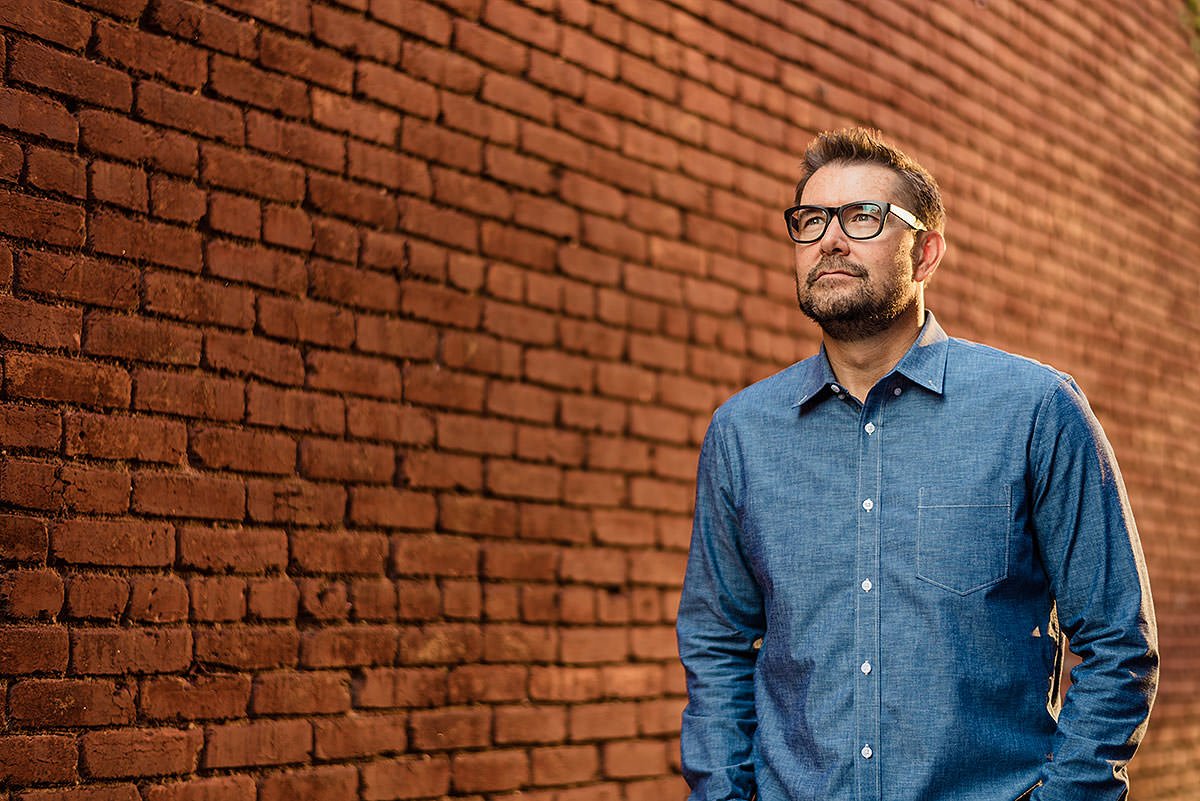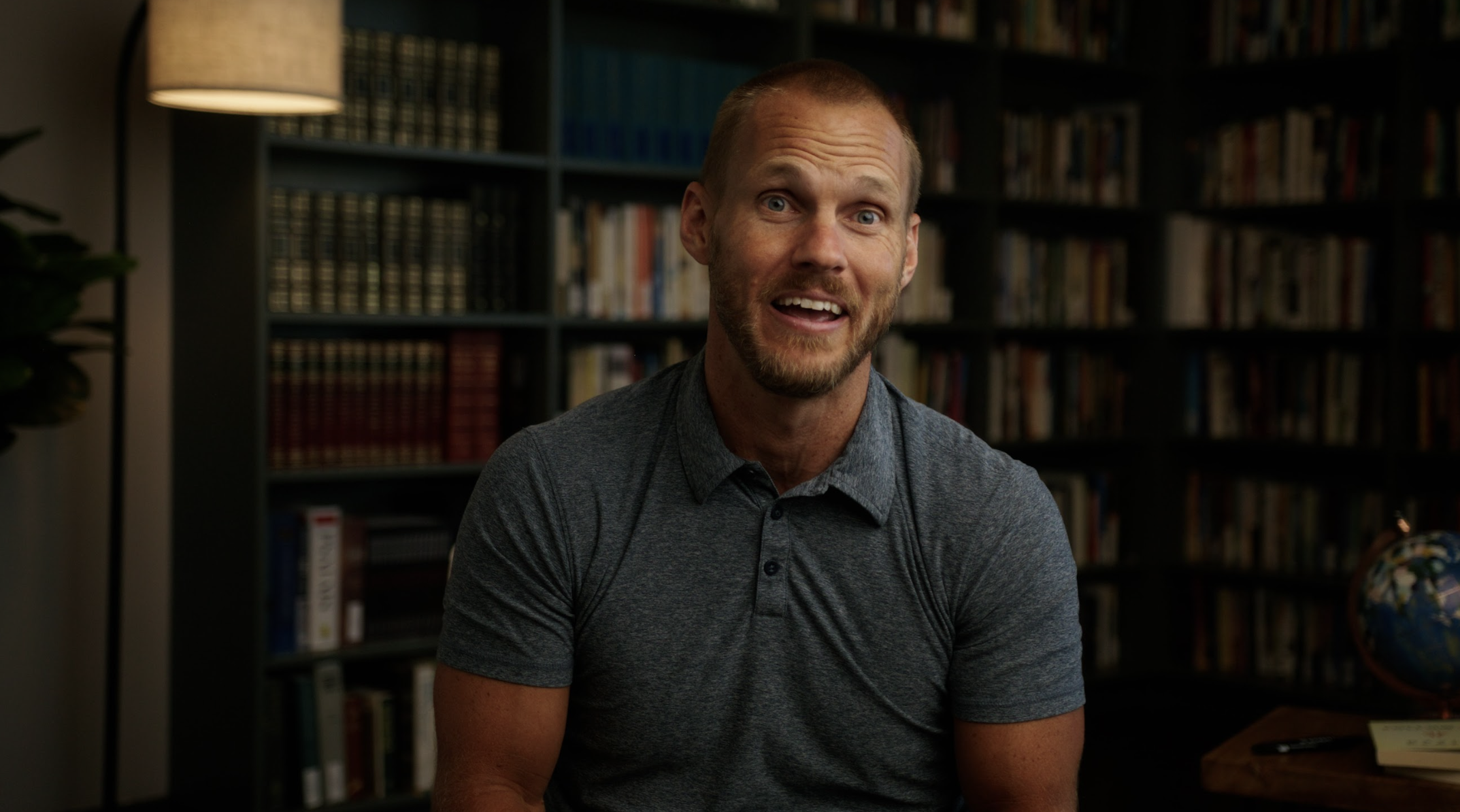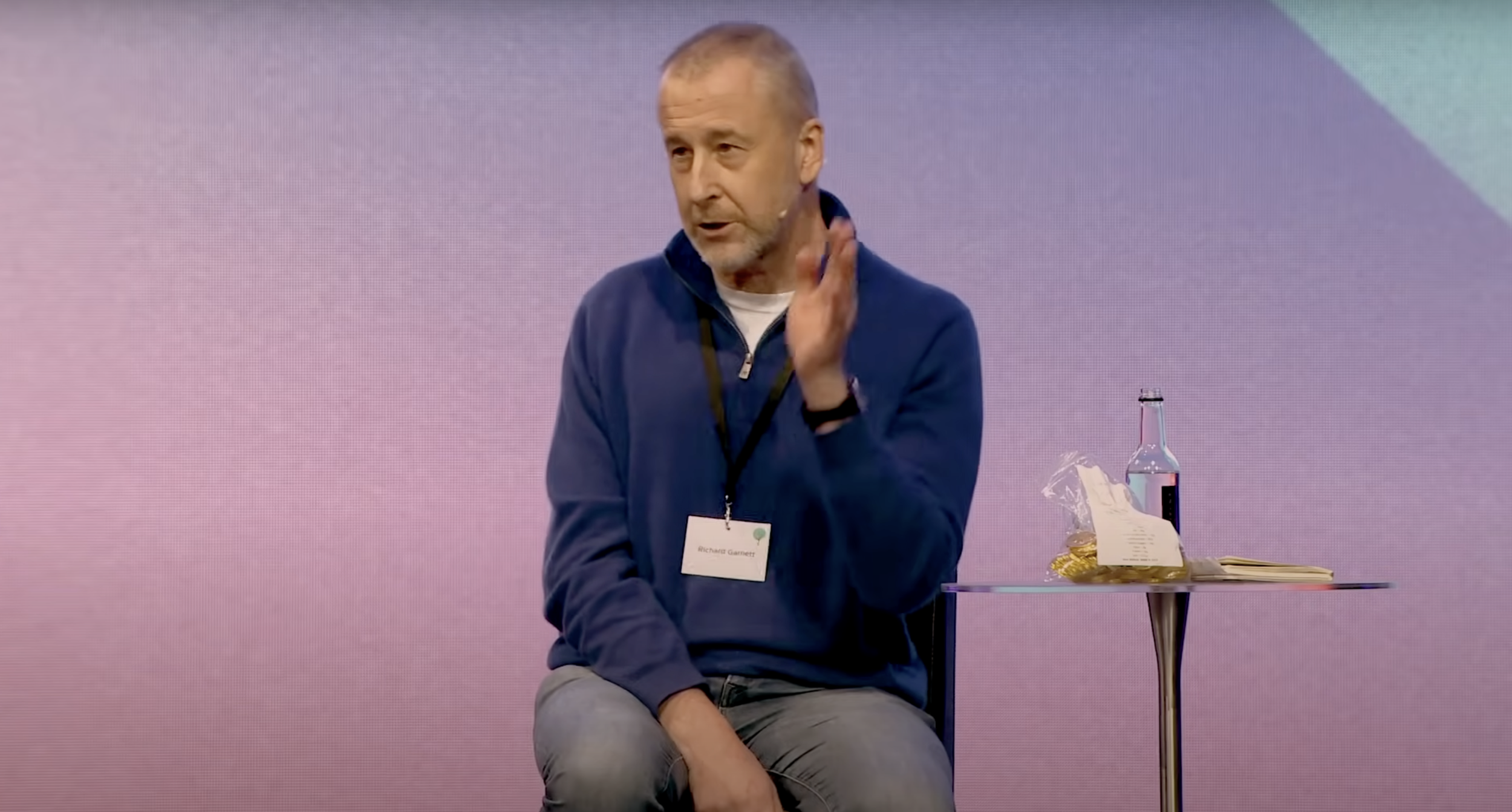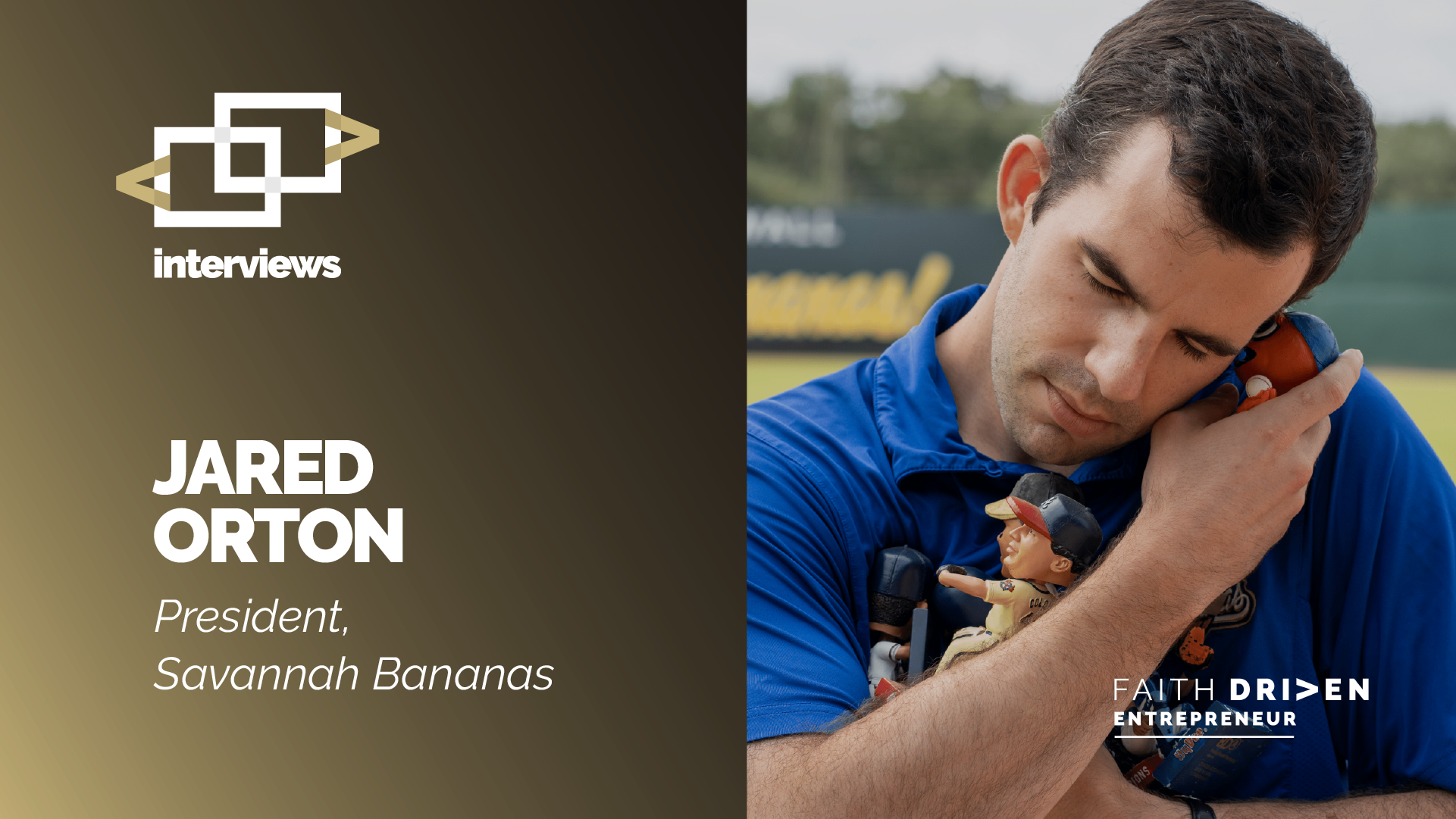



Episode 295 – The Business of Making Baseball Fun with Savannah Bananas’ Jared Orton

Jared Orton is the President of the Savannah Bananas, a baseball team unlike any you’ve seen before.

They create an entertainment experience that’s part dance performance, part trick plays, and part competitive baseball.

Jared has experienced all the ups and downs that come from innovating in a space with a legacy. Since the organization’s founding in 2016, he and the team have had their share of doubters. But they’ve faithfully stayed true to their mission: to create something fun and joyful for every attendee.

Over the years, they’ve grown from a small, regional team that struggled to sell tickets to a nationwide phenomenon playing in front of sold out crowds in major league stadiums across the country.

He joins the Faith Driven Entrepreneur Podcast to talk about the value of innovation, fun, and excitement for businesses and for the world.


All opinions expressed on this podcast, including the team and guests, are solely their opinions. Host and guests may maintain positions in the companies and securities discussed. This podcast is for informational purposes only and should not be relied upon as specific advice for any individual or organization.


Episode Transcript


Transcription is done by an AI software. While technology is an incredible tool to automate this process, there will be misspellings and typos that might accompany it. Please keep that in mind as you work through it.

Commentator: I don’t believe what my eyes just saw. The lights. The ball on fire is there. He’s got a back flip and make the catch.

Joseph Honescko: The Savannah bananas aren’t your average baseball team. And they’re completely okay with that. They’re not looking to just fall in line with every other sports team out there. They’re looking to build something entirely new.

Jared Orton: We’re never going to win the World Series, right? We’re never going to play against the Chicago Cubs, but we could compete on fun.

Joseph Honescko: That’s bananas’ president Jared Orton, who has been with the club since they reinvented themselves in 2016.

Jared Orton: We were trying to create a tension here in the marketplace and get people talking about this thing.

Joseph Honescko: Since the club’s founding. Jared has experienced all the ups and downs of innovation from an entire city, doubting their ability to stick around to selling out major league stadiums with crowds gathered to watch a new version of baseball that they call Banana Ball. It’s part dance performance, part trick plays in part real life baseball. These are real athletes competing for wins and having fun doing it. So what does it look like to pursue fun, excitement, and joy as a product? How do you innovate in a space that has stayed the same for generations? And how do you scale a brand from a small regional product to a nationwide phenomenon? I’m Joey Honescko, and we’re diving into all that and more on this episode of the Faith Driven Entrepreneur podcast. Let’s get into it.

Justin Forman: Joey, before we get to that. People cannot see the grin on your face, but they need to. We need a screenshot of this hearing on the podcast. Somehow some shape form. For those that do not know. Joey, the fearless leader here is a die hard baseball fan. So this is a moment for Joey where he gets to see faith, work, integration, and the love of baseball intersect. What a gift that is.

Joseph Honescko: So yeah, yeah, we’re talking about fun and playfulness and excitement, and I’m just experiencing that kind of first hand on this episode. So that’s a huge joy. And Jared’s going to help us dive deeper into those concepts here in this episode. But before we welcome him on, Justin, I’d love for you just to share for a second why these things are actually valuable and important for faith driven entrepreneurs to be thinking about in their own life and in the things they build as well.

Justin Forman: I mean, this is going to be fun. Yeah, what a gift it is to have this podcast and what a challenge it is. As you said, to talk about it, building a business is hard. Building a team and especially scaling is hard. And wrestling through those moments along the way. We had just a great opportunity to talk about that with booster and to spend some time with Chris. And I know that, you know, as a movement and as an organization, we’re going through that of just what does it look like to scale and how do you do that and have fun doing it? And how do you do that? Miss all the stress, as we might say, the thorns of business that are promised to us from the beginning and wrestling through that together. So yeah, really looking forward today.

Joseph Honescko: Yeah. So we’ll jump in with, Jared Orton. Jared’s the president of the Savannah Bananas. And I could try to do justice in explaining it, but I think that it’s going to be much better if I just, let Jared take the reins, because I’m sure our listener base, some of them are going to be familiar, but others may not have a full understanding of exactly what’s going on with the Savannah bananas. But the summary that I understand is you guys essentially took over a small college summer league team, and now you’ve made it. This cultural phenomenon and this unique sports entertainment experience. Give us just a little bit of, grounding and context of what the Savannah bananas are and how this ended up happening.

Jared Orton: Yeah. It’s fantastic. Thanks for having me on here. This is really exciting to talk about. You know, the Savannah bananas really should not exist for the most part. You know, we started as you kind of mentioned, there was a stadium still is a stadium, obviously in Savannah, Georgia, where, you know, on that site, professional baseball has existed for almost 100 years. In 1926, professional baseball started at that site in Savannah and, you know, went on for 20 some odd years. And then that stadium actually fell down and in the 40s was rebuilt as what we know today as Grayson Stadium. And for 80 some odd years after that, up until 2015, professional baseball was in Savannah, Georgia. In 2015, the team that was there basically said, you know, we’re done. Baseball should not exist in Savannah anymore. You know, the stadiums bad, the cities bad, everything. You know, so much negativity surrounding that. And so we got the bright idea to say, well, great, let’s, you know, start a baseball team in Savannah, Georgia, right at this old historic stadium. And myself and my partner in this thing, Jesse Cole and his wife, Emily, the three of us, you know, we said, oh, let’s start a baseball team in Savannah, Georgia. Right. But at the time, as you mentioned, we were actually a college summer team. It’s college summer wooden bat league team where we were coming in off the heels of professional baseball. And so we were made fun of, you know, from the jump. You know, people said, well, this is not professional baseball. It’s professional baseball. Couldn’t, you know, succeed here. And how the heck is college summer? You know, wooden bat league baseball going to exist? And then we doubled down. We said, well, we’ll tell you why it’s going to exist. You know, we’re going to have dancing players and we’re going to have, you know, all this chaos and fun and excitement. Then they were like, okay, no, this is absolutely ridiculous. And we just got made fun of and, you know, told it was going to be a big failure and rightfully so. You know, they had been kind of told the same thing. You know, year after year after year, a new ownership group comes in and they say, oh, we’re going to do things differently and we’re going to make it all about the fans and all that stuff. And so I think people had kind of had maybe a sour taste in their mouth at some point. They were like, we’ve heard this enough. We’ve heard, you know, new ownership group, new ideas, new fun. And we said, no, no, no, no, we’re going to prove it. And, you know, it was tough sledding early on. Real tough sledding. I mean, we couldn’t sell tickets. You know, we couldn’t really get any interest in this thing. And early on we did not have a logo or a name really at that point. But really people doubted this thing from the beginning and it got so bad. You know, we’d only sold a handful of tickets and we weren’t selling sponsorships and all this stuff. And, you know, we were low on cash and just trying to make this thing work. We had a few full time people, a bunch of young people trying to get this thing going. And it was really disheartening, you know, super disheartening to think, you know, man, we came into this thing, thing. We had all these ideas. But what we realized was we were just kind of doing the business the same way everyone else had thought about it. You know, we were doing marketing like everyone else. We were doing, you know, social media. We’re just doing everything like everybody else. And it wasn’t until we came out with the name, obviously, of Savannah Bananas in the logo. And, you know, all that, that really we were trying to figure out how are we going to compete for people’s attention. We’ve got to create attention here in the marketplace and get people talking about this thing. That’s the only way we can get this thing going is if we get people’s attention and get them talking. But, you know, we realized and we told people it’s not just about the logo. It’s not just about, you know, a flash in the pan, one hit wonder. We got to prove that the experience also is dramatically different. And, you know, we got ridiculed and criticized for the name. People said this is an embarrassment to Savannah. You know, you can’t be named the Savannah bananas. What’s fruit, you know, have to do with the city of Savannah? This is, you know, basically the story of this is we’ve been told we’re an embarrassment from day one, you know, all the way until today. But we’ve had this relentless focus on making baseball fun. That’s been the core thing from day one. Make baseball fun, make baseball fun, make baseball fun. And that’s been our guiding light from day one, and we’ve been committed to that. The variation of how that happens looks dramatically different. You know, it looks dramatically different from how we made baseball fun on day one versus how we now make it fun here in 2024. But that’s been the North Star. Make baseball fun. And you know that’s what we compete on. You know we’re never going to win the World Series right. We’re never going to play against the Chicago Cubs. But we could compete on fun. And that’s where we chose to compete at. And we thought, whether you’re a baseball fan or not, we feel like the world is searching for fun. And whether you’re two years old or 92 years old, it doesn’t matter. Socioeconomics the color of your skin, where you come from, how you grew up. People like to have fun. And so that’s where we compete, and that’s what we think about every single day.

Joseph Honescko: Yeah, I really want to come back to that idea of the world needs fun, whether you’re 2 or 92. I love that concept. But before we dive into that, I think it’s important for our audience to get a sense of the scale here because, you know, early on, it sounds like it was this old historic stadium in Savannah. It kind of a cool, like regional thing that was going down. But at this point, I mean, I was on the website earlier, you guys have sold out Fenway Park. You’re on a huge tour right now of MLB and minor league stadiums. I know you were near [……] In Houston not too long ago, so maybe just talk a little bit about how this has grown. And, you know, Justin mentioned scaling at the beginning of this. Talk a little bit about that process of taking this thing that’s kind of localized and now making it a national product, and then maybe getting a little bit of a sense of what one of these games looks like.

Jared Orton: Yeah. That’s great. So that first year, you know, 2016, we were dead set on can we sell out a few games. Right. And it was it was different. It was fun. You know, it was a lot of things that people had never seen before. And, you know, we tried to pack a ton of value into it. And like all of our tickets included all the food and drink in the ballpark. So like unlimited hamburgers and hot dogs and chicken sandwiches, you know, it was like this value packed entertainment base through and through. And we were fortunate that first year and we sold out, you know, the first game right at the last minute, like we were able to like sneak one in and sell the first game out. And we announced to the public the game is sold out and people lost their minds. They were like, what, no game sell at a Grayson Stadium? And immediately then the second game sold out. And then like the fourth game, in the seventh game and so on and so forth. And we were building this demand of like, hey, we’re going to make this awesome, and the experience is going to be great, and you better get your tickets now. And if you don’t, you’re going to be left out. And we continued that process 17, 18, 19. And it got to the point 17, 18, 19 every game was sold out at home at Grayson Stadium. And you know, we’re in the league. We won the championship the first year and we were team was always good. The entertain was always awesome. We were always pushing the envelope. And we realized as an organization, really as we got into 2020, 2020 was almost it was really stressful and obviously really tough for everybody, but gave us actually a chance to kind of think about like, well, what’s next? You know, we get through this, like, what are we doing? And we kind of got to a point as a business where we realize we can only have so many games, we can only sell so many tickets, we can only do so many things. You know, we’re going to kind of flatline. And is that fun for us to just do the same old, same old every single year? Is that fun for our players? Is that fun for our staff? Is that fun for our fans? For our community? Like, it’s not exciting to just tell people, all right, guys, let’s do it again next year. Same thing. Like let’s just be the same and. A conversation came up. We were reading a book called The Vision Driven Leader by Michael Hyatt, and a conversation came up and we asked, as a team, kind of collectively our leadership team, and we were like, what would it take for the bananas to be a 24, seven, 365 brand? Like, what would it take for us to build fans? 24/7 365 through content, through our demand, through merchandise? And then ultimately it was like, what would it take for us to build more fans outside of Savannah, or a different game, or a different market or a different experience? What would that look like? And we had been testing this idea of an alternate form of baseball. It was not called banana ball at that point, but we had this alternate form of baseball that we had been testing, and we were testing the two hour time limit. We were testing, you know, can’t step out of the box. We’re testing fans, catching foul balls around. We’re testing all these things. And so the conversation came up and we said, what if we went on a one city world tour and played banana Ball? It wasn’t called banana ball at that point, but the idea of banana ball and we were like, well, is there a stadium that would take this? And we found a stadium in Mobile, Alabama in 2021, a not abandoned but basically abandoned stadium they had left the previous year and they took us on and we went on a one city world tour to mobile, Alabama, and 7000 people showed up and the back of the t shirt, you know, like a band tour t shirt. It just said mobile, mobile, mobile, mobile, mobile all the way down the back. And 7000 people showed up to mobile, Alabama to watch the Savannah bananas play. I think the party animals at that point, and we had hired some like, you know, former players and some local players, and it was remarkable. At 4:00 in the afternoon, there was a line of people through the parking lot waiting to get in, and we were all just like, oh my goodness, what is this? And then in 2022, we went on a seven city world tour, really ramping it up. And we did that in the springtime and we played it like West Palm Beach. And we went to Daytona. We went to Kansas City in a couple other places, Montgomery, Alabama, and there was like 50 or 60,000 people that showed up over those seven cities. And we also played games in Savannah during that time. And all of a sudden we started realizing, like, we’re really starting to build fans in a way that we could never do when we were just playing in our league. Now we were still playing in the league, but we’re still doing this touring, and we came to a crossroads where actually our fans were starting to get confused. They were like, wait, I’m hearing about this banana ball thing where it’s two hour time limits and fans catching foul balls for hours and there’s no bunting and there’s all the dancing. And I heard there was a guy on stilts and I heard you had a break dancing, you know, umpire. But now I’m at this league game where it’s nine innings and the rules are on the same, and I’m just confused about what’s going on. And we were like, now we have a real decision to make. We had this thing that we started with traditional league baseball, which we’re good at, and it’s fun and it’s easy and it’s repeatable and everyone knows it and everyone understands it. But we’ve got this new thing that actually allows us to grow the brand and our fan base. 24/7 365 what do we do? And we made the decision to abandon the traditional league format, and we went all in on what we now call banana ball and touring. And now in 2024, I’m sorry, 2023, we went on a 33 city, more of a world tour, you know, coast to coast, and played in front of half a million people last year in 2023. And then, as you mentioned now in 2024, we’re playing in six major league stadiums. Fenway Park will play in front of a million people this year, live in person. A million people will watch the Savannah bananas play this year. And that’s the scale. Now that it’s become of this relentless focus on one more fan, one more fan, one more fan, and build this brand of banana ball. 24/7 365.

Joseph Honescko: So I want to jump into that because it sounds like you came to this crossroads. You had this opportunity to stick with the traditional route with the Summer League. You could have continued that, but you saw this opportunity to choose the fun alternative. I guess we could call right and lean into this entertainment thing. And you said that idea earlier that the world needs more fun. So maybe just talk a little bit about I mean, obviously it was a smart business decision. There was that. But what about this idea of the need for fun and excitement? What is it that you think is important that the world needs more of that?

Jared Orton: You know, we wrote about it when we were going into our first kind of new vision back in 2020, kind of talking about how this future of touring and banana ball and our players and things like that. And at the end of the vision driven leader, the whole question is like, well, why does this matter? You do all this great, why does it matter? What’s the impact? That it makes and we share this with our staff. I’ll share it with our staff here. We’ve got a meeting here at 1:00 local time here in Fresno, and we’ll share with our staff today. You know, people are coming from all over to this game today, and they’re coming for a reason, whether they know it or not and whether we know it or not, they’re coming for a reason. Some are more pronounced. Some are not realized. And what I mean by that is every night we meet fans who say, you know, my family hasn’t been on vacation and however many years, but we saw the bananas on TikTok, Instagram, whatever. And this is our trip. Like, we got together as a family. We drove down here like, this is our thing. Or they’ll say, you know, I haven’t seen my grandmother in 30 years, but she lives here. And she found the bananas and we wanted to come see her. And we’re coming to the game tonight, and we hear the fun stories, and we hear the sad stories, and we hear that someone just beat cancer or someone hasn’t beaten cancer. Or we find out that it’s someone’s birthday, right? Or we find out that a kid, you know, lost a parent, or we find out that, you know, there’s a plethora of things that we find out through social media or just by listening or just by being attentive to people, just by finding out what the heck’s going on in people’s lives. There was a fan who’s in our fan club who we found out that he not really found out he was making a big deal of it, but it was his birthday. And, you know, that’s cool and that’s special. And you could do something fun for him. But he builds these like, AI like miniature bobblehead things for our staff. And he like, you know, sends them an email and things like that. Well our staff went and got a real one made of him, and he didn’t know that. He didn’t know what’s happening. And they went and got a cake and they went and got balloons and they got cards signed by the entire team. Right. And on and on and on and on. And when he came to the game, they presented it to him. And this guy, grown man, emotional that people would think about him in this way. And he wrote a post, you know, later on in the week. And he just talked about like how he was just struggling personally with anxiety and depression. And, you know, the bananas were like his thing. They were just his outlet to come together with a group of people who appreciated him and recognized him and made him feel special. And for every one person that speaks out about that, there’s again, we’re going to play in front of a million people this year. And that’s the impact. And that’s what we share with our staff, that you’ve got the opportunity to make an impact on somebody, to make a real moment, and that moment might just be high five and a kid and saying, hey, welcome to the game. Or it may be finding out that it’s someone’s birthday and going above and beyond for them, and really making the impact on their life, or finding out that someone is celebrating something, or finding out someone’s having a sad freaking day. And you know what? The bananas could be that help for them. And so we know that people are looking for belonging. They’re looking for community. They’re just looking to have fun because life gets in the way. And we hope we can be a little bit of that escape for people, and we hope we can provide that human touch, you know, for them as well. And so, you know, we travel with 150 some odd people to all these games, super, super psychotic to travel with that many people. But we provide a lot of high touch experiences because of that. And so, you know, when you travel with 150 people, that’s 150 some odd moments that hopefully can happen. And so whether that’s in person or they reach out to us over the phone or email or social media, that’s what our team, you know, exists to do. And so that’s the impact that we hope we make on these tours.

Justin Forman: It’s powerful to hear the story. You know, we were just with the team from Dude Perfect Kobe Cotton and selling some stuff here recently. And just, you know, when they started their story, they started with X and it was trick shots and some friendships and relationships. And one thing leads to another. And then you kind of step back some couple of years into the journey and realize, what is this year? And it sounds like that’s kind of some of the the journey for you guys is you started with baseball, then you kind of step back and you say, man, this is about fun and and experiences. And there’s that pivoting kind of moment how much like, you know, I mean, obviously I grew up with Harlem Globetrotters. We probably all did just in some extent or another. And yet, there’s some parallels, but maybe there’s not some parallels because I don’t think the Washington Generals ever won a game. However, the Savannah bananas occasionally lose a game. The party animals. But like, what is the tension here? Because you are entertainment, but yet there is some baseball. You haven’t fully gone one over the other, but you’re finding that kind of happy fun tension of the two of those.

Jared Orton: That’s right. Well, we’ve realized is that people are smart. You know, the consumer our fans they’re smart people. And yes, they want to be entertained. But we feel our brand of sport also needs to be believable. You know that you’re watching a real story unfold in front of your eyes, and it might change tomorrow night, and it might change when you come to the game in three weeks, and that you have real people competing on a field. Real athletes, real athleticism and real moments that you just don’t know what’s going to happen. And while our games are scripted in a sense of we have characters, we have performances, we have songs and dances and comedy and skits and bits and celebrations and recognition. We have all that stuff. But there’s a moment where the ball gets put in play, and a 93 mile per hour fastball is thrown and a swing is made. And [……] sees that ball come off the bat and decides, and quite literally, a split second, that he’s going to now do a backflip and catch that ball in centerfield while he’s doing a backflip and huzzah! You’ve just been wowed by something you will never see at another sporting event or another baseball game. You know, we do not pause the game so that he can do a backflip or, you know, Ryan Cox can do a double play between his legs. It is in the moment, real life. This is happening and there’s failure. You know they’ll try however made trick plays tonight and they’re not going to get a ball. And that’s awesome. And our fans appreciate that. Like they’re going to push the limit and try something new. And yeah the bananas might win tonight. The party animals might win tonight. And it’s competitive through and through. But there’s also just so much fun and entertainment that happens outside of that, inside of that, around it all the way through that. Our hope is that you want to continue to come and stay engaged and be a part of this for the long term and not just say, yeah, you know, went to it, saw it once, no big deal. Don’t really have to go back. You know, we want people to stay engaged for the long term. That’s our view. And all of this is long term fans over just flash in the pan operation.

Justin Forman: So double click on that for a moment. Because growing up at least you never heard of like people going to the Harlem Globetrotters multiple nights in a row, multiple games in a row. Oftentimes it was like I did that once.

Jared Orton: Yeah.

Justin Forman: How have you guys really looked at that from the difference point of saying, okay, we’re creating something that’s creating a fan and there’s multiple points of engagement, social media. There’s there’s more than just what happens even in the diamond. I mean, most of us probably found out about this because of a yellow suit and a social media clip. Like, I mean, some of those things like that. What are the multi facets that you’ve approached this in?

Jared Orton: We are on this journey now where, you know, it all started with the Savannah bananas, right? As a single entity, single brand. And now yes, the bananas have a dramatic head start obviously. But now the idea is how are we building banana ball as a sport, as a game, as a entertainment experience where you might also be a fan of the party animals? And we just rolled out a third team, the firefighters, and they’re going to debut on the field here in a couple weeks, actually, and you might become a fan of the firefighters and you might identify more with, you know, the coach of the party animals or the coach or the firefighters or the new team or the, you know, team that came in, or the player that just started with the bananas and maybe got traded to the other team. And we want the bananas versus party animals experience to be one thing. But when the party animals this summer go play against the firefighters, it’s not just a oh, that’s just the bananas game wrapped up in pink and black. No, it’s a party animals experience with their own host and DJ and band and characters and coaches. And, you know, it’s an entirely different vibe. And so that’s how we feel like we’re going to continue to build this brand of banana ball and grow that fan base globally, because the bananas cannot play 200 banana ball games, right? That’s impossible. We can’t contribute that many that number of games people get worn out. And we also don’t want the bananas to have an A-Team and a B team and a C team and a D team. You know, if we’re in California one night, the bananas can’t also be playing in North Carolina the same night. Like again, going back to what I said earlier, our fans are smart. People are smart. They want real. They want to know it’s authentic. They want to know that they saw. Oh, that’s the team right there. Those are the guys I follow. Guys and girls now. And so that’s how we’re going to continue to grow this thing. And then they all have their own social media presence. And they all build their own content the same way. And they all have players who are also building content. But that’s how it’s going to keep staying fresh. And that’s how more fans hopefully are going to weave into this thing and know that we are building the game of banana ball collectively, while these teams contribute to that.

Joseph Honescko: I think what’s so interesting about what you’re saying, Jared, is that, you know, it’s not you said there’s obviously scripting, there’s dance cues, there’s things like that, but you can only script a baseball game so much. I mean, like I said, at 93 mile an hour hiter comes at you, someone’s going to swing. They’re good baseball players. But saying, I’m going to hit it exactly right here at this spot in this guy’s going to do a backflip and catch it. There’s a lot of room for that competitive nature to come out. And I think there’s a really interesting marriage happening where you’re doing something that is both incredibly fun and exciting, but also inherently competitive. And so I’m wondering, often those two things seem at odds, right? And I think professional sports has gotten there where I think of, Ozzie Smith back in the day doing a backflip before every Cardinals game. Right. No one is risking, you know, pulling a hamstring or whatever at the rate they’re doing at this point in professional baseball. And so it seems like there’s been this separation between the fun in the competition. But you guys are bringing that back where it’s a split between those things and they’re kind of holding them in common. Am I understanding that right.

Jared Orton: Yeah. Yeah. Well we’ve shared with our team and you know, it starts with our coaching staff as well. We’ve got a fantastic coaching staff who understands this is the game we’re playing. Right. And the whole concept is that we want to give these guys permission to have fun at these games and know that you’re not going to be punished if you miss a trick play. Now there’s some feel that these guys have and they know, like, all right, am I going to take this risk here with two outs when I could just get this third out and make it easy? Or am I going to take the risk and like, do a trick and maybe it fails, maybe it doesn’t work, but isn’t that cool for our fans to know that? Like, we’re not going to be safe in this thing. These guys are actually going to risk it. And you know, we give that permission to our staff as well. Like, hey, we’re here to have fun. We’re here to give fun. And like, that’s going to be the nature that’s saying, you know, obviously we take our work seriously and the guys take their training seriously. They take the games here like they take it all very seriously. But they don’t let that seriousness, you know, overwhelm them where it’s like, now I’m taking myself too seriously. Now I’m like, I’m all bottled up in this thing and I can’t actually let loose. And, you know, it’s always been a personal struggle for me. Like, I want to be locked in, dialed in. I want to get things right. I want it to be perfect every single moment. And sometimes that doesn’t allow me to have as much fun in the moment. Realize, dude, look at all these awesome things we’re doing where my mind is like, yeah, but we could have done it better, right? Like we could have done it for awesomer. And that’s been something that I’m trying to work on as a leader, as a person, to know that, hey, it’s okay to step back just a moment and realize, let’s risk it here. Let’s have some fun. Let’s see what happens. Let’s let loose. And not one or the other, you know, make people choose like, well, you either got to be serious or you got to be fun. You either got to do all the plays correctly or you got to do all ten, you know, one or the other. And so they just know that, like, this is what this game is about and this is what we’re going to judge you on is what you’re gonna be incentivized for. And I think it pays off, you know, for our fans and our players.

Justin Forman: I love that balance of what you’re talking about. They’re about the innovation, the balance of stepping back. As entrepreneurs. It’s tough. We’re always driven, always looking for the next the better. But you’re hitting on an element here of you want to keep innovating, kind of almost keep changing, keep throwing new things so that everybody’s collectively experiencing more satisfaction, more engagement, more joy in recognizing the culturally. If you’re doing the same thing for too long, there might be some routines and some of that fatigue, if you will, or boredom or whatever it might be set. And how do you walk that tension of always innovating, always changing, always adding some new wrinkle in? And what does that do for the team?

Jared Orton: Right. For me it’s a game, you know, it’s like. I’m always looking for the next step, not looking for the next thing. It’s like I got to get this rush. But like, I feel like if we’re not looking for, well, how could it have been better? I love what we did. How could have been better? Then it’s like, oh, I guess we’re just kind of okay with it being the same and what we’ve told our team. And from the outside it can look like, well, we just throw things at the wall and, you know, see what happens. We explain to our team, it’s like, you know, the marketplace demands that we change the marketplace. People, culture, interest, attention. It demands that we change, demands that we do something different. It demands that we do something new. It demands that we do something unique that people have never seen before. You know, that’s what the marketplace. That’s what human nature demands of us. And so if we are just one of many. Same old, same old, you know, if we’re just one of many sports teams or one of many entertainment experiences or one of many options, then what are we competing on? You know, at that point you’re just competing on, well, are you the cheapest or are you the most convenient? And you know, we like being fair price, but we don’t want to be cheap and we don’t want to be just the most convenient. We want to be the most different. We won’t be the only who is out there where people come to these games and they get to the end of it and they say. I’ve never seen that at a baseball game. I’ve never seen that at a sporting event before. You know, they go home on Sunday, Monday, Tuesday, whatever. And they say you wouldn’t believe what I saw the game last night. You know, they pull their phone out and show their friends. Like we go through those experiences and we say, okay, Joe and Justin leave our game tonight. They’re going somewhere. They’re going back to work on. We literally play this out in our head. They’re going to work on Monday. What do they say? What do I tell people? You know, we start with the end in mind and we want to create a remarkable experience. Well, Seth Godin, you know, famous marketer, talks about being remarkable. He says, well, if you want to be remarkable, the definition means you have to be worth remarking about. You have to be worth talking about. And so if people are just apathetic to our experience, we haven’t given them anything to talk about. We haven’t done our job. And so then we start working backwards and we say the marketplace demands that they want to talk about the cool things that they did. And so we have to work our ideas in ourselves, in our experience, in our tickets and our merchandise and the whole thing to ensure that they leave that stadium, that game. And they say, oh my goodness, you wouldn’t believe how kind they were with the experiences like this video that I saw them do. The way that they helped my child. You know, the people who are selling us merchandise, the people who scan my ticket said, oh my goodness, you would not believe what it was like. And that’s, you know, that’s always changing. That’s that next thing that we’re always striving after because we tell our staff every night it’s someone’s first game tonight. You know, there’s 10,000 people come to the stadium. It’s at least one person’s first game tonight. So remember that you have an opportunity to make that first impression.

Justin Forman: So let’s bring faith into the conversation. Tie this to us together. We spent so much time talking about joy. We talked about fun. We talked about the excitement. We talked about the experience. Talk about how that connects to your. Why?

Jared Orton: Yeah. When my wife and I first, you know, contemplated moving down to Savannah to do this with Jesse and and when all that, you know, for us, it was we have this opportunity to have this platform to serve people and people from all over and people internally and people externally. And, you know, we had no idea obviously, that would grow to you know, we have 70 people that are in our office now. And, you know, we hire hundreds and hundreds and hundreds, you know, locally in most places. And we got full time players and millions of people that we see, you know, these stadiums. And it’s like, Holy smokes, we’ve been blessed with this opportunity to be genuine servants to people and share the love of Christ with them and be that example to them and be kind to them and be compassionate to them, and have those conversations that we would never get to have with people if we were anywhere else, I don’t think. And so that’s what we think about. We can also not think about on a regular basis that, you know, this is this amazing platform to share that compassion and kindness and love crowds of people. And what a great honor to do that and the public forum and, you know, talking with guy or one of the pastors at our church a while back. And he was like, I’m jealous of people like you. You know, you get to he’s I just hang out with church people all day, man. Like this. Boring. Like, what if I was out there in the world with you guys? And so that’s humbling. And but what an opportunity to to have that.

Joseph Honescko: Yeah. That’s something we think a lot about with faith driven entrepreneurs. Just the unique opportunity for entrepreneurs, you know, business leaders that are out in the marketplace and that gives them unique opportunities to share the love of Christ that even, you know, pastors or missionaries as good as the work that they’re doing, they may not have those same kinds of opportunities. So love the way that you’re talking about this, love the way that you guys are doing that through the Savannah bananas. I think of even just y’all’s slogan, which is that fans first entertainment. Maybe it’s more of a mission, but that fans first entertainment in some sense is putting others before yourself, right? Putting the fan, creating those experiences. So really cool stuff. Jared. As we come to a close here, we like to end every episode that we do on the podcast with the same question, which is, just what is God teaching you now? Kind of in this moment? Maybe it’s in his word, maybe it’s in a quiet time, maybe it’s something that happened today or a week ago. But where are you seeing God encounter you kind of in this season of your life?

Jared Orton: Special. What I. Probably eternally struggle with is, you know, as entrepreneurs, as people who were hungry, man, we want to get after it. We want to hustle. We want to do the thing and push, push, push, push, push. And that reminder that we want to be great. We were created on purpose, with a purpose to do things for the glory of God, and a reminder that it’s not about me. Right? That we could build all this and we want to do it well. We want to do it absolutely well. But if that’s the only thing. Who cares if that’s the only thing we do is build this business and we don’t share the gospel with people and don’t share the love of Christ with people. And don’t you know God? Could I decrease? Would you help me decrease so that you could increase? Man, that is that is fighting that ego every single day because it feels good to get celebrated. It feels good to be like, we were awesome. Did we did the thing. We made more, we did more. We served all these people. And, if that’s the only thing, man, that’s a dangerous spot to be in. And so just continually being reminded that, hey, you’ve got a lot in your hands. You got to be a faithful steward of that. You’ve got to be a generous steward of that. You’ve got to be humble and you’ve got to have integrity and you’ve got to serve these. I’m putting this in your hands, because we’re going to trust you to take care of this. But remember that it’s not all about this. These are just tools that we’re, you know, being given. And it’s not all about me. And so, man, you just fight that on a regular basis to remember, like, all right, let me humble myself in this moment. Be super thankful, be super appreciative what this is. But remember, this is a platform to do something even greater for the kingdom. And that’s been the regular the regular cadence for a long time now.

Joseph Honescko: Yeah man Jared, thank you so much for joining us. Thank you for just sharing about Savannah bananas, sharing about your faith and just the way that the Lord has kind of married those two things together. Super cool to hear the journey you guys have been on. Justin, thanks for joining me, Jared, thanks for joining us. And, thank you, listeners for tuning in today.

Jared Orton: Absolutely My pleasure.

Joseph Honescko: Thanks for listening to the Faith Driven Entrepreneur podcast. Our ministry exists to equip and resource entrepreneurs just like you with content and community. We know entrepreneurship can be a lonely journey, but it doesn’t have to be. We’ve got groups that meet in churches, coffee shops, living rooms, and boardrooms around the world. Find one in your area or volunteer to lead one and bring this global movement to your own backyard. There’s no cost, no catch, just connection. Find out more at Faith Driven entrepreneur.org.

Recent Episodes

Episode 294 – Creating Culture Worth Celebrating: Stories of the Movement with Booster’s Chris Carneal

Culture can be a bit of a buzzword.

What does it really mean for a company to have values and an identity?

And how can leaders of those companies make sure those values don’t just become another page on the website or words on a wall in the office?

In this episode of Stories of the Movement, we’ll hear about Booster, one of the largest school fundraising companies in the country.

They’ve built a culture unlike any other in their team of nearly 1,000 employees. And Chris Carneal, the founder and CEO of the company, saw firsthand how essential Booster’s “virtues” became when they faced an unexpected and intense setback.

Check out their story in this episode of Faith Driven Entrepreneur: Stories of the Movement. 

For more information about Faith Driven Entrepreneur and to sign up for our groups, check out our website at faithdrivenentrepreneur.org


All opinions expressed on this podcast, including the team and guests, are solely their opinions. Host and guests may maintain positions in the companies and securities discussed. This podcast is for informational purposes only and should not be relied upon as specific advice for any individual or organization.


Episode Transcript


Transcription is done by an AI software. While technology is an incredible tool to automate this process, there will be misspellings and typos that might accompany it. Please keep that in mind as you work through it.

Chris Carneal: So I think every entrepreneur has to figure out what drives them.

Joseph Honescko: That’s Chris Carneal, the founder and CEO of Booster, a company that builds culture unlike any other.

Chris Carneal: A new team member walks in the door, we pop confetti cannons and we celebrate them and blow the smoke machine.

Melanie Morris: We’ve proven here at booster that we can take our work seriously and do really important, impactful work, but we can also have a good time doing it. Those things don’t have to be mutually exclusive.

Joseph Honescko: So what does it look like to build a brand off of excitement, joy, and energy? How does a company like that scale to nearly a thousand employees, affecting 10% of elementary students across the US? How can we empower our employees to see how they are bringing positive impact to every client? And how do you maintain that hope and positivity? When you experience trails you never saw coming? I’m Joey Honescko, and today on the Faith Driven Entrepreneur podcast, we’re telling the story of booster, a fundraising company that is determined to help strengthen schools so they make a lasting difference on their students in their communities. We’ll look at how Chris developed a clear call to create and pursued what God was calling him to. We’ll see how you can pursue joy and faithfulness, even in the midst of difficult circumstances. And we’ll see how God brings the greatest joy to those who faithfully follow his will. All that and more on this episode of the Faith Driven Entrepreneur podcast. Stories of the movement. Let’s get into it.

Chris Carneal: For about 15 years of my life, probably age 20 to 35 ish. I thought that there were two categories that there was the ministry and the business.

Joseph Honescko: At this point, Chris, the story might sound a little bit like yours. Most faith driven entrepreneurs have found themselves between these two worlds of the church or the marketplace. And as much as we’d hate to admit it, many of us still wrestle with this tension where we’re not sure exactly how we live out our faith as entrepreneurs. And part of the challenge there is that as much as we are people who create culture, we also absorb the culture around us. Chris was steeped in a certain kind of church culture growing up that many of us would find familiar.

Chris Carneal: I grew up with the narrative of the church that you went into ministry, or you went into work and gave your money to. And then there was the 10-40 missionary, the overseas missionary, the head pastor, the nonprofit, the parachurch, and then the for profit people whose job was just to make the money and send it over there. It’s almost like this hierarchy in the Kingdom of God.

Joseph Honescko: I mean, look what faith driven entrepreneur hasn’t experienced this feeling, right? This idea that we’re somehow lower on the spiritual totem pole. And a lot of that is changing as the culture changes. But it’s a good reminder of just how much a culture can empower the people that it influences, or how they can draw them into something that maybe they shouldn’t be pursuing. This is attention that every founder is going to have to wrestle with as they build a culture for their teams and as they influence the culture around them with their business. For Chris back when he was younger, the culture he found himself surrounded by led him to pursue a path that was just a little outside of his callings and his giftings.

Chris Carneal: Looking back in hindsight, I’ve always been an entrepreneur. It’s always been part of my DNA. I always like to start things, sell things. Talk to people about big ideas. But that the entrepreneur didn’t fit two neatly in a religion major seminary box. If you wanted to go into ministry, there was kind of one path and the entrepreneurs were weren’t quite on that path.

Joseph Honescko: As part of this effort to find himself more on the established Christian path. Chris started kicking around the idea of church planting. After all, it had some entrepreneurial elements. He saw others do it, and he got excited by the prospect. But something about it still didn’t feel quite right. The church planting life wasn’t perfectly aligned with who God created Chris to be, and for a while, Chris just kind of thought this was something he would have to deal with, pushing aside all of those natural instincts that would make him a fantastic for profit leader. But then he saw this concept of faith driven entrepreneurship lived out by a pioneer in this movement. Chick fil A’s Dan Cathy.

Chris Carneal: When I moved to Atlanta, watching an entrepreneur, CEO of a mission minded, growing company of chick fil A. Be creative. Be innovative. At the same time, view that business as the way he made a difference in the kingdom. And that was what clicked for me. I’d read scripture, I’d read books. But when I saw Dan Cathy living out excellence in the midst of a for profit business, internally impacting his culture, making a difference externally, doing the job with excellence, growing a business. I thought that’s exactly what I want to do. Take a for profit business and use it in a redemptive way for the good of others.

Joseph Honescko: Let me just pause this narrative for a moment, just to remind you, listener, that you have an opportunity to be that kind of influence on others, too. People will look to you and see new possibilities, whether that’s your employees, the people in your small group, your family, whoever. You show people the power of faith driven entrepreneurship just by living it out faithfully. It’s people like you who are part of this movement that are changing the culture, even within the church, that narrative most of us grew up with, where there’s a sharp divide between faith and business, is far less common now, and it’s less common because of the Dan Cathy’s and the Chris Carneal’s in the use of this movement, who have helped write a new story and create a new cultural understanding of the role Christians can play in the marketplace. When that perspective changed for Chris, he was able to fully discover the unique call God had placed on his life. Here’s how he puts it.

Chris Carneal: I think an entrepreneur’s heart knows, hey, there’s a problem out there. I had the capacity, the competency, the courage to solve it. And entrepreneurs want to solve problems. So I was looking at all kinds of different problems I could solve. What I really loved, I think the moment it really clicked for me was when I got to see and reconcile the idea of entrepreneur thinking and DNA and mindset start up with impact and influence. So when I got to give baseball lessons to like a third grader and you know, I got to tell them how to hold their hands and how to stand and how to swing. But I also got to talk about attitude and effort and hard work and being a great teammate. And then there parents a week or two later would say, hey, they’re hitting in the game they used to not hit. They’ve gained confidence. But what you’re talking about, the character lessons you’re teaching is really making a difference in the home, not just on the baseball field. And that was super impactful for me, and I just wanted to do more of it.

Joseph Honescko: So Chris is out there doing the baseball lessons. He’s done some other small things like flower delivery and yard care. He’s in those early stages of exploring that innate God-Given entrepreneurial spirit within him. But as he’s growing as an entrepreneur, he also begins to look for bigger problems to solve in ways to have greater impact on the people around him. And he first finds those opportunities in a pretty unexpected place.

Chris Carneal: So one day in Birmingham, Alabama, in the springtime before a baseball lesson, one of the students, sixth grader named Carter Gannon. I remember his name because ten years later, he ended up becoming a booster team member, which is super cool. He said, coach, before we do a baseball lesson, can you buy some magazines for my school fundraiser?

Joseph Honescko: You might remember these old school school fundraisers where elementary students would raise money through magazine sales or some other small things like that, as a way to support the local school systems. And these were fine. Chris remembered one event when his dad, who was booster club president as he was a kid, teamed up with a PE coach to host a fun run and it had a ton of success and was overall a great experience for the community. But there was a problem with creating these kinds of exciting experiences, as opposed to the door to door magazine sales mindset.

Chris Carneal: It is tough and complicated to organize.

Joseph Honescko: You need to be able to motivate, be enthusiastic.

Chris Carneal: Communicate, and energize.

Joseph Honescko: And in case you haven’t noticed from Chris’s comments in the show, that’s kind of his specialty. So as he’s in his early entrepreneurial days, he thought there might be an opportunity to help students raise support for these schools in new, fun and exciting ways.

Chris Carneal: Yeah, the fundraising industry had been stale and boring, honestly, for probably 30 years, and there were products to sell. They weren’t that exciting. They were the same that they were a decade ago. So I then began to go around to schools as a college student, basically asking schools, hey, trust me, with your kids and your money. You know, I’ve never done this before, but I got an idea. Replace your fundraiser that works with a new idea and a new concept and outsource it to the college student. Finally, after 50 different school meetings, Shades Mountain Christian School in Birmingham, Alabama, the 27 year old athletic director Bill Wilder said, hey, let’s go for it. I’ll take a chance on you, but you’re going to have to guarantee the $3,000 because I really need this money. School’s about to end. And I said, Coach done, guarantee you the 3000 it’s going to work. And, I was more shocked than the school was that the school profited $21,000.

Joseph Honescko: So Chris walks into this first deal, needing to guarantee three grand. And he’s able to bring in seven times that number. The school is impressed. Chris got to see the impact it had on the students and the teachers and the rest of the community. And in the process of all that, he had found a way to channel his own unique energy and excitement and gifts into experiences that benefited others. His secret to the success here was making the event something everyone could enjoy and participate in. The other programs, he says, were exclusive, whereas he was creating an inclusive environment where everyone could enjoy the fundraiser.

Chris Carneal: There was no community catalyst and experience in fundraising. It was just a transaction. So I created an all inclusive everyone runs the fun run even if you don’t financially participate. And that was extremely compelling and we made it experiential. Soundtracks. Music. Flags. Waving. Tunnels to run through a team. Cheering backwards. Lap jump a lap dance a lap. So even if you didn’t get a pledge or donation for the laps run, you still got to participate. So your classroom, your team, your school all got to come together for this community event, which made it really exciting. So going from transaction to experience, I think was the magic of the business.

Joseph Honescko: On that first sale back in 2002, kicked off what would become the business Chris still runs today with hundreds of employees and a huge reach across the country. But those first three years were built like a lot of successful entrepreneurial endeavors are, with grit, determination and a willingness to make things happen. Chris and his wife were young. They had just gotten married, and they still look back on those early days of booster as the fun stage of the company.

Chris Carneal: My wife and I were literally advancing stuff. We were driving all over the country, living in friends basements.

Joseph Honescko: Of course, as things grew, they needed to make some changes. They added employees and processes. They had a small rough patch in 08 with the Great Recession, but outside of that, things were pretty smooth sailing, and a lot of that had to do with the fact that even though there were a lot of changes in the organization, the core elements stayed the same. They always put the client first. They tried to meet their needs.

Chris Carneal: 2010 through 2020. At least March of 2020 was total scale stage, and we had to figure out a lot of the complexities of business, from supply chain to compensation and recruiting. We created different service levels. Some want to do it themselves. What can we provide them? Someone in a blended approach. How do we get customer service right? How do we serve schools? And so that was super fun. So 2015 to 2020 we grew from about 200 team members to 900 team members.

Joseph Honescko: There’s obviously a big difference between driving around the country with your spouse, trying to get deals done, and running a company of 900 team members. Of course, the growth was exciting, but Chris also made it a priority to keep the original mission and vision for impact at the heart of things.

Chris Carneal: I wanted to go beyond service, to experience and really even beyond experience, to transformational change. Could I create an experience that taught character lessons that had such a servant heart, that was so focused on hospitality, so inspiring to students that it felt like this event is going to change the lives of students, schools and community cultures.

Joseph Honescko: There’s that word again. Culture. How much can a culture change a person for good or bad? In Chris’ early life. The church culture he was raised in shaped the way he thought about work and ministry. Ministry was the higher good. Work was the lesser. But then he started seeing a new perspective when he got involved in a different culture, one that saw how faith and work could work together. Then he became a guy who built the business off of changing culture. The stigma around fundraisers was that they were dull and lifeless, and he changed that culture. He brought fresh energy to these events and saw how it empowered people who could empower the schools to empower others. It’s this ripple effect of culture change that every entrepreneur can take part of. Because every entrepreneur has the opportunity to shape the culture of their company. And that’s exactly what Chris did. As the staff grew and they started to scale.

Chris Carneal: I always wanted to make an impact externally. I also was really excited about making impact internally. Once I hired my first team member, I saw that I got to impact them, and I really love the idea of providing opportunity, providing jobs, but building a culture. And I love culture building, and I love the idea that I could create something that would make everybody better.

Joseph Honescko: One way Chris and his team were able to make a significant difference in building a culture was by really thinking through the company values and being willing to change them. As the company changed, they even went through a pretty major overhaul in 2019, which ended up being good for them because of the extreme challenges they were going to face in 2020.

Chris Carneal: Ultimately, culture is your values, your shared beliefs and practices and habits. So I stumbled upon an ancient word that’s not used enough today called virtue. So I started to distinguish what is the difference between a value and a virtue. And I fell in love with the concept of virtues. Virtues are timeless. They’re aspirational. They’re actionable, and they’re personal as much as they are professional. So I decided then, you know what? We’re not going to have just company values anymore. Let’s refresh them. Let’s keep the ethos of who we were, but let’s refresh them and have company virtues.

Joseph Honescko: After some significant study. Chris ended up with six virtues that he would have to hold tightly to over the coming years.

Chris Carneal: Gratitude, wisdom, care, courage, grit and celebration.

Joseph Honescko: And a lot of times, things like company values are virtues. In the case, a booster can feel very abstract. Maybe they get painted on an office wall or thrown up there on a web page. But what happens when they’re actually tested and thrown into the fire? Some companies never have to deal with this, but Chris and the rest of the team at booster didn’t have to wait long to discover what these virtues really meant to them. We all know by now that 2020 happens. The pandemic hits and lots of companies were affected by this, but booster was hit hard.

Chris Carneal: So we were up into the rights for about 15 years until March 13th, 2020. Covid was the most disruptive event. More than we could possibly imagine. We had diversified service levels. We had clients in all 50 states. When March 13th hits. Friday the 13th and the nation’s schools shut down. No one would return a phone call. Every program got canceled. We had 20 million in revenue coming in over the next two months, and that got canceled. If you remember early on, it was two weeks to slow the curves, and then that became the entire spring semester. We thought that was going to be it. We thought, man, we survived the toughest. March 13th, however, began a 173 days of zero revenue.

Joseph Honescko: There’s really only so much adaptation and pivots that are available to a company that is taking in zero revenue. So after months of trying to figure out what was possible, they had to make some super challenging decisions.

Chris Carneal: So in late July, we had to make this difficult decision to reshape and resize the company. We had to furlough or let go 85% of our team members, so we had about 900 beforehand. We had to go down to 143 team members, and this was extremely tough for me. I love culture, I love our people. I’m good friends and feel like family with so many of these team members, and so many had worked with us for so long and helped us build the company and take it nationwide. But we were running out of money quickly, and by day 120, we realized we’re going to run out of money in a few months, and that’s going to be it. And then our mission will be over.

Joseph Honescko: This was where the culture was put to test. It’s one thing to talk about the tight knit nature of a group of people. It’s another thing to see how that group responds in a time of crisis.

Melanie Morris: It was easily the most challenging season that we’ve been through that I have been through professionally.

Joseph Honescko: That’s Melanie Morris, the director of communications and impact for booster. And she had been with the team for five years by the time Covid came around.

Melanie Morris: I think the emphasis on our culture and the impact that we have on our people, I feel like I got to see that a lot in those harder seasons, which were they were hard. They were very hard. But I think our culture, our virtues are what got us through those times, and it makes the High Times even more rewarding now.

Joseph Honescko: Chris had to wrestle with how these virtues meant something in his own life, too, not just for booster, but as a leader and as a husband, and most importantly, as a Son of God. How do you seek wisdom and courage in the Lord when everything around you is crumbling? When the thing that you’ve built and you’ve dreamt of for so long is slipping through your fingertips? It was there, in this place of desperation, that God met him and changed him in a way that he was not expecting.

Chris Carneal: I realized that the previous 19 years of booster might be over in my mind and my spirit. I thought, the Lord has created me in this organization to do good for many more years. A story I had playing out in my head was a 100 year company. You know, I had something that probably a lot of entrepreneurs have, and it’s a great work ethic and a great sense of responsibility. However, I had it disproportionately on my shoulders. Literally, there was a picture in my head. This is in July, and we thought the fall was going to be bad and we literally might be out of business and bankrupt. I said, I feel like I’m holding a boat full of 800 900 team members in the middle of a hurricane, and I just I’m drowning and I just can’t do it anymore. And my wife said, that’s not your burden to bear. The Lord is holding the boat, you’re in the boat and he’s captaining the ship, and he’s holding it all up, and you’re part of the storm. It’s not your load to bear. I think as entrepreneurs, we had the sense that it’s up to me and let’s do it. And I fully believe that’s the Lord giving us strength and giving us agency and giving us responsibility. That’s appropriate. I, however, probably took that a little too far and felt like it’s all up to me. And in doing so, I wasn’t trusting the Lord enough. And so I had in my mind thought that it was my burden to bear, as opposed to now this is the Lord’s company, and I’m in the boat, and he’s given me a sense of responsibility. But me and booster, my people, they’re his, not mine. So when I finally gave up through tears and frustration and finally gave up or this is truly all yours, the amazing sense of relief and peace that I received was tremendous, and I feel like God gave me the fuel and peace needed for the next few months of the battle.

Joseph Honescko: This is that tension we talk a lot about on the show. The idea of being faithful versus willful, or being a steward and not an owner of the company that you run. God does indeed call us to steward the things that he’s given us. We have a role on the ship, but we are not the ones holding it. And Chris experienced the freedom that comes whenever he surrendered all that he had to God, and that was what empowered him to move forward and to faithfully steward what he had been entrusted with out of Covid and into the next season of booster.

Chris Carneal: The stat that I’m most proud of in this season is that 10% of America’s elementary students will participate in our program. I love the reach of the impact, and that did not happen overnight. We were stalled out and stuck so many different times, and by God’s grace, we were hoping originally for $50 million in revenue that fall. It got so bad. We were praying for 5 million. That was the goal five to survive. And we thought we’re just you know, let’s pray and see. But ultimately, the Lord provided a few clients, a few opportunities for us to figure out a way to get the program up and running again. And then that fall, we survived it. And then in the spring we adapted and continued. And the last three years have been challenging. The school landscape has changed in lots of ways, but in many ways were larger, bigger, and more impactful and more team members than we had before.

Joseph Honescko: The circumstances around the business certainly have changed, but the why and the how continue. The virtues remain strong and as the team grows. Those are the things that are continuously instilled in every new team member.

Chris Carneal: When we hire someone and we say, we’re going to teach you the skills, but this is our culture, we want you to understand our culture. And these six words best define our culture. Do you aspire to be a more grateful, wise, caring, courageous, gritty and celebrating person? Do you aspire to that? Our culture does all that we can. We stir up the soup of culture. Like, do you fully believe that you’re a better person if you embody these six virtues? Well guess what? We feel like we’re a better company if you’re part of our company because we see those virtues in you.

Joseph Honescko: The employees, a booster model, these virtues, and they have practices instilled to make them seem not like tasks or burdens, but something fun to carry, like a way. The virtue of celebration comes out when they hire new team members or get a new client.

Chris Carneal: So if you come in our office as a new team member or new vendor, we have tunnel entrance, we have smoke machines and lights, and we have confetti cannons. Every team ever gets a booster confetti cannon. We call them celebration cannons. We actually manufacture our own celebration cannons. And this is what we do for clients all over the country. We like to celebrate students and schools and acknowledge and observe people doing amazing things. We want to do that here.

Joseph Honescko: These intentional philosophical decisions to prioritize culture, virtue, and the values of a company. Those are the things that make a real difference for the employees, and it helps inspire them to do their work well, too. When we experience something positive, we are more likely to bring that positive thing to others. This is the ripple effect of culture that booster does so well. They’ve established and modeled a powerful culture based on virtue within the team, and then that team goes out and models those virtues for others. And as powerful and as impactful as that is, Chris recognizes that it can’t be the sole driver for any entrepreneur.

Chris Carneal: There’s a real tension in where our identity is. Some people I feel like say, hey, it’s just about who I am. It’s not what I do at all. But at the same time, God has called us to create. And as entrepreneurs, it is part of what we do, what we do and who we are are linked. So there’s just a wrestling that I would just challenge all of us. How do I view myself? More importantly, how does the Lord view me? Even more importantly than that, has the Lord God view His Son, Jesus. And if my identity is in him, the affections of the Father towards the Son are the affections that the God the Father has towards me. So then I’m free to do, and to work as worship as hard as I can with the balance that what I do doesn’t determine my identity and the love and affection of the Father. But at the same time, I’m free to do it because he has given me the opportunity to steward the gifts he has for the good of others. So wrestling with my identity, how much am I tied to what I do as I think something we just constantly give to the Lord and ask him to refine us in.

Joseph Honescko: A strong and secure identity in Christ doesn’t hold us down, it frees us up. Chris is able to build a culture within his company that goes and influences the culture around them because of the freedom he has found in Christ. Now, because he is rooted in that identity, he can take these abstract, philosophical things like virtues or the concept of being a faith driven entrepreneur and not just pay lip service to them, but actually live them out in ways that inspire and encourage others to do the same.

Chris Carneal: I feel like the last 30 years the baton has been passed, and now it’s our generation’s job to live out all that we’ve thought about, read about, and heard. So tons of gratitude for those that have come before us. So many pastors and writers have written about it. What is Scripture say about work? How is work actually worship? What is vocation look like? Lived out on a Tuesday board meeting or a Thursday sales meeting. But I feel like it’s our generation’s time right now to practically live it out and to integrate our faith and work into our culture, of our organizations, into everything we do, not just the prayer before the day starts, not just Sunday, but how can I live out every moment in my work life for the Kingdom of God? So I feel like this is a moment that the entrepreneur friends that I’m talking to are starting to see. Hey, I can make a difference in every meeting and every conversation if I have my kingdom perspective.

Joseph Honescko: So do you have that kingdom perspective? Are you looking for ways to build a company that changes the culture around you? And are you shaping a culture within that company that inspires others to live with that same kingdom perspective? How are you using the influence that God has given you to shape the people around you? These are questions every faith driven entrepreneur spends their entire life wrestling with. It’s not something we’re going to solve in a day or even with a single podcast. It’s that long obedience in the same direction that Eugene Peterson talks about. This is a big reason why we at Faith drive an entrepreneur. Encourage people to join groups. These things are best worked out in community, not in isolation. So if you want to hear more about those, check out our website A Faith Driven Entrepreneur.org There’s no cost, no catch. You meet online or in person with a group of 10 to 15 other like minded entrepreneurs who understand the challenges you are going through. As always, if you found this episode helpful, share it with someone, leave a rating and make sure to follow the show. You can also always reach out to us with your thoughts at podcast at Faith Driven entrepreneur.org. I’m Johanna Esco. Thanks for listening.

Recent Episodes

Episode 293 – The Riff: Fighting Identity and Idols Throughout the Entrepreneurial Journey

In this episode, Joey Honescko, Henry Kaestner, and Justin Forman discuss the themes of battling idolatry and identity in entrepreneurship.

They emphasize the importance of seeking the Holy Spirit and aligning one’s identity with Christ, share personal experiences of wrestling with idolatry and the need for approval, and highlight the significance of meditating on God’s Word, seeking counsel, and being aware of one’s tendencies towards willfulness or waiting on God.

Join in on this riff session by sending your thoughts to podcast@faithdrivenentrepreneur.org


All opinions expressed on this podcast, including the team and guests, are solely their opinions. Host and guests may maintain positions in the companies and securities discussed. This podcast is for informational purposes only and should not be relied upon as specific advice for any individual or organization.


Episode Transcript


Transcription is done by an AI software. While technology is an incredible tool to automate this process, there will be misspellings and typos that might accompany it. Please keep that in mind as you work through it.

Joseph Honescko: One of the most frustrating experiences is when you know something is true, but it takes a long time for that reality to actually affect your life. And I want to give you a warning ahead of time here, because in this riff episode, we’re not going to tackle anything new or unheard of. In fact, if you’re like me and you’ve been around the church for a while, you probably know some of what we’re talking about. But in this conversation, we’re going to try to dig in a little deeper, beyond the pettiness, beyond the cliche. We want to talk about how these realities actually affect our lives. How do questions of identity change when you’re starting out versus when you found success? What idols creep in at every stage? And how do these disciplines actually help us experience a joy in a freedom unlike anything else in the world? We’re going to cover all that and more in this episode. We get practical, we get vulnerable, we get just a little charismatic. And we’d love to hear your thoughts about all this, too. I’m Joey Honeskco, and you’re listening to the Faith Driven Entrepreneur podcast. Let’s get into it. Welcome back, everyone to the Faith Driven Entrepreneur podcast. I’m your host, Joey Honescko, and with me to riff today are Henry Kaestner and Justin Forman. Over the last few weeks, we’ve been, zeroing in on this theme of battling idolatry and identity. And that’s kind of what we’re going to do in the next season of this podcast is take these big themes and kind of look at them from different angles over the course of a month. And so this will kind of relatively put a bow on identity and idolatry. Now, those are themes that come up a lot with entrepreneurs, but this as a kind of like hyper focus. And of course, this is the riff episode. So if you have anything you want to add or thoughts always comments on LinkedIn, let us know or reach out to us at podcast at faith driven entrepreneur.org. Guys, anything you want to add before we just dive into this concept?

Henry Kaestner: Well, yeah, I hadn’t been thinking about it, but one of the great things to do. You can hear us riff together. I must point out the fact that faith driven entrepreneur groups are a great place to riff together.

Joseph Honescko: Yeah.

Henry Kaestner: Which puts you in a spot with another 10 to 12 entrepreneurs that are struggling with the same things we are. And none of these are, like, really easy. It’s like, you know, choose good or evil. Everybody’s gonna choose good. But when we start talking about idolatry, there’s a lot of nuance, there’s a lot of subtlety, and it’s best really processed together. If this is something that’s easy and straightforward, then Joey, you just do it. It will be one man podcast. But there’s something about helping, just being in communication, community, exploring these topics together. And that’s what we do with groups.

Joseph Honescko: Yeah, I think it’s important that you’re saying that, Henry, because I don’t think our listeners know this, but I’m starting my own entrepreneurial journey after being around in kind of entrepreneurial adjacent for the last ten years in my career, I’m starting my own venture, a small bookstore in our neighborhood, and I already, in the two months of my entrepreneurial journey, am appreciating and seeing the things that we talk about on this podcast, the challenges that come to an identity, the need for other people to work these things out. I mean, just the loneliness I feel at a different height than I have before. And so I guess it’s like it feels like this stuff is particularly poignant for me because the highs and lows, even in just this last month or two, it just feels like I’m in like whiplash. So I guess my question is, and maybe I’m begging for an answer that I know doesn’t exist, but does that feeling ever go away? Or is this just what the entrepreneurial journey is?

Justin Forman: I love hearing it’s been so refreshing hearing your conversation just about what you’re going through, because it makes it vivid and real. That first time that somebody is kind of going through that, walking through it and experiencing it. But I think we’re reminded that it’s a thorn that’s right there from the beginning, like it is in entrepreneurship. It might be most acute in some forms of entrepreneurship, but it’s one of those things that carries with us from the beginning. I mean, we’ve seen that Joey. And then some of the interviews in the podcast and the video stories we’ve talked about with whether it be people like Coby Cotton or Jeremy Lin or they’re talking about this in the realms of sports. And, you know, there’s a really powerful quote that Coby, in a moment of vulnerability, talks about in the story that we filmed with them, about how seeking your identity and views view count the look from a teenager recognizing you or something like that. That brings it very specific. It brings it very real. And I think it starts at a young age. And I think it’s one of those things that we’ve got to figure out how to battle throughout the rest of our life. I don’t think it’s one of those things that you ever check off the list, put it away. I think it’s a continual thing that we’re walking through.

Henry Kaestner: And yet walking through it together brings us in community and we seek God. And it’s an incredible journey. And yet we’re not fully finished it until we get there. And that’s at the end. But all these tensions we work through, never having the complete answers to them, is part of the point, I think. And I think that’s part of the point too, is we see this in Scripture. Somebody hit this to me the other day, which is, oh, I was at an event with Jon Collins and Tim Mackie of the Bible Project talking about, gosh, you know, Jesus always talking in parables. I mean, he could have been so much more clear and so much more straightforward on some really important questions that we all looking for. It’s the very process of seeking them out that I think, is the point of us being brought closer to God as part of the sanctification. So the bad news is, you’ll never be completely free of the struggles you have with some level of idolatry. That won’t happen even in your work. We see this in the fall, and yet the very process of that struggle brings us closer to God. And that is the point.

Joseph Honescko: Well, and that seems honestly what has drawn me to entrepreneurs and now entrepreneurship is I think that there’s this unique thing that entrepreneurs experience because of maybe it’s the risk involved, or maybe it’s the just kind of unknowns that they have to step into. But there is this way where, like our faith is stretched and our faith is challenged. And I think that when we experience these crossroads and what I’m experiencing now, and I know you guys have experienced in your careers and are experiencing in different ways today. Is that as you’re risking, as you’re taking these leaps of faith, it seems like it’s new opportunities to trust in God, or it’s new opportunities to just put the burden on yourself more fully. Right? And to say, hey, I’m the guy in charge I can power through. So I’d be curious to hear, just in y’all’s career, building the various things that you guys have done. When you’ve reached those crossroads where it feels like you’re either desperate for the Lord or desperate for your own control, how have you been able to choose to pursue God and pursue the identity that he calls us into, rather than just doubling down on our own efforts?

Henry Kaestner: I’ve just doubled down on my own efforts. And then. And that didn’t work. Then I triple down and quadruple down semi. Famously, David and I went, 0 for 40 venture races. We could do it under our own power. We’re entrepreneurs. Entrepreneurs raise money. And so that’s of course, what we’re going to do. And we’d pray before we went into every one of these meetings with the venture capitalists that we’d walk out with a $20 million term sheet. But we’re never praying about whether we should be raising capital at all for two and a half years. We banged our heads against the wall. As we doubled and tripled down. I’m trying to do things under our own power without seeking God. Which doesn’t mean that the path of an entrepreneur, of course, is just one where you just sit and wait for God to do it for you. And yet we have to seek him first. And you see it. You know, our internal staff hears me talking about all the time. It’s the good kings versus the bad kings of Judah. Of course, you’re listening to a faith driven Entrepreneur podcast, and you’re not supposed to do the things that the bad kings of Judah did, but don’t do the things that the good kings of Judah did to every one of them except Josiah, made a massive mistake in not seeking God out, and it didn’t go well for them. Some of it is a trade deal, like doing a trade deal with Kush. Didn’t seek God out and that is the challenge we all have because we want to do things on our own power, which is a form of idolatry. Anything that keeps us out of relationship with God first and foremost is a form of idolatry. And you’re hitting on the biggest one first for any entrepreneur. It’s being willful versus faithful and not seeking God out on. What do you want me to do now? If you seek God out, whether we should be raising capital and you don’t have an idea, you don’t hear a clear answer, then go make it happen. But that was not the mistake of the good kings of Judah. And that was not the mistake that David and I made.

Joseph Honescko: I’m curious, Henry, because you said there that in those processes, when you’re about 0 for 40, you guys are praying before these meetings. What changed in your prayers where you started to say, okay, no, now we’re genuinely seeking the will of God versus maybe, I don’t know, like a blanket prayer or something. When did you start seeking the will of God and how did that change things in that process?

Henry Kaestner: Well, we were semi broken, right? You know, you’re raising capital. You think you’ve had some success, you’re starting to run out of money and that makes you more and more desperate. First, it makes you more and more desperate to do things and just work harder. And then you’re working harder, and then you don’t find that changing and then you get sort of broken. And it is like in desperation, you get broken and you reach out to God. And God’s been there all along, and then he shows you a way. And he rescued us. He rescued us. And in just a series of amazing, borderline miraculous. Maybe they’re not borderline at all, but a bunch of events in which he showed up and it worked out great, but it comes from just realizing we couldn’t do it on our own power. And yet, you know what? Along the way, it’s not like for two and a half years, we were completely stupid and completely dumb, and we paid lip service along the way to want to make sure we’re seeking God. And I’m sure I talked to other entrepreneurs during that time about the importance of seeking God out. And yet my underlying behavior and my heart posture wasn’t doing that. But the answer is at some point in time, you’ll find you can’t do it. You reach a point, brokenness, where you cry out to God, and he’s been there all along. Just like when we get to ask.

Joseph Honescko: Justin, what about you? Kind of in your journey, where have these crossroad moments? I think Henry’s talking about something key here, where you just arrive at that brokenness, in that desperation. Where have you seen that kind of play out? Both kind of in starting but also scaling operations?

Justin Forman: Well, I mean, it’s at every turn. I mean, you find it everywhere. I mean, Henry hit on one angle of it. Maybe if I were shifting to a different angle, it’s like, how do you care about something so much that you want to break through something that like some force field of resistance, but knowing when do you use your power, your strength, your dealmaking or whatever it might be in an industry? And when do you just kind of throw up your hand and say, you can’t? And it’s like just that I was reminded of a book, Seizing Your Divine Moment by Erwin McManus, and he talks about this idea of like. He tells a story of a guy that is a pastor. Graduating from seminary has all the opportunities in front of him 5 or 6 job offers. He’s like, man, I just don’t know what to do. I don’t know what to do. I don’t know what to do. And Erwin’s just like, man, are you praying or are you seeking God? He’s like, I guess we’ll just choose. And he says, just choose. And it’s interesting. Like I remember hearing that is like a 20 something. And it’s like it tried to to talk about that faithful versus willful tension. I think Henry’s talking about. And then it’s some level, it’s like some moment you feel that way, man. You should just choose. And then sometimes you feel like you should just do nothing and pray and seek God. And it’s just that how do you find the right step for the moment, the right action? For the moment? I think it’s matching and pairing almost as much as it is anything. I think it’s a lot about that matching. It’s matching the you know, they talk about in sports, it’s just like how do you match the moment? How do you match the tenor of the game or what’s needed the game, like going out and trying to make the game come to you versus going out and getting it like, I mean, they talk about that so much, and I think that that analogy is like, we don’t realize how much that is about entrepreneurship. Like the savvy veteran star players of the NBA, they’re like, okay, when do I go out and make it happen? And when do I let the game come to them? And I think that that’s a tension that entrepreneurs are wrestling through in so many different industries and scales. And I’ll just be the first. You struggle with it. You don’t know. I’m wishing that there was a sign that you drove by every day that changed. And weird every time you went running that you just saw some undeniable sign of like x plus y equals. This is what you’re supposed to do. And operating in the gray, operating in that ambiguity, man. It’s a messy place.

Henry Kaestner: So that’s 100% right there. Many times when the answers are not immediately apparent, and yet there is an equal number of times, at least when the answers were there all along, in the times where I felt the closest to God had been in His word, where something in Scripture comes out and just like speaks to me and it is unbelievable. I’ve read the same passage over and over and over again, and yet all of a sudden I see what he’s trying to say to me in a way that if I am just speed reading through the Bible as I’m too often would do, or I’m multitasking, I’m listening to Bible. But I’ve got something else going on I’ll miss. But he’s been there, speaking to me all along, and I hear him three times more now at age 54. And then I did when I was 34, in the early days of bandwidth. And he just like I was there all along.

Joseph Honescko: Yeah, it feels like there needs to be like Justin you’re talking about that sense of that tension of when to push in and when to kind of pull back or retreat to the Lord. And I think that a lot of our audience, we all resonate with this question of, we’d love to hear the Word of God audibly, or pass some sort of sign that says, here’s the next step. But I do think, you know, Henry, you talked about the parables earlier. Just God works in the grey, God works in those mysterious places, and he calls us to faith. And I know that I’ve had those moments where there have been signs that I’m not operating out of faith. Rather, that’s just kind of a gut feeling, or just even the way that my days and habits are aligning. So for you guys, are there signs to where, hey, something’s off and I’m in that place of striving at this point.

Justin Forman: I mean, I think there is in so many areas of life. I think there’s so many ways you could answer this question. I grew up in a very conservative home that almost, you know, sometimes I wondered, what’s the role of the Holy Spirit in this? I married a girl that came from a more charismatic background in a church. And now I would say to Henry’s point, at like 43, you start to see the Holy Spirit working in ways like in the little things of what you’re mentioning of like that passing conversation, that person that like an email that comes in from a customer or something or somebody else, or a timely phone call or timely text, I think there’s certainly a more of a receptivity to that. And you appreciate just kind of the way things work. I think that before. You don’t know, but now you kind of appreciate or at least pause enough to maybe ask the question. You know, it’s hard because, like, you look at Scripture and so many of the stories were said, it’s like, oh, well, you know, the fleece on the ground was wet. Hey, this sign was clear. This sign was that. And now it’s like there is that little ambiguity. And you looked at some of those moments in Scripture and it’s like, man, that was so clear. And yet they disobeyed. You know, the people of God disobeyed. They ignored it. And it’s like, I think there’s just so many more opportunities. It reminds me of, like Chozen, when we’re talking about the story, it’s like from red letter to red letter kind of thing. And like the they talk about the word, but there is still some creativity in the in between. But when we read scripture, we just see these, like sometimes these defining moments. And I think that there’s just this recognition of like, there’s so much in, in between to sort through. And certainly there’s bodily rhythms, there’s habits, there’s things that like you’re alluding to, but just confessing, like there’s some moments where you just you want that clarity. I mean, the fleece wasn’t being wet by somebody else. It was being wet by God.

Joseph Honescko: Yeah.

Justin Forman: Like so you couldn’t question the source. You knew where it was coming from. You didn’t know. Is this a distraction or is this straight road?

Henry Kaestner: You know, it’s interesting you’re talking about that. People wanting that clarity. I think that we need to acknowledge that there are faith driven entrepreneurs on both sides of this kind of divide. One type are ones that are prone toward action, doing things under their own power. And there are another type that maybe are waiting on the Lord too much. And it’s like, make a decision. You sought me out. And in this case, I want you to make a decision where you feel empowered to get out there and do things. And so I think it’s important for people on both ends of that spectrum, again, because that’s a real thing, people waiting, right. Like, I don’t know if I can do this because I’m still waiting on clarity. How do we know about where we’re supposed to wait on the Lord and where we’re supposed to jump in as a combination of so many different things? But I think that part of the victory comes from understanding that prone […], based on who we are and who our friends help us to know who we are and who we learn about ourselves from spending time in prayer and then through reading Scripture. Are we aware of the fact that there is such a dynamic where we might be prone to taking action before seeking God, and we need to work on that, or that we’re prone to not wanting to do anything until we’ve got some sense of clarity from God, and therefore we’re just kind of paralyzed. But for the early stages of my career, I was not aware that there’s such a dynamic as being willful because I thought I was joining things. I was a Christian. I went to church on Sunday and I read the Bible every day. I didn’t know that I was prone towards willfulness in my own life as a form of idolatry, because I don’t know that anybody really pointed that out to me. As I’m getting older, I know that I’m prone to that, and I need to go through and say, am I being faithful or am I? Being willful. And, Henry, your inclination is to be willful. So you need to really make sure that you’re not making the mistakes of the, again, the good king to Judah. And yet, Joey asked me about the last three important decisions I made. I said in the last three moderate decisions I made and what I did to seek out God’s Word through reading His word and or prayer or seeking counsel. That allowed me to make those decisions. And I’ll tell you, I probably did for 1 or 2. But I bet you didn’t do it all for all three.

Joseph Honescko: Yeah, well, I think what both of you guys are touching on is something that this could get a little charismatic for our episode, but, we’re talking about the Holy Spirit, right? And that’s something that maybe we don’t talk about a ton on the show, but there is some version of, you know, Justin. I’m thinking of what you’re saying with the fleece and that story of Gideon. And then I think about the passage in John. This one always messes with me because it’s it’s almost irritating because Jesus says near the end of his ministry to his disciples, I’m leaving you something that’s better than my actual physical presence. So better than the person of Jesus. Being next to you is the Holy Spirit living within you. And we have access to that as Christians. So it feels like this challenge. And I think that’s kind of what you’re saying, Henry, is that some of us are going to be prone to one thing, some of us are going to be prone to another. But really, the only way to discover that and to iron those things out is to be genuinely seeking the Holy Spirit. And I think the reason why that passage has always stood out to me is like you’re saying, Henry, I believe it with my head. Right? But then when real conversation comes up, when a real opportunity comes up for me to just seek the spirit above anything else, I tend to go towards just my instinct or my gut or something else. So I don’t know where that. Henry, you have any thoughts on that? Just the role of the spirit and how that plays in the life of the entrepreneur.

Henry Kaestner: Yes. And I’m really glad you brought it up. And I came to faith in the PCA, and I’m still an elder in the PCA, and I love the PCA. But one of the things that we don’t do enough is talk about the role of the Holy Spirit. And so we’ve been on a number of meetings today where we’ve prayed that the Holy Spirit and these are and group environments in which there are a big difference of opinions, backgrounds, perspectives, etc. and yet, through the grace of God, these couple of meetings have been with all people who know Jesus. And so we’re able to pray. Heavenly father, may the Holy Spirit that you deposited in each of us when we first believed all agree, so we can hear from that spirit. It’s a spirit of unity, because we know that a kingdom divided against itself will fall. It can’t work. So the Holy Spirit will only agree on this. Call with three of us on the podcast and among our listener base. And yet we still have a voice. There’s the enemy that would want to just completely just distract us and lie to us and deceive us. But if we pray and acknowledge the presence of the Holy Spirit. That it was given us and that it’s a powerful force. It’s God in us. I mean, that’s the miracle of our faith. I mean, on one hand, yes, Jesus dying on the cross and resurrection. That’s amazing. But maybe the bigger miracle is the fact that God is in us. The Holy Spirit part of the Trinity resides in us. We see it over and over again in Scripture, and yet we don’t acknowledge that the way that I think we can, which means that we’re just not being able to tap into the very real power of it, of him.

Joseph Honescko: Yeah, I’m curious with this, because I think we’ve talked a lot about how this shapes kind of and maybe this was my bias as I’m in this space right now. But we’ve talked a little bit about how this shaped the early parts of your career and kind of where you guys have been. But I’m curious as we progress in our entrepreneurial journey. For me right now, like there’s all sorts of questions of identity and idolatry of like, you know, there’s a very real moment the other day where I was interviewed for a newspaper, and that was cool. I’ve interviewed lots of people in my career, but I’ve never had someone write about me, and that was a really cool moment. And it was this hilarious, just vision of identity where in the moment I was like, this is cool, someone wants to interview me. And like the second I opened my mouth, it was like everything you said was stupid. You’re a fool. You don’t deserve that. Like it was this wild, up and down emotional identity thing. And as I reflected on that and as I was praying about it, I realized, like, man, both of those are just rooted in myself. Rather, I’m so smart and I’m so great. Look how important I am or I’m so dumb I sounded silly, I whatever, and it was so rooted. So that feels like very true to the founding of something. Because I’m so unestablished, I’m trying to make my mark in the world. But how do questions of identity and idolatry and this need to find that identity in Christ, how does that change? Maybe as you’ve scaled and as you’ve grown? And, Justin, maybe I’ll start with you, like, as you’ve kind of gone past that, hey, I’ve done it. I’ve established myself. Where do those questions of identity show up? In maybe different ways, or maybe the same ways that, like I’m experiencing.

Justin Forman: I think they show up every day. I think when you’re talking about Joey is like I mean, it’s the video story that we filmed with Jeremy Lin. He says, me, in the first five years of my basketball career, I was kind of wishing it was over because I was just like, I didn’t know if I belonged. I didn’t know what this look like and all that idea. I think in some ways, like the entrepreneur, Henry uses this language like we’re all always selling something to somebody. And in those moments of quiet, there’s like, what’s the soundtrack that’s going to play? And I love Jeremy’s talk. In the interview that we had, we said, like, you gotta fill it with a positive soundtrack. And I think sometimes, as Henry said, there’s maybe people that [….] too much on reflection and there’s people that are [….] too much on doing. I think in moments in my journey, for me, the things I struggle most is when there’s a seasons of doing and you’re so busy doing, then all of a sudden you shift gears. Or it can be a weekend, it can be a run, it can be this. It can be a plane flight, a trip or travel that you just kind of question like, whoa, whoa, whoa, whoa, what’s going on here? And it’s kind of like what you said. It’s like, you know, the first question was fun. The second moment was like, wait a second, what’s happening here? And I think it’s that it can be that often, but I think it just kind of instills the importance of, like, you got to be grounded in your identity daily. I love Jeremy’s do that daily. If not, there are too many thorns. That we are surrounded by too many worries of the world for directions. And so I think oftentimes for me it’s the season changes. You know, I mean, you’re a baseball guy. So it’s it’s all about the season, right? There’s the spring training season. There’s the dog days of summer, and then there’s a pennant race at the end. And I think entrepreneurship always has seasons. And as you’re going from different seasons where you know the friends and family and just start in and hustle into a couple of people in the team to that next layers of scale. I think there are those moments where either you’re wrestling through it internally or wrestling through it as a team of like, who are we? What are we doing? And kind of what’s our role? And, you know, much of that is, as we’ve said, entrepreneurship is sometimes about our sanctification.

Joseph Honescko: Henry, any thoughts on your end just from where these questions of identity show up in maybe different ways, you know, today in your 50s than they did when you were starting out in your 30s? Or is it just the same questions that just kind of show up in different ways? How does that work over time?

Henry Kaestner: In many ways, it’s the same questions the idols, being a place where my identity is firmly rooted in Christ is going to be something that I’m going to be working on probably for the rest of my life. And yet I can celebrate how I’ve made strides there through God’s grace. The idolatry can shift a little bit as you get older in your career. You start thinking an idol can be something like legacy and protecting your image. Or probably one of the biggest things that I wrestle with is wanting to be liked, wanting to be liked, and that wanting to be liked can take the place of my really have my identity in Christ, and having the thing that I want the most to be honoring him. So what does that mean? Wanting to be liked, okay, so if I think about the last 8 or 9 different times I’ve interacted with people who don’t yet know Jesus. I’ve been more interested in whether they like me than whether they come to know what fuels me and where my identity is.

Joseph Honescko: Yeah.

Henry Kaestner: I’ve been given amazing opportunities to be able to share the reason for the hope I have with gentleness and respect, and yet my idolatry towards wanting to be liked and accepted in those different types of social circles has clearly trumped my primacy in my relationship with God and saying, God, how could you use me here? And may that be the only thing I care about, and may I play for the proverbial audience of one. To some degree, I think that I’ve always been in a spot where I’ve always wanted to be a people pleaser, and I’ve always wanted to be liked, that’s probably shared by anybody. But maybe in some ways that’s changed. There’s been a nuance is I have some sort of an identity. I have an identity of being successful, and we all know it’s through God’s grace. But a successful business person or family person, and I don’t want that identity to be erased in people’s minds. And I’m more interested in what other people think. Often times, maybe most times then I am interested in what God is thinking about that interaction or that activity I’m involved with.

Joseph Honescko: Yeah. I think as we’re kind of coming to the close here, I think I want to land on this idea of I just keep coming back to that thought with the Holy Spirit that we were all talking about. And, Justin, you said something about those seasons and just the pace of entrepreneurship. And, Henry, you were talking about the times that you felt closest to God were the moments when you weren’t just doing a quick scan of Scripture and, man, it’s like the most Sunday school answer. But what I’m hearing you’ll say is the best way for me, Joey, as I go on my entrepreneurship journey or our listener, regardless of where they are in their entrepreneurial journey, the best way to combat these questions of identity and to experience the full joy of having an identity in Christ, right? The freedom that comes with that to not have to strive. The best way to do that is to seek the spirit. Seek the voice of the father, to actually do that, rather that scripture reading or prayer, but doing that with intentionality and with rhythms that even in the fast paced nature of the season of entrepreneurship, to make that a priority. Is that a fair way to kind of summarize what some of us are saying here?

Henry Kaestner: Yeah. Well, you know, okay, let’s acknowledge that some amount of this discussion we’ve had has been a little bit pithy, cliche, Sunday school ask. Right. And it’s not like we’ve introduced this new nine step format like, oh my goodness, I’ve got this framework. I now know it like, oh my goodness, I’ve been stuck in step four or step seven. And we keep on bringing people back to the Holy Spirit and spending time in God’s Word and getting godly counsel and helping us to be conscious of the fact that idolatry is a thing. We’re going to struggle with identity for the rest of our lives. And yes, that impacts us at different stages, but it is important as Sunday School as it sounds. A lot of this can be summed up in wisdom that’s been in God’s Word for 3000 years, and yet we miss it as obvious and as familiar as it is. And so I’m just going to read real quickly from something that I believe that God put on my heart, that the Holy Spirit put on my heart as Psalm one. Blessed is the one who does not walk in step with the wicked, or stand in the ways of sinners. Take or sit in the company of mockers. Some number of the last 8 or 9 interactions I’ve had with people have been with all three of them. Okay, but whose delight instead is in the law of the Lord, and who meditates on his law day and night? Am I meditating on his law day and night? No I’m not. Some of the time I’m spending sitting in the company of mockers. People are making off color jokes and just like and know, just sharing the love of Christ with them in a generous and respect way. Man, I’m convicted this and yet I know someone so well. So it goes on. Of course, that person who meditates on his law day and night. Is it like a tree planted by streams of water? Who yields its fruit in season and his leaf does not wither? Okay, there’s important there fruit in season. Okay? That means that there’s some seasons in which it doesn’t yield fruit. Now its leaf is always green, but sometimes it doesn’t yield its fruit. So we also talked about the fact we’re going to struggle about this until the end, because there’s actually a time of revelation where the if you look at the trees in the New Jerusalem, they bear their fruit every month. It’s always full on its fruit season in the New Jerusalem. Okay. Whose leaf does not wither where if they do prospers? Sounds pretty good as faith driven entrepreneur we all want to prosper, right? If we meditate on the law, God’s law day and night, we can prosper. Not so the wicked, etc. we know those things, right? If the Lord watches over the way of the righteous, but the way the wicked leads to destruction.

Justin Forman: Yeah. The thing I would just add is when we talk about entrepreneurship and especially when we talk about faith driven investing, we talk about what’s the exit strategy for a venture. And I think that there’s a helpful thing for us to remember. Our exit strategy as entrepreneurs, as cool as the faith driven entrepreneur and faith driven investor. A piece of content, a website or brand is all of this goes away. All of this is a tool to what is to come. All this is a sand castle, if you will, that gets washed away in some ways, in some physical sense. And so just remembering, kind of like our exit strategy I think is one of those things that helps you keep those idols at bay, helps you keep those things in check. But I guess my closing thought here, Joey, would be the thought that you said a better. About the Holy Spirit. I’m never, ever really kind of marinated that. Enough for it to, like, seep in. And I think that there really is something that even as we started this episode, we were like, man, […]. I was so clear in Scripture and to the promise of what you’re talking about, of saying the word, that he gave us something better. What does it look like for us to step into understanding that?

Joseph Honescko: Man, grateful for the two of you? I just I’m thinking about, you know, Henry, you mentioned it’s none of this is new information, right? This is all stuff. If you’ve grown up in the church like I have, it’s stuff you’ve heard a million different times. But hopefully through an episode like this and through just engaging with other people and pursuing the spirit, we’re seeing these things in new ways and saying like, man, it’s easy for me to know these things are true with my head, but to actually pursue them with my life, to actually prioritize them, to actually become that tree that is planted by a stream of water, that’s got to be the desire for every faith driven entrepreneur. And, the roadmap to there is simpler than we want it to be. Pursue God, pray Scripture, be like Jesus in the sense that he listen to the voice of His father. And that’s what’s available to us in the spirit. But man, thankful for you guys. If you have any thoughts again, send them to podcast of Faith driven entrepreneur.org. Lots to talk about. We’d love to chat with you and get your thoughts on these comments on LinkedIn. And, we’ll see you at the next episode.

Joseph Honescko: Thanks for listening to the Faith Driven Entrepreneur podcast. Our ministry exists to equip and resource entrepreneurs just like you with content and community. We know entrepreneurship can be a lonely journey, but it doesn’t have to be. We’ve got groups that meet in churches, coffee shops, living rooms, and boardrooms around the world. Find one in your area or volunteer to lead one and bring this global movement to your own backyard. There’s no cost, no catch, just connection. Find out more at Faith Driven entrepreneur.org.

Recent Episodes

Episode 292 – Three Views on Hearing From God with Nicky Gumbel, Kim Avery, and Jeremy Lin

The best way to fight against idolatry is to seek the voice of God.

So, what does that actually look like?

In this episode, we’re going to hear three perspectives from three incredible leaders around the world.

We’ll head first to the UK to hear from priest and author, Nicky Gumbel for a chat he had with Henry about a framework he has for hearing the voice of God.

Then, we’ll make our way to the U S for another conversation with Kim Avery, business coach, and author of the prayer powered entrepreneur.
And lastly, we’ll stop in Taiwan to hear how pro basketball player, entrepreneur, and investor, Jeremy Lin keeps prayer at the center of his routine.


All opinions expressed on this podcast, including the team and guests, are solely their opinions. Host and guests may maintain positions in the companies and securities discussed. This podcast is for informational purposes only and should not be relied upon as specific advice for any individual or organization.


Episode Transcript


Transcription is done by an AI software. While technology is an incredible tool to automate this process, there will be misspellings and typos that might accompany it. Please keep that in mind as you work through it.

Joseph Honescko: Over the last few weeks, we’ve been talking about idols, what they look like, how they sneak into our lives, and how we can combat them. And even though we’ve heard from various entrepreneurs, there has been some consistency in what people have said. The best way to fight against idolatry is to seek the voice of God. So what does that actually look like? And this episode, we’re going to hear three perspectives from three incredible leaders around the world. We’ll head first to the UK to hear from priest and author Nicky Gumbel for a chat he had with Henry about the framework he has for hearing the voice of God. Then we’ll make our way to the US for another conversation with Kim Avery, business coach and author of The Prayer Powered Entrepreneur. And lastly, we’ll stop in Taiwan to hear how pro basketball player, entrepreneur and investor Jeremy Lin keeps prayer at the center of his routine. All this coming up on the Faith Driven Entrepreneur podcast. I’m Joey Honescko. Let’s get into it.

Henry Kaestner: Entrepreneurs are always feeling the stress and pressure of I’ve got, should I do this deal show and I do this deal. Yeah. You have a framework of the five C’s about how to seek counsel. Seek God’s word. Can you just briefly go through?

Nicky Gumbel: Well, we call them the five Cs, but but I’ll simplified.

Henry Kaestner: Please.

Nicky Gumbel: And just to give you five words. Okay. First word this is how does God guide us? How do we hear God? So often in the New Testament we’re told to listen to Jesus. Listen to God, listen. How do we hear God? Okay, so here are the five main ways across the traditions, across the churches, down the centuries. Number one, I’m going to say read. So how did you come to faith? You read the New Testament. God spoke to you as you read and it changed your life. What do you do every day now? You read the Bible and what do you do? You’re praying as you read it. You’re praying, Lord, please speak to me. I want to hear your voice. And different passages can speak in different ways. So when you were really thinking about, you know, giving and everything spoke to you about getting the five loaves and two fish, they spoke to you about giving because God’s Spirit speaks through what he has spoken. So it’s not just he did speak in the past, but he still speaks through what he has spoken. That’s why you can read that passage maybe tomorrow, and you read it in a totally different way and got to speak to you about something completely different. You need to go and buy some fish or whatever. So, that’s the first thing read and that’s the most is more important that we hear from God than that we talk to God. It’s much more important that he speaks to us, that we speak to him. I always read the Bible on my knees because it’s like, Lord, I want you to speak to me. I’m humbling myself before you, and I want to hear your voice. So that’s number one. Number two is the Holy Spirit speaks to us as we pray. So, the first thing I do in the morning is read the Bible. Same thing I do is I walk around Hyde Park, which is my way of praying. If I sit in this chair, I fall asleep anywhere. I can even fall asleep standing up. But I can’t fall asleep walking. So I still get distracted. I get distracted if I’m sitting, standing, walking and there’s so many distractions. But I’m trying to pray and sometimes I’m most successful. But I’m trying to pray and to listen to God. Yeah. And, you know, at the moment I’m preparing my talk for the leadership conference, and I’m praying, Lord, as I will run, I thought, please speak to me. What do you want me to say? I want to know. I’ve got this meeting today. Please help me. I need your wisdom, Lord. So second, when the Holy Spirit speaks to us as we pray. And you know, I guess the thought comes to my mind. An idea comes to my mind like, in a very mini way, entrepreneurial idea comes to my mind as I’m praying I will write it down when I get back. I will straighten it, and I write down that idea, that thought that’s coming to my mind. So number one, read number two, pray. And the Holy Spirit will guide you as you pray. Number three, talk so God doesn’t guide is purely individually. He guides us as the church. So talk to your pastor, talk to your friends, talk to your fellow entrepreneurs. Get the wisdom in the room. Yeah, because otherwise we’re saying God only speaks to me. So I don’t believe you speak to anybody else. That’s why I read commentaries, because maybe God spoke to someone else about this passage in the past. It’s not just going to speak to me. I’m preparing my talk for the leadership conference. I’m reading what other people say about it and think, wow, they got an amazing insight. So same with you. What am I going to do about my future? I’m going to talk to my, you know, the young person. I can talk to my parents. I’m going to talk to my pastor. I’m going to talk to my connect group leader. I’m going to talk to my friends, get their wisdom. And that’s the church space. We’re not on our own. We’re part of a community. So read, pray, Holy Spirit, talk. Think. Yes, think. God has given as minds. You know we’re created by God. God created something pretty amazing. Your brain, your thoughts. And, that’s God given to. And so think through the issues. If some people think that if it’s common sense, then it can’t be God. But most decisions are common sense. You know, I’m gonna have breakfast if I need to say should I have breakfast this morning Lord or not common sense. You need food, eat breakfast. Most of that is huge number. Just the sanctified common sense. If you pray, Lord, please give me wisdom today. Please guide me by your spirit. Then you’re just doing whatever is the common sense, reasonable, rational thing to do. So that’s use your mind. So think so. Read. Pray, talk. Think. Fifth one watch. What’s the circumstances? Because God can guide you through the circumstances. Now the circumstances are not a door might shut and you might think that’s God guiding me might not necessarily be. You know, sometimes you have a few time or you might think like your business your first three years, like it didn’t seem to be, but you kept going because you felt it was the right thing to do. So you got to watch the circumstances. But ultimately, you know, I always pray, Lord, if this is wrong, please close. The door. And if it’s right, please open the door. And if God opens a door, no one can shut it. So what’s the circumstances? And sometimes you look back and, you know, I look back at my life and I think. Thank God you shut that door. I believe passionately it’s the right thing to do, I believe. You know, I was trying to get into a set of chambers, and if I got into that set, I would’ve had to give a commitment to stay there. And I didn’t get in. And I’m so thankful I didn’t get in because I would have stayed working as a barista. I’m so glad to be doing what I’m doing. Not working as a barista. So sometimes God shuts the door. Sometimes God opens a door and you have to watch the circumstance. That’s providence. So if you take those five, they’ve been emphasized by different parts of the church, but all five are important and all five are helpful in making decisions.

Joseph Honescko: Nicky breaks down those five simple ideas. So well read, pray, talk, think and watch. It sounds pretty straightforward when he puts it that way, but if we’re honest, these things can still be a struggle, especially the prayer part. Whether it’s finding that regular time, making it a priority, or just simply not knowing where to start. So many entrepreneurs struggle with that consistency in their prayer life. And in this next conversation, Henry and Rusty are going to talk to Kim Avery, who’s going to share her own journey of becoming a prayer powered leader, and she’ll talk about how anyone can implement more steady rhythms to hear from God.

Henry Kaestner: So, Kim, if I’m honest, prayer is something that I .. Probably the most lip service to. On one hand, I intellectually understand how important it is. We’ve been talking recently at our staff and with some of these FDE groups. So, you know, you may know this already, but we have this eight week FDE course where we walk entrepreneurs through the marks of a faith driven entrepreneur. And just today, we’re talking about the lessons from the good kings of Judah in Second Chronicles, and how even the good kings of Judah were not seeking God out before, making important decisions, or talking about how important prayer is. And then we’re all kind of just owning the fact that we all just do it really poorly. And you have understood that that’s a reality. And that’s something hard for people to push through. And yet it’s really important enough. And so you’ve written a book to tell us how to do it. So really looking forward to today. Thank you very much for being with us.

Kim Avery: Thank you. And can I just begin with a quick true confession? I’m a prayer. Flunk out. And I deserve to be in that room with you and the other people. So just as a fellow journeyer who understands the importance of prayer but never really understood that, like, how do I integrate this into my every minute, I guess, of my day? And so I wish I could say from that moment when I started praying, you know, God became my functional CEO and everything was just sailing along fine. But truthfully, I had a lot of misconceptions about prayer. I tended to think of prayer in these kind of weird, spiritual, floaty categories that it’s somebody who intercedes for people overseas or people who do prayer walks around the city and the city of Chicago, or people who fast for 40 days. And those are all wonderful things. And I’m thankful that God uses prayer warriors like that. But I knew that. I knew that I knew that God called me to build a business, which meant I had to do the marketing. I had to service the clients. I had to figure out the vision and the mission and all of the things in between. And I had no idea how prayer played into the very rightly busy life of an entrepreneur. And so I think, like a lot of people, most of the clients that I work with, I kind of disconnected prayer from my everyday business life. I pray in the morning, Lord bless this business. And then I go work hard all day. And truthfully, my operating engine was similar to if it’s going to be. It’s up to me, you know, through all that, my self wisdom and self-sufficiency and knowledge and power and strength and connections. And then at the end of the day, when I was exhausted, if it was a good day, I give him a high five. God. And if not, you know, I think, did he bless me? Did he answer that prayer? How would I even know? And that’s when I realized that if I looked at my business, all my clients businesses and all the businesses I knew of people who were not Christ followers, they all looked very similar. And that’s a tragedy. Why in the world, if my CEO is the all knowing, all loving, all resource, all connected, God, would my business look the same as someone who didn’t know God? And that’s what sent me on a hunt for okay, there’s got to be a better, different way to do this.

Henry Kaestner: So that’s an interesting framework. And I think it’s an exercise for us all to go through. And that is does my business look different than if I was just a secular CEO. And how do I know. And what does that even look like.

Kim Avery: Right. And so for me, it began a hunt through scripture from beginning to end, saying, what do I know that I know? So not just assume, well, God maybe wants me to make this amount of money or have this boat or this yacht, or do these kinds of things, but just clear scriptural promises and promises and principles that God has laid out in Scripture that apply in many ways to all of us, and in many cases specifically to business people and entrepreneurs. What do I know that he is working on in me, through me and for me? Because Scripture promises. So then how can I pray in conjunction with the way he’s working? How can I cooperate with him on what’s important to him and when I do it that way, and I nail down those things that I actually do see growth and improvement and differences between the way I do business and frankly, the way I used to do business.

Ruty Rueff: I find that fascinating because being in conversation all the time throughout the day in prayer is not an easy thing to do. So I think sometimes what we end up doing is we end up going, well, this is my hour, this is my 30 minutes, this is my 15 20 minutes. Talk to us a little bit about how, you know, we can extend that through the power of prayer all day long.

Kim Avery: Yeah. Thank you for asking that because I’m passionate about that question. And I think about it this way. And I know that you all are investors and you work with a lot of investors, and I am not. Don’t ever give me your money to invest. Just hint. But suppose that I wanted to become an investor and somehow one of you, or maybe even Warren Buffett, got wind of it and said, oh, I really am excited. This is important to you. This is what I’m going to do. Kim. I’m going to pull up a chair. Right next to you all day, every day. If you have a question. If you need a connection. If you lack wisdom. If you’re discouraged, you just turn to me and ask me. I said, thanks, Warren. That’s awesome. And every day I came in and sat down on my desk and ignored him and went about my business all day long. But then at the end of the day, or maybe once a week, I met with him and said, any input, Warren? Any thoughts on how I’m doing? That’s the way I was treating God. And as complicated and as simple as realizing God’s closer than the breath that I breathe. And he’s so much smarter than Warren Buffett, and he knows everything, and he cares about my business, and he has a plan for it. And so if I just learn to pretend he’s there, no, he’s there, but pretend physically that I see him and turn to him and ask him, you know what? He’s really smart. And things go differently. Not always perfect, mind you, because he’s promised us in this world you have tribulation. That’s also one of his promises. But things go so much better if I see him and I train myself to do business with him as my partner instead of on my own steam.

Henry Kaestner: As you talked through this, I think about. So the question I’m gonna ask you here in a second is, are there biblical examples of leaders that you look at that did the prayer thing right? One example that’s been an encouragement to me is Nehemiah. Nehemiah. So oftentimes cited as this leader. And you can just do this case study on business leadership marketplace through looking at Nehemiah and the rebuilding in Jerusalem. But one of the things that really makes an impact for me early on is that Artaxerxes, he asked, Nehemiah, and seen him stressed out about the status of Jerusalem. He says, what do you want me to do? And the action that Nehemiah did wasn’t to say, well, send me back or give me money or anything like that. It says that he prayed. And I bet it wasn’t king. Hey, hold on a second. Let me spend my time in my devotions tomorrow morning or tonight, and I’ll come back and let you know, or I’m. Excuse me. Only go to my prayer room right now. I bet you like he did a quick, short prayer like Heavenly Father, just give me the right words right then and there. And I like that example because it makes it feel like prayer is more successful. And so what you just said, it was so helpful for me is Warren Buffett sitting right there. You’re like, Warren, what should we say? Right? What should we ask for? Yeah. Are there stories also that you look at in the Bible? And maybe Nehemiah is the lowest hanging fruit because you said it’s often it’s a business example, but are there other ones that you look at to where you like? You know, that biblical hero kind of really nailed the prayer thing.

Kim Avery: I don’t know if we think of this in conjunction so much with prayer, but an example that I’ve been meditating on recently is when Daniel was in exile, and we all feel a little bit like exiles from the modern cultural norm these days. But when he was in exile with his three unpronounceable friends. When you talk about biblical names.

Henry Kaestner: Yeah.

Kim Avery: And the person who was in charge of training them basically said, eat this food. And it was against their dietary laws. And he said, basically, test us, test us, let us eat vegetables in this simple diet for ten days and see, just see what happens. And I feel like that’s in a sense God’s invitation to us as entrepreneurs. Will you just test me? Will you try running your business through my power instead of your own? And just. It’s an experiment that can’t fail. Which is part of why I wrote the book is a 31 day, just one prayer point today. Pray it throughout the day. Pay attention to what God’s doing. Notice. Do it again tomorrow because we don’t want to try. We want to train, right? Try. Never works because we fail and we stop. But if we were all to run a marathon, we would train every day. So we train ourselves in the discipline of prayer. And then back to Daniel and his friends. Ten days later, it saw that they were obviously much healthier and doing better than everyone else. To the point we don’t know the time span, but at the end of that first chapter in Daniel, it says, And God gifted them with skills and knowledge beyond all their peers. And and that just makes sense that if we prayed and partnered with God, that that’s exactly what he would do in us and for us.

Ruty Rueff: Yeah, I love that. I love that I’ve always loved the example of Daniel in the business world because, you know, Daniel had to be equipped to actually work with those people that did things that he didn’t believe in. Right. He had to work with all of the, you know, sorcerers and all these different things. And and yet he was their boss. And I always thought that that was fascinating because, you know, how is it that he was able to do that? Well, and it’s probably because he had such a reliance on God, and God spoke so clearly to him on how to do that. I would imagine you’ve got amazing examples and stories of people who have adopted sort of the prayer chain all day long, you know, that vibrant communication with God. Can you share some of those stories?

Kim Avery: There’s always two sets of examples, right? There’s that people often think, first of all, externally just, okay, do I make more money? Right. Is the business more black than red this year? Do I get that contract? And again, we don’t know exactly what God is promising in the external realm because as you all probably know, what of God’s favorite way of growing our businesses is by growing us. And so he does like to work internally as well as do things for us externally. But I think just personally an example that I’ll share on both levels. First, externally, several years ago, about two and a half years ago, our daughter unexpectedly passed away. And right after that I just felt the Lord saying, you know, just lay down these private clients, just work here and just work there. Just honor your grief, take space. And of course, as somebody who worked very hard on building her business all these years, I was like, but what about but what about but what about? It’s just trust me in this, trust me in this. And so for the two fiscal years, in two and a half years since then, every year I’ve made more money, a lot more money than I have in previous years. I’ve worked less and to the point where I get to it. I look at my account and I’m like, I’ve no idea where this money came from. I just, I really don’t. And he’s like, well, I mean, we can, you know, pick it apart and figure it out. And I really don’t want to know. It’s just fun to see. God said, do less, trust me more, don’t worry about it. And then internally, I hear this again and again as God is raising up prayer powered entrepreneurs literally around the globe. Is that worry, hurry and stress that we tend to carry. Feeling like it all depends on us and the weight is on our shoulders just disappears and people stop them in their companies or their friends and family and say, how is it you can enjoy the weekend when you know you still have so many things to do? Why is it you’re not worried about that when it used to drive you crazy? But it’s the power of knowing that God hasn’t learned to see how he always faithfully provides.

Henry Kaestner: That’s very powerful. So much has been written or shared about prayer that it almost seems like there’s nothing new to write or say about. And yet you found some new things to write and say about it. What’s one thing that you’ve learned about prayer that might surprise us?

Kim Avery: Well, first of all, I don’t think I’ve said anything new about prayer, and I think all the prayer books that needed to be written have probably been written. I think what’s interesting to us in this era in point in time when we live, is we are so inundated with information. We all suffer from information overload. Yet the natural human tendency is to think, if I know just a little bit more, if I learn just a little bit more if I and it’s not that kind of book. Right. What really leads to transformation is taking information, combining it with implementation until we train in it long enough that it’s full integration into the way we live and do business. And that’s what this book does for you. It’s a prayer experience, an invitation almost, to a daily treasure hunt with God to take what you already know about prayer. It’s simple. It’s childlike. Your father will provide. Just ask and watch and see what he will do, and then slow down and live it out. And it really is a transformative process.

Ruty Rueff: Kim we have many listeners who are not solo entrepreneurs right there, entrepreneurs growing a business and have lots of people around them in their companies. And they’re not all believers, but yet they want to incorporate prayer into their business. How might a business owner, maybe you got some clues and tips, you know, weave prayer into a culture without it looking over the top or to, you know, pushing my faith on you, or even hokey.

Kim Avery: Yeah. Which always leads to resistance, which is the exact opposite of what we’re trying to communicate when we do something like that. That top down, driven approach doesn’t honor, I think, the invitation of, you know, interacting with the divine. And so, like most things with prayer, it’s more about small seeds. If I put a fragrant room air freshener here in the room, it wouldn’t necessarily be noticed right away, but the smell would slowly grow and reach everybody who is in the crowded room. And that seems to be how God is growing prayer powered entrepreneurs around the globe, and people in large companies and ministries as well as small, and that people are just honoring the fact in simple conversations. May I pray for you? I mean, they don’t even mean right there, right then. I have never personally had anyone say, no, you can’t pray for me, right? And then checking back, how did it go? Or our company at the top. We’re stopping and we’re praying about this. We just want you to know we’re going to watch and see what God does. Just the organic, living life out loud in relationship with God is mystifying, but very curiosity provoking to the people who surround them, so that now they’re not defensive. They’re asking. What’s with that? Or will you pray for me? I worked on this. Worked on the wrong word. But this interactions with this gentleman for two and a half years, I often say, is there any way I. Perfect. No. No. Don’t. No, no. General, general prayer. You know, after two and a half years of my love offensive. This is the way I thought of it. When I would occasionally feel led to ask you to say, would you pray for my granddaughter? She’s really struggling, and it just opened up relationship with us and opened up his mind to the fact that God can do things.

Ruty Rueff: Absolutely. And how can an entrepreneur who’s just busy and got jam packed schedule and trying to feel like they’re servicing too many constituents from their investors and their board and their employees and their partners and their customers? How do they fit prayer in the midst of all of that?

Kim Avery: How do you not? It’s the rhetorical answer. And then when you think about it more deeply, again, I’m a huge advocate of brief prayer, breath, prayer, conversational prayer, and starting small before each conversation. Just train yourself with a post-it note in front of you to Lord. Show me how to minister to this person in a practical way in this conversation. Amen. That’s a it’s just a sentence. It’s just paying attention. But God is already at work, and I’ve said this several times, but if I could just go back and unpack one phrase that I think is so key in this conversation, which is we have to be training, not trying. If we try to pray more, pray better, pray harder, life will interrupt our best attempts and we’ll go on to the next thing. We’ll, buy the next Christian book, we’ll do the next whatever seems to be working for people. If we realize that a praying lifestyle, a praying business is what we want, then we just train in small ways, the same way we would train for anything with reminders and accountability partners and opportunities, and not beating ourselves up on days that don’t go well and just picking up where we left off. And of course, most of all asking God to help us in this training process.

Joseph Honescko: If you want to hear more from Kim, we have a full length episode with her that will link to in the show notes. But as we come to a close here on this episode, we’re going to do something a little different than what we normally do with these three views podcasts. And what we’re going to do is pull from a soon to be released video story we’re doing with Jeremy Lin. When we film those videos, we go through this process where we do extensive interviews, and in the conversation with Jeremy, he started talking about this incredible idea about faith being a muscle that needs to be trained and exercised. So as we start to close the loop on this idea of combating idolatry, we wanted to highlight some of Jeremy’s insights for what that has looked like in his own journey as a pro athlete, but also as a faith driven entrepreneur and faith driven investor. This will be the last feature on the show. So I’m going to say now, just thanks for listening and if you found any of this helpful, please rate the show, review it, and share it with others. And as always, feel free to reach out to us at podcast at Faith Driven entrepreneur.org. We’re grateful that you joined us. Now let’s hear from Jeremy.

Jeremy Lin: You know, it’s interesting because whenever we talk about strengthening a muscle, everyone understands that you get a trainer, you get in there, you get reps, you get reps, you increase weight, you do it over time. It’s muscle. Right? And you know, in the Bible it talks about faith as a muscle. It’s something that needs to be exercised, worked out right, like to be used. And that’s something where I’ve realized, like my faith muscle needs to be something that needs to be trained. And one of those ways to do it is to intentionally block off time every day. Right? Like I needed to block off time every day. One pastor actually gave me a really encouraging piece of advice. He was like, anytime you’re going through anything, whenever you’re struggling, just spend an hour with God, right? Like a daily, right. Like that was his advice. Like, whatever you do in that hour, it’s like up to you. But whenever you’re really strong and you’re struggling, spend an hour with God, right? Because in that hour, like, you don’t know what’s going to happen, but you’re strengthening that faith muscle. You’re working it out with God, and naturally it’s not so much what you do or what you can do for God. It’s the fact that you just open up space. And now God is coming in and he’s doing what he’s going to do. He’s manifesting in my life. He’s changing me. And the way that he does it, like is different every time. But it’s the fact that, like, if I open the space up, if I open that door, he will come in and he will come in and he will change everything from the inside out. And so to me, you know, practically, it’s just like I try to spend time with God daily in in those moments when I pray to God consistently, when I pray to God consistently, God, I need encouragement. Or God meet me in this place like it’s very, very eerie. But he always and this is what works for me. It doesn’t work for everyone else. But what he pretty much always does for me is he highlights this one verse. And so I’ll see one verse and a bunch of times in a short span of time. Right. So one example was after Linsanity, I went to Houston Rockets. I was about to lose my starting position again. Like very embarrassing. I was extremely sad and very anxious. And as I God, you need to help me through the season, he didn’t give me my starting position back. What he did was I saw Joshua 1:9, 7 times in the course of two weeks and it kept popping up. I remember there’s one person who I hadn’t spoken to in a year. He was like, hey man, you’re on my mind. Joshua one nine. Right? Then I listened to a sermon. Boom! Joshua 1:9I read my daily devotional, Joshua one nine. All this stuff happened seven times in two weeks. The last one was the craziest. I opened my drawer. I had lived in this apartment for a year and a half. I opened my bathroom drawer. I was cleaning it out, and I’m like, what is this necklace? I find a necklace in there and it’s Joshua one nine. In this verse talks about, you know, do not be afraid. Do not be discouraged. You know, like basically says, the Lord will be with you wherever you go. Even if that’s the bench, even if it’s, you know, not as a starter. And I didn’t realize until like 3 or 4 years later, this whole time I was like, where’d that necklace come from? Because it’s not mine, I don’t read. So 3 or 4 years later, my little bro was like, yeah, actually, that was mine. Where did you find it? I was like in my bathroom, like drawer. And so these are kind of some of the craziest things where like God doesn’t always change your situation. But he’ll meet you. He’ll meet you where you’re at. And when he speaks, listen. And when he speaks, use that as a way to speak to yourself consistently. Constantly. Like, what is God saying to me? And how can I continue to remind myself of that?

Joseph Honescko: Thanks for listening to the Faith Driven Entrepreneur podcast. Our ministry exists to equip and resource entrepreneurs just like you with content and community. We know entrepreneurship can be a lonely journey, but it doesn’t have to be. We’ve got groups that meet in churches, coffee shops, living rooms, and boardrooms around the world. Find one in your area or volunteer to lead one and bring this global movement to your own backyard. There’s no cost, no catch, just connection. Find out more at Faith Driven entrepreneur.org.

Recent Episodes

Episode 291 – How a Venture Capitalist, Serial Entrepreneur, and Basketball Team Owner Finds His Identity in Christ with Phil Chen

What do you get when you mix a trained physicist, a seminary grad, an entrepreneur, and a Silicon valley venture capitalist?

In the case of this episode, you get an awesome guest who somehow checks all  those boxes.

Phil Chen is the CEO of cold electric and the owner of the new Taipei Kings, a basketball team,  in the recently founded Taiwanese pro league. It also happens to be where past podcast, guests and faith driven entrepreneur, Jeremy Lin plays.

Phil’s career is wide reaching and impressive. But what’s even more valuable is the way he has allowed his theology to shape how he leads and all these various places.

While we’re going to premiere a feature video that tells Phil’s story at this year’s faith-driven entrepreneur conference.

Today, he joins us to tell us a bit about his journey and share how rooting ourselves in scripture can help affirm our identities in Christ and empower us to pursue all that he calls us to.


All opinions expressed on this podcast, including the team and guests, are solely their opinions. Host and guests may maintain positions in the companies and securities discussed. This podcast is for informational purposes only and should not be relied upon as specific advice for any individual or organization.


Episode Transcript


Transcription is done by an AI software. While technology is an incredible tool to automate this process, there will be misspellings and typos that might accompany it. Please keep that in mind as you work through it.

Joseph Honescko: What do you get when you mix a train physicist, a seminary grad, an entrepreneur, and a Silicon Valley venture capitalist? In the case of this episode, you get an awesome guest who somehow checks all those boxes. Phil Chen is currently the CEO of Cold Electric and the owner of the New Taipei Kings, a basketball team in the recently founded Taiwanese Pro League. It also happens to be where past podcast guest and faith driven entrepreneur Jeremy Lin plays. Phil’s career is wide reaching and impressive, but what’s even more valuable is the way he has allowed his theology to shape how he leads in all these various places. Well, we’re going to premiere a feature video that tells Phil’s story at this year’s Faith Driven Entrepreneur Conference. Today, he joins us to tell us a bit about his journey and share how a rootedness in Scripture can help affirm our identities in Christ and empower us to pursue all that he calls us to. I’m Joey Honescko, and you’re listening to the Faith Driven Entrepreneur podcast. Let’s get into it.

Joseph Honescko: Welcome back, everyone to the Faith Driven Entrepreneur podcast. I’m with my co-host today, Justin Forman, who recently got back from a video trip across Asia to capture stories of faith driven entrepreneurs in that region. And today we’re going to talk to Phil Chen. But, Justin, start us off with just, quick review of that trip and talk about what it means to see this movement growing all around the world.

Justin Forman: Yeah. What a trip it was. Indeed. It is such a gift to be able to see God at work in so many different places. It’s a beautiful movement and it’s so much more widespread, diverse and so many different shapes and sizes and businesses and industries and innovations and people solving problems. And it is a gift to be able to see it. A special gift for us, though, was an opportunity to take my son on the trip. And so it was his spring break, and my wife and I have recently done a math problem that made us cry to realize there’s probably about a thousand nights or so left before he heads on to maybe that next chapter in that next season. And so it was special for me to be able to be back there. You know, I studied there in Hong Kong in college and man, such a formative experience in my life. And so to take your son back there to experience some of those things, experience just the beauty and the uniqueness of that harbor, there is nothing like the view from across the harbor, Victoria’s peak. And to see that, and great to spend time in Taiwan with just a unique story. We talked about this movement’s being so deeply rooted in history of the cities where we are, and our guest today with Phil, man what, what a story of how, family has been at the foundation, at the foundation of country and at the foundation of city and shaping that in just a powerful way. So, Phil, it’s great to have you. Welcome to the Faith Driven Entrepreneur podcast.

Phil Chen: Thank you. Thank you for having me. It’s a real pleasure.

Justin Forman: So, Phil, start us off here like we were alluding to. There is a family history and a family story of entrepreneurship that goes pretty deep, wide, and a lot of different industries. If you could maybe just give us a quick flyover of what are some of the different industries and things he’s been in.

Phil Chen: Yeah, probably the first, you know, patriarch. How it was started, my grandfather on my mother’s side in the 60s or 70s. He started a petrochemical company. He got actually a loan from the US government. This company has been instrumental in the development, even in Taiwan’s economy. It grew to, you know, four multi-billion dollar companies from that. And so he was actually the first seed investor in TSMC. Then his fourth daughter didn’t get involved in the traditional side of the business and then went out completely into tech. She has since then started, I want to say also for multi-billion dollar companies, the most well known in the consumer space is HTC. And so my family has been in petrochemicals, in transition, in the tech. And then venture capital and then the like.

Justin Forman: Yeah, quite a history, quite a legacy there. You know one of the things that we go through a journey on whenever we’re capturing these stories is trying to find the unique thread line. And I remember the first time we connected, you said, I’ve got one for you. I learned how to study business in seminary. Now, that’s not a line that we hear much on a podcast in a video story, but you had a route that took you from just a business background and a family like that through seminary. And what did you mean by that? How does that principle ring true for you?

Phil Chen: I would just say, I mean, looking back and seeing obviously we you know, I know a lot of people went to business school. I know very few people that went to seminary. I think it also hit me hard when during Covid, actually during Covid, when I moved to Taiwan, a lot of Silicon Valley entrepreneurs moved back to Taiwan as well. And actually many of them didn’t go to MBA, but many of them were very successful entrepreneurs, and many of them had successful exits in the valley. But at the same time, you know, the thing with Silicon Valley is, what do I do next? Right? There’s this sense of anxiety, and there’s always the sense of FOMO, whether you’re investing in a next year or working on the next incredible billion dollar idea, there was just very little thinking, very little time spent and energy and attention spent on the question of why? Why are we doing all this? And on the other hand, the people who went to MBA. I think MBA obviously is a great experience, but at the end of the day, you learn the technical part of the business. But again, you don’t ask that why question. Right? And I’m also reminded of Christensen, you know, Harvard Business School professor was also a believer who also wrote, you know, the Silicon Valley Bible, Innovator’s Dilemma. And then later in his life, he had this book, like, what do you measure your life with? Right? There’s the sense in which entrepreneurs are so clever and amazing at measuring their business. Right. What’s that metric that will really help your team and your business grow? But none of them spend their time and energy and genius thinking about how to measure their own lives. And the why question, right? They spend so much energy for their business. And, you know, at the end of the day, how other people will perceive them and do so little on themselves and of course, has very little conception of how God uses them right. And so it is completely upside down thinking and inside out.

Justin Forman: Yeah, I love what you’re talking about. There’s so much of industry knowledge and experience is caught. I mean, it’s built, it’s compounding knowledge base. It builds over time. But there is that commonality of seminary that if you can understand that, why not only is it for you, but for your team that, like so much of us dialing into our team and leading them, is understanding why connecting on that? Why connecting on that mission, that purpose? Is that something that you instantly saw the translate ability of that? Or how long did it take you to kind of connect that seminary experience to what you were learning and experiencing in business?

Phil Chen: It took me a long time. Like I never understood it either. I didn’t go into seminary thinking that was my business school. And the other thing that people don’t really talk about, just your childhood, right? People talk about, you know, your childhood trauma or how you grew up as a family, your relationship with your parents. Right. The entrepreneurs are talking about that now for ten years, 15, 20 years ago, there was little to no talk about that, but all that. You know, whether it’s pain or trauma that you’ve experienced as a child. Which show in the office space and how you work with people, how you related, how you communicated? Right. At seminary, I was lucky to go to Fuller and Fuller. You know, they had a whole curriculum on marriage, family and therapy, right? I think that’s also a huge void in this whole entrepreneurial journey right now, this conversation about family and growing up in your childhood and how to face that. And in some sense, I see a lot of entrepreneurs wrestle with it. And in my years as a venture capitalist, in many ways, I became their pastor. Because when you’re a CEO and leader going out, raising money, these childhood stories and memories, they surface, right? And I became one of the few investors that also prayed with my entrepreneur. And so it became also a different way of investing for me. Right? There was one lady which I not only became their lead investor, but I also became the pastor that married them to. But yeah, there was no plan going into become a venture capital that this would happen.

Joseph Honescko: So I’m thinking for a lot of our listeners, I think that they’re in that place where they understand that there’s some concept between their faith and their work. They want to be faith driven entrepreneurs. Right? That’s the name of the podcast. So at least they had some sort of interest to search it and to click on it. But I still think that a lot of them struggle with finding that full connection, where it becomes something that is so embedded into their life. So for your experience, was there something that kind of clicked or was it just faithfulness over time, or what did kind of make that switch to where you were able to apply these things that maybe you’ve learned a lot, but then you were able to apply it and kind of start to see it be ingrained in your life in that way.

Phil Chen: I think really it’s my theological education, right? I think one of the most influential thinkers for me was N.T. Wright. And how he would, when I read him and understood how he interpreted the gospel, with it being like the number one message Jesus came to talk about was inaugurating the kingdom of God. Right. And so I thought deeply, okay, what does that mean? That also means bringing kingdom culture, kingdom ethics, things of that nature. And further down to that, it made sense to me that engaging in this world and trying to be a salt in this world culturally and entrepreneurially was the way in which I would help inaugurate, you know, the kingdom. And so for me, it was natural to my theological education. I was lucky enough to read him, which is a very different theology, that I was educated growing up, and I think many Christians and faith driven people grow up, you know, understanding a very different interpretation.

Joseph Honescko: Yeah. You said something earlier there where you use that language of upside down, and that’s something we’re saying a lot in faith driven. I think maybe even N.T. Wright, maybe has some of that language as well. But you talked about this language of it’s upside down thinking to the world. And we’ve been doing episodes over the last couple of weeks about idolatry and self-sacrifice. Last week we had this great story of an entrepreneur who turned down a promotion for the sake of a colleague and all these different things, and it’s easy for that upside down way of life to sometimes feel like it’s a lesser or like a trading down. But you’ve seen great success, not in a prosperity gospel kind of way, but in this way that we do see wins happening in the world. We see God doing great things through his church in certain ways. We are seeing the inauguration of the kingdom through these upside down ways of being. What other things have you seen? Where those counterculture decisions, those upside down ways of life, have led to positive things, both in your life, maybe in the life of the team or the entrepreneurs that you’ve supported, but also just in your career?

Phil Chen: Yeah, I think about for some reason I thought of [….] in one of his blog. You talk about like which mountain you’re climbing. I forgot the title of the blog, but the idea was you may be climbing this mountain. That is very, you know, it’s the hot thing in the valley, right? But then some new thing comes along and you get an offer. And the idea, of course, is do I continue on this prosperity mountain or do I jump ship and start from zero? Right. And I think for the entrepreneur, for me, I was always comfortable starting from zero again, which is why like now, looking back 20 years, I was able to become a pastor and an ordained pastor. And then from there, being an entrepreneur, I felt that it start from zero. And then when I went to HDC, we did really well and then start from zero and becoming a venture capitalist and then keep going again. And then basically when Covid hit, start from zero again and jump into a completely different industry, whether it’s starting a basketball team or running a battery company, I just think that when you’re backed by scripture, when you’re backed by, you know, this faith, you can start from zero and it will be very uncomfortable. But when you have faith in the time and energy and attention that you put to it, it really just will carve out a completely unique path. And it’s okay to start from zero again.

Justin Forman: Yeah, that’s really good. Phil. So before we move on to some of the other entrepreneurial things that God has opened up doors for you to be in, I want you to come back to this idea that we are all carrying around some level of trauma. We’re all carrying around some things. And you talk about your seminary experiences like we’re unpacking something the way that you’ve described your family’s reaction to you deciding to go to seminary. Is unique. It’s unique. Just maybe in the world where it feels like there’s endless amounts of pressure from parents that we put on our kids, especially when we’re talking about generational businesses. We’re talking about family businesses. We’re talking about different things. What do you look back and reflect on? To say that as parents, as entrepreneurs, that we should be giving our kids the space to follow that obedience of what you’re talking about without the the weight, the baggage, the pressure. You just talked about that in a really refreshing way. So when you look back on that, what do you take from it?

Phil Chen: There’s actually some of the even more powerful, because last week with my brother’s 50th, we were kind of reflecting on this. And not only was I the first in the family to seminary, imagine this. You know, coming from a well-to-do family, I went to private school, but I was also the first to go to community college. And I just remember it cause such deep shame to my family. I remember we would be at dinners and my mother would introduce, oh, this is my son. You know, he went to Berkeley all his sister went to Berkeley. And she would look at me and literally skip to the next person, you know, and I remember how hurt I was, but how much shame I felt. But at the same time, because I read scripture, I understood my dignity, too. And so I went to community college confident, you know, I wasn’t afraid. And it was also the best experience for me. There’s nothing I would take away from that. You know, many times I was still feel lesser than many times even, you know, in a room full of Harvard. Yale. Because I’m constantly surrounded by them, because I’m exposed to them right now. But there was something so beautiful in that experience that and I don’t know how to explain it, other than the practice of reading scripture and actually believe in those things as a child that gave you the confidence and faith to really power through community college.

Justin Forman: Yeah. Well, looking back, it’s always fun to see how God uses those moments. And I think it’s worth pointing out to our audience that you’re not exactly the normal seminary grad community college, whatever you might put it, you’ve got such a wide range of interests and expertise. We might dub you the most interesting man alive in the Faith Driven Entrepreneur podcast because we’re seeing something from everything from physicist to investor to advisor to chaplain to wedding officiant. We are seeing it all from this. But one of the things that connects to this part of your story when you talk about community college is the sport of basketball. So tell us a little bit about that basketball journey and how that showed up in your life decades later.

Phil Chen: Well, for me, basketball is also played a very different role. It was, again, you know well to do, private school. I became a very good basketball player. I [….] play college basketball. And people don’t understand how I got so good is because basketball, you can play alone. And basketball became my therapist almost. And that’s how I got really, really good because I spent hours and hours playing alone. And I would rather be that introverted playing low guy than go out and party. Right? Carrying all that trauma with you on the basketball court. And then when I went to community college, the things that I learned playing basketball there, you know, about how to sacrifice for your team and leadership and all these things. Right? And they came full circle to me when moving back to Taiwan. When Covid hit, I invested in an entrepreneur in Taiwan that started a couple of new basketball league, and it did so well. That the second year, you know, decided to start up my own team in this league. And it was, you know, being CEO, I was very hesitant in doing it because basketball was my sanctuary. Right? It was something not only did I do as a hobby, but like I said, it was my therapist. But as a profession, you know, whenever you make something your profession, it will never be fun, right? Because it barely becomes a business. Right. And then added to it the CEO. The CEO is like it’s a distillation of, you know, all the worst things because if something’s working right, I heard you, I must say this and I resonated a lot with it is, you know, when you’re a CEO of an institution. At the end of the day, you only get to work on problems that nobody else can solve, right? When something is working, you know it’s a waste of your time to go work on it. But only when there’s a problem, whether it’s a player or a marketing problem or a business problem, that’s the only thing you get to work on, right? And so basketball, then, you know, I knew it would come to that. Having experienced being, you know, operational in products that I love. But at the same time, looking back, you always hate that process, right? The experience itself is horrible. Although at the same time it brings such meaningful memories, right? There’s a huge distinction between the experience yourself and the memories that it generates.

Justin Forman: So I want to jump in here with this because I think our listeners there are all over the world, they hear basketball, they think different things. But one of the things that struck me, having been there and being up close for the game, is just the experience of what you guys are building there. You’ve created unique atmospheres, you create a unique experience, and this is in a matter of what the league is, what, four years old. So in four years, I mean, you’ve seen this propel so much forward. And we’re seeing such a unique thing that’s being building there the talent, the experiences, the players, the athletes, you know, the game that we were part of Angley’s sit in courtside taking this in and the experience of what you guys have been able to put together. Can you just talk about sports and the role that it has? As Joey was alluding to a couple weeks ago, we talked about how, especially in the West, we’ve made sports an idol, but you guys are coming at it from a different perspective and a different side of that coin. What you see as the potential for sports there in Taiwan.

Phil Chen: Yeah. The electricity that you felt in that crowd was definitely different from an NBA game. It felt like a finals playoff game. But there is that same idolatry here for sure. There’s a huge overemphasis on winning and winning at all cost. You know, winning ways on and off the court. There’s definitely a lot of elements of that. And we are such an early young league that there’s still a lot of regulations that don’t know how to handle a lot of, you know, new situations and crises, etc. but I would say that we are young, but the enthusiasm of it is off the charts and the engagement is very, very interesting. Like, we’re the only team, the New Taipei Kings this year from Taiwan that has been reported by CNN or Forbes. And enthusiasm is oozing out of Taiwan into Japan and Korea and the Philippines, and all those leagues who are much older and much more established are looking at what’s going on in Taiwan. How is this little nation who’s, to be honest, not very good at basketball, but how are their teams building this type of excitement in their arenas and online, and the conversations that are having on it? Right. It’s not all positive, but the level of engagement is something, like you said, like every entrepreneur is speaking for it, right? When you build a social network or a community, you also want some haters, right? Because the haters generate even more conversation and engagement. And so yeah, it’s very new and young, but yeah, but it’s also very promising.

Justin Forman: Yeah. That’s an interesting perspective on criticism how you’re talking about that. Sometimes that criticism well might not be welcomed. It just generates more conversation and it generates a little bit more engagement. Can you talk about just the moment that we’re in and the outsized influence that sports has on culture? You talked about it just in a sense of like, there’s a chance here, especially with faith driven entrepreneurs at the helm of some of these teams or conversations, to really shape character of the next generation and young people in a unique way. What is the potential that you’re seeing for sports in Taiwan to shape the next generation?

Phil Chen: In general Asian are not very good with team sports, and that’s basketball. And, you know, I think at the end of the day, it has to do with team how to, you know, coordinate how to build shared cognition. Right, how to build collaborative efforts. And I believe in any creative industry you need to be able to build teams. And I think in the education, not just in Taiwan but in Japan, Korea, the only place where you get to work as a team is in team sports. You don’t get that opportunity or do something as a collective, except for it in team sports.

Joseph Honescko: It feels like so many things that you’re talking about here, so much of it is wrapped around identity. And you said something back when we were talking about community college, where you talked about even then how much Scripture was just part of your identity formation and that it allowed you the freedom to go and experience these kinds of things because you were rooted in your identity that you found in Scripture. And so just as we kind of start to come to a close, I’d love to think about the ways that, you know, entrepreneurs are busy, they’re fast paced, they’ve got so many things going on. How do they still make time to engage in the Scripture and engage in this way that they’re letting God’s Word define their identity and not, you know, whatever big Harvard Business Review article comes out next or whatever.

Phil Chen: I guess it’s just keep the big picture of the big picture, right? I think at the end of the day, its identity is rooted in the why question. Right. And I think a lot of leadership conversations today is, you know, you gotta start with why. And that when you start with why one are the next questions or maybe even the pre question, we start with why is who am I right? Who am I in this place? Who am I in God’s kingdom? I think those questions are always first and foundational. And before you work out or what’s right or else, there’s a sense in which whatever you do, it’s running away from something, right? You can run so fast and you can still get your answer, but you’ll feel the same as where you started. Those questions will not go away, especially when you’ve been there and done that. You know, because there’s no where. You have no place to hide anymore, right? You’ve got all you want, right? And I see that in so many successful entrepreneurs. Once they get it, those questions are or more difficult often to answer. What are you going to do in your next startup?

Justin Forman: So good Phil. There’s so much more that we could talk about. There’s so many different angles and new ventures and new things. But let’s finish this episode here with building on that question. We talked about the importance of Scripture. You talk about the importance of why we like to end each podcast asking people if there’s a specific part of scripture, a verse, a chapter, something that you’ve read recently that’s really coming alive and speaking to you in a way that it might just challenge or inspire others entrepreneurs as they hear it. So is there something that’s speaking to you recently?

Phil Chen: Well, just me and my family. We read, I think it was Luke 20 recently about, you know, the birds don’t worry about their food and the take away. My children and I took away from that was that of course we have needs, right? We have earthly needs. We have even entrepreneur needs. We have creative needs. Right. But then the interesting thing Jesus was saying was, don’t worry. And then his answer was, put the Kingdom of God first. I think when you fill your mind and your spirit and your attention to me, attention is worship. When you put your attention into the kingdom and what it means for you, how to propel this kingdom of God on earth, that itself will take away your worry and anxiety.

Joseph Honescko: Man, your attention is your worship. That’s a great way to end. Phil, thanks so much for joining us today. Thanks so much for being with our video team a few weeks ago. We’re looking forward to premiering that at a conference that’ll be this fall. So, listeners, there’s more to the story. There’s a lot more. There’s a lot of depth that we got here, but there’s more coming in the video. So make sure you register for the conference and check out the video when it comes out later in the fall. So Phil, thanks again, Justin, thanks for joining me. We’ll catch you on next time.

Joseph Honescko: Thanks for listening to the Faith Driven Entrepreneur podcast. Our ministry exists to equip and resource entrepreneurs just like you with content and community. We know entrepreneurship can be a lonely journey, but it doesn’t have to be. We’ve got groups that meet in churches, coffee shops, living rooms, and boardrooms around the world. Find one in your area or volunteer to lead one and bring this global movement to your own backyard. There’s no cost, no catch, just connection. Find out more at Faith Driven entrepreneur.org.

Recent Episodes

Episode 290 – Stories of the Movement: Can Sacrifice be a Road to Victory?

Imagine you’re a young entrepreneur with a lot of promise. You’ve got grit. You’ve got vision. You’ve even read zero to one. And recently you acquired some substantial wealth.

But there’s still one problem.

You and your partner have had some pretty strong disagreements and it’s time to part ways. For the most part, you’ve done all the hard work. You’ve carried this partner on your back at different points.

So when it comes time to split the assets, The choice seems obvious: you keep the better half; they keep the lesser.

But instead you offer a surprising alternative.

You let them make the choice. You lay down your preferences for the sake of someone else.

If this sounds insane and impractical, just wait until you hear the rest of this episode.

Hear how the biblical story of Abraham and Lot inspired Sam Rhee to step aside from the role of his dreams for the sake of a colleague and how God used that sacrifice to pave a path for victory.

Find the whole video here: https://www.youtube.com/watch?v=C6A2LFYdC3c

Listen to an interview with Sam: https://www.faithdrivenentrepreneur.org/podcast-inventory/episode-252-laying-down-a-promotion-for-the-sake-of-another-with-sam-rhee


All opinions expressed on this podcast, including the team and guests, are solely their opinions. Host and guests may maintain positions in the companies and securities discussed. This podcast is for informational purposes only and should not be relied upon as specific advice for any individual or organization.


Episode Transcript


Transcription is done by an AI software. While technology is an incredible tool to automate this process, there will be misspellings and typos that might accompany it. Please keep that in mind as you work through it.

Joseph Honescko: Imagine this with me for a second. You’re a young entrepreneur with a lot of promise. You’ve got grit, you’ve got vision. You’ve even read 0 to 1. And recently you acquired some substantial wealth. But there’s still one problem. You and your partner have had some pretty strong disagreements, and it’s time to part ways. For the most part, you’ve done all the hard work. You’ve carried this partner on your back at different points, so when it comes time to split the assets, the choice seems obvious. You keep the better half, they keep the lesser. But instead you offer a surprising alternative. You let them make the choice. You lay down your preferences for the sake of someone else. If this sounds insane and impractical, just wait until you hear the rest of this episode. We’re going to hear how the biblical story of Abraham and Lot inspired an entrepreneur from Singapore named Sam Rhee to step aside from the role of his dreams for the sake of a colleague, and we’ll see how God creates paths of victory for those he calls to surrender. I’m Joey Honescko and you’re listening to faith driven entrepreneur stories of the movement. Let’s dive in.

Sam Rhee: I think that act of giving up what is your right is actually what defines us as Christians.

Joseph Honescko: That’s Sam, and he’s the co-founder, chairman and chief investment officer at Endowus, a tech enabled tool that helps democratize money management for everyone. But before we get into the founding of that company, I want to give us a bit of context. We’re going to do a little bit of time traveling, go through Sam’s history to see what led him to this company, because it’s not a traditional route to entrepreneurship and the Gospel of John. Jesus tells his disciples that they are in the world, but not of it. And all of God’s people can relate to this feeling of being stuck between two worlds. But Sam’s experience has given him a unique perspective on this reality.

Sam Rhee: I’ve been what’s called a third culture kid or a multicultural background, and I fit in really well, but I also don’t always belong anywhere.

Joseph Honescko: You’ll see throughout this episode that the spiritual metaphor isn’t lost on Sam, and in fact, his life displays this tension quite well.

Sam Rhee: As a Christian that really kind of, you know, in a nutshell, expresses who we are is and this is my identity and this is not my true home. And, you know, my home is in another place, and I’m here temporarily for a reason. And I’m placed here by God for a reason.

Joseph Honescko: Sam’s desire to discover the reason that God put him on earth is something he’s going to wrestle with for most of his life. And it started even as a young kid, because he grew up in the home of a pastor. But he’s quick to point out that he’s not your stereotypical pastor’s kid.

Sam Rhee: Yeah, so when I was young, everybody assumes that a pastor’s kid should be a pastor or a missionary. But because my father was quite different in the way he lived out his life, when I was a teenager, I approached my dad and I seriously was thinking whether I should go into full time ministry. What does it mean to have that calling to go into full time ministry? And he wisely at the time said that he loves the full time ministry. But what the world needs is not more pastors and not another pastor who’s going to build another church, but he wants us as his children to also do what his ministry is, which is raising leaders, lay leaders. So I think from that young age, he had instilled that in me. He kind of like really put that desire in my heart, and I should be a good lay leader and not be going into full time ministry. But it’s a struggle. I was like, you know, I think maybe I should go back into full time ministry, but God always brought me back into the workplace and the marketplace. And so it’s been a constant thing that God wanted me to be here.

Joseph Honescko: Did you catch that theme again? The tension between identities. A person living between two worlds. Ministry in the marketplace. His dad did help him see how the marketplace could be a place for ministry. But still it didn’t quite click at that young age. It was one of those classic head versus heart situations where he had heard the truth, but still had a hard time actually believing it and living it out. When you start asking around, you find that most faith driven entrepreneurs go through this same thing. We all at various times might know something to be true, but we find ourselves struggling to live in that reality. That was true for Sam, especially as he started out in his career in finance.

Sam Rhee: Well, going into finance was a fluke. I was a social science guy, more interested in like international relationships and, you know, economics and stuff like that. So I wasn’t really looking to go into finance, but a family friend recommended me an internship in Korea, and I thought, hey, summer break. You know, I can go there on some pocket money, practice my Korean, brush it up, and I’ll come back. But at the end of the internship, they said, why don’t you stay? And that was it. That was my career in finance. That’s how it began.

Joseph Honescko: As Sam’s career progressed, he found himself at the investment bank Morgan Stanley with a desire to move up in the world. And through that, he started to see his faith become less and less of a priority at work.

Sam Rhee: There was a part of me when I was younger where I think I was kind of enamored with the worldly things, like, you know, I was chasing after the same things being a bonus and promotions and the work. Faith integration wasn’t really happening.

Joseph Honescko: Sam again found himself stuck between two worlds the world of finance and the world of faith. And to be clear, it wasn’t like he was out there rejecting God. It was just faith became a lower priority.

Sam Rhee: You know, yes, I was doing the things in the workplace, meaning I would lay my hands on the chairs of my colleagues and pray for them wide, like, you know, do Bible study in the workplace. But it wasn’t like fully integrated into the day to day investment space, I think. And you get caught up by a lot of this, you know, game that people play.

Joseph Honescko: Anyone who works in professional settings has experienced the same thing Sam has at different levels. We start to be taught that these are the certain things you’re supposed to go after. And whatever it is, we’re shaped by these stories that say, this is what your desire ought to be. So I don’t think it’ll shock anyone listening to hear that. For Sam, the thing he was told to desire was his own success above anyone else’s, to look out for himself and to do what it took to get to the top.

Steve: Finance. It’s been one of those industries where it’s always had a bit of a challenge.

Joseph Honescko: That’s Steve Son, a former colleague of Sam’s from back in the day at Morgan Stanley.

Steve: How do you predict would you lead personally Into your day to day work? Because you have whether you are in investing, as are businesses or trading, whatever else it is. You know, part of my goal is to make money.

Joseph Honescko: Perhaps the biggest issue for anyone who’s trying to integrate their faith into the work is that our work, especially as entrepreneurs, can easily become who we are. For Sam, a lot of his identity became tied to a specific role in Morgan Stanley. Everything he worked towards revolved around getting a specific title.

Sam Rhee: One of the most important things that you need to get if you’re in an investment bank or a large company like Morgan Stanley, is, you need to get to managing director the MD. That’s the partner level. That’s the ultimate goal in life, basically.

Joseph Honescko: Act two finding a better identity. The first question in the Westminster Shorter Catechism, recited by Christians for generations, is what is the chief end of man? The Catechism proposes the answer to love God and enjoy him forever. And I think it’s fair to say that most Christians would generally agree with this statement. But how often do we really live this out? It’s so easy to get caught up in the ways of the world. We, like Sam in this story, might even find ourselves thinking a certain position, or an acquisition, or a funding amount, or whatever it is is the ultimate goal in life. Those kinds of things can quickly become our chief end. And for Sam, he actually had a chance to arrive at his chief end. All that effort he had put in, all the drive was about to pay off until something unexpected happened.

Sam Rhee: So I was out for promotion together with another colleague. So we were going to step up as the Co-heads of Asia. And you know, the promotion was almost guaranteed in our minds.

Joseph Honescko: You can put yourself in their shoes and feel the weight of this meeting. They’re going into this conversation they’ve been waiting their whole careers for. There’s excitement, probably a healthy sense of accomplishment. And there’s also that sense of contained professionalism. Like you don’t want to show all your eagerness too much. So they all sit down together and hear the boss say something neither of them ever saw coming.

Sam Rhee: I sat down and said, hey, I only have space for one promotion this year.

Joseph Honescko: Even now, you can practically feel the energy drained from the room. Like when it’s so silent you can hear your own heartbeat. And then something even more unpredictable happened.

Sam Rhee: What was really weird was that he said he can’t decide. So why don’t you guys talk it over and you guys decide?

Joseph Honescko: Keep in mind, too, that these aren’t longtime rivals in the company. They were friends and colleagues and partners in many ways.

Sam Rhee: We built the career of, you know, 15, 20 years to get to this level. And we’re the same age we are. You know, managing good books. We’re going to be the co-head of Asia. So we wanted to build this team together. And one of us becoming promoted first as an MD was going to potentially wreck this kind of relationship of trust.

Joseph Honescko: The decision they had to make didn’t just affect their position in the company. It affected their relationship too. So you can imagine the weight they felt when they were given a bit of time to think it over. Sam was entered back into that situation where he was stuck between two worlds. On one hand, he didn’t want to overstep his colleague, but at the same time, he had worked hard his whole life for this moment. He did deserve the promotion, so it would have been easy to do what most people would do in this situation. Come up with the big plan on why he deserved it and why he should go first. It wouldn’t be personal, right? Just business. But that’s what makes Sam’s eventual choice so remarkable.

Sam Rhee: I went home and I spoke to my wife. We decided to pray together and when we prayed, God kind of impressed upon us that this was a Genesis 13 moment.

Joseph Honescko: All right, so now let’s take our time machine and go even further back in history. Because if it’s been a bit since you’ve read Genesis 13, that’s okay. For a lot of folks, it’s one of those small, strange stories that we may not fully grasp right away. But it’s also essentially the story we’re told at the beginning of this episode. Abraham and Lot have just left Egypt, where Abraham was given an extraordinary amount of wealth, and now he’s settling into the land that God has given him. He and Lot decide to split up the land, and when they look out, half of it is all green and beautiful. It’s luscious, it’s perfect for agriculture and development. And the other side is, we’ll just say, not as promising. So even though Abraham has every right to make the first choice, he instead lets Lot choose. As you might imagine, Lot chooses the good land. It’s nothing personal, right? Just business. So Abraham made the choice to lay down the best option for the sake of someone else. He sacrificed so another person might win. And at this point you might start to see where this is connected to Sam’s story.

Sam Rhee: The Abraham and Lott story really resonated with us, and God convicted us on that verse. And so next day I went back to the office. I sat down with my colleague and I told him that, hey, these are the reasons, you know, we have to build this company together. We have to trust each other. And if you really want it, I’m willing to let you go first.

Joseph Honescko: Everything Sam ever wanted in his career. He was willing to give up. Now, what prompts someone to do something like this? Because if you’re sharing the story and you feel like it’s a little crazy or even over the top, that would make sense. It is a bit of a crazy thing to do, but Sam saw that the Christian faith called him not to a life of taking, but a life of giving.

Sam Rhee: The language of the world is to take is to take what’s rightfully mine and take more. Whereas Christ is and Christians are about giving and giving more and if you go back to like Philippians and Jesus and how he was in the form of God, but did not think equality with God, something that he should be grasping, that defines what Jesus did, he came to this world as a human being even though he was God gave up his right, gave up everything, his claim, and he lived a life to set an example to us all. And that life of giving is what Christ wanted us to live as Christians.

Joseph Honescko: You’re probably catching on that Sam sacrifice wasn’t just financial or professional. It was also a sacrifice of his own identity. Dave Gibbons, who’s an adviser and author and activist, has known Sam for years. And this is what he says about the identity shift that he saw happen when Sam turned down this promotion.

Dave Gibbons: For in Asia. A lot of times you may not be referred to by your name. You’re referred to by the title. And so your titles, everything. You know, it shows where you are in the pecking order. And so a person who’s offered like a top position of course, you take it, you may offer some type of humble resignation like, oh, I really don’t want it. But yeah, you’d go after it. So for someone like Sam to turn it down, I know how hard it must have been for him.

Sam Rhee: I was still struggling. You know, I say God convicted me. He gave us a verse. But that, like, giving that up was probably the most painful thing that I’ve done.

Joseph Honescko: Sam didn’t have some super power or some extra special line to God. He just had the same tools that are available to all of us. Prayer, Scripture, community, these spiritual disciplines that allow us to seek the wisdom of God Almighty. And it might be tempting to hear Sam’s story, or even the story of Abraham and Lot and say, yep, that’s what it’s like to follow God. Give up everything you’ve ever wanted, and then you just wait around. But Christians aren’t just called to die to ourselves, even though that is a big part of our faith. We’re also promised resurrection life. We do see victory. Sometimes it just looks different than we might expect. Here’s how Dave describes it.

Dave Gibbons: I think a lot of times the moves of God in today’s world is really countercultural. Like with Sam, it’s like in an upside down way of thinking. But if you look at really who Jesus is, that’s what he was about. He said he came not to be served, but to serve and to give his life as a ransom for many. He chose not to take the royal, pathway to be the king of the land, but he chose to be the suffering servant. Who would choose that path? But I think many times that’s the path of following Jesus as a path of death. You know, that has the promise of resurrection.

Joseph Honescko: We can see that resurrection promise in the chapters that follow Genesis 13, God honors Abraham’s choice, while Lot drifts towards the ways of the world and further away from God. But Abraham’s faithfulness ends up being a beacon of hope for Lot. His radical, upside down way of living made a difference to the person he sacrificed for. And that same thing happened with Sam.

Sam Rhee: I went back to his office and told him that, hey, I told the boss. You go first. You deserve it. So congratulations. And I thought he was going to be, like, really happy. But he was really serious. And I said, are okay, what’s wrong? And he said, you know, throughout my life, I thought that I could do anything that others can do because, you know, he’s tall, he’s athletic, he’s intelligent. You probably could do most things that other people can do. And so he said that and he was like, but today I realized that there’s something that you’re doing that I just cannot get myself to do. And I was wondering why. And I realized that it was because you have your God and I don’t.

Joseph Honescko: Sam’s decision to sacrifice became a testimony to a nonbeliever, but it also affected his own way of looking at work for the rest of his career. From that moment on, everything was different.

Sam Rhee: It just hit me right there and then that, you know, I’d been a pastor’s kid, a good kid. I’d lived what most people would say, a good Christian life. And I always talked about glorifying God, doing things for his glory, for his kingdom, or pretty much everything that I done was for my own glory. And when I finally gave up something gave up my right. Then God was glorified. I mean, this title is not important to me anymore because I had done something finally for God and that encouraged me a lot.

Joseph Honescko: Act three. Building out of sacrifice. So here we’ve got a guy who grows up between worlds. He has a multinational upbringing. He’s never sure where he fits in. He goes into investment banking and begins to find his identity in his successes, while trying to balance that with his life of faith. But then he finally realizes that his significance is found not in his successes, but in his sacrifice. So for a while, he continues working at Morgan Stanley. He does eventually become the managing director, but it doesn’t carry that same weight anymore. He’s proud of his work, but he also knows it’s not his identity. And that’s when he feels God calling him to something brand new.

Sam Rhee: So God placed a desire in my heart to solve some of the bigger problems in finance with technology. And the one that I’m most passionate about is the problem of global pension and the retirement adequacy retirement preparedness.

Joseph Honescko: If you’re not familiar with this problem, it essentially comes down to the fact that people who retire are unable to sustain themselves.

Sam Rhee: Imagine people working all their lives, retiring and not having enough saved up.

Joseph Honescko: Some have to drastically cut back their quality of life, and others even end up in poverty. But the bigger issue is that this problem is growing in the world.

Sam Rhee: People are living longer so that, you know, horrible reality is going to be a reality for much longer than people think. And people have not been taught, whether it’s at the school or at home or even in the workplace, how to manage their personal finances well, how to prepare for their retirement. Well.

Joseph Honescko: While this is a global problem, Sam says there are particular concerns within the Asian population.

Sam Rhee: Unlike the developed markets, I think that Asia has aged much more rapidly without becoming rich. So China India doesn’t even have a proper social safety net. And it’s a massive, massive problem for the biggest population in the world. And so I felt that there was something that we could do.

Joseph Honescko: That last line is the kicker there. The core conviction. The magic phrase. I felt like there was something I could do about it. This is the call of every faith driven entrepreneur who has completely trusted God with their life, with their talent and their resources. Here is where God uniquely placed Sam to make a difference in the world through his company Endowus.

Sam Rhee: Endowus is a digital wealth platform that allows you to invest your private wealth and public pension. Basically, we’re trying to empower individuals and educate them and advise them and guide them towards a better future.

Gregory Van: So there is a wrong that we are trying to solve in the way financial services delivered.

Joseph Honescko: That’s the voice of Gregory Van, the co-founder and CEO of Endowus.

Gregory Van: My real hope is that we leave our mark, our longer term mark on the entire industry so that they all need to work to serve the client best, not just squeeze as much margin as they can along the way, which is what we see a lot of the time today. And if endowus is successful? The world will be a better place because people will invest better. They’ll manage their money better, therefore be able to live easier today knowing that they prepared for their future and therefore live better.

Sam Rhee: I think that’s been a passion for me to seek justice and righteousness in the space of finance, because that’s the space where I think the rubber meets the road, where this God and mammon fight is most intense. And God has placed me here for that reason, I think.

Joseph Honescko: So that’s the full circle moment of this story. Sam, like so many of us, spent the early parts of his life trying to figure out his reason, his purpose, his calling. Along the way, he drifted in the ways of the world, believing a promotion was the ultimate goal in life. But once he laid all that down, once he gave away what he thought he earned and what he deserved, he began to experience the freedom of life in Christ. But first he had to stop chasing Mammon.

Sam Rhee: The Bible says you cannot serve God and mammon. It’s because money has power. It’s more than just an inanimate object. And so we have to submit it to God. And the only way to really beat Mammon is through radical giving. Because the world is all about taking more. Having more. Hoarding more of this money. And so radical giving. Giving up your right to own more. Giving up your right to having more money. Giving up your right. That is the only way we can defeat Mammon and submit money and finance to God. I think that act of giving up what is your right is actually fundamentally what defines us as Christians.

Joseph Honescko: Fighting Mammon, laying down idols and finding an identity in Christ. That’s what Sam is doing in his own life. And in many ways, it’s what he and his team are trying to help others do through Endowus. We as faith driven entrepreneurs don’t need to get tangled up in the cultural narratives that shape us, or the deceitfulness of riches and the wisdom of men. Instead, we can accept God’s invitation to release these idols that are holding us captive, and we can embrace the rich, free life that God has for us. Thanks for listening to stories of the movement. If you want to hear more about Sam and the work he’s doing through Endowus, I highly recommend you check out the documentary our team put together that’s on our YouTube channel. There’s links in the show description, so check that out. And if you want to hear more about how you, as a faith driven entrepreneur, can resist Mammon in community, visit our website at Faith Driven entrepreneur.org. There you’ll find all sorts of other stories, podcasts, and videos. And while we’d love for you to come for the content, we also hope you stay for the community. You can find a group with other like minded founders who understand the challenges you’re going through. You don’t have to do this journey alone. There is a growing movement of faith driven entrepreneurs in every corner of the world, and we hope that you will join it. Thanks for listening. We’ll see you next week.

Recent Episodes