



Episode 289 – Kids’ Sports and Other Hidden Idols with Patrick Lencioni, Henry Kaestner, and Justin Forman

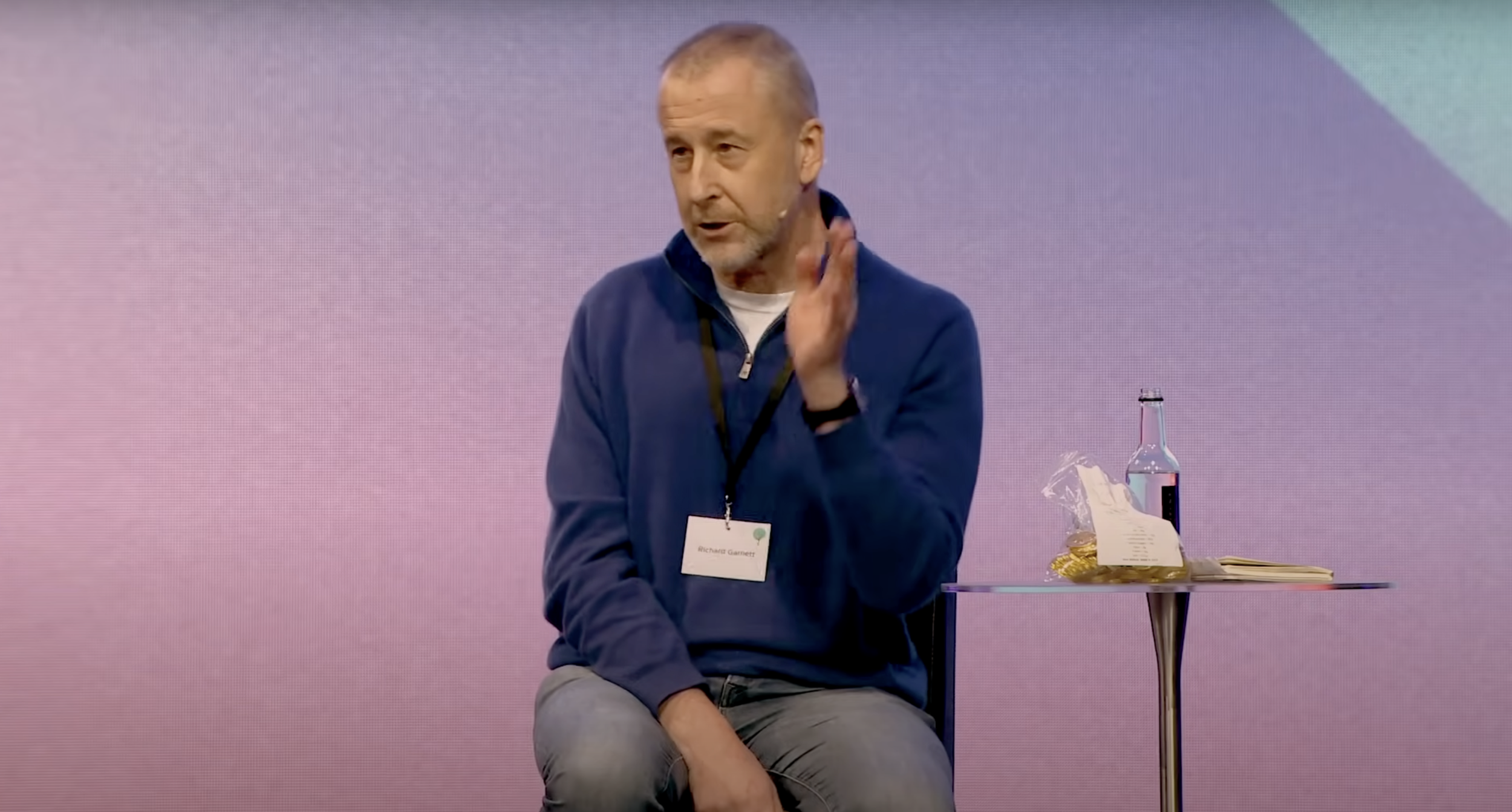
In this edition of the “riff,” Patrick Lencioni joins Henry Kaestner for a short conversation about some of the hidden idols of entrepreneurship.

Then, Joey, Justin, and Henry dive further in, examining how we easily turn good things into gods. Justin and Henry share how they have learned to fight against the temptation of “safe” idols by practicing disciplines of confession, community, and prayer.

Want to join in on the riff? Send your thoughts to podcast@faithdrivenentrepreneur.org or comment on our LinkedIn. We’d love to hear from you.


All opinions expressed on this podcast, including the team and guests, are solely their opinions. Host and guests may maintain positions in the companies and securities discussed. This podcast is for informational purposes only and should not be relied upon as specific advice for any individual or organization.


Episode Transcript


Transcription is done by an AI software. While technology is an incredible tool to automate this process, there will be misspellings and typos that might accompany it. Please keep that in mind as you work through it.

Joseph Honescko: Have you ever had an idol sneak up on you? The things we worship typically have this kind of trickster quality to them. They’re not always as obvious as we’d like. And when we think of common entrepreneurial idols, we might picture things like greed, money, or power. But what about some of those unexpected things that take our affections? What about the good things that we turn to gods. Even something as innocent as our kids sports teams. How do we stay aware of these kinds of things that creep into our hearts? And more importantly, how do we see the joy that comes when we put these idols in their proper places and keep God at the center of our worship? In this episode of the Faith Driven Entrepreneur podcast, we’re riffing on some of those insidious idols. We’ll start with a conversation between Patrick Lencioni and Henry Kaestner before Henry, Justin and I further unpack some of these concepts. As always, we want to hear your thoughts too. So jump into the rift by sending your comments to podcast at Faith Driven entrepreneur.org or commenting on LinkedIn. I’m Joey Honescko and you’re listening to the Faith Driven Entrepreneur podcast. Let’s get into it.

Henry Kaestner: Before we went on camera, Pat and I were just talking about the challenges of being an entrepreneur and being a parent and getting sucked into the youth sports vortex. Some number of our listeners right now know exactly who we’re talking about, but we had similar sports. We both, share our kids, share passion for lacrosse and in soccer, you know, if I’m honest, at times that’s become an idol for me and a big challenge for me and, guys working through it. And I think he’s going to redeem it. And yet, when we talk about the cost of discipleship, when we talk about what it looks like to take up our cross in an appropriate way, and, and we also know that Jesus’s yoke is easy. But yet when we talk about being willing to have costs, I think about some of the folks that are potentially losing their lives for their faith. And this happens around the world. And it yeah, makes me think of one particularly embarrassing story in my life. 12 years ago, I met a friend of our Bobby Gruenewald. We met each other at this conference called the Lausanne Conference in Cape Town. But my kids, who are probably three, five and seven at the time, had used soccer. On Saturdays. They’re playing soccer games. So it was a conference is going on for ten days, but I didn’t want to miss any of their soccer games. So I went to the airport when the third soccer game was gone, and I made it back in time to catch the next soccer game. Yeah. While I was in Cape Town, having missed a good third of the conference and incredible time, end up meeting this guy named Farhad, who is Iranian. And we went on a mountain bike trip about ten of us together was amazing. And he got a flat tire. And during the two hours it took for the folks to find us to repair the flat tire, he talked to us about what it look like to be a believer in a closed country, and how every two weeks he needed to move to a different place. And I sat there just listening to him and just being in amazement about it. So, as you now know, I left the conference just a little bit early. I got back and I made the soccer games when he got back from the conference. He’s put in jail for the next 11 years. He didn’t see a single soccer game. Yeah. And I think about where are my idols? What are the different things that might otherwise hold me back now? To be clear, being a great, involved parent is incredibly important as a faith driven entrepreneur no ifs answer and buts about it. And yet, when I think, and we’ve talked about this before in other segments, about all of a man’s ways impure, but his motives are weighed by the Lord. So much of my identity gets wrapped up in the performance of my kids. Oh, gosh. And maybe this happens to you. Maybe it happens to you. I won’t throw you into it. But, you know, there’s a once every 20 year conference on global evangelization. You probably can miss a soccer game.

Patrick Lencioni: Yeah. Well, and they think you can, too. What I realized since then is because I look back in my life, there was the same thing. You know, I think there’s certain sins, if you will, that we don’t even recognize as sin. Like. I don’t think we worship sex. I think society does. But I think if you’re a follower of Jesus, you know, that’s not good. And greed is not good. But it’s pride that’s the root of all that. And the sins that are still not seen as sin are like worshiping your children. Which they don’t want, but we do it because like. And then worshiping knowledge. That’s just as much of worship as anything else, but it’s still considered positive. But anything that separates us from Jesus is bad. Yeah, and I love who said it was Saint Augustine who said, whether a bird is tied down by a string or by a chain, it doesn’t matter because it can’t fly. So you and I go, oh, it’s just a string. It’s youth sport or it’s knowledge. It’s like, it doesn’t matter if it’s drugs, alcohol, pornography or achievements. It all prevents us from being with God. I just heard this recently. So there was this Catholic family in China, but they weren’t allowed to be Catholic. So they had an underground church which is in their home. Yeah. So they bring this priest in and the police would show up and they would scatter. And one day the police showed up and they didn’t scatter in time. And the man who owned the home, not the priest, got taken to jail. And they abused him. They tortured him. They kept him there. They said, tell us who the priest is, because that’s what they really want to do. They wanted to go after the priest. He wouldn’t do it. I mean, they tortured him. They let him out. And he ended up getting the opportunity to move to the United States. So this was a man that was willing to give up his life in order to not sell out the church. He comes to the United States and he’s like, oh my gosh, I can go to mass every day. There’s daily mass here. So he does that for a while, and then he goes, but I want to build a business. So I’m just going to I’m going to start going to Mass on Sundays. Okay. That’s fine. And then he says, oh, if I kept my business open on Sundays, I could make a lot more money. And so we stopped going to church. And he realized. He said they threatened me with torture in China and I would not cave. But the comforts and the conveniences of business and modern life in the United States took me away from God. It’s the convenience. It’s the. I don’t want to be excluded. Yeah, yeah, is in many ways more powerful because anything that separates us from God is bad.

Henry Kaestner: And it’s insidious, right? Because it’s like it’s in the parable of sowers right. It’s divine. They come up slowly, right on growth too terribly quickly. It happened very, very slowly. Just gradually kind of takes you over. And we know if we can just make it through that final thing because you were talking about before, like the parable of the sower, like you know enough to be able to maintain your faith so that if the crows come and take the seed, you’ll make it through that. But if we can make it through that final step, then we get a return that’s 100, 60 or 30 fold. That’s a big deal.

Patrick Lencioni: The enemy is fine if I make it to level three. I used to hear that every year at mass and I’d go, hey, I made it to level three. I mean, that sounds silly, but I would go like, well, at least I didn’t stop at the first two. Yeah. And I look around and I know a lot of people have stopped at the first two, and it was like one day I was at mass. I was like, oh no, I have to get to level four. It’s time to let go of the cares of the world. And. That is hard, but I think it’s God’s mercy that’s bringing this around because he’s like saying, I want you to choose me.

Henry Kaestner: So I love the fact that we’re doing this together, because I know how that much more of a fighting chance because you’re challenging, encouraging me to get to level four. And hopefully our listeners will be encouraged and challenged to do the same. And may we all do it for God’s glory, but may we all do it so that we might be able to have a return for his glory of 100, 60 or 30 folds and what does that look like? We don’t even know because it doesn’t say whether it’s financial or not. Maybe it’s in being able to see people we care about coming to know Jesus. Maybe it’s just being able to see the product or service we make be able to redeem something that’s broken,

Patrick Lencioni: and maybe we won’t be around when it happens. Yeah, maybe the benefits of that. But we have to just trust that it’s going to happen in God’s time. But we have to do our part, right?

Henry Kaestner: That’s right, that’s right. Awesome doing this with you.

Joseph Honescko: All right, so you just heard Patrick Lencioni and Henry Kaestner talk about, really a variety of things, the insidious idols that kind of creep in, these subtle sins that we maybe miss on. And we’re going to unpack that here. I’ve got Justin and Henry to dive in with me, and this will be another edition of the riff. So chime in with your thoughts by emailing. Podcast at Faith Driven entrepreneur.org or commenting on our LinkedIn post about this episode where we’re talking about the cost of discipleship and one of the easy ones that come up for faith driven entrepreneurs when we think about sins and idols could be money or power or workaholism. But, Henry, you said something in that conversation and you talked about the youth sports vortex and getting caught up in that, in the way that as entrepreneurs, maybe we’re coaching our kids or maybe, we’re just living vicariously through them. But what do you mean by getting caught up in that youth sports vortex?

Henry Kaestner: Well, before we go there and you can tell me, hey, this is not at all part of the recession that we scheduled, and you would be 100% right. But I’m thinking about the cost of discipleship. And I like talking about the cost of discipleship, but I like talking about the return, the benefits of discipleship. And maybe that has some overlap with what we’re talking about here on, because on one level, I can’t have my entire life focused on doing everything to make sure I maximize being at my kids sporting events. Although, to be clear, I get a chance to do a lot of that. But when it’s in its rightful order, I think that as I deal with that idol and with everything else that might otherwise be thought of as a sacrifice or as a cost, there’s a much greater benefit in return than I get from discipleship. So that may just be me trying to work in that whole concept of cost of discipleship. But the benefit for me, and what will ultimately drive me to different types of attitudes and behaviors, will come from the joy that is set out before me. If I reorient my priorities in life, and when I do that, then I have more of a joy filled life. So it’s not so much taking up my cross and bearing it, although there’s an element of that, of course, in our Christian faith. But it’s the life that’s fully life. And I’ll tell you, one of the things that has held me back from the life, that is fully life, is by placing too much of an emphasis on sports and part of it. I mean, I tell you, I’ve had great joy, and I think God given joy on the sideline of athletic events. And all my boys play almost all the sports. But lacrosse has been kind of our family sport. And there’s something about, number one, is this incredible sport that was created in honor of the creator and unlike any other sports origination story. And then there’s the concept of going off in a battle with sticks are almost like a weapon, right, type of thing. And it’s so many beautiful things about the sport of lacrosse that I just really, really love. And just to be able to be there, celebrating that battle with my boys and seeing that happen, it’s been really, really great. And yet I have taken that good thing. And to be clear, it is a good thing. And all too often I’ve made that into the thing. And there are times where I just I’m celebrating with my boys and it’s great, and we just kind of go on to the next thing, and it doesn’t take too much of an order. And there are other times I’m ruminating on it. I remember that adrenaline hit that I had one maybe, say my youngest one, Graham, is particularly successful and we get MVP of a tournament or state All-American or whatever the case is. And then I find myself in the weeks to follow, having had an emotional high from that, and then just obsessing about that and trying to relive that moment again and again in my life and trying to figure out how to get that again. You know, how do we get them another tournament? Oh my God. Or we go to another tournament? Wasn’t named MVP like oh gosh, I can’t believe he wasn’t named MVP. And. Well I mean there are a lot to it’s a team sport. There’s lots of things that go in and I find myself on the unhealthy side of being a sports fan or a sports dad in a way where I like, oh my goodness, that’s not helpful. And. Yeah, just in your sports, dad. Not only your sports dad, your sports coach. So you see it from an altogether different angle. You see it through your three children. But then you get an opportunity, whether you like it or not, to interact with 15 or 20 parents every time. Oh.

Justin Forman: Yeah. It’s, you know, it’s been a fun journey. I mean, when I think about the early days of when we were building right now media, there was so much time on the road that I feel like I missed some of those moments and missed some of those opportunities, and there’s no greater way to kind of find and recapture those moments than to sign up to coach. And so for me, it’s been a joy. I mean, gosh, when we were estimating at the other day, I think it’s probably been like a thousand games and ten years of coaching from soccer. And for basketball, you’ve got those weekends where you’re coaching 4 or 5 games on a Saturday and there’s there’s so much joy in it. And, you know, I think as we’re thinking about this conversation about like FDE students, we’re talking about this new series and this new course that we’re developing to help students at a young age understand, embrace their call to create their identity in Christ and everything at that younger age. And I think as we venture in that path, we got to look at what is the role that sport often plays in that process for so many, I think it’s so huge in developing great habits of teamwork and competition and some constructive things and hitting adversity and resilience, but I think there’s also an element of it. Like as you’re saying, any good gifts can become an idol. And I think what’s crazy is as parents, I think oftentimes we’re guilty almost trying to help our kids find a safe idol. We’re at that stage. We’re out of fear. We don’t want them to go to this path. We don’t want them to go that path. We’re afraid of, you know, getting in the wrong crowd. So we almost are trying to help them find this safe idol that just worship this idol for a couple of years. Be safe, stay out of trouble. It’ll be great. And then surely you’ll be able to disconnect from all the achievement, the adrenaline hits of everything of what you’ve talked about, and it’ll be just fine. And I don’t think that’s the case. And I think that we have such an opportunity at a young age. And as parents, I think it’s on us and some extent of saying, how do we put those things in that proper balance and that that is a tough thing to do, as you said, that we’re struggling with ourselves still 20, 30 years later as parents. Yeah. But how do we help them guide them in this one? I think it was like one of the first formative identity shaping conversations, because it is you have an identity in a position, the role you play on the team. Are you on offense? Are you defense? And with that, all of a sudden it’s prescribed a bunch of values over your point guard? Oh, you must be fast and shifty in this. Oh, you’re forward. You must be this and this and this. And it’s amazing how much I think this. It’s an identity playground that’s playing out there right in front of everybody, and everybody is there to see it. And it’s a wild, wild thing. There’s so much broken about youth sports, and yet there’s so much good about it. And I’ve tasted both sides of it as a dad, as a coach, and there is nothing to take away the opportunity that it is. But I think it’s a moment for us to recognize there is a massive identity shaping conversation that’s happening, whether we notice it or not.

Henry Kaestner: You find it so much to go off on that we could spend an entire podcast just talking about what it looks like to be a coach, and to see parents that seem to have that imbalance and parents that seem to not have that balance. I’m sure you’ve had all sorts of people coming to you tell you about playing time, and a frustration that goes beyond an eight year old girl soccer game, right? You know, like, oh my goodness, yeah. How can I help introduce you to a therapist. But you also because we’ve hung out so much in the past and we are both sports fans. You have a term that I like a lot, which is that my kids are likely to go pro in something other than basketball or soccer. Oh yeah, which means you’re going to go pro and something else. How do you have that conversation with yourself? Because on one hand, because we’re talking about idolatry here. On one hand, you’d love to see one of your children succeed at the highest level. Right. And yet, on the other hand, you trying to help yourself understand that that’s not maybe the right expectation for yourself and for them. Where does sports play in all that? How do you wrestle through that?

Justin Forman: You know, I think, first of all, to give trademark rights to where it’s due, the NCAA slogan, we all go pro in something other than sports. It may have been something

Henry Kaestner: It was not you?

Justin Forman: I wish.

Henry Kaestner: So disappointing.

I know, I know, I got to throw that on the table. But years ago there was a campaign that talks about that before that […] era and everything went money and all that direction. There was this idea, they’re trying to say there’s another identity here and that we’re preparing for what’s next. And I’ll admit it, like, I mean, there’s been many times and seasons where you get into it, you get wrapped up in the competition of it, the standings, the playoffs, the stunt, whatever. And you want to win and you want to compete and you want to win. I would say recently, as our kids are getting older and you starting to see for some of them, the window is closing, you start to realize that you’re you’re creating moments, you’re creating those identities and like, well, two stories, two quick versions of that one joint. Henry. No, that’s like my title, the Pixie Chicks. Girls soccer coach. That was a name thrown on me. Not by my choosing. That was my wife’s obviously as uniform coordinator she picked. But it was a fun season we coach these girls for probably, I don’t know, 7 or 8 years. We get to this championship game and you talk about creating moments and I will just never forget this one girl that had been playing just a heck of a game, one of our best players, but she was getting beat by this girl on the side. And she was in this game where it’s a 1-1 game. It goes to overtime and she comes on the sideline right before overtime. She’s crying tears, bawling out. She’s just like, coach, I can’t do it. I can’t do it, I can’t, I can’t, I can’t on my left foot. I’m not as strong I can’t do it on this side. Move me, move me. And you have that moment to say you’re not seeing what we’re seeing. And what we’re seeing is you’re wearing that girl down. And I think it’s about to break. And she’s like, wiping away the tears. She goes back out there and you wouldn’t believe it. But then a couple minutes later, she beats this girl using her left foot, cuts it inside, makes a move, and shoots the shot right over the goalie in the upper corner. We win the championship and she just is screaming. She runs over and she’s basically saying, I can. I did, and you could just see that light bulb click. And there are a few things in the years of coaching that give just great joy then to tell that story to her dad. To see that moment, to see this girl just be equipped, to be empowered, to feel that feeling of you could. And sometimes it comes that way. But then I’ll tell you on the other side of it, we had a basketball game yesterday. I won’t tell you what the score is. It was rough. We got smoked. It was terrible. But what was fun for me is probably five years ago I had just been going crazy. But we’re sitting there with our good friend assistant coach that we’re coaching together with, and we just have that moment as you’re watching these girls learn through resilience. And I just don’t think we have a playground for that. Enough. I was struck by two things. I’ll finish with this maybe I hand it back. We’re with Jeremy Lin a couple weeks ago. We’re filming some of his story in Taiwan, and he was talking about this idea, and we were asking him for thoughts and perspective on the student series. And he just said, if I could give one piece of advice, he goes, you know, I’m not a parent, but if I could give one piece of advice, it set your kids up to fail and fail often.

Henry Kaestner: And through adversity.

Justin Forman: Yeah. And then you heard it a couple of days later, the CEO of Nvidia was talking about this at a conference, and he’s saying the same thing. It’s like we do not encounter resilience enough. And how do we set our kids up to experience resilience? And I think that’s something that I’m going through right now as a dad, is just like, how do I set my kids up for that resilience? How do I be there to help them? But we just don’t we do not set our kids up for that enough. And so we try to make it safe. We de-risk everything. And I think that there’s something to be learned for the opposite.

Henry Kaestner: I tell you, you tell them about this story, about this soccer girl. And maybe this is because I’m a parent of three boys, and I just I don’t completely get it, but my heart right away is about the other girl who’s been worn down is about to break. And what you’re suggesting is that there are lessons to be learned in overcoming adversity, which was on your side, but also on the flip side, and that athletics allows us to have an opportunity to do that in an environment if we are able to steward our children through those moments. But we need to steward ourselves through them too. And so question for you, Justin. You know, I’m fond of saying with the parable of the sower talking about the thorns, right? It’s the worries, the world, deceitfulness. My problem, of course, is that the thorns that are growing up around me that would otherwise strangle me out for the 30, 60, or 100 hundredfold return, are invisible to me. And the only way I can see them is if I’ve got buddies of mine or that are there to point them out. What does that look like for an entrepreneur listen to this podcast is like, you know what? I probably have an issue with this. Some of the things Henry is talking about, about ruminating about why his child didn’t get, you know, some sort of an award or ruining why, you know, the kid didn’t get more playing time or whatever. Realizing that that’s not completely healthy. What do I do about it? What would you say?

Justin Forman: It’s gonna sound weird, but have a dinner table conversation with your spouse and talk game time strategy with them. And it’s like when you start talking game time strategy with your spouse about what what kind of press you’re going to run, what kind of half court trap, what kind of man defense you’re going to run, and then you just start talking about the team and you start talking about things, and you start talking about what’s going on. I tell you, it has been very convicting for me that when I get in those conversations that she is able to say, oh, I can see kind of what we’re after or, hey, you’re carrying a little bit too much about the outcomes of this or that and the seeing those blind spots. I mean. I don’t think that most of us have a healthy enough perspective on sports to even know what the blind spots look like, or to even see them. And sports is one is beautiful game. It’s a beautiful game that gets you so wrapped up, so intoxicated with your emotions. I mean, there are few things in life that deliver such highs and lows, emotions delivered seconds or minutes apart. Yeah. And when you have that, I don’t think that you’re in a sober enough place to really understand what’s happening around you. Like, I mean, there’s videos of, like when we won a big game of me celebrating heck, for you, even [….] celebrating whatever it is that you just realize you didn’t even remember how much you were into it. And I think so much it’s like we talk about in FDE, just like in partnership. And so whether it’s a spouse, whether it’s an assistant coach or somebody that’s going to keep that grounded. I think for me it’s I’ll put it this way. I get wrapped up in those moments. I know we all do. Yeah. My hope for the years ahead is to create moments that something that somebody talk about in a way that like you’ve got, you know, picture frames in the wall of moments that mean something. How do you create and be a collector of moments with the families you’re around, the kids around? Because I think few people, I mean, the ribbons get thrown away, the trophies get thrown away. But there’s occasionally that moment or two that people really latch on to saying, like, man, I learned something through that. So I think the sobriety of having somebody that you can talk to about that as a big thing for me.

Joseph Honescko: There’s an element of that that’s really confessional too, right? I mean, like going through that conversation, game time strategy with the spouse or within community in some kind is almost confessional. If you’re saying like, hey, look, I know that my heart wants this kind of thing, and I need to reorient that. I’m thinking of like the role of confession and repentance in this space because we’re talking about hidden idols, these things that can entangle us, that we don’t really even notice are happening to us. And it seems like the role of confession and repentance would be the big part of that. And I think maybe we close our eyes and picture confession and think of it as like, you know, going to a booth with a Catholic priest. But it could be those dinnertime conversations with the spouse or with an assistant coach, or just kind of confessing to the people that know us. Is that similar to what you’re saying, Justin?

Justin Forman: Yeah.

Henry Kaestner: Or you get on a podcast and confess it to thousands or hundreds and hundreds, thousands of people?

Justin Forman: You know, I think. I mean, listen, I think there are things in, you know, ten, 20 years ago, five years ago, five days ago, I don’t know at the time, as I think you could probably be convicted, all of them, that there are moments where the outcome of an event would affect me. That’s just not right. Right. Like, I mean, like last night to date this episode, I mean, a team I care deeply about. Baylor basketball lost a game. I’m wrapped up into it. My 15 year old wrapped up into it. We are diving into it, and I’ve got date night with my wife, with three scheduled right after that. And so, you know, she was gracious. We move the times or whatever it is. But we went out right after that.

Henry Kaestner: You left Tristan to sit there and wallow in his loss while you went out on a date night with your wife.

Justin Forman: I know, bad parenting decision. Great marriage decision, which in fact.

Henry Kaestner: Great marriage decision. I love that, you know, I was wrestling is you’re talking about the marriage, you know, so Kimberley tends not to be as involved in sports as I am. And yet she still has some of the same idols. And so I was wondering, you know, the concept of talking about this with your spouse, which is always, by the way, always a great thing to do. But there have been times when Kimberley is actually more into it than I am, and that actually helps me to see the challenges that I have in dealing with it, because Kimberley is not completely immune to it. And then I’m like, oh my goodness is probably, you know, that feels like a little over the top. I bet you on the other 90% of the times when I’m over the top and she’s not, that’s what it looks like a little bit. That’s actually helpful. And the other thing that’s helpful is I’ve got a buddy of mine who doesn’t give a hoot about why he’s got two boys, but his boys don’t play sports at all. And just talking to him about what’s going on. And then he’ll talk about some of the things that he’s wrapped up into. And I’m like, you know what? Okay, so you know, Joey, your point by him repenting and confessing some of his idols, it helps me to see more clearly my own. Yeah. So I think that as with anything else, it’s, you know, about having a good community of men and women who share your faith, who you’ve given permission to hold you accountable, knowing that if left to your own devices, you can end up having any host of a number of idols, but having people who love you enough to help point that out to you when you need it pointed out, and I too often need that pointed out. And I don’t have enough people in my life that I’ve given permission to to really call me out. And so that’s what I need to do. I need to recognize it for the idolatry that it can become. I need to recognize you sports for the amazing awesomeness that can be, too. I mean, these are young men going off into battle. Kind of like what you see, David, and nobody’s going to die, right? And they’re learning life lessons about adversity and victory. And how do all those things youth sports is awesome, but I need a group of people to hold me accountable, starting with the people who listen to this podcast. So let us know where we hit on it, will let us know where we missed. And so, as Joey encourage you to do, just email us, comment on this on LinkedIn. Let us know how you think about this as well.

Joseph Honescko: Yeah. And as we as we kind of come to a close here, I’d love to just get one real, I don’t know, practical doesn’t seem like the right kind of question this is going to be. But, you know, again, we’re talking about something that is hidden. Henry, you just said we have to recognize these patterns in our lives, and that can be difficult. So I’d love to just get your thoughts on how do we, I guess, have the eyes to see how do we keep our eyes open to see, not just with youth sports, but any of these hidden idols that we maybe overlook because we’re so focused on the other larger things that we’re trying to avoid, you know, love of money, the pride, whatever, all these other things. How do we keep our eyes open for these more subtle idols?

Henry Kaestner: Well, it’s doubling down on the community of people that you’ve given permission to ask you those types of questions about exploring them, and then just finding the times where you feel that with a healthy distance removed from the event, you’re finding that you’re still ruminating and just like, is this healthy? And so these are my thought patterns, healthy or not. And so we know that if we have lust issues, that some of those thought patterns are definitely not healthy, we cancel those out. But the thought patterns about whether my kid got overlooked or got this on or didn’t whatever or didn’t perform anything like that, we need to be just as vigilant for this being just as much of a sin issue as being something that takes us away from God, is that any of the other things that are more commonly talked about?

Justin Forman: Yeah, I think I just jump on with that idea of like, let’s be careful that we don’t recognize that we trade a known idol for a safe idol. There’s so much good about sports. Like, as Henry said, I don’t want to take anything more. There’s no greater playground for people to learn about failure and develop resilience. But let’s not trade a known dangerous idol for a safe idol. And I think that we just have to have that eyes of thinking, okay, everything that is a good gift from God above can be misused in that. And, it’s the tension of life. But let’s just recognize there’s so much identity shaping information and competition there that’s happening. And not to say that like you’re looking for participation trophies, but like a five and three season might be better than an undefeated season because it develops some sort of resilience. There might be other ways that you can look at lessons in this, that can set your kids up for a whole lot better platform, and help yourself as well, to make sure that this isn’t going to be the thing that makes your weekend wreck. Your weekend takes away from your time with your family.

Joseph Honescko: Yeah. Not making it all about the outcomes. Appreciate both of you. Henry, you said something at the beginning of this that’s just worth reiterating. Is that the only way for this stuff to really change is if we see the joy in the love that comes from a changed life. This isn’t a matter of trying to cut things out of our life just for the sake of cutting them out, but rather it’s something that is saying, hey, the good and true and life to the full is on the other side of this. So just a reminder as we’re talking about these things, it’s not something just to cut, cut, cut away, but add something beautiful. And sometimes that takes having the eyes to see of what needs to be pruned. So thank you both for joining us. And yeah, we’ll, catch you all next week. Thanks for listening to the Faith Driven Entrepreneur podcast. Our ministry exists to equip and resource entrepreneurs just like you with content and community. We know entrepreneurship can be a lonely journey, but it doesn’t have to be. We’ve got groups that meet in churches, coffee shops, living rooms, and boardrooms around the world. Find one in your area or volunteer to lead one and bring this global movement to your own backyard. There’s no cost, no catch, just connection. Find out more at Faith Driven entrepreneur.org.

Recent Episodes

Episode 288 – Entrepreneurs and Pastors: More Alike or Different? with Mark Batterson, Chip Ingram, and John Mark Comer

“For every church we plant, we need to start a business.”

Mark Batterson

Can Faith Driven Entrepreneurs really partner with their churches? What would that partnership even look like?

In last week’s episode, we talked about the need for partnerships between entrepreneurs and pastors. In this episode, we highlight the voices of three pastors–Mark Batterson, Chip Ingram, and John Mark Comer–who have seen the power of working alongside entrepreneurs for the good of their communities.

We believe the church and entrepreneurs can do more together because they’re better together.

Hear how these pastors are partnering with entrepreneurs.

Other Episodes:


All opinions expressed on this podcast, including the team and guests, are solely their opinions. Host and guests may maintain positions in the companies and securities discussed. This podcast is for informational purposes only and should not be relied upon as specific advice for any individual or organization.


Episode Transcript


Transcription is done by an AI software. While technology is an incredible tool to automate this process, there will be misspellings and typos that might accompany it. Please keep that in mind as you work through it.

Joseph Honescko: Whether you’ve tuned in this show for all 200 plus episodes we’ve ever recorded, or this is your first time here. My guess is that you’re listening right now because you believe that God can work in and through the marketplace. You believe in the power of faith driven entrepreneurs. You’ve seen the impact they can have on communities, cities, and nations. But if you’re like most entrepreneurs, you might feel like this kind of work has to happen outside of your church context. In this episode, we hope to prove you wrong. This is going to be a part two from last week’s conversation with David Kinnaman, where we talked about how we might heal the historically challenging relationship between pastors and entrepreneurs. Go back and listen to that one, if you haven’t already, because this episode is going to build on that momentum by sharing some incredible stories of pastors who really understand and support the entrepreneurs in their congregations. You’ll hear the entrepreneurial spirit that runs through Mark Batterson and his church in Washington, DC. Then Chip Ingram will talk about how entrepreneurs and pastors can experience the changing power of the Holy Spirit. And finally, we’ll land with John Mark Comer, sharing some powerful and challenging insights about how every pastor and every entrepreneur can see their work as a loving contribution to God’s kingdom. I’m Joey Honescko, and you’re listening to the Faith Driven Entrepreneur podcast. Let’s get into it.

Mark Batterson: In 1996, my wife Laura and I inherited a core group of 19 people, started pastoring National Community Church in Washington, D.C. and I better backdrop this. We were coming off of a failed church plan. When I was in seminary in Chicago, ripe old age of 22. Amazing how much, you know, at 22, you almost have everything figured out. So we needed a little unlearning. That church plan attempt failed and I learned two lessons. One, the cure for the fear of failure is not success. The cure for the fear of failure is failure in small enough doses that you build up an immunity to it. You realize that God’s there to pick you up, dust you off. I don’t know anybody in ministry or in business that doesn’t have a few failures notched on their belt. And I would say this failure typically is poorly managed. Success and success nine times out of ten is well-managed failure. So failure is part and parcel. I’m guessing a few of you have a few failed businesses like I do on my resume. And so we started with 19 people in DC, and we have a couple of core convictions. Church ought to be the most creative place on the planet. I believe that two church belongs in the middle of the marketplace. And let me explain that Jesus didn’t just hang out at the synagogue. He hung out at Wells. Wells were natural gathering places and ancient culture. And so actually, our first entrepreneurial endeavor was turning a crack house on Capitol Hill into a coffeehouse. And why would we do that? Because we wanted to create a place where church and community could cross paths. Plus, the Holy Spirit plus caffeine equals awesome. Pretty amazing having a coffeehouse where we keep Capitol Hill caffeinated. And I should say this for the record, if you’re going into any business, you better be able to compete in terms of excellence in product or even over the top hospitality, like let’s do it and do it well. And so Ebenezer Coffee House voted number one coffee house in DC many times. And every penny of profit we give to kingdom causes. And so we in Ward seven, a part of our city that’s underserved and under-resourced. We have a DC Dream Center that is impacting thousands of kids. It is, one of the most important things we do. That ministry, which was a $5 million project to build, was funded in large part by our coffee house. And so I’ll just share a personal conviction for every church we plant. We need to start a business. And part of that comes from the fact that we have received gifts from those who have an amazing mind for business, and a heart for the kingdom that has propelled us forward as a church. And so we own and operate Ebenezer Coffee House. We also operate the only movie theater on Capitol Hill, which is unique. We believed that in a sense, the screen is almost like post-modern stained glass. So the medieval church used stained glass to paint pictures for those who are illiterate. We use moving pictures to communicate the message of the gospel. And so now we find ourselves with a city block. Ebenezer is one corner of that circle and the building where I am right now, the capital. Turn around. It was built in 1891. Navy yard car barn, and it’s 100,000ft². It’s an amazing property across from the Navy Yard, less than a mile from the Capitol and in the riverfront neighborhood, which is the fastest growing part of DC. Long story short, I turn the corner of this building in 96. We bought it 18 years later to the day from the day of that prayer circle. And so we are building it out as a mixed use marketplace instead of just building a space where we gather on the weekend to worship, we pulled out all the stops and built by the 1000 seat auditorium that others could use for concerts. Conferences will host about 100. Rid events this year. Those 100 events will revenue stream about $1 million. And it’s a win win because not only does it help finance the kingdom, people don’t know it, but everybody who walks in, I’m going to pastor them. I’m going to love them. We’re going to show hospitality to them. And so we’ve had NBC rent the space to film. Amazon has rented it for events. DC government does events here. First lady has been here several times. What that allows us to do is to be a church in the middle of the marketplace. And so I hope you hear the heart behind this. A church that stays within its four walls is not a church at all. So we’re cognizant about things like as we build out this marketplace, there is the unintended consequence of gentrification. So how can we employ people that maybe are returning citizens? How can we employ people that maybe are in an underserved, under-resourced part of our city now? Our kids ministry space, which we use on the weekend, also doubles as a child development center. So the mayor said a couple of years ago, mayor of DC, that there weren’t enough spaces for childcare. And so we thought we can meet a real need in real time and create a win win scenario. So we partnered with our friend Frank Bieler, faith Family, and we turned our children’s ministry space into a child development center Monday to Friday. Now, the next phase of this vision is to build out a mixed use marketplace. What we want to do is empower our entrepreneurs. There are several dozen nonprofits, and for profits that just in the last decade have evolved out of this ecosystem that we call Nashville Community Church. And so what we want to do is actually empower them. And so we’ll have a couple of sit down restaurants, as well as about 15 pop up, mixed use retail and restaurant concepts. And the idea is this, can we do and be the church beyond just a weekend gathering? Whatever it is that you do, that is your pulpit and the people you work with that is your congregation when. So when we approach business that way, there are people that will pop into a coffee shop or go see a movie, or want to get a pair of shoes or any kind of service industry. You name it, dog grooming, whatever it is. And so what I’m believing is that there are a lot of entrepreneurs with some God ideas. It’s going to take some faith. And so thanks for letting me take a few minutes sharing a little bit of our story and with the help of the Holy Spirit, take that God idea, take it captive and make it obedient to Christ. Second Corinthians ten five. It’s going to take blood, sweat and tears. It’s going to take time, talent, treasure. But I pray God’s anointing on your life in Jesus name, Amen.

Joseph Honescko: Mark provides a great image of what it looks like for pastors to champion entrepreneurs. And this next section, Chip Ingram talks with Henry Kastner about some of the chapters he contributed to the Faith Driven Entrepreneur book, where he talked about stewardship versus ownership, being faithful versus willful. And maybe most shockingly, the surprising overlap between pastors and entrepreneurs. Chip will also share from another book he has about how the Holy Spirit has the power to change us into the people God has called us to be.

Henry Kaestner: So you’ve got chapters on stewardship. Faithful and willful, and what pastors and entrepreneurs have in common. What are some takeaways that people can look forward to reading about with that?

Chip Ingram: I think for high energy active entrepreneurs, the challenge and this is true of pastors that have an entrepreneurial spirit as well, is what’s my part and what’s God’s part. I mean, we talk about you’re a steward, that okay, I’m supposed to rest and trust in God and His wisdom. Not strive. Not be a workaholic, not feel this unbelievable pressure to make it happen. And yet I’m not to be passive. How do you do that? That’s what I think we address in this book. I think in an understandable way. I think it’s foggy and vague and try and entrepreneurs hit it and miss it, and we just go sort of we zoom out of balance, one direction only, the pendulum to zoom out of balance in the other direction. And I think this book will really help entrepreneurs in that, to discern that, to realize, you know, I don’t have to keep telling those around me. You know, once we get through this big launch, once we get through this, once we do this, once we do that, then things are going to change, which is the lie that we tell ourselves and those that love us. It is possible to be at rest, to have a peaceful heart, to take risk, to be very engaged and intense at times, and also to know when to say no and not feel like the world depends on me. And that’s as much or more an art as it is a science. And I think you and JD speak well to that, and I gave it my best shot as well.

Henry Kaestner: Yeah, it was a very, very good shot. I’m very grateful. It’s a real treat for me. So as much as I’m semi tempted to talk more about some of the issues that we unpack there, I’m also a little uncomfortable about the self-promotion, but I feel much better about talking about a book that you’re coming out with that I think is really important. And it’s called yes, You Can Really Change. Talk to us about it. What’s in the book? What’s it about? What’s the reason for writing it?

Chip Ingram: Well, it is about life change. I mean, we are made. Entrepreneurs know this more than anyone else. The status quo makes us crazy. I would say the status quo. I don’t want to be irreverent. It makes God crazy. We were made to change. His goal is to make us more and more like his son. And so this book is it’s really about how change happens. My experience after many years as a pastor, rubbing shoulders with, you know, business leaders, CEOs is there’s this once the external change is like, okay, the big morals or maybe my language or, you know, I basically tell the truth in business deals. There’s those internal things that often get stuck. Greed, lust, resentment, anger. Unresolved conflict. Comparing yourself with others. God has an agenda and a way to transform us from the inside out. And my experience is most Christians don’t know what that looks like. Most Christians are trying very hard to be a good person and involved in some good religious activities and some spiritual disciplines. But when you peel all that away, there’s some things that God longs to change and they’re really stuck. They really don’t know how that works.

Henry Kaestner: So when people read it and they’re feeling stuck and they want to get out of being stuck, what’s it take away that you want the readers to get at and just you hope that changes in their lives afterwards? One thing, again, just the takeaway and not in any way that short change is the very important of unpacking how you get there that you’re able to do in the book. But give us a takeaway, please.

Chip Ingram: The fundamental takeaway is verse one of Ephesians four. It’s grasping how deeply you’re loved, who you really are and whose you are. And then walking in a manner that is worthy of Christ. It’s spiritual maturity. It’s becoming like Christ in your speech, your thoughts, your actions, your business. And here’s I’ll make a fine distinction. Not working hard to look like you have good speech. Good action. You know, I wrote my journal. I’d like to say it was 20 years ago, but it was about a year and a half ago. And it was one of those defining, honest moments with God and a time of repentance, actually. And I remember writing father, I realize at times I spend more energy trying to look humble and more energy trying to look loving than I actually spend being humble and being loving. And you know, that part of our DNA. If you’re an entrepreneur, it’s make it happen. And if you want to make it happen, you are always tempted or most of us, to make the ends justify the means. And I think what I really long for people to see is living out of the overflow of your relationship with Christ that allows you to be at peace, that brings freedom, and honestly causes you to do things in ways that people shake their head and say, I didn’t think you could be that kind of Christian and be successful in business. You’re breaking a lot of the rules here, but you really believe in this Jesus that you talk about in this kingdom agenda that he has and that his upside down values. You know what? They don’t make a lot of sense to me. You know, if you’re an unbeliever that I’m in or that was the goal. Let your light so shine before men, right? That they could see your good deeds. That the evidence and how we actually live, how our business is run, how we treat our employees, how we respond to a crisis. What do we do when there is failure? How do we treat people who failed? The takeaway is doing that the way Jesus would do it if he lived inside your body. And if you’re a follower of Jesus. That’s the reality. Jesus lives inside your body. You’re his temple. And my dream is that people would learn just how to do that progressively, not perfectly, until we get to heaven and make a huge difference for God’s kingdom.

Joseph Honescko: As we head to our last section here, you’re going to hear from William, Rusty and John Mark Comer as they discuss what it’s like to eliminate hurry from our lives and the joy that comes when we untether ourselves from the unnecessary stress of trying to control outcomes. William. We’ll take it from here.

Mark Batterson: John Mark want to dig into the book a little bit, and I would just ask you to jump in. I mean, for those that maybe haven’t read the book, you haven’t been convinced yet, convince them that hurry is not just a symptom, but actually a root cause for so many of the problems that entrepreneurs may face.

John Mark Comer: Yeah. You know, Carl Jung said, hurry isn’t of the devil. It is the devil. And you know, that’s just a pithy saying, but there’s something in it. You know, when Willard said, hurry is the great enemy of spiritual life in our day, it’s hard to even agree with that, much less live that way. In a culture where hustle is a positive thing, not a pejorative, you know, and where the thought is, you know, do more, do faster, go go go. And of course, you have great writers, even from your neck of the woods. Greg McCowan and Cal Newport and others that are really pushing back on the myth of, you know, busyness equals productivity, you know, and that’s obviously your space more than my space. So I’ve read just enough to be dangerous. But it’s my clear understanding that God bless Elon Musk. But 80 hours a week of hustle is actually not the best way to make a meaningful contribution, or even grow your business or whatever your thing is. There’s deep work, there’s meaningful contribution. That’s a very different thing at a different pace. But again, I come at it more a little bit less through the angle of, you know, vocation or productivity, though I think that matters. And I think it matters for Christians to be thinking about that. I think, you know, you can make a very biblical case for work productivity because time is precious. You have the whole concept of redeeming the time in the New Testament, and life is like a vapor. But I come at it more again, just to the angle of spiritual formation, of becoming more like Jesus, of growth and maturity. You know, let’s again, let’s just take the fruit of the spirit as our metric love, joy, peace, patience, kindness, goodness, gentleness, faithfulness, self-control. Hurry is incompatible with that entire list. So just think about love. You know, pretty much all of my worst moments, my most unloving moments as a husband, as a father, as a pastor, as a neighbor, as a friend are when I’m in a hurry and I don’t have time to attend to my loved ones, to my family, to my community, or I’m there in body, but my mind’s going 1,000,000mph, and I’m texting because I didn’t get my work done for the day, and I’m not present to the person, or I’m present, but I’m too emotionally exhausted to actually have compassion on them and connect with them on an emotional level. You know, I’m just I have three kids. I have a wonderful wife who’s late for everything. God bless her. Trying to get anywhere on time as a family is just like a minor war, you know? And some of my most unloving moments are when we’re late for something. Get in the car. I don’t have time. Stop crying. Get in the back of the car. We’ll talk about it later. You know, why do you always do this? Some of my most unloving moments, you know, and really, most of life is interruption. C.S. Lewis again once said something to the effect of how you respond to an interruption is who you really are, which is like, oh my gosh, you know, I respond terrible to interruption because I don’t have enough time. I don’t have time for interruptions. This is not on my schedule and I have too much to do already. But most 80% of parenting is dealing with interruptions, and a huge chunk of life is navigating interruptions well. And so if we’re so busy and such a speed and moving at such a frenetic pace, we’ll miss these interruptions in these moments for love, we won’t have the emotional capacity to sit with people, to listen, to attend to people with our full presence, to have compassion. So Japanese theologian who’s passed away now, but he wrote this beautiful essay called Three Mile an Hour God. And I had to Google that. I had no idea what that meant. Apparently three miles per hour is the speed of walking, and he just has this whole short meditation on how God has the speed. And it’s the speed of love, and love is a walking speed. And if God could go faster, he would. But God is love, so we can’t. And I really think there’s an inner and outer speed. There’s a pace to love, a pace to the way of Jesus. That is when you look at the life of Jesus, he’s unhurried. He’s present to the moment. He’s late for certain things on purpose. He has space, he has margin. He’s just fully available to each person, prophetically aware of what God is doing in that moment and what God is calling him to do in that day. It’s an extraordinary kind of model of human life. And then you could just go down the list, joy, you know what I mean? All the experts on happiness tie it to like, presents the moment. The more like grounded in your body and your breathing and presence of the moment in gratitude for what is right now, the happier you are. Peace I mean have. Just imagine, you know, being late for a flight or something, that feeling in your body when you’re late and you’re stressed and you have too much to do, it’s it is not peace, whatever that’s going through your body. It’s not peace. It’s anxiety and stress and all of that. So we could just go down through the list. And I just believe that hurry is incompatible with following Jesus, and not just with following Jesus at an emotional level like you won’t have the love and joy and peace some people are legitimately very much type A. Busy people that can be really happy doing those things. But at the end of the day, our discipleship to Jesus is a form of relationship, and relationships of intimacy take a lot of time and they take intentionality, they take disciplines, they take covenant, and they’re not efficient. My relationship with my wife is not efficient. My relationship with my three kids is wildly inefficient, and it’s time consuming, and I don’t always enjoy it. And sometimes I really enjoy it. But they’re deeply meaningful to me. And at the end of the day, many of us are just too. It’s not that we don’t love Jesus. Ronald Heiser has that great line. We’re more busy than bad. It’s just that we don’t have time to have much of a relationship with Jesus. Or when we do set aside time, we’re going at such a speed and our mind is so distracted by our phone and the digital age and apps and alerts and pushes that we can barely even pay attention to Jesus, and prayer becomes just a way of like trying to calm a wild mind. So at some point, you reach a spot where in the same way with my wife, if I said, I love you, babe, I want to be with you forever. No matter how many times I said that if I worked 100 hours a week, never came home, didn’t have a date night with her. I didn’t have touch points with her. At some point she would say, honey, you actually you say you love me and you say you want to be an emergency, but you’re not in a marriage. This is not a marriage. This is not a relationship, or this is barely one. You’re doing something else. And I’m just here on the margins of your life. And at some point, you’d have to decide. Do I actually want to stay faithful to the covenant I made? Am I ready to be married or not? And sometimes I wonder if that’s what kind of what our relationship with Jesus is. And that’s not to shame anyone. It’s more just like a sobering moment of wake up. Like, wow, is Jesus on the periphery, in the margins of my life? Or is he at the center? Is this a relationship of intimacy with the father and the son and the Holy Spirit? Or is this just like a kind of how we feel about the Warriors? Like, I’m a fan, it’s great. I don’t know if I have time to go to the game tonight. Hopefully they do good. I’ll read about in the news tomorrow for 10s. Is that kind of more the relationship with Jesus? Are you a fan or are you a follower, a disciple, an apprentice of Jesus?

William Norvell: Oh that’s amazing. And one of the things we like to just kind of hit a complaint, potentially, that some of our entrepreneurs might they might be thinking, you know what? That sounds great, but you don’t know my life. I’ve got 50 employees. I you know, I’ve got shareholders. I told these investors things and, you know, that’s the bargain I made. I have to work 80 hours a week. I’m an entrepreneur. Like that’s what it is. Is this is this the way it’s always been? Is this technology that caused this problem? Is there basically like, is there a way out? You know, I mean, for those type of people is, you know, hey, because I think what I heard you say is you’re not telling you to sacrifice success. Actually, this will lead to success, right? But maybe go a layer deeper on that for our company leaders listening in.

John Mark Comer: Well, William, I mean, I’d love to have you answer that for me. I mean, of course I can quote to you, you know, the Microsoft study from last year that found a four day work where our five hour workday was, you know, increased productivity by 40%. I could quote to use study after study that says after 55 hours a week of work, your productivity plummets. And the difference between working 80 hours a week and 55 hours a week is almost negligible, which is really interesting because that’s basically a six day workweek. And Jesus said, the Sabbath is actually two commandments for six days you shall work, and the seventh is a day of rest to God. So actually commanded to work, and we’re commanded to rest, and we’re it’s a six and one rhythm, six and one and six and one. So all that to say, I could quote studies at you, I can tell you about my life and how I work. You know, I still work very hard, but I think you have to work smarter, not necessarily longer, but I think I’m more productive now than I’ve ever been as a writer, as a teacher, as a leader. But I’ve also had to make major sacrifices that I thought would permanently damage my career is kind of a gross word for a pastored years, but it’s actually had the opposite effect. But I still think most people would write me off because I’m a pastor and a writer. What about you, William? What have you? Obviously you’re habituated or attempting to habituate some of the stuff in your life. It’s touched you at some heart level. How are you working it out?

William Norvell: Yeah, I mean, I think for me, I’m I’m in in the sense that I know it’s right. And, you know, some of the stories you tell in the book around like, guess how long the average human used to sleep at night? That’s right. Get 11 hours right prior to like, the invention of the light bulb. Right. It’s like so when you think about these titans of industry, John Rockefeller and some of these people, they weren’t working 90 hour weeks. No, that wasn’t true. And I’ve read Ben Franklin’s diary and he basically had an 8 to 5 schedule. And this guy invented all kinds of things. And, you know, and we as Christians have the gift of the Holy Spirit to move time and space outside of us if we submit to his will. And so, you know, this is an excited disciple working through it, saying, I see the light. I haven’t put the light into practice, but the small pieces I’ve been able to. And so one you convince me of eight months ago as I turn my phone OFF every weekend, Saturday at 5 p.m. until Sunday at five. Well done. And I tell you, I find myself, of course, seeing my children differently. I found myself seeing my wife differently. And you know what? The weird stuff. I find myself just like staring at trees sometimes, too, and being like, that’s a pretty tree. I didn’t know that existed. Did you know God called trees beautiful? So that’s how it’s working out for me. I mean, it’s an evolution, but I believe it. You know, it’s kind of like the gospel, I believe it. I’m still working on trying to, like, capture it.

John Mark Comer: Yeah. You know, this isn’t. I’m not an entrepreneur. You know, the classical sense. But I planted a couple of churches, and I’m starting a nonprofit right now, so I know a little bit of what that’s like. Just that feeling of starting something from scratch. And, you know, I mean, a couple thoughts. One would be, be careful how you build. Be careful that you don’t build yourself into a prison. You know, it’s like you have read that book when you were kids. Mike Mulligan and his steam shovel. Anybody ever read that? Okay, well, if you have kids, get it? It’s a great read. It’s about this back in the day when they had, like, bulldozers. And he literally builds so fast that he digs this huge cellar for like a town library or city hall. I think it’s a city hall in like small town America. It’s an old book. And he builds so fast and he stirs up the dust and it’s like, nobody’s ever done it this fast. And then he gets to the bottom and he realizes that he didn’t build a way out, and now he’s stuck at the bottom of what’s supposed to be the basement of the city hall. And it ends up it ends with, like, the steam engine becomes like the furnace, and he becomes like the caretaker. So it has a happy ending. But there’s something of that where sometimes we build so fast and so furiously that we build ourselves into a prison, and all of a sudden now we can’t escape the building or the company or the organization that we start. So be careful how you build. Another thought would just be, remember, there are seasons to life and don’t let a season become normal. Sometimes there are just seasons where what’s required of us as leaders is far outside of our kind of healthy rhythms, and what we would say is a balanced life, you know? And balanced life can be a misleading thing. And like, you know, there are seasons to life. But it’s one thing to have a season for a year, 3 to 6 months. It’s another thing to let that become how I live. And so now I’m having to intentionally alter my life, like even rebuild. You know, that my body has this time of day when it’s done working. You know, for the last year, it’s been several hours later than it should be. And so I’m having to rebuild that kind of muscle memory. All right. It’s time to go home now and help my wife cook dinner. Third thing I would say is, you know, and this will only appeal to certain personality types, but if you’re at all like me, I’m pretty duty base, pretty workaholic. I probably have more freedom as a leader than I let myself take advantage of. And I’ve met a number of like business owners, entrepreneurs, pastors, and when you actually meet them and look at their life, they’re not nearly as busy or stressed out as you would imagine. They are. You know, they get those of the burrito principle, whatever it’s called, where, you know, 20% of your work yields 80% of your results. So they’re all about that. Forgive me if I have the math off or the name off, but they’re all about that 20%, you know, and they nail the 20% every week. And then they kind of have a house. And they, you know. They golf or whatever they do, and they live well, because part of it is like, how do we be healthy human beings for decades, you know? So I do wonder, you know, if there’s more flexibility, creativity, freedom as far as how we structure our lives as leaders, then sometimes we allow ourselves to.

Rusty Rueff: So I’m going to ask you to return to the pulpit and use those altar calls skills here. Speak directly to our entrepreneurs. Tell them what’s on the other side if they, you know, can adopt this philosophy. Slow down, eliminate, hurry in their lives.

John Mark Comer: Well, I mean the gift is I mean gosh just at a heart level. Okay. Read the book if you want to hear more about the heart level let me just talk to entrepreneurs. Don’t hear me wrong. I care deeply about work, not just quote sacred work but secular work. And that bifurcation is not helpful. But man, there is such a difference. There is such a freedom and joy and greater courage and boldness when work becomes not an ambition, not a God that you are looking to for an identity, for a sense of happiness that you need, but rather it becomes just an act of loving contribution. It actually enables you to have your work come from a place of deep courage, because you can do what God’s actually putting your heart, not just what you feel you need to do to make a certain amount of money, or be liked or meet a certain criteria. You can actually be more bold, more daring, more faith driven, as you would say, more creative, more compassionate, and more free when you get to the spot. So much of, I think spiritual formation, discipleship, Christian spirituality, whatever you want to call it is about coming to a place in our heart where we are detached in a healthy way from outcomes, where how we live really matters. And the work that God’s called us to do. The business is called us to lead or start or. Whatever my case. You know, the books he’s called me to write and the teachings he’s called me to do. It all matters a lot. But, man, my emotional well-being is not tied to the outcomes, you know? So for me, I’m not an entrepreneur. You know, I’m a writer. And so I have a new book coming out, and I’m really worried that it’s not going to do very good. I mean, my last one did really good, and that’s totally out of my control. And so if I can get to the spot where, man, I know what God’s called me to do to write this book, and I want to work my tail off, I want to make it the best thing I’ve ever done, and I want success to be man. And this was born out of prayer and sweat and blood and tears in my life and our church. And here it is. And that success, whether three people read it or 300,000 people read it. I’m not in control of that. I abandon outcomes, and I’m not emotionally dependent on either outcome. For me to be at a place of peace and love and joy, that is what has the potential to come. Not just if you slow your life down, but if you actually recalibrate your metrics for success.

Joseph Honescko: So what is your metric for success? Is it growth at all costs? Is it some set amount of money or level of prestige? What would it look like to bring those metrics before God and allow him to shape them? Or maybe even more challenging. What would it look like to bring it before your church, before your peers and say, hey, this is what I struggle with. Our hope is that entrepreneurs and pastors would continuously grow closer together because we believe they’re better together. The world needs faith driven entrepreneurs, and faith driven entrepreneurs need churches who understand and support their vision. We need pastors who can shape us and challenge us and all of us, no matter our roles, need the spirit of the living God to make us into the people were called to be. Thanks for listening to today’s show. If you found it helpful, follow us, read the show and share it with someone else. Maybe it’s your pastor, maybe it’s another entrepreneur. Whatever. You can also learn more about our organization and the resources and groups we offer at our website. FaithDrivenEntrepreneur.org. Thanks for tuning in. We’ll catch you next week.

Recent Episodes

In Partnership

Partnering With Someone Else’s Vision
Tommy Tjiptadjaja

After a decade living abroad, Tommy Tjiptadjaja returned to his native home of Indonesia to co-found Greenhope. In partnership with scientist and co-founder Sugi, Tommy Tjiptadjaja started Greenhope to tackle the plastics problem by creating plastic products that degrade much faster.

Discussion Questions

Putting to Death the Lone Wolf

As entrepreneurs, we need to put to death our lone wolf tendencies. In its place, we can embrace the truth—and the strength—that comes from truly believing that only together are we better.

  • What are the lone wolf tendencies that are distancing you from God and from others?

  • What loner habits are getting in the way of you finding the people you need for the journey ahead?

Misplaced Values

In Tommy Tjiptdajaja’s journey, he found that living sustainably is not just a scarcity or technological problem, but a problem of misplaced values.

  • Are there values you hold that might be preventing people or places from flourishing?

  • Sustainability is only about the here and how, it is also about the yet-to-come. In what ways can you make changes now that will have a ripple effect for years to come? How might your decisions today impact the next generations?

Business As a Force for Good

Tommy talks about bringing business back to its original intent—an engine that drives good in the world. He believes that is the only way the systemic problems of the world can be solved.

  • What do you believe is the role of business in the world? How can it earn profit while also being a force for good in the world?

  • What role does partnership play in business truly shaping culture and bring about human flourishing in real, meaningful, and lasting ways?


Ideas to Explore the Mark Further

Looking for some practical ways to put this mark into action? Here are some ideas that can help you develop an even greater understanding of In Partnership.

  •  

    Would you benefit from a full-time, paid group leader and coach from a CEO Network? Our list of Top Advisory Groups feature business groups that resource and equip Christ-following leaders.

  •  

    One way of developing partnership with others is to surround yourself and your team with like minded entrepreneurs and creators, by operating out of shared workspaces. Check out our list of Top Co-Working Spaces to explore opportunities to regularly connect with other creatively-minded individuals.

  •  

    How can you see your family as partners in your entrepreneurial journey? Involve your spouse or children in your business by inviting them into your decision making process, or taking them alongside you during work retreats, trainings, and meetings.

Episode 287 – What’s Stopping Entrepreneurs From Partnering with the Church? with Barna Group’s David Kinnaman

Entrepreneur: what is your relationship like with your church?

(We really want to know!)

Church leaders and entrepreneurs have the potential to be radical partners who influence and impact communities for the glory of God together.

But often, we find a strange divide between these two groups that interferes with the good work they could be doing together.

That’s why in this week’s podcast episode Justin Forman and Barna Group’s David Kinnaman will be talking about ways the church can become better partners. They’ll also talk about an exciting research project underway between these two organizations.
This is part of a new segment we call the “riff” where we invite listeners into the ideas and conversations we’re having, so please leave your thoughts in the comments or send them to podcast@faithdrivenentrepreneur.org.


All opinions expressed on this podcast, including the team and guests, are solely their opinions. Host and guests may maintain positions in the companies and securities discussed. This podcast is for informational purposes only and should not be relied upon as specific advice for any individual or organization.


Episode Transcript


Transcription is done by an AI software. While technology is an incredible tool to automate this process, there will be misspellings and typos that might accompany it. Please keep that in mind as you work through it.

Joseph Honescko: How often do you feel complicated when you step into church on a Sunday morning? Many faith driven entrepreneurs love the church. They appreciate the community it brings, and if they have families, they like how it gives them something to unite over and pursue together. But personally, they still feel a little, well, complicated. A lot of us just aren’t sure how to find our place within the church. Often our desire is for innovation. Disruption and change. Don’t have an outlet within an institution that is rooted in beautifully ancient traditions. Other times, it feels like our abilities to lead and charge ahead can get overlooked or brushed aside. But these challenges don’t mean that we should just throw in the towel. Entrepreneurs need the church, and the church can learn a lot from the entrepreneurs in their congregations. These two groups are often separated. But what would happen if both of these powerful forces came together in partnership? That’s what we’re riffing about in this episode of the Faith Driven Entrepreneur podcast. Justin Forman and I will be talking with Barna Group’s David Kinnaman about the kind of impact that becomes possible when the church and entrepreneurs work together for the glory of God and the good of those around them. We’ll also talk about a very exciting research project that faith driven entrepreneur is doing in partnership with the Barna Group. All that coming up on Faith Driven Entrepreneur podcast. I’m Joey Honescko. Let’s get into it. Welcome back, everyone to the Faith Driven Entrepreneur podcast. My name is Joey Honescko, and I’ve got Justin Forman with me to riff about the relationship between the church and entrepreneurs alongside our guest, David Kinnaman from The Barna Group. I want to welcome you both on the show, and I’m going to lean into the fact that we have a studio full of Texas transplants with us. So I’m going to say, how y’all doing?

Justin Forman: Well said, Joey, I love it, I love it. Yeah, I certainly didn’t think I would be in Texas 20, 30 years ago. But here I found myself a couple kids later and, maybe not Texas forever, but man, it’s a good place to live.

David Kinnaman: Yeah, never say never, because I thought Dallas would not be in my future. But here I am in the Fort Worth side and enjoying it. It’s a great city built for business, and, it’s been a good life transition. Miss California at times and summer for sure. But Texas has been a good place for me.

Joseph Honescko: Yeah, the summers are the hardest part. And I will say we won’t harp on this, but Fort Worth is an underrated city. Fort worth is such a cool place to be. The Dallas gets the credit. Speaking of two things that sometimes are at odds with each other. You’ve got Dallas Fort Worth, and today we’re going off on a riff on pastors and entrepreneurs, and we’ve done a few episodes like this before. We’re going to wrestle through these ideas together. And if you’ve got thoughts, listeners, we’d love to hear them. You can send your thoughts to podcast at Faith Driven entrepreneur.org, or you can leave a comment on LinkedIn and add your thoughts to the topic today. But I want to start us by just saying, Justin, maybe you can kick us off here. That tension between the entrepreneur and the church, what’s the deal with that? And why should entrepreneurs even care to better their relationship with the church?

Justin Forman: Starting off with the light question. All right. Well, we’ll walk into this slowly. You know, it’s such a great question. There’s so much history here, and we’re never going to be able to cover it all in this episode. But being 43 and just growing up in the church and seeing the last 20 years or so since college, or just kind of what you’ve seen in the space, and I think that, you know, if you did a 23 and me test and kind of like trace the DNA of entrepreneurs and pastors, I think there’d be a whole lot more similarity than we give them credit. Like I think there’s just like on mission, purpose driven, trailblazing, always working, always on care so deeply about it that we have just missed. I think a lot of times, I mean, you could look at any sort of relationship counseling, marriage counseling, go through anything. And I think the first step of some things is just like we haven’t paused long enough to see each other. We haven’t paused long enough to see each other and to see where each other’s coming from, to understand them. And many of our listeners may have seen this clip that we did called Dear Entrepreneur, that Joey that we were all part of putting that together and crafting that together. But seeing several different voices of pastors kind of speaking into it was like they were speaking into kind of like a wound, a dad wound, if you will, or something that some of us were carrying and saying, hey, there’s been some overlook. But the key is and I think that as we step into this as entrepreneurs, we have to understand it’s a two way street. I think there’s a two way street and disconnect. And we have to sometimes start by owning kind of what’s in our circle. But it’s law as you said, it’s been there for a while. This isn’t something that is recent events. I think entrepreneurs over the last 20 years, we get so passionate about something, we get fired up and like, go do it. And then we all try and share that same vision with the pastor. And if they don’t get it, we just move on and we go doing it again. And I think sometimes, like if we want to go further, we’ve got to have that moment where we stop, see those roles that we each play and recognize, you know, this side of heaven. I don’t think there is a greater opportunity or partnership for this movement. If these two things can come together. Yes, we can do these one offs and these things, but there is a spiritual battle probably being waged to keep us apart. And man, if we could, It would be something we have not ever seen.

Joseph Honescko: Yeah, I think that’s such a key point too, is that it’s this vision for what could be right. Because you have these two powerful forces. You have these two influential institutions, really entrepreneurship business pastors in the church. And so we have these two sides. And, David, I’m going to turn to you here because Barna has been doing a lot of good work about the state of the church for years. And one major focus that it seems like has been a greater emphasis lately has been this idea of resilient pastors, because leading churches in our modern age is tough, right? So how might partnering with entrepreneurs help churches adapt to some of these challenges? You know, these waves of de-churching and deconstruction and all these other things that they’re facing. How can entrepreneurs step in and be of service to the pastors in the church?

David Kinnaman: Well, I think Justin said it really well that there is great potential in the partnership between pastors and entrepreneurs, and our aim is to unlock some of that and to make it more plain through social research. And we’re, you know, working on some new studies with faith driven entrepreneurs to do just that. But I would actually track it back to the very qualities and characteristics of people who get into entrepreneurial leadership. There’s some areas of similarity, and there are also some areas of difference to those who get into pastoral leadership. I often think about that, you know, certain industries. Certain kinds of jobs. It’s just natural. There’s certain strength, certain sorts of capabilities that draw a person into that industry. And you know, with entrepreneur activity, it’s risk taking. It is the capacity to have a vision of a preferable future to mobilize, motivate, resource and direct people towards that. That people part is something that is similar between entrepreneurs and pastors. But it’s really clear from the research that we’ve done and we’ve done as a company, tens of thousands of interviews with pastors through the years. Pastors are really good at communicating. Seven out of ten pastors say their favorite thing to do is to preach and teach. So some pastors are entrepreneurs, but not all pastors are entrepreneurs. Even though the position actually gives them a title or role of leadership, I think that’s sometimes where pastors and entrepreneurs can miss each other. Is there is a visionary, if you will, through the language of literature, more apostolic vision in terms of entrepreneurs have a capacity to sort of see and think about systems and structures and institutions. Again, I think that’s true of some pastors, but not all pastors. So we have these kind of two sets of gifts and giftedness, one around communicating, mobilizing people, helping to train people in the way and knowledge of Jesus, discipling people, evangelizing, creating people structures. But entrepreneurs are great at, you know, financial structures and real estate ventures and, you know, market opportunities. And I think that’s why entrepreneurs can get so frustrated with pastors is they don’t often sort of speak the same language, even if they’re using the same word. And so, you know, I think this is a great opportunity as the world is changing, as the church is undergoing a lot of pressure, as we’re looking at how to really engage younger generations in a gospel that is compelling. I think pastors and entrepreneurs not only need to be great partners, but I think ultimately will want to be great partners, because I think there’s really great potential for how the fruit of their partnership actually produces long lasting, you know, sort of impact in people’s lives. And that’s ultimately what all of us are about.

Justin Forman: Do me a favor, David. Most of our listeners are entrepreneurs. They might not appreciate the rich history and data that you guys have about what pastors are going through. Set the stage for us for a moment. We’re all thinking about that local pastor, the church that we’re a part of. But give us a broad sense, whether it’s the burnout, the weight that they’re carrying, the loneliness. What are some of the things that pastors themselves are going through? And then some of the other surveying that you guys have done?

David Kinnaman: Yeah, thanks for asking. So, you know, Barna Group has been in business for 40 years. And that’s all just background to this opportunity that George Barna, the founder of the company, saw to help navigate and talk about social trends, religious trends, faith trends, Christian trends from a distinctively Christian point of view. So, you know, there’s Gallup and Pew and many other sources of data about our society, but very few that kind of approach that from a distinctively Orthodox Christian point of view. Even the nature of the questions can be unique at Barna, because we’re trying to look at things from a theologically rich orientation. So we apply that grid to our social resource or market researchers or social researchers. We’ve had the chance of interviewing millions of people adults, teenagers, pastors, entrepreneurs around the world, mostly in the United States, in North America. But we’ve done stuff around the world. So it’s a great privilege to do the work that we do. And as for the role of pastors, I think that’s something that’s particularly unique to our company is we’ve really been a voice to amplify the concerns and hopes and dreams of pastors, because we’ve gotten a chance to interview tens of thousands of them and talk about what they’re going through. And the last 3 to 5 years have been an absolute pressure cooker for spiritual frontline workers, pastors and church leaders, the kind of the betrayal they feel when people walk away from the church after being close friends and they just all of a sudden stop attending, and they never say what’s happening, even if they have the dignity of saying so. We see a lot of that kind of breach of trust that pastors endure, you know, marrying people, burying family members, you know, going through crises with families, and then they just poof, they’re gone. And so that the pandemic, the general political nature of our society and the ways the church has become so fragmented is very difficult for pastors, social media, and, you know, cable news and the pressure of passing on the faith that younger generations, which is much less likely to embrace Christian values and Christian identity. It’s a really tough time to be in a lot of leadership positions, but it’s an especially hard time to be a pastor. And this role of a pastor is so critical. It is undergoing a lot of change. It is at the center of an institution that’s under a lot of pressure culturally, politically, socially, generationally, financially. But recognizing the pressures that we are feeling, entrepreneurs and pastors alike is another place where I think we have a natural inclination to be working together.

Justin Forman: I want to come back to some of the things you’re talking about, just societally in terms of the changes that we’re going through, compounding with what pastors have gone through. But, you know, so we’ve got young kids, and I may have mentioned this before on a podcast or something before, but a movie that’s resonated deeply with us is the movie Cars and Disney Classic. We’re all familiar with it Radiator Springs, this highway, classic place where everybody goes west, you drive down it, and it’s the place where you go. It’s just a place you stop on your journey. And in many ways, then there’s this new highway, this new highway that’s built. It’s smoother, it’s wider, paved, it’s whatever. It’s got all the bells and whistles, the stops next to it that takes off. And that’s the tension of the movie cars that we see played out in Disney. It feels like we’re in that moment as a church where that there is this like this highway that we all used to go down. But today there’s so many competing options. Whether you can find community with a sports team, a community with your alma mater, community with your kids, sports teams, all these other things that are competing, maybe more convenient, a click away on our phone. It’s led to this place where things are changing and things are just changing in the place of like where people are naturally turning. What are you guys seeing in that? Put the numbers to it. How much are people turning to different outlets?

David Kinnaman: Yeah, I think it’s a beautiful analogy and it’s a good one. I might steal it from a Justin or maybe from cars, but there’s so much change that’s happening. And one of the ways that I think we could really locate that change is a concept we describe as Digital Babylon. And, you know, another kind of example of Radiator Springs before Radiator Springs with Babylon. And so Jerusalem would have been Radiator Springs, and Babylon was the big city that everyone took, you know, the superhighway to get to. And that idea of Babylon has been a very shaping theme for me, and trying to understand the journey of younger Christians and indeed of the church today and Babylon, all throughout Scripture is sort of the city of man all the way through to revelation and the notion that’s like the idea of humanity, can certainly, rule and reign at the place of God. And so one of my favorite people in Scripture is Daniel, who was taken from Jerusalem to Babylon to serve faithfully in that context. And he becomes a political advisor to three different regimes. He is faithful in his calling. We see his prayer life. We see his commitment to holiness throughout his life. But he’s also, you know, a political leader. And it’s a really interesting story of someone who’s able to face some of those challenges going from Radiator Springs into the big lights of the big city. And, I think recognizing the pressures that this generation is facing, the research points a really clear line to that. People are being discipled by the algorithms. They’re being shaped and formed by the significant volume of information that comes in through screens. We could call it the gospel according to YouTube. We could say that people are, you know, sort of their best friend is their smartphone. And so human nature is such that people had challenges to be growing in the way of Jesus, way back in the early days of the church. And that’s never changed through centuries. But the particular landscape of digital technology and digital Babylon means we’re all exiles. We’re all pulled away from Radiator Springs, where life was simple and clean and easy, and we all kind of knew each other. And there was a, you know, kind of a way of being in that simple life. And we can romanticize it for sure. You know, I mean, I think that’s another theme of the cars movie, is that the old life isn’t necessarily the only life or the best life, but another. I think the similarity between pastors and entrepreneurs is that the gospel should make us some of the most agile leaders and the most comfortable with change, because it turns out we serve a God who’s always on the move. And while he doesn’t change, Jesus doesn’t change and his message doesn’t change. And our need for a savior doesn’t change. We’re in a constant state of flux. That’s just the nature of being human. And so I actually think one thing that excites me about our partnership with faith driven entrepreneur is really giving language to being great, agile, change oriented leaders. In an era of disruption, out of the chaos comes a new way forward. And so that’s what we can see from Daniel. He actually, you know, would have been taken away from all the things that he knew well and would have been comfortable with to a completely different space and a completely different reality. And yet he learn to be faithful and and I think that’s the invitation that we all take from here.

Joseph Honescko: Yeah. I think a big thing that you said there is that God is on the move and he is actively doing things. I think a pessimistic view would say, we’re in Babylon and there’s no hope. People have lost a search for meaning. But Justin, you’ve seen a lot of research just about the way that people are looking. It’s not that they’ve stopped looking for meaning, they’ve just maybe stopped looking for meaning within the church or in these traditional radiator spring like places. So talk to me a little bit about the research about, you know, the trust in institutions and where are people finding meaning and how do businesses and entrepreneurs play a role in that?

Justin Forman: Yeah, I think that’s such a great challenge, and I think that’s a great context heading into this conversation. We have to see this with the optimism going into it. You know, I mean, earlier when David were just talking about everything what pastors are going through, it’s so easy to feel the weight of and just feel the sympathy of what somebody must be going through and leading into that. So I think it was that Gallup poll that we’re looking at not too long ago that was talking about trust in institutions, and the typical year of the people would turn to in these times would be your celebrity cause your politician. But I think the trust factor. What was it, Joey? What that was like in the single digits, like 9%, 6%, depending upon what part of the U.S. government I think was, you know, he held up their trust in the church, jumped, and it was like, what, in the high 20s, 30% or somewhere around there?

Joseph Honescko: Yeah, 2023, it was 6% of people trusted Congress, 32% trusted the church. And then the one that I think you’re looking for here is 65% trusted small businesses.

Justin Forman: Yeah. And when you see that, I think it’s easy to say, man, we’ve lost ground as a church. Oh, man. We’re down in the 30s. But yet how do we see the silver lining to that is, is no in fact, God is. You know, I loved what David talked about Daniel for such a time here. He has placed these unique people into these roles, into these places. And there is a high trust factor into it. So how do we see that is kind of the silver lining of. Like people aren’t any less broken. There aren’t any less hurt there. Not any less. Searching for meaning and purpose. It’s just that they’re showing up in different places to look for that. And so even the work that you guys are doing, and there’s so much of what you’re doing that I can probably see, it can feel like, man, it’s weighty. It’s overwhelming the data that you guys deliver. How do you guys balance delivering the candor of some of the data, but showing the silver lining and the optimism just as a whole, that when you see something like that.

David Kinnaman: Well, it’s a personal journey, I think, as much as anything, and I tend not to be an especially cynical person, although I hope I am a very realistic person about the pressures that we face as a church and as Christians in our society and in our time. Like I’ve written quite a few books and resources around, just like the challenges of passing on the faith, a book called You Lost Me and a book called unChristian. So, you know, for me, it’s been a personal journey with the Lord as a researcher because it is easy to get overwhelmed by the data. And I think there are plenty of reasons to be pessimistic or to lose hope. But we ultimately put our hope in Jesus. That’s the foundation of that. And then recognizing that if God calls us to be an agent of change, a kind of prophetic voice as researchers, it’s really the results are up to God. We just have to be faithful with the things that we report and that we say and that we conclude based on the social research. And so for me, it’s been, you know, being an active member of some incredible churches. But back when I was in California and here in Fort Worth, now in Texas, regular time with the Lord, just really letting God’s Word change the way I see the world. Which attracts back to what I said earlier. We even approach the research with a different set of perspectives about human nature and about leadership and what is required of us. So approaching all of this and then praying through the results of, like, okay, we get a study back or we get some data back, I’m like, you know, praying together. Okay, Lord, where do you want us to find key threads of analytical insights that are, you know, what you want to say to your people? Without a vision, people perish. And so we want to know what God has to say as we’re trying to tell the stories faithfully from the data. But I think it’s easy to get cynical. And I’ve seen other leaders, especially as they reach certain ages and they’ve been, you know, pounding their head against a brick wall trying to change the church. And I think that may be true of some of your listeners today, might feel like they’re as entrepreneurs, they’re feeling pretty frustrated with the church or with a relationship within the church or even the pastor that they’ve been working with. I just want to say, like, hey, encourage the leaders around you. People are very often doing the very best that they can. I want to give people the benefit of the doubt. We need to recognize that people have limitations. That’s why we need Jesus. And then to be hopeful about, you know, what God is up to. I, God is building a new and faithful church, new wineskins. In this moment, I think a new wineskin represents the kind of partnership that could be possible between pastors and entrepreneurs and other sectors of society. I think this is one of the most compelling arguments for the power of the gospel, is it actually changes us into different kinds of people because we are connected to a deeper source. And it tells us things like Ecclesiastes, which is like, hey, entrepreneurs, all this metrics of success is just chasing the wind. And there was a period in my life as an entrepreneur where I was just about ready to tap out of a season where I just, I wonder, what am I doing with all this? And the fact that Ecclesiastes was so realistic to give voice to my exhaustion actually was like, oh, the Lord knows the Lord sees it. Turns out I’ve been trying to do this through my own power. And so we come to the church for a new and better story, a deeper story. And I think we as entrepreneurs and as pastors and as leaders for this now and future church, can do well to understand how to best tell the story of entrepreneurial ism and what God creates entrepreneurs to go do to create abundance in the world, to generate jobs, to give people vision and purpose, to build systems. All those things become very powerful, compelling parts of what an entrepreneur is meant to do.

Joseph Honescko: Yeah, yeah, I’m hearing you say that, and I love the optimism. I’m going to play the card of the cynic. And when I think about that, right. You’re talking about this beautiful idea of rewriting narratives, rearranging stories. And that’s a painful process, right? Like it changing from one narrative to another. It is a beautiful process. Hear me when I say that I’m not against it. But that transformation, that metamorphosis that we go through is a challenge at times, and it causes us to look at ourselves. And so Justin I pass it to you here to just about the entrepreneur who’s sitting, listening and is like, yeah, I want to be changed by the church. I do love the church. I still show up on Sundays, but I just don’t know how, like, how do we work through those roadblocks and through some of that cynicism to make sure that we’re actually getting the reward that David’s talking about?

Justin Forman: Yeah. Great questions. I think there is a posture of listening, a posture of showing up that we need to start with. There’s a long season of just understanding, like what David was talking about the pastor is going through today. And just think of like how many different stakeholders, how many different things battling culture, battling things in all different fronts. We can’t sit there and wait for somebody to show up. It’s so antithetical to our nature as an entrepreneur, right? Like as entrepreneurs, we are initiators. We go out and we start and we do things. I think that somewhere maybe we’re expecting. Something a little bit different. When we come into the walls of the church, we’re expecting a program to be designed and delivered to our needs, something designed and delivered to how we feel community to being built around our entrepreneurs. And yet. That is so different from us. Our nature is that we go out there and we build and we start. And so I think the question that we have to start saying is like, what’s in our circle, what’s in our things that we can control, what are the things that we can own? And, and I think it’s one of the things that we’ve wrestled with here is, is like. How do you make the complex accessible? How do you make something like this so that an entrepreneurs can like -I don’t know – like demystify it? I think sometimes we’ve used the word community so much in the church that it feels more like a scientific formula than a relationship. It feels more like something that we will never understand versus just take a first step. And so I think that there is an element that we have to own responsibility. When I think about what the pastor and everybody’s going through or what can we do to start. And so my hope would be as a movement that we can create tools, resources, conversations, steps. That just make this more accessible? Because I think that it’s just so strange when you think about it. We’re not used to being spoon fed in so many areas of our life as entrepreneurs. This is one that it is. Should it be that way, or should we be starting with where we are and think how it can be different? So I think we got to start looking inward more than anything. When I think about what a pastor is going through today.

Joseph Honescko: Yeah, that’s really good. And I think, like you said, it really leans into the entrepreneur’s gifts. Like entrepreneurs are not ones to wait around. But for some reason, when we step into the church, there is this feeling of it being like, why is there nothing for me? And maybe we step out of our own kind of call to create and call to step in. So as we think about that, I’d love to hear just both of you. We’re working on this project, this research project about entrepreneurs in the church and this relationship. I’d love to hear maybe hopes about this. I know we have some stories, Justin, of different pastors and entrepreneurs working together, and maybe we can hit on some of those. But let’s say a year down the road, two years down the road. Ideal situation. What does the most hopeful relationship between pastors and entrepreneurs, business leaders? The church? What does that actually look like practically? Yeah.

Justin Forman: You know, I think that we use this line a lot. We’re not prescriptive and not presumptuous. And if there was ever a place for that to be the case, this is it. I think churches of all sizes and all different ethnicities and locations and regions and everything, it’s going to look varied. There’s some great stories that you’re alluding to that we’re in the midst of capturing, where sometimes it’s staff in a business owner working to create jobs in difficult communities and creating an opportunity out of poverty that’s unique, that’s awesome. That might not happen. Every church and some places it might be mutually affirming encouragement that then leads to just a place of being seen, feel felt and heard and just unleashing a creativity. So I think we have to be careful that, like, we’re not prescribing and nobody’s prescribing a one size fits all side of things. But I guess my hope would be is and I recognize the tension of what David must walk in. It’s like you’re delivering hard truths and data, and yet you’re wanting to show the optimism. And my hope is, is that people would see the optimism of the moment and not the mist, not the past. I mean, it’s easy to regret that business decision, financial trade, whatever it might have been in the past. But we’re here. We’re here where we are today, and what is it that we can do about it? And I think part of that that I’m struck by is I hope that there’s a death of ego entrepreneurs and pastors, we have a lot in common. That’s probably one of the things, I think, that we’re attacked a lot. We have the independent spirit, but the other side of that can be a pride. That can be an ego. It can be this thing that we’re designed or independent. We can do it on our own. But I think if we come to this place where we let go of ego, will we let our homes down? That’s where I think the fun thing happens. When I’ve seen beautiful partnerships with pastors and entrepreneurs in their church. I think one of the things, and it’ll be interesting to see if the data shows some of this as this research starts to happen, is I think there’s a death of ego component there where it says like, no matter what it is, this is all sand castles. We’re playing for a kingdom above. And when that happens, it’s exciting to see what that unlocks. And I think it unlocks. Honestly, so much creativity. We can’t even begin to dream what could happen.

David Kinnaman: I think that’s so great, Justin. And I think I’d add that the journey will be part of our destination in this, and that we’re setting out to do research with entrepreneurs themselves, how they’re experiencing entrepreneurship and spiritual formation, and then pastors and then also general population. So we’ll be interviewing adults about what are some of their expectations and thoughts about the role of entrepreneurship in our society. What are the redeeming ways in which entrepreneurship can be used? So, you know, we’re at the front end as we record this at the front end of a really fun journey of inquiry and discovery. We do our best to have some hypotheses, but then to let the data and the inquiry tell us where we’re going and how we’re going to get there. And I think that will be a lot of fun to see. Okay. What are the natural connection points? What are the friction areas? What are the spaces where there are some best practices and models of what this could look like? And, you know, there’s some really good things that are happening already in churches around the country. There’s also some real friction, and there’s a natural reason why pastors don’t really understand some of the business realities that entrepreneurs are going through. Many pastors don’t. And I think pastors also have the right perception that sometimes entrepreneurs come in with the like, well, I could run this better if you just run a more like a business or if you just did it this way. And that doesn’t mean we can’t have bold decisions, but just recognize that certain institutions are built for certain functions and certain ways of being. And, a church is built differently than an entrepreneurial environment. It’s meant to be that. It’s meant to some of Justin’s comments earlier, we have to sort of take all of our identities, whatever that will be. And as entrepreneurs, first and foremost, we have to put that at the door and move into the body of Christ, not forgetting who we are, but sort of laying all that at the cross and at the feet of Jesus. So I have a lot of hope that this research project will give us insights as to how language in the words and the teaching and the environments and the cohorts and the greater possibility of partnership might look. And I get pretty excited about this journey and what we can learn together.

Joseph Honescko: Yeah, absolutely. We’re excited about this research and to see where it’s all going to lead. We’re going to be announcing some exciting things coming up where David will be partnering with us, maybe some conference material and maybe a little bit more leaning into the entrepreneur in church. Little hint, hint, wink wink. There’ll be more coming there. But yeah, excited about the research. And the other thing I would just challenge our listeners to is as helpful as this research will be. We also don’t have to wait for it to take action. A lot of us feel this friction and like you guys are both saying, it takes that first step often from the entrepreneur to make that first move. So we’ve mentioned some stories that we’ve already heard around the world. I’ll be putting those in the show notes so you can click links there to read more about what it looks like for churches and entrepreneurs to work together. And the reality is that there’s a lot more of these left to be written. And so that’s our hope, is that we’re going to continue to see these stories flourish of churches and entrepreneurs coming together. So, David, Justin, thank you guys both so much. Really excited for the research and to see where that leads. And just excited for churches and entrepreneurs working together. Thanks for listening to the Faith Driven Entrepreneur podcast. Our ministry exists to equip and resource entrepreneurs just like you with content and community. We know entrepreneurship can be a lonely journey, but it doesn’t have to be. We’ve got groups that meet in churches, coffee shops, living rooms, and boardrooms around the world. Find one in your area or volunteer to lead one and bring this global movement to your own backyard. There’s no cost, no catch, just connection. Find out more at Faith Driven entrepreneur.org.

Recent Episodes

Episode 286 – Going Public. Staying Humble: Overcoming The Hidden Challenges of Great Success with AR/VR Innovator Renji Bijoy

Everyone has different end goals for what they’d call ultimate success, but most of us are chasing after something.

For many entrepreneurs, “going public” stands as the ultimate sign that you’ve truly “made it.” And if that’s the case, then today’s guest, Renji Bijoy, is on the verge of making it.

But that’s not what keeps him going.

Renji is the CEO and Founder of Immersed, the company behind the world’s most used AR/VR app on the planet. In an industry full of potential dangers where Christians are quick to back away, Renji and his team have decided to lean in.

In this conversation, Renji’s talks with Joey Honescko and Henry Kaestner about what it’s like to lead and innovate in a new, emerging industry. He and Henry will also share how their faith has kept them grounded in the highs and lows that come with worldly success.

Listen to Renji’s first episode: https://www.faithdrivenentrepreneur.org/podcast-inventory/episode-161-the-immersed-story-with-renji-bijoy

Learn more about Immersed:

https://immersed.com/


All opinions expressed on this podcast, including the team and guests, are solely their opinions. Host and guests may maintain positions in the companies and securities discussed. This podcast is for informational purposes only and should not be relied upon as specific advice for any individual or organization.


Episode Transcript


Transcription is done by an AI software. While technology is an incredible tool to automate this process, there will be misspellings and typos that might accompany it. Please keep that in mind as you work through it.

Joseph Honescko: Every entrepreneur has different end goals for what they’d call success. But all of us are chasing after something. For many of us, going public stands as this ultimate sign that you’ve truly made it. And if that were true, then today’s guest, Renji Bijoy would be on the verge of making it. But that’s not what keeps him motivated. Renji is the CEO and founder of Immersed, the company behind the world’s most used AR/VR app. In an industry full of potential dangers where Christians are quick to back away, Renji and his team have decided to lean in.

Renji Bijoy: There’s this perspective that AR VR looks like sort of this dystopian, escapist whole, but I think a VR world that’s led by believers can look very, very different.

Joseph Honescko: In this conversation, Renji is going to talk with me and Henry Kaestner about what it’s like to lead and innovate in a new, emerging industry. He and Henry will also share how their faith has helped them stay grounded in the highs and the lows that come with worldly success. He’ll talk about the challenges, the opportunities, and the ways that he’s continued to be open about his faith in the midst of a growing business. I’m Joey Honescko, and you’re listening to the Faith Driven Entrepreneur podcast. Let’s get into it. Welcome back, everyone to the Faith Driven Entrepreneur podcast. I’m Joey Honescko and I’m joined by my co-host for the day, Henry Kaestner. Henry, how are you doing, man?

Henry Kaestner: Joey I’m doing awesome. I know that you’re going through thunderstorms in Texas, and it just made me think that today we’re going to be in Texas, not only because you’re in Dallas, but because we’re going to Austin, one of my favorite cities on the planet.

Joseph Honescko: Yeah, absolutely. We got Renji Bijoy with us. Renji, man, how are you doing calling in from Austin?

Renji Bijoy: Yeah, doing well man. Thanks so much for having me on here.

Joseph Honescko: Yeah. It was over 100 episodes ago that we had you on, which is crazy, but, yeah, we talked a lot about kind of your faith journey and some of the things there, but people should go back and listen to it, to hear some of that context. You kind of gave us the early overview of immersed back then, but even in those two years since then, I imagine a lot has changed, not only for immersed. As you guys are considering going public. I’m going to talk about that in a second, but also just in the space. I mean, I feel like it’s grown so rapidly. What has it been like adapting to these fast paced changes? How have you kind of managed some of that?

Renji Bijoy: Yeah, well, I will say the fast paced changes have always been a tailwind. It’s always been momentum that’s only helped us. But we’ve had to be patient. Right. And I guess that is the case for a lot of companies. Like for example, OpenAI has been around for what, 6 or 7 years as well. And things really turned around for them just in the past couple of years. Right? So like, you know, people can call it an overnight success, but it’s a seven year overnight success, so to speak. Right? So when we entered the VR space, first off, I had no idea what the history of VR was. And the reason why that matters is here. I’ll just kind of say it in two seconds. Like the company called Oculus that Palmer Luckey started. He founded it in 2012. Two years later, in 2014, he sold it to Facebook, now called meta, for $3 billion. And by the way, he’s my age, right? So back then he was, what, 23 or something at 23 years old. And he worked on it at meta for the, you know, next following couple of years between I think 2014 to 2016. But what’s so crazy is as long as you tacked on the letters VR at the end of your startup’s name, you would automatically get funding back in 2014, 2015. And it turns out by 2016, all of these startups would rise and fall. And that left pretty much no VC money left for VR in 2017. By the time I entered the space, so little did I know I entered the VR trough of sorrow. And little did I know we would be on this journey for the next seven years to try to get to a point where VR can be at least somewhat attractive to the general public. So back in 2017, when I went through Techstars, based in Chicago, I didn’t know that Zuckerberg was being overzealous and overambitious. On his timeline for AR VR. He had mentioned that by 2020, we’re all going to be using glasses instead of smartphones. And you know, we’re already in 2024 and that’s still not the case. And so I think at the end of the day, it’s been really cool to see how the Lord has constantly given us the conviction of just one foot in front, the other. Stay focused, steadfast, keep executing. And at the end of the day, he’ll have his way. So there are many times in the past, I would say, 4 or 5 years, where our product has gotten to the point where it has the most amount of user usage in AR, VR, period. I don’t know if you guys know that because ours is not a game, ours is a work product and people have to use it 30, 40, 50 hours a week plus every week. And because of that, we’ve accumulated the most amount of user data in all of AR, VR. And so this is why a couple of years ago, meta had wanted to acquire us. You know, last year Google had sort of bring up the conversation around acquisition, but I also kept kicking the can down the road with that conversation, too, because I think in a day like if there was a tech giant that was run by believers, I think that our culture would probably look very different. And so, like my conviction over the years has gone from, you know, maybe someday I’ll just sell this thing and go work on the next thing to now, man, I don’t know if I could sell this because it’s starting to have more and more reach, more and more impact. And if, Lord willing, someday this becomes the next Google or Facebook or Microsoft or whatever, and I would really love for us to be able to impact culture with sort of this next generation of computing, aka spatial computing, to be run by believers. And, you know, we’ll see what the Lord does. But that’s kind of what the heart of the mission is behind this.

Henry Kaestner: I love that heart of vision, and I want to come back to that. And that’s the more important thing. A practical thing is you’re talking about the Trough of Sorrows. I haven’t heard that term before, but it’s I think back to our own entrepreneurial journey of bandwidth. We started in 99, but it wasn’t really until 2001 that we got our […] right. As Global Crossing was imploding, right as the dotcom bust was happening and Pets.com and billions of dollars were being lost. And that was the time we got in. And through the grace of God, it worked out great. Talk to us a little bit more about this sense of having a faithful presence in AR, VR. We hear all sorts of different things about what this alternate reality might look like and what it might be, and what technology will allow us to do and imagine. See, and some of it’s virtuous and a lot of it is not. Yeah. What does it look like when you start contemplating these things in the rap that the space gets? What does it look like to have a faithful presence there?

Renji Bijoy: Yeah. I mean, I think even with the advent of the internet or different devices that come out like iPhones and iPads and, you know, kids get addicted to it and all these sort of negative things happen. And there’s a lot of good things too. But what I will say is a trend that I’ve noticed is especially in the church world, is that oftentimes we put our moralistic flag in the ground saying, we’re going to boycott this thing, we’re not going to adopt this. And then 10 or 15 years later, they do adopt it because society does, and they want to be part of society, and then they’re just late to the game and things like the internet or things like the iPhone or screen time or now VR, we can see that a lot of people, they’re afraid of what they don’t understand. And oftentimes before they’re able to have any sort of level of impact or influence, they boycott it and then join 15 years later hoping they could have some level of influence. And so, my conviction has been it’s important to get early into this space so that we can be the ones who guide and of course, correct it because we are the ones setting the standard. And so, yes, I understand that there’s this perspective that AR, VR based on science fiction looks like sort of this dystopian, escapist whole and kind of your closet and you don’t eat, you know, you don’t have any sunlight. Back in a day like that is what a VR world run by the world looks like. But I think of AR VR world that’s led by believers can look very, very different. And candidly, I’m already seeing that now. Right where again, I’m going to repeat the stat immersed, which is a virtual office product, is the world’s most used AR VR app on the planet. And guess what? It’s run by believers. And so I have a lot of hope and excitement for what this next generation of computing looks like. Because yes, there’s a world in which maybe Apple figures out how to get the most amount of user usage and adoption, and then they get to set the standards. Or there’s a world in which I believe Immersed could do that. And what that means is we can do a lot of things to fight how people use these technologies for things like sex trafficking, for things like black market, selling organs, the things that are very selling, I guess, terrorist activity. There’s a lot of things that we can do as believers that because our convictions are rooted in Scripture and where the Lord is leading us, as opposed to what our public perception or public image looks like, or how much money we can make. At the end of the day, I feel like a company led by the Holy Spirit would probably have a pretty dramatically different outcome and effect on society than a company that’s just mainly chasing money.

Joseph Honescko: So one thing you’re talking about here is this idea of the Trough of Sorrows. You were walking through this faithfully. Even in the midst of those struggles. You mentioned this idea of it looking like an overnight success when it’s really a seven year overnight success. And something that it sounds like you’ve seen is that that faithful endurance, you’ve seen it lead to some success. Now that you’re at this place, you’re considering going public. You’re in that process. So how are you continuing to think about faithfulness as you grow in success and as you grow in this place where you’re taking the company public?

Renji Bijoy: Yeah. I mean, I think that it really starts with knowing who you are and knowing who God is and knowing that I’ll say this massive chasm in regards to holiness and knowing that I am no better than anyone else. So when it comes to us building, immersed, when it comes to us, getting to, you know, build a company that may potentially be listed on the Nasdaq in a month from now. That’s something that might, on paper, sound prestigious, might sound fun. Well, first off, I know it’s going to be a lot of hard work, but also at the same time, like, I know who I am. I’m a person who was separated from the Lord and the fact that he saved me. I’m not owed anything more than the next person, and I’m not anything more than the next person, so I don’t know. I think that the way that we lead this company, the way that we hire, the way that we not only promote a certain type of culture internally at the company, but also protect that culture, and then how that spills over into the way that we interact with our users on our discord community, or how that leads to how we interact with potential partners or customers or enterprise customers or whatever. The reason why, for example, we even have an immersed community on discord where our users will literally fly to each other’s cities to hang out with each other and talk about the immerse community. Like, it’s crazy how the Lord really sort of gives us a redeemed mind and heart to understand how to love people, and I think that that’s a very overlooked thing in business or even in the Christian world where it’s crazy. It’s been such a huge advantage to be a believer in building companies. So what I mean by that is, you know, even, for example, when I was 24 and I first started this company, I guess for whatever reason, maybe part of it is the beard. But some people thought I was older than I was, but I think it was mainly because of the fact that, like my personal conviction, for example, is I just don’t use profanity the way that I conduct myself when I’m around other people, and also just in general, my convictions, it makes people think that I’m older than I am, or at least especially when I was 24 and they thought I was 40. But you know, that does not because I’m trying to portray some sort of mature image, but instead it’s just the intrinsic convictions that the Lord has given me of, hey, like, don’t tear other people down, don’t yell at other people. All those types of things that we as believers seem like it’s common sense, but actually is foolishness to the world, right? Like when I’ve been watching these sort of Steve Jobs movies, and I’m seeing how he used to like, shout at people and, you know, they’d work through the middle of the night and he’s still angry at them. It’s like, well, he wouldn’t have really known better because the Lord didn’t open his eyes to see those things. And then you kind of fast forward to, you know, 2011, when he had passed his funeral, was a very I see, I was grieving because here’s a person who had an insane, lasting impact, to the point where everyone, even on this podcast, is using his products even today. And yet, when it comes to the relationships of the people that he had around him and then also his standing with God, I have no idea where he ended up on that. Like I know that he was seeking, but I don’t know where he ended up on that. And so when we’re building this company and you know, you can call it success. Sure. I think the part that our team is really excited about is the way that we get to influence culture. We get to influence the way that people use technology, and we get to build things that other people get to use, especially with a redemptive outcome or desire in mind. So I’d say kind of going back to your original question, I think that the heart that the Lord has given myself and other believers on the team in regards to who we are, the grace that he’s given us, and this mission that we’re now given the privilege of being on. Right is I mean, if you go back to acts 5:41, they counted themselves to be kind of worthy to be shamed for his name. And so, like when I think about immersed, this is a privilege that we get to even build this company and be able to take this thing public where I’ll be ridiculed, I’ll be mocked, I’ll have people who will be shorting our stock. One of the co-founders of Airbnb told me that, going public is it’s almost like you’re signing up to get sued. Just expect it. And, you know, I’ve never been in a lawsuit. I’m not looking forward if that ends up happening. But at the end of the day, if this is the calling of the Lord’s placing on our lives for let’s do it in a way that honors him and let’s be okay with what the results are. Because in the end, even though it might be tiring right now, in the end we will enter his eternal rest forever. And I want to look back on my life and know that I was more well utilized than well-rested, if that makes sense.

Joseph Honescko: Yeah, totally. And it sounds like I mean, so much of what you’re saying starts with what you started that answer with, with this idea of the identity in Christ, of knowing exactly who you are. And I love that you said there’s this huge advantage to being a believer in business, because even something as exciting and as big as going public, like the co-founder of Airbnb said, it’s going to come with all sorts of challenges. And Henry, I was thinking about a story you told me recently where there were. Days when bandwidth went public and, you were just checking the stock prices every day, and you saw giant drops. And I imagine that you needed that identity. You needed to be rooted in Christ to face those kinds of challenges. And so from your experience, even Henry going public, seeing that, how did the identity in Christ sort of power you through the excitement, but also those lows?

Henry Kaestner: Yeah, that’s a great question. You know, I’m remarkably grateful for the experience because it helped me to really test on something that I always believed to be true, but wasn’t 100% sure identity in Christ. And, you know, we’ve talked to Jeremy Lin before about what is your identity if you’re staying on a free throw line, getting ready in the middle of Linsanity to sing some free throws against Kobe Bryant, if you’re identity is is a professional basketball player, you’re in big trouble, right? Because you miss those and it’s all over. And you see in some of those mental sports like golf, right. Say golf is 90% mental and the other 10%, you know, the other 10% is less mental. It’s all about what’s right. And those types of things and free throws are one of those things. Having a faith in an identity and something else is really important. And absolutely, as a publicly traded CEO, I would have told you my identity was in Christ before going public. And yet, man, there’s nothing like getting tested when the stock goes up 198 and then over the course the next three years or so, it goes down to nine. 198 to 9. While the company’s growing. Nothing wrong with the company. Company’s still growing, getting increasingly, you know, just doing better on the top line in the bottom line. And company goes from 198 to 9, and you see it go down two days and up a day and down two days and up a day. And it’s a wonderful, beautiful test. Now, through grace of God, the company continues to grow top line and bottom line. And the stock is no longer nine. And so there’s the blessing and a curse. The blessing is is this constant reminder because all of a sudden you look at it and you think your identity. There’s never been a point in time where Renji you’ve been able to say, okay, my net worth is exactly this, and I wonder how my net worth changed today. When you go public, you can see how your net worth changed over the last five minutes. And that’s a weird thing, especially again, if it goes and Lord willing well for Renji. But when it goes from 198 to 9, it’s really something else and it becomes a great gift. Character is built through adversity, but I Renji, I’m super excited for it because going public also allows you to have more of a yes, a public face. And for an entrepreneur like yourself that has this redemptive focus on an industry that you are in, it is something that will allow other people to participate in the work that God is doing through immersed, to be able to be strapped in a mask with you. And that’s really exciting. And that can be really encouraging.

Renji Bijoy: Yeah, it’s interesting you bring that up as far as like how your net worth was impacted day by day, minute by minute. And I don’t know, like for me, I’m not looking forward to the days where people poke fun at it. For example, like I all the times, the articles about how Elon Musk’s net worth, you know, dropped by $100 billion in a few months, and it’s like, well, first off, that’s not like him. Macroeconomic conditions are not really his faults, but obviously that hurts him. Right? It’s funny how like all of the like say you have, you know, 99 compliments and you have one negative comment. That one negative comment really sticks with you. And it really, you know, lives rent free in your mind is just really a, practice of the Lord. Sort of like a test of the Lord teaching you to be patient and and I can’t even imagine in comparison, when Jesus died and he. Well, even before that, he when he was being tortured and spat on by his own creation, that was mocking and ridiculing him. I’m like, man, I haven’t experienced anything to that extent. And so I was going public. I’m like, oh, you know, maybe there’s certain aspects of this that’s going to be pretty tough and difficult, but I think that that’s not something the Lord can’t sympathize with. And I think that that’s in a day if the goal here is the mission at hand, and if the goal here is for more souls to be one and for all of us to be in heaven with him, then that’s where my eyes got to be set on. Not necessarily my net worth or what people say about me.

Henry Kaestner: When are you talking about more souls being in heaven? You sure? Just a little bit. When we talked years and years ago, talked a little bit about sharing your faith winsomely in the workforce among founders, coworkers, etc., have you seen as you continue to scale, how does that operate? You’re more of a public guy right now. Surely there’s more pressure to kind of put a lid on those things. What does that look like for you?

Renji Bijoy: It’s it’s funny you say that because I always feel like the more successful that the Lord allows me to be, the more YOLO ish my mindset becomes. Meaning I’m more and more vocal about my faith. I’m like, look, I made it this far. And yeah, well, I guess what I mean by that is like, I mean, even just the past year or two, maybe a year and a half, there’s just been a couple of other founders who’ve come to the faith, not even by my direct discipleship or interactions. It’s more almost in spite of me meaning, you know, one person I know, he moved to Austin from California, and he randomly saw me at a coffee shop where I was sort of doing like a Bible study group with some guys, and he walked up. He’s like, yo, dude, I didn’t realize you live in Austin. I was like, yeah, I had no idea. You live in Austin.He was just like, yeah, I just move here and he’s like, what are you guys reading? I was like, it’s kind of awkward, but I read this book called Radical by David Platt, and it’s about evangelism. And he’s like, oh, interesting. You mean like getting other people to convert to Christianity? I was like, I mean, I guess you can look at it that way if you want. But the way I look at it is, you know, the fact that the Lord had saved us and opened up our eyes to see the world the way that he sees it, or at least try to like. Yeah, I mean, that’s my hope for everyone is to not live the life that they were born with, but rather, you know, essentially be born again. And so it’s funny because after that conversation, I went to my LinkedIn profile and you saw kind of my profession of faith that’s on there and on his own without me pushing him at all, without me even knowing. He started reading the Bible on his own. And maybe three months later he texted me saying, hey Renji, by the way, I just, you know, randomly decided to start reading the Bible. And I checked out Matthew and Mark and I think he read some of the acts. He’s like, what books should I read next. I was I was like, well, what the heck? Why are you even reading to begin with? Because I don’t know. I just saw it on your profile and I was so confused as to why you care about this stuff, when I always thought that being a Christian meant that you were dumb. Meaning? Like he just thought that it was more of like a a Southern American thing, right? That they believe in it just because their parents told him to. But they’re not intellectual enough to realize that there is no God. And I guess because he thought that I was a decent founder, decent at what I do for a living. He thought maybe there’s something more to Christianity than you thought. And so all that to say, like months later, he ended up coming to the faith and one of my employees on my team, who was also a believer, he met this guy like three years ago and then recently saw him again after not seeing him for like three years. And he’s like, dude, that guy is a totally different person. What the heck happened? I was like, dude, all that happened was the Lord literally had him go to my LinkedIn profile and that made him start reading the Bible. And then the Lord saved them. So all that to say, like stories like that, it’s not even me bringing anyone’s the faith. I can’t open up anyone’s eyes. It’s really the Lord doing the work and me just staying faithful in the present. And I get to partake in the joy that it is to win another brother whose eyes are finally opened and finally sees a purpose to life.

Joseph Honescko: What a powerful story, Renji. That’s incredible to hear that in all your answers. There’s such a groundedness in your identity in Christ. There’s such a humility. And I’m thinking about the fact that many of our listeners are not going to ever go public. They’re never going to have something that maybe raises the largest funds, but they all have these different measures of success, and pride sneaks its way into all of our lives, regardless of where we’re at. And I wonder if you would be able to say just something about like, how do you fight against that pride?

Renji Bijoy: Yeah. I mean. Yeah. Sorry. It’s like fight tears when thinking about this. Like, for me, when I think about my sin and I think about what, like times were in the moments, I don’t realize that what I just said was prideful or I don’t realize what I said was not gentle to like an employee or whatever it is. And I go to my Lord and I realize who I am and who he is and who he calls me to be. And the Holy Spirit really humbles me. If that makes sense, it really helps put things into perspective. I generally use a lot of like sort of overly aggressive illustrations, but like, I feel like I just like get punched in the face of like, yo, chill out, you are my child, just like anyone else’s. And at the end of the day, the Lord is the one who, yeah, instills humility in people. And I would not say that there’s any sort of quote unquote, practical behavioral modifications that will ever be enough to get you to bear the Holy Spirit’s driven fruit. There’s no way to do that consistently for your entire life, because only Jesus, the only one who ever lived a perfect life. And so, I don’t know, like, it’s hard for me to even talk to other founders about how do you stay humble? How do you love people on your team, or how do you woo people based off of character versus money? And I’m like, my only answer, dude, is you need to have a relationship with God who is empowering you to walk by the Holy Spirit. So all that to say, like the only practical thing I can say is run back to the Lord constantly. What I mean by that is like if he is not the closest person to you, if he is not the one who you talk to throughout the day, if he’s not the one that you are, always put it this way, like people ask me, well, you know, what are your spiritual disciplines? What are your routines and your practices? And I’m like, honestly, at the end of day, man, like moment by moment, I need the Lord. And that’s what I would focus on is how do you grow in your understanding for that? Or rather, how do you grow in your awareness of the reality of that? Because if you don’t believe that, it’s just because you’re blind, you don’t see it. And so when it comes to my relationship with God. It’s not about necessarily. Only in the mornings I open up scripture and I read it, or certain times of the day I pray or whatever. It’s really a dependance on the Lord, because he’s the one who will teach you how to operate as a strong leader. He’s the one who will teach you how to love people. He’s the one who teach you why you should be humble. And so when it comes to me even talking to founders, believer or not, I can almost never give them anything other than you just need to cling to the Lord. Who’s the one who created you, who knew you when you were a a baby, a child, who knew you when you went through difficult situations in your childhood, in high school and college, and now in your career? The only person who knows you to the depths of your soul and loves you more than you will ever love yourself. He is the only one who could ever teach you how to live life properly. And so yeah, my only practical advice is run to the Lord because he loves you and wants you to, and also because he’s the only one who can empower you to live this life to its fullest.

Henry Kaestner: I am nothing without the Lord Jesus. I’m defined by his purpose for me. He will lead me wherever he needs me to be, and I will gladly follow. Those are not my words. Those are Renji’s words from the About Us section. The about section on LinkedIn. Renji, you’ve in public now we’re looking in the future. You’ve been public for six months. Fidelity calls up and says, you know, we really like we really like your company a lot. But man, that statement on the about for LinkedIn, we just can’t do that. Can’t do that. I can’t see our shareholders taking a look at companies we invest in. And then I see somebody that is subscribing to a faith tradition that’s exclusive and offensive. And so we’re just, you know, we could be in for a couple of million shares, but we’re just not going to be able to be in. What do you say?

Renji Bijoy: I can see you find another company to invest in. I’m going to say like like, look, I mean, first, I think that I think in a day, like. As much as I can try to use man’s money and efforts and strategies, this thing cannot and will not be any, existentially impactful and successful if it’s not the Lord’s will. And so whether it be fidelity, whether it be Elon Musk himself, whoever, right. The dude with the most money or I guess now, Jeff Bezos, apparently it doesn’t matter who wants to give us money. It doesn’t matter even if the company runs out of money, like the Lord has already shown me that this company will live and or die by his will. And I’m okay with that. And if there’s a company like fidelity or anyone else who wants to invest, with a CEO who is not a believer, then that’s fine. That’s not us. But I think in a day like, yeah, I’d rather quit my job than be in a position where I have to hide my face, hide the relationship I have with the Lord. Yeah, I’m not super worried about that. Because again, at the end of it all, like, I’m not trying to be the richest person in the grave, right? I’m trying to be a person who’s brought souls with me to heaven.

Henry Kaestner: True that. Super motivating. Okay, we like to close out every one of these about what you’re hearing from God through His Word. Believing Scripture is alive, that God continues to speak to us through it. Anything pop out from your reading? Daily, weekly? Monthly? Something recent that’s just like, you know what? I feel like God speaking to me through that passage.

Renji Bijoy: Yeah, I feel like I really struggle to read scripture and it not, like, pierce me in my soul. I mean, the first thing that comes to mind is sort of later in John ten, I guess people oftentimes sort of read over this. They mainly think about John ten. As you know, Jesus is the good Shepherd and you know, his sheep know his voice. And but there’s a part kind of midway through where he specifically talks about how he lays his life down on his own accord. No one takes his life from him. And when you think about the fact that he is the sovereign creator of the universe, he’s not a victim of anything. He can do whatever he wants. And even just thinking about how the Great Commission. Right. Matthew 28:19 I think of how all authority in heaven and on earth has been given to Jesus. And at the end of that section he says, and I will be with you till the end of the age. And you think about how. Man as a believer, as a child of God. What am I afraid of here on earth? If he is given all authority in heaven and on earth, and he will be with me until the end of the age. If no one takes his life from him, but he lays it down of his own accord. And that’s the God that I serve. Going public is easy. Building a company like this, that is to change the trajectory of the world’s culture. If this is to become like the next iPhone or whatever it is, that there are billions of devices that are being adopted all around the world, and there is government entities that are pursuing us because they want to take control of it. And I’m having to speak in front of the Supreme Courts to answer first things, even answer for my faith. I will be the first person the Lord knows. I will be the first person that is willing to lay down their life for that. I will be the first person that will see it as a joyful thing, to count myself worthy, to be shamed for his name. And he knows that, as Peter said, that he would lay his life down for him. Peter also denied him three times. And so when I think about how. Jesus came back to Peter and said, Peter, do you love me? Three times. And he said, well, then feed my sheep. I identify with Peter because I know that I am faulty. I know that I am fallible, I know that I’m not perfect and I’m not God’s best child. I’m not the best disciple. But all I know is all I have is him. I don’t have a company. I don’t have wealth. I have nothing here on earth. But I do have the Lord. And because I have him, I have everything. And that’s all I ever need. And my hope is that that’s what every founder would ever want. My hope is that their eyes see that I know that the Lord can perform those miracles. And so that’s my hope and prayer.

Joseph Honescko: Thanks for listening to the Faith Driven Entrepreneur podcast. Our ministry exists to equip and resource entrepreneurs just like you with content and community. We know entrepreneurship can be a lonely journey, but it doesn’t have to be. We’ve got groups that meet in churches, coffee shops, living rooms, and boardrooms around the world. Find one in your area or volunteer to lead one and bring this global movement to your own backyard. There’s no cost, no catch, just connection. Find out more at Faith Driven entrepreneur.org.

Recent Episodes