




Episode 301 – How Entrepreneurs Can Develop Enduring Friendships with Dr. Bryan Lorrits

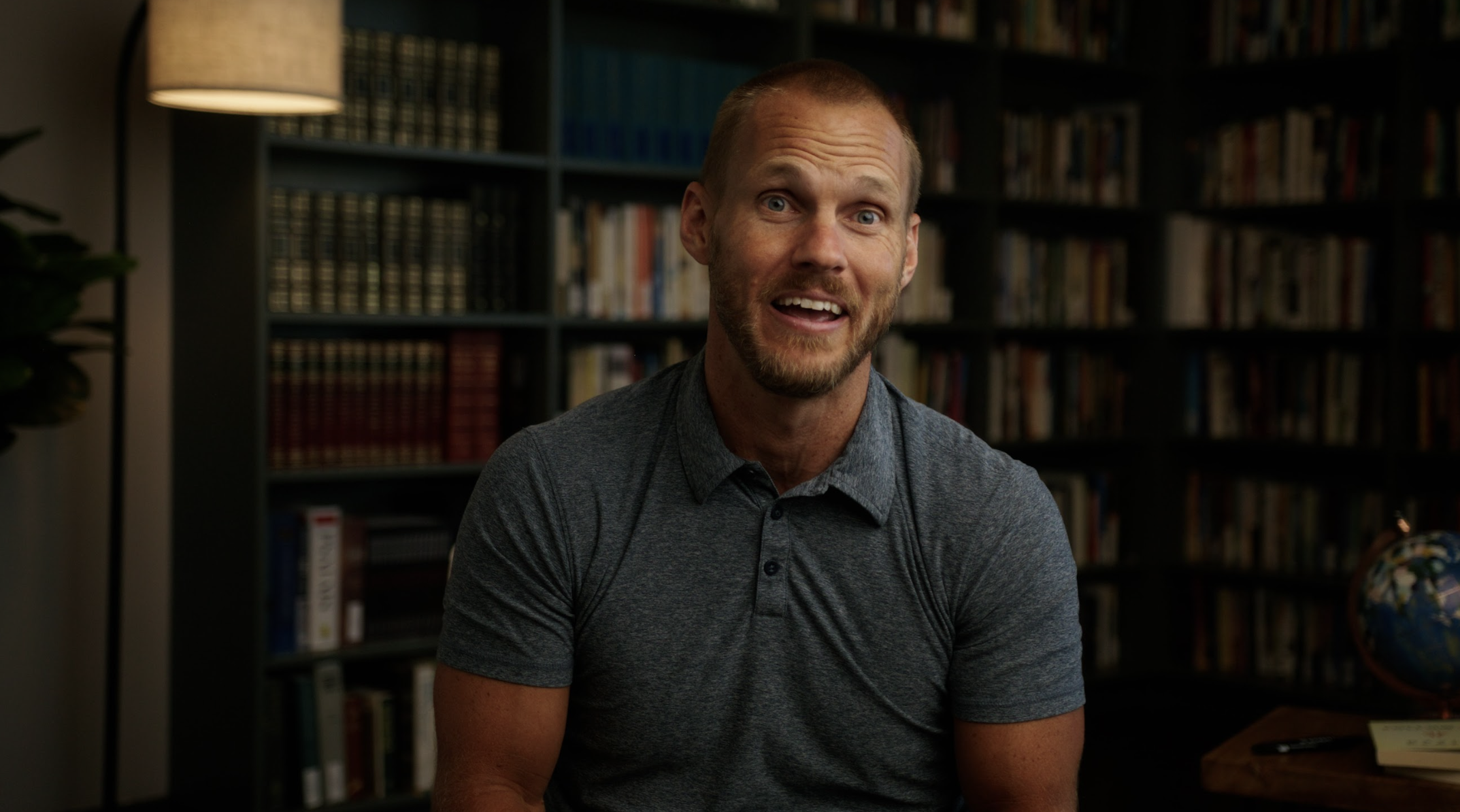
In this episode of the Faith Driven Entrepreneur Podcast, Dr. Bryan Loritts joins Joey Honescko and William Norvell to discuss the importance of deep, long-lasting friendships in the context of entrepreneurship.

Pulling from his new book, Enduring Friendships: Sticking Together in an Age of Unfriending, Dr. Loritts emphasizes the need for what he calls “soul friends.” These are the people whom we can bear our souls with and who can provide guidance and support in our journeys.

He also highlights the challenges that entrepreneurs face in maintaining lasting friendships, such as being productivity-driven and lacking time for people. He provides practical advice on finding and nurturing these enduring friendships, including putting oneself in the right environments and being intentional about prioritizing relationships.

For more from Dr. Loritts, check out his new book: https://www.amazon.com/Enduring-Friendship-Sticking-Together-Unfriending/dp/1514008440


All opinions expressed on this podcast, including the team and guests, are solely their opinions. Host and guests may maintain positions in the companies and securities discussed. This podcast is for informational purposes only and should not be relied upon as specific advice for any individual or organization.


Episode Transcript


Transcription is done by an AI software. While technology is an incredible tool to automate this process, there will be misspellings and typos that might accompany it. Please keep that in mind as you work through it.

Joey Honescko: Friendship can be a touchy topic. Even the author of Proverbs addresses this in chapter 18, verse 24, when he writes, one who has unreliable friends soon comes to ruin, but there is a friend who sticks closer than a brother. So that means that friendships have the power to build us up or terrace down. And the challenge is in finding and sustaining those friends who stick closer than brothers. A lot of the times, it might even feel like this is actually an impossible task, especially for entrepreneurs. We are often busy. We’re tired. We’re up to our neck and obligations and responsibilities. Why would we prioritize the hard work that goes into a long lasting friendship? That’s the question at the center of our episode today with Doctor Brian Leyritz, a pastor and author of the new book, Enduring Friendships Sticking Together in an Age of Unfriending. He joins me and William to unpack the challenges and the beauty of finding those friends who stick closer than brothers. I’m Joey Ionesco, and you’re listening to the Faith Driven Entrepreneur podcast. Let’s get into it. Welcome back, everyone to the Faith Driven Entrepreneur podcast. I’m your host, Joey Nasco, alongside today’s co-host and a familiar voice on the show, William Norville. William, it’s been a bit. Man. How you doing? Give us an update on Forte. What’s going on, man?

William Norvell: Man, it’s. It’s good to be back, everybody. How’s everybody doing? Y’all have stewarded things well, but, yes. Took a little break to go, grow a company. It’s been going well, man. It’s been super fun. I’d say the, the biggest update of, this year is we’ve just found a lot of really fulfilling work working with franchise owners, serving the hourly workforce, and also serving pastors, which, is a great lead into the show today. We’ve, found a sector there where pastors are just lonely and burnt out, and we’ve been able to provide guides to come alongside them in their journey that they’re going through. And so, it’s been really fun. It’s been really fun. And a lot of, what I’ll call good work. There’s a lot of bad work sometimes in startups. But this has been a lot of fun. Good work, where we’ve got a lot to do because there’s a lot of people to serve.

Joey Honescko: Yeah. That’s awesome. Yeah. You’re talking about coming alongside people in that Segways perfect into this conversation, because we’ve got Doctor Brian Lorenz with us, and he’s the teaching pastor at Summit Church. He’s an author of numerous books, including his most recent Enduring Friendship Sticking Together in an Age of Unfriending, and that’s out now with InterVarsity press. And you can find it at the link in the show notes. But Doctor Lorenz, thanks for joining the show. Thanks for being here.

Dr. Bryan Lorrits: Always good being on platforms like this. And good meeting you all for the first time.

Joey Honescko: Yeah, awesome. Well, hey, let me dive in. Because as our audience knows, we talk a lot about community at Faith driven. We have these groups that meet in coffee shops, boardrooms, churches, zoom rooms all around the world. We’ve had more than 15,000 people go through these groups, entrepreneurs specifically, and they’ve been able to find community. They’ve been able to find those relationships. We know that right now there’s an epidemic of loneliness. We need friendship. We need each other. And in the book, Enduring Friendship, you focus on a particular aspect of community and relationships, which are these deep, long lasting friendships. And I like that you use the metaphor in the book about the happy few who join you for the whole marathon. So I want to just set you up, give us a little intro to the book, and talk about how those kinds of relationships differ from just kind of your basic guy who goes to lunch with you every once in a while, or these other elements of community.

Dr. Bryan Lorrits: Yeah. The class called What we’re Getting At your. And I’m curious what they meant by that is your soul friends, social scientists will tell us that, any study reveals that we only have the capacity for three, no more than five of these kinds of friends. So we’re not just talking about someone, you know, you take in a ballgame with, or someone you talk to every now and then. These are like people you bare your soul with. I mean, if you’re familiar with the Bible, this will kind of be David and Jonathan kind of stuff. And so this is really what I’m pointing to, how to nurture these, if you can find one, if you can find a handful of these, you’ve kind of hit the lottery ticket of life, but inevitably because of the reality of sin. And we can get into this in just a few moments. People have shadow sides. And so no matter where you may come from on the spiritual spectrum, you get to know anybody. You’re going to see the not so pleasant side of who they are. The Bible has a word for this. We call it sin slow, three letter word with eye in the middle. And so if every time someone does something to disappoint you, and because I’m a sinner, I’m bound to disappoint you, you’re bound to disappoint me. And if every time I do something to offend you, or you do something to offend me and I cut you off, I throw up a boundary. I’m going to go through life lonely. But if I want to kind of maintain healthy friendships, I really need a guide in how to have these enduring kind of friendships. And that’s what I tried to provide through the book.

Joey Honescko: Yeah, when I hear that, I think of another book, Anne of Green Gables, which is usually not one that comes up a lot, but she talks about, bosom friends, these lifelong kind of tight knit friends. I might get some razz from folks for calling out of Green Gables, but great book, but not my mother.

William Norvell: She’s going to love that.

Joey Honescko: That’s good.

William Norvell: I think a lot of my mother’s favorite books of moms. Listen, she’s going to love that one.

Joey Honescko: Perfect. All right, well, Doctor Lorenz, I’m thinking because you give this really good example of a successful entrepreneur you were in contact with in the book. And when you’re talking about, you know, sin, these challenges with friendship, you point out that how it’s uniquely difficult for people with a certain degree of influence or a certain degree of power to maintain those lasting friendships in the way that maybe power or influence doesn’t push us to the kind of vulnerability that’s often needed for friendships. Could you just kind of talk a little bit about that? Because a lot of our audience are they’re CEOs, they’re entrepreneurs, they’re founders, they’re leading high capacity teams. And so they often have that kind of challenge with offering themselves. Vulnerably and they feel like they have to protect themselves a lot. So what are those specific and unique challenges people like them face?

Dr. Bryan Lorrits: Well, yeah. So if I can take it out of a power box, I just think entrepreneurs in general have some unique challenges to them that make it really, really difficult. And I can really identify with entrepreneurs, having started a church from scratch and seeing it grow to a couple thousand people, I can tell you the work that is involved in that. I think one of the unique challenges in the area of friendships for entrepreneurs is we can be so productivity driven that we don’t leave much margin for being people driven. And so the classic mistake I made in my 20s and 30s especially, I was I was so focused, so type A personality. So, you know, let’s charge the hill that I didn’t have much room for people. I didn’t have much room to nurture deep relationships. And, look, I’ll just be honest and vulnerable. I would say I didn’t do well even in my own marriage. I mean, I in that quarter of time we had a decent marriage, but, I mean, I just felt all this stuff any entrepreneur would feel. We’d moved to Memphis, Tennessee with 26 people. You know, I had to raise a bunch of outside capital. You know, I was trying to get to a place to where we going to build this thing up so I don’t have to raise any more money. We’re self-sufficient. And that’s just all where my mind was. And I had, at the end of the day, accomplished a whole lot. The Lord used me to build this megachurch thing that was getting national attention. And here I stood at the top of the mountain. But the problem was I was standing alone. And so that’s where, you know, later on, David Brooks his book The Second Mountain, where I just kind of made up my mind, I need to do a pivot, and I want to spend kind of the second half of my life really investing relationally. I can tell you right now that I’m 51 years of age. I can tell you right now, every entrepreneur that I’ve interviewed, every older leader that I’ve interviewed, when you talk about their regrets, all their regrets are relational. Wish I would have spent more time with the kids. Wish I would have spent more time with the spouse. Wish I would have nurtured more friendships. The entrepreneurs that I know who really had a moral implosion. At the end of the day, if you do the autopsy on it, their main problem was that the moral challenge, their main problem was they were living in isolation, in secrecy. So I just think everything goes back to relationships. The Christian worldview would say relationship with God and relationship with others. But if you look, even non-Christian researchers say you can draw a straight line, not between productivity and happiness. That’s the crazy maker of it. You can draw a straight line between relationships and happiness. And so relationships. That’s where it’s at.

William Norvell: That’s good. Doctor Lorenz I’m sure you get this all the time. But you’ve been a big impact on me and my relationships even though we’ve never met. Two of your other books insider Outsider and Right Color Wrong Culture, just one of my enduring friends and I had just it’s been life giving to us to.

Dr. Bryan Lorrits: Have thank you.

William Norvell: Conversations about that and go deep about that, about who we are and how we see the world. And if you haven’t picked up those two, we’re selling you a lot of books here today, but they’re short and they’re amazing. And I think they’ll give you a view of the world you didn’t have before. One of the things I want to dig into for entrepreneur audience is when you speak of the enduring friendships, what are the characteristics? What’s going through my head is so I’m an entrepreneur. Do they need to be entrepreneurs? Do they need to understand my world in a certain way, or do they need to just be there and be amazing men and women of God? Right? Or there’s some mix of the two. I’ve struggled with that throughout my life. Sometimes I go, wow, I’m so blessed, but I just keep talking about things. I don’t think they get it, you know? Anyway, just curious if you have thoughts along those lines.

Dr. Bryan Lorrits: Yeah. You know, I think what you bring up is a crucial point in Chris Lewis actually spoke to what you’re talking about in his book, The Four Loves as he’s talking, I think it’s specifically about Forleo, which is a friendship kind of love from which the city of Philadelphia gets its name, City of Brotherly Love. C.S. Lewis says that the very essence of friendship begins on the note of you two, right. And I think what he’s getting at here is this idea of affinity. And I think there’s something to be said for that. Obviously, I don’t think cloning each other into our image is what he’s talking about there. We’re different people. But I do think, especially in the formative years of that friendship, having some affinities is really helpful. Now those affinities can go in a million different direction. It could be work. Affinity can be kind of an affinity built around a hobby. You love golf, I love golf, whatever it may be. Yes, there is something to be said for affinity. I also think, you know, it’s good to kind of layer or stagger, ideally what those friendships look like. So I would say, you know, I have an a friend or two who can nod their head in solidarity about what it takes to be an entrepreneur. I think there’s some great stuff to that. I also see some great stuff, and having a friend who not only doesn’t get it but could care less. But there’s other points of commonality there, so I wouldn’t put all my eggs in one basket. But yes, I think there is a place for affinity and that affinity of some sort is essential.

Joey Honescko: You mentioned something just a second ago about even going upstream for things like moral failures, and the fact that those can be rooted in isolation. And I want to zoom in there for a second, because we talk a lot about community. We think it’s important. Obviously, we already mentioned Epidemic of loneliness, but I feel like this sense of community has become such a buzz word. And when we talk about relationships, it’s one of those things that a lot of people feel like, oh yeah, I should get some friends or I should be in a community, but I’m so busy, but I’ve got a lot of this. And when you talk about something like moral failure is being rooted in an isolated lifestyle, you’re really taking that up a level that this isn’t just a nice to have in the world. This is something that, like, shapes us, informs us. So can you talk just a little bit more about how valuable and how necessary? Not just a nice plus, but an essential part of being human. It is to be in these kinds of relationships.

Dr. Bryan Lorrits: Yeah, I almost think I need to give you some indicator lights and how to determine what I’m getting at here. So the kind of friend that we’re talking about is, is a kind of friend that you have level four, level five communication with. And what I’m getting at here is the classic communication pyramid popularized by Doctor Timo Hoff, PhD and communications professor at Baylor University. And in essence, it says there’s five levels of communication. So the very most surface level of communication is. Number one. Good morning. Good morning. How are you? You’ve communicated, but you really haven’t communicated. Levels two and level three or where most guys hang out. Level two is facts. Who won the game? How many points did Steph Curry have? Level three is opinion. who’s going to win the NBA finals. But then level four and level five are the deepest levels of relationship. And it’s a good grade to determine your relationship. If you’re married with your spouse or if you really have a friend. Level four is emotive. It’s sharing how I feel, and level five is transparency. It’s sharing who I am. Granite level five is a little bit hard to quantify, but you know it when you experience it. We’ve all had those moments where after some interaction, we’ve left saying something to the effect of I experienced them. So you’re and I’m Caras, as the Celts call it, your soul friends. Yeah. You might get into level two, you know, facts and get level three, but at some point you get down to level four, level five. Let me give you a biblical example of this. Jesus, when he’s going into the garden. Gethsemane. At this point, Judas had already betrayed him. So they’re down to 11. They get to the garden. Jesus leaves the eight on the outside of the garden. He takes the three Peter, James, and John. And then the gospel writers say, it’s at this point where Jesus began to be sorrowful. So they are now seeing a dimension of Jesus in that moment that the other eight didn’t see. And what they’re seeing is emotion. They’re seeing transparency. So how do I know if I really have kind of these soul friends? These are people that I feel safe enough with that I’m willing to confess. Sin two that I’m willing to confide and confess struggles to because I know on the one hand, they’re going to embrace me. They’re going to accept me, but on the other hand, they’re going to also challenge me. Let me give this final thing, okay? I just want to give you some indicator lights to help you determine if you have these friends. So there’s a communication pyramid. But then psychologists say that all true deep friendships kind of rests on kind of a three legged stool. It’s what they call the R acronym a r e. Number one. Your true friends are accessible, which I think it’s a real challenge for entrepreneurs and especially entrepreneurs who are men living in a cell phone, smartphone, social media age, right? Busyness for the entrepreneur is a serious thing. But you make friends. Let me say this way you make room for accessibility with your friends. You’re there for them. The R is you are responsive. So when a friend has a need, you’re able to respond to them and their need. And the E is engaged. So there’s a sense in which, my true friends, there’s nothing you can tell me that will make me turn my back on you. And they feel that from me and I feel that from them. Right. So these are kind of good grids that will let you sift through whether or not you’re experiencing true friendship.

William Norvell: Oh, I love the practical communication grid and the acronym there. As our audience knows, I’m the crier of the groups. I cry a lot. But now we’re going to talk about my best friend, so this could get awkward for everyone. A practical example I want to walk through. I’m just thinking, man in my life that I’m just lucky to have, and I’m a people pleaser. I get really frustrated when I can’t solve people’s problems or show up on time. And one of my best friends like clockwork, if I have to text him, I’ve got three small kids. Hey man, I’m going to be late. Or in a rare case like I can’t make it at all. I’m so sorry. And it’ll be this ridiculous apology. He always responds back, it’s okay, I love you, I don’t care. You are loved anyway, even though you didn’t make this event. And it’s a small thing, but it hits me like a rock every time he does it because he knows the level of disappoint. I feel like I’m disappointing him and I can’t help him. He’s like, I know you feel that, but I love you. Let it go. I know you tried and it just means so much to me, you know, even a silly example. So I’m curious. I feel like we’ve spent a little time culling the group, saying, how do you identify if you have these people? Well, there’s going to be some group listening, going, maybe weeping on the other side of, I don’t have those people. And I’ve now realized it. Where do I find them? How do I find them? Do you have any thoughts on especially, you know, in an entrepreneur’s life, like where do you start if you’re sitting here going, I hear you and I’m convinced, but I don’t know what to do.

Dr. Bryan Lorrits: Yeah. And, you know, that’s becoming more and more common. It really, really is. You know, in a sense, you know, I think loneliness has been a problem since day one, but I think. Is even more pronounced now. You know, it was an MIT professor. Last name is Turkle. She wrote a book called Alone Together, and she says, we are as connected as never before and as lonely as never before. So I definitely I would want that person to hear, first of all, you’re not alone. You may feel alone in your aloneness, but there are a lot of people who are feeling exactly what you’re feeling. The key is, listen, you can’t program or manufacture your relationships, right? And I think that’s one of the most frustrating things in the church world with small groups, because people enter into small groups, sometimes with the expectation that that’s going to be the place that they find their friends, and it just doesn’t happen. And I’ll just say this tangentially, one of the most frustrating things my wife and I have ever done is date other couples, right? Just, you know, in the hopes of just, man, if we can just find that couple or couples, we can just vacation with stuff. And this is what always happens. Like we’ll come back after a night out with another couple hanging out for the first time, and my wife’s like, oh, love her. She’s amazing. And I’m like, never want to see that dude again or vice versa, right? So that’s really a challenge. Here’s what I would say. At the end of the day, put yourself in the right environments, be prayerful about it, but put yourself in the right environments. You’re probably not going to find what you’re looking for in a bar. You know, I’m not anti bars or whatever, but that’s going to be a hard sell. But I would try going to church and if it’s a big church, trying to find pockets of that church that really shrink that church down smaller. At our church we have this thing called young professionals. That’s a great environment. Some churches, you know, they’ve got young married saying they got a marriage thing, a singles thing, small groups, whatever it may be. But I would just put yourself in the right environments. I can’t offer any better advice than that, and just be prayerful about it and just see what happens.

Joey Honescko: It makes me think there needs to be some role of vulnerability in this as well, right? I think of a friend, a dear friend that I have that couple months ago. We’ve always been pretty good friends. And he came over and he sat in front of me and he pretty much said to me in so many words, I would like to be soul friends. Can we try to make that happen? And there was a version of it that it was so shocking. And he’s a person that I’m very close to, and it was such a vulnerable moment for him because he was like, I’m not great at making friends. We have this connection. And I was so impressed and astonished and like, honored that he would ask me that. And we’ve become very closer and closer since then. But there was that kind of cognitive switch, and there was that vulnerability, right? Walking into a faith of an entrepreneur group or a church small group, without knowing anybody coming in. It’s a you’re vulnerable. Right. And so what is the role of maybe it’s humility, maybe it’s vulnerability of walking into those spaces, saying, I’m open for what this is going to be, and I’m going to step into the risk that it takes for this to be accomplished.

Dr. Bryan Lorrits: I love that, and I think you hit the nail on the head. Right? So I’m a big proponent that every friendship as it progresses over time, I don’t think we do this right away or even early on. So don’t be weird. But I think every friendship should have what I call a DTR moment, right? So some people, you know, I’m an old guy. I remember the I kiss, dating goodbye kind of era, and everybody had drank the Kool-Aid. And I just remember all these guys just going on their first date, just going. Hey, I just want you to know, my intentions are we’re doing this, we’re working towards marriage, and these girls would get freaked out, right? So I’m not saying have the DTR upfront. It may even take you a year to get there, but here’s the biblical principle in First Kings chapter 18, right after David has killed Goliath, he meets Jonathan. Like I imagine David is just holding Goliath’s head still, right, blood running down his arms. And it says that Jonathan made a covenant with David, made a covenant. Like there was this thing in which there was an affinity there. Both of them are leaders. Both of them are warriors. It’s almost at that moment. They’re just like, listen, we don’t want this to just be random. I think we’re headed in the same direction here. And let’s just kind of have, what are we doing here? Kind of a talk. I did this, some years ago. About ten years ago, with a group of guys we had met years before. We were part of a small group. We got together, I pulled them together, and we had, what are we doing here? Kind of a moment. And that’s turned into an annual retreat. We live all around the country, and, you know, we text and call all the time. But I do think even though friendships oftentimes are formed organically, they are. Are nurtured and kept intentionally. So I think that’s the principle we’re talking about here. There’s steps of intention. And once it gets to that intentional level now I can know how to prioritize things. Here’s the last thing I’ll say in regard to what you’re talking about. Most entrepreneurs, if not all entrepreneurs, the struggle that you have is you’re going to have to switch from having calendars that are task driven and to having calendars that are priority driven. Most people, their calendar philosophy is the classic the tail wag the dog and you just you’re just so busy going and blowing that you can wake up one day and just realize I’ve done a lot of things, but I think I’ve neglected a lot of things, and you got to sit down and figure out what are your priorities. And one of those priorities should be time and margin for friendships. And your calendars have to intentionally make room for that. And all of this is the intentional steps that we take to really nurture good friendships.

William Norvell: That’s good. I love that priority driven versus task driven. That’s good for life, work and everything in between. To think through that. One of the big moments for me was when I had children. I’ve got a six and a four and a two year old and, you know, there’s a lot of people in your life and then they’re kind of becomes less people in your life. And I remember just really thinking about who do I want raising my children with me. And it became those 3 to 5 people, you know, for the most part. And there are people that if my children grow up with, I want them to emulate them. I want to emulate how they love people, how they’re kind of people, how they show up for people, and I want them to see them. So that was a big filter for me. And then the second thing I want to I want to switch to a topic that may be more uncomfortable than where we’ve been so far is confrontation and difficult conversations, because I think we all know you can’t make time for difficult conversations with everyone who you may have an issue with, or you get a little sideways with, but I’m guessing with these people, it needs to be a priority. And I’m curious how you think through those second, third, or however level you deem necessary conversations with people that really matter.

Dr. Bryan Lorrits: Yeah, well, look, here’s the weird thing about your question, which is spot on. The weird thing in the context of a group of entrepreneurs is confrontation is just kind of part of the job description, isn’t it? But it does become more difficult when you take off the boss hat. Right? And you’ve got this peer friend hat on, but nonetheless, it’s something you have to do. So here’s a couple of just big principles that I think we have to abide by as we’re trying to. Look, I’m a center. You’re center, which means if we’re friends, I’m going to inevitably disappoint you. You will inevitably disappoint me. If we want this thing to endure, we’re going to have to have consistent conversations along the way to sharpen one another. Right? And so when that happens, there’s a verse in the Bible that I think really needs a lot more unpacking than what it gets. And that’s that verse that says, speak the truth in love. I want to put a big caution on that, because when something happens to me, I don’t have truth, I have perspective. It’s very important. And because when my friend does something that disappoints me and I’m like, oh shit, I gotta have a conversation. When I keep in mind I don’t have truth, I have perspective. Then that changes the ballgame. That means I go in not making statements. I go in asking questions, and that posture lowers the blood pressure on both sides. I’m not saying it makes confrontation easy. It makes it easier. And by the way, no one should love confrontation. If you love confrontation, you’re a freak. All right, so none of us should love it. But when I come in, just going. Hey, I’d love to have a conversation. Okay? When you did this, I kind of took it this way. I could be way off. Can you just explain that to me? That’s a totally different posture than me just coming in guns blazing and just, you know, firing my 12 gauge at a mosquito. And so I would just say, come in with questions and not necessarily statements. Give the other person an opportunity to really talk. Don’t do the typical macho thing and act like it didn’t bother you. And then here’s the genius to go back to the communication pyramid. Use level four kind of language as you are trying to get to the truth. Here’s what level four says. Level four says, hey, when you did this, I felt this. It’s level four. At the end of the day, people can argue with statements. They can never argue with feelings. Right? And so I highly encourage those little techniques. And I think again, it won’t make it easy, but it will make it easier.

Joey Honescko: We’ve talked about truth. We’ve talked about vulnerability. There’s one other portion here that I want to talk about because you mentioned sin, and I want to talk about grace because the book is full of these little pieces of just grace being extended towards the other. And I think even the way you’re talking about confrontation and ultimately reconciliation requires the grace of thinking better of that other person on the other end of the confrontation. And you have this phrase in the book that says, horns don’t fit us perfectly, and neither do halos. And you’re talking both about the individual that is harmed and the individual that has been doing the harming. So talk about just that tension that we all face that we aren’t as right. I think it’s the killer quote too. Like we’re not as good as we think we are, and we’re more love than we could ever imagine or something like that. But that idea of the horns don’t fit us perfectly, and neither do halos. Just talk about that topic a little bit.

Dr. Bryan Lorrits: Listen, all of us are incredibly nuanced and complicated people. We’re complex individuals. Absolutely. You know, Paul gets to this in Galatians chapter five when he talks about, if you’re in Christ, we have the flesh and we have the spirit. It doesn’t get more complicated than that. I’m a nuanced person. There’s parts of me that I think people will really enjoy. There’s parts of me that they won’t necessarily enjoy at all that I have to trust are and lean on the Lord to actually sanctify. And here’s the problem. We can be downright hypocritical. There’s a psychological principle called fundamental attribution error. And what fundamental attribution error says is that when I do something, when I make a mistake, or when I do something wrong, it’s because I just made a mistake. When you do something wrong, no, it’s your character, right? So let’s say I show up late to work. When I show up late to work, it’s because, man, the alarm clock went off late. There’s all kinds of traffic. There’s all kinds of stuff going on with my kids. But when you come late to work, it’s because you’re lazy, right? And so what that means is we are very promiscuous in giving grace to ourselves, but naturally celibate and giving grace to others. And so when you have a right kind of biblical worldview that says, even on my best day, my righteousness is as filthy rags, that I am a sinner desperately in need of a Savior. When you stay in touch with that, that allows you to leave nuance in other people, and it closes the door to me demonizing other people, and it leaves the door wide open to say, I need grace. Now, let me also extend grace to you. We all need it.

William Norvell: I love that, I love that. Okay, I’m going to jump back to one. I loved the beautiful way you summed up truth in love. However, I’m going to presuppose. And as you told me, I ask weird questions. That’s fine too. If you don’t like the question, you can reframe it. I’m going to presuppose the in these enduring friendships, there are. Let’s say maybe three standard deviation outcomes. We’re speaking the truth is possible and is needed. Where you know the feeling language just isn’t getting there. But you are so close to this person that you need to cross that line because they are going down a path that you don’t believe is a good path for them. And you’ve tried the communication, you’ve tried this way and that way, and it’s just not working. And you love them so much that it has to be done. I’m curious, am I off there? Am I right there? Am I wrong there?

Dr. Bryan Lorrits: As far as cutting off the friendship.

William Norvell: No, I’m not dumb. I go on that far. But just really like. And maybe I’m just misinterpreting what speaking truth in love means. I have had a friend kind of go, hey, I’ve spent a couple of hours with you. I don’t think you’re getting it. I’m going to lay it out there now. Right? Like I feel like I’ve tried to come at it from a couple angles, but I’ve seen your actions, man. You’re not changing. I’m actually here for the hard conversation. Right. I can think of a good friend of one of my best friend in the world. An alcohol problem. A lot of our audience knows that. He didn’t cut me off, but he kind of came at me like, hey, I’m done. You’ve said this is important. You’ve said you’re going to change. I’m tired of picking you up. I’m not doing it again. If you’re not serious about it, I’m not serious about it. And it changed my life. Right. Like I remember that moment where he said. You said Jesus was important to you. Now you said you knew the harm you were causing people, but you haven’t changed a thing. Fix it.

Dr. Bryan Lorrits: Yeah. So believe it or not, what you’re saying is directly tied to not just the truth conversation. It’s really tied to the grace conversation. I think we have very incomplete teaching on grace, right? We only talk about grace from the vantage point of give it, give it, give it, give it, give it right. We don’t talk about it from the standpoint of receiving it as much. And the only way you know that that friend has received your grace is that it is changing their behavior. Right? So Paul says to the Romans, shall we continue in sin that grace may abound? No, absolutely not. Like the way you know that you are receiving grace is not that it makes you perfect, but it’s changing and reforming your behaviors. And if I am giving grace but the other person isn’t receiving it, it’s not really changing them. They’re still lying. And by the way, you know this better than I do. The nature of any addiction always pairs well with not being a truth teller, right? And so when I have a truth encounter with you, don’t hear me saying, use feeling language. Don’t hear that as code for don’t be clear. We’ve got to be clear as it relates to what we’re trying to get at. I just think there’s a way to get at it that may not necessarily be as confrontational and for sure is it mean? But for sure, the greatest gift we can give people is clarity. Now, this is the other thing that I talk about in the book. Yes, you need truth and grace, but you got to have repentance. And so truth is a risky thing. It’s me sitting down with you, initiating the conversation, giving you truth. Let’s get to the truth. But what you do with the truth is on you. And you know, we call a person who hears truth but doesn’t but doesn’t change their behavior. We actually call that an abuser. Right? And so I make it very clear in the book, this book and this conversation is not about continuing your relationship with a person who is manifesting abusive tendencies. It’s not that at all. So whenever I have a friend and we’ve had truth encounter, truth encounter Matthew 18, maybe I’m bringing someone else. Maybe we’re doing a good old fashioned intervention. If that person fails to respond, it’s not me cutting off the friendship, it’s actually them cutting off the friendship. It’s them choosing the behavior over me. And at that point I just say, hey, listen, I don’t think you’re ready for this. I’m going to leave the door open, but we can only pick this back up whenever you’re ready to walk. In truth, this is First John chapter one. By the way, all this stuff is in the Bible. If we walk in the light as he is in the light, not only do we have fellowship with God, John says, we actually have fellowship with one another. I can’t have a friendship with you if I’m walking in the light and you’re walking in darkness or vice versa.

Joey Honescko: Yeah, you’re bringing us to the Bible, and that’s always where we go to, to the close of every episode. But I love what you’re saying about it being rooted in grace and not just the giving of grace, but the receiving of it. We have to have our own identities shaped so that we can offer that to others. I think of a group called. Mosaic that I was a part of in seminary briefly, and they talked about that idea that we have been reconciled so that we can be reconciled to others.

Dr. Bryan Lorrits: Was this a Trinity?

Joey Honescko: It was. Yeah, yeah.

Dr. Bryan Lorrits: Oh, yeah. Yeah yeah, yeah. Ted’s that mosaic group is legendary.

Joey Honescko: Absolutely great. Yeah, yeah. Very incredible. But I always love that little phrase that we have been reconciled so we can be reconciled. And so it’s that kind of receiving it and giving it out. And you brought us to the Bible. That is where we like to end every show that we have. And we just love asking our guests, what is the Lord been teaching you recently in your own study and in the quiet times you’ve been having? Just something. Maybe it’s a verse, maybe it’s a specific passage. Maybe it happened this morning, maybe it happened a week ago. But what are those things that you’ve been seeing through God’s Word in your own life?

Dr. Bryan Lorrits: Oh, it’s a great question. There’s one passage of scripture that I’ve just been really feasting on over and over again. If God told me, Brian, there’s only eight verses in the Bible that you can take with you on a deserted island. It’s John 15, verses one through eight, where Jesus says, I’m the true vine. My father’s a vine dresser, and he talks about abide in me and I in you. As the branch cannot bear fruit unless it abides in the vine, neither can you unless you abide in me. So just really trying to focus on that abiding, intimate relationship with Christ and being fruitful, that really the essence of my life, the reason why I’m alive today, it is to bear fruit. And the whole idea of fruit. You know, an apple tree doesn’t exist for itself. It exists for the benefit of others. In fact, fruit that eats itself is rotten. So I’m here today, to make people better. And I think that’s what every Christ follower is here. So, yeah, I’ve been spending a lot of time just kind of marinating in John 15.

Joey Honescko: That’s incredible. Thank you so much, Doctor Lorenz, for joining us. Thanks, William, for jumping back on. It’s been a great conversation, listeners. Hope you enjoyed it and we’ll see you next week. Thanks for listening to the Faith Driven Entrepreneur podcast. Our ministry exists to equip and resource entrepreneurs just like you with content and community. We know entrepreneurship can be a lonely journey, but it doesn’t have to be. We’ve got groups that meet in churches, coffee shops, living rooms, and boardrooms around the world. Find one in your area or volunteer to lead one and bring this global movement to your own backyard. There’s no cost, no catch, just connection. Find out more at Faith Driven entrepreneur.org.

Recent Episodes

Episode 300 – The Entrepreneur’s Greatest Need: The Riff with Henry Kaestner and Justin Forman

It’s our 300th episode!

In this conversation Joey Honescko, Henry Kaestner, and Justin Forman celebrate the growth and evolution of the podcast and the entire Faith Driven Movement.

They reflect on all that God has done over the past five years and dive deep into the importance of community for faith-driven entrepreneurs.

The three wrestle with the challenges of finding reliable sources of community and reflect on their own entrepreneurial journeys and examine how God has used other entrepreneurs to form and shape them into the leaders He is calling them to be.

They also share stories from entrepreneurs around the world who have seen the power of locking arms with other entrepreneurs.

Learn more about groups here: https://www.faithdrivenentrepreneur.org/groups


All opinions expressed on this podcast, including the team and guests, are solely their opinions. Host and guests may maintain positions in the companies and securities discussed. This podcast is for informational purposes only and should not be relied upon as specific advice for any individual or organization.


Episode Transcript


Transcription is done by an AI software. While technology is an incredible tool to automate this process, there will be misspellings and typos that might accompany it. Please keep that in mind as you work through it.

Joey Honescko: At this point, you’ve probably heard how important it is to find community. But come on, let’s be real. Friendship is hard. Community is difficult, especially for entrepreneurs. Calendars fill up. Trust is easily broken. Business obligations keep our hearts and minds occupied. And none of that even includes how the responsibility to our families carries its own priorities outside of our businesses. How the heck can we really prioritize community? And is it even worth it? These are the questions at the heart of our 300th episode of the Faith Driven Entrepreneur podcast. I’m Joey Nasco, and I’ll be joined by Henry Kissinger and Justin Foreman as we riff on the real practical value that comes from locking arms with other faith driven entrepreneurs who are on a common mission. Let’s get into it. Welcome back, everyone to the Faith Driven Entrepreneur podcast. I’m your host, Joey, and let’s go alongside Henry Kastner and Justin Foreman. And guys, this is officially our 300th episode and I think that’s fun. Henry, I feel like sometimes the way you talk about numbers, we might have been on the 300th episode a couple different times, but this one actually is the 300th episode. And I was just thinking back, I mean, it’s been, you know, over five years of podcast content, community, things like that. So when you go back and you think about those first recordings, episode one, the title’s origin and it’s still one of our most played people, go back and listen to it. So if you haven’t, go back and check that out. But when you and William and Rusty started this all those years ago, did you really think, like, hey, we’re going to do 300 of these, or what was going through your mind? What? How did that happen.

Henry Kaestner: When it started? Through investing in Sovereign’s Capital, I’d come to know 10 or 15 stories that I thought were really compelling and that got it. Different issues that an entrepreneur was wrestling with and be helpful for other people to hear. And so when we got started, the thought was that there might be ten, 15, 20 or 30. And I remember thinking, gosh, you know, what happens when we run out of ideas and we haven’t. Now, to be clear, there have been some things we’ve gone back and we’ve touched on several different times. We’ve talked about some things that are really helpful in terms of partnership or customer acquisition, or just some of the struggles with identity or faith. And there’s been things that we’ve come to understand that hold us back from being really productive, like sexual brokenness, that I didn’t think that we’d talk about, that we wade into. But as we started talking more entrepreneurs, we found out that there are other issues because we came to understand that faith driven entrepreneur wasn’t just about helping an entrepreneur run their business better, it was about helping a group of individuals come to know the God of the universe more fully, and then to just wrestle with what does it look like to accept his invitation to participate in the work that he’s doing and what might otherwise hold us back from doing that? So, while we always have this lens through being an entrepreneur, getting out there and trying to sell something to somebody and just creating and feeling lonely, there’s something that unites us together as a group, as a community. And yet the things that since the biggest thing is us knowing God and enjoying him forever, there’s so many different things that we can talk about through the lens of having guests on that get us, get our journey, and what makes us unique in the struggles that we have. And we just continue to explore. And it’s been a beautiful it’s just been a beautiful, wonderful journey where I’ve learned so much and that’s why it’s fun. Infrequently. Am I the guest? I’m mostly the host. I get to learn from these guests that we have on. It’s been awesome.

Joey Honescko: Yeah, yeah, it’s really cool to see just the longevity of this. And I think you make a good point that at the early stages it might have felt like, yeah, there’s a couple people doing this, but now we’ve really seen the growth of this movement and just how wide and deep it can go. And one of the things that I think is really cool is, you know, this started with you and Rusty and William, and obviously some of the formatting has changed in the last year, and we’ve mixed some of that up. But it’s cool to see the way that Rusty and William are still involved. And just a huge shout out to them for leading us through so many episodes in, you know, rusty was we borrowed some of his insights for the last episode. We did, and in a couple of weeks, William is going to be co-hosting again with me. So some really cool ways that they get to be involved.

Henry Kaestner: And rusty is so good. You know, he has not only this great spiritual debt, but he’s got a voice made for radio. And I remember the joke we had was that I have a face made for radio. And then we realized that once we had me on the radio, on the podcast, and I had a voice made for print journalism, and I write like I’m a TV anchor, it kind of goes full circle here. Rusty’s got this voice from having been a deejay. That just helps. Just these topics come alive for all of us. I think in a great way. It’s it’s great that he’s still involved. And yet I love what we’re doing, some of these new topics. And, joy, I love the fact that you’ve gotten out from behind the editing booth, so to speak, and coming in as you’ve lived this out now as an entrepreneur yourself. So you start off as a creative, just helping to, you know, bring the guest, putting together all the different show notes. But really, as you’re coming into the entrepreneurial journey yourself and just the ups and the downs and even over the last couple weeks is I know some of your story. It’s so cool to have you involved in this more fully. And then, of course, for Justin to do the same.

Joey Honescko: Yeah. I think one thing that as I’ve been going on my own entrepreneurial journey, as I’ve been writing with and for and on behalf of entrepreneurs for eight years, and one of the most obvious things that I have felt as I’ve entered in my own is that these things are real. You know, I’ve written the words entrepreneurship is a lonely journey, but it doesn’t have to be so many times working for faith driven. And now I’m in this space where I’m actually experiencing that. And that’s what we’re going to talk about today. Just that need for community, that need for other people to come around you and just and I want to throw it to you here for a second because, you know, this did start faith driven entrepreneurs started as a podcast and a blog way back when. But over time, we started seeing this need for community. And it’s not that we’ve stopped emphasizing content, but I’ve heard you describe it as a, you know, there’s two engines, there’s the content, and now there’s that community element to so what is it that faith driven entrepreneurs needed that wasn’t being met in just content alone?

Justin Forman: Yeah man, what a great journey to think back on and to have that moment to reflect and see how God, God works. You know, I think there’s certainly something about community, but I think sometimes, as you alluded to, it’s stories that can sometimes often bring us together. I mean, we probably shared this on the podcast before, but it’s how Henry and I connected is we were on a search for stories. We’d filmed stories of Hobby Lobby and Chick fil A at Right Now Media. As we were building that, we were desperately searching. What are the other stories? What are the untold stories that are out there? And through a book that we’d picked up, we learned about what David and Henry were doing it bandwidth. And it was through that story that we connected. We filmed the story of bandwidth and what David and Henry were doing back then. And it’s amazing. I think, as Henry alluded to when the podcast was started, there’s a question of cash. Are we going to run out of stories? And I think one of the biggest things we’ve seen is that there is not only a depth of story, but it’s a global story, and it’s a global story that was going on for decades. And we see that over and over and over again. But I think it’s the commonality of when you see those stories that you feel understood and you see something in a way that you haven’t been before. You know, I think that there’s ways that when people see stories, they see themselves in the story, that that’s a good story is when you can all of a sudden see yourself, feel it, think it, and you can have that kind of like taste and smell nostalgia kind of conjured up. And when you do that, but like you alluded to, you know, the Texas phrase of it, we’d say around the team is like, there’s no pep rally without a football game to follow. And I think there’s often times that we get hyped up in about things. And one of the dangers of content, there’s so many beautiful things about it. But inspiration, one of the dangers is that you can get so hyped up about it, you can be a consumer and that you can’t move that into action. And that’s when, you know, probably about three and a half years ago, we said, what does it look like to gather people together? And, you know, I think one of the fun things about the entrepreneurial journey of faith driven is that it was born in a time and community, was born in a time when we couldn’t gather in person. There’s so much power of gathering in person, we know that. But we had to adapt. We had to figure it out. We filmed the Faith driven entrepreneur course. Literally. Henry was filming some of that. I think the day before that, they shut down travel as Covid was hitting. And so we would Henry had filmed that and we filmed those segments with JD in North Carolina, flown home. And and it was just a point when lockdown hit. And so not only did we film it then, we produced it then and we launched and beta tested it then. And in many ways they gave us this an alternate view of like, what does it look like to do this? And it was, you know, necessity is the mother of all invention. And it certainly was. And it changed kind of how we did community to start now, today people meet online, they meet in person, they meet in church. But it was really fun to see amidst a really difficult time. It pushed us to innovate and think about community just in a different perspective.

Henry Kaestner: Yeah, and I’d say, selfishly, I’ve enjoyed being part of so many of these veteran entrepreneur community groups myself, and it’s wonderful to see we all know the maximum that, you know, whenever 2 or 3 are gathered there, the their goddess as well for the revelation for me to see that that actually happened through Covid, that that’s also true in virtual groups. Now, so many of the feature nonprofit groups meet in person and is wonderful when it’s done, particularly in a local church or something really powerful about a community of people coming together. To be clear, in a local church where you’re sitting under the teaching of the same pastor, your kids are going to the same type of youth group and you see each other. That is very, very special. But it’s also really special to be able to be a part of some of our virtual groups where you get to know feature of not draws in many cases from around the world coming together. And just as you interact with some of the content, we have some of the storytelling we have for the first 15, 20 minutes and then just process. How God is moving in our lives as we wrestle with identity, or we think about being faithful versus well for stewardship versus ownership and not worshiping work and just loving on our families while all those different things. There’s something really special about sharing that with 10 or 12 people and just hearing how God is working through them in each case, without fail. I leave that hour that I spent knowing God more fully, and his love for me in a way that is harder for me when I just listen to a podcast. And yet, I also love podcasts, and I’m so grateful for so many of the people that listen to our podcasts. And yet there is something I think that is a little better in some ways, which is coming together in community and just processing the content that we see and how God working through that. And it’s oftentimes a perspective that somebody else will have in a community group that will help me to understand something that I was wrestling with, and I didn’t even know it.

Justin Forman: Indeed. You know, I think that if we step back from home, it’s fun to think about the entrepreneurial journey that God brought us, along with faith driven groups. But if we step back and just say what’s happening in the church today, I think what you’re alluding to is stepping into trying to invent and build into a solution that the church has been facing for many years. I mean, when you think about church growing up in the church myself, there’s a case that could be made that assimilation, the kind of the process of getting somebody that’s visiting a church, seeking the church connected to the church, has maybe experienced some brokenness. There’s been some gaps. There’s been some shortfalls. You know, you could go as far as to say, maybe today it is broken. And when you talk to small group pastors and over the years, it’s a it’s been a struggle. Like, how do you really make people feel connected. And so much of the past few decades it’s been based on, you know, two factors. What’s your zip code and what’s your life state your kids. And so you look at the people to your left and to your right. And certainly there’s beauty to that of sharing the same neighborhood and the same overlap there. Maybe you have kids in the same grade and the same overlaps that aren’t same sporting events and teams. But I think what you’re talking about is, is like, there’s an innovation that’s happening where people are saying, what if you really align people by a calling and a shared calling? And when you walk into a room with another entrepreneur, you just get each other. You understand risk. You understand seasons of work. You understand like a craziness of schedule. You understand shared passion for the mission, calling for what you’re do it. You don’t see it as work. You don’t see it as office hours or in 8 to 5. You see it as a crusade, a mission that you’re on. And I think there’s an opportunity here for the church to really say, man, what does it look like to get together? I mean, Sree and I were talking about this the other days. We’re driving church on Sunday morning and we’re passing the car, and it’s kind of coming from the same direction that we are in. We look at the car and got the same bumper sticker for, you know, same school district, the same football team, Baylor, that we passionately are about. And we’re thinking, man, I would love to know who that family is as we watch them pull into church in a different part of the parking lot and had to go a different way. And there’s that affinity, like when you can come around with so many shared affinities that you can accelerate this feeling of community and just a powerful way. And it makes you just wonder, is there a chance to really do that in the church? I mean, imagine if, like at the end of a church service, if the pastor said, hey, you know what? Nothing special, but we’ve got a group of teachers gathering in the back in the church today. And then right before you head off to start the school year, we’re just going to get everybody there together so that you can know each other, pray for each other and just be known. The affinity, the acceleration for somebody that’s visiting for the first time or has been on the sidelines of this big church and hasn’t been able to get connected, it suddenly accelerates. Now think about doing that for doctors and dentists and entrepreneurs. I wonder if.

Henry Kaestner: Mothers of preschoolers.

Justin Forman: And wonder.

Henry Kaestner: Wait, no, that’s done.

Justin Forman: But what an opportunity. I mean, I think we’ve just it’s something we haven’t explored yet.

Joey Honescko: Well, and I think there’s something to that, Justin. And I’ve heard both of you guys talk about this idea of the role mission plays in generating friendships in community. I think the quote is aim for mission and you get friendship. If you aim for friendship, you may not find a common mission. And there’s something about being a faith driven entrepreneur, particularly where you are on mission together, even if you’re not necessarily working in the same company or even in the same industry, there is this shared affinity that even goes deeper than just like, oh, we have this thing in common. But there seems to be this opportunity to unite and kind of lock arms in this mission of what it’s like to try to redeem the world, bring redemption through businesses. So I’m wondering if you guys have any thoughts about that idea of the unique way that uniting around entrepreneurs can also kind of ignite your own mission and ignite the mission of those around you as well.

Justin Forman: I think that’s a great quote. I mean, my quick story of is we went to for our 20th anniversary, we took. A trip with our church to Israel and it was a phenomenal, amazing, incredible experience before all of what’s happening broke out a couple of years ago. And we had a reunion night a couple months later. We walked into the building there at the church and there’s, you know, fun conversations or some conversations at varying depth. But then all of a sudden you come to the table with another entrepreneur and you just ask the question that you would normally ask somebody, walk into the church, how are you doing? And cutting through the surface level stuff? I remember him saying, man, I just wish somebody would tell me what par is for this course. I want to know, like, am I below par? Above par? Like what? And how am I doing? My family, my kids, my business and team, the culture, the business, the scorecard of life as an entrepreneur. It has so many different KPIs that are playing each other. And I tell you what, that moment, that feeling of being understood, like I can’t tell you just the ways that I felt connected in that moment. And as I was talking to Sree about that, there’s just something there that like when you can talk about things, I mean, it’s the same equivalent of like if you’re got a struggling teenager and you’re going through something and a parent going through the same things, you feel understood. And I think that that is so much of what the life of the entrepreneur is. So I don’t know what it looks like, all the programing of it and the opportunities, the matchmaking connect. But you can just tell there is something deep when you get to entrepreneurs together.

Henry Kaestner: There’s no doubt about it. And the story that God told just put back on my mind right now is just the Japanese guy who was a soldier in in 1974. Philippines is still fighting World War two. And you can do that if you’re on mission. You can just just focus on the battle that’s in front of you. In just the loneliness of the existence juxtaposed the incredible camaraderie in the fellowship that we see in the movie or the TV series Band of Brothers, and being together and going through basic training together and being there, and the joy in the bonds that that creates because people understand where you are, you’re doing this together. And as you come together, community and you’re able to share and just like, gosh, I’m just really trying to figure out how to renegotiate with my bank about the covenants on this revolver that I’ve got. And somebody is able to process that with you and like, here’s how we thought about it and here’s how we did that. And then what ends up happening is over the bond that it creates over the next six months, nine months. And just, you know, now I’m a part of your story. I could go out on my own. I could be that guy who’s a Japanese soldier out there and ends up having to have his commanding officer, who’s like, 95 years old, fly from Japan to finally relieve this person of his duty 30 years after the war starts. Or I can be in a spot where I’m in this kind of like. And you can do that. It’s just very lonely. Or I can be a part of this knitted community of people and know my story and I know theirs. And while I don’t have all the responsibilities of all the things that they’re doing, I am a part of that. I was able to help that person think through how to negotiate covenants with a bank, or how to think about, gosh, how do I wrestle with culture? My company has grown from 2025. We all had the same culture. We all knew each other’s wives and we had barbecue. And now we’re 75. And some of these employees, I don’t even know their names. How do you just even navigate through what that looks like? Or, gosh, I’m feeling like I’m just on this growth trajectory just for growth sake. And is that the right thing when other people participate in that? Not only am I the beneficiary of that wisdom, but when the tables are turned and when I can go ahead and just contribute to what somebody else is wrestling through, I’m now a part of their story. And that inner woven tapestry is this beautiful thing that makes for this Technicolor life, that gives me joy and gives me that type of energy. When I go back in on Monday and I’m doing my own thing again, I know they’ve got a bunch of people who’ve got my back. I know that while. There’s going to be just dragons to slay that week that I can pick up the phone with other people who care about me, and I care about them. Something really, really special about that. I really think that that’s the way that God design things. The enemy would love to separate us out. The enemy would love for Justin to never meet that person who shares their passion for Baylor football and have them completely separated out. He’d love for the teachers that are part of a congregation, or the accounts that tax time to never know each other and to pray for each other. But I think that the church in particular has this great opportunity to lean into that and say, you know what? To further the discipleship of those in our congregation, let’s bring those together. And of course, we care about entrepreneurs the most is where God has called us, and it’s where we’ve experienced loneliness. And, you know, you know, not that entrepreneurs are any more important than teachers, but the teachers do have the staff room, right? They can come together in community during breaks. Entrepreneurs don’t have that same type of thing, but churches can bring that together and help foster that level of community in a way that will enrich the local church and also bring in other entrepreneurs that are longing for that community and say, gosh, that’s a church that I might join and find that fellowship that I’m looking for.

Justin Forman: Yeah, that’s so good. You know, I think it comes back to one of the quotes that we were talking about earlier is like, if you aim for mission, you get friendship. If you just aim for friendship, rarely do you get mission. And that’s been something that missional communities on missions, small groups, whatever you might call it in the church, it’s been a language that’s been there for the last 20 years. It’s been talked about in small group ministries. I think the thing that what you’re hitting on there is, is like, what is our felt need? I think most entrepreneurs, if you’d asked and you’d survey them to list it out, 1 to 10, 1 to 20, whatever it is, what are your top priorities? They’re probably not going to always say like discipleship. Sometimes they might say community, but I think it’s like what you’re talking about is like, if you talk about the pain point, if you talk about the problem and you engage in the problem with somebody that gets you, then it does lead to community. And it’s one of the things, you know, candidly, that we’re wrestling through. When you think about, like inside our conversation as a team is we love the fact of how many people that God called us to serve. But when we think about inviting others into it, sometimes a place where we need to meet them is not just like, you know, another announcement of are you lonely? Are you disconnected? Do you want community? It’s actually probably starting a conversation around one of the things that are fueling in that pain point today is I think about, as you said, staff debt financing, whatever it might be. That’s a place where you start the conversation, but it leads to community, not just starting with community, because then we only get the people that are already at the place of awareness, already at the place of knowing that they need it in their lives. And really, God’s called us to maybe invite so many more into that conversation.

Joey Honescko: I’m wondering what you guys think about, you know, we’re talking about community, and I think that there’s a sense in a couple weeks we’re going to have Doctor Brian Lauritsen and talk about friendship, and I’m wondering what the relationship here is for y’all, because I have found that, very practical example last week in my young entrepreneurial journey was already the hardest week I’ve ever experienced. There were all sorts of challenges. We don’t have to get into them necessarily, but there was a moment that another business owner who has been doing it for a long time, walked by me and I was like, man, this was really hard. You know? I can’t believe the fire trucks had to come because the fire alarms were going off. And he looked at me and he goes, oh, that’s not a big deal. And it was such a freeing space to have somebody that has been there who has done it. Now, me and this gentleman are not friends like our families may not get together, we may not go on vacation together. But there was something really unique about having that kind of relationship. And there are friends that I have that are entrepreneurs that have spoken into it as well, and that means a lot. But I’m also wondering, you know, even when we think about groups of it being something that is just getting in that room with other people who get it, it may sometimes spark lifelong friendships. It may sometimes be those moments where you just are like, yeah, someone else understands. And so I’m wondering is you guys think about that, that relationship just between a community of people who get you and it maybe not necessarily producing the deepest friendships of your life, but giving you something unique and meaningful. How do you all see that relationship?

Justin Forman: I think you know you’re hitting on it so often times. I have struggled with some Bible study experiences that we’ve had in our church, and I told Terry and we were talking about this and she said, man, what is it? She was trying to drill down into it. And I said, it’s because it’s fill in the blank. It’s fill in the blank, it’s prescriptive. It’s if this, then that type of thing. And I said, man, I need a safe place to wander now, not wandering off the reservation. Why not wandering into some crazy kind of alternate direction? It’s like you need a safe place to talk about the pain in the same way that like, and you think about it from a marriage. Not every time when you bring something up you’re not always asking for. Resolution. You’re just asking to be heard and to be felt, and to see the pain of what kind of what’s going on. And I think that’s so much like what you just alluded to, Joe, is what it unites entrepreneurs, is shared painful experiences, shared pain points. God is so much more in control of our lives than we ever realize. And he’s going to direct our steps. And if we’re seeking, we will fight. But it starts with, I think, just that moment of saying like, what is the pain? Talk about it, sit in it, understand it. And I just think that we need safe places to wander.

Henry Kaestner: Joy, I’m going to challenge you a little bit. You said you’re not friends with this guy in Uber. In the same way that a lot of us think about friends. But in just 10s, he was able to say something that united you at a spiritual level and spoke to you in a way that was profound enough for you to mention, of course, on a podcast. And I think that when I look, you know, gosh, I’m not the end of my life. I’m only 54. But I get nostalgic for the types of the riches that I’ve had in my life are all interpersonal. And when somebody is able to meet me worth my need in a way that I felt that nobody else got me, there’s something powerful there. And I think that that’s one of the things that happens in these community groups is that if we’re not spending a tremendous amount of time with some of these people, and yet they’re able to minister us and us to them in an efficiency of time. And as entrepreneurs, we love that efficiency, right? I want to have that rich spiritual fabric. And yet I don’t want to have to maintain friendships with people. I don’t want to have to play 18 holes of golf with each one of them every week. And there’s something about the way that entrepreneurs are wired to be able to have meaningful community to hit, where we’re struggling right now with a word of encouragement or a collective prayer, or just knowing that somebody else gets me, that hits me on my need for community and fellowship to see God in them. And it also hits me on my need for efficiency to. And I almost hesitate in saying that because you almost want to say, can I? Are there any shortcuts to discipleship? And he shortcuts to friendship, you know. What’s the hack into having meaningful friendship? But you found that a little bit by finding somebody who gets where you are on the journey. Yeah. And you had a meaningful interaction with somebody that lasted probably seven seconds. And the entrepreneur army loves that efficiency.

Joey Honescko: Well, and to your point, some of what made it valuable. Now, if you know, even if it was a dear friend of mine who’s not an entrepreneur came up to me in that moment and said, this isn’t a big deal. I would have been like, get the heck out of here, dude. My life is falling apart right now. But because of this shared affinity and because I trusted that this other gentleman who has experienced a lot more entrepreneurship than I have, for him to say, hey, this is not a big deal, was actually much more meaningful. And that efficiency was skyrocketed. And I think it goes back to that mission saying, because I know this guy and me are on the same mission to create businesses that do good in McKinney and that care about the people down here. So when he tells me it’s not a big deal and this stuff happens all the time, I can rest a little easier than even if a dear friend who doesn’t understand these experiences was like, hey, chill out! I would have been like, dude, right now’s not the time to tell me to chill out. So there’s something again about that mission concept that I think does unite us.

Justin Forman: I think this beautiful scene, these conversations, converge. It’s the missional side. Now, we’re not saying seven seconds takes away the need for a dear, close friend knowing all the things about you and build speaking things in your life. So to be clear on that. But you’re talking about like entrepreneurs are having all of life converge at the craziest moments, right? Like starting a family, kids, their activities levels start growing off the charts. It’s the same time businesses scaling. You’re feeling pressures. You’re feeling time. You’re always feeling behind in everything at some level. And there is just something about even just like what Henry talks about is like, how do we make sure that we don’t overlay different stages of life and what community might look like at different stages for this stage? Like, how do we find the uniqueness of maybe like what entrepreneurs are going through? Like how do we find the uniqueness of like, how powerful those short words are, those short conversations that like, again, it doesn’t mean that we trade being known on a deep level, but how do like when we think about taking the gospel to a foreign place, a place where it hasn’t been? We study the culture, we study everything about it language, hierarchy, communication styles, family dynamics, whatever it is. And I’m wondering, just like, what does it really look like to do that? Same for this people group. For the people group of that, we are part of that. We get to serve. What are our strengths? What are weakness? What are the challenges? What are the opportunities, and how do you just not glance past those and think that it’s all cookie cutter?

Joey Honescko: Well, in Henry, you mentioned earlier, just like the potential of the church to be this place and to be this haven for faith driven entrepreneurs to come together. And we dreamed a little bit about that. And just and I want to throw it back to you for a second, because I know we have the church conference coming up later in the year, and that our desire as an organization, as faith driven entrepreneur, the way you guys have led this organization is not to be something that happens away from the church, but actually something that is in the sidecar of the church, right? Who’s right there alongside the church? And so even though we’re mentioning some of the challenges with church assimilation and the relationship that fate driven entrepreneurs might have. Talk a little bit about the hope that you both have, and the reason why the church is in a central, not even important, but an essential partner for a community like this.

Justin Forman: Yeah. Great question. You know, at the risk of sounding like, you know, pitching something or pushing something back, I want to really back up to say, I think this has been a shared prayer, a shared hope for the movement, for thousands of business men and women that have been a part of this conversation for decades. And it’s come out in different forms. Sometimes it’s come out in a place of frustration. Sometimes it’s been a kind of place of walking past each other. Sometimes it’s a place where the entrepreneur doesn’t feel empowered, sometimes a place where the pastor doesn’t feel supported. And we want to create a safe place to wonder, a safe place to have a conversation, to say what are the issues? And not just like in an attitude of like, what are we thinking and feeling, but one that’s also guided by data. And so, yeah, this fall, as you were alluding to, I think it’s a really, really unique thing that’s going to bring together conversation of pastors and entrepreneurs. And we know the busy lives that both lead, and it’s difficult to hop on a plane, fly to the other side of the country and meet about it. And so we’re trying to merge this dynamic of community and conversation, as well as the convenience of shopping online. And so it’s going to be a two hour conversation that people are going to join into a group of pastors and entrepreneurs that are going be a part of that. We hope that many pastors will bring a business leader from their church to engage with them, so that they can both see the opportunities, the blind spots that we’re walking through in this. And it’s been really fun to see how this conversation has come. I gather from some pastors like Nikki Gumbel and Derwin Gray and David Platt that are really just seeing and sensing the need to say, you know, we were never designed to do it all. It was never the case were designed to do this together. And that sense of how people are waking up to realize this is not another program, this is not another budget. This is really about starting with an empowering conversation of, say, what more can we do together? And we have been able to travel to some unique places, whether it’s in Taiwan, whether it’s in England, to capture stories in a non prescriptive way of the different ways that pastors and entrepreneurs are coming together. It looks so different, so different scales depending upon your setup. But our hope is, is that these two might come together and we might realize we’re a lot more alike than we’re different. That were driven by mission we’re always on. We’re oftentimes sacrificing at great expense to sit there and push forward something we feel God has deeply called us to. And if we can get those conversations in the same room, we’re really encouraged to think what might happen, because we know for far too long darkness has tried to prevent that from happening. Evil is trying to keep these two from being more connected.

Henry Kaestner: A good friend of the movement is a guy named Nikki Gumbel, who does a Bible one year podcast with his wife, Pippa. And, he did just a great video for us about the opportunity of the church coming together with Feature of Nonviolence. And of course, we’ll show at the conference. And actually, you can see, I think online right now on our website. He had mentioned something, though, in a daily devotional that I had earlier this week that I think is really helpful. He quoted a guy named Josh Wilbur, I think was his name. He said, ultimately, there are three conversions that happen, and I think that these three are important. Simple but kind of profound. One is you’re converted to Christ. Number two. You’re converted to the church. Number three. You’re converted to his cause. I think the ordering there is really important. The most important thing, of course, being understanding that Jesus Christ is our Lord and Savior and the value, the gift given us. Then being tapped into a body of local believers committed to the ongoing discipleship and the advancement of his Kingdom. But then that’s where that cause comes in, is about advancing God’s kingdom under his power, for his glory. But I think it comes against this foundation of having been converted to Christ and then converted to the church being a part of a local body and then off of that foundation. What’s the cause? Where might God have us as entrepreneurs, making redemptive products, services, loving on communities in a redemptive way, in a completely different way? And it starts with the partnership with the local church. Or it comes against a foundation, with the partnership with the local church. With the first one, of course, knowing Jesus is our Lord and Savior.

Joey Honescko: Yeah. That’s great. Well, we’re coming to a close here and I want to think about this. You know, we’ve done 300 episodes. Faith driven entrepreneur has been around doing content in community for five years now. As you think about the next five years. And we’ve had, you know, maybe 17,000 plus people go through these groups. You think about.

Henry Kaestner: 10,000.

Joey Honescko: 18,000, but.

Henry Kaestner: Who’s counting?

Joey Honescko: Henry is, 18,000. So as we’ve had more than 18,000 come through these groups, where do you guys see if we could just have a second just to dream of what would community look like for faith driven entrepreneurs five years from now? How would their loneliness be different? How would they be in that band of brothers kind of locked down mentality? What would that look like? You know it. Episode 600 if you will.

Justin Forman: Good question. Quick thought I’ll add here before Henry jumps in is you know I think it first starts with us walking through some of the same challenge the church has face. It’s like they’re trying to match people. Maybe they’re looking to match teachers and they’re looking to match entrepreneurs or doctors and to think of what could happen. I think that God has this in a place that we’ve been able to serve entrepreneurs, as you said, 18,000 of them. And we realize that even inside of those 18,000, there’s a lot of difference. The solopreneur is living a different life and a different challenge. There’s a guy on LinkedIn that some might be familiar with, a guy named Justin Welsh, and I don’t think he comes from a faith perspective, but he really advocates for like, hey, this is the life of a solopreneur. A solopreneur oftentimes is looking for comfort, convenience, looking for a little bit of freedom, looking for flexibility, looking for that chance to say, man, I can do x, y, and Z so that I might not have to work as much. I think in many times, not in all times. There’s a difference sometimes where an entrepreneur has an idea, thought, a ministry of something that they’re business, that they’re going to build, that they say, man, the world, gosh, is just a better place if we can figure out how to solve this problem and get this out. And so they are not necessarily looking for the flexibility as much as they might be looking to solve a big, big, big problem. And they just can’t wait to get back into the office. They can’t wait to be surrounded by a team. They think that their office is the center of the universe, of everything that’s happening. They’re so committed to that mission, and I think that we face an opportunity here to say, what if inside of this entrepreneurial conversation, you could match people? What if you could say, hey, you’ve got a real estate office and 20 or 50 different agents? You might not have competitive overlap with somebody from Michigan to North Carolina. But what if you compared the same notes, same thoughts, same challenges of an industry and brought that together? And I think we have an opportunity to do that. I think online gives us a chance to do that. So my hope would be that it starts there but obviously goes so, so much deeper. But I think that the stickiness of the connectivity of it, if we can get some of that stuff right around a mission and around a stage, and you can do both of those instead of one or the other, if you can bring shared mission and shared stage, maybe some of those communities will be that much more sticky, that much more deep, that much more effective and shaping change. So, you know, we often talk about recency bias, but Henry and I talk about things maybe we’re talking about going through and how that shapes us. And and I think that’s just a big recency bias we have is what could it look like to for for this.

Henry Kaestner: Yeah, 100% I love the way that you just answer that. You know, I’m going to borrow a phrase that’s used a lot or an expression is use a lot and say that an entrepreneur tends to overestimate what they’re capable of doing in one year and underestimate what they’re capable of doing in ten years. So five years, maybe this is a prediction. That’s right on. Maybe not, but maybe so five years from now. So we’ve come to see the value of entrepreneurs being in community together. To be able to expand on that beyond our local circle. Justin said we might be able to find community on people that share our affinity, our industry, our stage, the different problems we’re wrestling through. But then also entrepreneurs are problem solvers and we live in a fallen, broken world, and we live in a world in which there’s 7.5 billion people who do not live here. What does it look like when you’re able to bring together a faith or an astronaut that cares about orphans? And that’s Whitney with the faith driven entrepreneur from Brussels, who cares about the same in somebody from London or Johannesburg or Akron, Ohio. And they think, gosh, oh my goodness, I thought I was the only person who cared about this particular issue that is broken in the world. And these are people that get me because we’re all entrepreneurs and we’re working together on a squad to solve this problem. We’re coming out with a new initiative over the course of the coming year called Solving World’s Greatest Problems Under God’s Power for His Glory. But what does it look like when the body of Christ comes back together to make God famous and work on some really, really cool projects? Kind of a redemptive story of the Tower of Babel. But so our sort of who runs our communities is fond of saying the reclaiming this kind of C.S. Lewis call that, you know, friendship is really just cemented when you say, well, I thought I was the only person that cared about this. Well, as we bring together a larger community, as we focus not just necessarily on our own businesses, which are incredibly important where God’s called us, but then think outside about some of the world’s greatest problems and find others that God has put a calling on. And if we can figure out a way to bring that broader community together. Wow, how God might use entrepreneurs to solve this broken world in a way that brings us closer to knowing God and then advancing his kingdom in this battle. Because it’s a real battle where slain dragons slain dragons together in a way that makes God victorious.

Joey Honescko: Yeah. That’s beautiful. It makes me think of that Nicky Gumbel quote or quote of a quote I guess, that you mentioned of. Really, the hope is that people would find their identity in Christ, that they would be on mission with the church, and that they would be for the call that Christ has for us. And what that looks like will vary. It’ll look like different things. It’ll look like different problems to solve. But really that’s the hope is that three fold framework. So excited about all these initiatives. They’ll be more about the church conference and about solving the world’s greatest problems coming up later. But the groups, we have those on an ongoing basis. You can go on to the website, learn more at feature of entrepreneur. Gorgui. Groups will link to all these things in the show. Notes. Thank you for listening. Thank you Henry. Thank you Justin, and we’ll see you all in a couple weeks. Thanks for listening to the Faith Driven Entrepreneur podcast. Our ministry exists to equip and resource entrepreneurs just like you with content and community. We know entrepreneurship can be a lonely journey, but it doesn’t have to be. We’ve got groups that meet in churches, coffee shops, living rooms, and boardrooms around the world. Find one in your area or volunteer to lead one and bring this global movement to your own backyard. There’s no cost, no catch, just connection. Find out more at Faith Driven entrepreneur.org.

Recent Episodes

Episode 299 – Three Views on Layoffs with Vic Ho, Rusty Rueff, and Daniel Fong

One of the hardest realities in the life of every Faith Driven Entrepreneur is that things often don’t go as planned.

Unforeseen circumstances can cause all sorts of issues in a company, and sometimes those circumstances affect the people we employ.

In this episode, we’re going to look at layoffs. How can we think well about these difficult situations? And how can we love our people, even in the midst of these unfortunate, massive changes?

We’ll highlight three perspectives starting with Vic Ho and Rusty Rueff, two leaders who have had to implement layoffs in their own careers.

The third perspective comes from a round table discussion that William, Henry, and Rusty had with Daniel Fong, the CEO and founder, who made a choice not to lay off anybody in his company.

As we’ll see in all these conversations, there’s not a clear cut answer to these complex questions. Not everyone agrees and that’s okay. We just want to present different viewpoints and encourage you to consult the Lord about how he might be calling you to run your business differently.

Lean in, get inspired, get challenged, and consider how you might have these kinds of conversations with other people in community who can push you closer to where the Lord is leading you.


All opinions expressed on this podcast, including the team and guests, are solely their opinions. Host and guests may maintain positions in the companies and securities discussed. This podcast is for informational purposes only and should not be relied upon as specific advice for any individual or organization.


Episode Transcript


Transcription is done by an AI software. While technology is an incredible tool to automate this process, there will be misspellings and typos that might accompany it. Please keep that in mind as you work through it.

Joseph Honescko: One of the hardest realities in the life of every faith driven entrepreneur is that things often don’t go as planned. Unforeseen circumstances can cause all sorts of issues in a company, and sometimes those circumstances affect the people we employ. Over the last few episodes of the podcast, we’ve highlighted an entrepreneur in the Philippines who has implemented a no firing policy. But today we’re going to look at layoffs. How can we think well about these difficult situations? And how can we love our people even in the midst of these unfortunate massive changes? In this episode, we’ll hear three perspectives that unpack these questions and more. The first to come from Vic Ho and Rusty Rueff, a couple of phenomenal leaders who have had to implement layoffs in their own careers. The third perspective comes from a roundtable discussion that William, Henry and Rusty had with Daniel Fong, a CEO and founder who made a choice not to lay off anybody in his company. And as we’ll see in all these conversations, there’s not a clear cut answer. Not everyone agrees, and that’s okay. We don’t want these episodes to be prescriptive. We just want to present different viewpoints and encourage you to consult the Lord about how he might be calling you to run your business differently. So I hope that you would take this time that you would lean in, get inspired, get challenged, and consider how you might have these kinds of conversations with other people in community who can push you closer to where the Lord is leading you. I’m Joey Honescko, and you’re listening to the Faith Driven Entrepreneur podcast. Let’s dive in.

William Norvell: I want to switch gears a little bit Vic to something that I know you’re open to talking about, but maybe a difficult season of your five star journey. You know, you mentioned some of the success points, raising a ton of money and 14,000 customers and some of those things. But I know there was a time where you had to let go of some people. Then that hits businesses and different stretches and the faith and go video, which will link to you share a bit about this. And so if you might just share what that was like for you and the company.

Victor Ho: Yeah. There was a time in 2016 when we had to do a layoff of around 50 people, which was a pretty big portion of the company at that time. You know, we were going from maybe 225 down to 175 or something like that, and I was very distraught. You know, I felt like a failure. And I did my homework. I called at least 20 other CEOs, lots of other peers from Y Combinator and elsewhere, and asked them, and we’ve got to do this large reduction in force. What are the best practices, you know, how do you do the lay off the best? And I got I took all these notes and I interviewed all these people and they got all these best practices about, you know, how you should do it as quickly, as cleanly as possible. Then you give this inspirational speech how you should shield the people who are going to be left from the Thrasher role. And so ideally, you take all the people who are going to be let go. You have them pack all their stuff. You do it quickly. You have them leave the floor. You minimize the emotional turmoil caused on the people remaining that at this point in time, obviously you’re terrified will also just run for the hills, and then you give them this inspirational speech about the mission and why this is overall good for the company to leave in a better spot and all sorts of stuff. And, you know, I mean, that seemed like good worldly wisdom, you know, let’s say it’s not a bad idea. All that stuff makes sense. So I’m wandering the streets in the middle of the night trying to write this inspirational speech, you know, trying to sort through my own emotions. Also just distraught, also just kind of trying to pray through and make sense of it all. And I come home and I write this like almost journal entry. And I’m not the type of person that journals. And in this journal entry, I start by just kind of talking about how much I feel like I’m a failure. I screw things up. I’ve screwed up the lives of these people that are going to be let go, but it also continues to transform. As I write into a realization of just how Five Stars was never built on my strength, but by the work of what God was doing and how I really believe that it’s hard, but the small businesses we serve are worth fighting for, and how that mission is hard, and so no one else does it. But that’s exactly why we do it. And if no one else, then who? And how excited I really still was at the very core about what we were doing. And I also kind of realized that so much in my feelings of layoffs as a failure was just me succumbing to the worldly definition of success. You know, where the world tells you success means you’re growing faster, you’re making more money, you’re doing all these things. But that’s not why God called me to start five stars ever in the first place. He called me to start five stars to serve our business owners, serve them well, serve our employees well. And, you know, whatever rate we grow at when we do that really well, that’s determined by God. You know, we’re not meant to artificially move a bunch of numbers in ways that distract us unduly from the core mission. And I also had always thought this, but come to realize that when you take a kingdom winning perspective, you know what is God invested in? When he invested all this money into five stars, I realized it was foolish of me to be able to. Categorize that myself, you know, and Judgment Day. I’m not going to stand in front of him and say, hey, God, look. 14,000 merchants, 50 million consumers. Here’s what I did for your kingdom. I’m going to rattle off my resume. No. Over the course of a millennia from now, how could I possibly know if the greatest thing five stars had ever done wasn’t one of our support reps having the right phone call with the right merchant at a time they needed it, and over a thousand years of reverberation, it turned into something. That part of God’s plan was so much bigger than what I could have ever pointed out myself. And as part of that layoff, like a number of other experiences I’d had previously with the company where something unusual, emotional, difficult happens often turns out to be one of the most fruitful things that a company can go through because it causes people to band together, it causes people to reevaluate their lives and all sorts of different things. And it causes me as a Christian to be able to speak with, I think, an authentic voice that is truthful and provocatively different. And so I came to realize that, you know, the entire lifespan of five stars. I mean, things are going great now by worldly means, but maybe the most impactful thing we ever get to do is this layoff that impacts all these people. And so as we approached it, I just felt an unction to do something very different. And so we first off had our people absolutely mingle with the people who are being let go. I sent an email out to the whole company telling them that I screwed up. I led them into this. But we have these team members who contribute extremely meaningfully and we want to help them pack their stuff, help them. We’ve helped them transition. You know, we want to help them find a new place, you know? And I, of course, also followed some of the best practices I brought the people who were being let go all together to be able to address them cleanly and be able to have a lot of time with them. But then I let them go back upstairs, you know, afterwards to meet with the rest of the company and spend time there. And we did things like pay for their Lyft rides home and, you know, a lot of them went to bars nearby and build a database of resumes and help them with all, you know, all the typical sort of best practice things. But when time came to deliver, sort of the follow up speech to the company, you know, I had sort of the rah rah best practices speech prepared. I just felt God say, no, you’re not supposed to read that one. You’re supposed to read your journal entry. And that was a terrifying thing. But I got up on stage, I ended up pulling out my journal, and I read this thing to people and, you know, doing so I was crying sloppily in front of the company. It’s not like the Obama single tier strong leader cry. It’s like there’s snot coming out of your nose because you’re having a real deep moment of vulnerability, cry. And at the end of the day, I felt it sent a message and the whole thing came together in a way that was, yeah, just so much more powerful than if it had never happened. And I’m frankly so grateful that we had to go through that. And the result of all that was the company. We track cultural engagement, all sorts of things. Our external reviews didn’t go down or internal engagement scores all went up. The company banded together, and we accomplished a number of very key milestones over the next couple of years to bring us back to where we needed to go. And yeah, praise be to God that he saves me from doing stupid things, that he gives us these opportunities.

William Norvell: Amen. Amen, Amen indeed. It’s amazing how God uses things differently than we see them sometimes,

Victor Ho: Yeah, all the time.

William Norvell: It turns out he’s got a bigger plan going on than we do most often. Vic, I just thank you so much for sharing this story. I’m sure it wasn’t easy to go through. It’s not easy to share. And even though God’s giving you the wisdom of what he was doing through those times, I’m sure this still is not something that’s fun to broadcast and talk about. So I just thank you for sharing that. I think there’s going to be so many people blessed by this. I think there are going to be so many people that are going through, whether it’s a specific layoff or just a very difficult decision that lean to God now and say, God, where am I being a coward? What do you want from me? What do you want for this company, and what do you want? What is your will in this situation as opposed to what mine is? So thank you.

Victor Ho: Yeah, I think at the core of it, maybe it actually even ties back to your earlier question is just are we working with the posture of God? What are you doing? You know, instead of God? This isn’t going according to my plan. You know, I’m going to pray to you to make my plan happen. And yeah, maybe God’s will was there was a few people’s lives he wanted to transform. And, you know, the rift was the way it was going to happen. I don’t know, but I think the anxiety and distress I felt and, you know, still feel really come from misplaced personal value. And I, I think maybe are a yellow flag to me that, yeah, there’s lots of areas where I’m still not so. Of submitting to seeing where Azlan is moving and letting that be what I’m trying to move along with. But you know, still running in my own will against my own goals in certain places.

William Norvell: So the last thing you do want to close within, one of the things just comes to mind. I just want to say it is I feel like you’re doing an incredible job of submitting and making God the hero of the five star story, and you’ve put yourself as not the hero. And Matt, who I know your co-founder, just I think that’s just such a shift for our Christian entrepreneurs to be thinking about that. God is the hero of their story, and he’s authoring something that we we can see glimpses of, but we don’t always have the full picture of. Yeah.

Victor Ho: Yeah. I mean, I think if you’re an entrepreneur and listening to this podcast, being the hero is a crushing weight that none of us were ever designed to live up to, you know? And when you are the hero, the result is anxiety and identity issues and a rollercoaster that takes your life up and down. The result of God being the hero is. An easy burden and a light yoke. And, dad and boss, who we get to spend time in the workshop with.

William Norvell: Amen. Amen.

Henry Kaestner: So we want to shift gears a little bit now in the experience of one of our co-hosts, Rusty. Many of you know he’s been on the talent side of building businesses at Frito Lay and Pizza Hut. Pepsi and EA, and help get off the ground. Many startups in the human capital space like Glass Door, Rusty. Share first about some experiences you’ve had on this topic of letting people go. Oftentimes when we think of having to let people go and make tough decisions of big companies, they can sound really, really cold. So called it George Clooney had a movie centered all around that was young, but using something different.

Rusty Rueff: Yeah. And you really want me to follow Vic? You know, this is, we we co-host this together. You’re not supposed to put me in these tough situations. I love this. That was beautiful. I’m just so impressed by him. Right? And, you know, his genuineness and his authentic way of going about things. And he hit on the beginning of sort of the philosophy that I take when he said, you know, hey, I, I told everybody I screwed up, right. You kind of start there as a leader. And I think that that movie that you referenced there, Henry, you know, the side of that that is the sad side is that there was no feeling anymore. And George Clooney’s character about what he had to go do. And, you know, the minute that we lose that feeling of we’ve either failed or this really, really hurts, then we need to question whether or not we should be a leader or not. Because if you ever become that callous, you ever become that insensitive. You know, I think you’re in a pretty bad place. I think as you go into these reduction, enforced layoff situations. And Vic alluded to this as well, that transparency is really part of your persona as a leader, your message that you’re sending people, if you can be totally transparent, then whatever you say can be believed. Yeah, but if you hide behind some veil of, well, I can’t really tell you why or I can’t tell you when or I can’t tell you what’s going to happen, then you’ll never build trust and you’ll never really believe in, and ultimately you’ll lose respect. And that’s where we have to be careful about our own witness as faith driven leaders, faith driven entrepreneurs. But let me take you back to a situation in 1991, long ago last century, I was making my way in the world of work as a young pup at Frito Lay in Dallas, Texas. And there’s an HR leader there, and we had gotten to the point where the business really needed to change. It needed to change significantly. And PepsiCo had brought a guy named Roger Enrico in to become our CEO. And Roger come from Pepsi, and Roger saw the change that needed to be made as well. And Roger had the courage to be transparent. And I’m going to put those things together. Transparency also aligns with courage. If you hide behind something, you’re hiding behind fear. But when you step in front to be transparent, you have courage. And Roger had the courage to tell the organization that we were going to change. He gave a very compelling reason why we needed to. And then he said, this is how we’re going to change. And he said, we’re going to have to have a reduction in force. What was so courageous about his transparency was he gave that message in December of 1990. We had the layoff in September of 1991. So he said layoffs were coming nine months ahead of time. In April, he came back and he said it will be September 16th. 1991. So now we’re months and months and a summer away. Everyone said he was crazy. Everyone said including all of us in the HR function said, you know, Roger, I know you want to be transparent. I know you want it. But look, we’re going to have a whole bunch of people leave. And he goes, well, wouldn’t that be better? Then having people who really wanted to leave. Stayed around and then they lose their position versus they went and found something else on their own. But we said, well, what if we lose people that we don’t want to lose? And he said, that’s just the price of it. That’s the price of it. We’ll be fine. We’ll be fine. And so at the beginning of September, we knew that it was going to be September 16th. And what Roger did and asked us all to do was to schedule everyone for that day and and say businesses closed that day. But you have a time. It was alphabetically where they would come in and they would have a conversation with their manager. And one of two things would happen. They would be invited to be a part of the new Frito-Lay. They were re recruited, if you will. Or they were told that they weren’t a part of the new Frito-Lay, and they were given a very generous severance package and great support services. And then we allowed those people to go home if they wanted to, and if they wanted to go in and clean out, they could. But if they wanted to go home, they could come back in on Friday. And we closed business on Friday, too, in order to give them a time that they could come in and not have to be worried about somebody watching and who’s leaving and who and who was staying. And the amount of people who thanked us for that approach was amazing. And again, that level of transparency is super hard. And it takes a lot of courage because you just don’t know what’s going to happen in that moment between. I’ve revealed what’s going to happen and when it actually happens, you know, because all kinds of bad things can happen and all the risk managers will tell you, oh, no, you can’t do that. Somebody is going to wipe the servers, somebody else is going to take all the furniture, somebody else is going to badmouth is in the press. You know, there goes everything on Glassdoor. But I believe that if you treat people like adults, they will act like adults. And if we treat people with respect, they will respect you back. And if you treat people like you want to be treated yourself, you follow the Golden Rule and done what you were supposed to do as a trusted leader. That’s good.

William Norvell: Words. Amen. Rusty, if I had one question to ask, it would be. You know, that sounds great. Sounds like you built a system. You executed it well. I’ve got a gut feeling that maybe some things didn’t go as planned. Or even there just were some really difficult conversations, even in the midst of a well-run process. Were there some difficult things that still just happened?

Rusty Rueff: Yeah, there were people who, even though they had been told, right. They weren’t surprised. They were mad. They were angry. They thought we made the wrong decision. And so that’s when all of the classic training of short conversations move people from your conversation to someone else who handles it. While you can, go ahead and do what you have to do. All of the classic training that you’re given to take yourself through these kinds of situations are really important because, yeah, absolutely. They were people that were mad. There were people. I mean, you would go back to 1991 at Frito-Lay because it was the first layoff ever. Believe it or not, we actually had as we came into work that day, we had a line of television stations and radio stations sitting outside our front door because this had never happened before. And everybody knew it was happening because we’d been that transparent. Right? So then we had to have, you know, our media people on the front line answering the questions. And we were the headline news that night, and the headline news can take you anyway. There were those that were. So, you know, we’re saying, wow, this was great treatment. There were other people who were saying, you know, what a failure, what a failure. The CEO should go, you know, the leadership team should go. And so you have to deal with all of those things. Human emotion will always be. I mean, because what you’re talking about is you’re talking about loss. And if any of us have ever had gone through any kind of loss, that’s not in our control, whether it’s personal or business, financial relationships, you know, some are more mature than others, but it it hurts no matter what. And you do run into a situation where people just, you know, are angry, totally angry. And we had that. And you’re going to have that every time. But again, you know, you can only be as integris as your own actions, and your integrity has to be that you have done the best that you can do and look yourself in the mirror and say, I’ve treated people like I wanted to be treated myself. And there’s not much more that I could do than that.

Joseph Honescko: Vic and Rusty both provide such helpful frameworks for what it might look like to perform lay offs lovingly, or at least as lovingly as you can. I know that I, as an entrepreneur, am just grateful for their transparency and vulnerability. It’s hard to share those kinds of difficult situations and just glad that they were able to do that. In this next in final section of the show. We’re going to keep that conversation going with the really interesting discussion that Henry, William and Rusty had a couple of years ago with Daniel Fong. He’s the founder of a large consumer brand called Million Dollar Baby, and we’re going to jump in with Daniel’s opening comments about his decision not to lay off anyone. And then we’ll listen in as the three hosts wrestle through that concept alongside him. There’s a lot of disagreement. There’s a lot of discussion, there’s a lot of debate. But it’s all done gracefully and with love towards one another and these different ideas. So here’s Daniel.

Daniel Fong: First of all, my intention is to stimulate not to advocate any duplication because no two persons have the same and no two companies are the same. What works at Million Dollar Baby will probably not work at your company if you simply copy what we do. It is not the doing that matters, but the being. The short term quality focus is based on my subscription to Matthew six 25-34, which is the do Not worry section in the sermon of the Mount. Verse 34 said, therefore, do not worry about tomorrow, for tomorrow will worry about itself. Each day has enough trouble of its own for $1 million baby, I go with not about maximizing profit. That is not our reason for being I personally. Therefore, the company submits to the following doctrine. We express our love of God with our might, soul, mind and strength by being excellent in everything that we do and with every encounter. Yet our claim of excellence need to be confirmed, validated by all our neighbors, which includes our employees, our customers, and our suppliers. In that sense, our excellence is a reflection of how we love all our neighbors. It is what I call the rootedness of our being or the reason why we are in business. Profits or sales are just results. They are not our goals. Another significant difference between Million Dollar Baby is our attitude towards our employees. We do not have a human resource department. We do not treat our employees as resources that we acquire and discard. I coined the term talent management 30 years ago, and I am happy to notice that this term is becoming popular. Instead of paying lip service by claiming that our employees are like family and the most important asset of Million Dollar Baby at this time, we have a $10 million emergency fund that will allow us not to lay off a single employee for one year, even if our sales drop to zero. I do not believe it is morally, ethically, or biblically justifiable to use layoffs as a legitimate business tool. If we claim that our employees are truly our family members.

Henry Kaestner: So that’s fascinating. And I’ve been spending some amount of time thinking about this concept of never laying somebody off is fascinating to me. You couched it in this context of loving our neighbor, right? You’re very deliberate about that. And you talked about the suppliers and the customers and your employees, the people you come across. And you’re compelled to love your neighbor. And your sense is that if you haven’t planned appropriately and because of an economic downturn. You have to lay somebody off. You haven’t loved them. You haven’t loved them by having planning ahead. Now, that’s peculiar because it stands a little bit in opposition to your idea of not ever planning. Right. So those are two very interesting things that are kind of intention. One is always plan to make sure you have enough money to be able to make sure you don’t lay somebody off. And yet on the other hand, don’t overly plan. We don’t have a five year plan. I think that there’s a distinction here that you’re planning financially to have enough financial resources but not overly programing. What the activities are, you take it. Just unpack that a little bit. And then I think that William and Rusty, will pick up on this very novel concept of never laying anybody off.

Daniel Fong: Yeah, I think, Henry, you can see that I have been re framing the discussion of no laying off because I note that I’ve been practicing talking to a lot of people recently about this, and then a lot of people are having a lot of pushback. So I would say that the first is not a planning that’s not part of the doing. When I decided not to lay off everybody. I think that’s part of the definition of my being. So it should be part of the whole reason of actually running a business. Although that’s the theology behind the business. The challenge to everyone that I’ve talked to is that everyone, including Christian business people, would say that the purpose of a company is to maximize profit, right? So it seems like no one would ever even debate that. And that’s where I’m coming from, is that the rootedness of business is really not about making a profit. Profit is the result. So to me, the rootedness of the business is how I can express my love for God by glorifying with excellence and then loving my neighbor, the greatest Lord that Jesus Christ commands us to do. Should be to me the rootedness of my being and the reason why the company exists. And so with that as the rootedness, then what do you do with your employees? So to me, you can say it’s planning, but part of is that if you treat an employee just like a family member or whatever, then you have a different starting point. I understand the difficulty when I challenged people about the no layoff policy, because if you don’t think about that and then when the economy drops and disaster hit or something, yeah, then what are you going to do then? The Christian ways that you try to be as loving as possible to try to deal with and then use your laying off is inevitable because you never really sort of position the being of the company in terms of thinking that way. And that’s why you’re not prepared for that. So that to me is that I’m reframing is that we need to go back a little bit. You know, you can’t just now suddenly have no layoff policy when you’re not prepared for it. So to me, having the emergency fund is part of my being statement rather than my doing statement. It’s the being of the business.

Rusty Rueff: Yeah, I think it’s fascinating, Daniel. You know, if I reflect back and I think it was really the stock market crash in 1987, that changed some significant thinking about how companies thought about things, because prior to that, like I was part of the PepsiCo companies and Frito Lay, Frito Lay never Herman Lay would not allow people to be laid off. Right. And in 1991, we went through the first significant layoff in the company’s history. And it changed, I think, forever the tone and tenor of the relationship of the employee and the company, and not unlike Watson and how he ran IBM. Right. IBM was a lifetime employment company. People forget that he when you joined IBM, when we were coming up, you know, you were guaranteed lifetime employment. And then they they moved away from that. It changed the relationship. So I think it’s fascinating because in some ways you’re bringing back the past to the future and running counter to really this idea that profit is everything. Now, that being said, you know, let’s also remember, I think that when you take other people’s money, right? So if you’re an entrepreneur and you’ve taken other people’s money, whether that’s venture capital, who has an expectation from their limited partners for return, or you go public and now you’re a public company, you know, it’s much harder, you know, because they have expectations from shareholders. But what I am fascinated with is this idea of the emergency fund, because whether you’re a big company or a small company, you know, you could begin to think from day one about a cushion, the rainy day fund to say rather than immediately go to my labor line as my savings. I will draw on that fund first. And I see that as a very positive long term investment in the company. Right? You know, to have that and in some ways it really, you know. I’m sure when you talk to your employees and are they hear that you have that when you’re recruiting somebody, their first feeling has to be something like, you know, people must have felt from Watson when they talked about lifetime employment. It’s like, hey, you care that much? That’s pretty cool. That’s pretty cool. So I applaud you for it. I think it’s really probably hard for some of our listeners right now who are under the impression are under the influence of other people’s money. I’m on a board that would look at them go, are you crazy? But it’s really thought provoking. I really appreciate it.

William Norvell: I agree, the only thing William here I would comment is, you know, I had this conversation recently because a lot of my friends worked at Airbnb right before they went public. And, you know, as you might imagine, in Covid, at least in the very beginning stages, the business took a big hit, right? And they eventually laid off, I think it was 25% of the workforce. And then about three months later, they went public and the stock tripled. And, you know, Brian Chesky is worth $15 billion now. And the tension there though, right. Like I think the public markets were actually happy that they shared expenses. Right. So I think he actually got in some way rewarded for that. And I just think it’s a tough tension. I think it’s a profound thought because we had lots of conferences like, how is this guy that made $15 billion? Could have kept some people on stack because Airbnb is now, of course, recovered. Right. And the company’s doing incredibly well. And of course, people are going to start traveling again, like, how was there not a six month cushion? And I think he gave people six months severance. You know, it wasn’t just a horrific thing, but they did lose their jobs and they have to find a new one in the midst of a pandemic. And they work at a travel company, right. So I just think it’s a profound thought. And, you know, I just thank you for sort of going out and taking a risk. You know, I think we’ve talked Rusty and Henry a little bit about, you know, finding what Jesus would have for us in our business. You know, and I think you said it so. Well, Daniel one size fits one. Like what is Jesus calling you to do that is different right, than what the world tells you to do? I hope people think about that. I hope people think like, what could that be? Maybe it’s this. Maybe it’s an emergency fund for layoffs. Maybe it’s something else. Maybe it’s how to love them through having children or whatever it may be.

Daniel Fong: So comment on the emergency fund. It. Actually, we never really have to draw it down or we have to use that because we never really actually have to face that situation. But the funny thing is that we did actually have the fund use the emergency fund about five years ago. You know, when my son transitioned to CEO and I think she made some mistake in actually, doubling our inventory basically overnight by some glitch in the programing and the strategy. And that was helpful to have an emergency fund. And in terms of that, that I’m in. Right. It was pretty traumatic for us for about a couple of years. But so it it’s a that’s why I would say that sometimes, you know, when you do things with a different motivation, which is talk about the being, God will bless, you know, us because it was not really for a certain intention, but it can be very useful in other things, and it’s also very powerful. Last March, we were one of the, I think, if not the first company to actually shelter from home because my son and Mike, it’s just very, very protective of how about our employees and we really treat them as family members. So he said, why would I not do that if I’m very, very, you know, concern about the health issue? I should extend that to all my employees. And the first thing that we said, because we were anticipating at least a 50% drop in sales, at least because everything was shutting down and all that. So again, that was the time when we thought that we would have. So the first thing that we announced when we shelter from home is that there would be no layoffs. So just tell everybody just to be calm down and not to worry about that. And I’m just saying that you cannot believe how powerful that statement. Of course. And we’ve been repeating that throughout our quarterly meetings and stuff that I’ve been talking about. But to actually, right when the situation rises to say something like that, it’s really, really powerful to our company and to the morale of the whole whole company.

Joseph Honescko: So there you have it. Three perspectives on a very complex, difficult issue. And we don’t want to pretend that a podcast like this is going to answer all the questions you might have with something like this, and that’s why we really encourage people to get in faith driven entrepreneur groups where you can discuss and deal with these big ideas in community, with others who push you to seek the Lord in every decision you make. As a business owner, these groups have no cost, there’s no catch, and the hour long meetings start with a course of eight weeks and often extend beyond that. So if you want to find out more, go to faith driven entrepreneur.org/groups or visit the link in the show notes. Thanks for listening. We’ll catch you next time.

Recent Episodes

Episode 298 – Why This Founder Implemented a No-Firing Policy

Why would a founder decide to never fire anyone?

Dylan Wilk, CEO of Human Nature, joins the Faith Driven Entrepreneur podcast to share the story behind the company’s no firing policy and to explain why he believes grace and forgiveness are the greatest HR policies.

He recounts a situation where an employee stole from the company and instead of firing him, Dylan chose to forgive and help him change.

This experience led Dylan to establish a written no firing policy and build an ecosystem of support within the company that is rooted in the belief that God does not give up on us.

Dylan emphasizes the importance of seeing the full person at work, understanding their struggles, and providing opportunities for growth and redemption.

Learn more about Dylan’s story in this short documentary.


All opinions expressed on this podcast, including the team and guests, are solely their opinions. Host and guests may maintain positions in the companies and securities discussed. This podcast is for informational purposes only and should not be relied upon as specific advice for any individual or organization.


Joseph Honescko: If you’re a frequent follower of the podcast, you might have noticed a bit of a trend week by week. We’ve been mixing up formats to try to show different elements of the faith driven movement. We love stories. We love roundtable discussions, we love targeted advice from experts, and we love interviews with people from around the world. So that’s why you’ve been getting a bit of all those things with a focus on particular topics. Recently we’ve been zooming in on company cultures. And last week we told the story about Human Nature, a company from the Philippines who has this wild no firing policy. We thought it’d be worthwhile to dive into that policy. How does an HR system based on Grace actually work day in and day out? And what can other entrepreneurs learn from this radical policy, even if they have no intention of implementing one themselves? I’m Joey Honescko and today on the Faith Driven Entrepreneur podcast, Justin Forman and I are going to unpack these questions and more with the CEO of Human Nature, Dylan Wilk. Let’s get into it. Welcome back, everyone to the Faith Driven Entrepreneur podcast. My name is Joey Honescko and I’m joined by Justin Forman and Justin. We’ve done almost 300 episodes, and I don’t think we’ve ever covered a no firing policy on the show. And we’re going to dive into it. We’re going to hear from Dylan, but I just want to address kind of from the start, that it’s a pretty intense policy. I mean, it sounds pretty radical to me. Justin, what do you think?

Justin Forman: Radical, indeed. There’s probably few topics that we’ve pushed into that are tough, painful, raw, emotional, so many difficult emotions swirling around it. But when you speak of intense, we have to also acknowledge that with us today is one take. Dylan. And I know that we say one take before, but when we were with Dylan, we had a chance to turn on the cameras, film their story. It’s the only interview I’ve ever done where I’ve asked one question and one question only, and then the guest takes you through a narrative. And so intense, indeed. Intense, difficult topic to wrestle with. But man a few better people that have thought more deeply about this and have lived it than Dylan. So Dylan, man, it’s great to have you here.

Dylan Wilk: Thanks so much, Justin. Thanks so much, Joey. Well, it sounds like I spoke too much on the last interview. Then you only got to say one thing, so I’ll try and keep my anwers is a bit shorter this time.

Justin Forman: No, it was great, man. It is so good to be with you again. For those of you guys who have not seen it, and this is just an early chance to point out something that’s obvious to Joey and I, but there is just an incredible story that our team put together, showing Dylan and his story. And we’re going to get into that today. But what a gift it is to being able to unpack that in a video sense, but also to kind of get the longer form behind the scenes here today. And so, you know, we’re going to hear, yeah, some of these topics that hopefully leaves you in a place as a listener just wrestling with this, that there is not a prescriptive way to land this, but there’s more of just a wrestling that we want to invoke in that today. Joey. I mean, I think that’s kind of what we’re getting at. We’re not really landing the plane, but we’re really kind of wrestling through the difficult nature of that conversation.

Joseph Honescko: Yeah, I think that that’s the goal for these podcasts, right. Especially these kind of conversational ones where we can dive deep into this thing and you might walk away listening to it and disagree or have notes. But our hope is that at some point you’re convicted, you’re challenged, and you’re provoked just in these ways of saying like, man, what is God calling me to do in my business? How might I think differently about this? And with this such a heavy topic and such a big topic? Let’s get into it a little bit, Dylan, and kind of just give us an overview in this story. You tell this kind of wonderful little narrative about a particular employee a few years ago who kind of the trade trust. And that’s sort of where you started talking about this no firing policy. So maybe just for listeners grabbing some context, just give us a little overview of that particular story and then talk about how that sort of no firing policy was birthed out of that, or how it was sort of confirmed by that. Just give us some context here.

Dylan Wilk: Yeah. Okay. So we didn’t start the company with this policy in place, but we’d been going about, I think 3 or 4 years. And one of our very first employees, we discovered they had been stealing. And the way that he was doing it, he was tasked to go out and buy small supplies for the company, you know, light bulbs, things like that. And he would only buy from companies where they would give a handwritten receipt. Over here in the Philippines, that’s quite common among smaller businesses. So they would give a handwritten receipt and he would change maybe an eight to a 0 or 0 to an eight, or add an extra zero, you know, and he would make it look as though the items were more expensive than they really were. And so when I first found out, I was really furious, you know, he was so trusted. He used to even take my kids to school from time to time. That’s how close he was to us, one of our first ten employees. And I was really devastated. So I could not see him for, 3 or 4 days. And I was just praying, Lord, what do I do? And the one word that kept coming to me when I would pray was just forgive, forgive, forgive, forgive. And I thought, what? That’s so unfair, Lord, you know what are you talking about? He’s not going to learn anything. He’s just going to get away with it. Is that how this ends? You know, but I kept praying and I kept just getting that word forgive. So I started thinking, okay, so. So what does that mean? How do I do that in a practical way? And so I called the guy in and I sat down with him and I said, I’ve been reminding myself that you’re a good dad and I’ve made a decision because he had a little daughter. And I said, I’ve made a decision. I’m not going to give up on you. I’m going to try and find a way to help you get through this. But I want you to explain to me, how could you do this to us after everything we’ve done to try and help you? And the guy looked at me and he started to cry, and he jumped up and he ran out of the room. And he was in his early 50s. He came back a few days later asking to see me, and we sat down again, and he confessed to me that all his life he’d been a thief. Every job he’d ever had since being a teenager. He’d stolen. He’d get caught, he’d be fired. And then he’d think, okay, I got my punishment, and he’d move on and do it again. And he said, this was the very first time when he realized he was not going to be fired. And I was appealing to his heart, you know, how could you do this to us? It’s the first time he felt shame and he said he went home. He couldn’t even tell his wife what had happened at first, even though she knew he was a thief, she knew he was doing this. He couldn’t even tell her what had happened. And he said he couldn’t look himself in the mirror. And so in the end, you know, he paid back all the money. We suspended him for, I think, a couple of weeks. We changed his role. He wasn’t allowed to touch the money any more. You know, you don’t let the alcoholic into the bar. So we retrained him. We taught him how to clean air conditioning units and things like that. And it took, you know, a while to start to trust him again. For a year or so. He wasn’t allowed in the office alone, you know, and we had all of these things. But ultimately he changed. Ultimately he changed. He’s still with us now, ten years later, I think 11 years now. And he’s a happy guy. He used to be a very grumpy guy. He was always moaning, you know, but now he’s changed. He’s a changed man. And that’s one less thief on the streets. And you know, what I realized was afterwards trying to process it the moment when you make your biggest mistake in life. And yet you realize God still loves you anyway. God still wants to find a way to transform you. You know, that can be the moment at which somebody’s whole life changes. And as an employer, you know, we find ourselves in that situation frequently where people mess up badly. But I read a saying once, you know, a bad leader blames his followers when things go wrong. And I think that temptation is very strong as business people, as entrepreneurs, as employers to do that, that when things go wrong, the immediate response is, okay, you messed up. You know, there are 100 other people that want your job. It’s time to go. But when we slow down, when we ask God what he really wants, we come up with something different. And this was brought home to me actually in a different way many years ago. When I first arrived in the Philippines, 20 years ago, I’d only been here a couple of weeks, and I was brought to the wake of a young man, a teenager, and he used to be a gang member. He used to even hold up busses at gunpoint and rob all the people on the bus. And he was in a very feared gang. And when my father in law, who was a missionary who worked with gang members when he entered his area, the guy decided to change. He laid down his weapons. He gave his life to Christ. And he got a job working in a candle factory. And in one day, he made a mistake and he got fired from his job. And so he went home and he was asking himself, what am I going to do? And he thought, okay, I have to go back to the gang. That’s the only way I can survive. Nobody else is going to give me another chance. And so rather than go back to the gang, he took a gun and unfortunately shot himself. And that always stuck with me. You know, losing your job for some people can be no big deal, but for others, it can be really, you know, life and death almost. And so my bottom line is, you know, if God doesn’t give up on me with all the mistakes I made in life, all the things I committed, then I shouldn’t give up on the people that he sends for us to take care of.

Joseph Honescko: Yeah. It’s such a powerful story, and it’s really talking about grace and mercy. And like you said, the way that your own faith and your own encounter with Jesus and the love and mercy of Jesus has kind of shaped the way that you engage with your employees. There’s a second part of that which is making this a policy and making this a stance. So you have this story with this one individual where you have that interaction, at what point does it become something that isn’t just a case by case situation? Or maybe it still is a case by case situation, but at what point do you decide to say, hey, this is something that we actually implement as a team, this sort of grace as the best HR policy. When did that become something that was solidified for human nature?

Dylan Wilk: Yeah, actually it was with that very first case, because when I was processing it afterwards and praying about it some more, you know, that’s what I felt that we should do, because my tendency is not to forgive. Honestly, my tendency is not to be filled with grace. You know, when someone steals, I don’t feel like forgiving them. I don’t feel like pouring my time, my resources into helping them. You know, the temptation is very strong to simply use my position, my power to to get rid of them, to retaliate. You know, but God says no. And he was so clear with me when I was praying about it that I realized, I’ve got to make this a public statement, because maybe if I didn’t have such a close relationship with that guy, I would have easily fired him. I would have just got rid of him. But it’s partly because we were so close, and I was so hurt that I prayed about the situation. And so when I did go through it afterwards praying, it was very clear to me that I have to be public with this. I had to talk about my team, and I talked to the other founders. At that time, we were still a small team and said, look, this is what I think we need to do. I think God’s calling us to put in place a written no firing policy, make that public. And so they were scared, you know, of the policy. I think almost every business person would be scared of that. I’ve never met someone, actually, who thinks that’s a good idea. Every business person I’ve met thinks it’s a terrible idea. But over the years, I’ve seen how it has really helped transform a lot of people. He was the first. But we’ve come across others over the years and, you know, so when you make that declaration, when you put that policy down and you say, this will be it, you can’t just say that and then hope everything will be okay. You have to kind of build an ecosystem around it. And so that led us down this path of really strengthening our HR team, really trying to hire people who also trained counselors who had dealt with maybe drug addicts, dealt with people with marital problems. You know, because when you say that, when you say to an employee, I’m never going to give up on you, that’s like a marriage. You know, it’s saying that’s no divorce and you’re going to uncover. So many issues that they’re dealing with that you’re not equipped to handle. If you’re just trying to do that on your own as a business owner. And so our next step was to really strengthen our HR team and look for people. Our entire HR team is now made up of people who are very committed Christians. Some of them are counselors. We have three pastors on our team. As chaplains. We have people who have dealt with drug addicts in the past, you know, and all of these issues. We try and look for people who are going to be capable of helping our people through the worst storms of their life, because when someone messes up badly in work, you know, there can be a number of reasons for that. It could be that they’re just no good at their job. You know, they haven’t been trained properly, in which case the correct response is to figure out how to train them. It could be that they just don’t have the skills. They’ll never be able to do it, but we still hire them. I still feel that, you know, we’re partly to blame for that situation. So we need to find a place to put them where they can thrive. And thankfully, our company is a lot bigger now. We can move people around, we can shuffle them and try them in different roles. You know, sometimes they were not treated well at work, sometimes they’re not getting on well with their manager, but often they have a family problem. They have something going on at home that’s leading them to perform badly. And those are the times when you really need to dig down and show compassion and build that trusting relationship where they can open up to you. So we have people on our team who are much better than me at this. I’m not usually the one to sit down with people when things go wrong. They’re going through problems. That’s not my strength I have. So we have others on the team who are good at that.

Joseph Honescko: So you’re talking a lot about this in a way. Again, it’s this making grace, this policy. It sounds so much like you’re seeing the full person at work. You’re seeing the fact that they have other factors that might be affecting their job, rather, that’s at home, or maybe it’s skills and just trying to adapt to that. And there seems to be an element of with the person you talked about in the original story, there was a retraining, there was a new job, there was a new role they had to step into. So talk a little bit about how that plays a part. If someone does maybe break that trust in a particular role, how do you then go about retraining them, refining that position where they might fit better or where they might? It might even be a step backwards in their career. But again, it’s this way of saying, we’re not going to let you go. We’re not going to trust you in the same direction, but we still will find these opportunities. What does that sort of retraining look like for you? Yeah.

Dylan Wilk: So, you know, ultimately it comes from a place of looking at ourselves as shepherds, not just employers. And, you know, there’s that verse in Matthew where Jesus says, you know, you can’t serve both God in money. You have to choose. You can’t have two gods, you know, either going to put the money first or you’re going to put God first. And if you put God first, genuinely, you know, that’s also very difficult when it comes to work. But when you’re able to do it, then you will feel him pushing you more and more towards loving your people. And that’s something that is also quite alien to a lot of business people. But I want to encourage you that you can love your people because God is faithful, and he will always put enough good people around you that you can put up with the one that you want to fire, you know? And so, yes, we start with that point as being a shepherd. And I learned something about shepherds, which is that when they have a wandering sheep, a sheep that keeps going astray, you know, what a good shepherd will do is? He will actually break the leg of the sheep and then carry the sheep around his neck while the leg heals. And that’s, you know, pretty difficult work for the shepherd. He’s carrying this wandering sheep around for a few weeks. But what usually happens is when the sheep is healed, he’s got so used to being close to the shepherd that he doesn’t wander off anymore. Now, I’ve never been a shepherd, so I can’t 100% vouch for the veracity of that story. But I’ve read it and it sounds to make sense to me. So that’s kind of the approach that we take with these people that we think of as wandering sheep. Okay, there has to be an element, first of all, of breaking the leg. There has to be an element where they feel the seriousness of what they did. And so we have to have the element of restitution along with and the retraining. And so that can take several forms depending on what it is. You know, there is generally some form of suspension if there’s money involved, of course, they have to repay the money, and then it’s usually a demotion of some sort of a move to another team where they’re starting at a lower level. So we had another one just recently, and this was a girl working in our finance team, and one of her roles was to count the cash and take care of the vault. And we didn’t have a strict enough policy in terms of handling the cash. So she got tempted, unfortunately, and she took around. $600, which, of course, we immediately noticed. I mean, the cash counts are continuous. So she thought she could get away with it. She knew part of our process. She didn’t know the whole process. And so she didn’t realize that it would be discovered very quickly. And so she was found out. And again, I prayed, you know, again, I was furious. I don’t want to give you the idea that I’m an angel when it comes to these. I still get, you know, upset. I still get, you know, angry from time to time. So we sat her down just the other day with our HR head. It was me and her. And so we explained to her that she can’t go back to the finance team. You know, that she can’t go back to that work. And we were going to look for other work. And I said to her, you’re at a crossroads with your life. You know, you can run away and you can probably start again in another company, or you can face this, and I feel like God is really reaching out to you through this, and he wants you to start again. You’re still young. You can still start again. You can still build your life again. And I want that for you so badly. I don’t want you to think of yourself as a thief. I don’t want you to think of yourself as someone who’s failed. We want to help you get through this. But you’ve got this decision to make. So are you willing to be a packer? If that’s all we have for you? And so she cried and cried, and then she said, yes, I’m willing to do it. I want to start again. And so turns out there was something better than that. There’s an opening for a trainee in our consumer research team. It’s very entry level. And so she’ll go there and she’ll start there, you know, and we had to explain to the head of that team what she’d done and asked the head of the team, are you willing to take her? And the head of that team also thought about it. She’s also a Christian. And in the end she said, okay, if this is that girl’s best chance, then I’m willing to take her in. And so, you know, this is a culture that we’ve built in the company of second chances. It’s a culture where the leaders in different teams know that from time to time, they might be faced with someone in their own team that they can’t fire, and they have to find a way of helping that person. Or it might be that they’re asked to bring in someone who’s messed up badly in another team. And so it’s something we can talk about with our leaders that this might happen. And, you know, it doesn’t happen regularly. I’d say it happens maybe once a year or less, once every couple of years.

Justin Forman: That’s such powerful story of what you’re alluding to and what you’re talking people through. And one of the many things that we were struck by filming with you guys was your HR director was talking about this idea of grace as one of the best HR policies. What I love about what you’re talking about, as you’re saying that it’s not an easy road back, whether people have failed in their personal life, in their marriage and different things and mistakes that they’ve made, there’s there’s forgiveness, but there’s still a road back. And what you’re talking about is that you’re outlining a path for people to choose your outlining, a path for people to take, and you’re walking them through that path and taking those steps. So the entrepreneur that’s listening to this is probably wrestling with the tension of saying, okay, wait a second, how do we balance this idea of like, if I get known for extending grace, will that grace be abused? And what you’re saying is like, there’s no limit to it, and you’re embodying a lot of the seven times 70, like multiple times. When you think about this, like, what’s that tension that you face of like being known for this? And at some level, could you be taking advantage for it?

Dylan Wilk: Yeah. So that’s a great question. And that is the fear of a lot of business people. You know, if somebody knows I’m not going to be fired, why will I work? That’s the fear. But what I found in reality is it’s the other way around almost all the time. You know, that if somebody messes up and then we say to them, your family is safe, we’re still going to look after you. The bottom line is we’re not going to give up on you forever more. That person wants the company to thrive. And actually, we work a lot with the poor people who haven’t been given a lot of chances in life. Most of our employees are from the poor, and that is life changing for them as well, because up until that point, they’ve always thought of themselves as disposable. You know, I’m useless, I’m worthless, I’m nothing. You know, maybe it’s not the same in the American context, but over here in the Philippines, that’s often the mindset of the poor. This won’t last. And so when we say to them, we will not give up on you. That is life changing for them. And those people want the company to thrive. Those people want the company to flourish. And so it’s often the opposite of what we think, you know. But of course, it’s not just as simple as we forgive you and you carry on. People do know some of these stories. People know what those people that messed up went through to rebuild themselves and their careers in the company. But I’ve found, honestly that it is one of the policies I’m the most happy about that we have in our company. And again, it’s not always the best for the bottom line. You know, it takes time. It takes effort. But if we’re called to be good shepherds and if we lean into that role, then God will show us, you know, give us the wisdom on how to make these difficult situations come out for the best. It doesn’t always work out. You know, there are times when people just choose to leave. They’re found out, they can’t face the shame, and then we never see them again. That’s happened twice. In both cases, we tried to look for those people actually, and at least have a conversation with them, and we couldn’t find them anymore. So it doesn’t always work out. Sometimes people move to another role. They’re not very good at that job, you know? But there isn’t a single time when I regretted this policy. And, you know, I remember the story of Solomon when the Queen of Sheba came to see Solomon, and she was impressed not just by his palace and his wisdom and so on. But one thing that impressed her was how well Solomon provided for his servants. And it says that she saw, you know, the uniforms of his servants and how they served and everything. And she, as a nonbeliever, was impressed because she saw how Solomon’s servants were treated. And that’s always stuck with me as well, that, if we are going to give good witness to the Christian faith, then there should be something different in our companies where people see, oh, you know, there is grace extended here, and it’s working. It’s actually working. You know, it’s not just a bleeding heart who is being taken advantage of. And, you know, we have other policies in our company as well to take care of bad behavior. So, you know, for example, if you come to work late regularly, we’re going to send you to the farm and you’re going to start work at 4:00 am instead of 9 a.m. for a week, you know. So we’ve done that a number of times and it’s always works. You know, people never come to work late again after that. So we’re trying to be intelligent in how we figure out how to solve behavioral issues. And I would say at least 90% of the time we figured that out with God’s help. It’s not our wisdom, but it’s God’s wisdom.

Justin Forman: Powerful story. So I want to come back to something you said earlier. You said something about this idea of like when you’ve made a decision to understand that this is about something more than money. It gives you a freedom to explore things that you might not otherwise have think of, and you might gives you a chance to turn things upside down. So this episode is airing right after a little bit more of the behind the movement, which is a wonderful way of looking at kind of the ins and outs of the video story of what we’ve produced, and Joey put together something in how I built this kind of radio labs kind of journey of telling this story. But in that story, I want you to just unpack and just kind of give a quick flyover of, like, personally, how did you come to this place of dethroning the power that money had on your life, on how you viewed money as a tool for one end and how it completely flipped. So give everybody just kind of a quick flyover of how you came to that place.

Dylan Wilk: Yeah, I mean, I was incredibly blessed because my first business became extremely successful when I was still very young. I was 25 years old when it was floated on the London Stock Exchange IPO, and it was actually the first dotcom business on the London Stock Exchange. So it flew very quickly. The business at one point had a valuation of over $1 billion, which to a 25 year old is ridiculous. You know, it’s crazy. But I remember lying awake one night and I was wondering why I had everything I could imagine. I had Ferraris, Porsches, BMW. I used to go to work by helicopter if I didn’t want to sit in traffic. Fly around by private jet. And I realized that even I had all this stuff. Life felt so empty and I felt very guilty about the life I was living. I was not raised rich, I was raised poor. And I realized I was not doing anything good with my life. I was just selling computer games, and I didn’t deserve all of this. And I got on my knees at the side of my bed and I started to pray, Lord, why am I rich? You know, you hear a lot of people praying, Lord, why am I poor? Right? But I was praying. Why did you bless me? It made no sense. And I got a very strong sense to leave that business. So I went around the world trying to find something I could help, and eventually came to the Philippines and gave away almost all my money over the next few years to help build communities for the poor in the Philippines. And so when we started this business, it was with that background. It was with that history of knowing that no matter how much money I had, it would not make me happy. And that was not the path to happiness. In fact, I realized this big difference between pleasure and happiness. Money will buy you pleasure. You know everything that has a price tag, a new car, new clothes, new vacation, bigger house. But whatever you buy, you become bored of that after a little while and you need something else. It’s like an insatiable fire. You always have to fuel it with more money, with more stuff. And happiness is very different. Happiness comes from fulfilling God’s purpose with your life and from the relationships that you build. And I understood that so clearly because of this first business that I had that was all built on greed and selfishness, and it led me to feeling empty, you know? And now in human nature, when we started this second business, we made that decision at the very beginning. God, we’re going to put you first. We’re going to put you first. It’s Matthew 6:33. Seek first the kingdom of God and His righteousness, and all these things will be given to you. And so that verse that you cannot serve God and money, that used to scare me in my first business, my computer game business, because it was all about money. But in this business, thanks to that experience, we were able to put God first. And we’ve seen how he has been so faithful. There have been times in the past 15 years of human nature that we were on the verge of bankruptcy, and during the pandemic, we had nothing left, literally nothing left. And I remember sitting in front of my laptop and I had a list of all our employees names, just looking at those names and trying to figure out because we couldn’t meet payroll, who am I going to lay off, you know, and I couldn’t do it. I could not pick a single name. And I was in tears in front of my laptop. And I just pray, Lord, you said in Proverbs that those who give to the poor are lending to you, and you will repay. Well, it’s time to pay up. Lord, you know that was my prayer. I’ve got to collect or we’re not going to make it. And we have this miracle that happened a couple of weeks later where somebody posted this random video on TikTok. We didn’t even use TikTok as a company, and this video somehow got a million views. We sold tens of thousands of our most profitable product, and we were okay. And I felt that God was saying, well done, son. You know, you stuck with me. I’m going to take care of you. And there’ve been a number of situations like that over the years where we were on the verge of bankruptcy, or we had a big cashflow crunch and God came through. And when you do put him first, when you do say to him, okay, God, I’m going to trust you on this. This is what you say. I can’t see how it can work from a business point of view. So you’re going to have to step in and help me. He will he will step in and he will fill in those gaps. And so, you know, money, no matter how much you have it, will never make you happy. You’ll never get to the end of it. But when you decide to put God first, when you’re able to make that leap and say, okay, God, this is not going to be easy, but I’m going to trust you. You get this freedom, you get this peace, even when these painful situations come, you know, bottom line, if you don’t give up on people, God won’t give up on you. I can just share with you that after 15 years of really making that decision to put God first, he has always come through and we’ve never, never regretted putting him first.

Joseph Honescko: That’s powerful. Dylan. That’s a great statement. I’m thinking about the way we’ve been talking kind of over this year on the podcast about this idea that the church is winning and that there’s wins happening in the church, and that the activity of a faith driven entrepreneur, even if things look countercultural or upside down, it’s a trading up. It’s a victory that we have by doing things that sometimes look like defeat. And just the way you just described that, of just the freedom you feel by stepping into the grace that God has given you, and that now is kind of a ripple effect that you’re offering to your employees and to the company as a whole. It’s really creating this whole culture of grace and lives are being changed because of that. And so that’s just an incredible story. And we’re just grateful for your testimony as we come to a close here. You’ve already brought up so many scriptures, but we love ending every podcast episode with just what the Lord is teaching our guests recently. So is there maybe a particular verse, or just something in your quiet time or prayer that you’ve found that has just really spoken to you at this time?

Dylan Wilk: Yeah one of my most favorite verses is John 10:10, where Jesus said, the thief comes to steal and kill and destroy, but I have come that they should have life and live it to the full. And I love that verse. I’m always trying to find new ways to put that into action in our work, for our employees, particularly in their lives. How can you be a good shepherd? How can you bring fullness of life into your employees lifestyles? Of course, there’s only so much we can do. But, you know, I’m always mulling over that verse, and we have a lot of policies that have come to us thanks to just meditating on that particular verse. Our God is a God of blessing. You know, I don’t want you to feel, by the way, that I’m on the verge of bankruptcy all the time. No we’re not. We’re a strong company. We’re a stable company. Now. I live in a nice house. My kids go to great schools. You know, we are not in need, but, you know. So I don’t believe God wants you to give up everything and be poor. Poverty in the Bible is always a curse. It’s never described as a blessing. So I don’t want you to get the wrong idea. So it’s fullness of life coming from John 10:10. How can you bring fullness of life? Don’t be afraid to love your employees. Don’t be afraid to get involved in some of the messy situations and just ask God for his wisdom. Lord, how am I going to bring good out of bad? How am I going to address this? So I really hope that helps.

Joseph Honescko: Yeah. Thank you so much, Dylan. Life and life to the full, abundant life. And that’s what we’re all desiring. And that’s what’s only found in Christ. So thank you so much, Dylan, for joining us. Thanks, Justin, for joining me again. And thanks to you for listening. We’ll, catch you next week. Thanks for listening to the Faith Driven Entrepreneur podcast. Our ministry exists to equip and resource entrepreneurs just like you with content and community. We know entrepreneurship can be a lonely journey, but it doesn’t have to be. We’ve got groups that meet in churches, coffee shops, living rooms, and boardrooms around the world. Find one in your area or volunteer to lead one and bring this global movement to your own backyard. There’s no cost, no catch, just connection. Find out more at Faith Driven entrepreneur.org. Episode Transcript


Transcription is done by an AI software. While technology is an incredible tool to automate this process, there will be misspellings and typos that might accompany it. Please keep that in mind as you work through it.

Recent Episodes

Episode 297 – A Transformation from Greed to Grace: Stories of the Movement with Human Nature’s Dylan Wilk

Imagine you’ve reached every expected height of success before you turned 25 and then God tells you to leave it behind. How would you respond?

Dylan Wilk experienced incredible entrepreneurial highs at a young age. He flew to work in a helicopter, traveled by private jet, and kept Ferraris and Porsches in his garage.

And then, one day, a tragedy caused him to take a long look at his life.

God called him to walk away from the business that had given him worldly success so that he could experience true grace, freedom, and love.

His life was changed by a trip and eventual move to the Philippines where God has called him to extend the same grace, freedom, and love he has received to every employee, customer, and individual he encounters through his new business: Human Nature.

Hear the story of radical transformation that took Dylan from Greed to Grace in this episode of the Faith Driven Entrepreneur Podcast: Stories of the Movement.


All opinions expressed on this podcast, including the team and guests, are solely their opinions. Host and guests may maintain positions in the companies and securities discussed. This podcast is for informational purposes only and should not be relied upon as specific advice for any individual or organization.


Episode Transcript


Transcription is done by an AI software. While technology is an incredible tool to automate this process, there will be misspellings and typos that might accompany it. Please keep that in mind as you work through it.

Recent Episodes

Episode 296 – Andy Crouch, Patrick Lencioni, and Mary Miller Talk Practical Steps for Improving Company Culture

Entrepreneurs have the ability to create a workplace where people can flourish, but we have to act on that ability in order to make that happen.

So in this masterclass-style episode, we’re going to dive in a little deeper on this topic.

The episode is organized in three parts, heart, head, and hands.

Author Andy Crouch will kick us off by talking about the responsibility and opportunity entrepreneurs have to create good work and good rest for their employees. This section is all about heart change.

Then, Patrick Lencioni is going to talk to our heads a little bit as he unpacks a practical tool called “the Working Genius” that enables us to know our employee’s strengths so we can put them in positions to succeed.

Lastly, we’re going to dig into the details. As we hear from Mary Miller, an entrepreneur and the chairwoman of the board at John cower, a leading janitorial service company based in Cincinnati. Mary gives practical examples for how they drastically overhauled their company culture to improve employee retention and satisfaction.

Additional Links:


All opinions expressed on this podcast, including the team and guests, are solely their opinions. Host and guests may maintain positions in the companies and securities discussed. This podcast is for informational purposes only and should not be relied upon as specific advice for any individual or organization.


Episode Transcript


Transcription is done by an AI software. While technology is an incredible tool to automate this process, there will be misspellings and typos that might accompany it. Please keep that in mind as you work through it.

Joseph Honescko: Over the last few weeks, we’ve been talking about culture building. As entrepreneurs, we have the ability to create a workplace where people can flourish, but we have to act on that ability in order to make that happen. So in this masterclass style episode, we’re going to dive in a little deeper on this topic. The episode is organized in three parts heart, head, and hands. Author Andy Crouch will kick us off by talking about the responsibility and opportunity entrepreneurs have to create good work and good rest for their employees. This section is all about heart change. Then Patrick Lencioni is going to talk to our heads a little bit as he unpacks a practical tool called the Working Genius that enables us to know our employees strengths so we can put them in positions to succeed. Lastly, we’re going to dig into the details as we hear from Mary Miller, an entrepreneur and the chairwoman of the board at John Cower, a leading janitorial service company based in Cincinnati. Mary gives practical examples for how they drastically overhauled their company culture to improve employee retention and satisfaction. All that coming up on this episode of the Faith Driven Entrepreneur podcast. I’m Joey Honescko, and I’ll be guiding you through these different conversations. So let’s dive in.

Andy Crouch: I want to talk today about the basic thing I think that entrepreneurs do, which is create opportunities for good work and good rest. So basically what you are doing as an entrepreneur anywhere in the world, any field or sector, is you are creating good work. I believe from a Christian point of view, there’s never going to be enough work, not ever enough good work, because good work is the fruitful transformation of creation. It’s our image bearing role of taking this beautiful, abundant world that God made, finding ways to explore and develop its possibilities and bring them forth in the world and in a very real way. I think this work of being image bearers is an infinite game. There’s infinite good work to be done, and entrepreneurs are the people at the sort of leading edge of discovering what the next set of work is for human beings to do in the world. And interestingly, this also creates good rest. Your job is not actually just to create jobs or just to create work. It is also to create good rest because real rest is the fruit. I work and then I, with gladness and delight, contemplate what I’ve done. And you actually can only have this kind of rest after you’ve worked. So if you think about the narrative of Genesis one, was God resting before he was created and then he like, got to work, know whatever God was doing before he was creating, it wasn’t resting. The resting came after six days of speaking and seeing every day. It’s good, it’s good, it’s good. And then at the end, he could, his image bearer. He says it’s very good. And then he rests, because rest is the fruitful contemplation of fruitful work. So the the work that we do, as creators of opportunity, is make more and more ways for human beings to experience the good work and the good rest that we were made for, as God’s image bearers in the world. So this is beautiful, a beautiful calling. Now, obviously, this is not the whole story about the world we live in, because there is an alternative to work and rest, which we live with all the time. And I want to call it toil and leisure. So instead of the work and rest we were made for, we’ve ended up, in the world we actually have with toil and leisure. So think about toil as excessive, endless, fruitless labor. So you are definitely putting out effort in the world. But nothing of satisfaction is coming back. No sense of goodness is coming back. You end toil rather than, sort of grateful and glad and resting in the good work you’ve done. You end up just kind of exhausted. Nothing worthwhile to show for what you’ve done. And when your life is full of toil, you start looking for just something to relieve the exhaustion. And that I’m going to call leisure. This, if toil is fruitless, labor leisure is basically fruitless escape from labor. It’s when you get home after a fruitless day and you’re like, oh, I’m so tired. It’s not. You’re not tired because it was a good day of work, and you’re now just glad to celebrate what you’ve done. You’re tired because there was nothing worthwhile in this day. And what do you want to do? You want to turn on Netflix? Choose your kind of drug of choice to sort of escape, to sit back, to try to just escape from, the disappointment of a day that was not spent in image bearing. And I think we have moved in the whole human story from, the original design of work and rest to a very widespread reality of toil. And then whatever leisure we can eke out as human beings to somehow compensate for the sense that our lives are not actually mattering in the way that we want our lives to matter. Now, let’s take this a step further and recognize that something starts, really, with the rise of economic wealth in the modern era, when we start to have kind of the production of real surplus in human societies, which is we actually start to develop two classes, and you can think of them as the leisure class and the toiling class. So you actually end up with a class of people whose lives are defined almost entirely by the absence of work in their lives. If you happen to be a fan of Downton Abbey, right. It’s a story of this kind of classic picture of an upstairs of a landed aristocracy, the leisure class, who, as near as we can tell, really never do any work. They sit around, talking and having little intrigues and sitting at elaborate meals. And then downstairs is where a huge amount of work happens to create the leisure of the upstairs. So that is a world where toil and leisure aren’t actually divided in the course of a day. They’re actually divided between different classes of people. Now, you, probably don’t feel like you live upstairs at downtown abbey because it was the product of a very particular time. And in fact, very few people live that way today, although there might still be a few. But the leisure class was the fruits of the mercantile and financial revolutions of the 15th century, combined with the Industrial Revolution Revolution of the 18th 19th century. But we’re living in a slightly different time. We’re living on after the next big revolution, the computational revolution that, when stacked on the financial and industrial revolutions, created what we call technology and technology, has generated a new kind of leisure and made a kind of leisure available for a very large number of people, which may well include many of the folks who, are watching and part of this event. And let me put it in terms of, making dinner. So how do you get dinner at the end of a long day? So here’s the work and rest. Way to get dinner. Someone or several members of the family work together. Starting with relatively raw ingredients. That other people works to produce, of course. And you actually make a meal together, and then you sit down and you enjoy the meal. This probably still happens in your home on special occasions. Maybe Thanksgiving in America, where a big a lot of work is done to prepare a meal and then everyone sits down, ideally including the people who prepare the meal all together. And you just enjoy, like, wow, this is so good. We’re enjoying this so much. Well, that’s work and rest at the dinner table. But that’s probably not what a lot of your nights are like at home. What you do in the leisure version of dinner for your family is you just order out and the doorbell rings. Somebody drops off a bag of stuff to eat. You take it in and you and your family sit down. You’ve done no work at all, thank goodness, because you’re so tired from the day and you just enjoy the meal. This is in many ways a delightful experience to just have the food show up, enjoy the food without anyone having to work to prepare it. And many of us choose that leisure option any given night of the week. Two problems with it that we feel, I think. One is we do wonder about the people behind the scenes who did work. In fact, all leisure requires someone else to work. This is a difference between work and rest and toil and leisure. Work can be done by everyone and then rest can be enjoyed by everyone. But for anyone to enjoy leisure, someone has to work. And we do wonder about those invisible people who make the meals that we enjoy and who deliver the meals that we enjoy and we think, are they getting good work? Or are they actually experiencing toil? And we’re not sure, and we sometimes wonder, and we sometimes fear that behind the leisure that we enjoy is actually a lot of toil. So that’s one problem. The other, maybe more proximate problem. Is that as enjoyable as it is to just have the food show up and have the leisure of a nice dinner without having to make it. The leisure is actually far less good for us and restorative for us than the rest would be if our family had actually collaborated on making dinner and then sat down and enjoyed it. We would have developed a relationship. We would have developed skill. The kids would have gotten to maybe participate in making the food. They would have seen at least their mom or their dad or both preparing the food. There would be the kind of sense that we are actually doing something together that makes us different, and maybe in some way better together. And I would say, because we are doing the image of God when we do that culture making, but when we just have the leisure, we don’t actually develop, we don’t become, we just consume. So this is not great for us in large quantities or maybe even in small quantities. Leisure is not as good for us as work and rest. So what we’ve done in a technological society is to provide a lot of seemingly fortunate people with a lot of leisure of this kind, not quite the Downton Abbey kind, but the kind of which on any given day, we can escape from the kind of fruitlessness of our lives and enjoy the work, or maybe the toil of others in ways that don’t really develop us. But I actually think we’ve reached the point, and I think many of us, since this were easy, is starting to have diminishing returns, the relief of toil, the sense that often we don’t have to work for the good things we need. We can just buy them. It’s actually not that good for us as human beings, evident maybe most clearly in what’s happening to our actual bodies and the physical strength of our bodies. Because it actually turns out you need a load bearing activity to have a healthy body. And the other really strange thing that’s going on is that at the very same time as we’ve ended up with this pure, seemingly beautiful amount of leisure, our lives don’t feel like upstairs at Downton Abbey. Do you feel like you live a life in the leisure class? No way. You get to the end of any given day. You feel like you’ve actually been toiling a huge amount of the day. So even those who are fortunate in this economy end up feeling like their lives are toil toil toil with a little bit of compensating leisure and all of that haunted by the awareness that behind the curtain of our modern economy is a huge amount of work that probably is more like toil. We went after the problem of toil at the dawn of the technological era, but we did not try to solve the problem of good work. We thought our job was to make things easy. But we haven’t figured out how to make work good. And if anything, we’ve ended up creating more toil and fewer and fewer truly good jobs that are truly satisfying, more toil for both the relatively powerful and fortunate and the relatively poor and unfortunate alike. So. This creates an amazing central opportunity for redemptive, faith driven entrepreneurship in the world. We need to be setting our sights on creating good work, which will then leads a good rest. The question is not how to make toil easier and make leisure abundant. It’s how to make good, hard things possible, because good work is a good, hard thing, so that good rest will be possible for everyone in the economy that we’re part of. Our job is not actually to make people’s lives easier, to relieve people of difficulty. It’s to help our neighbors take on worthwhile, difficult things and provide the right kinds of support that will help them actually thrive as they take that on in the good work we’re meant to do in the world.

Joseph Honescko: Andy does a great job at speaking to our hearts there. Creating a positive company culture goes beyond ping pong tables and extended lunch hours. It’s not just what you offer, it’s the heart behind the offering. So are you trying to create good work and good rest for your employees? Do you or people on your team even know your employees well enough to know what good work would look like for them? That’s what we’ll talk about here as we transition into the head part of this episode. Patrick Lencioni is a multi-time bestselling author with books like The Five Dysfunctions of a team. He’s all about creating tools and frameworks to help leaders know themselves and others more deeply. And in this interview he did with William and Rusty. He talks about what he calls the six types of working genius, and he shows how knowing the natural bends and desires of your team will help you help them succeed and flourish in their work. Here’s that conversation.

William Norvell: Pat were really excited. Just overjoyed to hear about, working genius. And so the first question I would have as we dig in is, what are the six types of working genius? And why should faith driven entrepreneurs take the time to learn which ones they have?

Patrick Lencioni: So let me answer the second question first. And that is faith driven entrepreneurs to really do what they want to do, which is stewardship, which is to do the best with what God has given them, have to understand what God has given them, and he is giving them gifts. He is giving each of us gifts, and he’s also giving us limitations. None of us have all the gifts we need each other. The body of Christ Christ himself is the only one who had every gift. And so he gives us unique gifts. And if we don’t understand those, we don’t know how to use them and put them at his disposal. So I think that’s so critical that a faith driven entrepreneur needs to understand. And there’s other benefits to it too, that we’ll get into. But here are the six types of working genius. And these are the God given talents as they relate to the specific tasks of getting work done. Each of us has two. There are geniuses that we love that give us energy and joy and passion. Those are our geniuses. There’s two that we can do, but not for a long, long period of time. We call those working competencies. We can do them. They don’t feed us. And then there’s two that we call working frustrations, which really rob us of our joy. And so no one can do it all together without others. So here’s the six types of working genius. First, there’s the genius of wonder. This is the first on any kind of work. It’s the genius, the gift of pondering and noticing and reflecting and contemplating and asking the question, why is this good enough? Is there more here? Is there something wrong? Could we do better? Most people don’t think of this as a genius at all. In fact, many people see it as something they’ve been criticized in their life for. It’s like, how come you’re not coming along with us? It’s like there are some people in life who are gifted by God with the ability to sit in ambiguity and ask questions and notice things. And every piece of work begins with the genius of wonder. The next one after wonder comes the working genius of the invention. So that’s the person who takes that question, that issue, that possibility and says, I want to solve it. I want to come up with a unique way of seeing things. God gave me this gift. It’s been in my heart my whole life. I’ve not always been able to exercise it, but I cannot help but want to invent new ways of doing things. And I know that’s a gift, because I want to do it even when it’s not called for. Because that’s the thing it feeds me. And there are times in life where I have to set that gift aside and say, this is a gift from God. But on this project, in this moment, it’s not being called for, but it’s something I do naturally is something I almost can’t help do. It gives me joy. It gives me energy. And what a beautiful thing when I’m allowed to use that gift from God. So it goes wonder first, invention next. But that’s not enough because not everything I invent or somebody invent is actually good already. Which leads us to the next working genius, which is the genius of discernment. Now, in the faith world, we think of discernment as discerning the Holy Spirit in the God’s call to us. This is a little different, I think, and that is the ability to have gut feel, to be an integrative thinker, to have instinct and intuition. And some people, God has given this ability to see patterns and to have a gut feel. And you can go to them even when they don’t have expertise and say, what do you think I should do? So the discerner works with the inventor to make sure the idea is fleshed out, that problems are solved, that the bad ideas are rejected and the good ones are accepted. And that leads us to the fourth genius, which is a genius of galvanizing. The genius of galvanizing is that person who just can’t help but get people excited. They want to go tell the world they want to inspire. They want to move people. They want to recruit them and say, everybody, this is a great idea in my organization, by the way, I am not naturally a galvanized or that’s not one of my geniuses. For more than 20 years, I was the chief galvanizing officer in my company and it was driving me crazy. Almost everyone else in my organization had galvanizing is one of their frustrations, and since it was a competency of mine, I was finding myself doing it every day and it was crushing me. I discovered that in my organization, there was a guy that loves to galvanize. He loves to. He wanted to. It wasn’t part of his job. We discovered that God had given him the gift of galvanizing. He is now the chief galvanizing officer. I can sit back and watch him galvanize people. That doesn’t mean I don’t have to do it sometimes, because I do. And sometimes I have to galvanize him. But he gets to do it most of the time because we need it. And now he is using the gift that God gave him and allowing me to use the gifts that God gave me. The next one is the genius is what we call enablement. Now, a lot of people recoil at this. They think that sounds like enabling an alcoholic or somebody with a drug addiction. It’s like, no, enablement is good when you’re enabling something to lift off the ground. The galvanize says, hey everybody, this is a great idea. This model, the working genius. When Cody, the guy that’s the galvanize or heard about it and saw how excited we were and understood it, he said, this is going to be bigger than anything we’ve done. He said, Pat, I know we’ve done The Five Dysfunctions of a team. But he said, this will be bigger than that. And you know what happened? All the people in my organization that have the genius of enablement, because they’re the ones that know how to help get stuff going. They all responded and said, what can we do? Or I know what we can do, I will help. This is absolutely a God given genius. But people that have the genius of enablement, they usually don’t see it as a genius. They just think I’m nice, I’m helpful, or maybe I’m even a pushover. But the point is, this is a God given genius to support others in their need and exactly what the way they need. The genius of enablement is not the last one. The last genius. Where all work ultimately ends up is the genius of tenacity. The genius of tenacity is I like to finish things. They love to get things done. They cross things off lists. They push things across the finish line. They feel energy from finalizing things, holding them to high standards and making sure it has an impact. At the end of the day, where I’m tempted to move on to the next invention. These are people that get up out of bed in the morning and say, please give me a list of things and let me cross them off and make sure they’re great. I need those people. We all need those people. So the six types of working genius are wonder. Invention. Discernment, galvanizing enablement and tenacity.

William Norvell: And thank you so much for walking through that. And I want to dig a little bit. How does someone get the opportunity to love their coworkers, love their spouse, love their children. In a better way after understanding their working geniuses and their competencies and their frustrations?

Patrick Lencioni: Oh, it’s such a beautiful thing. It really is. I mean, I think more people have or they’ve used it as much for their families. I mean, this really is a new model of work. It’s like what this allows us to do is love people for who God made them to be. One of my sons, my youngest, is a wanderer and inventor. He lives the altitude, goes from like 40,000ft down to ten feet. Wonder is 40,000. Tenacity is ten. He’s like head in the clouds, feet landing the plane. You know, his head is in 40,000 and 35,000 ft. Is it any wonder that his desire to crank out his homework and to do all of his math doesn’t come naturally? I have other sons who, like, would come home and crank out their homework. How easy is it for me to judge him and go, why aren’t you doing that? And when I realize, oh, he wants to think, he wants to ponder, he wants to come up with new ideas. Now, that doesn’t mean he doesn’t have to do his homework. But if I can give him grace. Which is only deserved. Knowing how God made him. It’s who he is. I will not expect him to be fantastic at that. And I will go about helping him do it, knowing that this is not something that’s giving him joy. And I will teach him how to do things that he doesn’t love, but not expect him to love things that he doesn’t. And it’s the same with my wife. I mean, I will tell you, for I’ve been married for 29 years and God bless her, she doesn’t have G or T, and yet she has a lot of activities. When you’re raising children at home, you’re making their lunches and you’re cleaning the house and you’re driving them to this and you’re signing them up for that. All things that I don’t like. And neither does she. And so I remember coming home from work one day at night and the power was out in our house and I thought, wow, the whole block is out. There must be a power shortage. She said, no, the power’s not out in the neighborhood. I said, really? Well, the lights aren’t working. And she said, yeah, that’s right, the lights aren’t working. I said, what’s going on? She goes, I didn’t pay the power bill. And I was like, but don’t they send us a warning? Oh yeah, they sent warnings, I forgot. And it’s like, how can you do that? And really, what I want to say is because I would have done that too, you know, because I’m the same way. And now that we have language around that, it’s like, oh, Laura, I’m sorry for all the times you were doing things so far out of your genius as a sacrifice for the family. And now I have even greater appreciation because you are really doing things in your competency, even in your frustration. Well, I didn’t figure that out until last year, so I have a lot of years of apologizing to do.

Rusty Rueff: I think that what you just hit on is part of what makes this so powerful. You know, it’s a little bit like putting a sports team together, right? I mean, you know, if everybody’s got a different talent, you know, to play a different role. So being able to look at your organization and say, where am I lacking and who do I need to come in fill? This kind of genius is really powerful, and I hope that teams will think about doing this and, you know, sitting together and doing the genius assessment.

Patrick Lencioni: You know, it’s so fun to watch this happen because I like to say and Cody, who’s the galvanizer around all this. He likes to say this is going to change job descriptions. And I like to say this. Imagine you’re a company. You’re saying we need a head of marketing. Well, wait, wait, wait. I know we call it a head of marketing, VP of marketing or Director marketing, but do you need an IT director of marketing? In other words, somebody that’s going to serve your customers and then crank out a lead generation? Or do you need a WI marketing person who’s going to be about branding and where we fit in the market and why we exist? Those are two different jobs, right? So I worked with an executive team, a software company, multiple billion dollars have been around for 30 years, 40 years. They didn’t have anyone on their team with the genius of invention, except for one guy. And he was their lawyer. Not the head of of engineering. Not the chief technology officer, not the head of strategy. The lawyer. The lawyer now has a different job. He’s the legal counsel. But they gave him other responsibilities. And it’s like when you you have a tight end, it’s like, oh, you’re a tight end. No. Are you a receiving tight end? Are you a blocking tight end alignment. Are you an H-back? And we tend to think that a job title define somebody. But in fact, even within the world of job titles, I want to know what their geniuses are. And teams. Last week I worked with a team of 15 people. I’d never talk to any of them, but one guy. I got them on a zoom call, and in an hour we looked at their types and I started telling them, and they reorganized in an hour based on I need this from this guy, and I need this from you. Oh, no wonder you struggle with this. Oh my gosh, I should be working with that department more. It’s amazing how quickly teams can help one another.

Joseph Honescko: All right, so we’ve covered the heart. We’ve covered the head. And now it’s time to move on to our hands. What is this actually look like in the life of an entrepreneur? That is honestly the toughest question to answer in a podcast, because everyone’s situation will naturally be a little different. But nonetheless, Mary’s story is such a powerful example because of the way it addresses something that can apply to anyone leading a business. If you want to build a good culture, you have to genuinely care about your employees. It sounds so simple, but it can easily be overlooked. And what Mary and her husband Tony found is that when they went above and beyond looking out for their people, they not only were happier to work for them, they ended up performing better and sticking around longer too. We’ve seen that same pattern with a handful of entrepreneurs on the podcast, and we’ll link to some of those shows that talk about that. But for now, let’s dive in and hear Mary in conversation with Henry Kastner.

Henry Kaestner: We’re all familiar. All of us have an entrepreneur or business owner type of background or have aspirations to us what the podcast is about. So we understand the challenges of turnover. But you had 400% turnover.

Mary Miller: Which is average for our industry. So I thought we were in a good spot because we were average with other cleaning companies. But I’ve never been one to want to be average. I’ve always wanted to, you know, be better than average or be in the top. I haven’t made it many times, but I always wanted to be better. So we needed to figure out how to make this happen and that we changed the questions. We changed our prayers and we changed our focus and our focus was there used to be a book called The Yellow Pages? You may be familiar with that book listed every janitorial company in Cincinnati. So Tony actually went through and counted them. He said, okay, there’s 104 cleaning companies. Why would people want to work for us? Of all the companies out there, why choose us? We had to change our why? What can we do to attract people to want to work for JANCOA. And we really dove into a bunch of books and we just dove into it. How to find people, how to keep people, you know, all kinds of things about H.R. And people. And one of the things you said, okay, let’s look at our top ten employees. What do they have in common so that maybe that will help us find where to look for the rest and what the number one thing they had in common was the transportation issues. The top ten that we depended on the most had troubles with getting back and forth to work. They didn’t have dependable transportation. Our night managers were spending their time driving people around from building to building and back home to be able to get the work done. So we thought, well, if we can fix the transportation issues, maybe we can attract more people like them. Yeah, and get the work done. So Monday morning we went out and bought the 15 passenger van, and that was the beginning of our shuttle. We’re not a transportation company. It was a nightmare. But we did it for three years, tried to make it work. And our shortage. We were 38 full time people short at that time. Within three weeks, we were 15 people short. So it made a dramatic change. And being able to get people because nobody else had transportation either.

Henry Kaestner: So I want to go back to before we go on to some of the other things you’ve done, I want to camp out on the 15 passenger van here for a second. Tell us, you know, you found out more about solving a problem. You learned about these people who were working with you, right?

Mary Miller: We saw a different side, Henry. We brought the van to the office. Our general manager at the time was like, okay, who’s going to drive this magic van? Drive the magic bus of JANCOA? And I love the way Tony said in the video, you said I had the least amount of work to do, so I became the first driver. Well, within two days he was invisible. Nobody getting on that shuttle thought of him and realized, this is the company owner. They just saw him as person that was driving them, picking them up from home and taking them to their jobs. But Tony got to see where they lived. He got to hear the conversations of what their day was like and what they were looking forward to, and what their obstacles were. And our people were full time. That was an early switch that we did full time employment with benefits. So they worked 6 p.m. to 2:30 a.m., so Tony would take them to work by 530 to get them by 6:00, and he’d be back home, and then he’d go back out to take them home and get home about 330, 4:00. And he would tell me about what he saw, about what he heard, and our hearts broke. You see, we fell into this trap, Henry. And I don’t think we’re alone when we’re in business. You think of what you need. It’s kind of a spreadsheet mentality, but in our industry you need mop buckets, microfiber rags, vacuum cleaners. You know, these different tools and people and people just fall into that category of tools and equipment and chemicals that you need. We were not seeing the humanity. And God brought it to us in our face. This is who’s doing the work for you. This is your product, your service company. If you don’t take care of the people that are doing the work for you, how is that going to work for your business? How are you ever going to do my work if you don’t take care of your people? And all of a sudden the scales of justice look differently to us. Where we were balancing our customers never knew we were having issues with people. It was always clean. By 6 a.m. before anybody came to work, the buildings were clean. If we had to go out and do it ourselves, it would be done. But now all of a sudden, the scales start changing and we start realizing we have to treat our team members or interior customers with as much respect and dignity as we treated our customers that paid us the ones we were paying and the ones that paid us, we had to treat them with same respect. Help them overcome their obstacles, help them increase their opportunities, and find ways to improve the quality of their lives.

Henry Kaestner: Indeed, indeed, some number of our listeners have employees that are entry level. There are other initiatives that you’ve put in place to over 30 years that have been a big part of your culture. Share, some of those different initiatives that you’ve done, because maybe a listener from here and say, you know, I could do that.

Mary Miller: Well, it all starts with orientation. We talk about what are their dreams. We ask them what is it they’re working toward because we want them to be more than just this is a paycheck and living paycheck to paycheck. What is it that you need or want to have happen? A lot of our Nepalis are homeowners already. They’ve really found a way to fit into the culture and make those things happen. But we really did so much. So we’ve had health insurance available for employees, affordable and real health insurance since the 90s, because it’s the right thing to do to help people, to help them improve their quality of life and not have to worry about that, but to invest in their future. We created a 401 K available just three years ago for all of our employees, and we don’t have a huge percentage participating. But in three years, we’ve already got over $1 million invested in that program, and JANCOA matches up to 4%. So we’re very involved in helping them improve their quality of life.

Joseph Honescko: So there you have it. Three views to help our hearts, heads and hands change our company cultures. If you liked this episode, share it with others and leave a rating or review. You can also follow the show for weekly episodes. The last couple have been particularly strong examples of creating culture, so go back and listen to those if you want some more stories. We’ll also link to others in the show notes that are relevant to this conversation. To learn more about Faith Driven entrepreneur, visit our website where you can find more resources like blogs and videos and curriculum and group content where you can meet with other entrepreneurs in your own backyard or online. All of that and more. Faith driven entrepreneur.org. Thanks for listening.

Recent Episodes