


Episode 306 – Why Faith Driven is Merging with Halftime

In this episode of the Faith Driven Entrepreneur Podcast, Henry and Justin discuss a merger between Halftime and Faith Driven Movements alongside Halftime co-CEOs Jim Stollberg and Tom McGhee.

The four highlight the power of partnerships and the importance of getting clear on one’s unique calling. They also explore the roots of Halftime as a book and an organization where individuals reassess their lives and seek to live a life of significance.

The merger aims to serve more people and help them discover their purpose and make a greater impact in the world.

For more information on the merger visit https://faithdrivenmovements.org/halftime/

If you’d like to hear more about the Faith Driven Entrepreneur community groups, go to faithdrivenentrepreneur.org/groups.


All opinions expressed on this podcast, including the team and guests, are solely their opinions. Host and guests may maintain positions in the companies and securities discussed. This podcast is for informational purposes only and should not be relied upon as specific advice for any individual or organization.


Episode Transcript


Transcription is done by an AI software. While technology is an incredible tool to automate this process, there will be misspellings and typos that might accompany it. Please keep that in mind as you work through it.

Joey Honescko You’re listening to the Faith Driven Entrepreneur Podcast, a show dedicated to the movement of founders and leaders around the world who are using their businesses for the glory of God and the good of others. Let’s get into it.

Henry Kaestner Welcome back to the Faith Driven Entrepreneur podcast. I’m here with Justin. Justin, we’ve got a summer edition. And it’s great to be back in the studio with you, the.

Justin Forman Virtual studio that is remotely located this week. Where?

Henry Kaestner We are at the Basin Harbor Club in Vermont for gens Vermont. One of the prettiest places on the planet. And, I would love coming to here. But a good amount of time on the road this summer. I know that you spend some good time with family, too. But we’ve also spent some good amount of time on mission. And, I’ll tell you that the the trip and the story I wanted to share with you all comes from Kuala Lumpur, Malaysia. Where I gave a presentation. At the end, I had two entrepreneurs who came up to me. I had many entrepreneurs who came like very encouraging, but two of them right back to back. The first one was a chocolate entrepreneur. This entrepreneur makes their money and has done very well by selling chocolate. And the second one that came up right after that and you cannot make this up. Was a peanut butter entrepreneur. And I’m like, you guys, you guys. Do you hear what this guy does? You guys got to get together. And they both gave me these, like, blank stares. And in America, where some amount of our listeners are from, you’ll know that chocolate and peanut butter go together because of Reese’s Peanut Butter cups. And the marketing that’s been dripped to us over the last 50 years. But that marketing campaign never got any airtime at all in Malaysia, and they looked at me like I had five heads. Okay, so of course, back to you. Justin is who would be the chocolate talking butter who.

Justin Forman Removed chocolate to the peanut butter? Well, I’ll tell you this. I grew up in, I grew up in a Christian home that I’m so thankful to have grown up in. And yet, one of the things that I think that we didn’t spend enough time on growing up is, those chocolate and peanut butter moments or those sliding door moments of life and seeing the Holy Spirit in the way he works. And, you know, you talk about conversations and sliding door moments. One of those for me was about 20 years ago. And so a good friend, Brian Mosley, had picked up, a book called halftime. And we went through it together as we had both started, started off in building this thing called Right Now Ministries. It was passionate about connecting people, to ways to find, opportunities to make a difference. And so we read that book 20 years ago, when we were both 23, 24, 25, in that strike zone. And I’ll tell you what, we were far from that halftime moment, but that book struck a chord, and it struck a chord deep with us to say, man, what does it look to live a life fully alive? What does it look like to live for something significant, as Ecclesiastes would say, beyond the sun and something that will last? And that book really, really, really struck a chord. In the time that we had with Bob since being here in Dallas, being his backyard was just, just a gift to really, really think about. What does it look like to not wait? What does it look like to put your passions into action right now? And so I know that’s, been a guiding thought and a guiding principle for for all of us here on this call and for so many others that are listening to this. And, so, yeah, at the top of my list, I’d, I’d put that is the chocolate and peanut butter combination using your, your language there.

Henry Kaestner I think it’s really good. I think that when I think about the different things that faith driven does and that the Lord has allowed us to do, we have, through the grace of God, had groups of more than 130 countries, and we’ve, used the, the, the storytelling from our team to help people get really excited about getting involved and getting in the game. And on the flip side of the back end, we’ve been able to find some incredible accelerators and incubators and funds and and feature and entrepreneurs are doing incredible things in emerging markets and right behind, right in our backyard in America. And yet, one of the things we haven’t been able to do as well, though we have referred quite a few people to some incredible ministries that do this. But there’s none better than halftime like you talk about he. So it’s been really fun to talk with the team at halftime over the last several months about what does it look like to work more closely together? What does it look like to be able to have a partner that we can point to and entrepreneurs and feature of investors, too, that want to get more intentional about understanding about how God has uniquely equipped them so that in light of their giftings and their experiences and their talents, they might get in the game in a way that helps them to be fully alive. But there’s no generalities. While we can all understand and agree that the call to create an identity crisis, there is a specific calling. God wants to have a personal relationship with each of us. Halftime to such a great job of helping people to understand their unique calling, coming up with a roadmap. And so we’ve got some special guests on the podcast today doing.

Justin Forman We do? We do indeed. It is, been a lot of fun over the last couple of years to get to know Tom and Jim and just to hear their story and their heart, whether it’s at Christian Economic Forum and different events or just in their backyard here in Dallas. So, Tom, Jim, welcome to the podcast.

Speaker 4 Appreciate it. Absolutely.

Justin Forman Well, to start us off here, Tom, I would love for you. I don’t know who the resident historian is yet of us here, but I feel like that you’ve got just such a great, unique perspective on some of the story of half time. So we know that so many people that we serve with faith driven, are familiar with it. Their lives have been changed by it and the lives have been impacted by it. But for those that might, be discovering peanut butter cups for the first time in Malaysia or in Nigeria that haven’t heard of half time. Can you tell us a little bit about the story and and give everybody some context?

Tom McGhee Sure. So there was an entrepreneur by the name of Bob Buford. They ran a cable television company, and, he sold it and made a lot of money. And, when he did, though, he, he really wanted to pour it others. And he wrote the book halftime, which had the tagline from Success to Significance, because that was his story. And in a vision, halftone really is somebody who is 40 years old at that time. Bob said, this was 25 years ago. And, and Bob said, you know, if you’re if you’re to live to be 80, 40 is sort of half time, you ought to take a pause and say, if I keep doing what I’m doing and look at, I end up where I want to be, you know, just like we would take a half time in a, in a ballgame of some kind to reassess. And that the other side of that, he believed, is that, you know, you. You’re willing. Your life is its totality. Really. At the end of it, you’re able to say, what have I done? How have I accomplished? Who have I become? All those things, you know, the latter part of yours may be much better even than the former. And now you can build on success and build on your network and all those kind of things. So we wrote this book and it took off 25 years ago. You had Rick Warren talking about purpose, and you had Bob Buford talking about calling. And that was the telling. The main ideas out there in the marketplace and in the society about what is what am I created to do and what does God have for me, and how do I use who I am and my gifts? And, my, you know, all those things and the idea of a calling that says, well, there’s a purpose for me, you know, that I was created for such a time as this that literally is a child of God. I’ve been created uniquely to do something at this moment in the history of the world, to do something literally nobody else in the world could do, because that’s why God created me. And whether it’s something very specific or even something little, whether it’s large, whether you know what that impact is or not, it’s worth thinking about and being intentional about. And that’s what Bob wrote at half time. And so he she wrote the book. So people started coming together to see him. He would be able to speak to him and kind of speak in their lives. And I had the privilege. I had been a partner with Ernst and Young. This is about 2001, and I left Ernst and Young to become an entrepreneur, to start my own company. And I was doing that, and I was working primarily as a consultant, my own consulting company, doing strategy with fortune 100 companies. But I also wanted to do it for the Kingdom. And somebody said, hey, I live here in Dallas. Somebody said, hey, have you ever heard of this guy Bob Buford? He work for churches, which he did also besides time. And I got to meet Bob. I actually had the privilege of designing for him the very first half time program some 25 years ago when they said, you know, we can leverage everybody’s time and effort better if we can maybe get six or 8 or 10 people in a room instead of just one on one meetings. And so with that, the ministry as it is, was bought was never intended to be sort of a formal ministry. It was just an outreach of this book. And the, the, the nerve it hit in an awful lot of business people that wanted to know, you know, what was beyond success and what else is there in life. And am I doing especially as a Christian, if you realize the the what you’ve been able to do with all your gifts and talents, there’s a lot of hard work you put in, but it’s all because of the talents and things you’ve been given by God the opportunities, the timing, all of those things. And, and most successful entrepreneurs or businessmen would say, you know, I recognize that there’s a force at play much greater than me, much greater than what I’ve done. And because God has allowed me whatever level of success I have, I want to make sure I’m a good steward of that, that I’m giving back on it, that I’m using it for the right purposes, and I’m doing more than just, you know, serving myself. And so it hit a big nerve. It took off. The book sold, you know, gazillion copies around the world. We have had the opportunity to be formalized as a ministry. Few years later or early 2000, we served probably somewhere between 3 to 5000 people around the world, men and women, to help them understand who they are, how God has created them, and then to begin to live that out in their life wherever they are. And so it’s just been a pleasure, Jim and I, and I’ll, I’ll turn it over to him for any kind of, color commentary on this, but, I had been around half time. I helped start it. I continue to work in my own company for a while. In about three and a half years ago, they reached out to me to help. Asked me to help halftime with a global strategy. I was glad to come back in the family to start work with them. Jim was on the board at that time and we started working together. And, you know, one thing, one thing you kind of learn Jim’s been a consultant to is a consult. You should never recommend a strategy. You don’t want to run yourself. Right. And so we recommended this strategy go along to the board came to us, said, you know, maybe it’s time you guys should step in as co-CEO and try to help, create this vision for after we’ve been working over the last few years.

Justin Forman That’s awesome. Now. And Jim, you you were able to interact. Was it through the book or was it through the course which was the which came first for you?

Jim Stollberg The book. You know, I wasn’t quite as young as you when I read the book the first time, but it’s quite often that that is the first introduction to half time. I can’t tell you how many people we’ve met over the years and say, oh, somebody gave me the book. I read the story, and it changed my life. Some of them we never see come through half time. They just read the book and it had such an impact on them. For me, I had a mentor. I was in management consulting, as was Tom. Different firm. Maybe a better one. I would say lesser firm.

Tom McGhee Yeah. That’s right.

Jim Stollberg But but was in management consulting and a mentor gave it to me. I think it was shortly after it was published and I was probably 30 at the time. I don’t remember exactly my age, but it it had such a profound impact and, unfortunately, just and I wasn’t as wise as you and said, I’m not going to wait. I read the subtitle and it said From Success to Significance. And I said, well, I don’t I don’t think I’ve checked that first box yet. So I’m going to continue to pursue success. And I and I did that for the next 20 years. But here’s, here’s the God moment in that, right? I said how I love how God plants seeds. He used that. 20 years later, when I was 52, I left the marketplace and I, I pulled the book back off the shelf. I read it again, and it was just as profound as it was the first time, maybe even more so. And I called my mentor because he had been a long time friend of mine, and I said, can we do lunch? And, we had a we had a great lunch. And he basically said, Jim, you’re in a half time. You need to you need to go through half time. And so I did that. In 2019, I went through what we call our fellows program. So just over five years ago, and it was nothing short of transformational for me to reframe the context of how I think in my life. Yeah. You know, so grateful.

Justin Forman Yeah. I love one of the things that you guys are both hitting on here that I think is. It’s been a journey that Henry and I have been going on, just to realize and appreciate the power of space and the power of a chance to really kind of reflect. I think oftentimes as entrepreneurs and investors were quick to do or quick to build, were quick to take action, we default towards action. And when we think about discipleship, we think, oh, well, it should be just a checklist. 1234567. Go down the list. And if we do that, it can just be facts. And it could be a checklist. And it can maybe be something we bolt on to our heart. But we really need to give it space to capture our heart. Can you talk about that, Tom, when you talk about this coaching process, when you talk about the program, of what it is like, how important is it to have that place and space to to really breathe and let something kind of marinate at its own pace?

Tom McGhee You know, it’s critical. And I think we need after I would try to bring sort of three things to bear. Right. There’s a process models, tools, those kind of things. There’s coaching. An individual coach is going to take you through that kind of help guide you. But then we do everything is a cohort model. You have others around you that are all that journey with you that can help you think your confusion out loud, as Peter Drucker used to say. And I think, you know, one of the greatest things we can do, all of our programs, spend, you know, several months at least, just because it’s an iterative process. We think God reveals something to you, and you’ve got to be willing to lean into it to understand where it’s going. I mean, rarely, you know, I remember when I started my own company, like, like every other, guy who does a man or woman who does it. You know, I had a business plan. And as everybody knows, as soon as you actually step out and start most of a business plan, it was right in the trash. Right? But it was a great foundation to begin strong. You needed a place to start. And our tools and the models that are things we do, they give a person a place to start, but then you need a coach and, a cohort around you to help you work through those regulatory things that come up as you go. So so we talk a lot at halftime about the head journey and the hard journey. And this is always a challenge, right? We can get it in our head if we don’t get it. If we don’t use our head we don’t do things. We just sit around and, you know, maybe, maybe I’ll do this someday. Maybe I’ll get into that. We talked about getting clear, getting free and getting going. And there’s a there’s a specific order to that. If you try to say, I’m going to get free first, you almost never do it. You know, it’s always, I’ll get free. Will I get this much money? Or when the kids are out of the home or whatever it is, if you get going first, you can kind of trade just kind of sort of trade one treadmill for another, right? I was working, you know, working my tail off in business, and I’m going to work my tail off for Jesus. You know, there’s no there’s no heart to it. There’s no time to really think about what you’re doing because you’re so busy doing it. And so we really try to work with guys, say in your head, what are those actions that you need to take? What are those things you can do one of those, shifts you can make in your schedule and your abilities and where your platform is and all those things. But right along, integrated with that is where are you on your heart journey? How are you hearing from the Lord? How are you having a rhythm in your life that allows for enough, space to know that what you’re doing is not just the right thing, but the best thing at the right time. You know, I think so. So we try to blend those things together, you know, as we go along the journey with guys.

Justin Forman Hey. You know, one of the things I love, about that is it’s a combination. It’s not just a coach. It’s not just a peer. It’s really this beautiful mash up of all of it kind of coming together. Was that something that instantly that you guys discovered in the process, or was it somewhere along the journey that you realized that there needed to be that kind of combination of peer learning, coach learning, and kind of everything together? When how has that evolved?

Tom McGhee My background had been in collaborative work. That’s that’s what I did, bringing groups together, and helping them have these conversations that would let new ideas emerge from in companies or whatever they were. So when I was asked to design the forum, I knew it needed to be co-work based. It needed to be in a group. And that was a better way to to work through things. It went on a few years like that before we added the coaching aspect to it. They really said, you know, there’s this a group of peers is great, and it provides a perspective that’s invaluable. But it’s also often necessary to have somebody who can kind of see down the path a little bit of where you’re going and can help point you in the right direction, you know, for what you’re doing. We think then together is a pretty good programs, and it kind of evolved that way.

Justin Forman That’s great. Hey, one other thought here before I pass it back over to Henry. But one of the things that, has been our favorite phrase has been just Bob’s phrase that we’ve seen and will be sharing with others is the fruit of our work grows on other people’s trees. And hearing that in your 20s you see one inside of the tree, but in your 30s and your 40s. And as you get older, you see some of the different angles of that tree, of just how God sometimes brings you together in partnership for seasons or for long periods of time. And sometimes you don’t even know all of the fruit. That happens from the faithful work of a team and, and a mission or a ministry that’s there. And I’m struck by that. And, Jim, and I’d love for you to speak to just kind of how that guided half times model with some of these international partners. And just what was Bob’s approach to that? And it was so great for Henry and I to be on that call with many of them last week, but can you just speak to how that has guided half times model in partnership around the world?

Jim Stollberg Yeah. So true. And still love that phrase. It’s so it’s so meaningful even today. Right. Tom and I have talked over the years. I think Bob actually planted orchards and you know, he as, as Tom mentioned up front when he, he wrote the book, he was really just telling his story, and it created this movement of people came to him. And I don’t believe he had any intention of creating, you know, a business or a ministry or a franchise, right, to roll this out. And when people came to him, whether here or from around the world, he was so giving with it. Right? He was looking to just have that impact. And so many of the half time hubs, as we would refer to them around the world today, Bob just leaned into and he said, this is what I know. This is what I have. These are the tools, this is the content that we’ve been developing. Take it and go. And how can I be of help with you? To to bring that to life. And so there were no strings attached and, and because of that, it really created that movement mentality. And it still exists today. That, that people can step into half time. And therefore it’s also taken on an expression in the context of every country that it’s in right now, trying to over corporatized it, if you will, or hold it too close to, to the center, but to really let it grow in the context of where it makes the most sense in that environment.

Justin Forman Yeah, it’s been a gift. I remember, gosh, being on video shoots when we’d be sitting there and we’re asking people questions and you spend a whole day with somebody and you get a chance to hear their story and hear everything. And it was always a fun surprise or a couple of times I remember distinctly in Singapore when we were interviewing people and they were saying a book that really shaped me, and you almost kind of wanted to stop them and, you know, take a guess at what it was. And sure enough, you heard the story of how Bob’s book had just really impacted, just so many people in so many places that, you know, Bob never got a chance to see or would never have had a chance to see even if he was alive at the time. I love that that orchard language to it.

Jim Stollberg And it was never about him. Right? It was never about him. And Tom and I tried to keep the same posture of this is it’s not about halftime, right? It’s really about the stories of the people who go through the halftime experience and come out that experience living in a completely different way, right, making an impact in the world. And but that is that’s the privilege that we get to see from R.C. it’s a blessing.

Tom McGhee One of the legit really attracted us to a faith driven movement is the movement word. You know, I really think you guys are about the same thing. It’s not about, you know, building a franchise, building an empire. It’s about what I would call the power of Christianity. Turn it into active power wherever they are. You know, getting people in the game to realize that how they are uniquely made and and what they are called to do and just, you know, living that abundant life that we’ve been promised. And I and I think that that promise that Jesus made that that you’d have life and have it more abundantly. To me, that comes when you are doing what you were created to do, whether it’s big or a little bit. You wake up every morning. You know, this is the best day of my life because of today, because I get to do what I was made to do. And I just the more we can get people in that game, just the, the, the the better. It’s not just the better it’s going to be. It’s just an honor to try to put people in that direction.

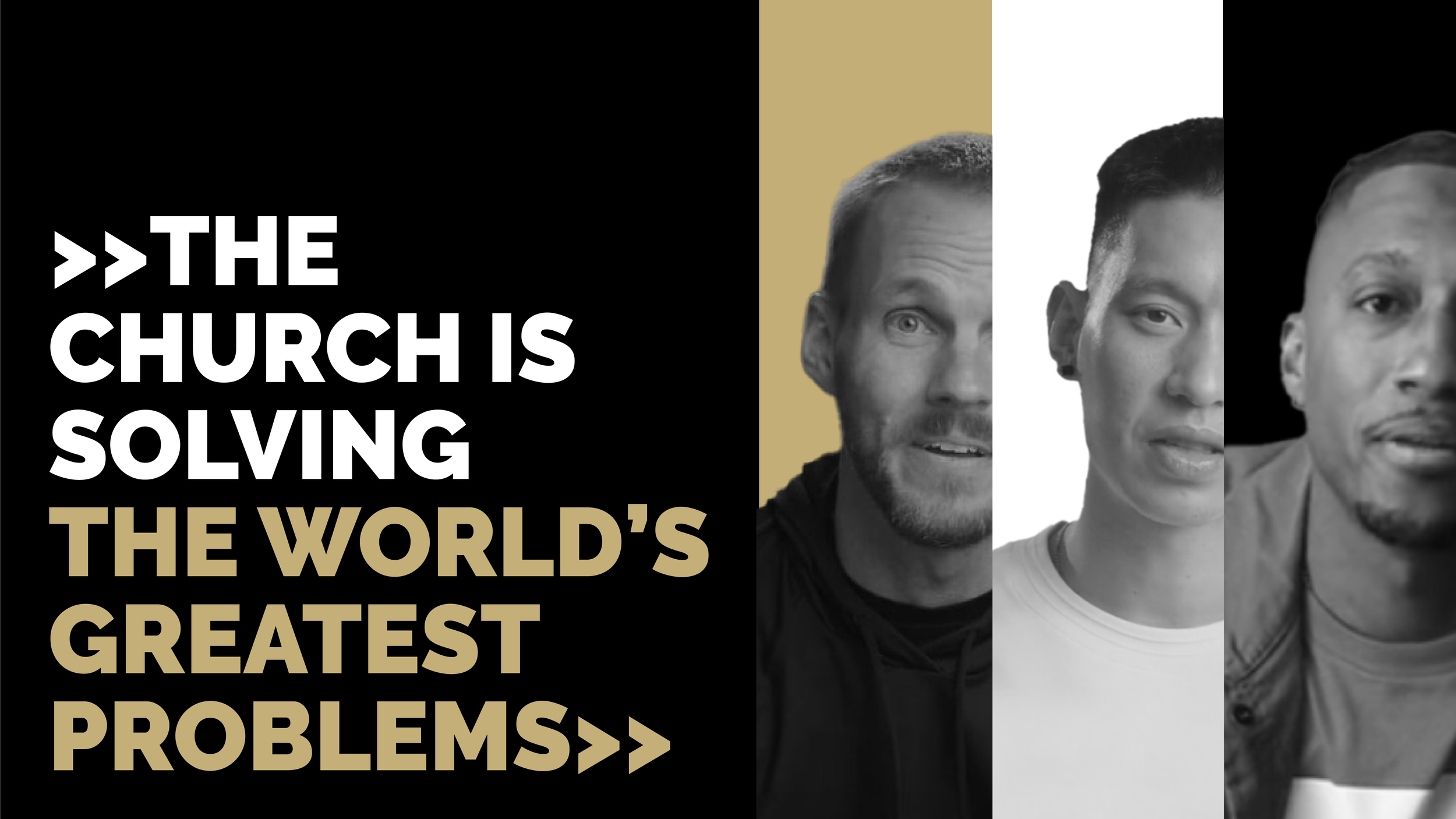
Henry Kaestner I love the emphasis on getting people in the game. I think that’s so important in a world in which we might read a book or listen to a podcast or listen to a sermon. We can get inspired. But for us to actually then take action on that is something that’s, it’s it’s easier said than done. And one of the things that you’ve hit on from the very beginning in this cohort model is the same thing, of course, that blends us together in our shared DNA, and that’s to do it in a partnership in a group of people as they’re able to talk through. Okay, let’s let’s go through this together. So what does it look like for all of us to get clear on what the opportunity is and what God is calling us to, and how he uniquely loves us? And the thing that I really think bonds our DNA together as we merge. Is this concept that there’s a God of the universe, and how much he loves us more fully than we might otherwise ever understand. And getting clear first and foremost on that, and then understanding what he is calling us all to in this battle that we’re all in, we are in a battle. It’s a battle not necessarily against flesh and blood, but against. The enemy that wants to distract us from the life that’s fully life. And then you’re getting free. Getting free of the things that might otherwise encumber us. To get in the game. And to do that in a group of people, a squadron. And I don’t want to overly militarize it. But there’s some great analogies. Of course, it comes from basic training and having a group of folks that have your back and in this case, praying for you, challenging you, encouraging you each other, being vulnerable, being transparent. And it’s with that that we have always, as our different organizations sought to serve each other. But for us to do that now full time together. Is really unique. So some number of people are listening to this. And like I think I’m a little confused here, right? Maybe I heard the chocolate peanut butter thing. Oh really? What are they doing here? So it’s a merger. We’re coming together. Our teams, our DNA is being combined. The DNA of halftime is is is being a part of everything we do. It feed driven, feed driven, itinerary, feed driven, investor feed driven. Students is coming out solving world’s greatest problems. This concept of being able to understand what guys uniquely equipped you to do. The halftime DNA is going to be part of every one of the different initiatives we have. And yet halftime is incredibly powerful as a stand alone program. So as people are part of the faith driven movement and just the movement of God, to be able to come in, to be able to continue to have that highly personalized, this really high touch. Coaching and collaborative platform. That’s going to be continued program. Maybe you can speak to that. Either one of you. Just what does summary what might somebody expect from this merger? Is it all together? How is it happened? Halftime shutting down. Can I continue to refer my friends in. What was it mean for you guys?

Jim Stollberg Yeah, it, you know, we’ve talked about this as we, as we just embarked on it, we talked about halftime. And you just spoke to Henry being remaining distinct but also being integrated. And I love how we’re framing that up because we feel that halftime, you know, for people who are searching for who are experiencing what we would call that smoldering discontent, that feeling that there’s something more but not sure what that is, I truly believe that is the Holy Spirit speaking to you, that there’s something more for you in life. And, we want to serve them. When people get to that point in their life, wherever they’re at, we want to serve them distinctly, but also just recognizing the power of reaching more. Tom and I, as we took on the co-CEO roles, really felt called to serve more and serve longer. And we really felt that partnerships was the way to do it, that we really needed to be much more kingdom minded and much more abundance minded. As we went forth on this. There’s so much more we could do together. And when we as we watched the nature of movement grow and seeing you guys a few times a year, we thought.

Tom McGhee What you do.

Jim Stollberg Is so much better than what the abilities that we have it and the go to market for reach to to reach those who are not in the game and maybe not even thinking about being in the game. That’s been a sort of a, but a challenge for us. Candidly, we’ve had some people come through halftime said, boy, you’re the best kept secret in the in the ministry space. Well, that’s not necessarily the place we want to be. So if we’re going to reach more, we think that being broader and reaching that audience for the purpose of getting them to the table so that we can help them go through the transformative program that we know we can deliver to.

Justin Forman Amen, Amen. Such a great perspective. Yeah, I think that’s just worth double clicking on, is that we think that there’s ample opportunity for investors, for entrepreneurs, and even the faith driven students. We’re excited about that. New initiatives and making sure that people have a frame to walk through life, to value the importance of people on a board or in their community to walk through it with. And so we’re excited about all of those different verticals and those different opportunities to to integrate this process. But as you guys mentioned, to making sure that there is a clear, distinct process for others that might not be in those buckets, but still want to experience the power of that half time experience and go through it together. And so it’s a fun journey to, embark on both of those things together. You know, I think that, one of the things that I would love to just double click on a little bit is just the latent word that you guys views. I know that that’s something that when, you know, Karen Hung and Dale Doss and other great friends and board members and part of Half Time and Faith Driven ministries really just talked about the potential and the opportunity. I think when we say that, we have an idea, but as you guys have walked through halftime and you sense this moment, you sense this merger and you sense this opportunity, what are you guys seeing? Just the amount of latency potential that is out there in the pews of the church.

Tom McGhee Well, you know, it’s a great question. It’s one of the things that really, really touches my heart. Just reading. My wife and I do a ton of our, Bible reading kind of time together this morning. One of the words has stuck out, both in the Old and New Testament is a continued phrase that says, you know, something would happen and they would be called those whose hearts were stirred. You know, and it just makes you realize, you know what? They’re an awful lot of people, that their hearts are stirred. They’re going through the motions, you know, they they they believe in Jesus, and they go to church and they’re trying to do the right things, and maybe they volunteer a little bit, but but it’s just I’m trying to mechanical word. Certainly not the abundant, joy filled, radical, risk taking life that that Christ has, you know, invites us into. And I see that and I’m like, it just shouldn’t be that way. I mean, Henry talked about the darkness. And, you know, I think the way you push the darkness back is not by fighting the darkness. It’s by becoming who you were created to be. Do what you want. One of my favorite quotes from a civil rights leader named Henry Thurman, Henry Thurman, who said, don’t ask what the world needs. Ask what makes you come alive. Because what the world needs is more people who are fully alive. And I think that’s what the church teaches us. What the body of Christ needs, you know, it is you discover what God’s uniquely made you to do in this world of identity and how important that is. You get Ahold of your identity is is Jim was saying, it becomes something you can’t not too right. You just you’ve got to be after it. And entrepreneurs know that feeling from the company they started or the things that came out of a passion or a love or an opportunity they wanted to seize. And we just want to carry that same passion and every aspect of a person’s life. You know, we’re they’re living a life that is just, you know, better than they ever thought to be able to really just live it fully. And I think that I just see a lot of people in churches, I see them on Sundays, I see them around that are just not living that full life.

Henry Kaestner When you when you talk about that illustration, it makes me think back to Ezekiel, right. The valley of dry bones. Another thing that that. We’ve used in these, in these talks over the last several months, just going through the Valley of Dry Bones, where they’re the sleeper cells. And I myself have been in that valley and myself, a lot of me is still in that valley, but it’s when it’s it’s coming around men and women, like when we were with Karen last week and Samantha and and the two of you and Rhonda just, you know, it’s like, oh my goodness, I’m being woken up by my slumber into something that’s fully life. And that’s one of the things that we’ve tried to do now for a long time at Phaedra, for months, which is to go through and say there is something much, much better. But then this process that you’ve had for so long at half time is like, okay, so just don’t get feel like, okay, I’ve got to join any battle. What’s the battle? And makes you come alive? I love working with entrepreneurs in emerging markets. Makes me come alive. The person next to me may come alive by investing in multi-family real estate that houses refugees in Louisville, Kentucky. And yes, somebody else might come to live by doing Bible translation. Question is how might the body of Christ from Ezekiel, the valley dry bones, be awoken to their individual calling, where God might use them in a way that brings them closer to knowing him? And that’s what we hope to do together.

Jim Stollberg Yeah, Henry couldn’t agree with you more. I mean, that’s really the clear part of get clear, get free, get go. And God is uniquely created us. He’s giving us. He’s given us skills, passions, experiences that he can use. You know, a very good friend of mine who’s also a half time, a guy that I went to college with, you know, he went through it and half time and ultimately, you know, he, he’s a hunter fisherman from upper Wisconsin. Right? Great guy. Loves to hunt, loves to fish. When he went through his passion exploration, he picked this picture off the wall of a person hunting. And you can ask yourself, okay, how is God going to use something like that to bring the kingdom about? But he had faith and he explored that and what he has launched his wheelchair whitetails he had an experience earlier in his life where a good friend of his, couldn’t experience the same joy he had by going into the woods and hunting or fishing. And he created this ministry called Wheelchair Whitetails to bring that experience to people who are wheelchair bound, who are disabled. And guess what he does? You know, it gives him that experience. But when he serves the meal at night, he prays. And he gets he gets people together in a cohort, if you will, and brings them closer to God. And some of them will accept that. And so God can use your unique passion. God can use your unique experience of a life to really get at that core, to get clear on who you are and what he’s made you to do.

Henry Kaestner Yeah. And, Dean, well, as you have listened to some of the feature Not Far podcast in the past, you’ll know how we end each episode as believing that God’s Word is alive. He uses it to speak to us every day. I love Tom, the fact that you and your bride were doing that just this morning. Kimberly and I were going to the Bible one year together. And we want to ask you, Tommy, you hit on a little bit, but expand on it, both of you. How do you feel that God is speaking to you through His word? Maybe something came through today. Maybe it’s this week, but something that might be able to be an inspiration encouragement to all of us listening.

Tom McGhee One of the things, we had a son, who passed away about 15 years ago, but prior to that, he, he was in a motorcycle accident. And prior to that, he’d struggle with drinking and drugs for about ten years. And my wife started it really drove her to the word is a place for just, solace and hope. And, maybe in a slow learner. I tried to gut through it for a while, but then finally realized I was bored. Or she was and joined her and that it and we we have probably for the last ten years, 15 years we’ve been reading through the Bible every year together and we’ll read separately, and then we’ll come together and say, what a dad say to you in that. And, you know, half the time it’s like, did you read the same chapter I did because I didn’t I didn’t even see that phrase. Right. Because God’s speaking to each other. So and I think, you know, I sort of touched on the thing that stuck out to me. There are two things that have stuck out in the recent readings last couple of weeks. One is this idea of, you know, whose hearts were stirred. And it was the idea, it just dawned on me that that’s not everybody, that unfortunately, a lot of people whose hearts aren’t stirred, they’re okay just going along and what they’re doing and hoping, you know, maybe things will work out. And, so, so that idea of a stirring, I think there’s a stirring happening. I think there’s a quickening happening if the if the age is getting darker, the remnant is also being stirred to be the light that we’re supposed to be. And I, I just want to help people step into that. The other one is it comes out of Psalms several times. It talks about, Lord, make my path wide, or give me firm feet on my path, or make my path straight. And I just, you know, as we have entered into these conversations about merging and trying to do more, it feels like he has made our path wide. Neither of us, I don’t think any of us have stumbled on anything so far. We haven’t found, oh, I didn’t know that. Or gotcha or wow. I just don’t think that’s going to fit at all. It feels like, you know, just really, God is saying, this is a path I want you to walk down, both individually for opportunities for myself. Sure, Jim, within this greater move, but also for the organizations to move forward. So I think those are a couple of these are really spoken to me either.

Jim Stollberg You know, for me, I think I’ve shared with you my, my personal mission statement is to multiply multipliers. And, so that’s part of the reason why I’m at halftime and why I just really look forward to being part of the faith driven movement. What a better place to be than to multiply the multipliers. But we also have when we go through halftime, we also ask our our clients to develop a being statement. And my being statement is to be salt and light. God doesn’t just call me to do. And that’s one of the things I’ve learned through my journey is, I kind of came into halftime exploring what God wanted me to do, what halftime taught me, who’s who God is calling me to become. And to be salt and light in the world is really where I feel I’m being called. As Matthew 513 to 16 could be salt and light. And for me, it’s very personal. As as I’m out of my in my faith journey, it’s easier for me to be salt in this kind of environment, to be encouraging to be, you know, to be that, that way to preserve and that way to protect the faith in a, in a room full of faithful followers. But to be light in the darkness is a bold challenge for me. I have to be to be that light in the world today, especially today, is a challenge. And it doesn’t come easy. But that’s. That’s why I want to, surround myself with the faithful followers so we can be light together.

Justin Forman Indeed, indeed. Beautiful way to say it. We are so excited about the future. We’re so excited about this. I loved, details, comments and stuff that might be in the show notes. Here’s just thinking about Bob and how he might be smiling down on this kind of conversation, and knowing that that fruit has rippled around the world in so many different places, has shaped all of our lives in great ways, and so much that it brings us together to say, what does it look like to surround ourselves with people with that shared passion that you’re talking about? Jim? So, yeah, if you can’t tell we’re her and you, we can’t tell. Maybe because you don’t have video access. We are super excited about what this means for the movement, for so many people around the world that we might be able to better serve together. And so you might be able to see some of the video announcements in the show notes. If not, you can go to Faith Tours and movements.org backslash halftime and see a video that shares a little bit more about the story. How we think that God’s been winking at us throughout this whole process and bringing us together some frequently asked questions about what this continues to mean, and some of the dreams of what we think it could mean in the future. So grateful to be with you guys. Let me close this out just in a word of prayer, just praying for this next season and this chapter ahead of us. God, we are so grateful for this time in the season. You, have sliding door moments in life. To think so many moments that have led to this moment and the ways that you work. We look at it and it’s just another testament to your Holy Spirit, guiding that wide road and that path together and that you’ve brought us to such a time and such a place, and you’ve prepared us for this moment that, as Tom and Jim mentioned, as it gets darker, that we might shine brighter, and we might do that by standing together. So, God, we pray for the months ahead. We pray for the conversations ahead as we think and plan and figure out ways to better serve your church and your people around the world. And it’s in your precious name that we pray. Amen.

Joey Honescko Thanks for listening to the Faith Driven Entrepreneur podcast. Our ministry exists to equip and resource entrepreneurs just like you. With content in community. We know entrepreneurship can be a lonely journey, but it doesn’t have to be. We’ve got groups that meet in churches, coffee shops, living rooms, and boardrooms around the world. Find one in your area or volunteer to lead one and bring this global movement to your own backyard. There’s no cost, no catch, just connection. Find out more at Faith Driven entrepreneur.org.


Episode 305 – Surrendering to Trade Up

The conversation explores the themes of surrender and significance in the context of being a faith-driven entrepreneur.

The hosts discuss the importance of surrendering personal ambition and aligning one’s vocation with God’s purpose. They also emphasize the need for community and the dangers of pursuing worldly definitions of success. The conversation also touches on the upcoming Faith Driven Entrepreneur Conference and the hope that attendees will walk away with a deeper understanding of the true significance found in surrendering to God’s plan.

Find more at https://faithdrivenentrepreneurconference.org/

If you’d like to hear more about the Faith Driven Entrepreneur community groups, go to faithdrivenentrepreneur.org/groups.


All opinions expressed on this podcast, including the team and guests, are solely their opinions. Host and guests may maintain positions in the companies and securities discussed. This podcast is for informational purposes only and should not be relied upon as specific advice for any individual or organization.


Episode Transcript


Transcription is done by an AI software. While technology is an incredible tool to automate this process, there will be misspellings and typos that might accompany it. Please keep that in mind as you work through it.

Joey Honescko You’re listening to the Faith Driven Entrepreneur Podcast, a show dedicated to the movement of founders and leaders around the world who are using their businesses for the glory of God and the good of others. Let’s get into it. All right. Usually we do our nice little welcome to the Faith Driven Entrepreneur podcast, blah blah, blah, but we just found out that Henry was in the same room as my dad and my two little brothers. Or I guess it was more like an outdoor room. Giant space. They were there yesterday. Henry, talk a little bit about you were just seeing the the Rolling Stones two days ago. Yeah, man.

Henry Kaestner Yeah, it was incredible. It was just, you know, in 1990, early 90s, my parents came out to visit me in New York, and I was just I couldn’t get off of work, and I was working hard. But the Rolling Stones were going to be in Madison Square Garden, so I bought my parents tickets. They’d never seen them. And I grew up hearing all these stories about the Rolling Stones and their music. And of course, I knew it. And, and, and I sent them off to Madison Square Garden believing that this might be their last chance to see the Rolling Stones live. And that, of course, was more than 30 years ago. And when I was there on, Wednesday night, having flown in from the Christian Economic Forum, just in, I sprinted from the Uber to the gate, and then I had to run all the way around the stadium while they’re playing start me up and I’m like, I can’t believe I’m missing this. But, as I got in there, Mick Jagger then welcomed the crowd and noted the fact that, they had first played in San Francisco, in the Bay area. They they’d been there before. They were there 59 years ago. And that’s really that’s really impressive that in the fact that Keith Richards is now looking young for his age. Also impressive. But it shows it, you know, what if wouldn’t it just longevity might look like over time. And I can’t get overly theological about it. But these guys have been doing their craft together for a long time, and that’s just awesome. And, you know, I guess, you know, do I get my inspiration for working with the faith driven team and hoping that we might be able to stick together after 60 years, and that my inspiration comes Rolling Stones wise, way too corny and hokey. But there’s something in there.

Justin Forman We surely we’re not announcing a music label that I don’t know about here. We’re not. We’re not making big plans to announce, like Henry and Rolling Stones or anything. Is there a surprise we’re going to drop here?

Joey Honescko No, no record label. But I am excited to welcome our guest, Mick Jagger on the Faith Revolution. No, I’m just kidding. It’s not. He’s not here. He’s busy dancing and being highly energetic, but. Man. Yeah, well, I mean, you know, obviously we can real quickly go, sermon illustration with the longevity of, of a group of people that have been together for 60 years or whatever. But I think to your point, Henry, like, it feels corny, but there’s also a element of truth to that, of committing to a people and a mission and a vision. And this does feel like I’m, like, really pulling a Segway out. But we are talking about our conference and the conference theme in this episode, and this will be the the fifth anniversary of the conference. And that’s five straight years, not quite 60, but we’re getting closer and closer. And so it does make me think like, you know, you go back, listen to the one of the most impressive things to me about the Rolling Stones. I promise. I haven’t gone off topic yet, but one of, one of the most impressive things to me about the Rolling Stones is their ability to make new music. Like, it’s like they don’t just, like, continue to coast off of Paint It Black Forever, like, which is a great song and still holds up. They actually continue to innovate and see new things. And if you listen to their early albums and you listen to like the stuff that’s come out in the last couple of years, it’s progressed and changed and there’s been a lot of, constant innovation. And yeah, that that does, ironically and not trying to be too cheesy, but it does make me think about the way that when the conference started, that was 2020 and the team was much smaller, the movement was much smaller, like a lot of stuff has changed. So I just would think it’d be fun for a second to go back to where you guys who were there in 2020 and the first iteration of this, what was that like?

Justin Forman Yeah. Well, it’s it’s crazy when you think about it. I mean, things are so many times things are born out of unique moments in time. And for us, we just felt, gosh, there’s a need to bring together the movement. We’ve had some podcast conversations. You felt all these conversations were spread out, and one of the things that we hope to do with faith driven is to say, what does it mean to connect a common language and a DNA across the movement in a conversation? So, gosh, it was 2019. We started planning and I’m trying to remember all of the dates, but we thought this was going to be an in-person gathering. We picked some central location like Dallas. We’d made all these plans to do this live, in-person event, and obviously we know what happened with Covid. And up until those moments, and even when it was shut down for a couple of weeks and things will slow down, turned into a couple of months, we went on this long journey of thinking will be in-person, will be back, this will be reunion. And then it pushed us online. And one of the things that I think that we found out about, that and the blessings of having to innovate amidst some terrible and tough circumstances, is that we recognize if we had an event in one central place, and there’s certainly times and places for this, but we we realized we might be taking the most passionate people in every community around the world and bringing them into one place instead of all of the passionate leaders, volunteers and group leaders being the person in the city or church or place where God has them, and kind of reversing the flow. And so, you know, when you think back to that journey and I think back to those days of thinking what it was going to be like, there’s it’s a really unique moment when we think that things got reversed. And instead of everybody coming to one place, we got a chance to kind of flip the pyramid, to come behind and serve anybody there in our local community to say, you don’t have to hop on a plane to find this movement. It’s there in your backyard, and God might be calling you to step up in that. And so, so yeah, I mean, on a big level, it’s it’s going into crazy things. But I also remember, you know, when we got together to film that and everybody was social distancing and the whole space as we were recording it. Yeah, it was it was a unique time.

Henry Kaestner It was, it was, you know, the watch parties which have become such a big part of us experience it all in local community, started with that very first conference because we had one watch party. It was broadcast obviously over the internet. And when it just you might remember a little differently, but the presumption was that people were going to watch it by themselves because of social distancing. Sure. But a group in Raleigh, North Carolina, said, you know, we’re going to get together and we’re going to watch it. And, we’re going to enjoy some fellowship and community and presuming the right masking and social distancing or whatever. But they did that. And. And that the reviews coming back from the 3540 people that went to watch party were so significant, talking about how great it was that we decided to be more intentional about talking about that one watch party, so much so that I don’t know the next one, next cameras. Maybe there are 100 watch parties and now what do we get like 400? Something like that around the world?

Justin Forman Yeah. I mean, any event we’ll have around 300, 400 or so watch parties. But I think what you’re talking about is it’s flipped over the years. You know, these days, too, oftentimes content consumption is an individualized sport. And people have realized now there’s something beautiful about coming together around it.

Henry Kaestner Yeah.

Justin Forman And today I would say very I mean, a fewer number of people stream it individually. Most are trying to find a place where that they can gather now if they don’t have somebody in their area, of course, that’s that’s different, but a huge core of it, if not the majority of it is around those watch parties. And, you know, I think the thing about I love about those watch parties is it’s all different shapes and sizes of watch parties. Sometimes it’s five friends getting together around a conference table. It’s a group of people that have been meeting weekly that this is a way to kick off their fall or kick off their year. And, then you have some that are, you know, 40, 50, 60 entrepreneurs gathering in one place. I think what’s beautiful is, is seeing the different, sizes of that. I think oftentimes when people think about hosting a watch party or an event, they think, man, I’ve got to have a church that can seat 304 hundred people. I think we’d really find that anybody can raise their hand and say, let’s do this.

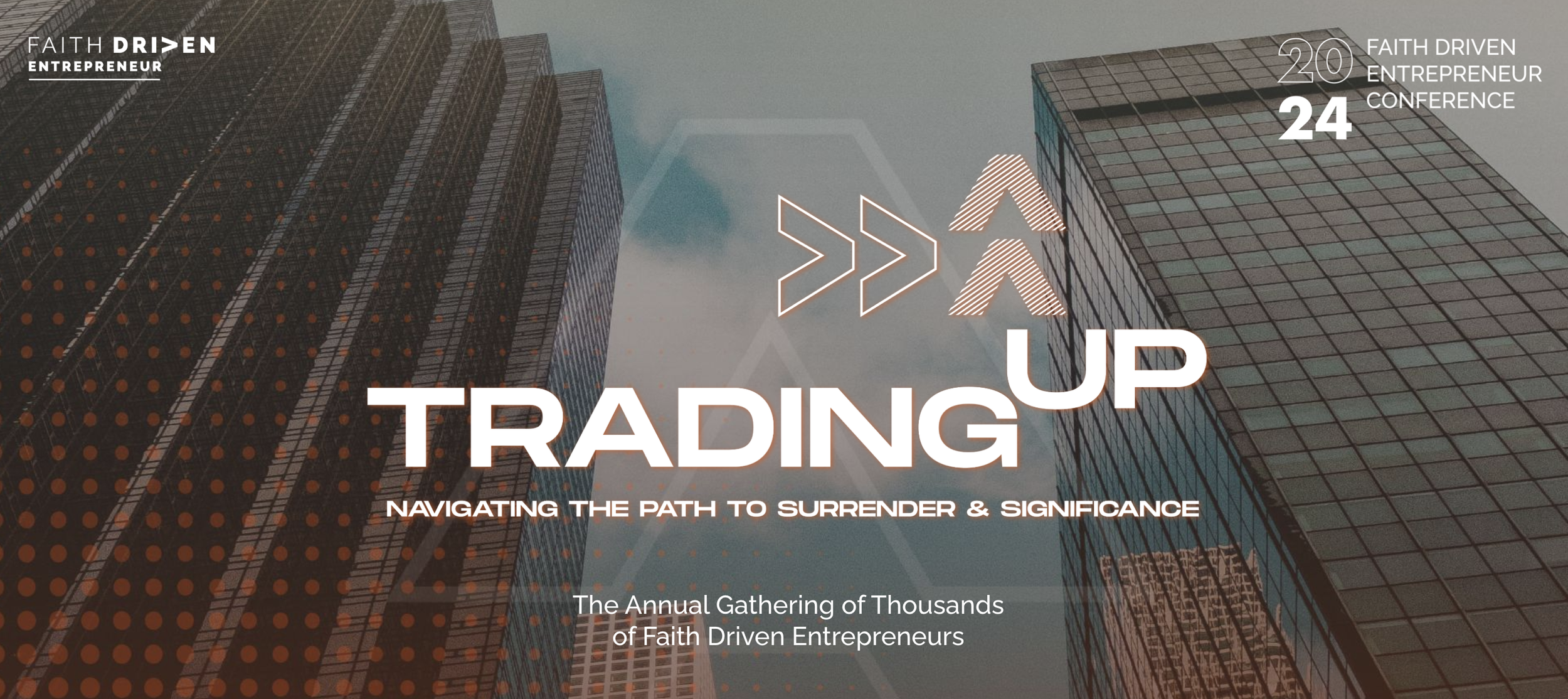
Joey Honescko Yeah, well, I love that innovation of and the surprising innovation of the watch parties. I think that has become such a central part of the conference. Another thing that we kind of did a little bit more intentionally, really starting last year, was develop a central theme around the conference. And this year we’re talking about this concept right now, if you go to the website of an entrepreneur conference.org, you would see that the theme is Trading up, Navigating the Path to Surrender and Significance. And I hear that and I’m inspired. It sounds cool. But I also want to give us a chance to maybe just unpack a little bit about what that means and, give you guys a little bit of opportunity to add some color about what it might mean for an entrepreneur to trade up. What does it mean to be trading up as a faith driven entrepreneur?

Henry Kaestner Yeah, I so I love this illustration. And it’s exactly what our ministry is all about. It’s inviting people into something greater. And because I grew up in a time when a lot of people watch TV on black and white TV sets, I watch the USA Russia hockey game in 1980 on a black and white TV set. It’s like, the experience of a feature not far from going from one with a black and white experience to one that’s in Technicolor, watching color TV for the first time. And I think that’s really important, because I think that we all want to be invited, and it’s something that is, is is bigger than ourselves. And not just that. The role of a Christ follower is just a necessary take up or cross. And gosh, now they hear all the different things we have to do as a business owner. We’ve got to do that. We’ve got to do that. But instead, oh my goodness, this is a glorious thing. And God, when I experience God in the marketplace, in the workplace, at my company, I have meaning and purpose and joy is I commune with the living God and I want to be in community with other people doing the same. And so you’re going from this kind of like narrow focus of, I’ve got this business. I need to see it grow. I need to provide for my family to one where I experience God every day through it. And I can be part of a community of other people doing the same. And this is infinitely cooler and inflamed, more fulfilling than my past life when I came to realize it, being an entrepreneur can be really lonely.

Justin Forman Yeah, I think, so well said. I think that one of the things that we miss is, we are daily experiencing pain points. We’re daily experiencing the struggles and the stress and anxiety that comes with managing and leading and supporting a business, whether that staff or people or operations, you name it. There’s always going to be the struggles that we have. And so oftentimes I think those are the pains we feel. But upstream of the symptoms and the source is this question about surrender. You know, I the book that really shaped me for the last 20 years is Book Half Time, written by a faith driven entrepreneur named Bob Buford, who was a cable TV operator in East Texas. And he wrote this, book that’s really defined a lot of the way people have thought for 30 plus years. And it was this idea of like, what does it look like to go from success to significance? What does it look like to go from this place where you’ve achieved some success, you’ve seen some of these things happen in your business, you feel like you’ve got some of that confidence. But but does it feel, you know, as Henry says, maybe a little less. It feels just like. Telecom or business or something void of that other purpose. And I think if we’re going to use that halftime language of getting from success to significance, I think there’s a bridge in between that we have to cross of surrender. And otherwise if we don’t cross that point of surrender, yeah, you can find a good program that’ll be bolt on and, you know, do this and do that, care for a couple people and do some things. But he come to this place of surrender. Now all of a sudden you’re playing with the different scoreboard, you’re playing with a different goal or you’re playing with a different end in mind, and then everything changes. As Henry says, it goes. Everything, not just a portion of the screen, went to color, but the whole screen goes to color. The whole screen lights up and it changes in a radical, different way. And I think we cannot miss this element of surrender, because I think this is the part where Jesus speaks clearly and says, you cannot serve two masters. And we try to make it one and a half, and we try to make it that in between plays. But if we really get to that point of surrender, if we really get to that point in the place where we lay down, it doesn’t come from a place of obligation, doesn’t come from a place of duty, but it comes with this joy that welled up inside. And so, you know, this is this reset moment. We try to do this once a year. This is an opportunity for people, I think, to come to that place of surrender. And then after that, like everything changes and you get to unpack that. So yeah.

Henry Kaestner You give up something, but you have this hopeful expectancy that you see something far greater and you do. And yet there is some amount of dying to self. There’s some amount of dying to personal ambition. And with the desire of of knowing God. And in one level, maybe what brings us into that is just just a sense of gratitude. And like I, you know, I’ve come to understand more fully about how much you love me, and I’m going to give up my agenda. I’m going to give up my agenda that I had had, because I think that there’s something else, something greater that you want from my life and from this business and the relationships that we’re stewarding with partners, vendors, customers, employees, with a hopeful expectancy that in doing so, you’re going to know God more fully. And in response to that, you’re actually going to get something much better. You give up one thing and you get 1000 things back.

Joey Honescko Yeah, I think that that’s an important thing. And let me make sure I’m hearing you guys right, because I think it’s an important distinction because I think if we here really there’s there’s two sides of this and it’s great. The title subtitle like trading Up and Navigating the Path to Surrender and significance. It’s important that they go together because if we’re just talking trading up, we can maybe get into this mindset of like, yeah, I don’t need to surrender. I don’t need to lay down my life. I don’t need to pick up my cross. Like God’s not calling me to do things that are hard. But then on the same end, what I’m hearing you guys say is that the surrender element is actually an invitation to something that is better. The picking up of the cross is, a heavy burden, but it’s a light because Jesus carries it with us. So am I having that kind of really? There are two juxtaposed ideas trading up and surrender. So am I hitting that right to understand that that’s an intentional move, that it is a it is a both and there’s still sacrifice. There’s still the servant leadership call of being a Christian, but that those are actually invitations into something much more beautiful than we could ever imagine.

Justin Forman I think trading up is the thing we we see everywhere. We feel it. Right? I mean, everybody’s trying to trade up. Oftentimes people are selling one house to trade up for something better. You’re selling this to trade up for something better. You see that in the market. You see that in your community. You see that in your daily life. And so this concept of trading up is there. But the path to get to it and the path to get to the meaningful trade up is a little bit unexpected. Most people don’t think that surrender is that place. Most people don’t think that surrender is that they think it comes with a cost or a sacrifice. And it might in the world scoreboard, but it does it in the kingdoms. And I think that’s the part of what we’re looking to change here. And so when we think about some of the stories of what we’re going to feature here, and, Joey, I know you’re deeply involved in some of these as we think about the content of the conference, and you think about the stories of, like, Matt and Sam Parfitt in this story of Grace enterprises. I mean, what a powerful story of here’s a couple, travels, sees God at work in the other side of the world, thinks that, they’ve all they learned something that brings them back, and it leads them on to this journey of saying, what does it look like for us to personally maybe sacrifice X, Y, or Z? But the joy that they have experienced in caring for creating jobs for people might not otherwise have jobs. And doing it in partnership with a church. May you. It’s trust me when you see the video, it it doesn’t look easy. It’s hard. There’s a lot of hard. But when you see the calm, the comments and the thoughts and everything throughout the story, there is no doubt it’s worth it. And I think that that, that come from you going to a place where Matt and Sam has surrendered, and they’ve traded up in, in the world’s eyes, they might look at that story and say, there was a sacrifice. But when you see that, it is not a sacrifice at all. You see a joy that’s uncommon to so many the entrepreneurs around us. You see joy that’s uncommon when you walk through too many of the churches in our world, you see something that’s different.

Joey Honescko Yeah. So when I hear that, I think of another phrase that we’ve talked about, on the podcast and in videos, this idea of the difference between a get to and a got to. And I think that that kind of becomes some of what we’re talking about here. A lot of the call to surrender in the church or call to sacrifice sometimes feels like it’s this burden of a, of a got to, I, I have to do this would be another way of saying that versus I get to do this, I get to participate in that. And I think the some of the stories you’re talking about, the part fits as a great example where you see the joy of it. And I’m wondering, right? I think we know in the church we know as faith driven entrepreneurs it is good to surrender. It is good to let those things go. But yet it’s often in those places where we hold on so tightly. And so I’d be curious, both of you as experienced entrepreneurs, people who have been in this world for a while. How have you learned to loosen up that grip, and offer some of that surrender? And how has that led to the trading upness in your own lives?

Henry Kaestner You know, when we talk about the word significance, I think it’s important to unpack that, because that might mean a lot of different things to different people. And that really is increasingly guided how I try to align what I do with my vocation and the activities that I get into. I think every one of us, was is created in the image of God, and we all have this ingrained desire to be thought of as significant and to be working on things of significance. And there are lots of different stories in the Bible that help us to understand what is that type of significance mean first? It comes from the legal standing of us being adopted children of God. And that becomes really significant, right? If you’re the if you’re the child of somebody who’s really, really important, well, that gives you a level of significance that that just by your standing. Right. The next thing I think is that we want to be working on something that really last of significance, right? So many other things just go away. And in Ecclesiastes we see that all these things are just in the earth, under the sun are just going to go away. And that’s meaningless. It to is it like a, is it like a was it passing after the winter to chasing after the wind. Right. And so that’s not significant. We’re all kind of ingrained with this desire of, of accomplishing something and getting a return on investment. And yet we know that the types of treasure that we lay up, that we can lay up, that speaks, that desire for treasure. And being working on a project. The significance? Well, that that’s placed in heaven where we get a 36 year, 100 fold return. You know, what are those riches that we might have that is stored up for us in heaven? Well, those are the the memories that we bring with us. It’s the relationships. It’s the it’s the participation we had and something of eternal, true significance of building God’s kingdom under his power for his glory. And so when we tap into that as entrepreneurs, it’s exhilarating. It’s exhilarating. And, and gosh, I really hope that that’s the type of significance. I hope that that’s the type of ambition that those that are part of this community have. And it’s not just like, I’m going to just die to self, and I’m just going to put on, you know, sackcloth and ashes, although there may very well be time for that in a Christ far as life, but instead I’m going to put on garments that are eternal, and it’s going to be something really, really, really cool and it’s going to last for eternity. That’s significance.

Joey Honescko Yeah, that’s part of that new Technicolor vision, right? Is that kind of definition of significance. But we as entrepreneurs are constantly faced with other definitions of significance that we have to fight against, and we have to push against it. Right. The black and whiteness, to use your metaphor there, Henry, of the world is actually what’s normative. Like people are saying this is enough to search for this kind of significance. And what I’m hearing you guys say is that the surrender that leads to a greater significance is a fundamentally different significance than what the world has to offer. Justin, is that kind of a right way to understand that, or how might you kind of clarify some of those those points?

Justin Forman Yeah, I think it’s the right way to understand it. I’ll push into the question, why are we not there? Why are we not thinking that way? What stops us from thinking that way? Yeah, and I mean, we’ve talked about this on other podcast episodes. I don’t think we’re winning the air war. I don’t think we’re winning that. And we don’t know what we’re up against. I mean, like, we’re up against a superpower. We’re up against a superpower of media that pushes knowledge and an alternative idea of significance, an alternative idea of success. And it’s subtly seeps into everything. I mean, why is it that a ten year old or 12 year old kid, you know, starts paying attention to, what house their friends lives in, what car their parents drive and all these type of things. It’s everywhere. I mean, I’m speaking from this of our kiddos are realizing that, and then they start connecting that to, well, what what is their dad do? Or what is their mom do or what is that? Yep. And and all of a sudden, at ten years old, before we’ve even had conversations about career, vocation, college or the birds and the bees or anything in between, they’re getting bombarded of what success looks like. They’ve already framed up in that. And so we’re literally starting that conversation ten years later. I mean, what happens over ten years? Think how deeply rooted that becomes. I mean, it’s there. And so I think that part of what we just have to realize is we don’t know how all encompassing it is that we’re going up against. And so if we think that we are going to inoculate it, change it just by, you know, one Bible study, one Bible verse, you have to constantly be surrounded with people that are telling you something different and bringing you into it, but then showing you the joy of it. That’s what to me. It is alive. When you see these entrepreneurs have made it like you don’t hear these stories of man, I regret it. When was the last time we filmed a story with the feature of an entrepreneur and said, yeah, you know, we’ve God’s done some great things, but man, I wish I would have chosen things differently and stayed on my other track. No no no no no no no. You see joy, you see smile. You see tears. You see everything. But you see them knowing God more fully. But, we are not going to combat the worries of the world because they are all consuming unless we have people in the fight with us.

Joey Honescko Yeah. It’s that competing narrative. Right. And it’s it’s offering a counter narrative and being shaped by that thing more and more. I can even think about that just as I’m starting my entrepreneurial journey. And it’s weird because it can play itself out in different ways, right? Because I’m starting a bookstore in our neighborhood. I love our neighborhood. I love our tiny city. And it’s a weird, kind of quirky suburb of Dallas. But I just love this place. And I can go to this place where I’ve pendulum swing. Pendulum swung the other way where I think, oh, I don’t need to do something scalable or something big or something like that. I and I realized I wrote about this at one point where I wanted to be remarkably unremarkable, but either way, the actual motivation behind it was so that other people saw something in me, right? Like it was this same kind of desire to be small for the sake of being niche and interesting and, different. And so I think that it’s an interesting way how those narratives of significance can play out if we’re not rooted in what Henry was talking about earlier, that my significance is found in the fact that I’m an adopted Son of God, and that’s my meaning. That’s my purpose, that’s my value, not how like niche in indie I can be, or how big and scalable and mainstream I can be. Either way, I’m looking for the wrong thing to give me significance if I’m not aligning it with God. And I think that something you were just touching on Justin is really the danger of the alternative. Right? And you talked about that idea of regret. And yeah, when you talk to faith driven entrepreneurs who have lived this out and who have gotten in the game and who have fulfilled kind of their have changed their vision of significance, there’s not a lot of regret, but you talked to people on the other side of that. And there’s there’s plenty of things of like, man, I wish I did this different man. I wish I could have changed how I did that. So are there other pieces where like, what’s the risk of not surrendering? As a faith driven entrepreneur.

Henry Kaestner You miss out on the life this fully life. You get up to heaven and you’re up there for the judgment seat, you know? So we we get up to heaven because as we accept Jesus into our heart, we we’ve got eternal life. And yet even with that, there’s still going to be a time when God, sits us down, stands us up and asks us to give an account. We don’t want to be in a spot. There’s a great Broadway play called the Bema Seat that kind of gets at this concept that we see in the Bible of giving an account, and in it, the main main character has some amount of regret. There are opportunities along the way. God still loves him. He’s in heaven. He’s going to spend eternity with God. And yet he realized that there’s some aspect where he didn’t really just wasn’t on mission in a way that would have brought him even closer to knowing God and is in all forgiving God. But there’s still I don’t want to. I don’t want to be in that spot. And yet I know I will. There’s so much that in my life that I haven’t fully leaned into, and maybe as I get older, I get a little bit more, just wanting to be on mission and purpose for the things that really matter that that moth and rust don’t destroy and and that are actually really not chasing after one but are really meaningful. What do you think, Justin?

Justin Forman I mean, regret is there. Regret is obvious. We see it all the time. We all know the story of what Apple is and the genius of Steve and how I so admired and everything that was there. There’s a quote that he said, and I’m reading this. He says, as we grow older and hence wiser, we slowly realize that wearing a $300 or a $30 watch, they both tell the same time whether we carry $300 or $30 in our wallet. The amount of money inside is the same. Whether we drive $150,000 car or a $30,000 car, the road and the distance are the same and we get to the same destination. Whether the house we live in is 300 or 3000ft². Loneliness is still the same. Here’s a guy that has achieved ultimate success with myself.

Henry Kaestner $300 watches. People don’t know.

Justin Forman The irony in that. Yes. But. When he comes to a place, the guy that did sell expensive devices and he talks about the idea value is not just found in our possessions. Value is not found in some of these things of significance that we think is significant. There’s some sort of, reality that we face when I think of the faith driven entrepreneurs that you’ve seen, that have lived it, that have done it, that have gone after it. As we said earlier, you just don’t see the regret. But on the other side of the ledger, as Joey points out, that ledger is deep and it’s wide of people that regret it. And, I just think we are so busy, we’re so consumed. We think that that, you know, articles of incorporation will create an organization that lasts for forever and that we realize it does not fade away, some quicker than others. But what what are we really chasing after? And so I think we’re so busy. I think our hope with this conference is that it’s a time out. It’s a momentum. It’s all the crazy. And then a couple hours with friends, maybe from your church, maybe from your city or maybe online that you pause to really say what is significant. Am I putting my ladder up against the right wall? Am I really trying to climb the right thing? And so that’s what we hope it is. I think if we’re coming back to a landing here, Joey, I think that we hope it’s that moment. We’re not being prescriptive in how to answer it or where God’s calling you, but we just hope that people create a space to wrestle through it and wrestle through it with friends.

Joey Honescko Yeah, yeah, that’s really good. It makes me think of, the, the book of Ecclesiastes. And we’ve already mentioned that the, the chasing after wind. And I think when we read that quickly, we can hear like sadness in it. Even the Steve Jobs thing, there’s, $300 watch, $30 watch. It doesn’t matter. You know, vanity of vanities. All is vanity. But the point of Ecclesiastes is to accept that and see like. And God gives extreme meaning to these things. It’s like knowing it in its right place. And so it’s not just like we should throw our hands up and be like, okay, well, I guess don’t work then, because what difference does it actually make? It’s like, no work with the freedom that like, your identity isn’t in that, that your significance isn’t found in that. And now go freely and run with that, because your identity and your vision and everything you’re given is given to you by God. So it’s a good it’s a good reminder because even in the way Steve Jobs communicated that you could hear something missing, you could hear the idea that it’s like neither of it was significant. Instead of all of it is significant. God gives great meaning. God gives great significance to all that. So, we’d love to just close with with one last question, Justin, you just talked about kind of the hope you have for the conference. We’d love just quick responses from each of you to here. What would you want someone who’s coming to walk away with after they attend the the conference?

Justin Forman I would. There’s so many thoughts of the one I’m going to pick. You can’t go it alone. You can’t go it alone. Don’t buy the lie. Don’t buy the lie. To think that you’re going to make this journey yourself. You can’t. You can’t. You need people around you. God can bring that to you in a lot of different places. I’ve seen so many great entrepreneur stories that they have deep relationships with their leadership team, and their partners are like minded business owners that they might have known in their community or the industry, and some people find in their church. But the point is, don’t buy the lie that you’re going to go there alone. You might start off, you might make a little couple of laps around the track. But when you see the people, when I, when you guys know the story of Alan Barnhart, we’ve shown his story and you see it up there and we’ve seen the videos. And when I think about Alan, we think about the way that God has worked in such a long, direct or faithful obedience and long direction for so much time, I think about the way he surrounded himself with people. People in the movement, people in space. And I see other stories like that. And I think, man, to do that you have to have people around you. So I hope that the conference is a wake up call and a taste of it for people to see. It’s much better to do this with friends.

Henry Kaestner Yeah. Yeah, it’s it’s what? It’s, the joy set before us in doing this, and communing with guided and with communing with other entrepreneurs, which, of course, speaks to the importance of, of all the listeners of this, realizing that this is their movement feature, not remote. It’s a movement. And and what is important in a movement is for people to, to bring this to their own communities and to share this with others and to tell theirs and invite others to watch parties. And that’s the countercultural aspect of working with entrepreneurs that can be, very singularly focused on running their business. But through the grace of God, we now are reaching 100,000 entrepreneurs. And it happens because we don’t have a marketing budget. It happens when you share with others, and maybe it’s that you share a podcast, or maybe it’s that you share an invitation to join a group. Or maybe it’s that you share an invitation for others in your church to join a watch party. Maybe it’s an opportunity to go to your senior pastor and say, hey, I just, I want to I want to put an announcement in the in the bulletin and 5 or 6 of us that are entrepreneurs in this church, or 50 or 60 of us want to get together and, and do a watch party. That’s how this movement grows. That’s how the body of Christ raises, rises up into an army fighting a really important battle, with eternal consequences. And extreme significance.

Joey Honescko Yeah. That’s great. Yeah. You can find all the information about the conference at Faith Driven Entrepreneur conference.org. You can find watch parties. There’s watch parties all over the world, not just in the US, but all over the world. So, check that out. It’s September 20th, wherever you are. So, we’ll put the link in the description. Thank you both for joining me. And, we hope to see all of you at the virtual conference. Thanks. Thanks for listening to the Faith Driven Entrepreneur podcast. Our ministry exists to equip and resource entrepreneurs just like you with content and community. We know entrepreneurship can be a lonely journey, but it doesn’t have to be. We’ve got groups that meet in churches, coffee shops, living rooms, and boardrooms around the world. Find one in your area or volunteer to lead one and bring this global movement to your own backyard. There’s no cost, no catch, just connection. Find out more at Faith Driven entrepreneur.org.

Episode 304 – Redeeming Your Time with Jordan Raynor

In this episode, Jordan Raynor discusses his book ‘Redeeming Your Time’ and how entrepreneurs can uniquely struggle to manage their time.

He emphasizes the importance of discerning the essential from the noise and finding peace in Christ before seeking productivity. Jordan also explores the concept of grace-based productivity and how Jesus can serve as a model for time management and shares some of the 32 practices from his book,

Find the book here: https://www.amazon.com/Redeeming-Your-Time-Principles-Purposeful/dp/0593193075

If you’d like to hear more about the Faith Driven Entrepreneur community groups, go to faithdrivenentrepreneur.org/groups.


All opinions expressed on this podcast, including the team and guests, are solely their opinions. Host and guests may maintain positions in the companies and securities discussed. This podcast is for informational purposes only and should not be relied upon as specific advice for any individual or organization.


Episode Transcript


Transcription is done by an AI software. While technology is an incredible tool to automate this process, there will be misspellings and typos that might accompany it. Please keep that in mind as you work through it.

Joey Honescko What do we do with our time? This is a question at the heart of many faith driven entrepreneurs. We wrestle with the balance of grit and rest. We know our time is precious. Some of us have even figured out how to optimize our time. But many of us still struggle to identify if we’re using that time well. So in today’s episode, Justin Foreman and I chat with Jordan Ringer, whose book Redeeming Your Time, goes beyond simple management tips and gives entrepreneurs seven biblical principles for being purposeful, present, and wildly productive. I’m Johanna Sko, and you’re listening to the Faith Driven Entrepreneur podcast. Let’s get into it. Welcome back, everyone to the Faith Driven Entrepreneur podcast. I’m Joey Nasco, alongside today’s co-host Justin Foreman and Justin. We were talking before we hit record. I think that this is the first time on any faith driven podcast where we have a three peat episode. Jordan Raynor is in the studio with us for the third time today, and he’s joined us in the past. He’s talked about his children’s book, creator and You, and most recently we talked about his newest book, The Sacredness of Secular Work. So, Justin, I don’t know about you, but I’m always enjoying these conversations and I’m looking forward to this one as well.

Justin Forman Indeed it is joey. We, we have the unofficial, quote, board of, faith driven for our podcast for a video shoots. And I think it’s time that we have an unofficial stat board, for the podcast that as we cross over the 300th episode, we need to give credit where credit is due to recognize the three time guest, the title record holder for most appearances on a Faith Driven Entrepreneur podcast. Jordan Raynor, welcome to the show again.

Jordan Raynor Come on, brother, this might be a giant mistake. We might not even hear this one. Who knows? But, it’s a joy to be with you guys. I always love hanging.

Joey Honescko Yeah, well, what we didn’t tell the guests is we’ve actually recorded six, but we’ve on the air team, so, you know, they haven’t had those other ones.

Jordan Raynor But just now, the face of an entrepreneur, a plus. That’s right. To get the unreleased editions.

Joey Honescko Yeah, that’s exactly right, man. It’s always fun to have you on because you have written so much in this area of faith and work, and you yourself are a faith driven entrepreneur. So you’ve always have these great practical insights for the movement. And today we’re going to hone in. It’s a bit of an older book, but it’s an important book. And it’s wild that we haven’t talked about it on the show. It’s called Redeeming Your Time, and you wrote this book. It’s a wider audience than just entrepreneurs, but with your perspective, being an entrepreneur, you’ve started multiple businesses, you’ve managed hundreds of employees. So let’s just kind of dive right in. And as we think about your research and your own experience, what are some of the ways that entrepreneurs uniquely struggle to redeem their time?

Jordan Raynor Yeah, man, I’ll just speak from personal experience here. I think the biggest challenge for me as an entrepreneur and redeeming my time is discerning the essential from the noise. Because as entrepreneurs, we consume so much darn noise and information and inputs. And we go to LinkedIn and one influencer is telling us we have to do X to grow our business. And then we, you know, open up our email inbox and there’s a newsletter with somebody else telling us we gotta do y to grow the business. And it’s overwhelming. I’ll never forget, Joey, I had an investor ask me for some time when I was running threshold day to day a CEO, and he just asked me, hey man, he’s like, we’re excited about investing in other founders like you. What’s the number one thing in your opinion that we should be looking for? And I didn’t hesitate. It wasn’t about finance. It wasn’t about sales. It was real easy. The ability for that founder and CEO to discern what’s essential in a given quarter, in a given month, and a given week in a given day in the business, and focus relentlessly on that thing until it’s done. And, Joey, this kind of leads into redeeming your time. One of the seven principles you. I think when we look at the gospel biographies, Jesus was crazy good at dissenting from the kingdom of noise, a spending plenty of time in quiet solitude. And obviously, I think most obviously that was to pray and commune with his Heavenly Father. But I also think Jesus understood that we need silence to think and be creative and just discern the essential from the noise. And so this is just become really, really important to me. And it’s one of the seven chapters that’s really resonated really deeply with entrepreneurs specifically who have enjoyed this book. Redeeming your time.

Justin Forman Man, that’s so good. You know, when you think, I love that lion kingdom of noise.

Jordan Raynor Yeah, I’m stealing this from C.S. Lewis. P.S. don’t give me too much credit.

Justin Forman Okay, well, C.S. Lewis sounds like he just, he wrote the tagline for a lot of social media channels. I mean, you could put that label on anything, but what I love what you’re talking about here and where you’re starting us in this conversation, Jordan, is we gotta understand the reality. We gotta understand the reality of what we’re facing, the kingdom, the noise that is going to contradict each other, a tweet apart, a message apart, a LinkedIn post apart. We are going to hear things that are going to be very contradictory, and that we’re also have to recognize what is the stage that most entrepreneurs are in. I mean, if you’re out here and you’re listening to this, one of the things that we talk about is like, we don’t start from a place of connecting on the answer. We start from a place of connecting on the shared pain and the shared struggle that we have. And if we start just with this understanding of man, if you can get this right, this is one of the first dominoes of many of that entrepreneurial journey. But recognizing the conflicting opinions, the competing noise and the stages that these entrepreneurs are in that. We’re all in. I mean, you know, work is hitting fever pitch, families hitting fever pitch. It’s like everything at that kingdom of noise record noise level. And it’s a matter of survival, of trying to figure some of these things out. And so, man, it is a place from deep fame when you think about this, when is that place for you that you kind of came to that realization of, my goodness, like, if I sequentially, like start to figure this out. I mean, as you said, it’s one of the earlier books, but when is it a part where you realize, I mean, this is the upstream issue to some of the other issues?

Jordan Raynor Yeah, it’s a really good question. And I’ll answer the question more broadly of when did I figure out the redeeming my time was really the upstream issue. And by the way, I do think we need to draw a distinction between productivity and time redemption, right? I think as fate driven entrepreneurs, we are not just asking the question of how do we be more efficient in our businesses, and how do we be more productive by the world standards? When I’m talking about what I think Paul’s talking about Ephesians five when he commands us. Not optional commands us to redeem the time because the Days were evil is about making this life, this breath of a life, this vapor of a life count for eternity to steward our days, to number our days in a way that we are optimizing for the eternal rather than the temporal. Right now, that has really practical implications as to how we build a calendar, whatever we get into that in the Redeemer Time book. But that’s really what I’m talking about, man. Where did I really where did this pain really manifest in my life? To answer your question, Justin, I think it was probably when I was running threshold 360 day to day CEO. We were growing really quickly at the time, and my family was also growing pretty quickly. I had two really little daughters at home at the time, and oh, by the way, I had this book called The Create that had come out, and my platform as an author was growing really, really quickly. And so all these things were converging at the same time. And I just realized, man, if I don’t figure this out, if I don’t figure out how to listen to the voice of God and discern the essential from the noise and truly redeem my time, not just be more productive, but redeem it. I’m just gonna waste this life and elicit my salvation. Secure it regardless of my works. But I don’t want to enter the kingdom of heaven without rushing through the gates, throwing these rewards at the feet of Jesus that I’ve accumulated for his glory. By redeeming the time and doing this work really, really well.

Joey Honescko So I like that you said that because you were talking about, you know, your businesses growing, platforms growing, families growing, and I don’t know any entrepreneur that started their business at a good time. Right. Like it’s always either with like, young kids or they’ve got something else going on or they’re completely out of money. And now this is where they’re stepping in, taking on more debt and more things. Right. And so I think it’s important. And I’m going to just double down a little bit on what you’re saying, because I think a lot of the noise, a lot of the LinkedIn noise is just to be more productive and to really, you know, buckle down and knuckle up and some of that is necessary. Right? We talk a lot about seasons.

Jordan Raynor Alex Horne was a quote unquote vacations are for losers. Direct quote.

Joey Honescko That was you know, I’ll respect. But that was the gentleman I was picturing in my head.

Justin Forman We try to be a little aimless and faceless, but we don’t mind it if our guest call people out. That’s that’s that’s right. Yeah. We will set the table and we’ll allow users to the calling out.

Joey Honescko Yeah. That’s right. Yeah. Of an entrepreneur has no official stance on Alex Rose. Me but, nonetheless, though I do think that that is the that is a lot of the noise is like grind hustle. And again, some of that is just in the nature of the entrepreneur. But there is also this tension. It sounds like where I imagine some of your readers who are not entrepreneurs, some of their struggle is that they’re looking to manage their time more, they’re looking to be more productive, and they’re finding challenges and maybe lax days on this or laziness. But for the entrepreneur, that’s never really the issue. So what might be that difference between what we might call just a production driven? I think at one point you call it workspace productivity in the book. And so talk a little bit about that in the way that redemption plays a role in redeeming even our productivity.

Jordan Raynor Yeah, I’m going to answer the question, but take a slightly different bent towards this. You know, the premise of this book. Is that Jesus Christ is the ultimate solution, not a theological, but also really practical level to our time management challenges in two ways. Number one, and you said one explicitly, Joey, he gives us peace before we do anything to get un swamped and solve our time hands for problems, right? I’ve read every perennial bestselling business book, time management book under the Sun, and all of these books have the same message. Hey, entrepreneur, you’re feeling behind. You’re feeling swamped. You’re feeling overwhelmed. Follow the author system. Do exercises X, Y, and Z. And oh, by the way, you got to do them all. You got to do them right away and you got to do it perfectly. And then I promise you’re going to find peace, right? We all know how that movie ends, right? It doesn’t end very well. This is workspace productivity. It says if I do X, I will find peace for my soul. I will find satisfaction. I will find the good life. Right? But as Christians, we start with a totally opposite premise where we should and what I call grace based productivity, which says hey, hey, through Jesus Christ, I already have peace, eternal peace with God. I believe that the God of the universe died for me when I was his enemy. And so if I believe that, I can certainly believe that God loves me on my most and my least productive season within my business. And so I don’t do time management exercises in a wild goose chase to get peace. I do them as a worshipful response to the peace that is perfectly secure in Christ alone. That’s the first way Jesus solves our times major problems. But the second is this. And this is really kind of the basis of the entire redeeming your time system. I believe that Jesus shows us how God would manage his time. We believe that Jesus was 100% God and 100% man, which means that Jesus had to steward the exact same 24 hour day that you and I are stuck with right now. And we’re not in the dark about how Jesus did it, because we’ve got four biographies on how he lived his life. They’re called Matthew, Mark, Luke, and John. Right? And know the gospel biographies don’t show Jesus with a to do list or an iPhone, but they do show him dealing with distractions at work. One time a guy literally dropped the roof over Jesus’s head while he was preaching. Unless that’s happened to you at work. You’re not more distracted than Jesus was. The Gospels show Jesus trying to discern the essential from the noise, fighting for solitude, seeking to be busy without being hurried. In other words, they show Jesus dealing with the exact same challenges that you and I face today. And because he’s the author of time, we can assume that he managed his time perfectly. Right? And so redeeming your time is really my answer to the question of okay, how did Jesus manage a 24 hour day? And I believe there are at least seven principles that we can glean from the gospel biographies that I’ve been connected to 32 practices to help us live out those principles in the modern context. But, Joey, to your point about hustle a minute ago, man, I think one of the most countercultural things we see in Jesus’s life is that Jesus embraced productive rest. Yes, he worked insanely hard. But throughout the gospel biographies, we see him sleeping on boats, observing the Sabbath in a life giving way, offering restorative breaks to his disciples throughout their work day. Vacations are for losers, not according to Jesus. In fact, at the start of his public ministry, he spends 40 days alone in solitude. Communing with the father. Right. So we, faith driven entrepreneurs ought to approach productivity in a distinctly Christlike way. By God’s common grace. We have a lot to learn from our non-Christian friends, right? But man, if we want to redeem our time, let’s look to the Redeemer himself and how he did it 2000 years ago.

Justin Forman So take us into that, Jordan, because I’m fascinated, because I think so often times, fate driven entrepreneurs, we look at the stories of Scripture in the abstract, we look at them in history, we look at an abstract, we look at them as things that happened in a setting, in a place, a it happened outside of, you know, in the courtyard. It happened here. It didn’t happen in the marketplace. It happened in the temple. But I think that, like what you’re talking about, there’s so much in Scripture that we can bring into our daily lives. So take us into that. One of those 32 practices that you talk about that I really intrigued on is this idea of praying what, you know, can you expound on that idea and just kind of take us into some of these specific, tangible things that we can pull from Scripture?

Jordan Raynor Yeah, I’d love to. And I’m riffing a little bit off of Phil Knight in Nike. He talks a lot about this in my all time favorite book, Shoe Dog. Not most life changing book, but my all time favorite book, certainly for entrepreneurs.

Justin Forman Hey Joey, we can’t let him go any further. We got to give a shout out. So that’s a big book for the faith driven team to come up with your disclaimer. But we’re going through this as a team led by great member of our team, Autumn, that is taking us through this and just helping us as our team grows and as our team gets bigger, to understand the challenges and the complexities of scale and what comes with it, and balancing some of these core issues amidst all of that. So good book, good reference for anybody that’s listening. Check that one out too.

Jordan Raynor Not only is it a great business book, it’s the most beautifully written book I’ve ever read. Whenever I fall out of love with words and I’m on a string of, like, five consecutive four star books, I’ll reach you, dog to fall in love with the English language again. Anyways, Phil Knight would talk about. I think all entrepreneurs feature of it or not, can resonate with this. At night he’d be at home, he’d be sitting on his recliner, right? And there would be a million problems within the business that he was working through. And he would talk about he would focus his thoughts on a single question. What do I know? What do I know to be true? Not what I think, not what influencers are telling me. What do I know? And so, in redeeming your time, one of the 32 practices is praying what we know to be true about the world, about God, about time and productivity and the place that we have within it. And I’ll just read a real quickly. I come back to this prayer. I pray this almost every day. Okay. This is just a really tight distillation of what God’s Word has to say about time and productivity. Say, Lord, thank you that my longing for timelessness is not a mirage and for setting eternity inside of my heart. See Ecclesiastes 311 I humbly recognize, Lord, that I will die with unfinished symphonies. But then, if my work is aligned with your will, you will finish my work in your time. As John the Baptist said, I am not the Christ, and therefore I don’t need to complete my to do list in order for your purposes to prevail, see Proverbs 1921. Father, thank you that through Jesus I can never lose my status as your adopted child. And so I have no need to be productive. But I graciously accept your invitation to do as many good works as I can for your glory, the good of others, and the advancement of your kingdom. Proverbs 16 three says, commit to the Lord whatever you do, and he will establish your plans. Lord, I commit my day. I commit my to do list to you. Establish my plans in accordance with your will. Help me to be purposeful, present, and wildly productive for your purposes today. But regardless of how productive I am, I will know that you love me. Me. The security of your love make me both peaceful and wildly ambitious to do your good works today. Amen.

Justin Forman That’s so good. So where have we gotten off track, Jordan, with specifically? Just like some of these practices. Where is the theology gotten off track? Like when we talk about some of these things and we talk about, you know, putting on the armor, of course, you want to put on the armor before you go into battle, but you don’t just put the armor, walk in the battle with your hands down your side and then, like, not tighten up the armor, not grab the sword a little bit differently. We think about these things almost like it’s a one time event at the beginning of our day versus like a constant adaptation in the battle. We’re always adjusting. We hear all those quotes in those phrases about you can have plans and strategy and everything until the first punch is thrown, until the first shot is fired, and then all of a sudden we adjust. Where have we gotten off track with this? And we just we. Looked at as prep, but we haven’t turned back to these things in the heat of the battle. How do we step away from the heat of the moment and kind of recalibrate into some of these scriptural practices and principles that we see there?

Jordan Raynor It’s a really good question, Justin. I think where my head goes here is if for years I believed that I was communing with God in the 30 minutes that I spent in the word in the morning, and then the rest of the day, I was on my own, functionally. Right. And I’ve had to learn that that practice of being in the word in the morning is really just priming the pump to communing with God all throughout the day. God does not need any faith driven entrepreneur to do anything in this life. He doesn’t need us. He wants us. And that means communing with him and listening to his words marinate in our hearts as we go throughout the day. But man, we can’t do that if we are constantly hurried throughout the day, right? We have got to embrace productive busyness while eliminating hurry from our schedules, giving us time to think and pray and commune with the father in between the craziness of the day. I’ll tell you for me, when I was running threshold day to day, this would look like just really, really short walks. Like literally some days it was just I had ten minutes in between sales calls, five minutes in between sales calls. It was literally just walking around the block intentionally, not looking at my phone and just processing what just happened in the meeting before and praying for God’s favor. Praying scriptural truths. Like what I just prayed over this next meeting, taking a bit of time to be reminded of God’s presence and pray for his favor throughout the day, not just one time at the beginning or the end of it.

Joey Honescko One thing you’re talking about, Jordan, with all of these is the rootedness of an identity in Christ. And another piece that I think can easily get missed when someone thinks they’re coming into a podcast about redeeming time and time management is the way you’re talking about humility. Also, you know, mentioning John the Baptist and this idea that his work wasn’t the only work, that there was more work coming after him and he was setting the stage. I think of, like Moses leading everybody up to the promised land and then not getting to enter in. Right. There’s all these different things. But as entrepreneurs, we can easily feel this pressure to do it all ourselves and put it all on ourselves. And I think that that drives some of that hustle and grind. I know in my short entrepreneurial journey, I’ve seen that already, that when things start to be challenged or when I’m having to rely on other people, those are the moments where I’m most am actually, like gripping harder and being like, I’ll just take care of it all myself. And so there’s a pride in there. There’s an arrogance in there. And there’s also, as you’ve mentioned, this idea that I need to be productive, to mean something or to be worthy of something in some form or fashion. So can you talk a little bit about how we might approach our work humbly and with humility, in order to free up ourselves, to redeem our time?

Jordan Raynor Yeah, it’s a really good question. Listen, sometimes the answer is you do need to just, you know, grip the task more tightly and do it. I think that gets lost in these conversations. Sometimes that is the answer. But more often than not, for entrepreneurs, it’s not. And there is a lot of pride that we’re hanging on to. And I really do think the roots of this are deeply spiritual. Right? I think, and I’m just speaking from experience here. I need to be productive in order to feel like my existence is justified sometimes. I would never use those words out loud. Right? But that’s what’s going on in my heart. If I don’t crush this quarter’s goals, if I don’t reach the next big hairy, audacious goal in the business, what am I doing? I’m wasting my life. That’s the language we like to use. And I have this simple practice I actually employ with my kids at night. But it’s a way of also preaching the gospel to myself to remind me of my love and worth outside of my productivity. I got this from Justin early in his great book, habits of the household. Last thing I tell my kids before I turn off the lights, I say, hey girls, you know daddy loves you no matter how many bad things you do. And they say yes. I think most kids hopefully understand that and say, hey, you know, I also love you no matter how many good things you do. And they say, yes. I say, who else loves you like that? And they say, Jesus and man. As much as I’m telling my girls that I am preaching that to myself, I need to hear those words applied to my efforts to redeem my time. God loves me no matter how productive or unproductive I am in this life. And ironically, I think it’s that truth that leads us to be wildly productive. Why? Because working to earn somebodies favor is exhausting. But all. Working in response to unconditional favor. The unconditional favor of the father is intoxicating. And I think for faith driven entrepreneurs, the key to being wildly productive is realizing that we don’t need to be wildly productive. And once we realize that God accepts us, no matter how many good things we do, we want to be productive for his agenda. As a loving act of worship now, that still leaves really practical challenges in the morning, a prioritizing my to do list and making sure I’m collecting all my open loops and not dropping any balls. But that is the root of what we all need. This ability to work from a place of beloved ness, rather than in search for the beloved ness that can only be found in our Heavenly Father.

Justin Forman Jordan, this is so, so good. I mean, it’s so timely. I think we’re some of the life stages with our kids, and this is a conversation that you and I have talked about before. And I love this because in many ways we are trying to help, you know, fix our brokenness, fix the part of us that is sick. We’re trying to fix the part of life that we have been struggling through in this last 20 years of trying to sort through. What did I hear at church when I should? I have heard at church what I did here at business school, what I didn’t hear at business school. We’re trying to make sense of it all, but yet what I love, what you’re talking about is parents. And I think specifically as us in this generation, in this moment, we have this page turning moment to really think about the next generation that might inherit things. I mean, we always think about this as parents is, you know, you want your kids to leave the house in better shape than they found it. We want to leave our kids a place in better shape than they found it. We want them to be able to take it further than we’ve ever gone. And what I love is, is that you’re talking about this from a continuum and a spectrum that we both share of saying, okay, how do we help people today? But how do we help the next generation? I want you to talk a little bit about this, specifically to the book that you wrote in the kids book, and I think we briefly touched on this before. But, you know, when you’re talking about redeeming your time and you’re talking about some of this, it starts so much earlier, right? It starts so much in the way that you’re modeling it to them, but it starts in implanting some of those habits there. And talk about that book and what pulled you into that and how you see that kind of like book ending, if you will, kind of where this book is and where that is.

Jordan Raynor Yeah. I love that you’re making the connection between this book for grown ups redeeming your time in this picture book. I hesitate to call it a children’s book, because it’s as much for grownups as it is for kids. But this picture book called The Creator and You, I actually every time I give the Redeem Your Time keynote, I ended by reading The Creator a new picture book to a room full of grown ups. Because this is the why of redeeming your time. Because when I was a kid, I was told that the only time that was worth redeeming was my time sharing the gospel with people, or my time on missions trips, the time I spent creating things, creating businesses that didn’t matter to God as much. He didn’t really care about those things. And so the creator in you is really just a poetic articulation of Genesis one and two. The last stands of the book says, because when you work, you make something new. You are doing what God has made you to do. You are showing the world what your father is like, a God who creates to bring people to light. And when you show others the creator in you, you bring joy to the world and to your father too. That’s the why of redeeming your time, right? When we create things as entrepreneurs, we are scratching off a glimpse of the character of the first entrepreneur, God Himself, the Creator God. When we do things for the good of others, which is the essence of good entrepreneurship, we are scratching off a glimpse of what Christ has done for us. That’s the why of redeeming your time. And I’m trying to get up stream 20 years here Justin Wright and implanting. It’s like inception style, right? Just like planting this idea in our kids minds that the work they do has intrinsic value, not just when they’re leveraging it to some instrumental and spiritual. And and I know we talked a lot about that. I can’t remember what episode number was, Joey, but in the episode about the sacredness of secular work and the creator and use my way of trying to implant that idea really early on.

Justin Forman That’s so great. I love the line and I feel it every night. I feel it in a car. Right? I feel in this. It’s one of the things that is fired up about this faith driven students initiative is right in the essence of what you talk about is when you say it aloud to your kids, it’s as much for them as it is for us. And when you’re reading that book aloud to a group of 40 or 50 year old, whatever it might be, entrepreneurs like the raw emotion of that is just so powerful. There’s just something when we read that aloud that it becomes so true and so powerful. Powerful. Thing. It’s one of the things that unites us in the shared passion for students. In doing that, and knowing that that experience is powerful as it might be in a school setting. It’s powerful in a family setting, and so fun to think about that. Before we close, I want you to take us back to, well, one more time, some of the practical tips. I feel like we just, you know, touch the surface of some of these. What are some of the other things? What are some last saved rounds, if you will, of things that you’d say, man, of all of these, here are some of the others that stand out.

Jordan Raynor Well, hey, since we’re talking about kids and this is a challenge, I know for a lot of faith driven entrepreneurs, let’s go there. So again, there’s 32 practices in the book. Maybe the most life changing for me, both personally and professionally, was turning my cell phone functionally into a landline for a few hours every single night. Before I explain what I’m talking about.

Justin Forman Do we need to stop and define what a landline is for our younger audience? Listening here, I know I.

Jordan Raynor Feel like we do. I feel like we do. There was a time, believe it or not, where the phone stayed on the wall. Kids, it’s hard to believe. No, man. Listen, like, let me offer an analogy before I explain what I mean. Imagine that the mail man has started showing up to your house 250 times a day, but he doesn’t stay at the curb, right? He gets out, he rings the doorbell. Just wait. It gets crazier. You actually get up from whatever you’re doing to answer the door. You take the mail, maybe you open it, maybe you don’t. But at a minimum, you steal a glance at who it’s from and what the subject might contain. Joey. Justin, if one of you guys were doing this, I would be flying to Dallas to have an intervention with Justin Foreman right now. This would be certifiably crazy. And yet, cognitively, this is exactly what most faith driven entrepreneurs are doing every single day with digital messages, text messages, emails, slack DMs, whatever. Right? And so not only does this block our ability to do deep work in the office, it also blocks our ability to do the deep work of discipling our kids when we’re home at the end of a long day in the home or literal office. Right. So how do you solve this? Turn your phone into a landline for a few hours every night. Here’s how you do it. Step one choose ahead of time when you want your phone to be off your person every evening, right? So for me, my phone is off my person from five to roughly 7:30 p.m. every single day. And this includes when I was CEO and functionally chief sales officer of a rapidly growing tech startup. Okay, same thing. Step two build a list of VIPs who will have access to you during that time. That might be your direct reports. It could be your investors, your assistant, whatever. Step three take out your iOS device and add all those VIPs to your favorites list. If you’re an Android user, add them to your people list. That way, when you get to the end of these five steps, calls from your VIPs alone are going to come through. Not their text, not their emails, not every, you know, Instagram notification of people liking another picture of your dog just calls from your VIPs. Okay, so step one.

Justin Forman You had to get so specific I know.

Jordan Raynor Come on, I know that’s really hard in somebody. Step one choose when you’re going to have your phone off your person. Step two build a list of VIP. Step three add your VIPs to your favorites list on your iPhone. Step four you got to proactively go to your VIPs and tell them what you’re doing. Okay, so you send a quick text message to your investor and your direct reports say, hey, I’m trying to be more focused at home at night time, trying to focus on my family. Okay, here’s how you can help me. From now on, I will not be checking my phone from 5 to 7 p.m.. Whatever it is. However, you’re a VIP in my life and so if you need me during that time, do not text me. I will not see it. Do not email me or slack me. I will not see it. But if you call me on my cell, I’ll answer every single time I’m available. That’s it. Step five take your cell phone. Put on. I do not disturb. Keep the ringer on and go. Keep it off your person. Out of sight, out of mind. For me, I keep it in my master bathroom. So what happens is, if a VIP calls during that time, I have to literally walk to the phone like we used to have to do with the landline, check to see who it is, decide whether or not I want to answer it right, and a lot of times I’ll ignore it. Sometimes I’ll answer it. But the point is, for those 2.5 hours that the phone is away, I am fully focused on my kids and my bride. Because I’ll tell you what, Justin. If that phone’s in my pocket, I will check it mindlessly because I’m an addict and so are you. And frankly, what’s happening in my email inbox and slack is a lot more exciting than playing dress up with my four year old, right? But God can choose anyone to check those slack messages. He’s called me alone to disciple that little four year old named Emory and my daughters, Kate and Ellis. That is my job alone. So long as I am living, and I want to do that job exceptionally well for God’s glory in the good of those that I serve within my home. So again, that’s one of the 32 brackets in the book. Bro, that has been an absolute game changer for me. My kids, I track this. My kids have seen me on my cell phone inside of our house one time in the last 90 days. One time I don’t want my kids to remember a time when daddy was sitting on the couch on his phone. They got no picture of it. They got no memory of it, because I took a tiny bit of intentionality by God’s grace and converted that cell phone. An old landline, 2.5 hours every night.

Justin Forman So good. I saw a picture of somebody had an old landline again. We might need to define what this is, but there was a picture of an old landline, and it had the phrase it said when the phone was tied with a wire. Humans were free. And like what you’re talking about, they’re of, like, making those intentional steps might sound backwards in the, you know, Twitter verse productivity cliche phrase saying, and yet it is so much more productive. It is that step in that direction. And sometimes, yeah, simplicity is the better side of that complexity. And so man, what a good way to frame that for us. So guys if you haven’t checked it out you know here’s a closing thought before Joey maybe jumps in and is here’s a quick trivia question for Jordan is when you think about your books, you’ve written so much in this. If somebody was just picking up one of your books for the first time, what’s the order that you would want them to pick it in? Like, what’s the framework? If there was a framework of the Jordan Ranger book collection, like where would you start? What’s the one, two, three of how somebody would dive in?

Jordan Raynor Were you on my call with Cal Newport a couple weeks ago?

Justin Forman No I wasn’t.

Jordan Raynor Oh my gosh. Carl and I were talking about this. Carl and I were riffing on the fact that, like, authors lament the fact that they can’t reverse the order in which they published their books, because, trust me, we have an order in which we want you to read our books. So, all right, since we’re talking about fate driven entrepreneurs are ordered this a little differently than I would a broader audience. Book number one, I’ll make it optional is either called to create, which I really wrote squarely for Christian entrepreneurs, or The Sacredness of Secular Work, which is my newest book. It’s the Why of Work. It’s helping you see how 100% of your time leading your business matters for eternity, not just the 1% you spend sharing the gospel and writing a check to the missionary on your refrigerator. Both of those books accomplish that. Step two. Book two I would say master of one, but entrepreneurs have already found their one thing. They know what that is. So skip master of one, go straight to redeeming your time. And then book three would be the creator in you. My three minute picture book that I wrote for you, founder, but also for your kids. That would be the order number one called the Great Slash. The sacred is second work. Number two, redeeming your time. Number three, the creator in you.

Joey Honescko That’s so great, Jordan. It’s always great to have you. And you know this question about as well as our host who at this point, we close every one of our episodes with our guests asking, what is the Lord teaching you in His word recently? It could be this morning. It could have been a week ago. It could be a small piece of Scripture, could just be something that has stood out to you in your prayer life. But what is something that you’re hearing from God these days?

Jordan Raynor Yeah, man. Good. I’ve been hearing from God that I can hear unique revelations from God, that never contradict his word. But what I’ve found in his Word through the Holy Spirit and man. I’m an elder in a Southern Baptist church. We don’t talk a whole lot about. We believe in God the Father, God the Son, and the Holy Word. We don’t talk a whole lot about the Holy Spirit. And so, man, I’ve just been doing a deep dive on getting to know the forgotten God, as Francis Chan put it, and talking with really serious followers of Jesus about the role the Holy Spirit plays in our lives and allowing us to hear from God in a very, very real way. Outside of those moments of reading text on a page in God’s Word man. And so that’s I have not figured this out. I don’t know that you can’t figure out, quote unquote, the person of the Holy Spirit, but God’s taking me on a journey there, and it’s really uncomfortable. I’ll be honest. Like, it’s, really. Uncomfortable. I have more questions than I have answers, but it’s been the most adventurous I’ve felt in following Jesus in quite some time.

Joey Honescko Oh, I love that word of adventurous. Yeah, it’s a journey and it’s an adventure. But when we view it that way, it can be such a joy as well. Not something that we just have to grit through, but something that’s exciting and discovering more and more of who God is. So thank you for helping us do that today, Jordan. Thank you for the other episodes. Thank you for your books, and we’ll link to all the ones we’ve mentioned, even Shoe Dog, in the show notes. So thank you guys both. Thanks, Justin for co-hosting and listeners, we’ll see you next time. Thanks for listening to the Faith Driven Entrepreneur podcast. Our ministry exists to equip and resource entrepreneurs just like you with content and community. We know entrepreneurship can be a lonely journey, but it doesn’t have to be. We’ve got groups that meet in churches, coffee shops, living rooms, and boardrooms around the world. Find one in your area or volunteer to lead one and bring this global movement to your own backyard. There’s no cost, no catch, just connection. Find out more at Faith Driven entrepreneur.org.
Episode 308 – Harness the Power of the BIG 3—Build, Invest, Give | An SWGP Special

“We have power and we have to discern how we use that power with like-minded Christians.”—Bill Wichterman

Close to half of the people in the world have had little or no exposure to the Gospel. 9.2% of the world’s population lives in extreme poverty, defined as surviving on less than $2.15 per day.

More than 150 million children work in dangerous or exploitative conditions, and 40 million people are enslaved, which is more than at any other time in history. 800 million people suffer from hunger. And 1 in 10 people on the planet lack access to clean water. These are just some of the problems plaguing our world today.

What can we as faithful followers of Christ do?

Let’s be clear—without God, we could do nothing. But he continues to reveal a way forward for us. And his Church is winning. Join us for our premiere episode as we introduce you to a growing movement of Christians building, investing, and giving to solve the world’s greatest problems.

For more information on Solving the World’s Greatest Problems go to https://www.solvingtheworldsgreatestproblems.org/.

If you’d like to hear more about the Faith Driven Entrepreneur community groups, go to faithdrivenentrepreneur.org/groups.


All opinions expressed on this podcast, including the team and guests, are solely their opinions. Host and guests may maintain positions in the companies and securities discussed. This podcast is for informational purposes only and should not be relied upon as specific advice for any individual or organization.


Episode Transcript


Transcription is done by an AI software. While technology is an incredible tool to automate this process, there will be misspellings and typos that might accompany it. Please keep that in mind as you work through it.

Joey Honescko Hey, everybody. Thanks for listening to the Faith Driven Entrepreneur podcast. I’m Joey Honescko and today on the show, we’re doing something just a little bit different. Last week we talked about this new initiative we have called Solving the World’s Greatest Problems. And part of that new initiative is a podcast called Solving the World’s Greatest Problems. So what we’re going to do today is highlight the very first episode of that podcast on this channel. And if you like the episode, you can go follow Solving the World’s Greatest Problems on all the major podcast platforms. Thanks for listening. We’re going to get right into it.

Bill Wichterman I’m the villain, right? So I’m afraid of me.

Joey Honescko That’s Bill Wichterman, an inexperienced policy maker on Capitol Hill and the former special assistant to President George W Bush. He and his wife, Dana have been on a journey to faithfully steward their finances since they unexpectedly came into a life changing amount of capital after years of frugal living.

Bill Wichterman I’m afraid of me because I’m born in sin and steeped in sin. So do I feel wealth coiling around my heart? Yep. That’s why I have to have daily times where I say It’s not mine, it’s yours.

Dana Wichterman Every day is a wrestling with how does God want me to express what he wants for me that day in my kingdom building? And really, my default is to go back to my agenda.

Joey Honescko The reality is that any Christian with any sort of wealth wrestles with this tension.

Bill Wichterman What is it about wealth that makes it deceitful? It’s the illusion of control. And so we’ve always wanted to say, well, we want to make sure that. God’s in control of our money.

Joey Honescko So what does it even mean to let God control your finances? We want this podcast to be a tool that helps you explore questions like that. And we want to introduce you to an entire movement of people who are wrestling through these things in community. I’m Joey Ionesco, an entrepreneur based in McKinney, Texas, and a member of the faith driven entrepreneur and investor team. I’ll be one of the many hosts who will narrate through different episodes of solving the world’s greatest problems. We’ll start here with Episode zero. Let’s get into it. All right. So what exactly is in episode zero? It’s actually pretty simple. See, the team at solving the world’s greatest Problems has this ridiculously audacious thesis. We believe that Christians have the power to influence the entire world in unique ways because of how they build, invest and give their resources. This is sort of our big idea. And we think that if the church is full of faithful stewards, then together we really will be able to solve some of the world’s greatest problems. So this episode is going to serve as a kind of testing ground for that idea. We want to explain the concept and also hopefully invite other people to participate in it. We’re going to look at the story of Bill and Dana as an example. Because they’re a lot like every faith driven entrepreneur and investor listening to this episode. They were living life just fine by many standards. They had an upper middle class lifestyle, frugal spending habits. And in lots of ways, they were just kind of your average Christian Americans. They tied. They donated. But all of those standard Christian practices were challenged when they found themselves encountering significant wealth for the first time through a family inheritance.

Bill Wichterman I never aimed at wealth and Dana never aimed at it. We’ve always aimed missionaries. So the fact that we ended up then making just boatloads of money is still crazy to me.

Joey Honescko There’s a keyword there that you might easily miss in what Bill is saying. He says the two of them always lived missional. They developed stewardship habits with a little so that they could continue those same habits when they had a lot. But they also saw the reality of their situation. Wealth changed everything for them and it brought new questions to the table.

Bill Wichterman How do we live responsibly now with this? Increased wealth is now not just about making sure that we’re paying tide first and all our bills and keeping some savings for the future. It was like, okay, this is surplus. And the question then became, how do we use this wealth to honor God?

Joey Honescko Bills are the first to admit that this is not a simple question. And he also acknowledges that tough questions like how we use our wealth to honor God have a way of bringing us to a crossroads. We can either isolate ourselves and go into hiding. Or we can seek godly wisdom from those who have walked the path before us.

Bill Wichterman One of the things that was so great was hearing from a good friend of mine who he had just tens of millions of dollars and he told me the story of wrestling with whether or not. He could buy a Porsche. And he went back and forth with this. It wasn’t a question of what was financially responsible. It was a question of what was responsible and pleasing to the Lord. The order of the Porsche canceled. The Porsche ordered a Porsche cancel the porch. He finally ordered it and took possession of it. But the point was why that was so encouraging to me was like, good. It’s confusing for us also to know how do we use this? It’s not like, there’s this one road map and you just follow this and boom, boom, boom. You do it in community with other people.

Joey Honescko This is what solving the world’s greatest problems is really all about. It’s about helping those entrepreneurs, investors and people who have been entrusted with much. Take the first or next step into what God is calling them. It’s about doing these things in partnership and community with others throughout the church. And here’s the kicker It doesn’t actually matter how much money you have been entrusted with. This is something all Christians can take part in regardless of your net worth.

Bill Wichterman It doesn’t matter how much money you have. If you ever say this money is mine, I think that you’re just you’re in a bad place.

Joey Honescko Over the course of this episode, we want to give an overview of this whole solving the world’s greatest problems thing. We don’t want to be prescriptive or presumptuous here, but we do want to provide a framework for how Christians can steward their resources to solve the world’s greatest problems. Through the way they build, invest and give. This is less about three different distinct strategies and more about one clear motive to use all our resources for the good of others and the glory of God. So we’re going to dive right into Act one Building for God’s Kingdom. Stay with us.

Henry Kaestner I don’t think I’m exactly going out on a limb if I say that the world has some serious problems.

Joey Honescko That is Henry Kaestner. He’s the co-founder of faith driven, entrepreneur, investor. And throughout his career, much of what he’s done has felt like a calling to solve problems. He came to faith later in life as an adult, and he’s always looked for ways to help others see how they can make a difference. For Henry, this started while being an entrepreneur in North Carolina. While he was building his own business, he also started Ministry Spotlight that looked to highlight a new way each week for people to get involved in what God is doing around the world. Whether it’s that experience or the experience he’s had building, faith driven entrepreneur and investor, there’s always been this calling to say once someone is activated and ready to go all in for God, they need a place to find ways to make a difference. So to meet that need, he and his co-founder Justin Foreman, and the team at solving the world’s greatest problems together did extensive research pulling from things like Praxis Labs, Nsitf and the United Nations to identify a small handful of categories that summarized the major challenges facing our world today.

Henry Kaestner Violence, poverty, sickness, vulnerability, economic exploitation, isolation. Idolatry. These seven categories capture a variety of upstream issues plaguing our world from dirty water to injustice to abuse of labor and everything in between.

Joey Honescko Now, it can be easy to hear issues like these and jump immediately to a charity mindset. Aren’t these the areas that nonprofits help with? What could a handful of entrepreneurs and investors do here? But we don’t have to look far to see the influence investors and entrepreneurs are having in the world. Business leaders stand in the gaps to solve problems they can create out of a place of greed and selfishness. Or they can create from a place of helping people. They have incredible influence on the teams they lead, the communities they’re in and the people that they serve. Every one of them has the power to build up or to destroy. So it’s not really a matter of what kind of influence you have. It’s more the question of what are you going to do with the influence that you’ve been given.

Henry Kaestner As fate driven investors and entrepreneurs, we can position enterprises to stand in the gaps of brokenness. We can make investments for both financial return and compounding impact. And we can deploy philanthropic capital to accelerate ministries that focus on the ills humanity suffers.

Joey Honescko This is where that build, given best framework comes into play. And you can think about it as the power of three.

Henry Kaestner Too often we think of these as three distinct and separate pursuits. As a result, they become siloed obligations rather than wholly integrated endeavors. Actually, we’re supposed to pull all of it from one pocket.

Joey Honescko It’s helpful to break this framework down by each section. So we’re going to start with building here. The first to Jomo is a scholar, researcher and author of the book The Prosperity Paradox with the late Clayton Christiansen and Karen Dillon, before pursuing his MBA at Harvard, Afonso created a water well nonprofit in his home country of Nigeria.

Efosa Ojomo Let me tell you, there are few feelings in the world better than seeing fresh water gushing out of a well for the first time. It’s hard to describe the joy I felt. And I thought about all the children who no longer had to walk miles just to get water.

Joey Honescko That joy was life changing for Efosa, but it won’t last forever. He soon received a call that one of his wells was broken. And then another. And another. The pattern was becoming hard to ignore and quite concerning.

Efosa Ojomo It turns out it’s one thing to build a well. It’s quite another to maintain it. So when I visited the poor communities in Nigeria, I saw the problem as no water. And so to me, and perhaps to many others out there who want to help, the solution was to provide water. And the best way we knew how to do it was building a well.

Joey Honescko The first to pinpoint the problem that folks like Brian Ficken, who wrote when helping Hertz and others have identified as well. Sometimes the good things we think we’re doing aren’t creating sustainable solutions.

Efosa Ojomo Because poverty almost always shows itself as a lack of resources and poor communities, lack of water, lack of food, schools, hospitals, cash, many other things that people need. Many development programs treat poverty as primarily a resource.

Joey Honescko Problem, so programs get designed to meet these resource problems. They see a need for water and they build wealth. They see children without education, so they build a school.

Efosa Ojomo They end up treating the symptoms but never actually solving the problem.

Joey Honescko In the situations of host it talks about, some communities remain poor because the solutions which are in and of themselves good things are only treating the symptoms.

Efosa Ojomo Now this perpetual practice of trying to fix the visible signs of poverty without actually solving poverty is called the prosperity paradox.

Joey Honescko To be clear, no one here is saying that charitable acts are bad things. We’ll talk about this more when we get into the giving section of the show. But charity does create lasting, positive change that cannot be achieved any other way. It’s just that it also has the potential to cause harm. That’s the entire premise of Brian Finkel’s book, and it’s why so many charities are now emphasizing more sustainable ways to help the people they serve. They’re focusing on things like training local people and coming up with long term development strategies to recognize the paradox that a foster talks about doesn’t mean you should throw out all charitable efforts. It just means you begin to recognize that other things are often needed. It’s kind of like that old fishing analogy. If you give a man a fish, he eats for a day. But if you teach a man to fish, he eats for a lifetime. And that’s all fine and good, but it’s kind of a tricky and unnecessary dichotomy. Sometimes people do need immediate relief. You can’t really teach a man to fish if he’s starving to death. Sometimes he just needs a fish right there. And then. But from there, we can build sustainable solutions for lasting impact. And that’s actually a big part of the genesis of this whole initiative. On our website and on this podcast, we want to highlight the companies and organizations that are making sustainable differences around the world. Sometimes those are charities like organizations who rescue people from human trafficking. Other times, building takes the form of actual businesses, particularly the ones that focus on what a closer calls.

Efosa Ojomo Market creating innovations.

Joey Honescko A market. Creating innovation is something that transforms complicated and expensive products into products that are simple and affordable.

Efosa Ojomo These innovations target a group of people called non consumers. These are people who are unable to afford existing products on the market, even though they would benefit from having access to them.

Joey Honescko First, it points out that market creating innovations are typically not just products or services. They are entire systems designed to serve entirely new customers. Here he’s going to give us a great example of what this could look like.

Efosa Ojomo Now, it’s no news that access to quality and affordable medicines and by extension health care in many countries in Africa is lacking. More than a decade ago, when Gregory Roxanne encountered this problem, he decided to build a software product that would help pharmacies better manage their stock. But he soon realized that his solution wouldn’t solve the real problem of stock outs, affordability and, in effect, access to drugs for patients. So he needed to create an entire system. Although it has taken roughly a decade today, and Pharma not only has software to help pharmacies better manage their supply chain, but it also employs doctors, pharmacists and owns several pharmacies across Africa. The organization has raised tens of millions of dollars from world class investors, has operations in nine African countries, and has served more than 2 million people on the continent.

Joey Honescko Mpharma has built a system with one singular focus.

Efosa Ojomo Create an Africa where people have access to affordable health care services.

Joey Honescko That’s what building to solve the world’s greatest problems can look like. And if you go to our website, you can see hundreds of examples like that one from faith driven entrepreneurs around the world. There’s Dr. Kamu Garchik, who brought in a state of the art prototyping facility to Nairobi so that he could equip and empower local Kenyans to innovate in ways that would solve their local problems. You could look at Anthony Tan and his team at Grab, who changed the way that Southeast Asia saw ride sharing. He’s given jobs to hundreds of thousands of micro entrepreneurs in that region, and there are so many other stories like that where the church is winning in its fight against darkness. And it gives you this feeling that you are a part of something awesome, that you are part of the movement that is bigger than yourself, that is changing the world around you and solving some of the world’s greatest problems. Some people are participating in this work by building those kinds of businesses, and others are using their capital to invest in give. The point here isn’t to put one of these three or the others. The point is to see how each of these can work together. Like three unique legs of the same stool. Each of them are needed in the church’s fight against darkness, and they each play a distinct role. So we’re going to take another quick break here, and then we’re going to hear more about the role investing plays in solving the world’s greatest problems. Don’t go anywhere. Hey, friends, quick message from the team. We mentioned some of those powerful stories that can stir our hearts and lead us to think differently. And we don’t want it to end in this pep rally and inspiration. We want to help you take action. So on the Solving the World’s Greatest Problems website, we’ve curated the best ways to build invest in give. This list is a best of the best of the movement. We want to make it easy to find the innovative and look to places where you can get involved. If you’re looking for an easier way to take action. We’ll be launching giving collaborations where you can lean into the experience of peers. So check out the websites solving the world’s greatest problems.org to find these action steps for each problem we outline. All right. Now back to the episode. Historically, the church hasn’t always known what to do around investing. It felt like professional money management that stood siloed in the grand scheme of financial stewardship. But there is a growing movement of Christian fund managers, qualified purchasers, accredited investors, financial advisers and people just looking to invest who have come to the realization that their investments do have an impact one way or another. All investing is impact investing. So these people are seeing how there are ways to use their investments to impact the world for good. In the same way they’ve always seen charity as a means to a greater end. Here’s how Dana and Bill described the moment the light bulb turned on for them.

Dana Wichterman There’s a chart that changed both bills in my life. It’s a chart that has all these different squares. And one square represents U.S. charitable giving. Then there’s a few squares that represent government spending, and then the rest is all U.S. investable capital.

Bill Wichterman It’s like we’re all focused on this one little dot and forgetting about all of this, where that’s where the power is. It’s not just this little dot. Even if you give more, it’s just there’s enormous power that we need to unleash and deploy and employ that can change the world.

Dana Wichterman It’s that marketplace that we think is where transformation and gospel action and delivery is going to happen.

Joey Honescko Again, we really don’t want anyone to misunderstand this. The point here isn’t to pit these different ideas against each other. It’s not building versus giving versus investing. It’s more like a mosaic that comes together to solve the world’s greatest problems. We need that square. Bill and Dana talk about that represents charitable giving, but we also have an opportunity to unleash good when we align our faith and our investments. For too long, we’ve kept those two things separated. Here’s how Bill identifies that problem.

Bill Wichterman Christians, on average, give around 3% U.S.. It’s around 1% giving. Imagine if Christians alone just gave away 10%. My goodness, would that be a game changer? And now a much bigger potential is what if they actually started thinking about all of their assets? Wow. That would just change the world overnight.

Joey Honescko And look, maybe you’re like me and you’ve got a little bit of a cynical side. You’re a little skeptical when you hear statements like what Bill just said. It can all feel like hype. Solving the world’s greatest problems. The world can change overnight. We’ve all been burned by things that have pumped us full of excitement and zeal, only to realize the reality on the other side doesn’t look quite as dreamy. But when you look at the data, that’s not what’s happening here. There are incredible stories of faith driven investors who are using their capital to pour into faith driven entrepreneurs. And the result is entire communities changing at a rapid pace. Richard Okello is a Ugandan fund manager based in South Africa who has seen the impact that can come when people are willing to invest in emerging markets.

Efosa Ojomo In 2015, Nigeria was home to 200 million people. Its largest city, Lagos, has about 20 million people. Yet the country had only 15 organized grocery stores. That’s it. But in 2015, after looking at the sector in Nigeria for some time, my team at Sango Capital backed an entrepreneur to build out a grocery store chain. Today, Market Square is over 20 stores. It has employed over 1400 people directly and indirectly. It’s built, manage and run by Nigerians and it provides fresh food, dry goods to ordinary people reliably and affordably.

Joey Honescko That’s the kind of impact that’s possible when Christians use their investment capital for good. Richard and the team at Sango didn’t build a food bank. They built an ecosystem of for profit businesses that changed the lives of thousands of Nigerians throughout the country. And all of it started with heart change. He, like Bill and Dana, like Henry, like so many others, was first transformed by the power of the gospel. And then he saw the power of aligning his faith in his capital.

Efosa Ojomo Just like Jesus, who sought out those whom society had cashed out. The faith of an investor must equally seek to invest in places where there seems to be little to no opportunity. At least on the surface. They must look beyond the obvious challenges to the incredible opportunity being offered. It’s not until we change the lens with which we assess these opportunities that we will begin to see and act differently.

Joey Honescko We have to change our lens. We have to begin to see and act differently. A photo has a great way of putting this challenge because he also wants to see faith driven entrepreneurs and investors step up in places that often get overlooked. And he wants to show how finance can make a difference in those areas. Here’s how he puts it.

Efosa Ojomo Recently, I’ve been struck by this first Matthew 516. Let your light so shine before men that they may see your good works and glorify your Father which is in heaven. And when you think about that, you realize no one shines a light in a room that’s already bright. And if we go in and invest, that would be shining a light in a place where there is quite literally a lot of darkness. Very practical way to think about this is as you assess your portfolio, how much of it is invested. In rooms that are already bright. And how much of it is invested in rooms where they need your light?

Joey Honescko This is the power every Christian has. We all can participate in one way or another in building, investing or giving. And the more access we have, the capital, the more capacity we have to bring significant change to this world. Because let’s face it, capital carries power with it. The problem is that so many of us let that power overtake us. We become controlled by the power of money. But it doesn’t have to be that way. And in this next and final act of our show, we’ll talk about the last leg of the stool and how generosity can be a doorway to a new heart. We’ll talk about giving the last leg of this three legged stool and we’ll see how generosity can be the doorway to a new heart and a new way of seeing our money. Stay with us. Give it away. Give it away. Give it away now. Give it away. Give it away. Of the three different legs we’re talking about in this episode. Giving is probably the one we’re most familiar with in the church. Whether it’s tithing or charity or philanthropy, we typically have an idea of what giving means. And just because we’re also highlighting investing and building doesn’t mean we’re anti giving. In fact, the author Andy Crouch, says that giving is usually the best protection against worshiping our money.

Efosa Ojomo The basic way to dethrone money and mammon is generosity. It’s giving because most ways we use money give us control and safety. But giving releases control, by definition, when you give, you no longer have control. Giving is risky by definition. When you give, you’re giving up some store of value you could have held on for some other use. And you’re just saying I release it. It is the basic detox activity.

Joey Honescko This is something Bill and Dana saw in their own lives, too.

Bill Wichterman Giving up for money is really about giving up any of the thing that the Lord calls us to. It’s about trust. It’s about relinquishing. It’s about surrender. It’s about giving up.

Joey Honescko Giving. Like building and investing can be a way that the church fights back the world’s darkness. And for many, it’s the entry point to an entirely different view around money. This was how things really started to shift for Bill and Dana when they began giving generously alongside others who would keep them accountable.

Dana Wichterman We went out and met April and Craig Chapman right away, just formed a fast friendship, and they were further along in their giving and their impact investing journey than we were, and they were willing to open their books. And so we once a month would have a zoom double date and just talk things things through and down to, you know, do you think we should be doing this for our kids or not, or should we be flying first class or not? So really practical questions and we could work it out. And that was such a joy to have that accountability, that encouragement. And hearing stories of people who’ve done it well, too.

Joey Honescko You can hear in their voices the kind of heart change that the victims have experienced. They, like so many other Christians around the world, are on this journey of faithfulness. And it started with giving. Admittedly, Dana even said that some of it was rooted in a sense of duty. She knew she was supposed to give, but as she practice it, she began seeing how giving wasn’t a burden but a gift.

Dana Wichterman Yeah, I’m very duty driven, which is fine. It’s just how God’s wired me. But now it’s become more of a joy. And I would describe it as a playground where as a 62 year old, I feel like I’m playing every day where I get to go out and meet really creative innovators and faith driven entrepreneurs that see a problem in the world that I either knew about but didn’t understand as well as they did. And they are actually providing a solution and they’re putting their livelihood on the line to make a difference, to repair that broken wall that they see in the world, to bring light into the world.

Joey Honescko We’re going to keep our time on giving relatively brief here in this episode, mainly because our next episode of the podcast is going to look at the work of Mark Green, Bobby Grunwald and others who are solving gospel poverty with innovative solutions that anyone can give to. And that episode, we’re going to highlight the organization Illuminations. And you’ll see how giving does more than change our own hearts when done in partnership with the right organizations and the right people. Charitable giving can create meaningful change and solve problems that can’t be solved with typical investment strategies or entrepreneurial zeal. The challenge here is that so often in Christian circles we treat things like building businesses and investing as something separate from giving. But in reality, each of these things work together more often than not when you’re doing one of the three. You’re likely participating in the others too. Like if you invest in a business building something lasting that gives back to its communities through a charity, that’s all three of these things working together. They all overlap and all of them have an impact one way or another. So the task that stands before Christians like Bill and Dana who want to steward their resources, their influence and their power is to figure out how they can use everything they have for the good of others in the glory of God. For Bill, that started with two major steps.

Bill Wichterman They have to number one, know that we have power. Number two, discern how we use that power with a community of like minded Christians.

Joey Honescko The more you talk to Bill, the more you talk to Dana, the more you talk to the folks a Richard or Henry or anyone else who has experienced this kind of hard change. You’ll notice a scene. We cannot do this alone. And we were never meant to. There is too much to navigate. Too much to wrestle through on our own. We need each other and we need guardrails to sift through the abundance of options to ensure we’re picking the right ones. Here’s how Justin Forman, co-founder of faith driven entrepreneur and investor, puts it.

Bill Wichterman Solving the world’s greatest problems is our attempt to find accessibility on that other side of complexity. Our hope is to build trusted networks of advisors, to include investors, entrepreneurs, givers, ministry, leaders around the world from all different countries, all different angles, all different perspectives, who can suggest and speak from experience of some of the best places to start and to do so in a way where helping doesn’t hurt.

Joey Honescko So that’s the goal with this podcast and with the entire project as a whole. We want to help people like you listener go on the same journey that Bill and Dana and so many others have gone on. We want to see these problems solved and we want to see Christians around the world realize the joy that comes when we work alongside each other and the God who calls us to radical obedience.

Henry Kaestner Through his infinite grace. God wants us to experience the life transforming joy that comes only from loving Him and loving people. God wants us to accept His invitation every day, not to earn salvation, but to draw closer to him.

Bill Wichterman So what’s your problem? What are the unique ways that God has wired you? What resources has uniquely given to you to steward? The world is too broken to leave them in the storehouses or scatter them on the sidelines.

Henry Kaestner Solving the world’s greatest problems is an audacious goal that can only be done if we build, give, and invest under God’s power for God’s glory.

Joey Honescko Thanks for tuning in to this episode Zero of Solving the World’s Greatest Problems. We hope it was a good overview of the initiative and the heart behind it. And if you enjoy this one, then here’s some good news. We’ll be publishing monthly episodes that highlight ways the church is winning in its fight against darkness. And we’ll be gathering groups together to identify how they can get in the game and start solving the world’s greatest problems together. If you want to learn more about any of the problems we’ve talked about today or how you can take part in this initiative, visit our website at solving the world’s greatest problems, dawg. Thanks for listening. We’re going to end every show with a communal liturgy that you can find on the episode page on the website. Father, we praise you for being a god of abundance. So many times have we seen you hold nothing back but generously offer yourself fully through your spirit to all who believe in you. Let us in return, respond by discovering the joy in giving you all that we have. Let all our building, investing and giving be done under your power for your glory. Help us, Lord, to find the communities of people to partner with and do this work faithfully. Let your church be bold as its members go out and participate in the redemptive work you are already doing in the world. Give us eyes to see the victories happening that they may be a source of praise and moments of hope for us. Strengthen us as we enter into the battle ourselves. Guide us all in wisdom and in truth as we seek to use our resources to advance your kingdom. Amen.

3 Entrepreneurs Speak on the Need for Community with Mickey Peters, Scott Weiss, and Dude Perfect’s Coby Cotton

In this masterclass-style episode of the Faith Driven Entrepreneur Podcast, we highlight three unique ways that community can shape the lives of entrepreneurs.

Dude Perfect’s Coby Cotton gives insight into how his tight-knit community of college friends has had to learn how to live as co-founders and leaders of one of the largest entertainment brands in the country.

Mickey Peters shares how his lack of community nearly brought him to complete ruin and how finding community has helped him recover.

And Scott Weiss talks about why the OCEAN Accelerator programs have always  emphasized the need for community amongst the entrepreneurs they serve.

If you’d like to hear more about the Faith Driven Entrepreneur community groups, go to faithdrivenentrepreneur.org/groups.

Coby Cotton’s Full Episode: https://www.faithdrivenentrepreneur.org/podcast-inventory/episode-176-dude-perfect-the-worlds-most-trusted-source-of-entertainment-with-coby-cotton

Mickey Peter’s Full Episode: https://www.faithdrivenentrepreneur.org/podcast-inventory/episode-208-death-of-a-lone-wolf-with-mickey-peters

Scott Weiss Full Episode: https://www.faithdrivenentrepreneur.org/blog/2019/5/21/combating-loneliness-with-community-scott-weiss-ocean-accelerator


All opinions expressed on this podcast, including the team and guests, are solely their opinions. Host and guests may maintain positions in the companies and securities discussed. This podcast is for informational purposes only and should not be relied upon as specific advice for any individual or organization.


Episode Transcript


Transcription is done by an AI software. While technology is an incredible tool to automate this process, there will be misspellings and typos that might accompany it. Please keep that in mind as you work through it.

Joey Honescko: I don’t know if it’s nostalgia after passing 300 episodes, or me just looking for every bit of wisdom I can find for my own entrepreneurial journey. But I’ve been digging through the podcast archives recently, and it’s allowed me to hear from a variety of folks, even from way back in the vault. So today, as we wrap up this little focus on community and friendship, I wanted to bring back some old episodes that most of our listeners probably haven’t heard. We’ll borrow from conversations with three different leaders who have experienced the benefits of community in different ways. First, we’ll hear a bit from Mickey Peters, an international CEO whose lack of community nearly led him to ruin as he buckled under the weight of leading a large company. Then we’ll head to Cincinnati and hear from Scott Weis, who is the now retired but founding CEO of the Ocean Accelerator Program, some really dear friends of ours in the faith driven movement. He talks about why they have always emphasized the need for community so early in the lives of entrepreneurs. And lastly, we’ll hear from dude Perfect’s Coby Cotton, whose tight knit community of college friends suddenly became a community of co-founders. He’ll share how they’ve navigated those complex waters as they’ve become one of the most recognizable entertainment brands in the country. I’m Johanna Nasco, and I’ll be popping in to guide you through each of these conversations, but you’ll also hear the voices of Henry Kastner, Rusty Roof and William Norvell as they go through the interviews. All that is coming up on the Faith Driven Entrepreneur podcast, so let’s get into it.

Henry Kaestner: Let’s start off with some of the basics. And then, as God has led you to today, and then. Yes, absolutely. Please bring us through the story that you and Stephanie have gone through. Please.

Mickey Peters: So, born in Fresno, California, middle child, elder younger sister and I moved around a lot when I was really young, but really raised in Texas. My father was he managed a factory in Mexico, a large textile factory, and we were a very devout Catholic, which meant we went to church every Sunday, going through all the sacraments when I was growing up. But it really wasn’t a big part of my life. It was just kind of a check the box thing. And one of the things early on that has marked my journey over and over again, and we’ll share more about this. But I was exposed to pornography when I was young, about 10 or 11 years old at home. And so I learned over from that point forward, using the porn as a way to, they say, medicate my emotions. If I didn’t like the way I felt, if I was feeling any negative sadness, any negative feeling or frustration, I learned to escape through looking at porn from a very early age. And so then I went to Texas A&M University. I’m an Aggie. I was in the Corps of Cadets, which is, you know, ROTC program that you live together in barracks, you know, spend all your time together marching and all that good stuff. So it’s a very active ROTC program. I met my first wife there, graduated from Vietnam with an accounting degree, and really, I would say Met Christ at Texas A&M and, you know, ended up marrying. It was my first wife, and we were in Houston getting a job and working first with Ernst in. Back then it was Ernst and winning now really, and was an auditor for about four years and then went to really Duke Energy who was not at the time. And then she became Duke Energy. And my first marriage ended up not working out. My first wife left me for another man. But a lot of that time I was acting out with pornography. And, you know, that was I was also very active in my church. I was very active in Sunday school and, you know, very, very present on Sundays and during the week, but also very much addicted to pornography. So then after my divorce, really acting out a lot more. But I met my second wife and still my wife, Stephanie, my current wife, and, but had done no work and worked on myself and had not overcome that addiction. At this point, it was definitely an addiction. And so we got married, moved to Lima, Peru, and I was still with Duke Energy and was named the CEO of their business in Peru. In Ecuador, I was in my early 30s, was way over my head, you know, spoke a little Spanish. I was managing a pretty good sized company for, about $300 million in revenues and 300 employees. So, you know, I was just, you know, very, very much beyond myself. So sleepless nights, you know, I was really stressed out. My boss was not very supportive. And I had, as you said, no support network. I was again active in my church. I was actually in charge of stewardship, but began again acting out sexually to relieve that stress. I had nowhere to go, nobody to talk to, no way to get any encouragement or support. And so I went back to the old behavior, right. Which was to act, sexually. But at this time, this is a progressive disease. So at this point, I started acting, I was prostitutes and eventually had an affair with a woman and got her pregnant. And so I had to share that with Stephanie. And that is where our journey of recovery and healing began. Coming home, talking to our pastor who had married us, you know, emeritus, five years earlier, I had to say, well, here’s where we are today. You know, tough conversation. But he directed us to some great resources. And I got in, you know, diagnosed as, sex addict and got into recovery, which was a very, very important milestone to get into. The 12 step program moved to Brazil, where we lived for seven years, which again, you know, the big change from Peru to Brazil was living transparently, living openly and also with others, with Stephanie. But also we had a home church, you know, we had a small group, other expats, and really were open with them about our story and formed really a familial bond with that group, about 6 or 7 other families. And so we were very close, and that was probably my first small group, if you will, is that group of families were still very close to this day and then moved back to Houston in 2010. And really, as far as entrepreneurial, we bought into a franchise and opened a few locations, found a local church still at the same church, active in our church, and again joined a small group of men. Continue to be active in recovery with, you know, sponsoring others and going to meetings. We started working with a group called the Fair Recovery and telling our story and mentoring other couples who were going through similar crisis in their marriage and still doing that to this day. And so, yeah, just really continue to build, as you said earlier, a network of support, not only where we get that support, but where we can also give support.

William Norvell: Thank you, William here. Thank you for sharing. I’m curious, as entrepreneurs can think that, you know, too busy two overwhelmed. You kind of have to commit to family and work and that’s it. I just don’t have time for anything. And I know part of your story is just how the importance of community and having that around you. I’d love for you to share a little bit about how that was important and has been important and still is important in your life, and maybe some words of wisdom for entrepreneurs that may think, hey, you know, I’ve only got time for a couple things and you know, that’s not one of them, right? I got to stay laser focused. How would you maybe answer that or encourage someone on that journey?

Mickey Peters: Well, I mean, you know, entrepreneurial is pain, right? Being an entrepreneur is suffering. You know, sleepless nights. Am I going to have enough cash to make the payroll? You know, are we going to get to the end of the cycle? And, you know, God didn’t make us to do life alone, and that includes business. We need others. And so, you know, you had the obvious, you know, just processing things, learning from their experience. Other than I was in Ypo in Brazil, a young president’s organization and as a part of a small group through that, and you learn from each other’s experience is not a spiritual element. There’s so much but just, you know, hey guys, I’m struggling with this, you know, getting others input. And the main thing is the part that when I was in Peru, you know, tossing and turning at one in the morning, feel like you’re alone. You’re all alone and you’re trying to figure it out in your head. How can I get over this hump? How can I, you know, solve this problem and it doesn’t work. I couldn’t figure it out. You know, fast forward when you have people you can talk to. First of all, I’m not alone. You know, I just immediately get some relief just from that. But then being able to talk about it and get some input from somebody else has faced a similar problem before. Hey, try this. You know me. Connect you to this guy or this person, this organization. Oh, okay. You know, there’s a solution out there. I don’t have to reinvent the wheel. I don’t have to, you know, try to solve it on my own. And really, it’s the way I look at it today is it’s a form of discipleship. You know, Jesus told us to go and make disciples. We kind of always think of that in a church context. But as an entrepreneur, you know, when you’re out there and you’re feeling the pain and the struggle of being an entrepreneur, you’re able to get vulnerable. When you’re in pain, you’re willing to be vulnerable. And, hey, I need help. I’m dying here. And so if they I love what you guys are doing with the small groups, and then you’re able to ask for help from your peers, people that are on the same journey with you much as we do in recovery. And so then. Wow. Good idea. Thank you for that. You know, immediately, a lot of that pressure and tension is relieved and you have a way forward. And then of course, you can give back. Maybe you’re the guy that has an idea or the solution. You’re able to reach out, hey, dude, you know you’re going to get through this. It’s going to be okay. You know, this too shall pass. And so it’s just the way God made us, I believe, is to do these things together. And that’s what Jesus modeled force in the disciples, you know, 12 disciples in a small group. And so I think it’s really the way, especially in our culture today, a great way to do discipleship is in groups like you guys have, where you’re in a similar journey. You’re able to, you know, get vulnerable, get help, give help, and then maybe take that home and maybe take that to your church or into your community and basically disciple, right, with Jesus’s last command, go therefore and make disciples.

William Norvell: So it’s in there somewhere.

Mickey Peters: Yeah, exactly.

William Norvell: Oh, Amen. Well, thank you for mentioning that. It’s, you know, definitely was a part of the creation of the Efd groups and how the team is scaled. That is just to have people wherever you can, wherever you are. And, you know, sometimes that’s local. And of course, now in this world, it doesn’t have to be. You can have a great friend across the world that can be there for you, and a text message in a video call, as we unfortunately have come to a wrap, one of the things we love to do at the end of our episodes is invite our guests to share a little bit of from God’s Word on what may be stirring in their heart these days. So this could be a verse you read this morning. It could be a verse you’ve been meditating on for some time. It could be a version of meditating on your whole life. But we just love to remind our audience that God’s Word is alive and moving, and they’re moving through all of us. And so we love to invite you to share that, if you wouldn’t mind.

Mickey Peters: So we put my glasses on. So this verse is the comfort thing, right. And so the verse was comfort important to Jesus is the question. And so the verse is Luke, Luke 22 at the end of Jesus ministry. And he’s telling Peter that he’s going to die. And I am here it is. Chapter 22. Luke 22 verse 32 says, but I have prayed for you, Simon, that your faith may not fail. And when you have turned back, strengthen your brothers. And so the only thing he tells him, right? The only instruction he gives him is to comfort his brothers, strengthen, encourage. And so, obviously, those are his last words to Peter before, you know. But when you overcome your disappointment and frustration for denying me, be sure you encourage brothers a little bit further on. When he’s in the Garden of Gethsemane and he asked God to remove this cup if there’s any way, any other way, and God says, no, you know there is no other way. Yeah. And they say that angels came and comforted him. And so in his time of need, you know, God sent an angel to comfort him. So, you know, if it was important to Jesus, it should be important to us, right?

Joey Honescko: Mickey story reminds us of the potential downstream effects that come from the lone wolf mentality. It is so essential for entrepreneurs to address this deep need early in their careers, and that’s why the Ocean Accelerator in Cincinnati has always prioritized community for the founders they work with. They see the reality that technical skills and grit will only get you so far. Faith driven entrepreneurs especially need others for guidance, support and encouragement. So in this next segment, Scott Weiss will tell us a little bit about the origin of the Ocean Accelerator. And then he’s going to talk about why they have always emphasized the need for community early in the lives of the entrepreneurs they serve.

Henry Kaestner: We’d love to get started with you talking about the origin story. How did ocean get started? What was your involvement and then bridge into what ocean does today?

Scott Weiss: Oh, that’s a great question. As origin stories are so unique story. So picture a senior pastor walking through a large atrium of a church in Cincinnati. He’s walking through every day, day after day, and he sees the same young millennial guys pounding away on their laptops. That pastor’s name is Brian. And tell him Brian’s a pretty impatient guy. So he finally stops and ask one of them, why are you here? Why do not have a job? And the young guy, a gentleman named Tim Michener, answers him. I’m starting a company as the atrium, open to the public, provides free Wi-Fi and has free coffee. And Tim walks Bryan around and points out ten different startups. Half of them were being led by Congress who do not attend that church. Probably had no relationships. Brian’s blown away and is a really curious guy and says, hey, I will host a breakfast for anybody from this movement who wants to be there and I will disciple you. I will provide leadership lessons that are gospel based and let’s see where this goes. So about ten people said yes, and six months into it, Brian had discipled them long enough and said, hey, you have to have an active service. You know, key part of that, being a disciple, being a follower, is to serve others. So they decided to put up a sign in that church that I attended that said, hey, Wednesday night we’re going to do this very informal gathering. No video, no PowerPoint, no music. We’re going to call it unpolished, really rock. And if you’re an entrepreneur or if you’re interested in after worship and you want to hear three founders talk about their journey and kind of reveal how God shows up in that journey. Come on over. Set up the room for 90 people. 450 people walked in the door.

Henry Kaestner: Oh my goodness.

Scott Weiss: Wow. Yeah. Now we know. Now what we did not know that we know now that desperate, lonely struggle that entrepreneurs face. We know now that it’s half the people who attend. Anything we do publicly are not a member of any church, and they attend because they are desperately lonely. And if you throw a networking event where I can meet other people who are on this journey, or I might find a customer or a future co-founder or an investor, I’m showing up now. These attendees were all over the board. They’re high tech, their main street. They’re three years post-launch, they’re three years pre-launch. They’re all over the board. They’re incredibly diverse. About 60% of the people who show up to ocean events are female. When we told them locally, about 20% people of color in that index, in a city that’s about 12% people of color. So this is really mind blowing, right? So I’m gonna keep going and we start to have more frequent events. And then that same original crowd of ten, three of them had launched high tech businesses. Two of them, I believe, are doing to other accelerators. And they had found experience pretty soul deadening, pretty difficult. And they said we ought to try to launch an accelerator specifically targeting fast growth, high tech businesses that integrates their low code principles, particularly around leadership, how you lead your own life, how you lead a company, how you connect that to the mission God set down for you. And we launched it. And that’s when I came into the picture in 2014. We decided to go. In 2015, we held our first class. I was just exiting a long career and had sold the company that I was leading, and I had worked in that career for 30 years and knew that balance in my life had to be spent focusing on the knowledge I required and also building the kingdom. So I stepped in as the founding CEO, and here we are five years later, with a much broader operation of ocean programs.

Rusty Rueff: That’s really cool. And this rusty, I’m a huge fan of what you’re doing and tapping into the entrepreneurial spirit in Cincinnati. How do you think, you know, you’ve been able to bridge that gap between believers and nonbelievers all feeling comfortable sort of in this ocean that you’ve created.

Scott Weiss: So ocean, when it was launched, was intentionally launched as an independent nonprofit. So we are from the church and of the church, but not a part of a church. And that was a specific design choice that Brian and I made, because we wanted this to have the potential to attract interest from. Churches throughout the region and throughout the nation. And so crossroads is an incredible partner of ours that we are not a part of crossroads. Rather, we are from an up or down, not answer question. How do we put this all together? I view it as an open door in this discussion about entrepreneurship and faith. It’s a long journey, and there are people who specialize in taking companies that are the post revenue and already generating revenue of a profit, and they want to scale. And let’s delve into those strategies and really connect with them on their spiritual walk. Work the front end of that, and we want to sell the funnel with people who aspire towards a business, and we want to be in that space for two reasons. First, in our judgment, it’s the most at risk space. You’re most at risk of losing your identity to your enterprise when you are in the initial stages of it. You have so much to do. You don’t know how to do it. Are desperate for funding. You work harder and harder and harder, and all of the research shows you better off from faith, from family units, or from health insurance, or from finance. Anxiety and depression goes through the roof. 60% chance of being diagnosed with depression 60% divorce rate versus a national average system. So we want to be out there because we’re so people stepping out of the water and need support and service, and we think we can provide that.

Henry Kaestner: Tell us more about how you work with these companies and these entrepreneurs over time to be able to help them focus on faith and family and and so that they don’t become part of the statistics you mentioned.

Scott Weiss: So terrific question. The ocean itself today runs two large training programs, the accelerator, which we have been discussing last about five months. It has a global draw of this year’s class. You mentioned one company from Turkey. There’s companies from Pakistan, there’s a company from London, etc. so that’s each other. They also run small business training, which we call Genesis. And that’s where people to start businesses in this region or whatever region we operate in. And that’s a job engine for any city, right? Local small businesses create jobs. That’s a nine week program following six months of mentoring. And I mention that because both of them rest on the same pitching foundation, and we rely on a concept called the five chapter. This gotcha data start with five capitals most important stewardship chapter of our relationship with him, our relational capital, my friendship with Henry, our fiscal capital, my energy level, my health, intellectual capital beyond my knowledge, my skills. I’m a woodworker and I check out the Foundation signature chapter. And this calculation is supported with specific biblical principles and lots of specific lessons. These capitals are not static. They’re fluid. They change all the time. And once you understand you have access to five separate chapters, you can begin to face up to various challenges by drawing on where you have strengths, or drawing in friends or relationships that have strengthened that basis. So we base all the content on that. Companies come in to each other. The first thing we do is go away for a weekend retreat. All we talked about is, where are you on your spiritual walk? No matter whether you’re Christian or not, we take them through a series of exercises as they go deeper, deeper and deeper into who are you? What’s your mission in life? What’s your relationship with that big scary guy called God? If you have that relationship, how does that influence your life and why you’re here? They come out of that weekend with a sense of where they are on those questions. We then switch gears and for the next two months, we get real heavy at classic high tech stand up content, we focus on three things the commercial things. And about that time they’re now making sales tools. They’re talking to early stage investors that get their act together. We then go out to another retreat. Again, all we talked about is what is your mission? What are the values you are going to build into this culture you’re creating? You’re going to be a company and you’re a culture creator. What are the values that you’re going to imbue in it, and how are you going to sustain them? And from that point forward, which is where we’re at this season right now, all we talked about are some of those values from the wife, which is bringing into practice the biblical leadership lessons organized around those five chapters. I started with. The exact same thing happens in our small business training program, Genesis. In our frequent public events and in our conference, we always organized number one, some aspect of one of those five chapters or the interplay of them. So some very consistent teachings, outward bound. That impacts the people in the program. The alumni will remain connected with and the broader public who we try to serve.

William Norvell: That’s really interesting, Scott. One of the things that I always find interesting on entrepreneurial journeys is just the surprises and the twists and turns that it typically takes people on. As you have been shepherding people through the entrepreneurial journeys. What might be surprised you the most that you know, as you look back over 5 or 6 years, what would surprise you? What’s really interesting that you found out about how people go down this journey? We had another guest, Julie Barrios, talk about entrepreneurship as a spiritual discipline, right? It is so unique in what it takes people through, and the trials and tribulations and the ups and the downs. And just interested in your view from the people you’ve walked with.

Scott Weiss: Yeah, I heard that talk to someone who was profoundly wise and such. And since you breakfast, I can now see that intergender this match. So I really appreciate your.

Henry Kaestner: Please do, please do. Luckily, the things that we use on this podcast. We’ve stolen from you and you’ll notice we never get credit. Hahaha.

Scott Weiss: I think you know, from my personal perspective it’s such an act creation. And acts of creation are tumultuous. They’re uncertain. They have episodic violence, that physical violence, but violence as walking away from old paradigms, destroying old beliefs, walking away from relationships that are holding you back. So you’re literally destroying some things, if not permanently, to gain new things. And so as I engage with the participants and my wife Cheryl, and I always some group dinners at our house, and over the course of any accelerator, every founder and his or her family or their employees, we have them over to the house for dinner, so we try to provide some personal support. It’s all inspiring to me the steadfast courage that the founders displayed in the face of daunting timelines and clear uncertainty, that they just keep chopping the wood, they just keep going. And I had never been this close to pure entrepreneurship. I’ve started a bunch of things that are in a different format with a lot more resources, and to just watch that. And particularly when you’re standing on one side and walking alongside a believer who is starting this as a believer, and to watch their faith grow as they connect to two weeks worth the journey they’re on. And they begin to connect the dots that I’m creating a business as God created, and I’m trying to replicate the lessons she laid down. And of course, none of us will ever be gods. But to replicate those lessons and try to walk that out and to watch that growth and somebody and then I get to sit in a real special place.

Joey Honescko: Our final guest today has had to think a little differently about community than our other two. Coby Cotton and four of his closest friends started Dude Perfect almost by accident when they were still in college. Since then, of course, they have grown to become one of the most influential entertainment brands in the country, with well over 60 million YouTube subscribers. Each of those founding members have had to navigate the complex waters of starting and scaling a business with your friends. Their company and their community are deeply intertwined. So in the final segment of the show, Coby unpacks how they have managed to keep their relationship intact as Dude Perfect continues to grow.

Henry Kaestner: There’s so many different things I want to talk about in the program, in terms of the team dynamic and your faithful obedience in the same direction, and how you keep things going over and over. I want to get into the question that I’ve been thinking about, as I was looking forward to our interview today, which is you got five guys around and each of you play a really, really important role. Talk to us about that team dynamic, because there’s a chemistry that you guys have that is amazing. And I think part of your appeal. And yet that’s got to be hard to do. And just tell us about how that works. Presumably there’s a lot of stuff also that goes on behind the scenes. So walk us through the team dynamic.

Coby Cotton: That’s a great question, Henry. I think it’s part of the appeal and that’s always part of the challenge as well. Right. I think there’s benefits and cons to having five guys in kind of an entertainment company like we do, right? We were just out filming with a guy who was an individual, and we were talking about how challenging it would be if everything rode on just you. Right. So we have this ability to share kind of the spotlight and the creative challenges of coming up with things with the other four guys. But at the same time, you know, it’s not an individually led, typical CEO running a company type standpoint, right? Where there’s all these shared opinions and sometimes it can be difficult to come to consensus. So there’s definitely pros and cons. I think what we’ve been so grateful for is that each of the five of us do have natural gifts and skill sets. And so honestly, from the very beginning that way we broke up. Kind of the business roles and responsibilities is where we are today. 12 years later, I’ve kind of run a lot of the business side. My brother has spearheaded the production management. At first he was the one doing all the editing and now he’s managing that team. Tyler runs and leads all the creative. He’s the one who says he thinks of cool ideas. That’s just something that happens to him. Garrett has run our merchandise and our financial staff, and Cody has run our social media for all these years. And so kind of all the natural events and abilities between the five of us has really been so helpful in just shouldering that load. Yeah, from the beginning.

William Norvell: It’s amazing. I mean, you guys have built a business too. As you mentioned earlier, all five of you all do different parts of the business. One of the things I would love to jump into Kobe, I mean, you know, so 12 years, 12 years running a business, you know, I think we could get sucked into stories and fun and all those things. You guys have been running a business, you’ve been running an entity. It sounds like you’re you’re probably all close with your wives, too. You went to college together. I mean, that’s a long time to manage through friendship. Manage through business. I’d love, if you wouldn’t mind, share maybe a couple the difficulties of going through that over the years that you can think back on, and maybe how you guys figured out a way to manage through that together with multiple intertwined friendships, multiple intertwined families. I just think that’s so fascinating to dive into.

Coby Cotton: Yeah. I mean, it is a long time, right? 12 years crazy that we’ve been doing it for that long and anybody’s done anything for 12 years. Knows that there’s ups and downs. Right. And so we actually made it was I think it was two years ago now we came out with a documentary on YouTube, which was a ton of fun, and it tells our whole story. So for anybody who’s interested in seeing all this in video format, you just type in the Dude Perfect documentary on YouTube. It’s I mean, it’s a 90 minute movie, basically. So it’s not a quick five minute watch, but if you had the time, I think you really enjoy it, really proud of it, but it shows kind of some of those ups and downs as well. And I just think probably the biggest one is just friendship over time. I think for us, you know, the bedrock of the business really is five friends. And so we have learned over time with good counselors and friends around us of, hey, like, y’all have to protect that friendship and you have to work through conflict together. Because if you don’t, you know, the whole business could crater based on just the five of you guys and the closeness there. And so for us, obviously, our faith is at the bedrock of that. And we each have to have a strong, abiding relationship with Christ. And then, you know, it’s important to all of us that we are each involved in community, where we have people around us who don’t care that we’re doing perfect, don’t care that we have all the subscribers that we have and can speak into our lives. And then we do. Like I said, we’ve gotten better. I can’t say it’s been perfect, but we’ve gotten better at resolving conflict between the five of us. The phrase we use as guys to make it easier is we sort ourselves. So if somebody needs to own something, they say, hey, look, I’m a sword myself on that. And that was on me. I’m taking that one and owning that. And so I think that has been significant for us over time.

Joey Honescko: Well, folks, that’s a wrap for today’s episode. If you are an entrepreneur looking for community, check out our groups page on our website. There you’ll find information about our no cost, no catch communities, where a handful of like minded leaders meet for eight weeks and discuss what it means to live as a faith driven entrepreneur. You can learn more at Faith Driven Entrepreneur Gorgui groups. Thanks for listening. We’ll see you next week.

Episode 302 – Scaling an Ice Cream Empire. Overcoming Challenges. With Blue Bell’s Ricky Dickson

Ricky Dickson, the retired CEO of Blue Bell Ice Cream, joins the Faith Driven Entrepreneur podcast to discuss his experience leading and scaling a national company through growth and incredible pitfalls.

Using his new book, One Scoop at a Time, as a backdrop, Ricky shares how his 40+ year career at Blue Bell started right after college. He gives an overview of the ice cream market and how Blue Bell positioned itself as a high-quality, middle-ground option and talks about the importance of constant innovation and listening to customer feedback.

He also discusses the challenges Blue Bell faced during the Listeria outbreak and how the company focused on safety and rebuilding trust. He emphasizes the value of consistency and staying true to the company’s culture and values and shares how his faith has helped him find peace in the midst of challenges by relying on God and His guidance.
Find more about Ricky in his new book: https://www.amazon.com/One-Scoop-Time-Stories-Lessons/


All opinions expressed on this podcast, including the team and guests, are solely their opinions. Host and guests may maintain positions in the companies and securities discussed. This podcast is for informational purposes only and should not be relied upon as specific advice for any individual or organization.


Episode Transcript


Transcription is done by an AI software. While technology is an incredible tool to automate this process, there will be misspellings and typos that might accompany it. Please keep that in mind as you work through it.

Joey Honescko: All right. So look, sometimes life throws random interruptions your way, right? And at the podcast, we’ve had this nice plan to focus on community and friendship. And while we will keep hitting more on that in the coming episodes, we had this particular interruption come up that we just had to adjust for. See, we’re publishing this episode on July 16th, which we just learned is right in the middle of what turns out to be national ice cream month. And if you’ve listened to the show for awhile, you know, that ice cream is maybe our second favorite thing behind faith-driven entrepreneurship. So when Justin and I had the opportunity to interview Ricky Dixon, who’s the recently retired CEO of blue bell Creamery. One of the most noteworthy ice cream brands in the country. We had to jump on it. Especially because Justin and I are both from Texas, just like Bluebell is.

Bluebell is a staple of the state. And so we’ve got ice cream, we’ve got Texas, we’ve got entrepreneurship, so it’s a little outside of the flow but it’s a phenomenal conversation. You’re going to hear ricky give incredible [00:01:00] insights from his experience and from his new book, one scoop at a time.

He talks about leading a scaling national brand, growing alongside the company

and bringing that company out of some of the hardest challenges he would ever imagine.

It’s a great conversation and it’s coming up now on the faith driven entrepreneur podcast.

Let’s get into it.

Welcome back everyone to the faith driven entrepreneur podcast. I’m your host Joey Hanesco alongside Justin Foreman and Justin. I hope our listeners don’t mind a little Texas time today because we’ve got some, we’ve got three folks with, with some Texas in their blood today.

Justin Forman: We’ve got some texas in our blood.

Let’s let’s establish that up front. We’ve got some green and gold bleeding through We’ve got some baylor connections here, which is always a great thing for the faith driven entrepreneur podcast And you know, we’ve got a really important issue. There’s a deep love, you know every faith driven entrepreneur has their Their crutch their thing that like they just they fall for and for many of the faith driven entrepreneur host That is ice cream.

Let’s face it. [00:02:00] There are some there are some hosts on this podcast We won’t name any henry’s we won’t name any henry’s that might you know have different loves we’re still working on Swinging his vote to a different side Um, but I will I will make my position very clear today that uh that I our family.

We’re a bluebell family We’re a bluebell family. So that is a It’s a fun treat, uh, for today’s conversation. Uh, it’s exciting to, to think about so much, uh, that’s here. And so it is a joy, it’s an honor to welcome Ricky here to the podcast. Ricky, thank you so much for joining us.

Ricky Dickson: Well, thank you. And it’s great to be in the house.

It’s great to have some Baylor, uh, blood flowing and, uh, I’m not sure. I haven’t met Henry yet, but, uh, that sounds like a prayer request to me and we’ll work on that.

Joey Honescko: I don’t think that there’s besides entrepreneurship, I think the second most common topic in the, in the 300 plus episodes we’ve now done.[00:03:00]

So it’s a joy to have you, Ricky. Ricky is the, uh, just recently retired CEO of Bluebell ice cream. And you’ve got a new book out. It’s called one scoop at a time. And it’s this interesting mix because I found it interesting because your personal history and the history of the brand oddly overlap, at least in my mind, I’m seeing a connection where.

Uh, you know, you started at the company right after college, your career grew alongside this company that was relatively small when you started and then it grew to this massive national brand. So as we get started here, I’d love to just hear about what it was like to be part of and then eventually be leading this scaling company.

Ricky Dickson: Well, um, absolutely great question, and it’s always fun to talk about something that you love, and Blue Bell Ice Cream is definitely dear to my heart. Uh, what’s so neat about it is the fact that my career actually started before my career started. And what I mean by that is I wrote a term paper in college at Baylor.

[00:04:00] Had to follow a company for a semester, went back to the apartment, call my dad, said, I’ve got this project. And at that time, he’s actually reading an article on the little creamery in Brenham. Uh, and so let me start this article over. This could be the company that you’re looking to write the paper on.

And so, uh, that was just probably the biggest eye opener of anything. I was a marketing journalism major thinking about public relations or advertising. And I thought, I want to go back and interview with that little company down in Brenham. And you know, I had no idea what I’d be interviewing for, but I knew one thing.

They made good ice cream. And I thought, you know, we could make this work if it if it turns out that way. And you’re exactly right. It was really taking off. We started in 1907 as a butter company, uh, didn’t start making ice cream till 1911. But in 1958, we put put butter aside, actually. And in 1960 went into the Houston market for it.

Just outside of, we’re in Brenham, Texas, and it’s just a slow growth methodical. Let’s make the best ice cream we can [00:05:00] and not try to get ahead of ourself. And so, when I came on, what, 20 years later, they had expanded from Houston to, uh, actually, Houston to Austin and the surrounding areas, and they’d just gone into Dallas, and, and that was our footprint.

And, uh, there was something special. The culture, uh, the product, but I would say most importantly, the people. And so, to jump on a board in 1981 and to be able to write it for over 43 years, uh, Was just a remarkable blessing and, um, just a fun career, um, along the way. And to be right there in the front row, getting to see firsthand people trying bluebell outside of the state now, gosh, 23 States.

Uh, so yeah, it’s been really exciting.

Justin Forman: So give us a flyover, Ricky, when you think about ice cream, I mean, obviously we’re, we’re big consumers were connoisseurs here in the podcast, but if you were to describe the ice cream wars, if you will, if we were to put it in those terms. What’s the makeup of the market when you think about ice cream across the U.

S.? Like, what’s [00:06:00] Breyers, what’s Blue Bell, what’s the market share distribution like?

Ricky Dickson: Yeah, it’s um, it can be defined in a lot of ways, so I’ll try to keep this real short. Basically, two components of making ice cream. You have to be 10 percent butterfat, And you cannot whip or incorporate more than 100 percent air into the product to give it a specific texture.

So the more the butterfat, the less amount of air, the heavier the product, or the more the dense, uh, that you have. And so when you talk about the national brands that you see, um, uh, the Ben and Jerry and the Haagen Dazs, you’re looking at a very high butterfat, very low, Error or overrun and then you have all the way on the other end where you have a store brand where it’s more of a price point and you’ll have that 100 percent error and the 10 percent butter fat that we did not that I described and so what we’re trying to do, you know, the philosophy was where do we want to fall?

Because really, you can, you can Fall in a hundred different categories, I mean, categories or areas. And we want it to be right down the middle. We want you to be able to go to the freezer, get you a [00:07:00] bowl, get some ice cream, sit down and enjoy it. And if you want to get up and go get a little bit more, you’re able to do so.

So, uh, it’s just a, it’s a rewarding dessert that seems to, um. Um, really come through, you know, good days, bad days. And so, um, we feel like we hit the sweet spot by the way we make it, uh, with the inclusions that we put, uh, if, if it’s a butter pecan, there better be pecans. If it’s a strawberry, there better be strawberries.

Uh, but, um, that’s probably the biggest difference between, uh, when you look at the different brands that are out there.

Justin Forman: Okay, so let’s hit on that because this is a big thing for the Foreman family. We currently have, um, plus or minus four tubs of Blue Bell in our freezer. Let’s get that out in the open.

Okay. But one of the breakthroughs for us that we think is deeply, I don’t know if it’s scientific, I want to know how it happened, is it felt like somewhere in the last five or six years, The idea as you said of just putting butter pecans or pecans [00:08:00] in the ice cream putting cherries in the ice cream Yeah, that was one thing people have been there done that but these days like Groom’s cake bride’s cake peppermint bark.

I mean you guys are just throwing tons of stuff into the ice cream When did that change and when did that just like go on to another level? It felt like something tipped there

Ricky Dickson: I I think that it’s been there, but maybe not to the um attention or um Focus that it looks like today. And the reason I say that is you, you look back at 2000, uh, we had millennium crunch.

That was one of those flavors that, you know, uh, in introduction, people said, why do you introduce new flavors? Well, you’re looking still for that home run. You’re looking for the one that becomes your best friend. That’s how that’ll be us. You know, it’s, you sustained it throughout the year. So you take a product back in the late seventies, early eighties, cookies and cream was introduced.

And so that would be one of those flavors. That’s an iconic product. Uh, flavor today. From there, you have cookie two step. Another version of that. Uh, [00:09:00] we’d like to pull you to the case. Uh, we want you to find something that’s new. And again, you have your staples, your homemade vanilla, your Dutch chocolate, mint chocolate chip, great divide, which is homemade vanilla and Dutch chocolate together.

But, but, uh, you know, every now and then you want to try something different. So we try to, Keep the excitement at the case and rotating flavors in and out. And, um, you know, every now and then you do hit that grand slam. Sometimes they’re doubles. Sometimes they’re singles. Every now and then you go back and sit on the dugout or in the dugout.

There’s only one or two flavors I could think of that just really didn’t make it.

Justin Forman: Okay. So, so important question here for the Foreman Household. Now I’ll stop the personal questions, but. How many cartons do we need to commit to from the Foreman family to bring chocolate covered cherries of groom’s cake back?

Like, do we need to commit to a hundred, a thousand? Do we need to do a petition in the city? What’s it going to take?

Ricky Dickson: Oh, this is a good moment that I can say I’m retired. [00:10:00] No, I’m kidding. I will tell you that we, they just had a contest and, uh, it was, it was one of these brackets and bring back, uh, Uh, flavors and groom’s, groom’s cake was one of those flavors.

So next year you will see groom’s cake back, back into the lineup. And so, uh, uh, the chocolate covered cherry, that one’s a good one, a tough one to make, um, it really comes down to, you know, what sells and you nailed it. Uh, if you, if it, you know, the product’s moving, obviously you want to bring it back, but

Justin Forman: yeah,

Ricky Dickson: 50 percent of them coming back the groom’s cake.

Justin Forman: There we go. There we go. So, uh, faith driven entrepreneur, stay tuned instead of a March madness bracket. Next year, you are going to find yourself in a bluebell bracket being promoted on faith driven entrepreneur. Uh, and we will, uh, rank those accordingly to the form and family’s favorites. So, uh, so when let’s press into that, when you talk about like the single double thing, When do you guys know that you have something?

Is it 30 days, [00:11:00] 60 days, 90 days? Is it a long tail in a market like this? When you’re introducing a product, if you’re pushing into the business side of it, when do you know when you’ve got a good one on your,

Ricky Dickson: you know, that’s a, it’s a tremendous question. And, and the reason why it’s a little hard to answer is there are flavors come out of the blocks.

We’d like to keep a new flavor three months. And so if you have a new flavor come out within four weeks, you’ve sold out of everything you’ve made. You feel like, okay, we’re on to something. Uh, I use southern blackberry cobbler is a great example. I mean, it came out, we’re out in 44 weeks. It’s hard to get all those ingredients once you run out to be able to reload and come back, you lose all that momentum.

And so the next year we doubled. Uh, what we were going to make and again, four weeks. Oh my gosh, it’s, it’s out again. And so we think, man, we’re on to this flavor is going to be out there on a regular basis all year, but in that particular flavors case, it’s a great three month flavor, but then you move on.

And I don’t know if it’s summer. I don’t know if it’s just, uh, you hit that niche and you’re happy with it. Then you move on. My, one of my [00:12:00] favorites, key lime pie. I love key lime pie, but I find myself, I’ll buy it one time and then I move on, you know, so, uh, to be a rule, a flavor that, uh, sustainability that really holds its power, it takes longer than, than maybe one run, uh, or, or, um, Maybe one season to see, and groom’s cake is going to be an interesting one going back to that because it did okay, but bride’s cake just blew it, blew it out of the water.

And so, uh, with groom’s cake coming back, we have had a lot of requests for gloom groom’s cake. So we’ll, we’ll see what happens with that. But great question.

Joey Honescko: This is great. Cause I think, you know, we’re podcast. A lot of our listeners are in the early stages. And so it’s great to hear about some of the, uh, unique perspectives and challenges that come from scaling.

And I think we want to hone in on that here in a couple of minutes. But before we do that, I think we’ve made it clear that, uh, Joey’s a fan of Bluebell. Justin is a little bit of a fan of Bluebell. We’re very familiar with the brand. Um, [00:13:00] talk a little bit about the scale kind of today and, and where it’s at in terms of, uh, the rest of the market.

Talk a little bit about for, you know, the five or six listeners that are listening who maybe aren’t familiar with Bluebell or don’t have four cartons in their freezer. Give us a sense of kind of where it’s at today.

Ricky Dickson: Yeah. You know, uh, we’ll probably touch on here in a minute, uh, of the struggles that we went through back in the 2015, 16 era.

Uh, but where we are at today is we’re back in all markets. We did pull everything out of the market. Back in the middle of 2015, uh, we have returned at every market and, uh, in a great strong way. And St. Louis was our newest entry. We went into the St. Louis market earlier this year. We still use a, what we call a direct store delivery system, meaning that we make it ourself.

We transport it to one of our 67 branches. which are like a like a depot or a warehouse. From there, we put it on our route trucks and take it directly to the store in our own personnel, put the product into the case. Uh, we [00:14:00] believe that ice cream is probably one of the most fragile products in the grocery store.

It starts melting around zero degrees. Uh, you go, A week or so at zero, you’re going to have a, the product’s going to start changing, uh, it’s a texture and everything about it. So you’ve got to keep it in its, um, protected state. And so that’s why we use the model, uh, that we do. It’s expensive model because, you know, we’re running a lot of trucks on the road versus just shipping product to a warehouse, but you just ask a minute ago about other brands.

We’re one of the very last that do handle it ourself. And so. Uh, the limitations to that, we, we cannot be everywhere all at once. And, and so we have to pace ourself to make sure that we can keep up with demand, to have the right flavors and the right mix where we have it and uh, promise what we said we were going to do, uh, and no, do what we said we’re going to promise.

I said that backwards. Uh, you know, We want to be able to take care of the customers where we’re at and then slowly, continually grow. It’s not [00:15:00] necessarily, and this is my philosophy, I’ll speak on my behalf, uh, you can do some things to become a number one brand in the nation. That never was my particular goal.

Sure, you want to be number one, it’s what we all say, uh, at Baylor, we all said we want to be number one, and one day we’re going to be number one. But, uh, Thank goodness for basketball. Right.

Justin Forman: Hey, we’re there. Let’s not glance over there. We are there for basketball. We were there for basketball, football.

That’s right. Different, different story. You

Ricky Dickson: know, little work to do. But, but you want, you wanna give it and be the very best you possibly can be, uh, wherever it is that we’re at. And so. You know, we have a saying that we want to consistently meet the expectation that drives the passion. It’s kind of a wordy statement, but the people that love Bluebell, as both of you, it sounds like have a passion.

And when you go to the store and you bring home that groom’s cake for the first time in 10 years, you know, You have that expectation. Yeah, you have that expectation and it better come through and so that’s that’s the reason we want to make sure we move at a pace that we [00:16:00] can we can do all we can to meet that expectation.

So I gave you a long and a kind of a different answer to that. Um, you know, we rank one of the top brands in the country, but I focus are we taking care of the consumers where we’re at. That’s

Justin Forman: so good. That’s so good. Ricky, you know, you touch on this earlier and I think entrepreneurs, we, we romanticize, um, the later stages of success.

We make them talk about the origin story, but there’s so many highs and lows in between. I, we see the covers of the magazines, the, the, the other things, but, but there was a season and you alluded to it where the man, there’s moments of tough and sometimes they come in unexpected times and, and unexpected things.

And it’s a season. Can you talk to us about that season? And again, for some of those that might not be as familiar and some of those States that don’t have bluebell, talk to us about what you ran into and what that journey was like.

Ricky Dickson: Yeah, it’s, it’s, um, uh, it’s a great question, delicate question, but it really is part of who we are as a company as we’re [00:17:00] moving forward.

Uh, we did have a pathogen. We had listeria that was identified in the product. And so, uh, Uh, it got very dark. It was probably, it was the most humbling of anything, uh, in the company that I’d ever been a part of. Uh, the news was devastating. Uh, and, and yet at the same time, you have to then start answering questions.

Uh, how are we going to go about, you know, handling it? Um, and, and how will this define us as we come out? And really, honestly, through faith, through prayer and a strong, strong, uh, dedication to take, take all the safety to a whole new level. Uh, ice cream should be safe. It should be a fun product. You shouldn’t have to be worried about it.

It was a very low risk item when you look at FDA’s standards, but it happened. And so, um, you know, I’m proud to say that You know, not just the upper management, not just middle management, not just the employees from from all over. Uh, it was everybody collectively [00:18:00] embraced the challenge. Uh, and we, we saw that this, this could be a death blow if we don’t do it right.

So humbly, uh, we, we got on our knees, we got with experts, we brought them in and we did some things from tearing up the floor, tear down the walls. I brought a microbiologist to learn, okay, what can you teach us? And I’m happy to say all three plants now go through an annual certification. It’s called BRC, or British Retail Consortium Food Safety Audit, so it’s an outside audit that comes in.

And we’re not only getting A’s, but A pluses. And that’s all from an outside firm coming in and looking at everything. It’s about a three, four day process. Uh, we don’t want to, uh, leave a stone unturned and, and so, um, Thankfully, we were able to, um, to, to get back into the market. We went out of the market in April.

We came back at the 1st of September and it was a slow process of getting back to all the markets. But, um, you know, I [00:19:00] think that, you know, for me, it taught me a lot. It taught me to, you know, remain faithful, but most importantly, to stay true to who you are, stay true to the culture that you’re in and, um, you know, just, just get back to doing what you said you’re going to do.

And boy, I tell you, we all, I think. cried the day that the truck came back out and people were waiting in the store for the product because you really don’t know. And we don’t want to let people down. We want to be that good friend. So, uh, yeah, I’m glad. I’m glad we’re down the road.

Justin Forman: Yeah. Well said. And, uh, and obviously there’s a, there’s a lot there.

And I think that there’s, I think there’s something to that when you talk about the size and scale that you guys were both heading in and where you are today, but there’s a point where all of a sudden you kind of feel like you know, your systems, you know, your things and an entrepreneur, it can probably be pretty tempting to feel like we’re in control and that we’re not as dependent as we think that we are.

On God and his, uh, direction and wisdom and insight and all those things. [00:20:00] There’s, it sounds like there’s a moment of that recalibration for you guys, as you kind of go through that journey, but specifically in the business sense. I mean, case studies, obviously were all made for the, the Tylenol case study of the years, years ago, and the safety procedures and processes that were, were through that when you guys work through that and you’re going through those moments, How do you navigate that?

What does that look like when you, when you realize, like, um, do you, do you turn to examples like that in case studies that you kind of dust off of things like the Tylenol situation and kind of what they went through? What, what were those first steps in those first moments of learning like?

Ricky Dickson: Yeah, um, those are, those are great case studies.

What’s interesting is Pretty much every situation is going to have its own personality. Uh, there’s going to be some common denominators, but then there’s going to be some things that really, there’s not a, uh, textbook or there’s not a template to go to to say do one, two, and three and you’ll be back. Uh, and, and [00:21:00] so in our case, I think it was identifying Not just where the source of it came in, but how did not, not only where it came in, but then how do you keep it from coming back and, and then really, uh, humbling yourself to ask good questions from good people.

Uh, I mean, from, from in the industry and I’ve served on the international, um, dairy board, ice cream board, and I’ve talked to many people in our industry and, um, You know, I’d love to share what we were doing just because you want ice cream to be a safe product. And, and so there was a really a big learning curve for everybody, I would say.

Uh, some of our techniques were, were first time ever used. Uh, we steam our equipment either once a week or once a month. We take it literally into a room and steam it because steam can get into places that, um, chemicals cannot. Um, and, and so, uh, It was just a matter of, yes, we truly believe that we have a great program, but you, you’ve got to keep asking the tough questions.[00:22:00]

And, um, you know, back then it was Listeria. Today, what is it? What’s that thing that could be out there? And you want to be ahead of it. You don’t want to be behind it. And, um, uh, we have an aggressive team that does nothing but study that risk management from a food safety standpoint. From when product comes in, ingredients come in, all the way to testing every single product that we make before it goes out the door.

Justin Forman: Yeah, I love it. Well, one of the things that we saw obviously through that was just the rich brand loyalty that had been built up before they came charging back afterwards. And I love some of the things that you’re saying there. I’m reminded of another faith driven entrepreneur, Megan McCoy Jones and a story that was filmed with Faith Co.

Another Texan that was just talking about that idea that you’re talking about with competition. Is that there are some things that are proprietary. There are some things that are unique, but there are some things when it just means the safety of the industry and the safety of the space. Why wouldn’t you want to share?

Why wouldn’t you want to champion those practices in a redemptive way that, uh, is spurred onto others. And, and I love that heart. I love that perspective. [00:23:00] Um, and I know the Foreman family has loved, uh, that roaring back and seeing that loyalty of things there. And I’m sure Joey has too. I mean, we haven’t gotten yet.

Joey, how many cartons do you have in the fridge? But we’ll get to that.

Joey Honescko: I’ve got, I’ve got plenty. I love a classic cookies and cream Bluebell, man. There’s nothing. I like the fancy stuff, but cookies and cream will, will get it for me. Um, I think one, one of the things that I keep coming back to as I’m hearing you talk, Ricky, is you’re saying, Uh, from the way that you guys even stock it in the grocery stores to the way you handled this situation and this challenge.

There’s so much dedication to the, the customer and to the product and to this idea of excellence. Um, and, and even when we think about it scaling and we think about the growth that it’s gone on. I’m fascinated by you saying that there’s sacrifices you’ve had to make in order for it to sustain the kind of growth that you wanted.

And I think that can be a tough world in the entrepreneur stories that we [00:24:00] hear a lot of just up into the right all the time. It’s hockey stick growth. It’s just go be as big as you possibly can be. And I think of people we’ve had on the show, like Lindsay Snyder from in and out who talked about something very similar that actually sometimes what makes your product excellent and what’s going to make your brand.

phenomenal and last is Creating those things that are actually gonna say hey We may not be able to grow at a rate as fast as possible or as big as possible And so I’d love to hear just a little bit more of that thought about these sacrifices that become worth it Because the product and the customer don’t demand the fastest and most efficient all the time.

They actually sometimes demand something excellent that takes a little bit more care.

Ricky Dickson: Right. And, um, I think, you know, you’re spot on with the question. And it is frustrating and hard when you get letters all the way from New York to California from people that really can’t understand the concept. Why, why are you not here yet?

And, uh, there are some, you know, three to five year [00:25:00] windows that you can make that happen. Obviously we changed the complete model. Uh, but you know, we’ve seen the success we’ve seen. The success in a way that, again, I go beyond the profits and the losses. I go beyond, uh, being a company. I look at it as a family member.

And so when you eat it, I get so much enjoyment watching the expression and listening to the stories of people that either tried for the first time or receive that flavor that does come back, uh, back on the shelf. And so I think that, um, it’s easy to get caught up into trying to grow fast. Uh, that’s, that’s, it’s just our human nature.

Um, I’d love the fact that that was not something that was pressured on to me. Um, now we want to grow, don’t get me wrong. And, and there are ways that you can do that. But, uh, when you run hard and you tax, you know, the production side to keep up with the sell side, uh, you’re doing a lot of things there that you can do on a short term, but if you get too far out in front of it, But it will [00:26:00] then catch up to you quality wise, um, people, employee, employee wise.

And so, um, truly believe that the employees are family, uh, we all love to see the numbers when they do, uh, increase, but, uh, it’s a very, all we do is ice cream. That’s it. We don’t have, we’re not owned by a parent company that has one of a thousand different products. This is all we do. And so we have to make sure that we’re doing it right, um, and taking care of business in the right way.

And I think that’s a kind of a loyalty even to the, to the employees. And really to the customers too. Because what you don’t want is to end up again, uh, with compromising to the quality to, to hit a number. And, uh, I’ve just seen a lot of companies do that for the sake of trying to be big, trying to be big fast.

Justin Forman: That’s so good. Ricky, um, talk to us a little bit about just kind of take us into your faith journey. Talk about the faith throughout the book. Um, and one of the things that we love actually as a part of [00:27:00] this podcast and the ministry of faith driven entrepreneur is really introducing people to some of the stories behind the story and seeing that like in a family business and some of those stories in some ways have kind of been the Stories that haven’t looked to be told.

They haven’t wanted to have been so afraid of maybe being too prideful that they’ve stayed humble. And so it’s an honor and it’s, it’s fun for us to really kind of draw some of those things out, but talk about that journey for you and what that looked like in the company and coworkers and partners and vendors, and just what, what that journey of faith has been like.

Ricky Dickson: Sure. Uh, you know, I was fortunate to grow up in a Christian home, a mother and a father that taught early, uh, of not just going to church. And I want to make sure that that comes out right, because church is an important part of it. But both my mother and father really taught what it was like to have a relationship.

You know? And so when you give your heart to Christ, it’s more than just, okay, I’ve checked that box. It’s you have, you know, the savior [00:28:00] of the world at any point in time you’re able to talk to. And so it was a young. Um, you know, high school, college into my young career, uh, there was a lot of moments up and down that, um, I relied on that.

Uh, as we get older, uh, it seems to me that, uh, not always the case, but at some point you’re going to have heavier issues to deal with, uh, and they can come early, don’t get me wrong, but for me, they came later and, um, I don’t know, it’s through my faith and, and how to, where do you find the peace in the middle of the storm?

And that really was the heart and soul of my book. Uh, I love talking about my journey, how I went from, you know, college to, to Bluebell, I love talking about the magic behind the freezer door, but really the heart and soul of the book is, uh, how do you find peace in the middle of the storm? Not, not after the storm has passed.

And ironically, I thought a lot about that in the last couple of days with a hurricane hitting the Texas coastline. Um, and so. Saying all that, [00:29:00] I’ve, I’ve, I have found if I continually anchor on the foundation of my belief in Christ and I spend time with him, then when the storms do come, it’s natural for fear to kick in.

It’s natural to ask umpteen questions. Most of the time you don’t get the answers, but how do you get past that to have a peace? Okay. I don’t get this. But you, I get you, God, and I trust you that you, you’re in control. And, uh, maybe one day it’ll be heaven that I get that answer. But to be able to, to be able to rest, I use Mark 4 as one of my favorite passages.

Where the, the disciples get on the ship with Jesus. He goes to the front of the ship, go to the front of the boat, goes to sleep, and then the waves come. And while they’re trying to get water out of the boat, he sleeps. And, um, they finally go and wake him up and say, don’t you care? We’re going to die. And he obviously says, you have little faith and does one of these mic drops and, uh, stops everything.

And it was the essence of [00:30:00] the fact that he could sleep, he, you know. He could have stopped that from happening. He, in fact, got on the boat probably knowing because he’s Christ that this is what’s going to happen, but that’s where I try to go when I get in the position where I don’t get it and the waves are coming over me, I try to mentally go to that spot and say, okay, Christ, I’m going to rest at your feet.

And trust you because I can’t figure this one out. And, um, that piece, uh, that passes all understanding that I love in Philippians. Um, I call it my second wind. I don’t mean to start going into this, but I love if you’ve ever run track. I ran track as a high school and a little in college. I was a miler, so I, I did a lot of, uh, road running where I’d go out and run 3, 4, 5, 6 miles.

And there’s, there was days where you just get to a point, you just wanna stop. I, I’m exhausted, I don’t wanna go anymore. And then all of a sudden. That second wind comes, and it’s like, you just started all over again. That, to me, is the best example I can think of that’s [00:31:00] the peace that passes understanding is, I don’t get this God, but I have the energy now and strength, and you’re in control, and I’m gonna follow you.

And so, I gave you a really long answer, but that’s, that’s, um, that’s my core, and that’s why I wrote the book, is how to find peace in the middle of the storm.

Joey Honescko: No, that’s so great. And I, I love a line that you have in the book is the fear of the Lord is the starting line of this thing called life. And it replaces the fear of uncertainty when total trust is placed in him.

And I think that’s a lot of what you’re talking about here, right, is replacing the fear of uncertainty with the fear of the Lord. And I mean, as entrepreneurs, business leaders, there’s so much uncertainty. So there’s tons of things to be afraid of. And I’d love to just think about the key of what you’re saying is, That’s happening in the storm, not just after it, right?

It’s, it’s finding that rest within the midst of the storm. And so, are there practices, are there habits, are there things like that, that help you reorient when you’re [00:32:00] experiencing that fear of uncertainty? How do you practice replacing that fear with the fear of the Lord instead?

Ricky Dickson: Well, I go back to the word relationship.

I try on a daily basis, start my day, um, really, uh, with Jesus. I mean, and I, I, from scripture through prayer, there are times where I’ll just pray, God speak to me today and I’ll try to just open my mind to whatever comes in. I’m, I’m taking, you know, whatever direction, especially when I was running the company, uh, there was some, you know, a lot, a lot of things can, can be a burden.

I mean, you’re taking the weight on now, 3, 500 employees and making sure that what you’re doing is right. And go in the right direction. So allowing him to speak, it was, was also a real pivotal thing for me. And, and another thing, I’ve got the little Holy Bible app on my phone. And, and so as I read scripture on my phone, I, I highlight a lot.

And so on those days where things do pop up that maybe, [00:33:00] um, are challenging and not necessarily on a one to 10, it’s not a 10, but it’s not a one that I go to my highlight section and, uh, I just read scriptures that at one point in time meant something. And, and, and I’m telling you that it’s almost like plugging your phone back into the wall and building that, that battery charge back up to a hundred percent and getting that, okay.

You know, there’s, there’s, uh, excess 1414 says the Lord himself will fight for you. Just stay calm. And I love that because there are times I’m, you know, as a leader, you’re, you’re being looked at, uh, and you should just know that he’s got this to, so gravitate to him and just stay calm. I love that passage.

Justin Forman: I love that Ricky, you know, one of the things that, uh, I think is so remarkable about your story is, is some of the faith driven entrepreneurs that we’ve, we’ve talked to, there’s, there’s a generational mindset of like, I’ve grown up in this business. As you said, you were. Uh, and as you said in the book, you’re, you’re part of a family business and a family [00:34:00] thing.

You were, I think we the first outside of the direct family connection to step into leadership of that, but there’s a consistency of place. And I think in today’s, maybe it’s a hustle culture. Maybe it’s because there’s so much attention on, you know, the big raise, the big exit, the big thing, the big, that, that there’s this variety where it’s like, it’s not, it’s not just enough to do PayPal.

You got to do Tesla and SpaceX and who knows what else can you talk to us about the value of that constant, consistent presence in a place. And when you, if you’re speaking to an audience out there that Thanks. It’s going to be two or three different places and there’s always looking for the next big thing.

How would you make the argument for consistency, place, and that long obedience in that same direction?

Ricky Dickson: Well, I think that, um, you know, for me and to step into the role of when I did, and it’d been right at a hundred years that the Cruze [00:35:00] family had run the company. And, uh, I’ve worked under, um, three different Cruzes.

Um, EF Cruze started or took over 1919 and then his two sons, um, when he passed away in 51 became the next two. And then, uh, one of those two sons, Paul Cruze is who I replaced. And so, uh, I really never. I never gave a lot of thought with one day I’m going to be president, which was probably a good thing.

In fact, I use Bubba Watson’s comment about, you know, and ask what’s it like to be president of Blue Bell Hall? Honestly, I never got this far in my dreams when Bubba Watson said that, you know, when he won the masters. Uh, but the, the, the responsibility to, to the foundation of who we not just were, but who we are and where we’re trying to get, uh, was so much bigger than me.

Um, there’s a lot of things I’d love to do. And, you know, you can walk in as president, say, this is what we’re doing. We’re going to do, change this. We’re going to do this. Um, but I think that the culture as much as anything you want to, you want to [00:36:00] hold on to that culture. You want to just remind yourself on a daily basis of why you’re here and what you’re doing and what you’re doing.

And really my prayer to God is God, what are you doing through me? Because it’s not me. I will promise you that, uh, you know, again, the guy that was a journalism marketing major now stepping into this role 40 or 37, whatever years, uh, later. I made it the last seven. So I made it to 43, but, um, I knew that this was a role that God had placed me in, but it wasn’t about me.

It was about what he wanted me to be doing for his glory. And that kept me grounded. That kept me centered and, and, uh, starting again today by God, whatever happens today, make sure I recognize you, that I hear you and that you guide me because you can get pulled, uh, you know, It’s, it is a prestigious, people love Bluebell.

And when they tell, you know, you tell them what you do, um, you know, all of a sudden, you know, it’s, it’s an exciting time, but it’s so much bigger than who I am. And really when I stepped [00:37:00] away, my prayers, God, am I stepping away at the right time? Is this what you’re having me now to do? And I, I finally came to a real peace, uh, in that.

And that’s why I wrote the book and I’m praying that God will continue to use me telling great Blue Bell stories, but more importantly, telling about what he’s done in my life. And so, um, I’ll end with this on this thought. Uh, there is a TV program of CBS Morning News that I watched. They were interviewing a restaurant owner in New York City and he had won, I think if I remember it right, the award for the number one restaurant three years in a row.

And they said, how is it that you, you have won it three years in a row? And I’ll never forget his answer. He said, I have to, I have to change to stay who I am. I have to change to stay who I am. And I mean, I rewound it. I wrote it down. So what that spoke to me is you’ve got to keep your eyes open. You got to stay humble.

You go with confidence, but, but at the same time, don’t forget the culture. Don’t forget the roots and make sure you’re taking the [00:38:00] steps, not for the one year, five year, but for the 50 year journey. Because 50 years from now, when you look back and that’s why we’ve been around since 1907, um, you know, you can look back and say, yeah, that, that same culture continued on, but changing where you need to, to stay who you are.

And I just love that. So.

Joey Honescko: Yeah, that’s incredible. Yeah. Staying, changing to stay. That’s, that’s wild. Um, as you think about that, not just in bluebell, but as you think about that, even in your own life, you’ve talked about prayer, you’ve talked about scripture, you’ve talked about even going through the YouVersion Bible app and, Highlighting different different passages, so we always close asking the same question all of our guests, which is how has God been speaking to you through his word recently?

So is there something maybe the most recent highlight or maybe one you just find yourself coming back to all the time? What, what is a particular passage that has stood out to you recently?

Ricky Dickson: Well, I [00:39:00] mentioned Mark four, but my, my life, uh, I guess verse has always been Philippians four, six, and seven about, don’t be anxious about anything, but with everything, but prayer, praise, and petition, present your request to the Lord and the peace of God that passes all understanding will guard your heart and your mind.

And I loved it. The first time I read it, I loved it. When I started going through trials. Because that’s what we want. We want peace. Uh, we want, we don’t want trials, but we want peace. But when you look at James one and it says pure joy comes from trials. I’ve never understood that passage either, but I want to, I want to be able to rest and knowing that I’m right where he has me.

So in my life right now. I want to be doing the things that he’s asked me to be doing and, um, uh, be real open minded to that. Uh, I could be, you know, I’m retired now. So, uh, playing with grandkids and we’ve made plenty of, uh, baseball games and piano recitals and, and all that’s tremendous. And spending time with family, like I haven’t been [00:40:00] able to has been really rewarding, but I really look at this as a refiring, not a retiring.

Part of my life, and I want to be a vessel that I can be used until he says, job well done, come home. And um, so that’s where I’m at. Um, and I’m, I’m excited. I’m losing my voice, but I’m excited.

Joey Honescko: That’s how you know, it’s good. It’s exciting time. Ricky, thank you so much. Such a joy to have you. We’ll, uh, we’ll make sure to get the right email for Justin to send all of his requests about his chocolate covered cherry ice creams.

We’ll get that after, uh, after the show. But Brackets coming, brackets coming next year. It’s coming, it’s coming. Awesome. We’ll see y’all next week.

Ricky Dickson: Thank you so much.

Recent Episodes