David Weekley

Chairman | David Weekley Homes

In 1976, 23-year-old David Weekley started his own home building company. Now more than 40 years later, the company has sold more than 100,000 homes and expanded to 19 cities across the nation.

As a result of his progressive management methodologies where people are the primary focus of the organization, the company has been named to FORTUNE “100 Best Companies to Work For®” list 15 times. David has also received recognition for his leadership talents and many community outreach efforts in addition to building innovative, high-quality homes.

David earned degrees in Economics and Geology from San Antonio’s Trinity University. He and his wife, Bonnie, have three children and eight grandchildren.

CONTRIBUTIONS TO THE FAITH DRIVEN ENTREPRENEUR

Episode 177 – They’ll Fight Over It When You’re Dead with Dave Munson

Dave’s journey started in Mexico where he found a little leather shop that could make a bag just the way he wanted. That bag turned into a dozen bags that Dave peddled from the back of his car which has now become the foundation for a multi-million dollar business. Today, Dave shares how his call to ministry combined with a call to business and why he truly believes that their bags are so good that if you own one, your children and your children’s children will fight over it when you’re dead…


Episode Transcript

*Some listeners have found it helpful to have a transcription of the podcast. Transcription is done by an AI software. While technology is an incredible tool to automate this process, there will be misspellings and typos that might accompany it. Please keep that in mind as you work through it. The FDE movement is a volunteer-led movement, and if you’d like to contribute by editing future transcripts, please email us.

Dave Munson: You know, if you’d ask Paul the Apostle Paul, what’s your personal life like, you know, your your friendship life, your entertainment life, your what’s your work life, your recreation life. You know r tell me about your spiritual life too and your ministry life here, too. He would have said: “What? It’s all the same. And when do you start compartmentalizing? You know, everything is spiritual. Everything is ministry. And when I heard that it really made sense to me that this is my ministry.

Henry Kaestner: Welcome to the Faith Driven Entrepreneur podcast. If you’re an entrepreneur driven by your faith or want to be driven by your faith, then you’re in the right place. The best way to stay connected is to sign up for our monthly newsletter at Faith Driven Entrepreneur dot org. This podcast doesn’t exist without you, our community. One of the things that the community has asked us for is helping connecting them with like-minded Faith Driven Investor. We’re in the process of launching Marketplace, a new platform to present your venture and connect with like minded investors that are serious about honoring God as you are. Everything from philanthropic to market rate deals from here in the U.S. to emerging markets. Check it out at Faith Driven Investor Talk Sports Slash Marketplace While you’re there, please send us any thoughts you have about how this podcast might better serve you or any questions you might have about being a Faith Driven Entrepreneur BAM.

Rusty Rueff: Welcome back, everyone, to the Faith Driven Entrepreneur podcast, I’m Rusty. Today’s episode, I think you’re going to find fascinating. I know I did. Dave Munson is our guest. And Dave’s journey started in Mexico with some wild stories, but he found a little leather shop that can make a bag just the way he wanted. That bag turned into a dozen bags. The Dave pedal from the back of his car. All of that’s now become the foundation for a multimillion dollar business. Today, Dave is going to share how his call to ministry, combined with a call to business and why he truly believes that the bags that his company makes are so good that if you own one, your children and your children’s children will fight over it when your debt. If that doesn’t intrigue you, nothing will. Let’s listen to Dave Storey.

William Norvell: Welcome back to the Faith Driven Entrepreneur. My name is William. It’s good to be with you all and I’m here with Rusty today. Rusty How are you doing?

Rusty Rueff: Good, William, how are you, man? You know what? We’ve got to tell where our co-host is or what Henry is doing right now.

William Norvell: I think we have to. So, you know, Henry is with us. He may jump in, but today he’s getting his second dose of his COVID shot, and so he’s going to be a healthy traveling man here in the near future.

Rusty Rueff: Fully vaxxed up soon. Can’t wait.

William Norvell: So, yeah, so we’re we’re missing him, but he’s here in spirit and he may jump in here in a little bit if the line moves along. So we are praying for that to happen. But in the meantime, we’ve got an incredible guest and we’re really excited to have Dave Munson here with us from Saddleback Leather. Dave, how are you today?

Dave Munson: I’m doing pretty well, doing pretty well. Thanks for having me on.

William Norvell: It’s great to have you and I will say you run a leather company, so I’m not shocked by this. But non viewing audience, Dave is sitting in the most regal setting that maybe we’ve had on the podcast. Huge high back leather chair, leather books in the background map of the world. I mean, you just look amazing.

Dave Munson: Well, thank you. I think all men are drawn to leather. Emerson says that at his conferences, when he speaks on love and respect, tells the women, Hey, if you’re going to get a man some sort of gift, just let it be made of leather. So they say it smells nice in here in my office, I can’t smell leather and I got I got smell blindness. But yeah, it’s a cozy office.

William Norvell: That’s amazing. Well, we’re grateful to have you, and that’s a great transition. We’d love to hear a little bit and tell, Tell our guest who you are. How? From what I know, you went from being a youth pastor to an entrepreneur once upon a time and tell our audience a little bit about who is who is Dave and where is God brought you?

Dave Munson: Yeah. So I own a company called Saddleback Leather, and our slogan is the fight over when you’re dead. And so in the marketing world, you want to own something. So we own the longest lasting, most durable leather bags in the world. And quality is, you know, is subjective. You know, all of this is made of unborn calf skin and has diamonds on it. And so that’s higher quality. And, you know, everyone has something. But that’s more specifically what we do know. Zippers are breakable parts and everything. We makes real, super tough and ages nicely, and it’s just cool. So I’m from Portland, Oregon, and not now we’re in Fort Worth, Texas. Now I went to Multnomah Bible College. I figured, Hey, if God wants you to cook for him, then I’m going to Culinary Institute, right? And so I’m going learn how to use tarragon powder and and all of the other spices and techniques. And so I became a youth pastor after my bachelors there. And then, yeah, it was youth pastor until ninety nine, and then I went down to Mexico to teach English. I was twenty eight and I didn’t know what I wanted to do in life. I was burned out. Everyone was mad at me at church for. They said I was immature anyway, so I went on Teach English for a year in Mexico. And while I was there, I had a leather bag made to carry my books and I was thinking, Huh, I wonder what Indiana Jones would carry? So, so I made a bag that I thought that he would approve of. And after a year of teaching, English had since thrown away. It’s no way international. Super great ministry. I got back up to Oregon and everyone’s tapped me on the shoulder trying to figure out how they could get one of my bags. At four or five times a day, people tapped me on the shoulder, Hey, where’d you get that bag? Where can I buy one of those bags? So, yeah, that’s the brief story I moved to. Juarez ended up back in Juarez, Mexico, and the whole process had a federally sent to kill me for something. I slept on the floor with my dog for three years at a black lab named blue and no hot water, no air conditioning for three years in Juarez. And then I met my wife on MySpace in 2006.

William Norvell: And wait, I can’t. I can’t. I can’t let that go. You’re definitely our first guest that dropped. I met my wife on MySpace. Sorry, I can’t. I can’t just move

Rusty Rueff: past that quickly. Do we need to refresh people what MySpace was?

William Norvell: So there was this social network where people met each other. Justin Timberlake owns it. I think now it’s it’s it’s a weird thing. That’s right. OK, so you were sleeping on the floor hanging out on MySpace?

Dave Munson: Yeah, I was keeping in contact with my old youth, the youth from a youth group and of course, looking for girls. I was single, you know? And you know, I wanted to be in ministry. So I started selling these bags so that I could do ministry. And I found out that God had gifts me and designed things. And so I, I was making more bags and selling them and working with young life. So I was on staff play guitar at speak at young life in El Paso, and we were trying to get young life going in Mexico. And so I was being mentored by a guy named Joe Jabbar in El Paso. And then I got so busy selling leather bags on eBay that I couldn’t I couldn’t keep up with young life, had to choose one or the other. And about that time when I had to choose, I met Suzette most amazing wife I ever could imagine getting met her on MySpace. She lived in San Antonio, so I started driving back and forth there. Got a couple of speeding tickets to get down there eight hours each way. And yeah, we got married. So in 2006, nine months and 15 minutes later had a little baby and then had another one and started the factory in 2008 because no one cares about your stuff as much as you do. And yeah, it’s been really a cool ride since then.

Rusty Rueff: That’s very cool. Somewhere in there is a story about a bullfight. Tell us about the bullfight.

Dave Munson: Yeah, that was awesome. That was that was I was pumping my fist for like three days after, like just randomly. Yes. Yes. That was so cool. So I went to it was a college fundraiser event and there’s a bull ring. I don’t know a thousand people there and people were on burros doing little hockey with brooms and stuff, and then they sent a little bull out there, you know, a little maybe three month old bull. And it was everyone’s laughing and people were all. They had the rebel fighters out there like four or five of them. And then they brought a bigger bowl out and everyone goes, Ooh! And he came running out. He was like a teenage bull, no horns where everyone’s laughing and stuff. It was cool. And then they brought out the big old bull. Everyone’s like, Oh my gosh. He had one straight horn and one rounded curved horn. So one of the guys down doing the bullfighting, he’s like, Dude, no way I’m out. And they said, Hey, we need to volunteer. So that was the only gringo there. So we’re like, man winner will ever get this chance again. So I raised my hand. They picked me, jumped over the wall, and man was it. It was such a rush. Oh my gosh. Yeah. So that was the bullfight story.

Rusty Rueff: I went to a bullfight one time in Madrid, and I’m glad I did it. I don’t know that I would ever go again. You know, and in most places in the world, you can’t do it anymore. But the electricity in the crowd is just something that you know, you don’t see at any other kind of event. It’s really, really something. And in how did that relate to making the leather bags?

Dave Munson: Yeah. So that was my first experience with leather up close. So still on the bull. And so while I was there teaching English, I went to the bullfight and then I’ve had my leather bag made after that while I was still there and I found a guy making bags, I couldn’t find a bag like I liked, so I said, Hey, could you make a bag if? I design it if I sketch it out like the one I have in my head. Then would you make it for me? And so we started going through it. I said, Listen, I don’t want any breakable parts on it because, you know, I want like, you know, my grandchildren and stuff to, you know, when I die, they’re going to be like, I want the bag. No, I want grandpa’s back. So that was kind of the idea I was going after was that they would fight over it. And so that’s where the slogan came. They’ll fight over it when you’re dead. Yeah. So I had that bag made and it just kept improving it.

William Norvell: And you know, it’s such a great product story to write. I mean, we can touch and feel it and see it. And a lot of our entrepreneurs have built things like that. I think a lot of entrepreneurs have probably built things, you know, a little bit as a side hustle to write. They have a passion for something. They start it and then it starts taking off right as yours did and love for you to tell our audience, where did you know and where did it happen from? Where it went from? Kind of you alone selling bags on eBay and hanging out on MySpace to, you know, let’s build a business employees, manufacturing vendors, customers, let’s, you know, we’re ready to make this happen.

Dave Munson: Well, actually, I didn’t plan to start a business. And actually, there’s a big and I’ve talked to pastors about this and people who done Bible School Seminary, that sort of thing. And I felt guilty about starting a business because I felt like I was supposed to be doing ministry and that I was kind of a second class Christian because I was doing business and I wasn’t really like, you know, out sharing the gospel of people. I wasn’t leading the Bible study around the campfire with 30 kids, so I felt guilty about it. I didn’t really want to start a business, but it just kept getting so busy that I couldn’t help it. And then when I had the baby on the way, I was thinking, This is temporary, I’m going to get back into ministry. But I just they just kept knocking on the door of my computer screen, asking for more and more and more backs. And that was around 2006, later 2006, after we got engaged. I guess that’s what it was. I started realizing that maybe God who has this as my ministry and then my pastor church said, You know, if you’d asked Paul the Apostle Paul, what’s your personal life like? You know, your your friendship, life, your entertainment life, your what’s your work life, your recreation life. You know your tell me about your spiritual life, too, and your ministry life here to said what it’s all the same. Like when do you start compartmentalizing? You know, everything is spiritual. Everything is ministry. And when I heard that it really made sense to me that this is my ministry, so I have another ministry. Some people have banking ministries, some people have insurance ministries, and we’re going to be judged on that. And what did we do with our time when God put us in that area? And not just how did we change the whole world, but with our neighbors, with our coworkers? What’s your spiritual gift? Are you using and at work? I have the gift of, I believe, evangelism, and I’m training my employees here how to share the gospel because most people don’t do that. It’s only two percent of people have ever that. What a statistic I heard from my evangelism professor. Only two percent of believers have ever shared how you can put your faith in Christ for the payment of all of your sins. They talk all about Jesus and how in God, how much God loves you, and you can have peace in your life and you can, you know, all the really good things and how you can go to heaven and have all your sins forgiven and you can start a new life and it’s all fresh to be happy. But they they don’t say how you can have that. So they do three out of four steps in sharing the gospel. And so our job is to reconcile God to man, that’s what our ministry we’ve been given the Ministry of Reconciliation. What are you doing in your work on your podcast, in your everyday business to help reconcile God, to man? And so use your gifts? The gifts of evangelism is for training people, how to share the gospel or leading your employees. You are believers leading them to the Lord churches for believers when they get saved at work, when they get saved in the neighborhood and you say, come to church with us and you’ll get around other believers who think the same. So when I realize, Hey, I’m in a leather ministry now, it was super freeing. Oh my gosh, super freeing. And it’s not how much money we can give away. God doesn’t need our money. God uses the unrighteous their job. The Bible says it’s the store of wealth to give away to those who are generous to the poor. That’s what the unrighteous do. So when Bill Gates or the Clintons or whoever gives away a billion dollars, you get some lady who falls on her knees that she got an HIV vaccine or an HIV treatment and she’s like, God, you’re so great. Thank you so much. I’m going to go to church now or they get a sponsorship or they get whatever thing people fall on their knees and they’re praising God because they’ve been praying to God. And so he uses the unrighteousness money. To build the kingdom and also believers to ensure and there are believers do great things, also look at the Chick-Fil-A folks in the Hobby Lobby, folks and a lot of great companies that no one ever knows about, and they’re furthering the gospel too with their money. But generally, I think he uses the unrighteousness money for ministry. But what are we doing right now where we are seated in our business to further the kingdom? And I don’t think that got a lot of times doesn’t do much. He’s like, You’re not being very faithful with where you are. So I’m not going to if you think you’re waiting for us to dump a pot of gold on you so that finally you can use the ministry. You got it wrong. That’s what I had wrong.

Rusty Rueff: Yeah, that’s good, Dave. Hey, must be a very fascinating culture that you’ve created with your company, and we’ve heard you talk in other places about, you know, Saddleback being a people business disguised as a leather goods business. Just give us a glimpse of what the culture looks like and how you’ve built that culture inside of the company.

Dave Munson: Well, a lot of it happens at the factory. Well, of course we do programs like we don’t have it going right now, but the Dave Ramsey Financial Peace University, we offer that at different times. We haven’t done it lately, but so that the employees are healthier at home. Most divorces happen because of finance. We have love and respect, which is a huge it changed our marriage like totally changed our marriage. When my wife finally read, it was just getting no.

William Norvell: MySpace finally pushed it to her.

Dave Munson: Yeah, right? So offering that we want to help them in real, tangible ways, not just like an Athletic Club membership or, you know, those temporary things in Mexico. At the factory, we have counseling. We have marriage classes, parenting classes for the employees. We have a daycare that we started. We had to drop it during COVID, but it got picked back up. We have a school, we’re doing a homeschool curriculum at our own private school, so we have a building that we bought next to the daycare, that we’re getting that going in. We have. Yeah. Ways that changed their lives permanently so that they ask, why do you love us so much and then we can tell them? It really opens the door to the gospel. It’s a nice bridge to the gospel.

Rusty Rueff: Oh, what a great question. To have an employee ask a company owner or a company leader, why do you love us so much? I mean, you know, there’s something we could all aspire to, that’s for sure. A lot of our listeners, you know, have businesses part of their businesses will be outside of the country that they reside in, whether it be offshore customer service or development team someplace else. And you’ve got a factory in Mexico. Can you kind of give us some broad knowledge and learning for our listeners about doing business internationally like that? Any good lessons you’ve picked up over the years that you’d like to impart?

Dave Munson: Oh yeah. Don’t trust anybody. Just kidding. OK. If someone says, well, so in that I was stolen from a few times in really big ways, one by an American guy and one by a Dutch guy. And those were both in having to do with the factory. And when they insist that you trust them, just be real careful with that. Also, it takes a little while to understand why they do certain things, like in knowing the culture, and it’s really unloving for someone to say, Hey, I found an error in the line of leather that they’re making a briefcase or something, and they see, Oh, the guy before me made a mistake. But it’s unloving for me to say something about it because they might get in trouble. And so I don’t want to say anything because that’s unloving to do. And so to understand the culture is really important so that you can say, Hey, knowing that that’s unloving, you can come up with other ways that make it not unloving to get quality every single time to get things made. If they know that you love them and care for them, then they will want to please you. They’re not going to go look around for other jobs. Whoever has meat for lunch at that factory over there, there’s really not a lot of loyalty in the area where we are. So you get a revolving door, you just train, people train, you’re constantly training people and then somebody offers them 10 pesos more a week and they’re out. And then a year and a half later, they come back and I have my job back. So really investing in your people? And that would be for us. We’re not there all the time. We go down once a month for four days or so. Sometimes we’ll be there with the whole family for longer. But you have to have people there that love people. And so we found a really solid team of people who love people. That’s why we have really good customer service is we hire people who love people. We use the Core Values Index Test CVI and it’s fantastic. And there’s a certain profile of people, people and we look for that and then we go find people interview people who fit that profile. And instead of looking at resumes, we look at and then we talk to them, you ask them questions surrounding that, but you have to have people who represent your heart in charge and in the leadership you have to put just that’s it. You have to have people who are of the same mind and have the same mission as you do and the ultimate leadership. You can have less in production and, you know, supervisors and stuff, but you have to have the same supernatural love for people.

William Norvell: Amen, Amen and Dave on a switch to something a little bit. Your catch phrase for the bags is they’ll fight over when you’re dead. And if people haven’t seen it, we’re going to, of course, link to the faith and co video that we have an amazing partnership with them. Seattle Pacific just puts out amazing, amazing content and amazing videos of amazing entrepreneurs like Dave and so many others. So please check those out. We’ll link those in the show notes. But also, Dave, tell us a little bit about the opening of that video where we find you designing your own casket.

Dave Munson: Yeah, so so I went to a couple of funerals of friends of mine who were younger. You know, one guy was like a 40 to one guy was 53 and one was a mentor of mine and me and great guys hearts are gold ministry minded man. And one guy had a funeral of like a thousand people, and I went to his funeral and I looked at his casket. What the heck? That’s not very impressive. And he was nice, but it wasn’t like cool. And so then

Rusty Rueff: how did he respond when you told him that?

Dave Munson: Yeah, I’ll tell him later. And then the next guy was a missionary in Brazil, and he had come back and he had brain cancer and he died in his casket was, you know, real typical. And I thought, Man, I’d always been really impressed with those Clint Eastwood. He should sum up. They lean the coffin, the tow pincher, the six sided one, you know, I thought, Oh, that’s cool, I want to have one of those. And then I thought, what would it look like wrapped in leather? And then here’s my thought. We do a lot of videos. I thought, I’m going to do a video of my funeral. Like, ahead of time and then we’re going to get it practiced and get it ready. We’re going to have like cool guitar music gets me the coolest funeral ever. I want the coolest funeral ever. And so with our customers, hopefully it doesn’t happen anytime soon, maybe 20 years from now, or 30 or 40 years from now. And I thought, Hey, we’re going to let everyone know, Hey, livestreaming Dave’s funeral, the cool funeral you’ve ever seen. And we’re going to send out to every single customer a leather gospel tract, the gospel track stapled into leather and say, If you don’t know, this is a day was always about. And so you want to tune in to this funeral and watch the coolest funeral in the world and then when they get it, have just a great gospel presentation at the funeral. And hopefully by then we would have a lot of people tuned in to watch online the coolest funeral in the world. And if they saw my casket in or people are sneaking pictures of it because it’s just so cool. So that was my idea, and my last going of Magnus Open would be the gospel presentation to hopefully by then millions of people, all at one time. Wouldn’t that be cool? But you have to have a cool coffin for it. So yeah, that was the idea behind that.

Rusty Rueff: And where does one store the coffin that they’ve made for themself between now and then?

Dave Munson: Yeah, you know, it was kind of weird having it around the office. Yeah, because my kids would come in and go, Oh, what if dad dies today? You know what if dad dies, driving to work tomorrow? What if dad dies the next day? I mean, it was really it kind of weird. And then we did a photo shoot with the family, with the coffin. It was. I shouldn’t have done it. It was like. But we got on national TV with it. So that worked out. And then around the VFW, we sold a bunch of products because of it. We did a thing on Halloween for the local CBS station. But yeah, I was sitting around different places. It was kind of awkward with the family. But the Memento Mori is the Latin. They said that was general who would come back in Rome from war and they would be going around in their chariots after with all the victory over take it all in, they had someone behind him as a memento mori like you two shall die. You soon shall be dead. Death is coming. You’ll be dead to remind them that be thinking about your mortality, to keep you grounded and to be thinking about how you get home to my family. Don’t work too much. It was the work. Death Balance is what we came up with for that video, and a lot of people mistake. They bypass their number one ministry, which is their family, and they because they have what they think is a more important ministry with their business or their church. And it’s not and they’re out of line and their kids and everyone wonders if they’re really loved. So it’s a lot of big mistake that people make.

William Norvell: Well, that’s that’s morbidly beautiful. If I can come up with a phrase work death balance, I’ve never heard that before. It’s it is beautiful. You know, I remember Jonathan Edwards had a quote somewhere along the way that said some version of, you know, think of your death and think of it often to remind yourself of what life is. Right? And I hear that in your story, too. And on that, I’m interested. So obviously, you took great care and design for your casket, and we talked earlier a little bit about. I think we we touched on the unbreakable parts and things like that, but I wanted to give you an opportunity to talk a little bit more about your products and the quality of your materials and how you think about that. You know, with relationship to God is sort of how he’s shaped you and how you feel like he’s created things in the world and how that influences how you think about creating products at Saddleback.

Dave Munson: Yeah, God, he doesn’t cut corners to save a little bit of money or energy. He just makes like the ultimate in the best. It’s the best dandelion that could ever have been designed. It is the best rock. It is the best. And he does those things. He just designs the very best. And so it doesn’t take much more to try to have the best one in the whole world. The longest lasting or whatever, it doesn’t take much more effort than that. You just have to plan it. And so I just plan to have the longest lasting, most durable leather bag in the world. And as it went along, I learned some more things and learned some more things reinforce certain things as things broke. But that’s in my design philosophy is really try really hard to have it be the best one in the whole world and beautiful. So therefore, we use full grain leather so people go, Oh, top grain, genuine bonded, full grain. What’s the difference? It’s like a roof that was like a rooftop and you have the plywood underneath the decking, then like tar paper and then you have the shingles on top and the shingles are like the full, like the grain of the leather. And it’s really tough, gnarled, tight, dense fibers that’s called the grain and that’s on along the top layer. So a lot of people shave that part off to get rid of scars, and they shave most of it off. And that’s like the water resistant stuff. It’s like shaving most of your shingles off your roof. So then you get under that is the top grain layer, and that’s when you have a little bit of grain left still strong. And then sometimes they’ll split the leather in half and sell the top, the fold, the whole, the grain to me. And then you have a genuine leather or suede or split leather. That’s the bottom half. And it’s still OK. But it it absorbs moisture and it’s just it’s a lot cheaper. So we only use full grain and then we line it with pigskin, which is stronger than the cow skin instead of a fabric. And we use only this great German thread and our hardware is like super hard to wear the whole like a £750 engine up with just one of the hooks. I mean, it’s amazing. It’s kind of overkill, but people seem to appreciate overkill when it comes to their bags and then that full grain really ages nicely. So it has this beautiful patina to it because it has all the pores still on the top. So it takes in oils and dirt, and it ages nicely at the top grain. Doesn’t genuine, doesn’t age. Nicely. So anyway, we end up with this, I say your bag will be the most, ugliest it’ll ever be the first day you own it. And then, you know you save money by buying quality. So I feel like God, if he were designing a bag, then he would design excessively high quality, I mean, excessively high quality. It’s not for everyone that they’re expensive bags, expensive wallets, expensive belts, but they’re the least expensive bags and that you’ll ever buy because they last for long. So it’s kind of like a buy nicer buy twice. I think it’s a lesson for anyone who is going to be doing a lawn care service or going to be doing an insurance service or call center or billing. Whatever anything you’re doing in the business really try to be the very best. And I believe that God is honored when we do that. We’re designed to work and when we work, and we’re the very best in our category, at least try to be. It’s very honoring to God. And it’s a great testimony for unbelievers to look at.

Rusty Rueff: Amen Amen. That’s that’s well, well, well said and sold. I’m on my way to getting a Saddleback Bag’s just way cool. William is going to bring us to a close in a second, but I want to shift, if I might, just for a second. You know, you went from being a pastor and going to become an entrepreneur. So you went from the ministry to the marketplace. We also have listeners who many times are thinking about exploring going the opposite direction, coming from the marketplace into the ministry and beginning to pursue a life as a pastor. How would you use your story to encourage them where they are now? And maybe, you know, pass along a little bit of wisdom? Having seen both sides now? Yeah.

Dave Munson: You know, my dad always told the story of a missionary who came into their church when he was going to a church when he was young, and he sat in with the missionary who was trying to raise support. He wanted to go on mission field, and the pastor asked him, Well, how many people have you led to the Lord this week? You know, it’s been a really busy week. This week I’ve been traveling and stuff. OK, well, how about this month? How many people have you left the Lord this month? Oh, you know, I’m I just, you know, my my kid was sick and I knew, OK, how many of you lied to the Lord this year? And he said, Nobody. And he said, well, then what would make me think that you’re going to do that when you get overseas, if you’re not doing it right now? And I would say if you’re not doing ministry right now, then maybe you need to look at that because it would make me think that you don’t have a heart. For ministry. But you love God. And that’s not always true, but sometimes you just haven’t, you know, let people the Lord, but maybe, you know, there’s something else going. But personally, I would ask that person to go do ministry right now where you are in your workplace. How many people have a healthier marriage because of you and your workplace? How many people are better parents and have kids who feel more loved and where you are exactly right now? Not in the masses, but where are you? What are you doing right now? But it’s probably not going to happen. If you want to be a pastor or preacher, stuff like that, if you’re not doing it in your free time, in your just everyday life. So I would say you can have more impact in business than pastors. I know people in business who do way more ministry than the pastors of their churches. Just because you hear a sermon, you preach a good sermon and people feel tingly. But if you’re going to want to go into ministry to equip people to do ministry, if you want, I want them to go out and do ministry. That is important. But if you want them just to feel better and, you know, grow some and that’s good. But if you’re not equipping them to go to ministry, then don’t go into ministry and you need be doing it where you are. Absolutely. So get going first, where you are. And I think a lot of people, if they did that, they wouldn’t go into vocational ministry. But one of the things that I I was reading through here was like two years ago. I read through every prayer that Paul preached. And except for one prayer and they’re going through torture, they lost everything they had, they were on the run in these new churches, they had to leave Rome and all this, all this terrible stuff. And he said, I pray that you would grow in the knowledge of God. And in the knowledge of his will, that’s my prayer for you, that you grow in the knowledge of God, and he kept on praying that he didn’t pray that you’ll be happy and pray that you’ll have peace, that your job will be successful, that your work will, you’ll be profitable. He prayed that you’ll grow in the knowledge of God. So therefore, I think Bible school or seminary online courses at Dallas Theological or wherever you would go would be fantastic. In fact, Dallas Theological just open up a new online course free on evangelism. I just signed up for it. But I would say grow in the knowledge of God and then grow. And how do you equip other people for the work of the ministry and doesn’t have to be being paid by church?

William Norvell: Amen not to get worried. It made me think of, you know, side hustles, of course, have been growing during COVID and maybe just in the culture, right? And I was just thinking, as you were talking, I was like, Yeah, if somebody is kind of coming to you with that, can I encourage them? Hey, want to pick up a side hustle of ministry? Right? And yeah, and see how that goes, right? But like, make it an active effort, right? And see how that goes first. And maybe that’s exactly what you said, ministering to people at work. Maybe it’s taken a evangelism class. Maybe it’s working with a nonprofit doing ministry, right? But in a formal kind of side hustle way is kind of what I was thinking, and I was like, That’s such good advice, right? Like, you wouldn’t tell someone to just start a company and just leave their job tomorrow. You’d say, why don’t you try it out first, right? Like, see if you can make a go at it before you kind of upend your entire life, right? And I don’t think we say the same. When someone says I want to go into ministry, we go, Well, of course, that’s a fantastic idea. Right? Like lay like, of course, give you, give yourself to God, give it all. But like, that’s it’s nuanced. And I think you did a great job of walking through that nuance for our listeners. And as we do come to a close, unfortunately, what we do love to ask. I’m excited. It sounds like you haven’t started the evangelism class, so maybe we’ll have to bring you back on. But what we love to ask is, where is God’s word coming alive to you today? And that could be something that you know, you’ve meditated on for years. And God put it in your mind today. It could be something you read this morning, but just love to, you know, jump in with you and let our listeners here where where God’s word is with you today.

Dave Munson: OK, so you know, business isn’t easy, and God has given us a lot through business and I made a lot of mistakes and disappointed a lot of people. And man, it’s been a real, stressful lot of the time. It’s I feel like God’s hand is coming off of my forehead right now, like he’s been resisting. And so here it is. Philippians two, three and four. Don’t be selfish self if I want to think about myself. Don’t try to impress others. Be humble thinking of others as better than yourselves. Don’t look out only for your own interests. But take an interest in others, too. And so this came about. That’s been a huge. This is the other thing that changed my marriage is love and respect. And then this and it changed my business. It changed everything. And I felt like God was resisting me. And then one day one of my employees called me into my office and said, Hey, Dave, you got to tell you this. You’re really a prideful man. And I go, Oh, wow. All right. I mean, man, that’s bigger. You, man. I appreciate that. Like in what way? How can I improve? I don’t want to be prideful. You know I can. I’m thinking, I don’t go bragging about things. I’m not cocky. I ask for advice. I take people’s opinions and I work with them all. I thought, Hey, I’m. Well, not flashy. You know, I live in a tent. I mean, come on, how prideful safari tent. And I thought, OK, whatever, dude’s jealous, that’s all. He’s just jealous. You know? And so I told my wife, she goes, Oh, that’s ridiculous. You’re a humble man. And then that week I was reading listening to that book, The Ideal Team Player by Patrick Lindsey on in a fantastic book. Look for people who are humble, hungry and smart to have on the team to hire smart with people hungry, to do a good job and humble, not prideful. And he said, watch out for the prideful ones because those are usually the really helpful, nice, kind people at work. But really, they’re the most prideful people. You got there and I thought, Wait a sec, maybe I don’t understand what pride really is. So I dug in and I Googled Signs of pride list. And I read like Psychology Today, Wikipedia, Jonathan Edwards, Rick Warren. I mean, I read them all. Everyone has written on pride and what is pride, and it turns out I put some lists together. They can merge them in the night. I was like, Oh crap, like, I am prideful or I didn’t know that’s what pride looked like. And it says God resists the proud, but it gives grace or gifts that we don’t even deserve. He gives those to the humble people and in work and in marriage and family and health and everything. So I go back to my wife and I said, Hey, honey, I think I am the problem. I’m prideful. Look at my list, so I read it to her. She goes, Ha ha ha ha, you are prideful. Ha ha, that’s so funny. I go, Oh honey, come on, I’m going to be invulnerable here, you know, like, come on. So I said it would you pray for me? Because that’s the only solution is that God would change me from being when I am prideful that he would help me to recognize that, and then I would stop and repent. She goes, Sure, I’ll pray for you. And I said, Oh, and there were a couple of other things on the list which were her issues, her pride issues. And she was like shocked. She goes, I didn’t know that’s what Pride looked like. And that’s we were very prideful people. I was very spiritually prideful. And so I would say and do things so that people to affirm something about me, it’s just me. They had recognized that I was spiritual and I would kind of rehearse some prayer sometimes, or I’d make my Bible look really old and worn. I would talk about my sacrifice in a humble way and spiritual eyes a lot of stuff. And so people would think, Man, dude, spiritual man, I could never be that spiritual. And I was embarrassed about having nice things and nice home because, you know you want to suffer for God, right? And we all these signs of spiritual pride in the soil, anyway, they’re like twenty to twenty four different categories of pride. And I was really humble in a lot of them, and it’s just been true. But I was really prideful in some and just kind of medium in others. So I put this whole list together. The signs of Pride list, it’s at Saddleback leather dot com forward slash pride. And it’s just my story, and this is pretty comprehensive list of pride in all the different places and ways it looks, and it’s not my list, it’s just I compiled everyone else’s lists and put them together and knowing that it’s when you try for people to think highly of you when you go out of your way so that people will go, Wow, dude, is really impressive. So we get praised instead of God getting praise. So let me read it one more time. Don’t be selfish, selfish. I want myself to feel good or look good. Don’t be selfish. Don’t try to impress others. But instead, instead of that, which is pride. Be humble thinking of others as better than yourselves. Don’t look out only for your own interests. But take an interest in others, also a sign of pride, for example, is people who don’t ask questions about other people. They’re not interested. They walk in and start talking. When your spouse goes, Hey, I don’t like that, you did this. You really hurt my feelings and you go, Oh yeah, well, if there were ever food around here cooked like when I got home from work, maybe I wouldn’t be like that. And that gets defensive and used to attack back when. Instead of saying a humble person would say, Honey, I am really sorry that I said that, and they don’t say anything about the frying pan in the back of the head. They say, Oh honey, I’m really sorry that I made you feel that way. I never should have done that. And will you please forgive me? That’s what a humble person says. A prideful person throws it back in their face and said, Well, the only reason I did it is because you don’t know if you’ve ever had that. Well, that’s pride. And so it’s God resisting. He doesn’t body slam the prideful. He just puts his palm in your forehead and he resists. You need to walk through life and it’s uncomfortable, or he resists you and your marriage, or he was just you. And so if you want to start your business and get it rolling, if you want to get in ministry, if you want to do whatever it is, you need to work on the pride part of you first, because God blesses you with ideas and opportunities. He blesses you with great people around you. All these gifts of grace, this grace, he just pours out of these free gifts that you don’t deserve or earn. He gives you all of a sudden, Oprah Winfrey is talking about your business. You go, Where does that come from? And because that’s grace, he gives grace to humble people, but he resists prideful people. And if you’re spiritually prideful or you’re real proud about how much you know or in these other categories, controlling legalistic, those are signs of pride. Anyway, there was a big, huge, gigantic deal for me, and it changed my business that changed my marriage, my parenting, my relationships. It changed everything, and I still struggle with pride. Everyone always does. But I recognize it more now. My wife and I both, and it’s been really helpful for my business.

Rusty Rueff: Thanks so much for joining us on today’s show. We hope you enjoyed it. We are very grateful for the opportunity to serve you, the larger Faith Driven Entrepreneur community, and we want to stay connected. The best way for you to do that is to sign up for our monthly newsletter at Faith Driven Entrepreneur DAUG. And while you’re there, we want to hear from you. We derive great joy from interacting with many of you. And it’s been very rewarding to see people come to the site and listen to the podcast now for more than over 100 countries. But it’s even more important to us that you feel like this is your show and that you’ll help make it something that best equips you on your entrepreneurial journey, one that you’re proud of and one that you’re going to share with others. Hey, this podcast wouldn’t be possible without the help from many of our friends executive producer Justin Forman and program director Johnny Wells. Music is by Carl Queller. You can see and hear more of his work at Summer Drugstore.com audio and editing by Richard Barley of Cornerstone Church in San Francisco.

2 Ways Jesus is the Solution to Being Swamped

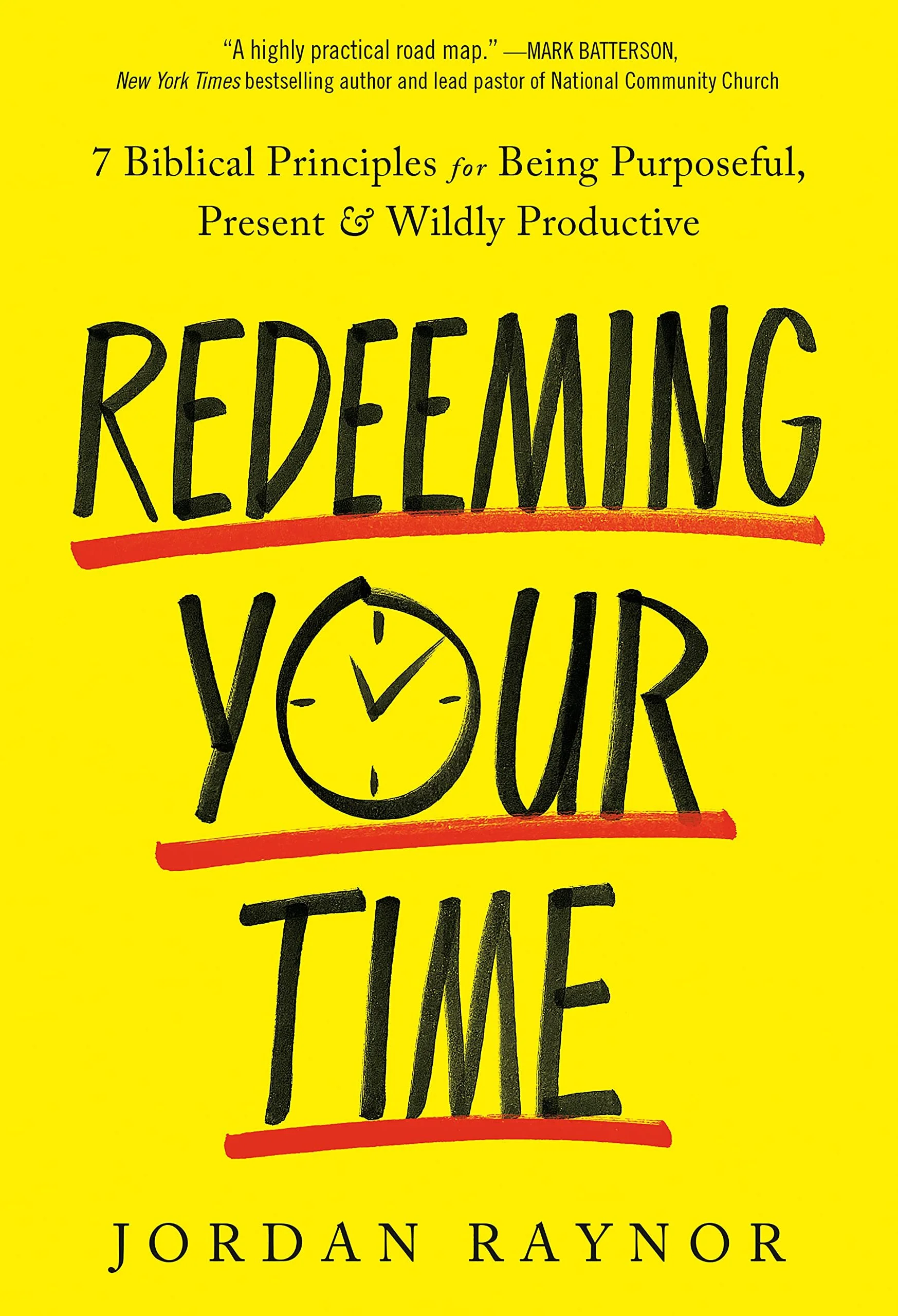
Editors’ note: This is an adapted excerpt from Jordan Raynor’s new book, Redeeming Your Time: 7 Biblical Principles for Being Purposeful, Present, and Wildly Productive (Waterbrook, 2021).

— by Jordan Raynor

“I’m swamped.”

I’ve said it, you’ve said it, I think every faith driven entrepreneur has said it at one point or another. 

Maybe you’re in a season of feeling swamped right now. You roll out of bed each morning exhausted from not getting enough sleep. You pull open your phone to find a dozen text messages from the ridiculous to the exhausting. If you manage to squeeze in a few minutes of “quiet time,” you’re quickly interrupted by your calendar notifying you of today’s meeting that you didn’t have enough time to fully prepare for.

At work, the struggle continues. Your to-do list seems to be getting longer, not shorter. Your day is filled with back-to-back meetings with no time to think in between. When you are finally able to carve out some time to focus on some “real work,” that familiar ambient anxiety creeps in leading you to question if the project you’re working on is the “right thing” for you to be focused on at that moment.

After work, you rush back home to have dinner with your family. Sitting across from the people you care about the most, you’re there but not really there as your brain is trying to do the thinking you didn’t have time to do during the day. After dinner, it’s the mad rush of all rushes: clean-up, help the kids with their homework, and pray everyone finds time for a bath. After streaming your favorite show or squeezing in a few minutes of reading, you check email one last time and go to bed only to wake up and do it all over again the next day.

Sound familiar? 

Of course, this is an extreme picture of what it looks like to be swamped, but I’m afraid it’s closer to reality than most of us care to admit. Increasingly, it feels like time happens to us—like we’re running a race that’s impossible to win. We feel beholden to our calendars, watches, and to-do lists, rather than having dominion over these tools which promised to make our lives easier and more productive. We have too much to do and not nearly enough time to do it. In short, we’re swamped.

The Bible tells us that more than 2,000 years ago, Jesus’s disciples were “swamped” in a different way. Luke 8:22-23 records the scene: “One day Jesus said to his disciples, ‘Let us go over to the other side of the lake.’ So they got into a boat and set out. As they sailed, he fell asleep. A squall came down on the lake, so that the boat was being swamped, and they were in great danger.”

You likely know the rest of the story. Jesus “got up and rebuked the wind and the raging waters; the storm subsided, and all was calm” (Luke 8:24).

This passage perfectly illustrates the core premise of this post, namely that the solution to the disciples being swamped by the wind and waves is the exact same solution to our being swamped by our to-do lists and hurried schedules. The solution to our perennial struggle with time management is found in Jesus Christ. How? In two ways.

First, Jesus offers you peace before you do anything. Nearly every time management expert says that the path to peace and productivity is found in implementing their system. This is what we might call “works-based productivity,” which claims that if you do exercises X, Y, or Z, then you will find peace. As Christ-followers, we can begin with the opposite premise in what we might call “grace-based productivity,” which says that through Jesus Christ, we already have peace (see Romans 5:1), and we do time management exercises X, Y, or Z as a response of worship.

Again, look at the disciples in the swamped boat. The disciples didn’t do anything to calm the chaos. They merely trusted Jesus to still the storm. You and I can do the same. By trusting in Jesus for the forgiveness of our sins, we have “peace with God” (Romans 5:1) that is secure regardless of how productive we are or how well we steward our time. 

This is how the gospel is our ultimate source of rest. But when we experience that rest, we will find that the gospel also makes us wildly ambitious to do the will of the Father. Why? Because working to earn someone’s favor is exhausting. But working in response to unconditional favor is intoxicating. For the Christian, the key to being wildly productive is realizing that you don’t need to be productive. 

Here’s the second way that Jesus is the solution to our time management problems: Jesus shows us how God would manage his time. John Mark Comer has pointed out that in the modern Church, we tend to read the gospels for their theology and ethics. But we forget that Matthew, Mark, Luke, and John are biographies of the life of Christ—the Author of time and the most productive person to ever walk the earth.

Now, of course, the gospel biographies do not show Jesus walking around with a to-do list, calendar, or smartwatch. But they do show him having to prioritize where he spent his time, dealing with distractions at work, fighting for solitude, and seeking to be busy without being hurried. In other words, the gospels show Jesus facing many of the same challenges we face today as we seek to redeem our time. And because he was infallible God, we can assume that Jesus managed his time perfectly, providing us with the ideal model to follow. We would be wise to study the gospels through this biographical lens to see just how Jesus was able to be so purposeful, present, and productive.

Feeling swamped today? Remember that Jesus has already given you peace that is secure regardless of how you perform today. And look to the gospels for a model for being purposeful, present, and productive in the model of your Redeemer.

Editors’ note: This is an adapted excerpt from Jordan Raynor’s new book, Redeeming Your Time: 7 Biblical Principles for Being Purposeful, Present, and Wildly Productive (Waterbrook, 2021).

Related articles

Episode 176 – Out Of The Cave Of Depression with Chris Hodges

Chris Hodges is the founding and senior pastor of Church of the Highlands, and his latest book Out of the Cave shares how a difficult season of his life and a study of the life of Elijah can show us what it looks like to step into the light when depression darkens what you see. We hope this episode encourages you on your entrepreneurial journey, but if you or someone you know needs help, don’t hesitate to call a friend, a pastor, or any crisis hotline. Listen in and remember that you are not alone…


Episode Transcript

*Some listeners have found it helpful to have a transcription of the podcast. Transcription is done by an AI software. While technology is an incredible tool to automate this process, there will be misspellings and typos that might accompany it. Please keep that in mind as you work through it. The FDE movement is a volunteer-led movement, and if you’d like to contribute by editing future transcripts, please email us.

Chris Hodges: I guess this is just my lot in life. This is what my life is going to look like. I think the greatest joy of writing this book is to let people know that there’s hope and there is a way out and that God has meaning for your life. The genius of Victor Frankl when he wrote man’s search for meaning this this Jewish psychiatrist who had a clinic to help the survivors of the Holocaust who watched their loved ones die not a single patient committed suicide on his watch because he helped them see the fact that all of us can have some meaningful work can do it with a community of friends, and then we can take the pain that we’ve experienced in the suffering and help others by which we’ve experienced.

Henry Kaestner: Welcome back to the Faith Driven Entrepreneur. I am here with my co-host Rusty Rueff, wearing his Purdue hat. And then I think you’ve got your Alabama colors on William. I usually do.

William Norvell: You usually do usually, you know, different shades of red, but they all harken back to the same image.

Henry Kaestner: So today we’ve got a special guest on. And we’re just talking about Alabama or talking about football, I guess wrongly at the helmet that is over top of his desk. We’re doing this by video Zoom interview as we do most of our podcasts. And so I know that you, as the listener, likely can’t see anything. But it was fun to talk with Chris a little bit before we went on board about the fact that that is not a Washington football helmet behind him, but it is a Woodlawn, right? Chris, your boys go to Woodlawn

Chris Hodges: Woodlawn High School from the movie Woodlawn. And so, yeah, that’s right, probably 15 minutes from where I am right now.

Henry Kaestner: So we’re also talking about what you think of as or what people in Alabama think of is the definition of an atheist, which I thought was interesting talking about Alabama football. What is the definition of an atheist

Chris Hodges: and atheist in Alabama as somebody who does not believe in Paul Bear Bryant?

Henry Kaestner: So there you go. Awesome. I can see William smiled from ear to ear. OK, Chris, we like to start every one of our episodes with understanding a bit about somebody’s background, who you are, where you come from, what drives you. So give us a little bit of an autobiographical flyover up until maybe five or 10 years ago. And then, of course, we going to be talking about out of the cave and home two things we want to do within our half hour together. But start us off by saying who you are and where you come from.

Chris Hodges: Well, I was born and raised in South Louisiana and Baton Rouge, and so I’m a Cajun, which I always tell people. What that means is you might not learn anything, but we are going to have a good time. So you can’t have fun with the person from Louisiana. It’s your fault. So anyway, yeah, I was born and raised there. I was an accounting major at LSU. I thought that’s what I was going to do kind of following in my father’s footsteps, who was one of those brilliant financial minds I’ve ever met and an auditor by trade. And in the middle of my junior year, I had an encounter with God and called to the ministry, transitioned over to a Bible college. Locally there started full time ministry at 20 years old while I was a full time student. I’ll be fifty eight this year, so I’ve been doing this 38 years now. Kind of wanted to be the best number two guy in the world, so I never dreamed about doing anything on my own. And in 1999 went through a year of a hidden depression, tucked it away, smiled on the outside, but just was incredibly miserable. And we were in a 21 day fast to start the year 2000, when on the 17th day that fast, I got an open vision. I actually saw what I was going to do. One day I saw an auditorium. I saw myself speaking in an auditorium that was seat about 2400 people and didn’t know what City was in, but took our vacation time. My wife and five kids and I took our vacation time in May of 2000 to just go look into cities that we thought we could go plant a church in or go start a ministry in. And long story short, we fell in love with Birmingham, Alabama, for a lot of different reasons. And so in the February of the following year of 2001, we launched a church, didn’t know a single person in town, didn’t know how to plan a church, didn’t have any money to plant the church. Other than that, we was ready to go. And so we we started the church and had about 400 people show up in the very first service. Two hundred came back the next Sunday, and here we are today, 20 years later, with one of the largest churches in the nation and nobody more amazed than me.

Henry Kaestner: So wow, OK. So all that’s happened in 20 years, and we’re going to get to what it’s look like for how you all planted churches at scale and just what you’re doing with the education. A whole bunch of different things. But what was it like in the early days you get this LSU tiger walks into a place of Alabama football and and you know, I know enough about Birmingham and its history to know that the gospel had been there before you guys got there. So a bunch of people who are thinking, you know, we’ve already got a church, we’ve already we already know about Christ, and here’s a guy from LSU that’s coming in and wants to pastor to us. I wouldn’t say that that’s necessarily hostile environment, but but maybe it is pretty close. Well, what was it like early in the early days?

Chris Hodges: Well, first thing what it was like, there was nothing and no one to help you plan a church. So there was no books, there were no conferences, there was no money, there was no training. There was what we call here in the south that y’all go ahead ministry. I mean, they would just they pray for you at a service and say, you know, good luck to you. And the model back then was actually to start in a home, start small. And thank God, I had enough business training to know that that’s not how you start any kind of business that you needed some kind of critical mass to get past. You know what it would take to make it successful that, you know, more than 90 percent of business failures happen because they were undercapitalized on the front end. So it could have been a great idea that just never got enough of a push. So I thought that must be true with churches as well. So we we actually bought into. An idea that is what launched a church planning movement, and that is, let’s start on bigger, let’s wait to slow it down and make sure we have the people and the resources and the training and the know-how and have larger launches. And that’s what we do to this day. But it was very, very different. Make no mistake about it, even though it was church in an area where people had opportunity to go to church, there’s actually a lot of people that were still far from God. Because here down in the south, you know, going to a church is like belonging to a country club so you can attend. But really nothing happened in your heart. And of course, that’s not everyone. But there was a lot of people. So there’s been scores of people who’ve given their life to Jesus here in Alabama. And in fact, I think the kind of stepped into a vacuum, honestly, a people who wanted to experience God and enjoy serving God and and be encouraged to go make a difference in our world.

Henry Kaestner: So you talk about the business aspect and of course, there’s church planning and and I’ve reflected on this for a long time that a church planner is really an entrepreneur. Absolutely. And so to dove into that a little bit in terms of the parallels, and maybe there’s some differences too. But where do the similarities and differences between an entrepreneurial church planning pastor and a business person? You mentioned one of them, but you know, just what’s the right pace of scale? What’s the right size you need? But just riff on that a little bit.

Chris Hodges: Yes. So we actually did some research and found out that of the 90 percent of churches that were failing, they never got to a critical mass number of people. That makes the church experience different in a good way. So everybody knows that if you’re singing. Singing is better in a room of 500 than it is five. So the question is then where is that number? What is the number where it actually gets better? And we found out it was somewhere around 130 to 150 people, whether it’s naturally about 50 percent attrition to whatever you launch. So if you need a net 150 people, then you need to build your plan around attracting at least 300 people on launch day so that if you had that full attrition, you still have enough to have a critical mass where you’re preaching and you’re singing. And the experience that we have collectively when we come to church is something that people can actually enjoy, and that’s what we bought into. So we actually built an entire marketing plan around getting, you know, I actually bumped it up. I thought if it was 300, let’s just be really safe and make it 400 people and so actually built an entire marketing plan and everything that we were going to do based on attracting that number of people on day one. And honestly, it worked exactly like the studies had shown. And those are the similarities. And honestly, I don’t know that there are any differences.

Henry Kaestner: Mm-Hmm. So isn’t there another way to do that? Can’t you just go out and recruit a couple of really good singers so that you start off with five and you got to? I’m kidding. One thing that entrepreneurs and pastors share, particularly church planning pastors, is a sense of loneliness and isolation. Oh yeah, it’s a hard thing. You’re selling something to somebody. You’re trying to presumably recruit somebody to join your church. I know this is the case, of course. In business, you’re trying to bring on board customers. You’re trying to bring on board employees. Sometimes you’re trying to sell an employee to stay and then you get home from work or you get home from being a pastor and your wife or your husband asks you how things are going and you want to tell them things are going great because they don’t think you should have left that job that you had in education or in the ministry or at Cisco or IBM. So you’re always selling something to somebody that can be really isolating. Talk to us about that a bit, as you see in there, because just to give our audience a sense of scale, I think that the Church of the Highlands has been involved in something like nine hundred and fifty church plants. Is that right?

Chris Hodges: That’s exactly right.

Henry Kaestner: Unbelievable. OK. So huge scale. So you’re seeing these types of patterns. Talk to us a bit about isolation and loneliness.

Chris Hodges: Yeah. And not only isolation, loneliness, but most leaders after they’ve you know, let me just say it this way, been on stage all day. They actually experience these adrenaline highs in these emotional highs. So that when you do get home, not only are you lonely and isolated, but also your spent, and most people make their worst decisions when they’re spent. And in fact, most of our spiritual attacks happen when we’re spent. I actually spent seven years in Colorado Springs in my earlier years as a youth pastor, did a lot of snow skiing, and I’ll never forget one conversation I had with a person who worked at the infirmary there at the ski slopes, who said that 90 percent of all the accidents happen in the last hour of the day. And there are two things that happened in the last hour of the day. And that is, you’re tired and you’re overconfident. And that is true of every leader. So do you do now you end up home or you end up at the end of a week and you still are expected, perhaps by your family or others, to continue to be on stage and perform. But you’re tired and you’re spent. And then you add to that. Fuller Theological Seminary said that over 90 percent of all pastors say they’re lonely. In fact, he said that they could figure out some way to earn a living other than. Ministry, more than 50 percent of them would leave the ministry and do it, so it really is difficult for a lot of people who are in that type of leadership.

William Norvell: Chris, we were talking preshow. Most of our listeners know I grew up in Alabama and went to Alabama, and the Church of the Highlands has been such a beacon of light in Birmingham. And I know so many people that have been blessed by your ministries are just so grateful that you followed the vision. You know, we can talk about your book in a second, but but you had that vision and you know, not everybody follows it sometimes, right? Like, you still had to take the active step to chase down what God showed you. And so grateful for that and grateful for you. And thank you. You know, we are going to move into the book out of the cave in just a second, and that’s a book you know about dealing with depression and something that we’ve talked about before on a podcast with Max Anderson. But it’s been a while. Tell us a little bit. Why did you feel led to take the time to write, to take the time to wrestle with this issue and come up with a book on this topic?

Chris Hodges: Actually, it happened because in 2018 there were three pastors who committed suicide and I didn’t know any of them, but it impacted me like I knew them. And I remember being so grieved I thought, This is just not good. And honestly, I was very ignorant on the topic and honestly at that time in ministry, 35 years and then never done a message around the topic of depression. In fact, most churches shy away from it society even somewhat because there’s such a stigma around mental illness. And I thought, Man, I just need to. I need to figure out what this is all about, because if that’s true of those pastors, it’s certainly true of people who did some research. Of course, it’s epidemic. Many considered to be the number one health crisis in the world is depression and anxiety. One out of nine people right now are on some type of antidepressants. So your know your early setting that many people all the time. So I did this study and did this message. Well, guess what? It became the most rewatched message times 100. And I thought, OK, well, then this doesn’t need just one message. So I we actually went on a two year journey to do research both secular and spiritually just to figure out everything I could know, knowing that it wouldn’t be all the answers, you know, wouldn’t be everything that needs to be said. But the church needed to have a voice in this discussion, and there are some very good things that God has to say about that condition. And there is to everyone who’s listening, there’s some incredible hope. If you’re feeling depressed in any kind of a way,

William Norvell: thank you for that. And you know, it’s funny. I actually gave a talk recently about the word depression and defining it right? And so I kind of wouldn’t define what I went through. Is that particularly but a deep place of darkness that those types of messages hit me and I needed and where my lights and I’d love to invite you to that, you know, how do you define that? What do you think misconceptions are about people that struggle with this and just kind of give you the microphone there?

Chris Hodges: I think everyone would say at some point they’ve struggled with it and everyone would tell a different story. But for everyone, the metaphor that we’ve used in the book is a cave because, you know, there’s a way out. You just don’t know where it is. And it becomes very, very dark. So there’s a disorientation in, you know it because like, if someone else came to you and said, Hey, I’m going through this, you can see the way out. And you can even advise them. But when you’re in the middle of it, you can advise yourself, you’re so disoriented, it’s so dark again. You know, there’s a way out, you just not sure what it is. And in fact, your mind even begins to make up things like, there’s bats in here and there’s got to be about really close. And when there’s not even begin to create a narrative, that’s not even true, it’s almost true in every case of depression. A story gets added embellished changed, amplified in a way that makes it incredibly worse. Psychologists call it ruminating where you take your distress and you chew on it so long and swallow it and regurgitate it, and it gets worse and worse and worse the more you do. So I think the gamut of depression is pretty wide, and I think everyone’s experienced it in some way or another.

William Norvell: And a bit of your book focuses on the character Elijah. Could you tell us a little bit about him and what God revealed about his life and what God took him through?

Chris Hodges: Yeah. So in Chapter 18, the first kings, you know, he experiences two of the greatest spiritual highs. There’s the best preaching material in the Bible, you know, and you’ll hear a lot of sermons around it. Six verses later, in Chapter 19, he wants to die, and it came from just one threat. So today’s equivalency of that would be one comment on a social media page. One. I don’t like you. The point is he experienced this highest of highs and then found himself depleted. In fact, there were at least six different things that he did that psychologists and psychiatrists would say contribute to depression. He did at least six of the what most considered nine causes of depression. He did at least six of them that put him in a cave. And that’s just true for a lot of us, right? So. So what I did is I actually wrote the book outlining not only the six. He got in the case of depression, but the five ways that he got out.

William Norvell: Oh, that’s great, and, you know, another character that I’ve gone to when I’ve been to this time, someone 42, you know, David has this beautiful echoes and you know, he spent a lot of time in a cave and I’ll just kind of read someone for you to listen to my cry for I’m in desperate need. Rescue me from those who pursue me for they are too strong for me. Set me free from my prison that I may praise your name and just see that cave. I just see him sitting somewhere. And you know, one of the things that I’ve struggled with when, when I’ve gone through these times is people do try to show me the light really fast and try to almost tell me, I don’t understand, don’t you know, the savior some version of that, right? Yeah. How have Christians maybe mistakenly viewed this or mistakenly treated symptoms of depression?

Chris Hodges: Yeah, because we’re people of faith. And so for many, they’ve been told that faith means you never have any issues, and if you do, something’s wrong with you. And so I wrote an entire chapter around removing the stigma and making sure that we posture ourselves in a place where, you know, we’re not saying the wrong things. In fact, in the book, I get the 10 things you should never say to someone who’s depressed in the 10 things you can say that will actually help them. And honestly, I would like to give people the benefit of the doubt that they really didn’t know any better. They thought they were helping, but it doesn’t help. And so there is a better approach, and I do it honestly by being vulnerable myself. So what I did and is it’s a big risk, or at least it feels like a big risk is I get very vulnerable about some of my darkest moments, even one that I faced in 2020 that was really one of the lowest two or three weeks of my entire life didn’t think I would recover from it. And no one would ever even know anything about it. But I decided to write about it in the hopes that people would say, Well, if this man can open up and be honest and all the things that he’s done with his life, you know that he could still have moments like this. Then maybe there’s hope for me to

William Norvell: say, Man, thank you for sharing that, Chris, and thank you. We’ll try to link to that writing for people to read in our show notes and for ourselves, for our listeners themselves. And also, of course, you know, one of the things that gave me so much hope when I was going through a lot of this was friends noticing things right and calling me and saying, Hey, you don’t seem like yourself, right? And so what are some of the most common signs that we can notice in ourselves or noticed in others that we may need to ask a question to that they may be struggling with this?

Chris Hodges: Yeah, honestly, a lot of us don’t notice that until we’re actually in a dark place. So you do need to be surrounded with people who can say, Hey, man, something doesn’t seem right here. And honestly, more people, in my opinion, would be alive today had we noticed and had the courage to really say, Hey, let me call you, let me check on you. What’s going on? And for a lot of us, honestly, instead of ruminating instead of having what psychologists call self-talk that we pick up the phone or text, someone say, Hey, I’m not in a good place, and I would encourage listeners right now who who aren’t in a good place. That is your next step is to let someone know, you know, whether it be a mental health hotline or a suicide hotline or a friend just saying, Dude, call me, check on me. I’m not doing well right now. But the more we think that people don’t care or don’t want to hear that, honestly, we will get deeper and deeper into that cave of depression

William Norvell: and such good advice. And I mean, hey, you can find us if you’re listening to this and you got nobody. Find me. Find Henry. My guest is Chris Wood. Pick up to Rusty and Justin. Just it’s so paramount to let someone know you can’t do this alone. That’s why God gave us other people. So just when a hammer that in and also I want to give you the chance, Chris. How are entrepreneurs, church planners, you know, and people building businesses? How do you? Have you seen them being especially vulnerable to these types of thoughts and these types of seasons?

Chris Hodges: Because we’re used to highs and highs can we can start depending on adrenaline to get through things so you can actually be depressed. But when you get to work, you kind of feel good again. And a lot of that is masked by the effort that we’re putting into accomplishing and, you know, getting the bottom line done. In my case, I’d be preaching or great screaming and hearing some amends and you walk off, you’re thinking, Wow, that was, you know, I think I feel better. But an hour later, you’re driving home and you’re sitting on the couch and the crash happens again and again. What I would want people to hear and see that the great prophet Elijah, who arguably is the greatest prophet in the Bible because he’s the only one that’s included in the transfiguration of Jesus with Moses there. Many believe he’s one of the two witnesses in the Book of Revelation. So like, this is an important figure who obviously had it together, who had these incredible emotional, spiritual in an entrepreneur award, these accomplishments in life and crashes minutes later versus later to a point where he’s hiding under a. Re asking God to take his life. So I think part of the solution is just the realization that that can happen. Then we become more aware of ourselves. And honestly, practically, if you really want to know where this plays out for a guy like me as my wife knows this now, that the darkest moments for me are Sunday nights to this day, I feel more vulnerable to temptation to attack, to having bad thoughts after we’ve had incredible services just a couple of hours ago. And so my wife knows this. My friends know this. I get calls from my buddies. Hey, how was your day? How are you doing? How are you really doing? And my wife is staying by my side, you know, and we frankly were intentional about our closeness during those moments because we’re just trying to be smart to the fact that we face these moments and we want to try to avoid the enemy taking advantage of them.

Rusty Rueff: Chris, our listeners have heard me many times quote the pastor that I grew up with in a Southern Baptist church used to say We change by invitation or we change my situation. And I really appreciate what you’re talking about because there will be people who are listening today that this could be their invitation, right? Instead of getting to that situational moment that you described as a crash. And so I so appreciate you not only speaking into it, but the writing that you’ve done. And you mentioned it in the book. You know, there were six steps that Elijah got into the cave, but there were five steps that he took when he came out. Can you give us a little preview of that? Because it might well be that some of that hope and light that someone can’t see today could be the thing that actually helps them recognize where they are.

Chris Hodges: So he gets visited by an angel. What’s interesting? You think if you got visited by the angel, it gets real spiritual. Pretty quick, right? The first thing the Angel says is sleep. And then he says, eat. And then he said, sleep. And then he said, eat. So the first four commands were all about, Hey, let’s just slow down a little bit and just kind of get yourself healthy here before he ever challenged him spiritually. What you would do next before you ever gave him, you know, a purpose for his life. He took attention to his physical rhythms. And honestly, when we’re helping people to this day out of the Cave of Depression, the first questions are How are you sleeping? Are you taking a day off? Do you even know what the word Sabbath means? Can I help you slow down a little bit? You know, the Bible says better to have one hand full. You’ve got two, but only have one handful and have some tranquility than to have two handfuls and have toil in a chasing after the wind. Most people live to handful living. They do what’s doable, but it’s not something that’s sustainable. So the first step in the process really is this gives some attention to our physical life and our rhythms. And then he had this God encounter, and I teach in the book, You know how you can pursue God in a way where he really responds to you because it’s critical to you coming alive again. The third thing you did there was a clarity of his identity. So God wanted to make sure he knew who he was. The fourth thing was a new assignment. If I gave you only one, by the way, there was only one thing that I could give to help people out of the cave. A depression is, is the power of a project. This was Victor Franklin, the great Austrian psychiatrist that helped people out of the Holocaust. The purpose of life was not pleasure. It was meaning. And if you don’t have meaning, your dull your life with pleasure. And so you have this purpose in life, this power of a project. And then the last thing he had a sustaining relationship. He never did life alone again. He had a partner named Elisha. And you never hear of Elijah getting depressed again.

Rusty Rueff: That’s great. Can you go deeper into that part of the relationship side because, you know, stepping out of the cave depression into the light and having those people that can? And you mentioned yourself, the folks that know you so well that you get those calls on Sunday nights. How do we cultivate those kinds of relationships? Because, you know, those are relationships that have to be willing to speak truth to us, right? And shine, be a mirror of who we are back to them. How do we find those people and what do we say to them to give them a license to be that authentic and honest to us?

Chris Hodges: Yeah. Really, the secret is anything you want, you know, you’ll reap that what you sow. So you might want to first become that person to someone. Hey, if you ever going through anything, I’d like to be the person you call. I think you foster relationships that you can benefit from. But then the dynamic, you know, there’s a lot of verses around this that people just really don’t realize. James, five 5:16 says, Confess your sins one to another, not to God one to another and pray for each other that you may be healed the way I say it is. You confess your sins to God for forgiveness, but you’ve got to confess your sins to someone else to find healing. You’ll never get past the issue that you’re facing without letting someone know what you’re facing. The way I say it is, you’ll always stay as sick as your secrets. So don’t have any and you don’t have to tell everybody, but you better. Tell somebody, C.S. Lewis said friendship is born at the moment that the person shares something like that and the other person says, what? You too. I thought I was the only one and what you’re going to discover because there is a fear like, I can’t let anybody know what I’m really thinking, but what you’re going to get is that C.S. Lewis moment where they go? You too. I thought I was the only one and praise God that I have only about three people, by the way. Three pastor friends who know every thought, every temptation, every mistake, every day. I want to quit, right? And so now they’re tuned in to it. They’ll even call me and preempt it. Sometimes, you know, before I even get to them. And all of us need relationships like that.

Rusty Rueff: Yes, we do. We absolutely do. So, you know, so many times, entrepreneurs, we think we can handle this by ourselves. Right? That’s what we do. And we show no vulnerability and we show no weakness and we go and we take care of it. What do you say to that person who’s listening right now saying, Hey, all this is really good. Thanks so much. But you know, I got this.

Chris Hodges: I got this. Yeah, that would say that it’s lonely at the top, you know, and people get there. And honestly, they find out that that’s not really where they want to be, that there’s nothing better in life than doing life for someone else. And they all know because they do it in their businesses that any idea they have is only as good as the people they have on their team cooperating and doing the same thing. Well, the same is true with your personal life. You can no more build a great business doing it alone. Build your life, then you can build a great business. It takes this cooperation and collaboration, and MIT are the worst because we would rather not let anybody know. Ladies by and large are more willing to share what they’re facing, and but all of us need that kind of a friend. And so all I can say is I’m as Type-A as the next guy, right? And I love to accomplish and and do all those great things. But the best part of my life, and the reason why I’m even on this podcast today is that I’ve had friends who’ve protected me and know what I’m going through. You know, when I faced one of my darkest moments in 2020, I had friends who called me three times a day and people who were just like, Bro, I’m just checking on you again. You’re good. You can make this. We got you. I’ll fly to you right now if you need me and you just all of us need people like that.

Rusty Rueff: I want your friends. I mean, don’t we all want those kinds of friends? That’s a truly awesome. It’s interesting that you met that mentioned, you know, men speaking to men or, you know, women. You know, I’ve been shopping for a new doctor and I was recommended to a woman doctor and I asked her, I said when we were doing a little meet and greet, I said, So you know, as a guy who says, you know, mid-year and aging, wouldn’t it be better for me to have a male doctor who would be more sensitive to those things? And she goes, Well, I guess so. She goes, But I will tell you one thing you will tell me things that you will never tell a male doctor. Wow. And that was fascinating, because the fact that I was even talking to her about the question of a male voice, I wouldn’t have ever asked the guy doctor. So I do think that there’s certainly a difference there, you know, but we have to work harder. We have to work harder at it.

Chris Hodges: Absolutely. And maybe begin by doing it to someone else. Maybe begin just by being that friend for someone else. That’s right.

Rusty Rueff: I’m going to turn it over to William to close here in a second. But you know, if you zoomed out for a moment and you think about the book and you think about, you know, the impact that it’s having, what do you want to see change in the world? I mean, you’re a pastor of one of the most successful growing churches in America. What’s your hope for the world?

Chris Hodges: Yeah, my hope is that people have hope. Honestly, I think probably one of the most hopeful parts of the book is that while there are some very biological reasons for depression, that that does not comprise the vast majority of what causes depression. So there are some definite genetic and biological things that need to be treated biologically, medically. But for a lot of the vast majority of it, they are lifestyle related, which means there’s a way out for those who have thought, I guess this is just my lot in life. This is what my life is going to look like. I think the greatest joy of writing this book is to let people know that there’s hope and there is a way out and that God has meaning for your life. The genius of Victor Frankl when he wrote man’s search for meaning this this Jewish psychiatrist who had a clinic to help the survivors of the Holocaust who watched their loved ones die not a single patient committed suicide on his watch because he helped them see the fact that all of us can have some meaningful work can do with the community of friends, and then we can take the pain that we’ve experienced in the suffering and help others by which we’ve experienced. And not a single person committed suicide on their watch, so I think pointing people in the direction of, Wow, there’s a way to use what you’ve experienced to help a lot of other people, I’m hoping has great traction and gives people some great hope for the future of their lives. Hmm.

William Norvell: Amen reminds me of when I was wrestling with some of these things. Somebody sent me a great quote that, you know, I think it’s rooted more in what you talked about. It comes out a little prosperity gospel ish, but it’s more rooted in what you said, which was a treasure quote. That said, it’s doubtful that God can use anyone greatly until he has hurt him deeply.

Chris Hodges: Yeah, exactly. Paul said it. He says, I comfort others with the same comfort I have received. And by the way, right before he said that, he said I wanted to take my life. He says my pressures were so great. This is Second Corinthians one. They were so great that I just didn’t want to live. But I realized that God was using this for his purpose. And now, of course, you know, we know it’s true. If somebody was struggling with cancer, they would much prefer someone who’s probably lived through that experience. Pray for them and ministers. Then why? Because they understand. So for every person who’s going through hard times, just remember this that God can use you with your hard times to be a blessing to others. And buddy, when you lay your head down at night knowing your life impacted the life of the others, there is no money, there is no salary, there is no business. There is there’s nothing that life can give you. That is better than that.

William Norvell: Hmm. Thank you for that. I can’t imagine there’s a better place to move towards a closed door. I want to give you the opportunity, Chris, because this is such an important topic and we just can’t spend enough time on it. Is there any other parting encouragement thoughts that you would have for entrepreneurs listening out there after you’ve sort of dived pretty deep into this topic?

Chris Hodges: Yeah, that I just I think we’re living in the greatest generation ever that that is allowing some of these conversations to take place in other generations. There’s been a stigma around mental health or depression or anxiety. And I think for one of the first times ever, we’re talking about it, understanding it. We’re kind of all telling our cave stories, you know what I’m saying? And it’s giving people confidence to deal with some of their issues. And I would just want to tell them, there’s a better life available to you that God wants to get involved in your life and give you a life that goes beyond anything you can attain in business or in anything that your endeavors or that God can give you this sense of meaning and fulfillment that supersedes the external. You know, the word happiness comes from the same word like happenstance, meaning you’re happy because of your circumstance. Your happiness is circumstantially related. So if the weather is good, I’m happy. If it’s bad, I’m not. But joy is different. Joy is not circumstantial. True fulfillment is internal regardless of circumstance, and that’s available for every person.

Henry Kaestner: That’s awesome. That’s an incredible encouragement. Williams, can I ask a last question here in a second about what you’re hearing from God and his word? But I want to throw in something that we’re piloting out a little bit, which is for many of our yes, for all of our I guess hopefully we’re going to ask them a question about where are they giving to? What are the things that are on your heart in your mind? The biblical message of generosity is such a big part of any Christ far discipleship journey. And definitely for an entrepreneur who spends a lot of time thinking about money. And maybe it’s on this topic, maybe it’s on mental health. But as entrepreneurs are leaning into giving an understanding that so many of these things are not necessarily just left for government, but we can get involved in and we can get involved in ministries that might be able to share eternal hope, not just temporal hope. Is there anything that jumps out at you that you and your wife like given to you?

Chris Hodges: Yeah, everything. Leadership related, honestly. You know, Jesus said the harvest is plentiful. The workers are few. We don’t have a harvest problem. There’s plenty to do. We know how to do it. We know how to fix it. We know how to feed people. We know how to care for people. We know how to preach to people. We don’t have enough people doing it. The harvest is plentiful. The workers are few. So to me, one of the greatest investments ever that you could give to is into anything that’s leadership related. So the things that my wife and I are contributing to, we have a college here that releases thousands of students into full time ministry, a first of its kind kind of a Christian university, but in the academy mindset called Highlands College. I’m involved in an effort with John Maxwell to train up Christian leaders around the world because everywhere there are good leaders, people flourish everywhere. There are poor leaders or lack of leaders. People aren’t flourishing. You look anywhere around the world, and that is the one distinguishing factor that determines the flourishing of people, and that is the quality of leadership in those areas.

Henry Kaestner: That’s an awesome answer, and I love the way that you, of course, rooted in scripture, and I’ve never really reflected on it that way. So thank you.

Chris Hodges: You’re welcome. Thank you.

William Norvell: And as we move to that, Chris, where we do love to close, is just trying to understand. And where where God has you in his living word today? You know, and that could be something you’ve been meditating on for a bit that came out of the book or it could be something God put in front of you this morning. But we just love to invite you to share where, in God’s word, he’s walking with you during this time.

Chris Hodges: Yes. You know, as I’m getting older, I’m honestly trying to make my life every moment of my life count. And so actually, my life, I think, is in some way more effective but simpler at the same time. And I’m just really focused a lot on my pace. That verse that I quoted already in Ecclesiastes that says, you know, it’s better to have a one handful kind of a life that not everything that is doable is sustainable. And so honestly, I mean, kind of like the tithes you get more accomplished when you give God the first and honor him that he can do more than 90 percent. Then when you’ve kept it the whole, I’m trying to think of that in terms of time as well, that, you know, working up for my life into fewer things that have more of an effect. And honestly, the reward of that is, I think, more effectiveness, but also, you know, tranquility of really a peace in the soul. And so to me, it’s all about pace. I think for the first time in my life, I’m learning what it means to truly take real Sabbaths and really honor God with the first of my life. And so those are the reflections right now. And I think I think they’re important for a lot of us because the world is demanding a whole lot more of us. And if you don’t have a clarity and a priority for your life, trust me, someone else does. And all of us know that that lead anything that there’s a pull on us in every direction. So I had this phrase of kind of finish my thought with this. I began the year with this and never, never had this thought before. And it’s called selective ignorance, selective ignorance. So I could. No, but do I nearly need to know? And so for me, I was getting really consumed with the news coming out of the political season coming out of 2020. And I found I wasn’t watching, you know, 30 minutes. I was watching an hour of news shows and then reading it, and then I had an app about it. And now I’m giving myself about ten minutes a day to get caught up what’s in the world. And it’s only you’re in reading and not in video, not in any news shows. And I know all that I need to know, and there’s a whole lot more peace in my soul. And so I would encourage the listeners to perhaps make a list of some selective ignorance areas, things that you just don’t have to know. For some people, that’s going to be, you know, it’s time to get off of so much social media. Or maybe totally, you know, just the constantly knowing what everybody’s wearing, doing, eating, traveling to do, you really have to know. And I think therein lies peace for ourselves.

William Norvell: Hmm. Amen. I’ll try to in this in a pastor joke of my pastor on selective ignorance. He gave this great talk. One time, he and his wife took a month off after seven years and they shut their phones off and they tried their best right. Of course, they failed sometimes. But he joked one day that they just came up with this phrase and, you know, they were sitting at lunch one day and, you know, Dove flew by and actually said, I wonder what a baby dove looks like. And Dave said, Let’s just not know exactly everything. They’re like talking point for so much because it’s so quick to run to your just information overload. And they just started saying things like, let’s just not know what happened there or what that is. Or, you know, there was a day when you just didn’t know, you know, and your life was OK. And I love that phrase selective ignorance and something I’m going to try to put into practice. And just so grateful for you, Chris. You shed light and I can’t wait for people to pick up the book and to learn about this incredibly important topic that plagues so many entrepreneurs in the world. So, so grateful for you and your ministry.

Chris Hodges: Thanks to I enjoyed it.

The Idol of Grit

Article originally hosted and shared with permission by The Christian Economic Forum, a global network of leaders who join together to collaborate and introduce strategic ideas for the spread of God’s economic principles and the goodness of Jesus Christ. This article was from a collection of White Papers compiled for attendees of the CEF’s 2019 Global Event.

— by Peter Greer & Chris Horst

Our world is short on hope. From racial injustice to poverty to political polarization to the moral failures of prominent leaders—bad news dominates our headlines. We feel hope in ourselves, our societies, and our leaders running thin.

It’s even more painful when we hear stories of scandals and abuse among followers of Jesus—people who use power and position to subjugate instead of serve and people who claim to worship God yet seem to worship themselves. We witness cover-ups and financial mismanagement, hypocrisy, #MeToo and #ChurchToo movements, viciousness from people who pin crosses on their blazers, and unchecked materialism from people who were supposed to “store [their] treasures in heaven.”[1]

When we see these abuses or experience the pain they cause, we can feel justified in asking: Is it time to give up on church? Time to give up on organizations and institutions? Time to give up on the dream of changing the world? Even more severely, we ask if it’s time to give up on God.

When we look for solutions to this ballooning hopelessness from our society, we come away feeling entirely unsatisfied. Leadership gurus promise easy hacks to solve our disappointments and management challenges. Instagram influencers outline diet and exercise plans guaranteeing a healthier life. Technology companies insist their latest app will solve our relationship challenges, improve our sleep, and decrease our stress and anxiety.

In 2020, “self-care” expanded to a $450 billion industry, 45 times larger than it was just one decade earlier.[2] From Fitbit to candles and from self-help books to meditation apps, we are spending close to half a trillion dollars annually in our attempt to purchase hope.

But our experience and observation tell us that our cultural obsession with self-improvement is entirely insufficient. The rates of depression, anxiety, stress, and suicidal thoughts continue to increase throughout the United States.[3]More than half of Americans say they are more anxious today than they were one year ago, a reality we acutely feel as we write this in 2021.[4]

The solutions proposed by Christians are often just as unhelpful. Trite Jeremiah 29:11 memes, assuring us our hardships are NBD—no big deal—because God has a plan, aren’t helpful. We don’t need any more advice amounting to tying theological bows on disappointment and pain.

In our leadership journey, we have benefited from and enthusiastically endorsed books like Grit by Angela Duckworth and The Resilience Factor by Andrew Shatte and Karen Reivich. But we recognized our own temptation to embrace our culture’s obsession with self-improvement—to place our trust in our own abilities, grit, and resilience and to make these good things the ultimate thing. And we began to recognize that they make a faulty foundation for sustaining our service.

Tumbleweeds and Fruit-Bearing Trees

Throughout the Bible, we read of the shocking prevalence of idols. Despite God’s desire for proximity and relationship, time and again the Israelites traded the real thing for a counterfeit. We may be tempted to scoff at their worship of physical idols. The prophet Jeremiah certainly put it bluntly: “People who worship idols are stupid and foolish.”[5] Yet today, our hearts remain equally capable of idol worship, and we suspect Jeremiah might speak the same words to us.

Though most of us aren’t bowing to statues or poles, we’d argue from personal experience that many leaders’ idol of choice is the idol of our own abilities: a good thing we are tempted to distort into the ultimate thing. Too often, we create a god in our own image—a god we can understand and control. Yet, Jeremiah reminds us that we need a bigger, more mysterious, and more wonderful picture of God. His ancient words to the people of Judah resonate with contemporary truth as he calls out their idols—and ours—and offers an alternative.

In Jeremiah 17:5-6, God leads us into the dirt, literally, by providing, through Jeremiah, an agricultural object lesson.

This is what the Lord says:
“Cursed are those who put their trust in mere humans,
who rely on human strength
and turn their hearts away from the Lord.
They are like stunted shrubs in the desert,
with no hope for the future.
They will live in the barren wilderness,
in an uninhabited salty land.”

Cursed. Stunted. Barren. The image is bleak. God gives us a picture of unfulfilled promise—a living thing created to flourish but rooted in its own deficiency. The Message translation says, “Cursed is the strong one … who thinks he can make it on muscle alone and sets God aside as dead weight. He’s like a tumbleweed on the prairie, out of touch with the good earth. He lives rootless and aimless in a land where nothing grows.”[6]

Tumbleweeds, a common nickname for a plant also known as Russian thistle, dot the landscape of the American West. When winter arrives, the brittle plants die, detach from their roots, and aimlessly blow wherever the wind carries them. Tumbleweeds inhabit places “where nothing grows.”

Jeremiah saw God’s people picking the wrong soil, putting down roots not in God but in idols or allies that couldn’t sustain them. Jeremiah relates this image of the stunted shrub or the aimless tumbleweed to those who choose to sink their hopes in anything but God.

Most temptingly today, we place our confidence in the idol of self-reliance. With clenched teeth and gritty resolve, we say, I’ve got this. We wage war against the most intractable issues of our day, and often, we attempt it in our own strength. We believe ourselves qualified and capable, relying on all the resolve and resilience we can muster. It’s pride and, Jeremiah would suggest, idolatry. We bow to the idol of our own grit. But this type of humanism rarely holds when the winds of pain and disappointment blow. Unmitigated disappointment opens the door to cynicism, as our focus shifts inward.

Turning inward and attempting to live within our own strength will eventually let us down. Relying on our abilities, we become brittle.

We rightly recognize and celebrate grit and resilience in our culture. But grit alone will not sustain us.

In her book, Can’t Even: How Millennials Became the Burnout Generation, journalist Anne Peterson describes our society’s addiction to easy fixes to the hopelessness we feel.[7]

We gravitate toward these personal cures because they seem tenable, and promise that our lives can be recentered, and regrounded, with just a bit more discipline, a new app, a better email organization strategy, or a new approach to meal planning. But these are merely Band-Aids on an open wound. They might temporarily stop the bleeding, but when they fall off, and we fail at our new-found discipline, we just feel worse. (sic)

While Peterson may not agree with Jeremiah’s prescription, she identifies just how insufficient these strategies are to creating the change they promise. Jeremiah leads us to a conclusion that is far simpler and far more profound than we anticipated: grit and resilience flow from our rootedness in the God of hope.

Never Stop Producing Fruit

Through the prophet Jeremiah, God invites us to pursue the alternative of “in my own strength” humanism: hopefulness, rooted in trust and active expectation in God’s strength and faithfulness. He invites us to sustain hope amid the drought because He is the One who sustains. He invites us to cultivate deep roots that reach the ever-flowing Source of Living Water.

“But blessed are those who trust in the Lord
and have made the Lord their hope and confidence.
They are like trees planted along a riverbank,
with roots that reach deep into the water.
Such trees are not bothered by the heat
or worried by long months of drought.
Their leaves stay green,
and they never stop producing fruit.”[8]

Jeremiah contrasts stunted shrubs with an image of a firmly planted tree, producing fruit amid the harshest drought. Both will experience droughts and heat. The difference, Jeremiah tells us, is roots that connect to Life. It’s making the Lord, not ourselves, our source of hope—turning upward, not inward. Likewise, in our conversations with global leaders we work alongside, we do not hear self-reliance; we hear faith. We do not hear about strength and resolve; we hear about roots.

Ultimately, where our roots find their source of life makes the difference between a fruit-bearing tree and a brittle shrub. This is the difference Jeremiah calls out. It’s not about our own strength. It’s not about a new model of self-help. It’s a story of deep trust, connection, and reliance on God—despite harsh, even brutal, conditions.

Jesus tells us the way to produce fruit—and speaks frankly of our limitations—in John 15. “A branch cannot produce fruit if it is severed from the vine, and you cannot be fruitful unless you remain in me. … Those who remain in me, and I in them, will produce much fruit. For apart from me you can do nothing.”[9]

Jesus tells us that when we are connected to the Source of Life, there is fresh fruit. On our own, we become barren and stunted, no matter our levels of grit.

When we recognize that we are nearing the end of our abilities, God reminds us that He has been there all along, inviting us to look not inward—to our finite abilities—but upward. As Kyle Idleman argues in Don’t Give Up, “The point of defeat … seems like the most desolate corner of creation. [But] it actually places you in prime position to experience God’s strength and provision because, as it turns out, God is drawn to the desperate.”[10] And the desperate are drawn to God.

As our hope continues to dwindle, cultural remedies point us to something we can discover or architect within ourselves. But Jeremiah proposes a sharply contrasted truth: We cannot master our circumstances, engineer our outcomes, or create utopia for ourselves. We cannot even expect to avoid hardship and deep disappointment.

Turning upward, rather than inward, is a radical, life-altering shift. It dislocates our preoccupation with self. It means placing our trust in God amid our pain and disappointments. It means surrendering our strategies. It means obeying regardless of our understanding, following regardless of where we’re led, and loving regardless of the person or circumstance.

This is dramatically different from the self-help formulas that dominate our podcasts, bookshelves, and culture. It’s a decision not to obsess over behavior modification but to seek the power of heart transformation. It’s reaching the end of our own strength and turning to the God who invites us into holy surrender. It’s not a neat and tidy list of five steps to bulletproof your ministry or organization; it’s far more radical, though perhaps simpler, as well. It’s an invitation to turn to God and away from th idolization of our own abilities.


Peter Greer is President and CEO at HOPE International and lives in Landisville, Pennsylvania, USA.

Chris Horst is Chief Advancement Officer at HOPE International and lives in Denver, Colorado, USA.


[1] Matthew 6:20a

[2] Lindsey Crouse, “Why I Stopped Running During the Pandemic (And How I Started Again),” The New York Times, March 7, 2021, https://www.nytimes.com/2021/03/07/opinion/pandemic-wall-fitness-running.html.

[3] “The State of Mental Health in America,” Mental Health America, https://www.mhanational.org/issues/state-mental-health-america.

[4]“New APA Poll Shows Surge in Anxiety Among Americans Top Causes Are Safety, COVID-19, Health, Gun Violence, and the Upcoming Election,” American Psychological Association, October 21, 2020, https://www.psychiatry.org/newsroom/news-releases/anxiety-poll-2020#:~:text=21%2C%202020%20%E2%80%93%20According%20to%20a,between%2032%25%20and%2039%25.

[5] Jeremiah 10:8a

[6] Jeremiah 17: 5-6, MSG

[7] Anne Helen Peterson, Can’t Even: How Millennials Became the Burnout Generation (Boston: HMH Books, 2020).

[8] Jeremiah 17:7-8

[9] John 15:4b, 5b

[10] Kyle Idleman, Don’t Give Up (Grand Rapids: Baker Books, 2019), 43.

Related articles

Episode 175 – Dude Perfect: The World’s Most Trusted Source Of Entertainment with Coby Cotton

How homemade trick shot videos filmed in the backyard of a college house turned into a multimillion dollar business for five best friends. Join us as we ask Dude Perfect just how they turned a college hobby into a full time job. With over 56 million YouTube subscribers, Dude Perfect has grown from a college hobby into a household name. Today, we’re going to talk about the early days when they were just making videos for fun, the day they all quit their day jobs and went all in, and what the day-to-day looks like now.


Episode Transcript

*Some listeners have found it helpful to have a transcription of the podcast. Transcription is done by an AI software. While technology is an incredible tool to automate this process, there will be misspellings and typos that might accompany it. Please keep that in mind as you work through it. The FDE movement is a volunteer-led movement, and if you’d like to contribute by editing future transcripts, please email us.

Coby Cotton: We had fun making the first video, but to your point, certainly did not think anything real material was going to come of it. We were just having a good time. The response was really strong and so in typical college fashion, we wanted to continue trying what we had just seen a little bit of success with. We went out to Tyler’s family’s ranch, filmed it. The response was even better, and it continued along that path, and a few videos in company started emailing us saying that they wanted to be featured in the videos. And so for us, that was the light bulb moment of whoa, I didn’t even know that was a thing. And it took us a while before we did that first one.

Henry Kaestner: Welcome back to the Faith Driven Entrepreneur podcast, I’m here with William William, how are you?

William Norvell: Good to be here. I’m doing great today, actually, and even better wants to bring Kobe on.

Henry Kaestner: Yeah. So with you, so this is a big, big, big deal for me. And I’ll explain it here in a second. So before we go too much further into it, Kobe con welcome to the program.

Coby Cotton: Thank you, guys. Thank you. It’s good to be here. I appreciate you having me.

Henry Kaestner: So this is a big deal for me personally. I am the father of three teenage boys. William is the father of a three year old boy, and he is about to get ready into all sorts of different things, like adventures in Odyssey podcasts and all the things that come from focusing on a family that have been such a big part of my parenting journey over the course of the last 19 years. But I can think of few things that have been more formative in my boy’s lives, especially my youngest son’s life. Then dude, perfect. You got five guys who love Jesus who love having a great time. They’re athletes like my boys are. And for them to see great relevant cultural role models is a blessing to me. As a father, you want that they talk about the fact that you can be the greatest father of all time, and it’s incredibly important. But it’s also the four or five other cultural influences and other men that might speak into their lives. So the influence of a role model that does things at such scale that dude perfect does it. Kobe, how many subscribers do you have?

Coby Cotton: I think it’s around 56 million right now.

Henry Kaestner: That’s a big

William Norvell: number. That’s gosh, you know, we just have 54 million, so that’s good. I feel bad because we’re. We thought we were on top, Henry.

Henry Kaestner: Yeah, that’s amazing. That’s incredible scale. And so there’s so much in that, right? There’s so much in that. And there’s so many different things I want to talk about in the program in terms of the team dynamic and your faith for being in the same direction, how you keep things going over and over. But we’re grateful for you being here. One of the things that we want to, though, start off with every podcast is to understand a little bit about the autobiographical sketch of each person we’re talking to. So we’re going to talk about the team here in a second. So many of the questions that I have have to do with how you can create in a team for so long, keep it fresh and keep the friendships real. What does that look like? Because I think that’s really relevant for the entrepreneurs that listen to this, that do so in a team. But let’s start off with Koby kind. I know that you are at least I think I do through all the things you’ve put on the web. And yet I’m sure there’s lots of things that you haven’t released. Where did you grow up? Who are you? Is faith a part of your life? If so, when did it become so who’s Kobe can?

Coby Cotton: Absolutely. Well, first, before I dove into history, I want you guys to know Henry, multiple people had passed information along to me and I’d stumbled on in a couple of different times. But a few months back, when we were first setting up this interview, I dove so deep into an article that you had written about. I think it was 15 or 20 best practices that you had learned with bandwidth, and it was just really impactful on me. And that was the main reason why I wanted to make sure to do this podcast because I just really resonated with a lot of what you shared. We’ve been making a lot of changes this year. It did perfect in just trying to build a really strong company with a lot of the principles and values that you had outlined. So, so just wanted you to know that at the outset. Wow, that’s an awesome encouragement.

Henry Kaestner: Thank you for that. Thank you for that. And Lord, forgive me if I brag about that tonight at dinner with my three boys that Kobe Bryant said that we were any bit of an encouragement to how God was using him in the marketplace. So thank you.

Coby Cotton: That was awesome. Absolutely, absolutely. So a little backstory from us. So dude, perfect is five guys. We actually started the six at Texas A&M. We had a six member. As everything got going, he ended up doing med school, so he’s still a close friend of ours. So if you really, really know the history, there were six of us. So for the last 12 years, though, there have been five guys. We started in our backyard in College Station, Texas as classic Texas A&M Aggies. It was our junior year. We had an all grass backyard and so naturally we were very competitive guys. So a couple of guys went out, bought a basketball goal, couldn’t dribble it around because of the grass, and they just started shooting these crazy shots in the backyard. Tyler Garrett, a Jimmy John’s sandwich that he can make a hook shot from behind the tree. Nailed it! Classic. So then, of course, they had to get the camera out to show us when we got back home. By the time we got there, everybody was trying to one up each other and we were videoing it. Corey had iMovie on a Mac and a YouTube account at YouTube.com slash Corey content, so he naturally put it together and threw it up. And it was, in our opinion, pretty terrible. VIDEO But for some reason, God had other plans, and it kind of took off. So that very first video I think we called Backyard Stunt Man until we renamed it Dude Perfect. But that was the very beginning of the FDE there in the backyard of College Station

Henry Kaestner: at Super Cool. So you grew up, you’re a twin, by the way, I should mention, and I hope that will bring. We have listeners in one hundred and forty five hundred and fifty countries now, and I hope that everybody will make a commitment to looking at the video subscribing. We don’t have a very deep subscriber base, so we’re not going to make a big dent in the fifty million. But because this podcast is going to have a lot of people joining Team Kobe because I know Tyler has been in, he’s been out, but I think that every FDE listener is going to be a solid member of Team Kobe when this is done. Talk about growing up as a twin and talking about, you know, did you grow up in a Christian house? Was faith a part of your life? Is it a part of your life now as you all get together and you serve out in the marketplace? What’s that look like for you?

Coby Cotton: Yeah, I did. Actually, all five of us very fortunate and blessed to have grown up with very strong believing families who we just were introduced to Christ at a young age. Just so grateful for that. My parents are both amazing. They both worked in ministry growing up. And so, yeah, that was something that was a part of my life from really early age when we met at school. The five of us we met through a Bible study there and through playing basketball and ended up as roommates. So that was definitely and continues to be at the core of the relationship between the five of us as well.

Henry Kaestner: Okay. Very cool. Okay. I want to get into the question and I’ve been thinking about as as looking forward to our interview today, which is you guys have been doing this, as you said, for 12 years and you’ve been prolific. You’ve come up with hundreds of videos. Every one of them is very, very good. The production values outstanding, everyone’s creative. But you got five guys around and each of you, you know, Tyler might go ahead and he might maybe take more of a role. And some, you know, the game show on overtime and things like that, but all five of you play a really, really important role. Talk to us about that team dynamic because there’s a chemistry that you guys have that is amazing and I think part of your appeal. And yet that’s got to be hard to do and just tell us about how that works. Presumably, there’s a lot of stuff also that goes on behind the scenes. So walk us through the team dynamic.

Coby Cotton: That’s a great question, Henry. I think, like you said, I think it’s part of the appeal and it’s always part of the challenge as well, right? I think there’s benefits and cons to having five guys in kind of an entertainment company like we do, right? We were just out filming with the guy who was an individual and we were talking about how challenging it would be if everything rode on just you, right? So we have this ability to share kind of the spotlight and the creative challenges of coming up with things with the other four guys. But at the same time, you know, it’s not an individually led typical CEO running a company type standpoint, right, where there’s all these shared opinions and sometimes it can be difficult to come to a consensus. So there’s definitely pros and cons. I think what we’ve been so grateful for is that each of the five of us do have natural gifts and skill sets. And so honestly, from the very beginning, the way we broke up kind of the business roles and responsibilities is where we are today, 12 years later. I’ve kind of run a lot of the business side. My brother has spearheaded the production, which meant at first he was the one doing all the editing and now he’s managing that team. Tyler runs and leads all the creative. He’s the he says he thinks of cool ideas. That’s just something that happens to him. Garrett has run our merchandise and our financial stuff, and Cody has run our social media for all these years. And so kind of all the natural bent and abilities between the five of us has really been so helpful and just shouldering that load from the beginning

Henry Kaestner: or so, coming back to the beginning here, saying, So you’ve got this great epic viral video backyard stuntman, you realize you got something because so many people are down into it. When did it start? When did you kind of look at each other and say, you know, maybe this is actually something we can do? I’m going to presume that before you filmed that video, you had not thought you’d be making trick shot for your career. But what point in time did you look at each other and say, I actually think we got something here, and maybe we’ll at least push off some of those other things we’d planned as we set up this business?

Coby Cotton: So we had fun making the first video, but to your point, certainly did not think anything real material was going to come of it. We were just having a good time. The response was really strong and so in typical college fashion, we wanted to continue trying what we had just seen a little bit of success with. We went out to Tyler’s family’s ranch, filmed it. The response was even better, and it continued along that path, and a few videos in company started emailing us saying that they wanted to be featured in the videos. And so for us, that was the light bulb moment of whoa, I didn’t even know that was a thing. And it took us a while before we did that first one. But at some point GMC early on reached out and they wanted to do an NBA Finals commercial, which is just a crazy way to jump start the commercial piece of the business for us. And that was the one where Tyler dropped the basketball out of an airplane, and they played that during NBA Finals, so it was a really cool first kind of foray into the business world for us.

Henry Kaestner: OK. So before I hand this over to William, my co-host here, I do have some other questions that we have thought about with some input from some of our younger listeners at FDE to include my son. What’s the longest you’ve ever spent on a single trick shot? Because we know there’s an integrity there. This is not, you know, you actually are making this and you’re just not showing every take. So what’s the longest? It’s taken to make one

Coby Cotton: to come to mind, the longest that I can remember. We same ranch that I talked about before we cut down a tree, used a tractor, put it in the ground, call it the world’s largest slingshot, and it took all of the first day and half of data to make it. I mean, it was it was brutal surgical tubing, big old duct tape pouch basketball. I think it’s probably 100 yards that it would launch. It was insane. And just to get it all right, it took a really long time. That was tough. The second one that I think of locally here in Frisco, Texas, north of Dallas, where we live and have our business. We rented out this basketball arena for this foam airplane shots that we do. And I mean, we had a whole day of stuff planned, and it turned out that the very first shot we tried to do is this triple flipper from the upper deck and get it to pop this balloon at the very bottom. And that literally ended up being the only shot we did the entire day. And I mean, whatever that was a 12 hour day that we were there, we made it in the last few minutes and everybody was stuff. It was a tough look to get one shot out of, however much we paid to rent the arena, but we were glad we at least made that one by the end.

Henry Kaestner: On the other side, was there one where you kind of steel yourselves like, gosh, wouldn’t it be great if we had this shot? But it’s probably going to take four or five hours to do? And so you just kind of do it and then like one of you like makes it on the first time you’re like, Oh, my goodness.

Coby Cotton: The the one that I mentioned for GMC, where Tyler shot it out of the airplane, he went up the first try came running some of those crop dusters. I mean, it’s still an airplane. Don’t get me wrong, it’s just a little bit lower than your 747. And so he’s he’s coming by and he drops it. And I mean, he missed it by three football fields and almost hit a cow out of this pasture far away. And we’re like, What have we signed up for there? Probably 40 camera people there. This big production company for the TV commercial, he circles back around the second time and we’re all yelling, Drop it, drop it into drops and he drains it on the second try. So I think for us, that was the one that we were like, Guys, we’re on to something. I think the crew must have thought we have got the right guys. These guys are automatic. What else can we do? And Ty says he’ll never do it again because he loves having a 50 percent percentage on the air.

William Norvell: Oh, that’s amazing. And volume here. I’m a huge fan, too. You know, we we oscillate between Henry and I about how big a fans we are with with certain guests, but I can’t quite approach the fandom. But gosh, I love what you guys do. Gosh, it’s so much fun. I love watching, y’all. I love a couple of years ago when you won your first battle.

Coby Cotton: That’s right. Thank you. Thank you.

William Norvell: That’s a big deal. We’re on the team here, so I’ve got one of the to coach, but Henry just made me think of something. Have you ever quit on a trick shot? Have you ever started something and just days and days and said, Gosh, you know what? It just was a bad idea. It’s just not going to work.

Coby Cotton: There was one where we were standing on the back of Tyler’s truck. He’s here. We’ve we’ve grown. We’ve grown in the things that we’ve decided to do over the years. This is way back college days again as a slingshot to think the more of the story here is no need to try to slingshot. If you mess around at home, it’s just a bad idea. But we’re in the back of the truck bed. Basketball pulls slingshot back. Tried it for at least an hour. And then at some point basketball gets launched and we just hear this explosion and we were really confused. And when we realized what had happened, we had clipped the back of his truck where that where the brake light is up top on the back of the truck. And I mean, it just exploded that whole back section of his truck. So we just decided, you know what? We’re going to tap out this video is going be fine without the shot. Sorry about your truck, Ty and we we charged the head with a new one, so we gave out and gave up on that one.

William Norvell: That’s good because, you know, I’m sure you know this, but you know you’ve spawned an entire generation of people going into this. And you know, if you get on Tik Tok at any one time, there’s 50 different people doing trick shots. And you know, some of these things last days and days and days, people trying to do these things, I just think it’s fascinating.

Coby Cotton: I would say emotionally, it’s very hard to quit because if you’re two, three hours deep, I mean, that’s just that’s just a complete loss if you don’t get it at that point. So I get it. I understand why somebody would give multiple days to it because it’s tough stuff to just throw that in the trash.

William Norvell: It’s amazing. I mean, you guys have built a business, too. As you mentioned earlier, all five of you all do different parts of the business. I want to switch to that for a minute. Can you walk us through kind of a two part question one? Just kind of what does the business look like for our listeners and then to, you know, gosh, you watch your videos and you just think you guys just have fun all frickin day? And maybe that’s true. Maybe that’s true. But I got to ask it, what does it look like day to day? What does it look like running, dude? Perfect. Do you really just walk in and start throwing balls into hoops every morning? Because that’s pretty awesome. May get a whole new people applying for jobs to

Coby Cotton: the the perception that you just described that it’s all fun and games is our hardest challenge with our individual lives. They, of course, you know, have that same expectation of what we do at work all day. So it’s hard to go home when they’ve had a long day with the kids and explain to them. But it was tough today. Like today, it was hard. You know, I spent three hours trying to flip a water bottle onto this record player and she’s like, Awesome honey, you know, I’m glad you’re here. Thank you. This is the kiddo. But the truth is, there is a lot of kind of business pieces to it, right? Especially as the business has matured these last 12 years. There’s a ton of red tape that goes into the planning side. Really, you asked initially kind of the core of the business, I would say probably two or three main pieces of the business today. For anybody who is or isn’t familiar, the way YouTube works in general is you get a certain number of views and there’s ads run across the videos. So when somebody watches our video and your family is watching and you guys sit through that ad, dude perfect gets paid for that impression, right? And so that’s one piece. The second piece is a lot of times we’ll work with a sponsor on a video. As I mentioned, GMC, right? If GMC sponsors a YouTube video and we give some type of messaging about GMC or showcase their products, they’re going to pay you perfect for that. Just like they went on TV commercial. That’s a piece of the revenue for us. Then we have our merchandise side T-shirts, basketballs, mini hoops, all that kind of stuff. And we most recently have a touring side of the business where we are one summer and now had to take a break during all the COVID stuff. We’re about to go back out here in the fall. So that’s just a live show that we do in basketball arenas across the country. We started with twenty two shows a couple of years ago when we did that and we’re about to do. This fall, so that’s going to be kind of crazy, but we’re excited.

William Norvell: Well, that’s a lot of pressure going live as that field is this rehearsed tricks?

Coby Cotton: Well, the weird part is if you’re a musician, it’s very normal that you’re in front of people and you see the reactions all the time because touring is what you do as you’re coming up for us. It’s the opposite. You start in front of a camera and you never see people’s reactions, even if millions of people are watching because they’re just watching on their phone or their computer or their TV. So for us, it was we’re 12 at this point, probably 10 years in and you’re standing out in an arena and we’re seeing the reactions of the people who’ve been watching all these years. And it was honestly just a super cool feeling. And it was a good reminder that they’re not just numbers to us that we see tick up on their YouTube counter, but they really are individual families and people that are affected by it.

William Norvell: Oh, that’s amazing. That’s amazing. I think that’s so good for a lot of people to do marketing or videos. I mean, whoever may be listening, I mean, I would imagine it’s so hard to get that sense of who the people are. You’re actually serving. And obviously, customer experience and knowing your customers is one of the things we talk about a lot here,

Coby Cotton: and I love that.

Henry Kaestner: So Justin’s gave me for donuts because I keep on going off script, but usually I do so much of a better job in talking to somebody that I’ve not as involved in as I have been with you. And so I’m able to kind of, you know, put things together sequentially and and build off what I had said before. But I’m going to go back into putting together your trick shots. And you talked about Tyler’s truck getting hurt and you just went ahead and pulled the plug on a truck. One of your most recent videos has you and a demolition derby. Have you guys ever been hurt doing this stuff and that was in front of a live audience?

Coby Cotton: Yeah, let me think the demo derby great when you are on top of it, because I was as fresh as a fresh video, good job winning that one. Yeah, somehow everybody’s fine. That was really fun. Yeah, that was our first live battle in front of an audience. We were up in Bristol, Tennessee, and out of that super cool speedway that they have there and a bunch of people came in. It was a blast. If you guys want to look that one up, it’s demolition derby on YouTube.

Henry Kaestner: But and Cody, at times we looked scared.

Coby Cotton: Oh, I was pretty, it’s pretty iffy. You know, it’s pretty redneck thing to do. So it was, but it was a ton of fun injuries. I think the worst one we have today, which we laugh at Corey, but I mean, it’s kind of a bummer. He broke a finger and now it’s crooked. So we were in world record football addition to we filmed at TCU’s Football Stadium here in Texas. Super fun VIDEO We got to break all these world records, their duty record. Some of them are kind of impressive. Most of them are just silly and goofy records. And one of them, Corey, was blindfolded and it was the world’s longest blindfolded football catch. And as you can imagine, you know, some I don’t know. I don’t remember 40 50 yards away just chucking a football up at you and then telling you to stick your arms out and try to catch it. Most of the time, it just hits him in the football helmet or right in the chest or whatever. But unfortunately, he caught it just a mega jammed finger that didn’t he? All right. And it’s just super crooked now, so that’s a bummer. But every handshake he’s reminded of that video.

William Norvell: Let me jump in. I want to ask you because you know, the creator economy is taking off, right? I mean, I mean, you guys were part of the very, very beginning, but you see so much of this now. I mean, I know Tony Robbins even recently launched a whole software platform to help creators sort of get their content out there. When you think about that, when you think about the economy moving forward there, I mean, what? What does that look and feel like every day knowing that sort of you are the brand right? And then how do you think through that from a faith lens potentially of, you know, gosh, do I do I do I ask myself, Do I not? I mean, my audience knows me as X can I? Can I do this? This is my message. Can I change my message? And how you look for I just know it’s a rambling question isn’t how you process through being the face of the brand and all of those things and making these videos?

Coby Cotton: Yeah, great question, William. I think where my mind first goes on, it is I’m grateful. I think it’s cool that you don’t have to rely anymore on like to be on a TV network, right? Like, you don’t have to go through a lot of the normal things that you would have had to do 10, 20 years ago to have an audience, to then sell a product or company or whatever that you know your actual product is. It’s cool to be able to be authentic. I mean, that’s what we always tell kids who ask us now like, Hey, what do I need to do to make it big on YouTube, right? It’s hey, look, we had no intention of making it big on YouTube, right? We were just being very authentic. Obviously, from our standpoint, we feel like God’s hand was on it, but we were just being us and doing something we genuinely enjoyed. And we feel like if you try to go, you know, manufacture excitement around something, you’re going to have a very hard time sticking with it long enough to build that traction. And so I think it’s just really cool that whatever you’re passionate about, you can build a following around without having to kind of follow a lot of the old standards that people had to and kind of go through those gatekeepers. I think from a you mentioned just like your personal brand. Same thing. I think I’ve bumped into entertainers or people, and they’re not the same off camera we are. I feel like and I’ve had people tell us they feel like we’re the same, maybe not quite as high pumped up on the energy levels that we are on our videos. Hard to maintain that all the time, but for the most part, I feel like we’re authentic on camera because if we spend as much time as we do in front of the camera, it’s pretty exhausting to try to fake that. So that’s the direction you’ve chosen to go.

Henry Kaestner: That’s amazing and comes to mind as I’ve just meander all over. Think you’re the business person in the group or a business? Everybody’s in the business, but you’re a business person. Does your insurance liability coverage cover the damage done by the rage monster? While you’re blowing your fireworks, you’re blowing things. He’s going crazy. Some of the things. And I also wonder is, is there ever a time when the rage monster goes nuts? You’re like, Dude, I actually didn’t want you to to do that. That’s actually going to really cost us.

Coby Cotton: So the rage monster for those who are unfamiliar, we have a series called Stereotypes, where we started out back pick up basketball stereotypes, people, you would see golf stereotypes. You know, the guy that grabs a golf ball from the woods and acts like it was in the fairway and throws it back out? We kind of paint a picture of all the goofy things within these different worlds, and rage monsters is something that ended up a piece of it. And now it’s people’s favorite thing that Dude Perfect has ever done. And it’s Tyler in these little skits, basically just absolutely losing it and breaking all kinds of things. We have to this point. Taking a sword through an above ground swimming pool, we’ve knocked over a tree with a tractor. We demolished a basketball court, blown up a house, we destroyed a jet ski. I mean, it’s all you can think of. It’s everybody’s favorite and mom’s least favorite. We get emails all the time from moms who say it’s a terrible example, and that’s the one email that we just we just say, you know, we appreciate your insight, but this is just it’s we’re going to let you parent your kids and help them understand that this is a joke, but that this is it’s just a production and we’re just having fun

William Norvell: compared to the rest of the video content in the world I got. I can’t feel like that’s their toughest challenge.

Coby Cotton: It feels like a little soft to me, so I think we’re going to be OK.

William Norvell: One of the things I’d love to judge Kobe, I mean, you know, so 12 years, 12 years running a business, you know, I think we could get sucked in to stories and fun and all those things. You guys have been running a business. You’ve been running an entity. It sounds like you’re probably all close with your wives, too. You went to college together. I mean, that’s a long time to manage through friendship, manage through business. I’d love if you wouldn’t mind share maybe a couple of the difficulties of going through that over the years that you can think back on and maybe how you guys figured out a way to manage through that, together with multiple intertwined friendships, multiple intertwined families. I just think that’s so fascinating to dove into.

Coby Cotton: Yeah, I think I mean, it is a long time, right? Twelve years is crazy that we’ve been doing it for that long and anybody’s done anything for 12 years knows that there’s ups and downs, right? And so we actually made it was, I think it was two years ago. Now we came out with a documentary on YouTube, which is a ton of fun, and it tells our whole story. So for anybody who’s interested in seeing all of this in video format, you just type in the perfect documentary on YouTube. It’s I mean, it’s a 90 minute movie, basically. So it’s not a quick five minute watch, but if you have the time, I think you really enjoy it. Really proud of it. But it shows kind of some of those ups and downs as well. And I just think probably the biggest one is just friendship over time. I think for us, the bedrock of the business really is five friends. And so we have learned over time with good counselors and friends around us that, hey, like, you all have to protect that friendship and you have to work through conflict together. Because if you don’t, you know, the whole business could crater based on just the five of you guys and the closeness there. And so for us, obviously, our faith is at the bedrock of that. We each have to have a strong abiding relationship with Christ. And then, you know, it’s important to all of us that we are each involved in a community where we have people around us who don’t care that we’re not perfect and don’t care that we have all the subscribers that we have and can speak into our lives. And then we do. Like I said, we’ve gotten better. I can’t say it’s been perfect, but we’ve gotten better at resolving conflict between the five of us. The phrase we use as guys to make it easier is we sort ourselves so somebody needs to own something. They say, Hey, like, I’m a sword myself on that and that was on me. I’m taking that one and owning that. And so I think that has been significant for us over time.

Henry Kaestner: Koby, how long can you guys do this if Tom Brady retires at forty five or forty six? How long? How long can the dude perfect shell go fascinated by that? And just because it any point in time, I think, well, you know, at this point for me came probably about six years ago. Like, there’s nothing else to be done there, no more trick shots to be done. They’ve done it and then everyone progressively gets better. But how long does it go on?

Coby Cotton: It’s a great question, we ask ourselves that weekly. I think the truth and or at least what we have felt is we feel like the world is always going to be in need of trusted entertainment and maybe it’s going to morph over time. One thing that we have really been intentional to do is to mix up the type of content we’ve made over these last 12 years. We started with all the trick shots. That’s, I’m sure what we will always be known for, no matter what we do. But we’ve tried to pivot multiple times and introduce different stuff. We have the stereotypes we have, the battles. I mentioned the bucket list, but we’re going to be coming out with a clip show here soon. You know, kind of America’s funniest home videos style, right? Like over time, as a popular series of ours, which is more of a variety show, more like a Jimmy Fallon type show. And so as we’ve introduced those different types of content, we have felt kind of the life span of dude perfect increase. We feel like if it was just trick shots, to your point, we would have already been out of ideas, right? There’s no possible way you could do 12 years worth of only trick shots. And so I think that’s helped. The other thing for us is it goes back to what I said at first this year, we have spent a lot of time on the business itself and not just the videos. We took some time for an offside, really for the first time, these 12 years kind of took a dove into our mission statement and kind of trying to craft what we wanted to be and where we landed as we’re striving to be the world’s most trusted entertainment. And we feel like that has become kind of our calling card and our niche in the entertainment world. And we just know from having kids ourselves and from what families have told us specifically even on our tours. And it’s what you said at the top entry. There’s just such a lack of that today, and that is just at the core of what we’re trying to accomplish is make world class entertainment that families can trust. And so I think, you know, whether it’s us doing that or somebody else, and then there’s always going to be a need and a desire for that. And so we want to just continue to make the best that we can and hopefully people will stick with us.

Henry Kaestner: So as I told you before, as a father, I’m grateful for your ability to do that and for the fact you’ve delivered on that, that’s exactly what you are for our family. I think about the impression that you make on so many families around the world. And of course, with 56 million subscribers, you have, I’m sure quite a few of them are international. Have you thought of leaning into that more and taking the show on the road? And actually, you will never remember this. But right after the backyard stuntman, I reached out to you guys, I sent email and said, You know, you’ve got so many views. What would it look like to do one of these trick shot videos in Africa and call attention to a different ministry? And you’ve probably had thousands of people come inbounds on all sorts of different ideas to promote all sorts of different causes and missions that they care about. But could you free form just a little bit about what it looks like to not only create a channel with trusted entertainment, but also a global brand? The impact, because what ends up happening is with your international subscribers is they now have a different perspective of number one, what American culture is like and is they spend any meaningful time as subscribers come to understand there’s something special about you and that points with gentleness respect to your faith. What does it look like to build out that international brand in that region?

Coby Cotton: I think kind of like we mentioned, not seeing the faces, it was hard at first for us to realize that this was beyond the US, right? Eventually, we started diving more into the analytics and actually looking at who we were reaching, but for a long time were just making videos you don’t even realize and then you go on a family trip somewhere. And especially as it’s the brand has grown over these years, it is truly remarkable the reach of just YouTube in general. I mean, we are in just Third World, very underdeveloped countries and kids still come up to us the same way they do in the US. I mean, you would think they don’t have phones, but that’s almost all that they have and they come up to us just as much because that’s what they’re watching and whether they’re in the US, you know, in a family that’s well-off and now they just don’t watch as much TV, they just watch more YouTube or, like I mentioned in another country, in a difficult environment. It truly is crazy. And so we are we’re much more aware of that now, and we’re hopeful to take the tour international in the next couple of years. We just think that would be a ton of fun and something that people have asked for it, and we have enjoyed traveling specifically in the bucket list series. It’s opened our eyes even more to the people who are watching around the world, which is genuinely nuts. It’s crazy. It’s such a weird, such a weird deal.

William Norvell: And as you didn’t take the time to apologize to Henry for not going back to his email. But you know, we get no need to do that. We could do that or another shout out.

Henry Kaestner: We did that part. No, but I saw it. You saw it in the South Africa bucket list. I mean, these kids clearly knew who you guys were, and that’s from all sorts of different backgrounds. And that’s got to be maybe a little scary. I mean, it just the burden almost of that of, oh my goodness, the things that we come up with. They’re going to impact kids lives all over the country about how they think in their talk, talking the language they use and maybe even what maybe you get at this or does it must impact a little bit about how you think about your corporate partners, right? You know, if I endorse this because you undoubtedly have had some people have come in and say, Well, gosh, is this really reflective of it or not?

Coby Cotton: Right, right? Yeah, that’s a great question. That was actually one of the earliest decisions we had to make. We had an alcohol company, approached us early on again were college guys. So why would they not reach out to us? And we, I mean, it was adult money at the time, especially to college kids. And that was a hard decision for us. But I know that we were unified quickly on, Hey, this is just not the direction we’re going to take this. And initially it started because of our faith. We just said, Look, we’re just gonna take our stance on this. We know this is reaching kids, which is not something we’re going to do. And then, you know, over the years, we’ve seen that that has become a strong business move as well because the brands are looking for partners that are safe for them to advertise against him and that they can trust just as much as families want to trust what they’re watching. So it’s worked out from a business perspective. But you’re right, even to this day, there are brands that are pro-choice and we, you know, even though they’re offering good money, we choose to turn those down because they could jeopardize the trust that we’re working so hard to build.

William Norvell: OK, so this is an off the wall question, which I’m kind of known for. So bear with me. This may not work at all, but I’m very curious, is there a brand? Is there someone? Is there something you’ve always wanted to work with or someone to work with that you haven’t been able to? One, I want to hear about it, and two, I want to see if our listeners can make it happen.

Coby Cotton: Oh man, that’s good. Cody, the tall guy really wants to do something with Cristiano Ronaldo. That’s that’s his top athlete to work with. We’ve had some good conversations with Steph Curry in the past, but we’ve never been able to pull off a video, so we’re still hopeful that Steph wants to do it. So hopefully that’ll happen. Recently, the guys, somebody wants to go to space. Tyler has said that if his wife lets him, he’ll get on a rocket and he’ll go to space. My wife has already told me no. So I already got the downvote on that, but that would be on our list. So if anybody has any connections there. All right.

William Norvell: We got the. Christiane, over daughter Steph Curry in space. Just a quick recap, yeah,

Henry Kaestner: come on, guys, come on, FDE audience come through, come through for Kobe, you are members of Team Kobe. This is how to bless them. If I think of another brand of a bunch of guys getting together and do any creative things in a slightly different genre, it’s the music group. OK, go. And they did a video where they’re all weightless. I don’t know if you ever saw it, but it was good, and it’d be interesting to find out how they did that. And because I guess you have to go to space, I think, to go weightless. But maybe there’s something there, I don’t know.

William Norvell: Now you can end up weightless without being in space. They got simulators we can make. I got a feeling you probably done that now. Alabama’s not known for much, but we’ve got a space station there and you can go weightless.

Coby Cotton: OK, now what? What did you just say at the beginning that hearing that my mind went to OK, go there. Stuff’s unbelievable. It’s crazy what all they’ve done. I can’t remember if they did the zero gravity flight or how they pulled that off, but

Henry Kaestner: it was a really cool one. It was. It was awesome. That may be something we include, maybe something we don’t. But then another creative group of folks that do some new things. William, take his way, please.

William Norvell: I’m one of the last things we love to just leave as an encouragement for our guest is fun to watch. It’s fun to hear the stories. You know, you get to hear so many. We don’t get to hear all of them from our listeners, too, but every now and then we hear this amazing story of how God was just working through this exact moment for the people that are listening to our podcast. So we love to ask where in God’s word is it coming alive to do you? Sometimes that could be something that this morning, you know, that came to you. It could be something even meditating on for a while. It could be something you’ve been meditating on your whole life. But just love to see how God’s word continues to live and breathe and transcend our guest and our listeners.

Coby Cotton: Yeah, such a good question. Appreciate you guys asking two things that come to mind. The community group I’m in right now, a couple of the guys we’ve been studying James and it’s just been a reminder to me talks about, you know, you show me your faith some other way and I’ll show it to you by my works, right? And I’ve always had a hard time kind of meshing those two, and I just think it’s it’s powerful to think about our actions or what demonstrate, you know, what’s in our heart, right? And truly like if God is doing something in me that’s going to come out of my actions. And so that’s really been something I’ve been focusing on in James. And then the other thing that comes to mind for me when I was single, I was just telling a friend this the other day in Psalms, the verse give me an undivided heart that I may hear your name. And for me personally, I felt like when I was dialed in on that verse and trusting God to give me an undivided heart towards him, that was when I was most impactful, and I was I was just I felt like I was taking my eyes off of me and putting them on the people around me and some students that I was working with and different things. And to me, that has just been a verse that’s always been impactful for me, and I think I’ve got around my house. So those are the two that come to mind.

Henry Kaestner: Those are great, and that’s been a blessing to me, too. So thank you for answering that way. And dear Lord, I ask and write and pray that you would give all of our audience an undivided heart toward you so that you may be able to know them each personally. And we pray for this, and we pray for the continued ministry and staff and team of dude perfect. Give them your favor and blessing and protection in Jesus name. Amen.