Sidebar Template (Copy)


All opinions expressed on this podcast, including the team and guests, are solely their opinions. Host and guests may maintain positions in the companies and securities discussed. This podcast is for informational purposes only and should not be relied upon as specific advice for any individual or organization.


Episode Transcript


Transcription is done by an AI software. While technology is an incredible tool to automate this process, there will be misspellings and typos that might accompany it. Please keep that in mind as you work through it.

Recent Episodes

From Striving to Calling: How to Make Work More Meaningful

— by John Carbrey

Our Awakening

I had always thought, like almost every entrepreneur, that selling my company would be a triumphant moment — the pinnacle of my achievements. But when it finally happened, instead of feeling fulfilled and overjoyed, I felt empty, lost, and bewildered with confusion over the meaning of my life and work.

I couldn’t share these feelings with my friends and peers. “Cry me a river,” I expected to hear back. In trying to understand why I felt the way I did, I started searching for similar stories about other post-exit founders. Not the polished and often fictionalized stories, but the real stories that delve into the emotional experience.

There was little to be found, but in my search, I remember being shocked by a quote from one entrepreneur. “Selling my business and taking home $100M was the worst decision I ever made,” he said. I was floored. How could this be? He wrote that over the 30 years he built his business, his identity, community, and friends were all tied to his business. When he sold it, he received more money than he could want or need, but he lost his identity and community, and his daily friendships were significantly severed.

Drinking The Get-Rich Kool-Aid

It took me more than 20 years to learn what a terrible trade this was. I remember speaking with the head of a leading startup accelerator here in Canada about how to train aspiring entrepreneurs. I stopped her in her tracks when I said, “The most important lesson you can teach these aspiring entrepreneurs is not to sell their soul to their business.”

I got a blank stare in return. That was the opposite of their curriculum.

I’ve seen this story play out again and again in my own story and with friends who one by one have exited their businesses, reaching a goal they thought would be the pinnacle, but realizing instead it was an illusion. A state of post-exit confusion sets in, and the questions we had been avoiding our whole lives come back to roost — Why? Why am I doing what I’m doing? What impact do I want to have with this short fleeting life? What really matters?

In an industry saturated with hustle porn, tech entrepreneurs can easily fall into a pattern of striving tirelessly to succeed without ever reflecting on the purpose of their work. They feel that as long as their business is successful, everything in their life will fall into place. This might seem true for some, but for most others — myself included — business success only presents new challenges.

“I think everybody should get rich and famous and do everything they ever dreamed of so they can see that it’s not the answer.” Jim Carrey

In order to endure, it’s crucial to understand what is motivating you to succeed, and, if that motivation is unhealthy, to shift it to something that will sustain and stabilize you in the inevitable moments of struggle and doubt.

Below I’ll outline how, over time, my mindset shifted from striving to calling. My hope is that it can inspire others to make this shift right now, rather than waiting until they’re “done” entrepreneurship or their striving for success.

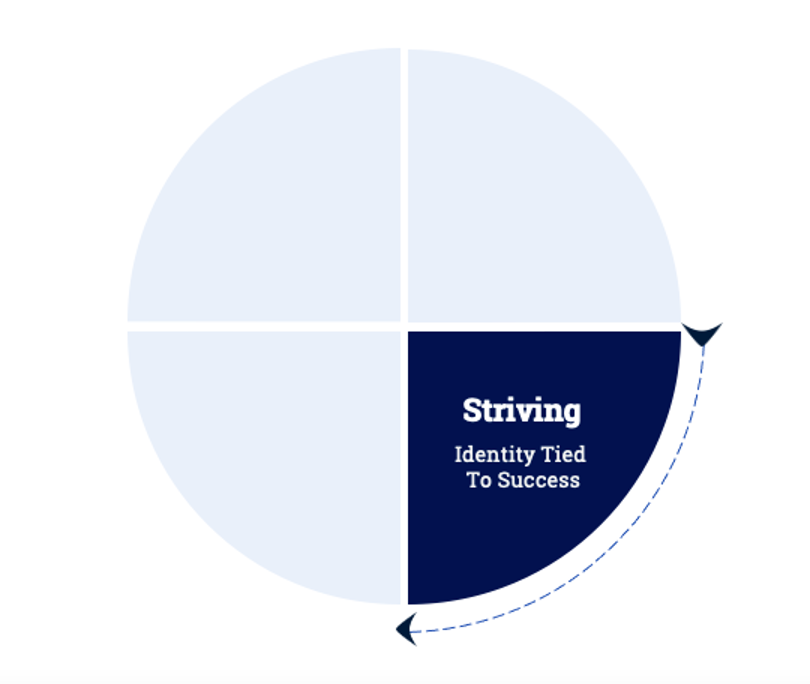
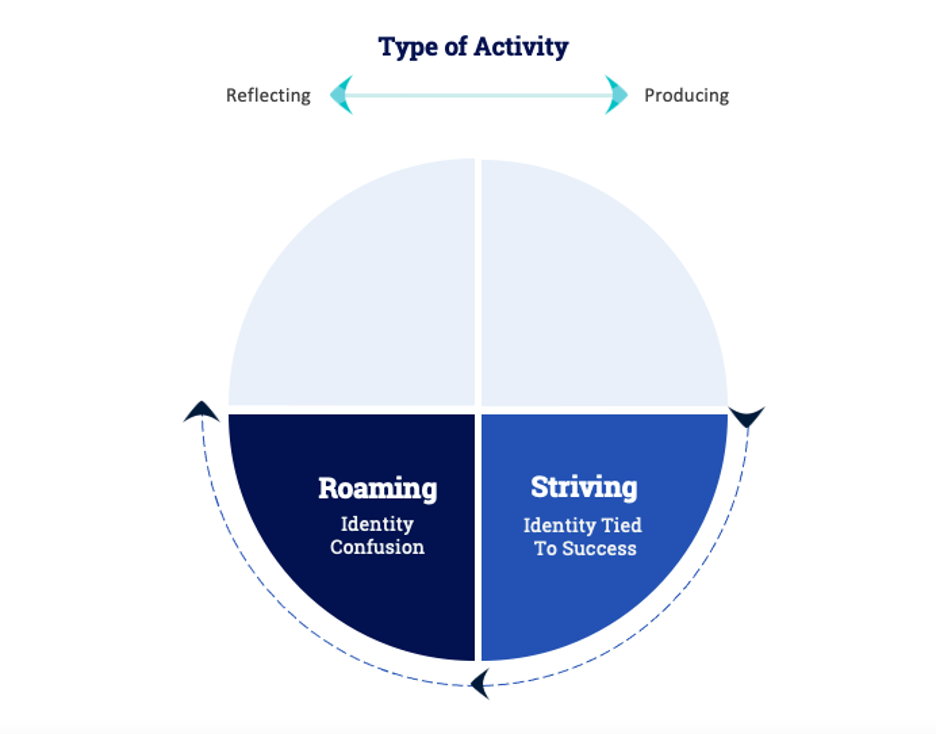
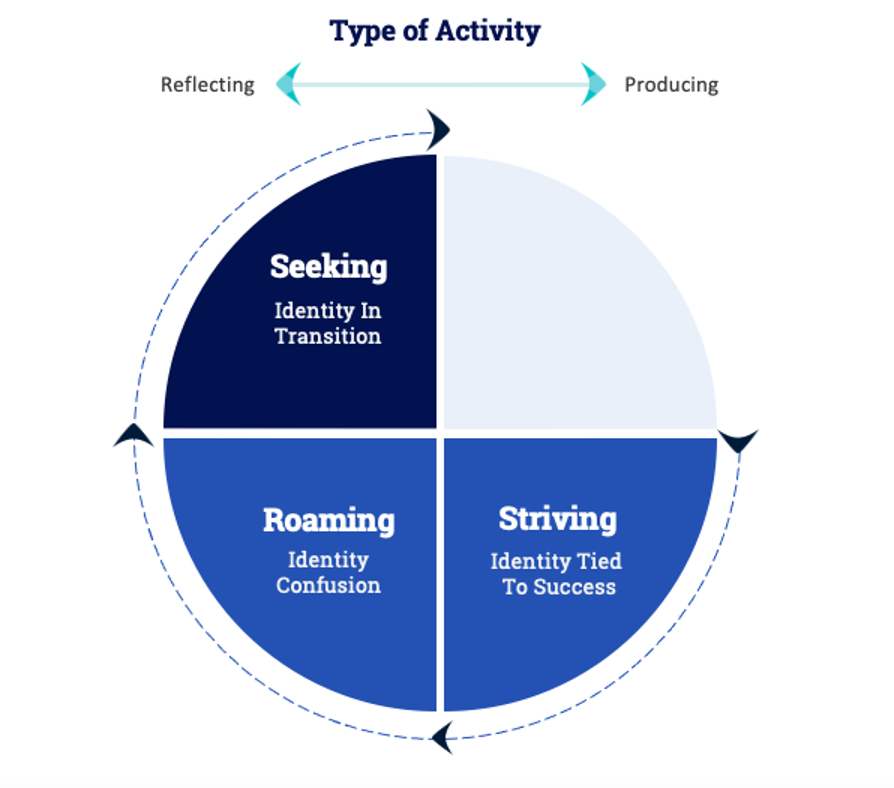
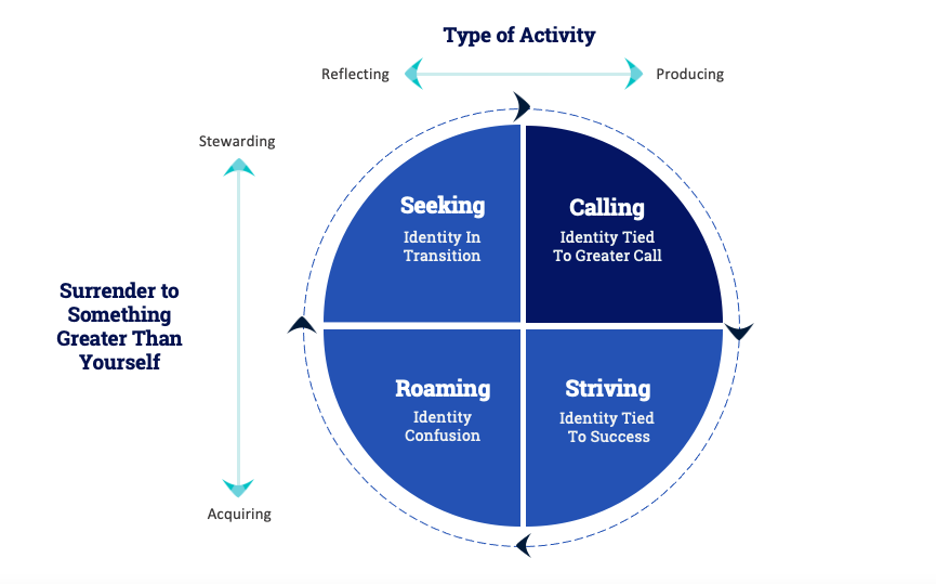
Striving

In my first years as an entrepreneur, working 100-hour weeks was the norm. I would sleep on the floor of my office, skip meals, and be on call 24/7. I was striving to survive and be successful, though I didn’t really know what success meant.

I know now that the thing I was striving for was my father’s affirmation. I wanted to make him proud. Many of you might be motivated by something, or someone, in a similar way. You’re striving for validation, or acceptance, or even vindication. What these motivations have in common is that they’re all inherently unstable, and self-centred.

I was rudely awakened from my striving mentality by what appeared to be the imminent destruction of the company I’d built from nothing to thousands of customers over more than a decade. A group of hackers around the world attacked our education platform with a series of 20 or more distributed denial of service attacks. These attacks were so significant that at one point top-level telcos in Canada had to turn off our platform to protect their networks from being taken down. Our platform served around 5,000 schools across North America. Every phone in our office was ringing with school administrators who were screaming at us over the phone, either cancelling or threatening to cancel their subscriptions, and it was estimated that fully restoring and mounting the defences to protect the platform could take up to six months.

I felt the attack both physically and psychologically. I felt like I had been brutally beaten and left for dead.

Roaming

After seeing me stuck in bed, unable to move, my wife suggested I see a therapist.

In my first session, I started with my existential question: “What’s the point of all of this? Is it just to make money and then donate it?” I asked my therapist, whom I spent six years with (resisting the urge to strive is a lifelong journey). I was doing what I thought I was supposed to. I was hustling, I was striving. But what was I striving towards?

I came to realize that my identity had been fused with my business. As my business was failing, my identity was collapsing.

If my work had any meaning, I needed to find it now or risk my company, or myself, imploding. Unhealthy motivations can be corrosive not just internally but throughout your organization and stakeholders.

Seeking

The attacks eventually subsided and we were able to limit the impact of these attacks. But I was changed through that crucible.

Reflecting on my past and the unhealthy striving I now could see, I resolved that in the next phase of my life I wanted something more — something beyond striving.

During a sabbatical I took not long after, I invested a lot of time to reflect on the meaning of my work, and how I wanted to spend the rest of my life.

These are probing questions, and they require attention intellectually, emotionally, and spiritually. These questions go deep into your worldview, your perspective on life.

I define a worldview as answering four questions:

  • Origin — Where do we come from?

  • Meaning — What gives life meaning?

  • Morality — What is a good life?

  • Destiny — What happens after we die?

Each of us, even if we haven’t thought deeply about these questions, is operating with a worldview, and it is like a set of glasses that helps us see and interpret the world.

A key part of my sabbatical was reassessing my worldview, which had been deeply challenged. I spent time studying various religions and philosophies and spent a month in Oxford exploring these questions.

Given the context of my evolving worldview, I considered what a good life was, what inspired me, what gave me joy, how I felt spiritually, and how my work could serve a higher purpose.

Calling

I came out of this time of seeking realizing that who I was becoming and the moral ecology I created in my spheres of influence was something that could outlive any specific venture. With this in mind, I had two convictions that shifted my focus about my vocation from striving to calling, and eventually led me to start FutureSight.

First, I realized looking back on my years of company building how passionate I was about being a catalyst for the growth of entrepreneurial leaders.

Seeing how the members of my team, a mix of senior executives and people that had joined me straight out of school, had grown into strong entrepreneurial leaders over the years was the most rewarding part of my journey.

Second, I realized that when entrepreneurial leaders are values-driven, they have the capacity to make a uniquely positive impact on the world with the businesses they build. (The opposite is true as well. When leaders do not have strong values, they have the capacity to cause great harm.)

Mercenaries vs. Missionaries

Another way to explain this difference between striving and calling is with a mercenaries vs. missionaries frame — a distinction popularized by VC John Doerr.

“Mercenaries are driven by paranoia; missionaries are driven by passion; mercenaries think opportunistically; missionaries think strategically,” said Doerr. “Mercenaries go for the sprint; missionaries go for the marathon. Mercenaries focus on their competitors and financial statements; missionaries focus on their customers and value statements. Mercenaries are bosses of wolf packs; missionaries are mentors or coaches of teams. Mercenaries worry about entitlements; missionaries are obsessed with making a contribution. Mercenaries are motivated by the lust for making money; missionaries, while recognizing the importance of money, are fundamentally driven by the desire to make meaning.”

A Calling Unique To You

Everyone can have a unique calling. Some leaders have a moment of epiphany and others have a growing sense of calling throughout their life. So don’t put immense pressure on yourself to “find it”. Often the calling will need to find you.

This calling will be rooted in your worldview and could be anchored in a belief about what the world needs, a social cause, a moral philosophy, or even a spiritual encounter. Whatever it is, it needs to be other-centred versus self-centred, you need to believe in it, and you must care deeply about it. It needs to affect your heart as much as or more than it affects your mind.

Many people have changed the world through pursuing a calling, but there are two people that stood out for me.

The Calling of William Wilberforce

The first is William Wilberforce, the British politician who led the movement to abolish slavery in the U.K. in the 1800s. What initially led Wilberforce to Parliament and drove him in his political career wasn’t fighting for justice or equality, it was striving. “I did nothing to any good purpose,” he said, “My own distinction was my object.” He could have continued down this path, potentially seeking higher office, but that need for attention and external validation wouldn’t have sustained him in his mission to end the slave trade. Abolition took decades, and Wilberforce was hated throughout England and physically attacked by slave traders. He needed his work to be driven by a calling, which for him became the liberty of the oppressed. 

Reorienting himself enabled him to accomplish something that didn’t appear possible.

“So enormous, so dreadful, so irremediable did the Trade’s wickedness appear that my own mind was completely made up for Abolition,” Wilberforce told the House of Commons in 1787. “Let the consequences be what they would, I from this time determined that I would never rest until I had effected its abolition.”

It took fifty highly uncertain years, with a growing coalition of participants, to accomplish this massive project, and the Slavery Abolition Act was passed in 1833; Willberforce, released from the weight of his calling, died a few days later.

The Calling of Aleksandr Solzhenitsyn

My second example only understood his calling in hindsight. Aleksandr Solzhenitsyn, Nobel Prize-winning author of the Gulag Archipelago, was so driven to record the horrors he experienced in Soviet Union labour camps that he risked his and his family’s lives and diligently committed thousands of lines to memory amid hunger and exhaustion. He shut out of his mind the possibility of his work being published in his lifetime and was driven instead by a duty to tell the stories of the millions who had suffered alongside him. He didn’t know his book would be read by tens of millions of people across the world and play a part in the fall of the Soviet Union.

“I felt as though I was about to fill a space in the world that was meant for me and had long awaited me,” he said, “A mold, as it were, made for me alone, but discerned by me only this very moment. I was a molten substance, impatient, invariably impatient, to pour into my mould, to fill it full, without air bubbles or crack, before I cooled and stiffened.”

So callings come in many forms. They can be clear from the outset or obscured for decades up until the point that they’re fulfilled. Also, they are unique to each person. While you can’t choose exactly when and how yours forms, you can attempt to understand the meaning behind your work through awareness. I’m convinced that we grow at the pace of reflection.

Questions for My Younger Self

If I could coach my younger self on this journey, I would offer him these questions:

  • What practices of reflection do you have?

  • Who are your heroes? Who do you want to be like when you grow up?

  • What is more important? What you are building, or who you are becoming?

  • What is motivating you? Who told you that was important?

  • What does a good life look like? Why do you think that is the case?

  • What do you want in life? Why? Who convinced you that was important?

  • What do you want to leave as your legacy?

  • What are your values? How does that make you different from the people around you?

  • What behaviors will allow you to live your values in work, your family life, etc.?

Rather than requiring crucible experiences to force me to face these questions, I could have begun the transition from striving to calling much earlier if I had considered these questions when I was younger.

From Striving To Calling

Surrender

Ultimately, our movement from striving to calling is dependent on our willingness to surrender to something greater than ourselves. To have the scales drop from our eyes and discover the mimetic illusion of our first desires. And from there, to grow into a deeper, bolder, and more noble calling for the benefit of others. These “I was made for this” moments are a form of worship.

This truth was captured well by the late David Foster Wallace:

“Because here’s something else that’s weird but true: in the day-to-day trenches of adult life, there is actually no such thing as atheism. There is no such thing as not worshipping. Everybody worships. The only choice we get is what to worship.”

Transformation Towards Joy

The path of calling is more challenging and will require all the skills and capabilities and self-knowledge you have gained in the previous stages. But in the end, you are a different kind of person.

Here are just a few of the transitions that can occur as you grow into your calling:

  • From anxiety in self-reliance to peace in a stable identity

  • From distress in the storm to rest in the storm

  • From temporal gratification to creating a legacy

  • From the death grip of control to wisdom and courage

  • From fleeting happiness of success to joy in the journey

The greatest reward on this path from Striving to Calling is that rather than mere happiness, we can arrive at a place of deep joy.

Miroslav Volf, a professor at Yale, has made studying joy his specialty, and he concludes that joy is the crown of a well-lived life:

“Joy is not merely external to the good life, a mint leaf on the cake’s whipped cream. Rather, the good life expresses and manifests itself in joy. Joy is the emotional dimension of life that goes well, and that is led well.

At our venture studio, we are looking to co-create new technology businesses with values-driven entrepreneurs.  Learn more about our venture studio co-founding process.


Are you a busy entrepreneur looking for daily content that informs and inspires? Then video might be the perfect medium for you. Subscribe to the Faith Driven Youtube Channel for motivational stories and interviews with the world’s leading business experts.

Related articles

Episode 247 – Leading a Techwise Life With Amy and Andy Crouch

One of the biggest challenges families face in the modern age is how to navigate emerging tech with their kids.

Entrepreneurs struggle to turn off. We’re always connected. Always keeping things moving. What example does that set for our family?

Andy Crouch has written about this in his book The Tech-wise Family, and on today’s podcast we talk about what it was like to establish healthy family rhythms around technology.

We’re also joined by Andy’s adult daughter, Amy, to hear her perspective about growing up in a home with this kind of discipline. Like her father, she has also written about this subject in her book: My Techwise Life.

Check out the full conversation, and don’t forget to rate and follow the show on your favorite podcast app.


All opinions expressed on this podcast, including the team and guests, are solely their opinions. Host and guests may maintain positions in the companies and securities discussed. This podcast is for informational purposes only and should not be relied upon as specific advice for any individual or organization.


Episode Transcript


Transcription is done by an AI software. While technology is an incredible tool to automate this process, there will be misspellings and typos that might accompany it. Please keep that in mind as you work through it.

Rusty Rueff: Hey, everyone welcome back to the Faith Driven Entrepreneur podcast from wherever you are today around the globe. If you’ve followed us for any amount of time, you’ve probably heard the name Andy Crouch at some point. Andy’s a gifted writer, a teacher and a leader in the movement as the partner of theology and culture at Praxis Labs. In 2017, he published a very helpful little book called The Tech Wise Family. The book talked about the habits he and his wife created in their home to put technology in its proper place. Well, today we’re going to talk to Andy about some of those practices, but we also give some insider information. Andy’s daughter, Amy Crouch, is also joining us today to give her perspective about growing up in a family that made these practices a priority. She’s also written about this experience in her own book, My Tech Wise Life. Our hope is that this conversation will challenge all of us to have the right kind of relationship with technology in our lives, in our families, and in our homes. Let’s listen in.

Henry Kaestner: Welcome back to the Faith Driven Entrepreneur podcast is bright and early here California time Monday and I am super excited about this first podcast that we’re going to be recording today. I’ve been thinking about Andy and Amy Crouch, our guests, for a while. I think about Andy a lot. For many of our listeners. You’ll know that in addition to Faith Driven Entrepreneur, we have a sister ministry called Faith Driven Investor, which was born out of Faith Driven Entrepreneur because we wanted to help entrepreneurs find capital with time. They came to really, I think, understand and appreciate the fact we had blogs and podcasts and conference of course groups, but so many of them were also hoping to find like minded capital. So I gave birth to Faith Driven Investor and like Faith Driven Entrepreneur, there is a Faith Driven Investor Foundation series that starts off week one Tim Keller the identity of an investor. Week two Andy Crouch talking about God and Mammon is our most talked about part of this series. We’ve got nine parts of Foundation series and I think they’re all very, very good through the grace of God. But there’s something about the way that Andy challenges us, about how we think about investments. We’re not going to talk about that much today, but because I was leading a Faith Driven Investor group study yesterday at the church and it was top of mind, and then I came back and then knowing that I was going to do today and we’re going to talk more about the tech wise family with both Andy and Amy. I left my phone alone and it was hard for a little bit. And then I realized and I told my wife this later, I said, That’s one of the best Sundays I’ve ever had and just rest. And one of the things that Andy talks about, both in God and Mammon, but also in Tech Wise Family, is that the value of relationships and the things that might otherwise hinder us. Maybe on one hand it’s money, on the other hand, maybe it’s the distractions that come from a device. We’re going to talk about the ladder mostly today, but Andy and Amy, it’s awesome to have you with us. Rusty and William is great to be back and get back together and enter into another 250 episodes that we’ll do together. I think this is around episode number 251, and I’m just grateful to be alive and to be with you all, Andy and Amy. Welcome.

Amy Crouch: Thank you.

Andy Crouch: It is already fun.

Henry Kaestner: Likely the first time I’m sure. Actually, this is the first time we’ve ever had a father daughter. And this is a big deal because, Amy, I followed your career a little bit. I’ve known your dad now for maybe 12 years or so. And to see you follow your father’s footsteps into authorship on something you really cared deeply about and that you’ve been very, very thoughtful on is really cool. And I think that one of the things we did for Faith driven entrepreneurs out there, one of the things I recommend is that as you look to hire somebody, to bring them on board, your enterprise to meet with their spouses as well is really key because it teaches you so much more about the person that you can be spending 40 or 50 hours a week with. And so for us to be able to spend time not only with Andy, whose work has been so instrumental and helpful to the birth of this movement, of faith driven entrepreneur, but to spend time with a daughter who grew up with him. It’s just it’s a special treat. So I’m going to start with you, Amy. Amy, I’m hoping that you might just share it with us just a little bit about what God has been doing in your heart as you’ve grown up in that Crouch family, I imagine, because I’ve heard your dad sing several times, I think how amazing your house must have been. Most people don’t think of Andy the singer, but he gives these spirituals, which are just awesome. Did he, like, sing a ton?

Amy Crouch: Oh, yeah, absolutely. And that honestly, I don’t know if you know this dad. That is one of the things that very reliably makes me homesick. I work a job where I get to hear a lot of amazing musicians. And any time we have someone who sits at the piano and plays, whether it’s gospel or classical, I just think of Saturday mornings coming downstairs and, you know, having my dad be practicing on the piano. So that is one of the sweetest gifts that my family has given me, I think is is the gift of music.

Henry Kaestner: Yeah, it must have been absolutely awesome. So I want to get to of course, I want to get into my tech wise life that you co-wrote with Andy. But tell us a little bit about how God has worked in your life as you come out of high school, you come out of the Crouch house and how God has directed your steps that lead up to today.

Amy Crouch: For sure, so I have I’ve just graduated from college a year ago or a little less than a year ago. So I think I’ve gotten to the point where I can really look back on those four years with slightly more perspective than right when I was graduating. And I think, you know, coming out of high school, I know that parents have a lot of concerns. And as a kid, you have a lot of concerns as well about what on earth will the next few years. Hold for me. And I think that I am able to look at my college years as having been this opportunity to first learn how to suffer well, but also how to rejoice really well. And I think the autonomy that you start to achieve when you are headed out for college and you realize for the first time that, oh, I make my own rules, I’m not necessarily going to have my parents present to enforce it can be a real turning point, either where you decide I’m going to live my own disciplined life or a desire to just leave discipline behind. And I think maybe one of the things that I am most grateful to my family for was that I kind of knew ahead of time that going off to college, leaving my parents behind in the physical, if not in spirit, meant that it was time for me to live a disciplined life and for me to attend to the rhythms of my life, the habits that shaped me in the very same ways that my parents had tried to do while I was a child. And so throughout college, I didn’t do this perfectly, but I was really kind of starting to inherit the central habits and behaviors and rhythms that were really important to my family. I was spending each Sunday taking a Sabbath from all of my work. I was spending the first half hour of my day in the last half hour of my day as screen free as possible. I was making sure that the meals I shared with other people weren’t being disrupted by screens. And so even though I didn’t do any of that perfectly, I think that I began to learn how powerful it is to continue those kinds of behaviors, those kinds of habits.

Henry Kaestner: You know, I think about the power that screens have in my life, and I’m curious by nature, and I also love getting just little inputs. And so I want to bridge this to the work that you’ve seen with my tech wise life. And I want to just reflect on the fact that when I put my screen down, I’m not getting all is what I wanted. Maybe, you know, 25 times yesterday, I’m thinking, Hey, is the warrior Kings, is that a best of five or is it a best of seven? I wanted to know that right away. And I wanted to know I wanted to know a recipe for something else. And I wanted instantaneous gratification. And I found myself denying myself. I can’t believe that I’m saying that this is anything akin to suffering because it’s not. But there’s something maybe in there is denying yourself a little bit bridges into this work that you feel that God’s called you to, that you’ve done with Andy. And then we want to hear the same thing from Andy. And just just a reflection of not always getting everything you want immediately. And also weave into that. I know I should really keep my questions one to a time. I’m just really impacted by the fact that you’re the first person we’ve ever interviewed on this program that grew up as a technology native. What does that mean? What does that mean? Suffering. Technology. Your generation rift for a couple minutes on that will you.

Amy Crouch: We’re going to be all right. Well, oh, my goodness. There’s so much to say. The first thing is that, yes, our devices give us what they want. That’s why they’re so enthralling and exciting.

Henry Kaestner: Was that a Freudian slip they give us what we want?

Amy Crouch: Well, I thought I said they give us what we want, but they also give us what they want.

Andy Crouch: Yeah.

Henry Kaestner: That’s right

Amy Crouch: So it was a good Freudian slip if it did happen. But this is the reason that they’re so compelling. I’m not on Instagram anymore, but a year or two ago, my friend who is sent me an Instagram ad that came up for her hilariously within the app, you know, you’re already using Instagram and they serve you an ad for their own product. And it said Instagram, make yourself in your own image. And I was like, Oh, my goodness, that is what we want, right? That is exactly what we want. It is not necessarily what is good for us. I actually think it is certainly not what is good for us. But that is speaking to such a fundamental desire, like that’s the desire in some sense of Eve and Adam in the Garden is I want to make myself in my own image. The ultimate truth about me, you know, shouldn’t be that I made an another person’s image in the image of God. It should be that I get to make myself in my own image. And I think that all of our devices are just extraordinarily good at giving us what we want or what we think we want. This is certainly true when it comes to the kinds of distracting powers of our devices. When we think about the nonstop entertainment that’s available to us. In the moment when you are bored, frustrated, or lonely, some instantaneous distraction is exactly what you want. You can think of it as kind of a bandaid on the surface of your pain and you have that kind of instantaneous gratification. So I think that it’s certainly true that we love our devices because they offer us what we think that we need, what we think that we want right away. But that is not how you actually become the kind of person that God created you to be. And one of the things that we speak about so much as a family is how the most important things in life. Come from a little bit of risk. The most important connections, the kinds of conversations and relationships that make life worth living. They come from the risks of being vulnerable and not just presenting a perfect surface to the world. Developing any kinds of good skills and gifts and talents has to come from trying something that you’re not actually good at yet. You have to take a little bit of risk. And if our devices are only ever giving us the easy option, the sort of flattened pleasure of you get what you want, we’re going to miss out on what makes life truly the life that is life.

William Norvell: Wow. Wow. That was great. We had our first little mini clip from LinkedIn right there. That’s going to be amazing. Andy, I want to bring you in a little bit. You have helped Amy shaped this life that she sees, of course, helped in some way. And so I’m a parent as of last week. I have a five year old, a three year old and a one year old. And while already invading their lives. Right. They see screens everywhere somehow. And my one year old still knows how to answer a phone like this, which I’m not really sure here. And I’m like, How did you learn that? Nobody does that anymore. It’s a fascinating must’ve been a cartoon, but I feel like there’s so many people that say things right. And I’m curious because I know you’ve lived your life. You have grown children that can verify that you did some of these things in your home. .

William Norvell: How does this happen? How do we think wisely about this? But just advice on, you know, how did you shape this world? Why were you so intentional about it? What about technology scared you at that moment in time? And maybe what are some thoughts we should have as parents raising kids in this new generation?

Andy Crouch: Great questions. Well, I think most of the technology choices, if you want to call that that parents and kids make, are default. That is, they aren’t actually made based on really thinking carefully, what do we want our home to be like? What do we want our children’s experience growing out to be like? Instead, we have this kind of pressure wave. I feel like the best image I have for it is a tsunami that’s kind of, you know, flooding in on our whole culture that carries us in a certain direction. And crucially, that makes many things easier. I think the reason kids are firsthand at a screen is it’s actually rarely to solve even the kids problem. It’s to solve the parents problem. How do I get in and out of the grocery store to and from the grocery store in the minivan without committing murder against my three year old? Whatever know is screaming and anxious and, you know, angry and bored. And you hand them a screen and it does solve their problem. But really more deeply, it solves the grown ups problem. And when you make any one of these choices, life in the moment feels easier. But these choices also cut us off from what actually forms us as persons. How do you become a person who is able to get to the grocery store and back without breaking down something that some adults, some of us on our bad days would still have trouble with that. And we know when we grow up this is like an opportunity to exercise patience. It’s an opportunity to exercise a kind of discipline. So the very broad answer to your question, William, is that I was very fortunate to be married to a very discerning wife and mother of our kids, Catherine, who really was thinking about what do we want life in our home to feel like for our kids and how do we want life to form all of us? And Catherine was especially alert to the ways, actually, that I was. This is actually before we had kids that I was dependent on the kind of distraction and easy kind of option of devices and confronted me about it. So one of the problems with my book, The Wise Family, is I end up sounding pretty put together in that book, although there’s another chapter I try to disclose some of the less put together parts because we accumulate all this insight over about 15 years of child raising. But most of it was not my wisdom necessarily. It was my wife pushing me to say, Andy, what do you actually want from our marriage, from this family? And together, we made some choices that in the end we all feel were really, really life giving. But I actually love the way you began, Amy. I have to say, as a parent, there is nothing you would in some ways less wish for your kid than that they would have to suffer. And I remember the day I had to pick Amy up from college in the middle of COVID when we all realized really what was going to happen was one of the worst days of my life. I drove It was about a four hour drive to her school, and I made that just so angry with God. I was like this this beautiful opportunity my daughter has had where she’s just been flourishing and pursuing you and making friends. It’s coming to a crashing halt. And I had a pretty good sense of how long the disruption was going to be at that point, which I think they didn’t. They thought it was going to be two weeks before spring break, and I knew it was going to be a semester, if not years and. It was so distressing to not be able to rescue my child from that right. But the paradox is this is where growth happens and in much smaller ways every day we kind of have a choice. Do I choose the easy way or the harder way? And our kids are watching as we make that choice. And to some extent, when they’re young, we have to help them choose the harder way. So I don’t know. Does that help frame like what the big picture is at least?

William Norvell: It does for me. I mean, I love that last phrase. Help them choose the harder way. Yeah.

Andy Crouch: But that means you have to be willing to watch your child struggle. You have to put up with resistance, their own frustration, their own sadness. You have to watch them go through awkward things at school when they haven’t watched the show. Everyone else has. One of the hardest moments in parenting for us was watching our son bring home friend’s boys to play and like 8 to 10 years old in that window. And basically none of them came back because we didn’t have any screens for kids to play with. And basically it seemed like boys at that stage only really what they do together is play video games. So watching kid after kid show up and want to play video games, they were like, Well, that’s one thing we don’t have, but you can try other things and then never come back. And our poor son at that age, not the most socially smooth maybe, you know, just struggled with that and we had to just absorb it and trust that on the other end something good was going to happen. But very hard. It’s very hard to let suffering happen for the sake of formation.

William Norvell: I had a five year old birthday party, so I’m crying as I’m thinking about your child and thinking about my child. They all got I cry a lot. So that’s not a lot. It’s not huge. But I’m crying, thinking, Oh, I know it’s hard. That’s hard. It’s so whatever decision it into your point. I love this and you’re making a decision at that point is what we’re talking about, you know, with children. I mean, you’re making the call, right? They don’t have a lot of input on that. They’re not going to change it. And so I’d love to flip it back to Amy. How did you experience this? I don’t know if rules is the right word, more like God shaped boundaries, right? Like, hey, here’s the boundaries I’ve set for you to flourish. You may not love them, but here’s what I’ve said, right? That’s what our loving father does for us. But people call them rules. But in reality, I think they’re loving boundaries of where he thinks we will flourish best. Right. And I feel like that’s what your parents said, because I think we we think, of course, God knows. But maybe your parents thought, right, we think, this is where you’ll flourish, even though you may not like it. Mm hmm. How was that for you?

Amy Crouch: Well. Oh, goodness. I mean, the broader question, you know, this has suddenly become a bit of a heavy podcast. And I will say we’re talking about suffering, but this is all grounded in my brothers and I, like, never, ever wavering knowledge of our parents, unconditional love for us. And we’re talking about sorrow and grief and pain. And that is real. But like, oh my goodness, this is all grounded. And I have never, ever in my whole life doubted that my mom and my dad will always love me unconditionally. And that is the grounding force from which you can go out into the world and suffer. And of course, as I grow older, I know that as much as my parents love me, it is really the love of God, which is the unconditional grounding force that allows me to go out and take risks in life. And so I don’t want us to get kind of lost in the heavy side of things. So that encouragement to go out and to take risks from our parents. My brother and I knew that we were being told to take those risks because we could never risk the most important thing, which was the love of God that is, you know, was directed through our parents for their love for us. So you can only take those kinds of risks and be vulnerable in the world if you know that the most important thing is already done, you’re already beloved. So that’s the big picture. Moving in towards the sort of smaller picture, though, of like practically, how did we react to our parents having these kinds of rules for us? You know, there were all kinds of frictions that happened. But what I like to remind people is that these rules were not just for the kids, they were for the whole family. And that really fundamentally changed my perspective and I think also my brothers, because we could be annoyed with our parents for, you know, I just wanted to play this fun game or I just want to be able to do X, Y, Z. But I know I never had a sense of they’re just telling me to do this and how do I put this? I always knew that these were commitments that were binding my parents as well, it wasn’t just me and my brother who couldn’t have screens in our bedrooms. It was also my parents. Nobody could take out their phone at the dinner table. And sometimes, you know, mom and dad had more reason to have to be on a screen at the dinner table. But they made that commitment. Certainly, my mom and dad have both modeled the kinds of wise behaviors around social media use that really inform and inspire me. And so it wasn’t all sunshine and roses. And obviously my brother and I were kids and we often got annoyed. But there was never a sense that these were top down rules from the parents to the kids. We were all on the same team. We were all a family who had to do this together. And I think maybe the final thing I would say is if both the adults and the kids have to follow these rules, that shows you as a kid that it’s not just that you are foolish or immature or that your parents don’t trust you. What your parents are showing you is in a healthy way, but they do not trust themselves. And I want to say that in a completely kind of wise Christian context. But what my parents were showing me when they themselves were bound by these rules around technology was that they, too, were people who needed the grace of Christ and the wisdom of rules and habits and disciplines that this wasn’t about me being an immature kid who needed to be told what to do, but that this was going to be a lifelong commitment to live the life that I was supposed to and not the life that’s kind of my lesser desires wanted me to take. So it’s just really important that these were commitments as a family, not just rules for the kids.

William Norvell: So tell us a little bit about how do these things change and adapt. So, you know, and like I said, I’ve read the book. I know you’re not telling people this is the only way to live a flourishing life like you’ll never meet God without this. But for people that are encouraged to take a next step. Right. How did this change and adapt? Did you learn? Did new technology come out that made you think about things a little differently and then you had to address that? Right. You know, I’m sure there’s some kids You know, I talked to some high school students every now and then. Like I’m shocked at how much they do on iPads and laptops and like, wow, like you don’t have books anymore. Okay. Yeah. Yeah. So maybe just address some people because, you know, there some people, the audience going, sounds awesome. I’m listen, this is cool. My next 5 hours.

Andy Crouch: That ship is out.

William Norvell: Kindles in place. That’s how I live. Or my child needs this technology. we need this technology, that’s what they’re required to do to move up in the world, right? How does all that shape together?

Andy Crouch: Well, I will say we dodged one big bullet, which is that our school system didn’t really introduce, like tablets and that kind of thing while our kids were still in school. And and the way that schools are now requiring these devices, even though I just have to emphasize, there is literally no evidence that they improve learning. And I wish it were more complex than that. But the OECD, you know, the coalition of all the developed countries of the world has studied this. And the OECD countries have very different policies about technology in schools. There is no effect between the countries that have a lot of tech and the countries that have no effect. It doesn’t affect learning outcomes. Nonetheless, in many kind of especially public school systems and often also private schools that want to kind of say they’re giving kids an edge of some kind. These devices are ubiquitous. And I just would say parents ought to be pushing back because there’s no evidence they work and they introduce a lot of problems. Actually, we did dodge that, so we didn’t have the kind of compulsory device showing up from school, like here, here’s an iPad for kids to carry around all the time. But it’s certainly the case that it became more and more, you know, part of life. And I will say I don’t object to using any device, any kind of technology when it is formative, when it’s actually shaping us, when it’s being used as an instrument rather than a device, a device being something that just kind of operates on its own and gives you what you want, an instrument like a musical instrument or a medical instrument or a scientific instrument being something that you actually use and that as you use it, you grow and perform. So that’s why I love for kids to learn coding, for example, starting maybe age 11, 12. I think most kids should learn the basics of coding because that’s actually using a device like, like a human being, actually like someone who’s making something in the world rather than just using it to entertain you. So we did have to, you know, make course corrections, I would say. But we always had this kind of fundamental guiding question, which is, is this helping us develop wisdom and courage as a family? And if it is awesome. I mean, so we watched movies as the kids got older. I mean, there’s amazing films out there for every age, every stage of life. You know, our kids did. Our son especially learned coding when he was in his early teen years because he loved that it came naturally to him. I think the other thing that came along, just as our kids were exiting high school, which we can have a long conversation about, but I’ll get over to Rusty. But the algorithms started really were and Amy is the most anti algorithm person on the planet. She can go on and on about algorithms. They’re going to ask her if you want. But I think that shift in how our devices related to us, that they more and more had this feedback loop that allowed them to figure out what scratches our itch. And it’s of course, driven the rise of tik tok as the most effective algorithmic kind of social media yet. And it’s the most sticky, the most absorbing. We sort of we avoided that until our kids had enough prefrontal cortex in place to actually make pretty healthy choices. Whether dad makes healthy choices, it’s another question, but all these things are still coming at us and you have to have that North Star question Is this helping us develop as human beings who have wisdom and courage together?

Rusty Rueff: Yeah, that’s where I want to go because they are going to keep coming at us. It’s fascinating because if you frame some of the guests we’ve had on the podcast, so let’s put Kevin Kelly on one end. All right. So Kevin Kelly, recently on the podcast, Kevin writes a book called What Technology Wants and believes that technology is its own kingdom now that it’s just going to keep coming at us no matter what, right? So that’s one end of the spectrum. The other end of the spectrum is we had on Heath Wilson, who has a really cool device called the Aro that says this technology is going to keep coming at you and it’s coming at you through your phone. And guess what? I’m going to give you a piece of hardware that you can put it in your phone in there and rewards you and tell you how long you’ve been away from it so that you can be reminded. Right? So so there’s both ends of the spectrum, which is fascinating. And then here we are in the middle talking about sort of the values and principles and, you know, how should we utilize this technology? And I’m kinda run past in my little section without commenting, Amy, on what you said about discipline at the beginning, about being in college and having discipline away from technology and devices. When I was in college, there was only two screens. One was the television screen. That one was the one in the computer lab, right? You know, you had to go there.

Andy Crouch: Yeah. Yeah

Rusty Rueff: And I still had to find discipline. So I want to give you credit that you were finding discipline, not just trying to figure out how to deal with technology, You were actually formatting your own disciplines, which is, I think, all part of it as well. So I’m going to bring all of that back to, you know, we’ve got this technology that’s coming fast at us, right? You know, I mean, we’ve got a chat GPT that maybe is revolutionary is the beginning of the Internet and we have to find redemption in these or try to figure out what is redemptive and what isn’t redemptive and decide make our own decisions, not even knowing what the consequences. Right. Of technology. We don’t know what those are going to be. Andy, as you think about it deeply and Amy, as you all wrote this together, I mean, as you think about. Redemptive technologies, not redemptive technologies. Where do you draw the line?

Andy Crouch: I mean, I think I have a relatively simple framework for it, though. Working this out with any given technology, you know, probably takes a certain amount of time and kind of even for our whole society to come to grips with it. I think the more that all technology is deployed to help us live lives of heart, soul, mind and strength, love help us to love with hearts and minds, strength, they’re great. And some of them really augment our minds and help us love the world more with our minds. And that’s great. Some of them should help us love more with our strength. A great sneaker, which is technology of a kind, helps you run and enjoy running in a way that you might not, at least unless you’re one of these barefoot runner people who apparently think it doesn’t help. But it would help me. My bicycle is a piece of technology compared to something anyone else has had in human history. We’ve got amazing high tech bicycles now, and when I’m out on the bike, it’s an amazing experience as a human being and I grow in my love for God in the world as I ride my bike because I’m actually involved with my strength as well as my mind and my heart and maybe even my soul as I ride. On the other hand, there’s a lot of technology that explicitly is designed to displace human beings, to replace human beings. And often that says, Oh, you should be able to just relax and let the machine or the computer or whatever do the work, let the artificial intelligence do the work. And when it replaces, I don’t mean replacing certain aspects of human labor and activity that really aren’t necessarily that fulfilling. I’m all for computers taking over some of those things, but when it replaces human presence in the world is heart, soul, mind, strength, complexes designed for love, then it’s a problem. And we should recognize it’s actually not going to help in the long run. So this is the basic distinction that I wrote about in my last book between devices, which just ultimately are designed to replace and displace us and leave us with very little to do more and more disengaged, more and more kind of adrift in the world versus instruments which actually fully engage us. Like right now we’re using a ton of technology to have this conversation, but because it’s working well, it’s putting each of your faces in front of me. I can sense to some extent what you’re thinking and feeling. We can have this conversation together. I’m very engaged right as a person, and hopefully the people listening to it also find themselves drawn in and actually engaged as a person. If it does, that go for it. But if you start feeling disengaged, if you start feeling like I’ll just let the machine do the work, I’ll just let the machine do the entertaining, you know, I’ll just let the machine kind of run things. I think you’re seeking a kind of magic that will not actually last and will not be good for human beings.

Rusty Rueff: And let me dig a little on that. And Amy, jump in here, too. What about surrendering? So, you know, I mean, as part of our faith journey, right, If we are totally committed to, you know, living as Christlike as we can and in following in his steps, we must be willing to surrender to all other things. Right. We have to surrender them all to him, whether it’s a part of our identity or any of our lifestyles or any of that. When this becomes so much of me that I what Henry said, I put it down for Sunday and I felt so good. Could I surrender it? Could I actually surrender an app that is so important to me?

Andy Crouch: Huh? Yeah. I think this is why I think Sabbath is a very useful principle, because Sabbath is not saying, you know, the six days are bad, the six days are actually good. We’re meant to work. And human work has always involved tools. Those tools evolved in the modern era under what we call technology. But it does say six days. You work the seventh day, you surrender it. All right? You lay it all down and it creates the circuit breaker that, for one thing, allows you to discover patterns of dependance. So, Henry, if you hadn’t had that day off, you wouldn’t be as conscious as you became of how kind of dependent you were to scratch that itch in ways that actually make you realize, Oh, it’s not necessarily that good for me to be scratching this itch all the time. On the other hand, I’ve found when I have one day in seven where I’m true, lay it down. It changes my relationship to the technology the other six days. I also think is why I’m going to draw the line myself at implants. That is to say I’m going to draw the line at things that you can’t take off one day in six and return to kind of the ground state of being a creature and creation made with my body that God gave me with all its limits. I’m not going to go for the implant that I can’t turn off because I want to be able to practice Sabbath with every tool and every everything that would allow me to get something done in the world I think ought to be subject to one day in seven. You don’t your rest, your surrender. You go back to the state of play and worship and rest. That is the sort of basic state of creatures of God.

Rusty Rueff: It’s good. Amy, I’m going to ask you one question and then turn it back over Henry and just got a question for you. But so you wrote the book when you were 19. Now you’re past those years. Some things have changed, right? The new technology has shown up since then. Anything that’s popped up since then that maybe you would go back and rethink and say, Well, mm hmm. I wonder. Even my generation has been shaped a little differently, or the next generation it’s coming is now shaped a little differently. That I didn’t see it just a few years ago.

Amy Crouch: MM Well, there are sort of two obvious answers, which are the rise of algorithms and then also the very early stages of A.I. and especially of language prediction models. You know, Dad mentioned that I could just talk for hours about my concerns around the algorithms and, and the way that for my generation, almost all of the content that we consume is being served up to us, not through our conscious decision, but through a very sophisticated algorithm that kind of speaks to our unconscious desires, which aren’t usually what we really want for ourselves. Mm hmm. And this was just beginning when I was writing the book. But it is completely taking over right now. Every social media platform is trying to become its own version of Tik Tok. And I think what I find most kind of extraordinarily unsettling is, you know, maybe seven or eight years ago, I would say most of the people that you connected with on social media were at least people you actually knew in real life. But with social media turning into a source of entertainment governed by an algorithm, you’re mostly being connected to people who you will never meet. You’re mostly being connected to influencers and like, Oh my goodness, when I think about the sort of perfect girl or the perfect 22 year old woman, that whether it’s Instagram or YouTube or Tik Tok serves up to me. She’s someone that I could never, ever meet in real life. But because there are so many influencers out there carefully curating their lives so that they can look like her, I believe that she exists and feel mad at myself that I am not her. And so I think I could only have barely predicted how much people my generation would be taking as role models, people who they will never, ever meet and who are creating completely fabricated lives for the purposes of of likes and views. And I find that disturbing because. No matter, you know, how much the people around you who, you know, personally seem to be impressive and more put together and more perfect than you, they will never be as completely inhuman and unreal as the kinds of composites that you see on social media. So I think that’s I don’t think that is the way of life.

Henry Kaestner: So I wonder, as I’m listening to this about it, bring to close, Williams going to ask us or standard after a question we always ask at the end about what you’re hearing from God and God’s word. I’m trying to process on this about whether this suffering, if you will, this kind of opportunity to engage with the nonhuman is actually helping or hurting us in our sanctification. So here’s what I mean. I don’t know that we know what it is to be human. I don’t know if that people in the 1950s or 1960s before any type of this type of technology, seventies, I don’t know if they knew what it is to be human as much as maybe we do, because also now we’re actually confronted with it, Right? What is it that makes us uniquely human is probably not something that was really on the top of mind or discussions that folks had. When you look at the composites of all the different people that you want to be like through social media, does that actually put us in a spot where we actually say, wait a second, are those great role models or do we want to be more like Boaz or David? Or do we want to be more Christ like? Can we as a church, see this as an opportunity when confronted with actually this kind of interesting alternative to actually make us more human, like in Christ like? Is there a plus side to our sanctification that maybe we’re not thinking about?

Andy Crouch: No, I think that’s good. What I do like what you said, Henry, is, you know, you’re identifying the way all this is quite disruptive and it’s disrupting our assumptions. You know, when you said the 1950s, I actually thought I think the deployment of the atomic bomb did cause people to reexamine what it is to be human. Like, suddenly we have the capacity to bring destruction in a way human beings had never imagined that they could. It wasn’t, and they couldn’t before we discovered that technology, if you will. So I actually think when that disruption happens, it is this opening for a kind of self-examination to say, well, what really matters? I mean, the next frontier of this is going to be all these things we thought only people do. Only people have conversations. Computers can’t do that. Well, now they can. Only people can, you know, do this certain kind of complex reasoning. Well, soon the large language model will be able to do that. I think it is an opportunity to say what actually really matters about human beings, if anything, because there’s a whole world of tech that says, actually, we’re just one more at the phenomenon of the universe and we’re not that special. But for those of us who think, no, there is something special and not just special about special people like great people, admirable people, but special about the least admirable person, special about the least able person. The person with the most limitations is still special in a way that computer without limitations is just obsolete. But people don’t become obsolete like those kind of things. We have a window of invitation to rethink, like, why do we dignify human beings in the way that we do, and what would make us the kind of person who can love and honor and give dignity to other human beings? In that sense, it’s an opportunity. I also think that window opens and closes at different times in history when people start to take for granted. You know, I mean, there was this thing called eugenics in the first half of the 20th century that was very sure a good person is one who’s been cleansed of racial impurity and freed from disability, and the window closed in the country of Germany onto a whole society that started to implement that. And it got very high cost to resist it. So I think the windows open and closed for us to ask these questions and answer them in humane ways.

Amy Crouch: Yeah, Well, and I think that the reason that maybe my answer is a little more pessimistic is I guess I’m worried that technology is causing us to ask these questions and people are finding the wrong answers. Yeah, because if you look at a new large language model and it prompts you to ask the question, what does it actually mean to be a person? And you come to the conclusion to be a person is just to be a very highly sophisticated prediction machine. And then you go out and you start treating people as highly sophisticated prediction machines. We’ve got a really terrible problem. And I guess I’m just worried that people will asking these questions for the first time, they may end up with the answers that are deeply wrong but seem well within the world of powerful technologies to be very compelling.

Andy Crouch: Yeah.

William Norvell: I don’t know. I’m teasing something, but it seems like Andy and Amy’s next book is sort of written here. I’ve got a great summary for the publisher. What does it mean to be human in a world of AI? I’d pick it up. I’m just. I’m just saying. I think it’s fascinating. And I think it’s I mean, the onslaught of the AI machine has just been I mean, gosh, what is that like three weeks ago they launched or something that feel like it’s been here forever and every company has an element like language. I mean, it’s nuts in my opinion. How fast. Okay. So unfortunately, we have to come to a close. But I would love to dive deep. Gosh, the idea of what does it mean to uniquely be human and how humans can’t be obsolete. And even the least of these have specific inordinate life giving things to give to the world is so beautiful and so true, but is maybe at the precipice of potentially being lost. Right, is something we all have to confront. So where we love to close is we love to hear where God might have each of you in your life, and specifically through his word, through Scripture. Maybe, if you wouldn’t mind, share with us one, it’d be one verse. It could be a story. It could be anything from his word that may be coming alive to you this morning. We always love to share that with our audience and see how that continues to transcend time and space and all that as humans.

Andy Crouch: Well, we’re recording this right after Easter and the season of Easter. And this day I was rereading the amazing story of Thomas, who isn’t there when Jesus shows up the first time, and the kind of ferocity of what he says. Unless I put my finger in his side and touch his wounds, I will not believe he’s so mad, you know, insistent. And then the next week, Jesus, like here puts your finger and Jesus knows that he said it. That’s I think Jesus quotes Thomas, even though Jesus was not apparently present in the room. And I think, Oh gosh, I needed Easter this year. I have to say there’s a lot of tough stuff going on in our lives, and I just am I’m convinced by these stories that no one would make up these stories that the gospels tell, including they’re somewhat close to inconsistency with each other. It’s hard to fit all of them together in just one easy package, but they’re each story is so compelling. And that story of Thomas, like, just so boldly doubting and resisting and then boldly saying, My Lord, my God, when he actually meets Jesus. And Thomas, of course, went to India. At least all the evidence is all the tradition says, and died there, a martyr for his faith. It’s just amazing. Like the resurrection man. It’s it’s real.

William Norvell: It’ll. It’ll get you.

Andy Crouch: And I’ll get it.

Amy Crouch: I’m right with you dad on the resurrection. And in particular, I was reading over all the different accounts of the women coming to the tomb on Easter, and I was reading a sermon by Donne on these different accounts, and he really emphasizes how you can tell that the women are not all together in the right frame of mind. They go to a tomb that’s had this enormous stone rolled in front of it. They can’t move. It’s kind of depending on the accounts. It seems like Christ’s body may have already received some anointing from Nicodemus and Joseph, and they’re going there with their spices, even if he’s already rolled up. He’s been in the tomb for a few days. You know, there are all sorts of ways that you can see that these women are so overcome by grief that they’re doing things not altogether rationally. And first of all, I just find it so extraordinarily real. Like, again, it is just such a real detail. They have just lost the hope of their lives and they can’t quite think straight. And yet, even though they go, you know, not being able to roll away the stone, even though they go perhaps not altogether prepared to do what they say they’re going to do, nonetheless, they are commended for their great faith and have been for thousands of years. God takes their kind of grief stricken desire to do even just one small thing and rewards it thousandfold. And of course, somebody does roll away the stone for them. And I think, you know, being in my own way in this early stage of my life and not really knowing what my life is going to look like, sometimes I feel like those women just deciding to do something for the sake of the God I love and being like, I don’t know if this is the right thing. This might not work out. What if nobody rolls away the stone for me? And I find it just deeply comforting to be reminded that even when our service to God is clouded and when we don’t. Fully know what we’re doing and when we’re not quite doing what we’re capable of doing. He redeems that so richly, and he gives the hope that we never could have dreamed of.

Henry Kaestner: Amy and Andy, I’m so grateful for you both. We could talk about this all day. I could talk about it with each of you all day. This and many, many other topics. In Lord alone we will have an opportunity to do that. Amy, I’m very excited to follow your career and see how God continues to speak through you and Andy, just on behalf of the entire team here at Faith Driven, just thank you for the encouragement. You’ve been to us as a team, but then to all those that God has asked us to minister to, whether it’s God and Mammon, whether it’s creating culture, it just, you know, just leaving things for others to glean. I mean, there’s so many different messages you share with our audience over the years. Thank you.

Andy Crouch: Thank you guys so much.

Amy Crouch: Thank you so much.

3 Fundamental Truths for Putting God at the Center of Your Business

— by Peter Demos

Last month, we watched the Asbury revival go viral and the “Jesus Revolution” film hit the silver screen. Both events are an awesome reminder of the creative and powerful ways that God moves. He’s moving across university campuses, in hurting nations like Iran, and even in Hollywood, California. 

Personally, I am waiting for the next great move of God that will take place in cubicles and boardrooms instead of church pews and sanctuaries. Consider this — most Christians across the world are not called to work in full-time vocational ministry. They’re not preaching on Sundays or hosting evangelistic outreach events. Most Christ-followers are called to the marketplace. And so many people are seeking answers on how to put God at the center of their businesses.

The late evangelist Billy Graham said, “I believe one of the next great moves of God will happen through the believers in the workplace.” For years, Christians have sought to evangelize a largely unreached people in “the 10/40 Window” – the area of land between the 10th and 40th parallel north of the Equator, spanning from Africa through east Asia. But there’s another window sitting wide open for Christians to introduce people to Jesus, referred to by some as “the 9 to 5 window.” 

It took me a long time to surrender my life to God and discover my purpose within this window. Now that I see my restaurant business through His eyes, I approach it differently. I’ve learned a lot since God transformed my life, the bulk of which falls into three key truths. 

1. Surrendering control is everything 

I’ve been in the restaurant industry for most of my life, engaging with people of all backgrounds, managing teams and casting vision. Fully due to God’s grace, I oversee multiple, successful dining concepts, I have a wonderful wife and two amazing kids. For many years, on the outside, my life looked perfect. But what the pictures in social media and in the pages of lifestyle magazines did not reveal is that I wasn’t operating from a place of confidence and security. God wasn’t at the center of my business, but rather, I was driven by fear, anger and emptiness. 

Food service is in my veins. I entered the industry at age 12, washing dishes at my dad’s Western Sizzlin’ restaurant. As the family business expanded, it afforded me the opportunity to learn every possible aspect of the organization. By the time I was a young adult, I had absorbed a lot of restaurant industry know-how and even obtained a law degree, yet there was another area of my life in which I was too stubborn to learn anything at all. 

My parents took me to church every Sunday. When I say they “took me,” what I really mean is they “made me go.” It wasn’t until I became a husband and father that I truly surrendered my life to Christ and sought to put God at the center of my business. Before then, I was desperate to control every area of my life. If I couldn’t effectively control a person or circumstance to my satisfaction, no one in my path would be safe from the wrath of my emotions. 

I’ve since learned the root of my need to control was fear. I was afraid to trust anything other than my own two hands. So afraid that my wife would leave me, I nearly suffocated her with jealousy and controlling behavior. So afraid that my business would fail, I worked around the clock until it became my idol. I was a walking ball of fear, which manifested as uncontrollable anger. But the minute I relinquished control, I finally felt a peace I never knew was possible and it changed everything. 

2. God’s plans are the best plans 

When we launched a new restaurant a few years ago, running it was incredibly challenging and the source of some of my biggest business failures. When you open a new dining concept, you budget for a loss in the first year. Our venture had so many unforeseen obstacles that we met that budget two months into it.  

Dedicating my life to God didn’t take away my problems, but it taught me how to handle them. My earliest prayers were along the lines of, “Here’s my agenda, God. Bless it.” I’ve since learned that it should be the opposite. “What’s your agenda, God? Use me.” 

Learning to trust God to lead me through significant difficulties has turned out to be the greatest source of growth and blessing in my life. While I’m a work-in-progress and always will be, I finally understand that submitting my goals and dreams to Him and inviting Him to take control is the best way to enjoy peace and be a witness to others. 

3. The anointing of God isn’t reserved for the pulpit 

We tend to elevate those who serve in full-time ministry, believing they’re the ones who will change this world. But the next great revival may pour out of the anointed men and women who are making a difference in the marketplace. 


Want to explore more of what it means to step into marketplace ministry? Read our blog post, “What Does It Mean to Be Called?”


Christian researcher George Barna once predicted that “workplace ministry will be one of the core future innovations in church ministry.” A careful study of Jesus’ life reveals that He cared deeply about the marketplace. In fact, He worked there until his ministry began full-time. Paul preached in the marketplace in Athens and would work as a tentmaker as he shared the Gospel. When I first gave my life to Christ, I wrestled with what that should look like day to day. “What does this mean now? Am I supposed to go be a missionary in Haiti or something?” 

I began to read the Bible every day, processing what it looks like to be a Christian in an everyday world. What I discovered is that we each have different callings and mine was staring me right in the face. I could go about my days living with little sense of purpose, or I could carry Jesus into my workplace. I had a choice. 

Today, the portfolio of restaurants I operate has a mission-oriented approach that is radically different from others in the industry. Our purpose is larger than providing delicious food and a great dining experience. The way we put God at the center of our business is to serve others in all we do.

I Challenge You to Put Got at the Center of Your Business… And Your Life 

When we see our workplace as an opportunity to bring hope and life to people that desperately need it, it changes everything. Our job is to live faithfully and obediently wherever He has placed us. There is nothing better than surrendering control and letting God have the burden of your fears. Cling to Him, put Him at the center of your business, and He’ll guide you to live our best life for His glory. 

Peter Demos is the president and CEO of Demos’ Brands and Demos Family Kitchen. A business thinker who applies his knowledge to the most important pursuit of life: God, Demos brings his biblical perspective and insight gained from his own struggles to guide others to truth and authenticity in a broken world. Demos is the author of “On the Duty of Christian Civil Disobedience” and “Afraid to Trust.” To learn more, visit peterdemos.org. 

Related articles

Episode 246 – Can Entrepreneurs Tackle Tech Addiction? With Chris Kasper and Heath Wilson

How many times have you told your kids to put down their phones and pay attention to something?

How many times could someone else have said the same thing to you?

In this episode we’re chatting with two tech founders – Chris Kasper and Heath Wilson – about how they’re using entrepreneurial initiatives to redeem technology and help us better focus on the things that matter.

Chris does this through his company, Techless, and their “Wisephone,” a beautifully-designed, highly-functional phone that gives you everything you need and nothing you don’t. Heath does it through “Aro” a platform that’s helping families put down their phones and be fully present. 

They join us today to talk about the particular challenges entrepreneurs face with technology and how they’re uniquely positioned to solve them. Let’s dive in.


All opinions expressed on this podcast, including the team and guests, are solely their opinions. Host and guests may maintain positions in the companies and securities discussed. This podcast is for informational purposes only and should not be relied upon as specific advice for any individual or organization.


Transcription is done by an AI software. While technology is an incredible tool to automate this process, there will be misspellings and typos that might accompany it. Please keep that in mind as you work through it.

Rusty Rueff: How many times have you told your kids to put down their phones and pay attention to something? How many times, because someone else have said the same thing to you. On today’s episode of Faith Driven Entrepreneur we’re chatting with two tech founders, Chris Kaspar and Heath Wilson, about how they’re using entrepreneurial initiatives to redeem technology and help us better focus on the things that matter. Chris has done this through his company, Techless, and their Wisephone, a beautifully designed, highly functional phone that gives you everything you need and nothing you don’t. He does it through Aro, a platform that’s helping families put down their phones and be fully present. They join us today to talk about the particular challenges entrepreneurs face with technology and how they’re uniquely positioned to solve them. Let’s dive in.

Rusty Rueff: William. My name is Rusty, and I have a tech addiction.

William Norvell: I’m very sorry for you. No, I think I’m. I think up in the same boat.

Rusty Rueff: 12 hours and 54 minutes last week.

William Norvell: Oh, you win.

Rusty Rueff: On my phone screen.

William Norvell: Actually you said last week.

Rusty Rueff: Yeah. 2 hours and 34 minutes average per day.

William Norvell: Well, I’m actually. I’m worse. I got 3 hours and 53 minute average.

Rusty Rueff: What are you doing all that time? Come on dude

William Norvell: You know, it’s. It’s specifically sad because I work in front of a laptop all day, so I’m actually wondering myself, what am I doing? Because it’s not like I. Yeah, that was laptop plus phone. You’d be like, okay, that makes a lot of sense, but I’m not going to say Apple is lying to me. But that’s not good.

Rusty Rueff: No, it’s crazy. It’s absolutely crazy. And I think it’s something we all are grappling with.

William Norvell: Whether that’s addiction to work. Right. I mean, I know we’re going to talk about on the show today. I mean, but but that’s real. Right. It’s like you think it’s not much, but but it is. Right. I mean, and that’s like a core addiction thing. You just don’t realize how deep you are. Typically until someone pulls you up and ask you a couple of hard questions. And I know that was the experience of my life when someone said, hey, like you’ve normalized something that’s not normal, I think you should think about that.

Rusty Rueff: Right. Well, we have guests today that can help all of us. So we want to welcome in both Chris and Heath, guys. So great to have you on the podcast today. Thank you for being here.

Chris Kaspar: Glad to be here.

Heath Wilson: Yes, same I am happy to be here.

Rusty Rueff: So there are a lot of conversations going on around tech addiction. I mean, it’s kind of hard to miss them, right, Because everybody knows it’s there. As we were just saying. Sometimes you need somebody to pointed out to you. But, you know, in the zeitgeist, we’ve got documentaries like Social Dilemma. We’ve got former tech entrepreneurs, whether it’s Roger McNamee, Tristan Harris, you know, these guys that are out there really looking at pointing at what the tech companies are doing to us and trying to shed some light on the issue. And even Apple kind of came along finally and implemented the idea that we can look at our screen time feature and try to manage it, which is amazing that they did that. But we all need change. And, you know, as we record this, we’re coming up, we’re going to be in Lent in the next few weeks, and there will be people who will give up Instagram or TikTok or social media for a small, important period of time and then go right back into the same cycle. And so we need help. And you guys are working on it. We need to shake it. Tell us what you’re doing. Tell us what we ought to all be doing to make ourselves better.

Heath Wilson: Well, I’ll just start by saying technology’s amazing, right? And that’s why it’s so captivating. You know, that little rectangle on our hands can help us do a lot of things. Even yesterday, my wife said, Hey, I need a place to stay in a few weeks. And I rented a VR bio within, you know, a couple seconds. So, I mean, I’m not giving my phone up anytime soon, let’s put it that way. But and I would actually add that it’s additive in every area of our lives, except for and I think this is why we’re having the conversation, except for in the area of relationships. And I would argue that it’s a net negative in that area.

Chris Kaspar: Yeah, Yeah. And I just throw out that there’s a gap between what we want our tech to do for us and what it’s actually doing to us. And so the designs behind it are driving us to do things that we really don’t want. And so how can we think intentionally closing that gap and getting our tech to serve us in the way that we want?

Rusty Rueff: So why is it so addictive?

Heath Wilson: Well, it’s built to be captivating, right? A lot of smart people are working on it and they want to keep our attention. And there’s some new research from a guy named Max Haislmaier at the London School of Economics. And he has pointed out that even the presence of a smartphone equates to usage. Just sitting on a table, sitting across a room, sits not even having it in your hands and actually doing something. But it’s the anticipation of the next thing or the next message or the notification. So I think that’s the issue. I think most of us have gotten accustomed to carrying this thing around with us all the time, and we’re in this constant state of partial attention waiting for the next thing. And believe me, it’s kind of fun. You know, the dopamine hits over time are fun. So it’s you know, it’s hard to put something down that’s fun.

Chris Kaspar: Yeah. And I just add kind of a spiritual component on top of the academic research that’s going on right now. If you think about what was the very first lie that was sold to humanity, it was this concept of knowledge or power over what I’m doing here. And if you think about the lie of technology, it’s that same concept. It’s knowledge, power. We live in the information age, and so we’re drawn to that kind of. I mean this is why sodas, cigaret, fast food all these things sell is because they appeal to this sinful nature within us. So it appeals to that.

Rusty Rueff: Yeah. I find for myself I don’t spend that much time on social media, but the fact that there’s so many choices and so many opportunities for news and information, I mean, you know, growing up and I’m outdating myself, but, you know, you watch television or listen to radio for news, and you may have had one newspaper that might have come to your home and that was it. You know, and you look at the number of newsletters and news sites and places you can go. Next thing you know, I’m an hour into the news on my phone. I’m never an hour into the news. Maybe The New York Times on a Sunday, but never any other time. So there’s so many choices that are being given to us even without trying to, you know, trigger our dopamine that are just out there. You know, I think it can be tempting in today’s world to look at the stats of kids and think that that’s the only problem. Although the stats of kids are crazy, right? You know, clearly new generations that are coming on. And I think, Chris, you know, you’ve talked about this on the website Techless. You know, I think you’ve quoted 91% of parents are greatly concerned for their children’s phone usage, 91%. Now, if they looked in their own mirror, looked at their on screen time, they probably would go, oh, you know, I may be there as much as my kids, but I understand that concern. So it’s not just with the Gen Z ers are is not just with, you know, those who are young and coming up, it’s also with adults. And so can both you guys talk about the way that tech addiction affects adults. So let’s hear that. But also, you know, what are we doing to our kids with these tech addictions?

Chris Kaspar: Yeah, on the adult front, I mean, just to give you some context, actually, three quarters of our users using Wisephone are adults. And one thing that we found just recently is that most of whom are in the creative fields, you know, writers, professional creatives where their mental energy really ties into their livelihood and it matters. And I think that’s a head nod to what’s going on here. I mean, we’ve lost focus, we’ve lost the ability to think deeply and just our scattered thoughts. And like you’ve mentioned earlier, like, I mean, there are studies literally the presence of a device in a room with adults statistically makes lower scores on standardized tests to different groups, You know, So it really does affect us in powerful ways. But I think there’s this budding awareness now, actually, that same survey, 75% of people said they wanted to cut back on their phone use. So we’re now aware that this is hurting us.

Heath Wilson: Yeah. You know, the word addiction is tough. And I think there are certainly addictive elements to technology. I would probably argue that we just have bad habits at this point. You know, it’s only been 15 years that we’ve been living with these infinitely powerful devices, you know, on a person. And we’re we’re still new. All of us are still new, including the adults, obviously, the children that are growing up with these. So. And part of the reason I reframe the conversation is I think sometimes when you talk about addiction, it can lead to a sense of hopelessness. And if we view it as a bad habit instead, I think it gives us hope that we can change. And frankly, all of us have had good and bad habits over time, and we’ve developed good habits out of bad habits. So we actually think we’re a lot closer to solving this than maybe culture and media thinks. And it could be as simple as just some changes in your daily habits and routines and rhythms that get you on a better path.

Rusty Rueff: Yeah, there might be something to what you’re saying, actually, because I just read the study the other day that young TikTok users are now pushing back on influencers, right? That the influencers were the ones out selling products and now they’re turning around and going, No, no, no, don’t listen to influencers. You know, don’t go buy those things that they’re telling us to all go by. So, you know, it is possible, right, that it’s not my grandfather’s oldsmobile. I don’t want what the generations wanted in front of me, and I will go a different direction. And that does give you hope. I think that’s really good. What about entrepreneurs specifically? That’s our audience, mostly on those podcasts. Both of you have had ventures that you’ve led before. Before you started Aro and Techless, you experienced a bit of, you know, those tech bad habits yourself. So how did you personally decide? Enough is enough. Not going there anymore. And then what are the lessons you can tell entrepreneurs to get to that line? Enough is enough.

Heath Wilson: Well, I’ll start with a few failures and a few embarrassing stories. When my son was in fifth grade, he told his teacher that he wanted to give me his dad to give the family time for Christmas. Right. And talk about a gut punch. It was like, wow. He he recognizes at such a young age that I’m just not I’m not around on I’m not available. I’m not present. I could tell you. I mean, hundreds of times my wife said, Heath, you are here in the room, but you’re not here like your mind is elsewhere. Right? And it’s typically on on the venture, on work, on that entrepreneurial journey. But, you know, I’ve got four kids, three teenagers now. But at the time when I was concepting Aro, they were all about at that, you know, phone age called 11, 12, 13, 14. And I started to see the world through their eyes. And I thought, oh, no, look what I’ve done. Look what I’ve model, look how much I’ve failed in front of them. And kids are going to mimic what they see, you know, from the parents in particular. So that was the awakening for me. It was saying, Hey, I want it to be I want to be better for my family and more importantly, I want my family to be better and particullary on my kids, because the last thing I want to do is put this infinitely wonderful, powerful device in their hand without training wheels, you know, without talking about how they should use it, and frankly, without setting a good role model on how it should be used throughout the day and throughout the week.

Chris Kaspar: Yeah. And I’m going to get kind of vulnerable here on some levels because I talk about why I started, you know, Techless and all this thing with foster kids that inspired it. But at the end of the day, some of this a big part of it was actually my own personal struggle with screen time. I mean, I had this moment where I was hitting 15, 16, 17 hours of screen time a day. I mean, that’s like nonstop. And I even have seven screens in my office. I mean, like, it was pretty extreme. And my wife wrote me this letter and she essentially had this beautiful metaphor is one of those moments like where you’re like, Wow, you really love me. It was a very prayerful letter and the saying, hey, you are mentally overweight, like just unhealthy. You really need to change something. And it became this kind of binary decision of do I go after this process, you know, and really do I choose relationship with my family or do I just keep going in what I was doing? And some of it was productive, but it still was just toxic. And so that was kind of my moment where I committed to doing what it took to change my habits, like Heath is talking about.

Heath Wilson: So it sounds like it was our wives that led to the awakening. Thank goodness for our wives.

Chris Kaspar: Starting other companies. Yeah, I mean, without them, we wouldn’t be here. So yeah.

William Norvell: Chris, thank you for sharing that. I don’t want to run past a term you just said that I’ve actually never heard before. Mentally overweight. Go a little deeper into what that meant to you, what your wife meant, and just walk us through that. I’ve never heard that, but it struck something in me as I go. I’ve never heard that. But I want to. Is that where I am?

Chris Kaspar: Yeah. So I wrote this article a while ago talking about smartphones being the new fast food. And if you look back at that history of fast food culture, like McDonald’s in 1996 sold their one billionth hamburger, you know, a hundred billion hamburger, I think it was. Anyways, at first when it came out, it was mesmerizing and we loved it and we like it was awesome. And then culture slowly shifted and we realized that, hey, this stuff is killing us. It’s making us large, it’s destroying some beautiful things in our life. And there’s been a big pushback against that. And I feel like we’re at that same peak in cultural understanding of what our consumer technology is doing to us. Like, it was awesome. It was beautiful as magic. And now we’re realizing that there’s a dark side to it and I call it mental health or and our tech wasn’t built for health in mind. It was built for something else, convenience and expensive, you know, same stuff fast food was built for. And so people are starting to be aware. And that’s what I reference when I talk about what is fast food do to your body. That’s what consumer tech is often doing to our souls right now.

William Norvell: That’s good. That’s good. I won’t tell too many stories, but I always love talking to younger people and them just being utterly confused of how life used to work. That’s one of my favorite things to do. Just like I was trying to put that like. But how did you, like, meet up with someone in college? Well, you saw them in class and you said, We’ll meet there at seven. But what happened if they didn’t show up? Well, they didn’t show up yet. Did something else? Yeah, just on my class in a few days. And they were like, Oh, yes, I can make it. And one of my favorite meetings recently was, you know, 15 year olds will never again know the sheer terror of calling your girlfriend and having their father answer the phone and having to ask for the permission to speak to someone else in that household. And that’s real. You know, it’s just fast how quick it changes. I mean, I can remember the first startech phone. I can remember even in college, you know, the two or three guys that still didn’t have cell phones. Right. And you’re just like, hey, you just have to call their house phone.

Rusty Rueff: You can’t write the end of the movie when, you know, she doesn’t show up on the top of the Empire State Building. You know, I mean, you can’t do that anymore.

William Norvell: Yeah, that’s actually funny. That’s a we’re not going to go down, but it’s a mark of a movie well made when you’re not sitting there questioning technology. When I watch an old movie, it’s like a bad one. You’re like, Why didn’t they just call them? But a good one, when you’re so engrossed in like, Oh, no, I’m not even thinking about how they don’t have phones. I’m not even thinking of it like it’s so well-produced. But I want to get into your redeeming solutions because we both we’ve heard both you say there’s a problem, we recognized it. We also don’t think it’s an all bad thing, right? I would say the same thing about fast food or something, right? I don’t think it’s an all bad thing. We probably shouldn’t eat it five days a week, but I really enjoy swinging by and on road trips. And for me, that’s where my family enjoys fast food. And it’s it’s a fun experience, right? So it’s about moderation. It’s about understanding it. I want to hear two things from each of you. One, why was it so big for you that you decided to devote a good amount of your scarce labor capital to building a company around it? Right. Like, over that charge? Right. And then two what exactly you decided to do about it and tell us a little about your ventures.

Heath Wilson: Yeah. For me it was personal. In fact, when I ironically, I texted my now co-founder one day and said, look, there’s something I want to solve for my family and I’m going to spend some money to do it and I think I can do it. And hopefully if that happens, then maybe there’s something beyond it and, you know, business. But. So started from that personal place of failure and frankly, just wanting more. And I think there was a recognition as well. I had been in some mentoring groups with a bunch of high achievers and everyone said the same thing. They said, this phone is keeping me from being the person, the father, the husband, the believer, you know, friend that I want to be. And, you know, that pattern recognition stepped in and I said, Wow, if these guys are struggling, right? If these high achievers, super disciplined are struggling, then I suspect everyone’s struggling with this. And I think that’s the case. So, again, kind of a personal journey. And then I focused on the family again. This started for my family, so Aro was really an intentionality company. And really the goal of it is to align family’s actions with their intentions. And we do that through a product, of course. But just a story. As an example, like last night, my wife and I decided we’re not turning on the TV. Let’s just sit on the couch and have a conversation. Well, because we were available, right? Our kids walked down, kind of looked at us with a weird face and said, What are you guys doing? So was talking. So next thing you know, one sits down, starts talking to us, the next thing you know, another one sits down. So we were we were present, we were available. All of a sudden we’re having a conversation that never would have happened. Of course, we had a phone in our hand, but even with the TV and screen on in the background. So again, it our goal is to change families to find those sacred times when it makes sense to be without screens, whether that’s family dinner or board games or in the morning for quiet routine and just lean into those times and take advantage of these precious moments because, you know, the kids will be out of the house if we know it.

Chris Kaspar: Yeah. And I would say the moment for me was we had foster kids, three kids and a bio kid in our house. And the caseworkers dropped them off and said, Don’t let these girls near anything that looks like a phone. Like, Oh crap, we really want to empower them. Like, we don’t want to be these jerk let out stick in the mud parents to say, You can’t have this thing you’re used to. But they did terrible stuff with their devices and we really thought through it. And, you know, long story short, we gave them an Amazon Alexa device and we trusted them fully with that device. And the boundaries were built into it. Like there was no tech tension battle arguing over, Oh, what can I look at on this thing? Because it’s a non-visual interface to the Internet. And in that moment, what was so cool was that a relationship with them improved. And that was the nugget, that catalyst of wow, intentionally built tech with boundaries around it can deepen relationship. And that’s our purpose in life with God, with others. I mean, kind of that couch moment you’re talking about with your family, we want that over and over and over again and build that in. And it takes both family habits like you’re talking about, but it also takes intentionally design tech. And right now, we’re missing that in the big equation.

William Norvell: And since you got the microscope already, but what exactly is your product? Right. And tell us exactly how it works and then turn it back of what Heath say the same thing. You know, we brought you on podcast here. Be self-promotional. Tell us what it does. Tell us how it helps people. Tell us how much it cost. If you if you’re so bold, you know.

Chris Kaspar: Buy one, get one free. No I am kidding.

William Norvell: That’s our best kind of guest. If you got to buy one, get one free offer, just go, bro.

Chris Kaspar: We’ll give you free shipping. So we’ve got a phone called Wise Phone. And at the end of the day, this is basically what I wanted for my foster kids and this is what I wanted for myself personally. So it’s a pure and simple phone. It can call text. It has a few basic tools, maps, clock, calculator, camera. What’s more important is what it doesn’t do. It doesn’t have social media, no games, no access to pornography. You can hand it to the kid out of the box and not worry about it, or you can trust yourself with it. And it’s just it works. All the messages, call logs, location, history, sync to a back end family portal. So that’s the product in a nutshell. It’s really transform lives because the boundaries are set in the device. There’s no wiggle room with them. It’s improved relationships in the lives of kids and parents. But like I said, 75% of people that use it are adults. And so, yeah, you can buy at our website Techless.com $399 and it will change your life if you commit to using it.

William Norvell: So I’m curious how these are designed, right? I’m going to get into the design here in a minute. Is it a replacement for my smartphone or is it, hey, you know, on Friday night I could press a button, sync it to my wife’s phone, take my wife’s phone for the weekend and leave my smartphone behind, or is it. No, you’re making a choice to, like, be on a more simple phone or both.

Chris Kaspar: Yeah, it could be either. So.

William Norvell: I’m just curious.

Chris Kaspar: Minimalist space. If you’re familiar with light phone, it’s this cool, sleek, sexy little thing about the size of a credit card. Well, it’s great as a secondary device like that weekend trip thing. You know, the battery lasts 6 hours, but we designed ours to be capable of being a primary device. But I’ll be honest, when I travel every now and then I’ll use an iPhone. And this is my primary phone I use during the week, actually. And then on rare occasions I’ll pop my SIM card out and put it in an iPhone, and it’s pretty seamless between the two.

William Norvell: Pretty cool. All right Heath, Over to you.

Heath Wilson: Yeah. Aro is a combination of a digital solution. So an app. Right. So, again, we’re profound. We’re pro technology, we’re building a technology business. So we created an app. And that app interfaces with a physical solution, which is a connected device that lives in the home. And the reason we did that, if you know anything about hyper information, most have information starts with a visual cue. Right. And Aro is that beautiful invitation in your family room, in your kitchen, somewhere in that main living area that says, hey, let me hold your phone for a few minutes and when you put your phone, Aro that app automatically connects and starts tracking all of your off screen time. So you talked about screen time earlier, right? We can get into a long debate about whether or not that’s helpful. But what is interesting and fun is to look at how much time you spent off screen and to be able to chronicle a journal that and say, hey, look, I spent 8 hours of family time or family dinners or journaling or devotions this past week, intentionally not using my phone and Aro tracks all of that. So effectively we gamify the experience of being off your phone, our websites goAro.com goaro.com and it’s a little bit different. We’re a membership, so it’s a monthly fee. It’s anywhere from 12 to $18. That’s for the entire family. So I’ve got four kids. How many kids you have, they can all use the device for the same price.

William Norvell: Yeah. So you buy the device for your home and then you have the monthly membership?

Heath Wilson: No, it’s just one price. So you get the device with the membership.

William Norvell: Oh, wow. That’s amazing. And I am struck I went to your websites before and I’ve seen some of them before. I don’t know how to ask this. Not semi insulting to some other devices. They’re both beautifully designed, esthetically pleasing. You know, you can tell you are really thoughtful and, you know, hey, we don’t just want to solve the problem with that. We need to, like, aspire to our consumers, taste right. And it needs to fit in that in the new world in which we find ourselves, where that’s something people enjoy. Could you talk us a little bit about your design process, both from a hardware perspective, but also just from you? Were you really thinking about, you know, and what were the non-negotiables in the product design that you just like, hey, this has to be in there or it’s not going to achieve its intended purpose?

Heath Wilson: I’d say number one for us is it had to be wife approved. And that’s where we started. In fact, we met with interior designers early and said, Hey, this thing has to live in a kitchen or a family room. And if so, if it’s going to be visible like it has to stand out, but it also has to fade away. Look, we all have shoeboxes, we all have drawers, we all have cabinets. We could put our phones away if we wanted, Right. But no one’s going to put a shoebox in the counter. So it started with it has to be approved by, you know, the wives who led us to start these businesses and who approve all the purchases. And that’s everything from kind of a beautiful fabric wrap to wood and a nice weight to it. And more than anything, you know, this was going Aro was going to be a symbol of a family’s values. And you know, what they aspired to and what they abided by. So that’s where it started. It had to be beautiful to align with those values.

Chris Kaspar: Yeah. And for us, I mean, if you look at the kind of Apple versus Microsoft philosophically, we want to be in the Apple category, you know, like the way we look, the way we feel. So this has been a hyper intentional thing. We put tons of money into the design. I mean, I set some crazy design constraints. So when we were talking with we worked with Eddie Lo. He’s like the number one rated UX designer on dribble worldwide, and we spent a lot of time with him and I said, Hey, let’s build the whole phone with two colors, two fonts and seven icons. And he was like, What? That’s crazy. Like, there’s literally thousands of things in Google’s material design space, and we did it, but it was a pain. Like my developers thought I was crazy. They were looking at me like, Who cares about this? And I’m like, It matters because we want to appeal to kids. And historically, kids devices fail because they’re not cool and we just wanted to break past that and get kind of even an iconic cultish following amongst Gen Zers, etc. And part of that is just very intentional design.

William Norvell: Hmm. That’s good. Last question for me. I’ll turn it back over to Rusty. We all know you’ve both and run these ventures for years. Right. So my question is, what’s the most surprising thing? So you obviously come out, you start with a vision. You wanted to redeem this space. What’s something that’s really surprised you that maybe could be counterintuitive or may just be a surprise that as you’ve dug into this, if you’ve had users use the product as you’ve come to understand the problem at a deeper level, but something that maybe our listeners are thinking about, that you’d say, you know, this is probably something you haven’t thought about yet. Of how we are shocked that this comes out of using our product.

Heath Wilson: The first thing that comes to mind for me is when we concept this, we said this is perfect for families with kids 11 to 14 years old. And certainly we have buyers in that stage of life. But most of the take up has been from younger families. And what’s really cool is to see kids five, six, eight year old taking their parents phone, putting it inside of the Aro. You know, we’ve had some stories where parents can’t find their phone and they realize, you know, their child’s put it away. And the second part of that story is always the kid saying, you know, why did you do that, son or daughter? And they always say, well, I just get more time with you when your phone’s away. So it’s been fun to see this. I call it the reverse parental control app ride, the reverse parental control solution, because so much of what’s been developed has been a way for for us adults to control what our parents are doing with the phone. And we’ve really flipped the script with a lot of our early users where the kids are controlling their parents.

William Norvell: Just one quick confession there. I’ve got a one, two and a four year old. And I’ll tell you, just hearing you talk, you know, I think, you know, one of my kid can’t have a conversation with they do not talk yet. Right. And the older you bring conversations, it’s so easy to think, oh, that time’s not as valuable, right? Like building the tower, playing with blocks. And I know that it was, but, you know, hey, I can build a tower and listen to a podcast or I can build a tower and answer this email. I don’t know if convicted is the right word, but just thinking about that as you talk, you know, it’s like, yeah, my mind’s like, Well, yeah, I would never do that with a ten year old. Like, of course they’re going to be in conversation with me about their day at school. Like my kids are just playing with blocks all day. But obviously it’s important. I mean, that’s an empirical fact. I know that this is as big of a trade off.

Heath Wilson: William have so much more influence in their young right. By the time they get phones, you start to lose a little bit of that influence. It becomes more of coaching as you give them responsibility. My co-founder Joe would tell you his story, where his I think his daughter was five or six. He was reading a book and he was reading the book and one hand had his phone in the other hand and his daughter stopped them and said, Hey, dad, this is my favorite page. Let’s read this together. And then you can look at your phone. So they notice, right? They notice even at two, three and four they notice. And it’s such an opportunity for you to be present with them and to show them that this wonderful rectangle in your pocket is really cool, but it doesn’t have a place in those situations.

Rusty Rueff: So I want to ask both of you how you run your companies before we get to that, because I’m sure we hear some entrepreneurs there listening going, Hey, this all sounds good, but, you know, I’ve got to be always available and I need my team always available. And, you know, they’ve got all kinds of stress. I’ll be thinking about that because I’m going to come back and hear how you guys do it inside your companies. But before we go there, you know, I’m very, very impressed that you guys both have seen something. And you could have I mean, we’re entrepreneurs, right? We see a problem to be solved and we go out and we try to tackle that problem. That’s where it all starts. But you can also go solve a problem that you think is something and end up being, well, we’re just the anti bad guys, right. And try to solve it that way. But you’re trying to solve the problem in a very redemptive way, right? Trying to flip the script, if you will, and say, you know, as you said Heath, it’s not all bad. Now, how do I take bad and turn it into good in good in so many ways? I’m impressed by that. So thank you. How much of that was influenced by your faith to take that approach?

Chris Kaspar: I mean, I can dive into that. So everything we’re doing is driven by and what’s so different and unique about what both of us are doing here is that we’re following some theology of technology here. I mean, everything is driven by our faith. So yeah, we make a phone. But what’s even more important than our phone is we have this set of universal design principles that we apply that the whole team understands and recognizes, and we filter those. We filter every product decision through that. And it really is God’s design for technology. And it goes all the way back to Genesis. I mean, literally, I’ve taught multiple times sermon series on like starting in Genesis, what is actually happening here, what is tech do to us, how does it affect our hearts, what’s our perspective towards it, towards God, everything like that. And we’ve distilled it down to some principles that guide every decision we have and that even if we make more than a phone if we make a computer or television, it’s going to fall in line with those principles. So this is the backbone for what we’re doing, and it’s extremely counter-cultural.

Heath Wilson: I wrote a manifesto back in 2016. That’s really how this business started. It was a rambling, chaotic manifesto of this problem, but I put that away for a few years and then I mentioned earlier, I went through a couple of mentoring experiences where, you know, much wiser men poured into me. And part of that experience was the recognition that I mentioned. But it was also understanding this move from success to significance. And I’d had a lot of success in my early career. I had a business that grew well beyond, you know, what I thought it would, and it flourished. And once that was behind me, I just kind of took a step back and said, What do I want to be remembered for? So it’s not that like, that was fun and great friends. And, you know, I’m sure there’s some cool articles I could reference, but that’s not what I want people to say about me when I’m, you know, when I leave this world. So Aro is in a way for me to move into that significant stage and to make an impact. I mean, if we can bend culture even to a degree with the way that we interact with these phones and to be clear, like we are again, pro technology, for us, it’s all about the relationship. We always say here, like if you can change relationship with your phone, you change the relationship with everyone around you, everyone. And by the way, including yourself, right? We talk about muscles like building a digital muscles heart. But once you start working on it day by day, you know you can build it up and all of a sudden you’re going to wake up with new habits and a new outlook on life. And next thing you know, like last night, you’re sitting on the couch having a conversation with your teenagers. It’s beautiful.

Chris Kaspar: Yeah. And that whole success versus significant thing, I mean, I faced that question even in the product itself on a daily basis. If you think about Zuckerberg, he can turn the dials for how addictive are we or how redemptive are we on some levels. And we had those same choices as product designers ourselves. I mean, our product has chosen to go deeper with a few people at the cost of going wider with thousands, you know, And so I’m weighing those balances. There’s things we could do on wise phone to make it a whole lot easier to use and get millions more people. But at the end of the day, the transformation in people’s lives would be less. And so we’re constantly asking that question. There’s a tension there.

Rusty Rueff: I wanted to ask you this question before we go to our lightning round. You know, you both run companies. You both have people who report to you who I’m sure you set high goals and standards and hold people accountable. What are the practical ways that you make sure that your own team doesn’t fall into unhealthy habits by being in front of their phone waiting or being in front of their screen trying to get something done and are being called on in hours that they wish they wouldn’t be real practical stuff. How do you guys do it?

Heath Wilson: Well, it’s such a great question. And I remember having a meeting with the team and I also have a meeting where we were talking about core values. And I made the comment. I said, Look, what we’re doing is giving people a way to unplug. The last thing we can do is be hypocrites and be plugged in all the time. So I think one simple way is when it’s 11 p.m. and you feel like you need to send that email, don’t. Right. And more broadly than that, I would say the urgent and not important let that stuff sit for 24 hours because if you get into the habit as a leader of slacking back late at night or sending an email late at night, people will follow, right? Because they’re going to think that is the behavior that’s necessary to get ahead before our team. We’re still relatively small team. You know, we had those discussions early and maybe that’s the other part of the answer is have those discussions early, decide what kind of a culture, decide how connected you’re going to be as an organization.

Chris Kaspar: Yeah. I mean, just like you’re saying, we put hard boundaries around things like our personal and running social media. You’re not doing it after hours. You know, just not allowed. We observe a Sabbath as a company, no matter what. Non-negotiable. We have systems like we use eOS, entrepreneur operating system, and that kind of creates some very strong rhythms for us. So problems will be solved. They will be discussed, especially if it’s urgent, important. So we lean into those systems. So it’s all kind of habit formation and organizational rhythms that mitigate the need for it.

Heath Wilson: Chris before we do lightning round, I got to ask one question that jumps off when you look at your product. I’m sure you have an answer to that. I’m sure. But as of before, my guess is one of the biggest decisions you had to make was whether to put an Internet browser on this thing or not.

Chris Kaspar: Yeah.

Heath Wilson: And you didn’t. So if I’m going to speak to my fear when I read this right, I’m like, oh look at the [….] my fear is my team needs to get me. You know, my family’s not emailing me like, that’s not a fear for my family, right? Or there’s some client that needs something or even, you know, now we’ll get more superficial or like, somebody sent me a text or something interesting to read, and I can’t read it because I got the text, but I can’t open anything. Right. Talk us through that decision, how you made it and Yeah.

Chris Kaspar: Yeah. So we had this continuum of healthy practical tools all the way to distracting toxic app, right? And you know, games, solo media stuff that all you can eat, stuff that just sucks you in is on the far right side and there’s some things in the middle, like music is right in the middle. It’s interesting. It it actually helps us mentally sometimes, and sometimes it sucks us away. So there’s that continuum and a browser is on the far right side of the continuum. And I think the big thing that made the decision very easy for us is as of right now we are selling trust to parents. If our stuff fails, we lose the trust, the brand dissolves. And so a browser to date, as far as I know, there is no foolproof solution, including people that have been doing this for a decade to make that thing porn free. And so we’re just not going there at this moment, and we probably won’t for many years until we can maintain 99.99% resolution on that one topic.

Rusty Rueff: All right. We’re going to jump to our lightning round. This is where we asked you questions. Take no more than 90 seconds to answer them and we’ll punch through them and then we’ll close with William. So most embarrassing app or game that you had to reduce access to because it was just taken up way too much time. Heath

Heath Wilson: Well, I’m not a gamer, so thankfully I avoided that trap. Actually, four years ago this month I deleted Facebook finally and fully, so I haven’t looked back since then. I would say today, and my Achilles heel has always been work. It’s never been, you know, social media or other distracting games. Today it’s probably slack, you know, right now, you know, as an early business, every time we get a new customer, we get a notification says, hey, you know, so-and-so signed up and there’s an awesome, you know, pride in that. There’s a dopamine hit in that. And I’ve had to kind of temper my engagement of always waiting for the next order. You know, you can do simple things like turn off notifications. But as I said earlier, you know, you’re constantly anticipating when that’s going to come in. So that’s probably what I struggle with most these days, is just making sure I’m not constantly connected to Slack messages.

Chris Kaspar: For me, my background is in film. I did work for Focus on the Family for Chick fil A, and with film you want to see what’s, you know, creative input here. And so all of these all you can eat streaming movie services or my downfall like I easily sit and binge watched a whole season of whatever, especially if it was compelling or good or creative. So yeah, I just had to chop that off real quick.

Rusty Rueff: All right, that’s good. What’s the one activity you both picked up or pick back up since you had more time without your phones?

Heath Wilson: I’ve had the same New Year’s resolution for the past decade, and that was to have quiet time every morning, you know, journal devotional. And I fail every year. And usually it’s about the third week of January where I’m, you know, too busy and, you know, just rationalize why I can’t do it. This year. I did something different. First, I said I’m going to go analog. I’m not going to you know, I’m not going to use the Bible app, my iPad as an example. And I put my phone into aro mode, as we call it. And why that’s important is it tracks streaks. So now I’m on a 46 day streak today of every morning, you know, having anywhere call it 7 minutes to 27 minutes of personal quiet time could be prayer could be journal is journaling every day, but also devotional. I mean, that’s been transformational for me, not just the pride of doing it, but also just clarity of thought, the creative thoughts that come out of that time. Of course, you know, my relationship, my Heavenly Father. So that’s the habit I’ve been most proud of this year.

Chris Kaspar: Yeah, Yeah. And for me, kind of like Aro is a physical device. Diving into a physical world is the solution for me. And so I do painting. I have a masters in art and just listen to podcasts like this one, why I paint. But it is kind of in a sense, my quiet time, because the things that I learned spiritually, I realized if I make art around them, they become a true, genuine part of my belief. And if I don’t, it just becomes had knowledge and doesn’t apply to my life. And I’ve noticed that trend. And so now I’m kind of actually applying it by pondering these spiritual lessons and creating art around them.

Rusty Rueff: All right, one more for me. What’s the best way for us to handle friends, relatives, colleagues, whoever, who get frustrated with us that they can’t reach us? 24 seven What’s the best way to do it?

Heath Wilson: Oh, man, let me press in on this. I would say that, and I don’t mean you Rusty in particular, but I would say we are not that important. I’ve learned that over and over again. I’m just not that important. And I think you’ll be surprised, actually. People respond to your rhythms and they get attuned to your rhythms. So a good example I’m on, you know, I’ve got a bunch of friends in college and work and we’ve got a bunch of text groups, but they know if I’m not replying, in fact, they’ll even joke about it in the group texts like, Well, he must have his phone in the thing because he’s not replying. So again, I think as you start to change the way you communicate and particularly the responsiveness in the way that you communicate, those will adapt. And if there’s an emergency, of course call. But at least on the texting front, people will adapt to your rhythms.

Chris Kaspar: Yeah. When I switched to wisephone, I just texted. Everyone said, Hey, I’ve got wisephone. I can’t click on links anymore. I can’t, you know, whatever. And no one even blinked. It was no big deal. I mean, even my voicemail, I changed it. I don’t like voicemail. So I just changed it and said, Hey, if you want to get a hold of me, shoot me a text or an email. And if you don’t know my text for an email that I don’t need to talk to you and that boundary, everyone, respected and all of a sudden I’m not answering spam calls all the time. So it’s been a non-issue setting those boundaries.

Rusty Rueff: I will tell you this really quickly. So for at least the last three years, I’d never turn my ringer on in my phone. Yeah, and the reason I don’t do that is because I’m involved in politics and otherwise it’s a nonstop right, especially when politicians are trying to raise money. So I just turn it off. I turn it off. And you know what I have to get used to? I have to get used to all my friends go. And he never answers his phone. He never, you know, you know, And I think part of it, too, is you just get tough skin and you just go on about your way. All right. William’s all yours.

Heath Wilson: I’m ask one more question before we leave. What’s one thing you see that has not been invented in this market that you both find yourself in? That you’re like, gosh, I mean, why hasn’t somebody done this yet?

Chris Kaspar: Can I have you sign an nda before I tell you what I mean?

Heath Wilson: Nope, nope, nope. Open forum. It’s going to millions of people. I think that’s our audience now. Yeah, multi millions of people.

Chris Kaspar: So, no, the thing for me is, based on everything we’ve learned with Wise Phone is that there’s this whole group of people that are looking for something that’s not quite as extreme as what wise phone is, not this minimalist device. And so what we’re really diving into in this next gen product for us is what I’m calling a healthy phone. And it’s not minimalist. It actually has advanced functionality, but it has those design principles applied to it. And so there’s hard boundaries as well, but it’s a whole nother tranche of third party tools that do empower your will. And navigating that, I mean, that’s Pandora’s box. What do you include? What do you not include? But that’s where we’re going as a company. And I think that that’s going to be potentially transformational culturally. I mean, if we could have some devices with high functionality and healthy, godly boundaries around them.

William Norvell: Amen.

Heath Wilson: , you know, we created a new a new thing or a new category, someone that obviously goes there. But one thing that has surprised me actually is and this is kind of funny, not funny, maybe it’s embarrassing, but a lot of times our customers will say, well, Heath, I put my phone down. Now what? Like now what do I do? Right. So I think there’s an opportunity actually to lean into that, to provide content, to provide conversation starters, to provide ideas around how to be intentional as a family. I mean, there’s so many times where I tell folks all we do at night at dinner, ask highs and lows for the day, like, Oh, that’s such a great idea. And to me it’s so basic. But I think we are starving as a society for having ideas that align with our values. So, you know, potentially a layer onto our app in terms of pulling in some content, but just, you know, more community around this lifestyle of intentionality.

William Norvell: Awesome. So last question. If you’ve ever listened to a podcast for we love to invite you to share God’s Word with our listeners and just kind of share maybe a scripture. It could be something you read this morning, could be something you’ve been meditating your whole life, or something that’s coming alive to you. A new way to just share a piece of God’s word with our audience. And we love to see how that transcends between our guest and and our listeners.

Chris Kaspar: Yeah. So I have four daughters and I’ve been taking almost over a year now unpacking the epic story of David with lots of details that aren’t theologically correct, but just sitting down at bedtime and unpacking that. And we’re at this point right now where he wrote kind of his final Psalms. And so it’s Psalm, you know, Second Samuel 23, and it’s his final words. And just reflecting on, okay, this is important. What a. David Right. It is his final words. And he said these words have stuck out. This was last week. We read this when one ruler rules over people in righteousness, when he rules in the fear of God, he’s like the light of morning at sunrise on a cloudless morning, like the brightness after the rain that brings grass from the earth. And as an entrepreneur speaking to other entrepreneurs, just the power that we’ve been entrusted with to bring life to the people that we are working with is just immense. I mean, that was what David unpacked at his final word. So I’m chewing on that right now.

Heath Wilson: Love that, Chris. Well, I mentioned my 46 day streak of reading, and I’m actually reading the Bible chronologically this year. So I’m trudging through Leviticus right now. But when I was in job, I think it’s chapter 37, he talks about the Lord’s voice booming or thundering in marvelous ways, I think he says. And it just so happened that same day I was reading Job that I was reading a devotional that talked about the exact same thing. So for me, it was just it was kind of God’s voice booming to say, Hey, listen to me, right? I know you’re making an effort, but now’s the time to listen. So that was an invitation for me to really listen and pay more attention, because I do want him to speak marvelously. I do want him to thunder down into my life.

William Norvell: Amen. Well, thank you both for joining us. I know we are. I’m a more thoughtful person. I may or may not have to go get approval to buy some products. I work through that myself, but really grateful for each of you. Good. Super quick website that everybody can find you on.

Heath Wilson: It’s goaro.com. goaro.com.

Chris Kaspar: In Techless.com. t e c h l e s s.com.

William Norvell: Awesome. Thank you both for joining us. This is a true gift. Thank you so much for being with us today.

Heath Wilson: Thanks, brother.

Chris Kaspar: Yep. Thank you.

How to Be a Great Car Salesman – Two Traits All Business People Must Have

— by Dan Anderson

Recently, I had to subject myself to the car-buying experience. 

I didn’t want to do it, but I did. I jumped on the computer, put in my search parameters, and fired off a question about a used vehicle that fit my family’s needs. Then I waited for the barrage of calls, texts, and emails to come from a salesperson who would ruthlessly try to land a sale, whatever the cost.

Buying a new vehicle is not for the faint of heart. It is a rigorous endeavor. This is especially true when in the market for buying an SUV to fit the needs of a growing family with a less-than-extravagant budget, and yet still needing a dependable mode of transportation. I know many of you can relate.

Imagine my surprise when I received a brief text from Tim, thanking me for the inquiry, and telling me he would get back to me soon with the information I was requesting. 

Tim was the ideal model for anyone asking how to be a great car salesman. And he exemplified the two traits I think all business people should have. But more on that soon. Let me tell you what impressed me so much about Tim’s sales process.

In less than 30 minutes, Tim sent me a video link with:

  • A brief introduction of himself

  • A full walk around of the SUV inside and out and under the hood.

  • A professional video edited with sizzling graphics overlay and a jazzy tune playing in the background!

Pretty amazing, huh? Needless to say, Tim’s “above and beyond,” personal, customized video more than captured my attention and respect. I felt respected, not badgered. I felt like I got to know Tim without feeling overwhelmed.

In the end, this SUV ended up being out of our price range, so I didn’t pursue buying it. I did, however, compliment Tim on his non-pushy, innovative, and extremely professional approach. It was so refreshing compared to my other car shopping experiences – exactly how I believed a great car salesman should act.

By the way if you’re in the market for a new vehicle, just reach out. I can hook you up with Tim from Peak KIA North, in Greeley, CO just north of Denver. 

I could tell Tim was touched and genuinely appreciated my encouragement. 

He then said something like, “I understand where you’re coming from, if you change your mind, or would like to see something else, just let me know.”

That was it. Nothing more. No cajoling or arm-twisting of any kind. What an example of innovative, competent, caring, “above and beyond” service that made my experience enjoyable, even though I didn’t bag the SUV of my dreams!


Discover a new way of doing business. Explore transofrmational, redemptive entrepreneurship.


Competence in Business: The First Trait of a Great Car Salesman

In a later conversation, I found out that Tim is a person of faith, which made me all the more excited. I asked his permission to share this story with you as I believe it exemplifies the kind of competence followers of Christ should display – whatever their profession. He more than happily obliged.

Someone once said, “Your greatest contribution to the kingdom in your work is to be competent.”

Dorothy Sayers similarly referenced the importance of a Christian’s competence (with an obvious reference to Jesus’ profession as a carpenter, most of His adult life), “The Church’s approach to an intelligent carpenter is usually confined to moral instruction and church attendance. What the Church should be telling him is this: that the very first demand that His religion makes upon Him is that He should make good tables.”

Tim’s job involves customer service, and competence means being able to showcase cars accurately, speak with customers professionally, and respond to questions in a timely manner. Tim did his job well, and I respected him for it.

Integrity of Character: The Second Trait of a Great Car Salesman

Tim could have made the flashiest video ever and responded to every question immediately, but it wouldn’t have mattered had he been dishonest. This is especially true of faith-driven business people who claim to follow the Word of God.   

If I had ended up buying the SUV from Tim, and it had turned out to be a lemon, and he had known it, I would have been repulsed by any mention he made of Christ, the Bible, or church. I’m so disappointed when I hear about the unfortunate experiences of those who have been burned by professing believers in business.

Therefore, great business people (car salesmen and otherwise) should have impeccable competence and integrity. In our technologically advanced, success-driven culture, you can’t have one or the other. High competence is a must for Christians in the workplace. If we can get that right, and match it with a high character component and a gentle courage to converse with others about the hope that is within us (1 Peter 3:15), that would be a compelling triad that would be hard for anyone far from God to ignore.

The Prophet Daniel Was an Excellent Example

Daniel was a perfect example of someone who was both competent and full of integrity. When an all-out witch hunt was carried out to expose dirt on his character and competence, look what God’s inspired Word says about him, “They could find no corruption in him because he was trustworthy and neither corrupt or negligent.” (Daniel 6:4b)

Further, who did King Belshazzar turn to when all of his “wise” men could not interpret the mysterious writing on the wall that suddenly appeared by an invisible hand? Daniel. Why? Because he was found as someone who had a…

“…keen mind and knowledge and understanding, and also the ability to interpret dreams, explain riddles and solve difficult problems…” (Daniel 5:12b)

No wonder Daniel remained a go-to guy with irresistible, culture-changing influence and leadership for over 40 years even through the transition of 3 powerful pagan kingships!

Car Salesman, Baker, Tech Founder, Business Coach – Whatever You Do, Do it Competently and with Integrity

By this point, it should be obvious that this advice doesn’t just apply to how to be a great car salesman. Everyone should embrace competency and integrity. We are called to glorify God in all we do, and that includes our work. 

Oh, how we need more heroic, competent, problem-solving, culture-changing Christ-followers in the workplace, business, and churches today! Will you dare to be a Tim? Will you dare to be a Daniel?

I am so grateful for Tims, for Daniels, and for those like you whom I have the privilege of serving through Kingdom Way Ministries. May we continue delighting our customers and showing them glimpses of God’s love through business.

Related articles