God, Bless My Business!

— by Bruce “Captain” Kirk

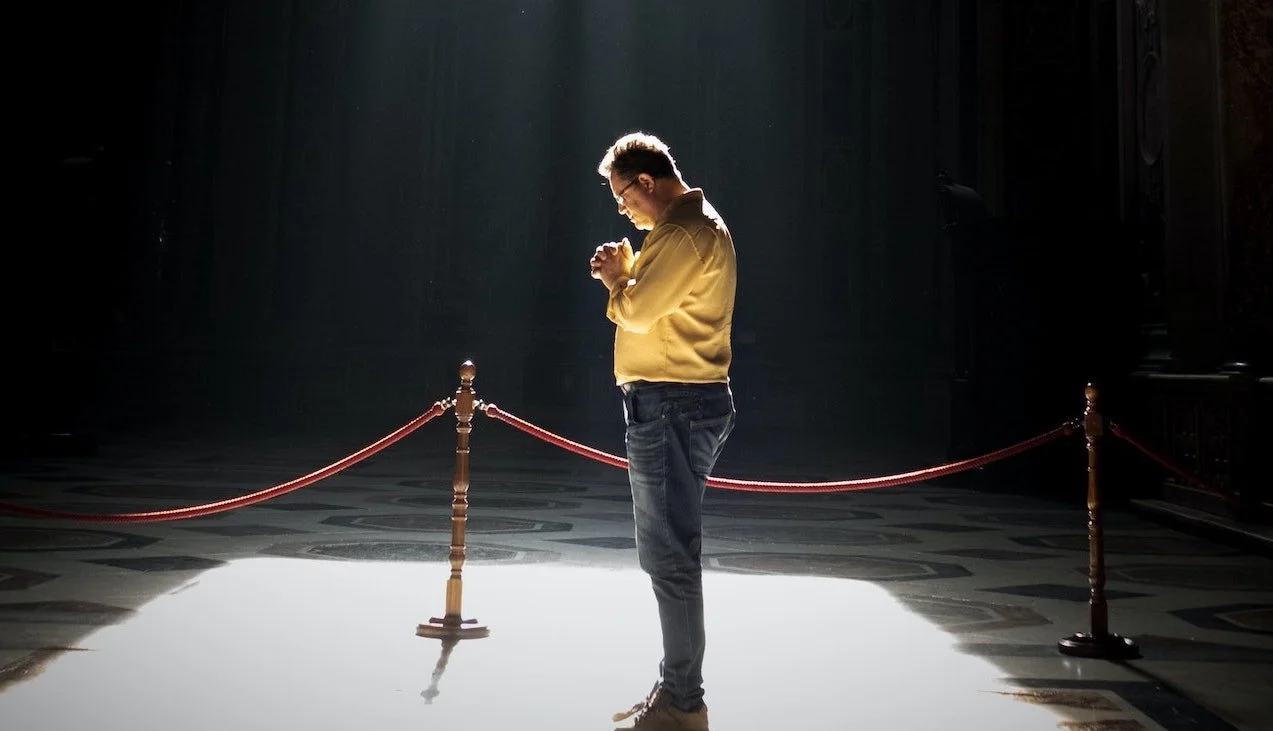
In the fall of 2022, I facilitated my first Foundation Group with Faith Driven Entrepreneur. When recruiting participants, my desire was to attract entrepreneurs who were seeking to build their faith into their businesses and journey with established entrepreneurs who wanted God to bless their businesses.

To me, this made total sense. After all, what Christian entrepreneur wouldn’t seek the favor of God upon their business?

While facilitating the Foundation Group, however, I increasingly found myself asking, “Am I trying to convince God to bless my business? Or am I asking God to lead and direct the business He had provided?” The hard reality is that I was predominantly asking God to bless the business plans I had established and thinking that was enough.

Through this self-reflective process, I experienced a paradigm shift/awakening that transformed my concept of the Faith Driven Entrepreneur. This awakening has clearly led me on a new path filled with excitement and anticipation. For me, it’s a better way, and I am eager to share this article with you in hopes you too can experience an awakening that leads you and your business to new heights in God’s eyes.

Can We Expect Blessing Without Self Examination and Change?

When politicians give speeches, typically, they end with “God Bless America” (as if this was part of a ‘politician’s playbook’). This frustrates me not because I don’t want God to Bless America… I passionately do, but because politicians seem to think God will Bless America simply for the asking, without any fundamental change in what’s happening in our nation culturally. 

In large part, God has been removed from the public square, moral fiber, and policy decisions of our nation. He has also taken a backseat within families, schools, media, and entertainment. Given what we read in the Bible, I believe God cannot ignore this context. Doing so would be opposite of His character. 

God of the Bible, in His holiness and perfection, is incapable of acting out of character. (As proof, the Old Testament is replete with accounts of Him removing His blessings from those who ignore Him and choose to go their own way.)

But, in many ways, by expecting God to respond to my requests to bless my business (without any real change), wasn’t I acting in a similar fashion to the politicians? 

Sometimes Blessing Begins with Surrender

Also during the Fall of 2022, I was part of a Bible Fellowship focused on the video series “Experiencing God” by Henry Blackaby.

During these two formative events, the Faith Driven Foundation Group and “Experiencing God,” I recognized the need – and calling – to increasingly turn my business over to the Lord and run it in ways that brought Him blessings and glory rather than asking Him to bless what I wanted and what I was doing.

A Charles Stanley quote speaks into this context very well, “Obey God and leave all the consequences to Him.”

Romans 12:1-2 also sets the table for implementing this newly found perspective, “I beseech you therefore, brethren, by the mercies of God, that you present your bodies a living sacrifice, holy, acceptable to God, which is your reasonable service. And do not be conformed to this world, but be transformed by the renewing of your mind, that you may prove what is that good and acceptable and perfect will of God.”

I meet so many people – both secular and faith driven – who struggle to know the purpose for which they exist. The answer is right there in Romans 12:1-2. God wants to know you are committed to obedience (v1), and then allow Him to open your heart, mind, and eyes to the specific and unique purpose He has for your life (v2).

For What Purpose Does Your Business Exist?

Just as you may wonder for what purpose you exist, I submit asking the same question about your business is equally valid. If your business’ purpose isn’t aligned with God’s will or God’s way, then you might not experience the blessings you’re asking for.

The key is unconditional surrender. First in your heart. Then in your life, personally and professionally.

Imagine the wonderful ripple effects if you were to present your business as a living sacrifice to God.

Imagine if running your business was a form of worship… a sweet aroma to Him for how He has equipped you.

Imagine learning the good, acceptable, and perfect will of God for your business!

If you are struggling with letting go of control of your business, meditate on these verses and quotes. Remember how God wants to bless us and change us to be more like Christ. Not every obstacle is a result of control or a lack of faith, but perhaps the Holy Spirit is asking you to reflect on your heart posture.

  • 2 Corinthians 2:15a, “For we are to God the fragrance of Christ.”

  • Psalm 32:8a, “I will instruct and teach you in the way you should go.”

  • Jeremiah 29:11, “For I know the thoughts that I think toward you, says the Lord, thoughts of peace and not of evil, to give you a future and a hope.”

  • Charles Stanley, “Know that God has a plan for your life… and you do not want to miss it.”

  • Andy Stanley, “If you were absolutely certain God had you here on purpose, what would you do?”

  • Billy Graham, “Don’t be satisfied with anything less than God’s plans.”

Remember, when we say, “God, bless my business!” we might be reversing the true order of things. We are created to serve God. God is not here to merely serve us (although his blessings go beyond anything we can imagine).

God Has a Plan For Your Business

The awakening I experienced was, in part, recognizing that I was a steward of the business God had provided and not the owner… with all the width and depth that means (FDE Foundation Video 2). The awakening was also experienced in the business context of Luke 9:23, “Then He said to them all, “If anyone desires to come after Me, let him deny himself, and take up his cross daily, and follow Me.”

If you are sick of the status quo of asking God to bless your business and still feeling not having peace, I encourage you to invoke Romans 12:1-2 and Luke 9:23 in your life. Ultimately, what you experience and the answers to what God has planned for you and your business are personal. They are between you and God. However, I can assure you, the Holy Spirit will create a paradigm-shifting, awakening experience meant specifically and personally for you when you surrender to Him unconditionally.

It’s a journey, a lifestyle, not an on/off switch. Focusing on God’s plans will most certainly involve degrees of repentance and reconciliation, perhaps even changes in the direction and makeup of your business. Yet, the glory God receives and the fulfillment you will experience living the life God designed you for is priceless.

Go and live this wonderful life of your business being aligned with God of the Bible, God of the universe!

5 Practical Tips for Surrendering Your Business to God

It’s one thing to read a new perspective on God blessing your business. But it’s another thing entirely to put it into practice. Here are some practical tips that can foster an environment where the Holy Spirit honors your efforts. Each one is an important ingredient, but don’t feel you need to add them all at once. Start with a few, build consistency with them, then add more as you go. But keep going.

  1. Take a personal inventory of what God may have already called you to do, but that you are avoiding or haven’t done. (You cannot expect God to give you added guidance and further clarity if you aren’t living in obedience to that which has already called you.)

  2. Quiet yourself, pray, pray, and fast. Taking a step back and giving yourself the freedom to think, ponder, and be infused by the vision of the Holy Spirit. Walks in nature, periodic times away are Biblical (Mark 1:35, John 6:15).

  3. Read Scripture to understand the accounts of our Biblical forefathers and how they surrendered. For example:

    • Noah’s obedience to God’s calling and receiving the blessings of God (Genesis 6:14,22; 7:5; 9:1)

    • Abraham’s obedience to God commanding Him to present Isaac as a sacrifice (Genesis 22:1).

    • Nehemiah puts his career on hold and dedicates himself to the rebuilding of Jerusalem’s walls. He goes all-in with full, pedal-to-the-metal commitment upon receiving the green light from God through King Artaxerxes. It’s as if Nehemiah was released to the purpose for which he was born.  (Nehemiah 1:3-11; 2:17-18).

    • Shadrach, Meshach, and Abed-Nego commit themselves to obeying the Lord no matter what and are protected (Daniel 3:28). Did they know ahead of time the blessings they’d receive and the ripple effects that would take place through King Nebuchadnezzar as a result of their obedience? No. They wholeheartedly trusted in the Lord God.

  4. Seek awareness of where God is already working in the marketplace and join Him in that work. John 15:5, “I am the vine, you are the branches. He who abides in Me, and I in Him, bears much fruit; for without Me, you can do nothing.”

  5. Seek fellowship with other Faith Driven Entrepreneurs who are devoted to helping you to discern the voice of God, providing encouragement, and holding you accountable to this journey.

I will end with Romans 15:13, “Now may the God of hope fill you with all joy and peace in believing, that you may abound in hope by the power of the Holy Spirit.”


Did you find Bruce’s words insightful? Are you reconsidering your heart posture when it comes to asking for God’s blessing on your business? There’s more where that came from!

Facilitators just like Bruce are leading Entrepreneur Groups all around the world. Find the support and mentorship you need on this difficult journey called entrepreneurship. Click the button below to find a group in your area or industry.

Related articles

Episode 253 – Excellence, Integrity, Faith and Culture-shaping Media with Bryan Engram

We talk a lot about how businesses shape cultures. Media does, too. Today’s conversation overlaps with both as we talk to Brazen Animation’s co-founder and CEO, Bryan Engram.

Bryan chats with us about the power of narratives and the importance of excellence. He shares a bit about how he went from working for a large animation company to taking a leap of faith and starting out on his own. And he even tells us how he almost missed out on all of this for a chance to manage a Smoothie King.


All opinions expressed on this podcast, including the team and guests, are solely their opinions. Host and guests may maintain positions in the companies and securities discussed. This podcast is for informational purposes only and should not be relied upon as specific advice for any individual or organization.


Episode Transcript


Transcription is done by an AI software. While technology is an incredible tool to automate this process, there will be misspellings and typos that might accompany it. Please keep that in mind as you work through it.

Rusty Rueff: So, William, back in 2003, when I was a D.A., the guy that was in charge of training and development for all of our artists would bring in these legendary animators to E.A. And it was about 2003. He brought in a guy named Ray Harryhausen. And so Ray Harryhausen, he was the creator and this special effects guy for many, many movies, but most notably, I guess, would be Jason and the Argonauts. 1963, 1963. So Ray died in 2013. So I’m guessing that he was in his early eighties, around 83 years old when he came. And he actually brought these models and laid it all out. And you could see how he used stop action to move every little brick when Jason would break down the wall. And, you know, the whole room was fascinated. Absolutely fascinating. And at the end of his talk, we opened it up for questions. And this young kid, I’m assuming he was an intern, you know, he couldn’t have been 20 years old, raises his hand in all respect. And he says to Mr. Harryhausen, well, how can we just didn’t use Maya to do all of this, which was the animation, CGI, you know, software at the time, which proved to me the old adage.

William Norvell: There’s never a bad question.

Rusty Rueff: No there are bad questions. There are dumb questions.

William Norvell: […..].

Bryan Engram: Technology is just the tool.

Rusty Rueff: It’s just the tools. So we’re now welcoming in someone who you’ve heard his voice already who knows way more about this than anybody. Bryan Engram is our guest today. Congratulations, Bryan.

William Norvell: Spoiler Alert. Bryan was that child.

Bryan Engram: You’re right, exactly.

Bryan Engram: I had a lot more hair. Yeah, exactly.

Rusty Rueff: But congratulations, Bryan, because I know that you just celebrated a milestone anniversary with your company. Brazen animation. Ten years. Ten years you’ve been at it. So congratulations. We’re so excited to have you here on the podcast. I know one guy who wishes he was really here, and that’s our co-host, Henry Kaestner, because he loves movies and he would give us all kinds of facts and figures. He would know, by the way, that the most anticipated movies of 2023, they’re all top ten of them years animation in some form, Yes. So we’re missing Henry. He’s in Rwanda now, but he’ll listen in and he’ll probably reach out to you at some point and and pick your brain for even more things. But thank you for being on the program. And I’m just going to jump in. You know, I know you did some things with us from right now media back in the day, and we’ve been doing this faith Driven and entrepreneur podcast for over 250 episodes now. So that would be five years plus. But we’ve never had you on the show, so shame on us. We should have had you here, because I think you’re going to bring a unique perspective to media, culture, faith, And so we want to get into that. But first of all, we want to give you a chance to introduce yourself, introduce your work. Tell us who is Bryan?

Bryan Engram: Absolutely. Well, thanks, guys. Obviously, love. Love this show. Appreciate you having me on. So I’m Bryan Engram, co-founder, CEO and chief Creative at Brazen Animation. As you said, we started ten years ago and we do stuff like Space Jam Two and Addams Family two and Fortnite and a lot of work for Blizzard Overwatch. So we do a lot of film, TV, video game stuff and that’s been fantastic. Really a blessing. Now this next phase of the company we’re moving into actually our own content, which is really exciting. We recently just signed a distribution deal with Angel Studios for our own show, and we actually got the highest rating of their jury system where the crowd gets to vote on the show. They want to get see made the most.

Rusty Rueff: Did you have a pilot to do that?

Bryan Engram: We did, but we had a teaser and we put it up there. They call it the Torch. So we got the Torch award recently. And so we’re really excited. So we’re actually doing crowdfunding in August for that show. That’s the way the Angel model works. Or I just like the Chosen, you do crowdfunding. And so we have now started to go from the service work to now our own content. And man, we are all extremely excited about that opportunity.

Rusty Rueff: What crowdfunding platform should we be looking for in August?

Bryan Engram: So it’ll be on Angel Studio’s portal is what they call it, and that’s how you do it. So the people go on and are able to give money and then we can obviously raise additional money on top of that. So anyway it’s fantastic how it’s going to work.

Rusty Rueff: Yeah, that’s awesome. Well, you know, Bryan, as I said, as introducing your do you have a what I would say a very unique overlap, because you’re not only an artist, but you’re also a faith driven entrepreneur and. You know, we talk all the time. It’s pretty much in our culture about how much our society and our culture is shaped and driven by media and entertainment. And so I’m interested in your perspective of, you know, how do you see the media and entertainment shaping our cultural narratives today? And from your perspective, having been in the industry for a long time now, is that a stronger shaping of the narrative? Is it more compelling? Is it the same as it always was? It’s just we see it more. What’s your take?

Bryan Engram: Yeah. So, you know, I have to go back really far. You know, you start to think about how stories were told from an oral tradition, generation to generation. Right? And you think about tribes and shamans and how they would get up in front of a tribe and they would tell stories, and it passed down stories. So if you think about it in those terms, the oral tradition of storytelling and I actually would include music in this as well, obviously. But we have always had our culture shaped by storytelling narratives. And so I don’t think this is a new thing by any stretch. I think it’s just all of human history has been this way. It’s a very, very powerful vehicle that either shapes the culture or preserves the culture, depending on who’s the storyteller, right. So to your question, I think what’s happening more recently is, you know, if you think about Christianity in the West and you go back to early Hollywood, you know, Disney is 100 years old this year. And you think about there are quotes from Walt Disney about how his faith shaped those early animated films, which shaped how people saw the United States. So America saw the West and we can go back, you know, pre the United States, how Christianity and that storytelling using the Bible as the foundation has shaped our culture from Europe, United States, etc.. And so I think what’s unfortunate is because a lot of people now that are in control of maybe the narratives of Hollywood in more recent times, rather than hold on to some of those values that were biblical, have now decided that those values are no longer important and they actually want to reshape the culture into a new image, a new foundation, new value system, you know, all these things. And I think, you know, obviously as Christians, when we go to films now, there’s still glimmers of redemption in these stories, but some of it’s becoming perverted in the way that their culture said there is now no good and evil. There’s like these like relative truth. Right. Right. And that’s pretty recent, actually. I mean, I don’t know how old you are, but, you know, I’m a kid of the eighties.

Rusty Rueff: Too old.

Bryan Engram: Okay. But I mean, you know, if you look at the 60, 70, 80, 90, there was still a lot of redemption. Sure. Just jam packed into stories come out of Hollywood. And it’s really only been in the last few years that that has sort of flipped. Yeah. So it is interesting.

Rusty Rueff: Yeah. I also think it’s fascinating if you overlay videogames into entertainment as well. You know, having spent my time in the industry that, you know, video games allowed you to become a part of the story. And you know, before that the story was told to you and you could see yourself maybe be trying to be reflected in linear entertainment, but then all of a sudden you became a part of the story and then you overlay on top of that reality television, which then began to really shape, you know, what should my identity look like and who should I be? And then you put social media on top of that, you know, and all of a sudden all these narratives become, well, what’s the bigger, what’s the more brash, what’s the more abusive? What’s the you know, you put that adjective on it. And I think it makes it really hard to be in the entertainment industry, right. And draw a line. And so you must face that as well. You know. So talk to us about how you’ve looked at that line and the influence that you have as an artistic studio leader.

Bryan Engram: Right? Absolutely. Yeah. So, you know, you would be really surprised about how much work we have to turn away because of just to your point about there’s certain narratives, certain values, certain things that are being put in a video games or being put into stories where we do have to draw that line and we have to say, Hey, guys, from a brand standpoint, we’re not necessarily aligned with those values or we’re actually able to help a lot of these companies speak into it from a standpoint of, you know, if they don’t agree with us from a values perspective, we can say things like, Hey, you know, you guys have never done this with your fan base before. You’ve never had this sort of narrative before. You see what’s happening with two other companies that are now doing some of these things. Do you really want to go down this road? And even appealing to them from a marketing standpoint tends to had them take a step back and go, You know what? Actually, I don’t know that we want to do that with our fan base. And so, as you would imagine, within Brazen, we have constant conversations about what we’re working on, why we’re working on it, what we’re saying by the things we’re working on, and then our own stories. What are we trying to say? Right. And so there is just constant conversation within brazen about culture, about what’s happening in culture outside and what’s happening to us internally to either respond to it or to help shape it both now in the future.

Rusty Rueff: So this would be a great place for you to give our listeners some advice, because there are plenty of entrepreneurs who are looking at the services they provide or the products that they put out there that their employees, you know, might have a differing opinion, that that should be a customer or that shouldn’t be a vendor or, you know, this product shouldn’t sit on that shelf. You know, all of those things. Be great to hear your advice to those entrepreneurs that have to deal with that kind of struggle.

Bryan Engram: I love it. That’s a fantastic question. So one of the things we talk a lot about at brazen is, you know, as you would imagine, we have certain, let’s say, clients that we work for that are on one political side of the spectrum and we have other clients or maybe on another side and their values, their faith kind of fluctuate all over the place in terms of what those companies represent or what they’re trying to convey. And what we tell our employees internally is we say, Guys, we have our own values. And as long as we are not violating our values, we are willing to work with this group and we’re willing to work with this group. So as long as they’re not asking us to do anything that violates our morals or our values, then we’re willing to work on that. Right. And so that’s how we talk about we actually want to serve everyone, right. As a Christian, as a Christian business owner, we want to serve everyone without violating who we are. And so that’s really been interesting because internally, it’s not like we have all Christians that work at Brazen, right? We have atheists and we have Orthodox Jews and we have devout Muslims. So it’s interesting.

William Norvell: Bryan I think that is legit because something a lot of faith driven entrepreneurs face. And so I’m going to ask you to try to take a layer deeper. My guess is if you’re listening in the audience, you probably think it’s a black and white moment, right? There’s a certain things that are off limits, it’s clear. But I think it’s those decisions that matter, that shape the culture of a company, in my opinion, are those gray areas where maybe half the staff is in favor and thinks it does align with the values, then maybe half the staff doesn’t. And then you, as the CEO, have to navigate that and keep the company together and yet defend what was the essence of these values when you set them out. And I’m curious if you had a moment to walk through maybe a gray area decision where you don’t have to name names, you can it’s up to you, of course, where, you know, a company was there and it was a great opportunity, but something didn’t feel right or something didn’t quite match up in your eyes. And therefore you were willing to say, This is my call, right? This is what the values actually mean. And I see why you see it this way. But here’s what actually, I don’t know if that makes sense. I’d love to hear one of those, because I think that’s where there are a lot of this meets the road, you know?

Bryan Engram: Yeah. No, absolutely. At this. Great. Okay, so let me see if I can do this without naming the company, because when I start describing what the game is, you may give it away. So we recently were approached by a company who one of the main driving forces of their game is there’s a character that’s doing battle against demons and they’re in hell. And I mean, basically they’re fighting demons right now. They wanted to give us a lot of work and a lot of money is what this project would be worth. And so you had part of the company coming to me and they were saying, hey, you know, this is a really good opportunity. It’s a lot of money. We should take this job. I don’t think it’s directly promoting hell or demons. In fact, the characters doing battle. The problem is in the game, cinematics themselves the way they’re portrayed. It’s like a glorification of gore, but blowing the demons heads off and things like that. And even the loading screens use Pentagram. Right. That’s like part of, you know, the branding of what this promotes. And so it was this really weird area was like, well, isn’t this game actually battling demons? So we should be aligned with that. But it’s also sort of like glorifying hell and demons and gore and blood and guts and all right. And so there was this really weird place where, like, I literally had the studio split halfway and say, No way should we work on this. The other half saying, Hey, we should totally take this. Look how big the project. It is, and I don’t think it really violates our values. And I just had to say, like, look, guys, at the end of day, I want to be able to show my kids the stuff we work on. And I really don’t want to align our brand with a brand that one of their main symbols is the pentagram, right? So I had to just make a call and I had to turn away the work. And I mean, I had a company meeting this everybody know and you know, not everyone’s going to agree. But at least having someone make a decision to your point, at least having the CEO go like, this is what we stand for. This is gray. But there are some things here that really stand out to me that makes it so that we should not align with this particular brand or this particular project.

William Norvell: I love that. I love that. And it doesn’t have to be the answer to this next question. I’m curious. Was there any fallout from the side of the company that didn’t agree?

Bryan Engram: No, But it’s interesting. We have so many discussions with our clients about like we lead off with, hey, just let you guys know the type of stuff we work on. We’re a family friendly studio, so we almost lead the witness in terms of, Hey, we’ll consider your project, but don’t be surprised if we turn it down. And just by approaching it that way, then they’re mentally prepared for it. So they’re like, okay, yeah, we get it. We understand. So we left on good terms because that is such a huge part of the stuff they work on. We probably won’t work with them. You know, we have another game studio we’ve worked with before that. We had actually worked with them and then we had to turn down some other work, but they’ve got some other properties that they’ve come back to us and they said, Well, we know you won’t work on these projects, but we have this other project that we know won’t violate your values. Would you work on that one? So anyway, it’s really interesting. If you’re just open and have the conversation about how you can have any negative or vitriolic tension, just by being honest.

Rusty Rueff: And then there’s the hidden positive that comes from being able to have those conversations, too, because the leader of the company that you went and turned down, he or she will tell others, hey, you know, those guys are great, but don’t go there for this because they’re just going to turn you down, which saves you from having to go through the conversation again. Just because you stood up and said, This is what we stand for.

Bryan Engram: Yeah, it’s good to you know, there’s always natural fear about being canceled if you’re Christian or you’re open with it, or especially if you’re a faith driven entrepreneur, right? And so there’s always a little fear, especially in this industry, about being canceled. People still bring us tons. I mean, we’re doing a ton of work for Netflix right now. We’re doing work for riot games. You know, they do legal legends. So we’re doing a ton of work for those guys. So we haven’t been canceled yet. And we’re very open on our social channels, like we post Bible verses and Easter and Christmas and, you know, so I don’t know.

William Norvell: It’s awesome. That’s great. So as a child of Nintendo one, which was where I went to, you know, let’s be honest, dominate. My friends at various games because that’s what I’m good at. I feel like the debate over games and TV and impacts on children and things like that probably has never been higher. I mean, I’ve even heard parents talk about, you know, gosh, I mean, I don’t want to play games, but if they’re playing games in my basement, at least I know where they are. I mean, there’s just all kinds I’ve heard all kinds of theological, you know, points of view on this. Right. I’m just curious to give you an open forum like theology of gaming and media, and not just for children, for us. I mean, adults are just as sucked in and the word our kids learn it right? Probably from us. Right. I’ve got a five, three and a one year old, so my gaming days are a little behind me for a little bit. But me curious, how do you see that world from a Christian worldview? And, you know, what’s the redemptive imagination that maybe some people aren’t seeing when they think about this world?

Bryan Engram: Yeah, I mean, that’s a great question. I think that there is such an opportunity, especially as more companies that are like brazen, get into this space to really have an influence. And it’s strange to say this because you want to bring new things to the table, but as a Christian, there are these, you know, if you are a believer and you believe that God is the origin of truth and the origin of creativity and the origin of then as a Christian storyteller, you believe that every moment of what you’re trying to do, you can speak into people’s hearts, their minds, their souls from a redemptive perspective. And so I think whether we want to admit it or not, there is redemptive things happening within culture. It’s just trying to help your kids see it. So if you are an active parent and maybe this is where you’re going with your question, if you’re an active parent with your kids and you’re watching a Disney movie and let’s say it does have something in it you don’t agree with, that is an absolute opportunity to both point out the redemptive aspect of that story, but also things that maybe don’t align with values, right, that you’re trying to instill in your kids. So for me, and in that regard, I look at it as all an opportunity to be redemptive. If you are a parent that’s not just throwing your kid in front of the TV, but you actually engage with them with the media itself, Right? And so does that answer your question?

William Norvell: It does

Rusty Rueff: Yeah. I think it’s really good. I mean, in my years at here, that same question asked me all the time, and I said the exact same thing that you did, which is, you know, you let the video game be the babysitter, then you’ve abdicated your responsibility as a parent. However, if you engage with them, you play. And there’s many a father son relationship that are amazing relationships because dad can’t go back out in the backyard and dunk the basketball anymore with the son.

Bryan Engram: Right.

Rusty Rueff: But they can do that together on a video game or they can solve you know, they can win on the video game together. And, you know, that’s some pretty powerful moments. If you stop and think about previous generations where they can remember going to the movies with their parents. I was seven years old. Go and see Peyton with my dad the day that I got my first pair of eyeglasses. We’ll never forget that he took me to see that movie. The same thing is happening in this generation. If we engage right, they will Remember the first time they sat down and played the new Zelda, you know? But I think that’s part of the answer, which you’re closer to today than I am. But I think that’s been a part of the answer for all media for a long time. You know.

Bryan Engram: Absolutely. And it is a shame to your point that. A lot of parents do use it as just a babysitting tool versus and I’ll just give you a quick you know, my mom and I can talk about this more in a second, but you my mom, she’s a theater teacher director. So I grew up watching movies in a different way than most people. She actually we would watch movies together and she would critique the acting and tell me why Robert De Niro like, Hey, Bryan, did you see Robert De Niro? You see how he shifted his body and his expression and all that sort of stuff. And so my mom, as a teacher of theater and of classical literature, she taught me how to just watch movies and absorb stories in a certain way. Now, granted, not everyone has that, but to your point, whether it be movies or video games, I mean, if we’re able to do that stuff together and we’re actually able to use these stories to teach life lessons, it can be extremely powerful.

Rusty Rueff: Absolutely. And, you know, one of the reasons why that we see this, you know, kids being so pulled into these games and movies in this animation is because it’s so real. It’s done at such high level of excellence that, you know, it’s suspend disbelief and, you know, that’s what you’re doing. But you’re also committed because you talk about a high level of excellence in what you do, which I want you to riff on that because so many times when you put the word Christian in front of, you know, work that’s being done, whether it’s in entertainment or anything, that’s that the first thing it conjures up is, well, it’s not going to be up to par. It won’t be the same at the same standard. And that’s exactly the opposite of what we’re called to do from Christ. We’re called to do what we do with a level of excellence. And I know you’re committed to that. And so talk about where that concept comes from inside of you and how do you manifest that out inside of the company?

Bryan Engram: Yeah, that’s fantastic. Okay, so there were a couple of questions in there. I just give you an anecdote from I use my mom. So my mom grew, she wanted to be an actress. She was a theater major. She was a music minor. She has her master’s in classical literature. She desperately wanted to go to Hollywood and be an actress. That was her dream. My grandparents, who I love. So I don’t want to disparage them at all, but they absolutely, as Christians, persuaded her not to do that because they thought she would be corrupted. She would be her morals would be corrupted. And my mom basically said, well, I won’t do that, became a schoolteacher. Now, I use that as an example just for a second to explain how we got to this point from a church Christian perspective. Take that example. And that is happening across millions of kids growing up with talent, acting, art, animation, music, the arts. And they’re being told if you go into that realm, you will be corrupted. You will fall under the guise of some satanic, you know, influence. Now that does happen to some people, so I don’t want to discount that. But if you didn’t track with that over generations, to your point, what happens? You’ve now removed all these amazing people that maybe have these values from Hollywood, from these industries, and suddenly what you’re left with is you’re left with two things. You’re left with less people telling these sorts of redemptive stories. Right. That they may have told otherwise. The second thing is that I hate to say it this way, but maybe the most talented people are the ones now creating the more faith based content. Right? And so you end up with that along with maybe investors who are investing in those projects. And it’s usually like somebody’s cousin or somebody’s nephew has an idea for a film that’s never been in the industry or done it. So that person’s not necessarily such a qualified to make it right. And so I’m just trying to track with you to talk to you about from my perspective, there’s been a tragedy that’s happened within Christians producing excellent content. It’s almost been neutered out of the church through the thought that if we go into that, you know, Hollywood is Satan’s world, right? Entertainment is Satan’s world. It’s not for us. Therefore, we’re not going to invest in it. We’re not going encourage our kids to do it. We’re not going to do that. Makes sense.

Rusty Rueff: Totally makes sense. Right sense.

Bryan Engram: So for me, what a huge part. I don’t know how. I realize that. But I realized that pretty early. Like, man, if you had Christians creating things at a really high quality level and you know, the Greek word. So if you look at virtue, the Greek word is areti, which means excellence. That is to do the most excellent thing, right, to be virtuous, to have excellence in what you do. Right. And so that is actually the first thing to supplement your faith with is virtue, which excellence. And so I think about things like excellence honors God, inspires people. Of course, there’s that quote. But then Steve Martin says, be so good, they can’t ignore you. Right? Right. And so I believe from an excellent standpoint, not only are we made to be excellent, we’re not made to be mediocre, but also from a standpoint of telling stories, reaching the world, reaching culture. You can reach people through excellence. That’s what they respond to. Whether they realize it or not. They’re actually respond to, I think, their sole response to it. Right. The creator created us to be able to create other things. Right. And so I think people respond to that from a spiritual standpoint, whether they consciously or subconsciously realize that. And so for us and for me, we push quality and excellence really hard in our storytelling, in our art work, because we believe that’s actually how we’ll penetrate the market and be able to speak to people at a deeper level because they won’t be looking at it like, Oh, it’s just another Christian bad, you know, piece of junk, right? They’ll look at it for what it is. Oh, this is amazing. Even if they know Christian made it like this is still amazing. And like Steve Martin said, they have to take note. It’s so good. They have to take notice. Right?

Rusty Rueff: Right. Yeah. Good for you. I mean, I still want to see a world where, you know, we don’t just go were shocked because somebody of faith made something great, you know? I mean, like, that’s where we kind of sit right now. We go, wow, wow. There’s finally one, you know, this amazing. And let’s just pray that we have momentum here with guys like you. So one more question I forgot and then I’m going to turn it over to William. And I know he’s going to take us through our lightning round as well. But so you’ve been on this entrepreneurial journey for quite a while. You stepped away. I love the fact that you did mentoring and coaching for a number of years for animators, and I’m sure you touched lots of people, by the way, you know, during that time that you had influence on. Take us through the growth that you’ve had in your faith from the entrepreneurial journey that you had, the courage, took the risk, turned left and said, I’m going and doing it.

Bryan Engram: Absolutely, well. So I, I can’t speak to that unless I speak to how I got in the industry to begin with. Right? So I just graduated college. I was I got to college, I had an art degree, a film degree. I was teaching myself animation. I had a job at Smoothie King and it was a fun job. I will admit. You get to talk to people all day and it was a lot of fun.

Rusty Rueff: But was that something you aspired to, to have that job at Smoothie King?

Bryan Engram: No, no, I guess I did, actually. I was in prayer constantly about it because I was approached by my manager. I’ve been there three months and I approached the manager and he was opening another smoothie king. And so he said, you know, Bryan, I love your work ethic. How about you run this one and I’ll open a new one and I’ll start you it. Remember, I’m fresh out of school, right? So he said, I’ll start you at $32,000 a year to manage the smoothie king So to your question, I’m having all these crazy. I’m like, God, am I? Am I the smoothie king guy? Is that my path? Is that what I’m doing here? I was hoping to be an animator, but, you know, so I actually my boss was a Christian and I went to meet a guy named Todd is amazing guy. And I said, Todd, can you just give me tonight? I really would love to pray about this and I’ll get back to you tomorrow. So this is no exaggeration. I went home that night and I got in my face like David. And I prayed to God, and the prayer was that God let me be an animator. The prayer was God. Just tell me what you want me to do. If this is what you want me to do, then I’ll do it. But I just need some direction somehow. So I went to sleep that night. got up, the next day checked my email. And when you know there was an email from the company, I used to work for real effects, They said, Bryan, you can come in as an unpaid intern for three months and we’re giving you a shot. And so I went to my boss and I told him, I said, Hey, look, I’ve got this shot. And I didn’t want to tell you I was an unpaid intern. And so he said, Oh, I hope I’m taking care of you. I said, Yes, sir, they are. And so I went in and the thing was that I had a lot of faith to do that because we only had enough money to last a month. I couldn’t last a full three months. And so I slept there. I worked and I was in prayer. And one month to the day that I started, my boss came by and he said, Bryan, come here, I wanna talk to you. He said, We just got a job with Hasbro doing a new G.I. Joe direct to DVD movie. I love your work ethic. You know the software, Maya. You know Maya and you know, cameras, because my degree was in film and he said, I’m going to start you at $37,000 a year as a junior Layout artist, which is a cinematographer, right? And so I went home and I walked in the door. My wife immediately knew. She’s like, they hired deals like, Yeah. And so we hugged and rolled around on the floor. So now to get to your other question, that experience, along with looking back to the rest of my life. Seeing God work like that. And seen him do that over and over. Then when it came time for me to leave that job, I’d been there eight and a half years and I’d worked my way up in the company. I reported to the CEO and basically felt like God had been preparing me to have my own company. He’d expose me to the entire company. We went from 20 people to 600 people over that period, and when I went in, I prepared my wife. I said, I think I’m going to come home one day and probably have quit. Not mentally prepared for that. And that day that I put my notice in it, real Effects was one of those moments I walked in that day and I sat down and it was I can’t say that God audibly spoke to me, but it was definitely it’s time to go. And I went and told my boss and said, I’ve got to go. I’m going to start my own thing. And so your question is, how do you deal with the faith? I would tell people that if you look back at your life and you see how God is taking care of you through every phase, every stage of your life, you know, when God talks about why are you anxious? Look at the lilies of the field. Have I not taken care of them? Right? When God talks those verses, they’re not just poetic. They’re legitimate commands for us to have faith. And so that’s how I was able to step out and start my own studio. And we’ve had, as you would imagine, having your own company. You have different moments where, you know, early on we couldn’t make payroll. And so I’m taking money out of my personal life savings to make sure I don’t have to lay anybody off. Right. So that takes a tremendous amount of faith and trust in God that he’ll provide. And so that’s what I mean is just at this point, if I look at my life, I don’t see how I can not have faith and trust God because he’s taking care of me and my family and our company over and over and over.

William Norvell: Amen always remember the faithfulness of God. Never a bad thing to reflect on. Okay. We’re going to switch gears a little bit at the end here. We’re going to Lightning Round. It’s exhilarating. Get ready to.

Bryan Engram: Fantastic, love it.

William Norvell: And the goal is 20 to 30 second answers. An internal clock, not an external clock. But we’re going to get it Go super quick. What’s something? A song, A movie, A video that you always look for, for inspiration?

Bryan Engram: Absolutely. Lion King. So Lion King, there’s a section where he goes and Rafiki shows him. He says, Look down, you’ve forgotten who you are. And then his father comes to him in the clouds and says, You’ve forgotten who you are. Remember who you are. And so I so identify with that character in that moment. And I feel like that movie speaks to me on many layers, especially spiritually. Don’t forget to you. I don’t forget who I made you to be. Right. So Lion King.

Rusty Rueff: Animated or live action.

Bryan Engram: Oh. Oh, definitely animated. Not now.

Rusty Rueff: Good. Yeah, I just. I just wanted to make sure I didn’t cross that line.

William Norvell: So you’re allowed to stay? You’re allowed to stay that.

Rusty Rueff: Best game of 2022. And what do we have to play for 2023?

Bryan Engram: Oh best game. Okay, so unfortunately, you probably ask the wrong person in this regard. And here’s why. Because I love God of war. I love the original Spider-Man. I know the new Spider-Man is going to come out pretty soon. So I love those games. But I’m a huge madden fan. Huge madden, Awesome. So much so that, you know, we actually do all the graphics from all the Madden games we’ve done the last four years of graphics from.

Rusty Rueff: I’d love to hear that. Lots of years being around that game.

William Norvell: Yes, I got one more than the close. What’s one project do you want to see exist in the world that doesn’t? Oh.

Bryan Engram: That’s a great one. I would love a story and maybe there’s something that will do animate at some point, and it doesn’t have to be an exact telling of the Book of Job. But I’ve always been fascinated with that story of job and how God used his suffering and the faithfulness that he had in his suffering, and then to bless him. And so I would love a story not necessarily calling it Job, but some sort of version of that animated. I just I’ve always been really intrigued with Job and his story and just how all that went. I mean, do you think about the friends coming to him and tell him this is your fault, you did this to yourself and just the faithfulness that Job had. I’ve always loved that. So again, it can be allegorical, it can be more metaphore. Does that to be an exact retelling of Job? But I’ve always wanted to see something like that, especially animated.

William Norvell: That’s good. That’s good. Okay, so our final question, where we always loved the end is take it back to God’s word. And we love to invite our guests to share something that is coming alive to them. God’s word can be something you have meditated on your whole life and why you started your company could be something you read this morning on the way in. We love to just invite God’s Word into this moment and say, you know, where’s it coming alive for you?

Bryan Engram: Yeah, absolutely. That’s great. Well, so, you know, Luke 8:25 when that again and this applies to the whole conversation because it’s something I think about a lot, which is, you know, Jesus says, you know, the disciples during the boat, the storm is there and he’s asleep. He’s at peace. And when he wakes up, he looks at them and he says, Calm the storm. But he says, Where’s your faith? Where is it? And what’s interesting about that, if you look at Revelation 21, you know how it lists all these sins. And one of the ones is to the cowardly. If you look at the Greek word of coward, it’s the same word that Jesus uses about where is your faith? And so that may seem harsh coming from Jesus also Jesus is calling us cowards. Right? But I don’t view it that way. I do it more as like an encouragement of just don’t be scared. You know, the verse said, you know, we weren’t given a spirit of fear, right? But of love and power and self-control. So I just I really thought about that moment of Jesus being at peace and how he expects us to be at peace in the midst of the storm. Don’t be scared. Don’t be a coward. Have faith. Trust in him. And we can have that sort of peace, too. Right. And so, again, the reason why that’s resonating for me so much is like I told you guys earlier, that people are always constantly scared. Now, you know, are we going to be canceled? Is something going to happen to the company? And my question is, is just where’s our faith? We’ve just got to have faith that Jesus is going to take care of this guy, is going to take care of us no matter what. Right.

Rusty Rueff: That’s fantastic. Yeah. You know, I’ve so always wanted I just wish one of the disciples would have, like, been up on the ballot about hanging on like Titanic. And the winds go like this, and they’re going, Guys, this is so much fun, right? Right. This boats never going to go there. Get up here. Get up here. You know, I would like to be that guy. Hey, Bryan, thank you so much for hanging with William and I today. It has been a lot of fun. And thank you for all that you’re doing. You know, we got a lot of listeners and I’m sure there’s one of them out there is going, Yeah, but if Bryan would have stayed with Smoothie King, imagine how amazing our smoothies would have been. But I’m sure everyone else is like going, you know, we’re glad that someone like you is in the middle of this intersection of media and entertainment and living out your values and living the values of Christ. So thank you. Thank you. We ask a blessing over you and your business, and we’ll be watching on the Angel Studio platform, see how we can help come August.

Bryan Engram: I appreciate that, guys. Thank you very much. I love you guys and I love what you’re doing. And I’m just I feel very honored to be on the show today. Thanks for having me. I really appreciate it. Thank you very much.


Recent Episodes

Leading With Questions: A Biblical Strategy for Leadership

— by Bob Tiede


When Jesus was 12 years old: “After three days they (his parents, Joseph and Mary) found him in the temple courts, sitting among the teachers, listening to them and asking them questions.” — Luke 2:46.
 

There is a communication crisis wreaking havoc on corporate America. 

The Society for Human Resource Management reports that miscommunication costs companies about $420,000 per year. In our offices, at home, and in our relationships, our communication determines what gets done and how well it gets done. Where, then does our communication go awry?

A good place to start is with our questions (or lack of). When a leader becomes so task-oriented and result-driven that he or she neglects a teammate’s ideas and honest feedback, the leader does a disservice to organizational growth. An inability or refusal to ask questions leads to stagnation, siloing, and a lack of competitiveness. It also ignores an important biblical leadership principle.

That’s right, leading with questions is a biblical leadership principle.

Through years of studying the Gospel and Jesus’ ministry, many leaders in business have deduced that Jesus, himself, is the most critical example of excellent leadership and communication. During his ministry, Jesus invested time in teaching and training his followers, and empowered them to carry on his mission after he was gone.

How did he do this? One of his most effective strategies was leading with questions. 

We can apply this leadership strategy to our own lives by studying Jesus’ ability to find meaning through the art of asking questions. Throughout the Gospels, we find numerous instances where Jesus asked questions to his disciples, religious leaders, and individuals seeking his help. Depending on the situation, Jesus was able to lead others to key realizations and incredible transformations.

Leading with Questions Can lead to Understanding and Unity 

This may seem obvious, but asking thoughtful questions is an essential way of gaining knowledge and understanding. In the Bible, we see that Jesus often asked questions to help his disciples and followers understand his teachings. In Matthew 16:13-16, Jesus asks his disciples, “Who do people say that the Son of Man is?” He follows up with another question, “But who do you say that I am?” Through these questions, Jesus helps his disciples understand his identity and unified mission.

Similarly, in John 3:1-15, Jesus engages Nicodemus in a conversation where he asks him several questions to help him understand the concept of being born again. By asking questions, Jesus helps Nicodemus understand the spiritual truth that he is trying to convey.

It’s an organizational leader’s job to spur a sense of unity and collaboration. Simultaneously, leaders are responsible for streamlining efforts, and ensuring there’s a general understanding of the “what” and the “why”.  Jesus’ ultimate example of using questions to ignite aligned perception and team harmony can and should be translated into our leadership habits. 

Leading with Questions Reveals Heart

Jesus’ questions oftentimes provoked people to think critically about their actions, and at other times, they were used to draw his team back to the mission. 

In John 21:15-17, after Jesus’ resurrection, he asks Peter three times, “Do you love me?” Jesus’ repeated question is not only a way to confirm Peter’s love for him but also to restore Peter after he had denied him three times. This line of questioning brought Peter back to the truths of his own heart, his own thoughts, and his own experiences. Jesus brought out of Peter what was true, and what was relevant – bringing him back to the mission. 

When leaders ask good questions, they encourage their team members to think more critically about their own work and the problems they are trying to solve. By probing deeper into issues and asking thoughtful questions, leaders can help their team members uncover underlying assumptions and unspoken doubts that identify potential blind spots.

Leading with Questions Can Ignite Discussion and Foster Relationships 

In Jesus’ day, the Jews hated the Samaritans. Those living in northern Israel would take the long route to Jerusalem, simply to avoid going through Samaria. So when Jesus asks ”Which of these three do you think was a neighbor to the man who fell into the hands of robbers?” 

The expert in the law replied, “The one who had mercy on him.” in Luke 10:36–37, there was most likely a long pause before the Jewish expert in the law replied, and almost certainly it was very difficult for him to verbalize that the hero of this story was a Samaritan when he hated all Samaritans. 

Jesus could have told this story and ended by stating, “Therefore, the Samaritan was the good neighbor,” but instead he brilliantly asked the expert in the law to answer; knowing how potentially powerful answering that question might be in his life and the lives of the others present.

In our modern office, it’s not uncommon for conflict to arise. Sometimes sparked by clashing personalities or the competitive corporate ladder, office culture can be divisive and often lack truth. A good leader seeks to unite and pose questions that solicit truth and revelation. A strong leader is willing to address issues head-on rather than allowing them to fester and grow. Ultimately, the model of leading with questions calls for leaders to demonstrate their commitment to creating a culture of respect and accountability within the workplace.

To Summarize: Leading With Questions is Leading With Faith

Using strategic question-asking as a leadership framework is rooted in biblical principles. Not only does this method require biblical characteristics like trust, humility, and a willingness to listen and learn from others, but it’s also the pathway to establishing harmony in the office. 

By leading with questions, we can represent the way of Jesus in everyday life and create a culture of curiosity, respect, and continuous improvement within our organizations.


Want to hone your leadership skills and explore what it means to become a faith driven entrepreneur? The first step is to join an entrepreneur group. Here, you’ll meet likeminded entrepreneurs and dive into our rich content series. Ask questions. Grow alongside peers. You’ll be glad you joined!

Related articles

Episode 252 – Laying Down a Promotion for the Sake of Another with Sam Rhee

Imagine you’re waiting on a big promotion that you’ve worked for all your life, and then God tells you to recommend someone else.

That’s what happened with Endowus founder and today’s guest Sam Rhee

Before his current venture, Sam worked in investment banking and was in line for a new, significant position when he felt the Lord calling him to something different.

He didn’t know what it would be at the time, but now, he’s grateful that he had faith in God’s plan.

Hear Sam’s story on this special episode originally recorded on the Faith Driven Entrepreneur Asia podcast and don’t forget to follow the show wherever you get your podcasts.

Visit asia.faithdrivenentrepreneur.org/podcasts for more.


All opinions expressed on this podcast, including the team and guests, are solely their opinions. Host and guests may maintain positions in the companies and securities discussed. This podcast is for informational purposes only and should not be relied upon as specific advice for any individual or organization.


Episode Transcript


Transcription is done by an AI software. While technology is an incredible tool to automate this process, there will be misspellings and typos that might accompany it. Please keep that in mind as you work through it.

Wen Li Lim: Welcome back to Faith Driven Entrepreneur Asia. My name’s Wen, and like usual, I have my co-host, Henry Kaestner with me. Welcome back, Henry.

Henry Kaestner: Really looking forward to tonight. We’ve got a really special guest.

Wen Li Lim: Yeah, I’m super excited. We have my dear friend Sam, whom I met in Singapore. We actually met at a digital mission venture event. It was a pitch event for Christian entrepreneurs. And we got introduced there and we’ve kind of become friends since. I’m really, really glad and welcome Sam to the podcast.

Sam Rhee: Well, thank you. It’s an honor and pleasure to be here with you guys.

Wen Li Lim: So thank you so much. I’m really excited to talk into some questions and to kind of get to know you in Endowus better. So the first question off the bat, actually, we understand that you actually did a seminary diploma at regional college in the past. And just kind of that’s kind of interesting. You know, like you’re in investment banking and all of that. And so kind of what led you to that and how has that influenced your work?

Sam Rhee: Yeah, well, I have to come clean. I didn’t finish a diploma. I started it. Never completed it.

Wen Li Lim: That’s okay. That’s fine.

Henry Kaestner: Oh, true entrepreneur.

Sam Rhee: Yeah, like an entrepreneur. And that’s right. And at the time, I just retired from my company, Morgan Stanley, where I was for about 17 years, and that was after working for about 23 years straight, you know, in the finance industry after graduating from college. So God allowed me to have this one year clean break as a sabbatical. So I took the opportunity to do some of the things that I wanted to do. And one of the things was to go off to college. Regent college in Vancouver, our I took some summer courses and that led me to pursue a diploma. So I started doing it. I never completed it because I became an accidental entrepreneur building in Endowus from 2017-18. But it was a wonderful experience and a great learning opportunity and really go deeper with God. A lot of people say that theology can often push people away, but maybe if that is all you do, that might do so. But for for the average laypeople, I think, you know, some theology is super helpful. I get excited about learning and going deeper into his word through the study of theology. And it’s the same for my wife, who’s actually studying, as Henry said, at Biola. So yeah, it’s a common theme within our family.

Wen Li Lim: I love it. And I guess education and continuous learning, like you said, is really big for both you and your wife and that you’ve brought in to in Endowus. So can you kind of talk about why, you know, kind of financial education and literacy is really important for you and the beginnings even of, you know, when you were at Regent and became an accidental entrepreneur in Endowus, how did that all happen?

Sam Rhee: Yeah, actually, I did two courses during that summer. That was one. The other one was actually an international management program that was run by Stanford Business School and NUS business school. So I think I kind of was finding that balance between learning best practices in the workplace and from the Bible. But I think God kind of wire me to be that way, you know, to always have this desire to learn more. It’s definitely a lifelong thing as you shared, and whether it’s through a book or through people, you know, I like to absorb knowledge and also wisdom from others. But, you know, when I left the company and during my sabbatical, I actually felt like God may be calling me to full time ministry. So I did explore like theology full time. Even back then I went to Gordon Conwell in Boston as my […] favorite city and even Regent in Vancouver. And actually a lot of people don’t know this, but I also applied to Harvard Kennedy School of Government thinking maybe I should look into public service, but actually got rejected. And so God moved us away from that, moved us away from full time theology at the time and brought me back to my heart, which was in the marketplace, and allowed me to be better equipped through those two courses at Regent and then at Stanford anbd NUS. And I guess that is reflected in the company’s desire as well as we build it up on education to improve financial literacy. So we always say that. I mean, at the heart of it, we are a wealth tech company in the financial service industry. So we were a financial service company. First and foremost. We are a commercial entity, but we also say that important liberal content company, you know, we want to focus on financial education and improving financial literacy because we feel that is critically important to the success of individuals in reaching their financial goals and empowering them in that journey.

Henry Kaestner: So any entrepreneur has got a good kind of founding story or a founding story, not necessarily good, but where they see a problem and that needs to be fixed. And so what was it about your past experience? Because you have just this very, very unusual path to entrepreneurship. And it’s good to hear a little bit about that kind of break over the course of a year that you had. But it’s not often that somebody at the really, you know, just pretty close to the pinnacle of all asset management in a big firm like Morgan Stanley that says, you know what, I’m going to go ahead. I’m going to be an entrepreneur. So there must have been an origin story there where you said, I could go ahead, I could ride off into the sunset, but my goodness, I can’t do that knowing that this problem exists. What was that problem? Where is the problem?

Sam Rhee: Yeah, I mean, I think the problem was something that I experienced during my, like relatively long career in the financial service industry. And, you know. I guess first and foremost in that role, I was an investor, so I used to invest in public market growth equities, and it was an institutional investment company. So Morgan Stanley used to manage assets for public pensions. You know, I mean, we’re talking like, you know, AT&T or, you know, Texas teachers pension systems. And, you know, you know, from my perspective, the way I justified and kind of found purpose in the work that I did was the understanding that God placed me here to help that guy who, you know, for his whole life was climbing electric posts and fixing the wires. I’m helping him to send his kid to college, or I’m helping teachers who have dedicated their lives to educating kids to be able to have dignity in their old age and not live in poverty. So there was a great impetus for me to do my work well because of that perspective that God gave me even when I was at a big bank. But I think when I was looking at the next steps, I quickly realized that, you know, the work was good for that season, but God was preparing me through these opportunities to take a break, to revisit some of the key driving motivators that God placed in me and, you know, direct sending me in a new direction in the second half of my life. So I was early forties at the time and all the previous experiences actually shaped me to do what I’m doing now. I realize that everything that I did, God had given me an experience so that I can do the job that I’m doing and building this company even better. Now, the Genesis story is that obviously, you know, in Asia things are very different from the U.S. or other developed markets like, you know, even Europe in the space of financial service. And this is a concept that is lost a lot because, you know, we talk about finance, right, as if it’s an abstract concept, but at the heart of it, finance is really providing financial services to individuals or institutions. And the people who always get the short end of the stick is is the individual, because they don’t have the power, they don’t have the huge pot of money. And therefore, oftentimes banks, especially in Asia, where regulations are not as progressed, they are always being given the worst products and the highest cost with little advice to give them a higher chance of success. So Endowus originated because we wanted to bring the best ways of investing. So endowment investing in Harvard, Yale, David Swensen and Stanford Endowments, they’re the pinnacles of institutional investing and we want to bring that level of institutional investing, professional advice to the individual. And one way to do it is really to seek justice and righteousness in the space of finance by giving these individuals a better opportunity to reach their financial goals. And one of the biggest goals that they face and challenges they face is to reach for time and adequacy in a very rapidly aging society.

Henry Kaestner: So I love it. I love the premise behind that. You give institutional level type of services to people that are more on the main street side and to do it in a way that you don’t unduly profit on their backs. Okay, So I want to come back because there are a ton of things that you can do that every mainstream investor can do, and yet a lot of it can be just intimidating in the selection is overwhelming. There are thousands of ETFs and mutual funds across all sorts of different asset classes that are available to any type of investor regarding regardless of size. You mentioned something along the way about being able to give access to counsel for a for the line worker, so to speak, that you’re working with to be able to make sense of it all. How is that pan out in Endowus, how do you endeavor to make sense of the myriad of options in a way that’s accessible to somebody who maybe doesn’t have a financial background and doesn’t understand maybe even a stock from a bond?

Sam Rhee: Yeah, No, I think that the levels of financial literacy are improving quite rapidly, and that’s something that the US probably saw in the seventies and eighties into the nineties. And I think that, you know, opening up for one K and you know, what’s called this, you know, defined contribution as opposed to a defined benefit allowed the individual to take more control of their pensions and investments in general and educated them in terms of financial literacy, literacy in a major way. And I think that’s kind of happening in Asia across various markets and Singapore definitely. So by Endowus, allowing individuals to seamlessly invest in financial markets in a you know, in the right way, in a globally diversified, low cost manner, what that does is it empowers people to have a much higher chance of success. But what’s also important is fixing the pipes. Right? And that’s a tough thing to do, especially in the space of finance. You know, people often forget that finance is a. Professional service. You know, doctors and lawyers, you know, they’re supposed to doctors are supposed to take care of your physical health. Financial advisers like ourselves should be taking care of your financial health. For far too long, I think we’ve given too much power and too much money to the banks. And they’ve not given us the right tools, given us the right access or the right advice, and in a way have kind of charged us too much in terms of fees to have any chance of success. And especially when it comes to investing your pension and preparing for retirement adequacy. So that’s where in Endowus is really focused on, is really trying to bring more transparency, bring a higher level of integrity and really restoring the fiduciary duty to do what’s in the best interest of the client. And that’s my way of seeking justice and righteousness in the space of finance. And so in Endowus has introduced, for example, the model of voluntarily giving back 100% of all the commissions that we receive from fund managers and not keeping a single cent for ourselves. And this is a common weight for banks and brokers to make money to kickbacks, you know, that they receive from their managers. It’s actually illegal in many parts of developed markets now, you know, and regulations are catching up in other markets like the U.S. and Australia more recently. But in Asia, especially Singapore and Hong Kong, it hasn’t happened yet. So the old system of paying massive commissions to the distributor is still the norm. And what that means is that often the worst products rise to the top because they have to pay the highest commission. The good guys don’t want to pay commissions because their product is good. It sells itself and the person that loses all the time is the individual investor who are always going to be pushed products that are inferior at high cost just so that the banks can make more money off of it. And so we want to improve transparency, align the best interest so that you know, and really remove all of these commissions. I mean, commissions for distributing financial products is like getting commissions for selling, you know, pharmaceutical products to doctors. That’s already been banned for many decades. Right. Is the same thing. We need to do that for financial sector. So we want to lead the charge in that way.

Henry Kaestner: Now, I know that I’ve heard folks talk about the three pillars that you started your business on. Is that one of them? What? What are they?

Sam Rhee: Yeah, the three pillars we say of any investment success is really about advice, access and cost. So good advice aligned in the best interests of the client as a true fiduciary should provide. Because as you said, many people don’t know, maybe even, you know, the difference between stocks and bonds or how they should invest over the long term to build true wealth. You know how to discern these fees, whether it’s expensive or cheap. So advice is critically important and not being paid by other guys who sell you product, but only by the client. So you only work for the client. That is the right way to do it. It’s called, you know, the ROA of fiduciary based conflict free, independent advisory system. And that’s so critical to everyone’s success. And then access, you know, because there’s so many markets in Asia and they’re relatively smaller compared to a big single singular market like the US, we don’t have as many options, like the number of ETFs in Singapore, Hong Kong, a tiny compared to the U.S., you know, the private market solutions that you talked about, alternatives not available in many of these markets. So working with these partners to bring better products, you know, passive low cost index funds were not available in the pension system in Singapore prior to our advice arrival. We had to work with Vanguard, now BlackRock, to try to bring those products into Singapore and launch it into the CPS system. So those kind of efforts to provide better access to better products and then finally, low cost, because the flip side to cost is returns. If you can reduce cost by one percentage point, then that will improve your returns directly by one percentage point. And we know the power of compounding when it comes to investing long term. And if you can enhance your, you know, returns by one percentage point, let’s say from 6% to 7%, that will improve your returns over 30 years by about 300%. So so saving cost is critically important to achieving better chance of success for individuals.

Wen Li Lim: Well, you’re super passionate about this. Yeah. And I think it’s it’s fantastic. But let me wind back to like 20 years old Sam. So you grew up as a pastor’s kid. And actually, I don’t think we’ve spoken about this. My husband is also the son of a pastor. And I know that growing up, he was constantly asked by people in the church and family, friends, when are you going to be a pastor? And I’m sure you had that very similar experience and actually thought about going into full time ministry. And your dad actually advised you that the church actually really needs great lay leaders. Can you kind of give us a glimpse into that conversation and even how your dad kind of thought about this? Because this was many years ago. Sorry, you’re not that old, but this is a couple a couple of decades ago. But yeah, I’m kind of what happened. Like with 20 years old Sam.

Sam Rhee: Yeah. No, it wasn’t 20 year old that that discussion with my father happened when I was a teenager.

Wen Li Lim: Oh, right. Okay.

Sam Rhee: To provide you with a bit of context. My father was a pastor, but it wasn’t. It wasn’t an ordinary pastor at a church. You know, he and my mother actually both met Christ personally in their college days. Although he’s from a Christian family, they devoted themselves as actually lay leaders within a campus evangelization network. So as something like Campus Crusade, InterVarsity Fellowship, type a Korean version of it, and this is back in the early 1960s when Korea was dirt poor. Right. So, you know, living in poverty, they gave their lives to raise leaders of the future for God and his kingdom, you know, for God and country, basically. Right. And that runs deep in the values that, you know, shaped me a lot. So when I was growing up, obviously, as you said, as a pastor’s kid, I have an older brother as well. A lot of people ask, you know, who’s going to follow in your dad’s footsteps and be a pastor or a missionary? And this was when we were in London at the time, right? My father was belatedly sponsored by some missionaries in the US to go study in the UK. That’s the home of the InterVarsity. And he was at London Bible College or London Theological Seminary now. And, you know, basically a lot of people ask us who’s going to be the pastor missionary? And we kind of both look at each other, my brother and I, and we thinking. Not me but, you know, it.

Sam Rhee: Weighs on you. Right. And, you know, when I was around 13 or 14 or 15, I can’t remember exactly when I was talking to my dad and seriously asked him whether I should be going into full time ministry, especially because I was, you know, my brother’s fantastic and I love him, but I’m the kind of the nicer guy. And so everybody assumed that.

Wen Li Lim: I hope he listens to this episode.

Sam Rhee: Yes. I’ll forward it to him, I’ll forward it to him for sure. And so, you know, we were both not really interested, but it was weighing on me. So I asked my dad and he told me that, yeah, he loves the ministry, he loves what he’s doing and is passionate about it. But you know what? What the world needs and what God needs right now is not more pastors, but more lay leaders who will be able to do everything a pastor does, you know, teach the Bible, preach the gospel, you know, be missionaries in the workplace, as he sees that as the future spiritual battleground. And this was like, you know, in the 1980s, right? So, yeah, he was well ahead of his time. But because of his background and, you know, his his theology, that shaped me a lot. And, you know, I have said before that, you know, Micah six eight to do justice is like kindness and will walk humbly with your God. That’s been my guidepost and wanting to be, you know, just not very common. But a teenager wanting to be a good lay leader as his dream. But that’s kind of how I grew up. And so that was a unique. Yeah, difference.

Wen Li Lim: Yeah. Yeah. That’s amazing. And how does that play out? Like on a day to day basis? You know, like in terms of you going about your work as a co-founder and in your business, I mean, do you have any examples of what, you know, serving of being a lay leader looks like?

Sam Rhee: Yeah. I mean, I think that I’ve said previous stories about, you know, when I was at Morgan Stanley and a very critical and important kind of experience I had that shaped me, especially in the later years, you know, in my forties and fifties was that experience in my thirties of, you know, when I was in Morgan Stanley and we were I was offered promotion to be an M.D. and I don’t know if, you know, investment banking and you know that world of finance. Being an M.D. at a big bank is like the Holy Grail as a young person. And at the time I was a co-head and, you know, with another friend of mine and we were both offered promotion and it was still the global post global financial crisis kind of period. And my boss from New York flew in from New York to Singapore and told us that he managed to secure only one promotion for us. And we were thought that we were led to believe and thought that both of us were going to be promoted together. And instead of like telling us who going to get promoted, he sat us down and said, okay, you guys discuss and decide who’s going to got promotion, get promoted first.

Henry Kaestner: No way.

Sam Rhee: We were like, What is going on?

Sam Rhee: And yeah, his. And so yeah, we left it to us. And so we both obviously desperately wanted it. And I thought I obviously deserved it more because I was managing a bigger piece of the portfolio in terms of assets. I had a, you know, slightly better performance, I think, and contributed more to the team. But, you know, it was one of those things where God really intervened and said that, hey, this is where, you know, being a Christian needs to be different. And he convicted my heart and I went back to him and said that, look. After praying with my wife at the time? Well, at the time I prayed with my wife, not pray with my wife at that time. And I have a different wife now.

Sam Rhee: But yeah.

Sam Rhee: But you know, my wife and I prayed and, you know, she actually was given the passage from Genesis 11 where, you know, Abraham obviously had the first dibs, but gave it to Lot and Lot chose the better field area. And, you know, that was a testament of what being a Christians about and where our priorities lie. And so I went back to him and told him that, hey, we prayed about it, thought about it. And I think that, you know, I’m okay with you going first. And even then, to be honest, I expected him to say, No, no, Sam, you should go first and I’ll push it back to him and say, No, no, you go first and then, you know, you know, he’ll take it. But

Wen Li Lim: O Sam, It’s like fighting over dinner Bill.

Sam Rhee: Yes, precisely. I expected that it’s a very Asian thing. Right.

Sam Rhee: And instead, he said.

Sam Rhee: Immediately jumped on it and said, Is that okay? Really, I really want this. So, yes, thank you, Sam.

Sam Rhee: And I was like, devastated.

Henry Kaestner: Well you know, that’s how it works, you know, so locked in, go back and say, No, Abraham, you really go, right? Yeah. Because I think there’s such a powerful, it is to me it’s incredible, incredible story. I know. I you know, I think that the answer. Yeah, please. Oh, there’s more there.

Sam Rhee: Yeah, there’s a little bit more to this. Because it’s not just that because God did so much more in that process to me. And it really was after that I went to tell my boss and the boss agreed, okay, fine, I’ll try to do what I can for you next year. And these type of things are never guaranteed, right? And then I went to his room and told him, Hey, I told the boss, you know, you’re going to be promoted first. And I’m okay with that. And I expected him to be happy after that initial conversation. And basically he was like not looking that great. And he said this to me and it just stays with me to this day that, you know what? Throughout my life I thought I could do anything another person could do. And this is the first time in my life that someone is doing something that I know I cannot do. And I was thinking about why, and I realized that it’s because you have your God. And I don’t, you know, we’re great friends, but he’s not the type to say those things. And for me, though, when he said that, I actually realized something that was fundamentally true, that until that moment I had always lived for my own glory, even though I talked about the glory of God and when I truly died to myself. And gave something out. You know, God used the mouth of my colleague and friend to encourage me. But it led to a place of repentance that this was the first time when I died to self that God was finally glorified in my life. For me, that was the single experience that God gave me that shaped, you know, what are my priorities, you know, for God and His kingdom. What are the things that truly reflect his image through me in the workplace? And so, yeah, I just wanted to share that because it was a moment of great shame and led me to a place of repentance, in fact. But it shaped me.

Henry Kaestner: It’s not often Wen and I find myself speechless. There’s a remarkably powerful message. I’m really grateful. And I think that there’s a lot of encouragement. There is not how anybody would have thought that story would have ended. And it becomes but it becomes a better story because of it. And that’s just I mean, it’s just that’s awesome. How does that how is that how did that end up playing out? You know, fast forward a year later and in your friendship with a guy and yes, for because there’s so much other things I want to talk about to it how this story and give us postscript.

Sam Rhee: It’s a bit of an anticlimax because no I mean the look that really was important for our relationship because it built further trust and strengthened us, right as partners in the business. We were co-heads we continued to lead the team together for many more years after that and had a fantastic relationship. And it’s a bit of an anti-climax, I say, because I did end up getting promoted the next year. And then again I got promoted to be the CEO of the business in Asia. But it was great because that friend who I deferred the promotion to actually was one of the biggest supporters in me becoming the CEO. And again, God taught me a lesson that it wasn’t about God wanting to take things away from me so that I can learn a lesson. That’s not how it works. It was really to help me mature and grow and give me a deep spiritual lesson that grounds me now to this day and allows me to have, you know, that deep connection with God through my own experience. And that allows me to like, build on top of that. So it really ended up being like a Abraham life story of God giving me more than my heart’s desire eventually, and things that I didn’t even deserve in my view, and just the grace of God. So yeah, that’s how it kind of ended up. But, you know, that also led me to leave the company because I knew that my work had kind of been done and I thought that God was calling me to a bigger purpose. And I thought I would always remain an investor because I’d been an investor all my life. So I thought I would continue to invest. And so I started angel investing and, you know, the tech scene was booming, you know, everywhere in the world, but in Asia. And the fintech space was really starting to get going. And so I started investing, advising companies, mentoring startup founders as well. And I left the company to focus on the space of fintech as an investor and an advisor. But then the opportunity came up when I met these two young guys to, you know, get Startup Start in Endowus, and it was like the meeting of minds because we were passionate about trying to solve this problem and the pain points that existed in the space of finance, especially wealth, and especially related to pension and the retirement adequacy problem. So yeah, that’s how it kind of transpired after that.

Henry Kaestner: So there’s so much in there. One of the things that I want to point out, if this lost our audience is that the the exercise you did with going with your wife in praying and her hearing from God through his word, Yeah, that’s really powerful. And just be able to approach a situation like that in unity. And I think that’s a that’s a big lesson. I think that it’s possible. Of course it God might answer that prayer differently based on context and that a husband or wife might get together on their knees and pray about God’s direction. And the answer might look different than it did for you. But gosh, for you to have done that with your wife set you on an incredible path and God continues to use you to this day. And and now I think we can all agree that you’ve achieved the pinnacle of your career because you made it on to the Faith Driven Entrepreneur podcast, right?

Sam Rhee: That’s right. That’s always been my dream.

Sam Rhee: My dream and ambition.

Wen Li Lim: Oh, Henry.

Sam Rhee: Honestly It’s true. I’m not.

Henry Kaestner: It’s okay. You had so much credibility, right? Until that last little bit. Yeah, yeah, yeah. Sam, you are. You’re a great encouragement to me and to the ministry. You show that last last year when we were together in Singapore. I’m grateful for you. Wen lead us to a lightning round, please.

Wen Li Lim: Sure. So what we do now is do a couple of really, really quick questions. Well, some of the quick answers that. So we’ve got like 30 seconds to answer a question. And some of this is kind of for fun and. And then we will wrap up with Henry. Just asking you, you know, what God’s speaking to you about. And then the podcast is over, gosh, it’s gone fast. Okay, first question. So you live between the States and Singapore. What is a tip? Or traveling, going back and forth? Because you say you’re really bad at it, but you know, it travels back. So one day, what do you do to kind of get over the times zone?

Sam Rhee: for me is not going well for others, but I work try to work on Singapore time, so I am much more flexible with the work. So I actually do stay like, you know, much more Singapore time. So I work until like 1:02 a.m.. But what that allows me to do is have time and space during the day to really think and strategize and read books and spend time with my wife and family and enjoy that to its fullest. And then in the evening I give myself and devote to work and my colleagues who are still in Singapore. So when I’m in Singapore, I do the reverse. But you know, it’s Singapore time, but it helps me to like get over the jetlag and the difficulties of the time difference.

Wen Li Lim: You’ve lived a lot of places in London and everywhere. Where do you think have a best food career?

Sam Rhee: Korea, I really love Korean food.

Sam Rhee: Food.

Henry Kaestner: More than in Singapore.

Sam Rhee: It’s amazing that Korea has evolved and developed as an international cuisine center. So, you know, Michelin star restaurants to the cheapest local food. So I think Singapore and Korea is very close, but Korea’s version of hawker centers are there. But it’s just that the Korean food, which is my soul food, there’s much more diversity and choice and the quality so much better in Korea.

Wen Li Lim: What’s your favorite Korean dish?

Sam Rhee: Kimchi stew or, you know, deep soup. Yeah, something soupy.

Wen Li Lim: Something soupy? Okay, So hot in Singapore. You like soup? Henry, just for your knowledge, that’s a michelin starred Korean restaurant in Singapore. I think top five, top ten restaurants matter. I think it’s.

Sam Rhee: Great. Yeah. My wife.

Wen Li Lim: Yeah, yeah, yeah. So, anyway.

Sam Rhee: The funny things is that I actually have never been, you know, my wife’s been many times, I have never been.

Wen Li Lim: Okay. We’ll have to go on that And then I just one quick tip for actually entrepreneurs mean you’re obviously very, very proficient in handling money. Any kind of financial tips for like budding entrepreneurs or early stage entrepreneurs?

Sam Rhee: Oh, well, when it comes to investments, there’s always a right way to invest and build wealth over the long term. So a time tested and proven ways of investing like diversification, passive low cost investing, dollar cost averaging, and, you know, understanding that time in the market is more important than timing the market. You know, there are no fool proof of ways, but these will help you significantly, significantly improve the chance of success. But there’s also a surefire ways not to build wealth, right. Which is try to tie markets on crypto for quick gain or, you know, trade meme stocks and, you know, things like that. It may well some of the times, but over the long term, certain ways to lose money for the average individual. But really, you know stay humble seek the advice of professionals. And as an entrepreneur, I think this is a very difficult time. As you know, the tide is kind of receding and money is not as cheap or common and available. And so I think really we need to go back to fundamentals of being an entrepreneur, like what is the purpose and the mission and the vision of the company and how do we achieve, you know, success with our people. And, you know, it’s sad to see people cutting their team and people as their first step. You know, I’ve been inspired by companies where the whole company has agreed to take a 10% pay cut altogether so they can stay together, you know, through the downturn. And there’s other ways in which we can address that economic downturn. And so I would like you know, I would love to see entrepreneurs come up with better ways, you know, first principles find better ways, you know, new ways, innovative ways to, you know, overcome these challenges, overcome the limitations of capital and resources. And that would be amazing to see.

Henry Kaestner: I love that. I love that concept. You’ve seen it lives out in your business as you talking about, just completely redeeming the cost model and the commission model and just the sense that we get as we listen to this is that as Christ’s followe we have an opportunity to redeem industries that could be redeemed and do it for the for the betterment of others. There’s a concept that you alluded to at the beginning, almost like an injustice that some of the larger institutions, maybe their wealthy network family offices and you understand how this works from a market dynamic about why they can get special rates and special cost considerations and special advice, maybe at the expense of the of the common man. But that led you to create in Endowus. So I think that I think there’s a lot there. One of the other things that you’ve written about and thought about and I want to ask you how this manifests itself in your own life. You’ve talked about how Christians and and our audience is probably familiar with our 12 Marks, the call to create Identity in Christ, etc. One of them is really important. One is being joyfully generous. And you said in some of your writing there, Christians have an opportunity or should even give more than they take. How does that manifest itself in your life? What do you and your wife like to give to?

Sam Rhee: Yeah. No, I mean, I think there’s a fundamental concept that we are optimists as this is the way of Jesus. He gave more than he took from I mean, he had so much more. But, you know, and that that generosity, that radical generosity is even in Jesus’s time, what really set him apart, I think. And so I think we it’s something that we can definitely learn from him in this day. You know, our heart is in education, in children. And, you know, so those are the areas that we give to apart from church. But the other people that really have we have a heart for and that’s maybe because I am a PK but ministers like pastors and missionaries themselves and their families and their children. So that’s that’s a place we have a really deep heart for. And we love to serve them and we love to give and, you know, find ways in which we can encourage and help them. And one of the reasons why my wife is studying, you know, that area is because we want to help, you know, pastors and their families and their children.

Henry Kaestner: Sam, you blessed us. Thank you for sharing your story and encouraging us and being a leader and the in the movement, both in Singapore but also now in the states.

Sam Rhee: Thank you so much.

Wen Li Lim: Thank you so much, Sam.

Sam Rhee: Thanks guys.

Wen Li Lim: And thank you for your time. And we’re really looking forward to yeah, kind of working close together. And thank you for listening into our audience. God bless and see you the next episode.

Recent Episodes

3 Biblical Principles for Embracing Change

— Originally published by Dan Anderson

“3 Biblical Ways to Move from Change Loather to Change Lover.”

What do you call a tree that has stopped growing? That’s right, Dead.

It’s no different with leaders or organizations.

When they stop growing or changing, they start dying. Or, at the very least they become less effective or productive.

I did an idiotic thing once. (It was the only time, mind you, but it was a doozy!)  Getting fed up with the weeds that kept popping up in my mulch around the gorgeous cottonwood my wife and I planted in our front yard, I doused them with weed killer.

My methodology was extremely effective in killing the weeds. But, as you might have guessed, it also did in my tree. Gone were its lush green leaves.  Gone was its shade.  Gone were the bragging rights we had with our neighbors, since it was the tallest and most beautiful tree in a four block radius.  My tree died a quick death.
Using a dead tree metaphor might be overstating it bit, but the lack of growth and the loss we will experience in our lives, our leadership, and our organizations is real if we resist change or innovation instead of embrace it.

In one way or another, all of us have change aversion, especially when things seem to be going well. Even those who would consider themselves to be change-aholics have their limits. Here’s the thing.  We are not going to change change.  It is as consistent as the seconds ticking away on a timex. It will be a pressing constant until Jesus comes. Then talk about change!

So, how can we move from being a change loather to becoming a change lover? Here are three actions that have helped me as a faith-driven entrepreneur.

1. Date the Method

“Why do you cut off the ends of a roast before cooking it?” a husband asked his wife. “Because my mother did it that way,” she responded with a smile. The husband being the curious type had to get to the bottom of this dilemma. So he called his wife’s mother and asked the same question.

Receiving an identical answer, he proceeded to call his wife’s grandmother.  Upon hearing the question, she laughed and said, “I don’t know why they cut off the ends of the roast, but I did it that way because a full roast wouldn’t fit into my pan.” (*adapted from Ken Boa’s Handbook to Leadership, Trinity House Publishers, 2007)

This story illustrates how some methods or strategies we may borrow from current cultural trends to start up new ventures, create new products, goods and services, to hit our KPI’s, or to maintain compelling work cultures may be the perfect method to fulfill the mission at that moment. But over time—especially with how fast our culture is continually changing today—they become the proverbial roast with the ends cut off.

The wise lead-follower of Christ will know when the appropriate “cutting” or “pruning” is needed. Or when a new “S-Curve” needs to be established in order to become “more fruitful” and thus proving him/herself as an entrepreneur disciple of Jesus and bringing greater glory to Him (John 15:8). 

2. Marry the Mission

I once heard Pastor Andy Stanley charge, “Marry the mission, date the model.” His point was that people resist change when they’ve lost sight of their mission because the model (or method) has become more important.

I have found this to be true in my own entrepreneurial ventures and leadership. When I feel overwhelmed by the enormity of challenges and changes going on, I find renewed vision, motivation, and endurance to tackle them by rediscovering my mission, or my “Why” (as Simon Sinek mentions in an intriguing and well known Ted Talk).

Here are some of my Whys that drive me in relation to my work with Kingdom Way MinistriesFCCI & Five Capitals Coaching

  • Person – I long to be Christ’s ambassador—His salt and light leading others to find eternal, true life in Jesus, the perfect God-Man (Matt. 5:13-16; 2 Corinthians 5:18-20).

  • Place – I desire to be an instrument—helping people find a place to connect deeply with others in meaningful and transformative ways.

  • Purpose/Passion—I love helping others to find and better fulfill their unique, God given purpose with passion!

These are some of the Why pathways that God has hard-wired in me that have intersected to become my unique calling. They have sustained me and compelled me to embrace some of most significant changes I’ve ever experienced in my life and leadership.

Knowing and staying married to your personal and/or professional mission—and helping those you lead to do the same—will provide the motivational anchors of stability that you (and they) need to thrive in an environment of change.

3. Mimic the Master

Above all, Jesus provides the greatest pattern and motivation for us to embrace and leverage change. As our Creator He is the One who infused us, and all of creation, with innovation and creativity (Col. 1:15-16).

He has been innovative Himself in the way He has dealt with human beings throughout history. A worldwide flood, the establishment of languages and nations at Babel, the call of Abraham and a nation (Israel) to Himself, the deliverance of that nation from Egypt and the establishment of laws for living through Moses — all serve as dramatic examples of unparalleled changes that have been wrought by God.

These innovative works led to the most remarkable of all:   Jesus. God in the flesh.

The Word became flesh and made his dwelling among us. We have seen His glory, the glory of the One and Only, who came from the Father, full of grace and truth. (John 1:14).

What would motivate the God of the universe to leave the power, the splendor, the pleasures and perfection of His heavenly home? To forever take on humanity as part of His divine being?  To ultimately die a despicable and cruel death on a cross?

All the other methods He had instituted prior to His coming were insufficient to meet our greatest need: the need for forgiveness. So Jesus stayed married to His mission of redemption and willingly paid the painful price of change to cover the debt of our sins.

My dear children, I write this to you so that you will not sin. But if anybody does sin, we have one who speaks to the Father in our defense—Jesus Christ, the Righteous One.  He is the atoning sacrifice for our sins, and not only ours but also for the sins of the whole world. (1 John 2:1-2).

As followers of Christ, and ones called to be imitators of our God as dearly loved children (Eph. 5:1), we owe it to our Savior to follow His masterful example.

Here’s a final thought that might help us all to become more friendly with change.

To change is at the very core of what it means to be a Christian. Through faith in Christ and trust in what He accomplished on our behalf on the cross:

  • we are positionally changed: made as completely new beings in Him (2 Cor. 5:17)

  • we should be progressively changing: becoming made more like Him daily (Romans 8:29)

  • we will be permanently changed: the best is yet to come. Our God will make all of the earth and the heavens perfectly new; there will be no more pain associated with change!(Revelation 21:1-5)

Question:  What principles help you to embrace change better?

Thinking About It: Are there any useless methods in your life and leadership that you need to send a “Dear John,” letter to?

  1. What innovations or changes have you brought to those God has called you to lead?

  2. What changes might God be leading you to make?

  3. What are some of the Whys that will drive you and sustain you as you navigate through these changes?


Looking for more biblical principles for running a business? We’ve got you covered. It’s time to read Four Biblical Principles for Stewardship, Four Principles for Wise Decision-Makers, and How to Run a Business from Biblical Principles.

Next, sign up for a Faith Driven Entrepreneur group!

Related articles

Episode 251 – Honoring the Life and Legacy of Dr. Tim Keller

On Friday May 19, 2023, we lost an incredibly influential brother in Christ and leader in the Faith Driven Movement when Dr. Tim Keller went to be with the Lord at the age of 72. 

Tim was a faithful husband, father, grandfather, author, and pastor who modeled what it looked like to love Jesus and others well in our contemporary setting.

He was also a pioneer in the Faith Driven Entrepreneur movement who helped empower business leaders to influence the culture through the marketplace. In addition to his work at Redeemer Presbyterian, City to City Network, and Redeemer’s Center for Faith and Work, Tim has generously contributed to Faith Driven conferences, video material, podcasts, and books and has influenced so many in the movement. 

We wanted to honor Dr. Keller with a podcast that paid tribute to his faithfulness. In this episode, we hear how his life and work has affected our hosts as well as Chip Ingram, Lecrae, and JD Greear, and then close with a talk Tim gave about keeping our identity in Christ. What an appropriate send off for a man who was so clearly rooted in the love of his savior.


All opinions expressed on this podcast, including the team and guests, are solely their opinions. Host and guests may maintain positions in the companies and securities discussed. This podcast is for informational purposes only and should not be relied upon as specific advice for any individual or organization.


Episode Transcript


Transcription is done by an AI software. While technology is an incredible tool to automate this process, there will be misspellings and typos that might accompany it. Please keep that in mind as you work through it.

coming soon

Recent Episodes