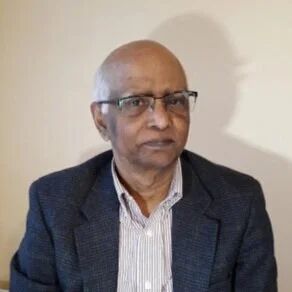
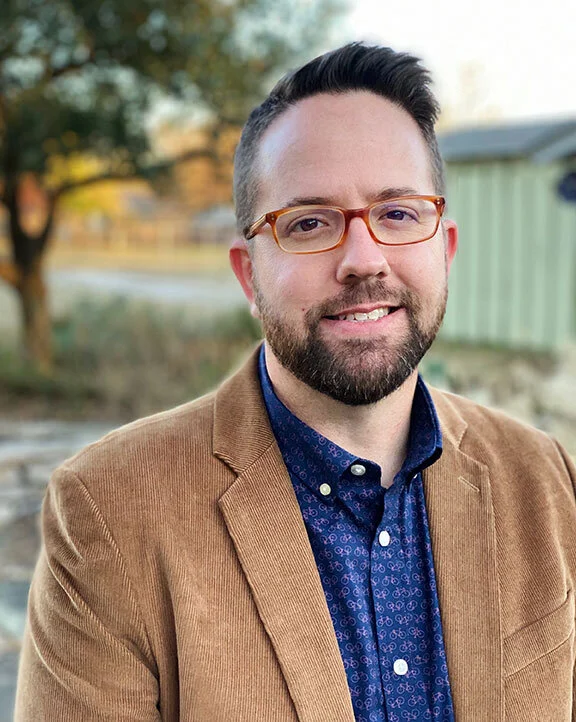
Paul Swamidass

Professor Emeritus | Auburn University

Paul Swamidass, Ph.D., is the author of the book, Engineering Entrepreneurship from Idea to Business Plan (A Guide for Innovative Engineers and Scientists), Cambridge University Press. He taught a combined class of engineering and business students for 14 years at Auburn University using the contents of this book before retiring after a 33-year career in university education and research. 

Educated in mechanical engineering and management, he taught engineering and business students in blended teams to bring out the best in them in entrepreneurial thinking and practice. In his lectures, published papers and his book above, he explains how an engineering degree prepares one to be an inventor; his theme: “Non-inventing engineers are wasting their education.”

He is an inventor with four granted patents in the US and one in Canada; he secured all his US patents as a pro se patent applicant, without the services of patent attorneys. He teaches how inventors could apply for patents without the paid assistance of patent attorneys, when inventors cannot afford their services. The cost of legal services should not stop one from inventing—the book above shows the way.

As a professor at the Harbert College of Business, he served for 11 years as the Director of the Thomas Walter Center for Technology Management at the Ginn College of Engineering, Auburn University. Under his leadership, this center ran annual entrepreneurship or business startup contests for Auburn University students, with cash awards. Through the Center he assisted Auburn University commercialize inventions from the college of engineering.

He has authored several books and over 100 scholarly publications. He has been quoted or cited in The Economist (1994), the U.S. News and World Report, and the Asian Wall Street Journal.

Paul teaches and writes blogs on Biblical leadership. He and his wife worship at Lakeview Baptist Church, Auburn, AL. 

CONTRIBUTIONS TO FAITH DRIVEN ENTREPRENEUR

Find Courage to Face Failure

— by Jerome Fogel

Coaches are fired every NFL season. But why do some make it back and thrive while others seem to fall away?

As someone who enjoys the strategy behind building an organization and its personnel, there seems to be a common denominator in the NFL coaching carousel I have observed that can explain this phenomenon.

There seem to me two types of coaches, but it’s not those who fail and those who succeed. Rather, it’s those who defend against painful self-awareness after failure, and those who find the courage to face failure. One group has the courage for a growth mindset, and the other is afraid to change and so stagnates.  

If you watch press coverage during the NFL season, you can see this play itself out. Coaches who become defensive when pressed about a questionable decision or their job status, seem to me to miss something. In the incredible adversity and challenge they are facing is an invitation to change, an invitation to become a better person, leader, and coach.

It’s not that I have this down. Far from it.  But in my study of leadership while writing the book, The Gauntlet: Five Keys for Unlocking Success in Leadership, I noticed a pattern in successful coaches in football. Nearly all had been fired at one point in their careers, and they returned to coaching with a new process, perspective, and mindset.  Bill Belichick and Pete Carroll come to mind. Coach Belichick was fired by the Cleveland Browns before winning 6 Super Bowls with the Patriots; Coach Carroll was fired in the NFL before winning championships with USC Football and then returning to the NFL to win a Super Bowl with the Seattle Seahawks. This doesn’t just apply to football. For example, Abraham Lincoln had failed businesses and experienced bankruptcy before becoming president. Colonel Sanders was an aged, failing businessman, rejected over 1000 times before selling his Kentucky Fried Chicken recipe. The list goes on. 

As an entrepreneur, failure is going to happen over and over again. Courage in this context is primarily about facing yourself and not blaming others for these failures. When we face ourselves, we open up to God’s process of transformation. God is conforming us to the image of his Son and forming Christ within us (Romans 8:29; Galatians 4:19). To do that, he often uses the challenging circumstances in business—cash flow concerns, market changes, regulatory issues, personnel problems, and the like. And as faith-driven entrepreneurs, we can have confidence that this courage is not something we generate, but rather our boldness comes from and belongs to God.  

So whatever failure you just went through, or you are facing now, one key to success is to find the courage to face yourself during failure. On the other side of this can be success and hope for a transformed life—your own.


Jerome Fogel helps build leaders and their companies. He is known as a leader among leaders, receiving accolades for his work developing business for Fortune 500 companies such as GE Capital, serving and developing leaders at nonprofits Oasis Church and Pepperdine University, and cofounding law firm Fogel & Potamianos LLP that helps companies lead in today’s market. He currently serves as a general counsel to companies and leadership coach to CEOs and executives. He is also the author of the recently published book, The Gauntlet: Five Keys for Unlocking Success in Leadership. Jerome lives in Los Angeles with his wife Sheri.

Related articles

——

[ Photo by Oleksii Hlembotskyi on Unsplash ]

Take a Hold of Your Schedule Now

This article was originally published here by Workmatters at the beginning of 2018, but the principles of time management remain relevant, and applicable at any point.

— by Catherine Gates

We’re one month into the New Year and my schedule for January got really full really fast. It seems like the moment January 2nd dawned, I was off to the races. I had to prepare for and facilitate several meetings on top of my normal work responsibilities, and there have been several significant, unexpected situations with family and friends that have required my time. Don’t get me wrong, these demands fall into things I truly want to do. It’s just that too many of them somehow got crammed into one month. January isn’t even over yet and I feel like I need a vacation!

As I envisioned what 2018 would look like back in December, I resolved in my heart that this would be the year I would create margin in my schedule. This way, I could do more writing, be more intentional about regular exercise, and schedule in downtime so I have the energy to pursue my callings with passion!

I’m grateful for the opportunities to serve and to be there for family and friends — I just need to make sure I’m not doing all of it at once. As I lamented to a friend about how stretched I feel, she asked me a very convicting question: “Are you praying over your schedule?” What a concept!

Here are the insights I believe can make a big difference for the rest of the year if we start now:

  • Evaluate EVERY need that comes up. Does it align with your goals, values and where you feel God is leading you right now? There will be fun and important things that come our way, but we need to be careful that they aren’t a distraction from what we really need to focus on. (Psalm 90:12)

  • Pray over the timing. If it does align with your goals, values and mission, seek God for the best timing. Choosing to move something out to next month so we have margin this month can help create a better result. (Ephesians 5:15-17)

  • Ask God, “What do You want it to look like?” For those assignments we do take on, we should always begin by asking God how to proceed. Most of us will have ideas right out of the gate, but we could find ourselves spinning our wheels before very long. Start with God and He will give you direction, ideas and strength for the task. (Romans 12:2)

Are you already feeling stretched? Take a step back and evaluate what you’re saying “yes” to. We are all part of a body of believers, the body of Christ, so that no one person has to do it all – thank God! And He has a specific purpose for you. In order to say yes to the things God is calling us to do, we need to say no to some things, and trust that God has someone else to cover them. Let’s find some margin together so we can truly make a difference in 2018!

Related articles

——

[ Photo by Curtis MacNewton on Unsplash ]

Aaron McClung

Founder & Principal | AM Agency

Aaron McClung exists to inspire and equip others to fulfill their God-given purpose. He is the founder and principal of AM, a full-service branding, marketing, and technology firm in the Dallas/Fort Worth area. For over two decades, AM has served businesses and nonprofits of all sizes including Carrier Corporation, AT&T, Sonic Restaurants, Phillips 66, North American Mission Board, Rental One, Goodwill Industries, TobyMac, Kyser Musical Products, Solutions By Text, Passion Conferences, Word on Fire, NFL Hall of Famer Ray Lewis, and hundreds more.

Aaron was born and raised in Oklahoma, and eventually moved to the DFW area where he graduated from Coppell High School in 1994. AM began in 1998 when Aaron was a college student at the University of North Texas, where he later graduated with a Bachelors of Fine Arts in Communication Design. God blessed Aaron with a unique combination of clarity and creativity, and that, along with the internet boom of the early 2000’s added up to a fast-growing business. As clients and employees continued to increase, the accolades followed. AM was recognized by the SMU Cox School of Business as one of the 100 fastest growing companies in Dallas in 2009. AM’s work has also been recognized by The Dallas Society of Visual Communications and the American Advertising Federation – Fort Worth.

CONTRIBUTIONS TO FAITH DRIVEN ENTREPRENEUR

Failing Well, Not Fast

This article was originally published here by Fuller de Pree Center

— by Michaela O’Donnell Long

Someone asked me once, “Why are you afraid to fail?” I remember wading through a bunch of half sentences until I admitted, “I don’t want to fail because I’m afraid of who that means I am. Basically, my identity is at stake.” Even though I know that my being is more important than my doing, what I do is still really important to me. While I know that failure is not only permissible but also important for my creativity as an entrepreneur, it does not make it any easier.

I have also learned that my own capacity to tolerate failure is linked with how personally invested I am. In other words, if I am only a little bit invested in something, failure is no big deal. I’m happy to fail and iterate all day long. But, the more I care about in an idea, a relationship, or a goal the more painful it is when things do not work out. Because my work as an entrepreneur is birthed out of passion and personal interests, failure often feels really personal. When I experience failure in areas that I’m really invested in, each failure feels like a type of death.

I am finding that in order to deal with failure, I have to learn to deal with deathDeath is hard, painful, and scary. I find it difficult to sit with the pain that seeps in when things don’t turn out the way I imagined or when I let people down. But, understanding failure as a type of death also gives me permission to sit in the uncomfortable space that my soul craves in the midst of chaos—the grief that loss requires.

Many of my favorite scholars talk about the need to fail fast, rightfully citing that the more entrepreneurs iterate, the quicker we are able to both innovate and make an impact. But for me, just as important as failing fast, is failing well. To rush past the pain of failure would be to cheat the learning it holds.

I recently conducted my dissertation research on the formative practices of entrepreneurs. Across the board, I heard stories of successful people intentionally dealing with death—the death of expectations, ideas, and relationships. One person explained how he had to deal with the lack of large-scale growth he had once imagined. Another told the story of a key-hire going wildly wrong leaving the company with falling profits and a bruised work culture. And still another told me the heartbreaking story of how she realized she was not cut out to be a CEO. As each of these people told me their stories I was reminded that failing well is less about fast iteration and more about grieving a painful death.

As Christians, our hope lies in the new life that comes through death. In other words, in order to fully appreciate the Resurrection of Christ and we must also sit with the death of Christ. We must let ourselves feel what is uncomfortable, and not rush to move past it. And, as we participate in God’s Kingdom here on earth, our hope lies not only in the cumulative event of Resurrection, but also the smaller, daily “small r” resurrections. And just as with Jesus, new life requires death, hope comes through sorrow, and success is birthed from failure.

So, how do we navigate these failures in a way that allows for resurrection life? I have found the practice of lament to be particularly helpful in my work as an entrepreneur. I like to think of lament as a structure to shake my fist at God, a way to tether myself to structure in the midst of chaos. I learned a long time ago that God can handle my anger and my pain, and that cross of Christ is not a place reserved only for when I succeed. Rather, the cross of Christ is a place where death is acknowledged and held.

Specifically, the Psalms offer a framework for engaging God as we seek to fail well. A Psalm of Lament has five key parts: an opening address (who you are talking to), the complaint (what you’re upset about), confession of trust (telling God where your trust lies), petition for help (asking God for help), and the vow of praise (praising God).

Here’s how the structure plays out in Psalm 22:

The Opening Address, “My God, my God” (22:1a)
The Complaint “Why have you forsaken me? Why are you so far from helping me, from the words of my groaning? (22:1b)
Confession of Trust, “yet you are holy, enthroned on the praises of Israel. In you our ancestors trusted; they trusted, and you delivered them. To you they cried, and were saved; in you they trusted, and were not put to shame.” (22:3-5)
Petition for help: “Do not be far from me, for trouble is near and there is no one to help. (22:11,29)
Vow of Praise: “From the horns of the wild oxen you have rescued me. I will tell of your name to my brothers and sisters in the midst of the congregation I will praise you.” (22:21a-22)

Many of us value tools that help us grieve personal loss and crisis in our world. But, we also need ways to help frame our vocational identities, especially in the midst of failure. It is through facing small deaths that resurrection takes shape in my work as an entrepreneur.

I encourage you to write your own Psalm of Lament around a vocational failure. It can be around the work God has called you to in your home, office, or community. Over the last few years, I have asked hundreds of people to do this exercise. And at first, many people are hesitant. Some even skip over it. Dealing with any type of death is tough. But most people who engage are surprised at what comes up and appreciate the structured space to sit with hard things around their vocation. One woman told me, “At first this felt kind of weird. I felt uncomfortable. But then I started to hear myself talk about some really surprising things. I started to really hear my own voice.” I hope that it can be a tool that helps you hear yourself talk to God.


Related articles

——

[ Photo by Atharva Tulsi on Unsplash ]

Podcast Episode 122 – Entrepreneurs Will Save the World with Michael Hyatt

Today’s guest is one that needs no introduction, but here’s one anyway. Michael Hyatt is the former Chairman & CEO of Thomas Nelson Publishers and the current Founder & CEO of a fast-growing, Inc. 5000 leadership-development company. 

He is also a New York Times, Wall Street Journal, and USA Today bestselling author of multiple books. With a top-rated podcast called Lead to Win, bestselling physical products, and an executive group coaching program, his business reaches over 1 million people a month. 

He is an influential voice on leadership, business growth, goal-setting, and productivity. And today, we’re going to talk about his newest book, The Vision Driven Leader, and how the content applies to you, the Faith Driven Entrepreneur.