Flight School ft. Grant Van Cleve | April 9, 2021

Looking to get involved in the Faith Driven Entrepreneur movement? You’ve come to the right place.

Flight School is a once-a-month event where you get to hear entrepreneurs, investors, and industry experts talk about the topics that matter the most to you, the Faith Driven Entrepreneur.

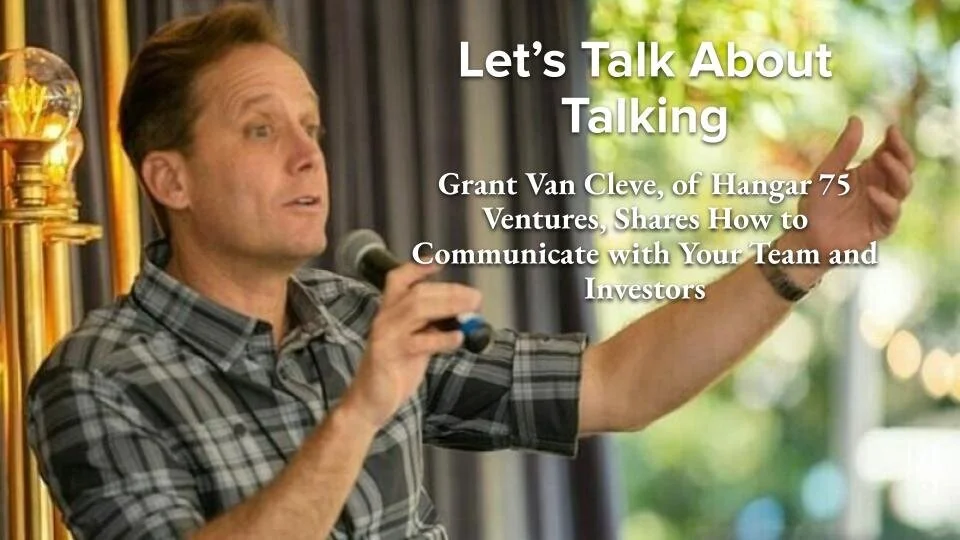
On April 9, 2021, we will feature Grant Van Cleve on the topic “Let’s Talk About Talking: How to Communicate with your Team and Investors”.

Grant is a leader and statesman for the prestigious Tech Coast Angels. He’s involved in 85 startups – serving as a board member or formal advisor in a quarter of those. He is Managing Partner of Hangar 75 Ventures, a venture factory based in Irvine, California and London UK, whose reliable execution of new ventures leads to more predictable returns for its investors.

Don’t miss the chance to hear his story and ask directly ask him questions in this “backstage” settings.

Sign up for Flight School here (scroll to the bottom of the page and fill out the form).

— The Faith Driven Entrepreneur Team

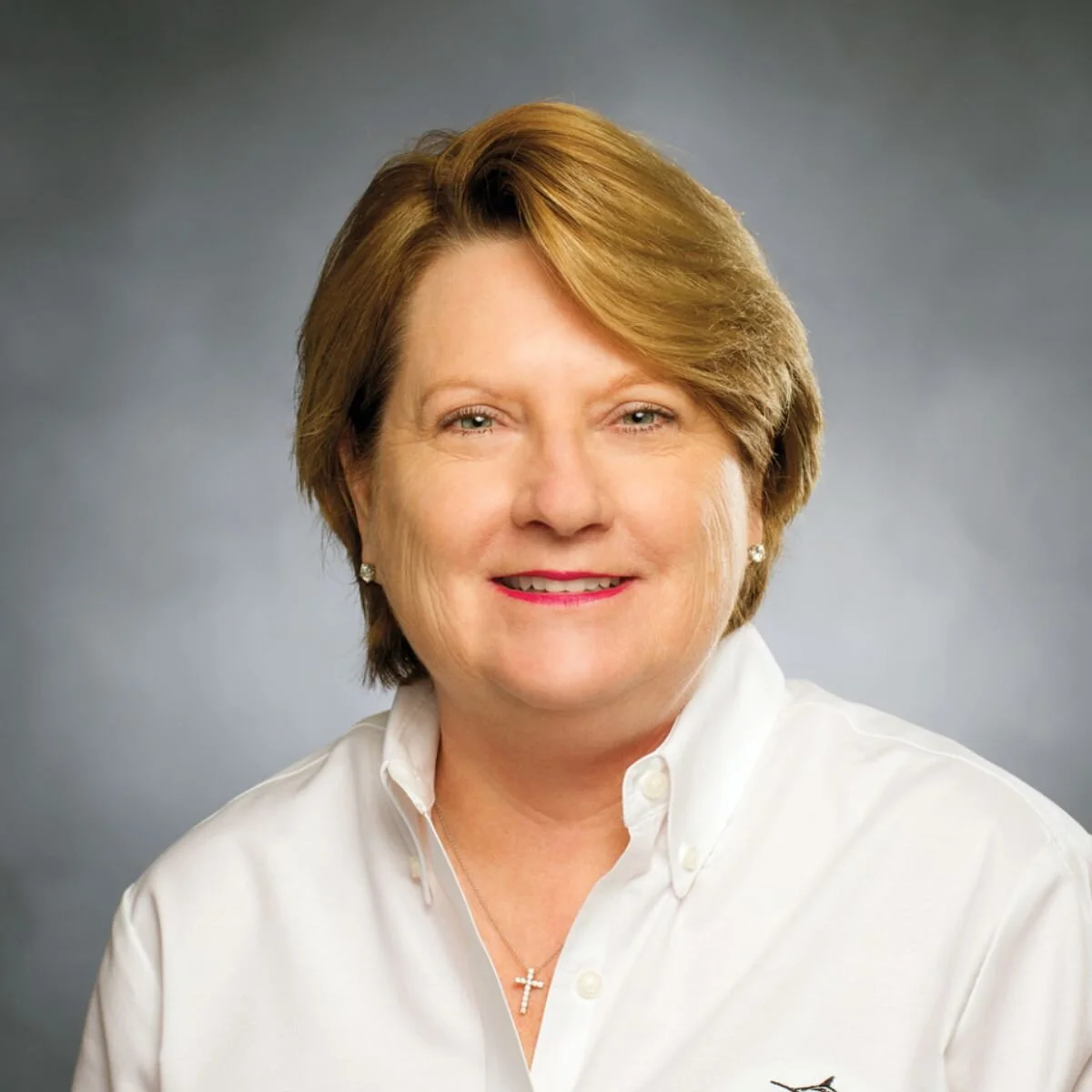
Joan Maxwell

President | Regulator Marine

Joan Maxwell grew up in rural Fairfield, NC.  She graduated from Mattamuskeet High School and the University of North Carolina, where she received a BA in history.  She is married to Owen Maxwell and together they currently reside in Edenton, NC.

In 1988, Joan and Owen founded Regulator Marine in an abandoned A&P Grocery Store in Edenton.  Regulator is now operating in an 121,000 sq. ft. manufacturing facility and is one of the most well-respected brands in the boating industry.

Joan and her team transitioned Regulator Marine from a job shop/manufacturing process to a highly sophisticated lean manufacturing process.  Under Joan’s leadership, Regulator received ISO 9000:2008 certification, as well as the North Carolina Department of Labor’s top safety award, the North Carolina Star.

In a historically male dominated industry, Joan remains active in the boating industry’s leading organization, the National Marine Manufacturers Association (NMMA), where she served as the first female Chairperson and currently remains on the Boat Divisional Manufacturer’s Board while also serving on the NMMA’s Board.

Joan focuses on learning innovative ways to improve the business that God has entrusted to her care.  Currently, she is a member of C12, a Christian based leaders’ roundtable that focuses on building better businesses for a greater purpose.

Joan Maxwell demonstrates and demands from her leadership team at Regulator Marine a high level of integrity and positive leadership.  Her service is evident in her dedication to not only Regulator Marine, but also to the local community in which Regulator is located.  Joan established a Volunteer Program at Regulator Marine which pays employees their regular wages during working hours while they volunteer their time and services to various local organizations of their choosing.  In 2018, Joan established the “In His Service” program at Regulator, which oversees Regulator’s charitable giving, as well as its employee emergency assistance fund.  Joan’s passion is to personally live out Regulator’s core values and to lead her team to do the same.

LINKS

CONTRIBUTIONS TO FAITH DRIVEN ENTREPRENEUR

In Its Essence, It’s a Lifestyle

— by John Hawkins

In Its Essence, It’s a Lifestyle

Omar was furious.  Why wouldn’t Chris and Cindy do their jobs the right way—the way he wanted them done?  No matter how many times he told them, no matter how many times he chewed them out and threatened to fire them, they still just couldn’t get it right.

As director of Human Resources, you would think that Chris would know how to train people to stay in line with company policy.  And yet their employees always wanted to get around policy—requests for individual work arrangements were constant.  Omar had told Chris a hundred times that the company’s greatest challenge was losing control of its employees.

In Omar’s mind, Cindy was even more incompetent than Chris was.  He hired her to be a basic “number cruncher,” and he had expected her to provide simple reports that spelled out the company’s finances.  But every month, she had a new chart or analysis that was more confusing than the last.  Why couldn’t she just do the standard reports familiar to Omar?  On top of that problem, Cindy had a habit of sharing the company’s profit information with subordinates, which really sent Omar into a rage.  The company’s profitability was no one’s business but the senior officers and stockholders.

As Omar sat in his office fuming over his latest confrontations with Chris and Cindy, he wondered what had happened to his influence.  He used to be revered and feared in the company for his innate ability to get people to jump through his hoops.  People stayed in their cubicles, got their work done, and went home glad to have a job.  They did their work his way.  Now it seemed like every chain of control he had was snapping.  What had gone wrong with his workforce?

But Omar knew his problems weren’t just at work.  He felt as out of control with his wife and kids as he did with his employees.  When he had married Mary, he thought she would be a traditional wife and mother.  But when the kids had gone to school, she took a part-time job as a receptionist at a nearby real estate company.  She claimed she needed adult interaction and some sense of accomplishment in her life.

Now, four years later, she was the top agent in the office with a work schedule that allowed her to be home in the afternoons when the kids got home from school.  Her life seemed to move forward just fine without his involvement or input.  Their communication focused on scheduling rides for the kids and investments for their retirement.  Neither gave or required much from the other.  Their careers and kids camouflaged their marital disconnection.

As Omar saw it, leadership was a lot easier in his father’s day.  Back then, everyone knew their place and understood the pecking order.  Those days were over!  Now, he led employees who wouldn’t follow, was married to someone who could get along without him and had kids that seemed to hate to see him come home. As a boss, a husband, and a father, he held leadership positions but didn’t hold the hearts and commitment of those he led.

Omar’s approach to leadership centers on control and position.  It is a grab them by the throat and get them to jump through your hoops mentality.  In the short term, it can produce results.  In the long term, if the followers have freedom and choice, it doesn’t work well at all.  Command and control has a transactional rather than transformational impact, and it fails entirely in establishing loyalty.

A more utilitarian approach to leadership is an economic model where you find out what followers want, and you give them that if they do what you want them to do.  If they want money, you give them money.  If they want experience and training, you give them that.  This is how most US businesses operate.  It is often how weekly allowance systems between parents and children work.  It can work well both in the short term and long term.  But like Omar’s coercion approach, a utilitarian approach does not build loyalty.  If the follower has freedom and choice, as soon as someone down the street or across the world is offering a little more, he goes after it.  Because it was never about loyalty.  It was only about the reward.

Lifestyle Leadership has the best chance of gaining long-term loyalty and commitment from constituents.  This approach to leadership communicates to the constituents the following proposition: “These are my beliefs and values.  They will guide my speech and actions as I lead you.  As I model these beliefs and values, I expect that I will win the right to influence you in your development and in our accomplishment of the goals and vision of our organization.”

Lifestyle leaders focus on modeling the values and beliefs that they see are essential to the organization’s success.  They also focus on gaining influence with constituents in their development and performance.  The power of lifestyle leaders is not coercion or money but their character, competence and commitment that is aligned with God’s character and God’s word.

At a time in which leaders are viewed with rampant cynicism, especially concerning their possession of moral authority, leaders need to remember that their lives are the most powerful leadership tool they possess.  In very short-term situations, command and control leadership is sometimes appropriate.  Utilitarian pay them so they’ll work is effective in both short-term and long-term contexts.  However, if achieving the organizational mission requires sacrificial commitment, this will be gained by the worthiness of the mission and the leader.  This is where Lifestyle Leadership is required.

Related articles

——

[ Photo by Andrea Piacquadio from Pexels ]

God, what do you want me to do? with Chris Herschend

 Abide in me, and I in you. As the branch cannot bear fruit by itself, unless it abides in the vine, neither can you, unless you abide in me.

John 15:4

I had a tough, internal, tough decade leading up in my forties, kind of late thirties, early forties, and just some decisions I made in business that just didn’t work out and not necessarily with our family, but just my own decisions. And I carried that with some bitterness. And in that process, you know, and I think that’s not uncommon. But I was really disappointed in myself and I felt like I’d done everything right and it just didn’t work. And so I thought about this in the context of what’s he teaching me now? And this is really not yesterday or today so much as thematically in the last several just months of my time with the Lord, which is look back how faithful he’s been. I see this every day in the world. I was able to read through the entire Bible every year for the last decade, almost, I think maybe a full decade. And that was because I was going through pain and I felt under attack. And I felt like I could identify with all these psalms that David wrote where he was like, hey, get these people off my back and while you’re at it, hurt them.

So I came to this word “Abide” and John fifteen. And then again this week, what caused it to mine was in first John “abide” shows up over and over and over. And just the simple act of staying like, you know, sometimes tempted, we ask God all the time, what do you want me to do? What do you want? What do you want? What do you want? And I heard clearly in a season where I was really seeking with that question was, hey, this is what I want, knucklehead. And when you here with me, I want you to abide. I want you seeking me and I’ll take care of all this other stuff. And it doesn’t always work out with a bow, I guess. You know, I think that’s what I was sort of bitter about as I was like, well, he promised he’d take care of it and he did. And he is. But my job is really not to worry so much about the outcomes, but really to be just patiently abiding. And so the daily just soaking and steeping and. And praying and reflecting and then walking out feeling like God is well pleased with me, though he may prune a little bit, and that is the thing that I think is this playing in my sort of thinking right now is anything else that God’s doing in my life is just abide some stepping in that that’s super helpful.

31 Reasons to Start a Workplace Faith Community

— by James Bruyn

31 Reasons to Start a Workplace Faith Community

Community

  1. As brothers and sisters, we are companions in suffering, God’s kingdom, and patient endurance

  2. Together we seek to hear God’s voice

  3. Iron sharpens iron, so one person sharpens another.  (Prov 27:17)

  4. Though one may be overpowered, two can defend themselves. A cord of three strands is not quickly broken. (Eccl 4:12)

  5. Jesus intimately cares for all gatherings of believers wherever they meet

Reflecting God’s Radiance into our Workplace

  1. These communities are lampstands that reflect God’s radiance in the workplace

  2. God’s light shines in our workplaces

  3. God’s light shows order and beauty

  4. God’s light shows evil in perspective of all that is good and not to be feared

  5. So that our lives will be radiant with joy (Ps 34:5)

God is Present in our Workplace

  1. The Son of Man is at home where we live and work, taking the ordinary, everyday moments of work and infusing them with grace, healing, peace, and blessing

  2. We have a High Priest who was tempted in every way as we are in the workplace, yet was with without sin – Jesus is the source of strength against the temptations we face at work 

  3. In community, we can confess our sins and struggles so that God can wash us whiter than snow 

  4. God’s eyes are like a blazing fire which see our work  inspiring us to excellence, for what is done with excellence will come through his purifying fire like precious gold

  5. God eyes like blazing fire see what is happening in our workplace

  6. God offers insight and wisdom for our work, workplace relationships, and workplace politics

  7. God with feet like bronze glowing in a furnace is capable and active in our workplaces 

  8. There is an eternal Perspective, God’s enduring stability and strength vs. the temporal nature of our companies and work

  9. God’s living and active word speaks with passionate love and urgent mercy to us and our careers

  10. God is sovereign over our workplaces

  11. God is the ruler over the leadership of our companies (Rev 1:5, Rom 13:1)

  12. God’s word judges the thoughts and attitudes of our heart (Heb 4:12)

  13. God is the first and the Last, apart from him there is no God (Isa 44:6; 48:12)

  14. We, our work, our companies all have their beginnings in God, and would not exist without God

  15. The skills and abilities that we have and use in our work come from God

  16. All good work is Kingdom work

Hope

  1. We all need a reminder that God says “Do not be afraid” and Perfect love drives out fear

  2. Hope – Jesus is alive

  3. Hope – Jesus controls life and death

  4. Hope – Jesus holds this world together

  5. Hope – God’s Kingdom is coming. Therefore, I do not need to take matters in my own hands

Related articles

——

[ Photo by Dani Hart from Pexels ]

Differences Don’t Have to Be a Downside

— by Laura Whitaker

We come into the world and we are separated by our differences and similarities. Age separates us into grades, where we live commonly defines our languages and cultures, academic skill sets put us in classes, and gifts, talents and interests separate us into extracurriculars and eventually careers. Without realizing it, we become wired to see difference as a downside. 

As a non-profit leader who serves individuals of all abilities, my mission is to teach generations both now and in the future to reach beyond these differences. As a parent, my responsibility is to teach my children to challenge the natural boundaries. And as a believer in Christ, it is my joy to inspire people without disabilities to learn from people with disabilities. Leaders of all walks, but especially those who follow the example of Jesus, have the powerful opportunity to change the perspective of our community at large by simply modeling to their organization a posture of childlike faith and the perspective of Jesus. 

Early in my career,  I learned what this powerful perspective actually was. I was asked to take one of our participants at ESP, a teenager with an intellectual disability, to the hospital from camp in an ambulance. I met his single dad at the hospital. As I watched him cradle his son in the hospital bed, his story began to unfold. When his son was born, his pastor told him there was hidden sin in the family which caused his son’s disability. This led to workaholism and alcoholism, avoiding his son for the first 10 years and eventually avoiding his wife and daughter as well. One day, he was on a business trip and at an all-time low. He opened a drawer in his hotel room and took out the Bible. It opened immediately to John 9, the story of the man who was born blind. The disciples ask Jesus, “who sinned, this man or his parents?” and Jesus responds with, “Neither this man nor his parents sinned,” said Jesus, “but this happened so that the works of God might be seen through him.” Jesus uses disability, a blind man, to help others see. The father realized in that moment that his son was a gift meant to help him and others to see Jesus.

I often have described this idea using a concept I call the dandelion effect—the parallel with a dandelion and how we see difference. When you are a child, you see a dandelion as a beautiful yellow flower. In the same way, when you are a child, you do not see differences as negative. You notice the difference but see it as intriguing and a delight. 

Somewhere along the way to adulthood, you begin to see dandelions as a weed and similarly, we begin to see disabilities or differences as negative. As business, community and faith leaders, we have the ability to challenge ourselves to be called back to the childlike heart, Jesus’ heart, and teach those around us to hold onto that beautiful perspective. Like any other change in our culture, this takes time and intentionality. 

When spending time with kids with special needs, it does not take long to see beyond their disability to their ability.  The beauty in seeing their ability allows us to see ourselves and others the way God has made us: In the same way, let your light shine before others, that they may see your good deeds and glorify your Father in heaven.” (Matthew 5:16 NIV).

I have seen firsthand when people of all abilities are given the same opportunities, it is not only life-giving to them and their families, but to our entire society. It is a beautiful juxtaposition to see that we who are considered “typically developing” can actually learn some of life’s most important lessons from those with disabilities.  

Multiple studies show that by educating children about individuals with disabilities at a young age, they become more accepting of differences throughout their entire lifetime and are more likely to form relationships with people with disabilities. Imagine how that could change our world if we also educated those who listen to us as leaders to this same concept.

“As each has received a gift, use it to serve one another, as good stewards of God’s varied grace.” (1 Peter 4:10 ESV)

As entrepreneurs, believers and leaders, may we use the opportunity to showcase the delight instead of the disability as we create a world that embraces people of all abilities, one moment, one interaction at a time.

###

Laura Whitaker began as a volunteer at Extra Special People in 2003. With her passion for enhancing the lives of children with developmental disabilities and her specialized education in this field, Laura was selected as the Executive Director at the age of 19. As Executive Director, Laura uses her leadership and management strengths to manage staff, oversee year-round programs, summer camps and business ventures like Java Joy while raising millions of dollars for the organization. Her favorite part of the job is getting to hug the many children who walk through the ESP doors. For more information, visit www.espyouandme.org.

Related articles

——

[ Photo by cottonbro from Pexels ]