Episode Transcript
*Some listeners have found it helpful to have a transcription of the podcast. Transcription is done by an AI software. While technology is an incredible tool to automate this process, there will be misspellings and typos that might accompany it. Please keep that in mind as you work through it. The FDE movement is a volunteer-led movement, and if you’d like to contribute by editing future transcripts, please email us.
Renji Bijoy: I mean, this is just like people asking, oh, am I really going to have a laptop in my pocket? It’s obviously like outdated terminology, but the vision was always there all along. And so the reason why Apple, Google, Microsoft, Facebook and others are pouring billions of dollars into this next generation computing is because they truly believe and their dollars show it that they truly believe everyone’s going to DOPs sort of some sort of form factor of glasses. Right. So, yes, it won’t be this brick block thing on my head. That’s what it looks like today. But fortunately for us, you know, Oculus has something upwards of 60 million users and their Oculus store has plenty of users for us to try to capitalize on in the meantime and not waiting for those glasses to come out year after next, but instead making progress revenue side, technology wise, until those glasses come out.
Henry Kaestner: Good morning. Good evening. Whatever time it is for you. Welcome back to the Faith Driven Entrepreneur. I am here with William and Rusty partners. Good morning.
Speaker 3: Hey guys. Good morning. Good to be here.
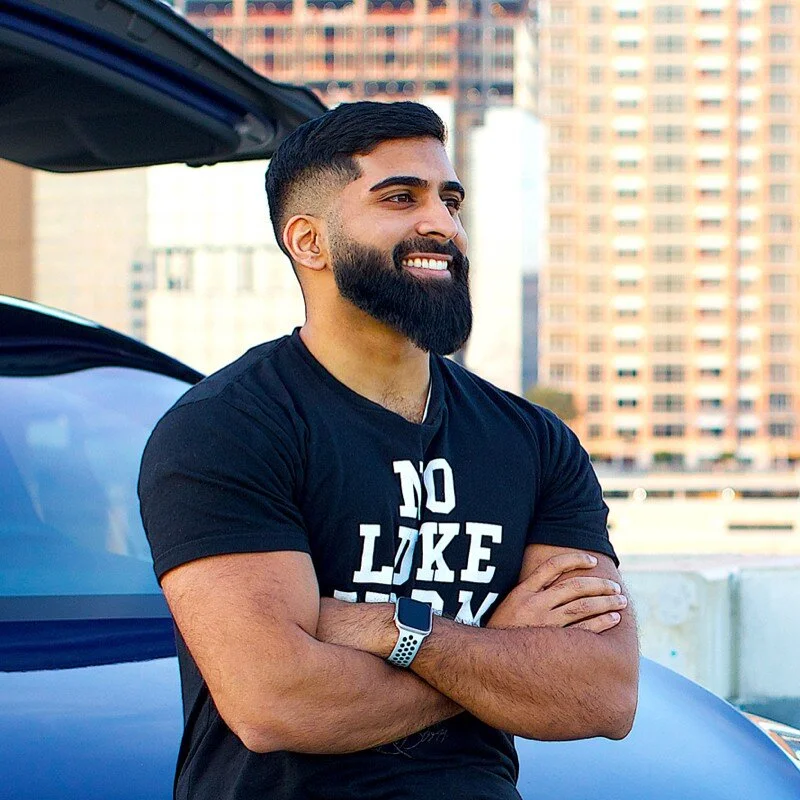
Henry Kaestner: Renji, thank you for joining us today from Austin, Texas. Renji. Who are you? Where you come from? We’d like to start off every episode by understanding some of the personal background and the story of the faith driven entrepreneurs that we’ve got on the program. Who are you?
Renji Bijoy: Yeah, who am I? I mean, my identity is obviously in crisis, but as far as it’s like kind of where things started, I mean, my parents, they moved from India about 40 years ago to New York. That’s where my sisters and I were born. I’m the youngest of three. Yeah. I mean, I wasn’t a believer growing up. Our family when we moved from New York to Atlanta when I was eight, that’s kind of where I grew up in the suburbs of Atlanta. I went to college undergrad at Emory Grad School at Georgia Tech. And that’s when I became a believer in undergrad. That’s when I started taking my faith more seriously. I mean, that’s I think that’s when I had to sort of decide, do I want to grow up or do I kind of want to just live life the way I want to live it? And so, yeah, I don’t know if that’s way too brief or too quick, but high level. Yeah.
Henry Kaestner: No, that’s good. That’s good. OK, so you’re very unique and a bunch of different ways, but you’re the first person we’ve ever had on the program that has anything to do with VR. And so what is emersed and what are you doing differently than other VR companies.
Renji Bijoy: Yeah, VR historically has been mainly sort of in gaming and entertainment. But we’ve realized I mean, this is a mind blowing technology, especially when people try it and they put it on for the first time, it blows their mind what this really does. It really like gets to the point where you feel like you’re just in another world, especially with today’s high quality headsets. And so for us, we wanted to bring a practical application for this frontier technology because it is going to change the way that we work and we live and play and things like that. So, yeah, about four years ago is when we started exploring. All right. How could we get us to be in the same place physically or at least virtually together and make it feel like we’re physically together while I mean, we’re just not. And so, like videoconferencing and chat just it wasn’t, I guess, sort of an intimate or realistic or relational presence, a way to be with people. And it never has been. And even this right now, I feel like we are just in different places as we were on this call. One cool thing that VR does is it brings people together who are just all around the world. It makes them feel like they’re side by side. And so we’re like there’s definitely got to be a more practical application for this. And to be real, every software development team I’ve ever been on or led before I ever started having the team be half remote, having the team be half disconnected and disengaged from the in-person team. Again, chat and video conferencing just couldn’t be the state of the art. And so we wanted to do something about it.
Henry Kaestner: Are there any VR podcast, should we be doing this in VR?
Renji Bijoy: There are VR podcasts, there’s
Henry Kaestner: something to pick my own avatar.
Renji Bijoy: Yeah, I mean, so there’s a VR publication called Upload VR. They have about 200 million readers around the world, but they do have a podcast called the VR Download, and they do it all in VR together. And it feels like they’re together, like sort of like a talk show sort of thing is pretty cool.
William Norvell: Might or might not be a bridge too far, but we’ll give it a shot, Justin. Goals for twenty twenty one one VR podcast, Amen Reggie William here. You know, obviously in this time, we’re still under the covid crisis, you know, to timestamped this podcast a little bit. You know, you had started your company before that, of course. And you had already been feeling a need for people to connect in a new way around work and virtual reality. But could you tell us how what have you learned with so many people now forced to work from home? How do you see that felt need rising? And have you been able to build a sense of community and collaboration for people? Just tell us about how that experience has been for you on the front lines of where this is.
Renji Bijoy: Yeah, it’s pretty crazy, man. Like, so back in twenty seventeen is when we first started prototyping this stuff. Twenty eighteen is when we started really product designing this prototype, like getting our initial users just to work in VR, not even collaboratively, like just Solok, get a couple of screens in there, get them to not just find it comfortable to work in VR, but then move them towards while this is compelling, get them to get the word out, get them to get their teams and coworkers into the same virtual space. And so twenty, eighteen, twenty nineteen. We had to work on sort of collaborative experiences to get multiple coworkers in the same space together. And then twenty, twenty covid hit and that’s when remote work just exploded. And so at that point is when Facebook had reached out based on them checking out the forty different competitors in the space. It was just crazy to think that there are forty competitors. At least this is back in March. Twenty twenty is actually closer to like 60 ish competitors now, but it’s been really cool to see how Facebook did check out all the different other products in the space and ultimately felt like it was the one that had the easiest onboarding, the cool to kind of work alongside them, distribute our product through their platform. But it’s been there since covid the amount of organic search that has skyrocketed for us. I mean, it’s just been really cool to see that people are really trying to find better work from home solutions than just video conferencing and chat, because especially when it comes to engineers and designers being in the physical office where you can have all your screens at sort of the desktop that you’re sitting at with your team, you can just roll over in your chair and work with your coworker and pair program with them if they need help with something. Or you could go to a whiteboard real quick and just wipe where something out. Same thing with designers. They kind of just need to be together. And so video conferencing ATAT just couldn’t fill that void. That’s been really cool to see people come to immerse specifically for sort of more highly collaborative type use cases. But it’s been also cool to see even things like coding bootcamp teachers or day traders or legal teams and finance teams using emersed for just better connectedness in VR together. So, I mean, it’s been I’ll be real. I didn’t think that something like covid would hit. None of us did. But when that did happen, obviously, like this was obviously a series of unfortunate events of everyone having to work from home and figure that out.
William Norvell: So and tell our listeners a little bit, as Henry mentioned, we’ve not had VR segments yet on the podcast. You know, I’m thinking to myself some questions just fake you, right? You know, hey, how long can I keep this headset on? What are some of those metrics? I mean, am I really going to work all day? You know, I’ve seen the headset. I just can’t imagine that maybe you have a soft, you know, pitch of some sorts of, you know, why this is going to work, why people are going to adopt this, what some of those metrics are. They’d be great.
Renji Bijoy: Yeah, yeah, yeah. So this is not some sort of pie in the sky thing. Like we have tens of thousands of users who use emersed every month as it is, like many of which you spend 40 to 50 hours a week working in VR full time. Right. And so that’s sort of what set Flagg’s off at Facebook when they’re noticing that this is the application that has the most usage of any users, like there are popular VR applications out there, like games like Beat Saber, where you’re kind of kind of a guitar hero, but like you have these blocks flying at you and you’re using your controllers to kind of hit the blocks as sort of like a drum sort of thing on beat. And it’s like a really fun game. But you’re not using that more than maybe a couple of hours a week. There is no other VR application where thousands of people are spending forty plus hours a week working in VR full time. But, you know, people ask, oh, what does comfort look like? Was I strained look like and things like that. But really with the Oculus quest, too, when it comes to comfortability, like the headsets have become so light, the latency of the screen refresh rate. And when you turn your head and it refreshing to the view you’re supposed to see, like that’s become sub twenty milliseconds where you just can’t notice the human eye, can’t notice it like comfortability has really increased. But at the same time, users are not in VR eight hours straight. They’re in front of their screens just as much as they would be if it was a physical monitor. Right. So usually most people, they kind of sit in front of screens, maybe two hours at a time. They’ll take a break and then come back. Same thing with Immersive will have the headset on for two hours, maybe three hours, and then they’ll come back for multiple sessions a day.
William Norvell: That’s great. Super helpful. And how do you see the broader market? So, you know, you mentioned designers, you mentioned engineers, but then you did hit on a couple of non tech World Day traders and some of those things. But your early stage visionary here, do you think this is something that I’m going to make up? Numbers, right. Twenty percent of the workforce ends up adopting 60 percent of the workforce. Where do you think this is? Does this become normal in the way that, you know, video conferencing? I mean, I remember the giant video conference setup’s. Twenty years ago, you know, and as like now this is you know, we’re always going to use the phone, right? Or, you know, fax machines aren’t going away. Do you think it’s that level of a technology change or will it always be kind of a niche market?
Renji Bijoy: So when it comes to these types of headsets, you see sitting behind me like this is not the final form factor. The final form factor is going to be a pair of glasses, right. That you put on and that you could either immerse yourself into another world or you could just sort of bring miners into your current space, have a coworker kind of virtually teleport beside you if you need to code together, etc.. So when it comes to like apple glasses or Facebook glasses coming out year after next, I mean, just because it’s like an Apple product, people are going to buy it. That’s just like, look, these airport maxes, it’s nothing like mind blowing. But I bought it because they’re Apple, right? And so at the end of the day, when it comes to people figuring out how to adopt the next generation of computing, if I’m able to just have my text messages on my face and verbally respond to it, be a more streamlined approach as opposed to having to pull out my phone, or sometimes I forget my phone somewhere like or even to the point where you start abstracting away the need for a laptop and instead you stream a virtual computer from the glasses. At that point you get to the point where you don’t even need to have physical hardware. You don’t you’re not going need physical devices. Right. And this is maybe five years out or whatever. But I mean, this is just like people asking, oh, am I really going to have a laptop in my pocket? It’s obviously like outdated terminology, but the vision was always there all along. And so the reason why Apple, Google, Microsoft, Facebook and others are pouring billions of dollars into this next generation computing is because they truly believe and their dollars show it that they truly believe everyone’s going to DOPs sort of some sort of form factor of glasses. Right. So, yes, it won’t be this brick block thing on my head. That’s what it looks like today. But fortunately for us, Oculus has something upwards of 60 million users and the Oculus store has plenty of users for us to try to capitalize on in the meantime and not waiting for those glasses to come out year after next, but instead making progress revenue side, technology wise, until those glasses come out.
Rusty Rueff: That’s very cool. I like the way you talk about it, Renji, because my first experience with VR a long time ago when I was in the gaming world is a big, huge headset standing up, you know, and one of my buddies, you know, thumped me on the back of the head. And I was from that point on, I was like, no, no, no, no, no, I’m never going to do this because I don’t feel safe, you know, like the human factor piece of it. And I’ve always wondered, you know, does VR go the way of the Segway or Google Glass or instead does it go the way? And I like the way you talk about Apple, you know, getting into the market. I believe it goes the way of the I watch because if you think about the I watch the thought of, you know, this thing on your arm, which was written in science fiction a long time ago. But the thing that everybody would like be looking at their wrist, you know, for emails or notifications of like it seemed like, you know, just to push too far. Right. That’s just that’s a nerdy geek thing. But look, now, like, you know, my wife is all the time, right. You know, looking at, you know, doing that. And it’s very natural for her. So I think you’re right. I think that this is the way it goes and that the glasses that give you the chance to, you know, you’re immersed, but you’re not totally immersed, not to use the pun, but, you know, you’re still cognizant of your physical surroundings so that you feel safe, you know, is what happens.
Renji Bijoy: And the terminology that most people in the space use is going to be like when they talk about the final form factor is more of a mixed reality, meaning it’s not augmented words, just like, you know, this two dimensional thing. This is like painted on top of the world in front of you. And it’s not completely virtual reality where you’re in this ready player, one alternate universe. But I mean, obviously, some people in the privacy of their home or the safety of their home, they’re still going to want to have sort of like a ready player, one experience where they can go to another world. Even when you think about like nursing homes, for example, where people are not going to be able to go to like the beach or the mountains or whatever, they can experience other world sort of experiences without having to physically go there. At the same time, when it comes to productivity and enterprise business sort of applications, we’re going to get to a point where you’re going to have a pair of glasses and all the devices are used to have are not actually physically. They’re like using and tracking. You could have a virtual iPhone, you could have a virtual MacBook. You wouldn’t have to bring any stuff with you. It would just was sort of this mix reality technology built a place, a virtual version of your laptop. I mean, hardware costs, once you have a pair of glasses, hardware costs plummet. I mean, when it comes to companies figuring out how to charge users monthly recurring revenue as opposed to just hardware sales, this is going to save a ton of money for all the tech giants as well. That’s why they’re investing billions of dollars into this future.
Rusty Rueff: Yeah, alternate universe, man. The Metaverse. I’ve been one to go there said snow crash. OK, so let me tell you why Renji doesn’t know snow crash because he was recently named by Forbes 30 as 30 under 30 because he’s under 30 years old. That’s why he doesn’t know. Snow crash. Hey, you got that honor. Talk to us about how that personally affected you. You talked about your identity at the beginning of this. Did it change your identity? You know, did you get the you know, the big head that comes with being, you know, one of the 30 under 30?
Renji Bijoy: One thing is interesting is I think that I don’t appreciate it nearly as much as some other people do, to be honest, like if you think about it, I’m a coder at heart, 30 under 30 wasn’t really something that was constantly on my radar or something that was really following. I knew about it like most people do. But I think once I got it, I mean, I think things changed in regards to people’s perception of me. I’ll be real. Like, it just it makes some people feel a certain type of way, maybe people who are more involved in the finance world or the business world or sort of follow a lot of those types of threads. Like it’s clear they see me somewhat differently, but I’ve had to operate like I’ve had to almost prepare and embrace for that, because that’s happened kind of in smaller ways along the way, as well as jumping ship and creating a company, then getting into TechStars, then getting funded and then hiring awesome team and then having a partnership with Facebook, like it’s sort of this progression of seeing how people are behaving around me, if that makes sense. And so would have had to do is be very straightforward, like, yo, I’m a dude, like I’m a human. And I think because God has transformed the way that I see people in general, meaning whenever I am in the same room with like a millionaire or a billionaire, I mean, some founders, they kind of get a little nervous. They get a little shaky. But for me, because I know the lens that God has on all of us and that we are just his creation and we are humans on the sort of the same level and we all have the same value and worth in his eyes. I think because of that, it makes me not really put myself on a pedestal because I know who I was like. I even wrote this in the Facebook post, in the LinkedIn posts around being thankful for being selected as this year’s Forbes 30 under 30. Like, I just want to remind people, look, this is where I came from. This is who I was. I know how wretched and sinful I was. Like, I know like God still working in me and I’m still growing in my maturity. And I know at the end of day, like, I don’t deserve his grace. And so because of that, there’s no reason for me to put myself on a pedestal than someone else. I’m thankful for what Forbes does. It does give investors and other astronomical type people or even employees that we might want to hire in the future. It gives them more confidence in our ability to execute or maybe even more confidence in showing that God is doing something crazy here at Emersons, opening doors in a very unique way. And so it helps give them confidence to back us or be involved in all that type of stuff. But I’m just kind of reminding them, look, I’m a dude. I need Jesus just as much as you do. So, yeah, OK. That answers
Rusty Rueff: your question. Yeah, that’s great. No, that’s the kind of a shadow that, in my estimation, great leaders need to cast is that level of humility and understanding when these accolades come to us, take that and extend that into the culture of commerce and talk to us about that. And then also tell us how you intertwined and woven in your faith into the culture.
Renji Bijoy: Yeah, so this is very interesting. When I got to TechStars back in twenty seventeen, the managing director of TechStars was like, yo, whenever you talk with investors, when we talk with future candidates, you’re going to hire like be very straightforward, open and honest about your faith. And this is coming from a hardcore atheist guy. And so he was just like the reason being he’s like, look, whoever is going to work with you, you don’t want this to be a surprise. Then if it offends them or if they don’t like it, they probably shouldn’t be working with you in the first place. So just up front, set the expectations and let them know what it is. And so I was already sort of doing that. And I’ve gotten different advice from believers and unbelievers alike. But I think coming from a super successful managing director of TechStars, who previously had his large company and all that type of stuff, like the fact that he believed in that honest, like truth and reality, that was extra confidence for me to be like, you know, recalls what everyone else says. I’m going to lean into this because this is what my conviction was already. I’ve had believers tell me, like, yo, you’re being too forward and open about your faith, like you might be scaring people, blah, blah, blah. And I’m like, at the end, my heart is not to scare people if I have a relationship with them and I mean if they know where my heart is, that the hope is that they wouldn’t be turned off or scared or whatever, because I’m not trying to force this upon anyone else. The Holy Spirit will have to do his work in people’s hearts on his own. I just want to be faithful and straightforward and open, honest and genuine. Whenever people talk about us getting into TechStars and we talk about that in our interviews, we’re interviewing candidates. I say like it was very clearly God’s provision that we got into that program. It was very clearly God’s provision that he had paired us up with Sovereign’s Capital to continue funding us and moving us forward, even though we meet like none of Sovereign’s Capital investment criteria. Like, it’s been very cool to see how people respond to that. And what’s so cool is people on my team have pulled me aside and mentioned even people who are not believers saying like, look, I don’t know why, but something in my gut just tells me I just need to just trust you. And like, even though, like, I’m still learning about you and building this relatable like something, it’s just giving me a certain level of trust with you. And I think my team, the reason why they are as sacrificial and devoted as they are to the company realistically is because they trust me and they know that I love them more than anything. And I feel like that’s something that we brought to the table, to TechStars. I mean, in our program, I was the only non Ivy League person and the only non second time founder or later I was a first time founder. So we were definitely underdogs through TechStars and is very clear that God gave that managing directors. I’m. Delusion that he should have me in that program, but one thing I felt like we did bring to the table was how we have a relationship focused company culture. Whereas, you know, some companies during TechStars, they would ask questions like at least back then when we had no funding. How do you get your team to work 80 hours a week for sandwiches and as opposed to like an actual paycheck because we couldn’t afford anything back then, whereas the other companies, they were paying you one hundred twenty eight hundred fifty K engineers. I mean, large salaries. And they had sort of a very transactional relationship where those engineers would clock in, clock out outside of those hours. They’re like, you know, leave me alone. And these founders were really confused as to like why was emersed able to get a band of people to really rally around this mission, if emersed, is not financially compensating people, nearly the amount that any of these other companies are. And that’s where I felt like at our CEO dinner during the program, I was able to talk about a of these things like, look, I have a relationship with these people. Imagine having a brother or sister who is like with you in this company, having that sort of culture, as opposed to just saying, oh, yeah, we’re like a family culture. It’s like, are you actually living that out? And so I felt like that sort of exposure has been really cool to see some of the other TechStars companies implement this approach of having a relationship with their employees. That’s deeper than just the task at hand, but instead actually loving and caring for them as they need to take care of their other responsibilities, like their families, like their bills, et cetera. There’s that sort of makes sense.
Rusty Rueff: Yes, absolutely makes sense. Very cool. I mean, you know, you were given a gift by that tech star adviser that told you to not be afraid to speak about your faith, because I think one of the things we don’t realize is that when we have the courage to speak about our faith, even if it’s just, you know, throwing it out there, it also creates barriers for those who would want to approach you but decide not to because they go, well, you know, this guy or that company, they’re probably not going to want to do what I want to do. And in your world or virtual reality, you know, what you’ll never know is the companies that might have tried to come to you that would ask you to hey, I got a lot of cool stuff we can do on the Internet with VR that, you know, you would not want to be associated with. And so, you know, your tech star advisor is probably giving you a gift that just keeps on giving. But to that point of intentionality around content, you know, there’s some decisions that you have to make, obviously. Talk a little bit about how your faith informs those decisions. And then I know Henry’s got something. Let’s talk about the technology, about
Renji Bijoy: when you’re referring to content, you’re talking with content that we push on our end. Are you talking? What do you mean by content,
Rusty Rueff: content that might be third party that somebody might want to come to you and say, hey, you know, can we use your technology for this content?
Renji Bijoy: Yeah, I mean, I’m very straightforward, open and honest about those types of things. Oftentimes I redirect them saying, like, yo, if you want to go do that somewhere else, by all means, like, I don’t want to control your life, but we just don’t do that here. I mean, I keep it pretty short and brief. The VR space is filled with actually is predominantly content that we do not want to have anything to do with and to be real. Like oftentimes people ask like, hey, you know, the advent of the Internet has caused a lot of bad like, you know, people have addictions to certain types of content on the Internet. It also opens up the door for child predators and different things like that. How do you kind of control if your building somewhat of this ready player, one sort of world with your lens on that? And for me to be real, say a lot of difficult things and almost evil things that have come with the advent of the Internet. And so even with this next technology, I mean, I’d be a fool to think that those types of things are not also going to be opened up. However, what I will say is I would rather that world be led by and almost safeguarded by believers than unbelievers. And so for me, because our team and really the leadership here at Immersed really does want what’s best for our users and the future. I think that we could do a lot of things to really help safeguard a lot of that stuff. Whereas I mean, I think sort of at this point, when it comes to things like Facebook and Apple and Google, like there might be a lot of stuff that’s happening behind the scenes, like unethical things that we just don’t really have insight into that, you know, Facebook could be doing a better job had they been people who really have a relationship with God and really do love and care for people as opposed to a love for money says helpful.
Henry Kaestner: And I think that’s great. You’re absolutely right. We’d love to have people that know truth and light that are out there advancing technology and speaking into the proper use of it. Let’s look at it on the other side. On the positive side, with virtual reality. Have you seen any opportunities for missions or ministries, what might look like five years from now in the way that discipleship happens or evangelism happens or missions, trips, or what do you think about with that?
Renji Bijoy: Yeah, it’s a very interesting conversation for sure. I think right now, I mean, there’s an app called VR Church, which is interesting because in VR, I mean, you could be a totally different person. And I think that that does open up the door to some sort of dangerous things around people thinking to be other people. And people like living one life in VR, in another life, in the real world. So I think that there needs to be a conversation around authenticity and ID and. Really trying to connect real people as opposed to creating sort of this escapist dystopian future for us, I really care about connecting real people as opposed to allowing people to escape their real situation and then go to an alternate universe.
Henry Kaestner: That’s interesting, actually, as you think about that saying, because I think that a lot of us go to church and present a version of ourselves that’s almost now like an avatar. Right. You know, I go to church with my wife and my three boys and we get dressed up and we’re not spend a lot of time thinking about our appearances and oh, gosh, aren’t these guys great? And they’re always at church and all that stuff. And yet there’s an element of that, if I’m honest. I think there’s an element of just presenting our Hoya cells and it’s not mischievous. But I always wonder if with virtual reality, it helps somebody be that much more conscious of the fact that we need to be real. And it’s almost we get a chance as believers to be that much more real and honest with ourselves about our sinfulness in our brokenness, because now we actually have this opportunity of before, like, am I really thinking about how I present myself at church when I’m not? And there may be some different appearances, but now in a VR world, when you’ve got that juxtaposition, you know, you could be somebody different maybe to actually instead of it going the wrong way, which is completely just pulling the wool over somebody’s eyes and being somebody you’re not, maybe it actually forces people to actually say, who am I really? Maybe that’s too existential. Rusty he’s got me with this whole science fiction thing. You should tell me to stop it anyway. Keep on going. Talk about the future of missions in VR.
Renji Bijoy: Yeah, yeah, yeah. So I think the cool thing is in reality, in in person churches, there’s a lot of things that churches can do to help promote authenticity among the flock. Like you, you can have small groups and elders who are involved, the people’s actual lives to minister to their souls and to actually know what’s really, really going on, although some people will still kind of slip through the cracks and kind of live maybe a double life or whatever in VR. I think that those abilities honestly are kind of heightened and can get a little bit more dangerous, which is why even just me as the founder of all of this, like I need to sort of figure out what authenticity and connecting real people looks like. There are some cool things around, even like LinkedIn integrations, where it’s like you have sort of a real identity tied to who you are in VR. We’re sort of figuring some of those things out now. But when it comes to like assuming that we leave that conversation aside, we talk about, OK, so if we have real people who are being connected in VR, what does mission is and what does evangelism or even just like growing the flock spiritually look like? It’s a lot of stuff that still kind of being figured out. I know that there are a lot of people who really do try to be and we have a number of believers who use emersed has been really cool to see them coworking alongside other people in our virtual cafe and having really deep conversations in those types of environment, people who are across the world. And they probably would not have met in person had they not used our product. Right. So it does prevent people from having to completely disconnect from their family or their lives in the city that they live in to kind of, you know, put all that aside, get on an airplane and, you know, move their life to another country, enables them to be able to continue doing what they do for work, be funded and not have to worry about the financial side of things and even the social side of things, and then be able to quickly jump into a virtual world and have conversations with people all around the world that they probably wouldn’t have been able to. And especially the aspect of telepresence. Right. Like I mean, I guess you could say are apps like House Party, where I guess you can kind of figure out ways to connect with people or some of these other, like, younger apps where you can kind of randomly get paired with people around the world and have like a a video conference sort of experience with random people we never met. But when it comes to virtual reality, you actually feel like you’re there with them and often times is a very productive environment to be able to kind of like add a friend and like kind of honestly, like live somewhat of a virtual life. If you’re working in VR most of your hours anyway and you’re working alongside people you’ve never met before, it’s really cool to see people working together and meeting new people in the virtual cafe, people who they probably would never have crossed paths with before. And obviously that extends to believers as well.
William Norvell: It’s a great Renji. And for my own personal experience, as we come to a close here, I’ve seen two things I remember. Do I think it was Mercy Ships? You do a virtual reality tour there, which is a ministry that that, you know, has doctors on ships to help people who can’t get to them. And it’s just a wild experience to be able to see the ship, walk the ship, see the people, see how the doctors treat them. What these I mean, you do feel like you there. And it is so in a missions context or in a charity, just it’s different than seeing a video. It’s just significantly different. And then also from an investing perspective, we recently had an investment. We were looking at an agricultural investment in Africa and someone sent us a virtual reality tour of the plant. Right. And you get to walk around it and see it and touch it and feel it. And, you know, a PowerPoint slide just can’t do that. Right, obviously. And so I do think there’s some really interesting ideas. And I think of some other people I’ve talked to about to get Cuéntame on to. Talk about what he does, because I know he’s talked a little more on the missions and church side of things as well, but I don’t know if you know, Quinn, I’m guessing you might from the smile. But he’s a fun guy. But as we do close range, you’re one of the things we love to do is try to see, as we’ve talked all day to day and you’ve been so winsome through that is how the word of God continues to stay alive and move. So all the technology is changing in the word of God. Stay strong. Right. And we would love if you would not mind sharing where God has you in his scripture during the season of your life. It could be something you read this morning that God hit you with. It could be something you’ve been meditating on for a stretch of time. But just any way in which his word is speaking to you and let our listeners in on that.
Renji Bijoy: Yeah. Yeah. So my wife and I, we lead a community group on Tuesday nights and we’re going to this book called Life Together by Dietrich Bonhoeffer. And I mean, it’s really rocking us in a lot of ways and it connects really well with Philippians. Three was kind of talks about like, you know, if anyone had anything to brag about, it’s Paul, right? He was a Pharisee of Pharisees, like, according to the law, blameless. But he has all these things as loss for the surpassing worth of knowing Christ, Jesus as Lord. And so when you think about the way that Bonhoeffer felt like he was called to live life differently from what he saw in, I guess, cultural Christianity in his context, it really I mean, it really warps your mind in a good way for not putting Christianity on hold when you’re at work or when you’re playing basketball or whatever, but it actually being something that is the central core of what you do and who you are. I don’t know when thinking about I mean, I’ll share this or some of the people on my team before I was a Christian, before I became to the faith like I was a very sort of elitist sort of mentality type person. It was really, really bad. I was definitely a very man. People would be extremely surprised to hear about the type of person I was before I came to the faith as an angry kid, got into fights in high school and things like that. It wasn’t good. But what I’m thankful for is God has really, like, warped and changed my mind in such a way where he’s sanctifying me in sort of this mentality of, look, people are the same. Like it’s not about one upping people. You know, there are times where I was confessing to something on my team that whenever, for example, or in an interview and some engineers who don’t really know how equity works, they’re like, oh, wait, you only pay this much. I get paid 10k more than that. And, you know, for me, I’m like, it might be elitist. Sinful flesh myself thinks why you get paid twice that, you know, and it’s like I have to die to self in the moment, mainly because I realize God is growing me through this process. And we need to not put a stumbling block in anyone’s way to find fault with our ministry. Right. So like, if I ever am to have good, deep and Christ exalted conversations with unbelievers who are in the company or who are interviewing, if they’re like, oh, wait, but you were this sort of way. So why would I believe anything you’re saying? Because your character completely does not want to win at all with what you believe. God’s really kind of working in my heart around. What does it look like for me to lay those things down, lay down accolades? Right. Like, I’m not going to say that the Forbes thing was an easy thing for me to process and go through the Forbes thing. I definitely had to fight the flesh. And a lot of ways I’m thankful for a fight being easier than it used to be a decade ago. But at the end day, I’m not to pretend like I’m beyond sin. And so I have to constantly use scripture to renew my mind so that I’m not feeding into these sort of like fleshly, like elitist sort of feelings and uprisings and moments. And so when it comes to really loving my team and loving my wife and loving our community group, what does it look like for me to lay down the things that I care about or instead of increasing myself and, you know, decreasing myself, increasing God, what it looked like for me to count all these things as loss for the surpassing worth of knowing Christ, Jesus, our Lord, and communicating in such a way where those who are listening to the words I’m saying that hopefully will give grace to those who hear that right. And encourage them to do the same. God has definitely been working through not only Philippians three, but also that book to think about what it looked like for us to be very not just devoted but almost to the point of death. Right. Like thinking about Bonhoeffer’s life. He was a martyr and see even just reading the intro. So the ending of just the intro, I was reading it to our community group. And in the moment I was tearing up as it was talking about the type of life that Bonhoeffer lived is real quick. So it says on Sunday, April 8th, 1945, Pastor Bonhoeffer conducted a little service of worship and spoke to us in a way that went to the heart of all of us. He found just the right words to express the spirit of our imprisonment. They were in jail. The thoughts and the resolutions that had brought us. He had hardly ended his last prayer. When the door opened and two civilians entered, they said, Prisoner Bonhoeffer, come with us. That had only one meaning for all prisoners the gallows. We said goodbye to him. He took me aside. This is the end. But for me it is the beginning of life. The next day he was hanged in Sanberg. The text on which he spoke that last day was with his stripes. We are healed. Such was the life and death of Dietrich Bonhoeffer, a teacher of the church in the highest sense of the word, a writer of profound theological and biblical insight, and yet close to the contemporary life and sensitive. Who reality, a witness who saw the way of discipleship and walked it to the end, no man could be but proud to introduce him further to those who do not read the language he wrote. And so I’m just thinking about the fact that nothing was off the table for Bonhoeffer. He will go to the point of death in order to walk in obedience, just like Christ bled to the point of death for the sake of obedience. Right. And so that’s what’s been rocking my world recently, like what it look like for us as a team to not be passive when we see our brothers in sand to actually have those hard conversations. What is it like for us to actually really, really care about their salvation and their eternity and in love when brothers to the faith. Right. So, I mean, I know this kind of long winded is a lot, but it’s been good stuff
William Norvell: for Amen, amen.































“Are you a rich young ruler?” is a question every faith-driven leader must honestly assess if they are to lead an organization with faithful integrity in alignment with Biblical beliefs, principles, and priorities (what I will call business a better way).