







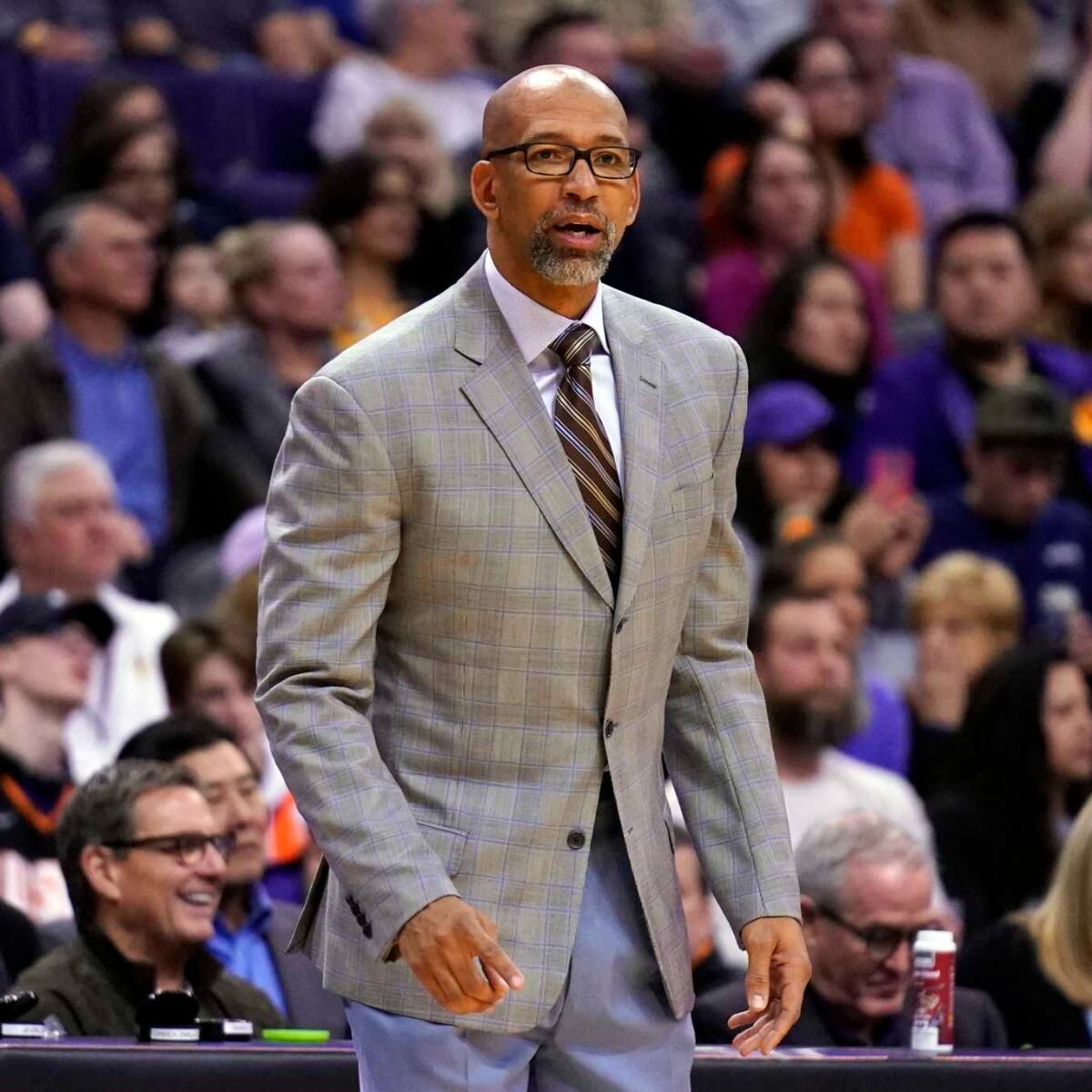
Episode 163 – From the NBA Finals to Entrepreneurs Everywhere with Monty Williams
Most people wouldn’t compare being an NBA coach to being an entrepreneur. Yet, both are high-stress and lonely roads to travel. They involve building a team, moving to a common mission. Monty Williams, coach of the Phoenix Suns is in the NBA finals and might be on their way to an NBA title. Monty shares his story, the highs and lows of being a professional coach and reveals just how similar coaching is to being an entrepreneur.
Episode Transcript
*Some listeners have found it helpful to have a transcription of the podcast. Transcription is done by an AI software. While technology is an incredible tool to automate this process, there will be misspellings and typos that might accompany it. Please keep that in mind as you work through it. The FDE movement is a volunteer-led movement, and if you’d like to contribute by editing future transcripts, please email us.
Monty Williams: I’ve heard people say that over the years, and especially when I was a kid, like God doesn’t give you more than you can handle and exhibit A that he does allow more than you can handle. And I think at times those things are allowed so that we can not that God is desperate for us to come to him. But it does allow us to be in a place of surrender and submission where we know that he is all that we need and he is all that we ever need.
Rusty Rueff: Welcome back, everyone, to this very special edition of the Faith Driven Entrepreneur podcast, we’re going to call it the tipoff edition and you’ll understand why in just a moment. You know, most people wouldn’t compare being an NBA coach to being an entrepreneur, yet both are high stress and lonely roads to travel. They involve building a team and moving to a common mission. Today’s guest is Monty Williams, coach of the Phoenix Suns, and they are in the NBA finals as we speak and might be on their way to an NBA title. Monty shares his story with us today. Today’s the highs and the lows of being a professional coach and reveals just how similar coaching is to being an entrepreneur. Let’s listen in and go Suns.
Henry Kaestner: Welcome back to the Faith Driven Athlete. We have a very special guest with an incredible story today, Coach Monty Williams of the Phoenix Suns. So many of you have heard some aspects of his story and some aspects of his life. And we’re just really honored and blessed to have him on with us on this program to be able to share with us. So you grew up in Prince George’s County. In full disclosure, I grew up in Baltimore and was no fan early. And then the math is huge and it must have been a rivalry. You must played against those guys. Yeah. Somewhere along the way, you end up competing against some of these teams and realizing that you’re good and you’re playing with some of the best. When in your life did it kind of start percolating in that case? You know, I might be good not to play in the NBA, in the NBA.
Monty Williams: It was a gradual thing for me. Like when I was in high school back then, we didn’t think much about the pros. When I was in high school, I was like, man, I wonder if I could ever play in the ACC if you want to play Maryland. I did, but they had like a lot of stuff going on, allegations and sanctions and things of that nature.
Henry Kaestner: Len Bias.
Monty Williams: Yeah, yeah. Right after Len Bias and you know, Len Bias was my Michael Jordan like lying to you county. Len Bias was the guy you looked at. And so we all wanted to be like Len Bias. I can tell you where I was when I found out he was dead. Like that was the thing. And so for me, it was like I was in high school trying to figure out how can I ever play in the seat? And I think that thing that helped me was I had a coach take me to a basketball camp called Five Star Basketball Camp, and I went to the one at Radford and there was a number of top players in the country that were going to be at this particular camp. And on the ride down there, this coach’s name was Todd Bozeman. He was like, all you got to do is just do what you do and play hard. You’re going to come out of this thing a different player after this week. And I was just like, OK, you know, I just did whatever. And I went, you know, I did that. And I ended up being one of the top players in the camp. And it started to dawn on me that I was better than I’ve given myself credit. And that was what fueled my work ethic, because I felt like if I work even harder, who knows what could happen, because all I was trying to do was get a free ride to college. I wanted to get a full scholarship because I knew my mom was in a tough spot and she couldn’t afford that. And so my goal was to get a full ride. And then I think when I got to college, the same type of situation happened. The more success I had against the best players in the country, I started to think to myself, man, I could play in the pros someday if I keep working.
Henry Kaestner: What is it like being in the pros, being a guy serious about his faith? Did you find that there’s a tribe of other people that you’re able to be in fellowship with? What was that experience like?
Monty Williams: It was different at times and then there were times where I felt like God provided for me. Sometimes you go into your pity party like Elijah did and you think you’re the only one. And gosh, there’s no Christian but God that provided for me from day one. Like I got drafted in New York and two picks later, New York drafted. Charlie Ward and Charlie and I were roommates on the road. We lived fifteen, twenty minutes away from each other. We were accountability partners as rookies in the NBA in New York City. And so there were times where I did feel alone, but there were also times where I was able to connect with brothers like Charlie and Avery Johnson and David Robinson and Ronnie Grandison and so many awesome guys. Afonso well. So I went to college with another brother in Christ. And as I’ve gotten older, I realized that God has strategically put me in those situations to be like in places that might not have not to say that I am the life, but when we allow Jesus to shine through us, that has a huge impact on people. So it was a cool time for me because I got to connect with so many other brothers that were more mature than I was. And at the same time, I’ve built relationships with guys who weren’t believers and some of them are now. And I can see how God used me in that. And then there were times where I’ve been with guys who didn’t want to convert to Christianity, but they respected our submission to Christ in our faith. And that’s been pretty cool to be able to serve those who aren’t like you. So I think that’s what we’re called to do. One of the things we’re called to do is to serve those people.
Henry Kaestner: So in nineteen ninety four New York City, I’m in New York City too, I. Worked on Wall Street at Merrill Lynch downtown, and Charlie Ward, who a lot of our listeners won’t know about Charlie, but Charlie’s great basketball player, of course, playing for the New York Knicks, but a very, very good football player to win the Heisman Trophy. And I remember he came in one day at lunch and we had a small office and maybe they’re 25 or 30 that were there at lunch. And he must have drawn the short straw because he came in and he spoke to a bunch of these guys and he talked about his faith. And I think this is before I was a believer, I didn’t take him seriously, but very much should have, I think, come to faith until twenty eight. But really impressed me about a young guy who really put it out there. You know, he had a whole bunch of other things he could have been doing that day, but he wanted to go ahead and share his faith. And his story as a Heisman Trophy winner is the new point guard for the New York Knicks. And even in a hostile environment in New York City at that time, this is right when Tim Keller is getting started. There’s not a lot of faith going on. And it’s really interesting to hear that you’re part of that. What do you look like for you and Charlie and La Fonzo and those guys to be able to be salt and light and that type of world? What was the courage that you guys got together that allowed for people like try to get out there and to be a witness?
Monty Williams: Gosh, I mean, to be honest with you, I think I was always if I was totally honest and I can think back, I wasn’t as outspoken as I wish that I was back then. Charlie was certainly somebody that gave me confidence to do it more. He had a take it or leave it type attitude when it came to the gospel, you know, but he did it in a way that was attractive and loving. I was still caught in this trap of trying to fit in, but also wanting to represent Christ. And it was one of those moments for me or periods in life where I was just like, man, I’m not quite sure if I know how to and to be straight, I think I was more worried about my reputation and fitting in than Charlie. And that was why at the time, even though we were the same age, I looked up to Charlie a ton and he and my wife, because we both got married right after our rookie years, both of those two people were so outspoken and so unashamed. And to be straight, man, I wasn’t even close. I mean, I couldn’t walk you through the tenets of our faith. I couldn’t call myself an apologetic. I couldn’t say any of that. I could say I was a Christian. And so shamefully, I got to admit to you, I was not a good representation of someone who could share the faith and who wasn’t ashamed of the gospel, because to be straight, I was it wasn’t until I got traded from New York and went to San Antonio and met some people down there who started to disciple me. And I never had that before. And once discipleship started to happen in my life and in my heart and some things were happening in my career, I realized that the Lord was all I had. I was trying to hold on to some reputation or fit into something that I was never born to fit into. So that may not encourage the listeners, but I want to be straight about who I was back then. I was a Christian, but I was not a great representation at all. It was God’s grace through Charlie and through my wife Ingrid and through La Fonzo Ellis. And back then Steve Jamison was doing jamming in the darkness. And things like that had a huge impact on me because being a Christian athlete for me was playing well and getting on the microphone and saying, I just want to thank God for the opportunity to play like that was what a Christian athlete was. I had not adopted or submitted to the call on my life as a husband. I certainly wasn’t ready to be a father, was not involved in Bible study. I didn’t adopt any of those practices consistently until I got traded and went to San Antonio and met some people down there that just basically changed my life, saved my marriage and probably saved my career.
Henry Kaestner: Tell us more about that. So you shop in San Antonio? Yeah. It’s a culture like there. I guess that’s pre Tim Duncan, right?
Monty Williams: Yeah. This was about a year before Tim came. I was with David and Avery and they knew I was a Christian and they were so gracious to me. You know, we would have Bible study before shootaround. And so I was doing that with them. I’d never done that. Even in New York, Charlena hadn’t involved ourselves in Bible study before shootaround. So I got a chance to watch David. I got a chance to watch Avery. And I started to see godly men who had been in the league for a while, made all kinds of money, but that did not define their identity was in the Lord. And then we started going to a church where discipleship was a big deal. And Ingrid and I started going to marriage classes and I learned that I was supposed to lay down my life for my wife. I learn. And the importance of not just telling people I was a Christian, but living it out, sitting under guys like Rick Godwin and Dr. Wayne Gordon and Randy and Sandy Ross, so many important people at Eagle’s Nest Christian Fellowship in San Antonio. So if I hadn’t gotten traded to San Antonio, I don’t know where I’d be right now because those people have such a huge impact on me as it related to discipleship I did in times. You know, when I got into the NBA, tithing was the furthest thing from my mind. I was making all this money and I was like, I’m going to take 10 percent of this and give it to who? I didn’t understand the importance of that didn’t even know where the verses were. And once I started to study those verses and understand stewardship better and understand that it wasn’t my money to begin with, it was my job to steward the money that he was giving me and how I could be a part of the kingdom. It was a privilege for me, the time. It was a privilege for me to be able to advance the king. I just didn’t know that before the discipleship card started to really take hold in my heart.
Henry Kaestner: You played with some incredibly David Robinson. You’ve coached with some incredible people like Coach K. Tell me about how some of those people along the way have made you a better person, better player. Let’s start with a better player. You talked about how this group of men helped you become a better husband. That’s incredibly important, much more important and better player. But tell me about what it’s like to be friends with to be on the road with a guy like a David Robinson is no league wide is just in complete and total class act. So cool to see him on the Duke sidelines this year cheering on his son. A great story there. But just tell us a little bit about what it was like to do a little bit of life with the admiral.
Monty Williams: Yeah, for me, Dave was a guy that wasn’t afraid to be himself. He embody at the time what I saw as someone who was secure not only in his game and, you know, he was interested in music and other things, like when you get to the NBA, we tend to copy what we think everybody else is doing, like Michael Jordan’s playing golf and everybody else feels like they have to play golf. Dave was the kind of guy he played golf with. They were interested in other things, music watches. He and I had conversations about finances. He seemed, in my opinion, to be one of the more secure guys that I’ve met. He was OK with being himself, and it really gave me the confidence to be myself. I think the basketball side of it was really cool, too, because I was in an environment that was focused on winning a championship. And when you’re in an environment like that every single day, you can’t help but get better because Avery Johnson’s pushing you every single day. Davis was pushing you. And sometimes it was with words and sometimes it was with a look and sometimes it was just with their actions. And you didn’t want to let those guys down because you knew that they were focused on winning. And then you throw Gregg Popovich in the mix. And it was the perfect storm for me as far as the culture is concerned. We had high character guy, Sean Elliott, Vinny del Negro, Will Perdue, everybody. It was the first time that I was in an environment where everybody on the team was focused on one goal, which was to win a championship. But they did it in a way that was a little bit different than what we’ve seen on TV with the last dance. Like I can’t remember one time Dave ever making anybody on the team feel small because we lost the game or they missed the pass. He’d get on you. But I never felt less than a man when I didn’t perform well when I was playing days. And that had a huge impact on me as well.
Justin Forman: Can you take us, Monty, a little bit into life after San Antonio? Just what did that look like? You know, you’re in a place where so many people are pouring into you. You’re learning what discipleship means you’re experiencing. It sounds like community for the first time. Fast forward years later, you’re in Oklahoma City. Where did God have you in that season there?
Monty Williams: Well, there was so many things that had happened between that stint in San Antonio and OKC. I was so blessed to go to Portland when I first started coaching. And I thought that was a basketball decision because I really didn’t want to go because they were coming out of the jail blazer era and I started coaching in San Antonio. I was like, big, extreme change. Yeah, a little bit. But Ingram, who was my wife at the time, she had already prayed about it. And before I made my decision to go there because I had another offer, she was like, honey, I just I feel like this is where God wants us to go. And and then I was like, I don’t want to go. It’s crazy up there, yada, yada, yada. And then I called. Ask him about it. He’s like, man, I think you need to go to port. And so I was like two people that I respected, you know, they were at the top of my list. Pop and Ingrid were both telling me I needed to go. So we went and the basketball piece, it took care of a lot of hard work and sacrifice. And being under Nate McMillan was really cool. But spiritually, we grew leaps and bounds because for the first time in my life, I was around expository teaching and we started going to Athie Creek Christian Fellowship and we were under Brett Metter and Brett. I never gone to a church that just went through every job and tittle of the Bible. I’ve never done that. Or Wednesday night Bible studies would have, you know, 800 to 1000 people every Wednesday night. It was one of the most incredible experiences I’ve ever had in my life. And so that laid a foundation for me going forward and then leaving there and going to New Orleans and being under Pastor Bill Gephart, who’s like my dad now, he’s my mentor, a guy I talk to almost every single day that led to OKC when so many things for me and my kids changed. Had I not had that foundation in God’s word and knew a few things, that probably prepared me for the tough stuff that we were about to encounter in OKC. And when we got to OKC, you know, things changed drastically when my wife was killed in the accident and my kids were a couple of my kids were hurt pretty badly in the accident. Had I not had a foundation in the world, I probably would have been in bad, bad shape because all of the things that were supposed to add up just didn’t add up in my own economy. But in God’s economy, as bad as things were, I knew that it was OK, better than OK because she was in his presence, even though it was a really, really tough time for me and my kids.
Justin Forman: Coach, we were grateful for the way that, you know, you’ve shared just how God’s been at work and just that beginnings, I guess, of that difficult time for us. You know, I think that God obviously took you through some experiences there that we all think about when we wake up maybe with a cold sweat about and we haven’t walked in those shoes. Can you just give us a little bit of a glimpse into what it’s like when you get that news, when you’re walking through those first few moments and as you just start putting one foot after another? I mean, we from the outside saw you at the funeral days later giving a speech. And because I’ve heard Doc Rivers and others say we didn’t know that money should be getting up there talking, but then within seconds, we know, man, God is alive hearing work. Can you walk us through a little bit of that journey?
Monty Williams: Yeah, I mean it. To get a call like that. There’s nothing that can prepare you for that. I mean, the only thing that I can tell you straight up, like when I got the call, something in my heart told me that this was different. I was with two of my kids and I was just getting myself ready for the game. We were actually going to play New Orleans the next night. So I was jacked up about that. And when I finally kind of settled in to my prep and had two kids on the sofa with me, Layal and my son Elijah, I was just, you know, just having a normal night. And when I got the call, for whatever reason, while I was on that call trying to figure out like what was going on, I knew that this was different. And when I got to the hospital and realized how serious it was, it’s hard to explain. And there’s a place of pain. There’s a place of not knowing what to expect. There’s this unknown. It was a heaviness that was all over me. And, you know, I just wanted everybody to be OK. That was my mindset. I just wanted everyone to be OK. And when I finally got a chance to see my children, it was one of the toughest things I’ve ever had to encounter is to see your kids in the hospital in the shape they were in. And then, you know, when I finally got the news about Ingrid and realized how serious it was, it’s one of those things that I still can’t explain. It was just really hard. It was really slow. I remember, like, time just went by so slow and all I could do was what I called pray. But I don’t think I really was you know, I was just waiting, you know, for God to just make this right. And the way I describe it, when you know that your dad has the capability of doing anything and it doesn’t work out. The level of disappointment that goes with that is unexplainable, because I know that God could have done whatever, and when it didn’t work out, I wasn’t mad at God the way that you would think. I was just really disappointed that it didn’t work out for me. That’s the only way that I can explain that I was just disappointed because I know that our guys can do anything and I know that he didn’t do it, like he didn’t cause this accident. He didn’t cause this lady to do what she did that night. He certainly allowed it. And I just couldn’t figure out why he didn’t fix it the way I wanted him to fix it. And so, you know, as time went on, there were just a lot of hard things that I had to do. I had to tell my kids that their mom was gone, to have gone on to be with the Lord. And trying to put your life back together seemingly was impossible because there was just no way that that was ever going to happen again. And so after that, to be straight with you guys at the funeral, I was just talking to my kids. I wasn’t talking to the masses or even the people at the funeral that day. I was talking to my kids because the thing that was so. Scary for me was I didn’t want their faith to be shaken. You know, she was a girl that had spent countless nights and we did it as a family, just having depos and talking about the goodness of God. And we were tigers and we were all these things that we thought and our economy would lead to X, Y, Z. And then when it didn’t work out the way that we thought it would. I know that my faith was rattled and I didn’t want my kids to have to deal with that. And so I was really trying to encourage my children. And so, you know, God has shown himself to be more than faithful ever since then. I mean, he’s not only sustained us, he’s provided I certainly know where he is. I’m certainly so thankful for that. There’s always going to be a hurt and a heaviness that goes with that. And it never goes away. It will never, ever go away. But over time and understanding God’s economy and that he’s received anger and she’s in heaven with him right now. And we have a hope that we’re going to be there someday. There’s a great deal of peace that goes with that. So I am thankful for that. But it was a very, very difficult time and it still is even to this day. It’s still a tough time.
Justin Forman: Coach, one of the things that struck so many at that service is that you were intentional to say that there were two families that were hurting and that there was somebody else whose lives had gotten shaken up. And you really went to the place of saying, man, we hold no ill will. We forgive them from that? What made that so important for you to say that? And have you reached out to the other family? What conversation, if any, has there been?
Monty Williams: Yeah, I guess what led to that was, again, just telling my kids that there’s no benefit in harboring ill will towards this particular family. Even Susanna Donaldson. She didn’t wake up that day wanting to hurt my wife. The one thing that Ingrid taught me years and years ago is that hurting people, hurt people. And it really made me think that for that lady to go to that extreme, she must have been in bad shape. And I think the only way that I could lead my family during that time was to try to come out of this without being more bitter than we could be. And the night before, we had like a prayer service in our house and Pastor Brett from Oregon had flown in. And we just sat there and we were praying. We sang a few songs and he started talking about some things that I really had to confront. I couldn’t hold on to the bitterness that was welling up inside of me because it was there and there was a different kind of anger that was in my heart. And he said a few things that night that really made me think how bitterness and unforgiveness had played me throughout my life. And I had a choice to, you know, explain that to my children and not allow that to hurt them in the same way that it hurt me in my past lives. And so that may have been a part of what I said that day. It was really about my kids. It was really about leading them and discipling them and giving them some encouragement. It was going to be tough, but we were going to be OK. And even though. I have questions for God, I don’t question God, and that was another thing I wanted to get across to them is we’re not in a position to question God. One day we can ask them, but it won’t matter, will be in heaven and we’ll be like, oh, yeah, you know, that kind of thing. But it was really about my kids. It was really about for once, I got to get this somewhat right. I got to lead them in a biblical way, in a godly way that can be not only productive and then God chose to use it the way that he has. And we’re totally humbled by that.
Justin Forman: Yeah, you’re certainly in a season there where nobody would fault you and say that, you know, you have your moment, you have your chance to be angry, to be upset, to hold that bitterness, to almost get a pass and a mulligan almost, and just being able to be frustrated. But it’s unique that God has you and had you in that place where in the time that you were at your toughest, maybe at your lowest, you need to be at your best for your kids. And it’s interesting just seeing how God worked through you and just the power that came through. You’re really talking to them. You know, people have said this idea is, God, give us more than we can handle or never more than we can handle. You can probably look at it from a couple of different perspectives. How would you answer that?
Monty Williams: I’ve heard people say that over the years, and especially when I was a kid, like God doesn’t give you more than you can handle and exhibit A that he does allow more than you can handle. And I think at times those things are allowed so that we can not that God is desperate for us to come to him. But it does allow us to be in a place of surrender and submission where we know that he is all that we need and he is all that we will ever need. You know, Matthew, six thirty three, the first kingdom of God and his righteousness. We tend to seek the other things and not God first, you know what I mean? And as God allows circumstances, it gently draws us to himself. And so I’m not a theologian and I’m certainly not qualified to be the end all be all on that concept. But I know from that situation for sure that it was more than I could handle. I mean, there were so many not just days, but months and even years where I was so overwhelmed. I’ve never been that tired and all of my life and God provided whether it was a phone call from Tonja Ward, Charlie’s wife, to tell me to get somebody to help me cook to Avery Johnson calling me, saying, you need somebody to help you clean the house, because I was just trying to do too much. I need it a lot during that time and still do. And God has provided so.
Justin Forman: So talk to us a little bit about that in that service. He said in the raw emotion, maybe the disappointment, some of the challenge, the speaking to your kids, you said that phrase, God does work all things for the good. What good can you now see looking back a few years later?
Monty Williams: Yeah, well, I think we always quote Romans eight twenty eight and sometimes we leave out twenty nine. Twenty nine. It’s so important, you know, the goal is to conform us into the image of Christ. You know, I hate that we’ve had to go through this, me and my kids. But since then I’ve seen and felt God is leading and his vision and the way that we have grown and matured in a way that I haven’t before, it forced me to dove into the world. It forced me to be more vulnerable about who I am. It forced me to get help. I went to a class called Grief Share because I was really struggling with the overwhelming grief that goes with a loss like that. And so I can’t say that I’m thankful for that because I would never wish that on anyone losing someone like Ingrid. But I am thankful for what God has done and the good that’s come out of it. I’ll be walking in an airport or I’ve been in places all over and people have walked up to me like out of the blue and said, Man, you have no idea how you fill in the blank from that particular day at the service when it was played on TV or YouTube or something like that, how it affected them or encourage them or made them look at God differently. That’s a good that’s come out of all of this. And so for that, I’m thankful
Justin Forman: to trophy’s come in all shapes and sizes. One of those you got over the years was a super loud jacket. What Herning Masacre Award mean to you? And I guess take us in specifically in there. I think you referenced or alluded to this idea that God had given your family. It’s something an event both the times before, the times after the steward, what have you learned about your kids as they steward kind of this journey with you?
Monty Williams: And what I’ve learned about them is the time was not wasted that we’ve spent, especially their mom. She spent so many nights in DeVos and praying for them. And, you know, those kids could recite Psalm 91. They were doing that as babies. None of that time was wasted. And I’ve seen it. I’ve seen the goodness of the Lord and my children. None of them have walked away from the Lord. They still honor God with their lives. And yes, my kids are goofy and normal like all kids. But I’ve seen their walks remain somewhat consistent since then. And I tell them all the time I look up to them because of the strength that they’ve shown, their ability to follow me even when I wasn’t the best leader. You know, people may think that they see strength in me or they think Monty Williams is this or that. But to be straight, this has been the hardest thing that I’ve ever had to do. And I’ve made a ton of mistakes and God has just graciously walked us through with my mistakes. And I’m thankful for that. And my kids have had to endure me being the leader by myself until recently, being remarried and moving forward.
Justin Forman: Yeah, talk to us about that journey. What has that been like recently? Getting remarried? What’s it been like for you and the kids?
Monty Williams: It’s different for sure, but good. Lisa is just a fabulous lady and she just loves these kids.
Justin Forman: And how do you guys meet?
Monty Williams: We met in San Antonio when I went back there and started working. She’s from San Antonio and she had friends that I worked with and we ended up meeting and just navigating all of that. It had to happen with the right person. And to see her and the kids the way that they are together, like only God can do that. You know, I did make a lot of bad choices. This one was one of the things that thankfully, God help me get right, if that makes sense. And, you know, Lisa’s just been she’s one of those people that just gets it. She understands the grieving process will never go away. And yes, she’s totally respectful and expects that. And yet she mothers these kids as if they were her own. And that’s been so cool to watch. So I’m really thankful for that.
Justin Forman: So I want to I you know, I’m grateful for the ways that you have shared just so much about the journey that God had you through and your vulnerability and candor here. I want to pivot towards a little bit of basketball. You know, this is Faith Driven Athlete. So we have to talk a little bit about things on the court. Let’s pivot towards coaching a little bit. You talk about this idea. Maybe there’s a couple of different images of coaching. You see this guy that’s this iconic figure. Leading strength can do no wrong. You’ve gone through some of these life experiences. Is it easier to lead in strength or lead and brokenness?
Monty Williams: Well, I think it depends on the kind of strength that we’re talking about. I think there’s a strength and brokenness that. It is attractive to people, it doesn’t mean you have to, you know, open up the book and talk about everything that’s going on in your life and scare people. But I’m hopeful that when I coach and when I serve, that our players and the people that work with me see a strength that’s authentic, that’s not contrived. I don’t want to have the type of strength that buries people or makes them feel less than human or use my power or position to put people in their place. I’m hopeful that they see my strength in a number of ways, but hopefully me helping them be the best version of themselves using my position. I think the guys that I get to coach more than anything, I hope they know I care about them more than just them playing basketball. I care about their lives. They care about their walk. If they have one. If they don’t, I hope they see Christ in me every single day. And I think that’s something that is a strength to. So I’m not the prototypical coach. That doesn’t make me better. And it certainly doesn’t make me I’m not a prop and I’m not Coach K, you know, when you’ve been around the best, you know you’re not. So I’ve been around some of the best, so I know I have a ways to go there, but I hope they see Christ in me every day. And I hope it’s authentic. I hope it’s attractive to them and the strength that they see in me. I hope it’s an elevating strength that allows them to be the best version of themselves.
Justin Forman: Are the phrases that Pop would say that Coach K says that you’ve picked up and find yourself saying,
Monty Williams: yeah, for Pop, it’s always you can’t skip steps. You know, the process is so important. You know, he was big on taking one step at a time, not just winning a championship of building a program. And then he would always say, you know, you have to be a part of your own rescue. You know, you’re expecting everybody to save you all the time. You’re going to be stuck. But if you’re drowning and I come to save you, you got to kick a little bit so we can get to shore or get to the boat. He was big on guys being a part of their own rescue. Those two things stick out for sure. And then Coach K wasn’t around him long enough to pick up any of his nomenclature or sayings, but he was just a plotter, like one of the hardest working people I’ve ever been around. I mean, we could be up. We could have a game, you know, shootaround game, dinner meeting, watched film, go to bed at two, two thirty. And he’d be up the next morning at seven o’clock, wide awake, clean shaven, sitting in front of the TV watching film, ready to go again. I mean, he lived for the game. He lived for the preparation. He lived for the moment. And that’s one thing I’ll say about Coach K. He would always talk about moments. You know, you have to prepare for the moment when the moment comes, you got to be ready. And so he was always and deep preparation because he wanted to be ready for the moment.
Justin Forman: Talk to us about the culture and what you feel like the program. Oftentimes when we think building a program, we probably tend to think about college sports. But talk to us about the program that you’re building there in Phoenix.
Monty Williams: Yeah, we just came up with a few values and themes that we can hold on to. The biggest thing for us was just listening to what was going on in Phoenix before we came. And so with that, we decided to build a culture based on five things show up on time, compete, share the ball, defend and gratitude. And we felt like the first to show up on time is just a choice. You know, it’s pretty disrespectful not to show up on time. Gratitude was just something to think about. We always tell our players the NBA is to get to not have got to. It’s a privilege. And then the three in between are solely basketball concepts. And so we tried the same, which the basketball with two life concepts, one’s a choice and one something to think about.
Justin Forman: Where do you feel like you are on the ladder of building the program? Do you feel like the values are entrenched to talk to us where you feel like you are?
Monty Williams: Yeah, somewhat. I mean, we’ve had a weird season and that it was interrupted with the virus and so many people are struggling and suffering with this particular pandemic. But we felt like we laid a good foundation. We certainly feel like, you know, we were the youngest team in the league and to be able to compete the way that we did was certainly gratifying. And yet we know our next step is twice as big as the one we had to take to get here. And so we feel great about what we’ve done, but we also know we have a ton of work to go money.
Justin Forman: We are so grateful for the time that you spent with us here today. You know, we like to finish each episode. Really rooted in the scripture, rooted in where God has us in the season, you talk about discipleship and just developing those patterns in those habits. Is there something in those habits, those patterns, that piece of God’s word that’s really speaking to you and coming alive in the season?
Monty Williams: Yeah, I mean, the pattern would have to be just the practice of getting up every morning and studying. It was something that I was not accustomed to or willing to do. And I used to watch Ingrid do it every day to study and journal, study journal. And I was more of a DVO guy. I get on my app, I do a DVO and you know, whether it was Choux Wendle or Tony Evans, whomever, like I’ve done a lot of depos and they were really good for me. But the pattern that has changed for me is just getting up every morning between five thirty and six o’clock and just studying God’s word. I used to listen to a guy named Chip Ingram and sure, he talked about his daily walk Bible practice that he adopted in college. And so I bought a daily walk Bible two years ago, and I’ve done it the last two years. And it’s been so beneficial for me to be able to get up early when it’s really, really quiet for the birds start chirping. It’s actually now my favorite time in the day is to get up early and dove into the word. And the verse that sticks out for me has been Exodus 14 14. God is telling us, but Moses at the time to be quiet and he will fight for us. And there are so many times where, you know, as a man, I want to fix stuff or say something or do something. And there are times for that. For that particular verse has been on my heart for the past three years, along with Matthew six thirty three, which we talked about earlier, book allowing God to fight for us, especially in those situations where you can’t do it. It lead you to Psalm 46 to be still and know that I am God. God has us in the midst of a pandemic, in the midst of life changes, vocational changes. There’s encouragement that comes from God’s word. He’s got us. He always has us, and he’ll never let us go.
Justin Forman: Such a great word. Money. It has been a treat to see. I think most just how many people have spoken in your life, how many pastors, how many different people along the journey that we’re just a part of your story, part of your journey and how you are now getting a chance to do that for so many others. So and grateful for the time with us. Thanks for being a part of the show.
Monty Williams: Thank you. God God bless you.
Rusty Rueff: Thanks so much for joining us on today’s show. We hope you enjoyed it. We are very grateful for the opportunity to serve you the larger Faith Driven Entrepreneur community, and we want to stay connected. The best way for you to do that is to sign up for our monthly newsletter at Faith Driven Entrepreneur ERG. And while you’re there, we want to hear from you. We derive great joy from interacting with many of you. And it’s been very rewarding to see people come to the site and listen to the podcast now for more than over 100 countries. But it’s even more important to us that you feel like this is your show and that you’ll help make it something the best equipped you on your entrepreneurial journey, one that you’re proud of and one that you’re going to share with others. Hey, this podcast wouldn’t be possible without the help from many of our friends. Executive producer Justin Forman and program director Johnny Wells. Music is by Karl. Well, you can see and hear more of his work at the summer dotcom audio and editing by Richard Bahle of Cornerstone Church in San Francisco.




























A statistically improbable success story reveals how a difficult childhood and corporate rejections became stepping stones to purpose. Former Meta global faith partnerships leader Nona Jones shares how entrepreneurs can transform rejection from pain into powerful opportunity. Through candid stories about comparison, identity, and divine redirection, she shows how faith-driven entrepreneurs can build from calling rather than ambition.