Will Entrepreneurship Replace The Liberal Arts?

— by Alison Griffin

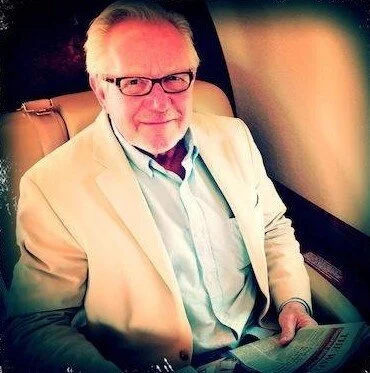
According to Tim Holcomb, the chair of the Department of Entrepreneurship at Miami University the answer is yes. In fact, according to Tim, entrepreneurship is fundamental to a renewed and contemporary conception of the liberal arts. In a recent interview with Allison Griffin, a Forbes Contributor, the two discussed the future of learning and the intersection of higher education, entrepreneurship, and technology. 

Click here to read the full article on Forbes

Recent articles

Episode 172 – Can A.I. Make Better Investing Decisions Than You? with Tom Kehler

In 1969, Tom Kehler was hunched over a Model 33 Teletype connected to an IBM mainframe developing a program to learn a function from data. Today, he’s here to talk about the future of artificial intelligence. 

A lot has happened in the in between decades, both in society and in Tom’s life in Silicon Valley. As the CEO of CrowdSmart, a business using AI & Collective Intelligence software platform to improve the accuracy of predicting investment success while reducing ingrained bias, he’s seen it all. 

Tune in and hear where we’ve been, where we are, and where we’re going…


Episode Transcript

*Some listeners have found it helpful to have a transcription of the podcast. Transcription is done by an AI software. While technology is an incredible tool to automate this process, there will be misspellings and typos that might accompany it. Please keep that in mind as you work through it. The FDE movement is a volunteer-led movement, and if you’d like to contribute by editing future transcripts, please email us.

Tom Kehler: We wanted to create a platform whereby you could just use collective intelligence to create kind of a way to score innovations in such a way that it doesn’t matter what your background was, where you came from, it was a great idea. It should get funded. So that’s the core idea of that leveling, making sure capital flows based on the value that they’re creating, not who they are, where they went to school.

Henry Kaestner: Welcome back to the Faith Driven Entrepreneur podcast, I’m joined by William and Rusty, as always and guys, today, this is a special occasion. It’s rare that we stay within Silicon Valley for a podcast. All three of us, of course, live in different towns here. But we’ve got a guest from Half Moon Bay. We’re talking before we went live, Half Moon Bay, of course, being the home to lots of really cool things, including the greatest pumpkin festival of all time, but also mavericks.

Rusty Rueff: Yeah. Yeah. Well, I’m a little peaked out today because our guest, you know, when you want to talk about somebody who’s been there from the beginning. Right. This whole Silicon Valley thing, you know, and a lot of people just think Silicon Valley from the show, you know, which is pretty funny. Unfortunately, sometimes it was too real. But, you know, there was a beginning. And our guest today was pretty much at the beginning. So I yeah, I got a little. Yeah. Geek things going on. Your intro, you talked about

Tom Kehler: a little bit about my age, but I was only 14 when I can’t I’m just.

Henry Kaestner: Yeah, well you talked in the intro Rusty about nineteen sixty nine and I’ll tell you what, I was done in nineteen sixty nine. I was only around for about two and a half months of it. Oh yeah. Yeah. So that’s super cool. That’s a faithful obedience in the same direction, working in an incredible industry. So maybe just typically we start off by asking our guests who they are, where they came from, their faith journey and how it’s all worked up. We do want to get that from you. But as we get started, just maybe some thoughts and observations of the last 50 years in Silicon Valley. I mean, it’s got to be much, much, much different than it was 50 years ago.

Tom Kehler: So actually, I came here in nineteen eighty two, so it’s just about 40 years ago. But actually it was a wonderful experience because I literally ran the age group at Texas Instruments in Texas and I’m originally from the East Coast. We’ll get there in a minute. But I invited Ed Feigenbaum, who was one of the fathers of expert systems, and I invited him to speak to the tea group. And after it was over, I was telling him I had grown up on the East Coast where I like mountains and good scenery and no offense to anyone from Texas here, but the scenery wasn’t quite as good as I wanted in North Texas. And so two weeks later, he basically said, why don’t you come out to California and do a startup? And I thought about it and did it. So I arrived here. An unfortunate thing of that part of the story is that I got to meet John McCarthy, who was one of the other fathers of A.I. So two things happened. I got early stage of Silicon Valley, but right in the heart of the development of artificial intelligence.

Henry Kaestner: So some number of our listeners will think of artificial intelligence as being something that’s been going on for two or three years. They’ve just heard about it starting to come into the mainstream. You’re talking about a very different start. I mean, it’s been going on for a long time. You’re talking about the very beginning.

Tom Kehler: Well, in fact, it was very big. There was a first wave that was quite big and it was around something called expert system. So the first wave is how do we take what humans are good at and put it in a program? And DARPA will call this hardcoded AI, where you would literally try to model how people use logic and knowledge to solve a problem. And so you actually built something called symbolic processing systems that think of the math here being logic, reasoning and knowledge representation as the basis of it. Current AI is all about mathematically learning patterns from data, but the two play together. In fact, we’ll get into this. But what’s happening now is there is a return to bringing together the first wave of AI with the second wave AI to create a new wave around human centric or human in power day.

Henry Kaestner: I mean, OK, I want to get more into that here in a little bit because there’s a lot there. We need to start talking about artificial intelligence. There’s a theological underpinning to all of this and I want to unpack that a bit. OK, let’s go back to who you are. You come from the East Coast. Who are you? Where do you come from? Have you always been a Christian bringing us up to speed?

Tom Kehler: So I was born in Carlisle, Pennsylvania,

Henry Kaestner: and home of Jim Thorpe.

Tom Kehler: Yeah, that’s exactly right. It was an interesting little town. It was a pre Revolutionary War town. So we had our bicentennial in the mid 50s. And, you know, we have the George Washington slept here, I think kind of going and Joe is one of the colonies. But my father was a minister in that town. And that’s also interesting as a teenage kid growing up, I will leave that alone for a minute. But I basically committed my life to Christ when I was 16 and literally thought I was going to go into missions work. And it’s a funny life story. Every time I try to go into missions, guys pushed me into. And seriously, I tried over and over again, you’ll hear that later as we get into this, but I really had a heart for Bible translation and the heart for Bible translation literally led me into artificial intelligence because I got very fascinated with the idea of how can you learn a language and then translate the Bible into that language. So that was my beginning journey and faith was setting off to do that. I got to me, actually, Cameron Townsend, who is the founder of Wycliffe Bible Translators, as well as Kenneth Pike, who is a professor at the University of Michigan who developed a linguistics theory that actually has a lot of the components of what we now use in A.I. But what was going on at that time and this is actually I graduated from high school in sixty five and there were people who were beginning to think about using computers more for the text processing side, but to help in translation and in fact went very from the beginning of when computers were born, they began to try to do machine translation machine translation actually goes back to the early 50s. And so I got caught up in that vision that maybe there was a there there on how you could take computing technology and marry it with this notion of machine translation. And could you somehow and that was the initial vision. I mean, I thought, wow, you can translate the Bible into all the languages quickly. And there was another component to it, which is the method by which Summer Institute of Linguistics is for learning languages was kind of a learning technology where you try to learn patterns and sell. My initial foray was into mathematical linguistics. There’s a professor at Cornell University by the name of Joe Grymes, who was doing some early work on that. But there was a number of academics who could see this vision of the possibility of computing technology completely changing the way that we got the word of God out to the world. And also as part of that, I mean, I’ll get into that a little bit later. But there was actually an ongoing thread there said literally the way I got in, I was inspired by this mission of, you know, can you apply computing technology to enabling people to learn languages and then translate the Bible into those languages?

William Norvell: Again, I’m fascinated by one question. We can go deeper at some point. But when I hear you talk about that, my mind goes to, well, it should have worked. Did it did I feel like there’s still a ton of people working on Bible translation? Why wouldn’t that have worked at this point?

Tom Kehler: Massive underestimation of how hard it is to understand language. And that became my life journey in my part of a I was natural language understanding and still is. If you dig in to what’s at the core of crowd smart, it is really working with how do we understand when people are saying something, what it communicates to someone else and all of those kinds of things. But it is a harder problem. And this is more about what I expect about the future of A.I. We’ve made more progress in natural language understanding in the last five, ten years that went on for 50 years prior to the massive improvements has been in that area. But today it would be more possible. But it’s still not quite there because deep understanding, you have to understand the culture, the meaning, the amount of knowledge that gets applied in Bible translation is way deeper than you can still encode into a machine

Rusty Rueff: is one of the issues. Also, like who has authority? Like I mean, people are translating the Bible all the time. Humans, right. They’re spending hours and hours poring over their interpretation of the Greek and how it was applied. And then they say, this is my translation is one of the issues with machine learning that you can’t have authority. It should be the crowd.

Tom Kehler: Well, that’s a good point. And now you’re playing into my beliefs about that. It should be collective intelligence and no one even has gotten close to doing that. So in my own you know, I continue to stay fascinated with linguistics. But one of the things that, as we all know, if we were all students of the Bible, we have to get into what was the context and what was going on. So cultural context and all of that determine semantics and meaning. And so that is I mean, to your point is that is the hard part. Now, I would dream of a day when people could use a collective intelligence to perhaps generate some more integrated translation, but anyway, yeah, it’s in general, I would say, very hard problem.

William Norvell: That’s interesting. That’s interesting. And so that’s how you got into I could you walk us through, maybe do a quick flyover of your career to date? Obviously, you mentioned Crowd Smart a couple of times, and I want to make sure we tell our audience what that is. But what else have you worked on during the season? And sort of tell us a little bit about where you are today and what crowds are trying to do.

Tom Kehler: So it’s a crazy path. I started out, I thought, well, I’m going to go at the time. Keep in mind, artificial intelligence. Well, it had been named in the summer of nineteen fifty five at Dartmouth. It was still very nascent by the mid 60s at that point. So the areas you could study and actually computer science was barely coming into being as a degree. Most schools, even like MIT or others, had Dubberly and within Devilly you have some work around computer science. That’s what I did. I was a doubly at Drexel, but while they’re in retro, I can see it. I couldn’t see it for decades, but God intervened in my career in a very strange way. I was planning on being a Dubberly with the idea of working on this linguistics stuff while helping out in missions with things like radio communications and all that practical. I lost my scholarship. I walked up and down the halls of Drexel looking for work study as pastors get ahead. No money. And I was going to a private school, which was at the time Tim Keller, which was a lot of money. And so this Jewish professor by the name of Richard Corren befriended me, but he said, you know what? You’re going to have to study solid-state physics. And he got me into a fully supported research fellowship where I went from being an undergrad to being in the graduate program, working on my Ph.D. in applied physics. And I couldn’t figure out what God was doing with that at all, except that another little thing, his next door neighbor was a very, very on fire believer. We’d have daily prayer meetings together. So God put these two people together in the same hallway. And so I studied this and this was the summer of sixty nine. When I’m on the teletype, I’m literally I happened to have a professor also at the University of Pennsylvania, Herb Callon, famous in thermodynamics, who had this vision of how you could take things from statistical physics into computer science. And if you look in the literature today, a lot of that work is what is in machine learning. So literally, I was getting exposure to early forms of mathematical A.I. through that process, and I didn’t figure it out until the current wave of A.I. showed up, but I literally went down that path. So that was one path. So I had no choice but to go into the academic. I went off to try to be a Bible translator. I thought maybe I’ll do that. I studied with Summer Institute of Linguistics after I finished my PhD and then I got offered a position in physics, teaching physics and computer science at a local university, Texas Woman’s University. And I did that for seven years until I got recruited into TII to run a part of their age group because it was during that period at the university. Then I started to publish papers that touched into the area and befriended a bunch of people who were at the AI Group from MIT, and they brought me into that group. Then from that group, I got recruited out to Silicon Valley. So that’s a high level view that in Silicon Valley I became CEO of Intel Corp., which was the first and I think only a company to go public. In the 80s. It was called in I for the stock symbol, very successful in the area of expert systems, essentially helping corporations take the expertize of their experts, putting it into computational systems. And then from there, I was then in the track of being CEO of tech companies and through current. So after Intel, a corporate was Kinect, which spun out of Apple, one of the first e-commerce companies to go public, and then after that, another company that won’t go into those details. But basically, that’s been my I’ve been part of kind of three ways. The AI wave, the first one, the e-commerce wave in the nineties, and then what became kind of the social media technology wave, which I consider what we’re doing, a crowd smart. So part of that,

William Norvell: those are good ways to be a part of fun,

Tom Kehler: just fun.

William Norvell: And one of the things I want to duck into this for a little bit, you know, we talk a lot about jobs here. On the podcast, we talk a lot about how employment is such an amazing thing that Faith driven entrepreneurs can bring to the world, how God desires work, how he had worked before the fall, just the dignity of work, the dignity of giving a good job to someone and what that does for them. And I know recently you wrote a paper talking about job creation through sustainable investing with artificial intelligence, which is a bit of a mouthful, but I think you’re going to deconstruct that a little bit. Could you walk us through a little bit of some of your thoughts?

Tom Kehler: Yeah. So the whole basis for founding crowd Smart initially was we wanted to find a way to level the playing field for entrepreneurs the way Silicon Valley works. And I happened to enter it that way. Right. You have a Stanford professor bringing you in. How hard is it to attract funding? Right. I mean, the point was, is we were connected immediately. I met with Gordon Moore, the famous Moore’s Law, Gordon Moore. I met him when I came here. So connection is all about connection, not about. Do you really have a good idea, even if you went to school somewhere other than, you know, if you were in the main view, somebody knows, you know, somebody else can and myself. And we really believed that we wanted to create a platform whereby you could just use collective intelligence to create kind of a way to score innovations in such a way that it doesn’t matter what your background was or where you came from. It was a great idea. It should get funded. So that’s the core idea of that leveling, you know, making sure capital flows based on the value that they’re creating, not who they know or where they went to school. Now, we ran a small fund for three or four years applying this technology to that. And one of the things we found out is we were funding 40 percent of the founders and CEOs were female, radically different from what was going on in the venture world. And we’re a minority driven and they didn’t necessarily go to the same schools. So what that led to is that article is we believe that if you sort of do this in general, get out where you can. And we’re working with groups like Angel, M.D. or others that are, you know, angel investors or early stage investors. How can you use technology to make it such that if you have a great idea and a great team and you built something, that you’re going to be able to get funding for it and thereby create jobs? It was we all know job creation comes through new companies. And so the driver is finding capital flow to the ideas that are most likely to do the job creation.

Rusty Rueff: Thompson, you heard at the beginning of this thing that I was kicked out. Great to have you on here because I actually built my first expert system Shell in nineteen eighty seven. Wow. Good. IBM had delivered it to it at Pratt and Whitney where I worked at the time and I was working.

Tom Kehler: You were a customer of Intel?

Rusty Rueff: We were. And yes. And so we had this tool and I was working in a group called the Hourly Compensation Group and it was where we scored and rated jobs, the work that people did against a pay grade. And we had all these different pay grades and we had the National Metal Trades Association scoring system. And there were five guys in this group that had been doing it for like 50 years. And they were all getting ready to retire. And they were like, who’s going to do this in the future? So we took the IBM expert system, Shell, and I took all everything I could from these guys heads and I put them in. And so if a job used a drill, it went this way. Did you have to pick the drill bit yourself? Then it went that way until you finally could score the job against the eleven different levels of the match.

Tom Kehler: Exactly. And by the way, IBM, our product that Intel Corp., the key product, knowledge engineering environment, was an IBM program product. So they were very close partner. I don’t know if you used our product or not, but we were very close partners with IBM in those days. Like I said, you know what IBM program product means as part of their core product offerings. And I remember Pratt and Whitney we worked with probably I don’t know, I remember at one point sixty seventy percent of the Fortune 100. We did all kinds of cool stuff, by the way, just so you guys don’t feel bad, you know, the fact that this variable pricing on airplane seats that unfortunately came from us so that it used to be there were just airplane ticket prices that were singular, you know, you paid. Get from here to there, then someone figured out, hey, there are all these people who do these cool decisions about inventory management, could we put that in an expert system? We did. Republic Airways did it. Republic got bought by North-Western that then propagated through the industry as using this rule based inventory assignment. So you may pay twelve hundred dollars and the person next to you spent four hundred dollars and dies.

Rusty Rueff: We just heard the beginning of DEVAM pricing there. It was right there.

Tom Kehler: That’s why they came out of the fact that you guessed it. What’s important about that is computational models can then scale right. And therefore it suddenly it goes through the industry.

Rusty Rueff: All right. So let’s fast forward this all turns into what we now know is a I or think of a I. Can you dispel some of the myths of A.I.? Right. Because we’re all kind of scared of it. I actually I’m really excited about it because I think when it democratizes and we all are running a smart machine learning programs on our phones, the world will get amazing. But right now, I think there’s a bit of a fear some small groups are going to control them, then that’s going to control us, you know, take us down the path of dispelling the myths. And then I also want you to weave in how your faith is a lens on what should or shouldn’t happen with A.I.

Tom Kehler: It’s very, very good question. And I mean, you’re tapping into something that, you know, you’re sort of making my mind explode at the moment. But let’s start off with, first of all, one of the things we did at Intel Corp. is we had the ability one of the things I was most fascinated about my specialty has been in knowledge, representation and reasoning in that first wave. And there is a paper that was published in the late 80s in the ACM around the rolls of frame based reasoning and knowledge, representation and A.I. systems. But underneath that, we had an ability to do something called truth maintenance. You love that idea. The idea is in a logical system. You say if these are your assumptions, then all of these things have to be consistent with that. So it’s about logical consistency of truths management. You can only begin to toy with that idea about what that means in terms of faith. But there literally is an ability to do what are called multiple worlds where in this world this assumption set. These are the logical consequences of that in this world and this subset. These are the logical consequences of that now, I believe, for the future of A.I. and one of the reasons I believe we need to marry this knowledge representation side because we can use that to build ethical systems, are ethically driven operating systems into A.I. And how is that going on yet? No, it is right now, the National Science Foundation is looking to fund with twenty million dollars a new center for human and powered A.I.. I have been part of sort of a mission driven thing early on to move from the current generation of A.I. to human empowered A.I. just to have this ability to integrate how we think we should have machines as an extension of human capability, as the way we make sure that A.I. systems are working at the request of what humans want to see happen now cannot get perverted possibly. By the way, I’ll tell you this. I do not believe generalized AI is around the corner. My statement on that, I think I have it. One of my papers is generalized. I will be a decade away for many decades to come, meaning that.

Rusty Rueff: So I’m not going to get my program on my smartphone.

Tom Kehler: Well, you will get some snippets. I mean, some of this stuff you can do right now, for example, the bad stuff, ability to completely create false identities or take someone’s identity and falsify it. That’s all real and that’s really dangerous. The ability to make you believe that every bit of news you’re reading is agreeing with you is real right now. And that’s caused by a and that’s disastrous as we see it. What it’s doing in the world right now, people kind of they’re in a chamber reflecting their own biases. And it’s a very dangerous thing. And we see some of the I mean, people can go into imaginary worlds where they’re no longer grounded in truth. That’s a very dangerous thing in A.I. Is that the root of that? Needs to be dealt with and there are groups that are forming this ethically oriented. But the notion of just a generalized thinking machine is a ways off, I believe. But the components we have now need to be brought under some kind of ethical guidance. I really believe that. So where my faith comes in, it is first of all, I have a couple of things that have integrated in this. If you think about the investment world and you think about the definition of faith, faith is about evidence of things hoped for. Right. Investing is kind of bad. That, too, is you see some evidence and then you hope there are some outcomes out of that. The high technology for that is Bayesian. Reverend Bayes was a Presbyterian minister in the seventeen hundreds who is trying to connect the notion of evidence with what we believe about the future. So he is literally taking this notion of evidence based reasoning with we see through a glass darkly, and he was trying to put math around that and that is now the foundation for a lot of A.I. systems was which is this. And literally what we do in our system is we create Bayesian belief networks. Certain beliefs will imply certain outcomes. So for me, this integration of faith and A.I. is pretty real because you can actually, you know, kind of create this sense of, well, based on this set of reasons or facts, these are the outcomes we might expect applying that to investing. It’s fairly straightforward. It’s things like, well, if the facts are that the company’s had some traction and people agree that on the traction and if the team is hot and people agree on the team being hot, that would predict that they’re likely to do. I’m oversimplifying that. But you can see where what we’re trying to do in our system here is we’re literally saying, what are your reasons for believing? And then we try to project from that, what do we think the outcome is going to be? So, I mean, I know I wrapped a lot into that, but I really believe the way we think about evidence and then what we want to do is how do we think about evidence and what does that imply about what we expect? There’s a lot of overlap.

Rusty Rueff: That’s really good. Flip it around for us. What does I do to expand the kingdom in the future?

Tom Kehler: Well, let’s go back to my dream in the U.N. as a kid was can this help with communication? And what I mean by that is, you know, essentially Bible translation is one, but I would think more is how do we use I for example, what we’re just talking about here, use I to level the playing field for capital flow. To the right, I mean, this is just about integrity of where that money goes and will that create jobs and will it do things for the least of these? My brother and I mean, one of the things probably the most haunting scripture verse is that one for me. Right. What did you do for these? Least of these? My brother, particularly in Silicon Valley. Right. You live in Silicon Valley. That’s not your first thought. And for me, it’s always been a dream to take a technology. And how can we use this to perhaps help with entrepreneurs that may be in developing world? How could we create an ability? I did a little thing where there was a group called Guys of Geeks and I thought, well, could we use the technology to help people who are behind in the Gaza Strip? I get advice from people like Google and other places to be able to build their startups. I mean, you start to think of knowledge sharing on a global basis where we might be able take our experience here in Silicon Valley and enable someone in Kenya to build a business. It creates jobs that fascinating.

Henry Kaestner: I think that I think that you’ve talked yourself into two other podcast episodes, at least the future of A.I. emissions, and then also just how A.I. and the work that you’re doing across smart impacts investors and investing models and democratizing access to capital. I want to ask you about your reflections and not so much just on A.I., but on what being an entrepreneur in general has taught you about God and your faith. How have you seen God show up? What is it about God that you now know from your entrepreneurial career that maybe you didn’t know as a pastor’s kid growing up in Carlisle, Pennsylvania? Wow.

Tom Kehler: They really good question. One of the benefits I think I alluded to earlier, I’ve had, you know, the guy I created the key product with, which was intellect. Our product was a humanity, but a solid believer. So I’ve had this benefit of in each company to have some co creators of that company be people of faith. That’s been great. But it’s also I’ve seen myself sometimes get when Intel Corp. went public and all that open confession, I got completely caught up in that. And literally I went from when I first came out here as a pastoral intern while trying to do a startup at Peninsula Bible Church because I was still wanting to do something with ministry. And yet when that thing took off and in the 80s, Intel, it was kind of like the Google. We had the free meals and everybody we were IBM was a shareholder, so was Harvard Endowment Fund. So we were like and I was traveling all over the world. I was busy, busy, busy and kind of got pulled away, just got swept up. And so one of the things that taught me to say grounded. Right. It’s real. It’s important how you finish, not how you start. And so it was about getting back to grounding. And frankly, I went through a divorce and had to do a restart in my faith walk and I left my faith walk. It set the centrality of it to how I made decisions. It faded off to the side. And so one of the things I learned is you keep the centrality of your faith while at the very core of how you relate to people and how you make decisions. And so now today, if you were to say, how do I spend my day, I start today of forty five minutes to an hour, a word praying because I realize it almost every day. It’s easy for me to get caught up in those pressures and go off track. And then I finish the day with a review, you know, because it’s the last thing I do at night is go through the word and prayer. First thing I do in the morning is that and a key element of that is be anxious for nothing. Think about that. And being a CEO of a company where you may know all the different things that go on, that has been the biggest spiritual discipline for me is live and the peace of God and live in a sense of joy. No matter what’s going on, if you’re down to a thousand and you can’t you can’t make the next payroll, but then, you know, whatever is going on is that centrally you focus on. Just spend your mental energy in today and focus on what God wants you to do today. And it may even take care of some employee situation more than some business deal, but just stay focused on that. So that’s what I’ve learned, is that I call it micro obedience, obedience into very little things. We’re supposed to be people of joy. So if I’m in a meeting stressing out. That’s so good. Yeah, and it’s inexcusable, you see, what I’m saying is or if I’m being anxious or playing out scenarios, that’s not good. And by the way, I failed this week on what I did, too. Yeah. So but the point of that is that passion about micro obedience, I think is very important.

Henry Kaestner: Micro obedience. That’s really good.

Tom Kehler: Well, I mean that because we so often read the scripture verses like be anxious for nothing and say, yeah, it’s a good idea. No, it’s a commandment. If you’re a Christian and you’re running around showing all kinds of anxiety about whether it’s running out of money or making a lot of money, which either side of it, it’s that peace, contentment. And that has to be right now,

Henry Kaestner: some number of people listening to this are going to identify with the Tom that is going through the Intel Corp. IPO or just crazy. Yes, they still believe they believe enough to listen to the Faith Driven Entrepreneur. There are lots of other more entertaining podcasts by Joe Rogan you could listen to with your time. So they believe enough to listen to his podcast, and yet they just aren’t they’re not there yet or not that yet. It’s that they’ve lost it along the way, as maybe you had during the time of just a lot a lot of work going around that IPO. How’d you get it back and what would you tell them when they’ve kind of drifted away?

Tom Kehler: Well, first of all, you know, God’s intention for you are far better than anything you can imagine for yourself. And I know that’s hard to get in your head because a lot of times you’ll have you walk into something that doesn’t look like it’s good for you at all. And so, you know, God blessed me with a marriage where it was literally I got married a second time and and we’re now married going on 30 years. But there was a kind of a rebirth there. A believing woman who I partnered with. And I literally just in that transition lifestyle was I’m never going to do that again. I’m always going to put a boundary around the work thing. Work is not, my God. Right. And so that’s part of the part. I would say that you really have to be careful about idolatry. You know, idolatry is the real deal. And if you say that, you know, once I get all this money, I’m going to do great things with it. Forget that idea, because, you know, the real thing is God can provide you anything you need. And so your focus should be totally in trust on him. I mean, so I had that attitude for a long time. Hey, I’m just going to work like a maniac now, and this thing is going to do really great. And then. And then. And then, you know, I’ll do all these things. Well, that is not the right way to go. Only thing I could say is the enjoyment of everyday life comes when you trust God. And we’re supposed to live in the light and content and enjoy. And it’s just better to live that way then and worry and strife and trying to make something happen. I don’t know if that helped Amen.

William Norvell: I can’t imagine not helping. And that was an amazing thing. And I’m about to come to our clothes and ask you about a scripture that God is using in your life right now. But one just came to mind to me as you were giving that talk. And I want to share with our audience. My wife and I were recently reading through Proverbs, doing the monthly proverbs, and we were in Proverbs 30 and just read this different proverbs. Thirty seven through nine, I think speaks to what you were talking about. It says two things I ask of you deny them not to me before I die. Remove me far from falsehood in lying. Give me neither poverty nor riches. Feed me with the food that is needful for me lest I be full and deny you and say Who is the Lord? Or lest I’d be poor and steal and profane the name of my God. And I just love that picture of daily bread from Proverbs. And of course Jesus repeats that in the Lord’s Prayer. And I hear you speaking to that of you know, that can’t be your focus either achieving so much or having so little. Your focus has to be on that micro obedience to what God called us to do. So I just want to share that. And now I’ll invite you to share. We love this portion of our episodes at the end where we get our guests to share how God’s working on their heart through his word and through the scripture and how that can transcend our listener. So love to invite you to share a little bit about maybe what is coming to your mind through the word of God. Could be something today, could be something in a season of your life that you’ve been meditating on. But if you wouldn’t mind share and we really appreciate it.

Tom Kehler: We are this morning it was in James and how the tongue is a rudder. Right. And, you know, I mean, that was the focus of your words really matter. And so when you’re leading a company, you have a lot of interactions with people where it’s very easy for your words to either be discouraging or hurtful or whatever. So I look at the role of CEO of a company. It’s primarily is how am I relating to the people in the company, to customers, you know, all the stakeholders within that. You know what words are my using. And there’s a lot in that right. Don’t create words of overpromise to investors. Right. Be transparent. Don’t create words of discouragement. But on the same time, you have to manage to heart problems. So how do you deal with difficult situations? So to me, today was like my prayer. Was, you know, the words that flow out of my mouth would bring grace and kindness or support or growth to people. And so hopefully that happens. I mean, it was interesting, I beg you, version fan. So this just happened to be in a scheduled study are going through. And it happened that came up today is that verse. And I just thought how, you know, the tongue can just you can turn the course of a relationship with a few words and it’s very powerful.

Henry Kaestner: That’s a great word. God is use your time to help steer us, the three of us in our audience. And we’re really grateful. Thank you very much for your time. And thank you for your wisdom. Thank you for agreeing to be back on our podcast, on the Faith Driven Investor podcast and the business that’s called the presumptive close, by the way.

William Norvell: Well, the good thing is he’s in Tampa Bay, so we can go find him if we need to.

Tom Kehler: That’s right. I know. Look, this is first of all, I want to encourage entrepreneurs because it’s hard. I mean, I jokingly say to my friends, I don’t bungee jump know, I don’t do anything like that. But when you’re doing an early stage company, some days you think you’re going to die. Some days you think you’re going to rule the world. And it is actually it’s exhilarating and fun, but it’s important that you maintain a youthful mind at all times. And that’s another thing I think we learned so much from scripture is as literally having this useful line in how we approach situations, which I think is God’s will for us, meaning all things are possible, all of that, that my joy in working in early stage companies is around this, that sense of the adventure. It’s more fun than you can imagine.

Tom Kehler

Chief Scientist/Co-Founder | Crowdsmart Inc

Tom is Chief Scientist, Co-Founder and Board Member at CrowdSmart; a technology company dedicated to improving the accuracy and performance of early financial investments. His corporate and scientific practice in a broad range of AI and collective intelligence technologies provides a unique prospective in impactful implementation of technologies. 

Tom has over 30 years of experience as an entrepreneur and CEO. He was CEO of IntelliCorp the first AI/Expert Systems Company to go public. He was CEO of Connect one of the first ecommerce companies to go public. He was CEO of Informative, an early social marketing company that enabled large scale brainstorming between companies and their customers. Informative’s customers included LEGO, NBC, and Procter & Gamble. Tomhas served on the Information Technology Advisory Board of the National Research Council. 

He has served on various corporate, academic, and nonprofit boards and holds a PhD in Applied Physics from Drexel University.

CONTRIBUTIONS TO FAITH DRIVEN ENTREPRENEUR

Episode 171 – The 6 Types of Working Genius with Pat Lencioni

Pat joins us to share the model behind his new assessment The 6 Types of Working Genius. Pat believes, to be successful and fulfilled in your work, you must tap into your gifts. But that can’t happen if you don’t know what those gifts are. Tune in and begin discovering your own gifts and how God can use them…


Episode Transcript

*Some listeners have found it helpful to have a transcription of the podcast. Transcription is done by an AI software. While technology is an incredible tool to automate this process, there will be misspellings and typos that might accompany it. Please keep that in mind as you work through it. The FDE movement is a volunteer-led movement, and if you’d like to contribute by editing future transcripts, please email us.

Pat Lencioni: This is really not about your personality, but it’s about what you’re naturally gifted with when it comes to getting work done, which could be launching a product or starting a business or planning a family vacation or initiating a new program in your church or your business when it comes to getting work done there, six gifts that are required. Each of us has to they’re geniuses that we love that give us energy and joy and passion. Those are our geniuses.

William Norvell: Pat were really excited, just overjoyed to hear about working genius, and so the first question I would have as we dig in is what are the six types of working genius and why should Faith driven entrepreneurs take the time to learn which ones they have?

Pat Lencioni: So let me answer the second question first, and that is faith driven entrepreneurs to really do what they want to do, which is stewardship, which is to do the best with what God has given them, have to understand what God has given them. And he is giving them gifts. He is giving each of us gifts, and he’s also giving us limitations. None of us have all the gifts we need each other. The body of Christ, Christ himself is the only one who had every gift. And so he gives us unique gifts. And if we don’t understand those, we don’t know how to use them and put them at his disposal. So I think that’s so critical that a Faith Driven Entrepreneur needs to understand and there’s other benefits to it, too, that we’ll get into. But here are the six types of working genius, and these are the God given talents as they relate to the specific tasks of getting work done. So they’re not Myers Briggs, which I love and disk and all those other things. This is really not about your personality, but it’s about what you’re naturally gifted with when it comes to getting work done, which could be launching a product or starting a business or planning a family vacation or initiating a new program in your church or your business. When it comes to getting work done, there’s six gifts that are required. Each of us has to. They’re geniuses that we love that give us energy and joy and passion. Those are our geniuses. There’s two that we can do, but not for a long, long period of time. We call those working competencies. We can do them. They don’t feed us. And then there’s two that we call working frustrations which really rob us of our joy. And so no one can do it all together without others. So here’s the six types of working genius. First, there’s the genius of wonder. This is the first on any kind of work. It’s the genius, the gift of pondering and noticing and reflecting and contemplating and asking the question, why is this good enough? Is there more here? Is there something wrong? Could we do better? Most people don’t think of this as a genius at all. In fact, many people see it as something they’ve been criticized in their life for. It’s like, how come you’re not coming along with us? It’s like there are some people in life who are gifted by God with the ability to sit in ambiguity and ask questions and notice things. And every piece of work begins with the genius of wonder. This whole product, this whole tool that we developed around Working Genius, which came about by accident, started because one of my co-founders, a woman, after working with me for twenty four years, said, Why are you like the way you are? Why do you get frustrated sometimes and why do you seem so excited sometimes? And how come that can happen within a period of fifteen minutes. And she didn’t know the answer. She just said, I want to know why you are the way you are. And that led me to my working genius, which is the next one. After wonder comes the working genius of invention. So that’s the person who takes that question, that issue, that possibility and says, I want to solve it. I want to come up with a unique way of seeing things. God gave me this gift. It’s been in my heart my whole life. I’ve not always been able to exercise it, but I cannot help but want to invent new ways of doing things. And I know that’s a gift because I want to do it even when it’s not called for, because that’s the thing. It feeds me. And there are times in life where I have to set that gift aside and say this is a gift from God. But on this project, in this moment, it’s not being called for. But it’s something I do naturally. It’s something I almost can’t help do. It gives me joy. It gives me energy. And what a beautiful thing when I’m allowed to use that gift from God. So it goes wonderful invention next. But that’s not enough because not everything I invent or somebody invent is actually good or ready. Which leads us to the next working genius, which is the genius of discernment. Now, in the faith world, we think of discernment is discerning the Holy Spirit in the cards called us. This is a little different, I think, and that is the ability to have a gut feel, to be an integrative thinker, to have instinct and intuition. And some people, God has given this ability to see patterns and to have a gut feel. And you can go to them even when they don’t have expertize and say, what do you think I should do? There’s a woman in my office named Tracey who has the gift of discernment. And we can say to her, I think I’m going to buy a house. Tracey, is this a good idea? She’s not an expert on finance or in real estate. She just sees things and says, I think it sounds like a great idea. And we talk about it and she just has this confidence. Or she could say, I don’t think this is what you want to be doing right now, or I think there’s some issues here that you still have to work out. And everyone, my wife will say, I’ll be on my way to work and she’ll say, oh, ask Tracey if we should do that as a family, because we just know that Tracey God has given her the ability to think in patterns and see things not in a linear way. So like I had a friend once who had a deep knowledge of the Bible and he worked in the ministry, but he does not have discernment in this way. And he’d say, but people come to me and ask me about faith matters. And I think I’m good at discerning. But it’s because he’s an expert. He’s steeped in the Bible, so he knows how to bring things out. But if you ask him about something that he’s not an expert in, he really struggles with judgment, intuition and instinct. And he finally realized, oh, I don’t have the genius of discernment. So the dishonor works with the inventor to make sure the idea is fleshed out, that problems are solved, that the bad ideas are rejected and the good ones are accepted. And that leads us to the fourth genius, which is a genius of galvanizing. The genius of galvanizing is that person who just can’t help but get people excited. They want to go tell the world. They want to inspire. They want to move people. They want to recruit them and say, everybody, this is a great idea. In my organization, by the way, I am not naturally a galvanizer. That’s not one of my geniuses. For more than twenty years, I was the chief galvanizing officer in my company and it was driving me crazy. Almost everyone else in my organization had galvanizing as one of their frustrations. And since it was a competency of mine, I was finding myself doing it every day and it was crushing me. I discovered that in my organization there was a guy that loves to galvanize. He loves to. He wanted to. It wasn’t part of his job. We discovered that God had given him the gift of galvanizing. He is now the chief galvanizing officer. I can sit back and watch him galvanize people. That doesn’t mean I don’t have to do it sometimes because I do and sometimes I have to galvanize him. But he gets to do it most of the time because we need it. And now he is using the gift that God gave him and allowing me to use the gifts that God gave me. So that’s how this whole model came about, is that I was being crushed by something that wasn’t a gift. And now we’ve allowed somebody else to do that. But galvanizing is not enough. We need yet another two geniuses. The next one is the genius is what we call enablement. Now, a lot of people recoil at this. They think that sounds like enabling an alcoholic or somebody with a drug addiction. It’s like no enablement is good when you’re enabling something to lift off the ground. The galvanizer says, hey, everybody, this is a great idea. This model, the working genius, when Cody, the guy that’s the galvanizer, heard about it and saw how excited we were and understood it, he said this is going to be bigger than anything we’ve done. He said, Pat, I know we’ve done the five dysfunctions of a team, but he said this will be bigger than that. And you know what happened? All the people in my organization that have the genius of enablement, because they’re the ones that know how to help get stuff going, they all responded and said, what can we do? Or I know what we can do, I will help. This is absolutely a God given genius. But people that have the genius of an. Ableman, they usually don’t see it as a genius, they just think I’m nice, I’m helpful, or maybe I’m even a pushover. You think of Martha and Mary in the Bible, you know, I think it was Martha was running around waiting on people. She probably had the genius of enablement. But it’s not the only genius and perhaps some had the genius of discernment. And she realized what Jesus was saying and she just sat at his feet. But the point is, this is a God given genius to support others in their need and exactly what the way they need. The genius of enablement is not the last one, the last genius where all work ultimately ends up is the genius of tenacity. The genius of tenacity is I like to finish things. There are people that wake up every day. I don’t understand them because I do not have this one at all. In the past, I referred to these people as freaks. They love to get things done. They cross things off lists, they push things across the finish line. They feel energy from finalizing things, holding them to high standards and making sure it has an impact. At the end of the day, where I’m tempted to move on to the next invention, these are people that get up out of bed in the morning and say, please give me a list of things and let me cross them off and make sure they’re great. I need those people. We all need those people. So the six types of working genius are Wunder Invention. Discernment, galvanizing, enablement and tenacity, and the beauty of this is I did not come up with this, it was revealed to me in my own weakness and frustration. And yet since we launched this less than a year ago, it was just in the fall of twenty twenty in the late fall. We have had so many people come to us and say, this explains everything in my work. We’ve had pastors come and say, I never had the genius of wonder and invention. And so I couldn’t write good sermons and I thought I was a failure. I have the genius of enablement, so I led to counsel people and I would struggle with my sermons. And now I know that I just need others with a different genius of mine. One guy said, I thought my wife hated me and he laughed and he said maybe not hated, but every time I came up with an idea, she would critique me. And on their anniversary they took this assessment and he said it was the best anniversary gift ever because he said she has a genius of discernment. I have the genius of invention. She’s actually helping me figure out the best part of my ideas. She wasn’t trying to hurt me. She was trying to help me. And we never had language for that. So it is a joy to watch people discover that they’re geniuses are actually something to embrace and that they can let go of guilt and judgment of others, because now, as St. Francis of Assisi said, I can seek to understand not just to be understood. So that was a long answer to one question. It’s so hard for me to answer these questions in short soundbites because it tells the whole story. And I have never been more excited about anything I’ve been involved in.

William Norvell: Thank you so much for walking through that. And I want to dig a little bit. I’m going to go out on a limb and say you explained exceptionally well, working genius. And I think people can sense that. I think people can also sense working frustration. Right. But I want to hone in on how you talked about how you had a competency of galvanizing, but it was also draining to you. So is there a danger of staying too long in that competency? Is there a ticking clock of, wow, you know, you can stay in that copter for so long? Does it lead to burnout? How does that competency work? Because my guess is a lot of people end up doing those jobs because they are competent. Could you talk a little bit about that zone and how people may get stuck there yet?

Pat Lencioni: That is a great question. So the best way to describe the three geniuses to say one of them is a thermos. You pour coffee into it and put the lid on it and it stays hot forever. And you’re like, I could do this forever. The working competency is the cup of coffee. You pour coffee into it and you don’t put a lid on it, but it holds it for a while, but eventually dissipates and eventually evaporates. I suppose the working frustration, if you pour coffee into it, there’s a hole in the bottom and it just comes pouring out. So sometimes we think because we can hold it, well, this must be OK. And you’re exactly right that this is dangerous to live in that competency too long. And here’s what happens. And this is what happened to me. And this happened to Tracy on my team, too, because we’re competent in that sometimes on a team. And this really does apply not only individuals, but to groups, families and teams. We tend to look to somebody in a way you’re competent. We it’s a frustration. So let’s let you do it all the time. Tracy, on my team who developed this is the only one that has tenacity as a competency. The others of us all have it as a frustration, so we said, well, she would be best at doing this. So we were constantly having her do something that didn’t feed her, but she could actually manage it pretty darn well. I mean, if it were a frustration, she would be miserable at it and this would have fallen apart. But she finally sat in tears. I have been teaching using my tenacity for years, and I really need to let go. I want to work in my genius so all of us can go. Well, I guess I’m the best one to do it. And yet that is a recipe for burnout and for feeling kind of used even by people who thank you for doing it. But after a while, we really need people on our teams who have it as a genius. Now, sometimes we can go, what, our team isn’t big enough, you know, but we can borrow somebody from another organization. Can you come in and tea for us? For a few hours a week? We worked with an organization who had hired this woman to run sales and she was amazing. She was an enabler and had tenacity. That meant she served clients and made their numbers. They loved her and she was a cultural fit. But the world changed, they needed a new strategy, she couldn’t come up with one because she did not have invention, how could she have all of them? They were going to fire her like, well, if she can’t come up with a sales strategy, maybe she’s not the one. They took this assessment and the CEO said, oh, my gosh, why should we fire her? Let’s just find some. They found a guy in marketing with invention. They brought him in for three friggin hours and he came up with a new strategy for the team that they went and implemented it. And they just said we didn’t realize we could borrow somebody’s invention to fill in the gap. And we could celebrate her geniuses and acknowledge her frustration. So this is how in a family, on a team and an organization, we can tap into one another’s geniuses and let them do the heroic work that God made them to do, rather than punish people for not being all things to all people.

William Norvell: Hmm. I see my work life flashing before my eyes right now, and I just see so many times that I’ve been stuck in competency because it is it’s something you’re good at and you can drive things and people can overdo that. Sometimes I just I empathize with all of that.

Pat Lencioni: And, you know something else, it’s hard to leave an area of competency to go after an area of genius because competency is safe and it’s like I can do this is why people will stay in a job. For years I had a guy said I was an accountant for 20 years, but tenacity was not my genius. And in accounting, you got to have tenacity, he said. For 20 years I slaved through that one day by the grace of God, he realized this and he realized I can coach people in my profession rather than do this work. And I finally was able to move into my genius while everybody should have the permission to shoot for their genius. Now, that doesn’t mean any of us can eliminate working in our areas of competition and even in the areas of frustration. I mean, I’m a parent. My wife and I are. Neither of us have tea. Well, we have got to pay the bills and be there for the kids and drive them to school. So that’s not our thing. Nobody escapes having to do that. But if you have no access to your genius. It’s easy to lose energy and passion.

William Norvell: That’s so good. And as you think about that, you’ve mentioned some examples. I just want to ask the direct question, how does someone get the opportunity to love their coworkers, love their spouse, love their children in a better way after understanding their working geniuses and their competencies and their frustrations?

Pat Lencioni: Oh, it’s such a beautiful thing. It really is. I mean, I think more people have they’ve used it as much for their families. I mean, this really is a new model of work. It’s like, what where are we in work? Wonder stage invention, stage discerning stage. We say this at work all the time. Like, I’m not gene you I’m not galvanizing. I’m I’m eyeing you. I want your. So I don’t think I’m telling you to run off and do this. I just want to see what you think. So it really helps but. What this allows us to do is love people for who God made them to be. One of my sons, my youngest is a wanderer and inventor. He lives the altitude goes from like forty thousand feet down to ten feet. Wonder is forty thousand. Tenacity is ten minutes. Like head in the clouds, feet landing the plane. You know, his head is in forty thousand and thirty five thousand feet. Is it any wonder that his desire to crank out his homework and to do all of his math doesn’t come naturally? I have other sons who like would come home and crank out their homework. How easy is it for me to judge him and go, why aren’t you doing that? And when I realize he wants to think, he wants to ponder, he wants to come up with new ideas. Now, that doesn’t mean he doesn’t have to do his homework, but if I can give him grace, which is only deserve it, knowing how God made him, it’s who he is, I will not expect him to be fantastic at that. And I will go about helping him do it, knowing that this is not something that’s giving him joy and I will teach him how to do things that he doesn’t love, but not expect him to love things that he does. And it’s the same with my wife. I mean, I will tell you, I’ve been married for twenty nine years and God bless her, she doesn’t have G or T, and yet she has a lot of activities. When you’re raising children at home, you’re making their lunches and you’re cleaning the house and you’re driving them to this and you’re signing them up for that. All things that I don’t like and neither does she. And so I remember coming home from work one day and the power was out in our house and I thought, well, the whole block is out. There must be a power shortage. She said, no, the power’s not out in the neighborhood. I said, Really? Well, the lights aren’t working. And she said, that’s right. The lights aren’t working. I said, what’s going on? Know, I didn’t pay the power bill. And I was like, But don’t they send us a warning? Oh, yeah, they sent warnings. I forgot. And it’s like, how can you do that? And really what I want to say is because I would have done that too, you know, because I’m the same way. And now that we have language around it, it’s like, oh, Laura, I’m sorry for all the times you were doing things so far out of your genius as a sacrifice for the family. And now I have even greater appreciation because you are really doing things in your competency, even in your frustration. Well, I didn’t figure that out until last year, so I have a lot of years of apologizing to do.

William Norvell: And we all don’t we all want to give you the opportunity, I’m going to ask you the question that hopefully allows you to just be unabashed promotional for the six types of working genius. What world do you envision if every Faith Driven Entrepreneur took this assessment, took the time to understand it? What do you think would be unleashed on God’s kingdom?

Pat Lencioni: Oh, two things. A drastic reduction. In unnecessary guilt. There’s a place for guilt in life, it’s our conscience and God is telling us, hey, this you’re feeling this way because you know, David King David, he did things and he needed to feel guilty for those. So when people say, oh, don’t feel guilty, it’s like, no, there’s a point in that regard is calling us back to him. But unnecessary guilt is a tragedy. And there are people that are going through life saying, why am I not better at finishing things? Why don’t I like doing this or why am I not creative? Gosh, I’m so it’s like, no, no, no, no, no. Don’t feel guilty. And a drastic reduction in unnecessary guilt and a drastic reduction and unnecessary judgment. I’m not going to say, hey, you’re lazy when they’re not lazy at all or you’re not smart when it’s not, it’s just they think differently. God makes everyone a genius, but in their own way. So if we eliminate it in our workplace, in the world. The unnecessary feelings of guilt and judgment, I mean, think about how Lyter people would be, how much more joyful they would be, how they would love going to work, how they come home more fulfilled, how they would look with more grace to their family. It could be so much more joy. And I mean, I really believe that. And I will say this, when we did this, we were like, is this a corporate tool or is this a personal tool? And Dave Ramsey is a friend of mine and he loved it. But he said, why do you only charge twenty five dollars? He could have made a lot of money on this. You get charged more, you know, and it’s like, Dave, we don’t want any parent, any grandparent, any friend, any coworker to be afraid to go for 25 dollars in 15 minutes. A person can have their marriage, their family, their work, their role, their their management, the way they look at their employees turned upside down in a good way. So we want everyone in the world to be able to do this so that they can see through a different set of lenses who God made them to be and who God made their peers to be. So I think it’s a joy. It’s the joy that God wants us to have.

William Norvell: Joy is amazing. But I have one more question that I think Rusty is going to jump in a little bit. I mean, I love Assessment’s I love how they can change your perspective. When I took five years ago, changed my life, changed how I looked and I took the working genius. And it it literally hit my heart in the biggest ways because I have so many conversations to have. Right. But I want to ask one thing I didn’t see in the first, so I’m interested. Is their amplitude within the genius competency and frustration. Right. Does that make sense? Are there people that, hey, this person I mean, they are off the charts as a galvanizer, and so it could be really damaging if you have them in the wrong role. Is there an amplitude measure as well?

Pat Lencioni: I have a really good answer for that. And three words I don’t know, because this literally is less than a year old. The face validity that came from people, people were jumping like when, oh, my gosh, this is it. This is it. It explained work. And my genius is about getting things done. What we decided was it was very clear that you have to geniuses. We are only learning now after more than a hundred thousand people in the first four months alone took this. And we’re going through that data to figure that out. But I think it’s most important. I don’t think the amplitude is going to be primary. I think because like I look at mine and I think about I’ll tell you a quick story if I can. When I was a kid, my dad used to want me to mow the lawn with him. He loved mowing the lawn. It was like a ritual. He loved it. He got joy out of it. I hated mowing the lawn and I would get up dreading it. On Saturday morning, I wanted to watch cartoons and TV, baseball and all this stuff and but I would go out and do it out of out of love for my dad. But I never knew why I hated it because even as a kid, I was an inventor and a designer and he would say, follow me around, I’m going to wake up, leave, and you’re going to pick him up. And he would do everything. And he just wanted me to do what? He asked me to do it perfectly. And I wanted him to say, look at the yard. How would you want to design it? Go figure out a way. And how do you feel about this and what does this mean to you? So I think that when I look back, I don’t think it was a matter of amplitude. It was just those were the things I wanted. I think that the most important amplitude right now that we see is just there’s a big difference between your frustration and your competency and your genius. So right now, I think breaking it up into those thirds, the amplitude, I would say, is that if it’s your frustration, even asked to do it for a while, it’s going to be hard. If it’s your competency, you can hang in there. And if it’s your genius, you’re going to just do it for a long time with joy. But I don’t know, maybe there will be maybe we’ll figure that out in this next year.

Rusty Rueff: That’s great. Unlike William Norvell, I don’t I don’t like doing assessments because it’s looking in the mirror, you know, and you’re like, oh, you know, do I really want to know this about myself? You know? But I did find this particularly fascinating because I think the different geniuses that you’ve come up with, you know, the six of them are broad enough that you can find yourself in them, but they’re also specific enough that you can see how you might be able to change yourself or work within them. So, for example, you know, my two working competencies are galvanizing and discernment. Wow. It’s yeah, it’s no surprise to me, Pat. Now, when my wife says to me all day long, all you do is stay on phone calls and Zoome calls with people calling you with what do you think? And with, Hey, Rusty, can you help us get this done. So while I have those as working competencies, if I overdo them. Right, if I live in that, as you were mentioning about your woman with the tenacity. If I allow myself just to live in that all the time, they become high frustrations because I don’t want to do that all the time, I don’t just want to be the person who gets asked over and over and over and over, hey, what do you think I should do? Hey, can I get your advice? You know, so I find this really fascinating. So the question is, can I change myself? Or are these gifts just what I have and I have to figure out how to live within them? And find that joy that you’re talking about.

Pat Lencioni: I don’t think that our genius changes. I think mine were the same when I was young. But we can, by the grace of God, learn how to be more patient, like learning to suffer and learning to self-sacrifice is very important. And God wants us to be able to do that. But I don’t think he wants us to live in that forever. So I don’t think he changes. But I think at times, as we are more open to the will of God, if he puts us in a season and says, hey, for the next few weeks, you’re going to have to do something that you don’t really like to do. We can wake up every morning and say, God, I will give this to you, but I’m not going to pretend that I’m having fun. I mean I mean, I can’t lie to myself and I’m not going to not look forward to the end of this. But he can give us the capacity for accepting when we have to be outside of our genius. But he didn’t put us on Earth not to use as good stewardship as saying, you gave me a talent. And he’s like, I want you to find a way to use that talent. But I don’t think they change. I don’t think a person as I used to have a genius of this and not anymore. I’ve yet to see anyone come to us and say, oh, it’s changed over time. And, you know, I love the Myers Briggs and the Myers. Briggs is actually I will just say this. It’s deeper than the working genius, no doubt. I mean, you can ponder the Myers Briggs and and go through, but it’s hard to know what to do with it. The working genius is immensely practical. I mean, literally, you go from it takes 10 minutes to fill out the assessment, it takes about five minutes to go through the results. And the implications are immediate. Whereas Myers Briggs will go, oh, she’s an ENFP. Does that mean we should hire her, which we have to do? Well, it kind of depends. And I don’t know what they mean and that and it can feel harder to know what to do with it. And that’s true of Disk and all the others. I actually think you could use this one when you hire somebody and say, hey, fill this out. Oh, our job needs these two letters. Would you like to do these two letters? And most people go, no, please don’t hire me for that job if that’s what you want, because it would kill me. Yeah. Yeah. Well, I answered about three questions and. No, you

Rusty Rueff: did. You did. But but I think that what you just hit on around teams and organizations is part of what makes this so powerful. You know, it’s a little bit like putting a sports team together. Right? I mean, you know, if everybody’s got a different talent to play a different role. So being able to look at your organization and say, where am I lacking and who do I need to come and fill, this kind of genius is really powerful. And I hope that teams will think about doing this and, you know, sitting together and doing the genius assessment.

Pat Lencioni: You know, it’s so fun to watch this happen because I like to say and Cody, who is the galvanizer around all this, he likes to say this is going to change job descriptions. And I like to say this. Imagine you’re a company. You’re saying we need a head of marketing. Well, wait, wait, wait. I know we call it a head of marketing, VP of marketing or director marketing, but do you need an ETTY director of marketing? In other words, something that’s going to serve your customers and then crank out a lead generation? Or do you need a marketing person who’s going to be about branding and where we fit in the market and why we exist? Those are two different jobs, right? So I worked with an executive team, a software company, multiple billion dollars, been around for 30 years, 40 years. They didn’t have anyone on their team with the genius of invention except for one guy. And he was their lawyer, not the head of engineering, not the chief technology officer, not the head of strategy. The lawyer, the lawyer now has a different job. He’s he’s the legal counsel, but they gave him other responsibilities. And it’s like when you have a tight end, it’s like, oh, you’re a tight end, know? Are you a receiving tight end? Are you a blocking tight end alignment? Are you in h back? And you know, Tim Tebow right now is they’re talking about how to use him as a tight end. I totally hope he makes it. But there’s not one thing. There’s some quarterbacks or pocket passer, some are running, some like to. And we tend to think that a job title defines somebody. But in fact, even within the world of job titles, I want to know what they’re geniuses are and teams. Last week I worked with a team of fifteen people. I’d never talk to any of them but one guy. I got them on a Zoome call and in an hour we looked at their types and I started telling them and they reorganized in an hour based on I need this from this guy and I need this from you. Oh, no wonder you struggled with this. Oh my gosh. I should be working with that department more. It’s amazing how quickly people teams can help one another.

Rusty Rueff: So, Pat, I know we have listeners right now who are going, I got to do this, I have to stop what I’m doing and go take this assessment, point them in the right direction.

Pat Lencioni: Right. So you go do a search online for working genius dotcom. Just type that in working genius. So there’s two GS in the middle of working genius dotcom. And when you go on there, when you check out and they made this pretty easy, luckily somebody designed this that had tea and not me because I’m terrible at this. But you’ll see there’s a code to put in and you just type in FDE, Faith Driven Entrepreneur, FDE, and you get a 50 percent discount and you’ll fill it out in 10 minutes. You’ll get the results back. I want you to go through there’s a report, even a little video to watch if you want. And in ten minutes, you’ll know what to do with all this stuff. I mean, right away the implications will become clear. So FDE working genius, dotcom,

Rusty Rueff: that’s really great. We appreciate that discount. You know, sure. Faith driven entrepreneurs always appreciate a discount. But the value that they’re going to get we’re all getting from doing this assessment is just huge. So thank you so much for that. And you know, what I would encourage everyone to do is if you are a leader of a team, go do this first. Right. See yourself reflect on it and then encourage your team so you can sit down and have a conversation about, you know, what genius we already have in the team and what genius we might be missing in the team. That in itself could be just a huge change of trajectory for your company and for your organization. So thank you, Pat. We really appreciate it.

William Norvell: And Pat, unfortunately, as we do have to come to a close, we yeah, we do encourage everyone best. Twelve dollars and fifty cents you can spend. So please go out there. You know, I took it last night and I’ve been pondering it all day, so really excited about it as we come to an end. And we’ve had you on before. So you may remember this question. And everybody, if you’re interested in what path got to say or two, I would encourage everyone to go back. I think it was episode one hundred. We had you on for our centennial episode last time or we talked about your book, The Motive, which just for any leader that missed that episode, for any leader that missed that book, I cannot encourage it enough to go back and read the book or listen to the podcast. If you found yourself in a leadership position to ponder why you’re there and what your motivation is for being there is of paramount importance. And Pat and his amazing fable style, that makes it really easy to ponder that. So with that, we will come to a close and we love to ask, you know, where does God have you today in his word and in scripture? Where is something that maybe he’s bringing you through? Could be something this morning. Could be something over the last few weeks you’ve been meditating on. Just love to ask you to if you wouldn’t mind sharing with our audience where God’s word is coming alive to you during the season of your life.

Pat Lencioni: Wow. What a what an amazing thing that you’ve just asked me that in the last few days I’ve had the most transformational time with God in my life and how to summarize it every time God brings me to my knees, it’s so that he can help me get up closer to him. And I, both in my family and in my business, we’ve had the most profound breakthrough in understanding Jesus and understanding what God is doing. And just the other day, so we were at an offsite with my company. Get this. This is crazy, you guys. We were at a hotel that happens to have a church, a chapel downstairs. The guy who owns it is this Catholic. I’m Catholic. So I go down to Mass and there’s these two young priests. They’re saying mass. They’re visitors. They give a great homily. I buy them breakfast and bring them to my offsite and say, please deliver the homily. And here’s the homily. We shouldn’t wait until God delivers something good for us to praise him. We should praise him in the midst of our suffering when Paul was in prison and he had been struck with rods and tied to a wooden post, he and I think it was Timothy Weir sang Songs of praise. And the homily was Praise God in the midst of the hardest things. Once he delivers you, that’s Thanksgiving. But I’d never thought of that. And so what I’ve learned in these last few days is to praise God in everything. And it changes everything because I when I praise him, I go, you are God, I am your child. I can survive this. You love me. That sounds so simple to people. I’m fifty five years old. People are like, Hey, I’ve known that my whole life. But to get to that point now is such a wonder. And my whole company went through it. And Cody the Galvanizer, you know, he said the most wonderful thing because we went through it as a company in a messy way. And he said, we can’t go back. We will never go back. We will praise God in all things. And we are all believers in very different places in our life. But through this whole difficulty in our company, because we’ve been burnt out over the last year during this crazy time in the world and even in my family, we have learned to praise God in everything. And that’s transformational for me. And that’s happened in the last three days. So what a what a timely question. And I hope that made sense.


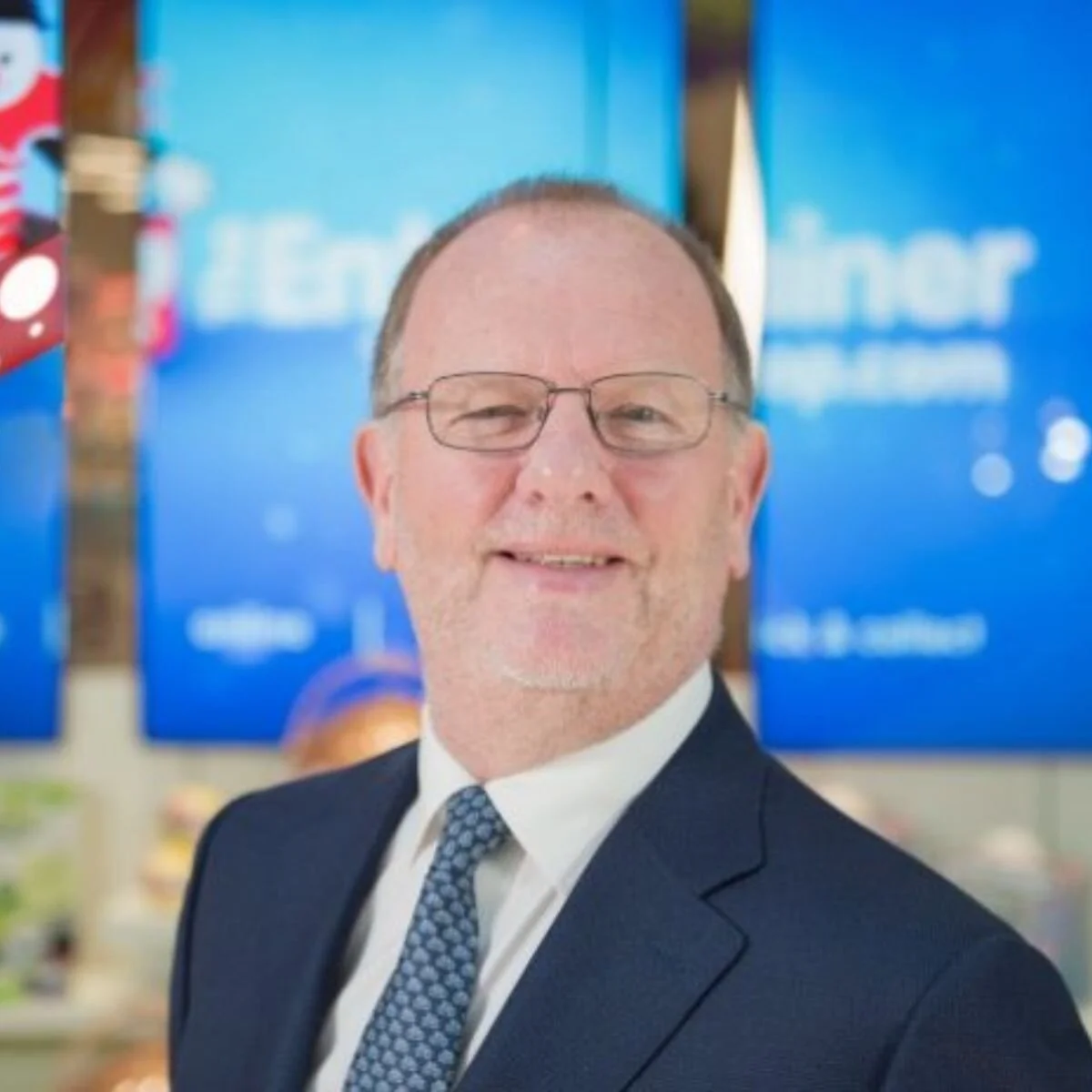
Gary Grant

Owner | The Entertainer

Gary Grant found employment in the 1970s at a local bike shop in Amersham, his hometown. His natural talent for buying and selling flourished when he recognised a new craze for customised skateboards, so he started selling skateboard accessories while he was still working at the bike shop. The owner of the bike shop was suitably unimpressed that the majority of calls into the store were for Gary and so Gary was let go, set free to start up on his own.

In 1979 Gary married Catherine and they bought a home in Amersham that doubled as a warehouse for their skateboard venture. When Gary recalls this time in his life, he remembers how the ceilings were creaking under the weight of the stock in their house and some of the upstairs doors wouldn’t quite close properly.

The Entertainer began when Gary and Catherine took over the Pram and Toy Bar in May 1981. Catherine was also a full-time Nurse when the first store opened. The previous owner didn’t much like children and Gary and Catherine saw an opportunity to make the shop into somewhere children and adults alike would come and visit, have fun, find something to ‘Entertain’ their time and want to come back again and again.

As the potential and possibility for expansion became real, Gary took on his first employees, one of whom still works for us today heading up our New Store Development Team. A second branch then opened in Beaconsfield, in June 1985. The rest, as they say, is history.

CONTRIBUTIONS TO THE FAITH DRIVEN ENTREPRENEUR

Brian Roland

Founder & Chairman | Abenity

Brian Roland founded Abenity with his brother Mark in January 2006 and has served as the company’s President & CEO since its inception. Brian oversees strategic direction for the company, sets the corporate vision for growth and partnerships, and is integrally involved in the company’s new product development.

Prior to Abenity, Brian spent five years working with Sprint and Nextel’s Fortune 100 corporate accounts, pioneering new ways to increase the accessibility of wireless discounts for the employees of large corporations. While at Sprint, Brian worked closely with H&R Block, The Walt Disney Company, Northrop Grumman, Cigna Insurance, Oracle, and the U.S. Army. Brian’s role with Sprint included developing and delivering web-based and co-branded client procurement portals to streamline the communication and fulfillment processes required to deliver contractually discounted rates on Sprint Nextel’s wireless products and services. Brian’s relationships through Sprint with some of the top HR Executives in the country led him to the realization that the employee discount platforms offered by even the largest corporations in the country lacked the internal resources to efficiently support, grow, communicate, and sustain their internal employee discount programs.

In response to this discovery, Brian formulated a direct approach to employee discount management. The result was Abenity – which offered a new model for employee discount programs where primary focus is placed on utilizing leading edge technology to free up corporate resources through the provision of flexible and scalable benefit platforms.

Since 2006, Brian has grown Abenity into a recognized leader in the employee benefits software space. In 2012, the company was recognized as a Best In Business company by the Nashville Business Journal. Additionally, Brian was a finalist in the Nashville Business Journal’s 2012 Most Admired CEO Awards and was recognized as one of Nashville’s 40 Under 40 businessmen making a difference in the local community. He received a B.B.A. from Belmont University and resides in Franklin, Tennessee.

PODCASTS FOR THE FAITH DRIVEN ENTREPRENEUR