



Episode 206 – It Feels Good to be Known with Meagan Jones
President and COO Meagan McCoy Jones grew up at McCoy’s. She has worked as receptionist, advertising intern, and even shadowed in various departments throughout the company, becoming acquainted with many aspects of her family’s business along the way. Today, she is the fourth generation to lead this family business. Megan joins us on the Faith Driven Entrepreneur Podcast to share with us the bigger story of McCoy’s and what drives her to build better relationships with her employees and customers.
All opinions expressed on this podcast, including the team and guests, are solely their opinions. Host and guests may maintain positions in the companies and securities discussed. This podcast is for informational purposes only and should not be relied upon as specific advice for any individual or organization.
Episode Transcript
Transcription is done by an AI software. While technology is an incredible tool to automate this process, there will be misspellings and typos that might accompany it. Please keep that in mind as you work through it.
Rusty Rueff: Welcome back, everyone, to the Faith Driven Entrepreneur podcast. Today we’re going to go deep into a business and then we’re also going to learn a lot about its president and CEO. But first of all, the business McCoy’s building supply, McCoy’s building supply cuts against the grain in its industry. We couldn’t help ourselves on that one. This full service lumber yard operation in five states works really hard to make the lives of those who build easier and more fulfilling by cultivating meaningful, long term relationships and loving customers as neighbors. It does this not just through excellent service, but by training employees to be and to see others as fully human and relational. President and CEO Meagan McCoy Jones. She grew up in McCoy’s and has worked as a receptionist and advertising intern and has even shadowed in various departments throughout the company, becoming acquainted with many aspects of her family’s business along the way. While in graduate school, Meagan began working part time and realized what was always interesting to her as a kid was indeed her true passion, the business and the people of McCoy’s. Today, she is the fourth generation to lead this family business. Meagan joins us on the Faith Driven Entrepreneur podcast to share with us the bigger story of McCoy’s and what drives her to build better relationships with her employees and her customers. Let’s listen in.
Henry Kaestner: Welcome back to the Faith Driven Entrepreneur podcast. I’m here with Rusty. Where is Perdue hat? I don’t know if this can make video or not, but where is Perdue? Morning, Rusty.
Rusty Rueff: Hey. As we’re recording this, my boilermakers. They’re on their upward trajectory. I’m not making any plans around the first weekend of April. Just in case. Just in case we could go to that Final Four.
Henry Kaestner: Well, our executive producer and executive director of Faith Driven is Justin Forman. He was there last year celebrating the Baylor Bears. But Alabama’s got a team, too. But we’re not going to talk too much about college sports because there are other things. I cut you off. I gave you gave Rusty a look at Purdue, and then I cut off Alabama. And we’re not going to talk about my Tar Heels, but we are going to talk about the fact that a lot of really neat things are going to Missouri. We’re celebrating now it’s 500, 5000 downloads to the podcast, which is pretty cool.
Rusty Rueff: That is a really cool. And it’s all over the world.
Henry Kaestner: It is. It is all over the world and it’s all over the world because you, the listener, have gone ahead and said, even though these guys have no marketing budget, we’re going to be your marketing budget. We’re going to go ahead and we share this with other people. And so that’s been an incredible encouragement when you hear that people are taking action on something like this and sharing it with others. People are coming back to us with good feedback and ideas for guests. All those things are awesome. And then we just heard something new, William, the other day about how somebody was using the podcast.
William Norvell: Yeah, I actually heard two things, funny enough, one personal and one involving other people. But yeah, I was having dinner with somebody last night and they said, Hey, I just had coffee with somebody. And they said that they heard one of your podcasts and got so excited about working for a faith driven leader that they called, emailed the podcast guest and mentioned the podcast. Right, and said, Hey, have a listen to you on here. Is there anyone we could chat? They end up chatting. They never get along, end up taking a job there. And he’s got a new career that he is just so excited about working at this company, which is just an unintended consequence that only God could be weaving in this crazy world, right? That we don’t even know what’s going on. I would have never even guessed sunlight that could happen.
Henry Kaestner: Yes, that’s super encouraging. You said you had a second story, too.
William Norvell: I do a similar crazy one. So we’ve mentioned a little bit if you listen to podcasting, I’ve started a new company with some few friends and we’re big on no code development. And so we were looking for a faith driven, no code development job, which is a pretty small window these days. No code is still up and coming, but I texted a bunch of people in faith tech and in the FDE community actually on the Slack channel and said, Hey, does anyone know a faith driven no code developer? So we found this great shop, Adelaide Australia, that’s led by these two winsome believers that had some amazing stories about how they built everything. And I started talking and introducing myself and she kind of stopped me, goes, Wait, you don’t have a podcast, do you? I said, Kind of. She’s like.
Henry Kaestner: Kind of?
William Norvell: Yeah. I was like, Yeah, I do. I didn’t want to, like, sound like I was a big deal because I’m not, you know, and she’s like, I totally listen to the Faith Driven Entrepreneur podcast.
Henry Kaestner: From Australia,
William Norvell: From Australia From Sydney. So we totally connected on that and then built an amazing relationship. We hired them and they’re going to be building most of our web application.
Henry Kaestner: That’s super cool. Now, you mentioned something in there about a Slack channel. What did you mean by that?
William Norvell: Oh, yeah. So as Henry mentioned, I think a couple of times we have an eight week series that people have gone through. I think we’ve had close to 3000 people go through this.
Henry Kaestner: about 1550 going through. Just a January cohort has grown.
William Norvell: Right now.
Henry Kaestner: Like 40% each cohort over the other, because again, it’s people like you listening to the podcast are going through that cohort and saying, you know, I could facilitate that. I could date to my church.
William Norvell: And so we’ve used Slack. So if you get in a group, you’re a facilitator, we’ll set up a Slack channel for your specific group, and then there’s a general channel for everyone you have ever gone through a group before. And so, you know, thousands of faith driven entrepreneurs. And so I simply just posted a message today looking for a no go developer. There’s anybody, no one that happens to be faith driven. And I got a couple of great leads from it, and it turned out to be the person that we hired to build our entire technology stack. And so it is just I mean, I can’t be more thankful for and then there’s another range called Faith Tech that has one as well that’s a little different. And I posted there too and got some great leads there too. So both of them just some great opportunities to connect with Faith driven entrepreneurs around the world that are just looking to help people. And that’s a big deal for my company. Like this is not a small thing, this is a big deal. We have someone we can trust that understands our heart behind our project that is also proven to be capable of their job. And gosh, that’s hard to find. So I’m just so grateful for it.
Rusty Rueff: You know, it reminds me of speaking the other day. Somebody asked me what the definition of community was and I said, Well, you really don’t have community until people start to help each other. You know, the idea of just, you know, we’re all together doing stuff, but it’s when we start to help each other. So that’s really encouraging, William, because that says that, you know, this Faith Driven Entrepreneur community now helping each other and really developing.
Henry Kaestner: This is obviously a brilliant segway and I don’t think a planned segway, although you never know with Rusty, but it’s a brilliant segway into Meagan. I mean, because she’s all about community, she’s all about relationship building. I think that made you may find that you may have people that listen to this podcast and inquire to you and you might find some job applications from it. But we are really interested in you sharing about this incredible company has been around for a long time and the lessons you’ve learned. Thank you very much for joining us.
Meagan McCoy: Yeah, thanks for having me. It’s really a treat to be with you all.
Henry Kaestner: So we’re going to get into the community building. We’re going to get into relationship building with your customers and your partners, vendors, employees and all of those. But what we like to do with every one of our guests, of course, is get a flyover. Like, who are you and what’s your background? How’d you come to faith? Yeah. Help us to understand who Meagan is, please.
Meagan McCoy: Sure. Let me do that. Maybe specifically in the context of our families business. And that’s, I think, what we’re talking about mostly today. I was for sure a daddy’s girl followed my dad from work. In fact, I begged him to go to work every teacher in-service day or summer day from about the time I was ten on. And so I followed him to work. But in his wisdom, he was an executive, so it didn’t make a lot of sense to actually work with him. So he always situated me with a mentor, a team. We didn’t call it that then, so I worked for other people in the company. I didn’t obviously work for him, but that meant from a very, very early time. I grew up really from ten on nearly every summer and every free day working alongside people. So I fell in love with them. They were incredibly accepting to me. They were part of something bigger. We joked a lot, laughed a lot, and I learned a ton. So that’s kind of the business I grew up in. The older I got, I got to do some work in our store is not just in our office. We’re a retail chain of kind of a traditional lumber yard. If you’ve grown up with that in your community. And then as we’ve grown, that business gotten more complicated. But my parents came to faith about the time I was in middle school, maybe early middle school, and that was really interesting. They had a kind of crisis in their marriage, which they talk openly about. About the same time, they also were finding themselves in kind of learning who God was and God’s grace for them. But that was kind of a funny thing. They started talking differently and using different lingo, and that was kind of an unusual thing for a middle school person. I think my faith journey, really, like everybody is, is punctuated with some really high highs and low lows. And our business at the same time was growing. Then when Home Depot and Lowe’s and kind of big box retailers became very popular, our business model was not a successful. That happened about the time I was in high school, so the inevitability of the business continuing wasn’t there.
And just quickly. Tell us what that business is.
Meagan McCoy: Yeah. So McCoy’s building supply is a retail lumber yard chain. We operate 90 stores. Most of those are in Texas, but not exclusively. If you have a local lumber yard in your world you’re familiar with kind of you drive in to the back and you get loaded up with your materials and then drive out. About a third of our business is to consumers and about two thirds is to businesses of various kinds. This could be regional and large homebuilders all the way to somebody adding a deck or a kitchen remodel, that kind of thing in their house. So those are our customers.
Rusty Rueff: And you’ve been around almost 100 years.
Meagan McCoy: Yeah, 95 years. How about that? Pretty cool, huh? My great grandfather was a roofer. That’s how he got into business. He actually my great grandfather was first a day laborer in Houston, learned how to roof and then eventually decided he wanted to do that on its own. And so he got our family into business in 1927 in Galveston, which is, of course, on the Gulf Coast. And then my grandfather really expanded that business in kind of the do it yourself boom post World War Two.
Rusty Rueff: And you already got plans for the big 100 year celebration.
Meagan McCoy: No plans. I mean, I’ll be thrilled to do it, actually. Kind of the big news around here, my dad, he is retiring in May this year after 50 years of service to our company, just extraordinary. And so that’s kind of the big transition. Next is our team’s been working really intentionally the last I mean almost ten years but very intentionally the last five to make that transition from one executive team to another. And yeah, we’re all feel very excited for him and also. Appropriately thoughtful about what that looks like in its next season.
Rusty Rueff: Well, most of our listeners, 95 years from now, it seems like a long time, but they can get there, right?
Meagan McCoy: So, yeah, I actually think looking not far ahead and training ourselves to look generationally like that, probably one of the things that we as believers in business I wish we were doing more of. You know, there’s just a lot more energy on growth to sell or flip than there is on build to hold for a long time. And I wish we did that differently.
Rusty Rueff: Well, to talk more about that, because I know the motivation for McCoy’s hasn’t been just to, you know, grow in scale. It’s happened. But I know it wasn’t the motivation. So maybe take us through what shaped the success of McCoy’s.
Meagan McCoy: Well, I mean, a lot of things, obviously, you know, just being successful for a long time takes really basic things like having a good balance sheet, not getting over, levered. Having the right people in right places. And boy, this is just a lesson in life. If we’re paying attention to humanity, you have got to be relevant to who your customer is. And there’s no place for ego in business if your job is to serve other people. And so that’s true for us. It’s true for anybody in business. Hopefully it’s true for any of us in humanity is. I got to keep pushing my ego aside and asking myself, What do customers need? How can I help them succeed? How can I help their business to succeed? And I think that combination of very hard work, we’ve never been shy about that. A strong balance sheet, which is really something that gets underappreciated. A strict adherence to how do you stay relevant to a customer. And then probably the last kind of thing in this last 25 years of our kind of season of the company has been a real intentionality around who we are as people, and holding consistent who we are as people is also the same thing as who we are as leaders. Those are not two different identities. And then how do you grow? Well, the only way you grow is starting with some kind of introspection. Why am I doing what I’m doing? Am I happy with that? If I’m not, then how do I undo that? And that takes some real deep work in the context of the people you’re working with.
Rusty Rueff: Yeah, well, I’d like you to talk a little bit about that, about you, and maybe also give us a sense of you had other choices. You didn’t have to stay in a family business, but you chose to do that. So talk to us about that choice. And then maybe what is it that’s fulfilling you on this daily basis that’s making you feel like you’re, you know, working to your full potential?
Meagan McCoy: I don’t know that I’m ever working to my full potential, but thank you for that. I really don’t know how else to explain it except that this is, I think, where God placed me and this is the work He invited me to do. And I say that to say, from the time I was a really little girl, I loved the people of McCoy’s. And then, thankfully, I think I have an aptitude for business. And so isn’t that lovely? When God places you somewhere where you have both passion and aptitude, then you are invited to do the hard work it takes to make the most of that for the sake of him and others. And I don’t even know how to explain it. You know, my dad and I both I think he would say similarly, he didn’t really think about going into the business as much as he just was in it. And he and I, I think, are a rare pair of people who really have not genuinely wrestled with what is it that I’m supposed to do with my life? So I’m very grateful for that. But I think that’s a blessing or luck. Yeah. Tell me the second part of your question.
Rusty Rueff: I think it’s a blessing. Well, what sort of fulfills you? You would talk about that motivation. You know, what fulfills you as the leader now on a daily basis.
Meagan McCoy: If you zoom way out, right? Every human being has to do this. You zoom way out and go, Why am I here? And what is it for? Particularly in the context of our faith. Well, I’m here to love God. I’m here to love other people. There are like a gazillion ways to do that. So zoomed way out. This is where God sent me to love him and love other people. Happens to be at a lumber yard chain. Kind of curious. I’m like a very small blond woman, so I’m not exactly who you’re expecting to meet in a lumber yard. But in that way, you know, all of you, wherever you are, wherever any of your listeners are, you get the opportunity to love people. And I think we overcomplicate that. I don’t think has to be that complicated.
Henry Kaestner: So when you talk about the different ways to work on community building, a relationship building and zooming out and seeing all the different ways to be able to impact the community and those you serve. Give us some examples of things that maybe are a little bit unique. So maybe something as simple as, you know, Chick-Fil-A, they say it’s my pleasure. Presumably some level of that with your customer interaction, but what are some things that you think now? Maybe these are some things that we’ve been able to do at McCoy that might be an inspiration, encouragement for other people to take action on in Minnesota, Washington or wherever.
Meagan McCoy: So let me start with this. I think what are your disciplines as a person has a lot to do with how you’re going to move through the world and how successful you’re going to be at whatever are your goals. And so if my goals are loving people, then I can’t just feel that I better have some disciplines around that. So I’ll give you an example. I’m of course, every morning we’re open six days a week, we’re closed on Sundays. We always have been, actually. So six days a week. Either my dad or I leave a voicemail for the company every morning. We’re talking about sales and performance and company anniversaries and little motivational thing, whatever. We also have a system where our team sends an email every day of company anniversaries and birthdays and the whole company. So you have just ready made an opportunity to celebrate other people for their birthday and anniversary. Now, that sounds really simple, but it takes discipline to go. I’m going to get on the voicemail every morning and leave this message and encourage other people and thank them for what they’ve contributed. And, you know, we are a complex organization. We have about 3000 employees, a little over a billion in sales. This isn’t small, it isn’t uncomplicated, and it takes a whole bunch of people working together. And so what I’ve learned about myself is, first of all, the discipline of lifting others up is a part of my everyday will not happen by accident. It will have to require some sort of system for that. But the other thing is like the mornings I don’t leave a voicemail, I suppose what I want to say is I think the process of doing it is as much for me as anybody. You know, all the science around gratitude is really compelling for the more you are grateful, written, spoken, grateful for things, the more you have an orientation to compassion and gratitude and understanding and empathy. And so again, like, don’t overcomplicate that. What are your systems for that? So that would be the first one. I was in three stores yesterday in the Rio Grande Valley, which is South Texas, on the border. And on the heels of that trip, I’ll write an email kind of summary of my trip to the other members of my team who are responsible for operations. Well, the point of that is to make sure they hear the awesome stuff I saw on that trip. Right. So, hey, here are the great people I interacted with. Here’s a customer I met and their feedback. There’s an opportunity there for us to learn from each other about what did you see that isn’t working quite right or the asphalt failing in the store. We want to make sure we don’t lose that. Those are all ways of caring for people. They’re very specific to my business, those specific topics. But the discipline of are you always looking for ways to lift other people up? And then what I’ll say often is if you thought it, you need to take action on it. And in my experience, most people really want to do that, but they don’t have a good system to execute it.
Henry Kaestner: Okay. I want to tell you about system. Maybe William will take us there, but I do want to come back to something that you mentioned. Birthdays and anniversaries sound so easy. It also sounds like it makes sense to celebrate, especially if you’ve got multiple installations. Not everybody can go to those places and be able to say, this is what’s going on and this has guys work in the business or this is what’s going on in these different places. They can feel like they’re part of something bigger. There’s something really powerful about that. But what is unique is the anniversary thing, so to say, birthdays, anniversaries. So the birthday thing is not novel. I think it’s great you do it, but it’s not novel. The anniversaries thing, though, I think is novel. And I think just by celebrating that you’re celebrating the individual, but you’re now valuing marriage.
Meagan McCoy: Oh, yeah. So I should clarify, we celebrate company anniversaries.
William Norvell: I know my.
Meagan McCoy: Wedding anniversary date.
William Norvell: But maybe you have a new idea.
Henry Kaestner: For me, but maybe. Yeah, and you know what? Maybe it’s not enough just to have an idea. You have to take action if you thought it.
Meagan McCoy: Yeah, yeah, sure. Totally. We actually have some of that. So like on my personal calendar, I have the wedding anniversary of everybody on my team and I’m for sure celebrating that. In fact, I left one of my good friends his wedding anniversary with yesterday. I was traveling with a group yesterday, so we left him a video message kind of on our flight out to South Texas yesterday. Yeah. So I love celebrating marriage. We spend a lot of energy talking about that. It’s funny when God says, love your neighbor. This is not a novel concept, but your neighbor starts with whomever you live with. Right? So we’re all working on that, too. But yeah, company anniversary, which is also a very big deal around here.
Rusty Rueff: Meagan You know, as a woman leader in the building supply industry, you’ve got to be unique, right? I mean, how many people have companies that this size in that industry that are led by a woman, you know, have you faced.
Meagan McCoy: And I have to correct you, actually, one of the other largest lumber dealers in the country is also run by a woman. So it’s.
William Norvell: All that’s.
Meagan McCoy: All I know. It seems like a surprise, but yeah, we sure that’s awesome.
Rusty Rueff: So are there unique challenges that you run into? And also, you know, what can you share as a woman leader to our women listeners who are entrepreneurs that are looking to, you know, grow their own careers and maybe, you know, facing some challenges.
Meagan McCoy: In the lumber yard? I am at a disadvantage as a leader because culturally, the way you earned respect at McCoy’s is you outworked everybody. And I weigh 100 pounds and I cannot physically outwork most of our crew. Right. So in that sense, as an early leader, inside the context of a store, I did have to innovate the ways I showed respect and understanding and compassion for our team that did not include trying to outwork them physically, because that just was a limitation. I think professionally, unfortunately, women are still they’re underestimated. It’s so weird. I can’t believe we still do it. But I would always rather be underestimated than overestimated. So maybe you guys get the sucker into that stick because people expect you to have your act together. People are still surprised when I do. So in that way I think it’s great. One of my strategies for that, which I would tell young people in business, male or female, regardless of your context, the younger you are, the less people expect from you. So the more being very, very prepared is an extraordinary advantage. So my anecdote to like a sales call with a builder who maybe wasn’t expecting me is to be incredibly prepared and to have done all of the research on his company. What are we specifically asking for? What questions might he have that I can anticipate about products or services? I’m getting on a theme here, which is there’s just not room for any kind of laziness or complacency in business. The market does not reward that, and when it does, it shouldn’t and it won’t for long. And so I think that’s probably one of my big takeaways. If we were talking about faith and work or work in general would be, you know, if you aren’t loving what you’re doing, it will surely show and somebody else is and that will surely show. And don’t be complacent. You know.
William Norvell: I think an entering does me well, I’m the systems guy. So I’m going to come back. I’m going to come back.
Meagan McCoy: Yeah.
William Norvell: I’m curious how you discern. So, you know, you said it humbly and moved past it kind of quickly. 3000 employees and a billion sales. This is a large organization with a 100 year history. I’m curious how you go about discerning what matters to relationship building at your company and where that’s coming from. Is it so easy for me as a person who wants to build things? I’ll listen to something someone else did and just go copy it, right? And sometimes that works and a lot of times it doesn’t. Right. You realize like, well, that’s their person, that’s their unique circumstance, that’s their unique, you know, company. And so I’m curious more on why does that matter to your organization and how did you discern that that was something worth doing every morning, whereas someone goes, Oh, okay, there’s a tip. I’m going to take a tip, right? And I feel like tips are great sometimes, but oftentimes it’s more discerning what works for your company and your people and what matters to those unique relationships. So I’m curious about that, how you think through this.
Meagan McCoy: Yeah. First, I don’t get the credit for the morning voicemail idea. That was my dad’s. He’s the most disciplined, generous person I know. So we are all trying to learn from him. On the human relationship side. I actually I listened to your podcast. You did with Henry Cloud this wonderful. And he drew out something really important, which is that these closest relationships are a place of real success or failure for entrepreneurs. And I could not agree with that more. And so here’s what that means in the context of McCoy’s and what I think it means in the context of a lot of people’s businesses. My senior team so our senior executives, we meet every Monday morning, it’s virtually the first thing we do of the week. We meet one on one again, usually every week. And they have heard me say this dozens of times. If there is any unresolved conflict in our team of six, the only work of the day is to resolve that conflict because it is contagious in our organization and we owe all of our organization and ultimately our customers a lot of unity among our team. I have done what I think I’ve read in business books, which is I’ve hired smarter people than me. Everybody on that team is smarter than I am, thank goodness. But we are also deeply committed to being in relationships with each other, and not that we never have conflict, but resolving it quickly. Boy, if you don’t do that early. And by extension, what I mean by that is if you don’t have respect for somebody on your team, I don’t know how you will ever reflect God’s love in the workplace with that kind of tension. I don’t know how people do it, and I’ll take it one step further. I think the process is the product in business. So in relationship development or in business, how you got there is just as important as what you did. And it’s easy to like shake your head and agree with that. How you got there is important is what you did. But for example, if you are selling a product or service that you don’t actually believe is adding value to the world, you will always be in conflict with that feeling. If somebody in your team doesn’t believe in not like your mission and purpose statements and the really pretty stuff that you put up on the wall, that’s important. But if you are making choices as a business that are not above reproach, I don’t know how you’ll ever reflect God’s love and work in the world. And that doesn’t mean we’re perfect. I mean, you know, we are failing to at different times. But on these fundamental moral issues, we hold ourselves to a very high standard, and we are unapologetic about that. It means that folks disqualify themselves from their job at McCoy’s, even as high performers. But if you violated the Sacred Five rules, nothing will save you nothing. And so what it means is even that just sort of the comments about how do you create a great place for women in the workplace and encourage women leaders? The corollary to that is how do you men make sure that it’s a safe place for women in the workplace? And that’s on you, not on us. And it’s on us together. But we better be unapologetic about those kinds of behaviors in the workplace, especially if we’re doing it in the context of faith.
Can you tell the sacred five. Real quick.
Meagan McCoy: Yeah. So at McCoy’s, you will 100% of the time lose your job if you lie, cheat, steal, don’t keep your hands to yourself. So those are everything under the category of sexual harassment. And don’t do drugs or abuse alcohol every single time. Lie, cheat, steal. Hands yourself. Don’t do drugs. Abuse, alcohol. Every member of management gets the same talk from dad. And then ultimately I’m responsible for that talk been happening since my grandfather led the company. Every member of management gets the same sit down Dad’s office. Here are the rules here. The standards and the expectations. We’ve lost more leaders to those things than I wish we had. But also you as an entrepreneur from the very first day, not from when you get to be successful, but from the very first day, have to decide, are you really willing to hold everybody to your standard? And I am disappointed and sad that we often in business fail to be doing that, especially, I think, as Christians.
Henry Kaestner: I want to say it’s just slightly different. That’s awesome. I think that that should be everybody’s sacred five, and I think it’s really helpful to have a framework. And I love the fact there’s been part of the culture since your grandfather. You said in the past that you’ve been motivated to be the very best at what you to do to help shave off some of the risk for your customers. Can you talk about that a bit? That’s kind of a novel concept. Was that mean?
Meagan McCoy: Well, most of our builder customers, business customers are entrepreneurs. You know, most of our business customers are not. Think about that. It’s kind of wild. Most home builders are entrepreneurs. Most tradespeople are entrepreneurs. And so two thirds of our business is tied to that kind of customer, and they have tremendous risk in running their own business. They have all the hassles of anybody who’s running their own business, like, how do you hire? How do you run payroll? How do you get the materials that you need? How do you handle working capital? How do you get a loan? How do you get investors and all that? What they shouldn’t have to worry about, if we’re at our best, is when I called McCoy’s and I ask for product, it will arrive on time in good shape at the price that I agreed to. Now, that seems simple, but our business is very complicated. Lots of yours are. And when we’re at our best, we can help reduce risk for a builder. Let me get even more creative than that. We have builders with whom we can extend construction financing because we’ve developed that program out internally. We, a number of years ago, made more robust our own in-house distribution of big and bulky products on our own fleet and equipment. Now, if you’re a builder, what you need is security in the supply chain, especially now. Not that we’re perfect at that. It’s a very complicated time to be doing this. But our job is to try to help our customers remove as much risk in the places that we can so that we can help them succeed as much as they possibly can. It’s very practical, though, you know, relational risk, too. Like I said, I do something I should be able to do it. But I think the expression of loving people is often very, very practical.
William Norvell: So speaking of practical, I want to dive into the supply chain issues. So this has been an unprecedented time. I’m curious, obviously practically just highly curious in how that has impacted your business and two. Were there opportunities to when some leave love people in ways that maybe other people didn’t or other people didn’t think of? You know, that maybe your faith in your long history there kind of said, you know, hey, this is something we’re going to take a risk on for our customers. That just feels like something we’re supposed to do, whether it works or not. I feel like that’s so often sometimes, you know, God puts us things. And I found that sometimes you find peace on the other side of obedience and not on this side of obedience. It feels like this might have been a place you had to stare that in the face.
Meagan McCoy: Yeah, in some super practical ways. I’ll give you one example. Do you know what a pocket door is? The door that. Slides into the wall.
William Norvell: Okay. I’ve seen Chip and Joanna do shows. Okay. Yeah, I know exactly.
Meagan McCoy: You know what a pocket door is well, a pocket door frame is a unique thing because it, of course lives inside that wall and then holds the slab that runs inside of that cathy. And we’re having a hard time sourcing pocket door frames. And so we decided, you know what, I think we could build them. We have a door manufacturing facility. We hang doors and jams, essentially. And you know what? I think we can help our customers succeed and help us succeed by ensuring a supply chain of pocket doors, by building them ourselves. Well, I don’t think we would have done that if it weren’t for the supply chain thing. On the flip side of that, we have done a better job negotiating on our customer’s behalf with really large suppliers. Here’s what I mean by that. If you’re a very large national homebuilder, you are in conversation with suppliers, manufacturers all the time because they represent such a huge piece of the business that a lot of our customers, the majority, vast majority by count of our customers in both count and sales are much, much smaller than that. Well, how do they have a shot at competing against the national builder in the market if they can’t get what they need to build a home? Right. So it’s our job to represent that voice of 10,000 accounts to the product manufacturer and say, look, I realize we are not the big public name you’re used to seeing in your office, but we represent 10,000 customers who are counting on us, and so we are counting on you. So in that sense, we take an advocacy role. I feel strongly about independent business. We’ve touched on this and I know many of you work in the space of venture capital and innovative capital, and I think all of that is awesome. And I would say I wish more people own their company themselves for longer and figured out a way to do that for the long haul because and for homebuilders in particular, there’s a lot of them doing that. And so I want to make sure a reason for their success or failure has nothing to do with our lumber yard. Right. If we’re at our best, their success or failure has to do with other variables, but we want to be part of what helps them succeed.
Henry Kaestner: That was a great use, by the way, of an and rather than a but. Right.
Meagan McCoy: Well, thanks. And so intentional that yeah.
Henry Kaestner: We may have a background in investing and that may be part of what we do during our day jobs. And yet I really hope that this podcast inspires more people to be able to do just that, to be able to help you. And what a beautiful thing to be able to have the business for 95 years that is able to have a continuity in culture and be able to preserve its ability to persist independent of external stakeholders and just, you know, just finding the optimal growth rate. And I think that a lot of this is maybe an unnecessary segway, but I think that a lot of listeners, this podcast that might be aiming to grow faster need to really wrestle with this concept of an optimal growth rate. What’s the right type of growth for us to be able to grow organically where we don’t have to pay for our customers, we get them from referrals, we delight them, we get upsells because they just send more and more of their business to us and it happens slowly in a non contrived way. Can you speak to a little bit about what an optimal growth rate looks like for a company it’s been around as long as yours.
Meagan McCoy: Thank you for the question. Let me say something for an answer. It it’s been my observation that how fast you grow is not a critical thinking question people ask themselves. It’s a question slash answer that the market puts upon them. Does it make sense? It happens in two ways. How fast should I grow is not a question people wrestle with. The answer is always I should just grow very, very fast or exponential. The exponential growth curve is unrealistic for most businesses, and it’s pretty capital destructive once it gets bought three times and then folded into something else and all those jobs consolidate. So that’s a whole another podcast. But if we had a capital productive, capital destructive paradigm towards business, our businesses would look really different. The second thing is when you.
Henry Kaestner: Just sign yourself up for another podcast, capital productive, capital destructive. There’s a paradigm we’re spending some time on.
Meagan McCoy: Yeah, I think it is worth spending time on. The corollary to that argument is, most of the time the return to capital is much higher than the return to labor. And we as Christians should be wrestling deeply with that. And so that happens in the backside of the blow it out sold it out now destructive capital because those multiples didn’t make sense. They weren’t reasonable multiples. Then when the market goes to try to get out of that strategy, they learned they weren’t reasonable because the cash was silly in the market, which it is now. But then what happens is the penalty for that is never the capital. I mean, hardly ever. Everyone else is still driving the car. They were driving in the house that they are in. But the labor that got you there never got rewarded on the front end, but they surely took it out of their chin. And that’s I mean, should I categorize that as really kind of a social injustice? We should be caring about that.
Henry Kaestner: Yeah, that’s a great topic.
Meagan McCoy: Well, I hope you pick it up. I think it’s an important one.
Henry Kaestner: We did a little bit better than we did a little bit. We’re coming to the end. Yeah, well, he’s going to ask the fatal question at the end about what are you hearing from God in his word and maybe come back to this. But I think that you’re really on to something there that we actually do need to spend some time and flesh out, which is what is the role of capital in an entrepreneurial career? What can it bring you? What does it not? And then how do you think about it, not just in terms of growth rate and how many customers we serve, but how do we think about really in terms of what got us there? And when you just painted that picture of what happens to labor, the people who have given their lives to it and are making it happen and they’re just messed up. Risk reward paradigm. Because a lot of people look at and say, okay, well, gosh, if the company goes, you know, we go public and we make $100 million. Yes, everybody has stock options or something like that. They’ll keep their jobs. But that’s not every situation and there’s a lot there. We need to come back to that as a team.
Meagan McCoy: Yeah, one of my business mentors and I was traveling with him yesterday. He uses the phrase, you know, if you’re the shepherd, you got to smell like the sheep, like if you aren’t. So this would maybe be a good question for your listeners. Whatever business you’re in, how often are you close to your customer or the user or the experiencer?
Meagan McCoy: Yeah If you aren’t close to them, then it’s easy to not be troubled by this return to labor question. Right, and we’re not doing this perfectly, but I want to keep doing it better. And it also means you’ll start caring more about things like daycare in your community or affordable health care or total health care, which is a thing we talk about a lot, not just what the pharmaceutical industry wants you to do, but also what really, genuinely makes you healthier as a person, as a spouse, as a parent, those become your burdens. Yeah, you smell like the sheep. I’m working on that, but I’m fresh off getting a day with him and it’s pretty special.
William Norvell: I’ve got an idea for the follow up podcast. We’re going to either bring someone on or we’re going to put Rusty or Henry in the straw man venture capital seed and have a really fun discussion on this.
Meagan McCoy: And you know, I have to be careful. I’m not sure this is podcast material, but just for the sake of the three of you, I can be overly judgmental of the equity space too, and I have to be careful of that, because that’s not fair either. Most of these things we’re wrestling with right now are not absolute truths or all good or all bad.
Henry Kaestner: So here’s what you do. What you’re doing is you’re introducing a new framework through which to look at things and for people to then examine and say, okay, so this transaction is fair to labor, it is not fair to labor. And what you think is fair to labor, somebody else might think is unfair to labor and vice versa. But what you’ve done here without being judgmental, is introduced a framework that somebody might come in and say yes, but that only part of it. We have to think about another framework as well. But I love frameworks and you just brought one in and it’s really important.
Rusty Rueff: Well, and you left us with I mean, for me, I’m going to walk away with when the first in take it on the chin. Something’s not right.
Meagan McCoy: That can’t be right, right? Yeah that can’t be right or doing it wrong.
William Norvell: There’s something there. And you know, I mean, these are always fun discussions because I forgot who did it. Henry, you may remember, you know, even little stuff like the venture capital economics, the two and 20. I mean, it’s a construct that was created 50 years ago that no one’s bothered to talk about or change, and it was created for a completely different construct. And it’s just kind of kept going. It’s not saying it’s good or bad, but it’s worth discussion, right? Yeah. And I think that’s like a fun discussion. And people are going to fall on both sides of that discussion no matter how many times you discuss it. But it’s a fun conversation and one that I would say the conversation should be had more whether who gets one over to which side is somewhat irrelevant, but that people are discussing it and considering it. Like you said, most people don’t even consider how fast they grow. That’s something other people put on top of them. Like those are just things to sit with, right? Yeah. So I’d really enjoy having that conversation and asking the questions and not having to respond is what I love most about that conversation.
Meagan McCoy: I see how it is. Yeah, maybe I’m running the next.
William Norvell: I’m the content guy. I’m just setting up good content, right? Right. But unfortunately, as Henry mentioned, we do have to come to a close and that is that that’s the best teaser we’ve ever left for podcast too. I’m just gonna throw that out there. So we’re getting better at our jobs to what we love to do is close to God’s word, and we love to close with how that may be influencing you today wherever you find yourself. It could be something you read this morning. It could be something you’ve been meditating on your life that popped back in your mind this morning. But we just love to bridge our listeners and our guests through the Word of God and just invite you to share maybe where he has you today and what he’s reminding you of.
Meagan McCoy: So I spend a lot of time reading Hebrews. I’m not exactly sure why I’m not a biblical scholar at all. You all have had those on your podcast, so please don’t represent me as one. But I really love Hebrews because it’s very practical and encouraging to me. So let me tell you kind of two passages from Hebrews that have meant a lot to me for a long time. The first, I believe that people are lacking in encouragement and security in the world. You know, we’re all lacking in a lot of things that you just can’t overdo encouragement, security. And so I have probably rewritten this passage a number of times out of Hebrews ten. Let us hold unswervingly to the hope we profess for who you promised is faithful, and let us consider how we may spur one another on toward love and good deeds. Man, we we are at our best as leaders. I think we are spurring one another on toward love and good deeds. And then the chaser to that which I’ve spent a lot of time working on. Personally, though, I’m not there yet. This is out of Hebrews 12. Make every effort to live in peace with all men and to be holy. Because without holiness, no one will see the Lord and I can run a little hot tempered. It’s a thing I work on as I grow as a leader and I generate insecurity in my team when I lose my cool. I don’t want to do that. And I also, as passionately as I can feel about something, it doesn’t glorify God or productively solve the problem when I just lose my cool. So whether that’s you as a person or whatever is the concept. And so I’m working hard and learning this, especially for my dad. When I feel like you have this, when you feel that anxiousness or anger or big emotion kind of rising up in you. I’m working on not saying anything when that’s rising up in me. I’m working very hard on stopping to try to understand myself in that moment. And then what am I missing? Because I don’t think anything good usually comes from my acting out on that feeling.
Henry Kaestner: But that’s a great word. It’s a great word. The practicality of Hebrews. And then just what you just said there, if you lose your cool, then you’ve promoted insecurity in your team and that’s compromising the mission. It’s not loving on people. Nothing good happens. So that’s a great word. Meagan, thank you for your time. Thank you for your leadership.
Meagan McCoy: You’re welcome.
Henry Kaestner: Awesome being with you.
Meagan McCoy: Likewise. Thank you. Thanks for having me. Have a wonderful afternoon.
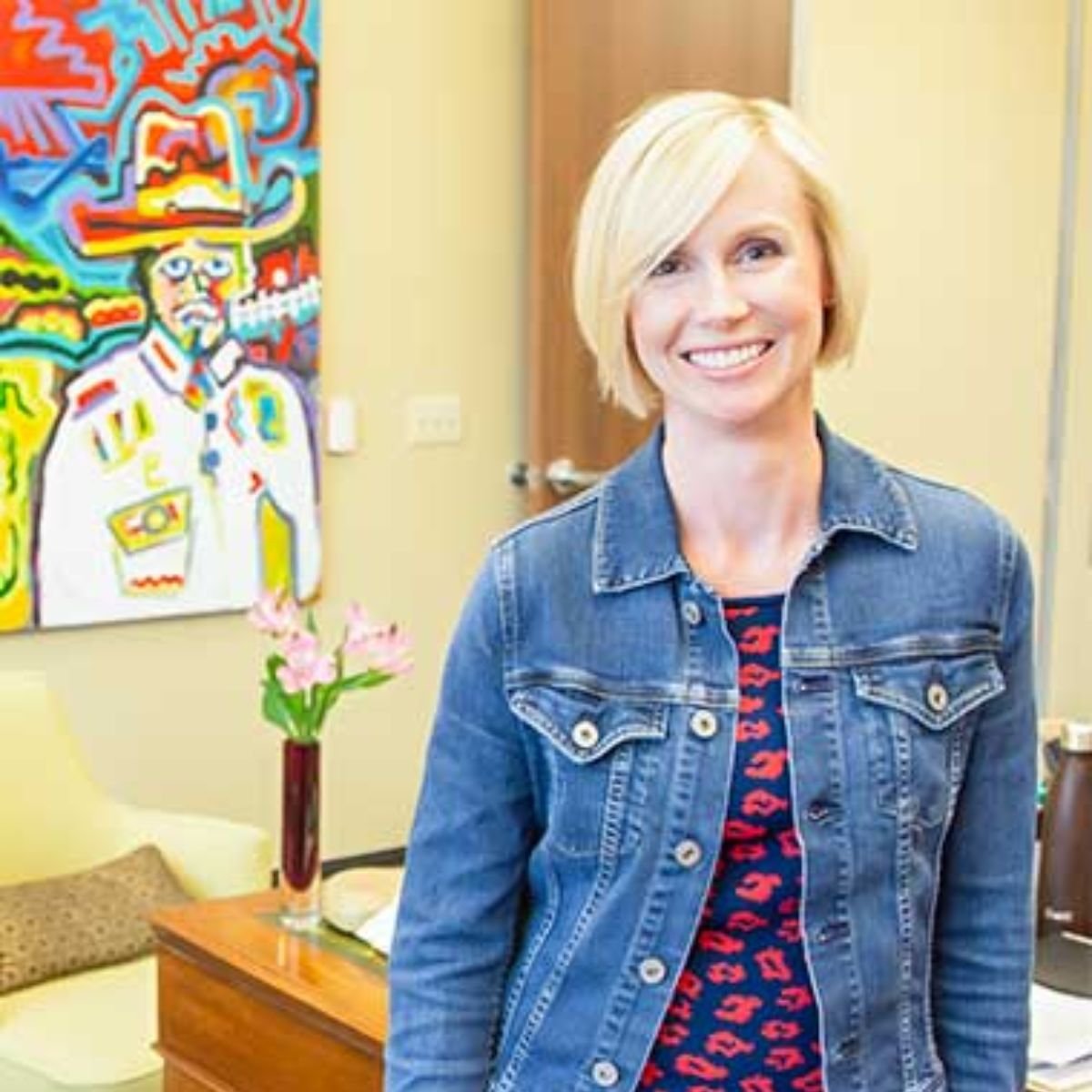
Meagan McCoy Jones
President & CEO | McCoys Building Supply
Meagan is a 2000 graduate of San Marcos Baptist Academy in San Marcos. She earned a Bachelor of Arts in Rhetoric and Communication Studies from the University of Richmond in 2004, where she was inducted into Phi Beta Kappa. She went on to earn a Master of Arts in Communication Studies from the University of Texas at Austin.
Meagan is the fourth generation to work for McCoy’s. Her first job was the Headquarters receptionist…she was 10 years old. Like her father, Meagan grew up at McCoy’s. Over the years, she worked as a receptionist, an advertising intern, and shadowed in many departments at Headquarters while still a high school student. While in graduate school, Meagan began working part-time at McCoy’s Building Supply in Georgetown, Texas as a salesperson and realized what was always interesting to her as a kid was indeed her true passion; the business and the people of McCoy’s.
Upon graduation, she joined McCoy’s full-time in the Corporate Development department with the specific goal of learning all facets of McCoy’s Headquarters operations. During that time, she also worked with the Texas Legislature on behalf of McCoy’s to revise the Business Franchise Tax. In 2007, Meagan began a one-year term as Assistant Store Manager at McCoy’s Manchaca location and went on to become Director of Corporate Development, Vice President of Field Support, and Senior (then Executive) Vice President and Chief Operating Officer prior to becoming as President and COO. In 2022, she was named President and CEO.
Meagan is a member of the Board of Directors of McCoy Corporation, a partner in McCoy Remme Ranches, co-Chair of the Legislative Committee of the Lumbermen’s Association of Texas, a Board Member of the Texas Association of Builders, and an involved member of the Greater San Marcos Partnership working on issues related to development, conservation, and affordable housing. She is a former Board member and passionate supporter of Mobile Loaves & Fishes, a social outreach ministry that empowers communities into a lifestyle of service with the homeless. She is married to Richard Jones, and they have two young children.
LINKS
PODCASTS FOR THE FAITH DRIVEN ENTREPRENEUR
Featured





Superpower and Kryptonite of Entrepreneurs
— by Justin Forman
I’m not a huge Marvel movie fan.
But I’m also the dad of three.
So you won’t be surprised to hear that more than a few times I find myself walking into a multiplex movie theater—tub of popcorn in my hands—willing to enjoy a little nostalgia with our 13 year old son.
Not too long ago, we weren’t too deep into our popcorn when I rediscovered a common plot line…
-
There’s a disturbance in the universe. Something is broken.
-
Characters discover a calling to this mission bigger than themselves. They envision a future (or alternate universe…) where things are different.
-
They have a unique superpower to solve the world’s problems.
Sound familiar?
I’m not going to equate an entrepreneur to a Marvel action hero. But then again at the rate Elon Musk is sending things into space, it seems the gap for some is closing rapidly.
Still, when we look at the framework, they’re not altogether different.
We praise entrepreneurs who try to solve the world’s problems. We praise them for never being satisfied.
It impresses us how they shout from the rooftops, “Bury the status quo in a time capsule.”
With increasing emotions and visuals, they paint a beautiful picture of why the offerings of today are simply not enough. They call us to visions of a future reality … one where we can see, feel, and explore an existence where things can be better.
And like a superhero, they feel specifically called and uniquely qualified to solve the problem.
And for years, if not decades, they carry this discontent around with them. Through long nights—50-60 hour weeks and countless personal sacrifices—they live in this superhero space with their teams … customers … partners … vendors …
Over family gatherings, dinner parties, or debriefs with their spouses, it invariably comes up. Passionately they speak of their big idea.
Oftentimes those conversations are met with understanding or affirmation. These entrepreneurial champions are hailed as visionaries. And they’re celebrated for their calling to deliver us from the ailments we face in the present day and onto the precipice of a shiny, new future.
Some pastors have even gone so far as to say in some contexts that this is a “holy discontent”.
So after years of business owners and innovators trying to get people to move towards something better …
Are we surprised that the greatest struggle of entrepreneurs is often contentment?
I have come to find that like the Marvel action hero, our greatest superpower as we pursue our call to create is also our kryptonite. Our greatest strength is our greatest weakness.
Today is not enough.
Tomorrow needs to be better.
The performance of today is not good enough for tomorrow.
There’s so much more we could and should be doing.
So the question for us is how can someone be so “in” on a future reality yet fully present where we are?
Casey Crawford shared this insight recently on the Faith Driven Entrepreneur Podcast: “God hasn’t called me to comfort. He’s called me (as an entrepreneur) to some really dangerous places.”
There’s no mistaking that God has called entrepreneurs to dangerous places.
And the hidden dangers have consumed many along the way—entrepreneurs are 2-3x more likely to struggle with depression, anxiety, and more likely to fall into alcoholism.
Behind it all, I think, a battle of contentment is being waged.
If we’re not mindful, that trained discontent can quickly lead us into striving, working, pushing… trying to get to that future reality so fast that we run away from our understanding of who we are and whose we are.
We all know the life of an entrepreneur is difficult to compartmentalize. It’s an all-consuming, full-contact sport.
We’ve trained a muscle inside ourselves to run fast and hard.
And yet we need to keep in our hearts and minds fixated on the real truth of our pursuit.
We have been given so much more than we deserve.
God is more than enough.
One thing is for certain, entrepreneurs who are on this journey cannot go it alone. We need to put to death this idea of the lone wolf.
We need people close enough to help us unmask the sacred and secular tensions of this road less traveled.
For the past year, we’ve been doing more to support and help. Online and in person. No cost, no catch. From over 88 different countries, we’ve gathered entrepreneurs and investors together.
They come for the content, but many stay for the community.
It’s been a gift for Henry, the team, and so many leaders of the movement to see the joy that comes from walking this road with others and to find the allies we need for the journey ahead. We are honored to be connecting the next generation of superhero entrepreneurs. It’s a marvel to witness.
Is it any coincidence that many of the action hero movies we enjoy involve a team…four superheroes teaming up together to fight evil…or Spider-Man from three different multiverses uniting to save the world from chaos?
Maybe it is.
But then again, maybe not.
Maybe there’s something to this idea that each of us has a unique superpower. And that together we’re more powerful than we are trying to go alone. Perhaps we can experience contentment not in settling for what is, but while running with others to an exciting future that is yet to come.
This article was originally posted here by
Related articles
Featured






Episode 205 – Motorcycles and the Marketplace with Tom Lernihan, Jared Fulks, & Collin Wenrich
On today’s podcast we have the joy and privilege to hear from an investor and entrepreneur team that met via the Faith Driven Marketplace. Investor Tom Lernihan was moved by the mission and simple solution of the company Pureflow founded and led by Jared Fulks and Collin Wenrich.
After traveling around the world to Uganda, Collin had a revelation as his calling zipped past him on the road in the form of a motorcycle… also known as a boda. Anyone who has visited this part of the world knows that motorcycles are the one primary way to get around. In fact, being a “Boda Boda” driver is one of the fastest growing occupations in East Africa–home to more than 1 million motorcycle drivers. However, after further research, Collin discovered that less than 20% of all these drivers actually own their motorcycles. And so began Pureflow.
After investing a few thousand dollars of his own money and striking up a deal with only 6 boda boda drivers, Collin went pedal to the metal. Since launching Pureflow and partnering with Tom, Pureflow has grown to more than 100 drivers and counting. Together Collin, Jared and Tom share why they do what they do and how they continue to grow without outscaling their culture, purpose and impact.
All opinions expressed on this podcast, including the team and guests, are solely their opinions. Host and guests may maintain positions in the companies and securities discussed. This podcast is for informational purposes only and should not be relied upon as specific advice for any individual or organization.
Episode Transcript
Transcription is done by an AI software. While technology is an incredible tool to automate this process, there will be misspellings and typos that might accompany it. Please keep that in mind as you work through it.
Luke Roush: I’m doing great. It’s going to be on. I love the story we’re going to be able to profile today. I love seeing entrepreneurs and investors coming together to further the mission that they’re on. So I’m excited for our story here.
John Coleman: That’s awesome. I think we all are. And we’ve got three fantastic guests today, all coming together with a similar mission. They actually met through or at least started interacting through the marketplace, which we’re going to come to, which is a really exciting story. But we’ve got Colin and Jared and Tom here coming from different walks of life to really invest for the kingdom. And so maybe just to start off, guys, give us the two or 3 minutes on each of you, just your backgrounds and how you got interested in this space. And then let’s start to talk about how you got introduced to one another and came together, maybe lead off. Jared, let’s start with you.
Jared Fulks: Yeah, awesome. So, Jared, folks, I’m based in Atlanta, Georgia. My wife and I live right outside the city. And my story began in Columbus, Ohio. I grew up a pastor’s kid. And I thought I went to college to play basketball and I thought that was going to be the end all, be all, become a college basketball coach. I quickly learned that there’s a lot of steps between dreaming that and actually doing that and after an injury in college, ended up transferring to Liberty University in Virginia. That’s a part of the story later. But after college, God did let me live out the dream a little bit, coaching semi-pro basketball in England. And the reason I got pulled back to the States was I was now dating my now wife and so came back and we got married four years ago and quickly jumped into entrepreneur space here in Atlanta in the tech space. And I loved it. I had this tension, though, full time ministry, full time business. God, what did you want to use me for while you’ve given me this life? And so my wife and I started praying. And after about three years of praying, God reconnected the dots with the fellow peer from Liberty, which was Colin. So I’ll kick it over to him. But that’s how our stories got reconnected five years later, after we’d both gone our separate ways.
Collin Wenrich: So my name is Collin Wenrich born and raised Bay Area out in California. And my story really starts when I went to school at Liberty University. And so when I was over at Liberty University, I was pursuing an electrical engineering degree. The Lord quickly rerouted me, sent me on a commercial corporate aviation path, and admits that after about two and a half years, he then sent me on a wild adventure to Uganda. And at that point I teamed up with 15 other young adults based out of actually right outside Atlanta. I think it was over in Gainesville, Georgia, through adventures and missions and sent us for four months to Uganda. I had no idea what I was going to be doing other than I was going to be in Uganda for four months. So we ended up partnering with some local organizations, some local churches out there, and I quickly fell in love with the culture, quickly fell in love with the people. I had no idea how my skill set or what I was passionate about in life was going to align with the future in Uganda. And the Lord did His work in the near future after that. But I knew quickly that it was going to be a part of my future. So I called my parents, called my family. After three months, I said, Buckle up, it’s going to be a wild ride because Uganda is going to be a significant part of my future. So I finished up my four months, came back to the States, finished up my degree, moved over to Uganda to start a ministry. And this is where I had some of the similar tension points that Jared It was like I was full time missions, but then people would always ask me about the sustainability aspect. And so two years after being a full time missionary in Uganda, I started to wrestle with God on what it looked like to start a business. And then we’ll fast forward to Pureflow here soon.
Luke Roush: Awesome. It’s awesome. Awesome.
Tom Lernihan: Guys, good to be here today. My name is Tom Lernihan based in Indianapolis and I lead a venture fund called His Fund as a reference. These are God’s resources and we’re here to steward them on a way to bring him glory. And we focus on investing in faith driven entrepreneurs that have a social mission and an opportunity to create jobs in under-resourced communities. And I can’t think of any better example than Pureflow in what Jared and Collin have built over the last several years, we’ve built up a portfolio of investments that are industry agnostic. They’re focused on four main geographic regions, US, primarily, East Africa, Southeast Asia and Central America. And what we’re really looking for is just partnering with entrepreneurs that have, you know, an opportunity to do incredible things. And we get the blessing to work with great guys like what we’re here talking to about today.
Luke Roush: So the beginning of every great love story or every great investment partnership, there’s a spark usually. Thank you for sharing a little bit about each your backgrounds, but I want to hear about the spark when you guys first connected and what caused you to want to learn more and get to know each other and do life together.
Tom Lernihan: Well, I’ll start first. If you haven’t heard the story of Pureflow, what they’re doing. A great place to start is by going to their website and watching their founder story. That’s my first exposure to what they’re building, what they’re trying to do, and it’s an awesome example. It’s a four minute video and I can’t recommend it higher. It gives a great lens into just the mission and the focus on what they’re trying to do at Pureflow. And after watching probably 2 minutes of this four minute video, I was hooked. I said, I’m in, I’m ready to go. Let’s do this. And then got an opportunity to connect with Jared and Collin shortly thereafter and just was instantly connected and aligned with mission and what they’re doing and just was really passionate about finding a way to join on and help in the mission, what they’re trying to do.
Luke Roush: And so what was the original inspiration around the idea? Maybe Jared and Collin share a little bit about what got put on your heart or what you saw that then forced you to say, Hey, we’ve got to do something here, which is usually what creates new companies. Great companies are born out of an unmet need that an entrepreneur resonates with and then wants to do something about. Maybe just share a little bit about that founding vision story.
Collin Wenrich: Yeah, absolutely. So when I was full time ministry out in Uganda, I had about it was about a mile and a half walk to and from our partnerships every single day. I did not have a vehicle and I wasn’t riding motorbikes at the time, so it was like good old fashioned two feet. Took me everywhere. And during that walk, I would just stop and talk. You know, I didn’t really have a lot of time constraints. So all along the way there would be these Botha stages which are like these areas where the motorcycle taxis would group together, they’d hang out and that’s where their business would be focused out of. And so I would just stop and talk with them, just shoot the breeze, just catch up, get to know their names, what they’re doing, their families. And I knew a little bit of the local language at the time, so I would say a few things and make them laugh and we’d joke around and then I’d continue, you know, after building some of those relationships through some months into the years, you know, I started to ask more in-depth questions and started to realize that, you know, these guys were on these motorcycles. Some of them looked absolutely terrible and they didn’t own them. They had no ownership, no equity within these motorcycles that at that point had no idea how much they cost it. But when I soon started to figure out, like, you know, what are the values of these motorcycles, it was raising some red flags and some questions that guys have been paying seven or eight years on these bikes, but there were only 12, 13 hundred dollars to acquire. And so really it was just through walking up and down town, asking questions, building relationships with these guys over a period of two years. Then we started that’s when we started to address the issue that was literally right in front of us the whole time.
John Coleman: That’s wild. So you got a sense of this market that most people probably wouldn’t even know exist, or actually it’s a market failure over there where there’s not really local financing available in the way that we’d think about that in the U.S.. How did you start to identify the way in which you could engage with this problem, and how did you begin to set up that business in its infancy?
Collin Wenrich: Yeah, so it was that was the fun part of it. When we saw the issue and I say we at this point it was a business partner. He was actually working on the ministry side with me at that point and myself. And we knew at the centric focus of why we wanted to do what we were doing, it was all Christ based. It’s like we want to share the gospel with these guys. You see them working day in and day out and I mean seven days a week, 14, 15 hours a day. They’re driving people, they’re driving things, they’re putting bunk beds on the back of hundred cc motorcycles, and they’re going and there’s no time for rest. There’s limited time for family, and there’s absolutely no time to sit and worship. And so it was one of these instances where it’s like, okay, you can rent to them, you can make some money, you can pour it back into the ministry. That’s great. Okay, we can sell these bikes, but we’re still not doing anything of significant value here. How do we give them a chance to own the bike but go on a journey with them? And in that journey, how do we teach these guys, teach them about their finances, teach them about how to lead their families, and ultimately, how do we get them around the table to share the gospel with them? And so it was all based around how do we get these guys together at a table to share the gospel?
John Coleman: That’s awesome. And at some point, you know, every business for most businesses come to this point where they can’t bootstrap it anymore. Their personal finances aren’t going to cover the model, which is where the investment community comes in. Maybe Jared and Collin talked to us about how you got to that point and when you needed the capital, when you realized you needed to go out and find capital to support the business, what was that decision making process and how did you decide to go where you went?
Collin Wenrich: Yeah, so originally we had started with $6,000. We bought a six bikes at that point, and so we would inject revenue as fast as we could to get another member on the bike, because as soon as we launched this program, it was a hot commodity and people were signing up. We had over 100 applications. Within ten days. So at that point, it was inject revenue as fast as we can and then it was do it again, get to bike seven, get to bike eight, get to bike nine. Then Grandma came on board and was like, I love it. I was like, All right, let’s do it, grandma. So Grandma buys Bike ten. But we started to grow and we kept growing organically for a while until we got to about the 100 bike mark. And at the 100 bike mark, you know, Jared came on board and this is where we really started to analyze our finances and our growth and a whole different line of sight.
Jared Fulks: I saw the business for the first time and like you guys would be if you watch the story, as Tom did, I’m in the same boat as Tom. I was just inspired by the story. And so at the time, my wife and I agreed that I could just give 40 hours of work to Pureflow for free because I was about the vision. And I said, this is going to serve a lot of people. And so that’s how we started. Collin was back stateside because of the pandemic. It was early 2020 and the businesses is kind of in this uneasy ground of does it grow organically? Does it scale now? And I saw the model. I said, look at the numbers and come out of the tech startup space where we had raised money. I was like, I think there’s funds here. But we battled the back and forth of nonprofit or for profit. Could we crowdfund motorcycles? And the challenge with that is, is, you know, how do you move the money? How quickly can it scale? And are we just trying to put heart strings to tell the story to people to get crowdfunding? Or on the flip side, do we go to investors? And Collin and I had no idea about the impact investing space. I mean, Faith Driven Investor Faith Driven Entrepreneur was not on any of our radars, and so we started just doing a little digging in and that’s how we got into the space and sort of finding the right partners to partner with.
John Coleman: That’s awesome. And I think you all actually connected with Tom via the marketplace. If if if I’m correct, Tom, maybe just from your perspective, talk to us about why you got involved in the marketplace and why you viewed that as a platform where you could find great entrepreneurs like this and how you came together with this team.
Tom Lernihan: Yeah, absolutely. The marketplace has been an excellent resource for the work that we do. We built up a network over the last several years where most of our investments have come through some sort of warm introduction into a business. But the marketplace is quickly replacing that for us, where we can go on and find really high quality investment opportunities that are very much right in our wheelhouse and the types of deals that we like to support. And one of those that we came across was Pureflow. It’s just really easy to see the impact and alignment on what they’re trying to do with square in the center of what our fund is set up to achieve. So it was a very seamless process for we’re able to connect with Collin and kind of reach out via the marketplace and get scheduled on a call. And from the very first interaction, we knew right away that this was a business that we wanted to partner with and help them grow to, you know, significantly more bikes than they had in the first round.
Luke Roush: So there’s always these choices to make around how quickly you want to grow and the pace of expansion of the business versus sort of control and the ability to kind of measure carefully before you have to start cutting. How have you guys modulated that sort of desire to have more impact, but also desire to understand the mission in the model of the business? Maybe just speak a little bit to how you’ve regulated on that front?
Jared Fulks: Yeah, it’s a question we ask often, and guys like Tom, Luke, you might know from spending time over in Asia, but there’s a lot of bikes, there’s a lot of guys that don’t own the bikes. So the market’s big. You don’t have to look very far to find market opportunity. And Tom, having spent a good bit of time in East Africa, understood that more so than I think most partners would understand if you haven’t set foot on the ground there, and honestly, more so than I understood until I first saw it. And so you would then ask that question how fast you scale. And to be honest, when we first did our first round of debt financing, we really didn’t know what the end goal was. And we still don’t really know what the end goal is. But what we knew was that we want to scale where our culture doesn’t get lost in the scaling. So we kind of measured our scale speed based on our culture and our people. That was kind of from day one. It’s about the people on both sides of the coin. And now we’ve kind of refined that more specifically and our growth strategy around this concept that we never will out scale the table. So Collin mentioned earlier that the goal is to get these guys around the table every week because they’re not in a local church. A lot of them are not in relationship with Jesus. I mean, a lot of the places we work, you have many different religions represented. And so the heartbeat of Pureflow is to get guys to the table. Because if we read through Jesus’s life, that’s where change was happening. That’s where brokenness was revealed. That’s where he was able to be love, light and speak truth to people. And so our goal is to get people around the table as often as we can so our guys are paying off their loan over two years. 104 payments. That means 104 times they’re getting fed spiritually and physically for 30 to 45 minutes at a table with ten other guys. And there’s no misses. So that’s for 104 weeks. Again, have been worked in the church before? That far outweighs a lot of the small group models that I’ve tried to implement. And so we love that. So at this point, yeah, we want to scale to more markets, but we don’t want to out scale the table. And in order to serve people at the table, it requires the Pureflow team to be understanding of our core values, which the number one is serve with purpose. And so if we outgrow our values and we outgrow the table, it’s our indicator, if you will, of or out scaling the impact we want to have.
Luke Roush: So I want to ask the question actually, it’s a little bit awkward and I’ll go ahead and acknowledge the awkwardness on the front end. But I want to hear actually challenges maybe Jared and Collin, from your perspective as you progressed through the last couple of years and then maybe also from Tom’s perspective, key obstacles, challenges that you’ve had to overcome.
Collin Wenrich: Yeah, I can start on like in the beginning when we first launched this program, we had a little bit of backlash from like local loan sharks and some guys who are running some mom and pop shops with spare parts and fixing bikes. And especially when we built our first permanent building, you know, day one of opening, they shut us down and they shut us down for about two and a half weeks as it was kind of there was a lot of like petty litigation that we had to proceed through. And so really on that part, too, it was getting the community to understand, like, why we’re here and what we’re doing. And it wasn’t because we wanted to sell more bikes than a distributor, right? It wasn’t because we wanted to take the other loan sharks and take all of their bikes. Our core focus. Right, was to disciple these guys and get them financially literate to get them and savings groups and just give them and allow them the opportunity to become the godly men that we see in them. And so once we really built some platforms for the community to also get involved and for us to get integrated within the community, we started to see those type of challenges subside. So that was like the first, probably first two years. And then I can let Jared share on the most recent ones.
Jared Fulks: Yeah, anytime you run to come to an organization, you guys can imply some of the challenges that you might face, starting with, you know, the Zoom stuff that we all love. And so that’s one thing. And structuring our leadership to scale was a big shift that we made over the last 18 months, putting people not only in the right place in the bus, but also ensuring that their understanding of what that role and responsibility entails. Because our team is really young, we have 27 full time team members now, which is awesome. I mean when I came on, I think we at like maybe seven or eight two years ago and so scaling that along with the member side of it, again, we really want to focus on our team and now we have five branches, three main branches and two sub branches. And so the dynamics of that are a great healthy challenge for Collin and I on a daily basis of how do we best serve our team, how do we best cast a vision that pulls the people and our team towards the vision and it develops leaders? Because what we realize is that we’re going to promote from within. And so we need people that are focused on developing leaders and not just ensuring that we we get paid by our members. So I think that’s a good challenge to have, but nonetheless a challenge that we’ve come across.
John Coleman: So I love that y’all have talked about the spiritual impact on the individuals that you’re working with, and that’s such a neat engagement model. Talk to me about the broader impact. So obviously you’re filling a need in the community. What is that doing to these communities, the kind of economic and social impact on the community itself, on the individuals involved. And maybe, Tom, as they describe that, I’d love to hear you describe how you think about this difference between the social and individual and spiritual impact in the financial return that you’re getting. How do you balance those things as you look at the model that they’re creating?
Jared Fulks: I think the four big things we look at in the community that happen as a result of these guys owning this asset, which just for some frame of reference, when they own it, they double their take home income. So I kind of ask the question to everyone listening and I ask it to myself when I think about the impact financially is what would happen if you double your take home income? What would you do? And it’s surprising enough they do the same things that we would do. And it kind of comes in these four buckets of build. They build things, they invest in things they give and they save. And I think those are the same buckets that we would find ourselves in if we doubled the income that we took home. And so you can imagine what that does. Downward effect for families, multi-generational impact around kids not getting private education. They’re growing up under a roof now that’s stable. I mean, you can hear the stories of our members that have finished move to ownership. They’re now getting meat on the table more frequently. And a big thing that happens very, very common. Either they come back for a second bike. So what that means is they’re taking the first bike and they’re going to somebody they’re serving a market that we wouldn’t serve that needs to pay for a used bike. So they’re creating more jobs downstream, but they’re also creating a second source of income either through that second bike or their spouses starting a shop that happens a lot where they have now two incomes for their family because they’ve kind of gotten the chance to get above water to breathe for a little bit.
Tom Lernihan: And from an investor perspective, we came into this investment at the onset really excited about the opportunity to create jobs and really substantially increase their income, as Jared had mentioned. And that was our first lens, right? That was what we were really excited about. And you asked a question about how we balance the financial return and the social and spiritual impact. We’re blessed that our fund is set up in a way that we don’t have any financial objectives on what we’re doing. We’re trying to really achieve excellence on finances, but we’re not tied to any sort of metric to hit or to achieve. And so we get the opportunity to deploy capital with a social and spiritual lens first, and they just knock that out of the park. So if we were just looking at this from a job creation perspective, the opportunity to change the communities of these serves is exponential and something, you know, we could totally see this being replicated in many more cities around Uganda and East Africa and encourage that. But it’s really exciting for us when we see the intentional ness that’s there, focus on really investing into the lives of these drivers and focused on how they can serve them in their kingdom lens and really be partners with their drivers. And that was just an incredible experience for us, something that we aspire to replicate in other investments in our portfolio. They’re really leaders in this space and really pouring into the opportunity that they have.
Luke Roush: What you’re also speaking to that resonates with me is just this idea that and it’s sad, but it’s a very rare thing in an emerging market, particularly with jobs or individuals at this level that are not using private cars but are instead using bikes. It’s very unusual for people to actually, you know, care for them, to reach out for them to invest in their kind of growth and development as individuals, to help them think about what is my pathway going forward from here. And so, you know, my guess is that you’ve got raving fans with a really high net promoter score on the individuals that you serve as clients. Is that often the case?
Collin Wenrich: Yeah, I would definitely say that once you are embedded and integrated within the Pureflow family, I mean, it’s a beautiful thing and we love to invite and we love just to remain in relationship with them. You know, one of the hardest things, too, is when you bring new members into the program, is really sometimes getting past the barrier of the core essence of why we’re doing what we were doing, and that is bringing people to the table. Right? So they’ve got to come from where they’re at and we’ve got to come to the table. And sometimes they have to disrupt their daily schedules. Could be 30, 45 minutes to come sit at the table and conversate with us and share a meal. And sometimes it doesn’t make sense, right? Because of their lifestyle. It’s hustle, bustle, go, go, go. And every lost trip, right? That’s the money out of their pocket. That could be less lunch or less a soda or something small, but it’s still less something. And so, you know, Jared and I talk about that to what’s the value add of these touch points, these 102 and 104 touch points that we have with these guys through the duration of their loan. So sometimes is that pushback, right, of I can pay you for this bike, thank you for the program. But I don’t really want to show up at the table to where it’s like you come to the table, you have a meal, you meet with some great guys. Okay, I love it. But you have to do it again. Yes, we got to do it again to really like you start to build the trust, you build the relationship, and then they just keep coming because they want to. And then they get their buddies and they call you from another town and they’re like, Hey, I’ve got buddies who want to do this as well. We want to be discipled. We want to sit around the table like we’re hungry for more of what God has to offer. And those are the beautiful things that we love to experience and be a part of. But sometimes you just got to push through that first barrier.
Jared Fulks: Yeah. And Luke, I’ll say too, you raise an interesting question about the neglection that this part of society faces across most developing countries. And I’ve got a chiropractor friend that I spent some good time with, and he always talks about how we, especially in America, we neglect our backbone, a lot of vertebrae. And so but it has a lot of bad effects. And what people fail to see is that if you look at we estimate there’s over a million boda bodas in Uganda population around 4850 million. So that’s a lot of people doing this one thing. It is the backbone of society. We talk about homes and we talk about health and food and education. Those are all big things. But a lot of times we leave out transportation and you’ve got to have transportation. And so they don’t have a train system and people don’t own cars themselves. And so they have to get around these bodas. So you have two options. You can neglect them or you can figure out how to serve them in the way we look at it is every one of these bikes has a big light on the front of it. That’s the style of the Bajaj Boxer. And what an opportunity as we aim to disciple these guys that they could truly be light moving around the city in thousands at a time and the amount of impact that they have is far greater than we could ever have because they’re touching 50 people a day, giving rides in the back in a pretty intimate setting. Honestly, as close as you are, especially if you pile a whole family on the back of a motorcycle. So yeah, it’s often that neglected part of society, but. So important because they are the backbone of society.
John Coleman: So in a moment, we’re going to pivot and we’re going to ask each of you guys, if you don’t mind, just to comment on a scripture that you’re reading right now and what it means to you and just what you’re learning in the word. Before we do that, just one more thing. Tell us what’s next for Pureflow and is additional capital going to play a part in that as you think about further investment?
Jared Fulks: Yeah. And I’ll pass it off to Tom real quick, because Tom is such an integral part. And I mentioned we raised a little bit of money in 2021 and we saw that and we forex in 2021. And a lot of those great things happened and a lot of the challenges came as well when we did that and we were really not certain what was next. But Tom, can I pass that to you to kind of share maybe a bit of how you encouraged us in the growth stage? Because this really came around that the partnership that we found in Tom and their fund.
Tom Lernihan: Yeah. From the very early days, the vision that Collin and Jared had cast and how many bikes they were hoping to serve and what they could see as their their big, hairy, audacious goal. I looked at and I said, Guys, we can do more. We can serve more drivers. I know that there’s plenty of capital in the market that’s looking to support visions exactly like this. Let’s dream bigger, let’s move faster and let’s go crazy. And it even got to points where Jared and Collin has. Hey, we’ve got a real back, time a bit here. We want to stay laser focused on serving our customers and making sure that we are excellent at Kingdom Impact in everything that we do. So they’ve been really pouring in to me and like at myself, just making sure that I know we’re impactful, focused investors, but still we want to do it with excellence and we want to make sure we’re moving at the right pace. And so I think we’ve gotten to a point where we have a great plan moving forward. I think they have an excellent opportunity to serve a tremendous amount of drivers, and we’ll grow at a pace that’s really sustainable and allows them to continue this for many years to come.
Jared Fulks: Yeah, and to speak to the partnership side, John and Luke, it’s Tom was a huge asset for us in this next stage of funding. We are finishing up 2021 and we’re looking ahead to say if we’re going to continue growing at the pace we are, we’re going to need more cash. So raise a little more debt. And we had a call with Andrew Firman at Faith Driven and he encouraged us to go back to our partners because that’s what they are. They’re partners. And so we went right back to Tom and Tom once he saw where we wanted to go and he aligned again. When you have alignment in this partnership, you can have a lot of fruit that comes from that. And it took us, I think, maybe six months to raise the first bit and we raised like three exact and about six weeks to start off 2022 thanks to the partnership that Tom brought to the table and and being able to connect us to other people on the side of the table he’s on that we don’t spend as much time on. And so we can’t speak highly enough to the value of the partnership and what that means and why we look at our investors as partners and not investors, because we truly are trying to steward resources. That God is given us on all sides of the table to advance the gospel in places all over the world.
John Coleman: And that’s an awesome word. I mean, we see that all the time where, you know, folks will chase the highest value or they may think about their partners in the wrong way, capital partners in a more transactional way. But finding the right capital partner at folks like Tom and others that y’all probably met in this process can be transformational, both on a personal level for an entrepreneur who’s struggling through a ton of problems every day and, you know, encountering things, and then also on an organizational level where they can really help to cast vision, connect you to others who share that vision. And so I think it’s wonderful that you highlighted the depth of that partnership before we close out today. We do like to close just with what you’re learning from the scriptures, what you’re learning in your own spiritual walk, and maybe start with Tom and then go through to Collin and then Jared. Tom, what are you learning from Scripture right now that you want to share with the group?
Tom Lernihan: Yes. Now, I’m always learning, but right now I’m working through Hebrews and it’s the idea that God is an anchor in my life and all that we do, and that we tether that rope tight so that as the world drifts us and as we find ourselves ultimately following that flow, that the anchor, he’s the center of our lives and that we continue to stay on that path. And I share an example earlier. Jared and Collin have been great at just reinforcing that and the work that we do and keeping him central to our investment strategy. And just as a man of faith, keeping that central to my life is what I’m working on right now.
Luke Roush: Love that. You know, if there’s no current, then we don’t need anchors. Except there is a current. The current of this world is not the current that the Lord is necessarily want us to move in the direction of. So I love that word. That’s a good word, Tom.
Collin Wenrich: Yeah, thank you very much. Tom that’s good. I would say, you know, this has been a crazy season of life in such, so many beautiful ways. We were just over in Uganda for the past three months, my wife and myself, and just got back to the States and we found out that we’re pregnant with our first. So we’re very excited. But through that journey and through this time of prayer to have been. Praying and proverbs and Lord has put Proverbs 14 on my heart actually the last few days. It says, Whoever fears the Lord has a secure fortress and for their children it will be a refuge. And it’s really this like my hearts cry, my heart’s call on to the Lord of light. Man, I want to be just one with you attached to the vine. But also, as I raise my children, that they get to see that right, that they seek refuge under their father, who has submitted first and foremost to the Lord. And so that’s been my prayer. Navigating through a future fatherhood here soon and just seeking wisdom in the Lord.
John Coleman: That’s awesome. Congrats, Collin. What a great word. And Jared, I don’t know how you’re going to top a birth announcement to close us out here.
Jared Fulks: I’ve got nothing, man. Can someone closes in prayer? You know that that might be my role here. Now, I have been reminded, and this is part of the journey that I’m so grateful to. Collin, if you talk about partnership, there’s no other word. I would define what happened two years ago after literally stone cold silence for five years, no conversation. I would never have thought of Collins name again. Honestly, he probably wouldn’t have mine other than God intervening at the right time and reconnecting us. But I’m grateful for his partnership. But in this journey to have some perspective shift, when you work with people that live in a different culture than you every day, your perspective just shifts. And I praise God for His grace in allowing us to see that in different ways, that before we didn’t and the psalmist I was reading the last few days is Psalm 48, and it just says like your name oh God, your praise reaches to the ends of the earth, and sometimes the task can seem a little overwhelming. Thinking about Thailand and the Philippines and Russia and Ukraine and and Uganda and the challenges and then looking at, you know, the United States. And that has been a reminder to me that he sees way further than we see. And he’s a creator of it all. And his praise will be made known across the world. And so that’s been a great refresher for me to know that, yeah, there are challenges out there and yes, there’s a urgency to go show the gospel. But but his creation is going to sing his praise, whether we do or not.
John Coleman: It’s a great word, guys. And look, it’s been awesome to learn about Pureflow. Tom, it’s been great to learn about your investment strategy. Great testimony to the marketplace and to faith driven investor broadly bringing folks together like this. And we wish you great luck. I know the prayers of the community are with you, as well as a number of other good capital partners out there, hopefully as you encounter the next wave of growth. And we’re grateful for your time today. Thanks for joining us.
Luke Roush: Thanks, Colin. Thanks, Jared. Thanks, Tom.
Collin Wenrich: Thank you, guys, for having us.
“Why” In Deed: The Path to a Ministry Of Work
— by Paul Michalski
“ Let every man abide in the calling wherein he is called and his work will be as sacred as the work of the ministry. It is not what a man does that determines whether his work is sacred or secular, it is why he does it. (A.W. Tozer)
The brilliant and famous Tozer asserts that my work can be “as sacred as the work of the ministry”. Really? That’s an exciting idea—it suggests my work can be my ministry.
And he says it “is not what a man does” that makes the difference. I like that, because being a lawyer does not feel intrinsically “sacred”. But wait, don’t “deeds” matter?
He also says what does matter is “WHY” I do my job. That’s certainly confusing. Isn’t it to earn a living?
Tozer’s statement touches on several topics that are important to unpack for a faith-driven leader wanting to understand the intersection between work and faith:
-
The sacred/secular nature of work.
-
The relationship between “ministry” and “work” and how they can work together.
-
The relationship between “deeds” and the “WHY” behind our work.
Mind the Gaps: Understanding the Sacred Nature of Work in God’s Design
In England, riders on the “Tube” (aka the Underground or the subway) are warned to “mind the gap”. Faith-driven leaders must heed the same warning. There are three gaps to cross before you can realize Tozer’s vision of “sacred” work as ministry:
-
“Sunday/Monday” gap: crossed when you understand that what you do Monday-Friday is not disconnected from the faith you practice on Sunday–you should bring your whole self (including your faith) to work or to your business.
-
“Sacred/Secular” gap: crossed when you understand that your work or business itself has intrinsic value in God’s Kingdom–your work and the way you manage your business is a sacred vocational calling and a form of worship (you have probably heard that the Hebrew word avodah means work, worship and service). As Tozer says, what matters is the WHY behind your work or business.
-
“Knowing/Doing” gap: crossed by taking those understandings and implementing change through deeds. Although Tozer says what you “do” doesn’t matter, he does not mean you don’t need to “do” anything—deeds do matter, but they must come from the right WHY behind your work or business.
It would appear that only a very small slice of Christians have crossed the Sacred/Secular gap. In 2019, I learned that two faith and work organizations conducted surveys to ascertain whether Evangelical Christians understood that all their work was a sacred activity.
They concluded that only 5-9% of the workers had a Tozer-like understanding of work as a sacred activity and a calling. Some did not feel their work had anything to do with their faith (stuck behind the Sunday/Monday gap), and others cited only the times they were doing things like attending Bible studies or prayer groups or praying for co-workers (stuck behind the Sacred/Secular gap).
Taking Work Across the Gaps to Ministry
“Work” and “ministry” can be found in various combinations as you cross the three gaps, but I believe only one represents the sacred nature of work envisioned by Tozer.
Specifically, let’s look at three versions of “work” and “ministry”:
-
Ministry AT Work: work as a platform for ministry.
-
Ministry THROUGH Work: work as a vehicle for ministry
-
Ministry OF Work: work as ministry.
Ministry AT Work. Ministry AT work occurs when a person has crossed the Sunday/Monday gap but may not have crossed the Sacred/Secular gap. Their ministry activities are deeds done AT their place of work, but they are not activities unique to their work, to their workplace or to workplaces in general. Work is the secular platform for sacred deeds. Based on the informal surveys described above, this is how “ministry” and “work” come together for 90% of Evangelical Christians.
Ministry AT work is bringing overtly “faithful” deeds and activities into the workplace. For example:
-
Organizing Bible studies, prayer meetings and community service projects.
-
Wearing or displaying “faith” objects
-
Hiring a corporate chaplain.
-
Praying for a co-worker or telling them about your faith.
-
Being kind to people at work.
Ministry AT work is not bad–it is “good”. But it is not what Tozer envisioned. The person’s WHY for their ministry deeds can be different from their WHY for work, because their ministry deeds and work activities are occurring on parallel tracks. The WHY for work may still be to earn money or maximize profit. The WHY for ministry deeds is probably to evangelize people (directly or indirectly) or to “do good”.
Ministry AT work represents deeds based on what Dallas Willard would call a narrow “Gospel of sin management”. It is deeds that come from a focus on correct beliefs (evangelism) or correct actions (a social Gospel of helping the underserved). It is sometimes called a “Two-Part Gospel” because it comes from just the two middle parts of God’s grand four-part narrative (1-Creation, 2-Fall, 3-Redemption through Jesus, 4-Restoration of the Kingdom).
A Two-Part Gospel is “good” but not enough to explain the intrinsic value of work and business in God’s Kingdom. A Two-Part Gospel makes it hard to see how work (or business) can be “sacred” unless it involves “good” deeds that are explicitly evangelistic or helping the underserved.
Ministry THROUGH Work.
Ministry THROUGH work is another ministry/work combination often stuck between the Sunday/Monday gap and the Sacred/Secular gap. While ministry AT work is faith deeds done at the workplace in parallel with work (with work being the platform), ministry THROUGH work is using work and the workplace as the secular vehicle for sacred activities that are unique to a workplace but not about the work itself. For example:
-
Including faith expressions in mission/value statements, on a company website, or in or on packaging.
-
Evangelizing employees, vendors or customers through work activities and materials.
-
Donating profits or products to faith-based charities.
Like ministry AT work deeds, ministry THROUGH work deeds are “good”, but not what Tozer was talking about. A WHY of maximizing profit can easily co-exist with ministry THROUGH work, because ministry THROUGH work is not about the work itself—it is about faith deeds that are facilitated by a work vehicle. Those faith deeds only need a narrow Two-Part Gospel for inspiration.
Ministry OF Work. I believe what Tozer is describing is ministry OF work. Work activities are the faith activities because the work itself is treated as sacred. Ministry OF work requires crossing the Sacred/Secular gap, and that requires understanding a BIGGER Four-Part Gospel of the Kingdom.
-
By including Creation, a Four-Part Gospel tells WHY we are here, HOW we were made, and WHAT work (and business) and relationships represent in God’s design.
-
By including God’s Restoration plan for His Kingdom on earth, a Four-Part Gospel tells the whole story of WHY Jesus redeemed us (beyond salvation), WHAT we are supposed to do after being redeemed and HOW work (and business) is relevant in God’s Kingdom plan.
I am not saying that those engaged in ministry AT work deeds and ministry THROUGH work deeds have not crossed the Sacred/Secular gap—only that those deeds do not require it.
From WHY to Deeds—Crossing the Knowing/Doing Gap
A ministry OF work opens new possibilities for deeds that are part of “work” itself but also constitute “ministry”. (Tozer did not say “deeds” don’t matter—he said that the nature of the work does not matter.) For example, regardless of the type of work (CEO, banker, lawyer, shopkeeper, plumber, barista), deeds can be wrapped up in HOW you carry out the work and WHO you are while working.
It is understanding work as God’s creation and gift for living out Imago Dei, the creation mandate in Genesis 1:28 (be fruitful and multiply), and the commandments to love God and love your neighbor through the work itself, through the products and services it creates, and through the wealth it generates. For example:
-
Working in a way that is sustainable in the broadest sense and treats flourishing of people and creation as the “end” and profit as a “means”.
-
Working with excellence and integrity.
-
Working in a way that creates a healthy work culture–treating all people with dignity, prioritizing relationships and cooperation, and valuing and caring for all people touched by the work.
-
Creating both products that meet needs and provide solutions to the material challenges of human life, and the economic prosperity that makes those products affordable and accessible in a way that cares for all creation.
With ministry OF work, the WHY of ministry deeds aligns with the WHY of work deeds, because the work is the ministry and the ministry is the work.
The overt faith deeds of ministry AT work and ministry THROUGH work are not inconsistent with ministry OF work—they can all be occurring together. But (unlike ministry AT work and ministry THROUGH work) ministry OF work can’t sustain a work WHY of profit, because a WHY of profit can’t sustain the sacred ministry nature of the work. Ministry OF work requires that profit be optimized as a means rather than maximized as an end.
The only WHY that can truly sustain work and ministry simultaneously is the only purpose for which we were created—to glorify God. And we glorify God by loving what God loves. I believe that is the WHY Tozer had in mind.
Related articles
Featured




——
[ ]
Episode 204 – Eradicating Homelessness is the Bottom Line with Amy King
Amy King is the founder and CEO of Pallet, a social purpose company working to end unsheltered homelessness and give people a second chance at employment. And while this endeavor alone would be enough for most people, Amy’s involvement doesn’t stop there. She’s also the owner of Square Peg Development, a general contractor, and a founding member of Weld, a nonprofit that provides previously incarcerated people with housing, employment, and other resources to help them reintegrate back into society. We’re talking to Amy about her desire to do more than just eradicate homelessness. She’s on a mission to demonstrate God’s abundant love through practical and tangible ways.
Get notified
Drop your email and we'll let you know.
Thanks — you're on the list.
2026 FDE Conference Graphic Pack
Preview 9
Click any tile to open it at full size.
A statistically improbable success story reveals how a difficult childhood and corporate rejections became stepping stones to purpose. Former Meta global faith partnerships leader Nona Jones shares how entrepreneurs can transform rejection from pain into powerful opportunity. Through candid stories about comparison, identity, and divine redirection, she shows how faith-driven entrepreneurs can build from calling rather than ambition.