Episode 222 – What To Do With This Wild and Precious Life with Dave Evans

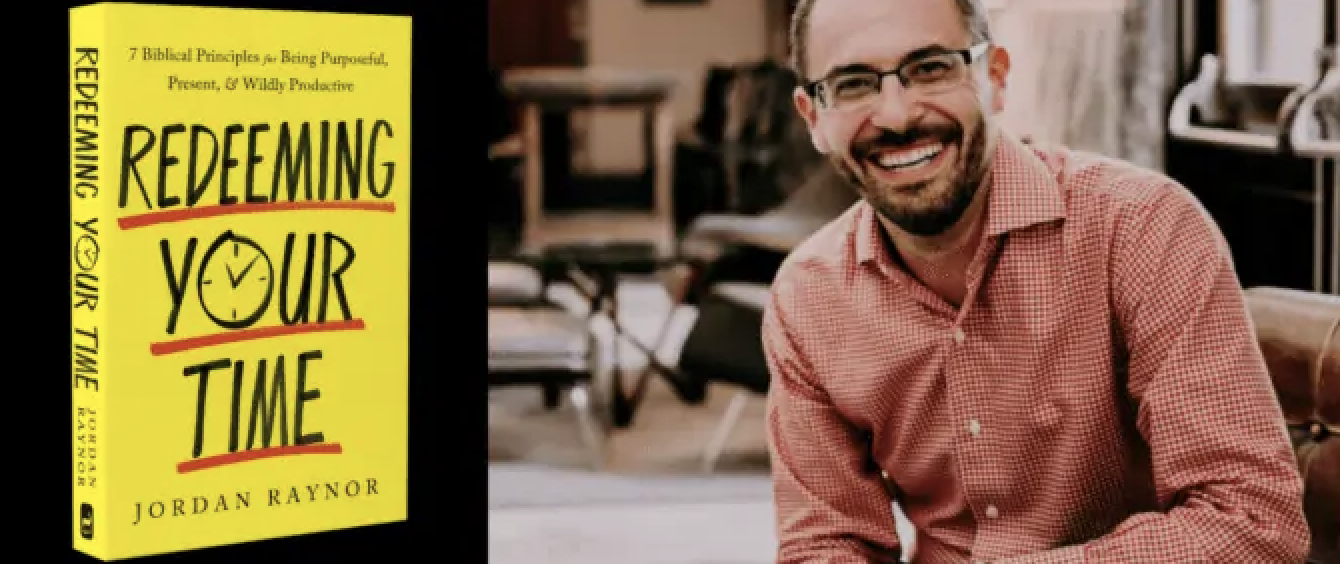
We talk with former Electronic Arts co-founder and VP Dave Evans. Dave is now the co-founder of Stanford University’s Life Design Lab. He is also the author of the New York Times #1 Bestseller “Designing Your Life,” about how design-thinking enables us to take up our role as co-creators with God. Design-thinking is now globally recognized as a powerful tool for innovation. And it’s especially helpful for solving “wicked problems,” the kind of problems that don’t readily lend themselves to easy answers with questions or spreadsheets. But how can Christ-centered innovators and entrepreneurs think about designing their lives and endeavors while following the will of God? In this episode, Dave tackles sovereignty and free will, the scandal of particularity, and how the word evangelism was first introduced in a business context.


All opinions expressed on this podcast, including the team and guests, are solely their opinions. Host and guests may maintain positions in the companies and securities discussed. This podcast is for informational purposes only and should not be relied upon as specific advice for any individual or organization.


Episode Transcript


Transcription is done by an AI software. While technology is an incredible tool to automate this process, there will be misspellings and typos that might accompany it. Please keep that in mind as you work through it.

Rusty Rueff: Hey, everyone, this is going to be a fun episode today. Welcome back to the Faith Driven Entrepreneur podcast. Dave Evans is the co-founder of Stanford University’s Life Design Lab with Bill Burnett they’re addressing the question, What do I do with my one wild and precious life? It turns out everyone, not just college students, want a more thriving life. So with Bill, Dave coauthored and published The New York Times number one bestseller, Designing Your Life and Designing Your Work Life. As a result, Dave has worked with hundreds of thousands of people and workers worldwide to build their way forward and design a more thriving life and career. The Life Design Lab teaches us how to design your life and how to design your work. The goal is to use the innovative technologies and the creative point of view of design to enable people to navigate how to go about engaging their future at and after college. Addressing the wicked problem. A design technical term of figuring out what to be when people grow up by providing a framework and a process to work it through innovatively, that’s what they do. And entrepreneur at heart. Dave helped start a couple of companies before landing a Stanford. Most notably, he was where I once was at Electronic Arts, where he also served as the vice president of Talent. We’re excited to talk with Dave today on the Faith Driven Entrepreneur podcast. Let’s listen in.

Henry Kaestner: Welcome back to the Faith Driven Entrepreneur podcast. Today, as always, is a special it’s an extra special one. This is one I’ve been looking forward to for a long, long time, since the very beginning of the podcast, when I was still just an idea. I went to my friend Dave Evans and said Dave, I’d love to have you on. And he was very nice at the time and said that he would do that. And we have now work schedules through COVID and a whole bunch of life changes to make it happen. And today I get Dave all to myself. I miss my partners. William, who is battling sickness at his house, awesome wife Deb has COVID and then Rusty is on the road again. So you just got me. But I’ve got Dave to myself. And when Dave and I got together, I guess maybe three or four weeks ago down in Santa Cruz, I live in Los Gatos, California. He lives in Santa Cruz. So he’s just over what we call the Hill. We talked for a long time and gosh, I wish that I had hit record on that. And it was about two and a half hour extended conversation, which was awesome. And we talked about everything under the sun and I feel like we’re cheating you a little bit because we’re only going to be able to do so much in 40 or 45 minutes. But we’re glad you’re here. And Dave, it’s awesome to have you on the program. Thank you for joining.

Dave Evans: Always good to be with you, Henry.

Henry Kaestner: So Dave is awesome for many, many reasons and you probably already know because you’ve listened to the intro about what he does with Stanford, the most popular course out there designing your life. You probably know that he was the engineering leader, led a team of engineers that designed the mouse, and he’s done lots of really, really cool things in between. What I want to do is I want to spend not as much time on his background, which is awesome. And if we had this was a three hour one, we got really into it. But I want to get right into the book, Designing Your Life and this process and this concept that Dave has talked about a lot, and he does talk about a lot within a Christian context, actually, as it turns out. But this is a time for us to hear about it in a way that will help us. Hopefully, as Faith driven entrepreneurs think about how to design our life, design our company leader, our company, our employees. And as we reach out to our partners, vendors, customers, employees, as we look to design something that is redemptive and as a product or service that really matters in the world, I think that Dave has I know that Dave has a framework that we can think about, and it’s, of course, in his book, and if you do nothing else, get it. It’s great, huge bestseller. But Dave, give us an overview. Talk to us about, you know, this is a universe that you actually know pretty well because you’ve been an advisor and in leadership at Praxis for a long time. So, you know, this audience bring us together, give us a framework intro us to the world of designing your life through the lens of a Faith Driven Entrepreneur, please.

Dave Evans: Well, the legacy story, you know, the origin story is this begins when I’m 19-20 years old sophomore at Stanford in 1973, 72 or something like that. And, you know, finally conclude.

Henry Kaestner: By the way audience. This is an audio podcast. We have it on video right now. And if you were to see Dave, you’d say there’s zero chance he’s 69 zero, maybe he’s 54. He may be a peer of mine, but let’s just go with what he’s just said. What was will give him the benefit of doubt that he was indeed at Stanford in 72.

Dave Evans: You know, I spent my obligatory night in jail demonstrating against the Vietnam War. I mean, you know, I’m a boomer through and through, dude. The so the point being, I find beside I don’t want to go into full time ministry. I don’t get paid to be, you know, loving Jesus and to love Jesus for free and joining the marketplace like 90% of the rest of the people that got made. And let’s go do that thing and then, hey, you know, your life matters. They told you that your life matters. You know that because you know God sent his son. So your life matters. And then it was I was about to like almost everybody else in the history of humankind, spend most of my awaking energies in this thing called the workplace or my primary role in the world. So if that’s the biggest expression of humanity available and humans really matter to God, then clearly that matters to God. So what’s this work and faith thing all about? And I started interviewing, you know, the older men and women, the lay people in the important churches in the Bay Area. And what does it mean to integrate your faith in your work? What does God think about State Farm Insurance? Harry You know, and I get frankly, horrible, horrible, horrible answers, you know, which clearly demonstrate a bunch of really well-meaning, thoughtful, caring Christian people are clueless about how to close the sacred secular gap. And I’m furious. I’m difficult now. I was insufferable in my twenties. And off we go. On the journey to kind of go. For some reason, the grown ups are holding out on me. Either Christianity has a lot to say about this, which is got to or it’s incompetent and I’m out of here. I don’t know why they’re withholding, but for some reason, the grown ups refuse to tell us whether this thing really works. And out of that came you know, it’s now a 45, 50 years old effort in understanding what we now call the faith and work movement. And it was out of that work that I got invited to teach a class at Cal 22 years ago and then now 15 years ago. So I took the Christian doctrine of vocational discernment and found a way to sneak it into the econometrics department at Cal. That’s kind of a long story I will skip and then my buddy Bill Burnett, who’s a very loving, caring atheist and he is still a living atheist takes on running the design program at Stanford, which is a less horrible drive from where I lived at the time. And I knew the design goes to the lunatic fringe. So I said, Hey, I’m doing this thing at Cal. What do you think? Oh, great. Let’s go meet the.

Henry Kaestner: Wait Dave, the design guys from the lunatic fringe.

Dave Evans: Well, at Stanford, the design program. So, you know, design thinking, which is the modern rebranding of human centered design, which is the specific innovation methodology taught in the design program at Stanford, conceived in 1963, David Kelley, the founder of IDEO, world renowned designer, the head of the design program at Stanford, is the third generation guru of design at Stanford. He stands on the shoulders of Bob McKim, who really grew the program and developed, and he’s the mentor to both David Kelly and to my partner and boss Bill Burnett. And Bob took it over from John Arnold, who came to Stanford in the sixties out of MIT, that wouldn’t let him do this design thing because it’s silly and it’s just arts and crafts and we’re engineers and where’s the math? And so Stanford let him do it. And that’s how this thing got going. So they’ve been the lunatic fringe all along. And so the integration of psychology, art and engineering in the human centered design innovation methodology we’ve been teaching for a long, long time. You know, there’s a kind of a crazy guys and, you know, they barely, barely got permission to stay around. It’s become hot and cool in the last 15 years, but before that, the first 40 years, like what are those guys doing, you know, I mean, there’s a strong cadre of members of the faculty Senate working vociferously to kick us off campus for the last 45 years. So, you know, well, it got cool recently. You know, it’s been the lunatic fringe for a long time, but they’re pretty open minded. And I said, Well, hey, I’m doing this thing about frankly, trying to re game adult formation in the university, which we don’t do anymore, you know, because we’re post enlightenment people and maybe we could sneak it in through this design thing and this gets to where which has got to do faith driven entrepreneurs so designing your life. So Bill says on Wednesday in the summer of 2007 great idea I got to go we’ll prototype it this summer will launch in the fall. Take all that crap you’re doing, reframe with your design thinking. Give me a proposal. So that weekend I took 45 years of work on Christian discernment in vocation, converted it into design language in about 10 hours, and dropped on his desk on Monday. And that’s what designing your life is. So my friend Tod Bolsinger, the EVP down at Fuller Seminary, a good friend of yours as well, I believe would say, gosh, Dave clearly the reason we get along is you do understand, of course, that practical theology, which is the formal name of a particular theological point of view and design thinking, are really exactly the same thing, just using different words that kind of go, That’s great, Tod I’m glad to know. And I can give you a sort of theological reason why design thinking really works, because all truth is true. And so that platform is a place to put this idea of how to design of your life on works just fine.

Henry Kaestner: So you take 45 to 50 years of thinking in Christian thinking. I want to talk a little bit more about that, about how you see the overlap. You slapped that down on the desk of a guy who’s an avowed atheist, super smart person, very, very thoughtful about this space in the intersection of these different practices that really matter. And you said it again. So psychology, it’s engineering. And there is a third one. You put character formation, maybe.

Dave Evans: Art,

Henry Kaestner: So art, so you put them all together. What was the reaction as he looked at this and sees, you know, some you know, 40 or 50 years of secular academy and then 45 to 50 years of Christian thought, how do you process it and assimilated?

Dave Evans: There’s a white paper called The Christian Companion to Designing Your Life, which I think you’ve seen as, you know, a 14 pages FAQ, frankly, for most of the evangelical Christian is going to go way, way, way about. I don’t design my life, God designs. Well, I’m just supposed to hear about it, right? I mean, this is a bad idea. So those kind of questions, I addressed in some detail. But when I flopped, the first of all, Bill and I had known each other for off and on, 15, 20 years. We were close acquaintances, not intimate friends. We had worked together in the business world a handful of times. We had a bunch of friends in common. So first of all, Bill trusted me. He knew that I was a good guy. He also knew that I was a religious fanatic, but was able to, you know, comport myself appropriately in public. He’d see me not embarrass him in front of clients before. And so when I described where this came from, you know, I would use the language, you know, of course, you know, you have to understand that Jesus is the second atom and the whole point of the invitation, the new covenant is to become fully human. And you’re an advocate of human centered design. So frankly, as long as you get the human part right, you can’t go wrong. And I know exactly how to, you know, preach the gospel at all times, use words only when necessary, so we can frame this thing in completely human language that’s utterly inclusive. He goes great, just do that. We’re good to go. And I knew design thinking quite well, having been around it for 30 years. So, you know, getting that language right was easy. Knowing how not to be a jerk by over proselytizing when you’re not supposed to be was easy. I’ve been doing that for a long time. So, you know, it’s not hard to be a public Christian. You just have to obey one simple rule don’t be a jerk.

Henry Kaestner: So that’s very interesting to me. Okay. So a complete overlap with some of the issues that our audience listens to. How do I attract and retain great talent? So you started doing that EA being the vice president of talent, you’ve seen that play out, talked to us about how we as …, sorry before we talk more about the journaling in the framework and in some of the framework for actually entrepreneur. And so maybe we’re doing it backwards, but let’s stick on this right now. How do you instill that into your culture? How do you use what you’ve learned to attract and retain key talent?

Dave Evans: Okay. So I’m going to zoom back on your clicker to theologically to frame this, which is going to take me to one of my favorite topics. I’m not sure this even came up on that long walk, which is the scandal of particularity that we discussed. The scandal in particular?

Henry Kaestner: No, no, we did not. I’m looking forward to bringing it.

Dave Evans: Ok so the scandal of particularity as a concept in philosophy, which is essentially around how scandalous it is. You know, that the universal is represented in the particular of the divine, is represented in the profane and the most where the concept of a scandal particularity actually comes from specifically as Christianity. Because, you know, the religions all get together in the great big existential bar, you know, and they walk up to Christianity and they go, Dude, where do you get off? Really? The fullness of God is pleased to dwell in one mortal person and space and time, if you I mean, come on, give me a break. So, I mean, the concept of you know, of the Messiah, the way we […] the 200% person, 100% person, 100% God, yeah, yeah, whatever. That’s scandalous. But that’s a big idea around the scale of particularity. So, you know, the body of Christ is still up and running. It’s just now distributed across a large number of people. The incarnationationality of the Spirit of God is still with us, and each of us gets to participate in instantiating the ongoing revelation of the glory of God, this thing called the Kingdom. And then we have these and it’s called companies. And in capitalism we only have two outcomes goods and services when you think about it. So I’m going to make a good thing or I’m going to serve you. Oh, wow. I mean, I will argue 90% of the good done in the world is done by for profit organizations in the capitalistic economy. And that’s a pretty controversial thing to say, but I think it’s a makeable argument. And so what we’re doing as entrepreneurs is this one little thing we’re doing. And if we select it carefully, you know, it is an instantiation of God’s dream for flourishing, whether it’s just sustaining something the way it needs to be, we’re picking up the trash again or we’re, you know, my guys up the street here, you know, […] are going to create electronic based, you know, commuter vehicles and change transportation forever. So however, you’re on the ragged edge of cool or you’re just, you know, picking up the trash dude because, you know, it’s a drag if you don’t. So in that little tiny box of your company’s definition, you know, your value prop in your product description or your service is an instantiation of putting, you know, skin on what it looks like in the glory of God is revealed. And so that’s what we’re doing all the time. And so if you want to I didn’t get your question. How do you retain talent? What do you just need to talk about theology now? How you retain talent is I mean, 47 million people and counting in the great quit. What’s that about? We argue that that’s overwhelmingly an existential threat.

Henry Kaestner: What did you say?

Dave Evans: The great resignation, right? Yeah. As of last week is up to 47 million quitters. Wow. In the last six months. And we’re not done now. There’s four or five different archetypal stories in there. They’re not all the same, but a really big version is, you know, take this effing job and shove it because I’ve had it being treated like a number and I can’t connect the dots. I can’t find any meaning here. And life’s too short. I’m out of here.

Henry Kaestner: So designing your life, I think, of course. And most of the people on this podcast think that we’re designed by God to work is a guy who works 6-7 days his work, continues his day. Where do you think the great resignation ends? Is it six months? Is the years it two years where everybody kind of looks at it and just like, oh my goodness I thought, this can be awesome, but I’m incredibly bored and there’s a massive re entrance into the job market.

Dave Evans: Yeah. I mean, some people are retiring early and just given up simply to go and try the gig thing, but a whole lot of people are getting it. Look, I’m going to craft my lifestyle. Works are going to never be the same again. A lot of people are reevaluating. Is it worth it? You know, maybe I’ll take less work and see my kids once every 100 days. And I think we’re going to see the big quit shrink down. I think between gig work, contract work, remote work, we’re going to see turnover stay high. We’re a long way from this being over and the pandemic. People ask what changed in the pandemic? And my answer that is nothing. But what happened is the pandemic catalyzed our impatience with an old problem, with a very old problem. The Gallup data on engagement in the workplace. 22 years old, two thirds of American workers have been disengaged at work for over 22 years as long as they’ve been measuring, which means that was going on long before they even started looking. Yeah.

Henry Kaestner: Okay. So that makes this question then even more important, how do you attract and retain employees with this whole concept that, as you say, that wasn’t changed because of pandemic, but at least accelerated? What does it look like to be able to help our employees, our team members, take a role in designing their life, understand how they’re created imago Dei? But what do we do as employers?

Dave Evans: Well, couple of things there are one is employers. I think, first of all, that’s back to the scale, particularly. You got to figure out the best but truest, noblest, but makeable argument for why are you doing what the heck you’re doing? Why does it deserved to matter? And you may frame that in deeply Christian language of all kinds of, you know, Bible words and that kind of stuff. But you got to come up with the stand for as version of the average person understands.

Henry Kaestner: Does that get back to the scandal particularity by saying, ultimately, our company only does a small thing, but our job is to take what that small thing is and show how it really matters in the grand scheme of things.

Dave Evans: Yeah. I mean, you know, the creation is this massively multifaceted diamond of wonderfulness and you get to camp out on one little teeny tiny facet on one of the bevels. And there’s, you know, a couple of the colors of what God really looks like shines through that little facet. And your job is to is to buff that puppy up and give it a shot. People go, Wow, that’s really cool over there. What are you doing? I mean, you know, the Praxis guys and the Praxis guys who believe in redemptive entrepreneurship, you know, because I’ve worked with them for a long time. They got started for you did. And they’re not that picky about exactly what you’re doing, as long as it’s redemptive. So that varies all the way from, you know, the guys. And I think it’s Kansas City doing a whole different kind of a car wash that’s pretty redemptive up to, you know, cross-training young women rescued out of sex slavery in the Philippines to reenter the workforce and become self-supporting. Okay, I got that part that makes sense and a lot of stuff in between. So you got to figure out as a company what you’re doing and what is this fundamental value in the human story. And then you got to invite people into that and you got to take responsibility for helping them experience how the expenditure of their human energy and what we’re doing here contributes to and is part of what the meaning making of what we’re doing as an enterprise deserves to be in the world. And this is where one of the challenges is, because right now a whole lot of people want work to be everything. They want everybody to be work with them is what the founder to be a person, every single value of waste and every single behavior they totally endorse. And that’s nonsense because that’s asking for the scandal of universality. I want you to be perfect. No, you’re not going be perfect. But here’s what I can do for you as an employer. This is you know, I remember years ago in a working in telecom company, talking to the CEO was a real hard guy and he kind of goes, look, we’re not curing cancer, okay? But, you know, we’re trying to answer the phone and somebody’s got to do it. So do you want help me answer the phone? Are you in or not? What’s the deal? And so I understand what you’re doing and then make the best of it. You can facilitate that conversation. So if anyone is, for God’s sake, at least allow the participation and engagement contribution your company can make to your employees and your employees, commit to your users to be visible and accessible. And then thing two is, I will argue it’s time to start managing people life wide, not just role wide. So there’s a chapter in the rereleased second book on Work talks about the human in the room, the ratio during the workday. How much do I feel like I’m just my role? Am I really talking to Henry Kaestner? or am I talking to the founder of the FDE podcast guy. You know, so you’re both those people now. It used to be you are mostly the podcast guy currently played by a guy named Henry. Like whatever he’s about, I don’t know. And now that we’ve been, you know, speaking from our homes and people are, you know, folding laundry or nursing your child during staff meeting on Zoom. You know, I’m a little more my person than I used to be. So the personhood to role ratio has moved toward personhood. That is, move people toward existential empowerment. And guess what? Empowerment is a one way street. There’s no going back. So people like being themselves more. So companies can do a better job of facilitating people having tools. So like we did this, you know, work for you life, you compass exercise. What do you want to see planning? You can as an employer give people tools to get better at being themselves but best facilitate the conversation that manager. So I would encourage you to have your employees read their own manifestos, discuss it with one another, come up with what questions that poses from them to you. Answer their questions, but do not read their essays so they’re essays or none of your darn business. That’s their personal lives. But as a boss, you can facilitate the conversation and you can help people do a better job of living coherently.

Henry Kaestner: Okay, so that’s fascinating. So at the beginning you’re talking about the mission. And the mission is what are you looking at to solve this scandal particularity and does it really matter or not? And then now you’re bringing in now the person. Okay. Why are you important? And so I think you just said for the person to write their own personal not the company’s manifesto, but their personal manifesto, correct?

Dave Evans: Yes.

Henry Kaestner: Okay. Tell me if I’m wrong, if I’m reading into things or if I’m putting words in your mouth. But it sounds like in an environment where somebody brings their whole self to work, now all of a sudden there’s an opportunity for us to be thoughtful about acknowledging people’s faith walks.

Dave Evans: Yes.

Henry Kaestner: In the work environment as well, if they’re going to go ahead and write a personal life.

Dave Evans: Yeah, absolutely.

Henry Kaestner: So I think that that’s a really interesting trend.

Dave Evans: Yeah, I get very, very mixed group of people who are radically different worldviews together to collaborate all the time. And if you set the rubric up, well, I set the container up. Well, that holds us to go. Look, we’re all working together. We’re in this company, and all of us care about life. All of us want it to be meaningful. All of us want to be authentic. All of us want to be coherent. All of us want to be honest. All of us want to grow by getting everybody to sign up to a list like that. Not hard at all.

Henry Kaestner: Okay. Tell me if I’m being naive in this. Tell me if I’m being naive in this. But that makes me extraordinarily hopeful for the gospel. And here’s why. I mean, that if now each employee is not just a unit of production to help answer the phone or whatever the case is, and therefore I can’t bring in myself. But now, because of this kind of acceleration of these trends you’ve seen and people, they’re bringing their personal story and they’re able to talk about the things that really matter to them. And you can have somebody who says, My Hindu faith is really important to me. My Jewish faith is really important to me. My Christian faith is really important to me that that is a great thing for the gospel because truth stands out in the marketplace of ideas for somebody says tell me more about your Hindu faith, the Hindu says tell me more about your Christian faith. Right. Is that am I just being just optimistic or.

Dave Evans: No, you’re dead on. I mean, some million years ago, again, Ron Ritchie, who’s an associate pastor at Peninsula Bible Church back in the seventies and he’s no longer with us. Big, hairy headed guy who looks like Jerry Garcia on a bad day. And he’s kind of a wild man, teacher, preacher. And I remember him talking one day about reframing evangelism. It kind of goes, you know, people keep saying, hey, Ron, what are you doing? I go, I’m a pastor and I like them. It’s because mostly people run away, you know. And so I was reading, you know, first Peter and be prepared at all times to give a testimony of the hope, the lives within you. Right. So that verse is often used as I get ready to evangelize. And he said, I thought about it. So that phrase being prepared at all times to give a testimony, what is testimony. Well, you know, you ask a lawyer and, you know, you walk into a courtroom and you sit in back in the seats. And after a while you decide there’s something important to say and you raise your hand, go, excuse me, I have something to say. And the judge. So shut the heck up and sit down. You know, we want to hear from you. We’ll call on your testimony is a specific response from an authoritative inquirer identified toward you because you have been identified as interesting on a topic of concern. So a testimony is a requested response on a topic of interest. So that’s what a testimony is. And you’re supposed to be ready to give a testimony of the hope that lies within you. So he says, Oh, I guess what that means is Christians should be ready to have the following question. Hit them at any time. Hey, Henry, I’ve noticed you’re, like, weirdly hopeful. What’s up with that dude? Tell me more about that. So. And he says, by the way, if you ever get that question, very often you’re not much of a Christian. So evangelism starts with, hey, I noticed you’re like, hopefully alive or sort of like you’re a little on the weirdly wonderful side. Could you tell me more about that? Do you know anything about what I’m talking about if you’re not getting that question in the wrong place?

Henry Kaestner: Yeah, that’s really good.

Dave Evans: So in the workplace, in the workplace, you know, we have the opportunity to still be your, you know, sort of small C Christian, small C member of the Catholic, you know, universal member of the Body of Christ, living out loud in a non jerk, non proselytizing way, you know. So he goes, Hey, Dave, how’s it going? It’s going great, you know, it’s just really going great. Well, I. Look, I think you’re actually telling me the truth. It does look like it is going great. Why is it going great? Well, you know, this morning I got to talk to this guy Henry who talks faster than me, and I love that part. And we talked on the Faith Driven Entrepreneur. You know, we’re talking to a bunch of entrepreneurs who are trying to live out what they believe into what they do. You know, and I’m all about coherency. So hanging out with people who care about coherency, that just totally makes my day. Now, I’m not. I didn’t sell anything. I’m not judging anybody. I’m not going are you coherent because, you know, Jesus can help you get there. You know, I mean, grew up in the seventies when literally evangelism training was stuff like. So when people drop a rock on their foot and they go, God damn it. Then you go, Oh, I notice you’re thinking about God. I didn’t realize you were interested in eternal things. Shall we talk some more? Those are the techniques we were given brilliant techniques, as opposed to just, you know, if you respectfully live out loud in a way that invites an authentic question, like, wow, you’re more hopeful than the average bear. What is up with you anyway? Then you’re probably on the right track.

Henry Kaestner: And so this trend towards bring your whole self allows you to be more hopeful and help people understand more about what makes you tick and sad. And so that’s a good thing. So we’re going to celebrate that. By the way, I may or may not have told you or the audience this before, but when we were raising money for someone’s fund three or four years ago, I would go around the country and talk to people about faith and the intersection of investing, etc. And I’d ask this question. I say, Where do you think is the Center for the Faith and Work Movement in the United States? In If I was in Atlanta, they’d say Dallas. If I was in Dallas, well, they’d say Dallas because it’s all about Dallas, right? But I say no. I would submit to you that the Center for the Faith and Work Movement in the United States is actually Northern California. It’s in Silicon Valley, where there are new or resurgent faith driven employee resource groups at Apple, at Google, at Facebook. They’re doing praise and worship now in the lunchroom at Dropbox. And I think that there is this in Silicon Valley, does many things well and some things pretty poorly.

Dave Evans: Intensly missionally minded.

Henry Kaestner: But it is and I think that there’s something about this bringing your whole self to work that employers out here started to understand because they realize from a pragmatic perspective, if somebody can bring their whole selves to work their whole personhood, then they get to stick around longer. And that was born out of necessity, right? Because all the good engineers would hop around.

Dave Evans: I mean, I in fact, I haven’t told this story a lot. I just did a podcast with Guy Kawasaki and we got into old, old.

Henry Kaestner: All of you come down and you take a major step down.

Dave Evans: And we got into the conversation. I was on the first corporate culture committee at Apple in 1979 with Steve Jobs and Ann Bowers. And I don’t know for a fact, but I think the first time I went to the first one of those meetings is the first time that the word evangelism got introduced into a business context, which is because the first year I was at Apple, the company grew from 800 to 5000 people and we were public. So it was kind of a busy year and Steve was terrified that we would wake up and just have turned into Hewlett-Packard or National Semiconductor overnight, because literally the them, the people who just arrived on the Jitney busses from the hiring program, you know, outnumbered us, the people who got it by about 10 to 1. I mean, literally busloads of people arriving daily. I have no idea what they’re doing. And after six weeks, I’m one of the old guys, you know. And so I got dragged along to this meeting I didn’t belong at. And they’re talking about how do we make this work? How do we help people get it? What Apple really is not what Apple isn’t. And they’re really terrified that what you lose it, you never get it back.

Henry Kaestner: Hmm. How they bring you into the culture conversation. By the way, did they know you are a Christian?

Dave Evans: Oh, well, find you’re about to find out. Oh, so they’re talking about, you know, training and posters and maybe a museum and and a diorama and this kind of stuff, I’m sorry, but this isn’t going to work. You’re all talking about a program and it’s not a program, it’s evangelism. And the room goes death quiet, and […] he goes: what the f are you talking about? And then my boss leans forward him and he goes, Hey, Steve, he talks like this all the time. It’s it’s, you know, it’s really going to be either interesting or we’ll just fire his ass. So let’s see. You know, she goes, okay, go ahead. You know, and my boss says, you guys, you got a minute? You know, so literally I am six weeks in and I got nothing to lose. And I kind of go, here’s the deal. Evangelism, this is a disease model. You don’t get taught this. You don’t get shot. You catch it from somebody who’s got it. The old culture is an embodied reality in a person in the community. So the those of us who get it are the community of the real Apple people. We have the disease. It’s an infectious model. You get it from somebody who’s got it. You can’t just transmit it through some third party vehicle. So it’s all about the relationship and it’s all about the conversation. So that’s what evangelism is. You got to get the people who get it to give it away and think that it’s both, you know? And then later on, Guy Kawasaki got to be the first guy to put the word evangelism on his business card. And, you know, so it’s still true. So corporate culture, you know, look, if you as a Faith Driven Entrepreneur, you if you got a very, you know, straightforward business plan and you’ve got a very mixed population of employees, you’re not checking people’s Statement of faith at the door. You don’t need to proselytize the gospel. You need to give evidence to the instantiation of the good news. This within the story you’re already telling. And let us speak for itself.

Henry Kaestner: Okay. That’s a new word for me. You mentioned a couple of times that I’m feeling so dumb to actually have to repeat it. It’s not substantiation, it’s instantiation, instantiation.

Dave Evans: So an instance. So, you know, if the early games at EA did in fact respect the intelligence of the user. In fact, they are on my favorite Amazon review of the book when I first came out was somebody wrote finally a self-help book where the writers respect the autonomy of the reader. And we went, Oh, thank God, because that’s exactly what. And so there’s an instance of somebody offering a self-help tool that has an anthropology that respects the agency. And frankly, for me, the imago dei lurking in my reader. And so I’m trying to have an instance in the world in 3D in real time that demonstrates I respect your autonomy. And the reason I respect your autonomy is because God gave it to you. So God is in favor of the freewill thing and God thinks you get to be in charge your life. Maybe I should agree with that. So that’s an instantiation. So a product or a service is an instance of something, and hopefully it’s an instance of the gospel. Even if that gospel uses different language than, you know, you hear on Sunday morning, we’re makers, we make stuff and what you make is an instantiation.

Henry Kaestner: Okay, so you spent a lot of time around Faith driven entrepreneurs, more than just about any other guest we’ve ever had on the show. Can you talk about the traps you find Christian entrepreneurs fallen into? And I might say something. It’s going to be a little bit controversial maybe and maybe you’ll agree with this or just will stir this up a little bit. I have said in the past that I think that the majority of Christian entrepreneurs are not as good as their secular counterparts because they haven’t been able to reconcile their different ambitions. They think their faith thing means that, you know, I’m doing whatever I’m doing for work. And but the real ministry happens when I leave work at 5:00 to go volunteer at Young Life or whatever the case is. But that there’s a minority of Christian entrepreneurs that really get it. And they have this nuclear source of energy that allows them to be much better than their secular counterparts. Talk, if you will. You can agree or disagree with that. That doesn’t matter. But talk about the mistakes you see Faith driven entrepreneurs making so that our audience can be conscious and look out for them.

Dave Evans: Sure. Well, the first is the one you already pointed out, which is they’re still stuck in the sacred secular gap. You know, at some level they’re trying to do, you know, a wood hand stubble thing that’s going to burn as Christianly as they can. But it doesn’t really matter. You know, I’ve often said most Western evangelical Christians are much more devotees of Plato and Aristotle than they are of Jesus or Moses. They just don’t realize it because they’re stuck in Greek dualism, where spirituality, materiality is fundamentally different and a spirituality is better and it’s ethereal and it’s on the other plane, and this world doesn’t really matter. And that came to us out of the West. That’s the Western Church’s problem. The Eastern Church has never had this problem. You know, I’m not a dualist, a unitivist. Right. I believe in the God of creation. You know, this is a good thing. So thing one is, you know, we got that problem. So you’re still stuck in the sacred secular gap and savior deprecating the work you’re doing. And everybody knows it because it’s my daughter. Lisa, you know, now works for Fuller Seminary, was a youth pastor for years and is studying parenting. And guess what? In terms of values, information, your kids don’t get what you say. They don’t even get what you do. They get who you are. So who you are existentially at your core as a person, value wise, is exactly what your kids will learn. You know, keep saying stuff, keep doing stuff. But if you’re doing stuff and saying stuff, that’s not the real you, they’re not going to be fooled.

Henry Kaestner: It’s like the Maya Angelou. It’s not what you did or what you say. It’s how you made people feel.

Dave Evans: And how you make it feel. By the way, it comes right out of who you are.

Henry Kaestner: Of course. Of course.

Dave Evans: So that’s what entrepreneurial leaders are projecting their soul into their institutions. Psychology now knows this called mood contagion. We don’t just pick up on each other’s feelings. We project them into each other’s psyches. So the first and foremost moral obligation of any organizational leader is to bring a healthy, cheerful person to work. Full stop

Henry Kaestner: Ok more mistakes that a Faith Driven Entrepreneur makes. So it’s really helpful first one thing.

Dave Evans: The second one kind of classic, you’re still stuck in the sacred secular gap. You’re not living in the unit of reality. You don’t respect the incredible privilege of demonstrating a little tiny chunk of the facet of, you know, the scandal of particularity where you’re beaming, full, unmitigated frequency of the reality of God’s glory through the way you’re now doing car washes in Kansas City. Yeah, that’s thing one and thing two, which is actually just another inversion of the same problem is, you know, you feel morally obligated to do traditional, either evangelistic or. discipleship ministry on your employees and customers because that’s what a good Christian would do. And nobody went to work for you to be, you know, converted and nobody went to work for you to be spiritually formed, then went to work for you to learn how to develop their career as a product manager, getting this thing out the door and I’ll let you know if I want you to be my mentor. So part of it is you’re in a role and most people are, you know, overstating their role and trying to take on a position because they think they have a moral obligation to act like somebody that you didn’t choose for them to be. So you either downsize the glory of the company, you upsize yourself in the eyes of your employees. You’re either one of those mistakes ends up, you know, jerk. And that’s a big contributor to why the two. You know, unprompted, branding attributes of Christianity in this country are judgmentalism, a narrow mindedness, go ask to Barna Research, you know, what does it mean to be a Christian in the United States and when you’re a narrow minded, judgmental person? So we worked really hard to earn that brand.

Henry Kaestner: And that, so Christians there, just for our listeners, of course, when you’re talking about the passage from First Peter, it’s all if you’re ready to share the reason for the hope you have with gentleness and respect. And we’ve got to make sure we get that gentleness and respect part.

Dave Evans: I mean, right now, the fruits of the spirit is, you know, it’s a tough list to contend with. So those are things one and two, that they get in trouble on. The other thing I think they get in trouble on, well, the one that we don’t talk anywhere near enough about is dealing with risk and failure. You know, there’s a really tough question. I’ve got a slide on this. I present does God call us to failure?

Henry Kaestner: Does he?

Dave Evans: When something doesn’t work, when the company goes down, you know, if something doesn’t work, what’s the first question you ask? And 90% of the time when I ask that question. So, you know, when someone goes badly, what’s first thing you ask yourself.

Henry Kaestner: What did I do wrong?

Dave Evans: Right now, questions have belief system. So when you decide to empower a question, particularly a question that either guides or judges your life and what did I do wrong, judge in my life? So I’ve just given that question a huge amount of power. You better double check the belief system of your question because you want to make sure you believe it to believe? And by the way, the Christian answer to what did I do wrong is I clearly misperceived God’s will because it would never be God’s will for me to fail. Yeah. Why would God waste my life calling me into something that we all know is going to fail if I think God has foreknowledge of all things. So now we’re really into what are we really believe to be the nature of the will of God, in the nature of free will, in the nature of agency and the nature of life. But at the end of the day, a better question, by the way, is not what did I do wrong or what mistake was simply what happened? We start with the objective question just what happened and maybe there’s a lesson there and maybe, maybe, you know, the 14,000 things over which I had no control whatsoever conspired in such a way. So it was a great idea, but it didn’t work, you know? So ask if you’re a venture capitalist, for God’s sake, Henry, how many sales like, oh, shoot, it didn’t work out what they do wrong. Nothing. They did it, all right? It just didn’t work. Happens.

Henry Kaestner: Yeah. Oh, absolutely. It’s actually really interesting because, yes, as a venture capitalist, you have a great lens into failures and you realize that more often than not. Now, of all the different things that happened to your point, lots of times the leader plays an active role in that. So it’s not he’s not just 1 to 7 a half billion. He has a really or she has a really big role.

Dave Evans: Have a ton of agency.

Henry Kaestner: Yep. And yet there are a ton of externalities as well. But talk to me in the role of God, something that you alluded before that you have this FAQs, people say wait to say in designing your life, but doesn’t God have a design for your life? And you’ve mentioned a couple of times now that God has given us free will and agency, and yet he’s still sovereign. Maybe you just talk about, well, what’s the answer on that FAQ, as you balance the sovereignty of God.

Dave Evans: Okay, so the sovereignty, freedom, that’s a tough one and it comes up all the time. So it was it was a really good question. And sovereign capital, clearly, you’re interested in sovereignty. So first of all, this brings up the question of so what’s this free will thing about? And I think what does owning your life is about is the co-creation of our lives that we get to be collaborators alongside with but under God. So we’re neither puppets nor totally free agents. You know, there’s an old line that says so many Christians are practicing atheists. I actually think a more accurate statement is too many Christians are practicing deists and a deist, you know, is the has the alarm clock God or, you know, God. Yes, it was God and God is the creator. But he wound up reality like all alarm clock. And he put, you know, evolution and physics and all that stuff in place and it’s just unwinding, you know? So we actually live in a mechanistic universe, but it’s of God’s design. That’s a deistt. And too many people act like that [….] things are going, you know, the gods on the outside and I got us to resolve it my problem, as opposed to there’s this incredible dynamic of the participating immanent God, you know. John 5:19 I do only what the father shows me. So you know, Jesus, the least creative man who ever lived, my mentor says, because all he did every day was the same darn thing. Follow, follow, follow, follow. So we’re in this dynamic relationship of co participation with the reality of God and then the sovereignty freedom thing, the way I hope that first of all, I think to myself, okay, so the. I got two really, really big ideas here free will and sovereignty. First of all, I kind of think I sort of have a feeling that the free will thing makes sense to me. I think I have some free will and I think I kind of get it. And that makes sense because if I’m going to be held responsible for how I exercise my agency, that ought to be within my capacity to perceive it. That would seem fair for God to make me capable handling that which I’m responsible for. Otherwise, it’s just a setup. Well, the sovereignty thing, I don’t actually have that. I have domain sovereignty. You know, we’re contrarians, right? You know, but I don’t have the kind of sovereignty God does. So that’s actually over my pay grade. So that one might kind of blow my brains out a little bit. And I see a lot of people trying to come up with a human description of God that works for them because they just don’t like the paradoxes. So the way I hold that, by the way, is that all creation is within God. I mean, you know, creations out on the side and gods another being, God isn’t a being. God is the ground of all being. So everything is within God. God is holding all things together at all times in ways that are beyond my comprehension, but not beyond my experience. And it turns out God believes that free will in us consciousness bearing animals called humans is a worthwhile instantiation of the image of God. And so for that to work, you know, he has to practice kenosis pulled himself back, if you will, a little bit to allow the room of our agency made from his to operate. So sovereignty surrounds and withholds that freedom. And anything that can happen within that was also the problem of evil, you know, is within the sovereignty of God. So sovereignty isn’t fate, it isn’t destiny, it isn’t spiritual materialism. It is the way things are. And so when things fail, the real will of God is not outcomes it’s witnessing, right? So God does not promise to solve our problem. God promises to be with us. This is highlighted for me many years ago on Good Friday when somebody started to share the difference between you get to decide which Jesus you’re willing to commit to. Do you want the one from the prisoner on the left or the prisoner on the right? Because the two prisoners next to Jesus as two very different questions that identify the two most popular versions of Jesus on the planet. One guy says, Look, if you’re Jesus, get us the heck out of here. Fix it. So do you want Jesus who fixes your life? And if he doesn’t fix your life, like, why would you hang with him? Get out of here. We’re done. The other guy says, look, just remember. I mean, he doesn’t even have to be with Jesus. He just says, you know, wherever it is you’re going. If you remember me, that would be lovely. And then Jesus says to him, Guess what? You’re going to be there at the end of the day you get to be with me in a place called Paradise. So do you want the Jesus who fixes or do you want the Jesus who is with? And they’re pretty different. But you might go through some failures like Jesus who stands of the wall of Jerusalem at the beginning of the Passion Week and weeps and says, Oh, Jerusalem had only you known of the time of your visitation? He was a prophetic voice trying to encourage the Jews to remember, Wait a minute. You’re not the exclusive recipients of God’s love. You’re the exclusive purveyors of it to everyone. Let me help you reframe Judaism. And they didn’t get it. I’m pretty sure Jesus would have been totally okay with people actually understanding him. Otherwise, why is he crying? He’s not saying they’re going ha ha ha, man, watch what I’m going to show you on Sunday. That’s not the story. The story is, damn it. I really tried to get this across and they haven’t heard. It’s breaking my heart.

Henry Kaestner: Okay, so Dave we’re coming to the end of the program. You’re a remarkable, in my experience, a very, very, very hopeful person. And your energy for others, your energy for God is just an inspiration. I love it. I love being around you. Everybody loves being around you. Where does that hope come from?

Dave Evans: Oh, man.

Henry Kaestner: What are you hopeful about?

Dave Evans: You know, we see through the glass darkly, but later face to face again, I came so you might have life and have it more abundantly. You know, Joseph Campbell, the philosopher, he said, you know, people talk about what what’s really is about meaning, you know, Viktor Frankl and it’s about, you know, your mother, if you’re Freud or, you know, he finally said that. I think it’s this aliveness thing. I think it’s just about we want to be alive. And I think that’s a Christian thing to say. You know, gloria dei, you’ve given some of the glory of God as a personal love person fully alive, you know, Arrhenius. So this aliveness thing is really, really, really attractive, and I’ve just been kind of running toward it for a long time.

Henry Kaestner: Yeah. Does being acquainted with death make you more alive?

Dave Evans: Oh, man. Yeah. So for those who don’t know, what Henry is referring to is a year and a half ago, my beloved wife, Claudia, died of cancer. So 2020 was an interesting year. February 25. My second book comes out one week to the day. Later, March 2nd, my wife gets the terminal cancer diagnosis one week to the day later, after that COVID shelter in place starts. Interesting year. So March 2nd, 2020. Claudia’s got a death sentence. Her prognosis was six to 24 months, depending which day you ask them. She got nine. She died on December 4th of 2020. So we had a good nine months. She died really well. And then I, you know, just dove into the deep end of grief for the next year. So, you know, there’s got to be a lesson in here somewhere. I’m going to find it. And I am so grateful for the gifts of that grief processing. Death is part of the human story. We’re all going to go through it. And if you have the privilege of being intimately beloved and in love with any other human being with whom you have gotten, you know, deeply connected and then have the privilege of experiencing what happens when that person gets ripped out of your soul and what God can show you about the nature of being a human being, the nature of reality, the nature of eternity. All three as I told you on the walk of my anthropology, cosmology and theology, what does it mean to be a person? What’s the nature of the universe and who’s God? All three of those are in a way, different place than they were two years ago. So I’m learning an awful lot about that. But again, I’m 60 and I get 11 grandkids and had breakfast just the other day with a guy named Mark who is 67 and retired a couple of years ago. Very, very successful, strong believing architect, built lots of stuff. He’s a builder, you know, and now he’s quieted all the way down and he’s just he says, I’m just being I’m just shown up. And he said, you’d be surprised how many invitations just showing up gets. So I’m currently contemplating that. So the big lesson is we really are eternal beings and this is a form in this mortal world and, you know, show up, but don’t hold it too tightly.

Henry Kaestner: Awesome. Okay, last question we get we ask this to all of our guests, what are you hearing from God through his word?

Dave Evans: Be still and know that I’m God. That’s really, really coming through.

Henry Kaestner: That’s awesome. Okay, may that be the same for me, for our audience. And trusting in this God, I’m grateful for the opportunity to go beyond just talking about designing your life and just about faith driven entrepreneurship into some of these more existential things about the nature of God, as you said, the nature, theology, cosmology, all that together. You’ve been very generous with your time. I’m grateful for our friendship and our partnership in the Gospel.

Dave Evans: I have a parting encouragement the Faith driven entrepreneurs are anything, you know, they’re really trying to show off and they’re really trying to get right. And we believe in growth as Christians. We’re going to get better. If you’re going get better, you will worse. And one of my single favorite things that Jesus ever said was each day has enough trouble of its own. So I would argue one of the single most important discernment practices to become mature in is to when something comes to mind, quickly, quickly be able to discern, is this today’s trouble? Because if you’re smart, you are able to see far enough down the road to begin to animate anxiety about things over which you can’t really be an efficacious contributor to you. That’s called worry, that’s called a sin. So knowing when no, that’s legitimate planning. I’m doing something looking forward this worthwhile. No, I’m just busying myself with worry and pretending it’s responsibility. So getting to the place where you are at peace with, you know, well, cross that bridge when I come to it, even though I can see it coming, I’m not thinking about it yet. So knowing when to be looking down the road and when to just trust and focus on keeping your left foot in your right foot going in sequence, that’s really worthwhile. And most of you are being way too hard on yourself.

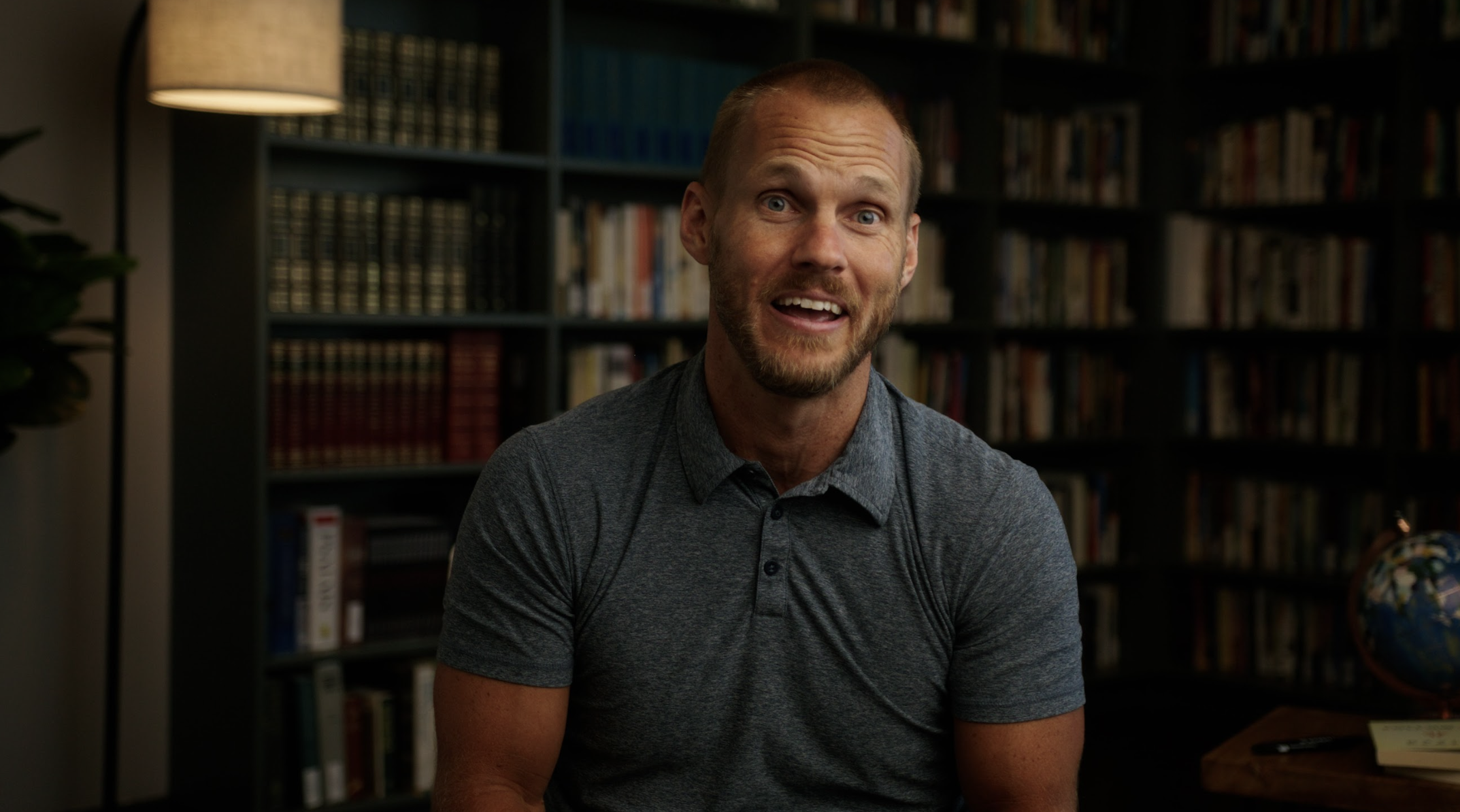
Dave Evans

Co-founder | Stanford Life Design Lab

Co-author | Designing Your Life & Designing Your Work Life

From saving the seals to solving the energy crisis, from imagining the first computer mice to redefining software — Dave’s been on a mission, including helping others to find theirs. Starting at Stanford with dreams of following Jacques Cousteau as a marine biologist, Dave realized (a bit late) that he was lousy at it and shifted to mechanical engineering with an eye on the energy problem. After four years in alternative energy, it was clear that this idea’s time hadn’t come yet. So while en route to biomedical engineering, Dave accepted an invitation to work for Apple, where he led product marketing for  the mouse team and introduced laser printing to the masses. When Dave’s boss at Apple left to start Electronic Arts, Dave joined as the company’s first VP of Talent, dedicated to making “software worthy of the minds that use it.”

Having participated in forming the corporate cultures at Apple and EA, Dave decided his best work was in helping organizations build creative environments where people could do great work and love doing it. So he went out on his own; working with start-up teams, corporate executives, non-profit leaders, and countless young adults. They were all asking the same question. “What should I do with my life?” Helping people get traction on that question finally took Dave to Cal and Stanford and continues to be his life’s work.

Dave holds a BS and MS in Mechanical Engineering from Stanford and a graduate diploma in Contemplative Spirituality from San Francisco Theological Seminary.

PODCASTS FOR THE FAITH DRIVEN ENTREPRENEUR

When Faith Mediates Your Entrepreneurial Identity

— by Amanda Lawson

It’s no secret that the entrepreneur’s life is full of high highs and low lows, with very little predictability. The market falls, employees quit, funding suddenly dries up, and stress piles up spilling into our personal lives. We also have great days, making the sale or closing the round, and everything feels amazing. And some combination of those things happen on repeat, month after month, week after week, and even moment after moment. Facing highs and lows of entrepreneurship can skyrocket and plummet our entrepreneurial identity (EI). Simultaneously, as believers, we know our identity is secure in the Lord. So, how do we navigate the unpredictable chaos of threats to our identity—even the good kind—in light of our identity as both children of God and entrepreneurs?

When our identity as entrepreneurs is challenged, our relationship with God—the rootedness and permanence of what it means to be a child of God—and all that comes with it, can moderate how we view all of our other (sub) identities, especially our EI. And it is the thing that reliably brings us back to a healthy mental and emotional state, lifting us up in the wake of entrepreneurial failure, and keeping us humble in the glow of success. But living that out isn’t always simple, and it certainly isn’t a “one and done” activity. 

Recently, the L.I.F.E. (Leading the Integration of Faith and Entrepreneurship) Research Lab at Miami University completed a study on how Christian entrepreneurs across a variety of industries navigated the highs and lows of entrepreneurship. We took years of primary and secondary interviews to understand the mindset and practices of business leaders, coaches, and creatives facing the roller coaster of entrepreneurship. Our study revealed incredibly interesting concepts that may not be foreign to the mind of a faith driven entrepreneur, but to put those concepts into practice was another thing altogether. 

When it comes to things like community, church, and family, it’s not terribly difficult to think about ourselves as beloved children of God, recipients of His adoption, able to communicate with Him and hear from Him. But it’s not as easy to remember when it comes to entrepreneurship, especially when we face the extremes of work—success or failure—which we describe as “identity threats.” When threats occur, we can forget that our identity is not contingent on our achievement (or lack thereof). In failure, we tend to lose ourselves to lies of worthlessness, that we’ve somehow become less than because of a business outcome. In success, the pendulum swings dramatically the other way and we have a tendency to become prideful and elevate ourselves in the wake of professional accomplishments. 

It isn’t much of a stretch to consider that failure poses a threat to our identity as entrepreneurs. When we have poured time, talents, and treasures into a venture only to watch it crash, it’s understandable that we start questioning the validity of our claim to be “entrepreneurs.” On the other hand, entrepreneurs also faced identity threats in the face of extreme success, where they were tempted to view their entrepreneurial success—and therefore their entrepreneurial identity—as preeminent, tending dangerously toward pride. 

Our findings revealed one crucially important component of these entrepreneurs’ faith that served as a counter-balance that stabilized their identity in the face of threats: a personal relationship with God (and identifying via that relationship). Recognizing their relational identity with God and choosing to identify with it was the difference for each of our interviewees. In short, a relational identity with God allowed entrepreneurs to mitigate how the highs and lows of entrepreneurship affected their identity.

Our respondents described two distinct phenomena that helped regulate entrepreneurial identity threats in the wake of success and failure: humbling and affirmation. Humbling refers to an entrepreneur’s conscious acceptance of his or her relational identity with God as the ultimate victory. Entrepreneurs explained that their process for remaining humble included a reframing of their definition of success to be about obedience rather than financial or reputational gain, attributing their success and opportunities to the Lord rather than themselves, and choosing to give God the glory for the outcome. 

On the other end of the spectrum, enduring and recovering in the wake of entrepreneurial failure necessitated identity affirming. Entrepreneurs used their relationship with God to affirm their identity by redefining failure, acknowledging that sometimes the Lord had protected them from success (eg. “I would not have been able to handle [success], I wasn’t ready”), and by looking back and remembering the past provision of the Lord and His faithfulness to support and care for His children. 

Both of these strategies serve to take the focus off of the entrepreneur and the outcomes of our work and to shine the light on the glory and love of the Father. But affirming and humbling are not “one and done” practices; entrepreneurs constantly evaluate and engage in both, as often as needed to navigate the chaos of entrepreneurship. 

The truth is, our identity is secure, received rather than achieved and rooted in the work of a God who chose us and calls us His children, His masterpieces. And yet, the temptation to rely on our entrepreneurial—work-based—identity can be incredibly strong. We believe that understanding and relying on our relational identity with God can serve as a counterbalance or countervailing force for entrepreneurs to regulate their identity. Given that reality, we were interested in how Christian entrepreneurs of various fields understood and engaged their relational identity with God in the high highs and low lows of entrepreneurship. Relying on our identity as beloved children of God reminds us that regardless of our professional endeavors—or any other for that matter—our worth, value, and status are unchanging. Being adopted into God’s family invokes an identity that is received rather than achieved and therefore, is unconditional and unchanging. From this place, out of this permanent relational identity, we can press on toward the goal and run the race set before us, rooted in a love that we never have to earn but are blessed to walk in with great, humble confidence. 

Related articles

Episode 221 – Jennie Allen Goes Beyond the Question of IF

Jennie Allen is the founder and visionary of the women’s organization IF:Gathering, the host of the top rated Made for This podcast (17 million downloads) as well as the New York Times bestselling author of Get Out of Your Head, which was the #1 bestselling religion title of 2020. Her latest book is Find Your People: Building Deep Community in a Lonely World. She has appeared on shows such as Hallmark Home & Family, Fox News at Night with Shannon Bream, and been featured in various outlets such as Woman’s World, Brit+Co, Cosmopolitan.com, and Christianity Today. The estimated viewership for 2021’s IF:Gathering exceeded one million women in all 50 states and 144 countries., live streaming from Dallas, Texas, into thousands of churches, family rooms and dorm rooms. We’re excited to talk with Jennie on the Faith Driven Entrepreneur Podcast. Together, we’re going to discuss in depth some of the powerful topics she writes about and how they relate to us as entrepreneurs.


All opinions expressed on this podcast, including the team and guests, are solely their opinions. Host and guests may maintain positions in the companies and securities discussed. This podcast is for informational purposes only and should not be relied upon as specific advice for any individual or organization.


Episode Transcript


Transcription is done by an AI software. While technology is an incredible tool to automate this process, there will be misspellings and typos that might accompany it. Please keep that in mind as you work through it.

Rusty Rueff: Welcome back, everyone, to the Faith Driven Entrepreneur podcast. As Henry likes to say, when we have a guest there in the house. Well, today’s episode, we have Jennie Allen in the house. And Jennie is the founder and visionary of the women’s organization if gathering. She’s also the host of the top rated made for this podcast, which, by the way, has over 17 million downloads. Yes, 17 million. She’s also a New York Times best selling author of Get Out of Your Head, which was the number one bestselling religion title of 2020. Her latest book is Find Your People Building Deep Community in a Lonely World. She’s appeared on shows such as Hallmark, Home and Family, Fox News at Night with Shannon Bream and been featured in various outlets such as The Woman’s World, Brit+Co, Cosmopolitan.com and Christianity Today. The estimated viewership for 2021’s IF:Gathering exceeded 1 million women in all 50 states and 144 countries. Live streaming from Dallas, Texas, into thousands of churches, family rooms and dorm rooms. We are so excited to talk with Jennie on today’s episode of The Faith Driven Entrepreneur podcast. Together, we’re going to discuss in-depth some of the powerful topics she writes about and how they relate to us as entrepreneurs. Let’s jump in, Henry. All yours.

Henry Kaestner: Welcome back to the Faith Driven Entrepreneur podcast. I’m here with Rusty and William, as per usual. Gentlemen, greetings.

Rusty Rueff: Greetings.

William Norvell: Greetings, indeed.

Henry Kaestner: One of the things we’ve not talked about on the podcast a lot, and maybe for good reason is our book. There’s a book Faith Driven Entrepreneur. And actually I think it’s really, really good and it’s not so much that I’m one of the coauthors, but that J.D. Greer and Chip Ingram are. And of course, you’ve got the foreword by Lecrae, and it’s just a really neat time to be able to talk through a story for him about the marks that we have over Faith Driven Entrepreneur. But I had an interesting experience with that last night. William was there to see it where we do this group called Inklings Christ followers in the marketplace in the Bay Area. We get together at this place called the Dutch Goose, and we have a lot of fun. We do trivia for books. And so I was there with Peter Greer. Peter and I have been great friends for a long time, used to serve on a board together and just he’s a really good buddy of mine. He’s also a great author. And so I do trivia for books. It was really hard to give my books away, even with Lecrae as the doing the foreward, because everybody is like, I want one of Peter’s books and I’m trying to figure out if I should take it personally. Fortunately, I didn’t because Peter’s such an awesome guy. But William did that I surprise you at all?

William Norvell: I mean, you bring the books to most of the gathered. So I think it was a lot of I already have the book. I don’t think it was a disdain for the book. I think it was that I’ve been given the book before, but, you know, we’ve never promoted either. Is you personally read the audiobook as well?

Henry Kaestner: I did. And gosh, I can. Well, maybe if you listen this podcast and you think that my voice isn’t completely annoying. Right. So this is probably good test market. There are probably people that don’t like my voice and therefore don’t listen to podcasts. This is probably a safe audience to promote that.

William Norvell: Right? Yeah. If you love listening to the podcast or if that’s your preferred medium to listen books, which probably means you hear the audiobook may be of use. And Henry actually did take the time to read the whole thing. It’s probably, what, three, four hour listen. And it’s it’s really great.

Rusty Rueff: But what you should do at the next inklings is give away an audiobook.

Henry Kaestner: I don’t know how to do that.

Rusty Rueff: No. But no one does. That’s one of the problems.

Henry Kaestner: That’s. But here’s what I can do. I can give away Jennie Allen books. Yes. Because of the guys who go to this, I bet you that 95% of their wives know who Jennie Allen is. And that’s because as good of an author as Peter Greer is and as well sold has, his books are. Jennie Allen really gets something going. And I think that there are a lot of reasons for that. We’re going to find out today because we’ve got Jennie Allen in the house. Jennie. Greetings.

Jennie Allen: Hey, guys. It’s great to be here.

Henry Kaestner: We are going just as you go through the titles that you have. And Peter, you last night had seven or eight titles. You know, they’re kind of all out and there’s some really, really great ones. Mission Drift and Rooting for rivals. But nobody has better titles and themes for a Faith Driven Entrepreneur than Jennie Allen.

Jennie Allen: Oh, yes.

Henry Kaestner: And you know, the most recent one is Find Your People. That’s what this whole ministry is all about, people finding their tribe. Get out of your head. You’ve got nothing to prove. Which speaks to our identity in Christ, which is one of our big marks, of course. You’ve got it all. You’ve got the Chase study. You’ve got made for this. I mean, pretty much everything you have was made for the audience of a Faith Driven Entrepreneur so grateful to have you on, this is great.

Jennie Allen: It’s great to be here. And I will say I’m quite sure that probably comes out of the fact that I am an entrepreneur. I am married to an entrepreneur. We have birthed four entrepreneurs. Every one of them has a business that currently exists as profitable or one in the making. And that’s down to my seventh grade son. So, you know, this is the air we breathe around here.

Henry Kaestner: What’s your seventh grade son doing?

Jennie Allen: Well, his passion is to learn to code. And so he’s training right now to be a computer coder.

Henry Kaestner: Very cool. I’ve had to learn how to code. I miss that.

Jennie Allen: I know for the next generation, it’s going to be needed.

William Norvell: Mine was worse. I spent five years on it from 2000 to 2005 and then was like, I don’t know if it’s going to take off. Let’s go to the finance route.

Henry Kaestner: What’s that on coding?

William Norvell: Oh, yeah.

Jennie Allen: Oh, wow. I think it would be useful, you know, at least you know how I mean. I feel like anybody that knows how to code, I take note.

Rusty Rueff: That’s why we call it a language. It’s a language.

Jennie Allen: It is. Is a language I do not know.

Henry Kaestner: Me either. Okay. So, Jennie, unlike some of our guest, most of our people are going to know a little bit about you and maybe even a little bit about your life, your biography. But I would like for us to take a minute and go back and just before you started, if and we want to spend some time talking about that entrepreneurial venture that you have, which undoubtedly is informed a lot of your writing. But before, if who are you? Where do you come from?

Jennie Allen: Hmm. So I grew up as actually the daughter of an entrepreneur. He ran his own company for most of my childhood. And I grew up in Little Rock, Arkansas, met my husband at a summer camp. We fell madly in love, got married very young. And, you know, he basically went into church planting. And so that was our first entrepreneurial adventure together and we handed that church off. It’s still a healthy, thriving part of another bigger church. And then he went into business. And so during that season, what I would say is I started walking with God in college in a real way and immediately came to a place where I just wanted to teach and talk about God, which not everybody wants to hear about God. So I figured out pretty quickly that the best way to do that would be invite people to Bible study. And I started doing that. And through those years, early years of young kids, that’s just what I did in my living room for 15 years. I taught a Bible study in my living room. Eventually people were asking to come to that and we opened it up. And the first time we opened it up, I think 150 people came. And the first Bible study I taught was actually it was what now is stuck, which is a great title, but at the time it was God in your emotions and had like little pinned flowers at the top. But we’ve come a long way. Branding has gotten better, but anyway, that grew pretty fast for my living room. And then people are asking to print that study. And so we were sending that study out to other churches. So that led me into a back door to publishing where I was given. It was kind of a miracle this never happens. I didn’t have a platform because I wasn’t trying to do what I do. I wasn’t even aware you could do what I do. I mean, this was still back a long time ago when there weren’t many people that had platforms like this, especially women that taught the Bible. And so I basically, you know, I cared about people knowing God and and I still that’s what drives me. And so I really got thrown into the deep end. In the first year that I was published, they published a book, a study. They put me on the biggest stages like Catalyst, Women of Faith at the time was still going. And so I just got thrown into the deep end and I had to grow up fast and figure it out. And then if Gathering was born out of what I wanted to do most, which was to help people make disciples, I wanted to put tools in their hands to help them do that. So I had to learn a lot about the industry really quickly, very overwhelming. My husband was really helpful in that and then.

Henry Kaestner: It looks like they spent a little time unpacking that. When you talk about growing up fast and figuring it out, what did that mean? Because you had been spending time pouring in the lives of women in your living room and then your church. But what was it about the scale that you had to figure out quickly without losing your key message?

Jennie Allen: Yeah. And I mean, I respect I’m let me start with a disclaimer here. I respect the industry that has given me what I get to do. I’m very grateful for it. I actually know some of the best people in the business that love God and they exist to do that. But the industry as a whole exist to make money. And I think what they bought from me, why even though I didn’t have a platform they asked me to do all of this, was because they saw a girl that genuinely love God and had vision for my generation to love God too. And I had ideas to accomplish that. Well, if that’s what they purchased, then I now had to figure out how to live in a world where this was a commodity, what had been my soul like my just single hearted passion in life to just surrender to God and to help other people do the same. Now became a commodity and held up a lot of people’s jobs. And I understand now where that goes. But what I had to do is I had to shift perspectives. The first few years in it, I felt like they were using me and my faith and the things that I prized most, and I had to get to the place where I started using them. And again, I’m not talking about individuals, I just mean the machine. And when I started using the machine rather than the machine using me, then I was able to see it as great opportunity rather than pressure. So I was able to look at the opportunities I had. And say, how can I take my single passion, my greatest hope for people to the world and use them to do it rather than I’m a young girl that had no platform and we just gave you a contract and a chance and you’ve got to measure up. It was just a whole different way to look at it. So I, I think those first few years were so difficult because I still was just trying to figure out what did they want from me versus going back to the core thing that God had put in my heart, which was this is how you reach this generation, this is what you do. And I knew I mean, it was just kind of in me. I don’t know what to say. I just I knew that it needed to be more real than it was. I knew that I needed to be more local than it was. I knew it needed to be more candid, and I needed to bring together a whole army of people to do it beside me and not just one person. I knew it needed to be more diverse. So I had all these goals of what I thought should happen and it turned out to work. You know, we’re ten years in now, but I mean, that was not being cheered on. They still wanted me to fit into what worked and what they knew worked. And I think in places and times they were correct because it was more helpful or useful. But in many ways, especially in the most important ways, I had to learn to use my voice and to lead and to not be afraid of failure. Because I was figuring it out. I was brand new to this. I basically went from my living room to 150 to the world, like there was no progression. I’ve had to do counseling for it actually, just to deal with the fact of like being thrown on a stage of 11,000. I basically went from 150 to a stage of 11,000 with no interim thing. So again, I think there’s a lot of blessing and success and there’s a lot of blessing in getting to do the things I’ve gotten to do. But there’s also a lot of pressures associated with it that I’ve had to get there before you work out.

Henry Kaestner: So, Jennie, I love that concept and I remember in the early stages stage my career just being deathly afraid of public speaking and I realized that I was always on my heels, I was always kind of back and I just kind of what was being done to me, you know, it’s just this oppressing audience is kind of coming at me, you know, it’s kind of on my heels. And it wasn’t until I realized that there’s an opportunity to kind of lean into the opportunity, almost like physically lean in. So instead of being on the defensive, being on the offensive, yeah, that sounds like that was a switch you made. And so you’re seeing the machine and then you’re saying, okay, well, there’s an opportunity to work with the machine so as to amplify what I believe God has given me. But along the way you also see the machine as being a little bit broken. And so you come in with the IF:Gathering, which is solving a problem. That’s an entrepreneurial idea and it’s something different. Talk to us about creating that.

Jennie Allen: Well, I remember, you know, being on those big stages and they would ask me, what do you think? Oh, I was one of the first ones in my age group to get those opportunities. And so I was the young one at the time, even though I wasn’t that young, I was in my mid thirties, but they were all, you know, really in their mid-fifties at that time. And so they asked me what do you want to do to reach your generation? And I would tell him and honestly what I wanted was for somebody to take all my ideas and do them. I didn’t actually want to run an organization. I didn’t want to hire 20 people like we have now. I, I wanted to be somebody else just to take what I thought should be done and do it. I didn’t need to do it myself. And so, you know, I tried to do that. And I remember an incredible mentor that many of you would know her name, but she looked me in the eyes and said, Jennie, God gave this to you. You have to do this. Nobody else is going to be able to accomplish this. You are the visionary and God has given it to you. And I remember that day was that day I actually pulled over on the side of the road after we met and I wrote a letter to God and I said, okay, I’m going to do this, but you know, I’m going to need your help. I commit to do it. And we founded the organization right after that. And it was just this recognition of I can’t let somebody else take my dream if I really want to hold the tensions and the values and the really the picture that God had given me to accomplish, I couldn’t expect the old guard to do it. And so the old guard had done great work. Are you kidding me? So amazing that the legacy that many of their ministries had and we’re leading. But my age and younger were not feeling a part and they were not drawn to it. And so it was just our time. And I expect, you know, now I’m in my mid-forties. It’s been ten years. So I expect I’m looking all the time for the new guard that’s coming and I’m wanting to bless them and help them that that guard largely did that for me. And so I just feel like that was the point where I had to say, I’m going to have to do this, and there’s going to be a lot of things I don’t like about running an organization I am not good at. In fact, years in I burnt out and did some work with Paterson Center, which is a fantastic kind of life coaching strategic operations organization. And so they helped me realize that I had tried to manage something when I’m a really a creator. And so I got out of that and I began to let other people lead, and that really changed everything for me. But I do believe that IF:Gathering was timely and what it did and what it has continued to do in an amazing way, is it empowered women on a local level? So a lot of women at that point in the church did not feel like they had a place. They didn’t know how to use their gifts. They didn’t know how to lead. They felt kind of relegated to, you know, child care things. They just didn’t know where to run. And yet they were full of passion and gifts. And so what we did is we said, hey, we want you to serve your churches by leading and making disciples in your places. We’re going to tell you how to do it, and we’re going to put tools in your hands to help you do it. And that’s what’s happened. And it was so cool. The first time we opened the gathering, we basically sold out pretty quickly in the room, which we always do, and then we purposely closed it. We don’t go to stadiums. We didn’t do what Women of Faith did. We said, We’re going to close it and we’re going to give you this tool so you can tune in live, but you got to gather your people. So like right now we’re month out, we have 3000 events signed up of 3000 women across the globe that have said, I’m going to host in my church, in my living room, whatever. And so we’ll have thousands and thousands of events every year that are happening at the same time. And that was what was cool was we felt we were clear what we were doing. We were putting a tool in their hands to do their job. We were not trying to say, come to us. We were saying, We’re going to come to you and we’re going to bring you something useful that you can bring your people around and hopefully catalyze important conversations and discipleship to happen.

William Norvell: It’s amazing. And maybe want to give you just a few seconds. I feel like we’ve been talking about the organization, but maybe not what the organization does day to day. A little bit. Tell us a little. Just give us a quick, you know. Yeah. What exactly are some of those tools? How does it work?

Jennie Allen: Yeah. So our big push is March 4th and 5th, we have a conference and that’s where 3000 events will be happening or plus, you know, probably by then four will be happening at the same time. And so anybody can host in their living room. And then we also build tools that help you make disciples where you are. We’ve done everything from how to study your Bible to what it looks like to become a Christian. We’ve just put all these tools together that are relevant, have the best teachers in Christendom right now, and then you can use them with your people. And we just believe in discipleship being when we clarify what that means. What I mean by that is in what the Bible says about that is follow me as I follow Christ. So we put tools in your hands and then you have real life relationships that we could never reach, where you’re able to take these tools and know what to do and how to bring people along in a faith.

William Norvell: Oh, that’s amazing. That’s amazing. And I feel like we should have talked to you a few years ago because you solved the problem. We stumbled across a few years ago and said, Hey, why don’t we do these events all over the world where people can bring each other at faith Driven Entrepreneur So I think we had close to 150 of those type events last year.

Henry Kaestner: 300. 300

Jennie Allen: 300.

Henry Kaestner: Partially.

Jennie Allen: Covid changed the game, right? I mean, that’s the model now, but we were doing it ten years ago. And so I think what was cool during COVID is we were able to go, okay, let’s help other people do it because everybody was needing to do it. And you know, I like it. I love the model. I think the model works and it keeps us as leaders in our place of content and vision and then allows everybody locally to lead and to […].

Henry Kaestner: That’s very interesting because otherwise you bring all the leaders together and they don’t bring their communities with them. And so instead stay in your community where you’re in leadership and we’ll bring the content to you. I think it happened because of COVID. I think it’s likely to stay because I think it’s the better model.

Jennie Allen: Yeah, it is. And I think this generation too, loves their living room and their pajamas and their closest friends. And I do think the more we can give them tools to do that in their neighborhoods and in their places, the better.

William Norvell: I totally agree. And then just the yes, the world’s globalized, but locals never going to go away. right, there’s still so many reasons to sit across from somebody and have coffee and so many things you can do. As even Curt Thompson has been writing a few articles on just how this is not a human interaction, right? Like it feels like it it feels close to it. Like I can’t see all of your manners. I can’t see how you’re reacting to my questions and in certain ways, right? I can’t see all of how your body’s moving and we are all sitting here and we can’t move. Right? I can’t cross my legs. Right? I mean, it’s just not a fully human experience and that localized thing gets that human experience in a way that’s so remarkable.

Jennie Allen: Yeah, it is. The thing we are craving most and I know I’m jumping ahead, but coming out of this, the pandemic beside the pandemic has been disconnection and loneliness for sure.

William Norvell: Man Well, okay, so we are going to jump in now hard switch to your amazing books. So as Henry said, one of the ones we really, really love is nothing to prove and that is so difficult for an entrepreneur. I heard Steph Curry say the other day that he has a lot to accomplish but nothing to prove. And I thought that was so profound.

Jennie Allen: I love that line.

William Norvell: Right on the topic of your book. And so I just want to give you a chance, seems to speak so to the heart of the entrepreneur or the heart that the entrepreneur wants but may not have. Could you talk just a little bit about the book?

Jennie Allen: Yeah, let me go back to that story because honestly, coming out of that season was when that book was written. So I’m turning the corner from trying to measure up to all these people that have spent money on me that are platform to me and I’m trying to measure up. And I remember my husband the day that I went to the my big publisher that signed me originally, they brought in everybody. They brought in the event team, they brought in every like the Bible study team, the book team, everybody was there. And, you know, they told me they took me to dinner the night before. I said, all this is going to happen. And I remember coming home and I was just crying to my husband, I was like, I think they think that something I’m not like, I don’t know. And then he said, Well, then you go in there and be exactly who you are. And I didn’t take my notes and I walked in and I bled in front of them. And I was honest about my weakness. And I think I cussed.. Is like a Christian publisher. And so I leave and they, you know, of course, story goes. They gave me the moon. I mean, they said, we want to help you do anything God’s putting you to do. And there was no sense in it apart from the Lord’s favor. And so what I learned early on was the more that I am imperfect, the more that I am, the less fancy version of myself, the more effective I actually was. Now, I know that’s not true for everything. I would like my surgeon to be very, very deliberate and excellent. Right. I don’t want him to be his worst version of himself. But I do hope that he’s vulnerable. I do hope that he’s honest about the things he is weak about, because I would want a doctor or surgeon to know his weaknesses so that he can hire to them, so that he can put people in place that serve them. So what I mean is I’m not saying we don’t pursue excellence. I’m just saying that we’re honest about where we aren’t and we’re honest about what is difficult for us, and we’re honest about what we’re struggling with, which right now, if we’re all honest, we’re all kind of struggling with something, right? And so what I learned early on was there was two ways to live. I could live as the fancy version of myself, but then I would have to continually keep that up. Or I could just out of the gate not be that version, and I wouldn’t be as impressive, but maybe I could be more helpful, and maybe at least I my soul could survive that. And so I would say nothing to prove was that journey for me of not only doing that in my professional life, but doing that in my friendships, doing that. I look back at my family relationships. That was a huge message in our family of just trying to measure up and be good enough. And so I just remember there constantly being a sting. If things weren’t good enough and nothing is ever good enough, right? I mean, in the world we all live in, everybody listening, it lives in nothing is ever good enough. As someone who has. New York Times more weeks I don’t know like tons and then success was spoken on the biggest stages in Christendom like I’m just going to tell you you will never get to a place where you think, finally, now I have arrived and I am good enough. That’s not going to happen. So if you know that, then you have that choice to be like, I’m not trying to be good enough. This isn’t actually the goal I’m actually trying to rest into God and who is made me to be as best I can to work hard and to trust him with what isn’t great. And so it was funny. You know, what’s weird is I haven’t talked about this in a long time, but when I went into ministry that way, I was actually very much judged for it. I mean, I could tell you stories that were make your skin crawl of people that critiqued me when I got off a stage and people because I same applied like I went in front of people and I didn’t speak perfectly and I didn’t script it exactly and I didn’t memorize it and I was real and I was honest. And so at that time that wasn’t really value. But what’s interesting, like I just did this passion, which was 60,000 students and probably the biggest in-person stage I’d ever had, and it worked. And I didn’t take any notes and I spoke to them from my heart about what I saw in their generation, what I wanted for them. And all of them confessed their sins at the end. And I think what God’s taught me is do what you do. Like what I do well is I’m real. What I do well is share my heart in a way that isn’t impressive, but it’s honest. And, you know, it is what it is. And he’s plugged me in where I need to be, right? There have been places in stages that that was not accepted or good. But if I would have become that and stayed that way, I would have missed the people that God had later on for me to reach because I became what the machine wanted of me and I never actually was who God built me to be. And so it was a conviction and it’s still a conviction. In fact, right before I went up on that stage, there were some incredible talks before me and this was just Christmas break. Of course, I was nervous and I’m watching all these talks. And I look at my husband, I was like, I don’t think this is going to be what they expected or like what I don’t know. And he just said, Run the play, run the play because God have been so clear, this is what you’re going to do. And so, you know, I ran the play and it accomplished the purposes it was supposed to. I don’t know that anybody left and said that was the most impressive talk I ever heard, but the fruit of it was that lives were changed and I played my part. And I think that’s what I hope for people, is that instead of doing this like trying to be awesome and trying to measure up and wasting all this energy on it, but to rest into who we are and giving what we’ve been given to give it provides a story where one we depend on each other and two, because we don’t have everything in ourselves. And then too God gets the glory because it’s not us showing all.

William Norvell: I usually have things to add. I’m not sure I do. I’m going to pause for a second and think through. It’s so good. I mean, once again, entrepreneurs on average, right? What 70, 80% of people that go into something, it doesn’t work. Right? But hopefully they followed something that God put inside of them and they may not know why it didn’t work or whose life they were impacted because they followed what God told them to do.

Jennie Allen: Oh, I mean, I think about my husband. We’ve been in entrepreneurship for, you know, decades now. And I think between us we have eight companies maybe. And I mean, the number of companies that have failed, the number of ideas that have failed, the number of dot coms or dot org or dot whatever we own, like that never amounted to anything. You know, we have all of that in our story. And I think what failure does, what the gift of failure is, is you realize you really are okay, because ultimately the proving is trying to succeed, trying to win, trying to measure up whatever it is and whoever you’re trying to do it to, it’s all the same feeling. And what failure does is, is when you lose things and at times we’ve lost everything, literally everything. When we’ve lost everything, you realize we’re okay. Like, it’s not fun. And I mean, certainly some panic has ensued in those seasons and we’ve even had to borrow money. And, you know, there have been times where it’s been costly. And my acting like that was easy. But looking back, it was nothing in the middle of it. It was everything. But looking back, it was nothing. And and if we didn’t have those things, I can’t imagine what an arrogant punk we would both be without all that. Right? I mean, instead, there’s this compassion and we realize if anything does succeed, it’s a gift and. And it won’t last for long. Right. I’m not expecting if gathering to have a 30 year run, I’m expecting it to serve its purpose and its time and go away because my identity isn’t in those things. I’m not in all these things for them to see, succeed and be up into the right. Right. That’s just where to give that. And are you kidding me? Like everything successful is like this whiny row that dips and dips and dips. And and so I think the faster you fail, the faster you can succeed. But you’re going to fail along the way. So go do it. I’m sure somebody else wrote that line. I just recorded it. I don’t know who, but I’ve learned it and I’ve learned it’s true.

Rusty Rueff: It’s great. Hey, Jennie, we’re going to dove into a discussion about community, but for a second, I’m just going to remind our listeners about our faith driven entrepreneur groups that we have. We love that people are here, but we also want them to stay for community. And that’s what we’re doing with our Faith Driven Entrepreneur groups 10 to 15 people, like minded entrepreneurs coming together, searching for life, giving friendships, you know, which is what we all need. And if anybody wants to do that, just take a look at Faith Driven Entrepreneur dot org. Look under the community tab for more information and then you can jump into a group. They meet for just eight weeks online or in person all over the world. So we just had to get that plug in there because we’re talking about community. And you’ve got another great book that I want you to just sort of take and just open it up for us. And that’s the book that Henry mentioned called Find Your People. Tell us all about it.

Jennie Allen: Well, first of all, I love what you just shared about those groups is not something we had. I mean, we were entrepreneurs back when there weren’t clubs for it. Right. I don’t remember having these kind of resources in our lives. So what a gift to people that need each other in this, because it is so lonely to start things. It is so lonely and it’s so easy to just feel like giving up. So what a gift. Yeah. Find your people. I mean, we’re coming out of the pandemic. We’ve never been lonelier. Add to it, we are the loneliest generation that has ever lived. And that was prior to the pandemic. So we’ve got three in five people, research says prior to the pandemic that would admit to feeling lonely, to being lonely. So I’m imagining that numbers four out of five, if not five out of five. So we’ve got a complete epidemic of loneliness going on that expresses itself through anxiety, that expresses itself through depression, suicidal thoughts. We’ve got a generation that only knows connection through their phones. So, oh, you know, very broken. So what I wanted to do, I actually visited several times for extended trips to Uganda, Rwanda, Haiti. And I saw women there going to get water, farming, building fires, living in their little huts without doors all together. I saw these things and they were all happy. Right. It’s not with what you see on that calls to charity, but they were all happy and they were giggling and laughing. And I was jealous. And I, I remember thinking back then I’m going to do this book because I want to figure out what they know that we don’t. And so I did the research. I looked at history. I looked at all the cultures alive today, all of the history generations, all of the cultures today. 80% of the cultures today live in villages. So I study villages. Well, villages are unbelievable. And actually the science that we are getting to day, recent science says we actually only have capacity for about 50 people to take care of them to take them a casserole when their mom has cancer that. It’s our capacity. We’ve got capacity to be in and out of about five people’s lives daily. We’ve got acquaintance level at 150. That’s the most. Well, that’s the size of villages. That’s how they take care of each other. That’s how they farm, that’s how they gather. That’s how they got their kids through school and raise. They all came together in groups of 50 to 150 and they took care of each other and they rarely moved. So you’ve got generation after generation. We’re talking all of the earth until the Industrial Revolution lived in that sized village and they didn’t move more than 20 miles all their life. So they were together with their families, extended families, with their friends. They’ve lived with all their lives. Of course, it’s all broken so now. Fast forward industrial revolution. Today we are independent. We have the resources we need. Pastor Charles from Rwanda says The more resources someone gets, the more isolated they become. Well, we are resourced. We don’t even need to borrow an egg. At least when I was growing up, we used to have to go borrow eggs. I don’t know why it was always an egg that I always borrowed an egg for my mom. I don’t know why that was the only thing she always ran out of and they borrowed from us. Cup a brown sugar like we would do that all the time. We don’t even have to do that anymore. So we’ve got I mean, it’s not even disputed the loneliest generations ever lived. Add the pandemic to it. So my hope is that we reframe the way we’re doing life. And what I did was I took five patterns that I saw in villages, and this is everywhere from Europe and Italy. We went to a little bitty town there to of course, African villages. I interview people from India, I interview people from all different countries and basically saw these five patterns that exist in all of these contexts that we can apply today. And it’s possible. I just moved my husband and kids and I moved five years ago from Austin to Dallas, and this is how we built our community here. And it is so rich and so good and so different than how we built it in the past. So it does work, but we are definitely up against a big problem.

Rusty Rueff: So what are the five patterns?

Jennie Allen: The first one is proximity and this is the one we’re really poor at because we think that we can you know, a lot of us have long distance friends. A lot of us have Internet friends. Well, we really need somebody to come over on a Tuesday night and to look into our eyes and say, you’re not okay. I can tell. So we really need proximity. It’s not that I can’t have those long distance friends, but I’ve got to have friends that are local. And so when I moved to Dallas, I lived four for five friends within five miles because of that. So you would run into him at the grocery store so that they hear about your kid getting in trouble before you even tell them. And that has happened. So I looked for those five friends within five miles. The next one is vulnerability. Hardest one for me, worst at it have lost friends because I’m not good at it. I hate talking about my problems, but honestly, when I talk about my problems, something Curt Thompson will affirm that he’s taught me this something neurologically happens and the connection and empathy that you feel from someone, physically feel from someone, begins to heal and make connections in your brain that you need. So vulnerability is essential, but it also helps other people see that you need them. So when you’re vulnerable, they feel safe to be vulnerable. And there’s a mutual exchange going on, kind of like borrowing an egg or sugar. There’s something like, You need me and I need you. And so vulnerability can happen in a big city and it can be the exchange of need. And right now, the epidemic and the thing that we need most is compassion. And you’ve got anxiety on the rise. So is the thing we can all share. So we may not need to plant a garden together though I do think communal gardens are popping up everywhere, which I love. But we can share our problems and our struggles and carry our burdens together. Number three is accountability. Accountability is so rare, but is it all the village stuff that I studied? I mean, everyone lives in accountability. There’s tribal elders. There’s ways that they’re accountable to people. One of my friends I interviewed was from the slums in India, and he said he’d be running on the other side of the slums when he was growing up and somebody would yell, his name is, I’m going to tell your grandmother, aren’t you? And sure enough, his grandmother across the slum would hear about what he’d been doing on the other side of the slum. And and I think that type of accountability, where people catch us and call us out, we need that. That fourth pattern is a mission, a shared mission. We need something to accomplish together. That’s where your little groups are so powerful because you’re accomplishing something together. You share interests. You share something that not everybody in the world shares. And so sharing a common interest, sharing something purposeful together, it can truly be anything interesting, anything. C.S. Lewis talks about this. I don’t care what you’re interested in, but you’ve got to have common purposes that develop friendships. And then the fifth thing is consistency, that you stay when it gets hard, that you don’t go, that you clock hours together. The research I found shows that you need 200 hours for an acquaintance to become a really good friend. Well, that just is a lot of time in today’s age because we’re not together very much. So choosing hours and clocking those hours together and being consistent about it is important. But then also not running when the conflict comes because it will inevitably come and practicing all these. They’re just patterns and you’re probably not going to have all five patterns and all your friendships, but the more you practice, the more patterns you have in that friendship, the more likely that’s going to be a really close friend.

Rusty Rueff: That’s super. Well, Henry, William, we’ve now done over 200 episodes that are about an hour a piece of. We can now call ourselves friends.

Henry Kaestner: Indeed, indeed.

Rusty Rueff: We have been consistently at it.

Henry Kaestner: So you had just been this somebody that I used to know. Now we are

Rusty Rueff: Now we’re really friends. I’m going to turn this over to Henry in a second. But I want to ask one question because, you know, in the entrepreneurial world, we’re taught to network, right? You got to be a networker and networking. And so networking ends up. Well, how many LinkedIn, you know, friends do I have? You know, what’s my profile look like all this? Can you just break down for our listeners the difference between networking and being authentic?

Jennie Allen: Hmm.

Jennie Allen: Well, I’m going to tie this a little bit into experiences I’ve had with some of you guys here because I’ve been at some gatherings of entrepreneurs that William and Henry have been at. And it was interesting. My memories of those places are certainly the amazing people we’ve met, like you guys and others. But what I found there was understanding and compassion and people talking about the toll on their marriage. And I found actually a lot of vulnerability there. So I think the two can coexist. I don’t think networking is evil. It’s another word for connection. But I think we have to realize it’s limited. But all relationships are limited. It’s okay that our relationship is transactional, it’s okay. And most relationships are. In fact, all relationships have expectations on them. You cannot avoid having expectations on relationships, but where you get into trouble is if they stop at being transactional. So if you truly are just taking things from each other and never caring about each other, that’s where you see it. Get a bad rap, right? But when you actually stop and you say, Hey, what’s going on today? And I’ve learned this practice with the people I work with, especially during COVID and having to zoom because you just want to be off Zoom, right? You just want to get the meeting over with and you want to get off but, I’ve learned to just start with, Hey, what’s going on in your life right now? Like, tell me, I haven’t seen you in a few weeks or talk to you. What do you need? How are you doing? Is there anything I can do for you? Or closing a meeting that way and I think those are the things you can do to pastor people. It doesn’t have to. It might open a can of worms and they might bawl their eyes out to you for an hour. That’s okay. But usually what you’ll get is just a little picture into the difficulties they’re facing at home. It gives you a little more compassion for the fact that they relate. That gives you a little bit more compassion for the fact that that transaction isn’t going as well as you wish it was. And so I’ve just found layering into work relationships, into networking, like you said, a lot of vulnerable conversation and just checking on people and really caring about the person before you care about what they do for you is it changes a relationship and it’s okay that they do things for you. It’s just that ultimately they know you care about them more than you care about what they do for you.

Henry Kaestner: Tell us about how you view conflict and just strengthening relationships or yeah, let’s look it through, of course, through the positive lens of how does leaning into conflict help strengthen relationships? And I’m thinking about this is that that comes to mind, I think, about the conflict that David and I had in the early days of bandwidth, and we had a lot of conflict. We called it iron sharpening iron, but it was very much part of our formation and I don’t know that I’d do it any differently, but you talk about that a bit in terms of forging relationships and community. Part of that comes from vulnerability, which would presumably mean that, you know, I don’t like what you’re doing, right? So you can’t be really vulnerable. You can’t have real relationship if you’re always conflict diverse. How do you embrace conflict? Hmm.

Jennie Allen: I could not agree more with what you just said. You cannot be in deeper relationship trying to avoid conflict. It will find you if you live the way that the Bible tells you to live with people, which the whole Bible was written about people dealing with other people and dealing with God. Right? Like that was the whole story. Starting with Adam and Eve, Cain and Abel all the way to the local church is discussed in Revelation. So you see just this. It’s all about people. It’s Adam’s on the earth. It’s not good for man to be alone. So God builds a family. God builds from a family of people group from that nations through One Nation. He launches the local church. And so you see, just the whole book is about people. And so most of it says really beautiful things about it, but in reality, they’re horrible things like admonish one another, forgive one another, courage one another, pray for one another. All these things that that sounds great until you do those things as horrible like that is actually painful and horrible when you admonish someone like, I don’t know if you’ve done that lately, but that is really awkward and it goes poorly a lot of the time when you need to forgive someone is because they’ve been horrible to you and they have hurt you and your pride is like reeling. And you’re supposed to go and say, I forgive you, or at least do it in your heart. Like that is so hard. So turn the other cheek. I mean, these are crazy statements. So I think the reality of the Bible is actually complete grounds for if you’re not having conflict, there’s probably a problem because the whole book was written for a lot of conflict between people because God knew we would be disappointing each other all along the way, we do. So the funny thing is we’re so afraid of it. And I think the reason we’re so afraid of it, I would say. Is because in our culture and day, which is again relatively new way of doing life. And obviously, my cards are showing I think it’s completely a broken, twisted way to do life. But in our day, we can go find other friends, right? Like we can actually just quit then. And that people do it all the time. And as soon as it gets awkward, as soon as it gets hard, it’s like, you know, that’s a little weird. Let’s go. Well, that’s actually probably right when the friendship or relationship is getting good. That actually is probably exactly before it’s going to be great because I tell my kids, if you have not had a conflict with a friend, you don’t know that they’re your friend yet because until you conflicted, you don’t know that they won’t leave when you do. So once you’ve made it through your first conflict, then you know, okay, this is probably a friend that will stick and will stay. So I always say, wait for it, look for it, don’t be afraid of it. I’ve it’s crazy. But I have prayed for conflict in a friendship before because I knew we were really close and I needed her and I wanted to make sure we would make it through that. So I said, God, would you please give us a conflict so I’ll know that we can make it through it. And he did. I mean, it didn’t even take long. So I would just say, I don’t fear it now. We’ve got to get good at it. One of the things I did in the book was I wrote how to do things like how to conflict, how to say you’re sorry. All these things that when I was reading it in the audiobook, it felt like elementary school. I was like, I can’t believe this stuff. And I started laughing. I was like, I can’t believe I said it this way. Like, I’m so sorry. This was to the producer. And the producer was like, Actually, Jennie, I love that you said it this way because I didn’t know the stuff and we never got that first grade class, right? We never got the class that was like, Here’s how you make your friend, here’s how you fight, here’s how you make up. Like, we never got that class. I mean, maybe if we had good parents, they worked through it with us, with their siblings, but nobody ever sat down and said, Here’s how you do it. And so I hope and think we’ve got to get better at that and then maybe we wouldn’t be so afraid of it.

William Norvell: Well, that’s great. And for entrepreneurs, I just think it’s huge because it’s a space where you’re constantly learning, right? You don’t have all the answers. You’re trying to find an answer. And conflict breeds amazing conversations. And is there specifically in this realm, I just don’t know how. I can’t imagine the business that shows up that was built outside of healthy conflict. I’ve never heard of that one. Right.

Jennie Allen: And the reason why that’s true is because you’ve got two people coming together for one purpose that have different ideas. Right? This is true marriage. This is true in families. This is true in friendships, this is true in work. But the power of that is where we actually complement each other and we make each other better. Right. That’s why all of this works. Accountability is a horrible word. Submission. Are you kidding? Nobody likes those words, but you actually put someone under submission. That’s a really strong leader. And they have to answer to a board like I do that’s questioning like, hey, how what about that? And what about that? And we’re looking at your finances and what about that doesn’t feel good, but it makes me better and it makes our organization not, you know, go to the IRS and me go to jail. Right? Like it’s a good thing to have those things in our lives, but they don’t feel good in the moment.

William Norvell: Absolutely. And unfortunately, that’s going to lead us to our close here because we’re coming to the top of the hour. One of the things we love to do at the end of each of our episodes is try to see how God’s word can span between our guest and our listeners. And so we love to invite our guests to share where God has them. That could be something you read this morning. It could be something even meditating on for a while could be something from your talk. You just gave it. Just share something from God’s word that’s coming alive to you. And maybe a new way today.

Jennie Allen: Hey, let me do this, especially in light of what we’ve been talking about. Let me share this. Romans 8:1. There is therefore now no condemnation for those who are in Jesus Christ. What that means, what that permission slip means is that you get to fail, that you get to be imperfect, that you get to bring should get to bring to other people that believe in that verse as well. You should get to bring your weakest places. You should get to bring the most difficult things to you. And if that happens, if we believe that verse and we actually lived out that verse, I think there would be revival. I think there would be revival of our souls because we would feel known. We wouldn’t hide, we wouldn’t pretend we were something that we weren’t. We would not live under the condemnation that the enemy wants us to. And then secondly, we would, I think, be dangerous for the kingdom because we would no longer need to prove anything, because the most important things have been solved in our lives. And those are the people, the people that believe just that one verse. Those are the greatest people you want to be around all the time, like they are the people that are so life giving, that are so dream inspiring, that are behind you, that gives space and grace to life. And so that is my prayer that I become that type of person. I really want to become someone who believes that verse down to my bones, who is honest about my own struggles and not hiding them, who lets other people share their struggles and tells them the hope of God? And I think if we could do that and build more spaces like that, I don’t know. I think it would be good for heaven.

William Norvell: Amen might be bringing a little bit of heaven on earth even. Yes, I’ve heard that somewhere.

Jennie Allen: Let it be.

William Norvell: Amen. Thank you so much. This has been such a gift to us. I can speak for us and our audience is just so grateful for what you’re doing, what you have done, and what you’ve allowed God to do through following his call and his leaning. So grateful for you.

Jennie Allen: Back at you guys. Very grateful this exists. So thank you for the work you’ve done and the things you built.


Work, Joy, and the Glory of God

— by Caleb Glafenhein

What is the Chief end of man? The Westminster Shorter Catechism defines it this way:

The chief end of man is to glorify God and enjoy Him forever. 

I believe that God is most glorified in us when we are most satisfied in Him. And I also believe that if we were to examine our hearts and minds, we would find we spend a lot of time and energy often seeking ways to be satisfied (outside of Jesus), looking to things on this earth for fulfillment, and searching for purpose and meaning to all our work and toil—and all our activities. We are told, “For what does it profit a man to gain the whole world and forfeit his soul?[1] That is a sobering thought—that we could work our entire lives, even towards good things, and yet forfeit our souls. How does one work in a way as to not lose his/her soul? Paul writes to the Corinthian church and tells them, “So, whether you eat or drink, or whatever you do, do all to the glory God.”[2] This gives a motive and a goal, a chief end for our work— namely, the glory of God. 

If the chief end of man is God’s glory, how does my joy factor into this equation when I consider that there may be a lot of work that I don’t enjoy? Maybe for some, work in general is a chore, a building block to something more joyful and fun than the grind of work? Maybe we work now so that we don’t have to work someday, striving for retirement, free time, fame, or a legacy. Maybe we work just to survive, to put food on the table, and to provide for our families. Maybe we work because we love it—we love creating, solving problems, and coming up with solutions. But whatever our aspirations in life and work, we ought to consider what our Creator thinks about work and His desire for us. Paul both warns and instructs Timothy about what God gives us, that we are “not to set our hopes on the uncertainty of riches, but on God, who richly provides us with everything to enjoy.”[3] God desires that we enjoy His blessings— work included—and that we recognize Him as the giver. We should acknowledge Him and give Him thanks, and in this, He is glorified.[4] God is glorified when we give Him thanks. 

“There is a way that seems right to a man, but its end is the way to death.”[5] My desire in this paper is to point [us] to the work that leads to joy, life, and the glory of God, which might prevent us from striving after a work that leads to death. Jesus instructs us: “Do not work for the food that perishes, but for the food that endures to eternal life, which the Son of Man will give you.” And if you are like the crowd who followed Jesus, you might ask like them, “What must we do, to be doing the works of God?” Jesus answered them, “This is the work of God, that you believe in him whom he has sent.”[6] 

“And this is eternal life, that they know you the only true God, and Jesus Christ whom you have sent. I glorified you on earth, having accomplished the work that you gave me to do.”[7] 

“In the beginning, God created the heavens and the earth.”[8] This statement is foundational for everything I will write. Another foundational belief is this: “In the beginning was the Word and the Word was with God and the Word was God. He was in the beginning with God. All things were made through him, and without him was not anything made that was made. And the Word became flesh and dwelt among us, and we have seen his glory, glory as of the only Son from the Father, full of grace and truth.”[9] Jesus, the Word, became flesh. 

In 2020, COVID-19 became a global pandemic which shook the world of its fragile foundations. We have been reminded of our frailty, that death is a reality we all must face. Our days on earth are short, like a mist.[10] As Christians, Jesus is our foundation; therefore, let us work and build on Him, the cornerstone, the rock and joy of our salvation. “For no one can lay a foundation other than that which is already laid, which is Christ Jesus.”[11] 

The work God gives us to do—what is it? 

Believe in Jesus Christ.[12] 

This may sound really simple, or maybe even abstract, but this requires faith (believing without seeing) in something other than ourselves—and not just in anything, but in Jesus Christ, the Only Son of God, our Maker. If believing in Christ is the work God has for me [us] to do, how does that apply to my everyday life? And how does that apply to my attainment of joy, my purpose, and my meaning in life? And how does believing in Christ bring glory to God? And then, how do we get this faith to believe? 

Look to Jesus, the founder and perfecter of our faith.[13] 

Let us go on a quick journey, looking at the life of Jesus and His sayings as our example of what living a life that glorifies God looks like. We will look at the work He accomplished, that was given to Him by God. Jesus is our example, and He not only bids us to “repent and believe,”[14] but He also says to, “Follow me,”[15] and to, “Come to me… and learn from me.”[16] Therefore, we will look to Him and seek to walk in His paths, by the help of His Holy Spirit, in the work of believing and finding joy in Him. 

This list below is not comprehensive but is a helpful start as we look to Jesus.

  1. Jesus was in relationship with God the Father. He was with God in the beginning.[17] [18] Jesus knew God, and He made Him known.[19] This our work as well, to know God and to make Him known. 

  2.  Jesus created with God the Father. All things were created through Him and for Him.[20] We create, innovate, solve problems, restore, serve, steward, and love because of Him, by Him, and “for Him”—“by the strength that God supplies, in order that in everything, God may be glorifed through Jesus Christ.”[21] 

  3. Jesus obeyed God the Father. This is a huge point; so, we will look at some references to get a better picture of this humility, this willful obedience, acting in perfect submission to the Father. Although equal with the Father, as the Son, Jesus submitted to the will of the Father—“For I have come down from heaven, not to do my own will but the will of him who sent me,”[22] and, “Who, though he was in the form of God, did not count equality with God a thing to be grasped, but emptied himself, by taking the form a servant, being born in the likeness of men. And being found in human form, he humbled himself by becoming obedient to the point of death, even death on a cross.”[23] 

  4. Jesus fulfilled the Scripture. Consider Isaiah’s prophecy in the Old Testament: “The Spirit of the Lord is upon me, because he has anointed me to proclaim good news to the poor. He has sent me to proclaim liberty to the captives and recovering of sight to the blind, to set at liberty those who are oppressed, to proclaim the year of the Lord’s favor.”[24] This is really good news and is our call as believers, to proclaim that Jesus sets the captive free. And this freedom is not a political freedom but a freedom of the heart. We are no longer enslaved to sin; sin is no longer our master. 

  5. Jesus came as a “For even the Son of Man came not to be served, but to serve and to give his life as a ransom for many.”[25] We are to be servants, just as Christ was for us. Consider Paul’s charge to the Corinthians, “This is how one should regard us, as servants of Christ and stewards of the mysteries of God. Moreover, it is required of stewards that they be found faithful.”[26] 

  6. Jesus came to call and save He said, “Those who are well have no need for a physician, but those who are sick. I came not to call the righteous, but sinners.”[27] In John, we read, “For God did not send his Son into the world to condemn the world, but in order that the world might be saved through him.”[28] And Paul writes to Timothy and tells him, “The saying is trustworthy and deserving of full acceptance, that Christ Jesus came into the world to save sinners, of whom I am the foremost.”[29] 

  7. Jesus spoke to us that we may have His joy fulfilled in us. Jesus says, “…These things I speak in the world, that they may have my joy fulfilled in themselves.”[30] And again, Jesus says, “These things I have spoken to you, that my joy may be in you, and that your joy may be full.”[31] One of the ways we get this joy is by abiding in God’s word—reading, meditating, praying, and knowing Jesus. David tells us in the Psalms that God “makes known to me the paths of life; in your presence there is fullness of joy; at your right hand are pleasures forevermore.”[32] Therefore, let us seek the presence of the Lord, and find joy. 

  8. Jesus came to be light. John refers to Jesus as light saying, “The light shines in the darkness, and the darkness has not overcome it.”[33] And Jesus says, “I am the light of the world. Whoever follows me will not walk in darkness, but will have the light of life.” [34] 

  9. Jesus bore witness to the Pilate said to Jesus, “So you are a king?” Jesus answered, “You say that I am a king. For this purpose I was born and for this purpose I have come into the world—to bear witness to the truth. Everyone who is of the truth listens to my voice.”[35] Pilate said to him, “What is truth?” Jesus prays to God the Father for us, “Sanctify them in truth, your word is truth.”[36] 

  10. Jesus is the door to God the Father in heaven. Jesus says, “I am the door of the sheep,”[37] And “To him [the shepherd] the gatekeeper opens,”[38] meaning that no sheep enters in the field (heaven) unless through the door (Jesus). This is said another way by Jesus later in the book of John when He states, “I am the way, and the truth, and the life. No one comes to the Father except through me.”[39]

I could add many more words to describe the way of Jesus, but in summary, as we consider our work of believing and the joy that comes from following and obeying Jesus, let us consider the words of Solomon, who spent a lifetime chasing all kinds of pleasures in this world, searching for satisfaction and fulfillment. He writes of his experiences in the book of Ecclesiastes and concludes with these words: “The end of the matter; all has been heard. Fear God and keep his commandments, for this is the whole duty of man.”[40] 

And lastly, Paul reminds us in his letter to the Romans, “For all have sinned and fall short of the glory of God, and are justified by his grace as a gift, through the redemption that is in Christ Jesus….”[41] Oh, let us remember the immeasurable riches of God’s grace towards us who believe: “For by grace you have been saved through faith. And this is not your own doing; it is the gift of God, not a result of works, so that no one may boast. For we are his workmanship, created in Christ Jesus for good works, which God prepared beforehand, that we should walk in them.”[42] 

What is the work God gives us to do? It is to believe in Christ and to walk in His good works. 

Article originally hosted and shared with permission by The Christian Economic Forum, a global network of leaders who join together to collaborate and introduce strategic ideas for the spread of God’s economic principles and the goodness of Jesus Christ. This article was from a collection of White Papers compiled for attendees of the CEF’s Global Event.

Related articles

[1] Mark 8:36 

[2] 1 Corinthians 10:31 

[3] 1 Timothy 6:17 

[4] Psalm 50:23 (ESV) 

[5] Proverbs 14:12 

[6] John 6:27-29 

[7] John 17:3-4 

[8] Genesis 1:1 

[9] John 1:1, 14 

[10] James 4:14 

[11] 1 Corinthians 3:11 

[12] John 6:27-29 

[13] Hebrews 12:2 

[14] Mark 1:15 

[15] Mark 1:17, 2:14, John 1:43, 10:27, 12:26, Luke 9:59, 61, Matthew 10:38 (Not full list) [16] Matthew 11:28-30 

[17] John 1:1, 14 

[18] Genesis 1:27 

[19] John 17:6-8 

[20] Colossians 1:16 

[21] 1 Peter 4:7-11 

[22] John 6:38 

[23] Philippians 2:6-8 

[24] Isaiah 61:1-2 

[25] Mark 10:45 

[26] 1 Corinthians 4:1-2 

[27] Mark 2:17; Matthew 9:13; Luke 5:31-32 

[28] John 3:17 

[29] 1 Timothy 1:15 

[30] John 17:13 

[31] John 15:11 

[32] Psalm 16:11 

[33] John 1:5 

[34] John 8:12 

[35] John 18:37-38 

[36] John 17:17 

[37] John 10:7,9 

[38] John 10:3 

[39] John 14:6 

[40] Ecclesiastes 12:13 

[41] Romans 3:23-24 

[42] Ephesians 2:8-10 

© 2021 CEF 

Jennie Allen

Founder & Visionary | IF Gathering

Jennie is a leader and visionary following God’s call to inspire women to encounter God. With a Master’s in Biblical Studies from DTS, she has written two Bible studies, Stuck and Chase, and two books Anything and Restless, which also includes a Bible Study. Recently, she founded IF: Gathering, a non-profit organization gathering, equipping and unleashing women to fulfill their purposes. She is married to Zac and they live in Austin with their 4 kids.

PODCASTS FOR THE FAITH DRIVEN ENTREPRENEUR