



Episode 226 – Funny for a Reason with Michael Jr.

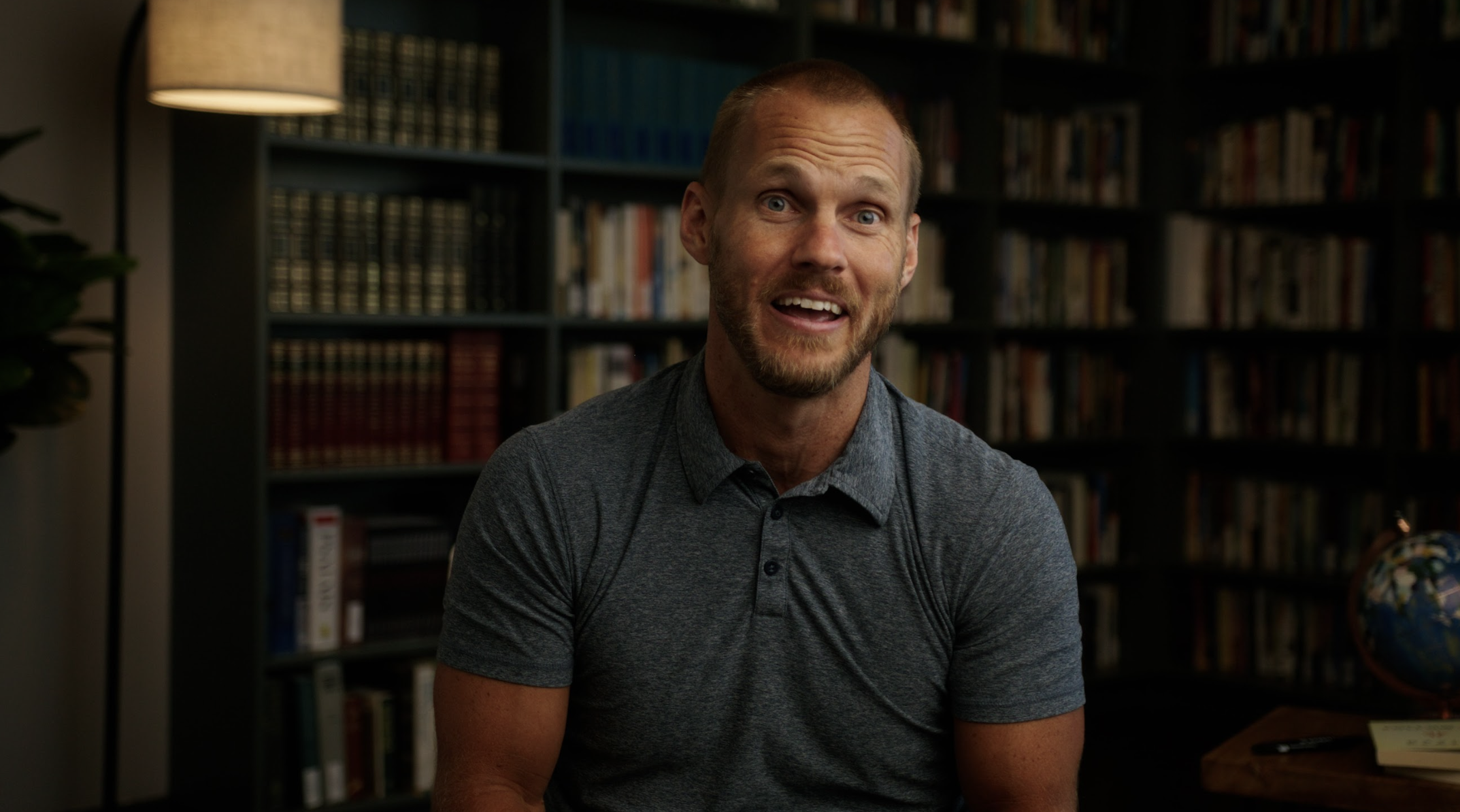
Michael Jr. is a comedic thought leader. Using comedy and dynamic storytelling, he brings laughter and encouragement all over the world as he inspires audiences to discover and activate their purpose. This unique skill set has landed him on stages like “The Tonight Show” on NBC, Tedx Talks, and “Jimmy Kimmel Live!” You can find him in Sony Pictures’ feature film “War Room,” as well as starring roles in “Selfie Dad,” “Laughing On Purpose,” and “More Than Funny.” He is funny for a reason as he works to make laughter commonplace in uncommon places.


All opinions expressed on this podcast, including the team and guests, are solely their opinions. Host and guests may maintain positions in the companies and securities discussed. This podcast is for informational purposes only and should not be relied upon as specific advice for any individual or organization.


Episode Transcript


Transcription is done by an AI software. While technology is an incredible tool to automate this process, there will be misspellings and typos that might accompany it. Please keep that in mind as you work through it.

Rusty Rueff: Hey, everyone, welcome back to the Faith Driven Entrepreneur podcast. I don’t know about you, but today I could just use a little laugh. Yeah. You know, with all that’s going on around us, a little laughter, a little levity can make things better. And today, we might get a laugh or two on the podcast. That’s because we have, for the first time, a guest who is a working comedian. I mean, we’ve had funny people before, but we’ve never had a true working comedian as a guest. And today we do. Michael Jr is one of comedy’s most gifted stars. He got his start performing at the legendary Comedy and Magic Club in Hermosa Beach. His outstanding performance there led to Michael Jr being a performer at the Just for Laughs Comedy Festival in Montreal, where he was the first comedian ever to appear live via satellite on The Tonight Show. Michael’s career, well, it took off from there. And today he tours the country using comedy to inspire audiences to activate their purpose and live a life fulfilled. His impactful delivery and versatility has landed him on stages like The Tonight Show on NBC, many TEDx Talks and Jimmy Kimmel Live. He’s also appeared in the feature film War Room and earned starring roles in Selfie Dad and the feature comedy special. More than funny, Michael has spent a significant portion of his career making laughter commonplace in very uncommon places such as homeless shelters and prisons. We’re excited to talk comedy and how it’s serious business with Michael Jr. On today’s FDE podcast. Let’s listen in, Henry.

Henry Kaestner: Welcome back to the Faith Driven Entrepreneur podcast. I’m here with William, Rusty went off to a dentist appointment. You can’t make this stuff up. So we just actually, before we went online, we actually prayed for him. And he’s going to be back with us, of course, for other episodes. And we’re talking about how much we actually really, really enjoyed doing this. And I hope that you as an audience enjoy the times when all three of us can get on. I think that maybe 96, 97% of the time we are all three together today. We are not. We are joined by our first ever. You know, when you’ve been doing this for 200 times, you start running out of first. And yet I can tell you, William, that this is our first ever time with a comedic thought leader, a CTL.

William Norvell: Oh, that’s good. That’s good.

Henry Kaestner: Pretty cool.

William Norvell: I mean, I think I have that on my LinkedIn, but I don’t know if it’s approved by anyone.

Henry Kaestner: Nope, it’s not.

William Norvell: So, yeah, so he’s he’s he’s the first official. Official

Henry Kaestner: He is the first official one. Before we get to Michael Junior, who we’ve got in the house, which all kinds of fired up about, I actually want to bring up something that’s actually actually serious and that is that product recommendation. I have very, very, very much enjoyed Nicky Gumbel’s Bible and one year app. It just awesome. My wife Kimberly about six months ago stumbled on it and I’ve had the great fortune and blessing of meeting Nicky Gumbel and just a super guy. And I’ve known, of course, about the Alpha course. And she kept on saying, Wow, I’ve read this. And then Nicky come out this morning and my three boys have started making fun of her, like, Oh, tell us what Nicky had to say. But this year, for January 1st, I started and it is the best app that I’ve ever had, and I just think it’s super cool. So I put it up on LinkedIn and I say The Bible one your app is really, really good and I really think it is. And Chris Herschend, who we’ve had on the podcast before I came in and Chris Herschend is our audience might remember runs Herschend Family Entertainment, Dollywood and things like that, maybe 20 different theme parks around the country. And he came in and said, If you do that, don’t miss an opportunity. Instead of reading the scripture on the app, take a Bible and read it in the Bible and take notes and highlight and do that over the course of the year. And at the end of the year you will have something to give to your kids over the entire year with their dad’s thoughts about God’s word in it. And I’ve got three boys. So at the end of three years I’ll have this. And so I thought that was super cool and I’m doing it, and I thought I’d share that with our audience.

William Norvell: That’s awesome.

Michael Jr: You’re going to share the Bible. We’re going to make copies for everybody and all the listeners. Wow.

Henry Kaestner: Yes. Yeah. See, this is. Yeah, this is why we’ve waited 200 times to have you on the program because you [….] in big trouble like that. We are. I’m sharing with you just the goodness of that brilliant idea. Paying money to Zondervan is on you. It’s on you. Michael Junior in the house. Michael, thank you very much for joining.

Michael Jr: Thank you so much for having me. I really appreciate it. This is awesome, man. Thanks for trusting me with this space. Let’s get into this. Let’s jump in. I’m excited, man. Thank you. Thank you. Thank you.

Henry Kaestner: Okay. If you had to pick in Entourage, you’re putting together a comic night and you think about all the. This is off script, by the way. Some that I’m throwing to, some going, see how you do with improv and you think about all the characters in the Bible who are the ones that you think would be the best to entertain an audience and might have a good sense of humor.

Michael Jr: I think the best sense of humor in the Bible is probably I won’t go with a after all. I almost want to say Romans. I think whenever or whatever a book was when we were talking about, when they said, go away, baldy, go away baldy, when Elisha and the bears came out amoung them that’s funny but I actually think the Jesus.

Henry Kaestner: Where I don’t know if we ever gonna release any of this on video or not. Michael Junior does not have a lot of hair, and that’s some element of the joke that he just shared with us.

Michael Jr: No, it’s not. Actually, it’s in the Bible. I mean, like, have you read or not? But when I talk to those kids came out and they started talking about Elisha and they were like, Go away, baldy, go away. Baldy wait does anybody else?

William Norvell: Oh, yeah. I am with you

Henry Kaestner: Why haven’t you? I’m going to get.

William Norvell: Henry is on day 13. On day 13, the Bible, remember

Michael Jr: Oh, yeah, that’s the problem, that’s the problem

Henry Kaestner: Wait I have read it before.

William Norvell: No, no, no, no, you don’t to…

Michael Jr: Don’t try to fix it.

William Norvell: It is a utility podcast. We don’t need to tell people things that are true.

Michael Jr: Don’t try to fix it now.

Henry Kaestner: Oh my goodness.

Michael Jr: Just finish the Koran. So that was funny. But I really think actually that Jesus had a significant sense of humor. We just can’t see it now because we know the end of the story. In fact, Rick Warren, I did an event with him and he gave me a book that I read called The Humor of the Christ, and he told me I had to read it. I was like, Dude, you should buy it for me? He didn’t buy it for me. Whatever I’d be getting myself. If you ever get a chance to read this book, don’t. It is a miserable read. However, it really pointed out to me some key elements that where Jesus actually was using humor, because I understand how comedy works, how to set up, there is a punch line, and you have to change the direction in order to actually make the whole audience think in one direction. You change it, cause him to laugh. But literally there’s lines in the Bible if you look at them. That’s what Jesus was actually doing. For example, when he said, Imagine somebody sitting around with all their friends, all their boys, right? And they sitting there and somebody walks up to them and they say, Hey, I want to be down with you, how can I follow you. And then he’s like, Well, once you sell all your stuff, then you can hang out with us, right? And then the guy is like, Sell everything. I don’t want to sell it all. And he leaves and he walks off. Now Jesus is there with all of his boys and this dude is walking off. And then Jesus turns to his boys and says, What, man? It is easier for a camel to go through the eye of a needle. Boom, that is straight punch line. That is straight punch line right there. But because we know the end of the story, we assume there’s no way Jesus was laughing. But if laughter actually opens up the heart and it does. Yeah. And Jesus was trying to make a deposit in the people’s heart. chances are really high that he was actually using humor to do so.

Henry Kaestner: Oh, that’s good. That’s good. Okay, so.

Michael Jr: You’ll find out. You’ll find out after you read the Bible a little more. After you get past 13, you’ll find out.

Henry Kaestner: That’s right. So thank you for being on the podcast. You know, what we do is we typically don’t, you know, ask a difficult question that then comes back to make fun of the host. At the outset of every one of our episodes, we typically talk to the guests and ask them about themselves and just give us a flyover. Who are you? Where do you come from? As listeners, you probably have imagined that, you know, this fits in because Michael Junior is running a business, he does bookings, he comes up with content. Anybody is an entrepreneur or a business owner. If they store the mission and vision of what they’re doing, if they resource it and they get the right people on the bus, and Michael does all those things and we’ve missed a lot of that. You know, we had Lecrae write the foreword to the book and really felt that that was probably the first time we really looked at the creative industry and entrepreneurs in the creative industry and like, Oh my goodness, of course, I mean, if the creation mandate, they kind of undergirds our entrepreneurial call, why are we not having more artists that are responsible for creating their product and marketing it and serving it? How have we missed that? So we’ve got Michael Junior on in that vein. We’re going to get at that today. But before I do that, Michael, who are you? Where you come from?

Michael Jr: So I grew up in Grand Rapids, Michigan, and I started doing comedy probably around 20 years ago. I probably doing comedy for like 26 years now, and I love it. But when I started doing comedy, my comedy was always clean, but it started because I wanted to really be accepted. I was trying to get accepted by people and. You know, I make my friends laugh at school. I remember going to the movie theaters once and a friend dare me to go up because in the middle of movie I stopped. My friend dare me to go up and tell a joke. I went up and told this joke and all these movie moviegoers who were just disgruntled, they all laughed, and then they want more comedy. But I don’t have any more comedy because that’s the only joke I knew. And that joke was actually a dirty joke that I had heard. But I rewrote the joke in my head so I could present it in a clean way. So I told the joke, and then I go sit down and security comes looking for me to kick me out. And I’m sitting down there. Security is looking for me and this white lady who I’ve never met before, I don’t know any of the people in the movie theater. She stands up and she says, If you kick him out, I want my money back. And then these bikers with long hair and tattoos and these black people like the whole room, stood to their feet, in my defense, and it just blew me away. So I look at that in retrospect, and I used to think that it was really, God, give me a glimpse of what I’m called to do, which is make people laugh. But what he was really showing me in that moment all of those years ago was what I’m called to do is make people laugh so they can come together for something bigger than themselves. And that’s what I get to do on a grand scale now. So I’m super, super excited about that. And then the biggest revelation I had through my comedy career, I was outside of a club one night in Los Angeles performing, and right before I got on stage, I had a change in mindset. I had a shift take place because normally when a comedy gets on stage, what we want to do is we want to get less/laugh from people. But I had a shift take place and I felt like God said to me, instead of trying to get less/laugh from people, I want you to go up there and give them an opportunity to laugh. This change everything. Because now I’m not looking to take I’m simply looking for an opportunity to give. I’m telling you, entrepreneurs, if you get a hold of this, it will change how you do business. It’ll change who you hire and why you hire. Simply shift the question to What can I give? Because by default we’re asking, what can we get anyway? So I get up on stage that night and I don’t do a joke for the first 20-25 seconds. Normally, my goal was to have people laughing in 7 seconds, but I didn’t even do a joke for the first 25 seconds and it was because I was getting to know the audience. When you have a gift for someone, your job is to present the gift. But when I was on stage before, I was trying to get something from them. So I go on the stage and I do my comedy and we have a great time. I leave the club that night and I remember I’m taking pictures of people outside the club and I look across the street and I saw a homeless guy. I had never, ever seen a homeless person outside this club before, ever. And I’ve been to that club many times, but that doesn’t mean he wasn’t there before. It’s just that before my mindset or the question I was asking, if you will, was How can I get less/laugh from people? So why would I even notice a homeless person? So when I changed the question to How can I give people an opportunity to laugh? I noticed this homeless guy and I thought to myself, What about him? How can I give him an opportunity to laugh? And that’s what sparked the idea for me to start a nonprofit that I have called Funny for the Forgotten, where we go to homeless shelters and prisons and abuse children’s facilities, and we make laughter commonplace in those uncommon places. So just that little shift right there has changed everything, not just in my career or really how I do business, shifting from what can I get to? What can I give? Change everything.

Henry Kaestner: That’s awesome. Do you remember how you interacted with that homeless person that first time?

Michael Jr: So that homeless guy, I didn’t. I didn’t know what to do. I was froze. I just saw him. And here’s the thing. It’ll be real with you at the risk of sounding creepy, I don’t even know what to do really exists. Almost like it was like God just showing me, yo, are you really seeing everybody you need to see? And I remember saying to myself, How can I give him an opportunity? Laugh. And I was thinking, if I ever get a chance, that’s what I’m gonna do. And here’s what happens when you change your question, you start to see different answers. Four days later, I’m doing an event and this lady comes up to me on my autograph line and she says, Hey, I volunteer on Skid Row at a homeless shelter. Have you ever considered coming to Skid Row to do comedy? And I was like, No, I haven’t. Like, I froze up. I’m be real with you I like to tell you. I jumped out with a gold microphone out of a phone booth [….]. I was scared, but I took her card and a week later, I’m on Skid Row in Los Angeles. Now, for those who don’t know, there’s a four block radius in downtown Los Angeles where they have about 10,000 homeless people in a four block radius. So I’m walking down Skid Row to go to the Union Rescue mission, and I’m thinking to myself, Snap, these people are not gonna laugh. And I get up on stage and they’re coming in and slowly but surely, but people aren’t laughing. And I’m feeling a little like it’s really hard for me to take the fact that people aren’t laughing at my jokes. But then I remember my question. My job is to give them an opportunity to laugh. When you have a gift for someone, your job is simply to present the gift. It’s not about what you receive back. As soon as I had that thought, everything just relaxed. I went on just more comedy and people start laughing a little more. Then I noticed the more people are coming in. And some of them were looking at the clock. So while I’m on stage, I’m doing the math. I’m like, Wait a minute. They probably eat at 5:00 and they probably eat after the presentation is done. So I talked to a guy up front. I said, Hey, what time do you guys eat? He said, We eat at five. It’s like 4:52. And then he said, But we can’t eat until the presentation is done. I said, Really? I said, Well, guess what? These jokes better start getting funny because I’m just going to keep on running them until we figure out we could be here forever. Unless you all laugh and the whole room explodes in laughter. Now they’re not laughing because I told them they weren’t going to eat and laughed because I connected with them when I knew where they were. We went on for the next 6 minutes, had a great time, sat down, shared a meal together, and I learned so much in that moment. So every time I do a homeless shelter or a prison. I learned so much from I just learn so much because it’s about what can I give? Not simply what can I get.

Henry Kaestner: So entrepreneurs are a group. So in terms of giving something to an audience, you might be able to identify with it. And I’m going to put you on the spot again, knowing a group of folks, and I don’t want to overstate the plight of a Faith Driven Entrepreneur, but entrepreneurship can be a lonely journey. And it’s, you know, you’re responsible for, as I said before, stewarding the mission and vision, resourcing, getting the right people on the bus. It’s Kurt Keilhacker. That’s such a great job of giving that type of an overview, but it’s like you’re always selling something to somebody, right? You’re selling something to your customers. Of course, you’re selling some of the employees to come on board. You’re selling some of the employees to stay. You know, some of us are more successful and you are. We talked about your assistant leaving. That’s me making fun of you. That’s returning the favor if you weren’t or weren’t catching it.

Michael Jr: It’s just horrible that you had to explain the joke, though. That’s the really bad part.

Henry Kaestner: Yeah. See, that’s why I’m a podcast guy and not a comedian. And there are lots of groups that tell you that that that’s good because I’d never make it as a comic.

Michael Jr: But I got a podcast too.

Henry Kaestner: Do.you have podcast. What’s the podcast

Michael Jr: It doesn’t matter. I just point that it does matter. I’m doing both for you. Just funny how life works.

Henry Kaestner: Okay, good. You had a funny how life works. You can be. As it turns out, you can be funny and a podcast host.

Michael Jr: Yes some of us. some of us

Henry Kaestner: I’m 50% the man that Michael Junior is. So you but you’re selling something to somebody and then what ends up happening is, you know, you come back from work and you’re at your house and your spouse says, how do you go to work today? And you feel like you need to sell them, too, right? Because you don’t think you should have left that job at Nortel or Cisco to do what you’re doing. And there’s a loneliness aspect of it. So knowing that the you know, knowing that that’s our plight. What’s funny about that, what can be funny about that? What’s an opportunity for us to laugh?

Michael Jr: Because I would almost question the plight, though, because if you go in saying and recognizing it’s going to be lonely, it’ll be lonely. So for example, for everybody listening right now, if I said to you how many items in the room or a place you are, maybe you’re driving on our street. How many things do you see that are a color red like just right now? Like actually, William, everybody just take a look around how many red things you see in the world. Like literally how many red items do you see? You just count as many as you can in the next couple of seconds, much red as you possibly could see […]. All right, now stop for a second. I’ll just close your eyes for a second. Just just bear with me. Just close your eyes for a second. Yeah, yeah. And now tell me how many things you saw in a room that were blue.

Henry Kaestner: None. 14 red. Can’t think of a blue

William Norvell: I had 14 red.

Michael Jr: It was crazy. All right, now look and see how many things in a room are blue.

William Norvell: Lots.

Michael Jr: Yeah, a lot more.

Henry Kaestner: More blue than red.

Michael Jr: Right. So if you show up as an entrepreneur saying, wow, this is going to be really, really lonely, then you’re already preset to find those things. But if you go in there saying This is going to be awesome because I get to find people who I get to help with this thing that I have. You’ll find those opportunities and it’ll actually feel more fulfilling because you haven’t put yourself in this box of anticipation where you only notice what it is you’re really looking for because the ego wants to be right, even if the outcome isn’t what you really want. But at least you get to say, See, I knew it. I knew I was going to be lonely, Oh, here I am. But no, the truth is, you don’t want that. So look for something else. You actually start to find a theme. So it truly is funny how life works. I don’t talk in my podcast. I’m just.

Henry Kaestner: That’s good.

William Norvell: And you got you got a book with the same title too, you can plug that to while we’re at it.

Michael Jr: Do have a book called Point Out How Life Works? Well, thank you William. Appreciate you, man. Why don’t you ask the questions from here on out.

William Norvell: I want to take a second to talk about what you just mentioned. I mean, so I started a company three, four months ago for the first time and it just hit me. It’s so funny how you just mention that the amount of people whose first question to me has been, while that must be really stressful, how how stressful is that [….]? Like, how are you sleeping at night? Like, I literally had a text this morning, somebody who’s going on and I said, Hey, I just got to check in. How’s the how’s your entrepreneur’s stress level? It’s like they’re preceding that. It’s like.

Michael Jr: Exactly

William Norvell: Really awful. And no one’s asked me yet, probably, or very rarely. I don’t use I use hyperbole to make a point sometimes like, hey, have you what are you enjoying about the journey? It’s all about the negatives is the main question. Yeah.

Michael Jr: Exactly, so I think if people would just start to focus on the fact like if you really believe in whatever that product is and here’s what I think relieve stress a lot at the end of any product, at the end of any job, whatever you do, there’s people at the end of it. But most of the time what happens is people will focus on the thing or the money. But if you can focus on how you’re helping the person at the end of it, it actually brings you more joy. I had a guy on my show where I get heckled some time too. Would be not. It’s always a reason I’ll get heckled, right? I always say to a heckler like, What? But let me see if I got this right. You came to a comedy show with your own jokes. Let me ask you, just to be clear, like you don’t go to Starbucks with some coffee grounds in your pocket like you just. So I asked this guy, I’m like, what do you do? And he says, the mechanic. And I’m talking to him like, So what does that mean? He said, It means I get paid to fix cars. So we started having the same conversation I am having with you. By the end of our conversation, he realized, because we made a shift, that what he actually does is help people reach their desired destination. So like he didn’t change jobs, he focused on the people. And as a result of that, like, he actually gets excited when a minivan shows up now because it’s a whole family that he gets to help get to grandmother’s house and in his mind, he gets to play a completely different game. Therefore, the stress level drops significantly. So if you stop focusing so much on the product or processes and focus on the people that you’re helping, I really do believe that those levels drop significantly. it does for me, like my assistant, I had one assistant who got pregnant, decided to stay home with her kids and her husband, all kind of weird stuff. That’s just weird in general. But listen, even when I hire people, I’m really bad at hire people by the way. I don’t hire people anymore. Somebody else does it. But when I hire people I would always ask a question, What can I give? Like, what can I do for this? I’m looking at those things, which is why I don’t hire people no more, because I see their potential, even when they don’t, unfortunately. So anyway, I digress. Next question

William Norvell: All right. Let’s digress back. Tell us about funny how life works. Tell us about the book. Tell us about what goes on there. Give us the flyover.

Michael Jr: Okay. Yeah. So the book is like you mentioned, it’s funny how life works. And I wanted to take some stories from my life that were funny and inspiring and use them to leverage learning. Really, I wanted people to learn some stuff, so I got some stories. Like one story that is probably on a scale of 1 to 10 of all the stories is probably really, I would say seven. There’s some strong stories in there. But one of the stories, a guy comes to my comedy show and there’s this thing I do on stage, right? I’m on stage at this event. I think it was like 3000 people there. And what I do is I listen in between the gaps. And I used to ask, how can I get laughs from people like I told you? But now, while I’m listening in between the gaps, the question I’m asking is, what can I give to my audience any more? From How can I give them laughs? What can I give to my audience? So I’m listening between the gaps. And what’ll happen is my comedy shows are 80% funny. Like, you’re going to laugh, but there’s a little sometimes 10%, sometimes 20% where I’ll say something extra that I feel like I should say. So at this in particular show, I mentioned how comedy works, how to set up, and there is a punch line. Then I mentioned How Life Works in life there’s a set up and a punch line to your setup is what you received. But your punch line is about what you’re called to deliver and a lot of people know their set up, but not everyone knows their punch line. And what you’ll do if you don’t understand your punchline and you think something’s missing and you’ll think what you need to fill that void, you’ll think you need more setup, if I could just get married. If I could just get another business. If I could just open up this. If I could just. But you really need to know what is your punch line? And I said, and when you don’t have that, you’ll feel like you’re in prison, right? So anyway, I say that and this lady approaches me afterwards. I’m doing an autograph line and this lady approaches me and she says, I get it now as she walks away because I’m like, You didn’t get anything. You did not buy a book, you did not buy a t shirt. You didn’t get nothing. I don’t know what you told. So anyway, I go back a year and a half later and this lady approaches that same lady autograph line. She says, Do you remember me? And I don’t have a colorful past, by the way, but when a woman just roll up on you said, Do you remember me? I’m like, Listen, I don’t I might look like Dave Chappelle. You think about a wrong person. I don’t know what you go for anyway. And she says, I talked to you a year and a half ago, I’ve got to tell you, what happened was, okay, so I finish up the autograph line. And she says to me, when I was here a year and a half ago, she said, I’m a schoolteacher, and I was -$137 in my bank account. And she said, on top of all the other stress, she says, someone gave her a ticket to my comedy show just to laugh and forget about her problems for a little while. She said on top of all of this stress, her favorite student approached her that day, which was a Friday night, and said that she wasn’t coming back to school anymore because her mom was going to prison and her dad she’d never met before and she didn’t want to get caught up in the foster care system. So she’s going to figure it out on her own. The teacher goes on my show, she’s laughing, and then I said those things in between the gaps. By the way, let me pause. Every entrepreneur or listener right now, whatever you do, no matter how busy you are, there’s gaps. What question are you asking in between the gaps? Are you asking the question of What can I get? Are you asking a question of What can I give? And if you don’t know the answer to that question, I think you know the answer to that question by default. Okay. So she says, Michael, you said what you said and I knew what I had to do. She said, then I walked past your autograph table and I said to you, I get it now? So what she did was she went out to the parking lot, got in her car and called the student up and said, Listen, I don’t know what this looks like. Why don’t you come live with me for a little while? We just figure this thing up. She brings a student to her house that same night on Sunday, they’re unpacking her clothes, and the teacher says she found a suicide note dated for Friday. And she and I’m sitting here getting emotional and she said, Since you’ve been here, I’ve adopted her. And her little sister, she sat right there behind you, do you want to meet them? And I couldn’t even turn around. Like it took me about 5 minutes where I could turn around and look at these kids. But what really happened? All I did was listen in between the gaps, say or deliver or give what needed to be gave in that moment. And then these are the results. She was listening as well, though. So, listen, everybody out there who owns a business? Could it be that you have your business so you can get access to some people that you wouldn’t have met otherwise? You can do the thing that you wouldn’t normally do that probably has nothing to do with the thing that you sell them. Just a question.

William Norvell: Good question. Hmmm

Michael Jr: William, you look like you also fly a helicopter. I mean, you had to look like you. […..]

William Norvell: Makes me look professional. This’s actually plugged in to anything. It just makes me. It just makes me look like I’m doing something.

Michael Jr: You’re a gamer. Really?

William Norvell: Yeah.

Henry Kaestner: Yeah. William has his winter coat on, which makes you wonder, like, where is he? Where is he really doing this from?

Michael Jr: Yeah, yeah, yeah.

William Norvell: I’m at this super cool church co-working space that does not have heat is where I am. But it’s awesome.

Michael Jr: But you’re saving money, so that’s what’s important.

William Norvell: Yeah.

Henry Kaestner: All right. I have a question for you. What’s the pressure like? You’ve been doing this for 26 years and people know you’ve been a funny guy. So like we’re going through the podcast we had on our slate today and our executive producer is not on this. Justin Foreman Just like, okay, so here’s we have this, this, this, this and this. And then he’s like, oh, and Michael Jr is a comedian. Didn’t say comic thought leader. I’ve now changed everything to be that. But he said, you know, he’s a comedian and like, well, that’s great, that’s going to be easy. I don’t have to prepare for that, which connotes that there’s some level of responsibility you have of carrying the podcast, because I had to be thoughtful maybe about how to really think through how are we going to do the other podcast?

Michael Jr: I knew I was going to carry this one, I knew I was going to carry from a get go. I just I’ve watched before. So I have learned, I got to carry this whole thing.

Henry Kaestner: That’s right.

Michael Jr: I am just.

Henry Kaestner: And then you find out that Rusty is not here. Like, that was the only chance I had of somebody being able to help me and just I could work with that guy, and now he’s not even on it.

Michael Jr: I know he’s not here. Yeah.

Henry Kaestner: That’s fair.

Michael Jr: So there’s a question somewhere in there.

William Norvell: I think so.

Henry Kaestner: Well, the.

Henry Kaestner: Question is this, is that what’s the pressure to perform? Right. I mean, so you go from podcast, podcast to interview to performance and everybody expects you to be funny. There are probably times you don’t feel like being funny or maybe there aren’t. I don’t know what’s that like.

Michael Jr: So I believe that how you do anything is how you do everything. I actually coach a couple of people on how to present on stage. I actually am really happy that I’m the same person off stage and I am on the stage. So like people were literally walk up to me and like a pastor friend who’s a great friend of me now when I first met him he said, Hey man, say something funny. Was I do see some people over here, go bring him to Jesus. Like, would you like I’m supposed to just do this on the spot? So I actually feel no pressure at all. I just don’t. Because here’s what I know. When people come to my event, they’re coming because they want to laugh. That’s not always what they need. Like, so I get to show up what they want and then maybe find out what it is they really need as well. So the same thing can happen in a conversation like we’re going to be having a conversation about one thing, but here’s what I used to do. Here’s a mistake a lot of people make. You have a sense of humor, and I used to do this as well. They would use comedy as what I call a chicken exit. So soon as things get a little serious or a conversation is getting a little uncomfortable, they’ll say something funny to alleviate the pressure and then change the subject. I really used to do this a lot, and then one day I saw myself doing it and I’d just start asking the question, Well, why am I doing that? What am I afraid of? On the other side of it? Like everyone has chicken exits. It’s just mine was to make something funny. But now I rarely will do that. In fact, I’m okay with the silence. I’m okay. Well, whatever is on the other side of the awkwardness, like I’m really cool with that. Like, I really want to learn from that. So now even at my events, I never like if I’m having a deeper conversation with someone in the audience, I’m cool with that because I know I’ve got the funny. Even in this podcast, I think we’re rolling out probably 80:20 serious versus funny, but I can bring funny whenever I want. That’s just like a side dish. I can do that, but I’m only using it to get to where I really want to go. So I never feel any pressure to bring the funny because I used to when it was about me getting something from somebody and me being accepted. But now I don’t I don’t feel that pressure at all.

Henry Kaestner: So it’s a ministry?

Michael Jr: Oh, yeah, absolutely. That’s what a lot of people refer to it as. Yeah, that’s what it’s called. Unless we’re negotiating, then I sound weird because they don’t hear much. And so.

William Norvell: That’s true, that’s true.

Michael Jr: It’s ministry. You’re doing it for the Lord, right? Yeah. Got a collab too. But you got a free ticket to all my events. Like the Lord can be. He’s. He’s there, so.

Henry Kaestner: Yeah.

William Norvell: And I knew that I’ve seen you. I’ve seen you perform and it’s awesome. So if anyone is ever anywhere near I think I saw you at the Truth at Work Conference. Three or four or five years ago.

Michael Jr: Oh. Yeah, yeah. That was fun.

William Norvell: So good. Really enjoyed it. And I’m curious, that was a Christian event. Not all of them are that you perform at, but I’m curious, we haven’t really gotten there yet. You’ve kind of dropped some things in, but how does your faith influence your comedy? How do you think about those two intertwining or not intertwining?

Michael Jr: Yeah, I would say the answer to that is yes. Meaning [….] that yes, no question. But I don’t know. How I wouldn’t you know what I mean? Because even like when I get on stage, I’m asking literally, what can I give to my audience? And I used to ask, what can I get? Just that mindset alone, like even thinking about setup and punchline. Like the setup is when a comedian makes the audience thinking in one direction where the punchline occurs when he changes direction in a way they’re not expecting. When they catch one of the change, they receive the punch line and the results are revelation, fulfillment and joy, which is expressed through laughter. Well, as I mentioned, life is the same way. There’s a set up, there’s a punch line. But the key is to understand how to deliver that punch line so it can bring revelation, fulfillment and joy, which is exactly what Jesus did. Think about the life of Jesus from a set up, punch line perspective. He was the king, actually the king of kings. So everyone knows they should serve the king, which is the direction everyone was going, especially when he entered the city. But what did he do? He changed the direction in a way they weren’t expecting. You said, instead of you serving me, I’m going to serve you, I am going to climb up on this cross and I would die for you. It’s the greatest set up punch lines story ever. And he knows everyone’s setup. He knows what we’ve been through. He even knows, like when I was a kid, I used to struggle my reading and some other things. Even our set backs are part of our set up so we can deliver the punch line we’re called to deliver. It’s like a slingshot or borne arrow. The further you’ve been set back, the further you can actually reach. But what are you going to aim for? That’s where God’s word comes in. So yeah, I would say it’s all one in the same. Whether I’m doing a corporate event, I do a lot of keynote like corporations or from our church doing weekend services, or if I’m just at a venue at a stadium or something, it’s the same show wherever I go because I’m the same person, wherever I am, and it’s the same God is at every event, so it’s never anything different.

Henry Kaestner: I think that there’s a lot there that we took this in a direction I didn’t expect, partly because that’s the way that Michael Jr does it. Right.

Michael Jr: Are you crying Henry?

Henry Kaestner: That was the questions that we did not even.

Michael Jr: Are you crying?

Henry Kaestner: Get around to. But we’ve got. What’s that?

Michael Jr: Are you crying? Are you crying right now?

Henry Kaestner: Yeah, yeah.

Michael Jr: You got emotional. [….]

William Norvell: It’s a very emotional podcast.

Henry Kaestner: You’ve hit some deep truths. And I’m crying because we’ve got to bring this to a close. And it’s going to be a while until we get to connect again. But let me.

Michael Jr: Wait, wait, wait. What did I do? What did I do? Yeah.

Henry Kaestner: Now we’re getting why you.

Michael Jr: Seem like that.

Henry Kaestner: We’re going to have you back on. So I think you really blessed us with the. And I don’t know if this is going to be, like, one of these year and a half things where, like, we come back and I will somehow show like our foster kids that we adopted, right? […..]. But what you just talked about, you know, one of the taglines we have, one of the things we have is like entrepreneurship can be a lonely journey, but it doesn’t need to be. And I’m now question like, that’s kind of our outreach. And I’m thinking about that red thing and think about the red blue thing. And I’m thinking what are you saying, what about the 20 to 30% of people now some number of people are going through it’s really lonely and we need to serve them, no doubt. But what about, you know, what percentage of people are like, oh, I didn’t know I was supposed to be alone. Maybe it’s maybe it is lonely. Yeah, I’m feeling lonely.

William Norvell: Well, even just, you know, it’s so good, Henry. Yeah. I mean, change, right? Entrepreneur is a fulfilling journey. Don’t you want some friends?

Michael Jr: Yeah.

William Norvell: I mean, like, what a different mentality one is, like, oh, yeah, this is going to be awful. As opposed to fellowship of the ring, right? Like, don’t you want people with you on this amazing journey called you?

Michael Jr: Ooh, that sounds awesome. Dude I love that? And it’s the same thing. You didn’t change anything except for the mindset, the approach. And even as men, I mean, there is women entrepreneurs there. But you get a little pumped. Even when you said that you like, yo, just do this like I can do like I can do this. It could be fun. I can be there for my family. Like, there’s some balance there in a significant way and I get to help people with this product I got. Speaking of products I got. I want to give something to your people is that ok?

Henry Kaestner: Please.

Michael Jr: All right, cool. Have you guys heard of Amway?

William Norvell: Yeah.

Michael Jr: I was just playing.

Henry Kaestner: Join Michael Jr’s network. That’s awesome.

William Norvell: You get to. We’ll get to.

Michael Jr: Do this journey together. Come on. It’ll be fun. No, I like to spread laughter as much as I can. So I actually have taken my entire comedy special and made it available for people. All you have to do, and you can watch it with your family. It’s only up for a little while. My team is telling me that it’s up now, but if you go to a michael junior dot com slash xtra, you can actually watch my entire comedy special with your family for free. michael junior dot com slash extra. When you get there, we’ll send you the whole comedy special.

William Norvell: We need retake that completely. And we need to say for a special, limited time only and only for Faith Driven Entrepreneur listeners.

Michael Jr: I’ll do it right now.

Henry Kaestner: No, I’m kidding. No, no, no. We can’t do that. That’s artificial. It’s contrived. It would have been a like.

Michael Jr: I just heard you. He just made it happen.

William Norvell: Yeah. We’ve never done something artificially contrived on this podcast.

Michael Jr: Yeah. You never, never entrepreneurial. Hey, so let me say this only for the people on your podcast who are listening right now. If you go to michael junior dot com slash extra, you actually will get the comedy special. So if you go there and then if you tell somebody else, they can go to X. But the point is, enjoy it a lot. Just really want people to laugh.

William Norvell: Thank you. That’s amazing. We’re going to get that out. We’ll get that out in May. We’ll do a blog post on and get it out in front of the podcast as well. But one of the things we’d love to close with, unfortunately we have too, is we love connecting God’s word through our guests and our listeners. And we love trying to ask you just like, Hey, is there something on your heart that maybe God’s been sharing with you through a Scripture? It could be something this morning, could be something you meditating on for a while, could be something you’ve been wrestling with your whole life, because that’s how God’s verses work sometime. But I would love if you maybe just take a moment just to share maybe something from his scripture that you’ve been thinking about lately.

Michael Jr: Yeah. So I have a word for the year that I’m soaking on right now, which is trust. And then I think about Proverbs 3:5. Actually, it’s a second. Romans says.

Henry Kaestner: Second Roman, book of hesitation.

Michael Jr: [….] for a second. And I was like, Oh, here we go. No. So Proverbs 3:5, trusting the Lord with all your heart and not on your own understanding that right there, just like I look for opportunities to do that. So when I have to just trust an example was I’m purposely this year looking for opportunities or going to seize opportunities to be more vulnerable with my family. Right. And so my daughter, who’s 11, I was looking through my prayer notes and I saw and I didn’t want to share this with her or anybody, especially on this podcast. But I guess I am now because I’m just going to trust I ask my daughter to pray for me one day because I saw where a comedian whose name I won’t mention, had just sold 80,000 tickets in 8 hours. Right. And immediately I felt empty. And then I asked my daughter to pray for me and I hadn’t shared this to anybody before I say, Hey, can you pray for me? I didn’t give her details of it, but when she prayed for me, she prayed for my show because I was going to get on stage. I just didn’t like the way that felt a little bit be of envy that little hint of envy it I had in that moment. And she prayed for me. She didn’t know. She’s actually ten years old and she said, God, I’m.

Henry Kaestner: Your daughter ten years older than you are.

Michael Jr: She was ten years old at the time.

Henry Kaestner: Oh, sorry.

Michael Jr: Yeah, your daughter is ten years older than me, if that’s what you were thinking anyway, so. Oh, wow.

Henry Kaestner: Well played, well played.

Michael Jr: And she prayed and I wrote the prayer down. She said, Let my dad have a great show and let my dad enjoy his show and let there be no confusion. And when she said that, the confusion part just jumped out at me like I should not get my event confused with anybody else’s, or what God called me to do with anybody else’s thing. I need to trust in Him with all my heart, only not on my own understanding. So it just blessed me and I shared that with her and let her know how effective her prayers are. So even in that moment of being vulnerable and sharing all of those details with her and my wife was there as well, it was just really cool and I just plan to just trust even more so that scripture is really money to me. Trust in the Lord with all your heart, and lean not your own understanding.

Henry Kaestner: Well, thank you for the gift. A bunch of different things to include and especially it’s just what entrepreneur a lot of times is selling. We talked about that a bit and there’s some element of when you’re selling, you’re getting something from somebody and just changing that dynamic and just giving it. It’s universally applicable. It’s why you use it, but it may be something so obvious. You’ve been able to package it up and present in a way that’s, I think, new for this program. And it’s a great perspective and really grateful that you made the time.

Michael Jr: You guys are awesome man and this was very well done. Really, really well done. I really appreciate. One of you guys were amazing. Oh.

Henry Kaestner: Oh, okay. Yeah, we’ll fight that out later. I just never know, we’ll just never know. No, no, no. We know, we know.

Henry Kaestner: We know. We know that he likes the guys all dressed up.
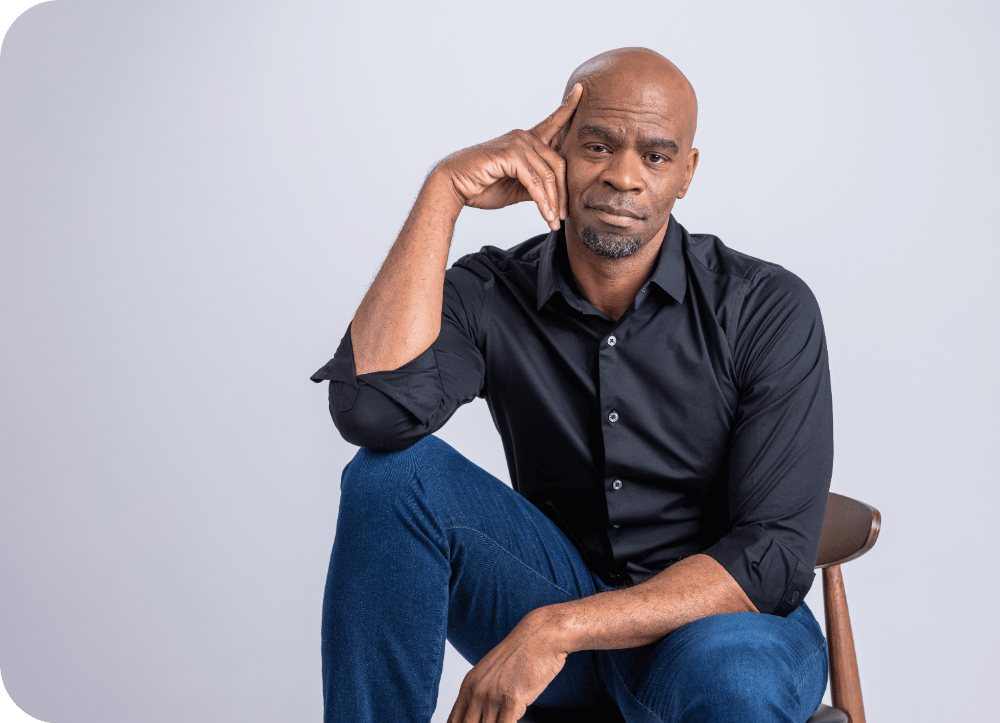
Michael Jr.

Comedic thought leader

Exceptionally gifted at combining story with thought-provoking life principles, Michael Jr. exhibits what it means to be a comedic thought leader. Using comedy and dynamic storytelling, he brings laughter and encouragement to audiences all over the world as he inspires audiences to discover and activate their purpose.

This unique skill set has landed him on stages like The Tonight Show on NBC, TEDx Talks, and Jimmy Kimmel Live. You can find him in Sony Pictures’ feature film War Room, as well as starring roles in Selfie Dad, Laughing On Purpose and More Than Funny.

Before I got clarity I was all about comedy.
Now comedy is a tool I get to use to bring that clarity to you.


As I continued down my journey personally, I understood that I could use the power of laughter to actually transform thinking and help people find freedom, peace and healing.

PODCASTS FOR THE FAITH DRIVEN ENTREPRENEUR

What Do You Want?

The following is an excerpt from Cory Carlson’s new book, Rise and Go.  The book is available here on Amazon.

Leadership Trait: Desires

John 1:38, “Jesus turned and saw them following and said to them, ‘What are you seeking?’” 

The first of Jesus’s words reported in the book of John do not take the form of a statement. Jesus’s first words in John are actually a question.

We know that Jesus was a great teacher, but we don’t always recognize the significance of questions in His teachings. A quick Google search reveals that in the Bible, Jesus was asked 183 questions. In contrast, He asked 307 questions of others. Asking questions was a big part of Jesus’s style of teaching and of the way He had conversations!

I think He asked questions for several reasons.

First, He was interested in learning the audience’s perspective. Once He knew this, He could customize His message to show how the Good News could meet their specific needs. The root of His message was always the same. But the context varied, depending on His audience and their desires.

To the woman at the well, He talked about “living water.” To the disciples trying to catch fish, He talked about “catching men.” Jesus always speaks to His listeners in a language that they understand.

Another important reason Jesus asked questions was because when people answered, this allowed them to verbalize what they wanted. There is power in saying what one wants out loud. Science backs this up.

Clinical psychologist Carla Marie Manly, Ph.D., says that “speaking out loud to oneself allows us to sort through our thoughts in a more conscious manner.” Put another way, when we say things out loud, we become more aware of what is going on in our mind. Manly goes on to say, “we become more conscious of the mind’s ramblings and can then become more intentional.”

A 2011 study published in the Quarterly Journal of Experimental Psychology reported on the potential benefits of talking to oneself. In this study, twenty participants were instructed to locate certain objects in a grocery store. In the first trial, no one was allowed to talk out loud as they searched for the items. In the second trial, the participants were instructed to repeat the names of the objects out loud as they searched for them. All of the participants found the items more quickly in the second trial!

Speaking words out loud helps us to focus on what we are searching for. Saying “mustard” numerous times, for example, will help you stay focused on finding the mustard, so that you don’t get distracted by all the other items on the shelves that are just waiting to grab your attention.

HOW WILL YOU ANSWER? 

Whenever a paralyzed man or a blind man approached Jesus, He would ask the man a key question: “What do you want?” To most of us, that seems like a silly question. We think:

Wouldn’t anyone who was paralyzed want to be able to walk? Didn’t all blind people want to be able to regain their sight?

That may be the case. But Jesus still asks the questions. As a result, each person had to say what they truly wanted out loud.

So what about you? What do you want?

Seriously, what do you want?

If Jesus were to walk right into your office, your house, or wherever you are at right now and ask, “What do you want?” what would be your answer?

Do you want the next quarter in your business to be a strong one? Do you desire an improved relationship with your teenager? To overcome an addiction? To obtain financial freedom? To launch your own business? To find a spouse—or, if you’re already married, to improve your relationship?

When I’m working with clients, I use an exercise in which I ask them what they want. In it, I ask a few questions, such as, “What would success in this area look like in six months?” “If we were to celebrate in one year with a bottle of champagne, what would we be celebrating?” “What do you want to see happen within one year—or three, or five?” I ask for answers that address both the personal and professional areas of their life.

I do this exercise for a couple reasons. First, the process requires them to slow down and think about what they actually want. So often in life, we focus on accomplishing tasks, yet we have forgot- ten why we are even doing them. It’s important to ask: What are all my efforts for? What is the big picture? Where am I headed? 

The other reason I do it is that once I know what they want, then I know where I can help and how I can add value to their lives. I am then able to customize my coaching program to hold them accountable for reaching their stated goals. I can help them to stay focused on what they want and not become distracted or go off track.

As you consider these questions, you may find it very difficult to answer them. The first time I tried, I came up blank, and so do many of my clients. But why is it so hard for us to answer these questions?

It’s unlikely that anybody ever specifically told us not to answer these types of questions. Yet I think many of us internalized the idea that we shouldn’t. We feel that if we focus too much on what we want, then we are being selfish and not thinking of others. So when we try to consider these questions, we experience feelings of guilt.

There are also some of us who don’t like to answer this question, or to pray about what we desire, because we don’t like the thought of treating God like a genie. But that is not what I’m proposing. I’m not advising that anyone treat God as some kind of ATM or Santa Claus.

However, God does want us to go after something. God wants us to find something in life to pursue that will expand the Kingdom and bring Glory to Him, while also bringing us joy. Psalm 37:4 says, “Delight yourself in the Lord, and He will give you the desires of your heart.”

One thing I love about parenting is that it sometimes leads to moments when I get a glimpse of how God feels about us. One example of this has to do with my son Kaleb, who is nine years old and a very good athlete for his age. Up until now, he has only played recreational sports, and we have not yet signed him up for any of the competitive youth sports teams that are commonplace today. However, soon he will have to decide if he wants to play soccer, basketball, or football year-round.

Regardless of his choice, I am going to support him in his decision. As a dad, I just want him to pick the sport that he enjoys the most, try his hardest, have fun, and be the light to his teammates— and in the process, bring glory to God.

God is the same way. He does not mind how we answer the question of what we want. He just wants us to pursue with excellence the desires that align with His heart, and so to bring Him glory.

So, what do you want?

Keep in mind that you are not answering this question for life. You don’t need to have a perfect answer that will look great on your tombstone someday. You only need to answer the question for right now. Where do you need God’s help in your life? Where are you wanting God to provide some favor?

Whether your answer applies just to today or to a longer period of time, you need to start taking the actions necessary to make that desire a reality. You need to move toward that situation, relation- ship, or opportunity with both feet, pursue it with excellence, and bring glory to God in the process.

“TO PAINT AGAIN” 

One of my favorite client stories is of a time when I worked with a business leader named Kyle. Earlier in his career, Kyle had been very creative as a designer and illustrator. But due to the busyness of life, he had put his creative endeavors aside, especially painting.

When I asked him the question, “What do you want?” he slowly responded with the words: “To paint again.” The slowness of his response came out of guilt he felt because he’d been led to believe that an answer like that was selfish. Shouldn’t his answer involve his wife and daughter? Shouldn’t his response have something to do with leadership, work, or serving others?

My response surprised him. I told him that painting was not selfish and that pursuing the creative practice of painting could in fact make him a better leader, father, and husband. Art would connect him to God, give him rest, utilize his creativity, and fill his heart up so he could be better in all areas of his life. Making art was not selfish!

I encouraged him to make his desire a reality. I told him to start pulling this dream forward into the present, instead of pushing it out into the black hole of the future. Over the next few weeks of coaching calls, we discussed steps he could take each day. Over those weeks, he began to check items off the list. These included gathering his paint, purchasing canvases, and renting a studio. Most importantly, he started to paint.

One day I received a surprise package on my front door. I was stunned to see what was inside. Kyle had made a painting that was incredible and looked like something from a gallery! To be honest, I’d had no idea Kyle was such a good painter! I felt especially touched by the concept of the painting. The image was of a four-person tandem red bike against a yellow background. The four-person bike represented the group coaching call I led every other week with Kyle and two other clients.

The painting still hangs above my fireplace, not only because it is beautiful, but also because it’s an inspiring reminder that God wants us to answer the question, “What do we want?” and then boldly go after the subject of our answer.

ACTION STEPS 

Spend ten minutes listing all that you want for your business and life: today, this week, and this month. This part is critical, as reestablishing one’s footing is a key step in starting to dream again!

Next, spend five minutes in prayer to see if you get clarity about which of these desires to pursue first. Start a list of action steps you can take that will get you one step closer to your dreams.

In the weeks ahead, keep an eye out for opportunities to act on these steps. Or choose one or two steps that you already know you can take, and schedule time in your calendar now to do them.

PRAYER 

Lord, when I read this chapter and consider the question “What do you want?” my mind just races. What if I choose the wrong thing? What if I pick something you don’t want me to do? When I feel unsure, please help me remember that you have given me freedom of choice and that, by opening and closing doors, you’ll help redirect my course as I move forward. Amen.

Related articles

Episode 225 – I Married My Business Partner with John and Ashely Marsh

What is it like to sleep with the accountant? When your spouse is your business partner, it’s easy for business decisions to get personal, and personal decisions to seep into the business operations. John and Ashely Marsh know the tension first hand. The husband and wife team are the co-founders of the Marsh Collective, pioneering the redemption of Opelika historic downtown. Opelika’s story, an account of beauty from brokenness, mirrors their personal story. Through the sharing and walking out of their personal testimony of reconciliation, John and Ashely have given hope to hundreds of couples facing divorce and have inspired thousands of business leaders who aspire to live out their faith through their work. On this podcast, the couple shares helpful tools and stories for entrepreneurs who are partners in business and life.


All opinions expressed on this podcast, including the team and guests, are solely their opinions. Host and guests may maintain positions in the companies and securities discussed. This podcast is for informational purposes only and should not be relied upon as specific advice for any individual or organization.


Episode Transcript


Transcription is done by an AI software. While technology is an incredible tool to automate this process, there will be misspellings and typos that might accompany it. Please keep that in mind as you work through it.

Henry Kaestner: Welcome back to the Faith Driven Entrepreneur podcast. I am here with William. William.

William Norvell: It’s a good day. It’s a good day to be here. We’ve got more Alabama people coming on the podcast, which is always exciting.

Henry Kaestner: Yes, it is. It is always exciting. We are missing Rusty, Rusty is driving cross-country. Rusty splits his time between the Bay Area and the beautiful, awesome state of Rhode Island. And he’s en route right now. So we are missing him. It was so good, by the way William, last week you may or may not know this, but the day before you and I get a chance to do a lot of recording for season two of the Faith Driven Entrepreneur series in the Redwoods, you and I get a chance to do some of that in front of 2000 year old trees, which was really, really cool. I got to do a lot of that with Chip Ingram, which was neat, special for me. But the day before that we were at Crossroads Church, which is Rusty’s church, met his senior pastor who’s an awesome guy and and got to hang out with some.

William Norvell: Of the pastor. Terry. Yeah, he’s great.

Henry Kaestner: Pastor Terry. Yeah, Pastor Terry is great. And obviously we talked a lot about college basketball. We were recording this right after the end of the NCAA and and everybody had a team.

William Norvell: And just how sad are you, Henry?

Henry Kaestner: I’m actually not really that sad. I’m not that sad because if you’ve been listening to this for a while, you probably know that I’m a Carolina fan. Carolina did reasonably well, did very well. It overachieved, got pretty close. But what a season. And the thing that was just so encouraging to me was that would be Duke. No, that’s not what was encouraging to me. What was encouraging to me was the fact that Hubert Davis did such a great job. And winsomely talking about his faith. It wasn’t an over the top thing. It came up in conversation. It was natural, it was sincere, and his love of God and love of his players came through. And that, I think was the big one. And yes, it’s more it’s fun to watch your team win, but it’s really fun when the good guys win. And I think back to what we’ve had and by the way, this is not a sports podcast if people are just tuning in. But when I think back to Tony Bennett, UVA coach, just unapologetically talking about his faith as UVA won, and then I think last year, Scott Drew, who we had on the Faith Driven Athlete podcast, which was a Covid project, we did Scott Drew and now Hubert Davis. I mean, it’s awesome when the good guys win and we saw that.

William Norvell: That’s amazing. Yeah, it was a fun journey. And yes, everybody else’s teams lost eventually. So as the podcast host, we’re kind of glad Henry lost because the rest of us did too. So that makes us feel better.

Henry Kaestner: Misery loves company, but we’ve got great fans of the Faith Driven Entrepreneur podcast in Kansas. And who are Kansas fans? In fact, I was talking to one of them who’s a watch party host for our conferences coming up. And Lacey Ellis is just a fantastic watch party host, had a watch party in Kansas City and 50 people came to it. So we’ve got a lot of people in our community that are really, really fired up. So we celebrate with them. But today we’re talking about something much bigger than college basketball. We’re talking about being just really committed to the creative process that is entrepreneurship, but also the creative never ending work of being devoted to one spouse. And as I was talking about this, as we were kind of quote unquote, backstage, I told Ashely something that I really mean to be really mean. And that is John has encouraged me and my love of Kimberly and that he will take any time when he’s talking to a man to make sure that they are loving their brides well, and I’m grateful for that. And many of our audience will be very familiar with John and Ashely’s story, which was so beautifully done by our partners at Seattle Pacific through their faith and company video on their story, which features as week six in the FDE video series where we have groups of entrepreneurs. We had 1600 and Jan – February across 88 countries getting together in community to talking about God’s call to create our identity in Christ, etc. We’ve had John on the podcast before. We’ve never had Ash on the podcast before. We have not spent nearly as much time talking about how important it is that we love our spouses, well, and we’re going to make up for that right now. John and Ash, thank you very, very much for being with us.

John Marsh: Thank you. This is awseome.

Ashely Marsh: I am glad to be here.

Henry Kaestner: So we want as we do with every podcast, we want to do an autobiographical flyover of the stories of our guest and where they’ve come from, how they came to know the Lord. We’re not going to be able to do as good of a job right now as that video does, but nonetheless, give us some broad strokes on that. And then let’s go right into the things that you guys are doing. And William will take us on this part because, of course, this is near and dear to William, because just being involved in the creative process in his beloved state of Alabama is huge. We want to talk, of course, about community revitalization. But yeah, we really want to talk about what you have learned about loving on your spouses. But please give us that autobiographical flyover either of you can lead.

Ashely Marsh: Are you deferring to me? So I am from Opelika, Alabama, of course, and I grew up in a pretty hard situation most of my life, and I always wanted to be loved and accepted by my father. And definitely by others. But whenever I was a young girl, I was pretty much just left to myself and I didn’t have a lot of confidence. And I finally met this man, John Marsh, and he’s bigger than the world to me and the universe. I’ve never met anyone like him. This is all obviously. Praise Jesus. We met each other at a very young age and ended up just doing everything wrong and hurtful to each other, not knowing the consequences that would be there and not knowing that there was another way. And I ended up putting me in a situation where I committed adultery against John and actually ended up at one point being pregnant, not knowing whose child it was. And just it drove me to the absolute end of myself to where I had no other option but to cry out and ask God to help me save me from me. That’s the best way I knew to put that. And of course, God did. God is so faithful and such a blessing. But what I realized through that is what I was looking for was for someone to accept me and love me. And I was looking for someone to anticipate me and want me. And even though John, you know, before Christ and knew how to love me, he was trying. It just was not what I was built to receive. God made us […] save that [….] so now we have a life that is so full and I’m so loved. I sometimes walk around and feel really full of myself because I know how well loved I am by my father, by my husband. He doesn’t just say those things. He acts this out and he walks everything that he speaks and he does it. Even whenever he doesn’t do it perfectly, he tries absolutely righteously. So that that is my short take is that God met me on a floor in a huddled heap of me trying to get away from myself. And thankfully he wasn’t trying to get away from me. He was trying to get to me. So, that’s me.

Henry Kaestner: John

John Marsh: Well, I led my family in a way that didn’t honor God. And I planted corn. I got lots of corn. The responsibility for that was on me. If I was a godly man, she would have had something to follow. And so even in the garden. God, wouldn’t calling anybody’s cell phone number, but Adams. To ask what he did with what he’s been entrusted. And so because I didn’t lead my family in a way that honored God, I planted the wind and reap the whirlwind. But there is something beautiful about something that’s lost and found. It can even be more precious and something that was never lost. And so we can be new again. That’s the story. The story seems too good to be true. I think that’s why you call it good news. But what happened is I grew up my mom tried to have a child for 13 years, could not adopted me and 18 months later had my little brother and she took despoiling me to telling me I could do anything, that nothing was beyond what I could do. And I was very special and I followed God until I got to the place. That made it a choice to step across the lines with a young girl and do something that I knew would be against God, my family, and started rebelling. And you know what, when you start rebelling. And me and my brother walked side by side and I rebelled and he didn’t. And the rebellion, some of that choose it. The hardest thing is when you most need something, the thing you most need is what you least deserve, which is praise. And so as I was hurting and doing all the wrong things and looking for acceptance in them, ended up getting hooked on first on money because I was so entrepreneurially, promiscuous, I’ve never had a real job. I just wanted to build, make stuff. I love business. I felt like a mosquito in a nudist colony everywhere I look was opportunity. And so I would start things and do things. And without God, I was just so unhinged. So at 23 years old, Ash and I were a million and a half dollars in debt, $99,000 overdrawn going through a divorce. I went in the attic of our house to hang myself, kept hearing, Kill yourself and kill yourself. And God reframed that and touched me and said, die to yourself and don’t take your life, but lay your life down. And light lightning struck me. I got touched by life and it got past the fence and I was forever shook up from that moment. And so I just realized that there’s a God that loves us, that can redeem anything. Nothing is too broken to be made beautiful. And we worked our way out of that debt, repented one check at a time for about seven and a half years and cheered when we got to zero. And God has been so faithful that took everything we went through and designed it for what we’re going to.

William Norvell: It is amazing. Thank you both for sharing that and for sharing your hearts and where God’s taking you through these moments and apologies. It feels like a rough transition, but I really want to dig in to the business that God bless you to steward, and walk alongside. And I know your story continues to intertwine with all these businesses because I’ve been grateful to hear some of it. But, you know, maybe I’ll start with you, John. I mean, you know, I hear you describe yourself in lots of fun phrases, so I’m going to spin you up. I’ll let you go. Right. Because I think that’s the best strategy here. But, you know, you call yourself a hybrid at some levels. You know, you’re you’re you’re part this, your part that. Tell us a little more about how you define your entrepreneurial journey and how you see yourself in this landscape.

John Marsh: Well, I think is when we find our gifting, they make room for some put us before kings and men. And my gifting in so many ways is vision and connection in what’s challenging sometimes is fun, where your vision lies underneath all the things you’ve been good at. Like what’s really behind it? And for me, I believe I have the gift of seeing potential in people and places, and that’s what allowed us to do all the work in our city, do over 275 properties in ten square blocks and start over 60 businesses now and just learn and grow and stumble all the way. You know, we failed more than I ever imagined we would, but we’ve had some things really work and it’s been incredible and we’ve learned a lot along the way. And it’s like we got a practical Ph.D. in building businesses. And and once you find the place of your anointing, like for us and the ten square blocks that we’ve loved for 25 years, we’re in no need to do work there. We were called by God to love a small place with all our hearts, and in loving those ten square blocks for 25 years now God’s opened up the door and we help ten cities around America now steward their towns. So we loved one town and God gave us ten. And so that’s really the divine story that if you honor God and use your gifts, he’ll make room for you. And we get to do things that I’m amazed right now that we get to do. I can’t believe we get to get up every day and love people and places at the scale we’re doing it and do it together.

Henry Kaestner: Can you give us an example of some of those places? We’ve talked about Opelika before on the podcast, but tell us about some of those other cities that you’ve been entrusted with and what that looks like and their stories and what your projects have been.

John Marsh: Great. Well, the smallest town is a town of 800 in Kentucky called Bloomfield, Kentucky. Our clients there invested a lot of money there and couldn’t make it grow. And that’s one thing we realized. I asked them, Where is your town? They said, all dressed up and nowhere to go. Money can’t do this alone. It’s like putting out a forest fire with hundred dollar bills. So small or large our towns from 800 all the way to about 180,000 Winter Haven, Florida is a great example of the largest town we work in. They purchased the bulk of 80 blocks of downtown Winter Haven. And what they did, it’s a $200 million portfolio and they raised $100 million close to it from 60 locals, a community development fund to love the place they live and have really accomplished some incredible things. Like now we have 500 multifamily units going infill in between the historic buildings and it’s so powerful. What we say is we create and curate irreplaceable real estate and say, Well, why is that irreplaceable? And I said, It’s built with materials we don’t have anymore by people who don’t live anymore and methods we don’t do anymore with entitlements we can’t get anymore. And so it’s how do you love a place in such a way that will make your Sunday school teacher happy and your economics teacher happy? Is that possible to do good and do well? And we found that it is.

William Norvell: Wow, that’s amazing. That’s amazing. So that comprises Marsh collective, right? And kind of what you’re doing there on the real estate side and that is that fair?

John Marsh: So we do that. We say we invest in companies, couples and communities. That’s kind of through Marsh Collective. And then we still steward we own close to 200 properties in Opelika and steward that and the five companies we have there. And Ash five years ago and interesting transition Ash had been homeschooling for 20 years our sons that was up and she asked what did she want to do? She said, I want to run these companies. And so I stepped out of the way and she stepped in. And really it was hard not to feel like, […] I’d messed it up all along after I saw what she was capable of and the amazing detail. And you just realize that what got you here won’t take you where you want to go. And her gifts were ideal for the season to go from, you know, entrepreneurship to establishment in some ways. And in these businesses.

William Norvell: Now that’s real. And every entrepreneur, goes to do that, right? I mean, you build things and you have to start slowly giving pieces to other people. And Deer Point, a lot of times those pieces are the people that I’ll say as nice as I can that actually know what they’re doing as opposed to people like us sometimes that are just building things and seeing what happens. And so we’re going to get to I want to hear Ashely’s part of that story in a minute. John, what are you doing now? So as you stepped away, what is God called you to next?

John Marsh: Well, we say that, you know, these cities I do believe there’s some new things we’re involved with. We believe we’re creating a new asset class of real estate that’s irreplaceable real estate. I mean, we’ve been through the commercial real estate. We’ve been through residential real estate. Imagine real estate portfolio that is designed with irreplaceable real estate, with historic downtown small towns. This built in such a way that you could have it at scale. That was some all the tools we’ve learned along the way to make them work would be there and it would give some liquidity options for people who want. I mean, what do you do with portfolios like ours and all these other cities? How can we make them generationally stewarded? How do we love and steward them well for the good of our community for the next 50 years? And so I’m interested in that. Henry has helped in some of the guys in a meeting recently encouraged me to write a book or two, so we got our first book that we’ve kind of decided to do, and that’s going to be on this idea of redemptive real estate or irreplaceable real estate. And then we’re also going to write a book on marriage about how do you work together, husband and wife. What does it mean to be a high impact couple that does life together at the scale? We’re doing it. So it’s content. It’s some consulting and it’s really kind of developed the consulting. We used to do it for fees and fixed price and we started do it for fees and we take some equity in certain situations and now it’s fees, equity, and we bring capital. And so this is the new model of how we’re deploying our gifts into a unique way of dealing with real estate portfolios and projects.

William Norvell: Oh, it’s amazing. That’s amazing. And okay, I’m going to go to your second book first because I’m going to get your answer and then we’re going to get swing over and get Ashely’s answer, as we did when we started. So working together in marriage, what works? What doesn’t work? What advice? I know you’re not the only team walking through this journey together. And as most entrepreneurs know, my wife doesn’t technically work in the business, but she sure part of it, you know? And so we have to talk about those things, too. What do you think of what’s the outline of the book? Walk us through it.

John Marsh: Well, that’s still we’re working at it, but it is this is you know, if I had to say on one level, what’s it like to sleep with a bill collector or what is it like to have, you know, all these roles and hats at the same time? If you’re sideways at work, you’re sideways at home, and that can be really difficult. And how do you honor the different roles that we have? So what we’ve done is pulled down sophisticated business tools into our marriage. We’ve created frameworks. We have a weekly meeting that’s her and I’m meeting over what we say is a visionary integrator meeting using the kind of the rocket fuel mindset from iOS. And so we’ll have the meeting and we’ll do all of our detail, guardian detail, we call it that Ash works all the details of what we’re doing. And then the last section will move to another place and she’ll let me just vision and be excitable and she won’t shoot me down. Because what used to happen, I called her the dream squisher, or I’d be getting all excited about stuff. Oh, man, we gonna build an indoor skydiving arena a 700 horsepower diesel motor so it could be amazing. And she’s like, How you gonna finance that? Who’s gonna insure that? What about the permits? And so I’d say, Baby, it’s like we get the room set up with beautiful candles and everything’s going good, and you turn on a bunch of fluorescent lights. I said, You’re killing the mood when I’m visioning here. And so we had to learn how to vision together. And so the second part, all she does is, hmm, tell me more interesting. And she just she says that over and over and I get more excited the more she says it. So it’s a weekly meeting, just like our business meetings that are divided in such a way that we can work together and have our heated fellowship, which we call our conflict heated fellowship, and to engineer our heated fellowship weekly.

Ashely Marsh: He’s right about every bit of that. And I will add that two of the things that actually I believe are key to what has helped us so much and working that way together. Well, but it’s not always that way. Our heated fellowship is really when it’s heated, it’s robust, and it gives us a great opportunity for just wonderful repentance and forgiveness, you know? But that’s how we grow and that’s how we learn about each other and how we continue to challenge and change. But honestly, learning which one of us has a future voice and the present voice that’s been really huge. And I bet you can’t guess between us, well, who has what? But John is very future oriented. He’s always looking for the next greatest thing. Actually, his car tag says great idea on it because he’s always got a great idea, you know, and I’m very present. And so I have a hard time getting in the future. You have to convince me that it’s safe to go there. Once you give me enough markers on that, then I’m your greatest person to help you get there. But if you try to drag me, I’m pretty ferocious on the other side. But the other thing is the plan, promise and provisional. And so we speak a certain way. All of us do I speak in promise? Definitely. That means if you if you hear me say it or if you say it to me, I think it’s actually happening. That’s what we’re doing. John speaks provisionally, and pretty much everything he says is not really what we’re doing is what he’s thinking about or have an idea about. And so if you are a promise person and you’re hearing a provisional person talk, you’re thinking this is what they want me to do. Oh, my gosh. And so he’s talking about these meetings we have. And when we first started these, I was so overwhelmed because all of these details that he’s talking about that we go over are needed. But because there wasn’t a direct information coming to me saying that these were again, their details are just ideas. So is that every one of them became a task to me that I was trying to accomplish. And so we finally realized that what I need to have is give me the top five, give me the top ten that I need to accomplish this week for you to feel good about where we’re going. And then let me know when you’re talking provisionally, because I call it open browser syndrome. I can’t deal with it. It took some breakers.

John Marsh: And the idea of plan so what provisional know ideas. A bad idea plan is we’re going there, but we don’t know how. Promises come hell or high water we gave our word. And so she’ll ask, Are we? And sometimes I’ll say we’re plan visional or I’m moving from provisional to a plan and we get to a plan. You know, the greatest thing we have together as husband and wife is to get on the same page, lay our hands on something, get in unity, and ask God to bless it. It’s the most powerful force for us in our life and even our. We’ll do one meeting a year. We call our State of the Family where we bring in two of our mentors and they’ll sit down and we’ll try to do all of our years heated fellowship in one day. We’ll talk about everything we don’t want to talk about, try to get aligned with it with adult supervision, and then put our hands on it and ask God to bless it. And we’ve seen tremendous power because if you don’t have a vision, you’ve got division. That’s two visions and that’s not blessed.

Henry Kaestner: John and Ashely, I’m curious about what you had seen in your decades now of working with other couples and seen the most common areas of dysfunction and the best way to fix it. Clearly, you just give some great tactics. And I think that there are a whole bunch of different things that we can employ as we endeavor to speak a different language to our spouse and work differently. But what do you see out there? Because my sense is that more couples come to you for counseling than most. What do you see is the common thing, common challenge and what you tell them to rectify it?

Ashely Marsh: I believe from my perspective, what I see and is typically the woman, but not always, but most of the time the woman, they don’t speak up and actually bring their true gifts to the table because it can sound easily like we’re being resistant or be controlling, or maybe we’re worrying or we’re not trusting. But it sounds negative. Typically, when we bring challenge, it can sound negative and it’s not well received. Now sometimes I believe that that’s because of how we deliver that information. If we don’t know how to really speak to our spouses in those situations or whenever we’re trying to either dream or execute, then it can get sideways really easily. But that’s the thing that I have seen, honestly, is that women a lot of times do not stand up and actually participate in a way that brings their greatest gift to the table. And honestly, I believe our husbands want that. I know they need it. God created us to meet each other, but like my husband and he says it and I hope it’s okay to say to somebody, you can take it out. It’s not been used to say like, Hey, as long as sex is up or was okay, everything was fine.

Henry Kaestner: Yes. I think that’s going to get past the censors. That was the first time we were you know, we had 200 episodes in its first time. The word sex has been mentioned. I think it’s can be good for ratings. Thank you.

Ashely Marsh: You know, but yeah. In other words, it’s like as long as nobody is fussed about anything, obviously everything’s okay. And I believe that most women have the ability just to put their heads down and do the work and they take care of the home, they take care of the kids and take care of their husband. They do all the things. So it’s easy to think that everything’s okay because they’re not saying anything and they might not have a different opinion or a resistant opinion, but they might not give all of the information that they have that can actually benefit the decision or benefit the business. And so that’s what I see most of the time, is that women are withholding their gifting and they’re not being bold with what God has for them to bring to that. So that’s my take on that.

John Marsh: One I think it’s hard because most I think spouses don’t know enough to comment. They think and that’s on the husband. If your spouse doesn’t know enough to comment intelligently, that’s on you. And you don’t have to have logic in everything because there’s a Holy Spirit guiding us. And so, you know, people are down on what they’re not up on. And so Ash and I had to get to the place. My thing is I did promiscuous visioning with everybody but her and then came back to sell her heart on what I wanted to do. And I just overwhelmed her. And she would say about three questions in and I’d just get mad and holler at her so I have done strap myself to the Unabomber because we can’t get to a decision with everything I try to do. You’re telling me no. Your dream squisher. And so she would say, No, do you want me to help or do you just want me to say yes to whatever you say? If you want me to do that, and I’m like, No, no, no, that’s not blessable. So we’d be in this trap situation. And what I realized is we had to learn to vision together at some level because without a vision, people and relationships perish. And so I had to slow down long enough. And it took us three years to get aligned in envisioning where now my number one vision partner is my wife and I could have done that all along if I would have taken the time, been patient enough, and asked myself, Do I really want to make half brained decisions or do I want to stand there with my wife and make decisions about how it’s going to shape our life? And so that’s been really difficult. And then it is a thing you don’t want a lot of conflict. I mean, like she said, the sex and supper thing is really true. If you get sideways, one of those could go out the window quickly. And you’d really don’t want that. You want everything to keep moving along here. And so it’s kind of this, you know, we say expectations are unvoiced demands. So without a place for us to have those hard conversations, we’d have them at the time that would blow up what I was looking forward to. And so we had to engineer an environment, a safe environment, to talk about those things that were hard to talk about and did bring effective challenge and support.

Ashely Marsh: An attack on that. To give an example, when he called me a dream squisher and that has been a real term that’s been used for me, so to say. I know that.

Henry Kaestner: Oh my.

Ashely Marsh: Am the bill collector as well, but, you know, the questions that I would bring were ones that to me were very logical. I’m a very logical person. I don’t deal with a lot of emotion in my decisions, but I would ask things like whenever he would say, I don’t know, I think he’s giving the example. He want to do an indoor skydiving. He really did want to do that. But that’s not a made up conversation.

William Norvell: I love that. It’s the past tense, though. That’s pretty clear. That didn’t happen. But you wanted it too.

Ashely Marsh: I dream squished it, but my questions were okay, so how are we going to pay for that? Why would you ask me a question like that? But the next question was, what about the liability? Where do you I mean, how do you even insure that? I mean, what if somebody hurts themselves or dies? You know, and so I’m asking these questions and all he’s hearing is rejection, rejection, rejection. So it took us a few years for him to trust that when I bring these questions is because I’m trying to help you resolve all of the avenues that could possibly come against this very idea to make sure it’s bullet proof. And then if it needs to go forward, it’s not because I’m trying to shoot it down. I have no desire to shoot you down. Of course, he taught me how to bring those questions and challenge to him. And as both sides, he has to hear the questions. And I had to learn to be quiet and let him actually give the explanation.

William Norvell: And I heard there was a small mistake of around $7 million or so once, just a tiny little error that may be a great story to, you know, put a bow around this discussion. Can you tell us a little bit about that?

John Marsh: This is back when the defecation hit, the ventilation in our life and we were having a whole lot of problems. We were in that situation. And so the bank is going to take us and they’re going to wrap up all our unpayable small loans into one large, unpayable loan. And so they were doing this for our benefit, of course. And so I thought, man, this is great, Ash. This is going to be killer. They’re going to take they can give us a consolidation loan. And so she was like, baby this thing don’t feel right. They gave us this paperwork Friday at five in the afternoon and we got to sign at seven on Monday. How do poor people like us get any legal counsel. No, no, no, baby, look at the numbers. Are you crazy? And so we went on and on about this and and I said, logic, look at this thing. And this was one of the times that she was being more emotional and I was maybe more logical, which is a unique change for us sometimes. And she said, Well, it just doesn’t feel right. I said, It looks right. And so what I realized, feelings ain’t nothing and logic ain’t everything. Because we made that decision and the bank actually defrauded us and had a sign, a document at the end that we didn’t understand called an arbitration agreement to waive the right to a trial by jury of 12 of our peers before group of arbitrators. But God used it in a powerful way because that thing was a double edged sword. It required 10% of that total amount to be paid in order to bring this back up. And so God used it. But when we went to some attorneys and said, Here’s what we did, they said, y’all guys were defrauded. This thing could be worth $7 million if you didn’t sign that agreement. And Ash said, I told you it didn’t feel right. God was showing me it didn’t feel right. And I told her, I said, I’ll never make another decision that you don’t have veto power on. There’s nothing. I said, You’ve got veto power in anything in our life. And guys, here is mentors that look at our stuff, a board of advisors, people, team of bright people who we all know. But if Ash says, no, we don’t go in. I don’t care what it is now, that’s just for us. But she can stop anything. And she I can’t think of the last time she used it, but believe me, she has all the power to and she doesn’t have to be able to explain why, we feel like for us. We’ve got to do it together and we’ve got to be totally in unity.

Henry Kaestner: Does John have veto power, too?

Ashely Marsh: He does. I just don’t make a lot of decisions. I don’t lead a charge in a lot of directions the same way he does. But yeah. He absolutely. Yes.

John Marsh: We mutually […].

Ashely Marsh: [….] area of my life. He has freedom. If he wanted to speak into what I was eating, I would let him. I mean, I trust him with everything. So because I know he has best for me and he loves me through that lens of care and just authentically wanting to walk life together. So, yeah, absolutely.

John Marsh: And we just value unity more than correctness. Her opportunity, I mean, opportunities are like busses. They come by every few minutes and we see him all the time. But boy, for us to be in unity is the biggest thing. You know, the Bible says that unity is the place of command and blessings, and we love working in the command and blessing through him.

Ashely Marsh: Yeah, that was our word last year for his and for our lives. And this year it’s relentless peace is actually more a phrase, but still, we always come to a place where we want to have a word that God gives to us, that we focus on, and that that’s the center of what we’re doing and why we’re doing it. And we do that every year at the beginning of the year.

William Norvell: That’s amazing. That’s amazing. Such a thoughtful strategy to sort of go about life. And then I love the I love the the phrase of unity. I can definitely think back to moments in my marriage where that wasn’t a phrase I would use and moments where they were and some seemed to go better than others. You know, I’ll let our listeners answer the poll on which one they think, but I think it’s one over the other. Well, before we go a little deeper into that, Ash, I wanted to I’ve heard you talk about how you are you consider yourself a curator of all things beautiful, people, places and spaces. And so you’ve taken over a good bit of the business. How do you see the purpose of your work and how would you articulate that to our listeners who may find themselves in similar situations?

Ashely Marsh: You know, that was a challenge for me to actually understand the value of that, because whenever you say that you are curator of beauty or that you’re I used to say I’m the bringer of beauty, but it sounds like you’re just talking about pretty things and you’re talking about what it looks like. And that’s something that I believe God actually withdraws beauty from within, obviously. But how that comes into our community and how it comes through me doing the work and how I see that in the bigger purpose of things is that it keeps me focused on who’s got what God’s character really is and who I’m supposed to imitate in every action that I do. And so he’s so intentional and he’s so anticipatory of me and he has such a passion to make sure that I am well loved and well cared for. Well, those are all signs of hospitality. And so to me, that’s the curator of beauty is bring in hospitality. And then once you bring that that people that are you can see love because love shows up in beauty. You can see that it’s delivered because it’s delivered through hospitality. And so I’m bring that to our businesses and bring it to our clients, bring it to our tenants. And I do it all in different ways. That mainly is me looking at through the lens of I thought of you before you got here and how can I be intentional and how can I anticipate you and make sure that you know that you are anticipated in the same way that God anticipates us is such a big part of my life. I do it at home, I told, John. Every time I think I talk about it, I tell one more area I do. And he’s just like, That’s the wildest thing I try to think of who is the next person behind me and how will they experience themselves where I was. It doesn’t matter if it’s the bank teller that I’m giving my deposit to. If it’s at the grocery store, how I’m putting back the car, if it’s at home, how I’m making sure John’s creamers in the refrigerator a certain way, whatever it is, I’m making sure the next person is set up for success and also set up to know that they were thought out and they might not even know that. That’s why I’m doing it. And honestly, I don’t need them to know. I just I want to do it because it’s what God does for me.

William Norvell: Amen Amen. And I want to switch to one more thing, local community. So obviously that’s something near and dear to your heart. I think a lot of entrepreneurs listening. I speak for myself, you know, we read stories of people change in the world. We can get caught up in that. That’s what’s necessary to make an impact on God’s kingdom, right is giant scale and success. And everyone knows. And that’s the vision of the Elon Musk and the Steve Jobs of the world. And of course, some people may be called to that. Right. My general feeling as I grow up a little bit and get a little older is that that’s not the calling for most people. There’s a lot of work to be done where you can throw a stick to and where you can see. And I’d love to just give you both a little bit of an open mic to talk about what you’ve seen, the influence of walking on your front door and trying to make an impact on the places you walk past and the people you see and how you’ve seen that in these ten locations that you’ve been building and how you might encourage people to look for those opportunities.

John Marsh: I think it’s so important that you got to have a vision. People perish without it. And so vision is the answer for perishing predicaments. If you have a vision, it. It’s going to be something powerful in your life and you need a defined vision. So Ash and I first work to have it in the five areas that matter faith, family, fun, fitness and finance. So for our five Fs, we have that vision. This is sophisticated for our faith as it is for our finances, as it is for our fun and our family. And what we do is we take that for our own life because you can’t export what you don’t import, and then you just walk right out the door and begin to say, Who can I love today? What’s God going to do today? And so for us, loving ten square blocks in our city means all different kinds of things. But it does mean that we want to look for human flourishing and we define human flourishing in our community. When the people who have the least are experiencing the most, that’s when it’s flourishing. We ought to look at it and say, who has the least and are they experiencing the most? And then we kind of coined the word because people used to say, Well, you’re doing gentrification. And we said, No, we’re not. Not at all. We’re doing what pleases our Sunday school teacher and our economics teacher. So that means we’ve got to add value and not extract value. That means we want to do good and do well and we want to work at the intersection of purpose and profits. And that truly the thing for us is to do that and say, can we do that and can we do it in the even the most basic unit of measurement, which for us the most basic means of measurement for a city is a family. One man and one lady. Raising some kids that they love makes the key metric for building a town and then they run a business. And so it’s those people who invest into operating a business or living in our properties. And so we just ask ourselves, what does love look like? Because love is not what God does, it’s who he is. You cut his finger off as a hunk of love. How does love start a house? How does love fix the roof? How does love deal with late payments? How does love walk down the sidewalk with trash on it?

William Norvell: So, so much here. For those of you who are just listening to this now, you now know why I encourage John to write some of this down. And I and dozens and dozens of others. And he’s done that also has a podcast called Redemptivefication. I love the way you’ve defined redemptivefication. Define it for us. Tell us about the podcast. Tell us about your ongoing work, how people can just get some more of this wisdom about creating community, loving your wife well, and just coming to know the God who loves you all more fully.

John Marsh: We just said that gentrification was not what we did, but we did redemptivefication. So is gentrification redeemed? And we said it’s the creative work of returning people in places to their intended beauty and glory. And the podcast was just a way to start talking about it from Ash and I are talking about people problems to place problems and see. It’s interesting real estate that they are so driven by the private equity mindset, they remove all the love out of things and what would love do, won’t you build for love sake. We say it’s 80% models and 20% miracles. It’s sophisticated real estate development with love. And so we believe that so powerful and we don’t ask ourself just what could we make? We ask our self, what should we make? And we come at it from a totally different way. We want to leave a generational impact. We ask ourselves, what could we do in service of our city that would last 50 years and no one be able to undo it when we find that we got to go big on it. And then within the relationships, one of the greatest things if God had a currency, it would be forgiveness. And if we’re going to help people, we’re going to help them learn how to love and help them learn how to forgive. And I would always ask God, God, this love is a hard jump. Ball is too high. You expected of me. You want me to be patient, kind, long suffering, no records of wrong, hope all things, believe all things Oh, I’m sunk and I felt No, no, that’s not what I wanted you to do. That’s who I was going to be to you just go give it away. And so that love and forgiveness and if you wonder if you have unforgiveness, just tell, tell me or your person with anybody in the shower and they’re not there because if you are, you got it and you’re usually winning. And if you have an argument and it always starts as microwave popcorn and ends up at Yo Mama, remember win and you’re back in the past again, it’s there. You can put all the concrete over the nuclear waste of unforgiveness you won’t your life and this going nowhere do you deal with it and the way to do that as I was wrong were you please forgive me that’s the key phrase and people and forgiveness. So those are a part of redemptivefication redeeming people and redeeming places to that intended beauty and glory.

Henry Kaestner: That’s beautiful.

William Norvell: Yeah. We’re always sad to move to a close, but with that we are going to move towards the end of the episode. And you know, what we really love to do at the end is on that really just bridge God’s word between our listeners and our guests. And so what we love to do at the end is just give an opportunity for both of you to share something. You know, it can be something you read this morning, could be something you’ve meditated on your whole life, but maybe something from God’s word that you feel might be an encouragement to our listeners and how it’s impacting you today.

Ashely Marsh: And we’ll let you get Mr Marsh.

John Marsh: Well, I guess mine is kind of came out of two places, Exodus four, where, you know, Aaron and Moses, they did the signs in front of the people and they believed in them. Circumstantial faith is lost when the circumstances change. But what God’s putting on my heart right now around Hebrews is faith, is the substance of things hope for. And I’m learning again that if you have hope in your future, you have power in your present. If you want to know one thing that when you get words from the enemy, they’re hopeless and God’s hopeful. That’s why he condemns us instead of convicts us. That’s how you know the difference in condemnation and conviction is. Condemnation is hopeless and conviction is hopeful. And what the Lord put on my heart today is, John, your faith should inform your sight and not your sight inform your faith. And so I’m asking, God, give me your eyes to see. I want front row seats to miracles, 50 yard line seats to miracles. And I want to see things in my heart that my eyes can’t yet see.

William Norvell: It’s beautiful.

Ashely Marsh: So he’s also going to […]. So for me, honestly, it’s focusing on what God says about me as the daughter of the king. A few years ago, God gave me when I brought before us, took over running our companies when I was just trying to figure out how to manage everything. And God gave me a vision and it was just all he aspects of me are all he wants of me is to be his daughter, to be my husband’s wife, and to be the mother to my children. And that was the word that was given to me and so on, that that is where I keep my focus. And right now I’m asking, you know, okay, I found the daughter of the king. What does that mean for me in my everyday life and how I use my hands and my mind and the decisions that I make that actually impact so many people. And so one of the things that I’m learning right now is to either delegate or execute it. And an either one of those, if I delegate it to others, to be gracious and kind in delegation, and if I execute it to be excellent in [….] and what I do and to make sure that I’m just saying a woman that is strong, that gentle, John calls me the weakest strong woman, by the way, but to be strong enough that I have the liberty to be gentle with others and to be wise enough that I can actually carry humility in my decisions that I’m doing and also just be compassionate with others. And I believe that that is really being a true woman that sits right there with God as his daughter and kingship and saying, Hey, I am a daughter of the king and I know how to execute his kingdom well. And I’m going to do that by loving the others that are around me, in the places that he’s given me to love. That’s what he’s working with me right now staying on purpose with being the daughter of the king.

Henry Kaestner: It’s a great focus. I’m grateful for both of you. Thank you. Check out the redemptivefication podcast. If you’re listening to this and you’re an entrepreneur who loves your community, whether it’s a small town in Kentucky or whether it’s a big town like Winter Haven, Florida. Ash, how do people get in touch with Marsh collective?

Ashely Marsh: Well, you can go to our Web site definitely, which is marsh collective dot com. I’d be more than happy to take some emails and I’m a really great person to connect with. And it’s just Ashely @ Marshall Collective, right?

John Marsh: With an E!.

Henry Kaestner: What do you say? You can’t say I’m a great person to connect with, but.

William Norvell: You work out so well.

Ashely Marsh: I will e-mail myself too.

William Norvell: She she is a great person to connect with. If you can find a way to connect.

John Marsh: Her name spelled tricky as h e l y.

William Norvell: That’s good.

Ashely Marsh: Special. I’m a special. I’m better glad. There.

Henry Kaestner: That’s awesome. All right, you busses both. I can’t get enough of the Marsh isms and just whether it’s sex and supper or what was the.

Ashely Marsh: Sex and supper was. Okay, it’s all good.

Henry Kaestner: Yeah.

Ashely Marsh: Now I can throw another one out there for you Henry. And I pick it, John all the time and tell them I’m on. So people that he uses the F word because we talk about the F words all the time in our house, the faith, fund, family, fitness and finance.

Henry Kaestner: What a great way to get an audience kind of interested in what you’re going to say, talking about your husband’s use of the F word at home. And now listen, and now you get a chance to witness with him. Thank you both for your faithfulness and the way that you’ve encouraged our community.

The Life We’re Looking For: Reclaiming Relationship in a Technological World

— by Andy Crouch

In The Life We’re Looking For, bestselling author and Partner for Theology & Culture at Praxis, Andy Crouch, shows how we have been seduced by a false vision of human flourishing—and how each of us can fight back. From the social innovations of the early Christian movement to the efforts of entrepreneurs working to create more humane technology, Crouch shows how we can restore true community and put people first in a world dominated by money, power, and devices.

There is a way out of our impersonal world, into a world where knowing and being known are the heartbeat of our days, our households, and our economies. Where our vulnerabilities are seen not as something to be escaped but as the key to our becoming who we were made to be together. Where technology serves us rather than masters us—and helps us become more human, not less.

Read an excerpt from the book below. You can order the book here.

What We Thought We Wanted: The Loneliness of a Personalized World

Recognition is the first human quest.

After an ordinary delivery, after the first few startled cries, newborn infants typically spend an hour or so in the stage doctors call “quiet alert.” Though they can only focus their vision roughly eight to twelve inches away, their eyes are wide open. They are searching, with an instinct far deeper than intention. They are looking for a face, and when they find one—­especially a face that gazes back at them—­they fix their eyes on it, having found what they were most urgently looking for.

Recognition is the primary task of infancy. Feeding, crying, and even sleeping are just the support system for this most essential work of figuring out who we are, and where we are, by making contact with other people, seeing them seeing us, gradually beginning to build our sense of self through their eyes.

As we nursed, our eyes found another pair of eyes and held on to them. When we were handed over to a father or a grandmother or an aunt or a cousin, we found their faces as well, gradually distinguishing them from one another. We looked at them with the steady, uninterrupted gaze of a baby, and because we were a baby—­so very help­less and so very unable to cause harm, with those magnificently large eyes and that impossibly soft skin—­they looked back at us with that same endless attention, unhindered and unafraid.

I know this happened for you, as it happened for me, because if it had not, you would almost certainly not be reading these words. The developmental psychologist Edward Tronick demonstrated this in a widely replicated experiment called “still face,” in which infants and toddlers sit across from their caregivers, who have been told to avoid all facial expressions and responses to their children. The videos of these experiments, which last only a few minutes, are wrenching to watch, as the adults feign indifference to the children’s presence while the children exhibit greater and greater degrees of dysregulation, writh­ing in frustration and ultimately collapsing in distress. That is the result of just a few moments of deprivation. When children are deprived of this kind of recognition and mutual attention for months or years, they may possibly survive—­but they do not thrive.

Some children, of course, arrive in the world mysteriously and tragically lacking the neurological preparation for recognition. For six years, James, the son of my friends Peter and Ellie, lived a life sustained by love—­but James could not name it, see it, or return it. He did not seem to notice or need a parent’s gaze.

Then, on his seventh birthday, with no forewarning, James looked straight at his mother and said with slow, stammering effort, “Mom-­my,” then once again, “Mommy,” then over and over with greater confidence and delight, “Mommy, Mommy, Mommy.”

Ellie generally avoided using her smartphone in James’s presence, but this one day she happened to have it in her hand and, prompted by some mother’s instinct, had started a recording. When Peter played it for me, we both wept.

Not all such early moments of recognition are so memorable, but some part of us, I believe, remembers them all. Our own firstborn woke up in the middle of the night for the first few months, wanting to nurse. After he was fed, I would walk with him back and forth in the hallway of our apartment, lit by the glow of the streetlights outside. Though part of me desperately wanted him to be asleep, he was instead quiet and alert, looking intently at me.

He is a man now. It has been many years since he held my gaze that way. Nor does he need to—­he is making his own way into the world. Perhaps one day he will look at a child the way I looked at him. But without those early days of regarding each other, recognizing each other, he would not have become who he is today. Because it was in those early days of life that he learned from my face and others’ faces that he was a person. At the deepest layer of his sense of self, entirely lost to his conscious memory but buried as deep as the foundation stone of a building, are those nights with me in the hallway, quiet and alert, held and beloved.

Facial Recognition

I pick up my phone and it stirs to life, looking for my face. Cameras focus silently, chips powered by machine learning swiftly compare images and patterns. The manufacturer has designed a little whirling animation on the screen to let me know that the process is underway. Moments later, a check mark appears in a circle and I’m in. I’ve been recognized.

This is, for now, one of our everyday moments of technological wonder, though our grandchildren will no more wonder or be astonished by it than we are by the light coming on when we flip the switch. It is, computationally speaking, a remarkable achievement. The capacity to recognize a face takes up a substantial part of the human brain, evolved over millions of years. In a few decades, we have managed to train our computers to approximate this capacity to the point that our machines can, in a sense, recognize us.

This technological progress unlocks our phones, and it unlocks new paradigms for computing as well, as devices become increasingly capable of recognizing our voices, our intentions, and even our emotions. There is every reason to believe that this progress will accelerate for the foreseeable future, giving us ever more accurate simulations of personalized interaction with our environment. These simulations will undoubtedly be useful, but maybe more importantly they will be satisfying—­they will respond, in a way that early computers almost totally failed to do, to our very human need to be recognized and known.

Already our devices increasingly compete with real persons for our attention. A friend of mine went to visit his one-­year-­old niece. She had recently learned the word no—­and was using it most stridently when people in the room started to look at their phones rather than remaining engaged with one another. Even the slightest glance at a screen would prompt urgent cries of “No! No! No!” from his niece—­a real-­world replay of Tronick’s “still face” experiments.

“And yet,” he told me, “I still found myself sneaking glances at my phone.” The personalized world of the screen somehow held a power over his attention that the child before him did not—­even as she cried, “No! No! No!”

Personalization without Persons

Not long ago, a handwritten envelope, addressed to “The Crouch Family,” arrived in the mail. The letterforms had the exuberant artistry of a high schooler who likes to journal and send cards to her friends. The postmark was from a neighboring town. Who, I wondered, had taken the time to write us such a charming note?

Inside, written in the same friendly script on ruled yellow paper, was a note from “Sarah G.,” who turned out to be a regional representative for a window company. She had thoughtfully included her business card, with another hand-­scrawled note in blue ink on the reverse, inviting me to call for a no-­obligation quote.

It was only after much careful and suspicious inspection that I concluded, as you’ve already guessed, that every one of my neighbors had probably also received a handwritten letter from Sarah G. There was no imprint on the page from the pressure of a pen—­her casual printing was a convincing forgery produced by a high-­definition inkjet printer, employing advanced techniques to imitate a real person’s handwriting. Sarah G. had sent me a personalized letter—­but not a personal one.

There is a consequential difference between personalized and personal. Personalized letters are sent by machines, not persons. Or they are sent by people so busy that they are functioning like machines—­like the quick notes many American families inscribe on their holiday cards to far-­flung friends.

Sarah G.’s letter, though perhaps a bit creepy, may seem essentially benign. Like all the best advertising, it aimed to alert me to a product I might very well need. Her perfectly personalized messages were sent to certain homeowners, in a certain zip code, with a certain economic and social profile—­the kind of people who not only desire new windows but can afford them.

Those of us who fit the profile are on the receiving end of a blizzard of personalization—promotional emails that reference prior purchases, eerily specific online ads for products we’ve been considering, app notifications timed to match the times of day we’re most likely to make a purchase. Is that such a bad thing? The more personalized our world becomes, it might seem, the more suited it is for our flourishing. And it is not just advertisers who tailor their offerings to our interests, needs, and identity. We do the same with our “curated” news feeds and carefully personalized home screens. All this personalization is exactly what makes our technology so alluring—­enough to draw our attention away from even the most insistent one-­year-­old.

Excerpted from THE LIFE WE’RE LOOKING FOR: Reclaiming Relationship in a Technological World © 2022 by Andy Crouch. Published by Convergent, an imprint of Random House, a division of Penguin Random House LLC. No part of this excerpt may be reproduced or reprinted without permission in writing from the publisher.

Related articles

Episode 224 – The Hobby Lobby Decision with David Green

David Green founded the well known American retail company, Hobby Lobby, in 1972. He has continued to run the company with his family for 50 years, earning billions in revenue. Even through the financial success they experienced, the values of the Green family put Hobby Lobby’s future on the line when they refused to comply with the Affordable Care Act’s mandate to provide employees abortion-inducing drugs as a part of their healthcare plan. Hobby Lobby faced fines upwards of $1.3 million a day for refusing to comply. But the faith and convictions of the Green kept them steadfast through the trial season. This episode was recorded after viewing the Hobby Lobby Decision documentary video by RightNow Media. In a conversation with Faith Driven Entrepreneur Executive Director, Justin Forman, and Director of Operations, Sue Alice, David shares about remaining committed to the mission of God in business decisions and passing those convictions to the next generation.


All opinions expressed on this podcast, including the team and guests, are solely their opinions. Host and guests may maintain positions in the companies and securities discussed. This podcast is for informational purposes only and should not be relied upon as specific advice for any individual or organization.


Episode Transcript


Transcription is done by an AI software. While technology is an incredible tool to automate this process, there will be misspellings and typos that might accompany it. Please keep that in mind as you work through it.

Rusty Rueff: Thanks once again for joining us on the Faith Driven Entrepreneur podcast. Our guest today is Hobby Lobby founder David Green. David once thought of himself as a second class Christian because he worked in the marketplace and not the ministry. You see, he grew up in a pastor’s home and didn’t fully understand how God would work through the business he started. 50 years later, David’s story has become a testimony to God’s calling on entrepreneurs and business leaders across the world. The retail giant has made billions in revenue. Employed nearly 50,000 people and has become a household name in America because of their commitment to the Christian faith. In this podcast, our Executive Director, Justin and Director of Operations Sue Alice. Talk to David about being a pioneer of Faith Driven Entrepreneurship and how leaders can pass on values and convictions to the next generation. Let’s listen in.

Justin Forman: David, I just want to say thank you so much for giving us a chance to film that story. It’s gosh, it’s been a dozen years, probably since we first connected. And just what a treat and honor and privilege it was for us to come down there and film that story. So thank you for giving us the chance to do that, and thanks for being with us.

David Green: We’re honored. We’re honored to be here.

Justin Forman: Okay. So do us a little bit of a catch up. So we film that gush probably about seven or eight years ago, if you could maybe bring us up to date what’s the reach of Hobby Lobby stores today, what’s the team members look like? Just give us a stage of the scale of the business and kind of who is running the day to day.

David Green: Great. You’re right. Well, we basically have the same officers in place because we did a survey the other day and we found out. The average officer we have here, that senior officer, has 27 years. So it’s we’re really excited about that. That obviously really helps us in our company. But yeah, I’m still holding on to the CEO job and I’m trying to hold on to it and do a better job every year so that I keep my job because I can’t imagine what I’m going to do if I’m not coming to work every day. In fact, I tell my kids, If you run me off, you’re going to have to give me a greater job or something because I got to work. So anyway, we are at 980 stores now and we’re in 48 of the lower states. And yeah, we have about 45,000 employees and our campus here, we only have one campus and one warehouse and that’s right here in Oklahoma City. And we have 11 million square feet and we’re building another 2 million. So within the next 18 months or so, we’ll have 13 million square feet here.

Justin Forman: Wow. It’s amazing just to see how God continues to bless you guys and just fun to see that continued growth. Take us back a little bit in the video there. We talked about maybe kind of the early days and growing up, but if you could just talk to us a little bit about what was it like for you in those early days? Maybe didn’t identify with that title back then of Entrepreneur, but in those early days of running a business. What was it like? What were some of the people that you looked up to? Were there people in the community, people in the church, other business leaders around you that you really looked after and looked to try to emulate?

David Green: You know, there was. But, you know, I really have to go back to if there’s anyone that stood out in my life, it had to be my mother. You know, she was an incredible influence in my life, just the life that she lived and what was important in her life. And she really had her head on ride in terms of eternal versus temporal things. And I think that really drove me. And then the whole thing about being a good worker and your work ethic, that was driven into me then. And so I think also I’ve learned a lot just with working with people and I work for TG&Y for 13 years and I think I found a lot of things to do and not to do. No matter where you go, it seems like you got to learn to and not to. And it’s just as valuable, I would say. For me, I’m not one that does a lot of reading. You know, where I am today is just by making a whole bunch of mistakes and learning the hard way. It seems like for me I really know it if I’ve experienced it in a negative way. And so for me it’s been good to just the trial and error on working with other people in the company and together getting to where we are today, just working with other people and listening and learning from others.

Justin Forman: Are there others, as you guys have, achieve such scale and you guys are such a unique look to the company that’s integrating faith and work in the ways that you guys go about doing that is certainly conversation of faith and work and Faith driven entrepreneurship has grown. Are there other companies or other businesses that you guys find yourself comparing notes with or sharing some of those, as you said, some successes and some of those mistakes that you’ve learned from?

David Green: Yeah, I think there are companies and we know the Chick-Fil-A people very well. We know other Christian businesses real well. In fact, about five or six times a year, there’s about 20 individuals that are Christians that come here and we talk about what’s work and what’s not working and a lot about how we handle what God has given, how do we handed down and how we don’t end it down to our children. And so we have a contact with a lot of other Christian businesses and business people to learn from, and we learn from one another.

Justin Forman: Yeah, one more question in and I am going to turn over to Sue Alice who’s going to ask a couple of questions? It’s about working together with family. But before we do that, I love the language that you, I’ll never forget, the first time we met in your office, you talked about that idea of a second class Christian and that language really stuck with me, as you just said, that you had that kind of feeling. And in the video, we heard a little bit about that journey and just kind of what that was like. But was there an aha moment? Was there a passage in scripture, a book that you read, a conversation with somebody where that light bulb really turned on and started to kind of completely flip the paradigm upside down?

David Green: You know, there was that moment, in fact, I could say there’s probably five or six times in my life that the Holy Spirit, I believe, had talked to me and it was an Aha. It was a now moment In my life and that happens to be one of them. And it was when I went to a huge convention where there’s a lot of missionaries there from all over the world and I know they were taken up and offerings to get literature for these individual missionaries and I don’t know what I gained, but it wasn’t much. But as I flew home on the airplane, I remember the Holy Spirit just talked to my Spirit about giving $30,000. And we didn’t have $30,000. So I knew something was wrong. I knew. But God ask us to do it, how do I do this? And so we prayed about it. I talked to my wife. We finally figured out that we could give 7,500 a year for four months. So we postdated the checks, we sent them in. And the moment for me that the Holy Spirit needed, that I needed confirmation of what I was doing because I did feel like a second class Christian, because my brothers and sisters, five of them were in ministry, pastors, pastors’ wives. But I found out the day I mailed that, that for these missionaries stayed over and prayed because there wasn’t enough money to give them literature in their area of work. And so it was important to me because I said, you know, this work together, this is confirmation that God can use a businessman in ministry. And so for me, every day from that day on, I know that I’m where God wants me and I know that He can use us no matter where we are. And it was very important to me, I don’t feel like that second class Christian anymore, but it was important that that happened in my life.

Sue Alice: Amen. I see a few reactions popping up to that as well. Thanks for sharing that, David. I would love to hear more about what it’s like working with family. So in the video, your family is a constant theme throughout that so many families we hear work together. They don’t stay together. And we know life isn’t without disagreements. But it seems like your family together has just an incredible thing for the kingdom and found a way to work together that’s so unique. And so I’d love to hear, what advice could you give us for families working in business together? And what is the secret that you guys have found to stay so strong and connected as a family?

David Green: We have a company that has 100,000 items and 45-50,000 employees, and we have to make hundreds of thousands of decisions. But I think the more difficult thing is to get the family right, because that’s more important. So there’s a lot of wrong things you can do, and we’re just trying not to do those wrong things. I mean, there’s more wrong things to do then right things. And so we’ve spent a lot of time in prayer, really asking God how to lead the family. I think one of those things is that everybody we want them to go where God would have them go. If you want to come on board to Hobby Lobby, you can come on board, but that may not be where God’s leading you. In fact, out of 18, I’ve got ten grandkids, eight of them are married, there’s only three of them working in the company, but that’s where God wants them. But everybody has the opportunity, but a lot of them are taking opportunity to do in different ministries are going into a completely different field. So everybody has an equal chance. But one of the things that we’ve never done is given people trust where they get money they don’t earn. So it’s real, real simple for us. Everybody gets what they earn. We have a group in the family that comes together to decide on the salaries. And so when you keep it to salaries instead of money that you earned and give to people and the part of the family that didn’t earn it, I think that’s where you can really, really get in a lot of problems. So there really are a lot of wrong ways to do this. In fact, when this thing got to where that it was pretty, I saw there was a lot of wealth. It scared me to death. And so I asked for outsiders to come in and help me. And the way they wanted to help me was the same way that someone outside of Christianity would do, and that is to give this company to my kids and then my grandkids. And right now I would be making my great grandkids that aren’t even born yet millionaires if I’d followed their instructions. That was the toughest time in my life. All of my kids are serving the Lord, my grandkids, but I can mess that up by the way I handle the wealth that God has given us. And so that’s what we knew that we needed to work with. We say there’s three things that you really have to get right to have your family right. And that’s first is how you handle the stock and you can do a lot of things with that stock will really, really mess your family up if you don’t do the right thing. The other thing is salary and we do that by committee, comes together, decide on salary. There are no bonuses are not bonuses, but money that’s given to people that don’t work. You get exactly what you work and that’s worked really well for us. And then the say who has the say, who sits on the commission? The committees, so the say, is important. The stock is important and the salary is important. And those are the three things that if you don’t get right, you’re going to really, really mess up a family. And God has helped guide us in those areas. And everybody understands that they get what they earn. So everybody welcome. The Bible talks about giving a heritage to your kids. I think the greatest heritage that we can give our kids is opportunity to work and for a salary they earn. And I think it’s also good the heritage of following after Christ is the heritage that I want to leave to my kids.

Sue Alice: So much wisdom, may have to go back and rewatch this later and take better notes. Thank you so clearly you have such a passion for how your family does ministry and business together. In the film you said something like If it ever comes under attack, you’ll challenge it all the way to the Supreme Court. And obviously that did happen. You did have to challenge it. We know how it turned out. What did you learn from that experience? I doubt that was something that you ever envisioned happening in the future when you started the first Hobby Lobby store. But what have you learned from that?

David Green: You know, I think here again, some of my greatest influences, my mother and my father. Not everybody doesn’t have the heritage I have, and I understand that. So I have to start by saying I’m really, really thankful for the heritage that I have from my parents. And I think my mother and father are people that just didn’t compromise. You know, in everything we do, we can compromise and we can figure out a reason why to do something. You know, I had people telling me on this abortion thing, board prescriptions. they said, you do a lot for mission and you can’t jeopardize that. You’ve got to just go ahead and and go along. But I just don’t think God ever ask us to do something wrong, to do something right. I just don’t think that’s the way that God thinks. So we try to make sure that we’re not compromising in any way. And I think that’s when God will bless us as when we don’t compromise and put him first and try. And I like to underline the word try to do the best we can to follow after him.

Sue Alice: So good. There are a lot of people on the call today in our Faith Driven Entrepreneur community who are kind of an up and coming newer generation of leaders starting into the business world. We hear a lot about cancel culture and a lot of voices pushing back. Do you have any advice specifically for the next generation coming up as they’re stepping into this world that you’ve already had to go to battle with?

David Green: I would say that the most important thing I think in our lives is just not to compromise. There’s a lot of reasons and pressure on us to compromise. And I think. It’s it’s when we don’t compromise it, when I just see God blesses us. And by the way, every time that I don’t compromise, I can give you five or six the example that has cost us. I think God has it that way. You know, I was carrying Halloween merchandise as an example and we sold over $22 million worth of it. And I just felt in my spirit that God says, don’t sell this. And so I got out of the Halloween business and I lost the sales. When we closed on Sunday. We lost sales when we sued the government. It cost us sales. So I find out when I don’t compromise usually it cost, but in the bigger picture, in the bigger picture, God overcomes that and it makes those things look small to compare what God can do when you don’t compromise. So I really think it’s the right thing to do for us. It’s been the right thing, even though every time that we take a stand, I can tell you that there was a cost. But we’re thankful we’ve done that because here again, the bigger picture, God has blessed us.

Justin Forman: David, I want to come back to one of the things that you had mentioned specifically about just kind of that aha moment. And there was that aha moment where God spoke to you and there was a faithfulness in an act of generosity. And one of the things we spell out that everybody in the Faith Driven Entrepreneur community knows these kind of marks of a Faith Driven Entrepreneur some things that we just see that are characteristics and traits that we see in Faith driven entrepreneurs and one of those is generosity. We think that this is really a non-negotiable in many ways. It’s kind of this preventative that keeps our hearts in line and helps us avoid greed and control and some of those things from taking root that shouldn’t be there. Can you talk to us a little bit just about what you’ve learned from that? You shared so much of that already, just from the fact of the faithfulness to make a commitment to right check when you didn’t feel like you’ve had it. But take us from there to maybe where things are today and what generosity means to you.

David Green: Well, I here again, I know I always go back to everything. It seemed like genesis of who I am happens to be in my home with faithful parents. And I saw it lived out. And so I go back there to where I was raised and I was raised in the forties. And when church members, my mother and dad were pastors, church members would not have money. They would bring in things from their garden or what they raised, and they would come in with vegetables and things like this. And I would watch my mother and dad list those things to pay tithe on them. You know, if they got carrots or whatever, they would pay tithe on that. So I saw an example. People that really knew that God says, try me. It’s the only place in the Bible that says, Try me, try me and see if I will bless you. And they believe that God would bless them. They weren’t legalistic about it. They just loved the Lord and wanted to pay their tithe. And I learned that from my home and my wife learned the same thing in her home. So when we started, when we married, we paid tithe. Then after we opened our business a short time after, we would pay tithes on our business. Then after a while we would do more than tithing, which we believe belongs to God. And then we would give. So there got to be a time when I was tithing and then I was tithing the business and I was given more than that. And then I would say, you know, you cannot out give God. And that was one of those other moments in my life that was pivotal, because when I said that, God just said to me, sort of like, it’s not so hard to say, is it? You know, you can’t out give God. And I knew that at that moment he was challenging me.

David Green: To see if I could out give God. So we came together as a family. I said, How do you out give God we’ve got to do it. Because I think God’s challenge is to out given him. So my came up with the same idea I did and there’s 100 ideas of how to do it, you know, because I never heard a message. Have you heard a message on how to out give God I had. And so we said, Well, we’re going to give the largest amount we’ve ever given in our life. And then six months later, we’re going to double it, and 12 months later we’re going to triple it, and then we’re going to not double it every six months, but add that same amount of the largest amount you ever gave. And we look down the road and we said, The amount of businesses we’re doing. We said, you know, in about three years this thing is going to crash. We’re not going to be able to do it. You know, that was 22 years ago and we’re ahead of that schedule. So during that point, at some point we said we’re just going to give half of what we earn. And we’ve done that probably for 12, 15 years. And God has blessed us in that we have no debt, we’re very, very successful. And we thank God and we thank a lot of great people that has helped us to be where we are today. So that’s kind of the evolution. But there was that moment that the Holy Spirit talked to us that, you know, you say you cannot out give me try and we haven’t been able to do it.

Justin Forman: Thanks for that, David. I know some of you guys are messaging Sue Alice and into the chat. Some questions and I want to get to Alan’s here about technology in a second. Sue Alice is going to take us through that? But for one last question from me before Sue Alice takes us through those, you know, you guys as a family have done such incredible things for the kingdom from the stores, the ministry, the generosity that you just because if you had to boil it all down, David, what’s the thing that you guys want to be most known for?

David Green: Well, personally, I want to be known, most importantly, to be a good father, good grandfather and good husband. That’s what I want to know most important, when Barbara and I first got married, we’ve made a lot of mistakes and we can write a book about mistakes. But we said that we really wanted to see our kids serve the Lord, and we wanted a marriage that last till death. And then we also wanted our children to serve the Lord. And so as we’ve grown older, then we’ve added some things there. And it’s not just our children to serve God, but our grandchildren, which we didn’t have at the time, and our great grandchildren, which I have 17 of. But then we also wanted to bring people, as many people as we know, to come to know Christ. So that’s our big thing, is how many people can we bring to know Christ? We know Him and we know what it means to have a relationship with our Creator. And we just think that it’s our job because he’s been good to us to tell everybody that we can about him.

Sue Alice: Thank you so much, David. It’s been such an honor to have this conversation. I have to tell you, when I told my kids today that I was getting to talk to a founder of Hobby Lobby, I have two girls and it is their favorite store on the planet. And what I love is that the store itself has allowed us to be generous as a family. It’s the place we go to buy birthday gifts for friends. That’s the place that we go to fill up our shoeboxes for Operation Christmas Child. It’s where we go to buy gifts for other people. And so I love that through your generosity, you’re opening the opportunity for the rest of us to be generous in a really unique way as well, and to do that as a family, just as you guys are serving as a family as well. So as we go to Q&A, I want to start with the very first question that was dropped in the chat bar. It’s coming from Alan Clayton and he said, what is the future of tech and Hobby Lobby? Will there be robots running the warehouse or the stores become super automated? Like will the size of the workforce in the community have to be reduced?

David Green: You know, I’m not very good at tech and I just thank God for tech. It’s like you can’t live with it and you can’t live without it. So I do have some rules and some of the rules are we don’t want to be out in front. We’re going to let the government we’re going to let Amazon, we’re going let someone else be way out in front. We’re just not going to be there. In fact, if you know Hobby Lobby and we don’t have enough time to go down this road, but we don’t even barcode goods going out the front door. We ring up every item. So we’re really old fashioned in that manner. And I’m the wrong guy to ask because I don’t even have a phone. But I have is my pad. This is my pad. And we are running an $8 billion company this year and we run it with this I pad, my pad, not iPad. So thank God we have people that are really, really good at that. I have never accessed a computer. I had someone come and help put this thing up to date because I could never have done it. And he’s sitting right out the door in case something goes wrong here. But I’m not good at that and I’m okay with that. But I’m the best merchant in the world almost because God gave me that. So I do what I do and I respect people for what they do. But as far as anything new in the future, we’re not going to be have. And I noticed one of our big box had a machine that went down the aisle and they paid millions and millions of dollars for it’s not there anymore. We’ll let them spend the millions and Mega millions and then I might go to do that. So in our stores, we have 70,000 items in the warehouse and we have someone checking every item every week. And so we have reasons why we do what we do. And no one comes close to us as far I mean, no one that I know of is put into what we put on the bottom line. But we are a little bit old fashioned, but we do have a lot of tech in our warehouse as far as getting goods in the trucks. We’re loading 40 trucks at a time. And so there a lot of technology there in different places, but I don’t want to get in front. I’d rather let it work out.

Sue Alice: Great. Thank you. Brandon West has his hand raised. So, Brandon, we’re going to let you unmute and come on and ask your question.

Brandon West: David, thank you so much for your time. I just want you to know that in the history of my company, my agency that I run, you’ve had a such a huge impact on me. My leadership, you’ve been such an inspiration to me, helped me grow and generosity help me grow in leadership and culture. So thank you. I had an interesting opportunity come up recently with my company where we were asked as a marketing agency to create content around somewhat of a similar Issue that. We felt morally unable to do so, and it’s created the potential for legal intervention in the future. We’ve been in contact with Alliance Defending Freedom. And they’ve helped us a lot through this navigation and eventually the termination of the client. But I found in my heart more of a temptation to fear than I ever have in the past. So I really appreciated some of your transparency that you shared about the journey that you’ve been on through your legal challenges. I just wanted to ask for counsel. I just wanted to ask you to be a mentor for a minute and kind of speak to myself and other entrepreneurs on the call who have been through those seasons, are going through seasons, or who will go through those seasons and maybe a scripture or something that has helped you along the way to fight fear and to move forward with bravery for the Lord.

David Green: Just recently, our ocean freight has gone up from about $4,000 to container to 15,000, and we’ll bring in 60,000 containers. So what you’re talking about is 300 to $400 million. And so I found myself the same place you did fear. And I know what God gave me. He gave me a scripture and it’s in my little my pad and it’s be strong and courageous. Do not be afraid or be discouraged for the Lord. Your God is with you wherever you go. So I just have to know that God is with me. In 2020, we closed this company down and we were shut down our rents over 40 million a month. We found ourselves morning, noon and night in our home, praying and then asking God to help us. And in 2020 we had the best year in our history. Now we’re going into another year where we’re going to have to pay 300 to $400 million more for freight. But I just know God has been faithful. I look at the past and I think I can pretty much I’m using the word pretty much can rest that God is going to. He’s asked me not to fear and be courageous. So we’re going to be courageous and we’re buying a whole bunch more Christmas for next year saying we’re going to sell it to make up for a lot of this. So that’s how we’re being courageous. He’s going to walk with us. We don’t know the future, but we just know the past. And he’s always been there for us.

Sue Alice: Thanks, David. Becca Spradling, you dropped a question in the chat and you’ve have your hand raised, so we’d love to bring you off mute so you can come and ask your question directly.

Becca Spradling: Thank you so much for sharing, David. Just so great to hear from you. I had a question. I was just really curious from the employee perspective, how much of the kind of internal ambitions of that kingdom vision the Lord has given you? How much of that is your kind of average store level employee know about? How have you been thoughtful about how you communicate that down or how much of that is understood or needs to be understood at the employee level?

David Green: I think it’s very, very, very important. As you would mention, there was a particular time that because I talk about maybe there’s only six or seven of those when I know the Holy Spirit talked me about a particular thing about giving, about our stock, different things like that. But I remember one time I just knew the Lord, talk to me, you’ve got all these employees and I’m putting them in your charge. And so I tell people, if I only had $1, that dollar would go to those employees before missions. And now that may not sound right, but that’s where my heart is, that I needed to be careful about them and care about them. We have a clinic here. We have an MRI machine. We have chaplains. We let people know in our newsletter what we’re doing in our ministry so that they know they feel a part of it. No one has to work more than five days a week except maybe a couple of weeks around Christmas. We have shorter hours. We feel like that if my family’s the most important thing to me, it ought to be important for those families, and I care about them. Our minimum wage is $18.50, and so we have a good four one plan. So we really think that we need to care about our people and I’m sure we can do better, but we really think it’s important to have that relationship and they see that and they know that. And because of that, we believe that we keep our employees longer. As like I said earlier, our senior vice presidency average have been here over 20 years and we want the same thing at the store level. So getting it to the store is very, very important to us. And we try to do that in several different ways that we care about our people and we need to care about them, not just say it, but to do the things and follow up. I don’t know how many retailers have a minimum of $18.50 that happened January one. But we try to stay up with cost of living and cost of living help drive that. Just I feel for the people that’s got to pay six, 7% more for everything they buy.

Sue Alice: Thank you for that insight. All right, Ken Zhang, you posted it in the chat and have your name other just going in order. This is working out beautifully. I don’t even have to choose. So let’s bringing you off mute so you can ask your question.

Ken Zhang: Hi David. It’s really lovely to meet you. I actually sit in London and have not really lived in the US, but I have at the time that I’ve gone there come across Hobby Lobby and I’m very big fan of that perhaps, but I am someone on this call that I will admit to not knowing a lot of Hobby Lobby’s history or that you were a Faith Driven Entrepreneur businessman until logging on. But I absolutely love the documentary and so much to learn from it and the challenges. I will also admit that I work for Amazon, so you mentioned Amazone before. So I actually working on a start up on the side that or have launched several start ups and are involved in that world. I’m always trying to find the godly way to work both in the startup world as well as in Amazon. And so I actually have a couple of questions. The first is what are some spiritual or faith disciplines you have in your personal life, as well as what you’ve imbued in the company culture to make sure that you have this constant communication with that open because you speak a lot about God said this and God said that, which means that you have a very close relationship and you can hear very clearly like specific numbers, specific calling. So what are some of those social disciplines you put? And I don’t know if you want me to just say both questions right now, but another one that I think is actually more important is I always find that there is a balance in this world of everything. Like when we try to do one thing positive or serve one community or something, there’s a secondary impact, sometimes negative. So I’m just praying you speak a lot about serving your employees. And I’m just wondering, how do you think about other areas such as like your pledging partners, environmental stewardship? How do you decide like how to balance this? Because, you know, every positive is negative sort of thing. How do you balance the things that we steward and how do you prioritize?

David Green: Okay, let me try to answer your first question first. And I think for my wife and myself, prayer is real important in our lives. My wife, ask the Lord to wake her up in the middle of the night. I don’t I try to tell God not to wake me up so that she can get up and spend time in prayer. And so she has dozens and dozens of journals. Our kids are already fighting over. And beget them one of these days of what she’s praying about, whose she’s praying for, the scriptures she’s reading. And I don’t have that kind of discipline, Barbara and I spend time every morning at breakfast with a devotion. And but one of the things that I try to do and because here again underline try because I don’t do all this as good as I would like to do or even should do, but I try to go by a couple scriptures in my life. One of the scriptures says pray without seasons. So in a given day you can have different things coming up all day long and family and work. And so I try to do that. I try to have a sense of prayer in my life. And then the other thing I try to do in that prayer is I like to think about the scriptures. I got two or three scriptures that are just key to me that I think about every day or try to think about. And the other one is that God never leaves us, so we’re not forsakes. He’s always there. So I don’t like to see him as this old man upstairs, as people would say, but I like to see him as personal and someone that’s right there in the room, right by me all the time, and in other scripture that I like is the one that says you have not could you ask not so between the have not you don’t have because you don’t ask praying without ceasing the Lord’s there. I tried to use those scriptures to guide me through the day to walk with him and try to walk with him every day. I felt obviously, as we all do sometimes, but that’s the scriptures that I try to use to get me through the day. And he wants to be in relationship with us and I want to be in relationship with him. And so I want to do that better than ever.

Justin Forman: And I guess if I were to jump in here, David, just ask, have you wrestled with the question, what does it look like to take ministry down to the supply chain? Have you looked into, like your vendors or partners and explored what ministry or impact looks like on that end?

David Green: You know, when we go to China, we might be doing business with total people. Obviously, there’s no way we could go do business with Christians, you know, when we go to India, when we go to China. But let’s talk about China for a minute. With every home for Christ, we’ve been able to go to over a billion homes in China with the gospel. So some people would say, why are you buying from China? If you want to put a Christmas story and you buy from China or you don’t buy at all. So those are not things that we’re following our laws and our laws allows it. If you made it here, it would cost you four or five times as much. That’s why no one makes it. Someone says, Why don’t you make it? Well, why don’t you make it? But when you don’t, because you can’t make it and be competitive. So sometimes we’re doing business with all sorts of different religions that are out there, and that’s what we have to do to do business. But then we want to take sometimes we just say we want to make as much money as we can to tell as many people about Christ as we can. So we don’t think we’re crossing a line by working with someone that’s not a Christian in a business as an example.

Justin Forman: David, you’ve been so gracious and generous with your time, and we’re so grateful for it. I think one of the last questions that everybody has here is can the my Pad be found in Hobby Lobby stores?

David Green: No, that’s my pad. My daughter brought it. She buys art over in Europe and she brought me one of them. And I said, Darcy, why don’t you buy one? She said, Dad, that’s like a mom pin. And she said, that thing cost $80. This little book and so that’s where she gets them. And every one of them, this one here says, My dad’s bright ideas on the outside. And then inside is all the love notes that my daughter gave me. But you can’t buy this in Hobby Lobby. You got to check with my daughter if you want one. And maybe she’ll get you one. By the way, I don’t know. She knows how to transfer money, you know, from pounds to dollars. I’m not really sure this cost $80. I just don’t know that she knows how to change money. So, anyway, you know, my daughter is obviously the joy of my life.

Justin Forman: That’s great. Hey, I’m going to close up, in a word, prayer here in a second. But before I do, just as a reminder for everybody that’s joined us here, we’re so grateful for the chance to ask these live questions. We’ll continue to air this as a podcast and share other places, both the documentary. In this interview here with David. Next month, we’re going to be spending some time with Bill Yergin, CEO of Nike Votes on the next unmuted event. But David, I’m just so grateful for you just to think about a dozen years ago that we had a chance to meet. And, you know, I know a lot of times growing up following sports and different things, you always sit there and say, gosh, who is that? That hero and that person that you were as a kid on the playground want to model your game after as a basketball or an out player or an athlete. But then when I think about in business and faith driven entrepreneurship you have been that and continue to be that for such a generation as Faith Driven Entrepreneur is out there so, so grateful for you and just the way that you pass it on and invest in others. So let me pray for you and then we’ll wrap things up. God, we are so grateful for today. We thank you for the Green family. We thank you for David. Barbara. Just such the faithfulness in the ways that they have just been radically generous with their time and their passion. We thank you for the ways that you have called us all not to see ourselves as second class Christians, but to see the unique callings and the unique talents and skills that you’ve given us as a merchant, as other unique places where you have all of us today. So God, would we pray that you would just continue to use us? And would that be a continual daily conversation as we go about it? God, I pray blessings on the Green family as they continue to serve and impact the world in such mighty and impactful ways. And it’s in your name. We pray. Amen.