




Professionally and Mentally Healthy Entrepreneurship with Jewel Burks Solomon

— by Amanda Lawson

Jewel Burks Solomon has an impressive resume: co-founder of Partpic, managing partner of Collab Capital, and current head of Google for Startups. Through it all, we are amazed by the consistency of her advocacy for representation and access in the tech industry. Her expertise in the tech industry is matched by her desire to encourage and enable budding faith driven professionals. Jewel is a promoter of discipleship—sharing her experiences and wisdom, pointing people to the hope of the gospel— and investing in people in the middle of their professional lives, to nurture healthy investors and entrepreneurs not only in their craft but also in their mental, spiritual, and emotional well-being. 

Also an upcoming podcast guest for both Faith Driven Investor and Faith Driven Entrepreneur, Jewel Burks Solomon is speaking at the Faith Driven Investor Conference to share her expertise on the value and practical application of entrepreneurial community. We are incredibly excited to hear her passion for equity and the role community plays in developing excellent and healthy entrepreneurs and investors. Join us to hear about more about how to incorporate a biblical model of discipleship and love in the daily actions of a faith driven professional. 

Related articles

——

[ Photo by Christina @ wocintechchat.com on Unsplash ]

Faith Based 401(k) Plans for Christian Business Owners

This article was originally published here by Light Point Portfolios

— by Cassandra Laymon

As a Christian business owner, are you are attempting to integrate biblical principles into every aspect of your business?  How about your retirement plan? Is it even possible to honor God through your 401(k) plan? If yes, how?

There are a number of factors that impact the stewardship of your retirement plan, and as a plan sponsor, you may have much more responsibility than you realize. Here are the common areas where business owners may be at risk and it’s costing them money.

  1. Who’s on The Hook? Your financial advisor likely refers to this as your “fiduciary responsibility”. Did you know that business owners bear personal liability as the “Fiduciary” of their company retirement plan? As such, it is your responsibility to:

  • manage the plan assets prudently

  • act with complete loyalty to the plan,

  • avoid conflicts of interest

  • act solely in the best interest of plan participants

  • and, to assume personal responsibility and accountability for their actions and advice.

Wait a minute. Personal liability?

You make think your financial advisor (who is likely what is called a 3(21) fiduciary) is bearing these responsibilities for you. However, unless you are working with a 3(38) fiduciary, you still shoulder that responsibility. This is the primary area where lawsuits occur — when employees file complaints that the funds in the plan have fees that are too high, or that they are under-performing.

The most important differences come down to risk and responsibility.

  • A 3(21) Fiduciary is an advisor who makes recommendations.

  • A 3(38) Fiduciary is an investment manager who acts. That means they handle the due diligence review, the selecting and monitoring of available investment options, make decisions, and ultimately take responsibility for your plan’s day-to-day management.

Fix it:

  • Find out if your advisor is a 3(21) or 3(38) fiduciary.

  • If you don’t have a 3(38) fiduciary, hire one and delegate your responsibility for managing your plan’s investments.

2. What’s it really costing you? Very few business owners have a clear idea of what they are paying for their 401(k) plan. Not surprising. The fees in a plan come from several different sources, and they are easy to bury so you can’t figure out the bottom line. It’s your fiduciary responsibility to know these fees so you can make the best choices for your employees.

Plans with insurance companies tend to be more cost-effective in the very early stages of starting your plan, but tend to be more expensive once your plan grows to $500,000. A turn-key plan that offers all services bundled together tends to be less expensive, but it’s important to know what you are paying for TPA/Recordkeeping fees, 3(38) fiduciary fees, custodial fees, advisor fees, and the expense ratios of the funds in the plan.

Fix it:

  • Put out a request for proposal to get a comparison on how your current fees compare with other options. It’s your duty as a fiduciary of the plan to do this every 3-5 years, or to delegate this to a 3(38) fiduciary who will provide this service for you.

  1. What are you investing in? You might not have a deep understanding of the funds in the plan. As a result, it is likely that you have funds that include business practices that oppose your values, for example in the abortion and pornography industries and companies that prey on human addiction. It’s hard to avoid these unless you are very intentional about it. As a fellow Christian business owner, I am guessing that avoiding exposure to these is as important to you as it to me.

I like to explain it this way: When you invest in a business you are in effect praying with your dollars for that company to do more of what they are already doing (either good or bad) and thrive, so they make a big profit and share it with you. I believe that what we invest in makes a very big difference to God (it is his money after all!) and it is possible to invest in companies and funds that promote human flourishing instead of causing the suffering and exploitation of our brothers and sisters. Screening negative business practices out of your investments is one more way to live out your faith in a practical and meaningful way.

Fix it:

  • Have your fund investment options screened for business practices that don’t align with your values. Not sure how to do that? Visit our beaconwealth.com and select the “Screen my Funds” button to see what business practices you are invested in.

  • Add faith-based investments to your fund line-up.

  1. Could you be keeping more of what you’ve earned? Are you paying too much in taxes? Business owners often find that could save more on their personal taxes (and therefore use that money in other more effective ways) but they are unable to contribute fully to their 401(k). In fact, they often get a refund check at the end of the year.

This is the result of a poor plan design.  The structure of your plan should allow you and the other owners of the business to also contribute to the plan – sometimes up to $250,000 per year – in order to most efficiently save for your own future while relieving some of your tax burden. You may need to make a small contribution to your employees’ accounts, which will result in your ability to substantially increase your personal contributions and thereby reduce your taxes.

Fix it:

  • Schedule a review of your plan design to uncover improvements that can be made to the structure of the plan.

  1. Are you serving your team? As a business owner, you want to take great care of your employees. Front line employees rarely have the knowledge and skill to create their own portfolio in a given fund line-up and rely heavily on an advisor to guide them.  Sadly, after the implementation of a 401(k) plan, few are served well. I typically hear business owners say they haven’t seen or heard from their advisors in months or sometimes even years.

Having a dedicated advisor to educate your employees will help them appreciate the importance of contributing to their 401(k). If your employees are not participating in the plan, they are not receiving the full benefit of the plan. Unfortunately, not only will it have a negative impact on their future, but it may hinder you from contributing as much as you’d like.

Fix it:

  • Schedule a meeting with your current advisor to discuss a regular meeting schedule for them to meet with employees to provide ongoing investor education.

  • If your advisor is not willing to provide this service, consider hiring a new advisor. You are paying to have an advisor serve your participants and you should be getting what you pay for.

It’s important to have a retirement plan that meets the criteria of the Department of Labor and the IRS, but you don’t have to go it alone. Delegating the management of your 401(k) plan will give you peace of mind that you are in compliance while serving your employees and investing in God-honoring funds and companies.

Cassandra Laymon, MBA, CFP, CPFA is a Certified Plan Fiduciary Advisor, and the President of Beacon Wealth Consultants, a 3(38) fiduciary provider through the Kingdom(k)Ò, a faith-based 401(k) plan for Christian business owners.

Related articles

——

[ Photo by Katie McNabb on Unsplash ]

Truth or Grace? Yes.

— by Mike Sharrow

But I thought you were a Christian!? How could you fire me? You’re not actually going to enforce that contract are you? But I thought you Christians were supposed to love everybody – where’s the grace in this?  Mike, I know I breached this contract and you technically have every right to make me pay according to the terms, but I want you to ask, “What would Jesus do?” (sorry, that’s too real!)

One of the hazards of embarking as a faith-driven entrepreneur is you’ll inevitably hear statements like that.  Worse yet, you might actually believe those voices – and play their tapes in your own head!  

One of the false gospels of faith-driven entrepreneurialism is this sense that being a Christian means always being nice and being nice means only doing pleasant things and gracing past any grievances or gaps.  We call this “sloppy agape,” an ignorant and crude application of the “God is love” principle.  This Christian management ethic is heresy and will hurt your testimony in multiple ways – you’ll misrepresent Christ and His gospel (ouch!) and handicap the business you’ve been entrusted to steward for His glory to perform at perpetually suboptimal levels!  

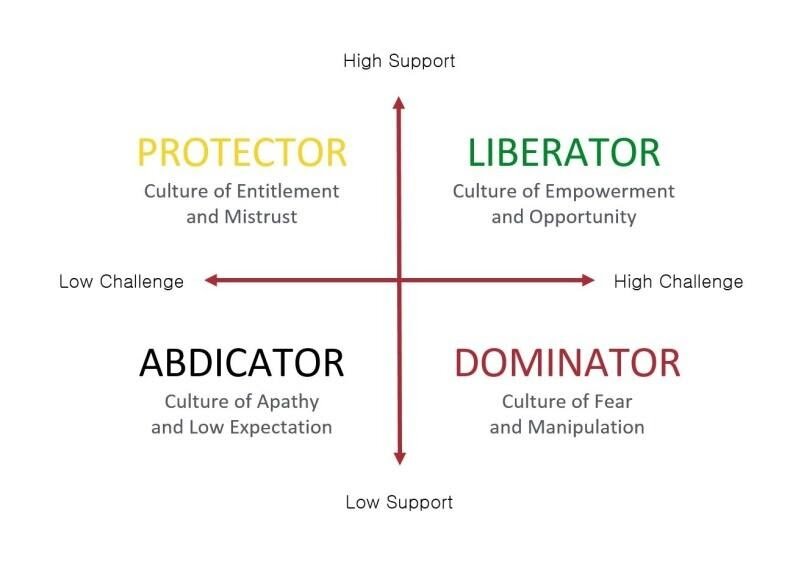
Jesus modeled an incredibly dangerous and winsome love, a light that pierced the darkness and for some liberated while others retreated because they preferred the darkness.  Consider this fantastic diagram by the folks at the Institute for Faith, Work & Economics on the topic: 
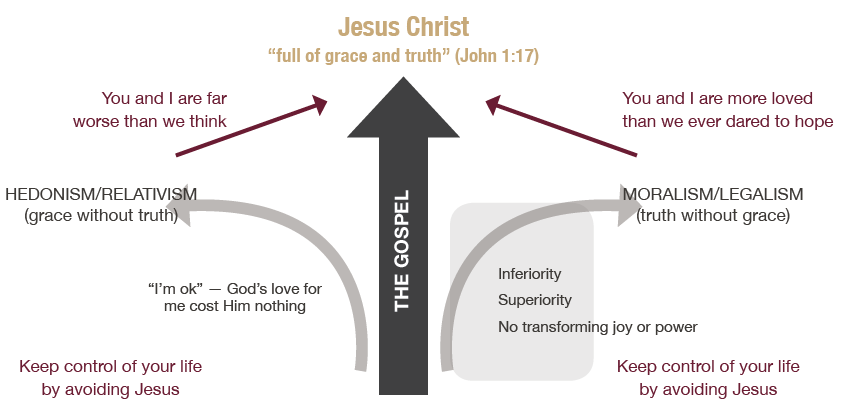
Numerous sources have begun to zero in on just how limiting, in fact, the disease of “terminal niceness” is.  When we practice this false gospel everybody loses!  High performance teams actually need and want accountability (case study).

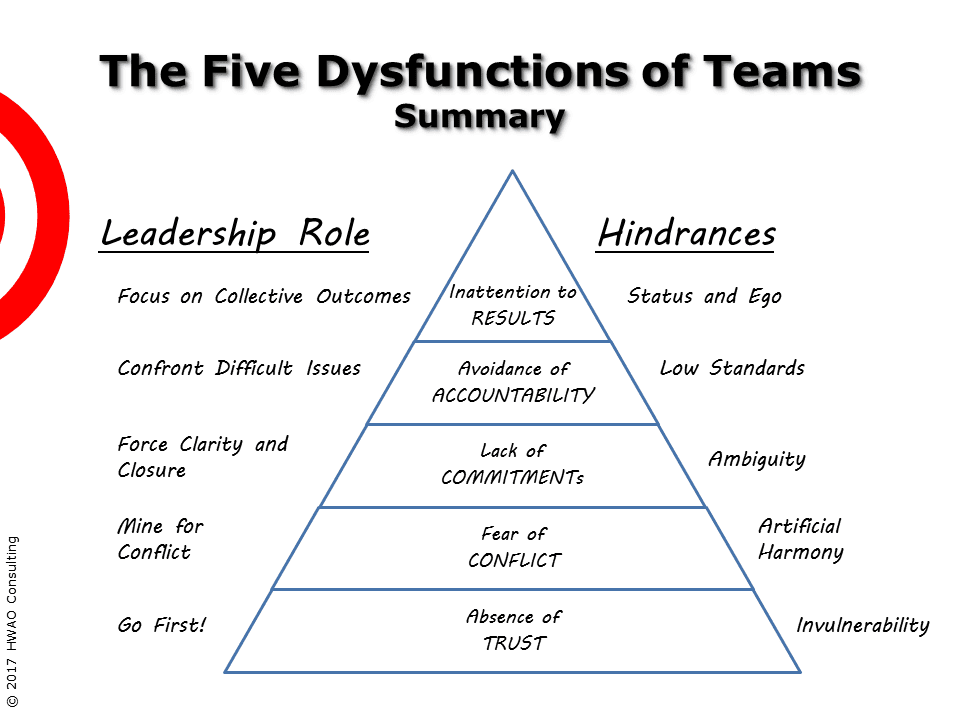
The great Mr Lencioni masterfully addressed this organizational dynamic in his classic 5 Dysfunctions of a Team (get it, read it, do it).  He found that at the bedrock of what determines the capacity for results or high performance in organizations is trust and (healthy) conflict, which are essential prerequisites to commitment, accountability and the end result everybody wants.  One of the barriers between trust and healthy conflict was actually the absence of conflict due to “artificial harmony.”  That’s where it’s the illusion of harmony because there is very little overt conflict – but there is tons of disagreement, resistance, uncertainty and a host of other problems!
As a leader, you are actually called to stand for truth (Ephesians 6), walk in the light (1 John 1), champion was is true and excellent (Philippians 4:8-9, Colossians 3:9, Proverbs 11:1, Acts 24:16, Ephesians 4:15) and to walk as Jesus walked.  

There are great resources out there (check out Crucial Accountability).  There are systems and processes to learn.

But please, for the sake of the true Gospel and that your leadership has potential to be a Matthew 5:16 type endeavor – don’t let sloppy agape woo you into a needless prison of terminal niceness.  It will cost you a ton and in the end you get nothing for your suffering but regret!

I was impacted years ago by the culture described in Execution: the Discipline of Getting Things Done where the emphasis was on ultimate results not political niceties along the way. This kind of thinking germinated in our own culture code for the team I lead where we have tribal rules of things like “Results Over Glory,” “Fight for Health,” and “Be the Buffalo” as expectations (along with Entrepreneurial Spirit, Leadership Mindset, Big Trust and others).  

Being Christ-like is a giant and often-times mysterious aspiration and calling for sure.  One thing it is not is the call to poor integrity, dishonesty, conflict avoidance or terminal niceness.  As Lucy was told by the Beaver in that famous scene in the Chronicles of Narnia when asking “Is Aslan safe?” – “Who said anything about safe? ‘Course he isn’t safe. But he’s good. He’s the King, I tell you!”  

In a tough labor market where all growth firms are contending for talent, creating the kind of place that is “good but not safe” is actually a competitive advantage.  

How are you modeling truth AND grace in your leadership?  Where has the heresy of sloppy agape and terminal niceness infiltrated your organizational culture to the point it is hindering both the gospel and performance? How do you navigate high expectations, high truth, high conflict while demonstrating support, grace, compassion and goodness?

In their latest book, 100X Leader, Jeremie Kubicek and Steve Cockram unpack this powerful 2×2 matrix of the essential relationship between high challenge and high support to achieve a liberating leadership style:
If you’ve been held back by the voices I described at the beginning…be set free!  Let’s build excellent organizations with cultures that are transformatively and refreshingly bastions of truth AND grace to the glory of God!

Related articles

——

[ Photo by Mason Kimbarovsky on Unsplash ]
David Brown

Founder | GOOD SPACE

GOOD SPACE is addressing the future of work by creating comfortable but functional workplaces within communities where people live. Their members benefit by saving time and energy, building their local community, and engaging with a diverse set of individuals united by common location and intent.

David spent over a decade working in the financial industry, particularly working to put together complex real estate transactions and being a financial advocate to his business clients.

David has also started a variety of ventures from an outdoor apparel brand and adventure travel guide to a niche textile manufacturing firm serving major US and international retail chains.

David is also an Elder and Trustee at Redeemer Queen’s Park church.

David and his wife Ashley, together with their 3 children live in the Queen’s Park area of northwest London. 

LINKS

Emanuel Bistrian

Founder | EUROPEAN AMERICAN INVESTMENT GROUP

Emanuel Bistrian is the Founder of European American Investment Group (EAIG) and Founder and CEO of Westfield Development. EAIG is a real estate investment fund in Romania and Westfield Development is an innovative real estate development in Romania. Westfield is revolutionizing the real estate market by merging the comfort of a US suburb with the strong sense of community found in most European cities and it was awarded the “Best New Concept in Romania for 2018”.
Emanuel is also the President of GiveFirst Foundation which aims to catalyze a strategic generosity movement in Romania and become a source of inspiration to business leaders looking to merge faith and work. Additionally, he serves on multiple boards promoting generosity in Europe.
Prior to his work in Romania, Emanuel owned a construction company and invested in real estate in Dallas, TX. This experience proved to be very valuable in real estate development.
Emanuel is passionate about technology, innovation, and product design. He and his wife Bianca live in Cluj, Romania with their 4 children. 

LINKS

Edy Sulistyo

CEO | GoPlay

Before Gojek acquired the company last year, Edy had built Loket.com into Indonesia’s number one event management software company. Loket’s technology enables event organizers to monitor crew, allow cashless payments and gather information about attendee behavior. Edy now spends his time developing both Loket.com and entertainment ticket service GoTix. He is also the CEO of Gojek’s video streaming service, GoPlay.

CONTRIBUTIONS TO FAITH DRIVEN ENTREPRENEUR