




Episode 280 – Thinking Beyond the Great Commission with Jordan Raynor

In this conversation, Jordan Raynor challenges the belief that the only way our work matters for eternity is if we use it to share the gospel, arguing that our work has intrinsic value to God.

He’ll build upon half truths to make them whole by tracing the story back to what he calls “the first commission:” the command to be ambassadors for God on this earth, creating culture in ways that honor and glorify him now and for all eternity.

Entrepreneur, this is your calling. To create and innovate for God’s kingdom under his power and for his glory.

Jordan also explores the concept of the unabridged gospel, emphasizing that Jesus came to redeem all things, not just our souls. He’ll encourage Faith Driven Entrepreneurs to be intentional and sacrificial in their work, and to focus on eternal rewards rather than temporary achievements.

  • Find the book here

  • Hear Jordan’s first episode with us here


All opinions expressed on this podcast, including the team and guests, are solely their opinions. Host and guests may maintain positions in the companies and securities discussed. This podcast is for informational purposes only and should not be relied upon as specific advice for any individual or organization.


Episode Transcript


Transcription is done by an AI software. While technology is an incredible tool to automate this process, there will be misspellings and typos that might accompany it. Please keep that in mind as you work through it.

Jospeh Honescko: Every entrepreneur knows their work matters here and now. But how do the businesses we build have an eternal impact? Today’s guest, Jordan Raynor, thinks a lot of the teaching on this question has revolved around what he calls half truths. Things like. Your company matters only as much as it helps others come to Christ or your sole priority is to live out the Great Commission to make disciples. For many entrepreneurs, this view of calling has left us scratching our heads. We know evangelism is a fundamental part of the Christian life, but if that’s all there is, why does God give us the desires and gifts to build in the first place? Wouldn’t all other work just be a distraction? We don’t think so. And in this episode, Jordan’s going to unpack the ideas behind his new book, the Sacredness of Secular Work to show how all we do matters because of the impact it has now on earth and later in Heaven, he’ll build upon familiar half truths to make them whole. By tracing the story back to what he calls the first commission, the command to be ambassadors for God, creating culture in ways that honor and glorify him. I’m Joey Honescko, and you’re listening to the Faith Driven Entrepreneur podcast. Let’s get into it.

Rusty Rueff: You know, Joey. I just got to say something. Dude, you don’t look. You don’t sound like Henry or William. Which means you can’t talk about Alabama football. You can’t talk about Baltimore crabs. You can’t talk about ice cream. So what? What’s the deal?

Jospeh Honescko: No, it’s a good question. As I said, I am, Joey Honescko, which by definition makes me not William or Henry. But I will say that I have a pint of Jeni’s ice cream in my freezer right now as we speak, so I do feel like I get to carry. Now, the Alabama football can’t bring any of that. But what we’re doing is we’ve mentioned this a couple times on the show, but we are mixing up some things this year. And one of the things that we realized is that we had Rusty, Henry and William and every episode, we squished them into a room together and asked all three of them to be people that just asked questions, and they have so much insight to give that we thought, hey, why don’t you put someone asking questions? And then we’ll have a little bit more that we can hear from Rusty, Henry and William at various times, amongst others that will come on as co-host. So in last week’s episode, you heard Henry. Then this week we have Rusty to interview Jordan Raynor. Jordan, welcome back to the show. Man.

Jordan Raynor: Joey. Rusty, it’s good to be back.

Jospeh Honescko: Yeah, we’ve had you on. It was. It was a little bit ago. At this point, I was looking back as episode 219, where we talked about your children’s book creator in you, and then you also spoke at the 2022 conference. But this one, we’re going to dive into the sacredness of secular work. It’s a very thoughtful book. It’s a very theologically rich book. It’s out today, actually, but you’ve got some you’ve got some hot takes in this book, and you’ve got a couple things that it seems like maybe have ruffled some feathers. So just kind of talk to us a little bit about that and how you’ve been thinking through some of some of the reactions to what you have here.

Jordan Raynor: Oh man. Yeah, I’d be happy to. You call them hot takes. I would call them ancient takes. Right. Yeah. You know, so the core idea of this book in the question is me and Joey, I am a faith driven entrepreneur myself. I talk to a lot of faith driven entrepreneurs. And when you tell a faith driven entrepreneur that, hey, your work that you’re doing Monday through Friday matters for eternity, the most typical response you hear is, oh, Amen. My job is my mission field, right? And listen, that is, of course, gloriously true. But if the only way our work matters for eternity is because we can use our jobs to share the gospel with customers and coworkers, then frankly, the vast majority of us are wasting the vast majority of our time. Right? Like, let’s be absurdly generous and say that the average faith driven entrepreneur spends three hours a month walking team members through the Roman’s road. That means roughly 1% of your time matters for eternity. And I don’t know about you guys, but like, I find that to be deeply depressing. More importantly, it’s deeply unbiblical, right? And I would argue it’s rooted in this very, very modern idea that the Great Commission, which before I’m labeled a heretic, let me say really clearly, is indeed great, is a non optional command for every single follower of Jesus Christ. I think the lie again, the brand new lie in church history is that the Great Commission is the singular mission of the Christian life, and we just don’t see evidence for that in Scripture. And I would argue that there are a lot of dangers in treating the Great Commission as the only commission we can get into that if you want. That’s what’s been ruffling some feathers. But man, I’ve been encouraged, honestly, Joey, that once people get into the nuance of this conversation across theological lines, I’ve got Southern Baptist, I got Presbyterians that I got met that’s been like, yeah, no, that’s right. And this could not be more important for how we define which work is sacred and which work matters for eternity.

Rusty Rueff: Yeah. That whole idea of the Great Commission, as you say in the book, was just a heading right?

Jordan Raynor: Yeah. So let’s do real quick history lesson here. Let’s, you know, nerd up our glasses here. So check this out. Three faculty members at the uber conservative Southeastern Baptist Theological Seminary said, quote, before at least the 17th century, the Great Commission was largely ignored when discussing the church’s missional assignment. End quote. So how did we get here? How do we get to this place where we think that saving souls is the only thing that matters? And I would argue that one of the ways we got here is through this manmade heading called the Great Commission. That term is not a part of the inherent Word of God. It’s simply the catchiest marketing slogan of the modern bishops movement. Now, again, the command itself is absolutely a part of the inherent Word of God. The Great Commission is not an option to be considered. As Hudson Taylor said accurately. It is a command to be obeyed. But here’s the irony. I actually think by elevating one of Jesus’s commands to the singular all important one, we ironically become less effective at the Great Commission. Right. Because we got faith driven entrepreneurs going to church every Sunday, feeling guilty that they are not, quote unquote, going to all nations to make disciples, when in reality it’s faith driven entrepreneurs who are most likely to make disciples in our post-Christian context even more likely than the pastor on their stage or the missionary on the refrigerator.

Jospeh Honescko: So talk to us a little bit about that real quick. Jordan, in your book, you call it the first commission, but talk about a little bit of that role that entrepreneurs play and how they are making more disciples in a post-Christian world.

Jordan Raynor: Yeah, yeah. So there’s a lot of different directions we could take that. Let’s just be really explicit about this first commission, this first, literally the first thing God asked humankind to do in Genesis 1:26 through 28. This is called the cultural mandate by a lot of people. I prefer the first commission, this command, to be fruitful and increase in number to fill the earth and subdue it and rule over it with God and for his glory. Right. What does this text mean? This means more than procreation, right? This is a call to cultural creation, to civilization. Wayne Grudem, the general editor of the ESV Study Bible, says this, the first commission is, quote, to make the earth more useful for human beings benefit and enjoyment end quote. And isn’t that exactly what you do founder? As you and your team seek to leverage software in the raw materials of this world to make this world more useful for other human beings benefit and enjoyment. The problem is, this nasty little lie, I would argue, is crept up in the church in the last couple hundred years that says that somehow the Great Commission has replaced the first commission. That’s the lie. Great Commission is great, but we’re still called to the first commission after God sends a flood to Noah and his family, Noah and his family get off the boat in Genesis 9:1. What does God say to them? Be fruitful and increase in numbers. Fill the earth with culture and civilization. The first commission is never once retracted by God. In fact, it’s part of our eternal vocation on the new earth, where Isaiah 65 says, we’re going to build houses and plant vineyards and long enjoy the work of our hands. And so our work today leading into the first Commission has intrinsic value to God. It doesn’t just have value. When we leverage that work to some instrumental spiritual end, it is an end and a good and a form of worship in and of itself.

Rusty Rueff: There’s also another piece of not only the what, but also the how, right? You know, the scriptures full of how we’re to go about now fulfilling, as you say, the first commission. As entrepreneurs who are about creating new things and figuring out ways to do it better to solve problems. Can you talk a little bit about, you know, the how and how the how might work in this first commission?

Jordan Raynor: Yeah, man. So in a couple of weeks, we’ve got Valentine’s Day coming up. Everybody’s social media feeds are going to be cluttered with, all sorts of Valentine’s Day messages and a really important passage. Scripture. First Corinthians, chapter 13, the famous love passage that we read at all of our weddings. You know what’s interesting to me, though? Marriage is not the context that Paul is writing that passage in. The context of First Corinthians 13 is the stewardship of spiritual and vocational gifts. That’s what he’s talking about in chapter 12. And then in 12:31 he says, hey, I’ll show you the most excellent way to steward those vocational gifts. You ready for it? Love is patient. Love is kind. Love to love is not self-seeking. Love is not easily angered. So maybe we could just sit with that passage alone, Rusty, and do a whole season of the Faith Driven Entrepreneur podcast on what does the how look like? What does the how look like for faith driven entrepreneur to love people in distinctly Christlike ways. Man, that’s just one place to start. Go to the beatitudes. Go anywhere in the New Testament and we’re going to see the how. And I think it’s time that we as faith driven entrepreneurs stop not stop asking, but ask less questions about the what of what we do.

Rusty Rueff: Yeah, yeah.

Jordan Raynor: Ask even less question about the why of what we do. Because we are aiming for the glory of God and the good version and ask more questions about, okay, let’s roll up our sleeves and figure out how to do this sacred work in a distinctively Christlike way. Because, man, I just I spent so many years as a tech entrepreneur feeling half alive Monday through Friday. All right. Because I didn’t feel the permission to love my work that God created me to do. But think about the irony of this, right? We’re just talking about the first commission. Genesis one work was God’s first gift to humanity, right? And so we are glorifying God as we lean into the first commission. And the thing he made us to do is faith driven entrepreneurs. It is giving us joy, but it’s giving him joy because he created us to enjoy that good and purposeful work.

Jospeh Honescko: Yeah, you said something there, Jordan, about feeling half alive in a lot of your tech entrepreneur journey. Yeah, and I think that’s related to what you say a lot in the book, is that a lot of what we believed are half truths. Yeah. So it’s not that you’re reinventing the wheel. They’re not, as I jokingly called them earlier, hot takes. They’re what you’re more accurately called them ancient takes. And the fact that they are rooted in this full picture of the gospel and the full picture of the scriptures. And one of the things speaking of the gospel that you talk about is the way that we’ve made this abridged gospel, which is that Jesus died to save us from our sins. And you invite us into a fuller picture that doesn’t deny that reality, but shows up maybe broader picture. Can you talk about what you call the unabridged gospel a little bit?

Jordan Raynor: Yeah, I would be happy to. I would argue, I don’t think I really have to make this argument very strong. I don’t think anyone’s going to disagree. The dominant version of Jesus’ good news preached in churches, at least here in the United States, is, oh, the gospel, the good news that Jesus came to save you and me from our sins. And every word of that statement is, of course, gloriously true. But it is tragically incomplete, right? The gospel is not just good news for my life. The gospel is good news for the world, for culture, for business. Right? It’s good news for our cities. Colossians one says Christ came to reconcile to himself all things. And let’s go back to the beginning of our Bibles. In Genesis one, God called all of creation spiritual and material good, our souls in the material world. Genesis three Satan broke every part of that perfect creation, and God promised to send a Redeemer that would not just strike Satan’s head. We’re not just do battle with Satan, but that would crush Satan’s head in total indisputable victory. And so if Christ’s redemption does not go as far as the curse of sin, then God has failed. That’s what we’re saying when we’re saying he only came to save us from our sins. And the implications of this could not be more important, because if Jesus only came to save our souls, then the only way that our work as entrepreneurs matters for eternity is if we leverage those jobs to the instrumental end of saving souls, because the rest of creation be damned, Jesus didn’t come to redeem it. But if Jesus truly king as we sing every Christmas to make God’s blessings flow far as the curse is found to reconcile to himself all things, including the material world. Then my work with the material world, typing on aluminum MacBooks, planting trees, harvesting the raw materials of this earth to serve customers must matter for eternity because Jesus blood paid to ransom. That material world I’m working with, as well as my soul that is animating that work. That’s why this matters so much. The unabridged gospel Jesus is King of all. And so my work with all things is deeply sacred and matters for eternity.

Rusty Rueff: It’s funny how we kind of jump to the front and then we jump to the end here, because at the end you give us how to best position yourself to make yourselves disciples at work. And, you know, you give us seven points and there’s a lot of humanity in these seven points, like be good so that they can’t ignore you. You’ve got be a friend. I love the last one. Be prepared to clear your calendar when you start to talk to others about what God is doing in your life and what God can do in other’s lives. So it’s a mindset shift here and a mindset shift here that can have not only ramifications in our daily work, but. To get back to the Great Commission. It can have eternal ramifications.

Jordan Raynor: Yeah, that’s exactly right. I say, in the introduction of the sacredness of secular work, I don’t want this book just to be interesting. I want it to be profoundly helpful. Right. And to that end, there’s 24 practices baked into the book to help you make your work matter more for eternity. And a lot of those are focus on the first commission. Like what? For example, one of those practices is how do we optimize a current product we are building to literally and physically last onto the new Earth? Because Isaiah 60 promises us that some cultural artifacts are going to physically be present in the New Jerusalem. But Rusty, you’re hinting at some of my favorite practices in the back of the book relate to the Great Commission, and maybe the one that’s been most helpful to early readers has been this idea of building a list of launchers to intentionally steer conversations with coworkers from the surface to the serious to the spiritual. So let me break that down. I think there’s two ditches that a lot of Christians find themselves falling into. The first ditch is what we’ve already been talking about in this conversation, believing that the only actions of eternal significance are those that we leverage to the instrumental end of sharing the gospel. That’s a lie, right? And if you want to know why you read the book, or we could talk more about this on the podcast. But the second ditch is equally dangerous. Being so content with the intrinsic value of our work that we rarely, if ever, speak up and leverage our work to the instrumental end of sharing the gospel. And Wilberforce avoided this ditch well. So obviously he’s most famous for helping to abolish the slave trade. See the first commission in the British Parliament. But he was also a disciple making machine, and his favorite tool for doing so was a very simple journal called his List of launchers. A list of launchers is really just two things. Number one, the list of names of people you are praying for their salvation, right? And number two, next to each name a list of topics, questions, or conversation starters that you think will lead your next conversation with that person. From surface level things to serious things, and then to spiritual things.

Jospeh Honescko: I think one thing you’re saying there, Jordan, is this idea of intentionality and sacrifice, that to engage in these ways, you have to. It’s not just gonna organically happen necessarily. There’s gonna have to be some intentionality. There’s going to have to be some kind of steps that you’re taking in these. And I feel like that’s maybe another barrier, maybe kind of talking about your two ditches to climb out of that ditch is this idea that it’s going to take some the mindset shift, but also some action?

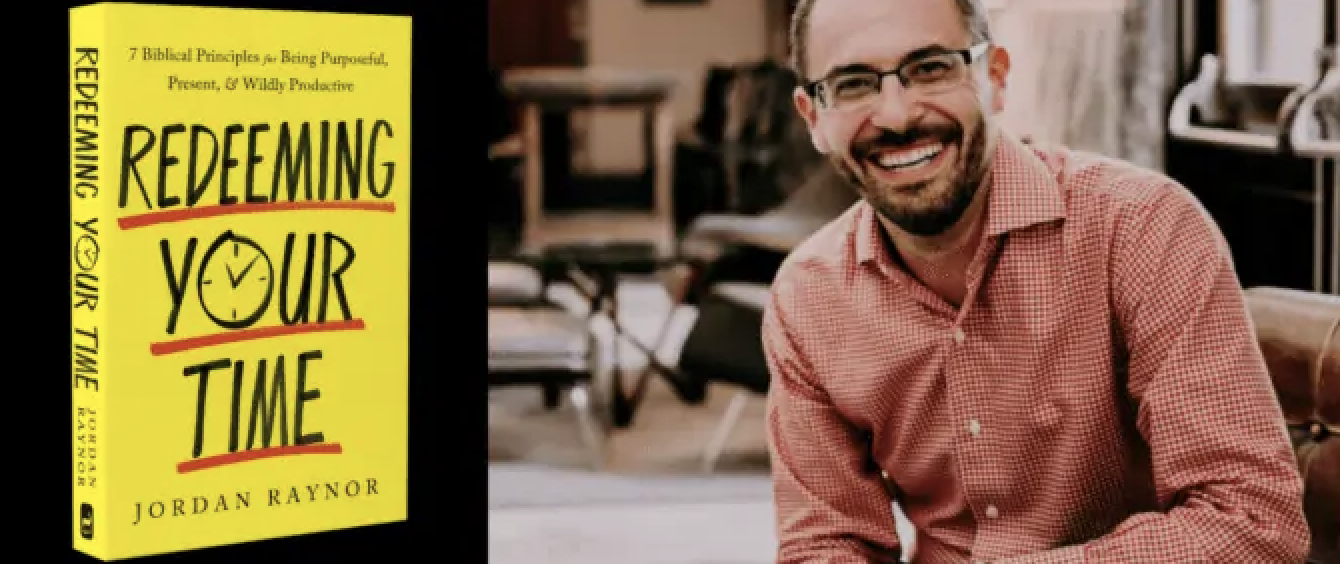
Jordan Raynor: Oh, 100%. I wrote a book a couple years ago called Redeeming Your Time. The title came from Paul’s words in Ephesians five, where he’s explaining what is our response to the gospel. And he says, see then that you walk carefully, not as fools, but as wise, redeeming the time, because the days are evil. In other words, be intentional. We are not in heaven’s waiting room. We have been saved by faith through grace. Period. Full stop. Praise the Lord not by works so that nobody can boast. See Ephesians two eight through nine. But we have been saved for the good works that God prepared in advance for us to do. And those good works do not mean exclusively evangelism. Right? That Greek word that Paul uses there, Eragon, actually literally means work, task, and employment. But evangelism is part of those good works. But we got to be intentional about redeeming our time with our coworkers a buying up every opportunity we can to share the hope, the unabridged gospel, the good news that Jesus is King of all.

Rusty Rueff: You know. What I also like about what you’re talking is, and we’re going to have listeners who are going to go, man, I love that idea of the launchers. I’m going to set myself up a Google doc to get those right. But I have a high level of anxiety to do that in the workplace. Yep. Right. And it’s going to take some courage. But what I like about the way that you talk about looking for those opportunities to move from the surface to the serious, ultimately to the spiritual, is it no one pushes back?

Jordan Raynor: Yeah, that’s exactly right. And this takes this takes discernment, right. Like we want a microwave people into believe in Jesus Christ. We have been so conditioned by the industrial Revolution to expect instantaneous results in everything. That is not how this works, according to Paul. Go read first Corinthians three. Apollos, plant the seed, I watered it. God’s making the thing grow. Plants take a freaking long time to grow. I don’t know if you’ve noticed this, right? I think we got to give up this idea that somehow. We can share the gospel with somebody and they can make a decision in five minutes. Does that happen? Sure. I’ve heard those stories right. We got to be patient and also recognize that God doesn’t need any of us to do anything to redeem any part of creation, to save any particular person. His purposes will not be thwarted. See Job 42 two. He does not need us. He wants us. And he is inviting us to participate in work he is already doing with or without our directive. And I think we as faith driven entrepreneurs, ought to be embracing this trend to bring your whole selves to work. We should be on the bleeding edge of this. This gives us every opportunity to talk about our why. One of my favorite things to do, I just did one yesterday, is talk to Christian employee resource groups at large companies, or even better, interfaith employee resource groups at big companies. They’re having this dialog to bring your whole self, mind, body and spirit to work and praise God for that, because by God’s common grace, he’s working through all those people, working together to uncover truth, to put people on a path to long for truth that can only be found in Christ alone. And I think, particularly in entrepreneurial circles, there is a hunger for these types of conversations because entrepreneurs are curious, right? And they’re open to truth wherever they can find it. And we’ve got the market cornered on truth. All truth is God’s truth, right? And so we trust me, I understand I understand the fears to engage here. I ran a 130 person company. Listen, I balked way more times than I care to admit it. Sharing my faith in that context. Right? I think one of the things I’m most ashamed about in my life, where a few team members, after I left, texting me after they saw something on social media like, oh, you’re a Christian. Shame on me. We are running out of time to do the work that God has called us to do, right? And it is not going to be in this next. Tim Keller was on my podcast right before he passed away talking about this in this next generation, maybe the next 2 or 3, it is not going to be, quote unquote, full time missionaries and religious professionals who are most effective at the Great Commission. It will be mere Christians because the fastest growing religious affiliation is no religious affiliation. So where are your fellow founders and vendors and customers going to hear the good news of Jesus through you and me, but only if we have courage, and only if we are intentional about praying for these people, salvation, and being willing to speak up and raise our hand and say that we are followers of Jesus Christ.

Jospeh Honescko: You mentioned the employee resource groups, and we’ve had a few folks on the show Josh Harley, Tom Ferguson, Brooke Bukowski, all of them run these public companies. Pat Gelsinger would be another one who’s really leading the way. And I think that you used the word earlier of this post-Christian context. Yeah. And I think a lot of people in the church can be afraid of that word because it feels like it’s a damaging thing, but it sounds like the way you’re positioning it is it actually creates this opportunity for discussion and openness to enter the dialog. Is that fair to say that this post-Christian is actually opens up new opportunities, particularly for entrepreneurs?

Jordan Raynor: 100%. And let’s just do a quick recap of history. The church has always been most effective. And most true to what Jesus called us to be when we were in, quote unquote, exile. Like all these headlines of all war. Now, we’ve always been in exile. Jesus promised us that we would always be in exile on this side of the new earth. This shouldn’t surprise us when I think what I’d love to see in the church is just a re embracing of that exile, knowing that, oh, by the way, Christ was in exile. He did not isolate from the darkness. He entered into our hot mess in order to shine the light of God. And that’s what we’re called to today. Not being scared of exile, not being oh, man, cultural trends are changing. So I should go quit my job and go to an employer that is better aligned with my values. Where did we get this thinking? What are we talking about? The stars shine brightest. The darker the night gets. And I pray that that’ll be so. For God’s church and the faith driven entrepreneurs and investors and workers. He’s placed in every square inch of creation.

Jospeh Honescko: Well, and when Israel was in literal exile, God’s command to them was to seek the welfare of the city, to go build culture. It’s almost a repeat of that first commission. And I think you said something earlier that I don’t want to jump over, because I think it’s such an important part, which is that God doesn’t need us to do this work. And I think that I’ve often felt this sense of, oh, he doesn’t need us. So like, it doesn’t matter. But what it actually is, is it’s an invitation to this adventurous life. It’s good news that he doesn’t need us, but he’s actually saying, hey, I’m going to do this really awesome thing. Do you want to join me in that task? Right. Like, we’ve been using this language a lot internally. If it feels like it’s sacrifice and we’re trading down. But the life of The disciple is one where we’re trading up. We’re actually invited into this adventure. This isn’t this isn’t a hang your head down. Get through it till we get to heaven. This is an invitation to enjoy life now and have life to the full.

Jordan Raynor: And have life to the full. But man, I don’t know that we can have this conversation Joey, without touching on, one of the things in the sacredness of secular work that’s caused the most controversy, this topic that is never explored in a lot of churches today, this concept of eternal rewards. And we avoid this topic for good reason. The perverted prosperity gospel has radically taken this idea and promised us our best life. Now that’s garbage. Amen. We’re all on the same page here. Yep. But Jesus did promise us our best life. Now, let me go further. Jesus commanded us to pursue our best life later. If we sacrifice for his sake in the present. I mean, so many entrepreneurs who feel guilty about chasing after return rewards like treasures and crowns. Scripture makes clear one of those rewards is increased job responsibilities on the new Earth. But to maintain that it is wrong to be motivated by these rewards. To quote doctor Randy Alcorn, quote unquote, is to bring a serious accusation against Jesus Christ, because there’s like two dozen passages of Scripture where Jesus is not just suggesting, but commanding us to chase after these things, because I think he knew that every one of his followers. It’s not an option as to whether or not we will be motivated by rewards. The question is, are we going to be motivated by the temporal reward of the praise of man, or the eternal reward of the pleasure of God? That’s it. And so Jesus is saying, hey, listen, my kingdom will not be thwarted. I’m going to finish this work with or without you, but I want you to be a part of it, and I want you to be a part of it so bad, right, that I’m going to motivate you with these unbelievable riches. If you will delay your best life now for your best life. Later in in the book, one of the other practices that readers have really loved is idea building an anti bucket list. I think when we really understand the promise of the new Earth and the promise of eternal rewards, we’ll stop spending so much time talking about our bucket list and start spending more time about our anti bucket list. These things we are intentionally sacrificing in the present, so that we can accumulate as many eternal rewards and experiences as possible on the New Earth.

Jospeh Honescko: Yeah, I love that, Jordan. Because again, it’s just another one of those examples of a great ancient take because when you read revelation, when you revelation 21 is one of my favorite passages in Scripture, because the way it talks about the heaven and earth meeting together, and it’s so clear that it is earth is not wiped away. So it’s very obviously in there, but for whatever reason, it feels radical to talk about Earth being recreated in this way. I love the way you put it in the book, which is that we’re going back to Eden, surrounded by the work of God’s hands and some of our own. And so we’re going to come to a close here with our last question. You’re already bringing Scripture into it, but we always love to close every episode we have with guests asking just what the Lord is teaching you through His word. Today could be last week, could be the last little bit. But what’s something that the Lord has been speaking to you recently?

Jordan Raynor: Yeah, there’s a passage that I keep coming back to. I’ve mentioned it so many times on the mere Christians podcast that my audience is tired of hearing it. But it’s a good way to end this conversation. Listen to Psalm 37:23. Psalm 37:23 says, the Lord directs the steps of the godly. And delights in every detail of their lives. In other words. God doesn’t just delight in watching you write a big check to your church. He doesn’t just delight in watching you leverage your list of launchers to share the gospel with your coworkers, although of course, he delights in those things. He delights in 100% of your time at work. Every zoom meeting you lead, every product you build. Every PowerPoint you pitch is an opportunity to contribute to the eternal joy of God.

Jospeh Honescko: Man. That’s beautiful. Thank you Jordan. Thank you Rusty. The book is the sacredness of secular work. We’ll have a link to it in the show description. Such a great time with both you guys. Thanks for joining us.

Jospeh Honescko: Thanks for listening to the Faith Driven Entrepreneur podcast. Our ministry exists to equip and resource entrepreneurs just like you with content and community. We know entrepreneurship can be a lonely journey, but it doesn’t have to be. We’ve got groups that meet in churches, coffee shops, living rooms, and boardrooms around the world. Find one in your area or volunteer to lead one and bring this global movement to your own backyard. There’s no cost, no catch, just connection. Find out more at Faith Driven entrepreneur.org.

Recent Episodes

Episode 279 – Is the Church Winning? with Henry Kaestner and Justin Forman

As Christians, we can easily get wrapped up in this belief that the church is on the losing side of history.

We feel the shifting winds of culture blow away from us.

We hear story after story of major church leaders either leaving the faith or succumbing to some sort of moral failure.

It makes sense to ask ourselves: where are our wins? Where does the Church have victory in times like this?

In this episode of the Faith Driven Entrepreneur Podcast, Henry Kaestner and Justin Forman bring some clarity to those questions in a segment we call “the riff” where we bring listeners in on some of the internal conversations we’re having as a team.

They’ll share about some of the incredible wins happening across the world and give examples of Faith Driven Entrepreneurs who are solving some of the world’s greatest problems by stewarding their businesses and resources for God’s glory and the good of others.

Join the conversation by sharing your thoughts on LinkedIn or sending them to podcast@faithdrivenentrepreneur.org.

If you like this episode, you can follow, rate, and share the show. We publish new episodes every Tuesday with entrepreneurs and innovators who use their resources and influences for God’s glory and the good of others.


All opinions expressed on this podcast, including the team and guests, are solely their opinions. Host and guests may maintain positions in the companies and securities discussed. This podcast is for informational purposes only and should not be relied upon as specific advice for any individual or organization.


Episode Transcript


Transcription is done by an AI software. While technology is an incredible tool to automate this process, there will be misspellings and typos that might accompany it. Please keep that in mind as you work through it.

Joseph Honescko: It doesn’t take long to look out in the world and feel defeated. Wars, division, YouTube comments. It all seems so chaotic, even hopeless at times, and this might be especially true for people of faith. We can easily get wrapped up in this belief that the church is on the losing side of history. We feel the shifting winds of culture blow away from us. We hear story after story of major church leaders either leaving the faith or succumbing to some sort of moral failure. It makes sense to ask ourselves, where our wins? Where does the church have victory in times like this? Today on the show, we hope to encourage you with some answers to that question. As we kick off a new segment, we’re calling The Riff, where we bring listeners in on some of the internal conversations we’re having as a team. Our co-founders, Henry Kastner and Justin Forman, we’ll talk about some of the incredible wins happening across the world and how a lot of them are happening through faith driven entrepreneurs who are solving some of the world’s greatest problems. These are faithful men and women who are part of this movement, just like you. And we’re all fighting on the winning team together. I’m Joey Honescko, and you’re listening to the Faith Driven Entrepreneur podcast. Let’s get into it.

Joseph Honescko: Man, I’m excited to have you guys here chatting with us because like we said in the intro, this is a new segment. We’re testing out a lot of new things in 2024 are going to play with some different formats. It’s not that we’re getting rid of the traditional things. We’re still going to have interviews and stories that highlight incredible entrepreneurs from around the movement, but we’re also going to play with some new things. The last few weeks, listeners have heard those compilation episodes with some various subject matter experts speaking on particular issues, and today we’re starting that conversation around the riff. And it didn’t take long being around the two of you guys for riff to become this vocabulary term for our entire team and is this is the source of the riff? Is that a Justin thing or is that a Henry thing?

Justin Forman: Oh, it’s definitely not text and phrase, but it is one of those first things for me. But it’s Henry and I were spending more time together years ago that I came back. I think it was from some trip, and I started talking about that with [….], and we’re talking about something and I think I said, hey, I’m just I’m riffing. And he goes, oh, is that what you’re doing? And it was a moment where I, you just recognized that so many conversations. The word riff was so much in Henry’s vocabulary.

Joseph Honescko: Henry, help us out here a little bit. How would you define a riff?

Henry Kaestner: It’s a freelance type of, like, kind of going off and what it is, it’s a polite way for me to kind of distract people from the fact that I’m talking too much. If I talk too much about something I’m passionate about, if I give it a really cool name like riff, then it kind of legitimizes it a little bit.

Joseph Honescko: And I think that it’s those conversations where we’re riffing, where we’re just going off is usually where we end up accidentally almost saying something that was like, oh, shoot, that was extreme. And one of those big ones that have come up recently is Justin like you started saying this phrase, the church is winning. And I was sitting there thinking like, man, Justin, I love the church. I am passionate about the church. I’m passionate about the Christian faith. But winning is something that I have a hard time with because when I look out my window, it doesn’t feel like it is. So Justin, how is the church winning?

Justin Forman: Yeah. Great question. You know, I think just to echo what you’re saying, I love this idea of us riffing here together and collectively because it’s everyone’s movement. It’s a collective thing. And this gives us an opportunity for us to share some of these things externally about some of the things God’s speaking to us, processing through the team together, and really just check it in to see is, is this something consistent? But to get to your point, when you talk about winning, I think I think we’re taught like something about winning from such a young age, whether it’s sports or something. There’s some energy, some enthusiasm, some momentum that I think people just it’s contagious. They want to win. Now, to your point of what you’re saying is, it is very easy to feel like we’re on an incredible losing streak. Name your favorite team or the least favorite team. Growing up in Michigan, I could look at the Detroit Pistons. They went on, what, 27-28 game losing streak here recently, set the NBA record, most losses in a row consecutively. There was nobody in Detroit excited about the Pistons in that moment. Flip to the reverse. And you see the Detroit Lions going on a winning streak. And there’s so much momentum. There’s enthusiasm, there’s excitement, there’s energy. There’s something contagious in it. Now people are more and more wanting to play for that team. And so when you look at that, I think there’s something inside of that that is intriguing to think about. But I think we’re winning a whole lot more than we think. I think that there is a media that promotes fear, that has business models on fear, that suppresses what God is doing any time that they can. And it’s easy to get discouraged. And yet I think it’s happening all around us. But I think that we have to start by looking at this more on a local level, like, where are the wins in my family? Where are the wins in my day? Where are the wins in my community, my church, and start to celebrate those stories because I think the wins are happening. Yeah, we are just combated by a force of people that are really overloading us with the negativity.

Henry Kaestner: Yeah, so we are absolutely on a winning team that will ultimately win. And as Justin said, we all want to be on a winning team. And I was so encouraged the other night, many of you might know that we run this thing called inklings here in the Bay area for a regular men’s group to encourage each other in the pursuit of faith family vocation like C.S. Lewis and J. R. R. Tolkien once did. So we had our speaker on Tuesday. It was Bobby Grunwald, who is the founder of YouVersion and has helped develop online church. And he’s talking about the different metrics. And just really his entrepreneurial story is just incredible. And actually we do have a podcast. It talks a little bit about that with Bobby. But what he said that really got me fired up was that last year, you know, this is something’s been going on for 15.5 years. And there was a point in time where the YouVersion Bible was growing at five, six, 7% a year. And there are some people are saying, no, it’s kind of reached the saturation point as as many people care about the Bible, you know, you got all the iPhones, the word’s gone out, he said. Last year in year number 16. YouVersion grew 83%. And he talked about this, the engagement with God’s Word. And then he said, lest you think it’s just something we did necessarily, printed versions of the Bible increased sales at 27%. That’s not likely something we’re going to see as a headline. But the feeling I felt inside me was like, that’s so awesome. I mean, it’s just it was exhilarating. So why was it exhilarating? On one hand, it’s awesome to see God’s kingdom advance, just as he’s talked about when Jesus came into [….] in God’s kingdom. Um. That’s awesome. But there’s something powerful like, you know, go team. And this is a big deal. This is something that people are in this day and age, amidst all this bad news and people love and kind of talking about the fact that the church is just kind of old or hokey or whatever the case is. The reality is the God and the Holy Spirit are winning over minds as people seek real truth. And it doesn’t stop just with scriptural engagement. Maybe it starts there, but in so many different aspects of what Justin and I and you Joey and the entire team fine. We’re finding people winning.

Joseph Honescko: Yeah, I think it’s such an interesting thing because for some reason, in my theological brain, I can kind of take a step back, and it almost feels wrong to say that the church is winning. But I think of the scripture where it talks about the gates of hell will not prevail. And the assumption there is that Christians, that the people of God are actually charging the gates.

Justin Forman: Yeah, I think there’s something deep there that when you talk about this idea that we know that in the end, who wins? But celebrating the winning that happens to leading up to that. I think that there’s two often times big gap. I mean, if I would put it this way, I don’t know what the score is, but I don’t think the score is as bad as what people make it sound like. I think if we really look around us, there’s just a whole lot more wins. We’ve just lost sight of how to find it, how to celebrate it. And I think that’s part of it. We even wonder, is celebrating it wrong? Like, at what point do you cross over from like, celebrations, excessive celebration? And what does it look like for us as a church to celebrate in a way that doesn’t feel hokey or contrived or cheesy or forced, but really feel that that same natural feeling that you feel when you’re in sports or anything else.

Joseph Honescko: Yeah for sure. And just a quick reminder, Henry mentioned that Bobby Greenwald episode is episode 53. If anyone wants to go back and listen to that. But I’m also thinking, we’re talking about this victory, Justin, you were talking about it on a local level, but also on this kind of larger level. And this is the Faith Driven Entrepreneur podcast, right? So the presumption there is that it’s entrepreneurs listening. What is the role. Because I think that it’s easy to think that this area of winning or Christian effort is the area of charities or nonprofits or churches. But maybe, Henry, I look to you for this. What is the role of entrepreneurs as they go out and do their businesses? How can they contribute to the wins for the glory of God? But using the gifts and the resources that we’ve had toward that end?

Henry Kaestner: Well, I think that we can all just understand that we’re instruments of God’s power for his glory, and that that’s really cool, and it delivers more joy and satisfaction than any other thing that the pattern of the world would tell us would deliver that type of satisfaction. And I think when we look at people in the marketplace, just some quick examples I think of. I think about Anthony Tan, who has gone out there with this, uh, ridesharing and all of Southeast Asia unapologetically, uh, despite being in so many Muslim nations under God’s power for his glory, he’s winning. Grab is winning. Grab is the dominant brand in Southeast Asia, having firmly subplanted Uber. And he’s winning and he’s bearing witness to it. But it came out of his Christian faith. And just saying to God, what’s wrong in the world and how can I fix it? And I just realized that taxis was no longer safe for the rider or the driver. And so he wanted to fix it. Uh, I think about, you know, I live here in Silicon Valley, so I maybe I tend and trend a little bit more towards technology, but you don’t need to look any further in virtual reality to think about Renji Bijoy at Immersed or Quinn Taber at Immersed, two of the leading AR VR players out there and technology, and both of them having started their business because they wanted to be solving a problem that would advance God’s kingdom using what their gifting was. And, you know, we’ve got hundreds and hundreds of examples like that, but it doesn’t stop there with just technology and with entrepreneurship. But you know what? It’s a big part of it that does. Because Christ followers ability to bear witness with excellence in the market, whether it’s a mark series at a cloud factory or whether it’s Hobby Lobby, Hobby Lobby, you think about, you know, the heroes in the world and what the green family has been able to do. They crush it. They crush it by every metric that matters. And then with their incredible abundance, they have made such an incredible impact in society. They’re winning, chick fil A’s winning. And those are some of the stories that everybody knows about. But they shouldn’t be discounted just because they’re out there in popular culture. And there are thousands of faith driven entrepreneurs that maybe some of them inspired by them, but more importantly, inspired by the fact that there’s God who loves me so much, as messed up as I am, loves me so much that he’s given me the gift of life now and forever. And it’s out of that joy and gratitude like I want to do it all. I want to bring every gift I have. And for me, I’m an entrepreneur. I’m a business guy. I know something about code. I know something about AI or web 3.0, and I want it to be bring it to the altar as my meaningful form of worship in an endeavor to bring about God’s kingdom.

Justin Forman: I think one of the fun things, I mean, part of this episode we’re trying to draw into some of the conversation wrapping internally is that we talk often with faith driven, that we don’t want to be prescriptive, that we want to just really be there to support the work of what God’s doing. Non prescriptive movement. I think we’ve looked at winning so prescriptively. I think we’ve seen it as like, oh, we’re winning, win this ministry that we give to does this we’re winning, win this company you know has a great product. It scales it to some of these things in it. I think that sometimes we get so focused in on how we play the game versus winning kind of the game. And I mean, certainly we want to have good values in that. But what I’m getting at is a.

Henry Kaestner: Run the race as if to win it.

Justin Forman: Yeah. But what we’re getting at is there’s this idea, it’s like there’s some massive problems. I mean, as you said, media is putting darkness in overwhelming fear based things all around us and drawing the attention to it in the church. So oftentimes we can get fixated on how it has to be done. And, oh, it has to be done this particular way. And what we’re rallying around is this idea whether it’s building, whether it’s giving, whether it’s investing in the next company, there’s wins happening in all of those different ways. And if you’re trying to get that foothold on this beach of darkness, whatever the issue may be, you’re not just going to try and take that with just one. You’re going to have the Army, the Navy, the Air Force, the Marines. You’re going to need it all to take that. And I think as a church, sometimes we have focused on it has to be done through charity or it has to be done through this. And I think there’s a freedom of thought. Now that’s saying let’s get less focused on how, but let’s get more focused in on solving the problem and really tackling it from there. Now, we don’t want to cause long term harm by helping to the point of hurting, but let’s use all the things that are at our disposal.

Joseph Honescko: Yeah, it’s not a matter of pitting these things against each other, but actually seeing how they work in unison that it’s charity and entrepreneurship and investments. It’s all these different pieces kind of uniting. I want to take a step back real quick here, just because I feel like we’re talking about winning and we’ve given some great examples, and I think that the three of us kind of have a sense of what we’re talking about. But I wonder if there’s a way, even just to define what we mean by winning there a little bit. And, Justin, maybe I’ll throw this to you because I’ve heard you talk about this a little bit. But when we say winning, right, I mean, it doesn’t negate the fact that there are issues in the world. There are serious problems that need solutions, but that there are wins happening within that. So maybe you can just help give a little bit of definition and clarity around what we mean when we say the church is winning.

Justin Forman: Yeah, well, I think that it starts with this idea of nobody starts a venture and just says like there’s one single line outcome 30 years from now, and we wait until that moment. You find those mile markers all along the journey that you’re celebrating, and you’re drawing attention to each one of those wins winning the day, the hour, the week, the game, whatever it might be. And I think a lot of what we’re talking about is there’s wins happening every day. When you look at the Grab story and you think about every person that now has safe transportation into that, when you think about every job that’s created, everybody that can create more opportunities to provide for their family. Each one of those is a win. And how do we find that way to celebrate it? But we’ve talked a lot about, um, Bob Buford Leadership Network halftime, his book, if you remember halftime, he had that tagline of from moving from success to significance. And it was so instrumental for so many people that we’ve talked to. We’ve been on video shoots on the other sides of the world, in Singapore or wherever it is, and you can talk about the impact that that’s made on people. But I think the more that we film those stories, as we’ve recognized, there actually is a halfway point before we start talking about winning that when we quoting Bob’s line from success to significance, there’s a surrender in the middle of that. And I think that when we see these stories of winning and winning, maybe at scale or sustainable or consistent or over time, there’s a moment of surrender. And I think about whether it’s the Greens or Casey or others along the way, that there was this point where God took them to a place of surrender, and once he got them to that place of surrender, that’s when he saw this things happen. That’s when you saw the significance or the scale. And I think that we just have to make sure that before we’re so focused in on winning, we also have to recognize the point of surrender.

Henry Kaestner: It goes back in the Bible, as they were building the Tower of Babel were winning. They were building the biggest building that had ever been built. But they’re building for the wrong reasons. And they didn’t win, you know, really poorly. And I think just in your on is something there is so important, which is how do we know we’re winning and we’re winning the right game? Or are we running in the right currency, in the right points system. And if we’re winning in terms of and I’ve got to ask this to myself all the time, what is winning? Is winning the approval of my peers is winning the dollars on my bank account is winning the number of sales or is winning? Been able to be drawn closer to God and knowing God and His love for me more. What’s really the winning? And then when you think about winning, it’s okay. So that sounds soft, but you know, maybe the Bible kind of like makes it a little clear to us and that is that, um, we can get a return. I’m an investor and an entrepreneur by background, and so I love the guaranteed return. And it’s not the guaranteed return of the parable and the talent so much. It’s the guaranteed return that comes in the parable of the sower. If I can keep the thorns at bay, the worries in the world and the deceitfulness of riches, I will win. Man. That’s awesome. So you know what? I am winning. I’m winning. And it’s because I have been given this insurmountable lead in this race by virtue of the fact that when God looks down at me, he doesn’t see an investor that’s in the top quintile or the bottom quintile. He sees his beloved son. I have an insurmountable lead. Do I feel that? Does that give me the power to just continue to just to run the race out of joint gratitude for that? Or does it give me a sense of complacency because I get such an insurmountable lead? I can just kind of sit and, uh, and just kind of wait until the game’s over.

Joseph Honescko: Yeah. I’m hearing this language of surrender being a key piece of this. I think identity is maybe another one. I guess one of the questions I’d have would be, we are hearing these stories and we’ve highlighted a lot of them. You’ve mentioned grab. We have a video story of that on a YouTube channel on our website. Uh, you mentioned a bunch that we’ve talked about on the podcast. As much as these are growing, it still seems like there’s a large crowd of entrepreneurs, Christian entrepreneurs, faith driven entrepreneurs who maybe are still struggling with what it means to win or what are the barriers that stop us from winning.

Henry Kaestner: I’ll give you one, I’ll give you one. Uh, one is that I think the Christians are afraid of talking about winning. So I want to give a shout out to my friend Darrell Heald, who’s helped me to understand this concept a little bit more clearly as we’ve been talking about, well, how does this impact ministry and not for profit? So he’s like, I’m not talking about the word impact anymore. I’m talking about winning. I think that there’s something about Christ followers and appropriately so that needs to have a sense of humility. I just finished reading The sermon on the Mount again, to be very clear, humility is extraordinarily important. And yet we had to feel really good about how we’re part of a winning team and feel good about the celebrating it in a way that doesn’t point to ourselves but points back to God. And that’s difficult. And it’s just as difficult as like, don’t let your right hand know what your left hand is doing. And then over here it says, you know, do these great works in such a way that people will see them in honor of your father in heaven. And so those things would seem to be attention, except the thing that really helps us in this instance, about glorifying a father in heaven is that’s the end goal. And so part of it is surrender. Part of it’s also just like, what are we really winning for? And then we have to check ourselves. And it’s, you know, it’s Proverbs 16:2 and 21 to all of a man’s ways seem pure to him, but his motives are weighed by the Lord. Do I want to see myself win, or do I want to see God win? If we really get it and we really celebrate when God’s kingdom is advancing and that’s what’s going on in our heart, I believe it’ll build. So, you know, the other thing, and this is what guys, ladies and gentlemen who are listening to this. Why we call it a riff. It’s another way to excuse the fact that I’m long winded, but I have to give you this one last illustration and it’s as follows. What’s the biggest thing when you think about in terms of the kingdom advancing on Earth? What’s the biggest example that we might look at? Well, it’s revival. It’s one in the Hebrides. There are few, if any Christ followers, and then all of a sudden the entire Hebrides islands worshiping God. How did these things happen? And that’s a game that was, you know, clearly there’s some winning going on there. What did that look like? It all comes down to heart posture. Like Justin started on in this riff. Right. So these two guys are in a barn in the Hebrides praying for a revival. And one of them had been in Psalms that day and had been at the psalm which talks about, you can’t approach the mountain unless you have clean hands and a pure heart, said, you know what? Maybe we should stop praying for revival. Maybe we should start praying that God might tell us where our hands aren’t clean and our hearts are not pure.

Justin Forman: Yeah, I think I love how you’re pointing back into history, because I think that that’s one of the things that we miss. There’s a winning tradition here that we’ve overlooked. There’s a winning tradition throughout history that has a very rich history. But when you look back, the church has that rich history of the first orphanage, the first hospital. There’s so much in our history, and I don’t know if it’s we haven’t told those stories well enough. Over time, we’ve lost sight of them over the generations. We’ve been drowned out by things. But I think we have a responsibility to tell those stories. But to tell those stories in a way that doesn’t inspire people to then fall in a line and check a box, but to write the next story. And what I’m getting at is I think when we look at entrepreneurs and investors, it’s an interesting thing that oftentimes we’re asked for something accessible, simple, something we can do give check a box. But what really makes us come alive is when we get into this idea of like, you’re inviting me to solve a problem. When you really ask me to start solving a problem, you’re pushing into the very DNA of that entrepreneur, of that investor. And I think that’s part of the problem. I think over the years that we have, um, taken very talented entrepreneurs and investors, and maybe it’s a conference, maybe it’s a video series or whatever it is, but we’ve turned problem solvers into attendees. And we’ve just taken away the very superpower, the very unique DNA that’s there. Instead of affirming that DNA and finding out ways to use that more. And so I wonder how we find, um, reclaim our history. We reclaim that rich winning tradition, and we also change the invitation and change what we’re asking people.

Henry Kaestner: And then we celebrate the minor and major victories along the way in a way that’s public enough that people can see the momentum shift and we celebrate the winning, and then people jump on the bandwagon. Detroit Lions start winning and you’re in Detroit or any other place in the country, and you’re seeing a whole lot more Lions jerseys and hats because you have some noticeable and reportable wins. But if a bunch of Detroit Lions fans went to the game and the Lions won and they’re like, I don’t know if I want to really necessarily celebrate the win. And I just, you know, it’s kind of embarrassing to be a Lions fan. So when I go back to my school or my workplace and I can really say that I’m really a Lions and I’m kind of like a covert Lions fan. Then nothing happens. As Christ followers, we have to go out there. We have to find the wins. Celebrate them, join the winning team. Put on the jersey if you will. And then we’ll find that other people will join us.

Justin Forman: I think what we’re seeing here as we talk about this villain is, I mean, this is an epic quest. I think too often times we’ve been invited to vine. This is like we’re sacrificing or trading down. But, man, we’re invited onto this epic adventure. And how much more fun is it to do it with friends? Like people want to win? But gosh, it feels good to win with a team. It feels so much like. I mean, you see the camaraderie. I think not too long ago there was one of those videos, the junior national hockey team celebrating their win, and they were singing the anthem. And gosh, you just saw the camaraderie and you saw the emotion on the screen. And yet we have to recognize that’s harder than it sounds. I think it was you, Henry, you were talking about the other day, the challenges of. And maybe it’s not even just specific to men, but you’re drawing it out with men or just men later on in life. It’s harder to make friends. It’s harder to find that new band of brothers. But man, when you do and you do it around a mission, there is just nothing like it.

Joseph Honescko: Yeah, just a couple numbers here. 1 in 5 men say they have no close friendships. Only 25% of men say they have at least six close friends. And that’s fallen quite a bit since 1990, where it was above 50%. So it’s actually getting worse. These numbers about friendships and male friendships. The Surgeon General warning came out because it’s not even just a social isolation, but this actually ends up having effects on our literal health. It has connections with Alzheimer’s, high blood pressure, inflammation, all these health conditions as well. So it’s not even just that it feels good to be part of that team. It’s literally better for us to be doing these things and to have victory with one another, right? I think that that’s a powerful point.

Justin Forman: I think it’s a powerful point because I think that we’ve looked at it as a luxury item. I think we’ve looked at this in a way that we think that, oh, that’s nice if we have it, but I’m fine if I don’t. What you’re pointing out there in the statistics is that’s not the case. It is no longer the case. Loneliness is real tech, whatever it is. Walls, division. I mean, I think about that in our kids and the isolation of what technology has brought. And there’s a lost art of making and building friendships. And I think one of the things that’s encouraging about this conversation is when we are building right now, media, there was a phrase told to us by a small group pastor that it spent years in developing community. He says. If you aim for just relationship, sometimes you get relationship, but rarely can you turn that conversation on mission. But if you aim for mission, a lot of times you’re going to get mission, and relationship becomes a natural byproduct. It’s stronger than most relationships.

Henry Kaestner: You go ahead and say, hell, go make friends. I mean, theoretically, you could cozy up to somebody, take off shopping, okay, you know, what’s your handicap? And that’s great. Oh, you went to [….] I went to Stanford or whatever. No no no no no. You meet that same person within the context of working on a house to shelter single families or something like that. You’ve got this mission, and all of a sudden you just become friends and you’ve got this bond that is like friendship and like, dog years, and it’s just so much more.

Joseph Honescko: Yeah, yeah, we’ve got a couple episodes in the future this year that we’re going to talk about friendship, and maybe we’ll do another riff on that as well. But time is running out on this one. We can’t riff forever. Um, so we’re going to close here. But hey, if you’re listening to this and you want to join in on the riffing, if you’ve got some thoughts about the church and if it’s winning and the wins that you’re seeing in the world, reach out to us and let us know. You can reach us at podcast at Faith Driven entrepreneur.org or hit us up on LinkedIn. We post every Tuesday when we release these episodes, and we’d love to just carry on that conversation, but we want to hear what you’re thinking about these topics and have you jump in and join in the riff in that sense. So thanks for tuning in this week. Thanks, Henry. Thanks, Justin, for joining me, and we’ll catch you all in the next episode.

Joseph Honescko: Thanks for listening to the Faith Driven Entrepreneur podcast. Our ministry exists to equip and resource entrepreneurs just like you with content and community. We know entrepreneurship can be a lonely journey, but it doesn’t have to be. We’ve got groups that meet in churches, coffee shops, living rooms, and boardrooms around the world. Find one in your area or volunteer to lead one and bring this global movement to your own backyard. There’s no cost, no catch, just connection. Find out more at Faith Driven entrepreneur.org.

Recent Episodes

Episode 278 – Managing Anxiety, Depression, and Mental Health for Entrepreneur with Maxwell Anderson, Steve Cuss, and Curt Thompson

Entrepreneurs are on the cusp of a mental health crisis.

Anxiety. Depression. Loneliness.

These are just as familiar as innovation, grit, and leadership. We feel the stress that comes from building something new. We carry the burden of our teams, knowing they and their families have trusted us and the vision we’ve been given.

Entrepreneurship can be heavy, but there are ways we can lighten the load.

That’s why today we’re going to highlight three expert voices that help us see how we can manage our mental health as entrepreneurs.

We’ll start our journey with Maxwell Anderson, an entrepreneur and the publisher of the popular weekly newsletter “The Weekend Reader.” He’ll take us through some of the jarring statistics about entrepreneurs and mental health before we hear from pastor Steve Cuss and psychiatrist, Dr. Curt Thompson on the practical tools we need to care for ourselves so we can care for others and our businesses.


All opinions expressed on this podcast, including the team and guests, are solely their opinions. Host and guests may maintain positions in the companies and securities discussed. This podcast is for informational purposes only and should not be relied upon as specific advice for any individual or organization.


Episode Transcript


Transcription is done by an AI software. While technology is an incredible tool to automate this process, there will be misspellings and typos that might accompany it. Please keep that in mind as you work through it.

Joseph Honescko: All right, here’s the bad news. Entrepreneurs are on the cusp of a mental health crisis. Anxiety. Depression, loneliness. These words are just as familiar to us as innovation, grit, and leadership. And even if you haven’t read the articles or heard the statistics, my guess is that you experience this reality on a daily basis. You feel the stress that comes from building something new. You carry the burden of your team, knowing they and their families have trusted you in the vision you’ve been given by God. Entrepreneurship can be heavy, but there are ways we can lighten the load. That’s why today we’re going to highlight three expert voices that help us see how we can manage our mental health as entrepreneurs. We’ll start our journey with Maxwell Anderson, an entrepreneur and publisher of The Weekend Reader. He’ll take us through some of the jarring research about entrepreneurs and mental health. Before we hear from Pastor Steve Cuss and psychiatrist Doctor Curt Thompson on the practical tools we need to care for ourselves, our teams, and our businesses. I’m Joey Honescko, and I’ll be guiding you through this episode of the Faith Driven Entrepreneur podcast. As we pull from conversations Rusty, William, and Henry have had on entrepreneurship and mental health. Let’s get into it.

Rusty Rueff: So Max, you’ve hit on an important topic that is way more prevalent than maybe we talk about. Maybe it’s one of those things that sort of get hidden in the corners, but you found it. Walk us through.

Maxwell Anderson: You know, in my own life as an entrepreneur, I’ve found this kind of funny dichotomy where on the one hand, when I’m working to start something new or build our business like I am incredibly energized and I feel like I’m doing what God has made me to do. And it is thrilling to have the autonomy and the creativity and all of that. And then, on the other hand, sometimes in the same day, sometimes, you know, the same hour of having that first feeling, I experience anxiety or I experience loneliness or experience at times what I would call depression. And so I felt this going on inside myself. And then, as I would with close friends talk, who are also kind of this similar journey, who would reveal that they are going through these same feelings. And I’m like, you know, I keep having these conversations over and over again. So I feel like it’s going on. It’s far more relevant, prevalent in experience than you would know otherwise. And so I started doing some digging and some reading and research on this. And to say that 50% of entrepreneurs report having a mental health condition. 50%. Every other person you meet who’s doing a startup has self-reporting. They have a mental health condition that’s not including the ones who aren’t saying it right. Entrepreneurs are twice as likely to be depressed. So one third of all entrepreneurs, one out of every three entrepreneurs you meet is depressed or struggling or has struggled with depression. Those are enormous numbers. So it’s not like, yeah, you know, some people go through this, it’s a hard time. No, a lot of people go through it. And my guess and we don’t need to get into the details of the study. I’m not going to critique it. My guess is it’s even higher than those self-reported numbers there. But to me, it’s not just a little thing. It is a very, very big thing. It’s a very common thing. And when you think about it, it makes sense that it’s happening.

Rusty Rueff: Yeah. You know, the entrepreneur, we’ve all been there. We feel like we carry the world on our shoulders in the work that you’ve done. Is there anything that you can, you know, put out there that helps us understand how to take some of that off of our shoulders?

Maxwell Anderson: Well, I think that how do you address it first requires saying, well, what’s causing it? So the diagnosis and again, I’m not a mental health professional, but combination of the studies I’ve read and then just my own thinking about it, you know, I think it comes down to there’s a few main drivers that need to be addressed if you want to take the world off your shoulders. So one issue is the issue of just severe anxiety. So, you know, the number of people who are searching with Google, with anxiety over the last five years, that anxiety search term has doubled over the last five years. And as an entrepreneur, like by definition, my favorite definition of entrepreneurship is going out and achieving a goal by harnessing resources that you don’t control. That’s money. That’s people. That is production capabilities, right? You figure out how to do those things even though you don’t control them starting out. But as a result of that, you’re kind of always on the edge. Very rarely, the entrepreneurs who get overfunded right, you’re just scraping and scrambling to make a buy. And so there’s a lot of scarcity that you experience as an entrepreneur. And, you know, I read one study that when you have a scarcity mindset, like it really affects your thinking, the quality of your cognition decreases. So one study found that when subjects simply thought about a big bill that would strain their finances, their cognitive abilities plummeted by an average of 14 IQ points. Similar deficit to pulling an all nighter. Right. And by definition, that is what all entrepreneurs, they’re quite literally probably pulling all nighters and they’re facing this scarcity. They really are running out of cash constantly. So you have this financial risk that’s creating a lot of anxiety for people, entrepreneur they are going without a paycheck. You know, they have maybe their own personal capital poured into the venture, or they’re taking out credit cards. And if they have skin in the game to a degree that is severely anxiety producing. Second thing I think that is anxiety producing practitioners. Is this imposter syndrome, right? You know, you’re doing something that has not been done before. Most people are telling you that you are crazy for trying to do it. Most people are telling, you no, when you ask them for money, but there you are, you’re the CEO, and then someone decides to find you and you have to make all these decisions for the first time, and you feel like you don’t know what you’re doing, and there’s no one really to tell you otherwise. And so this is a common thing. I would spend a lot of time on it. The imposter syndrome, I think a third thing that we’re dealing with more now than ever as entrepreneurs, but as a culture, is an epidemic of loneliness. So we talk about this and we see this, I think, across the United States. With huge levels of loneliness, increasing drug use, of increasing isolation. Skyrocketing rates of suicide. And it is felt acutely when you’re running an enterprise too. So half of CEOs say that they are lonely in their roles. And when you’re lonely, you know, the new research is that if you’re experiencing extreme loneliness, it has the same health impact as smoking 15 cigarets a day. It’s greater than obesity as a driver of health issues. And so, you know, when you’re talking about financial risk and feeling kind of imposter and in loneliness, you’re doing this hard thing by yourself. You know, those are the things you need to realize is kind of root causes driving a lot of these mental health problems. You ask me to actually say, well, what do we do about it? I just told you, like, what’s going on? It’s problems. But I guess we could go to what to do about it.

Henry Kaestner: Well, one of the things that you come up with in the reader that I think that points towards a potential solution, uh, in each one of these, weekend readers, you take these 4 or 5 long form articles, you do an extract there along a common theme. But then the thing that I tend to like the most is the postscript. You kind of assimilate it all at the end. And I’m reading from your postscript now, we don’t like talking about depression. It is by definition not fun. And though in the past few decades we’ve learned a lot about brain chemistry role in mental health, and we still haven’t yet overcome the nagging misconception that people who are depressed are somehow weaker than others. Now this is me adding in, and no entrepreneur wants to be thought of as being weaker, right? So you don’t want to admit defeat. You’re supposed to lead. Everybody’s looking at you. And so the concept of admitting to this depression is against what you think will help you to succeed. Okay, so it would seem that a big step towards addressing this issue is admitting that it’s an issue in real time. But, you know, so many of us are taught to never talk about it. Does that compound the problem?

Maxwell Anderson: Yeah, there’s a group of friends here in Denver. We get together once a month for breakfast, and we talk about our lives and pray for each other. And I told them I was recording with you guys today and about this topic, and they said, does that does that make you feel nervous? And I said, yeah, a little bit, because there is a strong strain of my history that has kind of thrived on, you know, liking people to feel like I’m successful. And I don’t like to think that I’ve traded on that. But I think in some ways I have in my life sort of admit that I have this weakness or I struggled in this way. It’s hard, I think a little bit it must feel a little bit like what it’s like for an alcoholic, where a big part of the recovery process I’ve had, friends were going through the 12 steps, is just admitting the struggle that God’s allowed you to deal with, and by admitting it and being upfront about it, instead of hiding in the shadows, you take away some of the power has over you, because there’s not only there’s depression itself in it, I think there’s another layer on it, at least for me. But I think probably for many Christians of shame in this kind of voice, talking in your head, saying, well, if I’m really believing, if I’m really trust in Jesus, if I’m asking the spirit to really fill me, shouldn’t I be experiencing a joyful spiritual life? Shouldn’t that fruit be evident? And if I’m not feeling that, is it because my faith is weak? And you know, I think there’s some of that I still wrestle with and think that shouldn’t that be true? But I think there’s another part of it that is kind of chemical. Uh, another part of it that is circumstantial, and it’s in God, in his good wisdom, has allowed me and others to experience and wrestle through it as a way. Ultimately, I think, of showing us our need for him and our inability to run our own lives. But for me, it’s been a journey.

Joseph Honescko: Max brings some incredible insights from his own experience as an entrepreneur, battling anxiety and depression, and also from his research. I mean, those numbers are staggering. 50% of entrepreneurs struggle with mental health. So in this next section, we’re going to build on what Max shared by hearing from pastor and trauma chaplain Steve Cuss, whose book Managing Leadership Anxiety provides some great frameworks around how entrepreneurs can identify the sources of their anxiety and find ways to become free of it. Here’s what Steve has to say.

Steve Cuss: Most entrepreneurs and most parents deal with a type of anxiety called chronic anxiety. That’s the field that I’m trained in. And what’s fascinating about chronic anxiety is it’s generated by false belief. False need is generated by assumptions. So when Jesus is in the Garden of Gethsemane, he’s not anxious because he has false assumptions. He’s anxious because he’s facing a painful death. People in the slums of Kenya, their anxiety. They do have chronic anxiety, but that underlying trauma. It has its own rulebook. But entrepreneurs, parents, any staff environment? Thanksgiving dinner. Any. Anytime you watch a TV show. Like I get chronically anxious watching Gilmore Girls with my daughter because it just drives me crazy. But chronic anxiety is based on assumptions. So if you think about, for example, my need to be impressive, my need to always get it right. Uh, my need to never make a mistake to win over everybody I meet. These would be assumptions. These would be false beliefs. And what’s fascinating about chronic anxiety is the only kind of anxiety that’s contagious. That’s why I wrote yours and theirs. Because in any, any group Thanksgiving dinner, staff meeting, you know, startup venture capital conversation, whatever. Because I have assumptions and you have assumptions because I have expectations and you have expectations. Anytime you break my expectations, I get what’s clinically called chronically anxious. But really, chronic anxiety isn’t so much worry and fear. That’s a misunderstanding. It’s it’s reactivity. So the question is what makes you reactive? That’s how you know you’re chronically anxious. And so entrepreneurs workplace home place raising kids. This is the garden variety anxiety that everyone faces. I first learned about it when I was a trauma chaplain. It’s changed my life. And as a pastor, that’s my vocation. I’m primarily a pastor. It was phenomenal to me when I discovered that chronic anxiety is based on false belief. Then, in every real and visceral way, the gospel helps us lower our anxiety. So yeah, that’s kind of it in a nutshell, and I’m happy to chase it wherever you’d like to go from there.

Henry Kaestner: Well, I mean, there’s so many different places. Um, how do you process as an entrepreneur these feelings that you’re having and what’s a framework to be able to kind of deconstruct them in the moment? Because you just said, it’s not that you’re afraid of something, you’re reacting to something. Give us a framework. As an entrepreneur, when we feel these waves come on to help us process real time.

Steve Cuss: A great question. You know, let’s say you’re an entrepreneur. You need to raise some money. You’re having a meeting with a bunch of venture capitalists. That kind of anxiety is generally healthy. That would be more of a public speaking anxiety, kind of an adrenaline that you really need to do a good job. But then there’s this chronic anxiety and it has five markers to it, five indicators, uh, control when you have to be in control. So the difference between that good energy of presenting well versus the need to control every outcome in that venture capital meeting. So one’s control, one’s perfection, the need to always do it perfectly. One is always knowing the answer when someone has a question. The fourth one is always being there for others when they’re hurting. And the fifth one is people’s approval. So it’s control. Perfection. Having the answer, being there for others and people’s approval. Every human being is triggered when we don’t get up to any of these five. So if an entrepreneur is in that venture capital meeting, or maybe they’re doing a job interview and trying to recruit someone or whatever the situation is, you know, a lot of anxiety is actually healthy. But when it crosses into needing to do it perfectly, you never get that false need. That’s what makes you anxious is instead of saying, you know what, I did that well, or instead of saying, for example, in entrepreneur world, you know, you take a perfectionist, they believe the lie that they’re supposed to get it perfectly right every time, the first time, even though they’ve never done it before. So they don’t get that A+. And then what happens next is they end up replaying in their mind. They beat themselves up, their inner critic moves into condemnation, and they can’t rest. They can’t mentally rest, and then they can’t be present to their loved ones because they’re busy trying to attain that perfection. They’ll never get another one just to flesh out, because this is one of mind being there for others. If somebody, somewhere is hurting, I have this compulsion to rush in and I think it’s about that person. I even honestly, guys even blame Jesus for it. I even claim that Jesus says, you know, love your neighbor, carry one another’s burdens. But what I’m not aware of is it’s actually my incessant need to be needed that’s being like driven rather than God actually leading me by God’s Spirit to help someone. So just to get theological for you guys. The reason we get anxious is we actually reach into God’s job and we start doing God’s job for God so that control, perfection, having. The answer. These five are actually the five core attributes of God. So anytime we try to cross from human to God, we get anxious.

William Norvell: Hmm. I’m curious if you’re leading an organization right now, what’s the first couple of questions or maybe first couple of actions that you would say, hey, you need to understand this, or you need to ask yourself these questions. Where would you start if someone had, you know, hey, I’m taking this seriously, but, you know, I’ve only got half an hour. Really think through that.

Steve Cuss: Great question.

William Norvell: Where do I start?

Steve Cuss: Yep. And one of the challenges of entrepreneurial ism is the pressure to do do do and be efficient. And unfortunately this is not an efficient path. So if you only have half an hour I would actually say don’t open the door to this. But if you have half an hour a week, then I’d say, yeah, absolutely, open the door. This kind of thinking and approach takes several months. But step one is learn to notice when you are spreading anxiety. That’s it. What are the signs that you are anxious when maybe you don’t even know you’re anxious? The simplest way to know you’re anxious is to ask somebody who cares about you, how they know you’re anxious before you do. And this is especially true for entrepreneurial, mission driven, others focused leaders. We are usually the last in the room to know when we’re not well. But anxiety is like poker. We all have tells and so others can see it before us. By the time a child is nine, they can tell you your anxiety tells. So that’s number one. Number two is deeper is can you commit to not spreading anxiety any more? And not catching it when others are spreading it. If chronic anxiety is contagious, then if the leader can be the one to say, you know what? As much as it’s upon me, I’m going to try to not spread it, and I’m going to try to not catch it. So what that looks like is usually I can tell I’m anxious because I’m blaming someone else. I’m irritated. But in systems theory, systems theory has zero interest in blame. That’s another thing I love about it, because I think that lines up with the gospel. Paul says one of the fruits of the spirit is self-control. System theory says your job is to control yourself. Don’t worry about other people. And so typically when I’m doing this stuff, people are always saying, oh, which gym was zero? Which Sally was listening? But really what happens is if your anxiety gets into a pattern, then what are you doing that’s contributing to the pattern? So, you know, I’m always on time. I really value promptness and it’ll be a simple pattern. Maybe John is always late and I tend to blame John, but I’m contributing to the problem because I’m not confronting him. So the problem is John is late. My attempted solution is act like he’s not late. And then five times being late in a row, I’m now having an anger fantasy about John. I’m thinking about firing John. But I’ve never had the courage to just sit down and say, John, here’s the deal. And so if I take responsibility for myself, rather than blaming John and say, well, what am I doing that might be contributing to John always being late? Well, here’s what I’m doing. Avoiding conflict like I always do. I love to avoid conflict. Okay. I can do difficult things because of Christ. I’m going to sit down with John. And I’ve done this a number of times with him where I’ll say, hey, there’s two problems here. Problem number one is you’re chronically late. Problem number two is I’m letting you get away with it. And I’m really sorry. I’m really sorry I’ve been letting you get away. That does not serve you unreasonably angry at you. And I don’t like that because I actually like you. I’m getting really petty. Like last time you were late, John, I counted up every minute that you wasted in the room. That’s how petty I’m getting. So here’s the deal. I’m not going to let you get away with it anymore. If you’re late again, big, terrible things are going to happen. Armageddon is going to happen. What’s that like for you, John? Like, because I’ve not been leading you. Well, that’s different than me saying, John. John, you’re the problem. So systems theory tells you to really focus on how you’re the problem. Those would be the two steps I would start with is how do I know when I’m anxious, and then how can I commit to not spreading it and catching it. And I guess that was step three. How do I break the pattern where I’m contributing and feeding into the anxiety?

Joseph Honescko: It’s so helpful to get those kinds of practical steps. Identify when you’re anxious. Commit to not spreading it and figured out how to break the pattern. It kind of reminds me of what Jon Acuff said in last week’s episode, about the broken soundtracks that play in our head. If you haven’t listened to that episode, it could be a good follow up after this one. But before you do that, we have one more segment here with psychiatrist and author Doctor Curt Thompson. He’s going to dive a little deeper into how our brains actually work, because he specializes in this really unique overlap of neuroscience and spiritual formation. Here, he’ll talk about how a deep relationship with Christ and a deep relationship with our community helps retrain our brains so that we can break the cycles of anxiety, shame, and isolation and better live out our callings with joy and peace. And if that kind of community where you’re able to do that with other people is something you’re looking for. Consider joining a faith driven entrepreneur group. There’s absolutely no cost, no catch. But these groups allow you to lock arms with other like minded brothers and sisters who are facing the same challenges you face as a faith driven entrepreneur. You can find out more at Faith Driven entrepreneur.org/groups. But in the meantime, let’s hear what Doctor Thompson has to say.

Curt Thompson: I don’t know how many entrepreneurs who are listening to this think much about emotion, but I will tell you, there’s nothing that you do that is not fueled by your emotion. There’s nothing that you set out to create that is not a function of you’re trying to regulate emotion. And if you don’t know that, then I will tell you that your emotion is going to regulate you in ways that you don’t even know that it’s doing often in ways that you don’t actually want it to, but don’t know that. But it turns out that the more you learning about the mind, the more we learn that as we talk about the mechanics, the way the mind works, it renews the very story that we’ve been living in in the gospel. That has been true from the beginning. And when I hear the word entrepreneur, I think about someone who is creating something. I think about someone who’s building something. It’s somebody who’s making stuff. And to be made in God’s image is to be first and foremost. God is a maker. And then he says, we’re going to make humans to do what we do, which is we’re going to make things and we’re going to steward them. And we want to create and curate things of great beauty and great endurance, and they give life to other people. But the Bible also tells a story in which we do not live in a neutral universe. And I think it’s fair to say that evil has no intention of allowing beauty to survive, and it will come to devour us. And it’s what it did in Genesis chapter three, and it’s what it will do with our anxiety and our depression, all these kinds of things. But we want to say that evil does not get to have the last word because of Easter and because of that. When we talk about neuroscience and spiritual formation, we’re really talking about the world that entrepreneurs occupy because of anything like what they are doing in creating things. You are creating the goodness and beauty in the world that God has predestined for you to create from before the foundation of the world.

Henry Kaestner: So I’m really intrigued there. And you touched on something. I’m wondering if you might be able to go a little deeper on when. Maybe it’s in the concept of neuroplasticity, but when you talk about us being just dead to sin, I just need a little more on that.

Curt Thompson: Well, I think it’s important to remember that the brain isn’t just some abstract thing, or just some disembodied thing, or some depersonalized organ on a stick. It’s, uh, Curt does certain things. It’s. Henry does certain things, it’s William does certain things. And we know that our minds are designed to operate in certain ways. But, you know, we would say that, you know, it doesn’t take much for us to be aware that children come out of the uterus wanting things, and then they want to make things. And by the time they’re in third grade, they worry that they’re going to make things in the wrong way. And so already their creativity and their longing starts to get like spliced together, if you will, with shame and with anxiety. And that part of us then, is afraid to create because of the mistakes that we will make. Now some kids will overcome this and they will continue to create, others will have more difficulty with this and their creativity will be buried. But you know one way, I’m not a theologian or biblical scholar, but, well, one way that I would say that the Bible characterizes sin is that sin is my proclivity to continually turn away from relationship. I will turn away from relationship and turn inward only to myself. And I do that in response to shame. And because I do that, I turn away from collaborative relationships. I turn away from being able to fully create, and I do it as a coping strategy to protect myself against the wounds that I’ve experienced. And then that very activity continues to turn me further and further and further away from people, and the further away from relationship I go, the more isolated I become, the more isolated become, the more asphyxiating it becomes to my soul. And so we become literally quite dead to God’s presence. And then God comes in Jesus, and it is in our willing to take the risk to believe that Jesus really does love me enough, that I’m going to take the risk to take at least the first step out of the boat, just like Peter. And then the second step and the third step. And there can be plenty of times I’m going to look around and be reminded of the parts of me that still don’t believe that, still or afraid. Only to find that Jesus hasn’t left the room, that Jesus is not leaving me alone.

William Norvell: It’s fascinating. And what I want to dive into off of that is we spend a decent amount of time on the podcast talking about the potential lonely journey of entrepreneurship. Right? And I use the word potential because I think that’s something we’ve been crafting lately, is that it’s a lonely journey only if you allow it to be at some level. Of course, Jesus can walk with us, community can walk with us. That’s why our ministry exists, is to help people find people for that journey. So I wonder how you would speak to an entrepreneur who’s either on the journey or setting out on the journey to say, here’s some realities, but here’s a gift of longing for beauty. And try to hold those.

Curt Thompson: Mhm. It’s a great question. You know in our practice we run what we call confessional communities. And I talk about this in the book. And one of the pillars that we described in these groups is that we say repeatedly over and over that we are a people of great longing, longing for beauty and goodness in all kinds of explicit domains of our life. And we are a people of great grief. That’s what it means to be human. We are both of those things. And we will be both of those things until we’re dead. But life and the creative act, or being an entrepreneur takes place in the presence of both of these. Because right in between and we hear Jesus words, it says, I tell you these things, so that in me you will have peace. Because in this world you will have tribulation. But be of good cheer, for I’ve overcome the world. This sense that we were made with a longing. He’s put eternity in our hearts, this longing for beauty and goodness, that we can name the things about the work that we do, that are bring us joy, that are good and are beautiful. And at the same time, we have to be able to simultaneously name the parts of our lives where we experience grief, where it’s difficult. But what’s most important about both of these things is that I am in a community in which we are naming all of these things together. The felt sense of overwhelm, sadness, rage, all the things that I feel. It is transformed by presence. It is transformed by my being more deeply known, by my brain, knowing that it is not alone in this. And I can move toward a posture of gratitude. I can move toward a posture of thanks. I move toward posture of of hope and imagined creativity, even in the face of things that are hard. We may say, well, Curt, like, that’s not the way these things work. Like, I’ve got a board that I’ve got to answer to and I got this, I got that. And so all the things and I would say, if we don’t have someone whose job it is to look after us, to be present for us in embodied ways, not in the abstract, we will not be able to continue to do the work that we are made to do, because we’re made to do it in the presence of others.

Joseph Honescko: We were made to live life in the presence of others. What a way to close out this awesome episode! If you found any of this helpful, pass it along to others who might need to hear it. You can also help us out by rating, reviewing, and following the show. We publish episodes every Tuesday, and we hope that you continue to lean in with us. And if you want to learn more about organization, check out our website at Faith Driven entrepreneur.org or follow us on LinkedIn, Facebook or Instagram. You’ll find tons of video content, group resources, and ways to be a part of a growing global movement of faith driven entrepreneurs. Thanks for listening. We’ll catch you next week.

Recent Episodes

Episode 277 – Setting the Right Goals for the Right Reasons with Jon Acuff, Patrick Lencioni, and Terry Looper

The New Year brings new opportunities to examine our goals, to get focused both personally and professionally.

So how do we do this well? How do we establish goals that actually get done? How do we make sure those goals align with our faith? And most importantly, how do we stop ourselves when we start putting our value in the things we achieve?

In this special edition of the Faith Driven Entrepreneur podcast, we’ll highlight conversations Rusty, Henry, and William have had with expert leaders Jon Acuff, Patrick Lencioni, and Terry Looper about what it looks like to set and accomplish the right kinds of goals.

They walk us through how to avoid the pitfalls that try to take away our focus, how to set our minds and hearts on the things that matter most, and how to ensure that we don’t allow our accomplishments to become our identities.

More from these guests

Jon Acuff:

https://www.faithdrivenentrepreneur.org/podcast-inventory/episode-159-the-surprising-solution-to-overthinking-with-jon-acuff

Patrick Lencioni:

https://www.faithdrivenentrepreneur.org/podcast-inventory/2020/4/7/patrick-lencioni

https://www.faithdrivenentrepreneur.org/podcast-inventory/episode-240-the-motive-with-patrick-lencioni

https://www.faithdrivenentrepreneur.org/working-genius

Terry Looper:
https://www.faithdrivenentrepreneur.org/podcast-inventory/episode-243-why-an-experienced-entrepreneur-and-ceo-chose-to-live-at-a-sacred-pace-with-terry-looper


All opinions expressed on this podcast, including the team and guests, are solely their opinions. Host and guests may maintain positions in the companies and securities discussed. This podcast is for informational purposes only and should not be relied upon as specific advice for any individual or organization.


Episode Transcript


Transcription is done by an AI software. While technology is an incredible tool to automate this process, there will be misspellings and typos that might accompany it. Please keep that in mind as you work through it.

Joseph Honescko: Every entrepreneur I’ve ever met is an avid goal setter. We set up OKRs or KPIs or whatever other acronym you choose to keep ourselves and our companies in check. For many of us, the new Year brings new opportunities to examine these goals to get refocused both personally and professionally. So how do we do this well? How do we establish goals that actually get done? How do we make sure those goals align with our faith? And most importantly, how do we stop ourselves when we start putting our value in the things we achieve? I know none of us struggle with that. I’m Joey Honescko, the producer of the show, and on this special episode will highlight conversations Rusty, Henry and William have had with expert leaders Jon Acuff, Patrick Lencioni and Terry Looper about what it looks like to set and accomplish the right kinds of goals. They walk us through how to avoid pitfalls that take away our focus, how to set our minds and hearts on the things that matter most, and how to ensure that we don’t allow our accomplishments to become our identities. You’re listening to the Faith Driven Entrepreneur podcast. Let’s get into it.

Jon Acuff: Finish is, it’s all about goals. I went to the University of Memphis and commissioned a research study with a Ph.D. there named Mike Peaslee, and we looked at 900 people for six months as they worked on their goals to figure out what does it really take to finish a goal? And entrepreneurs are classic chronic starters and they’re inconsistent finishers. So that one I would say, hey, if you’re an entrepreneur and you’re like, okay, yeah, I start a lot of things, but I don’t finish them. I’d recommend to finish. Soundtracks is about how our thoughts impact our actions, which impact our results, and entrepreneurs struggle with that. Like overthinking is, I think, the most expensive thing entrepreneurs invest in without even knowing. It slows down decisions, it steals productivity, it steals creativity. And so we did another big study about, okay, how can you be deliberate about which thoughts you listen to? And what’s fascinating is even my most Type-A entrepreneur friends who are like the lay out the clothes the night before and like, measure the grams of protein they’re getting. They don’t pick their thoughts ahead of time. So very few of them go. I got a big pitch meeting coming up. Here’s the three soundtracks I went playing during that meeting. They just show up and have thoughts versus honing them. So many people, even if they’re really good at other parts of their life, take their thought life really casually. And I think it causes a lot of challenges that if they got their thoughts in order, the actions, the results would start to open up in a different way.

Rusty Rueff: Bring all this into the context of goal setting, because, you know, right now we’re sitting on top of one technology after another that’s going to help us set our goals, track our goals. You know, this ……, you know, throughout all of our lives, um, goal setting, overthinking. Or not overthinking?

Jon Acuff: No, I mean, I love goals, like I have goals around Lego sets every part of my life. I love to go, okay, well, how do I do that? Like, I have a goal right now to overlook a fence once a day. Because I caught myself, somebody would ask me to do something and I would act offended. And I was like, that’s not the spirit I want. Like, I want to be deliberate about that. Like, why am I reacting this way to people? I want to work on that. So I’m a big believer in goals. My big thing though, is like, why am I doing the goal? What am I expecting the goal to deliver me? How am I going to do it in a measured way? How am I going to be in community about the goal? You know, how do I make sure it’s not an act of perfectionism, but it’s actually something that’s sustainable. So there’s it’s like anything else in life, there’s ways you can go wrong with a goal. But for me, I feel wired for goals. And, you know, I always say like a goal is the fastest path between where you are today and where you want to be tomorrow. And so like for me, I love that and I test them. That’s the other thing. You try it for a month. If it doesn’t work, you do something else.

Rusty Rueff: There’s a lot of people who get stuck at that stage, right? They overthink their ability or their inability to set a goal.

Jon Acuff: Well here’s the problem. They go, I want to do a goal. And they brainstorm their goals, which is sometimes really difficult. They come up with 20 things. They don’t know which one is the right one. And the problem is we think there’s a perfect one and there’s not. So you go, I just got to find the right one to work on. I got to find the right. Forget it. Like find three and work on them kind of back and forth. Like it doesn’t like you don’t have to find a perfect one. So for me, I always tell people like I have one, two, three kind of big life goals going on. I have like 3 to 5 medium things, have like 7 or 10 habits you’re trying to track or tweak.

Rusty Rueff: You talk about overthinking is a sneakiest form of fear. Go into that forest. So I don’t think that everybody recognizes that paralysis that comes from analysis. You know, it’s real.

Jon Acuff: Sneaky, it is sneaky because it pretends it’s helping you be prepared. It goes, no, no, no, no, no. This is about being prepared or being prepared for being prepared. But I always say like being prepared leads to action. Overthinking leads to inaction. Like even there’s a lot of entrepreneurs right now. Listen to this. According to New York Times, 81% of people, American adults want to write a book. Guess how many do every year? Less than 1%. So 81% say they want to. Less than 1% do. And part of the reason is they almost write a book. They overthink the book. They add pressure to the book. They spin out on the book. And so that’s why it’s sneaky, because it can pretend like if I say to you like. Are you a workaholic? Most people recognize that’s not helpful. Like it doesn’t like high performance. One thing. But if I say you’re a workaholic one, people recognize that it’s bad and two, they don’t want to self-identify it. That’s the funny thing to me. When we asked 10,000 people, do you struggle with overthinking? 99.5% of people said, yes. So that’s why I think it’s a sneaky form of fear. It’s because it can pretend it’s not initially until you start to unpack it and go, wait a second, that’s what I’m doing and it’s not helpful. Hold on.

Rusty Rueff: So if 99.5% of the population overthink, so they say that they overthink. What’s that tell you about what’s going on in society?

Jon Acuff: Well, here’s the here’s the interesting thing. So 2020 was catnip for overthinking. Like we did a study in 2019 before a global pandemic, before like masks, before staying at home, before a possible recession, before the election, before civil unrest. Like all these topics that kind of threw grenades into our thought processes, like people. I read an article the other day, people are afraid of the doorbell now because they’re like, we don’t know who it is like. And the idea of what that’s doing to our faith, to our courage. So, yeah, I mean, I think the world is at a high point on overthinking because, like, we’re feeding ourselves social media, you know, we’ve lost trust in so many of our institutions. And so that’s part of why part of why I’m excited about the book is that in the middle of the pandemic, I definitely had a lot of stress like I did, you know, don’t hear me say otherwise, but I felt like I had some tools because I’d spent two years learning how to swim, and then the world got covered in water. So, like, if I didn’t know how to kind of be deliberate about my thoughts, it would have been a lot harder year. But because I had some tools that I’d spent years figuring out, I could say, oh, I recognize that.

Rusty Rueff: You’re addressing this overthinking. Is there an antidote or are there just little things that we all have to do to get past it? I mean, give some advice to the entrepreneur.

Jon Acuff: Yeah. I mean, the big thing is, I don’t think you say stop overthinking or like, you’ll never overthink again. I just don’t think that’s possible. And also, I have an amazing thinking brain. Why would I try to turn that off? It would be so much better if I just thought the things that helped me. So my big thing is, if you can worry, you can wonder if you can stand, you can soar. So the big trick there is going, okay, I have all these thoughts that I don’t want to have that aren’t helping. I’m going to replace them with thoughts that actually move me forward. You know, in a faith sense, I’m going to take these thoughts captive. I’m not going to sweep out this house completely and have it be empty, like I’m going to fill it deliberately. So that’s the main trick. As you go. I kind of teach three Rs. I say you retire, you’re broken soundtracks. Wow. This thing. Let’s make it hyper specific for entrepreneurs. The contract where you got screwed three years ago is still impacting your next contract. The worry about somebody taking advantage of your intellectual capital because somebody did, is still having a voice in the middle of this. And you go, okay, that’s a broken soundtrack. I want to retire that. I want to replace it with a new one. I’m going to come up with a new one when I get into contract situations, and I’m going to repeat that one so often it becomes as automatic as the old one. So really like those are three practical things you can do retire, replace and repeat.

Joseph Honescko: John has such a knack for making things practical, but in addition to understanding how are we can set better goals and how we can change our mindsets, we also have to consider our whys and this next segment. New York Times bestselling author Patrick Lencioni reminds us of why we should think about the why behind everything we do. When we set goals, we can ask ourselves, how are these aligned with my larger motives? Here’s Pat.

Patrick Lencioni: There are two reasons. Two motives why a person wants to become a leader and the two motives are one. I’m doing it because I’m rewards centered, and we’re all susceptible to this because we’ve all fallen into this. The other motive for being a leader is that you want to serve it’s responsibility centered. This is a burden. And when somebody makes you a leader, you get promoted to a position of management or you start a company. It is first and foremost a burden because you are now responsible for stewarding that role for the good of these people, your employees, your customers, partners and everybody else. So the right motive for being a leader is responsibility. It’s kind of heavy, and it’s really important now, with God’s help and pure intentions, that can be a wonderful thing. But if you’re doing it for your own personal economic sense. I don’t just mean financial economics, but what it does for you. You’re going to get really frustrated because I tell you what, leadership is never economically sound. You are going to give far more than you receive, which makes sense if you’re a follower of Jesus, because that’s why we’re here, is to love others. Now we all receive things, but if we think that the economics are going to play in our favor, that’s not going to make sense. And that’s why it’s so important that the world has faith driven entrepreneurs who are willing to give far more than they receive, knowing that their rewards are eternal and even that their rewards here. Now, in this day and age, in this modern time, in the in the church and in the world, being motivated in the right way is so important because to be a faith driven leader, you are going to suffer. It is. It is not a theoretical statement to say that we suffer if we’re followers of Jesus. And if people know that we’re followers of Jesus, there’s a lot who might abandon us, and we have to love them through that even as they turn away from us. And even as we get hurt by that, we can know that our motive is to love on them and to love on the people that stay with us, and to love on the customers that belong with us, and even on the ones that leave us. We can we can do that if our motives are pure. Okay. I want to talk a little bit more about the motive. We talked about the the the idea that we have to be motivated by serving others. And as Christ centered leaders, we know that that’s what he showed us. But here’s a few good ways to think about this. Because what I’ve noticed in all the things I teach about leadership and about running an organization, practical day to day things, there’s five things that reward centered leaders, self-centered leaders, including myself when I’ve been there, often abdicate. Now, it depends on who you are and what you like to do. One of the things about being reward centered is that we tend to think, I get to go to work every day and do what I feel like doing. I used to think that was really the reward I wanted, that I could go to my office and do what I felt like. Of course, if you’re a responsibility centered leaders, you do what’s necessary and what’s required. And so here’s five different things. And I’ve had leaders. I love it when they call or they write to me and they say, oh my gosh, Pat, I was 0 for five. I don’t do any of these things. And I realize now it’s because I’m reward centered, and I’m so glad the humility of them to admit that and say, I’m going to change because this can be changed. So here’s the five things you might want to ask yourself, and I’ll tell you the ones that I struggle with. The first one is a lot of leaders who are reward centered, not responsibility centered. They abdicate responsibility for having difficult conversations with others. There’s this issue, and they can see that it’s a problem. And I have to go confront them and have a difficult conversation. Now, as a follower of Jesus, we know it. Iron sharpening iron means, you know, we have to be willing to enter the danger and love somebody enough, even if it’s uncomfortable. But if you’re reward centered, you’re going to go, I don’t want to do that. And I’ve seen leaders abdicate responsibility for that. I remember once I worked with a leader, a very famous guy that you’ve probably heard of, and one of his direct reports was telling everybody around him that he was going to become the next president and chief operating officer of the company, and this guy was not at all well liked by his peers. Well. Somebody went to the CEO and said, are you going to make that guy the president and CEO? And the CEO said, no, I’m not going to do that. He goes, are you going to tell him to stop telling everybody that? He goes, no, I don’t have time and energy for that. And so many leaders don’t have the time and energy. You know, it’s just calling the guy up and saying, hey, buddy, you’re not going to be the next president. You should stop telling everybody that. It’s kind of pissing me off and something bad might happen to you if you don’t stop, right? Have a great day. We don’t have that conversation, even though it’s an act of love to say, I want to correct you in that. So if we’re reward centered, we go. That’s uncomfortable. I really don’t like doing that. It’s not fun. He could be upset. I’ll just let it go because it doesn’t bother me that much. But that’s not living our responsibility as leader. So the first one is having difficult conversations with people. And I promise that was a true story. And I’ve had it happen, that kind of thing, so many times in working with leaders. The next one is related to that, but it’s different and that’s what we have to manage our direct reports. I will tell you, I don’t like this one. Managing your direct reports just means I know what they’re working on. I’m helping them set goals. I’m available to them to coach them when they need help, and I’m following through with that. Well, I used to justify not doing this. I’m just not a very detail oriented person. And I would say, well, I hire adults and they’re good at what their jobs are and I don’t need to be on top of them and know what’s going on. And a lot of leaders will say, I don’t like to micromanage. That’s not micromanaging. It’s managing, and it’s an act of love. And so I used to be kind of lazy about that and think, that’s okay. And one day I realized, oh, that’s just because I don’t feel like doing it. So managing your direct reports and I find that this gets harder the higher people go up in an organization. No line level manager fails to do that. But many leaders, when they get hired, they just think, I don’t have to do that anymore. I’m kind of glad I don’t. So that’s one of the things that people abdicate sometimes if they’re giving in to reward center leadership, another one is building a team, doing doing team building sessions. Now, I love doing this. This is what I do for a living. So even as a reward centered leader, I would do that because it was fun. But I know some CEOs who hate that kind of stuff. So they go, I’m just not going to do it, or I’m going to farm it out to somebody else. Well, the truth is, if you’re a leader, nobody else can be responsible for building your team, just like having those hard conversations and managing your direct reports. So we have to say, whether I like this or not, I’m going to do it because it’s necessary. So building your team and doing the the interpersonal work necessary to do that is critical. Two more one is many leaders I know don’t like to repeat themselves. Repeating yourself as a leader is one of the most critical things we have to do. You know, like that old saying, like the woman who says, honey, why don’t you ever tell me you love me? And the husband says, well, I told you when we got married. I’ll let you know if it changes. Many leaders are like, I don’t like to repeat myself. I find it to be redundant. It’s a waste of time. People might think I’m stupid or that I think they’re stupid. The best leaders in the world are constantly, constantly repeating themselves, even if it’s not fun, even if people make fun of them. As a parent, I know this because my kids constantly make fun of me. Dad, if you tell me to, you know, not do that one more time. I’m like, good for them for remembering. But at work we often think, I don’t want to have to do that. Great leaders repeat themselves, and the last one is that to be a great leader means this is not sexy or interesting. That we have to run great meetings. All so many leaders I know go, oh, if it weren’t for meetings, I really love my job. But the truth of the matter is the meeting is the playing field, the stage, the classroom, the the operating room of business, of leadership, of organizations. A teacher would never say, I hate teaching in the classroom, or a surgeon would ever say, I hate the operating room. A football player would never say I hate the playing field, or an actor would never say I hate the stage. But when a leader says I hate meetings, it really is saying I don’t like what I do because that’s where we lead. That’s where we make difficult decisions. That’s where we confront people and and make decisions for our customers. And so if you’re reward centered and you don’t like running meetings, you will often abdicate it or try to avoid them as much as possible and you won’t be doing a good job. Okay, so you’re a responsibility centered leader regardless of your personal preferences. You’ve got to have difficult conversations. You’ve got to manage your direct reports. You’ve got to repeat yourself constantly. You’ve got to build your team and you’ve got to have good meetings. Those are just the five super common areas that people tend to abdicate when they fall into reward centered leadership. Now, I hope what you can do is look at those and whether you’re 0 for 5 or 4 for 5 or 5 for five, that you can constantly say to myself, I need to do this because it’s it’s necessary, regardless of whether I particularly enjoy it, because being a leader can be a very enjoyable experience. But if that’s our first reason to be a leader, then our motive is wrong in the first place.

Joseph Honescko: Our final guest on the show is Terry Looper, the author of the book A Sacred Pace. And he’s going to share some pretty radical ideas about goal setting that have been informed by his experience as a heavily driven, successful entrepreneur. In the midst of running a multibillion dollar company, Terry had a breakdown in encounter with God over 30 years ago. That has changed everything since. Today, he continues to use the gifts he and all other entrepreneurs have been given. Things like grit and drive and leadership. He’s still built incredible companies and done incredible work. But the path towards those successes has looked different. Now he submits his gifts before God. Entrust him with the outcome. And more than anything, he finds his rest and identity in Christ instead of in his own accomplishments. Here’s how he got there.

Terry Looper: I would have probably gone to my deathbed believing I loved my family and my wife and my children more than success. But as they say, you pay more attention to someone’s actions and their words. And the truth is, the priority of success was greater than my family. That’s just the simple truth. And so everything from their catch up, my jump curbs to get from a feeder to interstate highway to get to the sports event. I mean, whatever, but I’ve had to look back with the Lord’s help and therapy that, uh, success was more important to me. So I’m not saying that’s the case with all the people. Obviously it’s not. But you need to try to get real honest with yourself. And then from there, you can probably improve.

Rusty Rueff: I’m going to read a quote from your book. So you write, I understand now that at the root of my perpetual discontentment was the perpetual fear that I wasn’t good enough, that no one my parents, my business partner, my wife or daughter or anyone else could ever accept me unless I kept achieving and accumulating. I kept achieving and accumulating. Can you talk a little bit about how your relationship with Christ changed this idea that you had to constantly be proving yourself, or achieving, or accumulating or proving to others to be able to earn their love? Because somewhere in there seems like there was an identity shift that you probably didn’t want to have happen, but happen to you.

Terry Looper: Yeah, I’m the best thing that ever happened to me. I mean, it was a great lie. You know, it’s the great lie. My wife loved me and my children. It didn’t have anything to do with achievement. It literally didn’t. My parents probably had some conditional love around achievement. And that’s how I got driven, like I did. But, you know, once Christ entered my life, I mean, everything changed. Everything changed in the burnout with me, driven to get whole with his leading and help. And then I was blessed. Oh, probably about a year into my new identity and on vacation with doors. And he overwhelmed me with his love. Deep in my heart, I could probably cry right now about it. And that was 30 something years ago. He penetrated my soul and my heart of his love, and I content when I talk to a lot of men that most men have never been blessed with, that they know it in their head. But when you get it in your heart, just like a Bible verse, honestly, when you goes from your head to your heart, it changes you. And now I’m more loving and more lovable, and my identity shifts. When I feel his love to the level, I can feel it not near to the level he offers it, but to the level I can grasp it. It has changed me.

William Norvell: So a book, Four Steps to Hearing God and Aligning Yourself to his will. We’re going to get to him. Walk us through. What are the four steps from your life’s journey that help us hear more from God? Everybody wants to do that. I’m ready.

Terry Looper: Well, I say, well, I laid them out the steps. It’s more of a homogeneous process. It’s not the only process by any means. Even my best friend has somewhat of a different approach. But the concept is still very, very important, very valid. So in my steps, the first one is consulting your friend Jesus. And I said that because I developed best I could tell a friendship to allow. He ask in John 15:15 to be your friend says he’s your friend. So I said, okay, I want to be your friend. And so I would consult him in business deals or consulting on management style management issues. But the process of these four steps, the key is to start praying and start discerning, trying to discern what Christ and the Lord wants for you. And that’s what I called consulting my friend Jesus. And he’s a great friend. The second one is gathering the facts just like you do due diligence on a project or business deal. That one’s pretty definable, with a couple of exceptions, along with you doing pro con list. Another thing I realized is a lot of people think their opinions are a fact. So as you’re praying and consulting your friend, he starts revealing the truth to you. Some around your opinions aren’t facts. The other thing I had a tendency to do around manipulation or whatever it was when I’d hear a fact that it didn’t like that didn’t get me what I wanted, I would discount it. And when I hear a fact that really elevated some good news about what I wanted, I would give it more weight. And so through prayer, I started having to start saying, okay, no, I got to give everything weight. I got to seek the truth because the truth will set me free. And those are a couple examples of how to seek the facts other than the ordinary way. The third was watching for circumstances and thereby says, well, what’s that mean? I mean, we’ve got a thousand circumstances. Well, if you’re really trying to seek God’s. Will, I think Psalm 37 four which says, delight in the Lord. Give you the desires of your heart. I believe if you’re going to be trying to do his will, I think that’s delighting in the Lord. So I think he’ll show you in your heart what circumstances really matter and the timing of it all. And then the fourth step. I got a chapter on each one of these in the book. So obviously we’re going fast here. But the fourth step is what I coined way back getting neutral. And it’s somewhat similar to obedience surrender, whatever. But for some reason the non-religious term registers a lot better with people of getting neutral, where it really means I want God’s will more than my own, and you got to get it from your head to your heart or doesn’t work. And, uh, George Mueller, a great missionary back in the 1800s, has six step process of discerning God’s will. But he said 90%. And I can attest to this. 90% is when you finally, finally, finally want God’s will more than your own. So in that process, when you finally, finally really want, it’s convinced you jump off the cliff without knowing what is over the cliff. Then he would reveal to me in my soul and in my heart and in my gut, as I call it, his will. I would get a peace that was beyond understanding. It was very convicting. It was usually scary because he wants me to become more whole, so it’s usually not what I want at the moment because I want easy street, I want quick answers, quick success, whatever. But as you remember, Jesus in the Garden of Gethsemane said to the Lord, I don’t want to go to the cross for humankind, but I will do your will. So he stayed neutral. He was always neutral, right? The bigger the decision. The more weeks it takes me to get neutral. So it’s a simple process, but it is not easy. It is painful to give up on what you really think you want and what’s best.

William Norvell: Um, I believe that I’m hearing that. And I heard this great quote years ago that said, you know, there’s no greater job in the world for a workaholic than ministry, because you can always justify more and more, well, somebody is in trouble. I feel like that can really be applied to faith driven entrepreneurship. So many faith driven entrepreneurs feel they’ve been called feel that God has pushed them on this journey. And a lot, myself, we have signs and partners show up out of nowhere and into my mindset. I mean, how do you think about being neutral to God? Well, how do you separate God’s calling and become neutral to, you know, a business that you feel like you have been given to steward and then obviously a family that you’ve been going to steward and then other responsibilities in the community and your church. And I’m curious how the sacred pace framework helped you think about those roles.

Terry Looper: Well, obviously, prayer, I mean, it’s a journey, you know, it’s a journey still for me today. But prayer, obviously, whatever boundaries. I put several boundaries in the book to help. And I believe I’ve been blessed now to believe in my soul that God cares more about my soul than my ministry. If he gets my soul right, my ministry will soar. I tell a lot of ministry leaders that he cares a lot more about my soul, because then he can work in me and through me if my soul is bruised or clogged up. Uh, I have an image of my soul, and heart is like a conduit pipe. And the greater the faith, the wider the diameter. But within there I got dysfunction and I got sin. So the wider the pipe, I can get it with his leading. And then less sin and less dysfunction in my business, I believe truly long term will be actually better. I will make more money. I will be a better leader. I’ll be a better manager if it works. I’m telling you, I’ve got 33 years of proof and it just works with these really tight boundaries about my hours and other convictions.

William Norvell: That’s good. could you go into that a little bit? You know, and I know, you know, we’re a one size fits one community here. You know, no one’s life is identical to someone else’s life, but it’s always still great to just hear once again, you you ran a $6 billion revenue company. And it’s always encouraging to hear somebody say, you know, like, this is how it actually worked. And God still showed up because I’m in the thick of it. I’m the young entrepreneur here, and I’m like, that sounds great. But when did you actually put that into practice? Were you the chairman by then? You know, let’s get them out of our mind. Wants to say, but I’m curious.

Terry Looper: Well, I was the founder and principal and I put up all the money, which wasn’t that much money in today’s terms, but it was, you know, a significant portion of mine, I’ll say that. But in doing that, I was absolutely not willing to go back to my old ways. I had succeeded prior to that, but I absolutely was willing to forego success versus a life of a relationship with my Lord and my wife, finally, and my kids finally he had convicted me of that. So in order to start my own company with my own money, and I’ve never started my own company. He convicted me to start it with a maximum 40 hours a week and a completely trusting. I said, well, I don’t know, one entrepreneur that started a business then or since that 40 hours a week. He said, well, in essence, you trust me or you don’t. And I jumped off that cliff and I said, all right. I really believe you can make it successful 30 hours a week, 40 I can handle. And no, I can still have time for my family. And the other thing he convinced me of is not to have a false god of metric goals. So we’ve never had metric goals. And we became the largest private company in Houston based on revenue. I think maybe 15 years into the company, it would never have been any metric goals. You know, Jesus, I don’t think had any and I don’t think he disciples had any. And, you know, they had some pretty good results.

William Norvell: Okay, I got to go one more there deeper because I’m setting my annual goals right now. Like, you really mean you led this [….] You showed up with the all hands mean. You’re like, we’re just. We’re just going to work our best. Hey, that sounds awesome. I just want to double click on that.

Terry Looper: Yeah. And some of our guys have goals. Metric goals I said. You know, that’s okay. But I don’t believe in them. I think actually they players if I give them a goal. I think it short changes them in the key players. It doesn’t matter you know. So I think they perform better without me overlaying them. My metric goals.

Rusty Rueff: It’s fascinating. I’m just kind of blown away that the disciples didn’t have KPIs. I thought everybody had KPIs.

Terry Looper: I know you think about it. And they really had some pretty good results, you know, kind of set the world on its ear.

Henry Kaestner: So I’m struck, as I listen to this about the back to the KPIs and the OKRs and you coming out of this experience with a sense that you didn’t need to have goals and trying to think about the production and what people like Paul went through, I mean, the shipwrecks and the imprisonments and all those things. And must have been wrestling with John Wooden’s teaching and definition of success. You know, he kind of turned the concept, the success on its head a little bit. I’m wondering what that mean for fate driven entrepreneurs and just kind of mash up of all the different things we’ve been talking about. And I think that one of the truths it’s impacting me is that the fear of God is the beginning of all wisdom, the knowledge of God, the pursuit of him. When we do that, everything else flows from that. So how do you get a guy like Paul, who’s shipwrecked that many times and went through all the different challenges he he had, and be able to have God use him so magnificently, or you at […..] or any of us, it seems that it all starts from the right view of God. If we have an encounter with the living God. And endeavor to understand or come to understand the depths to which he loves us and what he’s done for us. Then that provides us with this nuclear source of energy that transcends any KPIs. It makes a mockery of just what we might otherwise expect from ourselves. And we just do it just naturally, because we’ve had an encounter with the living God and it’s gone from intellectual to this heart level. And with that comes peace. With that clearly comes success in your case. But with it comes peace. But my sense is that for fear of not first listening to this and trying to figure out where some of the things to take away from Terry’s story, well, number one is, gosh, Terry seems to really have endeavored to no guide since the age of 36. Am I on the same type of quest? And what is my encounter with the living God? Tell me about pace, my motives. How I manage, how I lead. What is important? What is not. You mentioned before, and I think that you spoke to two of these, which are boundaries, one of which is not to be laboring under these kind of these goals that may be arbitrarily set or not. And you also talked about the 40 hour workweek. Can you just talk about what some of those other boundaries might be?

Terry Looper: Sure. One is, um, this one probably, I tell people, is probably the best tip in the whole blooming book is when somebody asks you to do something, wait till tomorrow to give an answer. When they first ask me. Uh, either have a reaction of pride or people pleasing or being wanted, whatever. And if I’ll just wait till tomorrow. The objectivity is incredible of how busy I am. Is it really aligned with my purposes? Hey, maybe what my wife or significant other says, uh, about it. You can actually come up with a objective answer and give a yes or no. That’s been a huge blessing to me. And when I deviate, I’m usually sorry that I deviated. Another is I always come up with ideas like, oh, entrepreneurs, it’s endless. So when one is going to really impact my employees or my company or pocketbook or the family, I park it for a week and I don’t even pray about it. I just try to park it and kind of forget about it. And a week later, I never surveyed it really, but on average, I’d say 80% of them were bad ideas. A week later, one week. And God’s answers in his program were always very slow in our eyes. So one week is not going to cause a problem, even if it’s God’s calling. He will honor the fact that you’re just trying to lift it up for one week and come back and see. I’m amazed at how often they’re bad ideas and I didn’t drive my employees crazy or my wife. That’s another huge one. And then when I’ve had a life changing event of selling the division, we sold several divisions. Over the years, I’ve learned that I can’t trust myself, that my pride gets in the way, and I need to wait one year before I invest any of that money or buy anything. So those are three significant ones that really, really work hard and have been huge blessings to me. And as a sidebar, there was a not necessary boundary, but I saw a video the other day, about 11 minutes long, that I realized what we do here is what they had proven worked in the business world is if you love your employees first, you love your customers second, and you love making money. Third, you will smoke the companies that put making money first. They had a study of S&P companies that were similar competitors, and they did a study over like ten years. And the ones that loved employees first, loved the customer second and put money last, that they had tremendously better results than the ones that put money first. So that’s one of my messages.

Joseph Honescko: Thanks for listening to the Faith Driven Entrepreneur podcast. Our ministry exists to equip and resource entrepreneurs just like you with content and community. We know entrepreneurship can be a lonely journey, but it doesn’t have to be. We’ve got groups that meet in churches, coffee shops, living rooms, and boardrooms around the world. Find one in your area or volunteer to lead one and bring this global movement to your own backyard. There’s no cost, no catch, just connection. Find out more at Faith Driven entrepreneur.org.

Recent Episodes

A Structure for your Prayers

— by Roland Heersink

In the last two posts, we uncovered the reason for prayer and what to pray for. But how do you pray? And how can you do that every day without falling into a rut?

God wants a relationship with you, so it’s not just about solving problems! And, as you deepen your relationship with God through prayer, it becomes easier and easier to know His will for your life and your life and your entrepreneurship.

So how do you pray? In the spirit of practical guidance—and definitely not as the only way—I’ll offer the following structure, which has been used by many leaders and saints through the ages: A-C-T-S. This is, of course, not the only way to pray and no formula guaranteeing success, but it gives a good structure which you might use each and every day.

A: Adoration

Entering your prayer time resembles entering a holy place, so it makes sense to first assume a posture of reverence and humility. After all, you are the created one and God is your Creator. You are mortal, finite, and limited; God is immortal, infinite, and unlimited.

So it makes sense to humble yourself, to place your time and talents at God’s disposal—from both your personal and work life. Start by giving everything over to Him, in worship and thanksgiving.

For some help getting started, read and reread how David led his people in prayer—a small portion of which is given here:

“Praise be to you, Lord, the God of our father Israel, from everlasting to everlasting. … Now, our God, we give you thanks, and praise your glorious name.” — 1 Chronicles 29:10…13

If you need some inspiration, I find this video helpful.

C: Confession

Once you’ve completed a period of adoration for your great God, examine yourself and consider how you may have fallen short of God’s plan.

Confession is your way of saying sorry, a way of healing the brokenness that you’ve introduced into the relationship.

Not sure about that? Then look at what the Bible says about the importance of confessing your sins:

If we confess our sins, he is faithful and just and will forgive us … If we claim we have not sinned, we make him out to be a liar and his word is not in us. — 1 John 1:9-10

T: Thankfulness

After reflecting on how great God is, and how much God has given you—family, health, work, and so much more—it’s hard not to be thankful.

Even so, the Devil wants you to think that you are missing out, how it’s not fair, and how you deserve more. Flee from that! Focus instead on what God has already given; stay close to Him and do not follow the ways of the world.

Instead, list the blessings you already have, and then, when you run out, ask God to come into your heart and show you more.

Do not be anxious about anything, but in every situation, by prayer and petition, with thanksgiving, present your requests to God. — Philippians 4:6

S: Supplication

After preparing with the first three steps, it is time to pour out your heart and seek God’s help. Even if you don’t what to say, you may just groan before Him; He already knows your need and is glad to hear from you in whatever form it takes:

We do not know what we ought to pray for, but the Spirit himself intercedes for us through wordless groans. — Romans 8:26b

During this time, be still before God. Let your thoughts roll around in your head; don’t try to solve any problems, but just enjoy the ideas and peace that God will give.

Afterwards, thank God again and slowly return to your awakened and refreshed self. You may not have all the answers or have even heard anything, but as you repeatedly come back to God in a time of prayer, He will eventually show you His will, His way, and His plan for your life and leadership.

The above A-C-T-S structure has been found helpful by many Faith-Driven Entrepreneurs, and hopefully you find it helpful also. Next to this, the other go-to structure for praying is the example that Jesus himself gave us: The Lord’s Prayer.

“Our Father in heaven, hallowed be your name,

[adoration]

Your kingdom come, your will be done, on earth as it is in heaven.

Give us today our daily bread.

[supplication – give us what we need so that we might help build your Kingdom]

And forgive us our debts, as we also have forgiven our debtors.

[confession]

And lead us not into temptation, but deliver us from the evil one.”

[supplication – keep us pure so that we might be examples to others]

Again, there is no one formula for your prayers as a Faith-Driven Entrepreneur. God values all prayer, but, as Jesus and the Bible teach, do remember that prayer is so much more than just asking for help!

Prayer: the Faith-Driven Entrepreneur’s most powerful tool


We hope you found this set of 3 blog posts to be helpful. Each post has been abstracted from the book “Toolbox Devotions for the Faith-Driven Entrepreneur” by Roland Heersink and Dr. Szaszi Bene (Tyndale Seminary, Amsterdam). 

Related articles

What to Pray For & When to Pray

— by Roland Heersink

In the last post, we looked at the reason for your prayer—praying “so that” God is glorified. But let’s get practical—how do you do that, and what does that really mean when praying for your business?

Many times, it seems that we reserve our most fervent prayers for our biggest problems that are not easily solved by our human efforts. Just like the example of Hezekiah going up to the temple and laying out the message from his enemies before the Lord, we too may find ourselves coming to God when we’re already backed into a corner with our business, our staff, production, customers or other.

It’s like prayer is our final go-to problem-solving tool when we are stuck with our backs against the wall.

But that’s not how it should be. Prayer is foundational to building and maintaining a healthy relationship with God. It is how we draw close, how we know God’s will, sense His presence and proceed in our business decisions with confidence.

But that’s often not how it happens, is it? Too often, we’re busy making decisions, plotting strategy, hiring, firing and doing deals without involving God every step of the way. Even though the Bible tells us the opposite:

Rejoice always, pray continually, give thanks in all circumstances; for this is God’s will for you in Christ Jesus. — 1 Thessalonians 5:16-18

Rejoice in the Lord always. I will say it again: Rejoice! Let your gentleness be evident to all. The Lord is near. Do not be anxious about anything, but in every situation, by prayer and petition, with thanksgiving, present your requests to God. And the peace of God, which transcends all understanding, will guard your hearts and your minds in Christ Jesus. — Philippians 4:4-7

Instead of stressing about all the many issues around our business, we are told to rejoice, give thanks and pray always.

So, how does that work?

Proactive Prayer

Jesus gives us a good example of proactively praying for our business. Jesus very much came to earth as an entrepreneur as well—with the task of establishing an entirely new religion for all peoples of the world. A big assignment in a huge market with lots of competition. From our perspective today, it is perhaps the ultimate Faith-Driven Entrepreneur challenge!

But look at what Jesus does before he picks his leadership team to take on this challenge:

One of those days Jesus went out to a mountainside to pray, and spent the night praying to God. When morning came, he called his disciples to him and chose twelve of them, whom he also designated apostles…. — Luke 6:12-13

Here is Jesus, son of God, spending all night in prayer before choosing his leadership team!

What might happen if you committed your business decisions—big and small—to prayer as Jesus did? And, if Jesus, son of God, needed time away to strengthen his leadership, how much more so for you!

Imagine the results if you brought it all to God, instead of just approaching him during times of stress or urgent trouble? What about bringing the following to God in prayer so that His Kingdom is built:

  • Who to hire, fire or promote?

  • What product or service strategy to follow?

  • How to set pricing and discounts?

  • What markets to focus on?

  • How to present to the customer?

  • How to run your meeting?

The list of potential topics to bring to God in prayer is endless. Sure, some are big and some are small, but God wants to hear them all.

Prioritizing Prayer Throughout Your Day

As entrepreneurs, we too often rely on our training, skills, and experience to make our decisions and set strategy, don’t we? But, if we tried to pray about all these things, we’d be so busy praying that we’d be at it all day! So how does that work?

God wants to engage with you all day long. Adding small reminders to speak with Him does not distract from your leadership work—on the contrary, it strengthens it! Engaging with God throughout the day gives perspective, reduces stress and brings success in a way that bears even more fruit for the Kingdom of God—each and every day! Just try it.

Of course, relationship with God thrives on short engagements throughout the day. But periods of extended prayer are also needed. Times of communication with your Heavenly Father where you stop everything else and focus on pouring out your heart to Him. Praising Him, enjoying His presence, confessing your shortcomings, seeking His will, asking for His strength, and finding the “so that” to help build His Kingdom.

Pray always—especially when you think you already know!


We hope you found this set of 3 blog posts to be helpful. Each post has been abstracted from the book “Toolbox Devotions for the Faith-Driven Entrepreneur” by Roland Heersink and Dr. Szaszi Bene (Tyndale Seminary, Amsterdam).

Related articles