





Episode 144 – The Entrepreneurial Enneagram with Ian Morgan Cron
It’s strange how one number has become such a popular tool for defining our characteristics and even our identity. Today, we’re talking to someone who knows more about the enneagram than all three of your podcast hosts combined.
Ian Morgan Cron is the author of The Road Back to You and a master teacher of the Enneagram, an ancient personality typing system that identifies nine types of people and how they relate to one another and the world.
The Enneagram is a powerful tool for understanding why we behave the way we do, and how our personalities are powerfully influenced by our motivations. It provides a framework for how we can begin to live into our most authentic selves, and also reveals the wisdom each personality type can offer to others.
Listen in to learn how these numbers apply to your entrepreneurial journey?
Episode Transcript
*Some listeners have found it helpful to have a transcription of the podcast. Transcription is done by an AI software. While technology is an incredible tool to automate this process, there will be misspellings and typos that might accompany it. Please keep that in mind as you work through it. The FDE movement is a volunteer-led movement, and if you’d like to contribute by editing future transcripts, please email us.
Ian Morgan Cron: Don’t wait until you have a crash. And you have no choice but to look inside.
Get to work now, be proactive and do your work now, because in corporate settings, settings, I have seen CEOs, you know, people in positions of importance, wait until something bad happens before they start to do work in a reflection.
Henry Kaestner: Welcome to everybody to the Faith Driven Entrepreneur podcast. I’ve been looking for this primarily because over the last year and I don’t know if this is a case for any of your guests or not. You know, I used to be three or four years ago, people would say, I’m Henry, I’m a North Carolina basketball fan, or I’m William and I’m an Alabama football fan. And now increasingly seems like, hi, I’m Doug and I’m in any gramme three. And I’m like, what is Enneagram, what sport do they play? Who are they? What’s going on? And, you know, a lot of people just go ahead and they’ll research it. But we’re in a great spot where we can not only do that, but actually ask the guy that’s at the center of it all to show up to our podcast and he’ll do it. And so we have Ian Morgan Cron with us. Ian, welcome to the program.
Ian Morgan Cron: Well, thank you. It’s a delight to be here.
Henry Kaestner: So we want to get on to the Enneagram, of course. But one of the things we do in all of our podcasts is get to know a little bit about the person that we’re talking to and your history and your background. So where did you get started? Who are you where do you come from and what brought you through to the Enneagram?
Ian Morgan Cron: Well, I was born and raised in Greenwich, Connecticut, about thirty five miles from midtown Manhattan. Just a great town. Yeah, it is a good town.
I went to Bowdoin College up in Maine where I majored in English literature and romance languages, which was a very highfalutin way of saying Spanish and then came out, worked in ministry for a bunch of years, became a licensed therapist, went to grad school for that. Then I went to grad school again to get a master’s in divinity. I have a wonderful portfolio life. I’m an Episcopal priest. I’m a songwriter. I’m an author. I’m a speaker. I’m a spiritual director. And so just depending on the day, you know, I always have one of those silos that I’m in or some combination thereof. So I don’t have one occupation. I have multiples.
Henry Kaestner: Do you ever write songs in Spanish?
Ian Morgan Cron: No, I’ve got three teenage boys and we’re just debating the utility of going to school and attending classes. And I’d like to think I won the argument because I can hear them, all three of them being in class right now. And they said, I don’t know that what we’re learning right now is going to be applicable. And I want to go back and say I just was on the phone with a guy who majored in Spanish. And it has everything to do with what he does right now. And as it turns out, it probably doesn’t matter. That’s a lot of things. Before we get recording, you talked about your friendship with Matt Maher. So you’re in Nashville, you’re writing songs and writing stories about people. And it sounds like all these things have something together, and that is that you are a student of human nature in the human story and weave them all together. The Enneagram brings that into this as well. It helps people understand who they are, what their story is. It helps people to relate to others as well. Tell us what the Enneagram is and maybe just give a flyover the numbers and and what’s it all mean? Some number of people listeners podcast will not have heard about it yet, and it’s probably out of the thousands to listen to. It’s probably the seven people that haven’t heard of the Enneagram. But what is the Enneagram for those seven people?
Ian Morgan Cron: Right. Well, the anagram is an ancient personality typing system that teaches that there are nine basic personality styles in the world, one of which we all gravitate toward and adopt in childhood is a way to cope and feel safe in the world. And very importantly, each of those types has an unconscious motivation that powerfully influences how that type acts, thinks and feels on a moment to moment basis in the course of a given day in order to go through the numbers. What I’m going to do is tell you the name that’s associated with that type and then just what the unconscious motivation is that is driving their behaviors. And because time is with the Enneagram, we say that it’s not what you do, it’s why you do it that matters. And because the truth of the matter is, if I just described the traits of all nine types, you would identify with all nine types because you contain all nine types. You just happen to be dominant in one of those nine types. So it’s really what determines your type is the unconscious motivation. So are you ready? Because this is a fast fly over of nine types. So ones are called the improvers. These people have a need to perfect others, the world themselves and the things that they do in life. Twos are called the helpers. They have a need to meet the needs of others while at the same time denying or disowning their own personal needs. Threes are called the achievers or the performers. They have a need to succeed, to appear successful and to avoid failure at all costs. Fours are called the romantics. Sometimes they’re called the individualists, disproportionately represented in people who work in the creative arts. They have a need to feel or to be special and unique as a way of compensating for what they perceive is something that’s missing in their essential makeup. Fives are called. The investigators sometimes are called the observers. These are people who have a need to know and understand everything. And their strategy for doing that is by gathering and collecting and sometimes even hoarding vast amounts of knowledge and information, often about niche subjects. Six is called the loyalists. The loyalists have a need to feel secure and safe and supported in what feels to them like a very unpredictable and chaotic world. Sevens are called the enthusiasts. They’re the joy bombs of the Enneagram. They have a need to avoid painful feelings. And we call affective states. You know, they’re trying to avoid feelings like stuck or boredom or sadness or disappointment. So they have a limited range of emotion. And their strategy for avoiding feelings is by imagining a future filled with unlimited possibilities, adventures, escapades, fun. So there a fascinating type. Eights are called the challengers. Challengers have a need to assert strength and control over the environment and others, in order to mask feelings of vulnerability and weakness inside themselves and nines are called the peacemakers, sometimes the sweethearts of the Enneagram. They have a need to avoid conflict at all costs, to maintain connection, the status quo, and to merge with the agenda of an individual or of a group.
So that’s a fast fly by the unconscious motivations of the nine types of the enemy.
Rusty Rueff: Wow. So, you know, I’ve got a question because I came out of the human capital world for a lot of years, and it’s interesting how certain personality assessments are inventories sort of end up being for certain industries. And there are a few that kind of cross across. But you really hit a chord being a songwriter. I had to throw that in there to you. You really hit a chord in the faith world because, you know, it’s become common language now across churches, ministries, Para-Ministries. Talk to us about how that happened.
Ian Morgan Cron: You know, I wish I could I think that people just in general have a fundamental desire to understand why they do the things they do and why they you know, it’s just right out of Romans. Right. They want to know why they do the things they do and don’t do the things they want to do. I mean, they’re just trying to figure themselves out. I mean, if you think of that, the greatest mystery after God that you have to face every day is yourself, who you are and why you do the things that you do.
Why is it that if you look in the rearview mirror of your life, you see repetitions, behaviors that have always led to the same negative outcome and you just can’t figure it out, you know? And so I think we’re in a season where, for whatever reason, that’s captured the attention of the public. And that plus a little luck has made the book a success for which I’m very grateful. And it’s been a wonderful surprise.
Interestingly, most of my work is in the corporate world, not in the faith based world, which has been another great piece of the adventure of the last couple of years.
Rusty Rueff: That’s great. So talk to our faith driven entrepreneurs like when is the best time to take an assessment? Is it you know, at the moment of I’m really trying to figure myself out because I’ve reached some kind of situation that I’m being encouraged to do. So is it to do it as a strengthening going forward? I think I know where your answer is going to go, but is there an ideal time?
Ian Morgan Cron: Well, I mean, listen, I’m a big believer in self-knowledge, and I think the more you know about yourself, the better off you’ll be and the better off everyone around you is going to be. We all know that people who lack self-knowledge do really dumb things.
I mean, this is the fact that you gave us some examples. I’m not sure if I believe that. OK, yeah, I can definitely give you some examples. Like they married the wrong people.
They find themselves in locations they shouldn’t be in, they bang guardrail to guardrail through people’s lives, unaware of the way that their personality is affecting other people. So, I mean, self-knowledge, you know, as Aristotle said, is the beginning of all wisdom, you know. So I would say don’t wait until you have a crash.
And you have no choice but to look inside.
Get to work now, be proactive and do your work now, because in corporate settings, settings, I have seen CEOs, you know, people in positions of importance, wait until something bad happens before they start to do work in a reflection and change.
Rusty Rueff: It goes back to that. We’re all invited to change. We have either invitation or situation. Right. We’re invited every day. But sometimes it’s the situation that drives us to that change. I want to go back to a little bit of the technical aspect, again, that Henry started with. And you took us through the different types. I’ve heard people talk about some of their numbers have wings. Can you give us a little bit of enlightenment on what’s a wing?
Ian Morgan Cron: Sure. So everybody has a core type and only one core type, right.
So according to the Enneagram, you have a type for life, OK? Your core type won’t change. So if you were looking at the Enneagram diagram, think of it as a circle, you have two numbers adjacent to your own right. So I’m an Enneagram for so I can either have a three wing or a five wing. OK, so it’s the numbers on either side of mine. If you were a nine, you would have either a one wing or an eight wing. OK, because of the way that the Enneagram is set up, what the wings do, wings season or flavor or give their juice to your core typewrite. So I’m a four with a very strong three wing, which means that’s the achiever.
The three is the individualist or the romantic. Now what that means is like salt and pepper. My three wing gives me a lot of the ambition, the drive, the focus, the desire to succeed that the three has. But I’m just picking up some of the traits, both positive and negative of that wing. That said, I also teach people that if you ever see a bird flying with one wing, you know that it can only fly in circles. So we really have two wings, I think one that’s dominant and one that’s less dominant. So the numbers than either side of your wings, one just tends to be more dominant than the other. It can be a very heavy wing in my case. My three wing was so heavy that it was hard to determine whether I was a three or four, which is why. Those unconscious motivations are so important and determining which of those you identify with most, because that’s what determines your type.
Rusty Rueff: So many times we have counseled entrepreneurs that, you know, trying to go it alone is not the best idea. Right. Having a co-founder, having somebody on your wing, if you will. How does one know as they go into a relationship with a potential co-founder or a partner that we’re going to get along or we’re not going to get along if we send both of them off to be assessed? Is it obvious or is it still intuitive?
Ian Morgan Cron: Well, it really depends on the degree of their self-awareness, it’s interesting Cornell University did a study in concert with green partners and in it they did a deep dive into the lives of seventy two high performing CEOs of companies ranging in value from, let’s say, 50 million to five billion dollars.
And what they were trying to determine was what quality was it that accounted for their success? And they thought it was going to be grit, determination, strategic planning, charisma. And what they discovered really upended their expectations. And here’s the exact quote from the study. The key predictor of success among leaders and executives is self-awareness. So.
What I would say is two people can work together to the degree that they’re self-aware, right. In other words, if you have two very self-aware people of different types, they can work great together. If you have one that is not self aware, one to do is you’re going to have a lot more conflict and a lot more problems.
Any two types, as long as they’re healthy and self-aware, can be great compliments to each other and of course, it’s a little industry dependent, you know, but I’ve seen all types work well with each other to the degree that they have self-knowledge and self-awareness.
William Norvell: A and William here, faithful Two what I think a heavy one wing. Maybe I’m still right. I’m still working through that. I got some issues with pleasing people, though, as I’m sure everyone in this podcast can attest to, when I’m two minutes late for a meeting and it looks like I’m going to die because I don’t like letting people down. I’ve gotten some nice car wrecks trying to not let people down when it didn’t even matter at all. But and we love you. We love you unconditionally. I want you to hear that from me. If you knew how often I had to hear that, I appreciate it. What if I to help him out? I yeah. You shouldn’t be like this, William. I’m working on it. I’m working on it. One of my best friends. No joke. Henry will respond, you know. And Matthew right now will respond. When I can’t be somewhere he’ll respond. It’s ok. I love you. You can be five minutes late but not six. No, no, no. I mean, let’s not get crazy here, right? He wants me on time, but I need that kind of reinforcement and it’s that ingrained. And I haven’t. I’m at the point the immigrant help me think through again. I know it’s a problem, but I still can’t just, like, reverse it right now. You can’t just let it go. Right. And so I’m interested, as you know, our audience, a lot of entrepreneurs.
Right. I mean, I can’t imagine a better thing than self knowledge as you are leading people either by yourself or with a group. You’re raising money. I mean, you are out there, right? I mean, you are on your own and a lot of decision making. You have to make a lot of things work. And that’s difficult in and of itself. I would imagine it’s even more difficult if you don’t understand who you are. But as you would counsel, it sounds like you do a lot of corporate work.
If you think about someone listening to this podcast, what action steps to make it a little practical for them, would you suggest? I imagine one would be figuring out who you are, maybe. But after that, even, you know, just how would you start to weave this in or start changing? You know, first of all, just knowing and understanding who you are, but actually through the Enneagram as well.
Ian Morgan Cron: Yeah, well, first of all, at the risk of sounding overly self promotional, I really do recommend my book, The Road Back to You. And the reason I say that is because it’s the only primmer on the market. There’s a lot of wonderful Enneagram books, but many of them are five hundred pages and they can be very technical and dry. And mine was really designed to be. Accessible, applicable to two hundred pages, a little entertaining, and you would get enough out of just reading it to move the needle in a positive direction in your life or go down the wormhole and read all these other books on the Enneagram. But you know that in my IQ nine assessment, which I think is the best one on the market, which people can get on my website in terms of application, let me just tell you the story.
I worked with a guy. He was a three, was an achiever, and he owned a very, very successful hedge fund, you know, 30 or 40 billion dollars and managed money. And he was trying to get some business from the largest family foundation in the country, and he kept meeting with this guy who was an eight challenger. OK, now, if you know anything about the eights, you know, eights are blunt, notoriously blunt, aggressive, domineering, controlling, and they can start an argument in an empty house, you know, like they actually find conflict useful to try and vet or figure out if somebody has a hidden agenda or motive, ulterior motive. So he’s gone out three or four times to see this guy and every single time the guy and he end up in, it’s just I don’t he’s looking at the figures and all the papers.
I don’t know if you guys know this and he’s sort of arguing with them. And I said, it sounds to me like this guy’s an eight on the Enneagram. And when he looked it up, he said, oh, yeah, totally. You know, this is who this guy is. And I said, so how have you been dealing in this relationship with them?
So I said, well, he says whenever he powers up, I just try to be diplomatic.
And now this is a guy that went to Williams.
Then he went to Harvard Business School. I mean, it’s a very, very smart guy.
And I said, that is not what you should be doing. I said, what you should be doing is you need to go toe to toe with this guy. And if he starts to be his chest beating your chest, you know, but don’t escalate. Right. Because if he goes to nine and you go to 11, he’s going to go to 18. So just let them know that you can meet his energy. Right. And he went out there for the fifth time to meet with this guy. And he did exactly what I said. And it was he said it was fascinating. This guy said I and my friend said, look, man, this is my fifth time here. Here’s the deal. You know, it just really kind of got up just a little bit, this girl.
And as he did, the guy just sort of set back in his chair like this and smiled and ended up doing a lot of business with my friend. But he had to know that this guy was trustworthy. And for an eight conflict is connection, intimidation is intimacy.
And so he’s just trying to connect and my friends just trying to be diplomatic. And I said, man, you got to meet him where he lives or you are never going to get this business.
So, you know, in the corporate world, knowing the unconscious motivation of different types, not just their traits, but what it is underneath the waterline of consciousness that’s driving them is incredibly important and useful. Right. Same thing can happen inside of a company. I worked with a company where the founder CEO was a seven: enthusiast’s. Enthusiasts are often entrepreneurs. I’d say it’s probably the number on the Enneagram where you find the most entrepreneurs. And he was smart enough to get a six to be his CFO, now sixes have a need to be safe, secure and supportive. And their worst case scenario, thinkers and sevens, are sunny optimists. So what he did was hire a guy who could always tap the brakes on that seven’s enthusiasm and prevent him from driving a company off a cliff because of impulsive decision making. So it just has so many wonderful ways of giving people insight into each other that would normally take years to get.
You know, just by hanging out with each other, it could take years to get. So anyway, that was a long answer to a question I’ve now long forgotten.
But I hope it was helpful. It was very helpful. We love practical examples that are so good. This may be a little off script, but as I hear you talk, I want to ask a question.
So, you know, Rusty is 87 times the human capital expert. I am, but I love I love profiling tests and personality test is kind of learning about people. And we administer a different one without fail. Also, not to talk about PDP, just kind of it’s a common language for us. Right. And we’ve been using it. I’m interested in your assessment of the Enneagram next to a Myers Briggs or a PDP or a DISC. I mean, this is becoming popular not just the Enneagram, but the self-knowledge concept. Do you think there’s significant advantages or is that, hey, you really pick one and just bring a common language or just walk us through how you see the differences and maybe the pros and cons or however you want to take that question?
Yeah. So I’m in favor of any instrument, any psychometric that helps people develop self-knowledge. Right. So I’m in favor of them all. And all of those have different advantages. The Hogan PDP, Myers, Briggs, although I must say in grad school I studied Myers, Briggs, and to this day I still don’t know what it is, though. That’s what I am. That seems to take three days of intense work followed up by, you know, I’m not sure what it seems to be a little bit of a mystery. I think what makes the Enneagram interesting, Number one is again, it talks about the unconscious motivations of these types. Right. It also takes into account the fact that the human personality is fluid and dynamic.
It’s not static.
That’s part of the problem I have with other tests sometimes is it sort of pinpoints you and puts you in a box. Right. And we like to say in the enneagram world, we’re not going to try and put you in a box, going to tell you about the box you’re already and how to get out of it. So I think the Enneagram recognizes that in the course of the day, your personality is changing its form all the time to adapt to different situations.
If the five of us right now were in Syria in a battle situation, our personalities would be very, very different than they are in this moment. And the Enneagram actually helps us understand how each type reacts when they’re under stress, when they’re in a place where they feel safe and secure. It helps us understand just the dynamism of human personality and whatever. By the way, we’re talking about personality. We’re talking about probabilities, not predictions. Right. You could say in this situation, a five investigator probably will react this way, but there’s no guarantee. I mean, people surprise us all the time, you know, with their behavior.
But knowing probabilities is better than not having any idea at all. Right? I mean, it seems to me that what makes Phantogram very helpful is it gives you a low resolution picture of the interior world of another human being, like what it’s like to be inside their shoes. And it does it in a very efficient, accessible way. And you can begin to apply it immediately. And to me, that’s kind of a little bit of the magic of it, among other things.
William Norvell: Yeah. Now that’s really good. OK, I’m going to flip to the other side now as we’re getting towards the close. I have seen some push back one famous person that I asked to take this not famous but famous to us friend of ours said, if I’m a number, I’m the highest, hope that solves your test and actually probably tells me what is not. Well, we’re gonna talk about that later. Not my question, but I would love to know that, feel free to answer that.
But also, there are skeptics, rather skeptics to everything, something I’ve experienced a little bit, actually more in the evangelical faith community. And of one here is a little bit of I’m not so much asking to understand you better. I’m asking so I can put you in that box and kind of weaponize it a little bit. I’ve heard comments such as, you know, well, you just can’t understand me because you’re an X, right? You’re just never going to see it the way I do because you’re an X or have you seen that as you hear someone who kind of maybe has been scarred by a Myers Briggs or even this specific test, how would you counsel them that this is still kind of a very worthy endeavor?
Ian Morgan Cron: Yeah, you know, I actually when I’m doing corporate presentations, I have a whole section on Enneagram ethics.
And one of the things I tell people is, you know, you’re going to be given a lot of insight into different human personalities today and you cannot use that information as a weapon, a way to exploit other people, I tell them that they can’t use their own number as an excuse for continuing poor behavior, right? Oh, I’m an eight, so get over it. But I’m so blunt, you know?
And I said, look, the purpose of the Enneagram is for you to do your own work. It’s not for you to do somebody else’s work. Don’t try to type. Other people don’t talk about the Enneagram around people that don’t know about it. I mean, there’s some common sense things that you should do. It’s unfortunate when people don’t use it responsibly or, you know, when they use it mindlessly. And it always saddens me when that happens, which is why I do place such an emphasis early on in training that, look, this thing, if you use it incorrectly, it causes more problems than it solves.
William Norvell: That’s really good. Yeah, that’s a really good articulation because you have seen that. OK, so now to the major question, so we can pass this on to our friend. What do you think our friend is who refuses to let us test him?
Ian Morgan Cron: Well, it’s actually the fact that he said that he’s the best.
William Norvell: No. See, I love that you’re picking up on the subtleness.
Ian Morgan Cron: Yeah, these are three, seven or eight, I bet.
William Norvell: OK, OK, we’re going to work on that. And just for fun, then we can edit this out because you may think this is a horrible exercise, but you’ve known Henry and Rusty now for the better part of at least forty five minutes. If you had to guess where would you go.
Ian Morgan Cron: Oh, man, you can’t really do that on the basis of policy. The problem is, is that I can look at their clothes, their appearance and make a guess, let’s say, well, I but I can’t see their own conscious motivation. And actually, people can appear in all forms. Right. It’s not like it’s magic. You know, I’ll make a guess. Who are you asking about here? Because we have five.
William Norvell: We’ll go. We’ll go. Henry and Rusty. But feel free to throw in just in our silent leader.
Ian Morgan Cron: Yeah. So maybe this something about him. I mean, if you want to make a guess, I’d say Henry was a three and Rusty was a five.
Yeah, of course.
Well, I should have written down when you went through before, but I remember three was very good looking, very smart. Personable. Yes. And most likely to succeed in life. But I can’t remember all the ones who are overly humble, too.
Rusty Rueff: I remember that that was part of it.
William Norvell: Lots of humility. Just just dripping with humility. Those three. Exactly.
Ian Morgan Cron: Yeah. And William I’ve said you might be a two, but if I were you, I’d look at nine to.
William Norvell: Oh, goodness. OK, Goshi, see when you bring experts on, they just blow up your whole world.
Ian Morgan Cron: Well, another to the nines are the most mistype numbers on the anagram. They get confused an awful lot. But when you were talking to me about being late, this stuff, to me, the one thing would be less likely to do that than a nine to one.
William Norvell: Interesting. OK, I’m going back to the drawing board after this because Henry knows. Well, I get Henry got one of those texts for me about three hours ago so he can empathize. Wow, this is awesome.
Ian Morgan Cron: Also, by the way, I’m looking at the condition of your bed behind you right now, and that’s a little bit more nice than a two with a one way remote remote workforce kills you again.
William Norvell: And this has been such a fun journey down the anagram. And since you’re an Episcopal priest as well, a man, one day I’m going to get to say things like, you know, in a former life I was an equestrian or something like that. But you were a songwriter. You’re an Episcopal priest.
I’m just you know, I kind of you were about to say I was an Episcopal priest, and that was.
No, no, I was not going there.
One of the things we love to do, it’s just fascinating to us to see how the Holy Spirit moves through our guest and through our audience, through the word of God. It’s living and breathing. And I know you believe that along with us. And we would love to know where God has you these days. It could be today. It could be in this divine moment that God may have given you a scripture on your heart or in the season of life that you find yourself in to share with our audience of where God’s words come alive to you.
Ian Morgan Cron: Yeah, I mean, the first thing that comes to mind is, gosh, so many things. One of them would be where I’m doing a new thing, that God is doing a new thing in my life and I think in the world know the last three years, four years, three years since the road back to you came out, my whole life completely changed.
Like I feel like at my age, you know, most people are thinking, you know, I can’t wait to, you know, move to St. John’s and play golf for the rest of my life.
And I have like a reset where it’s like I’m doing something completely new with my life and I find that to be such a gift.
We’re just doing a new thing every day, and I’ll tell you, it’s a great joy to be able to get up in the morning and realize that you can make a good living.
And help people and answer interesting questions and get paid for it. I mean, Deusen, that’s a pretty good life, so I feel a tremendous amount of gratitude for it.
Henry Kaestner: Well, we’re grateful for the time you spent with us. This has been super cool. And I’ve now just got all Guiterrez on the site. And I realized that I’m the same personality type as Lance Armstrong and Bernie Madoff. So I’m trying to figure out if I need to get some professional help or what I need to do.
Ian Morgan Cron: No, no, don’t look at those sites because they can’t see the unconscious motivations of those people either. And number two, Bernie Madoff is a psychopath. And so the problem is that doesn’t make me feel better. No, no, no, no. So you actually get the Enneagram is for garden variety neurotics. It can’t deal with people who have legitimate pathologies. You know what I’m saying?
Henry Kaestner: You know, I feel good about being a garden variety neurotic and making. I think you should. Yeah. Yeah.
Ian Morgan Cron: I think that’s a it’s a good bar to run for.
Henry Kaestner: Well, I must share this with a lot of people I know. I’m definitely gonna share it with my wife who went to Williams, who’s always trying to tell people that Williams College is a legitimate place. Most people out here have never heard of it before. A person like you to have mentioned that is a very good institution now gives legitimacy to this whole podcasting we’re doing.
Ian Morgan Cron: Yeah, but I would remind remind your wife, though, that Bowden is a superior institution and that even though you always beat us in football, we still are a superior institution.
Henry Kaestner: I should be pleased with that. I may or may not bring in that. Part of the whole thing is great being with you. Thank you for thank you for your time. Thank you for your life’s work. Supercool, man. We’ll all be continue to be in a spot where we get paid to do what we love.
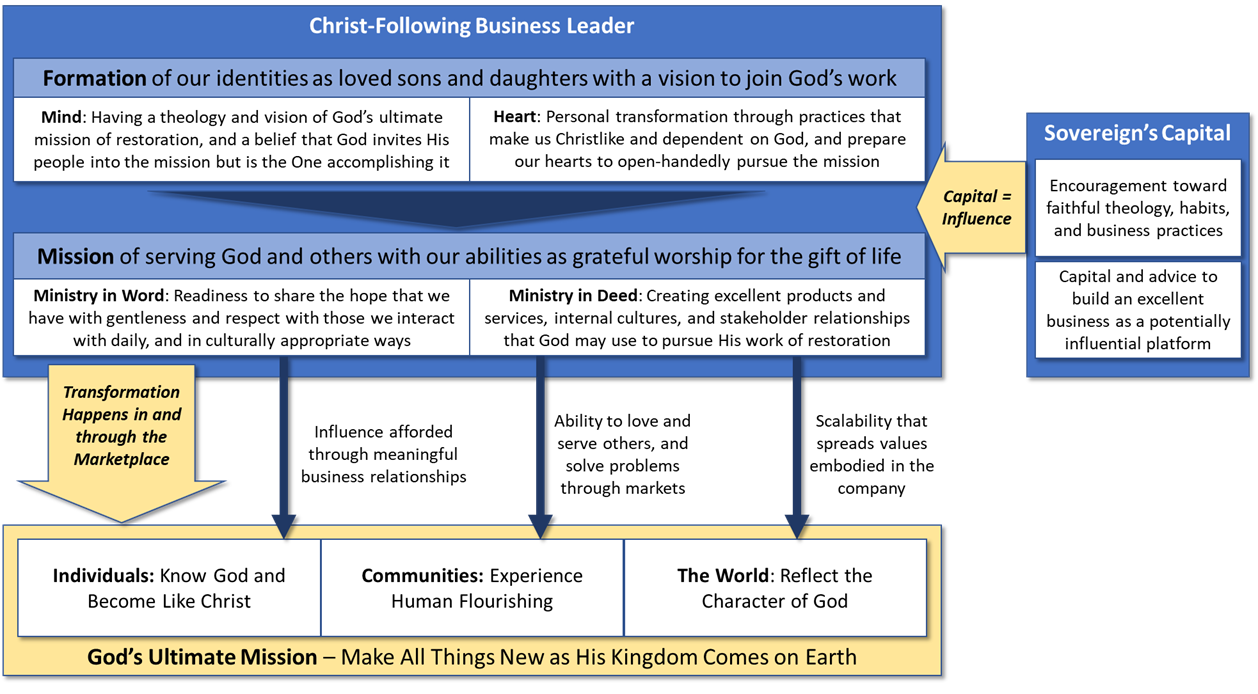










































God wants a relationship with you, so it’s not just about solving problems! And, as you deepen your relationship with God through prayer, it becomes easier and easier to know His will for your life and your life and your entrepreneurship.
Read More →