Episode 182 – Grace Over Grind with Shae Bynes

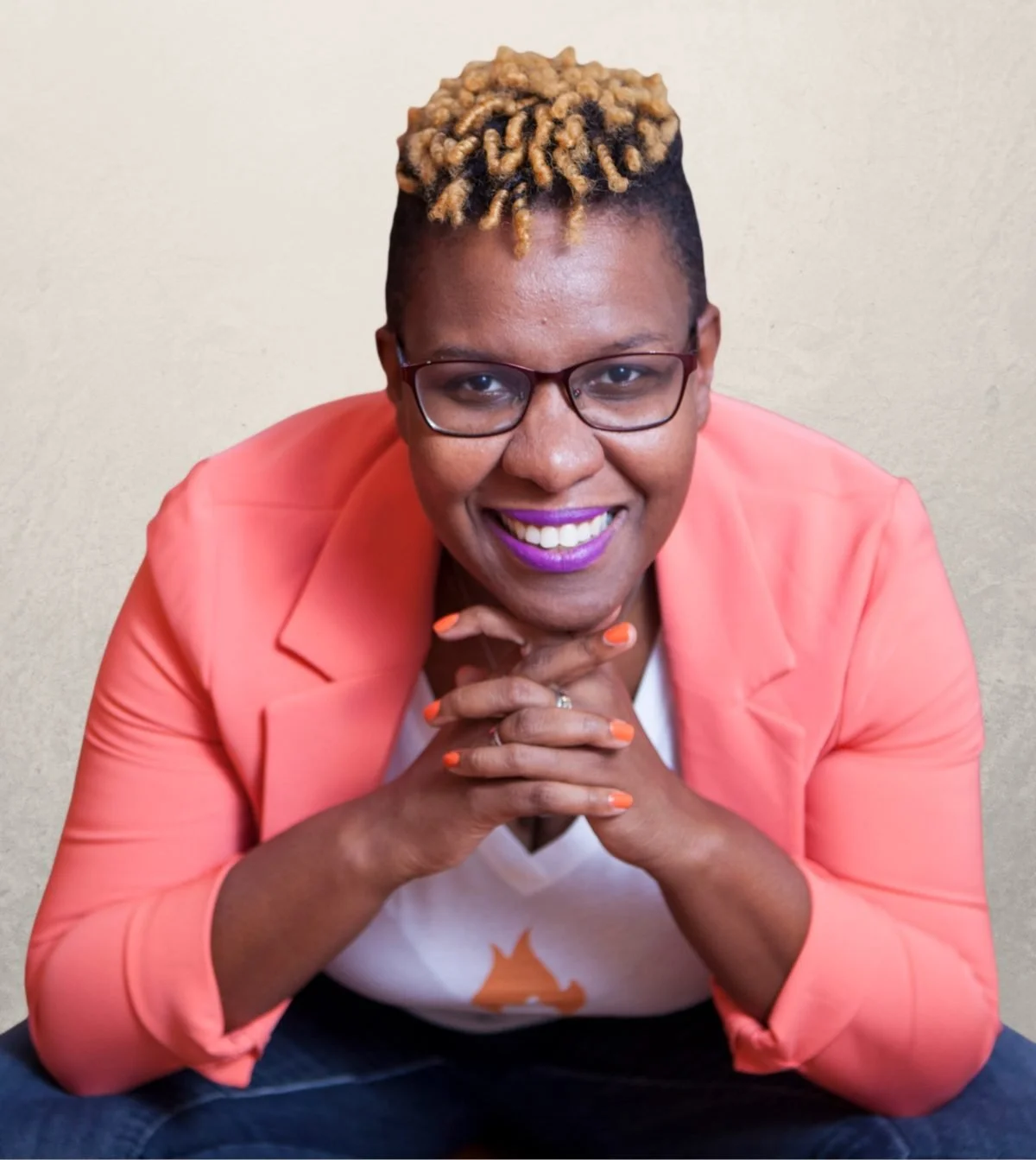
Since founding Kingdom Driven Entrepreneurs in 2012, Shae Bynes has reached over a half-million aspiring and current entrepreneurs around the globe through her devotionals, books, courses, and podcasts. She has written numerous books including Doing Business God’s Way and Grace Over Grind. She is a self proclaimed fire igniter and is a gifted storyteller. Shae Bynes, joins us today to share her story, discuss what is happening in the faith driven entrepreneur movement, and explain what it means to walk in grace vs. grinding it out 24/7.


Episode Transcript

*Some listeners have found it helpful to have a transcription of the podcast. Transcription is done by an AI software. While technology is an incredible tool to automate this process, there will be misspellings and typos that might accompany it. Please keep that in mind as you work through it. The FDE movement is a volunteer-led movement, and if you’d like to contribute by editing future transcripts, please email us.

Shae Bynes: That’s what I would call working and his rest, having just that active awareness of the presence of God with you as you work, because a lot of times believers will come into business and say, Oh, I’m doing this business for God, I’m doing this for the glory of God. I’m on a mission. I’m going to I’m going to do this kingdom business and we’re like, Wait, wait, wait, that’s nice. But what we really want you to do is experience is best by doing business with God, which will also reveal his glory, which will also be for him, right? It is for the glory of God. But doing that with God. That’s the difference maker, because you can certainly grind it out, do all kinds of things and be all out of whack doing things. You know, under this banner of this burden of I’m doing this for God and missing his presence in the midst of it.

Henry Kaestner: Welcome back to the Faith Driven Entrepreneur podcast, I’m back here with Rusty Rusty Good morning.

Rusty Rueff: Good morning. How are you? How’s your jet lag?

Henry Kaestner: Jet lag is doing fine. You know, in the first day after getting back from a big trip, it’s usually pretty good until about noon and then the wheels start falling off. So it’s still morning here. And I think that I’m doing well. I think that, you know, we’ve got the video going. I think we can both agree that I look great as always, but I don’t look as good as our guest, Shay Bynes, who’s with us from you’re from Florida, right?

Shae Bynes: I am Fort Lauderdale, Florida.

Henry Kaestner: I love Fort Lauderdale, and I know that she is from Fort Lauderdale, Florida, because she has been nice enough to have me on her podcast before. And we talked about that my family used to go to Fort Lauderdale when I was growing up. My great grandmother lived there, and there’s just something about the air and the beach in Port Everglades and the cruise ships going off and all that stuff that Fort Lauderdale just I love it. So it’s great to be kind of virtually transported there. More importantly, it’s great to be with you. I so enjoyed our time together when you were nice enough to have me on the podcast and people ask us a lot about where the different places I can go for more resources. And one of the things we always tell people, of course, is that Faith Driven Entrepreneur is a small, nimble organization that is meant to catalyze and bring attention to a broader movement of what God is doing in the world. And there are some terrific ministries that people can get tied into, and I think about C12 and Ocean and Praxis. I think that convene FCAI overseas, there’s ocean and there’s it’s NEA, there’s blue fields. There’s some really, really great ministries focusing on serving the Faith Driven Entrepreneur. And there’s some great content out there as well. In a podcast out very, very much recommend is KDE Kingdom driven entrepreneur. She has been doing this for a long, long time. She tell us about Katie at How many podcast episodes are you done?

Shae Bynes: I think it’s 300 and something interviews, but a total of four hundred and something episodes because you have some mentoring moments in there.

Henry Kaestner: There’s one for every day. That’s amazing.

Shae Bynes: I think seven years, eight years of podcasting, something like that.

Henry Kaestner: That is awesome, OK? To only be eclipsed by Rusty Rueff blogging prowess. Rusty Where are you with your daily blog?

Rusty Rueff: Three thousand twenty eight today?

Henry Kaestner: Wow. So with Faith Driven Entrepreneur now being only about 180 or so, we’ve got a long ways to go. Shay, thank you for your faith, obedience and the ministry. It’s great to have you on, you know enough about our podcast and know that we like to get started and we just we’d like to meet our guests and love. Everybody now knows, of course, that you’re in Fort Lauderdale. I hope that will be able to have some of the video images from this. You get chief fire igniter behind you and some really, really cool, motivated grace over drawing some really cool things right behind you. But who are you? And yeah, who are you? What would you come from?

Shae Bynes: Well, I’m a daughter of the king. I’m a mother of three daughters, four, 13 and 20. So they’re based

Rusty Rueff: spacing, spacing.

Shae Bynes: Yes, I’m the wife to my husband, Phil. For twenty two years now, we’ve been together since we are six years old. I have been a business owner for many, many years. It started off as the side and my corporate career, but I have been a full time entrepreneur since 2010, after the Lord very not so gently urged me to leave the corporate world behind to to go into business full time. And so it’s been an incredible journey. I’ve been doing kingdom driven entrepreneurs since gosh as 2012, so we will be nine years old in November, and it was the most beautiful God interruption of my life while I was just kind of minding my own business and got interrupted everything and I ended up doing kingdom driven entrepreneur. So that’s that’s a whole nother story. We can get into it or not.

Henry Kaestner: I’m going to right now. I got that interruption.

Shae Bynes: OK, so here’s what happened. So when I was leaving my corporate career at that time, I was in real estate investing, and so my husband, I were investing. We were active real estate investors in the South Florida area. And so when I left my job, I didn’t ask God, like, now, what am I doing? I just assumed I’m just going to go deep into this real estate investing thing, and I was hustling hard. I mean, I was, I call it my season, a faithless action taking at about six months in, I heard the Lord, he said. Are you done yet? And I’m like, Oh, well, yeah, like, why did you even have me leave my job? You know, what am I supposed to be doing here? You know? And that was really my first time of kind of playing my ear to the Lord as it concerns my work life. And so over those next couple of years, I was still continuing real estate, but now with a sensitive ear to hear him as I. Is going along, and in March of 2012, one of my real estate buddies contacted me and said, Hey, I met this woman, and when I met her, I really felt like I was supposed to connect the two of you and I said, great. And so he connects the two of us. We’re on the phone and I’m like, This one is nice, but I have no idea why he was so adamant that we meet. And at the end of that chat, she says, I had this client that I really think you’re supposed to meet. So we hop on the phone and her name is Anthony the. We hit it off right away and I couldn’t deny that we hadn’t met for a very specific reason. And so about six to eight weeks into us getting to know one another as friends, you know, I said to her, I really feel like there’s something specific. There’s a reason why we met. She goes, I’ve been since I’m the same, and I said, Well, let’s pray about it and come back in a week. So we prayed, came back and we talked about some stuff. She was a business owner, too. And I’m like, No, it’s none of that. Let’s pray and come back. We did this three times. So on the third time, she says, the Lord gave me these words. I have no idea what they mean, what they’re for, what it’s about. But I wrote them down and the words are kingdom driven entrepreneur. And when she said those words, what flew out of my mouth before I could even think about it? This was the Holy Spirit. I said, That’s a community. It’s a movement, and it starts with a book. She’s like, Oh, and I’m like, Oh, because it happened so fast out of my mouth. So here we are. Me and this woman, who had just met six to eight weeks prior in a whole nother state are then sitting with the Lord. Like, What is this community and movement that starts with a book called Kingdom Driven Entrepreneur? And by the way, Lord, what is it, kingdom driven entrepreneur? And have we ever been that before? And how are we writing a book about it? It was the craziest, craziest year. And so for the next several months, it was us and the Lord just in this rhythm of just like, this is what it’s like to walk with me. This is what it’s like to walk in obedience to be yielded to me and all of these things. And we wrote this book based off of just what we’d been learning, and we released it for free. And then in it, we invited people to join us in a community that we just started on Facebook. And then a couple of thousand folks showed up and we’re like, OK, Lord, now what? So Kingdom driven entrepreneurs started in 2012 from two essential strangers and who didn’t really know what the phrase meant, even though we were both believers. But those words were very specific, kingdom driven entrepreneur. And so it was just such a wild time, and I and I always share with people. And this was very unusual for me to just be taking these steps. You know, that didn’t make any sense to me. Based off of the leading of the Holy Spirit, I was a computer software engineer. I was a program manager, a program director of highly analytical. I had to make sense and I had to have risk mitigation plan. So all of this Holy Spirit led stuff was so just different for me. But I could not deny God’s presence all over, and so I just kept following the breadcrumbs.

Henry Kaestner: So when when people say to you, what does it mean to be a kingdom driven entrepreneur? How do I get there? How do I figure out whether I’ve achieved it or I’m on the path toward it? But what does it mean to be kingdom driven and what do you say?

Shae Bynes: Yeah. So if we look at each of the words, we’ll leave entrepreneur alone. Essentially, we’re just talking about someone who’s creating something, doing a business. So we’ll leave that alone, but driven. When you think about that word, it has these two definitions that I focus in on. One of those is motivated, like what’s motivating you? And then the other one is propel. So what’s propelling you forward? So when we say a kingdom driven entrepreneur, we’re saying that your entrepreneurial endeavors, they are motivated by seeing an increase of the Kingdom of God on Earth, and they are propelled forward by seeking first the Kingdom of God and his righteousness, knowing that all things will be added.

Henry Kaestner: OK, to hit that again, that’s important. So one was propel. Yes. And what was the other one?

Shae Bynes: The other one was motivated murder. What’s driving you? What’s motivating you and then what’s propelling you

Henry Kaestner: forward like that? I like the propelling part. You know, I spent a little bit of time thinking about the driven part, too, because we’re Faith Driven Entrepreneur and I want to get away from any type of connotation where it’s just limited to, well, like you drive a team of oxen or something like that, right? And there’s this kind of yoke that becomes heavier. But I like what you’ve really just described right there with this propelled. And so that’s really key. So thank you for that.

Shae Bynes: Absolutely, absolutely. And so in essence, what we’re talking about is doing business and partnership with God, you know, let an empowered by the Holy Spirit so experiences best and have a greater kingdom impact through the work that we do. So that’s pretty much what we’re about.

Henry Kaestner: Gotcha. Good. OK. So as you go through and you’ve been doing this for a long time, obviously, what are some of the challenges you see entrepreneurs and business leaders facing today?

Shae Bynes: Yeah. Well, when people show up to kingdom driven entrepreneur, it’s often because they were compelled by the idea of doing business in partnership with God. It was almost like, that sounds about right, like what I should be doing as a believer in Jesus, but I don’t really know what that looks like. And so what we find as. One of the most significant challenges, as we’ve been mentoring folks for years now, is people building their confidence that they do hear from God. Period. You would think that that would be an obvious thing, but it’s not. And so for many people, they’re just like, Hey, well, you know, have a prayer life. And yes, I read the scriptures and all of those things. But the idea of the Lord being so interested in the details of their business life, their professional life, all of those things for a lot of people, the beginning struggle for them is building that confidence that he actually cares a lot about this business. And he actually speaks to me. He is. There’s actually a source of a blueprint in my business. There’s a source of provision for my business. There’s a source of divine insight and a vision. All of these things that can come just in that secret place with the Lord. And so that’s something that we find that takes a bit of time for people, depending on what their upbringing was and the faith. There’s some and more untangling to do with some people than others, but I do find that people do struggle with that a little bit with that idea. They like the idea. But then when it comes to walking it on a practicality, they end up doing what I call a lot of grinding in their head about it. Yeah, the mind grind.

Henry Kaestner: So I think that’s really, really important. And that guy gets really actively involved. And I think that a barometer. I’m wondering if you’d agree with this, I guess, is I’m about to talking about prayer. Being so important is probably hard to disagree about prayer. But what I’ve found is that when I can really tap into that truth that you just laid out that can actually really does care about the business, it’s a blueprint or framework. He cares about the interactions that I have and that I actually have an opportunity to check in with him then regularly through the day. And if I’m in a season where I’m praying a lot and not necessarily always this deep, deep, deep prayers, but Lord, help me understand this. Or Lord, please forgive me for that. Lord, thank you for that. Then I’m more conscious of the fact that he actually does care about the business. Do you find the same?

Shae Bynes: Absolutely. I mean, that’s what I would call working and his rest having just that active awareness of the presence of God with you as you work, because a lot of times believers will come into business and say, Oh, I’m doing this business for God, I’m doing this for the glory of God. I’m on a mission. I’m going to I’m going to do this kingdom business and we’re like, Wait, wait, wait, that’s nice. But what we really want you to do is experience is best by doing business with God, which will also reveal his glory, which will also be for him. Right. It is for the glory of God. But doing that with God. That’s the difference maker, because you can certainly grind it out, do all kinds of things and be all out of whack doing things. You know, under this banner of this burden of I’m doing this for God and missing his presence in the midst of it.

Rusty Rueff: Yeah, I find it fascinating. Shay, we recently had a guest on the podcast who says that if you walk close enough with God and you listen close enough to God, God will tell you, you know, the things that you should or shouldn’t do in your business. But the most interesting thing that he said after that was, and it’s my responsibility to listen to what God is telling me. And then it’s my responsibility to accept that and understand that, you know, I might go out and ask a bunch of advisors. I may ask my pastor, you know, is God saying the right things to me? And but it’s really my responsibility. He’s talking to me. It’s a personal relationship. And therefore I may make a different decision in my business than somebody else would think I should. But you know, God wouldn’t talk to them. He’s talking to me.

Shae Bynes: Yes. That’s it. It’s, you know, God is the source. Everyone. Everything else is a resource. I mean, I find myself saying that to people every single week. It’s just like and part and in business that can be very hard for people if they’re led by experts or, you know, led by opportunity or led by the money or led by whatever, but not led by the Holy Spirit. You can just find yourself in these places where you’re capturing blueprints from other people that really aren’t there. It’s not the design for what God’s placed on your heart, you know? And so that’s why it’s so important to do this thing with God.

Henry Kaestner: God is the source. We are just a resource.

Shae Bynes: Everyone and everything else is a resource. Everything and everyone.

Rusty Rueff: Yeah, yeah. That’s a really, really good. So that’s the communication with God’s side. What are some of the other challenges of being in, you know, in business partnership with God?

Shae Bynes: Yeah. So in kingdom driven entrepreneur, we’re focusing on, you know, doing business with the presence of the King of Kings, with the mindset of the King of Kings and in the ways of the King of Kings. And when it comes to that mindset and ways of the King of Kings, I find another challenge is just the unlearning of certain worldly things that create success for business owners. But yet? Are not aligned with the kingdom, weigh the ways of our king. And so there’s a tension in that because, you know, there’s a lot of people who when they learned business, they learned how to do it X, Y and Z, and then they show up and they’re like, Oh, wait, this doesn’t even really quite feel right. And I’m especially talking about things and marketing just the operations of business and marketing and sales and all of those things. And then they’re having to unlearn so many things that they tie to success because what they saw was someone else experiencing success. And so getting people to one, be willing to go through that unlearning and to redefine success as faith plus their obedience equaling your success. You know, when you make that shift, then you can realize as long as I’m operating in faith in God, as I’m moving forward, as long as I’m operating and responsive and obedient to what he’s speaking to me, whether it’s in the scripture or just spoke by the spirit, whatever that is, I’m already a success. All the other things are fruit and manifestations of that as you walk it out. But getting people to get that from here to here is a process. It really is.

Rusty Rueff: So what do you see going on in the bigger movement? I mean, we just got done having our Faith Driven Entrepreneur conference and Faith Driven Investor conference and how many watch parties Henry

Henry Kaestner: 294 in 53 countries. But who’s counting?

Shae Bynes: Amazing, you guys.

Henry Kaestner: Amazing Asians on the move chair. You’ve seen an uptick too. I mean, you get any sense that they’re God’s doing something.

Shae Bynes: Yes, I have been feeling that way since kingdom driven entrepreneurs started. And over the past three years, an increasing measure. As you watch the dynamics of what has happened and kind of globally, this idea of the marketplace and how we show up as believers in the marketplace is and also our ability to seek the wisdom of heaven versus the wisdom of the world for our ability to operate out of heaven’s economy and kingdom economy versus the world’s economy. All of these things are becoming increasingly important. Our ability to collaborate with one another is becoming increasingly important, right? And so for me, I just sense that as we continue over these next five years, 10 years, 15 years, that things that we thought were kind of a nice that sounds nice 10 years ago were saying, No, this is an imperative right now.

Rusty Rueff: I feel that I absolutely feel that. I mean, if you if you cast that against the things that are going on in the world, right? And you go, how how could we make it through right if not growing this movement, you know, making sure that, you know, the kingdom driven entrepreneur of the kingdom, you know, the Faith Driven Entrepreneur. However, anybody wants to define it are being supported and equipped to make it through this time because we’re in, you know, I guess every generation province says this, you know, we’re in it. We’re at a time like no other. So so we’re not the first ones to say it. But, you know, I certainly feel the burden to equip absolutely to help, you know.

Shae Bynes: And the thing is, there’s a desire for kingdom solutions. There’s a need for kingdom solutions. And so if we don’t have people in the marketplace who are doing business with God right, then we miss out on these opportunities to bring solutions to real challenges that are not just we’re not trying to talk about, you know, creating a Christian club, but like really having an impact on cities, having an impact on industries, all of those things for the glory of God, you know? And so it’s just increasingly important. It really is.

Henry Kaestner: Share what’s on your T-shirt. There’s a big word stay, yes.

Shae Bynes: What’s under one of my mentees is her shirt. It says, stay sane. I like

Henry Kaestner: that. I like that. You learn so much about what somebody got in this world is so much about what’s in their background. And so one of the things that I see on on your lower right is just this very simple sign. You are loved.

Shae Bynes: Yes.

Henry Kaestner: And I think that that’s easy to kind of just throw away and just like, well, of course of love, you know, it’s a Christian thing and makes me feel good. But you’ve got this book grace over a grind where you kind of really go into what that means. You are love. Yeah, yeah. Tell Rusty, you know, in our audience more about that.

Shae Bynes: What the you are loved part is so key because if we don’t have revelation of the love of God for us, yes for the world, yes for humanity, but for you as an individual, it is very difficult to grow in your trust. And I mean, your complete yielded surrendered trust in him without a revelation of love, because this is perfect love that casts out our fear of being fully yielded and trusting to God. And so one of the things that God did for me, which was such a gift, is just in those months prior to kingdom driven entrepreneur even launching, you know, at the end of 2012, as I just had, I had a series of amazing life-changing encounters with God where he was revealing his love to me. And after that it broke all of my need to know all the details. My need to have the backup plans, the the need for it to make sense. Based off of my experience and my wisdom, it broke that for me. And so I’m a huge, huge advocate. I’m consistently praying for people to have personal encounters with the love of God because it’s that love that breaks a lot of the stuff that goes on in our minds and in our hearts so that we can really walk and experience experiences best. So that aspect of love is. It really is everything it’s and it’s the foundation of really growing an intimacy with God, which is everything.

Rusty Rueff: It is, isn’t it? Yeah. I’m so glad you’re reinforcing that. Take us into this book Grace over grind, Andrew and I’ve been sitting here thinking to ourselves, OK, you know, we know that grind part. You know, we feel that grind part, you know? Tell us about the grace part.

Shae Bynes: Sure. OK, so here’s how this book came up about maybe six months after kingdom driven entrepreneurs started. I mean, I still had some grind in me, OK? I mean, that’s how I grew up in business. So I had that hustle and grime mentality, but now it’s going to be doing it, you know, for Jesus. But about six months in after we started, I was in church and our pastor did a sermon and it was on Matthew Chapter 11, verse 28 through 30. And this is the scripture that most people are familiar with. When Jesus is saying, you know, come to me, all of those who are weary, you’ll fight, you know, I’ll give you rest. And he talks about how his yoke is easy and his burden is light, right? But our pastor read it in the message that particular day and I had never heard it before, and it says, Are you tired, worn out, burnt out on religion? Come to me, get away with me and you will recover your life. I’ll show you how to take a real rest. Walk with me. Work with me. Watch how I do it. Learn the unforced rhythms of grace. I won’t let anything heavy or ill fitting on. You keep company with me and you will learn to live freely and lightly. Gentlemen.

Henry Kaestner: Eugene Peterson is the man you know, I tell you. He was maybe a modern day John the Baptist. But that is poetry, isn’t it?

Shae Bynes: It resonated so strongly with me, and I now call this the width factor it was. Come with me. Work with me, you know. Walk with me. Watch me. Do it. Keep company with me. That was the invitation there. And so I’m thinking, Oh, wow, like, I’m really I’m really missing something here. What is an unforced rhythm of grace? That sounds amazing? And what is it like to truly do all things with you? So that was the invitation that I was experiencing in my heart, and I just said, Yes, show me all of that. And so the book was birthed out of years of walking that out of doing business with him and then ended up being a book release. But you had asked about this whole idea of grind and grace, and so I define grind as excessive hard work. You know, you’re doing things primarily in your own strength, which is what a lot of people do. And if they don’t do it all the time, they certainly have seasons of time that that’s what they do, or maybe 25 percent or 50 percent of the time that they do that. But when we think about what’s available to us with God’s grace, which is just this empowerment, it’s an empowerment from God to do all you were called to do, to be all you were called to be and to actually experience things that you would never, ever, ever. Be able to experience on your own just because of the favor of God through that alignment with him. And so when I talk about grace, it’s funny because a lot of times people will hear the message and they immediately say, Oh, this is all about working too many hours. Oh, OK, so I work 80 hours a week or I work 60 hours a week. Well, you can grind 10 hours a week. You can work in your own strength 10 hours a week. You can work in your own strength five hours a week. So I’ve been spending this time just like, no, no, no, no. If you’re doing it primarily in your own strength, no matter how many hours you’re doing it, you are not experiencing God’s best, which is doing all things with him, right? And so that’s what’s available to us. And so and the book I talk about, you know, some of the signs of that you’re grinding and what those things look like and people who want to put it in the box of how many hours they work immediately start finding themselves within that.

Rusty Rueff: I think I think you should tell us some of those steps. Yeah, sure, sure. I think our listeners would love to know what those are.

Shae Bynes: Absolutely. So one of them is financial anxiety, which, by the way, you can have whether you have a lot of money or a little money. OK? Financial anxiety is when you’re constantly concerned about the finances. For people who have a lot of finances, they’re thinking, Oh my gosh, I’m one step away from the shoe dropping or Oh my gosh, I have to be cuts. I’m going to bed with anxiety because I just don’t know if we’re going to be in this place for long or what’s going to happen. It’s just this constant concern about the finances, which is also a sign of a lack of revelation of God as provision, but that’s a different podcast episode. So there’s financial anxiety, there’s prayer looseness, and I don’t mean you never pray, but it just may be a routine. You know, I pray because I’m about to eat. I pray because I’m about to go to bed. I pray and thank God because I woke up this morning, but not that intentional communication with God throughout the day, inviting him into your spaces of life, including your work life, and also that willingness to be still enough to hear him as he will interrupt your day. Right? So just that communication with God. So prayer. Listen, this is another sign, the sign that people, if they haven’t heard it yet, they find it now is what I call the mind grind. And that’s where you have over analysis. You have analysis paralysis. You end up procrastinating because you’re constantly churning in your head. For those who have decided to do business with God, their churn often looks like, I don’t know, was it God? Was this me? Was it the pizza I ate last night? Is this really what God desires for me to do and just stay stagnated out of that place because they’re not experiencing the freedom that they have in Christ to go and create? And by the way, to be course corrected if you go in the wrong direction, right? Which is the benefit of doing it with him in his rest, right? So those are some of the signs people who say things like, Hey, if it’s going to be, it’s up to me. They take a burden that actually doesn’t belong to them. It’s about operating in diligence, but it’s not about taking on this burden as if, Oh, it all depends on me and people who have backgrounds with people where maybe someone said that they weren’t going to amount to anything or someone who doesn’t believe in their dream or someone who was, you know, said something rude to them when they were 10 or whatever. Sometimes there’s these things in their heart that they carry out later that then you feel like I have something to prove. So now I’m doing this because I’m going to show such and such. So now I’ve carried on this burden, I’m going to do this in my own strength because I need to prove something to either myself or to somebody else, right? So those those are just some of the ways, but there’s so many ways that we end up operating primarily in our own strength. And that’s just not God’s best, and it’s not the way that we really begin to reveal his glory. If you grind it out in your own strength, you know at the end of the day and say to God, be the glory. Nobody believes you. It’s like, Well, yeah, if I did all of that right? But it’s like, No, when you are actually doing this thing with God, you will experience so much favor and supernatural productivity and all these things that you can only say. Well, I got a God story on that. And that really reveals his goodness. And it also helps us to access the heavenly solutions that are available to us and not just the solutions based off of our own wisdom and experiences, but really, you know, leaning into the voice of the Lord on things too. I got so many ridiculous testimonies of that. It’s not even funny.

Henry Kaestner: I believe it. I believe it. And I think that not only can we, if we tap into him, can we get his design, his blueprint, but then we can also get this sense of joy and gratitude. And when we really realize the depths of his love for us and what this grace really means, then we can just we’re happy. We’re joyful, we’re grateful. And then it’s almost like a nuclear source of energy, right? And then what ends up happening? Is she any time you spend any time with you, it’s it’s you’ve got this attractiveness to you that’s coming about because you really. Have received this grace, you know, there’s a joy in your heart because you understand that you’re the daughter of the most high. And then, as it turns out, what ends up? Not only do you have his ideas, but then you’ve got this energy that doesn’t flag because the other sources are trying to show somebody else or, you know, doing things out are your own shape. It’s just fatiguing, right? But it is. You’ve got this. If you’re part by joy and gratitude, you’ve got you’ve got something right?

Shae Bynes: That’s right. And that’s actually one of them. One of the signs of the grind. No joy. No peace. That’s one of them, right? Because sometimes people are like, Oh, you’re saying everything’s going to be easy? No, I’m saying that even when it’s inevitably challenging because it will. You know, and I’ve got plenty of those testimonies, too. I can still move through those challenges with God and with joy and with peace despite circumstances. And if we’re not doing that, it doesn’t mean that we’re not as kids, we’re still as kids, but it means that we’re not operating in him right with him. And so that’s the difference maker.

Rusty Rueff: So I’m going to ask the question of the skeptic who’s probably listening and going, Wow, that sounds great. That’s exactly what I want to get to. But right now, it’s, you know, I’ve got to hustle, I’ve got to grind it out. I’m the only one that can get this done. I’m the leader, I’ve got investors, I’ve got a board. I’ve got to beat the competition. If I can only grind it out a little longer, a lot longer, I’m sure I can get to where she’s telling me to get to. But right now, right now, what is what do you say?

Shae Bynes: I’d first say you can’t grind your way to grace. Number one. So there’s already something in your mindset that makes you believe that you have to do this on your own. I’m telling you that if the thought is that if I just do more of this, then I can experience this, that that’s not his best for you. His best for you is to take a moment to step back and to seek his heart concerning what you’re doing. What are your thoughts concerning this, Lord? These are my plans. Here’s what I’m thinking. What are your thoughts? What’s your heart concerning these people? I’m serving through business. What are your heart concerning? You know the people in this company? What’s your heart concerning the investors who are showing up and supporting taking that step back and aligning your thoughts with his, your heart and your thoughts with his is everything. And so I would say you will experience that much more when you get in alignment with him rather than trying to do it all in your own strength to then later say, OK, now that I’ve done it, now that I’ve done it, you know all of my own strength. Lord, what do you have to say about that? I promise you, it’s an invitation from me. You don’t have to take it. But if you take that invitation, you will be so glad that you did and you will not want to do business any other way. Those are the facts.

Rusty Rueff: That’s a challenge. That is a good challenge, right?

Shae Bynes: It’s the best challenge.

Rusty Rueff: Is there any other challenge or call to action you’d like to give our listeners because you’ve got them right now?

Shae Bynes: Yeah, sure. So a call to action for someone who might be that skeptic or maybe isn’t a skeptic, but is like, OK, well, what is this really practical look like? I’ll give one step one first action step that you can take, and that’s what I call a daily business meetings with God. And so if you’ve never really engaged God in a practical way with your business, one way you can do it as a starting point is just as opposed to looking at your personal devotional time as, Hey, I read the scripture, you know, hey, I I prayed this prayer. I sang this one worship song even include like your to do list surrender your to do list. Actually have a conversation with the Lord concerning your plans for the week, your plans for the day, that important meeting that you had coming up and ask God for his thoughts. Ask God to give you his heart concerning those things. And even if you feel like I’m not sure that I really heard him, I’m not sure that this is him. I could be making all this stuff up. I want you to operate as if if it doesn’t go counter to the word of God, I want you to operate as if, because that’s part of the faith walk. But the Bible says that my sheep hear my voice, which means he does speak to you and you have the ability to hear and to walk that out. So that’s when I want to challenge anyone who’s just like, wondering, Well, what’s my first step on that? I would challenge them with that as the first step.

Rusty Rueff: I love this. I love this daily business meeting with God, Henry, you don’t have to do it on Zoom. Know how to do that on my own.

Shae Bynes: No, you and your office, you taking a walk, whatever you know. But to just really do it

Henry Kaestner: right before we go to Rusty daily blog. So I’m fascinated by this. I would like you free you to make. It gives a real example if you can. You may have listened to a podcast before and understand that at the end, we always ask somebody. And this is what William will ask and Williams out today. But when we ask somebody what they’re hearing from God recently through his word, so I’m going to combine that question with what you’re hearing from God in your daily business meetings recently. And maybe it’s day, maybe it’s a couple of weeks ago and you’re thinking about. Your business, are you thinking about the ministry? What’s something that you’ve heard from God because you’ve gone to him?

Shae Bynes: Yes, recently. Yeah, so, so many things. But the first thing that popped in my head is so I’m in the midst of a little bit of a transition. My husband became CEO of Kingdom Driven LLC last November. That’s a whole nother God story. And so when he became CEO, I knew it was because the Lord was opening up some new things for me to take Kingdom solutions and some other areas outside of entrepreneurship. And so I’ve been kind of doing that wrestling with the Lord in terms of how to walk that out, because what he’s shown me from a vision perspective is way outside of my experience, way outside of what I could even create an action plan for. And so one of the things that I heard from the Lord as I was just really seeking his heart concerning how do I steward what you’ve shown me now, even though I just it just doesn’t make sense. I don’t, I don’t know how to do it. He said to me, Right now, I want you to connect the dots and connect the people. And so when I heard that it was cool because that made sense because I noticed that he was sending people my way, I was having a conversation with people about topics I normally wouldn’t have. And then I was realizing, I’m not having conversations with people that this person really needs to know this person and that person really needs to know that person. And so God’s been doing is, as I’ve been researching things like an economics and a government and all kinds of things that guys got me up into now that were beyond my, you know, thoughts as I’m doing that, he’s connecting all the pieces together. And so he just gave me that one assignments want to have to create a whole action plan, a blueprint, a 10 year strategy around it. I just need to walk this thing out, Stewart at step by step and it starts with me with connecting the dots and connecting the people. So that’s a really practical thing that he gave me to do.

Henry Kaestner: So what does that look like then for you, how you do that?

Shae Bynes: So it literally means when there’s been books that I needed to read on particular topics, I’m asking him, OK, I said before I buy the books, which ones do you want me to read? I’m reading those books, and as I’m reading those books and as he think connecting people to me, I’m saying, OK, Lord, what is what’s the purpose of this meeting? What’s your heart concerning this meeting? And I’ve been literally connecting people and connecting the dots between things that they’re sharing, things that I’m reading and putting those things together. Because at this point, for that aspect of an assignment that is coming, that’s how I steward that right now on the kingdom driven entrepreneur side. Earlier this year, I got an instruction which was, This is a season for you to invest. Well, I didn’t want to assume, OK, well, this means I need to invest in X, Y and Z. I was like, I have more questions. Invest in what? Invest in whom I went and looked up the word invest to go. Look at all the definitions of the word invest. It was like, OK, Lord, what aspect of this invest? Are you speaking to me about? And I ended up with like a little list of things I needed to do to invest in myself, things I needed to do to invest in the business that were not things that we had invested in before, right? There were things that we need to invest in and other people. And I just had this list of what this looks like to invest. And I didn’t operate out of assumption. I asked and I sat with him and I worked through that thing, and then I would take steps for those things. And we are seeing the fruit already of that instruction that I got in April to make the investments that he put on our heart to invest in.

Henry Kaestner: Talk a little bit about investing, if you can. You may know that we have a ministry called Faith Driven Investor. We’ve got a blog and we have podcast and a conference, but riff a little bit more about that, about the investment concept. And maybe even I shouldn’t limit it by any stretch to financial investment. But just tell us a little bit more about a mindset that we might share with our Faith Driven Investor audience.

Shae Bynes: Yeah, sure. So when I was my immediate thought, which is, I said, an operating assumption, when I think invest, I was really I’m a real estate investor, so I immediately think invest financially in something, right? So that’s why I didn’t want to operate just off of that assumption. But it ended up being invest in several different ways, investing financially and some areas of our business. There were areas to financially invest in, and we did. There was areas to invest time in. There were things that I needed to make sure I allocated and blocked aspects of time on my calendar to intentionally invest time in either researching something which was the case for me. There were things I need to research. I need to invest time in doing because it was a season for now. There was things I need to invest in in my family life. There were things I need to invest in with my kids. This last three months has been an intensely family focused investment for me, right? So there was all these areas, so I didn’t put the word invest in a box, and I allowed him to unpack that for me so that I can see where it was investing in things that were related to my mindset, investing in things that were related to relationships, investing in things that required a financial investment that maybe ordinarily I wouldn’t have made at this time. But because I’m doing this by the leading Holy Spirit, I’m going to trust God and go, right.

Henry Kaestner: So I want you to know that I’m hearing you when you’re talking about this broader sense of investing, I think it’s very important for every investor to know that. And yet I still find myself. I want to. Bring you back to the real estate part. Yes. So you’re clearly driven by your faith. What is what is real estate investing look like from your faith perspective in your daily meetings with God? How does your faith manifests itself out through that investment? Yeah.

Shae Bynes: Well, for one, we’re not active real estate investors right now, but I know that we were going to be engaging in real estate investing again in the future. And one of the things that Laura really put on our heart as it relates to real estate is how we do it, which would be different than the way we did it before I ever did business with him. Right? So in the past, I would look at a deal and just based off of whatever information I can gather and the wisdom I have about a good deal. It’s like, Go do the deal going back into it now, I’m not basing it just off of that information. I want to actually see God about investments as well, because quite honestly, just because something is good on paper doesn’t mean it’s good for right now or good for us because he sees a larger picture. So now when we go back into real estate investing, which will probably be on the commercial side when we come back, we were all residential before. But we’re going to be operating in a new area. And so I will be leaning into, yes, my peers who are really great with commercial investing and yes, the books and yes, the experience that I have from investing. But I will also be leaning into the voice of the Lord as it relates to making decisions about some of these investments, right? So I really want to align myself with him and make sure that we’re building, you know, according to God’s best for what we’re focused in on right now.

Henry Kaestner: So when you do real estate investing, whether you’re doing it with apartments in residential or whether you’re doing with commercial, you’re dealing with a lot of people. Do you get a sense about how what’s the opportunity for spiritual integration or gospel proclamation through the actual the interaction? And don’t let me be prescriptive or presumptuous, although it sounds that quite like the question is a bit. But what does that look like now as you’re coming out of this period where you’ve been completely focused on kingdom driven entrepreneur getting back into that when the rubber meets the road? Are there opportunities for that?

Shae Bynes: Well, I think that God often presents opportunities. My mindset is that I don’t go in with an agenda of my own. So in all my engagements with people, I want the Kings agenda first. And so that means I want to be sensitive to the the Holy Spirit when I’m having conversations with people. So if there is a door open that allows me to be an encouragement to them or share something that I really sense my spirit concerning them or whatever. I’m going to go for it because God presented that opportunity. But the key is that I don’t have an agenda. I’m agenda less. It’s really just whatever the king’s agenda is here. That’s what I want. So I’ll pray before the meeting. We go in there and that’s just how I operate. I mean, and kingdom driven entrepreneur, everyone’s a believer, but I still operate that way. Then, you know, and whether I’m in the marketplace, encountering people who are believers aren’t believers, whatever. Same thing, honestly.

Rusty Rueff: That’s that’s if I could personally get to that, that would be such a wonderful place to be right to be a genderless, you know, and just to let God take over the agenda. That’s an encouraging word you say,

Henry Kaestner: because otherwise it, you know, sometimes I’ve got a good friend of mine and talks about, I’ll ask him, How are you doing? He’s like, Well, you know, I’m selling something to somebody, and he’s a great loving man. So he’s not always selling something to somebody. But nonetheless, most of my meetings, I’m selling that idea. I’m trying to recruit them into something. I’m trying to encourage them to maybe lead a Faith Driven Entrepreneur ERG group, you know, fill in the blanks of the different things that I have. I have agendas in many, if not most, if not all, of my meetings. And that’s a radical thought process.

Shae Bynes: Yes, so agenda. So some people also, OK, I’ll talk words right if I have a meeting and I know there’s certain things that are to be accomplished in that meeting, one could say that’s an agenda. I’ll have that agenda. So I have there’s a reason why we’re meeting and there’s something to accomplish during that meeting. But when I say that I don’t have an agenda, it means that I am allowing God to be the god of outcomes of that meeting period, whatever that looks like. So yes, I’m showing up with the intention of having a conversation about whatever the thing is at hand or whatever. But as it relates to the outcomes of that meeting, I really do allow God to be the guy to the outcome of that meeting and a yielded agenda looks like I thought we were going to talk about one, two and three. But in the midst of conversation about two, it looks like we need to have a conversation. We need to veer over here and we’re never going to get to three. And I’m OK with that because why God is provision? We’re just having a conversation here, right? And so that’s how I just got a really practical way. Show up in my conversations with people is even with this interview, when I had a conversation prior to this, I was like, Listen, whatever God wants to do in the interview, I don’t need a list of questions. I don’t need any of that. I’m just going to show up whatever God wants to do in that conversation. That’s what we’re doing. I have no agenda. You don’t have to share about a particular book. You know, if it comes up, it comes up. It’s like, I just want to do whatever is on God’s heart concerning a situation. And so that’s just the way I roll, and I have been very, very pleased with the adventure. I call it the wild and crazy and amazing adventure with God that I’ve been experiencing as I yield myself in that way. We love,

Rusty Rueff: we love the way you roll. I got to tell you, I’ve gotten more out of today’s podcast now that I have, you know, from so many others. And look, this idea of daily business meeting with God is such a powerful concept because I’m sitting here thinking to myself, how could I claim to be in partnership with someone who I don’t meet with daily? How can I ever do that, right? I mean, that’s because, you know what? In the real world, you know, not in the spiritual world. What would happen is your partner would go, you’re not a partner of mine because you don’t meet with me and I don’t want to be your partner. But you know, because of God’s grace. Yeah, let’s just skip those right there to skip those, but come back to him and ultimately come back in partnership with him. But that this could be a life changing thing for me, and I hope for our listeners, to my daily business meeting with God.

Shae Bynes: Thank you. That’s right. And Rusty, if you don’t mind me sharing this, it’s like in the beginning, that’s your step one is just really getting in this rhythm of being diligent about having business meetings with God. But what happens is as you grow in intimacy with God, what ends up happening is now you’ll move from having a intentional daily business meeting with God to I just flow with God throughout my day and all the things that I do. It becomes just this kind of flowing engagement with the Lord throughout the day, right? But it does begin with yielding yourself and your business to him in a really intentional way. And the other tip I’ll give for some people who are concerned about like, do what am I hearing his voice or whatever is, try reading the scripture and asking Holy Spirit before you read to bring this word to life for me, talk to me about me in the midst of these words that I’m reading. I mean, an intentional way. Just let to be the intention of your heart. And when you do that, as opposed to reading, because it’s the good Christian thing to do to read that Bible, when you do that, you will encounter God in that way and begin to realize, Oh wow, I do hear him. Oh, wow. Like, he is speaking to me and began to walk that out. So just little, little things that were so instrumental for me, not even growing up in a church where we even talked about. Absolutely. So really, that intimacy with God was I was the process for me.

Rusty Rueff: I started doing that with God’s word a number of years ago, a pastor said, Don’t be afraid to go to God’s word and say, This is what I need, Lord. And he used the example of, you know, he said, Maybe I just need a hug today, God, I just need a hug and then go to his word. And I have more than once asked, You know, boy, I just need a hug today. And every time he shows up, it’s the intentionality of it. Yes, right? It’s is. It is this partnership idea. It’s this partnership idea of sharing back and forth what I need. What can I do for you? How can I help you walk back and forth? That’s what partners do.

Shae Bynes: That’s it. So, so good.

Henry Kaestner: Well, as we come to a close, I’m going to fill in for William on this. I’m going to ask you that question I alluded to before. Is there anything that you’re hearing specifically in God’s word, from scripture that he’s speaking to you about and that you might offer up as an encouragement to others as well?

Shae Bynes: Yeah, I will want to remind everyone around Ephesians three and 20 which God’s talks to me a whole lot about around just this whole thing about now is to him who is able to do exceeding abundantly. Above all, you could ask or imagine, according to the power that works within you. So that helps us remember the yield ourselves to God and also reminds us of the power we have in Christ operating and partnership with the Holy Spirit in our lives. And we yield ourselves in that way. We can experience way more than we ever could have even thought or imagined. And so I just want to encourage people with that today.

Henry Kaestner: That’s a great encouragement. Shay, thank you very, very much. Kingdom driven entrepreneur. Great podcast you go check out the book Grace Over Grind is a great concept to take away and seek to apply. And I think that it goes really hand-in-hand with the mark of a Faith Driven Entrepreneur that that our audience will be really familiar with about willfulness versus faithfulness, but also identity crisis. There’s a lot of things that are wrapped up in that, and but it’s just a great thing. Am I being powered today by grace or am I in the grind? So check out the book and the ministry in the podcast. Thank you very much.

Shae Bynes: Thank you so much. I enjoyed our chat.

Dear Entrepreneur: Don’t Worship Work

This was adapted from Faith Driven Entrepreneur: What It Takes to Step Into Your Purpose and Pursue Your God-Given Call to Create by Henry Kaestner, J. D. Greear, and Chip Ingram. Copyright © 2021. Used by permission of Tyndale House Publishers, a Division of Tyndale House Ministries. All rights reserved

— by JD Greear

In middle school, Alex and Peter launched their first entrepreneurial enterprise, a little neighborhood project called “Dirt Cheap Lawn Care.”

After their ninth grade summer, they were both over it, but for different reasons.

Alex saw his work as a necessary evil, little more than a means to score some cash to go to the arcade, see the occasional movie, and upgrade his wardrobe from his mom’s unrelenting poor choices. Because work for Alex was merely a means to an end, he got little pleasure from it. He did the least he could to earn a buck. He cut corners. He was always pushing Peter to raise prices and offered little to no perks for loyal customers.

Peter, by contrast, loved the company. He felt more alive in it than he ever had. He loved the praise that came from his parents and satisfied customers, and he loved the status that came from being a high school student with a thriving business and plenty of cash. Peter buried himself in Dirt Cheap, because in its success he saw his success. The work was hard now, but he figured real, lasting happiness was just around the corner, the prize for an extra $1,000 in revenue. As he entered his sophomore year, however, he was dismayed that the girls at school seemed to care more about wavy hair and who scored the most points in the basketball game than about his thriving business. Just a little bit more money, a little bit more success, he thought, and they’ll see.

Alex and Peter continued their business on into their thirties, and then it all fell apart. Alex simply hated being at work and couldn’t believe he had stayed as long as he had. Peter could never round the corner into real happiness. Though he still loved the concept of running a business, he concluded that managing a lawn care business would not deliver the satisfaction and status he craved.

Alex and Peter represent the two key ways we can go wrong with our entrepreneurial work. Alex, you could say, was idle. Peter had made his work an idol.

My guess, based on the fact that you picked up this book, is that you identify more with Peter than with Alex. Many of us entered entrepreneurial work to find a sense of satisfaction, meaning, and significance. Eventually, though, we all realize we can’t find those things there. Unfortunately, for many, by the time they realize it, the damage has been done. Consider these sobering statistics:

Many of us entered entrepreneurial work to find a sense of satisfaction, meaning, and significance. Eventually, though, we all realize we can’t find those things there.

  • Entrepreneurs are two times more likely to suffer from depression.

  • Entrepreneurs are three times more likely to battle some form of substance abuse.

  • Entrepreneurs are two times more likely to have suicidal thoughts.

  • Entrepreneurs are two times more likely to be hospitalized for psychiatric problems.

There’s a cost to placing all of our time, energy, and efforts exclusively in one place. Entrepreneurship, even when done in healthy partnership, is still an inherently lonely journey. After all, no matter how much people say they’re “with you,” no one else can take your risks, make your decisions, determine your values, or set your precedents. You’re the one doing all that. That’s a lot of weight on one set of shoulders.

I can’t think of a more fitting book of the Bible to address this struggle than the book of Ecclesiastes. The majority of Ecclesiastes is written by Solomon, a man with incalculable wealth, world renowned wisdom, unmatched power, and a list of accomplishments to put anyone to shame. And yet Solomon explained that even with all that, life often felt like hevel—a Hebrew word that literally means “vapor” or “smoke.” His success felt like a cloud: from afar it might look solid, but when you pressed into it, you would discover it was vapor.

Solomon identifies four areas of life that disappoint us, not in spite of our successes but because of them. Entrepreneurs today need to keep a close eye on each of these four areas, lest our well intended efforts become hevel, an impressive­ looking cloud . . . full of nothing.

1. Pleasure ultimately disappoints.

Solomon writes, “Whatever my eyes desired I did not keep from them. I kept my heart from no pleasure” (Ecclesiastes 2:10, esv). The man wasn’t kidding, either. Everything in Solomon’s house was made of gold. He feasted on the richest and most exotic foods from around the world. He took for himself a thousand wives and concubines to satisfy his every desire. (If that sounds like a bad idea to you—both practically and morally—I agree. But it shows just how far he was able to go to get whatever he wanted.) Solomon’s kingdom, the nation of Israel, was at peace, larger and more powerful than it ever had been or ever would be.

But Solomon wasn’t just a rich guy who happened to have a ton of money. He was also preternaturally talented. He was so well read that kings and queens from other nations marveled at his knowledge. He wrote New York Times best­ selling books on every subject imaginable. He built the most impressive temple the world had ever seen. He even wrote songs that have endured for millennia.

Having done all this, what was Solomon’s verdict? “Then I considered all that my hands had done and the toil I had expended in doing it, and behold, all was vanity and a striving after wind, and there was nothing to be gained under the sun” (Ecclesiastes 2:11, esv).

In other words, “I tried to have it all. I succeeded. And it was completely, utterly empty.”

Hevel. Vapor. Smoke.

2. Even the best business wisdom sometimes fails.

Here’s Solomon again: “I saw that under the sun the race is not to the swift, nor the battle to the strong, nor bread to the wise, nor riches to the intelligent, nor favor to those with knowledge, but time and chance happen to them all” (Ecclesiastes 9:11, esv).

Sometimes you do everything right and things just don’t work out. You take a calculated risk, but the timing is off, so your venture falls flat. You reach out to everyone in your network to help a new business off the ground, but they’re tied up with other projects and unable to help. An unforeseen event changes the market, and what once seemed like a sure thing suddenly becomes shaky.

Every entrepreneur knows that individual choices matter. This is why you read all the best books on leadership or creativity or marketing. You know that, by and large, wise business practices win out over foolish ones.

But that general principle isn’t an ironclad law. Sometimes life just feels, well, unlucky. And when (not if, but when) that happens—when your wise business practices don’t automatically lead to success—your whole life doesn’t have to crumble. Instead, you can understand that God’s wisdom and God’s plan are better than anything we could come up with.

3. In the same way, worldly justice systems eventually fail us.

This one is even more troubling, because it’s not just a matter of bad timing or bad luck. It’s a matter of injustice. As Solomon notes, “There is something else meaningless that occurs on earth: the righteous who get what the wicked deserve, and the wicked who get what the righteous deserve. This too, I say, is meaningless” (Ecclesiastes 8:14).

We’ve all wrestled with this painful reality at some point. Sometimes on this earth good goes unrewarded and evil goes unpunished. Even worse, there are times when evil not only goes unpunished but seems to be rewarded as a path to success.

Should we hold people accountable for injustices in business? Absolutely. Insofar as it lies within our power, we should not only model integrity but also insist on integrity all around us. But we also have to acknowledge what Solomon knew: corruption often wins. And if our entire worth is built on our entrepreneurship, that reality threatens everything.

4. The fruit of our labor crumbles.

Solomon writes, “I hated all the things I had toiled for under the sun, because I must leave them to the one who comes after me. And who knows whether that person will be wise or foolish? Yet they will have control over all the fruit of my toil into which I have poured my effort and skill under the sun. This too is meaningless” (Ecclesiastes 2:18­19).

We’ve seen that happen through history with kingdoms, personal fortunes, sports teams, and business succession plans. It takes a lot of skill and wisdom to build something fruitful. It takes surprisingly little to undo it.

We may (and we should) think through succession plans.

We may (and we should) codify our values in our institutions so that they outlast us. We may (and we should) raise up leaders to carry on what we’ve built. But there are no guarantees. One day, like it or not, we will have to take our hands off our enterprises.

You may be a little uncomfortable with everything I’ve written so far. It’s not that you disagree with Solomon’s wisdom. But you’ve heard this kind of reasoning used to justify an amoral (or immoral) approach to life. After all, if nothing we do lasts, and if justice can fail us, then why care about doing the right thing? Why not just live it up and leave the mess for someone else to clean up?

Fortunately for us, Solomon doesn’t go that route. Life may seem like hevel, but if we step back just a bit further, Solomon encourages us to see a bigger picture—one in which we gladly realize that entrepreneurship can’t deliver satisfaction, meaning, or significance, because we already have those things in Christ.

Here are Solomon’s four truths to help you avoid the dangers of entrepreneurial hevel.

1. Realize that you were created for God!

St. Augustine said it over 1,500 years ago: “Our hearts are restless until they find their rest in [God].” Satisfaction, meaning, and significance are not found in success. They are found only in our identity as God’s children. When we root ourselves in that identity, the vicissitudes of life can only push us around so much. Success will still feel great; failure will still feel terrible. But with a firm anchor in Christ, success cannot intoxicate us, nor can failure dev­ astate us.

The book of Ecclesiastes ends with Solomon realizing that the only thing left for us to do, in light of all that is meaningless, is to fear God and keep his commandments. Our relationship with God and our life that flows from it matter above everything else.

2. Arrange your life around the certainty of judgment.

Death and the judgment of God are two of the only absolute realities in your life. That judgment could come for you this afternoon; it could come in seventy years. But come it will.

We all want to ignore this reality, because let’s face it: it’s not fun to meditate on death. But uncomfortable realities don’t simply disappear when we ignore them. In fact, they become even more dangerous.

There’s a great (and startling) analogy for this that I’ve heard attributed to seventeenth century French philosopher Blaise Pascal. He describes life as a giant party, full of happy people, loud music, and dancing, during which a monster unexpectedly bursts through the doors, grabs a random partygoer, mauls them in front of everyone, and drags their bloody corpse out of the room. Everyone watches in horror, and after it’s over, they stare at one another in stunned silence for a few moments.

But then the band kicks back up and everyone returns to their frivolity, putting the horrendous display out of their minds. This horror is repeated every few moments until it becomes apparent that the monster is eventually coming for everyone in the room. Yet still the party goes on.

That monster, Pascal said, is our impending death.

This reality shouldn’t terrify us. For believers, we know what lies on the other side of death. But it should sober us and moderate our expectations in life. We have only a short time on this earth. And only a fool would live as if he were going to live forever. So, as Solomon says, know how to count your days, and then make your days count.

3. Decide what God wants from you and pursue it.

And when I say “pursue it,” I mean really go after it. Be willing to take a chance on it. Could you fail? Certainly. But God delights in those who risk greatly for him. That’s as true in business as it is in missions.

Solomon writes, “Whoever watches the wind will not plant; whoever looks at the clouds will not reap” (Ecclesiastes 11:4). Here you have a farmer who never sows his seed because he is so scared the weather will not cooperate. What if it doesn’t rain? What if there is a sandstorm? An earthquake? A meteor shower?

As we’ve seen throughout Ecclesiastes, Solomon acknowledges that we can’t control things, and there is nothing in life that guarantees success—not great skill, careful planning, or even righteous living.

You have to embrace that truth and still work with wisdom and planning. Solomon writes just a couple verses later, “Sow your seed in the morning, and at evening let your hands not be idle, for you do not know which will succeed, whether this or that” (Ecclesiastes 11:6). In other words, don’t let the uncertainty of life and the possibility of failure paralyze you.

We can’t control things, and there is nothing in life that guarantees success. We have to embrace that truth and still work with wisdom and planning.

In this life, nothing is guaranteed, even if you do it right. But risk is okay. Not all risk, mind you. Not foolish and reckless risk. But some risk is right and wise, even inevitable.

If we, as entrepreneurs, want an ironclad divine promise of success, we’re just not guaranteed that in life. But that’s not supposed to discourage us from taking wise, well calculated risks.

4. Seek happiness in the present, not the future.

Solomon explains that we have a real temptation to always try to find happiness “out there.” But happiness is not around the next corner. It’s a gift from God for the present. You should look for it now, not later. If you’re not happy, Solomon says it’s not primarily a problem with your circumstances but with your relationship with God. “Now all has been heard; here is the conclusion of the matter: Fear God and keep his commandments, for this is the duty of all mankind” (Ecclesiastes 12:13). That’s it. After every­ thing that Solomon talked about, his conclusion is that we are to look to God, to fear him and obey him in the time we have.

Pascal, in his Pensées, said that the tragedy of many successful people is they never actually learn to enjoy life, because they are always living to enjoy it later. He writes,


We never keep to the present. . . . We are so unwise that we wander about in times that do not belong to us, and do not think of the only one that does; so vain that we dream of times that are not and blindly flee the only one that is. . . . Let each of us examine his thoughts; he will find them wholly concerned with the past or the future. We almost never think of the present, and if we do think of it, it is only to see what light it throws on our plans for the future. The present is never our end. The past and the present are our means, the future alone our end. Thus we never actually live, but hope to live, and since we are always planning how to be happy, it is inevitable that we should never be so.

For the believer, that need not be true. God has good things in store for his children—not only in the future, but today.

A few years ago, the opportunity came up for me to be the president of the Southern Baptist Convention. I was legitimately excited about it. Now, I’d like to say that all my excitement was about how great of an opportunity this was to leverage a role for the advancement of the gospel. A lot of it was. But I was also excited by the newness of it. Here was a new challenge and a new platform, both of which whispered to my heart, Perhaps this is the opportunity that will make you happy.

During this time, my wife, Veronica, told me something incredibly helpful regarding fame. She said, “Fame is making yourself accessible to a bunch of people you don’t know about at the expense of those you do.” I realized she was right. My quality of life is better when I am available to people close to me, and newer and bigger exploits can sometimes take me away from them. That’s not to say God doesn’t call me to that sometimes (in the end, I took the role), just that I shouldn’t be deceived about where happiness comes from.

The greatest gain God can give you is not more stuff or a new challenge or a bigger platform. The greatest gain he can give you is the ability to enjoy what you have.

Even in earthly terms, happiness, Solomon says, comes from the quality of relationships in the present, not the quantity of exploits in the future.

I point this out because I fear that many entrepreneurs will look around at their lives many years later and realize they gave away their greatest moments to get to some elusive future that didn’t deliver what it offered. The apostle Paul says, “Godliness with contentment is great gain” (1 Timothy 6:6). The greatest gain God can give you is not more stuff or a new challenge or a bigger platform. The greatest gain he can give you is the ability to enjoy what you have.

Centuries after King Solomon, another powerful man rose to power. By the time he was in his twenties, he had conquered an empire astronomically larger than Solomon’s— around two million square miles, nearly twice the size of modern India. He established cities that would last until the present day. Despite being a military man all his life, he never lost a battle. We know him today as Alexander the Great.

Alexander might have conquered more of the world than anyone else. But still he was unsatisfied, wishing for “another world to conquer.” He worshiped his empire, and it made him miserable.

Don’t be like Alexander. Submit your entrepreneurship to God and be excellent at it, but don’t turn it into a god. Don’t serve your work, but use your work to serve God and serve others.

WANT TO SEE THIS LIVED OUT?

Watch the story of Point B— a consulting firm that is breaking down the stereo- types of exhausted and overworked consultants by creating a healthy work-life balance for their entire company.


Related articles

OCEAN Programs Announces Next High Tech Accelerator!

— by Greg Pittman

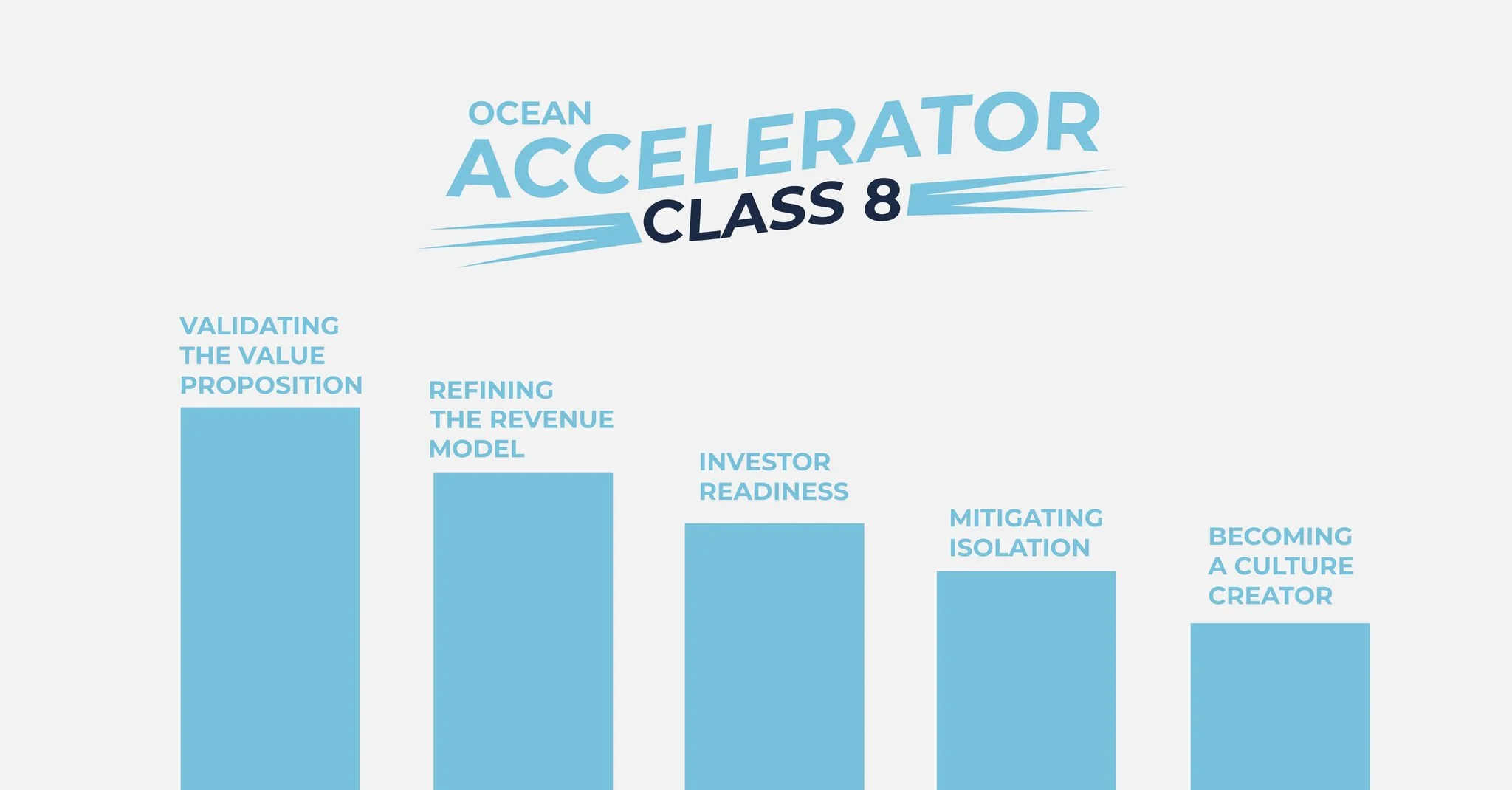
We’re thrilled for our friends over at OCEAN Programs as they roll out their 8th accelerator program. Applications are officially open for OCEAN Accelerator Class 8! OCEAN’s high-tech accelerator program takes venture-backable startups through 5 pillars foundational to helping startups grow. 

If you are a founder—or know a founder—of an early-stage high-tech company that would benefit from a 16-week program to grow your venture-backable startup, APPLY TODAY! Applications are being accepted until December 20th. The cohort will be announced publicly February 1, 2022 and launch March 1, 2022.

Recent articles

Episode 181 – The Bible Translation Collaboration with Mart Green

In 1998, Mart Green took a transformational trip to Guatemala that changed the way he thought about return on investment. Since then, he has been involved in Bible translation and distribution efforts from the launch of the YouVersion Bible app to the establishment of a collaborative partnership among 10 of the world’s largest Bible translation organizations, called illumiNations. 

In today’s conversation, Mart shares where his passion for Bible translation started, the encouraging steps he’s seen in the effort to eliminate Bible poverty, and the power of what happens when competitors become collaborators. 


Episode Transcript

*Some listeners have found it helpful to have a transcription of the podcast. Transcription is done by an AI software. While technology is an incredible tool to automate this process, there will be misspellings and typos that might accompany it. Please keep that in mind as you work through it. The FDE movement is a volunteer-led movement, and if you’d like to contribute by editing future transcripts, please email us.

Henry Kaestner: When I think about alternate ways to think about Faith Driven Investor and different ways to think about guys economy and how to measure the success of our investments, I keep on coming back to one story that I’ve heard, Martelle, time and time again. That’s really made an impact on me and it’s made an impact on me because I really think that my thought about what a return on investment look like was probably pretty much in sync with Marte’s way up until this time he had this trip to Guatemala, which we’re going to hear about. And so I’m eager for Mark to tell a story and we’re going to get into that and we’re going to be unpacking together. What does it look like to think about investment return in light of what God tells us through his scripture and tells us through his spirit in a way that I hope will stretch us all? And I hope that in the course of doing that will bring us closer to knowing God and then just helps us to understand how to steward the resources he’s entrusted us with under his power for his glory. So hopefully that’s what success looks like. At the end of this podcast. You’ll have that much more of a closer sense as to what that what that means for you and the assets you’ve been entrusted with. So, Mark, thank you for being on the show. Let’s start off, as we do with all of our guests. Tell us a bit about your personal background. Many people will probably know of your family, but pretend like we don’t.

Mart Green: Yeah, I was born in Oklahoma. My family gravitated to Oklahoma City because of a retail company called TGen Y where my dad worked. And so when I was nine, my dad decided that he want to get work life balance. And so he borrowed six hundred dollars and started what became Hobby Lobby in our home. So we glued frames. I was nine, my brother was a seven, and then I have a sister, she was three. So she got out of the child labor and just saw the business grow in her home. And my mom ran the business for the first five years without pay. My dad finally quit his job, selling half to see if he could make a go of it. Then I went to school. I was at college. I decided I heard my dad talk about Christian bookstores, will actually quit in nineteen eighty one, came home and started a company called Mortdale. We have thirty seven Christian bookstores and then ninth grade. I found a young lady that I liked and I chased her for six years and finally she agreed to marry me and we’ve had four children and our twenty second grandchild is due today. So if I run off this podcast you’ll know that I got the call and I’m sorry, but the family comes first. But anyway, somehow the two have become twenty two. And so God’s blessings, that incredible family.

Henry Kaestner: Wow, that is awesome. You’re a very rich man and the most meaningful sense

William Norvell: in a beautiful way to end the podcast. I don’t think we’ve ever had that happen. That would just be hey, what is beautiful.

Henry Kaestner: Yeah, I would be super cool. OK, so get back to it because you gloss over that a little bit and you’re an entrepreneur. We have this sister series that we do called the Faith Driven Entrepreneur where we’ve done, I don’t know, maybe one hundred and eighty hundred and ninety segments. We’re not going to tell so much of the Mardell story today, but I want to look at it just a little bit. You grew up in an entrepreneurial home. You were glowing picture frames when you’re nine years old, and then you went and started your internal venture. What did it look like growing up in that house that made you want to be an entrepreneur? And were there ever a time, though, when you saw what was going on in the business? You said, no, I don’t want to do that. How did it all just growing up in an entrepreneurial home impact in shape, how you ended up seizing and lean into your own entrepreneurial career?

Mart Green: Yeah, what I saw probably were a couple of things. One was hard work because it was a lot of hard work. We started a business in your home, your mom not getting paid, all those kind of things. And then I also knew that it was a way to provide for family was also a way to give. You know, my family has always wanted to give and be generous. And so by being entrepreneurial, the more you can do, the more you can give. And so we kind of see it now as a prosperity gospel or the poverty gospel, but the plentiful gospel. So I use a symbol of a funnel. I have a coin in my pocket, has our family a love that intimately has a heart that was easy, live, extravagant generosity. I wanted to put a curtain being torn because I think that’s the most generous thing that ever happened visually. When Jesus died on the cross, the tartan was torn. This is hard to do that. So I chose a funnel. So on my coin in my pocket, I carry is a funnel in the back. And so that’s what I saw just kind of lived, you know, the more you get, just give. So when I was at college, I was nineteen years old. My dad, he want to do a barbecue stand. He want to do all these different things. And I wasn’t interested. But he said, Christian bookstore. I thought, oh no, that’s kind of cool because the entrepreneurial what you’re doing, you know, there’s not a lot of people go to Hobby Lobby, buy so flower and their life is transformed for eternity. Now they have incredible experience. It makes their home better and all that stuff. But a Christian bookstore, I’m thinking, oh, because usually you give to ministries and you make money, you’re entrepreneurial. Well, that’s kind of the deal. The Christian bookstore you kind of get to take. Both of those, and so, again, 19 not smart enough to ask all the big questions, you know, that I should have I probably would have never done it. So I quit school and my dad would pay for school kind of work. His measure goes, well, if I come over and I bust, I’ll make enough money to go back to school again. So that was my plan.

Henry Kaestner: So tell us also a little bit about family business, because Mardell is co-located with Hobby Lobby. You’re all together. What’s it like working in a multigenerational family business altogether?

Mart Green: Yeah, for me, it’s a huge benefit, as you can imagine, because my dad already had banking things, relationships. They had lawyers worked up. And all this is good news. I’d have to worry about a lot of heavy things. Now, obviously, Christian bookstore and at that time is off supply. Now, we’ve kind of evolved into education supplies. That was all different. So that’s what I had to do. Lots of learning. But the advantage of having a family business here together is my dad had already cut down lots of trees and lots of weeds that were in my way. And so I had huge advantage in that way. What I had to go do is say, hey, can I be a merchant in different categories? Then obviously Hobby Lobby has lots of different categories and they’re world class, what they do. And so it was just fun to go and do it there at the same time, have those advantages. But, you know, my dad kind of let me do it. You know, he didn’t come in. He only had seven hobby lobbies, I think, in nineteen eighty one when I opened. So he’s still trying to get his. And so the nice thing was my dad could have saved me from a lot of mistakes. He probably watched me walk right in that wall and get a bloody nose. When he stopped me I probably have done it again. Right. But since he didn’t stop me, I didn’t do it again. Right. And so I had a father that would empower me and not help me lots. You see what I’m saying? But in the decisions I had to make, he never Trumpton never got into the business of why did you do that? Why did you do that? So anyway, it was an incredible, incredible I guess I just assumed everybody had the same upbringing. I guess we all do. Right. I guess I assume everybody’s trying to figure something out on their house or working at home and working. Mother, nine years old. I didn’t find out later that I was I wasn’t under the child labor laws.

Henry Kaestner: So did your kids. The next generation, the tilers and and that generation start off the same way,

Mart Green: not at nine. We let them go to school and get a little bit older and stuff like that. But some of that same philosophy that, you know, your first car you have to pay for part of that college. We matched their funds, you know, so we got a little bit better than my parents. They were zero, you know, and stuff, because, again, they didn’t have the funds to help me at that time. So that’s what we try to figure that out. You know, that’s not a science. That’s an art stuff. How do you help your kids? You don’t want them to feel entitled. That’s always been a concern that we’ve had as a family. How do you do that? How do you be generous if your family seems to love got intimately and little extravagant generosity? What’s extravagant generosity to look like within a family member that’s also healthy? Right. I give my kids lots of money. That wouldn’t be extravagant generosity, really. I’d actually be killing their work, desire and all that. So it’s a it’s something you have to work through.

Henry Kaestner: OK, so that’s give me another Panksepp. So we’re going to come back to it because I’ve gotten to know Tyler and Derrick well over the course the last couple of years. And I know that you’re actually very, very intentional with the way you do that. I think that there’s a lot there to unpack. We won’t go there on this episode. But I actually want to go backwards. Just a second. You pulled a coin out of your pocket and you just said what it was. Just briefly, because I want to talk about that coin and then I want to talk about another thing that you always do as a matter of habit that’s really made an impression on me. But tell us again about the coin and then I’ll tell people about what the other habit that you have that’s made an impression on me.

Mart Green: Yeah. About twelve years ago, our family decided, you know what, we have a vision statement, a mission statement, a core values for the business. But we don’t have it for our family. And our family is more important than our business. So why don’t we do that? So at that point, Gen three object to my parents be Gen one, we’re younger. So Gen one, my parents, my brother and sister and their spouses, those eight of us sit down in a hotel room with a facilitator just to kind of put down who are we, what’s the Greens all about? So we have our core values, but we got an interest in a real simple one. So the real simple, little memorable and so is love got intimately the extravagant generosity. So I like symbols. I like things that I can look at and say, oh, that’s what that means. So as I showed earlier, that love got intimately extravagant, generous. So every morning when I get up here, I gave one to all the family members. Now I’m not ten. They kept theirs. They may have lost it. I have extras. They can have one because I’m a simple guy. But once a year we have a big family. Celebration is so at that meeting of a new family member. Then they’ll get a copy of this as well as that. We have a custom Bible for our family that when a new family member marries, then they get that Bible and we all bring us back to the meeting and they sign our Bible. We send their Bible just as a commitment to each other. Now, I can’t force my kids to love. Got into me a little extra generosity. All I’m saying is that’s where the river’s going. So if you want to go up river, you can jump out of the river. You can. But we’re kind of going this way, what we feel God’s given us. And so it’s been fun and our kids have embraced that. And just some of those little things you do as a family,

Henry Kaestner: it’s not one of those little things is a very big thing that you do as a family. Okay, here’s the other thing that you’ve done that’s really made an impression on me. You have the same way of signing off on your email every time. What is that? What quote do you put down and what does that mean to you? Because that’s a bridge. To an area, the conversation that Williams can take us through

Mart Green: now, back in the day, we were trying to do a full page ad for the newspaper about God’s word, very important to us. So I hired a firm that came back with a little tagline. I didn’t like it. So I sent him back to the drawing board and they came back with four words. I said, that’s it. That’s it. That’s it. So the last twenty three years I’ve had all my emails with these four words. This book is alive. And then I have a script that I put under that and hope most people understand because it’s the only book that’s alive. I mean, I’m watching it. There’s 6000 languages on planet Earth and every time it gets translated a new language, it speaks to the people. There is no book that does that. And so this book is alive is kind of what I love, being sure that I put on other people as much as I can.

William Norvell: So many beautiful things, so many beautiful things. I love symbols. I wrote down Quoin with family motto. I’m going in, I’m going have to get your tips. That just speaks to me.

Mart Green: I love

William Norvell: that. But one of the things we do want to dove into is Henry said, is your personal journey with God’s word and why you think it’s alive and why you think it’s so alive that you want to tell everybody about it. Every time you send an email, which I imagine is quite often, from what I understand, Guatamala is a big place for this started for you back in the late 90s. Could you tell us a little bit about that story?

Mart Green: Yeah, it’s a moment in time story, William, so thanks for asking. Nineteen ninety eight, because we had Christian bookstores and we sold Bibles, we thought and I didn’t know there were 6000 languages that people don’t have God’s word in our language. And so when I learned that, I said, oh, maybe we could be apart. So maybe Mardell could sell Bibles that helped pay for Bible translators. Well, the Bible translation process is kind of long, so that didn’t work so fine. I said, well, how do you pay for the printing, the Bibles? Because typically a new people groups, they will sell the Bibles to subsidized price. So maybe they charge them a quarter or fifty cents, but they may not be able to four or five dollars. So we started paying for first edition Bibles. So they said, well, ma, you paying these first edition Bibles, you got to come to a dedication. We dedicate the Bibles and you know how it is. You’re busy, you get your business, you’re trying to get it. You got four kids. And finally, the date worked February of nineteen ninety eight. So February 5th, I get on an airplane and I’m headed down there. And so now I’m getting some information about the translation. I don’t know much about this thing. You know, always the Asian heart attack people and there’s only thirty thousand of that. Speak this language like I’m new to this. I’m saying if you got a language, you got lots of people. My football stadium here, Norman holds one hundred thousand people. You know, all these people are going to fill up and get a little bit like an empty stadium, you know. Oh, and then only eight thousand of those people can read. A thousand of them are believers. Only four hundred believers can read. And I’m like, this is not a good hour. Oh, I you know, that’s the language I speak. I’ve got to go back to a family who all business minded. They’ll go on no good stories and I’ll come back. Oh, I went all the way down to Guatemala and four hundred people can read this Bible that this couple spent forty years translating because of warfare down there and all that stuff. They were nineteen fifty eight before I’m born to nineteen ninety eight forty years translating the Bible for people. Well for me it’s real simple. I’m not doing this again now. The forty years that the people I have no idea how to console them because they spent forty years of life. There were seventy years old when I got down. There will be one hundred ten when they get the next one done you know. So anyway so we got the ceremony and it’s ten hours out so I’m two days on the oral question. This is not working. Why do we do this then. I just ah forget it. It’s over. I’m not doing anymore. And then got the ceremony and they actually have, there was an American couple down there and for each and all the tech they give me a Bible for free. The translators get a free Bible and gas for one of the local isn’t huddle walk up to get his Bible. It’s something I’ve never seen before. In a Mortdale, we carry over a thousand different Bibles. We you take every language, every color, all that. There’s a thousand different choices. And I’ve helped people find the one, but I’ve never had them do a guest for doing Gaspar got God’s word. It’s hard language. Hinduja the first time he wept. Then he wiped his tears away and he wept. And I was stunned by that moment, watching a guy weep over a Bible. And so at that moment, the gods never spoke to me audibly. But the Holy Spirit has prompted me at different times in my life. That moment is a prompting was a simple question. Maat, why don’t you go tell Gaspar he’s not a good ahli? And that was like a spear going right to my heart sink, right, because I have been arguing that exact point for two days and I’m really not comfortable going up and telling the guy who’s weeping over his Bible he’s not a good return on investment. So in that one moment in time, I went from why to hell why do we translate the Bibles for small people groups to how are we going to make sure that everybody on planet Earth has God’s word in their heart language?

William Norvell: Let’s get it. And I’ve heard you talk before about, you know, you went from Oraibi to EROI. Could you tell us about what that metric means to you and how you put that into practice today?

Mart Green: Yeah, so I had a process. That’s what I’ve been arguing ahli the whole way down here. You know, that’s my heart language, right? That’s my language are a lie. And so I thought, well, what happened here? Then I realized, you know, I’m in charge of potent seed. I want to plant a seed that’s potent. So what? I plant potency. God’s in charge of the fruit. Now, right, I can take a scene put in right place and all that stuff, but now I understand God’s word is very potent. I have no idea what God is going to do among that group of four hundred or the thirty thousand. I mean, obviously, more people learn to read all that kind of stuff. So what I’m more concerned about now is in my planning potency and I just happen to believe that God’s word there’s only two things that last forever souls of men and women in God’s word. And so this is something I’m going to get to talk about for a long, long time. In heaven, we have all these 6000 names on our guys are going to figure all that out. He’ll figure all that out. But it’ll be fun to talk about your Bible and my Bible and all that stuff. And maybe we will instantly be able to speak six thousand languages. I don’t know. I mean, heaven is going to blow our brains out. Right. And so I can’t wait to get there because every tribe, every nation, every language is in heaven. That’s what it tells us. I love a picture that a guy does. He’s got the Last Supper, Elstein, the last supper. He took up an indigenous people around the table and I like call him at the next supper. The next time we go, they’re all going to be different indigenous people and all that stuff. So it’s beautiful. Heaven is an exciting thing and I think God’s word lasts forever. So that’s my EROI is to invest in things that last past, my lifetime.

William Norvell: That’s great. And so obviously a big point in time. Guatamala gasp Are these moments when you came back, you’re on the plane home. What do you think it did you immediately jump into how to solve this problem? What eventually led you into going really deep into the Bible translation world?

Mart Green: Before I took it home, I had one more experience and that was two o’clock in the morning. So, yeah, but it leads to that. So at two o’clock in the morning, I’m going to One Dollar Hotel and I lost the Arawa again. I didn’t get a return on investment on that Rodwin Dollar Hotel. And so I didn’t mind the hotel.

Henry Kaestner: The service at the hotel supplied you was not as good as one dollar that you paid.

Mart Green: No, it was a barn and the bed wasn’t made. And there’s no running water, just the bucket downstairs tin roof. So at two o’clock in the morning that actually there were cats, Latin reporters, jaguars, the four drunks singing out here. So that was a no sleep night. So at two o’clock in the morning, I’m not sleeping. And the most of the day I just watched as many people revival got pierced my heart. So I get out of book. Arthur being in God’s word and knowing it for yourself as a key being as well known as the key. Well, now the Lord gave me another prompting and it’s what kind of ahli is Mark Green? Fifth generation Christian, my mom’s side through my dad’s side, I own Christian bookstores, I paid for the printing that Bible, that man was over. I have 50 Bibles to my name and I read the Bible every great once in a while, maybe on Sundays when pastor opens it up and says to go somewhere. So all of a sudden I realized the oral question in Guatemala was not Gaspar, it was Mark Green. So I made a vow. February 8th, 1998, two o’clock in the morning, I get up first thing and read God’s word for the rest of my life. And so I get to gasp are weeping for me to appreciate what I took for granted. I’ve had in my English language for hundreds of years and hundreds of translations, but it took him for me to understand what I had taken for granted. So that started my journey of doing translation. But it really it took a few more years before I understood how to do that collaboratively. I went back and said, Hey guys, we got to sell more Bibles. Somebody else we can pay for more printing of Bibles. And so that was my first deal, is let’s just continue to pay for more printing of Bibles that get them done.

Henry Kaestner: So let’s talk about collaboration. Illuminations is a big project. You’re bringing together a whole bunch of different folks that might not ordinarily play well in the sandbox together. We’ve looked at this a little bit before in prior podcast with Peter Grear Rooting for Rivals. It’s just we live in a sinful fallen world and everybody’s got their own way. We know how many denominations there are. We know that we’re living in this post Tower of Babel reality. I’ve got that painting right behind me that’s kind of given birth to what you’re doing. Illuminations, right. But you’re bringing people together and you’re working on collaboration across a whole bunch of different sectors, different organizations that have different histories, and yet they’re all coming together. How are you making it happen?

Mart Green: Well, I’m not making it happen, but I’m trying to facilitate it happen. Of course, I think the Lord did it. So, yeah, back in ninety eight, right after my Gaspare experience, I was in Chicago and I just felt like someday there’ll be a project, so be the nominee to protect themselves. They would come together. No doubt I could do it. They would come together and both would come together. So that’s set my heart for 12 years. And then I went back to Guatemala because I talk about Guatemala all the time. So Todd Peterson, a good friend of yours, and see me say, hey, Mark, we’re going down to Guatemala City, I’m sure, Guatemala story in Guatemala. So I went down there when I was down there. So I’m not going back to Guatemala for about another ten or twelve years. And every time I go down there, my world gets rocked. You know, I said, oh, almost. If I get all these people to come together. And another unique thing was happening, and that’s called you Verson. So your version is a ministry based here out of Oklahoma City that has the Bible app that many people will be familiar with. Incredible entrepreneurial story. You won’t be surprised if you’ve already had him or we won’t have him on. We have, of course. Yeah. And so but he was doing these text digitized at the same time print on demand was saying, hey, green family, will you digitize these texts. Well that’s fifteen hundred dollars times two thousand languages for two different people. So I’m like no, no, no, I’m not digitizing these texts for everybody down river. I’m going back up river to who owns the intellectual property rights because bibles are intellectual property, you have to get the rights to do that. So we started by building a digital Bible library, so it kind of gave us a mutual reinforcing activity is what’s called the Collective Impact World, something we can all do together? Let’s centralize, digitize and standardize all these Bible text of the world. But my real goal was to finalize. We built this beautiful library that’s got two thousand books in it and there’s four thousand missing. So that was kind of a way to bring everybody together. And because it was called by the resource, we had four other resource partners like myself, a resource partner. You have ten Bible translation agencies that do most the translation in the world. You have five resource partners all meeting once a month, just strategizing. And so because it’s kind of cool by the resource partner now, we can be obnoxious as a resource partner and you can be a step too far. So it’s a it’s a dance. It’s a relationship of trust. You have to trust me very deeply that I’m working with you and I have to trust that you’re going to share. So I’ll build your tool as long as you’ll share with these other nine ministries, which actually represent there’s one hundred and fifty Bible societies that all have their own boards. So technically we’re coordinating probably one hundred fifty two hundred organizations all together. Now there’s a United Bible society, but they’re not over the Bible society. So they can say, hey, guys, please do this. But one hundred fifty boards could vote different way. So that took a trust, takes a long time. You get trust by the drop and you lose it by the buckets. And so we’re just trying to continue to build trust. So that’s what a collective impact really, really at the bottom line is about trust. But you know what? We all want to eradicate battle poverty. And nobody can say that by themselves. No donor can say I’m going to eradicate Bible poverty. No ministry party can say I can read. So that’s what keeps us whenever we get kind of shuffled down here and fighting with each other, all that stuff, we can keep looking up, guys. We’re going to eradicate poverty. There are people dying without scripture. We have the oxygen there underwater. We got to get them the oxygen. They’re going to die under there.

Henry Kaestner: So I’m fascinated by a collective impact. I’m actually not going to take us there because I’m a guy who saw t shirts at the University of Delaware. But William did go to Stanford Business School, which is where I think collective impact came out of. When you’re there, did you study collective impact and if so? Walk us through with Martje as he understands just the general principles of collective impact, because I think that they apply to limitations. And I think if this is an intro and an invitation for others to participate in illuminations, I hope they will. As people are motivated by the eradication of biblical poverty, I hope that they’ll find more about illuminations. But another thing that might happen from this is just the value of collective impact. Is that something, William, you’re familiar with? Did you ever study that there?

William Norvell: They didn’t let the Alabama guy into that class. Now, they were like, too heady, too much. You know, we’ve got sails for you, but so didn’t study it. I believe you that it started there. But I guess and Mark can illuminate us a little bit.

Mart Green: Yeah, it’s kind of wild because we started 2010 and in 2011, this Stanford comes out with this new concept called collective impact. And it was just so great because it gave language to what I was doing. Then as you’re doing something, you can explain it to people, but they did it. So there’s really what they call five steps ones, a common agenda. We just talked about that to eradicate child poverty. We all agree that’s a common agenda. Then you have a shared measurement system. How are we going to measure what we’re doing? Well, fortunately, in Bible translation, you can get it down to chapters in the Bible. So we have a goal that ninety five percent this world will have the full Bible, ninety nine point nine six will have at least the New Testament. And that last point zero four, which will be about three million people out of eight billion that we may have in twenty thirty three, we’ll all have scripture by twenty, thirty three. So that’s a shared measurement system. And then you’ve got mutually reinforcing activities. We talked about that, the digital Bible and let’s do some stuff together. Let’s go do something. So that’s one thing. We do lots of other things together now. Continuous communication. You’ve got to be talking. We meet every month. Typically, Dallas has the largest admiral’s club in the country, C twenty one in the Dallas airport. We all fly in for four hours. We fly back out. And so that’s the way we see each other. Now, obviously, the last year we’ve been doing that by Zoome because we can’t meet in person, but we’re about ready to get that going again. So we’ve met one hundred and three times, I think over the last ten years and then about three times. Wow. Yeah, trust takes

Henry Kaestner: time, you know, at C twenty one if you’ve been there a hundred and three times, you know the

Mart Green: gate. I know. I know so. And there’s a backbone about memorization and almost like the chief operating officer of it because all the CEOs come right, all the donors come, large donors all have businesses or things we got to go back to. So it’s not like we get full time to this. So we stir up all this trouble. I resisted it for the longest time. Then I realized no. So we have a staff of probably four or five that we helped fund that. Just follow up with all the details. Museum of the Bible, you said? Yeah, my brother on here, the Museum of the Bible want to make a room and put all 6000 languages in it. So they want to collect all two thousand Bibles. You know how hard it is to get one each of two thousand Bibles. It’s so hard that you would not do it unless you call one person called the backbone of Illuminations. And we did all that work with one hundred ninety organizations getting them to send to and from Germany, from Afghanistan, the whole world. These Bibles are not all sitting somewhere. And so now those are there. But they are now. Yeah, but we didn’t know that we started, but that’s the power of coming together. So those are the five points. The one that’s missing. Stanford missed one, the most important one, and that’s prayer. And so we have made this thing with a prayer from the very beginning. We actually have a translation prayer. It’s a six line prayer. And if we have time, maybe we’ll get to say at the end of it or something like that. But it’s just a six line prayer that I just hope maybe someday there’s so many people praying everywhere I go. I handed out my little card, a little magnet, two versions of it, because I’m a simple guy, right? So I want to leave somebody with something. I got to say to the Angels guys that prayer, I’m getting tired of hearing that we just go get that one solved, go answer that prayer. And so now, of course, people can pray what they want, but we’re also collectively having a prayer. And we just had an illuminations gathering. Three hundred people there. And every morning over one hundred people came early morning because we don’t let them out till 10:00 at night. They came up early morning to pray because we made a high priority is guys, we are operating the prayers of the people. And so that’s how you get people together, is to pray together

William Norvell: as a major. They I love symbols, too, and I’ve actually become fascinated over the last four or five years with collective prayer, praying the same thing. Right. I used to go against and of course, the Lord’s Prayer. I’ve never gone against that one, but I say, no, let’s not read prayers like God wants to hear our original thought, you know, but I love the power of it. Would you mind sharing that sixth line prayer with our audience? I would love if you would just pray that overall our audience over this moment.

Mart Green: Absolutely. God, your word is more precious than all that I possess. Your scripture gives light to my path and directs my steps. Through your will alone, lives are transformed, the mind’s made new, so I now pray for all people that do not yet know you, for you’ve promised that your voice by every tribe and nation will be heard. So equip us by your breath to provide every heart language with your word. Amen Amen.

Henry Kaestner: That’s awesome. And William, I love that you ask that question. William has authored the Sovereign’s Capital prayer and then also the faith driven movement prayer. And there is something really beautiful when everybody present together some. Thank you for sharing that with us.

Mart Green: Yeah. Thank you for allowing me to share.

William Norvell: And the last question I’d love to ask Martis, you’ve worked on this collective impact. You know, we’ve got a lot of entrepreneurs and investors that have, you know, shared high level goals. Right. They really do. But they also have their own business to run. How have you seen entrepreneurs work? Well, with that also, are there roadblocks that they should be looking out for? I mean, you do have to watch out for your own organization at some point. How does that tension play itself out and in this organization? And I would imagine others.

Mart Green: Yeah, the good news is, like we just came from this Illuminations event. We had one hundred and forty four giving units. So that’s lots of families. Now, some of those families, all they do is they come visit once a year and that’s it. We have thirty what we call co-host couples that give a little bit more their time and then there’s the five who give up their time. So some of those are in situations like Tai Peterson, former NFL football player. So he has a situation. They can give him more of his time. He still has to get some income and do some stuff like that. I also have in the way that I’ve been able to free up my time to do this. Now, not everybody can get the same amount of time. So I’m generous with my time and my talent and my treasure. Some might give us their talent and their treasure. Some might give us time and treasure. So you just try to get people, you find out what they’re getting are how can you help us? How can you do different things? And so but the five all have unique situations that they had enough time that they could give us that, because if they can’t, they won’t. There’s other people that love to be a part of our meetings every month, but they can’t because their time. So but when you get to a big enough audience, then you can have enough people that can come together to solve the issues that we have to come together with.

William Norvell: Well, as we do come to a close, this may be a little bit of pressure from someone who spent a good portion of their life translating different Bibles. So, you know, I know you hold the Bible dear and the Bible is alive as your as your sign off. But what we love to ask at the end of ours is we also hold God’s word very dear. And we love to see how God’s word can transcend your lives. Our guest lives with our listeners lives. And so we would love to invite our guest to do at the end to share something that God’s telling them through his word could be something this morning, could be something the season, could be something he’s told you his whole life that you think our audience should hear. But we’d love to invite you to do that here with our audience today.

Mart Green: Man, I wish we could take whole forty minutes on that question. I got lots of good answers there, but I’m all Jeremiah nine and twenty three in the message version. And it says, don’t let the wise regular wisdom. Don’t let the heroes brag of their exploits. Don’t let the rich brag of the riches. If you brag, brag of this and this only that you understand and know me. And so I’m really not a Bible guy on an intimacy with God guy. I just feel like the number one way to get into the God is through his word. And so that’s what I’m about. Intimacy with God.

Jesus and Jobs: How Local Entrepreneurs Are Healing Their Communities

— by Matthew Rohrs

When was the last time that the evil in this world interrupted your well-ordered life? For me, it happened when I met a Ugandan woman named Susan Ejang. In 1996, 14-year-old Susan was torn from the safety of her boarding school by Joseph Kony’s Lord’s Resistance Army (LRA). Armed young men forced their way into the compound and dragged her and 138 other girls out into the bush. Susan and her classmates became known as the “Aboke girls,” and their plight drew the world’s attention to the tens of thousands of abducted children forced to be soldiers or wives for the LRA. While in captivity, Susan experienced unspeakable horrors. Her family agonized with the news of her capture as the months became years. In 2004, eight long years after that fateful night, Susan finally escaped.

Stories like this elicit sadness, outrage, and often a feeling of paralysis. We lament with the victims and work to prevent these tragedies from ever happening again. What causes young men to take up arms, kidnap and rape children, and choose a life of violence? The reasons are complex, but these atrocities are routinely fueled by a sense of hopelessness and economic despair. As COVID-19 reverses progress in many vulnerable nations, economists estimate that as many as 140 million people have been pushed back into extreme poverty globally.[1]

To prevent, and heal from, tragedies like this, we need long-term, holistic strategies that go beyond quick fixes. These types of solutions must address spiritual and material poverty—the world needs Jesus and jobs. It is the people who understand the challenges and opportunities of these vulnerable contexts who are best positioned to facilitate lasting change.

 Jazza Centre trainees learning professional domestic home management skills in Nairobi, Kenya. Jazza Centre is on track to train and place 1,000 domestic workers in stable home management positions throughout Kenya in 2021. These positions offer up to a 50% pay increase over the industry average, national health and social security benefits, and training that extends the length of placement and improves self-confidence.

Jazza Centre trainees learning professional domestic home management skills in Nairobi, Kenya. Jazza Centre is on track to train and place 1,000 domestic workers in stable home management positions throughout Kenya in 2021. These positions offer up to a 50% pay increase over the industry average, national health and social security benefits, and training that extends the length of placement and improves self-confidence.

The World Needs Jesus

Sustainable transformation starts with a heart change rooted in a personal relationship with Jesus Christ. The real Messiah—not the twisted caricature manipulated by extremists—brings hope, conviction of sin, forgiveness, and peace.

But how is the Church doing in spreading the gospel globally? The data is sobering. In the past century, the total number of Christians has tripled, but we’ve been stuck at 33% of the global population with no signs of growth.[2]We’re treading water.

In the Global South, where the Church has been growing, corruption is often the norm. For instance, in Kenya, 85% of the population identifies as Christian, while the nation is ranked 124th in the world in Transparency International’s Corruption Perceptions Index.[3] Corruption stands in blatant opposition to the teachings of Christ and hinders the mission of the Church. It also strains economic growth and places a disproportionate burden on the poor as they pay a variety of bribes to navigate daily life.

It is clear that we need new ways to reach people for Christ and influence the culture around us. We don’t spread the gospel for the sake of filling churches on Sunday mornings. A life in Christ transforms our spiritual identity, but perhaps just as importantly, it transforms our relationships with our neighbors and our understanding of how all aspects of our lives—spiritual, social, and physical—are important to God.

The Poor Need Jobs

Before the COVID-19 pandemic, economists estimated that 657 million people would be living below the $1.90 extreme poverty line in 2020. This has risen to a projection of 797 million, setting the world back seven years in the fight against extreme poverty,[4] with the majority living in sub-Saharan Africa.[5] Pre-COVID, the World Bank estimated that an additional 600 million new jobs were needed by 2030 just to keep pace with population growth.COVID-19 is causing an enormous spike in unemployment throughout emerging market economies. The Aspen Network of Development Entrepreneurs estimates that 49% of Small and Growing Businesses (SGBs) may fail worldwide. Business leaders who can sustain and create jobs that employ the vulnerable are even more valuable in a post-COVID economy. As our world continues to urbanize, and as populations in emerging market nations swell, we can either meet these employment needs and foster new levels of flourishing or witness the consequences of destabilized economies, riots, and revolutions.

The global Church must embrace economic development and job creation as an integral part of Christ’s prayer that God’s kingdom would come on earth as it is in heaven. This is an opportunity and an important part of God’s mandate for us.

Local, Kingdom-Minded Entrepreneurs Are the Solution

Profitable businesses that create jobs are one of the best, most sustainable ways to reduce poverty. In every major economic development success story, GDP growth fueled by the private sector is the driving force of sustainable solutions.[6] As local entrepreneurs identify business opportunities and build profitable companies, they grow the economy, create jobs, and increase incomes for families. Good jobs allow families to plan for the future and make their own dignified decisions about housing, food, education, and healthcare. Jobs lay a foundation for generational change.

So, who are the job creators? The data shows that entrepreneurs who grow companies by choice, not by necessity, create the majority of new jobs and a significant portion of overall economic growth. Worldwide, Small and Medium Enterprises (SMEs) represent about 90% of businesses and more than 50% of employment. In emerging markets, SMEs create seven out of 10 formal jobs.[7]

Successful local entrepreneurs are also strategically placed by God to change their communities from the inside out. As their companies grow, they create innovative products and services that improve lives. Their success leads to growth for suppliers and business partners. They gain influence to fight corruption and share the gospel with employees, customers, and the community. As profits rise, resources increase to support the local church and address problems like hunger, corruption, and drug addiction.

How Sinapis Equips and Supports Entrepreneurs

Sinapis is a global network that exists to make disciples and alleviate poverty through the power of entrepreneurship. We provide rigorous business training that is customized for entrepreneurs leading SMEs in emerging markets. We directly manage programs in Kenya, Uganda, and Rwanda, and we partner with organizations in six more countries. Entrepreneurs are given knowledge and tools to scale their companies while also making a social and spiritual impact in their communities.

Economic, Social, and Spiritual Impact

For over ten years, Sinapis has served over 5,800 entrepreneurs who lead SMEs. These leaders are game changers in their communities and are achieving remarkable economic, social, and spiritual impact.

Collectively, Sinapis graduates are generating $77.8M in annual revenue and have raised over $41.5M in capital. Pre-COVID, they were consistently growing revenue at roughly 50% each year (CAGR). Even with the challenges of 2020, their revenue growth exceeded 37% (CAGR). They also have staying power, as 76% are still in business three years after graduating from our training programs.

A consistent paycheck is one of the most effective, sustainable, and dignified ways to bring a family out of poverty. Worldwide, Sinapis graduates employ 7,647 people and have created 4,553 new jobs, often in areas with extreme poverty. We estimate that each job supports at least five additional dependents, which means that our graduates’ companies are impacting over 38,250 people. This means more children can afford school fees, more people can access health care, and more families can sleep at night with full stomachs, clean water, and secure housing.

Spiritually, Sinapis teaches entrepreneurs what it means to lead a faith-driven business. Our curriculum introduces entrepreneurs to a practical Kingdom business framework that helps them integrate their faith in Christ into their businesses and lives. All entrepreneurs learn Christian ethics and are encouraged to develop their own spiritual integration plans for their communities. Our graduates report that 82% have an active discipleship or community impact program in their companies. Most importantly, 38% report that someone has come to faith in Christ through their businesses!

Beyond training, we are focused on nurturing a lasting faith-driven entrepreneurship community in every market where we serve. We aim to help every entrepreneur we serve know where to go to build essential business skills, find a mentor, access capital, and grow spiritually. The goal is multigenerational change led by the men and women that the Lord has called to grow scalable businesses. To achieve this, greater collaboration will be required between the local church, business community, government, investors, and organizations who build entrepreneurial capacity.

As we deepen impact in East Africa, we continue to partner with organizations in other international markets by sharing curriculum, toolkits, systems, and lessons learned. We currently serve partners in Ghana, Liberia, Brazil, Egypt, Burundi, and Mongolia, and there is growing interest from around the world. Our goal is to create a collaborative network of practitioners that can implement and refine this model globally.

From Escaping the LRA to Helping Heal a Nation

Susan’s story did not end with her escape from the clutches of the LRA. After reuniting with her family, she went back to school and completed a degree in agriculture. Susan’s childhood friend, Lydia Nakayenze-Schubert, had been working for the Uganda Investment Authority in Germany and learned that Uganda had vast amounts of shea trees whose quality of butter was higher than the kind found in West Africa. The two friends saw an opportunity. Susan is from Uganda’s Lango district, which is in the heart of the country’s shea belt. While Susan had worked as an agricultural extension officer in the region, Lydia had worked and lived in Europe, making it easy to explore the international market for shea butter.

Despite already having an MBA, Lydia joined the Sinapis Entrepreneur Academy in 2019 and used the program as a platform to launch their company in Northern Uganda. In 2020, Susan joined our Crisis Crash Course, designed to help entrepreneurs navigate COVID. But even as they embrace an exciting future, reminders of the past are always present. As they complete construction of their shea butter processing facility, the mass graves along the main road to the factory reflect decades of grief in the lives of those they meet. Lydia and Susan have named their company Moo Me Gen, meaning “oils of hope.”

As Susan buys shea nuts from the farmers, she preaches hope and forgiveness. In a place where so many have grown disillusioned, hearts and minds are beginning to believe in a better future. Susan reflects, “I can’t change my past, but I can change my future. I hear people lamenting, and I use my testimony. I tell them what God can do if they choose to trust in Him. If I had not chosen to forgive and let go, then I couldn’t have done this.”

Entrepreneurs like Susan and Lydia have been strategically placed by God to build enduring companies that bring hope and advance God’s kingdom. They have the giftedness, influence, and deep local knowledge to collectively create tens of thousands of jobs that alleviate poverty. As ambassadors of Christ in the marketplace, they will have opportunities to work alongside churches to make disciples who will in turn make more disciples. As entrepreneurs, they embrace the joy of generosity and will be able to care for their neighbors in new and creative ways, including meeting financial needs from within their own countries and reducing dependence on external funding.

High-potential entrepreneurs around the world are inviting us to join them. Local and international business leaders can leverage their experience, skills, relationships, and capital to create economic engines that spark generational change. The potential for collaborative growth in this sector is enormous. We are just beginning to see the impact when international advisors, investors, and philanthropists come alongside entrepreneurs and the organizations that support them. Working together, we can catalyze a movement of businesses that get to the roots of material poverty and reflect the love of Jesus to a world in need of God’s kingdom.


We’ve made it easy.
Serve the entrepreneurs in your church.

——

[1] FCDO Dec 15, 2020.

[2] Pew Research Center, “www.pewforum.org/2011/12/19/global-christianity-exec/.”

[3] Transparency International “www.transparency.org/en/cpi/2020/index/nzl.”

[4] Foreign, Commonwealth & Development Office Dec 15, 2020.

[5] Brookings, “www.brookings.edu/blog/future-development/2019/03/28/poverty-in-africa-is-now-falling-but-not-fast-enough/.”

[6] From The Poverty of Nations: A Sustainable Solution by Wayne Grudem and Barry Asmus. Wheaton, IL: Crossway, 2013.

[7] World Bank, “www.worldbank.org/en/topic/smefinance.”

Related articles

Episode 180 – Building More Than Homes with David Weekley

In 1976, 23-year-old David Weekley started his own home building company. Now more than 40 years later, the company has sold more than 100,000 homes, expanded to 19 cities across the nation, and won countless awards. In addition, David and his family launched a charitable Foundation to impact the world through both Christ-centered and secular organizations. David joins us to share the story of starting one of the most successful home building companies in the country and how their foundation is changing the lives of thousands around the world. 


Episode Transcript

*Some listeners have found it helpful to have a transcription of the podcast. Transcription is done by an AI software. While technology is an incredible tool to automate this process, there will be misspellings and typos that might accompany it. Please keep that in mind as you work through it. The FDE movement is a volunteer-led movement, and if you’d like to contribute by editing future transcripts, please email us.

David Weekley: I would share to you, no one go where their passion and where they’re called, but number two, not to set aside their business acumen and learnings when they give so often times, especially if you come from a place of faith, you kind of it’s like you do business with your head and you give with your heart. And to me, you ought to combine those just like, you know, hopefully we’re living out our faith during the week and work. I think we’re supposed to give with the same business acumen that we use in earning money. Just amaze me that people spend 40 hours of 50 hours a week, whatever earning sums. And then they’ll give at the drop of a hat without any investigation, understanding, et cetera.

Henry Kaestner: Welcome back to the Faith Driven Entrepreneur podcast is a special edition to combine this with our sister property, Faith Driven Investor, because we’ve got a really special guests. And to be clear. Having done a couple of hundred of these, each one of the guests are very special. And each one of them has made a major impact, I think, on all of our lives. I think they’re great stories. I hope that you’ll agree with me today, though, is, shall we say, extra special. We’ve got David Weekley on the program and from time to time we’ll have an interview with somebody who’s made an impact on my life and has for quite some time. And David is one of those people. I met David first, I think, probably about 12 years ago, and I think back to the different entrepreneurial things that I’ve been involved with my life. And to some extent, they’ve been informed by some measure of naivete and hubris. And you know, David met me when I was in my thirties. I’m now in my early 50s and I found him to be nothing but incredibly encouraging. He must have been thinking, this guy’s crazy. He just did all these different things he wants to do. He’s never going to be able to do any of them. And I’m a busy, successful guy and I don’t have time for this. And yet he did, and he’s been one of those guys that has consistently been a source of encouragement to me, of guiding me and how to think about entrepreneurship, how to think about giving and giving. Well, Sir David, thank you very much for spending so much time with me over the years. Thank you very much for being on the program.

David Weekley: I’m excited about it.

Henry Kaestner: So we like to start every one of our episodes by hearing about the personal background of our speakers. And you’ve got a great one and you’ve got incredible testimony. And so we want to start there. And so maybe you can just start off. Of course, at the beginning, bring us through quickly about the type of home you grew up in, but then what made you decide to launch your own business?

David Weekley: Born and raised in Houston, Texas, fortunate with a mom and dad who were together for seven years and two older brothers. We were all eagle scouts and, you know, kind of a suburban. Leave it to beaver kind of life growing up. So I was blessed in that way. My two older brothers were a lot older, 12 and eight years older, and so I know look up to them and always wanted to live up to their expectations of my parents expectations. Found out Boy Scouts, if you work hard, you could get badges. And it was kind of fun and I was never the smartest guy in school or the best looking or the best athlete. So I found out the working hard is what worked for me. I married my high school sweetheart, three kids and grandkids, and started out and went to work for a homebuilder right out of school because I was supposed to go get a a business degree up east, go get an MBA, and they wanted me to get a couple of years of experience. And so I went to work for a homebuilder and that was great. But then I got fired after about a year and a half, and so my brother said, Well, why don’t we start our own company so at age 20 to start my own company? Fortunately, it was the late 70s in Houston, Texas, and lots of homes were being sold and so grew that company up to the mid 80s. By the time I was 30 made a lot of money, thought I was God’s gift to the homebuilding business president, Local Builders Association, speaking to three hundred people every month and driving my BMW seven Series and building a 10000 square foot house at Memorial. I mean, I was I pretty much had it made. And then, sure enough, market downturn in the mid 80s oil and gas business in Houston and American went from 30000 starts to 6000 starts. And most builders went broke and we didn’t because we went to a couple different markets and were able to get profitable before we went broke. But the key point about that part of the story is that I remember the worst thing about that downturn was the reality that I had millions of dollars flow through my hands and nothing good had come out of it. And so kind of made got a promise to give me one more boom and I won’t screw the next one up. And he came through in the late 80s and early 90s, and guess what, about 92 that they have open heart surgery for a birth defect. I went on a Christian retreat and remembered my promise and said, OK, from this point forward, I’m going to give half my time and half my money to charitable causes. So I had to hire a CEO. I went through a couple with and found the right one, and I had taken the company up to about 300 million and he’s taking up to three billion. So I was fortunate to find someone wonderful, talented I was that was a professional manager where I was an entrepreneur, so to speak. So since then, I’ve been given half my time as well. And so that’s something that a lot of folks can’t do, but it helps you gain some knowledge, I guess, of the last 30 years and half my time, a thousand hours a year. So that’s 30000 hours into philanthropy. And you know, we’ve all heard it takes 10000 hours to get to be an expert, but I’m still making. Mistakes regularly, so still working on it.

Henry Kaestner: Well, the best part of that is that you’re showing mistakes with people like me is I and a lot of other people try to be better on that giving that helps rather than hurts. If you think about Brian Stricker and his work and so you’ve been a big part of that. I actually want to go backwards just a little second there because you talked about running the business as an entrepreneur and running the business as a manager and going from $300 to three billion. And what the type of skills are, they’re required to take it to that level. So many of our audience are entrepreneurs and they have a vision and they’ve got the energy and they’re catalyzing things. And yet it’s almost agree that you get the vision sometimes that you’re not great at actually program witnessing things. Can you talk a little bit about how that happened and just some of the maybe some of the lessons that you’ve learned in not only your own experience, but having been around enough around other entrepreneurs about mistakes made and or just council, you would give a visionary entrepreneur that is starting to see success come about and yet is really wondering what it takes to really scale something.

David Weekley: I was fortunate in that my older brother, who was my partner, was also a great mentor. And so I was able to bounce things off him and he had good business judgment. And entrepreneurship is sometimes a pretty lonely business. And so my first thought is to get some mentors people who you trust and have faith in to count for you early on. Second thought would be, is that, you know, oftentimes if you got a private company in your private stockholder, you know, the story is never sell anybody else stock or never give to anybody else. You know, you can pay them well, but just don’t give up stock. And for me, I found just the opposite to be true when I brought on my CEO as a partner sold some stock to him. Now I’ve got 40 managers that are my partners, that own real stock. And it’s great having them go through ups and downs. You know, this last downturn for us in 2007 and eight was really tough. Sixteen hundred team members and we took it down to eight hundred to survive and having a bunch of folks on the board with me pull through those waters that were my partners, whose financial net worth was on the line, just like mine was, was very helpful.

Henry Kaestner: Yeah, OK. So that’s helpful. You know, we talked a lot about partnerships on the program and I’d be completely lost. I’ve had three different entrepreneurial endeavors, and each one of them were successful because of Divine Providence, but more pragmatically, having an incredible partner because otherwise being an entrepreneur is a really, really lonely journey. And so I did not know that part of your story. Tell us about the story of the idea of trading your principles for an Oldsmobile,

David Weekley: and that goes back to when I was fired. And what happened? I was running a community for another builder and we kind of had this compensation deal that was set up where it was. I got a percentage of the profits about halfway through the in June, they said. We want to change the deal and instead of you getting a percentage of profits, we want to give you a company, Oldsmobile. And I kind of said, Well, I really don’t want a company, Oldsmobile. I kind of want the deal we set out. And so end up talk to my boss or my boss’s boss. And they finally said, Well, this is really where the companies go. And then the final. I went to the president that, you know, wrote a letter to him and he called me in and I thought it was going to be great. You know, we agree we’re not going to change it midyear on you. But he said, I didn’t really have the right attitude and I need to go find employment elsewhere. So that’s kind of what happened.

Henry Kaestner: If it had been a BMW, would you have said

David Weekley: maybe you could

Henry Kaestner: trade even weekly at home instead of one of the largest and most successful home builders and contractors in the country? It’s huge. If you went down from 600 to 800, it’s now come back where you are now. Can you share that?

David Weekley: Yeah, we got again six hundred team members, but we’re doing a lot more volume. That’s good news. Yeah, we’re back up to three billion, which is our peak.

Henry Kaestner: So if you’re in a really competitive homebuilding business, then you always have been. The fact that homebuilding is a lucrative venture is not new for other people. It’s not like you have invented a new rocket ship to the Moon or something like that. There’s some amount of execution that has to go on, and there’s some amount of really understanding your market and product market fit and understand your competition. Can you share a little bit about what that was like for you over the last couple of decades about how you’ve looked at the competitive landscape, how you’re able to come up with a product that was just better than other people’s? In a way that it was preferred.

David Weekley: When I first started out, I was up against a national homebuilder that had better buying power and more efficient. And so they were selling cheap. And we were and I figured out pretty quickly. I had to figure out how I was going to differentiate myself. And so I decided the design was going to be that first differentiated myself. So I went to California, got the latest designs, hired my own designer in house, Brad. Going outside so we could learn what our customers liked and didn’t like and continue on a path of being very, very customer focused on design. Then about the early 90s realized that we need to do more next. We were catching up on design. So then we gave our customers choice instead of design centers, and they could come in and pick out their own tile and various things. So we moved to choice. And then sure enough, most of the competition have copied our design centers, and I’m not a copy from somebody starting out, but we went pretty fast and big with it. And then so service became the key differentiator for us, and now we get about 40 percent of our sales from referrals. You know, we got 4.8 stars on a five star rating from our customers. And you know, you can’t get a steak meal where you get 4.5 stars. And this is a very, you know, complex purchase. Very emotional takes a long time. They get to see building it. And so getting people that really care for the customer and care for that customer experience has been a huge differentiator for us currently. And that’s not easy to do. You can’t just flip a switch and make that happen. That’s a culture in the company.

Henry Kaestner: OK, so I want to get to that because that’s the other differentiator. It goes beyond just design and selection. There’s a unique culture that you have, and I think I know part of the answer to this. I think that our audience knows part of the answer to this about your unique culture. Part of it is the fact that you have these 40 car owners with you that are strapped to the mass with you. But I think it’s also more than that to talk about your unique culture and how you built it.

David Weekley: Well, in my early forties, when I had that operation and kind of moved from being a cultural Christian to being more of a committed Christian, I really kind of made the decision to look at the other more than myself. Quite honestly, the first 20 years of the company history, it was all about me. After all, the company was named David Weekley home. That should be fairly self-evident. And so moving for me to the other is when we really started taking off and creating, we have

Henry Kaestner: it so that your name was on it, but your brother, at least one of your brothers, was involved.

David Weekley: Right? Well, he started out the little story on that would back the late 70s. When we started our first billboard, it was weekly homes. It wasn’t David Weekley homes and it was weekly homes from the 30s, not 130, not 230, but from the 30s. It was. It was a lot of home. Now remember a truck pulling up in front of one of our models full of furniture on the back and said where those homes to rent for $30 a week weekly homes from the 30s?

Henry Kaestner: Oh, that’s great. No, there’s an e there between the L in the world, right?

David Weekley: Right. But oh, so I talk to my brother. So we need a change, change the name of the cavities and what he want to do. I said, How about David weekly? Sounds good to me. So. Wow. So anyway,

Henry Kaestner: what was his name, Ebenezer or something that just didn’t work?

David Weekley: His name was dick weekly. It is. So anyway, one of the interesting challenge about that when I hit my thirties and I had young kids in school and you know your names on a billboard, I realized I was kind of put my kids in a situation where all the kids in school would assume their rich folks because our name was fairly well known around town, et cetera. So I looked at changing the name of the company that literally we did market studies, et cetera. And we already had enough of a reputation that it didn’t make sense. And then, you know, later as I got into my more philanthropy and being able to speak and talk to folks, et cetera, I realized that God kind of had a plan because he gave me a platform that I wouldn’t have had otherwise. You know, with a name that was known out there. And so, you know, I love the way I guess Rick Warren coined it, whichever stewardship of affluence our money. But we also have the stewardship of influence, you know, the folks we know, et cetera. So I recognize that having a company called Weekly Homes gave me a stewardship of influence that I need to work with

Henry Kaestner: and do steward that influence within the company. If I come on board and I’m a project manager and I’m one of the six. What am I going to experience a David weekly that are not likely to experience it of Pulte or somebody else like that?

David Weekley: Well, we bring everybody in here to the main office and we have a fabulous one on one. I get to meet them all and we talk and and they get inaugurated, so to speak. The main thing is we hire people that really care, right? So it starts off if you don’t get people with similar values. It doesn’t work. So we get people with summer values. We incorporate them well. We do multiple interviews before they come. We even interview their spouse.

Henry Kaestner: OK, I was going to ask you, is there something unique that you do in doing that early? And I’ll tell you that that’s one. So I’m glad you said that. That’s one of the secrets to our success at bandWith was interviewing spouses.

David Weekley: Right, right. And it’s it shows that we care about them and puts everything on a different playing field right now. And then, you know, you take care of people, you know, eight percent managing for one K, there’s profit sharing every quarter. We have weekly TV personal encounters where the manager and the team member, you know, we’re fortunate we’ve been on Fortune’s Unabridged Place to work like 14 times. And for a homebuilder, that’s not Google, you know, we’re out there building houses, it’s it’s hot and and, you know, in tough work and, you know, we don’t buy everybody lunch and we have a gym for them, you know? But it’s how we treat them and how they work well together.

Henry Kaestner: Tell me more about the personal encounters part.

David Weekley: Well, most people want to know how they’re doing and having their manager spend time with them each week for half an hour personal encounter and making it the team members time to feedback to the manager what their needs are and how they’re doing and what’s going on in their life and how they’re going with the kids. Or it’s a half an hour personal encounter every week with each team member. And it’s really their time with their manager. It also quite honestly cuts down on all the day to day interaction, having to go back and forth because they know they have this set half an hour.

Henry Kaestner: Yeah, yeah, that’s very interesting. OK. So personally, Karen, something I didn’t know about are just shocked at the frequency of it. But what you just saw obviously suggested there is that actually, it sounds like it’s inefficient, but actually is remarkably efficient because it changes the dynamic of the other thirty nine and a half for forty nine and a half hours.

David Weekley: Right, right. It saves time. It doesn’t take time.

Henry Kaestner: OK, I want to go back to Dave quickly. Homes, you’ve won lots and lots of awards and accolades over the years. Are there any that really stand out more than others? That’s a leading question, because you’ve been invited to build for a company that I think we can all really admire. You may have a different answer to it, but if you don’t answer it the way I want you to answer it, I’m going to bring you back there, OK?

David Weekley: Telling me that you want to hear about the invitation to build it was Disney. Yeah, and we went in there celebration project in Florida. And I’ll never forget sitting in my office and getting a call from somebody at Disney. And you know, this is Dave and I’m with Disney in this. I don’t want any tickets or anything. So no, no, no. Wait, wait, wait. You know, the setting, the sales call. And he said, We’ve been looking at you for two years. We’ve interviewed your customers in Dallas and in Austin, and we’ve seen your designs. We’ve had this week that we ran that because they research stuff to death and we’d like you to come with us in Orlando and said, Well, we don’t build in Florida said we know that. And but we want you to come bill for us in Orlando. So anyway, we got together with him. I went there a couple of years early before the project was opened, so we could learn how to build in Florida, went to Disney, you, you know, university. And anyway, it was a great experience for us. They obviously know customers focus very well, building that community where we were the only builder to start out and finished up. Everybody else blew out over time because the customer expectations at Disney are through the roof, as you can imagine. And they were paying quite a premium for their home, on their side, not on our side. But it was a great experience and really we were building. It’s called T and traditional neighborhood design, very higher density smaller houses, but front porches really creating a sense of community. And that has really worked for us strongly for the last 20 25 years, for probably the largest candy builder in the country and a lot of flippers come to us because of that experience.

Henry Kaestner: So there are clearly things you picked out from that engagement that you then brought back into the business for sure. OK. David, the way that we first got together was actually not around entrepreneurship, not around business. So much, although I heard a little bit about your story and I think it probably showed a little bit about mine, but it was around the concept of giving. And how does one give? Well, when I remember being on the Board of Hope International about 10 years ago and you had been a very significant underwriter that I came to understand that there’s this guy is really thoughtful about giving in. So you spent a good amount of time with me. I don’t know if you remember the first time was at a gathering and maybe an hour on kind of like a veranda. And I want you to be able to see if we in our time that we’ve got left. If you can share some of the lessons that you’ve learned in philanthropy and in giving, you talked about the fact that you’ve done some things well. There are some things you still are learning as you get to that 10000 hours of giving. Can you share some of those with people, our demographic, we tend to have our average entrepreneurs, probably in their 40s. Many of them are coming into a place now where they’re having some financial success and they want to be generous. And their heart is oftentimes really influenced by a lot of stories. And yet they’re businesspeople they want to give, Well, what would you share with them?

David Weekley: I would share to you, no one go where they’re passionate and where they’re called. But number two, not to set aside their business acumen and learnings when they give. So often times, especially if you come from a place of faith, you kind of it’s like you do business with your head and you give with your heart. And to me, you ought to combine those just like, you know, hopefully we’re living out our faith during the week and work. I think we’re supposed to give with the same business acumen that we use in earning money. Just amaze me that people spend 40 hours of 50 hours a week, whatever earning sums, and then they’ll give at the drop of a hat without any investigation, understanding, etc. And since from my standpoint, it all kind of belongs to God anyway. You know, I have no idea why he put me in this place and decided to give me a company that’s grown like it is, et cetera. It’s just been a true blessing, and it really belongs to him. Why shouldn’t I give his money away as carefully as any other investment I make? And so to me, it’s just it’s a little bit of a mess to not take it that seriously.

Henry Kaestner: Can you give us some examples of maybe some given that you did early on? Were you learned some of these lessons or was it just always just baked into the way that you thought? Were you just like, you know, from the get go? I’m just not going to give to something that doesn’t satisfy both my heart and my head.

David Weekley: No, usually, you know, said people give to people. Right. And so, you know, somebody in they’re doing good work and they come up and they talk to you about something. And I did a lot of that giving starting out. And then over time, the more time I spent, I saw some of those funds were not being effectively used were being wasted. You know, the outcomes weren’t there that were hoped for or promised. And I just realized that if I was really going to take my giving seriously that I had to again, I had to pay attention and I gave the time as well. Most people don’t have the time or don’t make the time for me as an entrepreneur. Once I got up to a certain size, I realized, you know, I was working 70 hours a week flying all over the country, and I realized that I was getting out of my skis. I was losing control. I wasn’t good at managing four cities and 300 million. I mean, it was getting beyond me. And so when I committed to give half my time, it meant I had to go find somebody to run the place. And that worked out, obviously, to my benefit in both ways. It freed up the time to be serious about philanthropy, and it also helped the company by getting somebody that had skills that I didn’t have.

Henry Kaestner: You also did something on your company structure, right? You landed on kind of a unique ownership structure that allows the company to operate in perpetuity. Can you just share a little bit about that?

David Weekley: Yeah. As you get older and you have this company, especially if it’s a large company, you got to figure out what you’re going to do with it. Am I going to sell out or go public or what’s the endgame here? And I did lots of research, talked to lots of families, looked at all kinds of different opportunities, and I didn’t want to lose what we created as a team here in terms of the culture doing a great job for customers, et cetera. So I wanted to continue specifically as a private company. So I said, OK, how are we going to do that? How are we going to get alignment, et cetera? And I decided to do a third of it since I’d had luck with ownership being in other people’s hands. I said a third of it’s going to be owned by the employees, by the team members. And so I’ve got 18 percent of it in individual managers hands owning stock individually and then we got a 15 percent ESOP that we put on top of that. And then I wanted the charitable aspect that I’ve been doing with my own funds as the primary stockholder to continue. So I put a third of the stock into a charitable trust. And then the final third is going to be owned by the founding families to keep it like a family business into the future, that doesn’t mean everybody’s going to work here, et cetera. And whether my kids or anybody’s kids have the skills to earn three billion dollar company, that’s a pretty significant skill set. But you can be great owners and you can be in different positions if that’s their choice. But I just like the concept of a third, a third, a third, all with the line values, a third for the team members, a third for charitable interest and a third for the founding families. All of them have aligned interest in trying to do the right things for the right reasons and move on down the road and hopefully be here 100 years from now.

Henry Kaestner: OK, so you hit on a topic. I want to get back in a second back to giving and lessons learned what you’re getting as you spend ten thousand plus hours and giving. But when you talk about your family and you talk about your kids, I know you’ve got three. I know Robin the best Robin. I’ve known Robin for these 10 years because I know she helped us put together a trip to Nicaragua back before there are any traffic lights in Managua. You also come from a family of three boys. And I have three boys, so I’m a father of three boys. I’d love to get any reflections that you have of family dynamics, being a good brother, being a good father and seeing faith be a part of the family dynamic. Most of the people assume that are going to be parents. You’ve been thoughtful about this. Can you share something with us about family dynamics?

David Weekley: Well, the family dynamics started seeing my father put an envelope in the plate every week, right? He’d reach into his coat. The plate would come by. He’d put it in. And so right, I think things were mostly caught, not taught. And so my father was a generous man and that helped set me up that this is what we do. This is how we operate. There’s a father growing up. It was a challenge because I said my name was on billboards all over town, so my kids were labeled rich kids right in work. And so how do you handle that? So my kids earn half the money for their car. You know, we sit down with Amigos de las Americas. They went down to Central America and live for eight weeks in a village on the floor when they were in high school and did mission work. So I mean, they’ve seen that our life is not the usual life. And I think that that builds a responsibility for you. I mean, for me personally, I’ve just always come from a place of deep gratitude for my parents, where I am in America, et cetera. And out of that gratitude, I get a deep sense responsibility of what am I to do? You know, too much is given, et cetera. And then when I act out on that responsibility through philanthropy and working with people in other ways or in the company, I just get a deep sense of joy, not just happiness, but deep, deep joy feeling like I’m in God’s flow, feeling like I’m doing what I’m meant to be doing.

Henry Kaestner: So I think that you touched on something there that it’s taken me a while to really kind of embrace, which is this kind of selfish ambition, which is this personal joy that you feel as you give is what we are trying to always get when we are selfishly had selfish ambition before, but kind of wrestle with it. So I always had a selfish ambition and a selfishness that’s been a kind of the core of my life and influence all that I’ve done. But you’re getting on something there that’s really important, which is that that you actually have an opportunity to lean into that. Yes, you probably can give examples where you sacrifice and you take up your cross. And yet at the same time, this guy’s invited to life that is truly life and that you can have this selfish ambition of looking for joy. And there’s a recipe for it. And you found that in giving you found this joy and as cool as a BMW seven Series is and it’s more fun to drive than a Prius, you get presumably more joy from some of the giving you’re doing, regardless of what car you have. Or am I just putting words in your mouth, right?

David Weekley: No. And yeah, I’ve got a pickup truck now, so I’m sorry. It’s just I had the great good fortune to have had a lot early and had it taken away in the downturn and recognized that that’s not what life was all about. So my generosity came out of that understanding.

Henry Kaestner: OK. Share with us other things that you’re learning about giving and maybe way that maybe start off with this is just how do you all give? And for those that don’t know your daughter, Robin is running the foundation and you’re giving away more and more and more money. But what’s a way aside from the amount? But what’s a way in which you give differently than maybe did 10 years ago?

David Weekley: Well, like most entrepreneurs, I love deals in models. And so I used to give to whomever had the best model for something, whether it be, you know, five for finance or savings groups or community health workers or whoever had the coolest models that I thought, This is neat. Let me go, give to it. And what I’ve found out is that even more important than the model is giving you great leadership. It might seem self-evident, but I got caught up in the deal earlier. But, you know, if you got great leadership, they’ll adjust the model and get it to the best place. But if you don’t have good leadership, the best model will fail. So the key thing is that we really, really give to extraordinary leadership. So that’s that’s one thing.

Henry Kaestner: Before you go that, I’m going to come back and remind you that there’s a second thing, but that’s really, really important. That’s really hard to do. What are some different ways where you interact with a person and are able to determine whether they’re a great leader or not?

David Weekley: Well, have they established a vision that is big and broad and is a dean supported with a strategic plan that can get them there? And do they have people around them that can help get them there as well? So oftentimes will work with or meet the second layer of folks and not just to face the organization, but people really doing the work. And then you can really see what the organization is like and what they’re doing. And obviously always trying to focus on the outcomes of what’s happening. So, you know, it can be great people in lots of flash and a great deck and a great plan. But if the outcomes aren’t there, nothing else matters. And so again, I feel like I’m investing God’s resources and I want to have flourishing humans out there as a result of my investments.

Henry Kaestner: So you hit on something there that somebody that you and I both know. Kirk Kyle Hacker is the board chair. Praxis has impressed upon me and he said, You know, they’re really only three things for a leader to do is that you’re responsible for the vision you need to resource the enterprise and you need to get the right people on the bus. And it’s that emphasis on that third one that I think a lot of us miss. And that’s why I think that just in the same way that you interview spouses of employees, they’re coming on board the organization. Interviewing the next level of leadership helps you to really understand, Is this a great leader or are people really following the leader or not? And I think that’s really important. OK, so thank you. So the first one is leadership.

David Weekley: The second one, this really has three items. I look for an organization that uses leverage where my dollar will create $5 or $10 worth of impact. You know, I’m a real estate guy. I love leverage. So one authorization that has great leverage. I want to organization that can scale like geometrically, not arithmetically, but can really scale. So I want to fund organizations that can blow things up, right? That that can really impact the world. And then thirdly, I want to fund an organization, has some type of sustainability plan for the long term. Do they do anything where they can create their own income? Do they have a plan to get government funding, you know, or bilateral funding? Because if it’s an organization and the only way that they can grow is to go get more donors, and they will always be limited by how much that they can raise. So I want to get involved in things that can have high leverage, can scale and have some way to reach sustainability over time.

Henry Kaestner: Can you give us some examples of the leverage in the scale where you go ahead? And you know, if I write a check for a dollar, it’s going to lead to four or five in any samples of ministries. Charities doing that well, they come to mind.

David Weekley: Well, the one you mentioned, Hope International does it well because, you know they lend money, make interest on the money so they can fund part of their operations. Another one that I’m very involved with is Christian Camping. And so if we go and help and build a Christian camp, so if a Christian camp from go broke, add more cabins and you know, more dining halls, et cetera. Once that investments made, assuming you have a big assumption, great leadership and great board governance that can break even and provide returns and continue to impact kids for Christ forever. And so you plant the seed and it grows.

Henry Kaestner: Yeah. So there’s this sustainability in there that you build out some infrastructure now parents feel better about spending twelve hundred dollars on the right.

David Weekley: And so things like that to me have a lot of impact for the dollar invested a lot of leverage.

Henry Kaestner: David, is we come to a close. I’m going to ask you the question that we ask every one of our guests. And that is that is there is something that God is teaching you through your time in scripture, your time in the Bible. It doesn’t need to be necessarily. This morning could be last week, but what are you hearing?

David Weekley: You know, something that is kind of guided me through my Christian journey as I try to think about what should I do this or should I go left? Should I go right? Should I go to more full time ministry or something else is I’ve always appreciated the version. First Corinthians 07:24 brothers and sisters. Each person as responsible to God shall remain in the situation God has called him to. And so to me, we’re in these life situations. And rather than presuming that to be a Christian brother or show my love of God or whatever, I’ve got to go, change my situation, take the situation to God’s, place me and figure out how I can take that to the next level and in a more Christian way, in a more loving way, in a more outreach way. How can I take where I’ve been placed and really plus it in a significant way through my faith and outreach, et cetera?

Henry Kaestner: It’s a great word. That’s a great word. So as we’re entrepreneurs, you’ve probably if you found this podcast, you probably know enough to know that God absolutely uses you in your business. And that being entrepreneur is by no means a second class citizen where we’re just doing this just so we can make money to do something else. Or gosh, if we’re really following God, we’d be in full time ministry in Botswana or something like that. But to stay where we are and look to honor God there. And of course, as you’ve heard from David today, you can make an impact on a lot of people’s lives where they live, as in the case, David. But each of us has an opportunity to be able to impact culture, and one of the things that I’ll take away from this is just the greatest investment that you can make, and culture is bringing the right people and giving them some skin in the game. But when you bring the right people in, getting to know them more than another important might and what a great way to be able to live on somebody. And when you’re having this every week where you’re following up with so many of this personal reflection moment to actually know who their spouses. So when I’m talking about going on a vacation or they’re talking about something that they’re wrestling with with their spouse in terms of where they give it, their time or their money, or what they do, or how they can support their spouse, you actually know them. And so that’s a big takeaway of mine for many. David, thank you for your time. Thank you for your friendship and partnership. And again, one encouragement that you are to me and all of us.

David Weekley: Thank you.