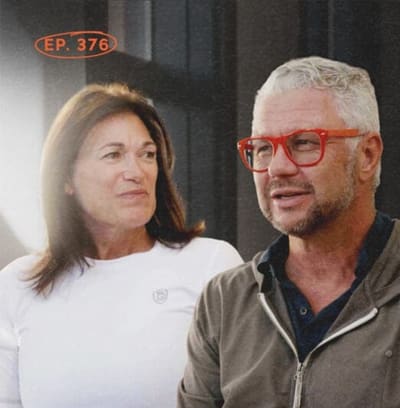
Rusty Rueff: Hey everyone, welcome back to the Faith Driven Entrepreneur podcast, together with speaker and entrepreneur Liz Bohannon. This episode is one of a three part series focusing on female founders and business owners who are pursuing entrepreneurship in different industries. Today, our conversation is with spiritual leader, author and justice advocate Danielle Strickland. Danielle has led churches, started training schools and established justice departments all over the world. She spent 22 years as an officer in the Salvation Army and is an ambassador for Compassion International and Stop the Traffic. Danielle has a deep calling to empower people. This includes traveling and speaking at conferences and gatherings all around the globe. She has written several books and today we’re going to spend much of our time talking about her newest title, Better Together How Women and Men Can Heal the Divide and Work Together to Transform the Future. Join us now for an impassioned discussion about imagining a better world, embracing our differences as women and men, and finding ways to end oppression and learning how to work better together. Let’s listen in.
William Norvell: Welcome back to the Faith Driven Entrepreneur. My name is William Norvell and it is such a gift today. Why? I’m sad one. And then we have a gift. I’m sad because Henry and Rusty are not here with me. And that’s always a sadness. It’s always good to see them and be with them. But it’s a gift because we have Liz Bohannon back as a guest host, and I’m sure everyone has been anxiously waiting since last week to hear of more from Liz. So Liz welcome back.
Liz Bohannon: Holding their breath. I’m so happy, so happy to be back. Thanks so much for having me.
William Norvell: Well, in case for some odd reason, someone missed last week’s episode, which is very rare. Very rare. Most people get every single episode. So. But just in case. Liz, tell us a little bit about who you are and why I’m so excited to have you as a guest today.
Liz Bohannon: Well, my name is Liz Fork Bohannon. I mean, maybe the first line of my bio going forward is going to be occasional co-host of the FDE podcast.
William Norvell: That’s what we hope.
Liz Bohannon: But in addition to that, I am an author, a writer, a speaker and entrepreneur. I founded a company called Sseko Designs. We are a sustainable fashion brand, and I’m just really, really excited to be having these conversations about entrepreneurship, about faith, about vocation. So thanks so much for having me back.
William Norvell: It’s super fun. I’m sure we’ll link in the show notes. We’ve had you and your husband been on the show before to talk about your business and how you run a business as a husband and wife. And it was phenomenal. And, you know, we love Ben, but I think it’s pretty clear we love you a little more since you’re here and he’s not.
Liz Bohannon: I’ll make sure that I carry that back to him. You know, we do we do have a scorecard. It’s really casual. It’s just on a whiteboard in our kitchen so that we can kind of see that on a daily basis.
William Norvell: Super healthy.
Liz Bohannon: That’s very healthy. Yeah. So follow me for more marriage tips, everyone.
William Norvell: Fantastic. Liz, do you want to welcome our guest, Danielle, here with us.
Liz Bohannon: I do. I am so excited to have this guest on our show with us. And, you know, as we were thinking about this series and about wanting to really highlight the voices of female entrepreneurs in spaces where a lot of times we are the minority, part of what we wanted to do right was just share these stories and have conversations about the really meaningful work that women are doing. And we wanted to take it a step further and kind of dive in a little bit more to that part of the conversation where we go, okay, how does this actually work? How do we work together? What is the role that men have in creating spaces for female entrepreneurs to thrive and deeply believing that these conversations need to happen? Also that it’s not us versus them? Right. I think a lot of the conversation about gender equality can have quite an adversarial tone and kind of a zero sum thought, right, that the more women win and excel, that somehow men are losing out on that. And I deeply hold the belief that if it’s true flourishing, it means it’s flourishing for men and for women, and that we can collabor and partner with one another in creating that. And so as I thought about this topic, there was one person that came to mind. There is one person that I was like, I will name her as the foremost expert specifically in the faith community about thinking and teaching and leading in this specific area. She’s written a book all about it and very much so uses her life and her energy and her leadership to propel this conversation forward. So without further ado, I’m very excited to welcome the one and only Danielle Strickland to the show.
Danielle Strickland: Hey, guys. Thanks for having me. It’s an honor to be here.
Liz Bohannon: So, Danielle, will you just dive in with us and share a little bit more, you wrote a book called Better Together, and will you just kind of share with us a little bit about where did this come from? Why was this topic, something that you felt was important and what was the message that you felt like was missing in the conversation that you wanted to bring to light?
Danielle Strickland: Well, the context was sort of when the world was on fire, the Pandora’s box of sexual exploitation and sexual harassment had opened after the MeToo million and then the church, too. And then Bill Hybels was right in the middle of that, you know, incredible exposure and scandal. And I was on to speak at the Global Leadership Summit. And the team you know called me up and said, Would you speak in this moment about men and women leading together? Which is quite a moment to try to speak to that. But at the same time, I had to pray and asking God what I could do, because the thing that I felt right away when I heard the news break, not just he’s just one example, but many news. I just was in relationship with that community. But when I heard that news break, I thought immediately the knee jerk reaction of people, especially male leaders, is going to be to distance themselves from women. And that seems to be the knee jerk reaction of all this news is like the problem must be segregation, right? The problem must be distance and disconnection. And so I really was praying at the same time, God, what do you want me to do? What can I do to actually stop a culture of fear from losing the ground that has been gained and actually moving us towards the better ideal that you had in mind from the beginning of all created things, right? Because relationship and leading out of equity and out of relationship. So really the book’s origin is me standing on a stage in the midst of the worst kind of news and all of these people leaning in from around the world saying, okay, what do we do now? And my dogged, rugged belief is that I refuse to give up on planet. And this is you know, it’s insane. On one level, it’s completely insanity based on all of my work with sexually exploited women, based on all the abuse stories I’ve heard, based on all of the even my own background. The easiest thing for me would be to say men, you know, take a break. We’ll get it from here. Like your track record up until this moment leads me to believe that you are not a worthy partner. I mean, that’s not usually how people start better together. But can I just start there? And then, even in recent months, by now, my reason church in Canada, another a leader that I highly esteemed and who disguised himself as a women’s empowerment person, was accused of harassment. And I resigned from that church. We’ve been through all of the ringer for and then just all of these survivors of clergy sexual abuse have come from all over. I mean, it’s just it’s remarkable. And so it has literally taken me all the faith I can muster. To say, actually, God’s original purpose for a shared leadership of the Earth is what I’m hanging on to. This is God’s design, so no wonder it’s under attack. But also, I am going to hold out for this answer to how we’re all supposed to lead. And one of the reasons I stay attached to that is because I have three boys. And so it has been impossible for me as a mother of three boys to just say men are out. I also have a great husband. Thank God I thanked him the other day. I was like, Thank God I married you. Like, I might have lost the plot. So I just cannot. I don’t have the luxury because of my faith. And I don’t have the luxury because of my relationships to just give up on men and women leading together. So when that becomes the case, when you shut the door on the exits, then you have to say, all right, how can we make this work? And that’s really better together? How can we make this work? So it was 27 minute talk and I had literally like 90,000 words of prep and just a deep dive. And the more I dive, the more there was to say and the more important it would seem to me the topic is.
Liz Bohannon: And if I recall, because we spoke at the same at that conference the same year right as this was going down, you couldn’t have had more than a few weeks to prepare for this. Right? So it was like not only is this a super heavy topic, a really important and intense moment culturally, but you also were under some pressure from a time perspective. Yeah.
Danielle Strickland: Yeah. And if I didn’t come out of prayer, so when I was praying about what to do, I felt like God said to me, reach out to see if you can help. And but then I thought, like, oh, that’s weird. Like, I’m not going to do that. And then literally they called me and said we were praying and we felt like God told us to reach out to you to see if you would consider. So if I didn’t have that, if I didn’t know it was God, I probably might not have ventured near it because a lot of my advocate friends. So I come out of an advocacy space. I’ve been a women’s empowerment advocacy person for my whole life. They were all saying, like, don’t do this. This is complicit. Like, you’re going to be a complicit part that she that is actually negative towards women. So it was a real I knew that God had called me to the space. I knew that God had something to say. And I knew that God doesn’t give up on his design and that it’s worth fighting for, you know, navigating that space. Yeah, I thank God it was only a couple of weeks. I can’t imagine, like living under that kind of pressure for longer in some ways. Right.
William Norvell: I was just going to ask Danielle, you said a phrase that I think I understand, but I wanted to give you a chance to put a fine point on it, especially for our listeners. You said you thought the first reaction would be for men to distance themselves from women. Could you talk a little bit about what that really means and what that may functionally mean in a business as well as life?
Danielle Strickland: Yeah. I mean, you can read the, you know, the Wall Street Journal shortly after the MeToo movement had a headline and it just said, Wall Street executive banned women from the workplace. Or you could just call it this Billy Graham rule. And you will, in both of those reactions, discover the knee jerk reaction of male leaders where they center the problem on the women, which is baffling to me on some regards, because literally all the stats would suggest over 90% of all harassment and abuse, even when it happens towards men, is perpetuated by men. So to suggest that women are the problem in the workplace is like a colossal loss of our minds and our reason. But when we center men like that, then the reality, the knee jerk reaction, is that to then make women the threat. And that’s what happens. Instead of actually women are telling the truth, like women are being honest, women are bringing forward an opportunity for us to better ourselves and become better organizations, better people, better churches, better businesses. We perceive that truth as a threat to our power. And so we literally distance ourselves and we push women away and keep them at arm’s length because we view them through the lens of threat.
Liz Bohannon: And specifically in this community. There’s so much. Yeah, the Billy Graham rule runs deep and the idea that by distancing yourself from women vocationally and professionally is not only acceptable, it’s like holy right where it’s own. It’s as if you have integrity. Then you’re going above and beyond to set up these rules to keep you from that. And of course, as women, we’re going like, or we could take a business meeting and you could just not harass me. Like that is also the option, you know, but the kind of holiness and integrity message around that I have found that misogyny within faith communities, it runs even deeper because again, it’s not just like we accept this, we actually really promote it. And especially when we have faith leaders like we’ve already mentioned on this show who outwardly say, like, I’m a proponent of women and women in leadership, that was one of the things that was most devastating to me because we all saw it coming as soon as that story broke. I think everyone who is in the space goes, here’s the rationale for now. Tens of thousands of men, whether they’re in faith communities or, you know, in the marketplace, to say, see, like it’s too dangerous, it’s too threatening. We should go back to the old way of just not having those conversations and never stopping to think like, what are the professional and vocational implications for women if we don’t take the meeting, if we don’t mentor, if we don’t found companies with them, if we don’t invest in them, literally devastating impacts that come from something that we are calling like, look, it’s faithfulness, it’s integrity, it’s holiness. And when you are on the other side of that internalizing that, you know, I remember one time there was a male business leader who I can’t even remember what we were talking about doing together. But we, you know, we’re setting up our first meeting and he was like, is your husband available? Literally use the word chaperon was like, hey, I’d love to meet with you about this topic. Is your husband available? You know, I always like to have a male chaperon when I’m meeting with a woman and I’m like a grown woman who is just like running a company trying to get stuff done. The level of how one just like patronized and degraded I felt in two. Yeah, that sense of like all of a sudden I went from like, oh, we’re like equals and we’re trying to come up with some sort of mutually beneficial, you know, business to do together to this idea of like that I’m a threat and that you have to protect yourself against this threat. The impact of that is just so often kind of goes like it stays very centered on the man and like, what do we need to do to kind of protect ourselves from ever having these accusations made? And instead of going like, well, we behave like humans that are mature and dignified, the answer is or we need chaperons.
Danielle Strickland: Right? And chaperons for the women, which is what’s so nonsensical. And what’s so is obviously an indicator of a misogynistic culture because the chaperon, according to all the stats, the chaperon should be for the men like male leaders, shouldn’t be able to do anything by themselves. They should always have somebody accountable with them. Like I actually almost maybe think chaperons are a great idea for male leaders, but where it all gets distorted is when you need the chaperon because there’s something wrong with you. But literally all the statistics will tell you you’re not the problem. You are the solution to the problem. It’s not that there aren’t women who abuse their power or manipulate or even sexually harass people. It’s just that proportionately it is so minimal that it’s almost not worth mentioning.
Liz Bohannon: And I do wonder, as we continue to achieve more equality, one of the things that I think about is I wonder if we’ll see that change. I wonder if as women gain more power and equality in society, if we’ll actually kind of see those statistics around abuse also become more equal. Right, because we know so much of abuse is actually not about sexuality, it’s about power. Right. And so it’ll just be very interesting to see how those dynamics shift, because I don’t personally hold the belief that men are more fallen than women. I think they just have more power and the systems are bent towards protecting and enabling and empowering them. So it’s a bit of curiosity that I have is like will a marker actually of equality and some kind of very twisted way be that more women will start abusing their power as they gain it? And I’m very open and willing to go like that might be a possibility. Let’s cross that bridge when we come to it, but it’ll be interesting to see how that evolves.
Danielle Strickland: One of the research factors of the Better Together book, which was fascinating to me, just researching the background, is how all of the research suggests that having women leaders on your team actually dynamically changes the culture of your team in collaborative ways. So that’s one of the pieces that women bring as leaders, and I don’t know why exactly. I’m not a big fan of like men are like this and women are like that. I think it’s all just a little bit of like nonsense. But one of the clear research specifics when women enter into leadership teams is that the leadership team moves out of competition, into collaboration at an accelerated rate. And this is the interesting as you highlight female entrepreneurs to be interested in some of the ways that they do their work if it isn’t more inherently collaborative, because women tend to lean towards that space, which is why now, I mean, Goldman Sachs and all your major Fortune 500 companies are moving towards female equity, not just out of the goodness of their heart, which I would pray it would be, but mostly because all the statistics show that it actually makes them a better company. And so I think what I think is the saddest part of Christian culture, being behind the conversation about women’s empowerment and this partnership and equitable leadership, is that this is the design. The reason why that works so favorably is because women and men were designed to work together. This is a part of what it means. The shared flourishing of the world is a shared leadership model. So I feel like that’s so sad that we have this recipe and we missed it.
William Norvell: Yeah. That’s amazing. I’m going to probably default to y’all and not add a lot of commentary there, but I’ve seen it and it’s sad and it feels like a major faith figure. It’s almost like a quarterly event now on the male side, which is just really sad and in to you all point. It seems to be one factor typically, you know, and it’s just really sad to watch and I loved your comment Liz, like, Oh yeah, or we could just not mess up over and over and over again. That’s another great solution.
Liz Bohannon: It’s not that hard. And Danielle and I could both tell you, we’ve worked with. I’ve worked with dozens. Sure. Hundreds of men that it’s just like it’s not that hard. It’s not like some sort of complex landmine, like, oh, my gosh. It’s just like literally by being decent and relatively self-aware, you can have beautiful, appropriate, working, respectful relationships like it. Really, actually. It’s not rocket science. So that is especially like maddening, which is like, are you just you just like don’t know what you can say or not work for? And it’s just like, no, actually, like my seven year old has a pretty good grasp on like what he can say and not say. Danielle, I’m interested to hear you had kind of mentioned so you resigned from the church in Canada that you were a part of in light of another abuse scandal. And yet you hold the nuance of saying in the case of, you know, speaking on this topic of I’m not going to abandon, I’m not going to distance myself. Can you kind of dive in and share with us a little bit of when do you know, how do you discern? When is it time to say, I have to leave and this isn’t redeemable or my place at the table would be complicit in something versus I’m staying and I’m going to be a part of the redemption story.
Danielle Strickland: Yeah, that’s a really good question, Liz, because I don’t even think there’s like benchmarks. I think there’s discernment that happens in community. I think for this situation, for me. So this is what’s interesting is in one situation I’d move in to help. In another situation I moved out to help. And so again, this is like a really fascinating for me the disclosure came through me so some the victim actually disclosed to me and I made her a promise that I would stand with her no matter what. So if they were going to silence her or diminish her or not say the truth and deal with it properly, I was with her, so I resigned not as like an act towards the church, but as an act of solidarity towards her. So for me that was a no brainer. So I think whatever guy calls you to in when it came to the deal sort of moving towards that was in a moment of prayer. It was at a relationship with those people. And it felt like to me and I think I do believe to this day that they wanted to get to the truth. They wanted to understand that they wanted to do better. And so they were moving in that direction. So I feel like, you know, they weren’t perfect. They didn’t get it right. There’s probably still some work to do, but they were moving in that direction. So I feel like if somebody is moving towards truth, is moving towards and embracing the light instead of trying to like silence it and push it away, then I think we can work together as long as we’re walking in that direction, as soon as we’re walking in another direction, which is the silence. The truth is to minimize harm is to say like, it’s not a big deal. Don’t talk about it. You know, any of those indicators are like, No, I can’t go this way. And I feel like if you are, I think especially my role in that church was a communicator, like I was a teaching pastor. So they wanted me to stand on a stage and speak on their behalf. But I knew that they were not embracing the truth. They were not naming what had happened. They weren’t giving proper attention and moving towards like, how can we change this culture? And so I couldn’t if felt complicit. I think that’s like a discernment thing that happens inside of you. And then I also think it happens outside of you. But I do think the time is here where a lot of women are coming to the conclusion that an exit is the only strategy they have left. I really hope leaders pay attention to this now because I am running into dozens and dozens and dozens of very qualified, wonderful leaders, entrepreneurial, pastoral, educated women who are exiting the church and droves because it’s the only strategy they have left. And now I’ve got some ideas. I’m working on a thing called the company, which is hopeful to launch 5000 church planters, female church planters in the next five years and to church planted in different ways outside of institutional structured program church. So I’m super excited about what this opportunity might mean, but at the same time, I’m super sad because, you know, at a time where we could use entrepreneurial, adaptive, collaborative leaders more than ever before, they’re leaving because they’re unheard, because they’re not changing anything, because the systems refuse to change.
William Norvell: Hmm. That’s so good. And yeah, I mean, praying through that and discerning those situations reminds me too of how I’ve talked before about people that find themselves in work culture. That they don’t feel as honoring to God, right. Whether it’s a Christian leader or not a Christian leader. And, you know, they come to me sometimes, you know, do I have to quit, right or not? And I’ve seen different people come to different conclusions. You know, one more high profile was the turnaround. You know, I had a bunch of friends in uber out here when, you know, Travis and everything was going on there and it was well known. Right. And some people felt called to leave and some people felt called to stay and change and fight culture. And I saw different people discern different things. And both, you know, were right in a sense. So I do want to transition to female entrepreneurship, because when I hear that, I’m so curious your thoughts on how we can encourage and you know, this is our listener, this me. I’m learning in this conversation and all throughout, you know, I’ve heard things, right? I’ve been in investment committee meetings with people and I’ve heard, you know, well, gosh, they’re young. And what’s going to happen when they have their first child? Are they ever going to come back? I’ve heard all kinds of things, right. We talked about other rules and that’s when our pride feels like comes up often. Right. And I’m just curious how you would tell me and tell us and our audience to encourage the female entrepreneurs out there that are trying to get going.
Danielle Strickland: Yeah, I think those are great observations and questions and real. Right. And which is we want to have real conversations. Women do have children. It’s probably what makes us so superior I that but besides that I usually use the example of the HSBC bank. When they ran into I went actually speak to their leadership team years and years ago when I was living in Vancouver and they were championing women leaders, they had a woman leadership conference sponsored by HSBC. And I was like, What is a bank doing? Having a like this is bizarre. And they actually said that they had come to this problem where they kept losing their people and their best people and they kept investing like exorbitant amounts of money in attracting and retraining management where as soon as people get to middle management, they would drop out and then they decided, what if we spend some money finding out where those middle managers are going and why? Maybe it would be easier to retain them than it would be to spend all this money trying to retrain. So when they did the research to find out where they were going, they were all women having children and leaving. That’s really what happened. And then they went and talked to them and said, okay, why are you leaving? Because you’re having children. And they literally were like, The hours don’t work, the lifestyle is inconvenient, there’s nowhere to do daycare. You don’t have any sort of support system in place for me to be a mother. And so ultimately I chose my kids. So the bank had this decision to make. They could either keep spending exorbitant sums of money, retraining people and deploy them who are not even as good as their old managers. Or they could adapt some things. They could change some things in their structure to be an organization that would fit the life of a mother and would make it possible for people to actually do meaningful work in a way that is flexible enough to meet their demands as a parent. And what they found is that they got all of those workers back and they did really kind of neat things, like they put daycares into their headquarters, for example, or they created flexible hours where people could create their own hours and they could work with their spouse in terms of making the best. But what they found is that not only did it bring back all those female managers, but HSBC became a company that everybody wanted to work for, and it became one of the best companies to work for as an employee because it bettered everybody’s lives that actually dads needed that, too. They just weren’t able to say so. So again, they just were like, this is a key part of the advancement of our company. So I think I would love to speak to young entrepreneurial spaces right now and say, do this now, do this now. Because not only will this be good for women that you’re working for, not only will this be good, it’ll be also good for the dads. It’ll also be good for the people. When you have a flexible, adaptable workplace that takes the skills and the creative energy and the gifts of the people that you have in your workplace and you work around that, maximizing their strengths and their potential and their capacity without killing everybody out and making the structure and system of the thing, the God instead of the people that can maximize their gifts for your calling. So if you do that now, I think that’s kind of a key thing that will not only benefit women, but will also benefit men.
Liz Bohannon: I love that. I think that kind of roundabout, you know, I think there’s this idea that it’s like, well, to build a more equitable workplace, policies for women need to be better. But the reality is I think you’re exactly right, Danielle. When we promote pro parental and specifically even from a male caregiver perspective, like as a leader, if you’re prioritizing your family, your home, your obligations outside of the workplace and modeling that for your people, that’s actually a really, really important part of the equation because by only focusing on something like maternity leave, what we’re actually doing in some ways is reinforcing, well, this is the women’s issue, right? Like having a kid is something we need to figure out. How are women going to work and raise kids at the same time? And this has been something just fascinating having. Worked alongside my husband to build our business. Just the expectation that gets reaffirmed, that’s like, Oh, well, we had kids. Well, what’s that going to do to Liz’s involvement? No one’s asking What’s going to happen to Ben as a dad? No one is going like, Well, you know, Ben’s about to have his first kid. We don’t know what’s going to happen after that. And so it reaffirms this idea that it is the primary responsibility and it’s on women to figure out how do we balance caregiving and vocations. And this is where you know I love. There’s tons of value in Sheryl Sandberg and in the Lean In message. But one thing that I’ve always kind of wondered is like, do we fix this by telling women just to lean in and act more like men? Or is there actually kind of a broader lean out message for the men that’s a part of this, of like, what would it look like for you as a leader in your organization to stop work at 5:00 so that you can do daycare pickups because your wife drops them off and you pick them up and like promoting that as like, I have responsibilities outside of the home and I will be a better worker and human and leader when I actually have a life that’s really integrated in the honors, these various spheres of responsibility that I have.
Danielle Strickland: Yeah. And that’s what they found. Right. And that’s what happened to their company is they thrived. They kept all their best workers, they retain them and they maximize their influence, but not at a cost to themselves. And so that I mean, doesn’t that sound like God? You know, and this is one of the things I’ve really discovered lately. If I read a study of Exodus where Moses is like all you know stuck in empire, he’s been raised understanding power and how to change things with power, taking power and power over and power that destroys. And Moses has this encounter with the burning bush in the desert. And he literally it’s not the fire. It’s not the burning that attracts it. It’s the fact that the bush is on fire, but the bush is not consumed. And Moses walks over and says, What is that? That is a different kind of power. So what if we were building things that weren’t consuming people? What if we actually, even on an entrepreneurial level, what if we had companies where the bush wasn’t destroyed in this entrepreneurial space and business space and churches spaces, this is where burn out. And people just being destroyed by this thing, even though this thing is powerful, is exponential, like it’s high. And I just think, what would it look like if we like Moses, rediscovered the God who can create sustainable, dynamic energy without destroying us? What would that look like? And I think that’s again, that’s a little bit about what we’re trying to catch, is this like these things that we’re talking about, about women aren’t really just about women. They’re about our attitudes, our perspectives, the way we live our lives, why we live our lives, what it is we’re trying to do in the world. And that beautiful thing, that flourishing world, that like creating places of beauty that do good work in the world. That’s where we come together. And our gifts, our magnify.
William Norvell: Hmm. That’s so good.
Liz Bohannon: I love that.
William Norvell: Yeah, I mean, it’s so true. I mean, just for me, out of my personal story, it’s my wife works in the hospital. She’s physician assistant. I mean, she has zero flexibility in her schedule, and I have some. Right. And so I’ve felt that, like, people literally can’t understand that I have to go get the kids. Or if an emergency, for instance, in my life in emergency, in day daycare, I go get my child like my wife can’t leave the hospital. Right. Like she’s in surgery potentially. Right. And no one gets it. It just like everybody’s so confused. When I cancel a call with someone, they’re like, Wait, what? You had to cancel the call for what? I’m so what? But just to say, I think that’s such an important message to send. And I want to give, you know, obviously both of you a chance to to answer this as well. But Danielle, first, I would just say, tell me more. Right. What are some of my blind spots that I just don’t see specifically? When I think about women entrepreneurs, when I think about the journey they’re on, what do I need to be more aware of? What do our audience need to pay attention to? And maybe even a third challenge, maybe a higher level? What’s my responsibility that I am not holding?
Danielle Strickland: Yeah. I mean, aside from creating sort of flexibility, adaptability within the workplace, I would say that a lot of people try to solve problems for women. Without women, that’s problematic and actually will just lead to everybody being frustrated. So what I suggest as a first step, if you’re an entrepreneur and I would say this is great because if you’re an entrepreneur, do it now. Don’t wait till you have this organization. That’s all like male leaders. You’re sitting around a boardroom with everyone that looks exactly like you, and you lack diversity and adaptability and creativity, and you’re thinking like, where are the women? And then all these guys around the table are coming up with where the women are. You know, like, it’s ridiculous because nobody actually knows. So it’s like, why don’t you actually go find some women now, and why don’t you ask them what they’re passionate about, where their leadership skills are with? They might want to join you now and what they have to say to you now, like, where are the barriers now? So there’s some beautiful examples in Better Together where there’s like leadership teams exactly like that. There is this guy, a friend of mine, Jeff, and they were around the table and they all had value. They want to see women empowered. They want to see women lead. They knew they were lacking that space, but they didn’t have any women around the table. And so the first step they did was they went and asked women, Where are you? Why aren’t you at this table? What are the barriers like what to prevent? And that feedback was phenomenal. Like they saw things they never, ever knew. And one of the things they saw was that the barriers for women volunteering for leadership are way higher than for men. So and this is true research even in secular places where men will apply for a job, for example, if they meet less than 80 of it, 75% of the job requirements men will apply going: I fit that. Women will not apply if they don’t need 100%. So there’s already sort of this like internal cultural dialog that’s happening in women. Now, the research that I found is actually really troubling in this regard. It said that a woman’s self-confidence peaks at nine years old. A woman’s self-confidence peaks at nine years old. So the most self-confident a woman will ever be is her nine year old self. Because after that, things like puberty, high school, and then sort of cultural, basically misogynistic messages and practices kick in. And so it’s like an assault on women all the time to not like, I’m not enough, I’m not enough, I’m not enough. So there has to be a disproportionate amount of resistance given or like extra work done to push back against those regular voices that are happening, both external and internal, from a cultural norm of like, you’re not enough this. So there has to be a disproportionate. Now the guys that have done this and even companies that have done this say they’re so glad it was worth it. It felt at the time like a disproportionate investment. But afterwards the result was so phenomenal that they’re just like, we would do it again 100 times. But that first year just sort of like it’s not worth it. Like if I have to go out of my way to find women, if I have to, like say, no, you can do it, try again. You know, like if I’m constantly having to like fight against this not enough ness, it can get exhausting. So I think one thing is to do it early, to do it quick. So to have vision, to say we want a diverse group. And I would say this is also key to diversity in general, but we want a diverse group of people. And so let’s aim for that now instead of later, and let’s do that ahead of time. So let’s try to bring those barriers down if we can. So what are the barriers internally and externally? So oftentimes extra coaching is required, whereas just getting those internal voices to quiet down and confidence building. So confidence building in women is actually a thing that’s necessary. And then the other thing is an only syndrome. So oftentimes teams will go, okay, good, we have a woman and sometimes we’ll call that tokenism. And sometimes I just think it’s genuine. We want to begin somewhere and we have this woman, so we’ll begin. But what happens is that those women become the only is actually a syndrome called the only syndrome. And this happens in diversity, too. And they’re just always the dissenting voice. They’re always the one that doesn’t fit. They’re always the one with a different perspective. They’re always the one that. And so they just get tired and worn out and they quit. That’s what happens. And there’s onlys everywhere. What they say is and again, what you want is this is not a gift. You’re extending women to be kind. This is a strategy that you’re exercising to diversify and strengthen your team. So this is a gift to your team to do this well. And if you do, do this well, what you want to aim for is what’s called the 30% quota. The 30% quota is 30% is what’s required to create any cultural difference to any team. So no matter what the team is and no matter what the difference quota. So if it’s about women on your team, you need 30% for that team to get any positive cultural change. Now what happens in the studies, which is really fascinating, is once you get to that 30%, it almost always exponentially increases, like the Rwandan government, for example, had a 30% quota of politicians in Rwanda to change their structured system. They’re now at 65. I think they’re the most female led country in the world. 65% are female politicians. So I would say that that quota usually increases because as soon as then people can see themselves, then people can have a narrative that’s different. Women can, married women can, married women with children can on and on, these go these barriers become lower and then the power increases and the power increases collectively too.
William Norvell: Yeah, I love that. It reminds me of an article. A really good friend of mine runs a venture capital firm where she invests in women only, and she wrote this article that says Investing women is not a bleeping charity.
Danielle Strickland: And well, yeah. Or you could talk to Muhammad Yunus, who created the Grameen Bank, who pretty much only invests in women because the returns are so high, you know? So, again, it’s not even, wow, I’m such a good guy. He’s just like, this is the most effective means by which I’ve discovered to do this, you know, to break the back of poverty. That’s yeah, that’s.
William Norvell: What Jesse’s going for, too. And she’s really, really good at it.
Liz Bohannon: And just acknowledging, the extreme disparity. I mean, it’s so extreme in venture capital, for example, I think in 2021, the statistics were less than 2%. Less than 2% of all capital was deployed to women. And if you’re a woman of color, then you’re literally in sub 1% like I think it was 0.002%. So it’s powerful even just to acknowledge the reality of where we’re starting, because then all of a sudden you realize like, oh, we have a really long way to go and it actually is going to require more intentionality from us. And I think even just like recognizing our own very ingrained cultural biases, I think one of the questions that’s really powerful to ask is, how would I feel about this response if it was coming from a man instead of a woman? Because one of the things that faces so many women in the marketplace is this idea we are so as a culture, we don’t like, quote unquote, aggressive women. Assertive women. There is like such this sense. They did this really interesting study. And I can’t remember if I talked about this on the show with Paula. So if I did, we can edit it out. But it’s so important, I think, for us to understand this, where they had two sets of resumes that had the exact same qualifications and all they did was change the name. One was like a very obviously female name. One was a very obviously male name. You read through all the qualifications. This is a very qualified, successful person that you’re reading the resume of. And so people read either the male resume or the female. Again, the only difference was the name. And then they just asked a series of likability questions, right? Like how much? How much do you want to be this guy’s friend? How good of a parent do you think they are? How good of a buddy do you think they are? How good of a colleague do you think they are? Would you want to work with this person? Be with this person? And what they saw is that for a man, those successes made him intrinsically more likable. There was this sense of like, Oh, I want to be this guy’s friend. I want to be with him. And around him there is this affinity towards them. And for women, the exact opposite happened. I was like, Well, she might be successful, but she’s probably a B, you know, like she’s probably not very fun to be around. She’s probably super intense. She’s probably this and that. Like at the core of, I think, how God created us, we desire a sense of belonging, right? Like every one of us just wants to belong and we want to be loved. And so by acknowledging how much we’ve created a cultural delta of what does it mean to be a likable woman, and what does it mean to be a likable man? And we’re going to have to do work, actually, to counteract that and to say, like, we’re rejecting the notion that by being successful or assertive or a great decision maker as a man, that makes you intrinsically more valuable or likable. But that that’s a cost for women and it takes intentionality. And so I think even just like asking those questions, William is really powerful of just like, oh, that rubbed me the wrong way. The way that she said that or that email felt a little terse being like, Huh, if her name were Bob or Frank instead of Jill or Jane, would I feel that same way and just interrogating ourselves internally and doing that internal kind of affinity bias work. And I think those two things, what Danielle just spoke about from more of an institutional level all the way down to me as a single individual human, I’m going to do the hard work to kind of examine my own biases and confront those. I think those two things together are really, really powerful.
Danielle Strickland: Liz I would add one more thing into the mix. I agree with you completely, but I would say since this is a faith driven podcast, how we view God.
Liz Bohannon: Yeah,.
Danielle Strickland: And how we see God is inextricably linked to this conversation.
Liz Bohannon: Yeah.
Danielle Strickland: And so the idea, I think for many of us for years we believed God is this like CEO in a corner office trying to keep a business together. And we have not embraced the Trinitarian power of Self-Giving communal love in like this furious leadership. I mean, the Trinity is it’s inextricably linked to one another. We don’t even know who’s responsible. We know they were all at creation, but we don’t know who really created like did God create the spiders and Jesus create the mountains or the Holy Spirit do the seas? I mean, did they split it up? We have no idea. But we know that it was a Trinitarian effort and that the key thing of the Trinity is that all of them are honoring the other one. And it’s this fascinating, beautiful theology that I think we’ve lost in this season of individual information age, building things that are architectural. There’s a CEO and a hierarchy chart, and we lost this like beautiful. And I really think that’s why the only time in creation God said this isn’t good is when he created men. And what he what he said was, this isn’t not good. He just said this isn’t completed. So when men were leading alone in the original creation account, God said, Stop, don’t do that. There’s something better and the better. Wasn’t just the woman, the better was the together, the better was the shared, the better was the mutuality. And the reason that was better is because it was a better reflection of God. And that ultimately is a foundational theological truth that should drive us towards mutual flourishing relationships and team leadership and shared responsibility and self-giving loving goodness in the world. That is the opposite. That’s Moses walking to a fiery blush going, What is that? That is different from anything else I’ve ever seen. And so I think the rediscovery, I actually think there’s like a spiritual revival that’s going to be part of this where God has got to undo the ways we view God as male, as authoritative, as hierarchical, as controlling, as taking like empire, like a big, big pharaoh. And we have to rediscover the God of the burning bush that does not destroy the God of be duality, the Trinity, the Self-Giving, the mutual flourishing God who says the only way to reflect me is to work together, because what other difference will there be with faith venture versus a regular market […]. The irony of this whole thing is that oftentimes what I find in the marketplace is more reflective of mutuality and equity and justice and love than a lot of Christian faith based practices. And I’m always like, What on earth? How is that possible? Like, how can we rediscover? And I think these images that we have of God are at the root of that. There’s a whole chapter of that in Better Together, but that I do believe that’s a deep, deep work that the Holy Spirit needs to do inside of us.
William Norvell: Hmm. Amen. That sounds like a whole other podcast and of itself. I want to peel back the layers of that. That sounds amazing, but unfortunately, we are moving towards the end of our time here. Obviously, we will link to the book and things like that, but what we love to ask at the end is just we love to invite you to share some scripture from God’s Word that may be coming alive to you in a new way. It could be something you read this morning. Could be something you read your whole life, could be something that you think about right now spontaneously. We love Holy Spirit Scripture as well, but we love to just see how that transcends between our guest and our listeners and how often the word jumps alive in different ways for them as well.
Danielle Strickland: Well, like I said, I’ve been stuck at this image of the burning bush, but the link to it is excellent aid that you will receive. So as the disciples trying to figure out how on earth are we going to do this work, which I don’t know who’s listening to this right now in the middle of your faith entrepreneurial exercise. But I feel this way about everything I do is like, how on earth am I going to do this? And God says to the disciple, Jesus says, You will receive power. And that power has often that’s a word dunamis. It’s often translated as dynamite, mostly by men, but it’s also dynamic. It’s dynamic, sustainable energy. You’re going to receive dynamic, sustainable energy so that you can be my witnesses. And that word witness actually means martyr, so that you can lay down your life, so that this kingdom can actually come in the world. And so that Acts 1:8 thing, it’s just been all inside of me these days, I just can’t shake it. And that’s that rediscovery. It’s Moses discovering this kind of different kind of power. And it’s God really speaking to me saying, not only is my power greater than any other power, it is as different from as it is greater than any other power. And if you could capture that, that would change the way you do everything. And that’s what I’m after. I want that kind of power.
Liz Bohannon: That’s just so. Thank you so much for sharing that, Danielle. That’s really powerful and that imagery. You’ve given me something to really noodle on. I really appreciate that.
William Norvell: Yeah. Thank you so much for joining us. Just such a gift to have you here and start such an important conversation. As I said, hope is the beginning and not the end. And hopefully we can make some progress and come back on and talk about how to make more progress.
Danielle Strickland: Excellent. Bless you guys.















God wants a relationship with you, so it’s not just about solving problems! And, as you deepen your relationship with God through prayer, it becomes easier and easier to know His will for your life and your life and your entrepreneurship.