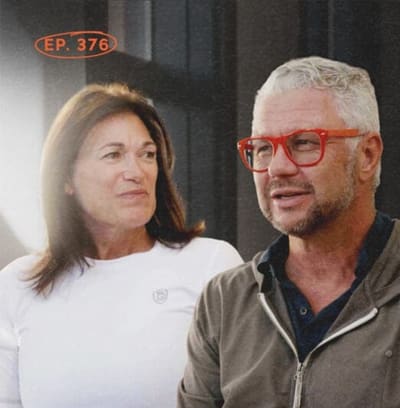
Bobby Gruenewald of YouVersion joins us this week giving us the low down on the origins of this wildly popular bible app with 370M+ downloads and counting. This pastor, entrepreneur and former rap artist (who knew?) shares with the team how the desire to become better engaged with scripture was the impetus to developing YouVersion, the first iteration of which proved to be a failure – a web app because there was just no iPhone yet (remember the days?). The team’s approach to failure, commitment to being faithful to God’s leading step by step and the desire to be the best stewards of all God gives them are all elements contributing to YouVersion’s success and Bobby gives us the details as well as a reveal into the future direction of the app to deepen the relationship between God and His People.
Bobby’s community is an example of how a church actively chooses to live within the realm of innovation to further the message of the gospel. Share with us the ways you are innovating within your organizations for the sake of the gospel and the fame of His Name at faithdrivenentrepreneur.org.
Useful Links:
YouVersion App
YouVersion Usage Map
Life.Church
How to be an Entrepreneurial Leader
We also have a very brief survey we’d love for you to take that will help us shape the direction and future of the FDE podcast. As always, we love taking your questions and hearing your comments. Feel free to submit your thoughts in general here.
EPISODE TRANSCRIPT
*Some listeners have found it helpful to have a transcription of the podcast. Transcription is done by an AI software. While technology is an incredible tool to automate this process, there will be misspellings and typos that might accompany it. Please keep that in mind as you work through it. The FDI movement is a volunteer-led movement, and if you’d like to contribute by editing future transcripts, please email us.
Rusty [00:01:32] We have been anxiously waiting to be able to talk to Bobby because Bobby and his team in his church are the guys and gals who brought us what you have on your phone right now if you open it up called the Bible app. And the Bible app, the you version Bible app, has probably caused more consternation in churches across America because pastors don’t know what to say when they say open up your Bible. But at the same time, we want you to turn off your phone. How’s that for an interaction, Bobby? Three hundred and thirty million downloads and celebrating 10 years, a decade of us being able to carry around in our pocket. God’s word accessible to all of us with just one download of an app. And we are so honored to have you here, Bobby. And thank you for joining Henry, William and I.
Bobby [00:02:31] But it’s very much an honor to be here with you guys today. Thank you for the kind introduction. I’m sure there are plenty of pastors today that actually have transitioned from did not know what to do to actually encourage people to use the Bible up in their church. But I definitely have that same response from some for you.
Rusty [00:02:48] Well, for some, it was easy. I think for others it’s probably still hard, but the transition is worth it. So we’re going to jump right in and we want to hear the origin story. How did it come to be? You know, we know you were an entrepreneur before and a couple of companies that you started when you were a teenager and turned around and sold them. And up comes this problem to be solved in your mind, obviously. And tell us, you know, where that came from and how it happened.
Bobby [00:03:18] Know, I think you alluded to there in the question in the sense that you talked about a problem to be solved. And I always feel like for me, you know, innovation and new ideas kind of need to solve a problem. And that was exactly kind of the context for this May. Having a background as an entrepreneur in the tax space. But then now and at that time back in 2006, being on staff at a church, I would sort of naturally kind of think about problems I was encountering in what I was doing to the church or just in my faith journey and say I’m one of technology, has an application here. I wonder if there’s a tour or something that needs to be created to solve this problem. So I was in the O’Hare Airport in Chicago back in October of 2006, and that was exactly what I was asking myself and the long TSA security line that day I was going to process. And I wonder if there’s a way that we could use technology, use kind of the new technology. You had a favorable to us at that time to help me better engage with the Bible. I was sort of sadly below average Bible reader. I had kind of a desire to be more engaged, but I just didn’t have the practice or the discipline or the rhythm to it. And I felt pretty bad about it. And I wanted to add a lot of excuses. But regardless of the excuses, that was my reality that I was in at that time. And I just thought, you know, I think there’s a lot of people that are like me. And so if we could figure out a way to use technology to do that, that perhaps that wouldn’t just help me, but it actually could help quite a few others. So there in the security line that day, the original idea for your version came it was originally concept as a Web site, not as an app. This is sort of pre-dated the years of mobile apps as we know it. So that concept didn’t exist, at least not prevalent at that time. And so this Web site had kind of an interesting concept to it of how we were going to let people connect media to scripture. And then the named new version was just the best name I came up with from the security lines at the gate that day. But it was just kind of all relate that initial concept, though. It’s interesting that that initial concept actually did it work? Every week we launched it in two thousand and seven. There was a lot of effort that went into trying to get it launched. And of course, a number of things that we ran into just simply didn’t know were problems that we’re going to encounter. But we went through all of that only to discover that the actual idea we were pursuing did it really change how we engaged the scripture. But the failure of that in the process, you that failure led us to believe that perhaps if we designed it or redesigned it to work on our Blackberries at that time, that that might change something significant. And it was just another attempts through that learning to try something different. And in doing that, it actually was the discovery that really did seem to help. And we could see how personally we were engaged with scripture more consistently and regularly. And we start to see the traffic to our website go up from people using their BlackBerry devices and early 2008. And of course, in Steve Jobs, right at that same fruit in time announced they were making it possible develop apps for the iPhone and they’re going to create something called the app store. So based on the momentum we saw happening at that time with a what if we could build a Bible up and submitted to Apple and we had no idea if they would accept it. We had no idea people would create apps. We had no idea how to build an app, actually. So we found a 19 year old on our team who loved Apple. And those are kind of the only two requirements. You had to have a billion out to us to be 19 and love Apple. And we asked this guy, other team, to kind of work sort of on the side. We didn’t really have a resources we could dedicate to this. It just kind of a vision and some great work and we can work and where we could do to kind of scraped and some time and submitted to Apple in June of 2008, the app store opened in July of 2008 and there was a Thursday and we had no idea if we would get approved. But on the very first day that the App Store lodged, the Bible app was among the first 200 free apps that were available that day. So we were we were shocked it made it in. But then even more shocked a few days later when we were able to look at our data and analytics and we saw that there’s 83000 people that had installed it from Thursday through Sunday. And that really just blew our minds. So that was kind of the way we got to the Bible app. It actually came through an idea that really failed. But then learning from the failure led us to an idea that actually worked in industry. God’s timing and Providence in the app store launch and all that. We have to kind of be ready at the right time to be able to take advantage of that opportunity.
Rusty [00:08:02] And you never heard anything from Apple. Did you ever talk to anybody or did they just approve it without even speaking to you?
Bobby [00:08:10] They just approved it without speaking to us. And back then, when it came to the app store, it was pretty much the wild, wild west. I mean, Napoles systems and processes and back end Web site mean there is very little developed at the time, and so it was kind of a black hole. You know, you submit stuff, not have any idea what the status was. So it was very little information, in fact. Had we not put some code in our app to basically use a third party analytics group, we would have had no data because Apple wasn’t really providing hardly any data about like how many people installed your app at the time. So we were really fortunate we did that or that first weekend or the first several weeks. We had had no idea if anybody installed it or not, if they were using it. And that would have probably changed a lot of our decisions and that kind of trajectory that we were on. But yes, it was very just unsophisticated. I think in some ways I almost think it caught Apple off guard a little bit. You know, the type of response and demand that they were catching up and trying to build the systems and processes and things to support that large developer network, which was something I don’t think they were quite ready for at the time.
Rusty [00:09:15] That’s great. Emira, let Henry and William jump in here. But the reason I ask that question is because some of those at the early days, I remember some app developers actually having to have conversations. And Apple was trying to figure this whole process out. Right. You know, they would submit and then, you know, you’d wait and you wouldn’t hear anything. But in those early launch apps, there were some conversations that Apple was having. So in some ways, I think it’s a little bit of a God thing that you went smoothly through that way.
Bobby [00:09:46] I definitely think it was a God thing. There’s no question about it. We had no relationship, no connection and nothing that would have given us any sort of human favor in terms of getting approved. So that’s why we were really surprised by it. And even like testing apps back then was so difficult. Even though your app was going to work on the phone. So there was a lot of just the types of tools and things that are available today and systems that exist. But you’re right. We had no special favors. We had no relationships. We had no. Anything that would have indicated we should have been included in that initial group. I kind of presumed the same thing. I was like to probably just get approved. Major companies or people that they know have a relationship already. And so fortunately for us, that wasn’t the case. We were able to get approval in the first group.
William [00:10:31] That’s an amazing story. Bobby, this is William. I think he might be our first entrepreneur that launched their first app on the BlackBerry. That’s during the show here.
Rusty [00:10:38] So we have listeners who are wondering what is a BlackBerry for our listeners?
William [00:10:43] You can Google it. It was a really cool device. A lot of us had a full keyboard on the device. You can look it up later. But I’m really interested in that transition from, you know, we were working nights and weekends. We had this idea and actually kind of failed. And then obviously, you almost found product market fit day one. But I’m interested in what God taught you and your team as you were going through that. And what what made you keep going? What things that he revealed to you? Did he show to your team to keep pushing through the problems, to sort of find the product market fit?
Bobby [00:11:16] You know, it’s interesting, I mean, we I think probably the reality is that we have a culture that kind of pre-dated that experience. I think we really benefited from and there’s a culture we’ve sort of built into the team over the years preceding that even that says we have a willingness to fail. We’re going to try some things and recognize that there’s many things or several things that we tried that just simply might not work. And we’re going to be paying attention to data. We’re going to be looking at results. And we’re not going to kind of talk ourselves into success and just say, well, you know, they’re just one example where it works, you know, but rather really be honest with ourselves about when things don’t work, because that’s how we’ll actually work. And so we’ve kind of culturally built that in. And that that even pre-dated the beginning of that. But the emotions of that are still real. I mean, the part I kind of left out in the journey of that first part was I told the story there. The first part was that immediately upon saying we’re going to launch this Web site, you know, the way I wanted to do it, we had no resources really allocated internally to this. It was like, yes, let’s go do it. But we were really tight on resources to kind of operate the church. And so it was one of those things where I had to kind of lead with vision, get people to almost in some cases volunteer their time, just kind of really cast vision for this and sort of figure out how to come together, just scrape together resources to do it. We put out a blog post, I think it was in May of 2007 announcing the Web site and at the time we wrote the blog post. The only thing that we had was just an image that we had created kind of a mockup of this Web site created by a guy that a contractor. We founded India to create this Web site. Barkha that was all that was there. And I was announced you were going to launch it in September. There was no code written. There was no nothing, you know, except this picture that we had. And the blog post. And I kind of thought I can either set a date just to kind of be aggressive. But of course, we had no idea how complicated it was going to be. And then even more so, we realized quickly that we actually didn’t have access to the Bible, which was sort of an important factor in this. I think we’re so ignorant. We had no idea that there are other people that own the Bible. The Bible translations, you know, that were out there and we had to license those. And so there. Dibbell All the relationships to try to do that. And every step of the way, God just kind of provided just the right resource to connect us. And it wasn’t easy. It was super difficult. I’m sure in all this, just to kind of help bring a little bit perspective that the process to get the website large wasn’t trivial. It wasn’t like we just assigned it to a team and said, come back and tell us when it’s done. It was this thing. We’re really invest in ourselves and needing relationships depending upon a lot of third parties to kind of come through for us to be able to get this website lodged. And so then for it, its alliance for we announced that at a conference with 10000 people in it. So we had some momentum and people came to it. In September when it was. But then a couple months and we could tell that no one was coming back and even personally, we were only using it because we had created it and not because it was actually working and using them. So that reality check of, you know, this isn’t working was just a couple months in and it was all the typical motions that you would feel as a leader in that context. And you could kind of just empathetically appreciate what I was just sharing of like all the energy and effort, sort of the boldness of which we were saying this is going to be amazing. Here’s how it’s gonna work is that’s going to change. I engage in scripture to get up in front of 10000 people and talk about it. And, you know, there’s ego involved. There’s pride involved. There are teams looking at you kind of like, you know, hey, you’ve sort of really sold us on this. And we’ve been kind of pouring ourselves and trying to get this going. So all the emotions were real. But we also we adopt into our culture said, guys, we’re going to be honest, in spite of all those emotions, we’ve got to face the reality sometimes that things don’t work because we’re only actually learned from it. When we do that, and we often say that the fear of failure is something most people talk about, is that fear that keeps you from starting something because the fear of failure holds me back from starting something that I’m afraid about to fail. But I oftentimes find that fear of failure is really evidence more in being willing to stop something that’s not working. Because the moment that you have to kind of do that is when you really have to face the fact that it failed. Up until that point, you could just kind of keep pretending that we’re just iterating. We’re just testing. We’re just checking. It’s not fail. We’re just working it out. You know that I actually like when you really recognize that this simply didn’t work. That’s when you can truly evaluate all the reasons why, because you’re almost not willing to go there and those why questions fully. If you’re trying to hold back on acknowledging that it failed, it kind of keeps you from going deep enough into the why question. And that was the process where we actually decided in December. So we’re going to set it down in January. So it wasn’t like. We just said, hey, what’s the next iteration, how quick fixes, what’s not working? It was they were shutting it down. But let’s make sure we learn everything we can learn about why this went wrong. And it was only in that process that the whole concept of maybe on a mobile device would be more effective because we realized that we were using our computers less, whereas our Blackberries all the time and functionally that our computers were stationary. They weren’t laptops. And all of that at that time. So less mobile. So really, if you’re having trouble engaging with your Bible when it’s on your nightstand, you know, physically go into your computer was not fundamentally that different. You know, just a different format or some fundamental aspect of their pretty similar. And there is still some that required you to be out of place, out of time to do and required a discipline to gage. And so we felt like maybe that the transition into a device yet with you all the time might help. We weren’t sure. But, you know, that was the question. So I guess we thought God gave it that process. You obviously have to deal with those sort of human things, pride and ego and all those things said it. So it’s like if we’re really serious about the mission, we’re trying to pursue the problem, trying to solve. In this case, our problem was very personal on purpose. You know, we just felt like we have to be honest. And there was through that, I think God grew and developed us as leaders. We were fortunate to have that built into our culture. But it was definitely still not something I was easy to do.
Henry [00:17:42] Bobby, this is Henry. I love hearing your story. It’s been so awesome. I’ve followed over the course the last decade. And one of the things that I think is super important and getting to know you a little bit is that you’re also a humble leader. You have had some incredible growth. 330 million downloads is just staggering. But tell us, you know, so many entrepreneurs have come to really buy into this concept that they know guide when they are trusting in him every day and they’re getting out there and their slaying dragons and they’re trying to compete and win and stay afloat and trusting in him. Tell us about that process for you. How is your faith journey? Be involved in an entrepreneurial initiative that has to do with God’s word and other people interacting with it. We know how you’ve impacted lots of other people’s faith journey, and I’d like to get Warren talking about that later and some of the innovation you’ve been working on. But how has it worked in you? How have you come to know God more fully because of this entrepreneurial initiative?
Bobby [00:18:42] Yeah, I think, you know, my journey as a whole. You know, I came to be a follower of Jesus to my eighth and ninth grade year in school. And when I came back as a ninth grader in high school, you know, I was really fairly significantly different person. You know, my priorities were different. It looked different. And what’s interesting is I had this kind of innovation or towards trying to try new things to reach people and applying these skills. But the other day, I was actually thinking about it and I could not think of a single examples where I was innovative or using these kinds of gifts before I was a follower of Jesus. I can’t think of a single example. I’m sure that I probably did. But I can’t think of it almost like when I became a follower of Jesus. It kind of ignited something in me, unlocked some kind of gift or skill or something that God gave me there. Certainly had a purpose behind it. That was driving it. And some of the very first thing I want to do is try very hard to reach my friends, who at the time I was trying very hard to get the message to them in a way they would understand. And that led me to do rap music and to be a rapper. I had no plans on being a rapper. All my friends loved rap music. And that’s why I thought this might be a way to reach them new.
Henry [00:19:54] Can you rap for us right now.
Bobby [00:19:56] You know, I know America through rap.
Henry [00:19:59] Can you rap the book of John.
William [00:20:03] Or do you have videotapes that we can post along with this?
Rusty [00:20:07] You know, I can I like maybe I can start to drop a bit here. I can drop a bit.
Bobby [00:20:10] I Care too much. I care too much about you guys. Keep in your podcast audience. So I really like you and I want you to keep her influence. So for that matter, the point was my journey. That’s like an eclectic journey that doesn’t seem to make sense except every step along the way. What I learned was that I just needed to be listening really closely and trying to discern what God’s next step was for me. And I had enough times where I saw whenever I did that, whatever I just did, I’ve if I God was leading me to write a rap song. And then it went on for five years, I had a rap ministry and we reached all kinds of people across the US with this deal. And I had no intention of that. Happy. That wasn’t like a big vision of mine or something. That’s really something I felt like I was trying to be obedient to. What a rap song, period. That’s what I thought was supposed to do. But it’s like one of those steps. God kind of said, look, when you did that, look what I opened up. But look what I did through that. And so because that happened then, because when I went to college, I really felt like God was leading me to study business, which was very counter. What my youth pastor, many other people thought I was going to study religion and become a pastor. And I just felt like I was being led to stay business that wasn’t motivated out of any particular need. I was trying to figure out how to make more money or I wasn’t trying to figure out how to pursue some selfish. In fact, it is more difficult decision because it was counter people that I knew and trusted and believed in me. They kind of had their own sort of image of what they thought I was going to be or do. And so counter to that, I felt like it was obedient to what God was leading me to, and it came through obviously to relationship with them. But as this relationship developed and I realized like that was it, each time I would step where he was leading me, it was like he opened up these things that I never thought were possible. So the success I had a business is completely attributable to him and this sort of step by step journey and that whole journey through business. In retrospect, I look back on it was this preparation. The experiences I had as an entrepreneur for the role that he has me in today and the place that he has me today. So there you version story is kind of like built on top of you at that time. I was probably, I guess decades a couple, you know, fifteen or twenty years at the point of the universe and story of me having many experiences of where I’m doing something that’s counterintuitive to me, something I didn’t know how to do, didn’t feel prepared for, but felt like it was God’s sort of next step. You know, I think it lead him in this direction. And every time I would follow his direction, he would do these sort of supernatural results. And so as a person, as a follower of Jesus, you kind of just learned through that process you grow in your faith to just believe that my job just to step into that. He does the rest of it. I don’t have to be the one to duck. I’m no one has to do. Obviously, I put myself into it. I would do my best to give my best effort. I try to bring all my energy to it. But the reality is, in terms of directionally speaking, it’s just been this step by step journey for me and it’s built my faith kind of those things have ground, you virgin. So we had no idea what God was going to do when we saw the beginning of what he was doing. We had obviously increased faith to kind of step into it even more and realize we kind of had to continue on the journey. But I had no idea that we’d have three hundred something, million installs and all that we had today when we started. But I honestly think if I’d known all that our A messed it up that the fact that I did it, I just had to kind of be focused on that next step.
Henry [00:23:47] Tell us each of the three of us on this interview are users of your version and tell us about the things they’re coming out for, not only the Bible app, but some of the things at the church. And so I guess I brought up a couple of things there. But Riffe, a little bit about the way the U.S. innovation in the way that people worship and the way that the E.S.P. People use God’s word.
Bobby [00:24:11] So over the years, we’ve had several different things as a church that we’ve used in terms of new approaches and new technologies. Technology is not always at the core of every idea, just happens to have several that are related to technology for us. The core is just about reaching people with the gospel. And one of our phrases that we kind of use internally is just this to reach people that no one’s reaching, we’re going to do some things that no one else is doing and to do some things that no one else is doing. We can’t do the same things that everyone else does. Yeah, we basically have to create margin, you know, so that we can approach things differently. And so we kind of have had that as a mindset for our church, our staff for really many years, probably 20 years. And so our approach to how we do church is a little bit different in that we meet in multiple locations or several churches now that do that across the US or across the world even for that matter. And at the time, there wasn’t a model we were following. We were just kind of trying to think really creatively about how we can reach more people. And we do that with video teaching with multiple sites. And so that was one of those kind, of course, things initially that we did that wasn’t really technology oriented. And then I began to ask the question about whether we could create a context online to create community online where you use technology not just to connect people to content, but to just like stream a sermon, but to actually connect people to people. And this was also back in 2006. And so we started something called church online. And today we have about 80 services online that reach about 200 and 70000 unique kind of computers or phones that log in to one of those 80 services every week. And that’s from all over the world. And they were reaching people in Pakistan and India, people there outside of the reach of physical church and some of their inside the reach of a physical church in terms of their within driving distance or whatever. But this is like a sort of safe environment for them to explore church or explore the church community without, you know. To step into a building if there for some reason afraid of that or have some other concerns. And so we see God using that kind of a huge way and then make the technology available now to other churches. So there’s, I think, eight thousand active churches every week to have their own church online service happening. And so we try to take the things we do in an expanded to the Capital C church. So that’s an example that’s been going on for quite some time right now. You know, when it comes to you version, we’re actually bringing a little bit of a broader vision to what we’re doing with your version that’s really, really new, in fact. So new that we haven’t really made any announcements about this. I mean, sure, if we will make an announcement about it.
[00:26:56] But while we’re at it, just plans. Yeah. Yeah. I mean, I guess this is it. This is officially announced.
[00:27:02] But as a footnote, we’re it’s really more of a reframing how we’re thinking about it as the focus being on intimacy with God and the Bible being obviously one of the most foundational and primary gateways to intimacy, but that there are other elements of our walk that could also help us with intimacy and. These all backed up by scripture, of course. But, you know, worship is a gateway to intimacy. Prayers are gay when intimacy, reflection or two or more gather. You know, that’s a gateway to intimacy. So we’re not exactly sure how the product will change or evolve. But I wanted to reframe the focus on that, which will allow us to think a little bit differently about our product experience. And so that’s something the team is actually working on. Right, while we’re recording this podcast, because it’s it’s a fresh thing. So we’ll see what what it becomes. But it’s a I could take you journey. But I mean, it’s a really kind of Holy Spirit led process that kind of brought this clarity. And it actually started ruskie when we were together last person. That was the beginning of this sort of journey that by the end of that trip that I was on. Came back with just a lot of clarity about kind of this mirror direction. So, you know, it’s not really a change in terms of we’re still very much focused on what we’re doing, but about what the Bible it’s more of an expansion than a change in direction. And that’s something that will work. Tony, something it’s like a really half-baked in the sense that we know the direction. But I couldn’t do the details because the details are what we’re going to fill in. And right now, I guess the point of all that is that we’re just always sort of looking for, you know, what’s the next step? Where do we think God’s leading us? What are problems that need to be solved? How can we leverage the tools that we have? How could we create new tools of needed? It’s not sort of a one and done thing for us. And it hasn’t been you know, it’s like we’re not sort of settled with, well, this has been incredible. We should just kind of write this out, but rather how do we continue to bring new in use new approaches and techniques to make sure that they’re still very effective?
Rusty [00:29:06] I think it’s helpful. I think that we’re all going through a pretty seismic shift in how we reached the content and how we can be fed beyond just our classic reading. So I think that, you know, there’s a wonderful inflection point that’s going on. And you’re in you’re driving, you’re driving a lot of that. I mean, you’re as close to anybody that I’ve ever gotten to meet in my life who has been able to take God’s word and move it into places where it wasn’t before and keep doing what you’re doing, Bobby. It is making a difference.
Bobby [00:29:40] Well, we’re definitely humbled to be a part of it. And we are just a part. I mean, what Ubers and is, is it really does represent a coalition of people. I mean, I can tell this story and I can be the one that gets on the podcast and describes what happens, but obviously have a team that’s involved.
[00:29:55] That’s, of course, obvious. And they’re amazing. Incredible. But even with our team, you know, got assembled, nearly a huge coalition partners. I mean, it’s in thousands of people that promote the apps, provide content to that publishers that license their Bible text to us or Bible societies, their Bible translation groups that are partnering with us, so that when they translate the first book of the Bible instead of waiting to publish it, they’re going to stick it on your version so that we can actually get it out. So people aren’t waiting another three years to get the New Testament or whatever. They’re able to get the books that are translated so they can have something in their language. And so none of that can happen. And that’s simply not us. And that’s an example of just all of these amazing people and groups, organizations that God’s kind of brought into a coalition. So thank you for the compliment. But I think the reality is, as we see it, it’s obviously something that’s much, much bigger than us. We feel like we’re supposed to steer at this, but we don’t. That’s kind of how we see it. You know, it’s a stewardship thing for us, not necessarily a control or ownership thing as much as it is just something we’re trying to be the most effective at guiding in the right direction. And they sure that we’re just certain what that direction is. But it’s definitely a large group of people that make it possible.
William [00:31:11] That’s really interesting in suburbia. I want to ask two questions. One, I would love for you to just give our listeners a sense for the global nature of the Bible app. I got a chance to hear your early Curly was Terry Google Talk the other day, just about how there’s more downloads from other countries than the U.S. now. Hey, you’re in. I think it was 900 languages. It was about 5x what Google Translate does right now, which is a pretty staggering stat, but I would love to hear the global nature. And then also, how do you think about the stewardship component of your version? I mean, you built this with in a church or an intrapreneur. There’s probably a lot of people listening that are building things within another organization. How do you think about that as you steward this gift that God’s given you work on?
Bobby [00:31:59] Sir. And the first question, the global scope is really hard to get your mind wrapped around. It’s it’s hard for me to get my mind wrapped around it.
[00:32:08] The app is used in every country and territory on earth, which includes countries that are close to the physical distribution of the Bible. So this opportunity has allowed us to cross borders that people really risked or sacrificed their lives trying to get scripture into. And so we kind of stand on the shoulders of those people and say, now there’s this amazing opportunity with technology that we’re able just to run right across the border and see. That’s incredible. And that itself, we have the Bible currently available. And actually, it’s thirteen hundred languages and there’s about eighteen hundred over eighteen hundred versions available and thirteen hundred languages. And so I think in terms of scope, I don’t know of any other app that would have written content in that many languages. I mean maybe if somebody we not know about that, but it’s a very, very diverse tribe, very broad scope. People as listeners don’t know. There’s actually, though, 6000 ish languages there. That’s a rough number that are spoken. So the 13:00 is a large number, more of language than I ever thought even existed when we started this. But yet there’s still a lot to go and there’s a lot of work that we’re doing to coordinate the Bible translation. We’re working with in coordinates, I should say, with the Bible translation movement to try to figure out how to help accelerate that and to be a partner both on the donor side. Like we’d donate to Bible translation encourage our users to do the same. And we also are a partner and distributor, of course, as they get it translate. So it is true that most of our new growth is all happening outside North America. We just for example, recently we have more restaurant users now that like on a monthly basis, we’ll get more verified registered users in Latin America than we do in North America, which historically we’ve been very lopsided in English and in North America, just because that’s where we started and where we kind of got traction early. But it’s definitely a global phenomenon. And when you opened, the app is localized in over 50 languages. So when you open the app and Arabic, if your phone is set to Arabic, everything is right for left, left, right. We want to design the experience so that a person using it in their language or the Armenian or Arabic or French or German or whatever the language might be, that they believe that they feel like the app was completely designed in their language natively, that it wasn’t like an English that they got translated. And they’re kind of dealing with that type of experience. But we want it to be a world class bust experience for them that they can really feel like was designed to suit them in the language and a context. So in English, the scope is not very well known because people that are up in English in the US. It feels like it’s designed for people that read in English in the US. So the things you see feature the reading plans you have. I feel like that. But if you are open in the app in a different language, a different context, you’re going to see different reading plans available and that language, you’re going to get emails and communication from us that’s going to come in your language. You’re going to have tech support that’s available in that language. And we use over a thousand volunteers to provide tech support and to help us write the emails and craft the content that we’re sending in those languages. So. So that’s a little bit on the global scope. The second question about stewardship, we you know, we definitely the phrase they use internally is we don’t take it lightly, but we don’t hold it tightly, meaning we recognize that what God’s done significant. And with that, we are still sort. So the weight of responsibility to steward it well, but we also don’t hold on to it tightly because we just keep reminding ourselves, this isn’t ours. It’s something God’s done. It’s bigger than us. And so we want to kind of keep this balance of say, let’s let it continue, let God be God. And what he does about try to feel like we have to control it, shape it, own it in that way. But let’s also, you know, really do our best to make sure that were that were steered in well. So we’re just trying to have that kind of discernment, wisdom between those things. But I do think we’re blessed for the fact that God’s done this. I think it’s an accident that he’s done it within the church. Our church, in its own way has kind of grown and its capacity and its capacity to kind of steward. This has grown as the app has grown. So with the story of growth of the app, the story of growth of our church has also been pretty prove workable. And so it’s created a sort of strong foundation that the apps able to sit on standard. And we have this support of a large organization to kind of help support it. And I just think that symbolically the seed, the church capital seed church be worth things like this originate from. Is it just as a it’s a great thing. And our team is really well grounded, you know, at our church as a community. So it affects even their families in terms of the dynamic of our our team. So I’m not sure if I’m answering the question. Well, is giving you a little perspective about the fact that we think God’s unique we’ve done this in the context of the church for a reason and we’ve been very committed kind of keeping it that way. And at the same time, feel like we just want to make sure we do our best and recognize that it’s not our church’s thing. It’s not our thing individually. It’s our churches being that it belongs to the capital C church and we destroyed our responsible is still at it.
William [00:37:35] That’s amazing. That’s amazing. Thank you so much for diving into that. Before I forget, I’ll try to say it again in the wrap if everyone has not seen this map. If you go to maps dot you virgin dot com. Someone just told me about this. It’s one of the coolest things I’ve seen. You can watch where people are opening the Bible app across the world and at times sync. So, you know, when it’s 9:00 here in the U.S., you can see other people opening and around the world. It’s just really fun to go on every now and then see who and where and when people are engaging with the word of God.
Henry [00:38:07] But it’s awesome. As entrepreneurs, we always want to be hearing from God through the work that we’re doing and we want to try to get in such a way that were feeling his joy and his pleasure as we work and we’re not working for glory. And one of the things I’ve taken away from our time together today and over the course of our relationship is that you’re eager to sense that, whereas God moving in. How do you hear that from his word? How do you hear that from others? And then how do you answer that call and get out there and do some things that are courageous and innovative and really appreciate the time you spend with us today. Appreciate your faithfulness, your encouragement, the example that you said. And we want to just pray for you. Heavenly Father, thank you for the work that you’ve done through Bobby. And thank you for the way that you have used him and his team to bless us all. And may he continue to feel your pleasure as he gets out there and does more innovation. And may we use it all or just a way that we glorify you and bring back your kingdom on earth as it is in heaven? Jesus’s name, we pray. Amen.