Enterprise, Entrepreneurship, and The Church

— by Centre for Enterprise, Market and Ethics

For me, thinking about enterprise and entrepreneurship is natural. I grew up in a family that ran a business and I worked behind the counter for many years with my mother and father and brother. I learned a great deal about business from my parents. They believed in enterprise – that we should work hard, make the most of our talents, be productive members of society and that we should do good. They never set foot inside a church.

My father’s journey took him from the bombed-out slums of the East End of London, via National Service, to being a company director, acquiring his own home and finally running a shop. Perhaps there has never again been a period of such social mobility. My mother’s family were entrepreneurs from the start, owning and managing a cab company.

I learned that running a business is tremendously hard work and takes commitment and love. I discovered the importance of understanding customers and never judging them. And a little bit of buttering-up does no harm either. Today that is called customer service. I learned that even in a small business, outside forces and trends can have a huge impact – our shop was eventually put out of business by a huge DIY superstore opening up within walking distance.

Although we did not use the word then, my parents were entrepreneurs. They shared the classic features we see in such people: they were alive to opportunities, took some risks, were highly creative and invested much of themselves in a business that was beautiful – perhaps a strange word to use but it reflects how we felt. Like many entrepreneurs, for us making money was not the only focus.

Click here to continue reading

Related articles

——

[ Photo by Philipp Birmes from Pexels ]

Episode 157 – Looking Forward to Faith Driven Entrepreneur Live

If you’ve been following this podcast for a while, you likely know that last year we had our first ever Faith Driven Entrepreneur and Faith Driven Investor conferences that included guests like Andy Crouch, Jewel Burks Solomon, Chip Ingram, Lecrae, Phil Vischer, Jessica Kim, and many more. 

Thousands of you attended, making it one of the most encouraging days since the start of the FDE and FDI movements. Well, if you missed last year’s event, don’t worry. Because we’re doing it again. 

Today’s episode is all about what you can look forward to at this year’s event, and the unique twist that’s going to make 2021 even better…


Episode Transcript

*Some listeners have found it helpful to have a transcription of the podcast. Transcription is done by an AI software. While technology is an incredible tool to automate this process, there will be misspellings and typos that might accompany it. Please keep that in mind as you work through it. The FDE movement is a volunteer-led movement, and if you’d like to contribute by editing future transcripts, please email us.

Henry Kaestner: Welcome back to the Faith Driven Entrepreneur podcast special edition, kind of halfway in between last year’s 20 20 Faith Driven Entrepreneur conference, which I thought was awesome. We can talk about that and maybe share some favorite moments with my co-host and great friends, Rusty Rueff and William Norvall. And then halfway between then, of course, and the one that’s upcoming. So a good chance to reflect on the things that we were learned last year, the things that we’ve been reflecting on over the course of the last six months, and then the things that were kind of anticipating and hopeful for over the course of the next six months leading into, of course, this conference. So Rusty, William, welcome.

Rusty Rueff: Always good to be together.

Henry Kaestner: So fascinating. You know, Justin and Sue, Alice and Jonny have come to us to ask us to talk about the conference. And there’s so much to talk about because this year we’re going to be rolling out a new watch party. We’re going to have much more of a local implementation. We’ve got an incredible lineup of speakers again, which is kind of hard because we had so many great ones last year. The thought is you go back to the same great people like Phil said, you say the same thing or not. But we’ll talk about how we’ve been able to avoid that and why we’re so excited about this actually being a new slate of topics and speakers. But before we get there, let’s reflect a little bit. It’s been six months since we did the last conference, and there have been some presentations that have continued to really make an impact in my life. And some I knew it at the time and then some have just been kind of creeping back up. Upon reflection. I don’t know if you guys have experienced the same.

Rusty Rueff: Yeah, I actually think it’s worth even before we dove into that, just let’s remind everybody that, you know, the conference that was the conference was not the conference that was going to be the conference. Right. I mean, we went into this planning for a couple of days of fellowship in Dallas and, you know, being together and shaking hands and giving hugs from people from all over the country and all over the world who’ve been our listeners and participants and guests and everything got turned upside down by covid. But yet we persevered through and we tried something that, you know, we didn’t know would work or didn’t work. And it did work by God’s grace. It’s actually now leading us as we talk about what we’re going to do this year, you know, into a hybrid of that. But, you know, it was pretty special given the fact that we were all doing it from our homes and our offices and, you know, sitting there on Zoome nonstop for a couple of days. But, you know, hats off to, you know, the team who pulled it all off, you know, and coordinated that. That’s not easy.

Henry Kaestner: No, it’s not easy. William, you probably had some favorites. I know you had some favorites. I know you’re a huge fan. I know you’re a fan much of all the speakers. And that’s one of the things the team was nice enough to allow us to get some input and last year’s speaker list in this upcoming one as well. But tell us about some of the speakers. And by the way, as we talk about that, know that we’re about to launch and maybe by the time this is released, we’ll have released the Faith Driven Athlete, all of these speakers, all these talks that we’re going to be talking about, you’re going to be able to see on your mobile device, on your computer, and really we’re just really fired up about that. But OK, William, would you like.

William Norvell: Yeah, it’s exciting. I’m excited to be up to another team and working hard on it and to be able to take a five hour conference, you know, that we did with, I think, close to 40 speakers and sort of distill that down into different topics and different areas. So you have to watch all of it right now. If you if you try to find it, you’ll probably find the five hour link or some some things. But it’s going to be amazing. And as I do hope, people will find that if they haven’t found it already once this releases and. Yeah, I mean, reflecting back, yeah, I’m a big fan and he just always is just amazing. I think Andy has a unique ability. You know, all of our speakers have some unique super power. And I think Andy’s is to just like get to the soul of what is going on. And he can speak to the soul of an entrepreneur better than anybody I’ve encountered. And so just as you know, 30 seconds of his talk, I think it was 12 minutes. I would encourage you to go find it and watch it. And we can and we can link to that in the app. But his main point was he talked about how. How to flourish as an entrepreneur and what he talked about was he believes that flourishing happens when authority meets vulnerability and the way he defined authority was the capacity for meaningful action. And the way he does, he defined vulnerability, was taking meaningful risk. And he said when you have the capacity to take meaningful action and you choose to take meaningful risk, that is where an entrepreneur flourishes and he teases that out over over 12 minutes and just walked through. And just to buy two guys, you’ll see some great two by twos and and just how Jesus fits into that paradox of of creating that flourishing moment for an entrepreneur. And I just just it just hits me. I’ve watched it five, six, seven times. I’ve sent it to numerous people that are thinking about being entrepreneurs that have maybe I put myself in this category, always been on the edge of maybe going out and trying something. And he just beautifully lays out the encouragement for that and says, yes, like God did design us this way. If you’re feeling that maybe he designed you that way to

Henry Kaestner: Rusty, what did you like? What is your impression?

Rusty Rueff: Well, you know, I got two instances with your former co-founder, Dave Morgan. Right. So not only his his discussion on why excellence matters, but also a little breakout session that we did together. And, you know, I just am always so impressed with the amount of humility he brings to the success that he’s had and just the way he can be. You know, I can imagine I’ve only interacted with him here on the podcast a couple of times, you know, watching it on the conference there and then having that panel together with him. But I can imagine that, Dave, you know, he’s pretty driven guy, right? I mean, there’s you know, there’s no you know, hey, I think we’re not going to make this goal kind of guy. He’s you know, we’re we’re going to take this hill. But at the same time, there’s a purity to him and there’s a gentleness, even with that ability to push that comes through in his humility that I thought was just awesome in both sessions. And, you know, I just admire and felt really challenged to step up my game, you know, and whatever I do to make sure that I’m being excellent.

Henry Kaestner: You know, it’s interesting that if I were going to talk about how he gets that, it’s interesting. It’s not a focus on excellence is part a function of the fact that he is being given by some really unique gift things and is making the most of them. But pragmatically, I think that the blend of excellence with humility that I really do think that he gets and is wonderful to continue to experience that through a 20 year friendship and partnership is the fact that he prays one hundred times a day. Plus he’s constantly in prayer and he’s got it. This is one of the podcast interviews we did with them. He’s always praying, God, thank you. God forgive me, God, please, all day. And if you spend that much time walking right next to God when your thought is that any time you have a thought. Delayed at God’s feet, then you can’t get to under yourself. You can’t, and I think that that’s kind of the secret there. And I think it’s interesting you pointed that out, of course, from my perspective. I love David talk. It was great having Victor Ho talk about Sabbath, some of the earlier podcast we did. There’s a part one, part two that we did with Victor. One hundred and sixty podcasts ago or something like that where he unpacks Sabbath. And a couple of things that I like Victor about. And actually coming back to our very first blog we ever put up on the podcast was Andy Crouch talking about Sabbath as a very first century we ever had. The second one was I think it was John Drexler’s essay on the Silicon Valley episode where they talked about you can be anything in Silicon Valley, but you can’t be a Christian. And the satire, the brilliant satire that that was. And John did such a great job. And I think we’ve had thousands and thousands of blogs since then. But Sabbath is so important. Victor Ho did a great job pointing that out. And what I’m talking about, Victor. Of course, we’ve got to go back to one of the favorite lessons I’ve ever learned from Victor is the emphasis on delighting our customer and the work he did at McKinsey, at Harvard Business School, and then now through five stars about what does it look like to delight a customer understanding that it is significantly more cost effective to retain a customer that was otherwise going to churn than to go out and buy a new one? Just the way he talks about that, I think is really good. But I think that my favorite interplay from the Faith Driven Entrepreneur conference is Phil Fisher and Casey Crawford, these two guys who are passionate about their faith and the interplay fills a little, maybe more bookish, very creative. And Casey’s Super Bowl, when a six foot six is completely chiseled, they’re different in some ways. They’re very, very similar in some ways in that they’re both students of entrepreneurship as it relates to knowing God. And the interplay that Casey had with Phil I thought was really cool. Now, they weren’t on the stage at the same time, but it really started off as a continuation of something that happened here on the podcast. Right. We had been talking about Phil’s podcast on identity. And if you go back to Phil Fisher podcast, I think it’s minute 16 to minute 20 or so. Phil talks about the identity of a Khristine entrepreneur. That is really, really good. And as we’re getting ready to interview Casey for his podcast, we were reflecting on it. And Casey was talking about, gosh, I know that we’re called the not have anxiety, but yet I still feel anxiety and I feel that Jesus was in the garden. He’s sweating blood. And I see David having some real stress and anxiety. And so how do I think about that? And Katie’s talk was on are we called to comfort as Christians? And that made a real impression. But it just I just love the interplay between the two of them. I love the fact that they’re both so thoughtful about being a Faith Driven Entrepreneur. They had such incredible experiences. And I love just the highlighting of the tension that comes about with the Faith Driven Entrepreneur. What’s the tension? How do we deal with things like balancing work and family? How do we integrate our faith? How do we think about financing? How do we think about our issues? And there can be a tension there. And it was fun just to see them both unpack that a little bit.

William Norvell: Yeah. You know, the last one I mentioned as reflecting on this is because you made me think of a delighting your customer. One of the most interesting talks I remember is, is Lacroix’s talk about being an artist. And I was really fascinated when he went on the riff of really trying to understand his his customer and design music for them because I just blew me away. I just always think of artists as, no, I’m just going to go in a box and create whatever I create because God told me to. And if people like it, people like it. But, you know, he’s like, no, I definitely see myself as a product and I have a product to sell and I have an audience and I need to understand my audience. And I thought it was kind of a really brilliant riff on an area that I’m not very accustomed to. And I think that’s what the government is grateful to. If you can come see different variations of people coming from different walks of life and how those things can be applied to your universe, even though you may not think they can be applied to your universe. And that’s what we we’ve tried to line up here this year to.

Henry Kaestner: Yeah. What are you talking about? Lecrae That’s one of my most gratifying and hopefully it’s not a prideful moment because it will always be something I’ll struggle with to some extent. But when Lecrae really leaned into the ministry and really got excited about it through the podcast and then his participation in the conference and understanding that he as a creator is very much an entrepreneur and felt that we are his people in his tribe, so to speak, so much so that he has, of course, written the forward to the Faith Driven Entrepreneur book and just really great for us to be able to be, I think, in one way culturally relevant to a new generation. I think about my kids. I mean, I can talk about the 20 different presenters that we had on and the conference and and the one that they’ll get really fired up about as Lecrae. And that’s really important to me as a dad, because I’ve got three teenage boys who want to be able to have heroes that are thoughtful. About how to delight their customer, how to find their identity in Christ and then how to get out there and create and flourish, and so that was also a really cool moment.

William Norvell: You know what I said last time? But on that, too, talking about, you know, we talk about identity so much here, I thought Gelberg Solomon just did a wonderful job of talking about how the day she sold her company was the worst day of her life and how she woke up the next day and didn’t think she had anything to live for and how she had to fight to recover her identity, not as a CEO, but as a child of God. And we talk about that a lot. But her story of how she felt it and and when she felt it and how she had to recover it, I just thought was it was really fascinating.

Rusty Rueff: You know, if we were if we were given out courage awards, I think you’ve got to give it to Rob Thomas. Jeff Parker. Right. And that that segment is the one that I heard most from other people about. Right. Who said, hey, I tuned into this. I watch this. Wow. You know that. I mean, the idea that there could be that level of authenticity, that level of vulnerability, that level of sharing and walking through something as they did, you know, talk about courage, you know, just amazing, amazing.

Henry Kaestner: And it come on and tell the story again and again. And they, of course, were alive with us in the studio. And that was remarkably powerful. I think that

William Norvell: was it live in the studio

Henry Kaestner: was that everybody was live in Syria. That’s right.

William Norvell: Henry, Secrets, Secrets of the Calvert’s here. Slow down.

Henry Kaestner: Know some of the people clearly were calling in from other places, but they’re actually in physical proximity. With us is, of course, what I mean, I thought that was really good. Neither of them interestingly, we’ve had some incredible guests on the podcast. Everybody knows Phil Fisher with Trey Tim Keller, Chip Ingram, a lot of really bigger names. And yet those two guys, I think, are still in the top three. Most listened to episodes on our podcast, Carson and 60. And neither of them would nobody would know their name outside of that context. But the substance was so rich that people keep on downloading and forwarding it to people

William Norvell: because the title is 99 percent confession equals zero percent freedom. Was that right?

Rusty Rueff: About that last one percent? That last one percent, yeah.

Henry Kaestner: How about on the Faith Driven Investor side I go first. Yeah, I Phinney Kerviel is talk about the role of an investor I thought was really seminal for me. This is a guy guys in my PhD is one of the smartest guys on the planet and really, really smart people can oftentimes just lose you. And he could have lost me. I mean, because you remember this guy is an M.D., Ph.D. who ended up getting his MBA, I think, on the side while he’s getting his Ph.D.. I mean, is that smart? So he’s clearly capable of writing white papers and treatises and things like that. But he has a special gift of taking that and distill it into a simple concept, which was for me was as follows. He talks about Christopher Columbus and says, look, Christopher Columbus was an Italian. He had an idea for adventure. He went around to all his buddies in Italy to talk about this new venture. He’s going to go on and they all said no. So it’s OK. I’ll try my luck in Portugal. And they also said no. He went to Spain and worked out and said, you know what, they should be speaking Italian in Argentina and Chile today, but they don’t. And the cultural impact that that venture investment made and then fast for that and the relevancy for us now for hundred years on in Africa, there is going to be more entrants into the job market over the course of next 20 years than India and China combined. What language are they going to be speaking in Kinshasa? Are they going to be speaking secular or are they going to be speaking Christian? And what I mean by that is, are they going to be speaking Chinese? Are they can be speaking Arabic or are they going to be speaking? Where are they going to be speaking? Or is the marketplace going to be inhabited by entrepreneurs that are driven by their faith, who are able to speak the language of looking to create and do it for the glory of God? And what are their identities in Christ, where they’re able to love their neighbor and be able to have a redemptive frame as they think about creativity in the marketplace. And that was really impactful for me, just the deepness of number one. It was the importance of investing. All of our investments have impact and means something. Capital has influence. I think that there’s some deep theological truth in what he’s talking about. And then he just made it really applicable. I can get it. I think that people in Argentina and Chile should be speaking Italian, and I think that people in Kinshasa should be loving their neighbor and inventing products and services that bring about God’s kingdom.

William Norvell: You know, speaking of cultural impact, one of the ones I loved was John Irwin. You know, John Amen, the filmmaker, which is maybe like a little bit of esoteric asset. You know, if you’re thinking about investing his riff on, you know, in his opinion that, you know, there’s so many Christians that are upset about where Hollywood’s go and all these things. And he just had this. And he said, you know, Hollywood didn’t leave Christians, Christians left Hollywood, and he had this push to engage in places, just as Jesus did, and said, you know, that is our fault, not anyone else’s. We decided to revert back into our bubble and not fight the good fight anymore. And he said, you know, I’m I’m living proof. I signed a deal with the big movie studio after some Faith Driven Investor said helped him get to a point where that was an option. And beautiful story.

Rusty Rueff: You know, I was struck by something you said there, Henry, about, you know, we overlook a lot of times the impact that can happen here, right, by Faith Driven Investor and sort of thinking down the river, if you will. And you know what Pete Kelly shares or what he does with apartment life on the surface, you look at it go, oh, that’s you know, that’s amazing. That’s amazing. And the integration of the spiritual side of that and then how that turns out to be really great for apartment owners, I take that one step further. I say if he’s saving money for apartment owners, then they are able to pass back that savings in a way that creates more affordable housing. Right. Which is, you know, loving on our neighbors. Right. Figuring out how to be able to extend those things that we’ve been given from God to make it better for others. And I think what Pete’s doing there is really, really impressive.

Henry Kaestner: Now, we’ve got another conference coming up, and while the final guest list hasn’t been announced yet and I can tell you one thing, I can tell you that we will by far and away have our most famous guest that is committed. And we’ve had some famous Gammie, again, Phil Fisher. We’ve had Tim Keller. We’ve had some really, really outstanding presenters. This one, I think that when we announced this and we just don’t have clearance yet from the agent, but we nonetheless have a commitment. I think that this one will be one that everybody be really fired up about. It’ll be fun. And I think, again, super culturally relevant, much in the way that the crew has been.

William Norvell: I’m excited about it. We’re really we’re not faking this. We actually can’t say anything, but I can’t wait to celebrate it. It’s not just like, oh, they’re names big. It’s like, gosh, they’re it’s a fun group. And they’re going to bring some excitement, energy to the conference that I just think is going to be phenomenal.

Henry Kaestner: Yeah, I just I love Gene Simmons. I really don’t know. That’s not the fun group. It’s not I promise you, it is not fun group. But would that be something that they talked about? Faith driven entrepreneurs. Yeah, Rusty. As you look at the list of the speakers come up, any that stand out for you.

Rusty Rueff: Yeah, I’m excited, Henry. I’m a huge fan of Sue Warnke and what Sue has done at Salesforce. And you know for sure. Yes. And she and I had our own little moment of overlap at work and ministry thing at our church back in twenty nineteen. That was really exciting. She happened to be there while we were doing a thing called the Tightrope Talks, and I called her out. I didn’t know she was in the audience because I had read in the Trailblazer book by Marc Benioff where he talks about faith force and he talks about Sue Warnke and about how such an impact that that has had on the culture of Salesforce. I mean, stop for a second and think about that. You know, Marc Benioff talking about a woman and a group of who are sharing their Christian faith with each other inside of the workplace, inside of a company, inside of a public company. And I just happened to mention that. And I asked if anybody who worked at Salesforce, this hand goes up. And I said, really? You know, you work at Salesforce, what do you do? It she goes, I’m Sue Warnke. I’m like, you got to be kidding me. You’ve got to be kidding me. So she’s a rock star in my mind. And I think that’s going to be really exciting for us.

Henry Kaestner: I travel around, I’ve been asking people, where do you think is the Center for the Faith and Work Movement in the United States? And if I’m in Atlanta, they say national. If I’m in Nashville, they say Dallas. If I’m in Dallas, of course they say Dallas. Right. People think about, I think in Texas. But I say to them, I will submit to you that I think that the Center for the Faith and Work Movement in the United States is in the Bay Area. And yes, I’m a little biased because I live out here. But I say this out here in the Bay Area where there are new are resurgent faith driven employee resource groups at Google and Apple at Facebook there. Before COVA, they were doing prayer walks on campus at Dropbox. They’re doing praise and worship music. We’ve heard in the lunch room. That’s right. And then, of course, at Salesforce, where it’s called faith for us. I think more than a thousand members up there.

Rusty Rueff: Oh, I think it’s double that now. Wow.

Henry Kaestner: Amazing. And, you know, and it’s and yes, of course, you know, if you’re a force, there are other faiths that are represented. But of course, we as Christians believe that truth stands out in the marketplace of ideas. And so guys doing something amazing out here in the Bay Area, which we hope is an encouragement. If you’re a Faith Driven Entrepreneur, you’re listening to this right now. Thing I don’t know, Faith Driven Athlete Resource Group, that sounds like a little bit of a far fetched bunch of people getting together and praying together. It might be too much. And gosh, chaplaincy maybe. I don’t know. But I mean, if Facebook and Google and Apple, you know, what I thought of is like the epitome of this secular organization have come to understand that having Faith Driven Athlete resource groups are good for their bottom line and good for their culture. I think that that gives us great reference. So as our employees come out and say, you know, you’ve got a group of people to get together, pray for each other and that feel a little uncomfortable about it, I think a lot of them will be able to see the fact that it’s happened in some of the very best and forward thinking technology companies will help give some cover there. So I also I’m a huge fan of Sue William. As you look through the list, what’s what strikes out for.

William Norvell: Yes, a couple of things I’m excited about. So guest wise, super quick ones. Andy Stanley needs no introduction. He just if you listen to that podcast, his church had a big part in my coming to know the Lord in a deep way. And so I just always think he has just like hard won wisdom. And and then on the other side, Seth Dillon, the CEO Babylon Bee. And not just because he’s hilarious, but he is hilarious, but his theology of satire and why it’s important to the church. I was surprised by that. I was kind of blown away when we did that podcast where he had this really thoughtful framework for why he does his job. It’s not simply that he’s funny and he thinks he can be funny and he can make money on it. It’s I don’t know what he’s going to share there, but the Babylon Bee is getting more notoriety. And so I’m excited for that. And that’s an interesting one. I’m excited for that to be shared in community. So. I don’t think we’ve talked about yet, we’re rolling this out as a hybrid event this year, and so we want local host cities, right? We want people in their cities to host and kind of raise their hand and say, I want to have 10 people over to my house or I want to have two hundred people at my church, whatever that may look like. We’ve already got over one hundred cities signed up to date. And I just think we talk about local communities so much here, and it’s just as such an opportunity to come around, watch these things together. And, you know, we’ve got a great guest to come on and talk about that. So Sue Alice has been on the podcast before, is the director of community at Faith Driven Entrepreneur and investor Sue Alice. Tell us a little more about your vision for the watch party format.

Speaker 4: You know, this has been a really hard year. Entrepreneurship is already a lonely journey. But throughout covid, it’s been extraordinarily lonely in many ways. And as things are starting to open up more, we know that a lot of people aren’t ready to jump on a plane and cross the globe to come and join us in person. But we can certainly cross the city and join together with other entrepreneurs, investors that live in our area and come together. And so we’re going to be live streaming the conference all over the world. Wherever you are, we are coming to you. And we want you to gather together in community host to watch party. All you need is a screen and a space will even help you with food. We want to make this as simple as possible for everybody to try and come together and watch this experience sit together, be able to wrestle with hard topics together and remember that God did not create us to be alone.

Henry Kaestner: Did indeed sue Alice, as you look ahead and want to put you on the spot and something to a question that you probably didn’t expect coming your way. By the way, I’m just so excited about the leadership that you provide to the ministry in the way that you’re able to oversee small groups. And we’re just getting started with the small group curriculum there. Three hundred faith driven entrepreneurs going through the class together. Twenty three different facilitators, entrepreneurs from all over the world. And that happens through the magic of us. Who else does, in addition to looking at the conference, but to Alice, as you look ahead to the speakers that we have coming up, are there any of that jump out to you, anybody that you’re particularly fired up about listening to?

Sue Alice Sauthoff: Yeah, you know, I have seen on the list Laura Casey is on there and we hosted her recently at one of our other events. And I feel like just being able to hear from these entrepreneurs, all of these speakers have such authenticity and what they’re sharing. And I just got to meet Laura recently and see that in her. So I’m really excited to hear from her again. I just connect with her a lot as a mom as well. And so it’s really exciting to hear from her on that list.

Henry Kaestner: Well, thank you. Thank you for coming over and joining the team and providing so much leadership for leading the Faith Driven Entrepreneur group practice and the conference. For me, I’ve got a new favorite speaker and he’s kind of a cross between Francis Chan and BAM Phelps. If you remember BAM Phelps, you remember bum Phelps, who’s the Texan cowboy that always wore his ten gallon hat. It was

Rusty Rueff: a cousin. It was a coach, right?

Henry Kaestner: Yeah. Fantastic coach. There’s a guy named Jimmy Song and Jimmy

William Norvell: Jimmy Jimmy the other day. Oh really?

Henry Kaestner: Yeah. He is really, really good. He’s very thoughtful. He’s got great energy and charisma and he is really focused on what cryptocurrency means and grounding in theology and in scripture in a way that I didn’t think could happen. I didn’t think it could happen. And so he’ll unpack for us. What does that mean and how can a Christ follower think about the ramifications for cryptocurrency? Is it bad? Is it good? Is it neutral? And he has a firm opinion on it. And I tell you, you spend enough time with Jimmy song, you find yourself kind of coming along with his way of thinking because he’s just so thoughtful

William Norvell: in his book, thank God for Bitcoin and working through it so good. And he’s just so thoughtful about how God works through Bitcoin specifically. And he also has a famous story of buying maybe what could be called the world’s most expensive beef jerky. That’s Raichlen adopter. He buy bitcoins worth of beef jerky, which as of current day is a sixty thousand dollar thing of beef jerky, which I don’t think it was worth that to him. He said it was good beef jerky, but probably not that

Henry Kaestner: probably not dead

Rusty Rueff: yet. I’m I’m excited, as you guys are, about what we’re going to do in the fall. And I think one of the things we’ve got to remember, too, is that in our faith journey, there are these disciplines that we each are striving to bring forward in our lives and to internalize in our life. And, you know, this conference can be one of those it’s a part of the journey, because while we won’t be together face to face with our speakers, we’ll be through technology. We are creating community there and we are sharing and fellowship. But these watch parties that we’re talking about, the small groups that we have with FDE, you know, those are community. Those are people coming together and having the opportunity to fellowship and to strengthen each other. And as we know, iron sharpens iron. And we recently had an FDE podcast with our favorite entrepreneurial pastor, Chip Ingram, and he talks about how important it is that we have people in our lives that we can have strong relationships and friendships with and who we can be totally vulnerable and held totally accountable together. And, you know, what we don’t know is we walk into one of these conferences, we go to a watch party, we invite someone to our home to do this together. There in May be that person, right? That person. You know, God will deliver that person for us if we don’t already have them or if, you know, God will deliver more than one person to us. But we have to be willing to open the door. We have to be willing to share of ourselves and share of our time. And that’s part of what’s so exciting about what we’re doing here, is we are continuing to walk through that faith journey.

William Norvell: Amen grateful for all of you as part of my community and grateful for so many people that I’ve met through the conference and after the conference and became friends with because of some of the people that share their time with us so graciously did.

Henry Kaestner: We’re excited for you to come be a part. And again, as Alison said, if you have a screen and you have a passion and you want to share this community and encourage other Faith Driven Athlete. Noises, you yourself are encouraged. We really do hope that you become a watch party host, it’s easy. You can find it on the website. And thank you, Sue Alice. You know, you’ve been around the ministry not forever, but long enough to know that on our podcast, we ask every guest to share with us a bit about what they’re hearing from God and his word. And if you’ve also been listening to podcasts, you know that I’m not the one to ask that question. It’s William.

William Norvell: I thought you were just going to steal it from me.

Henry Kaestner: I thought for a second. And I was like I was

William Norvell: like, he’s going for it, tag. I’m going to have to have that truth and love talk after this episode. But, you know, no, we love figuring out where God’s story is. And and I know, you know, that’s where it’s coming. But just yeah. If you wouldn’t mind, share with our audience. We’re just glad to have you today in his word. And where is he taking you in his scripture and how is that impacting how you see the world today?

Sue Alice Sauthoff: Yeah, I have been spending a lot of time in Psalm thirty four and verse one says I will praise the Lord in every moment, in every situation. And I have to spend meditating on that a lot that whatever comes, the joys, the struggles, whatever, that I’m still looking to the Lord, I’m still praising him and that and I could go on with more, but I’m going to turn the tables around because our audience wants to hear from you three guys. And so I’m turning the tables. William, you always ask the question. So I think you should go first and then Henry Rusty up next.

William Norvell: Oh, goodness, I didn’t see that coming. I didn’t see that coming. Oh, gosh. Where would I go? Oh, gosh. Two to two verses come to mind that I’ve been meditating on. I’ll try both. One Old Testament, one New Testament I’m going to go to and I’ll do it quick. It’s not my strong suit. But first, Peter, five, six and seven, where God says that some version of the paraphrase is that, you know, we need to humble ourselves before God and it’s his job to exalt us. And that has just been meditating hard on my heart lately that my job is to is to serve him and to walk with him and it says that he chooses the time to exalt us if he wants to. And just what I’ve been frustrated when I found times that I thought maybe I should have gotten credit for something or something should have been viewed differently. I’ve tried not that I’m doing it well. Going to God’s. I got. If you want that to happen, you find the time. It’s out of my hands. And it’s not it’s not up to me, right? And that’s really hard and it’s really hard, but I think it’s truth in the second one is a piece of that. These are both sides of humility. Deuteronomy eight, where God says pretty clearly that he took the Israelites through the desert for 40 years so that they would learn humility and just to think at rest there, too, that God does not require anything of me or want me to think of me other than to recognize who he is and to love him for that and to humble myself at his feet and to walk with him every day. Amen.

Rusty Rueff: That’s beautiful. You know, as I reflect back over this year, one of the things that I’ve maybe I was actually projecting when I was talking about how important it is for the conference for us to get together, because one of the things that I miss the most is I’ve missed the intimacy of friendship, like not being able to hang physically with, you know, my most personal friends and have those sort of conversations and things that pop up because, you know, you’re just you’re out working in the garden together or you’re taking a run together, you know, and conversations that come up. And so it really has had me thinking about the importance of reminding myself that Jesus is to be my best friend. And the verse that’s been on my heart is Matthew, six eight for your father knows the things you have need of before you ask him. And, you know, that’s what best friends do, they know the things that you have needs before you ever talk to them about it. And they bring it up to you. And, you know, I I’m I’m such an emotional guy. I mean, I cry at American Idol auditions, so you just need to know that. I mean,

William Norvell: hey, wait, who’s who doesn’t.

Rusty Rueff: So but, you know, I’m just reminded that Jesus is my best friend and that he knows the things that I need before I need them and that he’s gone, you know, in front of me for those things and is has taken care of me. So that’s what’s been on my heart most recently.

William Norvell: Amen.

Henry Kaestner: Well, I really should have gone first because you can’t top either of them two things that have impacted me from scripture recently. One is just the lesson of the good kings of Judah and second Chronicles, where these are the good kings. They’re not the bad kings of good kings. And yet each of them made a really, really bad mistake and not seeking God before making a major decision. For one, it was a trade deal. For others, it was about whether they go off in a war or not. And I think, oh, so God put that second chronicles. So I’ll I’ll be able to make sure that I don’t do the same thing. And because I’ve got the benefit of this type of teaching that they didn’t have at the time. And yet I still find myself not going to God with all my important decisions. And maybe I get the majority. But the good kings are due to have the majority of them. And they just one time, one time didn’t see God and it went really poorly for them. And I just I need to see more of God. We talked about at the beginning of this episode about how David Morgan does that so well and so regularly, habitually, if you will. And I need to do a better job of that. That speaks to me. And the other thing that speaks to me and I shared this with a larger Faith Driven Entrepreneur group that gets together in the area. We’ve been kind of inklings and I shared with them yesterday that as I go through the Bible with my boys and devotions, I love it when you kind of get a summary of the Bible, when somebody says, OK, what really matters is this. There isn’t a moment like that. The other day, as my family and I were going through Galatians five, and it was because we were going to look at the fruits of the spirit together. And of course, if you look at the fruits of the spirit, if you just focus on the fruits of spirit, you won’t find them. If you just focus on love, joy, peace, forbearance, kindness, goodness, faithfulness, gentleness and self-control, you can’t find it. You find the fruit of the spirit comes from our relationship with Jesus and the fact that we have this relationship with Jesus. Well, what how do we know that we’re really in line with Jesus Christ in us? Is this fruit? So I was going to talk about that with them, but I didn’t. Instead, we just got hung up on verse six and is the second part of verse six. So the first part is for increased Jesus is neither circumcision nor UN circumcision have any value. The only thing they can’t. There’s a second part. The only thing that counts and like, oh my goodness, here we have in the second part of a verse, Galatians five, six, be the summation of the entire Bible. Three thousand pages of it. The only thing that counts is faith expressing itself through love. And what I was able to process with them and, you know, just partially, which is, oh, my goodness, if that’s the only thing that matters, how are we as a family, how are we as individuals thinking about how our faith expresses itself through love and how does it even happen? But I just love that just a simple thing to kind of just continue to meditate on. So, Sue. Thanks for turning the tables on the fair turnabout is fair play. That’s never happened. And we’ve probably recorded one hundred and seventy five different podcast episodes. And I’m glad that you did it. I’m glad because I was blessed by William and Rusty. Sharon, thank you.

William Norvell: Need to keep your head on a swivel here on the FDE podcast. Never, never know what’s coming at you.

Henry Kaestner: Head on a swivel and Kleenex next to the computer.

William Norvell: Hey, man, that’s a that could be our first brand Kleenex swag for the conference.

Can a Christian Business Be a Toxic Workplace?

— by Dr. Paul White

Susan, a competent young professional, looked worn and defeated. In talking about her workplace, she told us that bickering, criticism, and lack of support had spread through her organization – a workplace she used to love. Now, she said, “The tension here is so thick I hate going to work. Actually, right now, I hate my life.”

In our book, Rising Above a Toxic Workplace, we surveyed hundreds of employees (and leaders) from a wide range of industries and sectors. We then individually interviewed dozens whose stories intrigued us. From our research we discovered the core components that contribute to making a workplace “toxic”–a work environment that is unhealthy, and even dangerous, to the well-being of its employees. 

When a workplace is toxic, over time its employees experience an increase in physical symptoms–weight gain, loss of sleep, high blood pressure; and overall, the rate of other medical issues spirals up. Similarly, on the emotional side, staff who work within a poisonous environment become more irritable, angry, agitated, discouraged, anxious and depressed. Higher rates of drug and alcohol abuse occur, which in turn increases the absentee and tardiness rates of the employees. 

It is important to note that a toxic workplace isn’t just unhealthy for the people who work there (employees, supervisors or managers), but that a toxic workplace is also bad for business.Dr. Paul White

Toxic workplaces have extremely high staff turnover (often in the same positions or department). Costly errors commonly occur due to staff not following appropriate procedures and making poor decisions (sometimes a series of them) which results in economic losses. Low morale leads to a poor work ethic and the inability to complete tasks in a timely fashion (without working large quantities of overtime to do so). The result? High levels of stress for both employees and managers, which leads to more health problems and days of missed work. 

So, when people hate their jobs, bad things happen within and to the organization. 

The 3 Core Conditions that Create Toxic Work Environments 

We found that the most toxic organizations had the trifecta of three problem areas that, when combined, made the workplace incredibly unhealthy, unpleasant, and even dangerous to the well-being of those who worked there. 

1. Dysfunctional Employees 

When we use the term “dysfunctional,” we are being descriptive versus just putting a condescending label on people. “Dys” means ‘problem,’ and dysfunctional people have serious difficulties functioning in daily life. Being “dysfunctional” can express itself in a variety of ways (and this list isn’t exhaustive). A person may have repetitive problems in maintaining relationships. They may not be able to manage their financial life, always spending more than they make. Some may not be able to move forward in their career (or even hold a job) because of difficulties in coming to work regularly and on time, and in completing tasks in the timeframe given. Drug and alcohol abuse and problems controlling one’s temper are dysfunctional patterns. 

Regardless of how they are exhibited in daily life, dysfunctional individuals display similar patterns of behavior. Dysfunctional employees tend to blame others and make excuses, rarely accepting responsibility for their actions. They withhold or distort information and communicate indirectly through others. These individuals usually have a sense of entitlement, believing they should receive raises and promotions in spite of their inconsistent performance. And they are masters of creating conflict and tension within the workplace. 

How do you successfully manage dysfunctional employees? First, accept that you cannot change the other person. Then set boundaries about what you are and are not willing to do to deal with problems created. (Sometimes people must experience the consequences of their choices in order to learn.) Finally, talk with and get support from others whom you believe are functional. 

2. Poor Policies and Procedures 

One of the core elements of a toxic workplace is that it has significant problems in the area of poor policies and procedures. Foundationally, the workplace can feel like some combination of chaos, incompetence and anarchy. How anything ever gets done can seem to be a mystery. 

Interestingly, there are different types of problems with policies and procedures. Some organizations have incredibly poor communication. Communication between departments is sporadic and incomplete, and often the information that managers need to know in order to make good decisions isn’t readily available. A second variation is when there are no written, standardized ways of doing things (or the written version is so old, it is no longer applicable). Some technical experts dismiss the concern with, “No worries. It’s in our heads,” and this becomes a platform for control or blackmail. The third common expression of problems in procedures and policies is when people “go around” the policies that exist. The policies are there; it is just that no one follows them. (This is a common occurrence in a smaller, family-owned firm, where the founder or other family members don’t think the procedures apply to them–e.g. hiring someone without going through the normal HR process.) 

When a company has serious problems in this area, they severely limit the company’s ability to grow and train new employees effectively. Moreover, the management has no clue what it actually costs to produce their products or provide specific services. Rarely will an organization like this last much beyond the lifespan of its key leader (who often is very talented and carries the organization on his or her shoulders). 

3. Toxic leaders 

The presence of one or more toxic leaders creates serious wounds in an organization. 

Although, hopefully you aren’t a toxic leader, you may have unhealthy leaders within your organization. It is important to note that a toxic leader doesn’t have to be at the top tier of the organization–he or she can exist at a department level, or as a front-line supervisor. We have observed that a toxic leader often may be a long-term employee who “grew up” with the business (and may be a long-term friend of the founder). Such toxic leaders are now over their heads in terms of their ability to manage and lead those around them. As a result, they often become managers that others have to “work around” in order to get things done correctly. 

We identified ten common characteristics of toxic leaders (see opposite page). It is important to understand that not all toxic leaders display all of the characteristics, but they typically display several in how they relate to others. We believe it is important to differentiate between toxic leaders and incompetent leaders. Unfortunately, there appear to be plenty of incompetent leaders, especially when you examine the leadership throughout an organization (managers, department heads, and front-line supervisors). Incompetent leaders either haven’t been trained well, or have been promoted above their skill level–but in either case, they tend to not be effective in leading others. 

Toxic leaders, on the other hand, may be very competent and skilled leaders (in a technical sense), but their motives are impure. They essentially are totally focused on their interests and achievement, and will use others to get what they want.Dr. Paul White

How do you tell if a leader is toxic? First, look for an exodus (sometimes, over time) of previously solid, reliable employees. When good people are leaving, look for the rat. Secondly, pay attention to your own sense (or a trusted colleague) of “something doesn’t seem right.” Toxic leaders often present well initially, and sometimes too well. But eventually the facts don’t add up–reports you hear from reliable employees don’t match what the leader is reporting. Do not dismiss or ignore these subtle signs! They may be an early warning signal to investigate more closely. 

What can be done with toxic leaders? Truly toxic leaders don’t change. Don’t expect them to (although they may feign commitment to do so). First, do damage control. Protect yourself and the organization. Then, develop an exit plan for them as soon as you can. Any other action is a waste of time and increases your risk for serious damage. 

TOP TEN CHARACTERISTICS OF A TOXIC LEADER 

  1. They look good (at least, initially).

  2. They’re extreme about achieving goals.

  3. They’re manipulative.

  4. They’re narcissistic.

  5. They steal the credit for others’ successes.

  6. They’re condescending.

  7. They’re inauthentic.

  8. They use others.

  9. They won’t address real risks.

  10. Before things fall apart, they leave.

Warning 

One caution should be noted: Do not assume your organization is immune to the problems discussed above, even if your company is founded on Christian principles. We have worked with some organizations who actually have received accolades as one of the best Christian workplaces in the country, and yet they had some serious problem areas in their organization. Although a company may obtain globally positive results from their annual employee engagement survey, there still may be some specific areas of dysfunction that need to be addressed. 

Conclusion 

Toxic workplaces exist in every sector of the marketplace (unfortunately, including ministry). Since organizations are comprised of individuals who have weaknesses, deficits, and areas for growth, every company is at risk for developing unhealthy patterns of behavior. Fortunately, we are able to identify core issues that can lead to “toxicity” and then take steps (both individually and corporately) to address the problem behaviors. 

Toxic workplaces are a major contributor to employee turnover. We’ve curated expert perspectives on the thopic of how to reduce employee turnover. Take a look!

Related articles

——

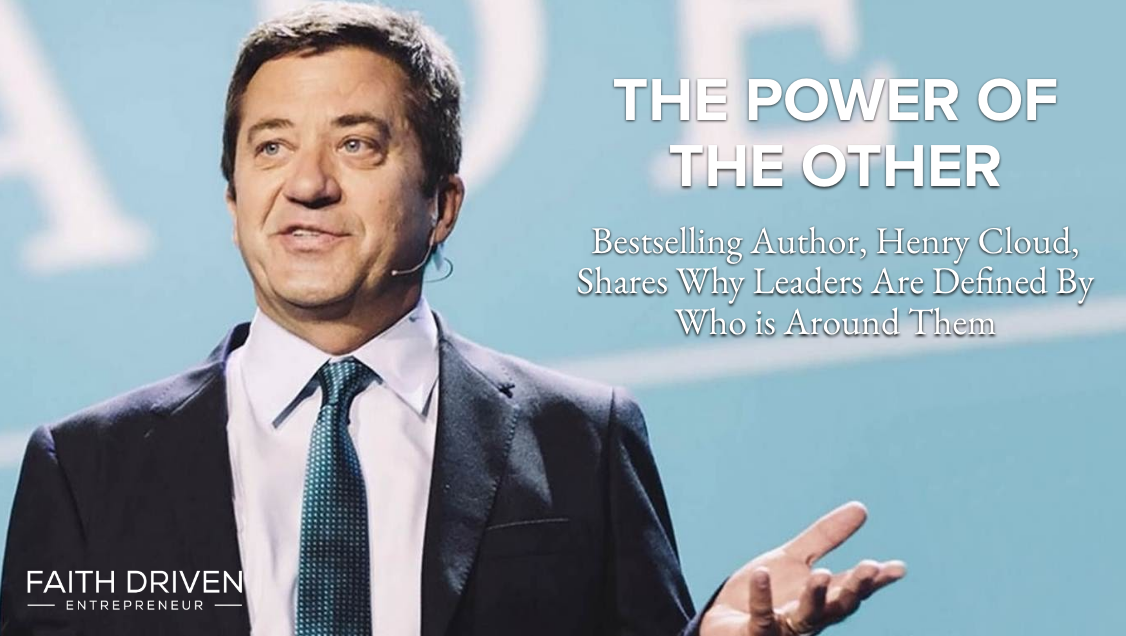
Episode 156 – The Power of the Other with Henry Cloud

25 years of helping people. 117 companies consulted. 20 million books sold. 150 million people served. 

It’s hard to overstate the impact Dr. Henry Cloud has had on leaders all around the world. He has an extensive executive coaching background and experience as a leadership consultant, devoting the majority of his time working with CEOs, leadership teams, and executives to improve performance, leadership skills, and culture. 

We talked to him about all of this and why being a great leader is less about what you can do and more about who you’re with.


Episode Transcript

*Some listeners have found it helpful to have a transcription of the podcast. Transcription is done by an AI software. While technology is an incredible tool to automate this process, there will be misspellings and typos that might accompany it. Please keep that in mind as you work through it. The FDE movement is a volunteer-led movement, and if you’d like to contribute by editing future transcripts, please email us.

Henry Cloud: So you see a Navy SEAL, for example, they land behind enemy lines, first thing they do, they look at that GPS and they ask three questions. Where am I? It’s a good question for an entrepreneur to ask, where am I? What’s current reality? Number two, where’s the enemy? And number three, where’s my buddy? Now, think about this, because if they know the answer to the third question, they can find the answer to the first two. But if you don’t have the third one. You are screwed and the CEOs and the business leaders that succeed, their number one priority is who do they surround themselves with?

Henry Kaestner: Welcome back to the Faith Driven Entrepreneur podcast. We’ve got a great guest today, it’s not often that we have somebody who’s been an author of books that have been bought 20 million times. That’s a pretty big deal and sets the bar pretty high as we start thinking about this Faith Driven Entrepreneur book that we’ve all been working on.

Rusty Rueff: And by and by the way, is this is the first time. And William, you correct me. I think it’s the first time that we now have two Henries on the show at the same time. So this could get confusing.

Henry Kaestner: Right. Henry Kissinger continues to say no to us. And so, yes, it is indeed that Henry, I don’t know and maybe I should say the same for you probably don’t know many peers that that share name, but, you know, it’s becoming popular again.

Henry Cloud: Finally, I mean, when I was a kid, it’s like the dirtiest name ever. I used to kind of go, oh, I wish I were named like John or something. But now it’s really a cool name. I love it. Yeah.

Henry Kaestner: If you’re on a soccer sideline and somebody calls that Henry, I know I turn my head, but until about 10 years ago, I can’t tell you how many people come to me said, oh, that’s a great name. My dog’s name is Henry or my parents’ name is Henry. Right. Clearly it’s not a common name.

Henry Cloud: in the 15th century. That was right. That’s right.

Henry Kaestner: That’s right. Thank you, Mom and Dad. OK. All right. So, Henry, thank you very much for being on the show. We’d like to get an understanding the background of all of our guests, unless somebody tune in this and say, OK, here’s this academic is an author. That’s actually not you. You’re Faith Driven Entrepreneur. You’ve got a background in business. You’ve raised money, you’ve led people. Tell us a little bit about who you are, where you come from. Bring us up to today, OK?

Henry Cloud: You know, it is weird when you say, yeah, you’re not there. I go. I’m really not that’s not what I do. But I guess I do. But I’m a practitioner. Yeah. So I’m a psychologist by training. And what happened was I came from a business family, a business background was accounting and finance major in college and then picked up a psychology major. On top of that, when I said it’s my faith, I wanted to go to this field. Long story short, I had been in practice and my first job was actually in a leadership consulting firm that worked with CEOs. And so it had a business context. And I was a clinician, you know, back then, executive coaching didn’t exist, but that’s kind of so they wanted to shrink in the leadership consulting firm to work on these kind of growth issues. Well, about five years into it, six years into it, my business […] started to kind of get bored with not doing anything in business. So I wanted to start a faith centered psychiatric hospital and treatment center. And long story short, I went out raising money, look for investors, all that kind of stuff, and then ended up with some minority partners, went out and did one hospital. And that one worked. And then we did another one. And that one worked. And then we did another one. Ended up throughout the western United States, had hospitals and treatment centers in 40 different markets, four states, Washington, Nevada, California and Oregon, and ran that company entered. Yeah, you know, medicine, hospitals, regular hospitals, known hospitals. I would go in and I’d knock on the door every Faith Driven Entrepreneur we started it literally. I didn’t have a penny. I mean, we started this from a broom closet. I mean, no money at all. But when knocked on the door, the first hospital and said, look, there’s a lot of people out there that need psychiatric treatment, depression, eating disorders, alcohol addictions, drug addictions, all of this. But they want to come to a treatment center where their faith is seen as part of the answer, not part of the problem. And it wants to be friendly to faith. And there is a big need out there. And so if you’ll give me a wing of your hospital, I’ll take it through the state licensure process. I’ll bring the doctors, I’ll bring the patients, I’ll market it the whole deal, and let’s do this. And so talk to one hospital into trying this. And so we tried it and then that one worked and ended up in 40 different markets and ran that company with with John Townsend for about ten or twelve years and then managed care to change the landscape, which is another thing entrepreneurs run into. I mean, you know, you get disrupted, right? The industry changed. And so when the industry changed with managed care, where we went from 30 day stay. So I think of a revenue model that’s built on a certain model where you have thirty days to treat somebody and then it went to three to five day stays. The whole thing changed that we were still, you know, very profitable. But at that point, the faith mission I could no longer do. We could medicate somebody, stabilize him, get him out. But we couldn’t do the deep spiritual and emotional family, relational psychological work there was life changing, which. Why I went into it, so I sold the company at that point and then went to working with CEOs and businesses and companies

Henry Kaestner: and writing and so on, the writing part on the consulting you do with CEOs and leadership work that you do, but also the writing you’ve written on relationships and boundaries and when to say no and integrity and happiness and so many other great resources. But I want to ask you if you can consolidate those topics a little bit and answer this question in the hundreds of thousands of leaders that you’ve worked with, some very, very closely, some more remotely. But in all the leaders you’ve worked with, is there one thing that you could offer up that differentiates a good leader from a bad leader or maybe even a good leader from a great leader? Just different things that you see that are just emblematic of that person has what it takes because they’ve got X, Y and Z.

Henry Cloud: Well, I hate that question, but it’s issue. That was what made

William Norvell: me ask it. Yeah. Good work, Henry. Thanks for really honoring our guest.

Henry Cloud: Yeah, well, but I was going to say I hate the question, but it is a great question and here’s why I hate it. Whenever you say that one thing is sort of like, OK, if there’s one thing that’s essential to life, OK, well, what do you want? Air, water or food, which you only pick one, because in reality, you know, there’s kind of this cluster of things that come together. It’s not a million things, but it’s a few things. I and so I actually wrote a book on this in a way called Integrity. And here’s why I called it integrity, because a lot of people would say, well, the one thing that a leader’s got to have is integrity. But what they mean when they say that is they mean the most elementary definition of integrity in a certain way, which is basically a moral and ethical definition of integrity. In other words, somebody is getting integrity out, lie, cheat or steal. You can believe the numbers, all of that. But how many business people do you know that they wouldn’t lie, cheat or steal? But if you’re asked, do you want to do another deal with them doing work with them again, we go, no way. Well, why not? Because what they’re missing are all these components that are true integrity. The way the literature talks about it and the way actually our faith talks about integrity means to be integrated. It means to be whole. An integer is a whole number. OK, so you could say if they have one thing, it’s they have integration of their character. So that’s one thing. But see, it’s multiple things, right? So if you look at a great leader, what you’re going to see is in that book integrity, I use the metaphor of a wake. So a boat or a ship, and it goes across the ocean. It leaves a wake behind them. And a leader does that. You go to an industry they leave awake. All right. Well, what’s the wake like, Will? Katrina leaves a wake. A hurricane leaves a wake of destruction. Some leaders go through industries or companies or departments and they leave a wake behind them on two sides. One is the results that they get. Are they fruitful? Did they move the needle? Did we innovate? Did we capture market share? Did we grow? There’s got to be results. But on the other side of the way is the relationships, so I think if a great leader, if you look at what do they have, they have the integrated character, the wholeness where they can do both and they do both well in a transcendent way, where they bow to things that are larger than themselves, God, the values, the mission, the stakeholders. If they put all that together, that’s a good Amen Amen.

William Norvell: William here, integrity. Such a great word. I love that that’s where you and it’s just in the way you explained it is something to aspire to in all of our life. Professional, personal, all of those areas. And, you know, I’ve heard Henry say before, so I’m going to transition to a new book you’ve written. Henry’s got three boys heading into college, ninth grade, eleventh grade and twelfth grade. I’ve heard him say that before in the […] character. You know, college isn’t about the grades you make. It’s about the hands you shake. Right. That’s his personal strategy. And, you know, he’s living that on the three Kaestner boys. Your book, The Power, the other, he

Henry Cloud: wouldn’t be out there raising money or doing stuff like that. Right? It doesn’t it

William Norvell: doesn’t describe him at all, does it, at all. And I’ve heard him say that I was interested in how that parallels with your book, The Power of the Other. Does it confirm this or not?

Henry Cloud: Do you know the statistical term orthogonal?

William Norvell: I have heard that word said by people.

Henry Cloud: Yes. Well, it’s two factors that are not related. So, yes, it confirms it. But the way that he means that it might not be what I’m talking about, but it actually does because that can be taken two ways. It is about the handshake. And so, yes, it confirms it. When I wrote the book, The Power of the Other […], the basic premise is a lot of times in leadership development or in business development or personal development, you know, what you’ll basically hear about is you’ll hear about that. You know, you’ve got this brain, right? You’ve got this piece of equipment and you’ve got to get your brain working and you’ve got to be healthy. And then you’ve got the software that runs the equipment. So you’ve got to have the understanding, the belief systems, the attitudes, the knowledge, all of this. We do a lot of leadership development on the software. Right. But the reality is a person, they got the hardware of their brain, they got the software, but the third leg of the stool is their relationships because here’s the deal. And this is true about all high performers. I don’t care if you’re talking about Tiger Woods or Olympic athlete or a Navy SEAL are the best people in business. Every human, their brains, who they are, it runs on three things. You’ve got physical equipment, the wiring, you got the software, the belief systems, the knowledge, the attitude software and all that emotional regulation, all that stuff. But the third leg of the stool is the relationships that they’re connected to. And so it works like this. You take a baby and you put them in the world. They come into the world. And what’s the first thing they do? They don’t turn to Mom go, oh, gosh, I’m sorry. Was it hard on you? I don’t you know, let me clean up around it. No, they’re like this. What are they doing? They have a chip inside of them. It’s searching for a connection, just like your cell phone. You turn it on, it searches for connection wi to be able to be connected to the network that’s going to enable it to get to the next level. OK, that’s not just a baby. And if they’re not connected with in that relationship, shaking the right hands, their brains don’t grow, their emotional regulations don’t grow, their body doesn’t grow. Yeah. Adopt them 12 years later. If they didn’t have connection, they have behavioral problems and they have missing parts of their brain. But then all the way to the other end of life, you take octogenarians. If they’re not in the proper relationships, they have second, third heart attacks and strokes. Point being CEOs in the middle of life, it’s their relationships that are the power of the other that actually it’s like your computer being online. That’s where they download the updates to get to the next level of performance. And that’s also where the viruses are removed. So you see a Navy SEAL, for example, they land behind enemy lines. First thing they do, they look at that GPS and they ask three questions. Where am I? It’s a good question for an entrepreneur to ask, where am I? What’s current reality? Number two, where’s the enemy? And number three, where’s my buddy? Now, think about this, because if they know the answer to the third question, they can find the answer to the first two. If you don’t have the third one, you are screwed and the CEOs and the business leaders that succeed, their number one priority is who do they surround themselves with and in the power of the other. In that book, I list great long lists of high performers in business. And who the other the main mentor, the main support person. Each one of them has somebody and they’re always going to be there. And the people that don’t have them watch out. Don’t give them money if you’re […] like you guys or an investment bank or even joining a partnership. If somebody isolates, if they operate in a vacuum. Be careful.

Rusty Rueff: Stay away. That’s great. I love the metaphor. The hardware software. I guess you could say the relationships are part of the user interface, right. That when you put those two together and and so many people, you know, actually, sadly, if you go early in the generation of a entrepreneur or a business person, you know, whether you’re in college or you’re getting your MBA, you know, you’re taught to Quote on quote network network. Right. And that networking that is so important to do, to be able to build those relationships, you know, sometimes that user interface can not be good, right? It can turn other people off or it becomes the end versus the means. Right. It’s like, oh, I got to build this huge group of networking. Can you talk about that and give some advice to our young entrepreneurs who are trying to do that and do it well and build those relationships, how to be authentic, how to do it in a way that establishes real and long term relationships versus these, you know, very transactional and maybe very superficial.

Henry Cloud: Yeah, it’s a really important question. And I’d look at two dimensions on the outset. One is, what is the closest circle in that network building in you if you see your closest, closest connections? As they’re going to be building your balance sheet of, you know, all these other networks that are going to, quote, build your business, be able to drag money over the transom or our connections or markets or whatever, that is, if there’s just a source of business stuff that’s really problematic, if that’s the foundation, because your closest network is going to be the people that are building you because you’re the equipment that’s going to build the business. OK, so if they are strengthening you, if they are purifying you and I mean that in the clearest sense of the word, like, you know, I work with CEOs and generally a lot of the problems they find themselves in have to do with impurities that they’ve got to get out of their soul. And that ends up, you know, read the front page of The Wall Street Journal most days and there’s going to be some business story. There has nothing to do with the CEO. Was it smart enough? It had to do with a lot of relational dynamics, destroying trust or the culture they built or all that kind of stuff. So you want the closest people in your network to be building you as a person, strengthening you. There’s going to be times listen, you can’t depend on motivation. There’s too many times where you wake up. You don’t feel motivated to do anything. The closest people are going to put energy and fuel into you. The word encouragement means to take courage and put it into us. You’ve got to have that kind of Navy SEAL tribe that does this for you, that are building you. So from there, you’re also going to build out to be able to have the eyes to see with them helping you which hands are worth shaking in the broader network and which ones are. So that’s the first dimension. The second one is. Why am I building this network, is it. I mean, who’s the tech and who’s the dog here? Any network that you build and your motive is just to serve you, you will destroy that network or it will move away from you. But if you’re looking at building a network, asking primarily, I don’t mean this in a weird way, but what value can I bring? To these people. How can I serve what is important to value, and you see that network in that way, not only is it going to yield good results, it’s going to be more meaningful, it’s going to be more purposeful and it’s going to stick around. And so I think the network’s important, but why are we building it and what’s it doing for us? That’s really, really key. How do you mean? Who was a son of some close friends of mine and he graduated from college and actually they had had a big loss in his family and their extended family and terrible time, really depressed graduate college in Florida. And Tori and I said, let him go live with us. And so he came to stay with us. OK, so I got to know the guy was so gifted in business and finance and relationally and so smart, I said, dude, you ought to go into financial services. And he said, really? Because he was really interested in the markets and he invested money in a bunch of stuff. And so we started to look into it. He got more and more interested. So he goes to work for one of the big firms. After they sent him off to train, he calls me. He had moved at that point. He said, I don’t think I can do this. And then I said, why? And he said, Because it’s like, I can’t I feel like a snake oil salesman. Tell me, build this network of, you know, like my friends and referrals. And he said, I feel like I don’t want to be used and people like that. It just feels terrible. And I said, OK, dude, let me tell you something, if you feel like a snake oil salesman, you got to get in a different mindset because I know you and you’re not in financial services, the great ones, every person they work with. Do you know that 99 percent of the people out there, what they lie awake at night worrying about is their retirement, their kid’s college? What if I lose my job? So much of their pain and life comes from their finances. You’re not a snake oil salesman. You’re an ambulance driver. You’re going to go join somebody’s life and that marriage in that family and you’re going to bring them peace of mind. And they’re going to understand they can have a future. They do have options. You’re going to empower them. You’ve got to look at this network thing differently, OK? He changes his mind because that’s how he was inside anyway. And he got into I can be in business as a ministry to people, as a service. Guess what finished. No one in the whole training thing killed it, just killed it. But he was building a network in a way different place.

William Norvell: Amen, Amen. That is a it’s a really healthy reframing. And, you know, we all end up in different spots. Thanks for sharing that practical example.

Henry Cloud: And for him, OK, for him, I mean, it did take a reframing and kind of the cognitive mindset that he was bring it to it, but it didn’t take a reframing of his heart to see. That’s the thing is what I was talking about earlier is two sides in this network. The why am I doing it? But also the people that were close to him that we’re building into him as a person, we’re helping him. I said let’s get it pure, you know? And so that’s who he was, that a person. So when you’re in business and you’re coming at it from a pure, authentic heart, you’re there to help whoever comes across your doorstep. People are going to know that. And that’s really important.

William Norvell: And that’s a great point. And not to paint a negative picture, but they’re going to know the opposite, too, if that’s not where you’re coming from. Absolutely. It’s going to show

Henry Cloud: I have a friend who built a big company and a competitor who was bigger, came along, said, we want to buy you out. And so we started talking to him. He said he was kind of interested in that. He said, no, I’m going to sell anything I was going to sell, but I want to have the conversation. I want to find out what they thought we were worth and just know they go through this whole thing and the other company comes along and says, all right, let’s do this. And I don’t think I want to sell. And the other company says, well, you better because we will crush you if you don’t. And you know what he did? He said, let me make it easier for you. He gave them all their internal strategic plans and documents and all of that. He said this might help you. He said, because we’ve learned a lot over the years just that you’re going to do the same kind of business and crush us. He said this might help you. And he gave it to him. They’d looked at him like what? And he said, I really wish you well. The company goes out there and they fail. And he said. I knew they didn’t have a chance. I said, why? He said, because for us it’s all about the people and loving and serving the people. He said they didn’t have the secret sauce, they could have the strategy. I knew it wouldn’t work.

William Norvell: Hmm, that’s an amazing story. That’s amazing. That’s that’s a bold step.

Henry Cloud: I don’t know who he was, but I

William Norvell: think I think I was with him right up until the handing over of all the documents. Well, that seems like a bridge too far, but I’ll pray about that and see if God can humble me a little more. Speaking of that idea, though,

Henry Cloud: if you had me and I’ll help you succeed,

William Norvell: right? Exactly. Exactly. I was you know, that’s that’s honorable. You know, I want to shift topics just a little bit, but kind of along the lines of what we’re talking about. What are your big initiatives that we’re big fans of his churches, that he’ll and I want to make sure our audience gets a chance to hear how they got started and what that idea is all about.

Henry Cloud: Well, it’s an exciting project. You know, as I said back when when I started my company way, way, way back, it was a faith, entrepreneurial effort, you know, and I don’t mean that just because I’m in a field where you actually talk about faith, like when you’re talking about people’s lives and healing and all that, because I think it’s the same thing with great companies that sell widgets or, you know, fried chicken sandwiches or others that they’re there to serve and they’re there to help. So it’s not just because you have that content, but in my particular field, know, that’s how it started. And part of it was to help people who were struggling with things like depression and addictions and all these things that we put in the category of mental help. You know, the best psychological evidence based treatments are also the very processes that are throughout the New Testament and throughout the Bible. And so there is no conflict, what research does and empirical studies is, it actually validates what the scriptures say. And so my mission in life was to try to show how, you know, thriving and well being in business and relationships, but also in our clinical issues was also about the development of our spiritual lives. That’s right at the center of it. And so about two or three years ago, you started to hear out there, there’s a mental health crisis in America. Right. And with the number of opiate addiction was really driving a lot of the awareness in the beginning. But also it was in depression and anxiety, a bunch of other stuff. And it’s getting worse. Right. Then parallel to that, you also started seeing a lot of pastors who were leaving the ministry burn out in the stress. And sometimes, you know, they’d kind of screw up in some way. And there’s a lot of pain in that arena. And so we started working on a project called Churches that Heal. And what that means is we wanted to come alongside churches and provide just an answer to both sides of that equation. How can we help the leaders heal? The pastors become healthy, but how can we help the churches reach into the neighborhoods and the communities that they work in and help the people heal in this mental health crisis? And I can tell you, the health care system is not going to be enough. It’s going to take the churches to go into the neighborhoods and help people that are really, really hurting because we’re talking about depression, anxiety. We’re not talking to somebody in a rubber room up there, an institution. We’re talking about the person in the cubicle next to you at work. We’re talking with the neighbor across the street. And a lot of times you tell them that the person people are looking at in the mirror. And so I wanted to provide a program that churches could do both of those, help the counselors, help the people in the community, and that’s called churches. So plug and play a whole program that churches can begin to use.

Rusty Rueff: That’s awesome. I want to turn our time that we have left here before William brings us our traditional clothes. I want to go to another leg of the stool. That’s Henry Cloud and that’s your authorship. And you know, our listeners, they’re here and we’re here for them to you know, they want to be equipped and we’re trying to equip them at the same time. I know they hunger and they thirst for more knowledge. So they reach the books. Right. And there’s no shortage of leadership books that are out there on.

Henry Cloud: And it really is no shortage, I think.

Rusty Rueff: And there’s no shortage. And you are in that pantheon of writers who are trying to increase better leadership. Give our listeners a little bit of direction and hint on how best to utilize leadership books and then please, you know, shamelessly and do not worry about it, self promote to tell us, you know, which of your books should we be picking up and making sure that we read cover to cover.

Henry Cloud: Oh, gosh, well, to answer the first part of the question to me, there’s kind of two important parts to that. As I said earlier, I think that if you look at the Bible, for example, or you look at the psychological and leadership literature, the metaphor of the values is you got a tree and the tree produces fruit. OK, what 99 percent of people are trying to do is they’re trying to go after the fruit. They’re only reading leadership materials about how to increase our profits, how to write whatever innovation, you know, opening up new markets. How do I go international? How do you raise funds? What’s marketing there? Looking at all the stuff that’s going to make them more or whatever more means to them? What they’re not doing is they’re not focusing on the tree. OK, and basically in its core, core, core, the tree is you OK and the tree is your integrity. And I don’t mean that in the moral, ethical sense only that’s foundational, but I mean your integration of becoming complete. OK, so I wrote a book called Integrity. One of the ways I would look at that whole thing is when you’re looking at the genres, remember looking at it with two sets of eyes, which books am I going to read that helped me become more complete and the best person I can be in this context, I don’t mean the best. Whatever we’re talking about, business and leadership, that’s one part. And then the other part, you have two sets of eyes. Then there’s going to be more tactical context, subject driven expertize focus that you need to have. But make sure you’re reading both. One of the things I have a model of leadership is kind of these big buckets, because a lot of people it’s interesting, I go into an executive meeting sometimes and I say, OK, I have us three by five cards, write down what’s a leader, what’s leadership, like you said with the book, or you’re only going to get sixty three thousand definitions. And they’re basically all true. The problem is how do I go execute on that tomorrow. So what I tried to do in my work is I’ve tried to look at how does a human function, what is it a leader actually does? And let’s build a model from there about the functions of what leadership actually is and develop the person in the leadership in the companies, because I work with companies and developing leaders, let’s get them to be able to do those big five things. So I talk about it and then we can drive down to the specifics of like one of those I start with, like it’s like the brain first thing the brain has got to do if I want to go from here to there, that’s leadership, right? I’m sitting here, my vision is live. Could be better over there as the first day I got it, I got to come up with a vision. Second thing my brain does, it engages the talent. It’s going to need some legs, commands. It’s the right talent. I’m going to need to walk over there. But then the next thing I got to do is I got to figure out how I’m going to get there. Am I going to walk? Am I going to fly a plane? Am I going to do this now? Decide on a strategy and a plan and that tells me how to get there. OK, let’s go now. Start to go. I wonder to see my body. My brain has a measurement system in it to tell me am I getting closer or farther away and then real quickly holds me accountable so I can quickly adapt. So if you look at a leader and they’re really good at vision, which has a lot of psychological components and personal and interpersonal components, they’re really good at engaging talent, picking the right talent, engaging the right talent, Kievan that they’re really good at making sure strategy and a plan happens which are different but one bucket and then they really build in good measurement, accountability systems, a lot of interpersonal dynamics going there. How do you hold people accountable? How good are you at all of that stuff? And then quickly, how fast do they adapt and fix the problems that they’re measuring makes them aware of? That’s what our body does. Now, then, if you’re becoming a whole person in those functions, then you can take any one of those topics. There’s probably five books on strategy that I could recommend immediately. That’s the deep down. So I want them focusing on their development and I want to focusing on the context of the specifics. I love this. A long answer. I feel sorry for that.

William Norvell: No, it’s a fantastic answer. But I love the tree and fruit. I love that metaphor. And I want to ram that in. I love the idea of working on the tree. And I do think so many business books are 30 days, 60 days, the revenue, you know, whatever. And those are bad. Those are bad. Right. But I love refocussing to some of the tree as well. And I love that. And as we unfortunately have to come to a close on this session, I’m sure we’ll beg you to come back. We love to ask our final question, which would be, is there a scripture or a story in God’s word that maybe coming alive to you in a new way or maybe something you read this morning that you would like to share with our audience

Henry Cloud: a scripture that’s coming right now or, gosh, this morning that’s very recent. You know, there’s actually a handful of them, and one of them is not a particular one. It is a phrase. And then I’m going to add another. But the phrase is one of the things you hear God saying over and over and over is behold. I’m doing a new thing. And I think one of the things that I see we’re right at the end of a year, there was unlike any other year we’ve seen in the pandemic and now leaders and entrepreneurs are going through that. One of the things that that has said to me that I’ve seen in me, I’ve seen companies, I’ve seen it in individuals, I’ve seen it in marriages and seen in families, is that there is a very, very, very deep and good of John 15, a deep and good pruning going on right now. That, you know, John, 15, that whole passage tells us is that he says, you know, if there are some that are just going to prune them and toss them into the fire, but some other branches that they’re pruned, they’re fruitful, but they’re pruned so they can be more fruitful. And one of the things that I’ve been really, really asking God to do and seeking in the last year and I’ve seen companies do this and I’ve seen CEOs doing it with their teams and strategies, is they’re pruning themselves and their businesses and they’re letting go. I actually wrote a book on this called Necessary Endings. There are things that have to end in order to get to tomorrow. And it’s a deep pruning. And I think a lot of us in this time period have gotten back to asking what’s most central to my mission, to my life, to lots of things and what do I need to cut away and what needs to be cut away from me? And it’s kind of a pruning time, I think, inside my own heart, inside my life story, and I’ve been talking about what are some things we need to let go of, you know, stuff the crap accumulates in our lives over time.

William Norvell: Hey, man, I mean, why in our hearts. Right. And our hearts

Henry Cloud: and in our business. And why did it take a bankruptcy judge to shut down Pontiac? Think about that, General Motors Pontiac hadn’t made a profit in, what, four decades, you have the smartest executives in the world hanging on to the saying goes, we’ll get rid of that. Well, a lot of times we’re so emotionally attached. It’s just we’re hoarding stuff for sure. And sometimes it’s even destructive stuff.

William Norvell: Hey, man, what a fantastic way to end, and especially during the season. Thank you so much for joining us. Thank you so much for sharing that. The idea of pruning to find out what could grow is an amazing place.

Henry Cloud: And I said I didn’t give the shameless plug go for it. But one of the things one of them is not a book. It’s a platform. If you go to boundaries, dot me. I’ve got a digital platform there. You can sign up and I’ve got over 80 courses, everything from performance to, you know, the emotional relational side of life boundaries. Got me to go to there and check that out. And then the books I would recommend are there’s three or four business books. The Integrity Book is one Boundaries for Leaders is another one, which has a lot to do with the actual execution of those necessary endings, which is a step you’ve got to get rid of the people. You’ve got to fire the stuff you’ve got. It doesn’t belong to your future. It’s really important. And then the power the other those four leadership books are the ones I pointed to Amen.

William Norvell: Well, thank you for that. Thank you for joining us. Thank you for sharing so much wisdom with our audience. We’re incredibly grateful and thankful for your long obedience in this direction.

Henry Cloud: Well, thank you for what you do. And I’m so glad you’re focusing on entrepreneurial Faith Driven Athlete leaders because guys think about this in the Bible. I always say this to my pastor, look, you get paid for being good, the results are good for nothing, right? It’s in the Bible. There were all this little group in the ministry, what we call the Levites, and they just they did the religious activities. But the word for ministry is a word that means service. And so God made the rest of the tribe to provide people with the food and the tents and the livestock and all the stuff you do. And you were put on the earth as a minister. Just because you don’t do hymnals or choir roads doesn’t mean that you’re not faith in entrepreneurship. They go together.

William Norvell: Absolutely. That’s our learned experience and why we do this. And thank you so much for blending those together.

Henry Cloud: Good to be with you.

Henry Cloud

New York Times bestselling author

Dr. Henry Cloud is an acclaimed leadership expert, clinical psychologist and New York Times bestselling author. His 45 books, including the iconic Boundaries, have sold nearly 20 million copies worldwide. He has an extensive executive coaching background and experience as a leadership consultant, devoting the majority of his time working with CEOs, leadership teams, and executives to improve performance, leadership skills and culture.

Dr. Cloud founded and built a healthcare company starting in 1987, which operated inpatient, and outpatient treatment centers in forty markets in the Western U.S. There, he served as Clinical Director and principal for ten years. In the context of hands-on clinical experience, he developed and researched many of the treatment principles and methods that he communicates to audiences now. After selling the company, he devoted his time to consulting and coaching, spreading principles of hope and life-change through speaking, writing and media.

Throughout the same years and until the present, he has devoted much of his career to leadership performance and development, blending the disciplines of leadership and human functioning to helping CEO’s, teams, organizations and family entities. From his early clinical training, Dr. Cloud became interested in how clinical psychodynamic ego psychology and Object Relations theory integrated with human performance past the clinical arenas, and continued to build models that could be adapted to business and organizational contexts. Much of his later writings have focused on these areas, with a particular interest in the newer findings in neurobiology and brain research that affects leadership and performance. Dr. Cloud hosted a national radio show for 15 years airing in 200 markets in the U.S.

His book, Integrity, was dubbed by the New York Times as “the best book in the bunch.” In 2011, Necessary Endings was called “the most important book you read all year.” His book Boundaries For Leaders was named by CEO Reads in the top five leadership books of its year.  His newest book, The Power of the Other, debuted at #5 on the Wall Street Journal Bestseller list.

Dr. Cloud’s work has been featured and reviewed by the New York Times, Wall Street Journal, Boston Globe, Publisher’s Weekly, Los Angeles Times, and many other publications. Success Magazine named Dr. Cloud in the top 25 most influential leaders in personal growth and development, alongside Oprah, Brene Brown, Seth Godin and others. He is a frequent contributor to CNN, Fox News Channel, and other national media outlets.

As a speaker, he is a favorite at corporate events, conventions, and public arena events on a variety of topics, speaking regularly throughout the U.S. and internationally.

Dr. Cloud is a graduate of Southern Methodist University, with a B.S. in psychology. He completed his Ph.D. in clinical psychology at Biola University, and his clinical internship at Los Angeles County Department of Mental Health. He is an avid golfer, and actively involved in philanthropic efforts focusing on poverty and holistic relief in the U.S. and the Developing World. He lives in Los Angeles with his wife, Tori, and their two daughters, Olivia and Lucy.

CONTRIBUTIONS TO FAITH DRIVEN ENTREPRENEUR

Shame Never Made Anyone a Better Entrepreneur

— by Amanda Lawson

The past 2 years of my life have been a long season of learning a lot about obedience. It hasn’t always (read: rarely) been a pretty or smooth process. Tracing the ways the Lord has cultivated an obedient heart in me has brought me low—not always willingly—on several occasions, especially as I grow in my understanding of how obedience relates to my work. I don’t pretend to have all of the answers, and I certainly struggle to listen when the Lord calls me to difficult things in my job. I’ve often found myself wrestling with what happens when I don’t obey and I find myself in a position where I am tempted to give in to shame and guilt, and how do I come out of it? 

As someone who grew up in and around the church, I’d heard the story about Peter denying Jesus many times. It had always been about how Jesus knew what Peter would do, that He chose Peter anyway, that Peter felt conviction and went on to be one of the founders of the Christian Church. Occasionally, someone would connect the 3 denials with Jesus later asking him 3 times if Peter loved Him. Somehow that seemed to fall short of the full impact. 

Peter knew who Jesus was. He had seen too much to walk away; he said as much when many of the disciples left Jesus (“Where else would we turn? You have the words of life and death.” John 6). It wasn’t just a cheap moment of self-preservation; it was a blatant rejection of truth he knew at the core of his being. So, when Peter and Jesus are walking on the beach, it’s understandable that Peter would be experiencing a wide range of intense emotions. And where it would have been more than justified for Jesus to chastise Peter, He doesn’t. 

It strikes me that Jesus isn’t trying to call Peter out and Peter isn’t about to defend himself. Peter knew he sinned. Jesus knew Peter knew. But in the moment that could have been the most convicting (and literal) come to Jesus moment of all time, Jesus draws Peter in for a very different kind of come to Jesus conversation. Not once does Jesus point out Peter’s betrayal. He doesn’t ask three times “Peter are you sorry?” or “Peter how are you planning to make up for it?” He asks, “Do you love me?” 

I’d like to submit that this might be because Jesus is significantly more concerned with our hearts being for Him than walking perfectly, and certainly more interested in growing our relationship than shaming us into hiding. 

As entrepreneurs and investors—and frankly, whatever position you find yourself in—understanding this interaction can be a game-changer. While we try to honor God in what we do, obeying His call on our lives and bringing our whole selves into our work, we aren’t perfect. We struggle to make the hard decisions, to sacrifice, or to humble ourselves and relinquish control. When this happens, it’s easy to look at the mistakes we made and, the paths we should have taken, and to feel guilty and choose shame. And hey, we wouldn’t be the first. 

In the Garden of Eden, upon becoming aware of their disobedience, Adam and Eve tried to hide from God, ashamed of their sin. While talking with Jesus on the beach, Peter was adamant of his love for Jesus, which begs the question, who exactly was he trying to convince? When we feel shame, we so often try to hide like Adam and Eve or to over-compensate like Peter. But that’s not what the Lord calls us to. In the aftermath of their sin, God called to Adam and Eve with a plan (Genesis 3:15) and Jesus was far more concerned with Peter’s heart posture than his perfection.

When we find ourselves facing consequences of disobedience, the temptation is to run and hide, or vehemently declare our devotion; as if Jesus is the one who needs to be convinced of our love. In reality, He already knows both our hearts and our failings, and He chooses to love us anyway. Maybe it’s us who need the reminder that we love Him and, that since we are in Him, our mistakes don’t ruin that love. We don’t need to hide from Him because He is the one who redeems, and who already has. 

Of course, as Paul notes in Romans 6:2, this grace doesn’t give license to disobey. Rather, it demonstrates God’s love for us and enables us to repent, to turn to Him and obey going forward. So, as we attempt to follow the Lord’s call on our lives, it’s much more about our hearts than the outcome. When we have slipped up, when we have chosen our preferences over the Lord’s voice, instead of trying to hide overcome in our shame, we can turn back to the Lord and check our hearts. 

We can remind ourselves that we love and belong to Him and are His. We are not defined by disobedience or failure. When we remember that our hearts are His, that the outcomes are His, that we are forgiven, we are free to follow Him in our work— even when we fail. It is His grace that enables us to repent, to look to Him and check our hearts’ posture, and to move forward in freedom rather than shame. 

Related articles

——