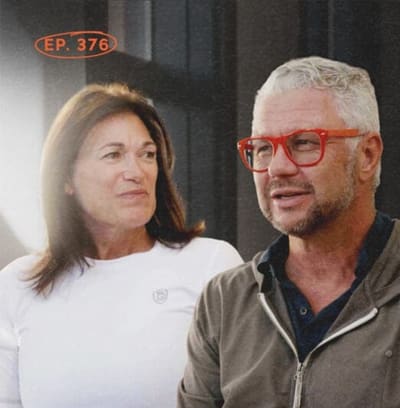
Mark McClain’s entrepreneurial journey is a unique one. But if you find yourself in a startup or new venture that you didn’t anticipate starting a few years ago, Mark’s story will be both helpful and encouraging. He will be the first to tell you that he didn’t envision himself as a creative entrepreneur. Yet, when he found himself frustrated by the difficulty of creating change in mid-size and large organizations, his desire to create sparked a shift in his career and his life.
Mark has some great lessons for entrepreneurs. On this episode, he shared about struggling with the idea of control, and he also talked about what happened when he realized he couldn’t be the expert at everything. His humility and vulnerability set the stage for a great interview, and we really hope the story of his journey encourages you along your own.
Useful Links:
SailPoint
It’s Not All Fun and Perks: What Company Culture Really Means
Why SailPoint? With Mark McClain, CEO and Co-Founder
Books Mentioned:
StrengthsFinder
The Ideal Team Player
Top 50 Books for Faith Driven Entrepreneurs
EPISODE TRANSCRIPT
*Some listeners have found it helpful to have a transcription of the podcast. Transcription is done by an AI software. While technology is an incredible tool to automate this process, there will be misspellings and typos that might accompany it. Please keep that in mind as you work through it. The FDI movement is a volunteer-led movement, and if you’d like to contribute by editing future transcripts, please email us.
Henry [00:02:49] Grateful to have you on, Mark. Thank you for joining us.
Mark [00:02:52] Thanks anyway. It’s a great pleasure to be here.
Henry [00:02:54] So we’d like to start, as you might imagine, at the beginning, and we’d love for you to give an overview about how you’ve gone here. Just tell us a bit about your story. Tell us a bit about coming to face some of the background. How do you end up running a publicly traded company that’s thriving and flourishing? And how do you find yourself on the Faith Driven Entrepreneur podcast?
Mark [00:03:13] So I guess this is now going to be a three hour podcast. Generations go through all that. But I’ll try to try to give you the shortened version.
[00:03:19] Yeah, I grew up in a really strong Christian home. I was fortunate to have parents who are strong believers and had a really strong upbringing. I would say I was the my danger in life was not being the younger prodigal son story guy. It was the older son guy. Right. Just to make sure I never got to take it for granted and become a Pharisee, you know, that kind of guy. And I certainly was blessed to kind of have a good, strong upbringing and never really ran away from that. From a faith standpoint, that definitely came to understand a you know, probably a couple of major points early in life and then probably high school. I felt like I really kind of began to understand what it was going to mean for me to own my faith and work pretty consistently down that path. You had been married for 33 years. Now give the best family background. My kids are all awesome kids. My son’s thirty one. My daughter’s twenty eight. And the younger daughter is twenty five. They’re all married now. We have four grandkids among them, three from the son and one from middle daughter, and yet from the recently married younger daughter. But my wife Marge I’ve been. I always say ridiculously happily married for 33 years. Very blessed to have been given a problem. 31 kind of wife. So, yeah, back to the career journey. It’s a fascinating one. I had no real business background. My dad was a social worker. My mom was a teacher. I kind of accidentally found myself heading toward business because, you know, I had a little of that kind of leadership and kinds of interest in that world that caused me to end up starting out of school at IBM and turned out in the mid 80s. And when I reached back, I said the reason I went to a corporate job like that was I was the antithesis of the entrepreneurial lemonade stand kid.
[00:04:50] Right. I say I was the kid who was laughing at that kid, grabbing my friends, going to the ballpark to play baseball. So you can get mom to bring me. I was the guy laughing at the limit. Were you the lemonade guy? I apologize for laughing at you. I do. I feel bad about that now.
[00:05:04] But I was like, why wouldn’t we just let mom bring us some lemonade? Let’s go play baseball. Right. I mean, you know, I don’t need to get a dollar here. I don’t need a dollar. I’ll just you know, mom will feed me. Mom will take care of me. Dad’s around. You know, it just never occurred to me to do entrepreneurial things, to make money. So I kind of joined IBM out of school thinking I’ll do this corporate job. Right. I thought I’d join IBM. This is, again, the mid 80s. She got a bigger brain back there. And I would retired IBM, you know, ideally move somewhat up that corporate ladder, you know, have a nice career, get a pension and all that fun stuff. And a few years into my career, it just started to be clear that may not be the right path. So I took advantage of working at IBM. Paper my MBA at UCLA, which is monthly nice, and then use that to transition to HP Hewlett-Packard, which is again another very large computer company, happen to be based on the West Coast, whereas I’m from California, so I was like to work for a West Coast company. This would be far better than looking for a New York based big computer company. And it turned out that wasn’t enough of a difference. So about then is when I concluded maybe I wasn’t meant to be a large corporate guy. So sort of the closest thing at that point that I did to entrepreneurship was I came and join a then very young company called Tivoli, which had just gone public. Here in Austin, Texas, I moved to Austin in 95, 1995. And I remind people that back then it was very unusual to move from California to Austin, Texas. Now it’s incredibly time. And as you guys probably well know, but back then, I literally had the fun of correcting people, they say. You moving to Boston with a B? I’m like, no, no, Austin. Like Austin in Texas, Texas, where you go into Texas. I mean, literally in the 90s, nobody was doing that. So I came to accretively till he went public actually had gone public right as I was joining with down that path. Turned out, as you guys may know the story I have, but then a year later, I found myself back at IBM. But I’d gotten the bug at that point that I was going to try to do some startup stuff. So then left IBM slashed heavily in 1999 and in 2000 started my first company.
Henry [00:07:05] So you found yourself is kind of an accidental entrepreneur, but you got the bug that went heavily in it. So take us through silk. Most of us aren’t going to know what cell point is. Tell us about cell point. The problem you guys are trying to solve in those early days is, you know, you found yourself, you’re running a lemonade stand up and other people are driving by you. And I have to tell you, it was I feel like.
Mark [00:07:27] You know, after lemons that it worked out just fine. So know we started can we call the waves that and I’ll just skip that story in the sense that it was in the same general industry, which I’d describe here in a second. We ran for about three or four years, got acquired by Sun. Well, folks don’t know the name Sun Microsystems, which later was acquired by Oracle. But, you know, we had a nice, good first time entrepreneurial run. We had raised some venture capital and had a good run with that know winter, a nice growth phase in the early 2000s with frankly, a lot of tech companies were not growing. That’s when the first tech bubble kind of burst. And if you’re in consumer tech, it was a very bad time. I was in business to business or B2B tech. And we actually did quite well and grew really well and had a nice outcome. So then I started to sell point in the mid 2000s. And just to give you a sense of the space we’re in. We are in the security industry. Right. So people know that security’s a pretty hot topic in the enterprise market today. Again, we’re not a consumer company. We sell the business. And the symbol being that we focus on is called identity management. I say simple in the sense of understanding the question. We help big organizations answer these three questions. Who has access to what? How does that compare to who should have access to what and what are they doing with it? Right. Because if you look at an awful lot of the bad things that have happened in the realm of security and will be called breaches right where people have had some of their business or their data compromised, many, many, many of those issues stemmed from the wrong people having access to the wrong stuff. The much more unusual case, which is a well-documented case now, is the Snowden case here in the US, where that was a situation of a guy having the right access, being validly provision, we call it, to do what he was supposed to do at work and then just doing some very bad stuff. So that’s the rare case, right?
[00:09:12] What’s far more normal is for the wrong people to get access to something they’re not supposed to and then abuse it in some way. So there’s a security dimension to what we do. But most folks are pretty familiar with the operational side of what we do.
[00:09:25] Right. Because if you think about large organizations, let’s just call it a 50000 member enterprise, a large organization where they have a typical 10 to 15 percent churn right in there. Fifty thousand personalization. That’s five to seven thousand people changing in and out of the company every year. And those that are staying with the company are changing jobs, getting promoted. The businesses adopting new technology. And so there’s this massive amount of change in churn and keeping track of who has access to what. And making sure it correctly aligns with their role in the company or their job function is really hard. Now, add to that what’s happened in the last year. Now people don’t hire employees to do everything. They contract out a lot of work or they set up joint ventures or business partnerships. And so it turned out a lot of companies, something less than 50 percent of the people that have access to their systems and data even work for the company right there outside vendors or contractors. And so this whole realm of what’s now called identity management. Who are the identities I need to understand and how do they access my information? It’s just become a very large, complex problem. And organizations are really beginning to wrestle with how do they get their arms around that. And that’s what our point that we bring kind of a comprehensive, cohesive view of all of their systems and data and we map that to who are. Identity’s you care about employees, contractors, partners and others, and then make sure all of that stays aligned, that’s supposed to mark.
Rusty [00:10:49] I think that’s fascinating. The journey that you’ve had. You know, it almost sounds like you went from being an intrapreneur to an entrepreneur. And I think we have a lot of listeners that even those that the Faith Driven Entrepreneur podcast, they probably have a similar path as you. They may be working in a larger organization and trying to figure out how to make that shift their entrepreneurialism, trying to drive innovation and do things differently inside of their company. But they really want to step outside of it and go down that path. What advice and counsel do you have to them from your experience?
Mark [00:11:25] Yeah, that’s a great question, because that is my journey. And as you said, I’ve met like you guys have a lot of entrepreneurs at this point in my life. And I meet some that are just classic entrepreneurs. They have been starting multiple businesses since they were 8 years old.
[00:11:39] But there’s a lot more of us, I think, that found ourselves joining more typical either mid-size or even very large organizations and and liked the creative and entrepreneurial bent of trying new things and doing things and found ourselves frustrated with our ability to make change or make an impact in that larger organization. So I think, you know, when you take that path, the advice I give people is is pretty straightforward, just sadly, a lot of folks don’t. All right. One is you’re far more likely to succeed, at least in your first entrepreneurial venture if you do something that you’ve now developed some level of expertise in. We had a funny journey when the four of us guys there were four men who were simply to start wasthat in 2000 and we had some advisors and we were brainstorming a bunch of ideas. And you a laugh about this, one of our ideas or what we called the virtual Cayman Islands, like, hey, the Internet’s just getting started. People are doing all these online transactions. Sometimes people want to avoid taxes. Why don’t we set up like a virtual way to route transactions off outside the United States?
[00:12:38] We weren’t going to be illegal, obviously, just like we could say people. Taxes may just be a thing. Of our organizers looked at that and said, that’s a pretty interesting idea. But you guys are not going to do that because you know nothing about that world. And so I was good counsel to say, hey, we’d all spent 15, 20 years doing enterprise software, working with big organizations. We knew a lot about what’s called infrastructure software, sort of the plumbing of the information technology world. And the good counsel was you guys should go look for problems and pain points in that arena. Right.
[00:13:09] And go try to solve some new or maybe not well solve problem. So I think giving good advice. Number one, for an entrepreneur, becoming an entrepreneur is to go down the path of, hey, what do you already know a lot about by what body of knowledge of you accumulated.
[00:13:24] And the second I think big point there and it was true of my story and true of so many is you are likely unable to do this well by yourself. So find a great cause to start. I was very blessed to have some good, strong colleagues, buddy relationships with some guys that I was working with actively. And we were complementary on a number of dimensions to list from war, kind of from a marketing and selling background, kind of the go to market side. Two of us were more an engineering technology background. Two of us were a bit more people oriented, kind of care a lot about the people in the cultures of the other two didn’t. But there was two of us spent a lot of time and energy on that side of it. So all together we’ve made for a pretty potent founding core team and this kind of ties to that book Strength Finders. Right. Just as a reference point here, that idea that, you know, kind of figure out what you’re good at. Go deeper and getting better at that. It can and complement yourself with people that are good at things you’re not, as opposed to trying to become great at everything yourself. I think a lot of raw nerves have a mindset of I’m going to be the one man band. They’re going to do everything well. And that’s just not smart in my pain.
[00:14:26] You can’t do everything well, God did. Why risk to be great at everything? So we need to find people who are good at things we’re not. So I think some of that journey was kind of recognizing that there were some frustrations in being big organizations, seeing that younger company that I join, which was about 200 people when I joined it. So, you know, I’d been in organizations with 50 or hundred thousand people. Now the with 200, I could sort of get my brain around what is a smaller company kind of look like and feel like. And then four of us went off and started something from scratch. Right. Which I’d certainly never done. But that idea was a big, big idea. Yeah.
Rusty [00:15:00] Yeah, that’s cool. So here’s something else in there, too. You got the advice. And I think it’s really great counsel that you got. And I hope everyone’s listening carefully about focus on the things that you’re good at and what you know and almost hear the word that you learned to be a steward, almost stewardship. Right. Versus just straight entrepreneurial ship in the sense that you were stewarding what you knew, your talent, your knowledge, you and your team stewarding the company and then watching it grow. Talk to us about stewardship and what that means to you.
Mark [00:15:33] Yeah, see, that’s a big concept for me. I mean, obviously, a very big biblical concept, the whole parable of the talents, which most people familiar with, you know, but the idea that we are working for the master. We are given some things to invest in to steward, and I think far too often in the church, right, the stewardship concept gets only applied to financial things. So I think that is a minimal understanding of that concept. Yes, we are supposed to steward our money and remind ourselves that God on everything that we know, that we should steward our financial resources. But our talent, our knowledge, our relationships, all of those things are also resources that I think were called the steward. And I feel like as I look, a lot of people, they get hung up on trying to find the calling and they run around searching for what is it? I’m supposed to be doing an interview. I got desperate. I reflect on your story. You’ve made fairly radical shifts right through different kinds of businesses. And so the commonality isn’t like you’ve got called to some particular problem or industry. But the calling was to steward the opportunities you were given for the kingdom. And I feel like that’s the concept that resonates with me.
[00:16:38] I was given some opportunities to learn some things and be exposed to some industries in some areas, environments that caused me to start to see where there were some problems and opportunities to solve some pain. And I think that idea of stewarding the opportunities as I was given them and then just kind of continuing to see God’s guidance as I proceeded through that is for me at least a more grounded thing that I can relate to than waiting for some boys on high to say you should go start the next great, you know, pizza company. I mean, I don’t think that’s going to happen to me. So I think at the end of the day, this idea of stewarding opportunity, given the expertise and knowledge and talents that we’ve developed over time, that feels to me like a much more rational way to go into the realm of entrepreneurship.
William [00:17:26] I assume if you heard the voice of God to start a pizza company, you would start the greatest pizza thing that ever exists, right?
Mark [00:17:33] I would. And I kind of kept hoping for that particular call because I love pizza, but that just wasn’t meant to be, apparently. So I think really, Wiilliam, with this bring to bear, is that a really, I think, important concept, which is the multiple paths thing, not multiple paths to God. Let me be clear on that one. But the mobile paths to entrepreneurial success or even opportunity.
[00:17:53] I think there are many paths of many stories. For some people. They’re going to get the bolt of lightning. Brilliant idea, inspiration from God of something new. They had to go do. And to counteract what I said before. It may be completely out of the realm of their experience. There are stories like that, right? I think in many other stories there is an evolution toward an idea or an evolution toward the calling or the feeling better said, I guess to go start something rather than work for others. You know, I think sometimes people want to go do on certain things just because they want to quit working for other people. I’m always very cautious when people tell me that’s their primary motivation and desire not to have a boss is a pretty poor reason to be an entrepreneur in and of itself. But in general, I think the idea of stewarding the gifts and opportunities you’re given, you’ve gone nudging you in that direction or maybe outright calling you. You’ll send some of that. But it really is a matter. And I think stewarding the opportunities with the gift there.
Rusty [00:18:47] I think that’s another good lesson in there, too. I want to go back to a thought that I’ve had that I’d like to just kind of dove into, because we’ve yet to have someone on the podcast that has the depth of knowledge and experience in the space that you work in around identity management and privacy and how all that is managed. And, you know, we I think we all know that that’s a hot topic right now. The technology world is being challenged by that. And it seems like in some ways our own personal data and privacy is a bit of a collateral damage in the context of everything else that’s happening around us in social media and e-commerce, et cetera. And I think that we need more leaders who come from a place of a set of values and principles around this versus just, you know, looking at it and saying, well, we do the best that we can. So can you talk to us and to our audience about how your faith and your Christian values inform you around this work?
Mark [00:19:50] Yeah. And I’ll be careful not to paint myself as more of an expert than I am because I am not a consumer privacy expert. But to Rusty’s point, it is a kind of a first cousin to where we live. Because we’re concerned about ensuring people access the data in a lot of the privacy information. People care about the information that a given company has about me as a person. Right. And so I often find I’m in a position with our company of looking at it from the company side of what do you need to have in your systems and your technology that enable you to either protect or guard and steward that person’s information. Right. And as we’ve all seen reviews pointed out, there’s lots of bad press recently over lots of companies who were abusing that privilege. Right. They had sometimes with permission, sometimes without permission, gathered information about people. And in some cases, we’re. That information, the way those people would clearly not be okay with were they informed? Right. And sure, I think the industry now is beginning to wrestle with what is the appropriate approach to bring to this. And unfortunately, the truth is quite often that relies on underlying technology. We go back to Rusty’s point, right. I think we’re running into this realm of, you know, we created some of this problem ourselves, right, in consumer. And we like the fact that these systems and websites and applications learn about us, because then they make our experience better. Right.
[00:21:18] They serve up ads or information or content that I want because the system has learned about me over time. But as a result, they may have more data about me than I’m comfortable. Or more importantly, the company or the system may be using that data in ways that I am not comfortable with. I have not authorized. And that’s where it gets the stickiest right now, is we sort of want to say you can have a certain amount of data and say, I even want you to use some of that data to make my experience better. But there are lines across the company. We don’t even know there was a line there until it just crossed. And let me go. Wait, I’m not okay with that at all. So it’s a rapidly evolving space. And I think maybe back to Rusty’s point, the faith aspect of this is, you know, it all starts with respect for the individuals. You know, we’re all created in God’s image. What’s the way you respect people if you’re living in the world of security and privacy? Right. Because it has to come from a respect for individuals. It can’t be some corporate amorphous glob here. Right. We have to respect that. These are people and they have rights and we have to protect their information that they ask us to as a company. And so it’s just it’s a very rapidly evolving space. And one thing is clear is government is going to be more and more involved as we go forward.
Henry [00:22:29] You’ll want to thesis is we talk about this. I sure had thought we talked about this before the podcast, but I love the fact that Russy brought that up in a. I wonder what it is about us that makes us all a little bit squirmy about other corporations knowing us. And I wonder if what we’re all kind of responding to is this kind of guide, you know, embedded value that we desire to be known by our creator and by those that we have some level of intimacy with. But if you give that to short shrift, if you will, and you cut corners today, we all feel uncomfortable. There is a way towards intimacy. And if you don’t respect that, that’s an issue. And I wonder if that’s something a guy planted in all this really interesting observation.
Mark [00:23:14] Henry, I think, you know, not to channel some brilliant Christian psychologists like somebody. But, you know, I think if you think about the whole social media phenomenon of people wanting to be connected online and sometimes they weren’t very good at connecting off while they they were willing to share a great deal sort of what’s happened over the last 20 years in the millennial generation because they had such a desire to connect. Right. And now we’ve actually seen a decent amount of backlash on a number of dimensions. Right. There is well-documented trends now where people under 25 are intentionally turning off their technology and or finding ways to connect socially in person just because they’ve kind of figured out that only connecting electronically is not really connecting as a person.
[00:24:00] Right. So I think at some level, this idea that, like you said, were designed for intimacy on electronic fabricated intimacy is not the same thing.
[00:24:09] So just like in our personal relationships, we open up levels of privacy as we develop greater intimacy. I think at some level what you’re seeing as the technology is sort of trying to mirror and catch up with that and reflected as best we can. But I would agree with you. You know, the technology will never replace human intimacy. Right. And I think people have started to figure out that if they tried to make that true, it just isn’t. But they can never have the same level of depth of intimacy and electronic online relationships they can have with people.
Henry [00:24:38] Now, maybe there’s something built on for another episode. I want to get back to some of this feedback that you have of seasons and where you are. So you’ve had this great experience in being and again, your MBA B.A.U. Of management intrapreneur entrepreneur. And yet my sense is that you’ve always been grounded by different values. The values have always changed. And getting you a little bit and having heard you spoke before, there’s some values there really that guide you and engage your leadership. Can you speak to a bit about how that applies in your life and then sale point?
Mark [00:25:12] Yeah. Panetti’s That’s what I was saying before about I’m not a person who’s against a mission vision mindset. Right. I think this idea that if you’re a field called William said something you should answer, you’ve got to hold to that. But I think what is true is if you get yourself grounded in your relationship with God as you should and who you are in Christ, then your values are going to permeate and transcend any of those particular missions, religion that Doug might give you at various points in your career. Right. So I think that idea of having. Values that are relatively unchanging is a pretty big idea in our company. You know, we started this company, Henry, different than your company without a core set of founders who were all Christian. I loved my co-founders, but they didn’t say share some of the world view I did about the importance of faith in their journey. And so I was kind of instrumental in helping provide kind of a way of articulating our values. And in my mind, that were the values I have as a believer. But they were sort of somewhat camouflaged, if you will, in the context of a secular company. Right. But the values that underlie how we think they’ll point. And similarly, how we did it was my last company. Absolutely grounded on those principles, I guess is in comparison. Here would be a lot of folks in the faith driven world or followed Patrick Lancey, only a lot of his really good work, which is just good solid people management stuff. But if you know Path a believer, you see those things come right. His book, The Ideal Team Player talked about hungry, humble and smart as his core attributes of a good team member. Right. Well, all those are incredibly well grounded in scripture, right. The idea that people are supposed to be humble and not bolt themselves to the front. They’re supposed to be hopefully ambitious. Right. Ambitious in a way that’s not about stepping on others, but to have a growth mindset to continue to achieve and get better. So a lot of the values in our company that are going to help articulate and continue to reinforce are grounded in that biblical mindset. But sometimes I think we find ourselves in settings where we have to be again. I use the word camouflage a little bit more subtle about how we introduce those or reinforce those. And then just like with our faith, I think we get asked about them sometimes and then we can provide the reason that underpins those base. So that’s been a big part of my journey is just developing and then holding onto a core set of values. My pastor, Buddy McCarthy, likes to say the older I get, I believe fewer and fewer things. But the things I believe, I believe stronger and stronger. Right. Like there are fewer core things that really matter. As I get older, I hold on to those very patiently.
Henry [00:27:44] Can you just summarizes real quickly as you develop our core values here? Yeah, please.
Mark [00:27:49] Oh, sure. You know, they’re simple. And I jokingly say we did four eyes because I can have a better chance of remembering them off the cuff. The first is innovation, developing creative solutions to real customer challenges. And I would tell any entrepreneur, look, at the end of the day, you almost certainly have to do something innovative to create any new business. Right, because there are alternatives of some sort out there in the market for whatever you’re doing. So if you haven’t fundamentally come up with a new innovative way to think about it or to deliver some solution or service, then you’re never going to get very far. So that to me is the core value. And again, this, I think, speaks to the creativity to guide designers. What they can innovate and create great integrity is our second core value delivering on the commitments we make. They describe this interview. I say, look, you know, honesty is table stakes for all of us in human relationships, whether those are personal or professional relationships. If we can’t trust one another, if we’re not going to have much of a relationship but with integrity, as we defined it here, we said it goes beyond just trust the following through on our commitments. Right. To being the kind of person that one can depend on. And sadly, in our industry and I think a lot of places today, the common experience is to have a company over promise and under deliver to not follow through on what they’ve said. And so we said, hey, we’re going to establish a different value here of under promising and overdelivering to make sure we follow through on what we say we’re going to do. And I’ve learned an important corollary to this one every time, which is sometimes despite your best intentions, you’re not able to follow through on what you intend to do. And then the very simple corollary to this value is communication early and often, right. As soon as you know you can’t deliver. That’s when you go tell people you don’t wait to shock them at the end. So whether it’s delivering a product to a customer, whether it’s an internal commitment to someone else inside the organization. I tell people most people are quite rational. If you tell them, hey, I intended to do this, I’m not going to be able to do it. Here’s the advance notice that I’m not going to really do that. And let’s work together to come up with an alternative solution. That’s the best we can do. Most people are quite reasonable at understanding about that. They just hate to be shocked and surprised. And that’s unfortunate. Man, it’s the third value is impact. We’ve defined that as measuring and rewarding results, not activity. And that’s pretty self-explanatory. I think particularly a lot of things that drive people crazy in large organizations. And some of the reasons people do jump out to do entrepreneurial things is that this issue right. That there’s just far too many people sometimes that are just taking up space generating activity, but not actually making progress. And we really wanted to establish early on that, hey, we care about making an impact here. We want to make sure that you’re doing something that moves the needle, as we say, that makes a difference. And the interesting sub topic here is that puts a burden in today’s culture. I think on both the employee or the employer or the team member in the manager, to be sure, we.
[00:30:42] We’re trying to get that right because the clear we are in our objectives, our goal. The more we can tell whether we’re actually making progress toward the goal. Right. And the less the individual. We just say we value every person until point. And again, I think believers, a lot of people recognize that as a core value of our Christian faith, that we don’t look down at others. We always value people, whether they share our beliefs or not, whether they’re as, quote, talented as we are or not, whether they’re at the same level of the organization as us or not.
[00:31:09] We treat people with respect and value. And I think these are the things that could go, obviously, that we’re more tempted all these. But I won’t. These are the things that are really kind of been the bedrock of the culture. And then the last thing I’ll say, Henry, just real quickly is the difference here is as a leader, I intentionally put time and energy into reinforcing those values. Right. I would say to our new teammates, when they join us, you will find it at tell point. These are not a quack on the wall. Everybody has a nice sounding set of values on a plaque on the wall these days. The trick is to go to a general member of the Oregon, say, hey, is this real here? Is this the way things actually work here? And I want our people to say, yep, that’s the way we do things here.
William [00:31:49] That’s great. Thank you for walking us through that. And thanks for walking us through this journey. The gods have you on. What an amazing place that you’ve kind of stepped out and faithfulness and walked with him on numerous different opportunities and tell you had a great community of people around you to help you do that as well. And that’s all we hope for. That’s what venture an entrepreneur community is all about. Thanks for being such an example for what that can look like out in the marketplace and out in the work world. And as we move towards our close, we’d love to. If it’s OK to be invited into your journey right now, I’m wondering, you know, maybe what is something that God is doing through his words, through scripture in your life? It could be. You know, this morning could be the last few weeks and months could be a season that he has. And then maybe something’s coming alive in a new way for you that’s showing itself in a new way to you and your current situation and current season. If you would let us end that world with us.
Mark [00:32:45] That’s a great question that way. I’ll tell where my mind went to when you asked that the short burst. Most of us all know that I’ve sort of been camped out. I don’t know, three years now, I guess to the old King James version of Stay Word is a lamp unto my feet and light into my path or your word is level in the feet like the cup. And the reason I think that’s such a critical concept, particularly here in the West. I don’t think that was true around the world. We are big on long range planning and vision at where we’re heading over a long period.
[00:33:13] And I always like to say, you know, we don’t articulate it, but we really want God to say in that passages, you know, your word is a search light that shines far down the path and shows me where I’m going years and years.
[00:33:24] And it says, no, your word, the light to my feet. Right. It says, I’m going to get to see the next step or maybe to write that God’s unfolding before me. And sure, I am forced to make plans and think ahead as part of stewardship. Right. I have to think that way about my personal life, about our company, about the people that God entrusted to me, my children, my wife. But more and more, again, as I have gotten older and hopefully a little wiser, I really have learned that that’s what it means to walk by faith. Right. You are walking a step or two at a time. And when we tried to get out ahead of God and look too far around the corner, I think we end up being regretful about that. We’re not designed to be looking too far ahead, were designed to be kind of holding God’s hand, walking a day or a step or two at a time. And that’s what trust and faith are really all about. You know, people say, what’s your long way, playboy? I don’t really know. But I’m enjoying this journey. And I do see a few steps ahead of what probably are likely steps, but I don’t really know what five or 10 or 20 years of life does. I don’t know if I’m going to be here in five or 10 or 20 minutes. So why would I spend a lot of time? But I was going to 20 years. Right. So that that’s a powerful concept for me. That simple little passage about, you know, the word and therefore God’s presence. A main being, just a light to my path. These steps are the ball.
Henry [00:34:45] Mark, thank you for that. It’s an awesome word is a gray words. The word that guy’s been speaking to you and I think a lot of us I think that there’s some reverberations there as someone in planning are embraced by streams of living water in his word and love hearing that you can’t down in that it’s a great place to be camped out in May. That be the case for me and all of our listeners. You blessed us. Thank you very, very much for your time. Thank you for it. When you’re a CEO of a publicly traded company, you have tons and tons of demands for you to very graciously give up an hour of your time to spend with us and share with our audience is a great encouragement to us in our ministry and to all the listeners that have come in. So thank you for doing that. Last question I have for you actually is on that point. There are not a lot of avowed crisis guys that are CEOs of publicly traded companies. There are a number of them. And, you know, I know some of them, but they do reflect on that at all. Do you feel that there are any types of pressures for you to tone it down on a faith? Can you be clear about your faith? How do you process that? And I say that because one would just assume that, you know, as soon as you go public and that’s it, it’s it’s all over, you know. You know, you talk about faith, but what’s your experience?
Mark [00:35:56] No, I think it’s a great question, Larry. I think the metaphore for me weekly is the annual. You know, we all look at various pictures in the Bible.
[00:36:03] I mean, I think, you know, while he was a government employee, I think he was in a position of a lot of public influence in a relatively hostile culture, working for a boss who didn’t actually agree with his world view. Most of my career that’s been me. Right, even in the corporate world, but certainly in the entrepreneurial world that we were originally venture capital back. We went to big private equity back. Now we’re institutionally owned, the classic public company. And, you know, I’ve met some really wonderful people along this journey, investors and others. But frankly, the minority of them are people who share my world view. And so I’ve learned that, yeah, my job is to be gracious, it’s to be thoughtful. It’s never to deny anything about who I am or why I do what I do. And I think God’s called me. No, I don’t think we have to tone it down. I think we have to be gracious and at times cautious. And I use that word carefully because I know we are called to be bold as well in scripture. But I think there is a caution with how we use the influence and power we have as public company people, public employees, CEOs. And I try to walk in that journey carefully. I have employees. I’ve tried to use it where appropriate to tell people about my faith and my journey. And I do think more people listen because I have that, you know, track record of being a public company CEO. But I also feel like that’s the stewardship concept for me, that I’m in this position where I have that influence. I should steward it and therefore use it. You know, the way God prompts me to use it. But I should never feel that because I have this position, I am somehow authorized to shove it down people’s throats. I’m a very, very από shoving down throats approach to rest.
[00:37:38] What’s up? I’m like, there may have been at least one person converted by a street corner guy yelling at them, but I’ll be shocked if the people in there. So I think in general that’s a lousy way to get people interested in the God boy is to shove it out. And I think it’s to be attractive and to be salt and light all those concepts and then let that draw people to. Why are you that way? And what is it about you that the team different? That for me is a far, far better strategy.