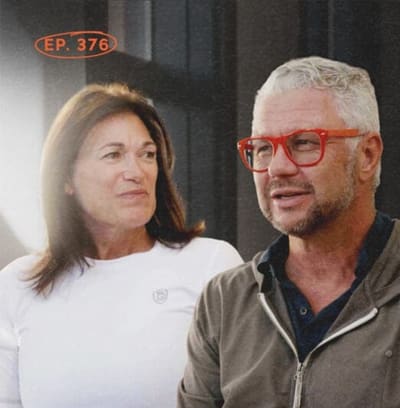
In the golf industry, there are few more recognized names of excellence than PING. Today’s show takes us to Phoenix to interview the CEO of PING, John Solheim. He’s the second generation of family leadership since the company’s inception in 1959.
As recently as a few years ago, John had the unique opportunity to pass the baton to the third generation of leadership with his oldest son stepping in as company president. Today we take a look at their family’s journey to become a preeminent brand and what faith looks like in such a publicly recognized company.
John said it best when he said that business is like the game of golf. It doesn’t matter what happened on the last shot that got you to where you are. You just have to hit the shot that’s in front of you and keep going to make your best score. For those of you used to hitting a lot of uncomfortable golf shots (fore left!), this episode will be a fun one.
Useful Links:
Golfing for God’s Glory
PING’s New President Talks About Family Business
Excellence in Innovation
EPISODE TRANSCRIPT
*Some listeners have found it helpful to have a transcription of the podcast. Transcription is done by an AI software. While technology is an incredible tool to automate this process, there will be misspellings and typos that might accompany it. Please keep that in mind as you work through it. The FDI movement is a volunteer-led movement, and if you’d like to contribute by editing future transcripts, please email us.
Henry [00:01:42] So, John, thank you very much for being on the show today. We’re so excited to dove in your story and really want to get right into it. Tell us as we get started here about your family’s entrepreneurial journey, starting with your dad. He’s often been referred to as one of the great innovators in the game of golf. A game of golf is a game that probably influences impacts more games than any other one in America and around the world. And so for those of you and might not be familiar with it. What was the early breakthrough of Ping in the story of the year?
John [00:03:34] The early breakthrough was some engineers at General Electric invited him to play not the way that he had never played before. And then he got very frustrated with how he was paid as much, because he said to him, being an engineer and knowing how things work, he should be able to hit the ball straight. And he wasn’t able to fix my problem.
[00:03:56] So he started working and making a play with a heel until waiting, which stabilized the putter. It impacted captive, fully twisting. Most supporters had all the weight in the back. But, you know, my dad was an engineer’s engineer. You know, originally he was a shoe maker and like, his father repaired shoes but got hurt one time and then decided, well, he should try something else so he doesn’t have to work with his hands. But in doing so, he started selling cookware in, you know what, New World War came along and he got a letter from the cookware company that said, this is our inventory. We can’t get aluminum anymore. We’ll see after the war. And so he took a refresher course that he got kicked out of and put to work working for Ryan aircraft in San Diego and left there for a little bit, worked in the shipyard, standardize the steel and the concrete liberty ships and took it from three ships down to one, then went back to Ryan aircraft. And then Ryan, he was working with the engineers that did Lindbergh’s plane. But he was made an engineer. There is only 20 years of university and was given the responsibility of the first tricycle landing gear for landing on aircraft carriers. Back then, finite element was him building a 45 degree ramp and lifted the airplane up and dropping it on it. So then what broke later on he he worked for convert that the ground mount for his tracking into the Atlas missiles and then went to work for General Electric. General Electric. He designed a cabinet for the first portable television that they built. They thought they big 40000 up and they built 2 million.
Henry [00:05:43] And are you suggesting that he didn’t get injured as a cobbler? He might. He just stuck it out as a cobbler.
John [00:05:48] Yeah.
Henry [00:05:50] Amazing.
John [00:05:50] I mean, that’s the amazing part of this, is that each of these things working with his hand as a cobbler. Okay. Learning sales as a salesman, then working with engineers on how to build things and how to do things all as good as you could. Each of those lessons for him to help him build golf clubs and revolutionized the golf industry. But it just you know what I mean from G.E. along with that was a rabbit ears, antennas that didn’t stay parallel. They were not hit on balls. The first ones to do that, which meant you could set the TV against the wall and adjust the antenna where before you had to move the antenna away from Denny. This is back in New York. You want to get back to California and. Team had a job going there and he got onto that job, and that was for Bank of America’s first computers. He was in charge of the check Sauder. So as a first check, shorter reading the magnetic print on the bottom of any checks.
[00:06:57] So, you know, during this, how do we end up in Phenix? They built a plant in Phenix Casten. My dad did not want to come to Phenix, but we moved here in 61 and we’ve been here ever since. And we we love the place. We still like to get back to California once in a while. It just it’s amazing the way the Lord works and set you up and, you know, so often have me gearhead to like my dad. You see something you don’t think anything about it being done in a certain way and some other industry. And then all of a sudden. But how can I use my golf club? Will this work on that? You know, and kind of the bigger stories. I was up in Yellowstone right after the Solheim Cup, too little over 10 years ago and had a good camera with me. And a dragonfly landed on the wooden boardwalk near where he was. And he just sat there for me as I took a close up pictures of it. Can I mean, the wings on him just fascinated me. Know it just the structure that’s in and how in the sections were. And then later on, I found out the dragonflies only insect that can controls each wing individually. But I took the pictures back to our engineers group and said, can we build the top of a driver with this type of structure, the reinforcing webs to help the metal flow, titanium and then the rest in metal because it flows like water. Steel doesn’t do that. So in other words, there’s little structures and to titanium get out and then, you know, to thin. So we’re because of this, we’re thinner than anybody else’s titanium tops on the drivers, the crown. And, you know, it just gives us an advantage in the weighting of getting, you know, we get it down and getting the weight back. So, you know, you never know when the large going to throw something out here that, you know, it took us about three or four years before we converted it into production product.
Henry [00:09:03] I think there’s a there’s a greater lesson there for all faith driven entrepreneurs. When you see the world is being created by loving God, that’s perfect. And create all the animals and the insects and humans in six days as you look down and said it was good. It allows you to look at the dragonfly and take inspiration from it. Know, I think probably a different way. So to see how your theology of the world and God’s creation lent itself to commercial success and a better golf club, that’s a story that a lot of people don’t have perspective on. And yet I think that there’s a lot that we can take from it.
John [00:09:37] You know, I mean, it’s happened many times were things out of the blue. I I’m fortunate to have a mind similar to my dad, but I collect things together very well. And you know what? I may be forgetting names all the time today. My deep memory is phenomenal. Amazes me when I pull claims out of there that will work with some of the things we’re working on. And then I’ll just The Lord’s bless me in a great way.
Henry [00:10:06] Tell us what it was like for you growing up in the business and how you’ve seen it change and maybe as part of that. Just give us a sense of the size and scope and how many employees you have, what the culture is like. But you’ve grown up around the business since, well, at least since 1961. Walk us through that.
John [00:10:23] I started in 59 when the business started. I was 13 years old. I actually drove the whole and headed for the shaft to go into. It was my first job. Later on, like the Scottsdale Potters that were so much, I got paid two dollars and fifty cents for each one I built. If I needed help to build and I had to pay the help out of my money.
Henry [00:10:50] That’s for every putter you sell.
John [00:10:53] Well, not today.
[00:10:57] It would have been nice. But that ended after, you know, once we started growing, you know, that started when I applied for a job at a grocery store. Like all my friends were doing because they built one in our neighborhood. And then my dad decided, well, I better start planning for what I’m doing now. But my dad asked a lot. OK. But he got a lot to it. We got into it a few times. The first time we really got into it, I was told to clean the shop. The garage, basically. And I worked all day and cleaned that thing like it better than a been probably ever. But I forgot to clean the main bench that we worked on. So basically. Dad got home. I got fired. Tell you the hardest part of me, that’s a tough one.
[00:11:47] Well, he told me was my brother drop me off at wherever I wanted to be dropped off. The next morning to look for a job. And basically I had to take me down to the draft recruit place and they dropped me off and my brother went home, told my dad, Guerrieri, drop me a job. My dad probably worried, too. It’s time my dad got home from work. That match was all clean. We’re working back together again.
[00:12:16] So there were days. There were a few other times, you know, I got fired, too, because I would stand up protection. And I quit. One time I would squat about two days. Just hold the one person that stood up to him. And, you know, he really appreciated it, you know. But I also there was one thing that I had and that was my mom. My mom was really special. You know, if I had a problem, my dad wouldn’t accept something. I’d talk to my mom the next day. They fight. And it was amazing that way. But, you know, she was put this way. There was a movie made not too long ago that was hidden numbers. My mother worked for CONVER, which is General Dynamics today, and she worked in the wind tunnel and she did the calculations for the engineers and her title was Computer. So she was the business side of the company. And, you know, when we couldn’t figure out how to export things, she dug in and took classes and got it done. You know, when we needed help with sutin, she was always there, totally devoted to my dad and basically stayed behind the scenes. A strong part of the company.
[00:13:32] And, you know, in the change of the business, you know, for the generation, she was a key part of that because of the fact that when my dad, Parkinson’s took so much away from him. But when he was going through that time, she got a lot done this because my dad wouldn’t talk about anything about when he wouldn’t be there. And that made it difficult. At that time, my mom got things done so that the company would change hands. Well, and really the business dropped off in those years, too. And because of that, you know, the tax hit wasn’t as bad as what it could have been. You know, it’s just a large time. It is an animal. And it’s great that we’ve grown the business back and it’s really fun to watch my son take it to the next level. So it’s him and our team here doing a great job. And there’s a lot more than just my son in the third generation. So it’s a wonderful carried family.
Rusty [00:14:30] That’s great. It’s a great story. William and I are both the fan boys and you know, Henry, we don’t know how much he golfs, but William and I, we golf a lot. And I think the pink putter is the only putter I’ve ever owned. Different versions of it. But I have to ask a question before we go to the serious stuff, the little paying man, the little logo. What is that guy?
John [00:14:52] What is he? Well, my dad always kept modeling Clay on his desk. The fact is, I’ve got modeling Clay sitting here in my desk.
[00:15:01] And basically he used it to take another butter and then lay the clay in there and then cut it out to a little bit different shape. And so he could look at it and see it. Well, that’s kind of the old way of doing things, but it works still. The I don’t use it nearly as often as we used to, but I to offset chunk of clay at a secretary in our little office in our twenty five hundred square foot facility, and she tossed it back and I trusted her again and she said don’t pass it back. And I sat down and made the man and yeah it’s kind of that simple. And then my dad who is gone on a three month trip around the world basically calling on accounts and does a missionary’s at the same time saw it and said, I want to see that when I get back. And I said, well, there’s 30 adjustments that you want me to make. And you said, well, it’s a little too tall. I shrunk it on the spot. It became a paying man. And my brother Alan, while they were gone, built a three foot tall one out front of our building. And it just kind of an interesting story that just happened by accident.
Rusty [00:16:19] That’s great. That’s great. Well, they’re all paying. Man is known by everybody who uses your clubs, him in the golf industry, so. That’s a great story. Actually, it probably leads itself to the question around, you know, as I think about paying and we’ve had lots of guests that talk about the importance of excellence, of preeminence in companies. And I would call your company preeminent in the industry. And I think it would be hard to argue against that. The culture to get to preeminence, to get to this level of quality in your brand and in your products, in your service. How important is the culture and what made the paying culture able to create a product that is excellent as it is?
John [00:17:03] Look, my dad always taught us to do everything as well as you could. And so that how we build the clubs to how we designed the clothes, you know, how can we push it to the next level? And my goal is not to just be part of it. I want to lead the industry and I want to lead to innovation in design, in quality and in service. And if you’re going to do that, you’ve got to push it everywhere. You can’t leave anything untouched. And, you know, one of my dad’s and my problem, which was when we were designing the club, we kept see the improvements we could do. So we did the improvement and it took forever to get about my son when he came along. He was much better at drawing lines and meeting dates to get it out so that it’s a market at the right time. And, you know, it just is bringing this to an even higher level. But to push to be the best, you know, but it takes a lot of wonderful people to help you do that. I enjoy leading the group. It’s a group they get inspired from what I want to do. I push, but I don’t push on, you know, mistakes. What I do is push to make it better. In fact, is when something bad happens. My feeling, it’s like the game of golf. You know, you hit a ball where you are. Doesn’t matter how you got to that spot. How you how you get the last shot. What counts is how you hit the shot. Now the shot, you have to get your best score. And when something goes wrong here, I don’t I’m not looking at who caused the problem or what I’m looking for, the best way to move forward from where we are. And, you know, it’s that simple. You know, you can look back and find the cause of the problem and and take care of that later on. But to go to you’ve got to play the game right now for what you can do. Golf is a wonderful example.
Rusty [00:19:08] It’s a great golf lesson and a life lesson at the same time there, which we all need to pay more attention to in both places, I think. So how about your faith and the influence on the culture of the company?
John [00:19:19] Well, yeah, I mean, my faith is just I believe in the Lord Jesus. And, you know, it’s that simple. I believe that he is going to guide my path and I don’t need to question him. And, you know, whenever something’s bothering me, I talk to it. It’s that simple. You know, it just he helps you through so much and it takes you just. People are amazed at me because things don’t bother me because I just look for what to do, where we’re going next. And, you know, it’s just the Lord holding me up and it handles it all.
Rusty [00:19:53] And would you say that your faith as the leader has shaped the trajectory of the company?
John [00:20:02] Well, my dad’s faith and my mom’s faith. You know, my brothers as well. The sister, too. You know, we’re all very strong in the Lord. And we just we trust in him. It definitely shapes the company on how we do things. We have a lot of employees that have worked for a long time. And that’s because they know they can trust us.
William [00:20:26] That’s amazing. And as you speak of that, this is William here. It makes me think about, you know, we’re so lucky to have multi-generational people come on the podcast. Sometimes we haven’t had a Tondo. We’ve had a few. And so I’d love to hear a little bit of a story of how your dad passed. Coming to you, you’ve now passed into your son standing. Walk us through what that looked like. What’s that travel’s could have looked like? I imagine there’s a story or two in there from your life.
John [00:20:51] Oh, yeah. There there’s a story. My dad, as I said before, wouldn’t talk about, you know, when he’s not going to be here. And I talked to him, you know, about that. I’ll be moving into the office with him to work with a more. And he said no. And no. I got no place. I’m finally at a board meeting. It came up to time to nominate officers and told him, Dad, I’d like to nominate U.S. Chairman of the board. We didn’t have a chairman of the board at the time. And I’d like you to nominate me as president.
[00:21:25] The other discussion with my mom for a few minutes and it was done and it was unanimous with my brothers on the board. So that’s when the change happened to happen all at once. You know, there was a lot of people worried about who would become the leader next. Because I’m the youngest, but I was with the business longest. Everybody else had moved out when the business started. Now, my son and I, John, we had heads all the time since I made him president. We hear kids less than ever because my goal is to let him run and my want where I didn’t really have my dad with me to ask. Can get comments on after I took over because of the Alzheimer’s. You know, it was difficult. And I don’t want my son to have that problem. I wanted him to be able to come and talk to me. It’s working out tremendously.
William [00:22:20] So on the family business topic, you know, it’s so hard to build a company, right? It’s so hard to build a sustaining enterprise and enduring business. You all have built that at some level, all of you. It sounds like you’re your parents and your brothers and sisters. And now the next generation, as you look forward, as you think about what I think about a biblical basis for a company. Right. I wonder how you think about what the future of paying could be, what the next generation here, what the future of golf and he all wrapped up. Just what are your hopes and dreams? I’d love for entrepreneurs to think about leaving a legacy that’s beyond themselves. Right. There’s very few of us yet to do that in business. But it is achievable and it happens. And I would love to hear your thoughts on what it could look like. You know, now that you’re not there and then, of course, a future in which.
John [00:23:06] But I’m still CEO here, you know. But let’s put this where I let the young president run. But where I try to stay in is on the mechanical side, the design side of things. But at the same time, you know, I’m trying to give them more reign to do things.
[00:23:24] I mean, we’ve got a tremendous staff of engineers that are really doing a great job. But at the same time, right now, I’m trying to build a couple other products that, you know. I don’t believe in getting something else. You can make a difference. Can you lead? So I can’t do that. I don’t want to be in the business. I don’t want to be me to do percent smart.
William [00:23:46] Now, thanks for sharing that. And as we come to a close here on our time, I’d love to know, you know, we always like to bring our listeners back to the word of God and to scripture and we always find it. Fasting is the how God weaves his words through our guests and through our listeners and how that can occur. And about ask if you wouldn’t mind, just let us end up maybe where God has you and his word. It could be today. It can be the season he could have you thinking about or meditating on a passage. Just how is he speaking to you potentially and in new ways?
John [00:24:18] Yeah. You know, the Proverbs 3, 5 and 6 have been always what I’ve depended on from the Lord. Just eat it. Hold it. Don’t question him. Just follow his guidance and he’ll lead you on a straight path. And you know, that’s really what I’ve held on to or not. And it’s the same verse my dad did. You know, it’s kind of funny because I’m a kidney transplant. And, you know, I tracked my kidney for 23 years with Mayo Clinic, knowing that they told me in 10 to 12 years of David transplants always figured I was an in-between. I wasn’t the person that would lead it to the next look after the kidney transplant. All of a sudden, there’s nothing holding me back. So I started to run. It’s worked out really well. But at the same time, like all along, I’ve thought about the transition, how to move it to the next generation. You know, none of this small talk turns 74. So I’m doing really well for my age. But I want the next generation to be able to run with it. I still want to keep getting myself into it. The Lord is letting me do that and I’m just thankful for it.
Henry [00:25:35] That’s an a great encouragement. I’m grateful, very, very grateful for the time that you’ve spent with us in our audience. And I’ve been blessed by this time. And I never pick up a Ping golf club the same way again. And yes, William and Rusty, I do play some golf. And no, I would not bet on my abilities against either of you. But I love getting out there. And my first putter I ever got was a ping putter. And I remember my grandfather giving it to me when I 16 years old. And he said, this is the best golf club that I’m giving you. And this is a $50 putter and you’ve got a five dollar game. And I. And that was a great gift. But it showed how much he viewed the brand. Even back then. So we’re talking early 80s. So thank you very much for your time. The blessed us in our audience.