



Episode 89 – Achieving Preeminence with Glen Jackson

Too often in business circles, the word Christian can be an adjective for “subpar.” One of the Marks of a Faith Driven Entrepreneur is a realization that excellence matters and it earns us a right to be heard in our industry and the world around us. 

Today’s guest is Glen Jackson, author of Preeminence—a book based on 30+ years of working with brands like Chick-fil-a, Delta, Coca-Cola, Interstate, Toyota, Lexus, and others. He uses his experience to share what it means to be the preeminent brand that others look to emulate. 

In this episode, we’ll look at what preeminence means, how to get there, and why this matters to Faith Driven Entrepreneurs looking to impact the world around them.

Useful Links:

Preeminence: What It Means and How to Sustain It

Control Your Destiny or Someone Else Will

Invictus Poem

EPISODE TRANSCRIPT

*Some listeners have found it helpful to have a transcription of the podcast. Transcription is done by an AI software. While technology is an incredible tool to automate this process, there will be misspellings and typos that might accompany it. Please keep that in mind as you work through it. The FDI movement is a volunteer-led movement, and if you’d like to contribute by editing future transcripts, please email us.

Rusty [00:01:48] Welcome back, everyone, to the Faith Driven Entrepreneur podcast. Thanks for downloading us another week, tragically. And that’s the right word. Too often in business circles, the word Christian can be an adjective for sub par. Now we know one of the most important marks of being a faith driven entrepreneur is a realization that excellence matters. And it’s that excellence that earns us a right to be heard in our industry and the world around us. Henry, William and I are going to spend a few minutes just talking about that concept and the importance of excellence in what God expects out of us in our work. And then we’re going to hear from the guests. And our guest is Glen Jackson, who wrote a book based on 30 plus years of working with some of the most respected brands like Chick-Fil-A, Delta Airlines, Coca-Cola, Interstate Batteries, the Atlanta Braves, the Toyota and Lexus Brands. In the book, he dives into what it means to be the preeminent brand that others look to emulate. But today, what we’re gonna do is we’re going to look at what it means, how do we get there and why this matters to faith driven entrepreneurs, entrepreneurs who are looking to impact the world around them. So let’s just jump right in.


Glenn [00:03:15] You know, when I look at the journey of my life and some of the adversity that I’d face and all of us have faced adversity. One of the things that I obviously go back to is my dad. My dad was part of the greatest generation, a phrase that Tom Brokaw penned in his book, The Greatest Generation. My father was when he was at Emory University. He signed up to join the United States Army. This was during World War Two. And he joined an elite tank battalion, the 70th Tank Battalion. And this battalion landed in D-Day, June 6, 1944. We celebrated the seventy fifth anniversary of D-Day. Earlier this year, 2019. But Dad’s tank division planted on Utah Beach and there were casualties. And if he’s seen Saving Private Ryan and Band of Brothers, you know, a little bit of the hell everybody went through. But my father’s tank landed successfully.


[00:04:10] But three days later, on June 9th, in the hedgerows of France, his tank was hit by an 88 millimeter shell. And my father was wounded and he was taken as a prisoner and he was a P.O.W. for the rest of the war and Germany style like 7a and escaped and was recaptured when he was in the prison camp. And General Patton liberated the camp at the end of the war with the 3rd Army. And my father came back and finished up at the University of Georgia and never really talked about it, never talked about his word serious so much with many folks. And in 1983, when my father was 60 years old, he took his life. And that was a very catastrophic day in August of 1983 and a devastating loss for our family. So there’s a powerful inertia of PTSD and depression, which my dad struggled with just was too strong, overcome. And, you know, we have a real problem in our country right now with military veterans who are committing suicide. The latest numbers I saw is that we’re losing 6000 veterans a year. That’s about 20. That’s a day to their suicide. And as a suicide survivor, took me a while to heal as a man. And one of the steps that I realized I needed to do was to go to Normandy in honor of my dad there and think about him and pray about some things I needed to pray about. And our family went over there to Normandy and had an amazing experience. And we rode my father’s name in the sand on the beaches of those candidates beaches in France and reflected on him. And I believe my children, about their grandfather for the first time when they were on that beach. And it really helped me heal and kind of step into my pain to receive gain. And one of the things I’ve realized in the course of my healing journey is that your healing doesn’t mean the damage never existed. You know, healing doesn’t mean the damage never existed. It does mean, though, that the damage no longer controls our lives. So I’m really reflecting as I’ve gotten older on that terrible day in August of 1983. But instead, all the many memories, all the incredible things my dad taught me in my life in the 19 years I had him. I’m so thankful for that. And that’s how I’ve focused on my father going for the start of our agency in 1995. Certainly one of the things that propelled me was to co-found an agency that would be something my dad would be proud of. And to honor my dad every day through the work we do. Communications skills we exhibit here for the clients we’re proud to serve. So his life is certainly influenced me in so many positive ways and deep down. It was a major factor in my decision to help star Jackson Spalding almost 25 years ago.


Rusty [00:07:04] And you ended up going the entrepreneurial route. Why that? Instead of sort of following into the big company corporate route?


Glenn [00:07:13] You know, I felt called to do it. I was with a New York based agency for almost eight years helping them run their Atlanta office. And my entrepreneurial instincts were always keen and the entrepreneurial flames were burning bright on the inside. And I felt called to leave this agency. And along with both falling and several others start our agency in 1995 and just the best thing I could have ever done. We’ve been very blessed and very fortunate to have the opportunity to help our clients advance their brand the right way.


Rusty [00:07:48] You know, I’m a little curious about that because I love the idea. When a small group of co-founders left a place together. Right. And kept the team together, the band together and went and did it. What was the catalyst for that and what made it work that you all stayed together?


Glenn [00:08:06] Well, we believed in each other. There was a tremendous confidence in the team. And I had read a book in 1994 by Jack Welch, the former CEO of General Electric. And he wrote a book called Control Your Own Destiny or Someone Else. Well, it was a business book, and that really piqued my curiosity. And I just decided, along with Beau Spalding, who co-founded Jack’s is following that. Let’s give this a shot and control our own destiny and see where it goes. And we began with very humble beginnings and had to start literally building our agency brick by brick. And actually, in retrospect, I think that’s been a very good thing because, you know, success is sweaty. It’s not sexy. And we had to sweat a lot, particularly in those early years. And I’m grateful for that sweat because it’s made us stronger over the years.


Rusty [00:09:03] And give our listeners a little bit of the stature of the company. I mean, you work with some pretty big brands.


Glenn [00:09:09] We are really fortunate to represent the Coca-Cola Company and Chick-Fil-A, where they’re National Public Relations Agency. We represent on the marketing side Delta Airlines. We represent public supermarkets, interstate batteries, mattress firm, the University of Georgia in Athens. We do a lot of work for them and we have about one hundred and fifteen hundred sixty team members here. And we have fun and we work hard. You can do both.


Rusty [00:09:40] It just struck me that the public relations field, being a faith driven entrepreneur, being a believer, also can tend to leave you in times where you become the voice of crisis management. And as I listened to some of the brands there that you mentioned, you know, all the times are not always good, right? There’s always something that has to be dealt with. How is your faith informed? Maybe sometimes that messaging that as you bring people through crisis?


Glenn [00:10:11] Well, biblically, certainly there is an emphasis on telling the truth. And, you know, God’s favorite color is transparency and not hiding from something you may have done wrong or you need to work on. So the Bible’s help may kind of be a rudder in these situations, because you look at the book, you look at proverbs and you look at the Psalms and you look at Jesus’s teachings to be attitude. There’s such a wellspring of wisdom there that you can lean on in the business marketplace to help guide organizations through some difficult times and get them through that with the right steps haven’t been taken. That leads to trust.


Rusty [00:10:57] I hope our listeners heard that quote, because I’m going to say it again. What you just said, God’s favorite color is transparency. That’s that’s profound because, you know, if we’re going to live out our faith as entrepreneurs or business people, we’ve got to be transparent. If we’re not, then we run the risk of our witness being hurt or even worse, being thought of as hypocrites. So that’s a great creating a bond that people really gravitate to that.


[00:11:25] And we’re 72 percent millennial at our agency. So this generation in particular really appreciates authenticity and transparency and clarity. You know, the job of the leader is to foster clarity. And all those things relate to not only how we advise our clients, but also how we run our business each day with precision and humility.


Rusty [00:11:53] You have an interesting twist that many of us have heard share about what it means to be an entrepreneur. That twist that you have in some of the ways you view Parnell’s and details about the business may be a little different than others. Can you just riff on that for a little bit?


Glenn [00:12:10] I sure can. Thanks. You know, I think at its core, true entrepreneurial spirit involves about 10 things. You’ve got to obviously bravely start something and keep it moving in the right direction. But also, in addition to that, I think the entrepreneurial spirit involves unconventional thinking, assuming financial risk, persevering, growing and scaling a business is certainly important, impacting an industry or creating a brand new one.


[00:12:44] Generating jobs, I think is critical to the entrepreneurial adventure. You’ve got to generate jobs. You’ve got to also make the world a better place. You need to stay energized, curious and opportunistic. Embrace innovation, boys, and finally remain a success. You know, it’s easier to become a success than it is to remain a success. And this is an important point because entrepreneurs, we can start something, but we’ve got to remain and grow something. And that really matters. And for me, PNL, we obviously associate that with profits and losses.


[00:13:24] But I also think there’s another PNL that I think actually is more important and that’s people and lives. When we pour into the people within our organization and lean into their lives, then I think that’s where a lot of power and tospend for your business comes from, that it can in turn impact the profit and loss area directly.


William [00:13:52] That’s great. Thanks. William here. Glenn, so great to have you on my way. I’m going to take this opportunity to switch gears slightly. You’ve Rangi you’ve written a book on a concept called Preeminence and Blending. Dig into that a little bit and maybe take our listener from scratch and introduce the idea, maybe how you would define it for our listeners. And let us walk through this topic for a little bit.


Glenn [00:14:15] Well, preeminence is a beautiful word. It’s a pretty word to say. Preeminent tried to figure out how to spell it. William first. Is it two R’s or two E’s?


William [00:14:23] Yeah. It might be a word, you know, that could be associated with the University of Alabama instead of Georgia. I’m not sure we’re going to get into that. So I’ll give you a judgment here and a little better.


Glenn [00:14:34] Yeah. Yeah. But it’s a Greek word. It means in Greek first in rank and first influence. And as I dug into the word after hearing the word mentioned in a variety of client meetings, I realized there was not a business definition for the word. So I first started with the definition of preeminence. Is it extraordinary? Excellence, once reached and sustained, creates a competitive advantage. So unpack this briefly. Extraordinary excellence is truly extraordinary. It’s first rate thinking. First rate execution is the kind of excellence the ceiling was and never plateaus. And once this preeminence is reached, which I believe takes 10 to 15 years, this preeminence is sustained. There’s this unflinching, unswerving commitment to sustaining your commitment to being better today than yesterday. And that organically creates a very formidable, imposing creative advantage so much that your competition fears the very mention of your name if they’re ever competing against you. So to me, that’s what the definition is. It’s extraordinary. Excellence, once reached and sustained, creates a competitive advantage.


William [00:15:50] That’s good. Those aspirational for most of us anyway. Not for all of us. I get that. Maybe walk me through a potentially a few companies that you believe are preeminent. And what are some of the signs that you see associated with getting to that level?


Glenn [00:16:04] You know, I think there is a litmus test. And I think the litmus test is whether others aspire to achieve what you’ve sustained when you have other companies in your industry or even outside wanting to see you tap into your insights, observe your office space, learn from your core leadership philosophies, and soak it all up like a sponge. Then who does? You’ve reached to sustain something deeply powerful. So to me, the litmus test is or others aspire to achieve what you sustain.


[00:16:35] And in Atlanta, we’ve been very blessed to have myriad number of preeminent organizations, Chick-Fil-A, Delta and Coke certainly stand out for me here in our city. I mentioned Publix earlier. They are preeminent. And then there are companies like Salesforce, an apple, of course, in 3M to me has a lot of preeminent leadership in this organization. They do a lot of entrepreneurial doodling within their organization as powerful. So those are some companies that jump out to me, and that’s the litmus test.


William [00:17:09] It’s good. I have a couple of different questions. OK. I guess hear me a little bit. So is this something? Two different questions. One, is this something that every company should aspire to and to see you names, rather large organizations? Is there a size component as well? Or can a smaller company, I mean, sort of aspire to be preeminent as well? Do you think that could happen? Yes. Walk me through that a little bit.


Glenn [00:17:33] That’s a superb question of the size. Question. There is no size category to this. You can be large or small and be preeminent. And I believe that is something that everyone should strive aspirationally to try to attain. Because deep down, what you’re doing is you’re treating every day, as if it’s the first day you opened your doors and you’re wanting to be about excellent. Perpetual excellence. And that’s something I think biblically you read about, which I can elaborate on later this in the word. But I think it should also, of course, also be in the free enterprise system.


William [00:18:13] Now, I go there now, if you would mind. Feel free to jump off.


Glenn [00:18:17] You know, God’s been kind of showing me something lately that relates, I think, to this topic and that as he. He wants all, not some. What I mean by that, if you look at Proverbs 3 5, it says Trust in the Lord with all your heart, not some of your heart. So trust in the Lord with all your heart and not lean on your own understanding in all your ways. There’s the word again. Submit to him, and he will make your past right. So God wants all of us, and he wants all of our excellence. He’s not interested enough being shot. As a Christian, he wants us to be about being the best, being preeminent. And if you flip to the New Testament, the all word comes again. And Kalash and 3, which is a great chapter about whatever you do work, whatever, there’s this whatever phrase in this chapter. But Paul talks about that, you know, whatever you do do with all your heart. There’s the same phrase again. And I think Pramit organizations do things with all their heart and all their mind and all their soul, which connects back to the Bible in so many ways.


William [00:19:25] That’s good. And sometimes it’s it’s helpful to play the counter. So a lot of our listeners run companies or are influential in companies. What’s potentially a way to diagnose the opposite? Right. What are maybe some some signs that you’re not running towards that preeminent institution and things that you can notice to realize? You know, that’s one of the hardest things for a leader. You know, sometimes they sit in a white tower and don’t get a lot of feedback. And it’s really hard to see around you if you don’t have a council of advisors. What are some of those signs? Maybe if you were looking at them, if you were hired to consult with them, that you would be able to notice that maybe they need to change some things.


Glenn [00:20:05] You know, a lot of it relates to these pillars that I want to share on the podcast that are inextricably linked and critical to being preeminent. If the organization doesn’t have a lot of these pillars or is not working towards and I think that’s a sign of concern that the organization has lost touch with his values, the fundamental cornerstone of your business. That is a problem. We haven’t changed one word of our aid values since we started it when I was 32 in 1995. These values are on our wall literally here. We have offices in Dallas and Athens, Georgia and Atlanta, and people work around the country. And I think one thing you’ve got to really watch out for is the danger of mediocrity. To me, mediocrity is the opposite of preeminence. You know, mediocre is a Latin word that means combination of two line words, rugged mountain and middle. It means going up a steep incline and quitting in the middle and raising the proverbial white flag and going down the mountain, never getting to the mountaintop. So if an organization is just kind of go into the motions in a mediocre kind of way resting on its laurels, then that’s a concern. There’s a phrase that the fish stinks at the head. And I think that’s true. The leadership is not leading in a preeminent way, and that is a major problem. They’re not doing some things. I’m have you talk about that? I think preeminent leaders do. I’m watching for that. If I don’t see a lot of that and that’s a concern because leadership dictates so much.


Rusty [00:21:33] What about the without mentioning a company? What about the learnings that you might. Bring to our listeners these entrepreneurs that, look, they want to get there someday. I mean, you know, and you said early in the episode you said takes time to get there. So they’re like looking at it going, well, I might not have 20 years. I’m just trying to get preeminent where I am today, but I gotta hold my footing right now. I think I’ve made good steps, but I don’t want to slip. What can you do to help them think about not slipping one of the pillars of preeminence as focus?


Glenn [00:22:07] And you’ve got to really know your swim lines and your business. You don’t want to be swimming around the pool trying to figure that out. So be narrow and deep in a couple areas and build your business from there. Most companies that don’t make it don’t die of starvation. They die of indigestion. They’re trying to take on too much too soon. So that’s what fanatical focus, which is one of our pillars in preeminence is so important. You look at a Steve Jobs. He said no, a lot to a lot of the ideas at Apple and said yes to a few. And that was one of the keys to their success early on, is that he had laser like slingshot accuracy focus. So I would say to these budding growing entrepreneurs, know what you’re focused on and keep those swim lines clear. Watch out for the indigestion.


Rusty [00:22:58] Glenn, you talk about preeminence and you say that there are pillars there, strong of distinction around preeminence. Can you take us through those pillars?


Glenn [00:23:07] Sure. I’d be happy to have focused on seven in my book. And these are the seven for me. One is trust. Nothing moves faster than the speed of trust, it’s the glue of life. As Stephen Covey writes about. The second one is relationship building for me. Relationship building is about a commitment to establishing and investing in relationships that genuinely matter to you. It’s the opposite of networking. Networking is about meeting people in relation to buildings, about investing in people relationship building as a commitment. Networking is a task. 3 is marketing communications. The whole brand bank account that every business has. You’ve got to make deposits into that brand bank account and be the best brand polisher you can be for your organization and polish that brown brand just a little bit every day. So first is trust. Second is relationship building. Third is marketing communications. The fourth is assessment.


[00:24:08] It’s assessing your business well, not just being in the business, but on the business, as has been said many times. There’s seven questions I’ve identified in this assessment section that I think preeminent organizations ask themselves. One of those questions, for example, is why do we need to anticipate they’re constantly anticipating about where they’re heading and what’s around the Riverbend for their business. Questions are the language of strategy. An assessment is a keystone in the arch for preeminence. And there’s a lot of questions that are asked there. The fifth is cultural torture of servant leadership is combining servant leadership, which we see in Christ with the torch that you shine literally around all the time. If you’re around Chick-Fil-A like I am all the time, it’s like they’re carrying around a beautiful torch this warm and attractive, and they’re combining it with servant leadership. So the cultural torch servant leadership is key. Then fanatical focus being narrow and deep on what you need to focus on, on a business. Knowing your swim lines, not being afraid to say no. Sleeping on decisions. Having a really good laser like focus. And then finally is remarkable resiliency, which to me is about never giving up, never getting out, never giving and striving, stretching and straining in the arena of competition and having buoyancy. You may be pushed down one day and it’s a tough day in your business, but you pop back up the next day, you’re buoyant and you get back at it. You’re resilient. There’s a wonderful poem called Invictus, which is about resiliency. I recommend to your listeners it’s a beautiful poem that Nelson Mandela recited when he was in prison many, many years. So those are the seven trust relationship, building, marketing, communications assessment, cultural torture of servant leadership, fanatical focus and remarkable resiliency.


Rusty [00:26:00] What I love about those, Glenn, is it doesn’t matter what size or age your company is. You can be working on those all the time.


Glenn [00:26:11] That’s a great point. So true. I love that.


Rusty [00:26:15] It’s really it’s really helpful for our entrepreneurs that are out there trying to build, you know, preeminence of better, working towards a day when, you know, others in themselves can look at it and say, you know, you really have built something that’s preeminent landing and.


William [00:26:31] Yeah, ain’t it? Right, right. Right.


Rusty [00:26:34] I’m not going to let you get away, though, without giving another little piece of advice on keeping a communication message fresh for a company, especially small entrepreneurs. They don’t have a lot of resources, but they do have a marketing communication message to customers, to partners, to employees, to their shareholders. Any nugget there on just how to keep it fresh?


Glenn [00:26:59] Well, first of all, we’re all in the freshness business. You may be in the food business. And of course, it’s about serving fresh food every day. You may be in a steel business or in the professional services business listening in. You’re in the freshness business, too. You’ve got to serve fresh thinking and execution and implementation. We’re all in the freshness business. So let’s remember that the lights come on every day in our respective businesses. It’s kind of the freshness. Why, for me, when I see those lights come on, it’s just. Here we go again. It’s a new day. Let’s be fresh serve fresh thinking and in execution and implementation of the best messages for me. As you know, you need to really find a simple message. Don’t complicated and find that rinse and repeat message that you can say a lot. A good friend of mine, Jeff Henderson. And when that church part of North Point says know leaders are repeaters, they repeat messages a lot. They’re not afraid to do that.


[00:28:03] So find a good, simple, clear message and repeat it often and do it with freshness. If you’re singing that song for the first time, imagine how many times James Taylor has sung. You’ve got a friend, but if you hear for a baby, sing it the 10000 time at your concert you’re attending. But you want that to be fresh, right? And good. And we’ve got to do the same thing.


William [00:28:26] Speaking of things right along that as we come to a close, one of our favorite things to go back to is the living word of God, which is fresh every day. God displays new mercy to us every day. And we would love to if you wouldn’t mind letting our listeners in to a little more, maybe where God has you and his word. This could be somebody he talks to this morning. You mentioned a season he’s edging in earlier. So maybe I’m just expounding on that a little bit more. But just maybe a passage or a topic that he’s been taking you through? Well, we always find it fun to see how God weaves our guests and our listeners together after a scripture.


Glenn [00:29:03] Well, thanks for asking me. One of my favorite psalms, and I think it’s a great song for business. And I read it almost every day is Psalm 112. It’s really for the person who wants to strive to finish well and lead a life of integrity. And I was reading this morning from Eugene Peterson the message, someone 12. And it really struck me, if you don’t mind, I’ll I’ll read a few verses from it.


William [00:29:30] Absolutely.


Glenn [00:29:31] It says a blessed man, blessed woman who fear God to cherish and relish his commandments. Their children will be robust on the earth and their homes or the uprise, how blessed their house is brand with wealth and a generosity that never runs dry. Sunrise breaks through the darkness for good people. God’s grace and mercy and justice. The good person is generous and lends lavishly. No shuffling or stumbling around for this one. But I love this phrase, but a sterling and solid and lasting reputation, unfazed by rumor, heart ready, trusting and God, spirit, firm, unperturbed, ever blessed, relaxed among their enemies. They lavish gifts on the poor. A generosity that goes on and on and on and honored life. A beautiful life. I pray that your listeners will have an honored and beautiful life and their generosity will go on and on and their spirit will be firm and unperturbed, and they will, as they build their business, have a sterling and solid and lasting reputation. Heart ready, trusting in God.


Rusty [00:30:43] Amen, amen. Thank you so much. There’s so much here to spend time with. And thank you for sharing your experience and your wisdom and your heart with us today means a lot.


Glenn [00:30:55] Thank you for having me. Been a real blessing.


William [00:30:58] And we’ll put a link to your book if people want to go deeper into the pillars level, link to that. I want to release the podcast. Thank you so much for joining us, been a true pleasure.


Glenn [00:31:07] Well, it’s been an honor and a privilege. And you guys fight on straight for the journey.
 

Excellence in Innovation

This content was originally published here by Two Ten Magazine, the Marketplace Ministry Magazine presenting Purpose, Perspective & Perseverance.

— by Mark Whitaker

As the ball dropped into the cup on the final hole of the 2014 Masters Tournament, an emotional Bubba Watson retrieved it and held it high to the roar of the gallery crowd. The youngest golfer in history to win two Masters within a three year span, this victory proved that his first Green Jacket was more than luck, although he is the first to deny the fact that he’s one of the greats of the game. Bubba’s humility, unabashed Christian character and drive to succeed are all traits that led PING Golf to become his leading sponsor and ambassador for the values that PING stands upon.

Bubba’s victory is yet another testimony to the company that has had more of an impact on the game of golf than any other; PING Golf. We had an opportunity to sit down with John Solheim, the Chairman and CEO of PING Golf to talk about the foundation of the company and how they continue to lead the industry while giving back to those in need. John is the second generation to lead the company along with his older siblings following in the footsteps of their father and founder, Karsten Solheim.

“Born the oldest son of parents from Norway, Karsten Solheim had to learn early in life how to overcome trials and struggles.”

His mother passed away when he was two and a half years old while giving birth to his younger brother. His father was a self-taught craftsman and owned a shoe repair store. Karsten spent most of his free time helping his father run the shop. As he grew older, his father opened a second shop, which he ran while Karsten ran
the original shop.

Learning Business Skills for Life

Karsten learned business and management skills that would prove beneficial to him throughout his life. He also developed an uncanny ability to analyze broken shoes and devise methods to repair them as good as new, most times better than new. He and his father were known for their quality workmanship, for which people were willing to pay a premium.

Karsten’s faith had always been an integral part of his life. After high school, he became involved with leading his church youth group. While escorting the youth group to the church Christmas production, Karsten met a young woman, Louise, with whom he struck up a conversation. Louise had experienced similar heartache as a child, losing her mother shortly after her birth.

They had an instant connection in spite of their age difference; he was 24, and she was 17. After two weeks of dating, Karsten knew that she was the one that God had chosen for him and asked her to marry him. They were married six months later and had their first son, Karsten Louis (Louis). Karsten left the family business to pursue a career as a salesman, selling cookware, and soon rose to the top of the sales force.

Our Nation at War

It was during this time that the Japanese attacked Pearl Harbor, and America was thrust into World War II. There was a restriction placed on certain materials that were essential to producing goods for the military. Aluminum was one of those materials, the material used to make cookware that Karsten sold. With no new products to sell, Karsten was forced to seek other opportunities.

Karsten ran across an ad for a short, accelerated engineering course offered at the University of California-Fresno to help fulfill the military’s need for engineers. Karsten enrolled and excelled in the course. Halfway through, he was offered the opportunity to work for Convair (which later became General Dynamics) in their aircraft engineering division. From there, Karsten went to work for a shipyard and proceeded to develop numerous methods and designs to increase the rate of production and the quality of the ships.

In 1943 Karsten received papers to report for the military draft. Before leaving for the draft, he interviewed with the Ryan Aeronautical Company, makers of the military’s aircraft. After seeing Karsten’s resume and meeting him, they offered him a position in their engineering department utilizing his extraordinary engineering skills to advance the military’s war efforts.

The Consummate Engineer

Working alongside some of the finest engineering minds in the Nation, Karsten was immediately embraced and was quickly promoted to the chief mechanical engineer for the FR-1 Fireball, the Navy’s first fighter plane to utilize jet propulsion.

After the war, Karsten changed careers a few more times before landing a job with General Electric as a mechanical design engineer. Karsten moved to Ithaca, NY while Louise stayed in San Diego to raise their 3 boys, Karsten (Louis), Allan and John; and their daughter Sandra.

One day, Karsten was invited to join some colleagues after work for a round of golf. Although Karsten had a dusty set of clubs in his garage, he had never played before. He borrowed a set of clubs thinking that if he applied logic and physics, there was no reason why he shouldn’t be able to compete with the others in his group. He quickly found out that he had little or no control over where the little white ball would go once it left his club. As aggravating as it was on the fairways, it was even worse on the putting green.

Building a Better Putter

It fascinated Karsten that he could hit an acceptable drive and approach and even get the ball on the green in three or four strokes but would use almost that many more strokes attempting to putt the ball into the cup. He observed that the ball left the putter with no consistency at all, almost having a mind of its own. In fact, it bothered him immensely. So much so, that he immediately began to scientifically analyze the physics of the putter.

“He was convinced that he could design a better club to putt the ball with more consistency.”

In 1953, Karsten was reunited with his family when they all moved to join him in Ithaca. Eighteen months later, General Electric transferred him to Syracuse, NY. In his spare time, Karsten continued to mull over his ideas for improving the putter. He realized that the key to getting the ball to respond consistently was the weight distribution in the head of the putter, referred to as heal-toe weighting. In the trials that he conducted in his home, he was encouraged by the results, even if it lacked aesthetic appeal.

Karsten was transferred once again, this time to California, where he began working on one of the first computerized banking programs for General Electric. He continued to work on his golf game, practicing every chance he got. He soon began competing in local tournaments and winning them with his unconventional putter. One day while playing on one of his favorite courses, he had a conversation with the local golf pro. The pro had commented on how impressed he was with Karsten’s putting. Karsten demonstrated his homemade putter, and the pro offered some advice. He told him that if he could design a club that would allow the ball to roll from the face of the club rather than skip or slide, as all of the current clubs of the day did, he would sell a million of them. This was the catalyst that Karsten needed.

The Musical Club

He reworked the design of his putter keeping the weight at the heel and toe of the head. When he had some of the new designs fabricated and tried them, they had a distinctive ring when they hit the ball; he referred to it as a “ping” and thought it would be a catchy name for the new club.

Karsten began manufacturing his new putter, the PING 1A, in his garage. His youngest child John, still in high school, and middle son Allan would help him assemble the clubs, while Louise managed the books and tracked the orders. Interest in the curious new putter picked up quickly as golfers saw immediate improvements to their games. In 1959, Sports Illustrated mentioned the “musical” new putter and orders started coming in immediately. One company ordered hundreds of them to give out as Christmas gifts.

Requests for the putter increased, and soon he was shipping out clubs from his garage. Karsten would visit golf courses across the country and demonstrate the new club to golfers and to the golf pros. As orders increased, he continued to refine the design of the club, releasing models 2A, 3A, 4A, 5A and 5B.

Still working for General Electric, Karsten was given the opportunity to transfer to their computer factory in Phoenix, Arizona. He jumped at the chance, since it would allow him to stay home much more and allow him to build his fledgling putter business. As business continued to grow, the Karsten Manufacturing Company was formed. In the mid-sixties, Karsten Manufacturing developed the most successful putter design in history, the Anser.

Changing the Game of Golf

Sales of the Anser putter were so successful that Karsten had to move production from his garage into a 2,200 square foot building in Phoenix, which would eventually grow to become the PING Golf campus. Karsten’s two other sons and daughter came to work for the company, and Karsten left General Electric to focus full time on his company.

As high profile players such as Jack Nicklaus, Gary Player, Gene Littler, Julius Boros and George Archer started using PING putters, orders kept pouring in. Karsten refused to mass-produce the clubs, insisting that each club was produced to order. Karsten began to focus on the other clubs in the set and developed an innovation for irons that used a cavity back club head called the Karsten 1, released in 1969.

Karsten Manufacturing, known today as PING Golf, employs more than 1300 and has changed the game of golf forever. It continues to be run as a family company with Karsten’s children and grandchildren involved in the business. Their innovations in club design including putters, irons and woods, allow average golfers to improve their scores and enjoyment for the game. The breakthroughs in design and manufacturing methods have been copied by almost all the top club makers, since the original patents have expired.

Succession of a Legend

In 1995, John Solheim took over as Chairman and CEO of PING. He had been a part of every stage of the company from its inception and shared the dogged pursuit of engineering excellence. Karsten passed away in 2000, but left behind a legacy of excellence and philanthropic devotion that John continues today. PING Golf has been instrumental in promoting LPGA events. In 1990, Karsten and Louise founded the prestigious Solheim Cup for women, the equivalent of the Ryder Cup for men. They have given millions of dollars to missionaries across the globe and funded state-of-the-art recreation centers at the Moody Bible Institute in Chicago and LeTourneau University in Longview, Texas called the Solheim Center. “I learned from my dad the importance of excellence and giving back and how that honors God,” John explained.

PING Golf has been a leader in aiding wounded veterans as well. They are corporate sponsors of the Wounded Warriors Project, Warfighter Sports and others. They have developed an Adaptive Fitting Program that provides specially designed golf equipment for golfers with special needs, allowing them to play and compete in events never before possible.

Never content with the status quo, John and his engineering team are constantly researching new designs, materials and manufacturing methods to improve the game of golf.

John explains, “You never know where inspiration will come from. It never ceases to amaze me how God places us in situations to reveal things to us as only He can. I recently visited Yellowstone National Park and saw a beautiful orange dragonfly. I had a high res camera with me and took some close-up photos of this brilliant creature that God designed. As I studied those photos later, zooming in on the wing structures, I was amazed at the wing structure, and it struck me that we can use a similar design in our clubs. We’re using some of that technology inside some of our new club designs.”

John recalls, “As a company, we weren’t immune from experiencing trials and tribulations. My father and I share the same source of inspiration from God and stand upon His word. One of his favorite verses, and one that I have come to understand and appreciate even more since taking over the company, is Proverbs 3:5-6:

“Trust in the Lord with all your heart, and lean not on your own understanding; in all your ways acknowledge Him, and He shall direct your paths.”

Proverbs 3:5-6

——

[Special thanks to Two Ten Mag for the cover photo]

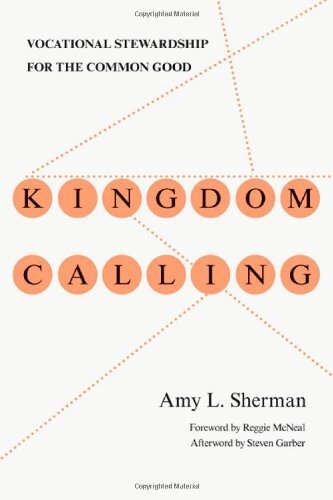
Kingdom Calling by Amy Sherman

We continue to count down the Top 100 Books for Faith Driven Entrepreneurs with…

Kingdom Calling

by Amy Sherman

Amy Sherman, director of the Center on Faith in Communities and scholar of vocational stewardship, uses the tsaddiqim—the vision of Proverbs 11:10, in which the people who see everything they have as gifts from God to be stewarded for his purposes― as a springboard to explore how, through our faith-formed calling, we announce the kingdom of God to our everyday world. But cultural trends toward privatism and materialism threaten to dis-integrate our faith and our work. And the church, in ways large and small, has itself capitulated to those trends, while simultaneously elevating the “special calling” of professional ministry and neglecting the vocational formation of laypeople. In the process, we have, in ways large and small, subverted our kingdom mandate.

God is on the move, and he calls each of us, from our various halls of power and privilege, to follow him. Here is your chance, keeping this kingdom calling in view, to steward your faith and work toward righteousness. In so doing, you will bless the world, and as you flourish, the world will celebrate.

Click on the book cover to check out the Reviews and Purchase at Amazon


Freedom Through Business: Hold Fast to Your Dream

This article was originally published here by Mats Tunehag

— by Mats Tunehag

My wife and I spent a couple of weeks in Thailand, Cambodia and Laos in August. The focus was freedom! Freedom from slavery and injustice, and freedom to live in truth, enjoy beauty, create wealth and share goodness. This is the story of freedom business.

We know that jobs with dignity are a primary need for prevention of human trafficking. It is also a must to bring restoration of survivors of modern-day slavery.

That’s why freedom businesses exist, and the Freedom Business Alliance exists to help freedom businesses succeed.

To that end the Freedom Business Forum was held in Chiang Mai, Thailand, in late August. It was the first global gathering of its kind, and about 140 people from all continents participated. It was a great mix of people and talents, all committed to true freedom through business, with all their hearts and minds.

Freedom business is hard, but necessary. And some are called to it, and as Pope Francis says: 

“Business is a noble vocation, directed to producing wealth and improving the world.  It can be a fruitful source of prosperity for the area in which it operates, especially if it sees the creation of jobs as an essential part of its service to the common good.” 

The concluding keynote address at the Forum was held by one of my heroines, Annie Dieselberg. She runs a freedom business in Bangkok. Her calling is clear and her commitment exemplary. Her challenging freedom business journey is reflected in a most inspirational speech. Here’s Annie:

Hold Fast to Your Dream

“My children recently decided they needed to make some money. Secretly they began creating products and then they laid them out on the table and announced their store was open. They invited mom and dad to come and to make purchases. What they had created was paper bookmarks, origami, and drawings, which they had priced at around 10-20 baht each. My husband and I each chose a couple of their products and my kids proudly pocketed their income with plans for an outing to the nearest 7/11. They had figured out that earning money was purchasing power and the ability to make choices.

Most of us, if not all of us, at young ages, became aware of the power that money has to give us choices in life. Most of us probably came up with innovative ideas of how to make some money to gain choices that our parents were not providing for us. From lemonade stands, to car washes, to babysitting, or mowing peoples’ lawns, there was in us a desire to create money, because money is purchasing power and gives the ability to make choices. The ability to choose is not something to be taken for granted. It is something that comes with freedom.

Freedom allows for choice, which can be used for good or for evil, for self entirely or for the good of others.

My older daughter Kristina was a nanny for a very wealthy and prominent business family. One day my daughter and the 3 year old were discussing friends. The wealthy family traveled so much that she didn’t have any friends to play with. The 3 year old announced, “That’s okay, I will buy friends.”

This 3 year old already understood that money was power. From her worldview she could get anything she wanted with money. She is too young to understand the negative consequences of misuse of money and power, especially when it comes to relationships.

The business of prostitution and sex trafficking makes billions of dollars of profit for people with evil and selfish goals. It preys on vulnerabilities of people who have few choices in life and turns them into slaves and commodities. It is an obscene abuse of power and of wealth. The dreams of the victims to gain income for their families and improve the quality of life, quickly turns into terrorizing nightmares that scare away their dreams.

Prior to working with women in prostitution, I mostly viewed the business world as the other side – where greedy and selfish people used money used for privilege and exclusivity while ignoring or exploiting the vulnerabilities of the poor. I made the mistake of dismissing business as a whole.

Somewhere around 2003 however, I was introduced to Business as Mission and I began to see the strength of business and the opportunity for individual, community, and global impact.[1] I realized that it wasn’t business or making money that was evil and self-serving, but the misuse of that privilege. I realized that the creation of business, is a key to sustaining freedom, by providing survivors life-giving choices.[2]

I am a survivor… I have survived being a pioneer in the freedom business movement. In 2005, my team and I began NightLight Design Co. Ltd. The story I have told many times over is a humble beginning with one girl over a coke at McDonalds learning to make a necklace. She needed a job and I promised her one so with a prayer and a leap of faith we began. Though I had 5 years experience working with survivors, I did not have any professional business experience. Being a pioneer in the field I had no mentors that could guide me in creating or operating a freedom business.

Initially visiting business people’s advice lacked awareness of the challenges of working with survivors. Mission groups came through with advice on addressing the spiritual or emotional needs, but their advice lacked the understanding of the business side. I quickly discovered that we were pioneers with a big machete in hand, hacking through the jungle vines. We would encounter valleys and mountains, we would get hit in the face with branches, bit by spiders and snakes, trip and fall on our way to find the path. It was messy and it was and is an adventure.

The business took off quickly with a lot of excitement. By the third year we had 88 women employed. I made a hasty and foolish promise to God that I would not reject anyone who came our way for help. It was a promise I couldn’t keep. As other organizations began to emerge with similar businesses and the market quickly became saturated, we began to realize that our model was not sustainable.

We came to a crisis point a few years ago. The negative voices thundered in my head and I began to cave in and doubt the vision that I had believed came from God. I almost quit. I almost gave in to shutting down the business. At about that time Jennifer Roemhildt Tunehag[3] came through with encouraging news about the launching of the Freedom Business Alliance and instilled some hope back in me.

Around the same time, God gave me a vivid dream that was a clear warning against aborting the vision. I decided to take a stand and rather than give up we did some re-structuring to save a failing business. That restructuring began to turn things around.

Freedom businesses are hard.

Recently my family was returning from vacation at the beach when my 6 year old daughter asked, “How do you get a hotel?”  Wow, what a loaded question. Now that I have been in business, I began to list many of the steps from planning, to investment, to design, to construction, interior decorating, restaurant set up, menu, guest services, staffing, and marketing.

By the time I was done listing I concluded that it is a huge project that involves a lot of work. My daughter was not anywhere near as overwhelmed as I was and announced, “I am going to have a hotel.” What was it that made her decide she wanted a hotel? It was her positive experience. She had made the connection albeit naïve, that having a hotel could give people, including herself, a positive experience. She had a dream.

I had a dream of a business that would employ survivors and give them a positive experience. I really had no idea what I was really getting into, but I had a dream and in spite of the challenges I was not going to give up.

Since 2005 we have seen 175 women come through the holistic employment program of NLD and NLF. The women are employed in an environment of faith, hope, and love that they have never experienced before.

One of my heart stories that drives me is a woman I met when she was still in prostitution. She told me that sometimes she did not know if she was still a human being so she cut herself. She said if she saw blood and felt pain she knew she was still alive, still human. When she started making jewelry at NightLight she said to me, “Annie, I used to catch myself with my head low because I was so ashamed of who I was and what I was doing. Now I catch myself with my head up high because I am proud of what I am doing.”

Today that same woman is on staff managing the materials department. She teaches new women and expat groups how to make jewelry. She now has power of choice in her life and she is choosing to make an impact in her community.

Freedom businesses are about the business of restoring that hope, of restoring the power to choose, of redeeming the value of life, and the ability to make money for good and positive impact. Freedom businesses give people the chance to dream again, to believe in a future that has quality of life.

I believe many of you are starting out or in a stage of the dream where it feels hard and honestly when we hear the presentations of some of the very successful businesses it can feel overwhelming. We wonder how we will ever get to that measure of success. We wonder sometimes if we can legitimately call ourselves a business in comparison. We resonate with Kerry’s[4] description of heart-driven decisions. But honestly, none of us here are only heart people. We all have a little of the brain at least. And brains, you all have at least some heart. Otherwise none of us would be here at this forum.

The Freedom Business Alliance is in fact an intersection of the two. If we were all heart, we would be content just working at a soup kitchen or a relief agency. If we were all brain we would probably be doing business completely oblivious to the crying demands of survivors. All of us are here because we either have big hearts with growing business brains, or big business brains with growing or enlightened hearts. We all dream of a world where business has a great social impact and provides jobs, freedom, choice, and quality of life to survivors, their families, and their communities.

Langston Hughes wrote, “Hold fast to your dreams, for if dreams die, life is a broken-winged bird that cannot fly.”  The women we encounter in the sex industry are broken-winged birds who cannot fly, birds caught in cages, bought and sold and with each sell they lose sight of themselves and their dreams.

Freedom businesses open up the cage doors and bring the broken-winged into a place of security, of love, of healing, and of hope.

Freedom businesses give women back their dreams and through freedom businesses women are given back their ability to fly. Hold fast to your dreams!  

Freedom business founders and leaders, hold fast to your dreams! I cannot promise it will be easy, but with each bird, each woman, who flies again, we forget the costs, the labor, the sacrifice, and we celebrate life and freedom.

Annie Dieselberg, NightLight 

Keynote address at the Freedom Business Forum, Chiang Mai, Thailand

Delivered August 23, 2017

——

Notes added by Mats Tunehag

[1] See http://bamglobal.org/ and http://businessasmission.com/

[2] See BAM Global Think Tank Report: “A Business Takeover: Combating the Business of the Sex Trade with Business as Mission.” http://www.matstunehag.com/wp-content/uploads/2013/10/BMTT-IG-BAM-and-Human-Trafficking-Final-Report-October-2013.pdf

[3] Jennifer & Mats Tunehag visited Annie in Bangkok in February 2015

[4] Kerry Hilton also spoke at the Freedom Business Forum. He runs a freedom business: http://freesetglobal.com/

——

[Special thanks to Artem Beliaikin for the cover photo]

‘Message from God’ led Richardson business owner to drop his trade secret lawsuit, he says

This article was originally published here by The Dallas Morning News

— by Dana Branham

With a little under two weeks before a lawsuit he filed years earlier was set to go to trial, John Rogers penned an unusual letter to the judge handling the case.

In May last year, the Richardson business owner asked a federal judge to dismiss a lawsuit accusing his former employees of stealing company secrets, after he says he received “a clear message from God” urging him to be generous.

When the thought hit him, Rogers said, he was at a Christian weekend retreat focusing on generosity.

“I was kind of shocked with the enormity of what God was essentially asking me to give up,” Rogers said. “Frankly, I was troubled by it.”

Attorneys on both sides of the lawsuit said the letter was unlike anything they’d seen in their time practicing law. But each believed that had the case made it to trial, their side would have prevailed.

Rogers’ lawsuit, filed in federal court in June 2017, accused Sigma Drilling Technologies of using proprietary information owned by his oilfield supply company, Performance Pulsation Control, to form a competing business.

The lawsuit was dismissed with prejudice — meaning Rogers and his attorney can’t decide later to bring it back to court — after U.S. District Judge Amos L. Mazzant III signed an order May 9, according to court records.

Greg Ziegler, who represented Sigma in the case, said in a written statement that his clients believed Rogers dropped the lawsuit to avoid “the embarrassment of a stinging defeat at trial.”

“As for the reasons the Plaintiff claims were his motivation to dismiss his case, only God knows the truth of a man’s heart,” Ziegler wrote.

His clients weren’t surprised to see the request from Rogers to dismiss the lawsuit — or his letter to the judge, he said. They expected all along that the case would end up voluntarily dismissed by Rogers’ company before trial.

“That doesn’t mean that they’re not very pleased that PPC went ahead and decided to do it, because it’s in the best interests of both parties,” Ziegler said. “Particularly if you’re a business, it’s better to conduct that business in the marketplace than in the courtroom.”

Ziegler said his clients deny that they used trade secrets that belonged to Performance Pulsation Control.

“In fact, it’s my clients’ contention that PPC indeed has no trade secrets,” he said.

But Rogers and his attorney said the decision to move on from the lawsuit had nothing to do with a lack of confidence, and in Rogers’ letter to the judge, he wrote that dropping the lawsuit isn’t an “admission that PPC has done anything wrong in pursuing” the case.

“As … [Rogers’] counsel, we were prepared and extremely optimistic about our chances associated with the trial in this case,” attorney John Palter said.

Rogers said his mind was still swirling when he left the Christian retreat in Atlanta to head home. He started writing notes on the flight back, trying to understand what he felt he was being asked to do.

When he arrived home, he talked with his company’s general manager and his wife, and when he was sure he wanted to drop the lawsuit, he called Palter.

After that call, Rogers said he felt peace.

“I slept better that night than I had in a long time,” he said. “Not only did I have a sense of peace, I had a sense of joy.”

The lawsuit was costly for both parties. Rogers said his decision to drop the lawsuit came after he’d spent more than $500,000 in legal expenses.

And it was expensive for the defendants and their business, too, Ziegler said.

“It is a financial burden on any company to have to endure the litigation process,” he said. “Whether you’re a Fortune 500 company or you’re a startup, it’s an unpleasant place to be.”

——

[Special thanks to Smiley N. Pool from The Dallas Morning News for the cover photo]

Serve Days

In this video, we take a look at why Prime Trailer gives its employees an entire paid day off to go out and serve the needs they see in their community! They’ve helped neighbors clean up their backyards, replaced rooftops, mowed lawns, and got to know those around them. CEO Wes Gardner encourages other business owners to let their people be themselves—to do what they’re excited about in their jobs and in their community.

Watch their inspiring video below!

If you liked this video, feel free to check out more on Vimeo from CityUnite!

[Special thanks to The Enlight Project for the cover photo.]