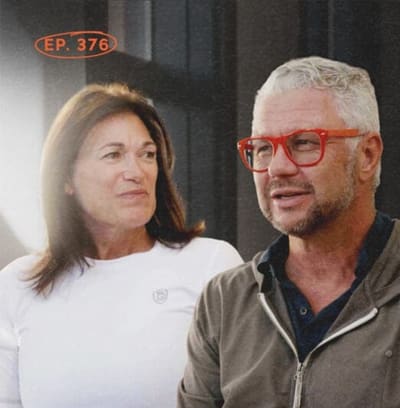
Episode 109 – Leaving Behind the Storm with Andy Crouch and Dave Blanchard

Today’s podcast is the first time we’ve ever heard two guests return to share one episode. And it’s going to be awesome. 

Andy Crouch and Dave Blanchard are two of the leaders of the Faith Driven Entrepreneur conversation and both have a lot to say that’s worth listening to. But today, we’re specifically talking to them about an article we recently featured on the site titled, “Leading Beyond the Blizzard: Why Every Organization is Now a Startup.” 

In an uncertain future, these two are going to help us look ahead and get ready for what’s to come. As always, thanks for listening.

Useful Links:

A Rule of Life for Redemptive Entrepreneurs with Andy Crouch

How to Discern Your Calling with Dave Blanchard

Designing for a Different Future


Episode Transcript

*Some listeners have found it helpful to have a transcription of the podcast. Transcription is done by an AI software. While technology is an incredible tool to automate this process, there will be misspellings and typos that might accompany it. Please keep that in mind as you work through it. The FDE movement is a volunteer-led movement, and if you’d like to contribute by editing future transcripts, please email us.


Henry Kaestner: Rusty. We’re back on the Faith Driven Entrepreneur. Awesome being with you this morning. Thank you for joining me, as always. We’re missing William.

Rusty Rueff: Yeah, well, you know, he’s got that new baby and new babies got to be taken care of.

Henry Kaestner: Yeah. And he did survive. If you’ve listened into a prior podcast and you wanted to know how did William and Deb do as they went cross-country in. anRV with two kids, two and under the answer is that they lived through it. And they’re now back home in California. Things are going well. We’re going to have him back on an upcoming episode. But we have a special episode today. If you’ve been listening to this podcast for a while, you know that we’re huge fans of Praxis. Praxis is an organization that seeks to equip and empower and love on Faith driven entrepreneurs through a really, really cool accelerator, by bringing theological experts, by bringing business experts around a community of not for profit entrepreneurs and then for profit entrepreneurs as they really try to excel in knowing God and honoring them and solving some problems that they see in the marketplace as they look to redeem different aspects of society and really bringing about God’s kingdom on earth as it isn’t heaven. I know nobody that does it as well as they do. I know nobody does it even close to as well as they do. They do it domestically. They bring in international folks and they’re very, very thoughtful about all aspects of entrepreneurship to include funding. And we’ve got a special opportunity to have both Dave Blanchard and Andy Crouch with us. They’ve both been on the program before. We wanted to have them back because not only do we want to get a regular dose of these guys, but we also want to seek them out in their wisdom as they reflect on this season. We found ourselves in just to timestamp this, a bit. We’re talking in mid-May of 2020 and they have just finished their Praxis conference and they very quickly were able to pivot this conference that they had had that was going to be in person. They made it online and they very thoughtfully were able to examine this season we found ourselves in. And Andy, I’m going to put you on the spot at the outset. My favorite part of the Praxis summit was your riff on where we are and what season. And this being a winter. And it wasn’t that you painted this picture that is bleak and things are dying and his death all around us and woe is me and we’ve just got to batten down the hatches. But there’s also hopeful expectancy in your thoughts, in your message. And I’d love for you to start there. Set the tone for us about what season are we in? How do we make of it? And then let’s riff from there.

Andy Crouch: Yeah, we picked up on this metaphor from a epidemiologist named Michael Osterholm, who lives or works in Minnesota. And so he was saying as the coronavirus epidemic was really hitting the U.S., this is not just gonna be a blizzard, it’s going to be winter. And we took that a little further in a piece called Leading Bear on the Blizzard and talked about blizzard winter and a little ice age. And there is a sobering side to this metaphor, which is, you know, a blizzard shuts everything down, but only for a few days, whereas winter is this long season where conditions are difficult in some ways. You can’t live the way you do other times of the year. And, of course, to the point that Osama’s making was this was not going to be a couple days of snow days. This was going to be really a season where everybody had to change their behavior. But you’re right that even that idea of winter is not all bad news because at least some of us live in parts of the country that have this. Now, if you’re from Southern California, as I worked with Harvard students in Boston for 10 years and redoes students who had come to that school from Southern California, having heard of winter, so they’d brought a sweatshirt and they would experience like the first really cold day. And they’re like, oh, my gosh, I need an actual jacket. And then they’d realize this goes on for months. And, you know, it was a very difficult adjustment to realize. I’m going to have to live in a way that I have never had to live in my life. I’ve been flourishing and, you know, the pleasant climate in Southern California my whole life. Now I’m in this much more adverse climate. But those of us who grew up in the Northeast or in other parts of the world that have winter said, you know, you’ll be able to do it. And I think that’s definitely part of the message that there are ways to survive in winter. And then if you think about an ice age as a longer period where the climate has shifted and this case got colder climate and this has happened, you know, geologically in history, as recently as the end of the 18th and the beginning of the 19th centuries, the ice age, even though some things don’t grow the way they used to. And even though there are challenges, there’s also absolutely ways for human societies to retool themselves to adapt in different ways and ultimately to thrive. So we wanted people to definitely not just try to wait it out because that wasn’t gonna be an option. It was becoming clear in March. But actually, to start thinking about how do we survive winter and that how do we actually adapt and even thrive in the changed conditions that may. Persist for quite a while.

Henry Kaestner: So tell us about that. Give me a flyover of a framework that an entrepreneur can think of and say, OK, yes, I get the analogy. I get the illustration. We’re in a different place right now and there’s going to be a spring that’s going to emerge. So that’s great. But what do I do? How do I look at my mission? Do I look at my customers differently? Do I look at my revenue, my funding? Walk us through it a bit more practically.

Andy Crouch: Dave, do you want to pick up on that?

Dave Blanchard: Yeah. Happy to. I mean, I would say, first of all, I think the spotlight on leaders right now is so much more intense than it is even normally, which is already high. So a leader needs to think about their own personal practices before they get too far into what the organization is going to do. And I would just say, if you’re a Christian leader right now, be thinking about key things like how are you using your time? Are you still taking a Sabbath? Do you have good practices of work and rest? How are you thinking about money? Are you thinking about consolidating it around yourself? How are you offering that to the Lord on a daily basis in know that the way you carry yourself and the margin with which you can walk into everyday emotional margin, mental margin and so on is going to be kind of streams of either joy or anxiety to the rest of the people around you. So I would really think about how do you use practices to manage the pressure that you’re in. Second is, how do you take the pain of the moment? Everybody’s experiencing pain, don’t gloss over it, but think about how you turn that pain into possibility. Lead people through lamenting what we have lost so that then you can create from there. If you actually can’t get there yet, you’re going to try to just hold on to what was and it’s going to constrain your possibility for innovation right now. I really think. Connected to that. I think it’s really important that you don’t try to just preserve the organization and its former state, but you try to protect it for its long term mission. Almost every entrepreneur is trying to make some longer term debt in the world. And right now, your objective is to keep your eye on the long term price and create an organization that can survive that and sustain for that long term goal.

Andy Crouch: I think that’s so important because it’s so tempting. And I think we see this happening even in a number of different industries and sectors. I’m even thinking about the church world where it’s so tempting to adapt minimally, like figure out what’s the minimal adaptation we can do. And so, you know, all churches have had to stop meeting. That’s why all these churches that put their sermons online put, you know, like a facsimile or a replica of the worship service online. And that is really falling short of the opportunity of this moment, which is to ask, what can we do uniquely well in this new season?

If it’s just going to be a few days or even a couple weeks of disruption, I’m sure, you know, it’s not really worth the creativity, right, to rethink. What are the real possibilities under these new constraints? But if it’s going to be even several months, let alone a number of years of new conditions. Certainly, if you’re in the restaurant business, I was just reading today, that’s pretty sobering.

Like if you’re told from now on, you can only have 50 percent of the guests that you had before and your restaurant. And if that last four years, restaurants will not survive unless they figure out a very different model of what that experience is like. And I think one temptation for leaders is kind of minimal adaptation with a view to preserving rather than really dramatic adaptation in the service of protecting the deeper mission.

Henry Kaestner: You know, one of the things that you had highlighted in the Praxis summit was this concept of reimagining service delivery. You had a restaurant owner, and I remember and not too long ago, one of the big themes of the conference for Praxis was the reimagination Summit. So I think you’re what I’m hearing from you is that a restauranteur needs to reimagine their mission and their purpose in the way they do things. And maybe just it’s for on that subject. That restauranteur who I think was in Nashville. But it maybe I’ve got the city wrong. IHe came up with a completely different way to reimagine using the resources he had beyond the four walls of his restaurant. Can you mention that before we go to Rusty? I think he’s actually in Seattle. Maybe, yeah.

Dave Blanchard: Canlis is the restaurant there, arguably the best restaurant in Seattle, and ended up really, to your point, redesigning everything. Of course, we’re in a time where in near term, fine dining is off limits. And in the medium term, I think there’s a question of what role will that play in an economic downturn in a city and how do you think about that? I think the most powerful thing to me about what Canlis has done is basically Mark, and it’s a family business, multigenerational, said from the get go. Our culture and mission has always been about the people who are here and how to turn them towards each other. So while an immediate response for some is let’s just shut everything down and wait this out, they actually had the economic ability to do so in Canlis. Instead, they said, how do we keep these people employed, paid and serve our city at the same time? And current, I think, status is they have eight different businesses and different delivery angles, everything. From a pop up bagel shop that was up for about four weeks, it’s not anymore to hire and delivery for families who want to have great meals as a family together and so on. And so far has been pretty successful in keeping things operating during this time. And I think that’s a great example of where the culture that you entered this crisis with can actually be a generative mechanism for where you go from here.

Andy Crouch: Yeah, I would underscore two things that the Canlis model gave us. And, you know, one is you really find out whether you have a core mission that’s not just the sum of your tactics, you know, because many tactics are disrupted for many businesses right now. But if you have a deeper mission and Carlos has this amazing kind of way that they’ve thought through, what we’re really here to do is to help people turn towards one another and obviously do that in the context of food and food service that can be expressed in so many different ways. And that leads to the other thing I think we’re seeing in many of the ventures that we have talked with is not just pivoting to one thing, but actually like multi pronged multidirectional experiments, because it’s so hard to know what’s actually going to be most adaptive. So rather than betting everything on one pivot, so many folks that we’re working with, especially the ones who are making the most of this moment, are actually trying a bunch of different things, some of which they quickly wrap up and realize that’s not quite right. But then, you know, it’s this possibility seeking that is really cool to see. Even if you were doing one thing before, suddenly maybe you should be trying three or four things right now.

Rusty Rueff: I’m going to switch us a little bit. I want to stay in the crisis. And that what could end up being, you know, not short term could be long term, as both of you have referenced. But crisis management itself, like, you know, it doesn’t have to be big. It can be small on a business. Every business has its own crisis. How we respond in that moment, our attitudes and then our actions that follow. What advice can you give maybe in the big picture, but even in the small picture about how to respond to crises? And then are there some examples of some leaders that we see right now, maybe in the public eye that you would point to and go, yeah, that’s the way you should respond to a crisis? We’ll start with you, Andy.

Andy Crouch: So I saw a tweet by I think, gosh, I will not remember her name right now, but she’s one of the epidemiologists at Johns Hopkins who’s working on a lot of the state reopening plans. She’s a consultant for a lot of them. And she said the challenge of leadership during a pandemic is you have to make extremely decisive decisions in the context of extreme uncertainty. The very nature of these new infectious diseases is we don’t know how they work and that, you know, we’re speaking at the end of May. This has been endemic in different parts of the world for five plus months now. And there’s still so much that truly no one knows about this virus, who it infects, why it infects them, what the course of disease is like to be, what the best treatment is. So you’ve got this extreme uncertainty on the one hand and then you have this need for extreme, like decisiveness. And I actually read that.

I thought, well, that actually is kind of what all leadership is. And it’s not always with the intense time pressure, but it’s always making decisions in the face of uncertainty. Like, that’s the very essence of what has to be a leader, is you don’t know everything you would like to know. And other people ultimately are hoping for you to decide. One of my friends says to lead is to decide it’s to take whatever you do know and the needs of the community that you’re serving and then make a choice. And this just is heightened. Right. So the biggest mistake, I think, that I feel like we’ve seen play out to some extent is is pretending there’s certainty when there’s not and pretending there’s a degree of confidence in our decisions that we can’t actually claim. So we have to decide things. We have to make choices. We are going to do this. We’re not going to do this. And here’s why. But if you overplay your confidence or your certainty, your confidence in your decision or your certainty and the facts, you make actually yourself and your organization or community so vulnerable, because when the facts start to change. So we had people very strongly saying, mass, don’t help. Don’t use masks, you know, save them for medical personnel. This was based on very early, very incomplete data. As we’re speaking now, it seems very likely that the single most helpful thing that societies can do is adopt very widespread mask usage. Doesn’t have to be N95, you know, PPE level masks, but they make a big difference. But we had very prominent leaders, people who I have a lot of respect for, like Anthony Fauchi, who went in public with a pretty decisive claim based on really something that was uncertain. The problem is that then you lose so much credibility when the facts become clearer. Right. So I feel like this is the great challenge of leadership at moments like this is how do you generate. Rusty, when you have to acknowledge that you don’t know everything and that you nonetheless are going to make a choice on behalf of the people you’re leading, it is such a test. And I think we see who just flagrantly fails the test. Who kind of barely passes the test. And then these leaders emerge who just have this. And we’ve seen, I think, several governors and there’s not a political thing because they’ve been on different sides of the political aisle and have different political instincts. But they’ve had this way of leading that has fostered confidence even in uncertain conditions and has led in some cases to some really good outcomes.

Henry Kaestner: So I’m fascinated by that. This concept, this authority and vulnerability paradox. Modeled from the president all the way down and maybe talk about a time where you’ve actually seen it done well, which is, look, I want to lead you and do it the best that I can. But the way that kind of connotes some sort of humility is that weakness? And do people then not follow it? Or is it a strength because people in say, well, least I can trust this guy? And maybe we take it out of the political scene because it matters for us as entrepreneurs. Right.

Andy Crouch: I think what people really at least ought not to trust is bluster and bluster is when you’d in your heart of hearts, know you don’t know. And other people definitely know. You don’t know. But you try to just sort of bluster your way through it. And I think appropriate uncertainty is such a gift. Gosh, I don’t admire a lot of things about this leader, but I will say that when Jeff Bezos said I think was in their quarterly earnings call, kind of in the midst of the crisis, said, you know, if you’re a shareholder, you probably want to sit down because we are going to take, you know, billions of potential profit and reinvested in the safety of our workers and in retooling Amazon to meet this need.

I thought that was I mean, again, we’re not at issue a blanket endorsement for Jeff Bezos leadership. But I did feel like at that moment, those very bold, he’s acknowledging that there’s going to be loss to certain stakeholders. Traditionally, the most important stakeholders in a corporation are supposed to be the shareholders. He’s staking out a different approach and giving reasons. And in the context of a lot of challenges to the business, and I thought that was, you know, a very large scale corporation, a pretty remarkable act of leadership.

Rusty Rueff: And Dave, I mean, at this moment of vulnerability, when somebody does lose credibility and maybe they become bankrupt, if you will. But yet you have to still be a leader. How do you rebuild that if the feeling is that the credibility has been lost?

Dave Blanchard: Yeah, well, I think if you have lost credibility, you need to admit that and pointed out not pretend that it’s not there and lead as if you didn’t completely missed the mark on something. I think the good news about this moment is that to a certain extent, there’s a lot of grace. People understand we’re working under a lot of pressure with all that uncertainty and depending on how large the grievance, I think you get two, three, four shots at different directions of things. As long as you are working from a well of trust, which, you know, we’d say, OK, if you’ve been a redemptive leader, you have a lot more grace on you as you enter this. If you’ve been exploiting your workers for the last several years and now you’re into a situation where people feel like you have straight up lied to them. It’s going to be hard to reclaim any of that, of course. So I would say, you know, yes, start with honesty and then whether or not you’ve lost your credibility or not. I would say the next moves are bring optimism because of what could be possible. And people, I think, want to be led by not bluster, but optimism and then be opportunistic about what you see in front of you. Take this constraint as not just something that’s been a difficulty handed to you, but a place to lead from. And I think you can gain that credibility back as you guide people towards a new pathway.

Henry Kaestner: Andy, I’m wondering if you might be able to help us. And I won’t spend too much time on this, but I want to bring up and I want to take because it’s something that we’re going through in these conversations right now. What I want to spend much of the rest of our time together on is this concept of the alternative imagination and entrepreneurs coming in and being creative about seen accelerating change and see new opportunities in filling them and just to help our listeners to think about a framework on that. So that’s where I want to go and maybe just help prepare you for that. But before we go there, I do want to ask you a question about the conversations that we have. This is a politically charged time. There are opener’s, there are closer’s. There are Republicans that are Democrats. There are people like wearing masks, people who don’t want to wear masks and all these different things. And part of us, as entrepreneurs just want to say I’m not talking about religion or politics. And yet we’re in a community where we try to lean in and talk it about our faith. How do we as entrepreneurs talk to our partners, our vendors, our customers and our employees in a way that has gentleness and respect about the different issues that everybody’s talking about? Do we just avoid them or do we engage in conversation even when we get a sense that this is a person is can be coming from a different perspective and oh, my goodness, I got a 50/50 shot here of them never liking me and never buying from me again.

Andy Crouch: Gosh, it’s tricky. I mean, I think there’s gonna be maybe 10 percent of people on each side who are only going to deal with you if they feel like you share their total certainty on the issue. But I think the truth is none of us knows. There’s so much that we don’t know. I mean, you know, I mentioned masks earlier. The evidence we seem to have says they seem to really make a difference to societies or nations that have prioritized them, seem to have done better. But you know what? We’re very early in this thing. This pandemic will probably have a course of a couple of years. Even if a vaccine comes out sooner, it’s not going to instantly put a halt to the virus is spread. We’ll know so much more in a few years. And so it just seems to me the only option, the only truthful option is to say we do not know everything we wish we knew. We have to make a decision based on incomplete knowledge. And both sides probably are accessing some things that are true. So there’s not a lack of reasons to believe whatever you’re the person you’re acting with believes. And so I guess I would lead with. I actually think the most important thing is literally what you said. It’s nothing that you say. It’s the gentleness with which you approach others. The respect with which we approach others. I think a lot of the activation on both sides of this is a sense that the other side of whatever they’re on doesn’t respect them. We are in a moment in American life at least, where people for some good reasons, feel that their dignity and identity is often under threat. And they’re looking for people who will show them honor rather than shame. And that’s true on both sides of any political issue. It’s just true to an astonishing degree across the board. And so if I approach other people, whoever it is, as someone that I want to show honor to first and I do not want to have them feel like I’m sort of a category of the shamed, the excluded. I think that goes a long way. And then if I say, gosh, this thing is so complicated, how are you managing? I think you can defuze a lot of that. That’s the best I can suggest, at least it’s not gonna work with everybody. But I think it works. It’s going to work with most people and surely better than trying to convince people of our position on something.

Henry Kaestner: So, Dave, I want to come back to the topic I mentioned before. This is just an incredible time in history where the world is a bit different and entrepreneurs are problem solvers that are opportunity seizers. And there are opportunities to be seized in their problems to be solved. There are new industries are developing. If somebody looked at you before and talked about online education six months ago, they would’ve thought you’re part of a fringe movement. Just focus on homeschoolers analysis and that’s mainstream. Lots of different places for people to kind of lean into, for the entrepreneurs that are listening to his podcast with an alternate imagination. Right. It’s beyond just seeing ways to make money. But as you reflect on the last three or four months and think ahead the next four or five, what’s a framework that you would encourage an entrepreneur? Maybe they’re not already owning a business. Maybe they’re just saying, gosh, God, what would you kind of always want to be an entrepreneur? Help me to understand one thing you want me to do. What’s a framework that that somebody listens this might go through during this season?

Dave Blanchard: Yeah. Thanks for asking that question, Henry. So important. And what a time for someone to start something. I think we’re to look back at it as actually a hotbed of innovation. And I hope redemptive innovation where people really are starting to take an inventory of where can I really renew the culture, not just build a new thing, but what brokenness either preexisted this, that the clean slate of the corona virus time has opened the possibility for new design or what brokenness has emerged from this or been made more visible because of this that is now more likely to be funded. People are more interested in addressing it and so on. So I’d really look at that, have a go to framework here from political theory. It’s called the Overton Window. The Overton Window talks about how some ideas they start in this kind of unthinkable and radical category and they start to move towards ultimately being popular or policy. And the window is a time where legislators in this case can introduce legislation and pass it. And I think a lot of times about entrepreneurs participating in a similar process. If you think back to Airbnb, for example, that came out of the last financial crisis time. The idea of staying on people’s sofas was a kind of a radical, unthinkable idea that’s been pulled into a norm now where although obviously this is a different time, people are used to renting other properties and things like that. And as it relates to the Christian entrepreneur and a redemptive imagination and alternative imagination, to your point, I would start to say, where have we seen the Overton Window shift for new possibilities in renewing the culture? What what ideas were radical? Just a couple months ago, but now seem, hey, you know, this is actually feasible or possible. There’s a shift that’s happened to introduce something new into the world. And I think, one, there is a shift that’s happened. And then, too, there is a shift that will happen over the next 12 to 18 months. I think a lot of times people are talking about years of acceleration having happened in these last time frame. And so I’d really encourage folks to whatever area of interest, whatever area gods put on their heart as a place of brokenness in the world to really examine it with a close microscope and see what might be possible in a way that wasn’t just a few days ago.

Rusty Rueff: So I love the idea of what is possible because we’re seeing so many new ideas that are showing up but did seem like craziness 12 weeks ago. Right. Just what I mean, nuts to say, oh, well, let’s do these things, you know, out of our home that we never did before on an online platform that we’ve never really used to before. But it sounds kind of cool. You know, it helps. So now we’re all doing it. Look over the horizon, both of you. You know, and I hate to ask you to prognosticate because, you know, prognosticating the future is one of the worst thing to do. But what do you see emerging? I mean, what do you think that is possible that is going to show up and maybe hang around for a while? Trends. Anything that’s on your mind.

Andy Crouch: Well, Yogi Berra said it is difficult to make predictions, especially about the future. So I do not want to be very often in that business, but I do think we can think about what can we reasonably hope for. What can we imagine becomes available, moves into the Overton Window of possibility or even desirability? I mean, one very broad thing I would say is, first of all, I think it’s very possible, actually, that we kind of overdose on media and tech and a little bit like when you if you were the kind of kid living in the right time and place to go to a state fair and convince your parents to buy your cotton candy and you had too much cotton candy and then you’ve never wanted cotton candy again.

I think we may actually reach a kind of saturation point with technology as entertainment, and we’ll actually have a chance to rethink when does technology actually help us throughout. And similarly, we’re all spending a great deal of time on Zoom. So, you know, February 15th, 2020 was a great time to buy the stock of Zoom Inc.. I have a feeling that like November 2020, we’ll be a great time to sell the stock because there will be like I do not want Zoome anymore.

My daughter is a university student. She spent the second half of her semester online and she said, Dad, none, none of my fellow students or I want to keep doing this online education thing. Like we want to be back with each other, with our teachers or professors. Now, the truth is that we are going to keep using these technologies because we have also discovered some things that actually work better when we augment what we’re doing with them. But I think there’s a chance for us to be more intentional about how we use them, because we’ve just had so much experience with what works and what doesn’t. And my long term hope for technology and the modern world, you could say, is that we start treating it as devices that do things for us and start treating it as instruments that help us fully act and be human in the world. And I actually think we’re making some discoveries, fits and starts and, you know, with a lot of terrible Zoome conference calls and webinars along the way. But we’re discovering, oh, this actually works better. And this is a way that it actually helps me communicate. And I’m hoping we end up with a more discerning and intentional way of using technology to help us be more human rather than I think our tendency was to just adopt whatever new thing came along. We’ve all been dropped in the deep end of a technologized life, and I think we’ve discovered it works well for some things and not for others. And hopefully we come out of that having learned and asking something different. Of our technology.

Dave Blanchard: You know, I would say that I think one of the most interesting things to reflect on right now, at least for me, has been how the last, you know, 12 years we’ve effectively been operating in building in and spending in a bull market that’s just kind of felt up into the right to the extent that we’ve gotten used to it feeling that way.

My sense is that while other times of economic recession and so on, people have felt a fast but also gradual slowing of losing jobs and shifts and needing to kind of reassess. We’ve all just been immediately thrown into this moment of stopping everything and having so much uncertainty and uncertainty level that is so much higher than it was in, say, 2008. And my sense is that that will have a material impact on people’s inner philosophy. And I think, you know, that has this president cons for the entrepreneur who’s selling things. But I do think that there will be opportunities for the redemptive entrepreneur to press in and say, how can we help people thrive in a time of less than a time of ambiguity and get less identity from the things that they materially own. And so I think there’s an opportunity there and some economic consequences that has some permanent or at least mid-term shift to it. The other thing that’s fascinating for us to reflect upon as entrepreneurs, building organizations, and should ask us to wrestle with some things in our kind of deep belief systems is just what the Atlantic called a couple of years ago as work ism. And just this idea that we’re constantly going and going and going. Now, this period of time for some of us, myself included, has been the most intense work season that I can remember since startup life. But for many others, it has been a moment to stop, to be with family more, to get off of the career upward trajectory they thought they were on. And some of the things that they had put their identity to and life to now have taken such an extreme pause that I think people are going to say, hey, should I really been gone like that? And. I think the consequences of that are can be really interesting on what it becomes the ideal workplace culture of the future. And I’m not just talking about remote in-person dynamics and things like that, but where do people want to go to work and what are their expectations, especially as you already have a millennial set that puts work life balance near the top of their list, pre-coronavirus

Andy Crouch: I can’t imagine that parents who have been able to be around their small children. Well, kids at home of any age really A will not want some way to get away from them. It’s really stressful trying to work with your kids and B are never going to want to be as detached from family life and household life as they’ve gotten to be. And there’s going to be this renegotiation that is, you know, neither one or the other because it is really stressful also to try to manage small children and do professional work or any kind of work.

But I don’t think there’s ever going to be a desire to go back to the level of absence from the home. And I mean, until 100 years ago, all work took place around the home of all kinds. Even people who did idea work, writers and lawyers or whatever, they worked in their home and they were with their children and they were with their spouse. And, yes, there were stresses with that. There also incredible benefits to that. And I think how that’s going to get re worked in American life is going to be really interesting and probably really good.

Henry Kaestner: So I’ve got a question for you all that has less to do with COVID 19. But some of the technology innovations that are happening around us. I’m reading a book right now, The Future Is Faster Than You Think by Peter Diamandis. I love his work, Bold, Abundance. And I’m wondering about the role of the Christ follower in where we might really serve. And I think that the answer is going to be both. But I’d love to get your reflections both. And here’s what I mean. There are clearly tons of opportunities for us to be able to innovate around the social problems that we see in our midst, in terms of what is being broken about our relationships and how do we come in, heal them. CloudFactory, the way that they’re providing meaningful work for folks and Christ-followers are doing. I think great job around social innovation. And yet there’s also this other aspect of entrepreneurship that’s at the tippy end of a technical spear, if you will, where just massive innovation has been done in the worlds of quantum computing or in 3D printing or in A.R., VR, things like that. And if you really start looking at some of the technical innovation that’s happened on in the world, you can pretty quickly get to it like a God complex. I think back to the scene in Malice with Alec Baldwin and he says, you want to know if I have a god complex? Well, who is there an operating room three or five hen your husband was dying of heart disease? It was me. So you to ask if I have a god complex, I am God. And I hear echoes of that in some of the technology innovations that are happening, particularly around Calico. So my question for you all is, what role do you see Christ followers having in on one hand, the technical innovation that’s happening that’s causing so much disruption, on one hand causing great opportunity, but maybe even some displacement? Do Christ-Followers need to be in that or just in picking up the pieces behind with all the displacement that happens because of some of this technical innovation? I presume the answers can be both. But I’d love to hear you guys both unpack then. And maybe that’s actually a subject for another podcast interview down the road. But refine that a little bit before you go, please.

Andy Crouch: Well, I’ve got a point of view. I can come back because my next book, which is halfway written. And we’ll be out in the spring of 21, is in many ways exactly about this. And it’s basically about what do we want to accomplish with our technology? As it gets more and more sophisticated, more and more powerful. Where are we going with it? Why are we going where we’re going? And what’s the role of followers of Christ, the church, in shaping that? And I think a very fundamental thing to say is there are no nonbelievers. Everybody believes in some ultimate thing. And in that sense, there’s no secular people, as in people who just are neutral on the big questions, at least no one who does anything important in the world. I mean, maybe people who just smoke weed and stand their basement can be secular. But if you’re an entrepreneur, you ultimately are acting in the service of some ultimate vision. And you may not have reflected on it. You may not be able to articulate it and you may be borrowing it from the broader culture in some way. But you’re still you’re serving some ultimate thing. I think that Christians, especially who work in technology and especially on the bleeding edge of certain technologies, need to really be thinking about why do we believe it is to be a human being? What do we believe it is to be a person?

Where do we think personal flourishing comes from and then designing with that in mind? And there’s not always a super direct, easy line there. But to date, a lot of technology has been developed based on assumptions about what people ought to want. So if you think about life extension, for example, the idea that the extension of biological life, which we probably will make significant advances in the next 50 years, that that’s a good thing. I don’t necessarily disagree with that, but I do not think a longer life is is necessary. Good for anybody. All by itself. And when, you know, like Chalco Labs says, we are here to help people live longer, healthier lives.

You need to have a point of view on what is in that word, healthier, because the truth is that mostly people are looking for longer and longer is quantitative. It’s uni dimensional. It’s relatively easy to technically solve. Actually, I mean, not that there are massive technical challenges, but it’s what people call a complicated problem as opposed to a complex problem. And complicated problems just require lots of really smart people doing smart things. Complex problems don’t yield to sort of technical solutions. And the question of what is to be a person is a complex problem. And if you build with an inadequate understanding of what is to be human and an inadequate understanding ultimately of who God is and is God really reducible to that person who is able to wield technological power, your stuff will not work in the very long run. It will fail. We’re going to see this with, I think in the next generation A.I. has been built. The quest for certain kinds of general artificial intelligence have been built, a total misunderstanding of where intelligence comes from, how it’s developed, how it’s deployed in the world. Out of time probably to you.

I’m sure you do not want me to give you my whole chapter on this, but it actually is based on what we’d call a false anthropology and it’s going to fail. So I think the self-driving car revolution, it’s going to work in very limited domains, but it’s never going to pan out the way that Elon Musk has been saying it would for five years plus now, whereas every year next year it’s gonna be the year. It’s not going to happen because it’s based on a misunderstanding of what people are and ultimately what the world is. And Christians will actually have a competitive advantage in the long run in knowing where to place. In a sense, they’re technical and technological bets in ways that actually lead to real durable human flourishing. So I think there’s huge potential and huge challenge to really wrestle with what we truly believe about who we are as people and not to just take that from our culture that ultimately believes only in the quantitative, ultimately doesn’t believe there’s such a thing as a person. It’s not going to last, it’s not going to work. And we can actually invest in things that last and that will actually work.

Henry Kaestner: That is all fascinating for me to all of us, I think, listening to this. And we’ve got the reason to come back in a couple of months and learn more about that and talk more about your book. I’ve got to bring this to a close. Now, one of the things that you might know from the way that we have all of our programs are we always ask each of our guests about something that they feel that God is speaking to them about through his word. And maybe it’s something this morning, maybe it’s last week, but something that he’s speaking to youth from the Bible that you might offer up as an encouragement to our audience.

Andy Crouch: I’ll give Dave the last word. I’ll say I’ve been in Jeremiah and now it’s not exactly a happy story because he sees the exile coming and his job is to tell the kings and the people of what’s coming. And yet, what I didn’t quite remember, I guess, from whenever the last time was I really spent time in Jeremiah is nonetheless how much he proclaims the faithfulness of God and the hope of God, even as he’s predicting, you know, attempted cultural genocide. I mean, that’s what Babylon was in the business of doing, too little peoples like Israel. He’s saying God is in this. God is actually not going to forget. You know, houses and fields will be bought and sold again in this land. And I’m living in a county in a state where no one is allowed to buy or sell a house right now for the last month and a half under lockdown. But as a kind of metaphor for no matter how bad, no matter how bad the circumstances could become, God is faithful. It’s been pretty amazing.

Henry Kaestner: A great word. That’s a great encouragement. Dave Blanchard, bring it.

Dave Blanchard: Yeah, I would just say, I think being the Old Testament a bit and thinking about the urgency of this moment. One thing that’s been of great comfort to me is to just reestablish the long time horizons of the Lord’s work. And this feels so intense right now. But in a larger picture of centuries, which is often how we see God working in the Bible, we can rightly size our own role. And even this moment in our larger culture. And I think dialed down a bit of our anxieties and put more trust in what God is doing in the world and will do.

Henry Kaestner: That’s a great word from both of you. I’m grateful for your partnership in the movement, your leadership in the movement, the way that you’re a very, very thoughtful about how Christ followers might respond to the opportunity to challenges to different seasons. We absolutely have a whole bunch of different things I want to talk about coming up and talking about as we emerge from this season. I’m fascinated now about his new book, and I’m just I’m grateful for your time. Thank you both for being with us.

An Investment in Social and Economic Change

This article was originally published here by Bethel University

— by Dr. Paul Campbell and Jason Schoonover

Abstract: What if we could take our historical disadvantage, created by systemic racism and artificial poverty, and turn it into our competitive business advantage? What if, by leveraging the platform of technology entrepreneurship, we could bypass many of the cognitive biases which have prevented both economic and human flourishing within our community for centuries? These questions, as well as a biblically informed frame of justice, led my colleagues Dr. Chris Brooks, Jerome Hamilton, and I to co-found Brown Venture Group, a venture capital accelerator focused on technology entrepreneurs of color.

 After years of blending his loves of business and ministry, Dr. Paul Campbell(left) co-founded Brown Venture Group along with Jerome Hamilton (center) and Dr. Chris Brooks (right), a venture capital accelerator focused on technology entrepreneurs of color .

After years of blending his loves of business and ministry, Dr. Paul Campbell(left) co-founded Brown Venture Group along with Jerome Hamilton (center) and Dr. Chris Brooks (right), a venture capital accelerator focused on technology entrepreneurs of color .

After a successful period working for Sprint, I applied for a job at a large telecommunications company. I felt like I checked every box needed to get the role. I had consistently exceeded expectations. I had buy-in from peers. I’d built a strong network of connections that would be beneficial in the job. I also formed a strong 90-day plan for the new role. Moreover, at the time, I had two master’s—one in pastoral care with an emphasis on leadership from Minnesota Graduate School of Theology in Minneapolis and a Master of Business Administration from Bethel University of St. Paul, Minnesota.

But I didn’t get the job. It went to someone I had worked with, someone I had objectively outperformed. For the first time, I had to admit that it was likely due to racial barriers. Being biracial growing up, I experienced things, but I always said, “I refuse to be a victim”. But as I reflected on my career, I recognized this had been an issue—for myself and for many others. I realized that my problem was not unique to me.The frustrating experience inspired me to form Brown Venture Group; a venture capital accelerator focused on technology entrepreneurs of color. Based on my research, I believe this effort will build organizations that can produce jobs, solve problems, and help overcome racial barriers through technology.

This is a business opportunity that can make a significant return on investment, and it’s a social entrepreneurial opportunity where I can make a tremendous impact by making generational wealth, creating jobs for people who had a hard time getting jobs, and removing barriers to contribution that existed in these organizations.

— Dr. Paul Campbell 

Business and ministry

In many ways, Brown Venture Group blends my callings to business and ministry, of which I have deep family ties to both. My maternal grandfather, Thomas McKee, was born in 1887 and was a pastor for 70 years in the Denver area. My paternal great-grandfather, Columbus Johnson, was also a businessman and minister. Johnson was an “Exoduster” who helped lead former slaves from the south to the Kansas City and Denver areas in the late 1800s looking for opportunities. Years later, my parents did inner-city ministry work in the Twin Cities, and my father, the late Rev. Dr. Bill Campbell, was a highly educated pastor and co-founder of the Minnesota Graduate School of Theology, where I would later earn my first masters and a doctorate in social entrepreneurship. But after experiencing biases that kept him from getting a job, my father joined the Navy as a chaplain in 1989 and moved our family to Virginia. 

After my father died suddenly in 1992, I remained involved at Rock Church of Virginia Beach, where I met and learned from many prominent evangelical leaders and eventually became a youth pastor. Though my time at Rock Church was an entrepreneurial experience, as I helped coordinate concerts and largescale prayer rallies, I felt a tension between my call to ministry and my lifelong love of business. Then in 2006, my mother, Dr. Peggy (Campbell) Rayman, and I traveled to Africa to help train pastors. When we arrived, a local pastor, Abraham Maji, took me around the town of Jos, Nigeria, where I noticed signs of past violence. After Pastor Maji told me of past religious warfare between Christians and Muslims, I asked why it stopped, and the answer changed my life. The warfare was causing economic unrest and was hurting businesses. “When they realized they were killing each other’s customers, it stopped,” he told me. It was kind of this ‘aha’ moment that business could be used to do tremendous good.

I started seeking ways to blend faith and work and was later introduced to the Theology of Work Project, a program that strives to make work more meaningful and productive through a Christian approach. This connected me to Dr. Ron Soderquist of Cru, who became my mentor and directed me to Bethel’s MBA program. At Bethel, I became involved with Work With a Purpose, which helps leaders engage with whole-life discipleship in their workplaces.The experience, connections, and lessons I gained at Bethel helped me to be able to embrace and understand the opportunity to form Brown Venture Group, inspiring me to think critically about solving problems. Chief Advancement Officer Jim Bender met me and asked me to join Bethel’s National Alumni Board. Bender notes Bethel’s programs combine rigorous business training with a Christ-focused core to prepare students to face issues in a unique way. “Paul carries this out as he takes his business acumen, combines it with his MBA education, and then layers in Biblical principles in serving others,” Bender says. 

Taking action

After losing out on the job, I sought a solution instead of staying angry and frustrated. I didn’t want that to be an issue I had to deal with. I wanted it to be the fact that I was out-performed. My work should speak for itself. My research led me to begin to make connections between behavioral economics and racism, that is, racial economics—and to seek solutions that either neutralize or eliminate the harmful impact of systemic racism. My experience at this company kind of forced me to open my eyes to a larger issue. 

I poured over topics around race from issues of today all the way back to reconstruction after the Civil War, slavery, and before. I started seeing patterns that I came to identify as “barriers to contribution” that keep people of color from succeeding and acquiring transferrable wealth. My research revealed a long line of barriers, including states taking measures to keep African-Americans from owning property, voting, and seeking education; redlining policies that kept African-Americans from buying homes in certain neighborhoods—or from buying homes at all; and much more. These barriers were built into education and grew into financial gaps over time. Today, most African-American wealth is in entertainment, sports, music, and similar jobs, but few, I would argue, have transferrable wealth like property.

I wondered why I was able to overcome some barriers earlier in my career, while others couldn’t. Then it occurred to me the reason why was because I was able to use technology as a tool to overcome serval barriers. With this in mind, I researched technology companies and startup programs, finding that only 1% percent of venture capital (Cbinisghts) was given to communities of color, even though they have a similar or better success rate. I started exploring ways to bring startup and funding dollars to the African-American community. That led me to found Brown Venture Group in 2018 with Chris Brooks, a thought leader in Biblical justice and racial equality, and Jerome Hamilton, a pastor and successful businessman. We all came together to start a firm that focuses on accelerating bright ideas that have a hard time getting capital. All three of us bring extensive experience in ministry and smart, sound business acumen. We have this intersection of faith and work.

The Opportunity: Our disadvantage has become our competitive advantage. 

My colleagues and I think that there is a strong case to be made that entrepreneurs of color are one of the most undervalued and mispriced investment opportunities of our time. As a result of hardships endured under artificial poverty created by systemic racism, our communities are uniquely prepared for the rigorous and challenging life of entrepreneurship. From a deal flow and talent pipeline perspective, there is a disproportionate number of highly educated underinvested entrepreneurs of color with profitable, innovative ideas, products, and services that fail to make it to market due to racial discounting and lack of investment. Moreover, our research has shown that by leveraging technological entrepreneurship, we are able to bypass cognitive racial biases. This is because when solving a problem or meeting a need using technology, the person on the end of the supply chain has no idea as to the color of your skin, all they know is that product works or the service met a need.

One of the reasons we chose the accelerator VC model is that it seamlessly integrates discipleship opportunities within each cohort. From a faith-based entrepreneurship and investment perspective, we are able to help propel businesses to success, but another goal is to make a positive impact on the community. By helping groups that haven’t gotten frequent support and opportunities, the entire community will benefit. Our team is fundraising and is already working with six companies as we get ready for a full launch. For example, Brown Venture Group is working with a medical automation and fintech startups Simpli-Fi Automation and MoneyVerbs, respectively.  Simpli-Fi Automation already has two provisional patents on hospital bed devices. The first provisional patent, The Auto Prone Array, is a modular patient rotating bed with a built-in ventilator designed to increase lung capacity of Acute Respiratory Distress Syndrome (ARDS) patients while simultaneously limiting exposure to caregivers. The second provisional patent, The BeBox, is a programable and voice-activated automation medical device which interfaces the components of electric (semi-electric) hospital beds allowing for the automation of functions such as head, foot, and bed height adjustments as well as the integration of a turn assist designed for patients with limited mobility. MoneyVerbs, a fintech startup, created an app that helps Millenials & Gen Z’ers achieve life goals and financial success through gamification, first-person simulations, instructional content, and real-world activities. Moreover, the pioneering research that has gone into the design of the app has been able to quantify the Social Return On Investment (SROI) for active app end-users on the platform.   

Brown Venture Group continues seeking ways to bring undervalued assets to the forefront, and the founders have set their sights high for the future. We want to see a Fortune 500 company come through our program, that we would help scale and launch.

Footnote: https://www.cbinsights.com/research/venture-capital-demographics-87-percent-vc-backed-founders-white-asian-teams-raise-largest-funding/

——

[ Image provided by Dr. Paul Campbell ]

Alternative Recovery Scenarios: Henry Kaestner on the CEF Podcast

This article was originally published here by The CEF Podcast.

Few people have been a consistent voice of wisdom than the Christian Economic Forum, and Chuck Bentley especially. If you’ve been following the website for a while, you’ve certainly seen multiple CEF whitepapers, which are a collection of innovative ideas from some of the world’s leading faith driven entrepreneurs and investors.

Recently, Chuck and his team at CEF had Henry Kaestner on their podcast to talk COVID-19, generosity in the midst of crisis, and alternative recovery scenarios.

Listen in to hear Henry share:

  • How his near-death experience last year has impacted his perspective on COVID-19

  • The 3-part strategy he recommends to entrepreneurs about running their businesses in this environment

  • Observations from Silicon Valley during the crisis

  • His response to 4 possible economic recovery scenarios

  • And stories of faith, hope, and love in the midst of hardship

Pierce Brantley

author, speaker, entrepreneur

Pierce Brantley is an author, speaker, entrepreneur, and Christian businessman. He has successfully launched, run, and sold his own company, served as an executive for a top-ten Social PR firm in Dallas and consulted with numerous Fortune 500 companies. He studied Disruptive Business Strategy under the late Clayton Christensen at Harvard Business School.

As the oldest of nine children, he grew up in the boondocks of East Texas and well below the poverty line. Total reliance on God, the need to provide for his family, and a strong work ethic borne of necessity, resulted in his drive. Today, he puts that same intense motivation into teaching people how to lead themselves and their businesses well.

When he’s not consulting on product strategy, Brantley spends his time writing books about calling and career. Brantley is the author of Calling: Awaken to The Purpose of Your Work, Creating Heroes: The 10 Tactics of Client Leadership and Organizational Management, and Power Love Sound Mind: 52 Week Soul Strategy. Through each book, Brantley leverages his dual calling in business development and Christian leadership to guide readers toward success—whether on the job or in ministry.

His hope is that, through his work, others will learn more about the work to which they’ve been called. He believes everyone has a role to play in the Kingdom. There is not a person alive who doesn’t have a called career, pre-assigned by the Almighty, to do with their time on earth.

Pierce and his wife Kristie live in Dallas, TX.

contributions to faith driven entrepreneur

Paul Campbell

co-founder

Paul is a Co-Founder of Brown Venture Group, a Venture Capital Accelerator focused on technology entrepreneurs of color, based in Minneapolis, Minnesota. Prior to Co-Founding BVG, he was a sales executive with Sprint. Paul received a B.A. in Biblical Studies, M.A. in Pastoral Care and Church Administration, Doctor of Ministry in Social Entrepreneurship from Minnesota Graduate School of Theology and an MBA in Global Business Management from Bethel University (St. Paul). As a subject matter expert in the field of Faith, Work, Economics and Entrepreneurship, he has been invited as a guest speaker and panelist to a number of events and conferences. Paul has been featured on the Oracle for Startups Blog and is a regular collaborator with both Cru and Made to Flourish within the Twin Cities area of Minnesota. In addition to his work at Brown Venture Group, Paul is an Innovation Consultant and also serves on the Bethel University National Alumni Board.

Paul and his wife, Rebecca, live in Maplewood, MN, with their four children, William, Ethan, Truett and Ellia.

CONTRIBUTIONS TO FAITH DRIVEN ENTREPRENEUR

How to Focus on What Matters

At the end of every podcast, we like to ask our guests to share what God has been teaching them in this season of life. This week’s guest is Jeff Henderson. See why he’s grateful to have God as his shield and how time in prayer is reminding him of how to focus on what matters.

Your word is a lamp for my feet, a light on my path. – Psalm 119:105 NIV

So we just came off twenty-four hours of continuous prayer for our church. We asked everybody to sign up for just 30 minutes, for twenty-four hours starting yesterday at 9 a.m. And so for me, part of the way I used my 30 minutes was just reading through the Book of Psalms. And one of the things that really stood out to me is that God is my shield. 

And you know, we want to practice self-distancing and self-isolation and all that. We’re all for that. But I still have to leave, and you know, move forward, even though I have my own fears. And you’re like, can I go outside for a walk? You know, how do I do this? I can’t turn to anybody and say, “Hey, when you went through a global pandemic 20 years ago, what did you do?” There are no books on this necessarily. So for me, I felt like God said, hey, I’m your shield. Keep taking one day at a time. 

And then the other thing that I feel like God has been asking me to do is to pray more for his glory than my relief. Because early on I was praying, God, get us out of this. God I know you can do a miracle. I know you can do it. You could be Thanos of The Avengers and you could snap your finger and this whole thing goes away. Right. (Even though Thanos was an evil character. Just go with me).

But what if there’s a deeper play here? So I’ve had to really start shifting. Still pray God, I want this thing to go away. I believe you can do that. But if that’s not what you want to happen, I want your glory to manifest in my leadership and in my family.

Then the other thing, too, is I can get drawn into work and somewhat forget my family. So I have to balance that right now. Right. I have to balance because you get the pressures and especially in a nonprofit. You know. What’s giving like right now? And all the normal pressures that any organization’s leader has. But on this day, my family needs me just as much as the organization does.

And so I can’t lose that. I think being a shield. God as my shield. Praying for God’s glory more than I pray for my relief. And ultimately, there’s going to be another lead pastor at Gwinnett Church. But there will never be another of Wendy’s first husband and father to Jessie and Cole. So I’m focused on those.

Listen to Jeff’s full podcast episode here.