




Podcast Episode 115 – Pivots in a Massive Sea of Change

For today’s episode, we brought back one of our favorite Faith Driven Entrepreneurs and Investors, Pete Ochs, and with him today is David Simnick, Founder of SoapBox Soaps. 

They both shared their entrepreneurial journeys with us, but what we spent most of our time talking about was the way they both had to adjust quickly in the face of Covid-19. Their ability to nimbly pivot their businesses sets a great example for anyone wondering how to respond to uncertain times. 

We can all learn a lesson from these two men. Let’s listen in…

Useful Links:

Multiple Bottom Line Investing with Pete Ochs

Jailhouse Business of Generosity

David Simnick | Halcyon

SoapBox Soaps

Are You in a Winter Season? Look for the Harvest to Come

This article was originally published here by Institute for Faith, Work & Economics.

— by W. Scott Brown

My wife Kristin and I are members of a large garden near our home in Northern Virginia. We enjoy seeing its transformation through the seasons. In spring the garden is resplendent as tulips, daffodils and other flowers appear, and delicate cherry blossoms bloom. In summer, it is lush and verdant offering sustenance to Monarch butterflies, yellow finches, Eastern blue birds and others benefiting from its bounty. In the fall, majestic oak and maple trees take center stage with a breathtaking array of color, as the garden’s other plants fade to autumn tones.

Scripture reminds us:

As long as the earth endures, seedtime and harvest, cold and heat, summer and winter, day and night will never cease (Gen. 8:22).

Each season is indeed remarkable. However, the season I want to focus on is winter. With everything gray and cold, winter can seem like a lost season. But it isn’t. In fact it’s vital for the garden.

The Washington Post on Feb. 9, 2017 featured an article on gardening by Adrian Higgins. Its evocative title was, “Savor the stillness of winter before all heaven breaks loose.” In it, Higgins noted the importance of winter:

Buds break into growth based on whether the parent shrub or tree has received enough of its winter chilling hours along with sufficiently warm temperatures. Because the chilling needs differ by species, spring is a progression of awakenings over several weeks.

Read the full article here:

Are You in a Winter Season? Look for the Harvest to Come

Related articles

——

[ Photo by Bob Canning on Unsplash ]

How to Pray in Meetings

At the end of every podcast, we like to ask our guests to share what God has been teaching them in this season of life. This week’s guest is Jim Beckett, creator of Beckett magazine, the gold standard for valuing trading cards.

1 John 5:14

This is the confidence we have in approaching God: that if we ask anything according to his will, he hears us.

We pray at the beginning of meetings. We pray at the end of  meetings. My co-host is Joe Galindo, who is a C12 chair now but he was my executive V.P. back and we’ve been longtime friends. And in the beginning, he did most of the praying. And I would just observe. And then I realized I’m really missing out. 

I have so many friends that are high powered executives who can speak to a crowd. They can go up, take the microphone and commanding presence for any number of people, you know, dozens, scores, hundreds, thousands. But if you ask them to pray out loud in public, they say, I’ve got a sore throat. 

And so I wind up being the guy that’s praying now. So I went from not praying very much to praying a lot. So I’ve prayed in more than 5,000 meetings. All those meetings are bathed in prayer before and after. 

But I have an adage that relates to people that you’re in the presence of. It’s good to pray with your wife. It’s good to pray for your wife. But it’s not necessarily good to pray for your wife with your wife. 

In other words, I don’t want my wife praying “Lord, give my husband the courage that he needs to do what he’s supposed to do”. That doesn’t feel like a prayer to me. That feels like a kick in the pants. 

Consequently, this intercessory prayer at the end of the meeting, it can’t be “Lord help this person that we’ve been interacting with for the last hour, hour and a half to have the guts to follow through”. You can see how it breaks down. We have to be affirming the person, but we’re not necessarily affirming the plan that he walked in with. 

And we’re more provocative than prescriptive, but we want to be strategically encouraging the person without telling him what he has to do. So that’s the intercessory aspect. It’s not that we’re the oracle and this is what you have to do. 

It’s that we’ve expanded your thinking. You need to take this home. Do your own prayer for how you might act on this. There’s always action steps, and most of them are good, but they’re not all they need to have their own practice. 

You know, prayer leads to intimacy, which leads to self-awareness. And I can’t tell you how many of these entrepreneurs and ministry leaders lack in self-awareness. And that self-awareness can often be proportional to your prayer life and your intimacy with God and intimacy with others. 

[ Photo by Campaign Creators on Unsplash ]

Love and Respect by Emerson Eggerichs

We continue to count down the Top 100 Books for Faith Driven Entrepreneurs with…

Love and Respect

by Emerson Eggerichs

New York Times bestseller Love & Respect has sold over 1.6 million copies! Love & Respect reveals why spouses react negatively to each other, and how they can deal with such conflict quickly, easily and biblically.

Touted by leaders as a “classic” among marriage books, this book also reveals insightful wisdom about what it looks like to have respect in the workplace.

A Faith Driven Entrepreneur understands the importance of family and having a healthy balance between work and life. That’s why we think this book matters for you. Also, check out this accompanying video series by RightNow Media.

Click on the book cover to check out the Reviews and Purchase at Amazon


David Simnick

CEO and Co-Founder | Soapbox

David Simnick is the CEO and Co-Founder of Soapbox, a company with a mission to empower consumers to change the world through everyday, quality purchases. Soapbox sells a full range of personal care products each with a mission to provide soap to those in need with every purchase. Soapbox is now sold in Target, Rite Aid, Walgreens, Publix, Winn-Dixie, Stop & Shops, H-E-B and many other stores across the United States and beyond.

David has worked or consulted for USAID, the U.S. Army, Michelle Rhee, U.S. Senate, and also was a Teach for America (TFA) educator in Northern Philadelphia. As an Eagle Scout, David loves the outdoors, volunteering, and working with budding entrepreneurs. He received his undergraduate degree from American University in 3 years and then dropped out of a masters program at The University of Pennsylvania to start SoapBox.

CONTRIBUTIONS TO FAITH DRIVEN ENTREPRENEUR

The Office Is Dead! Long Live The Office!

This article was originally published here by Medium

— by Eddy Badrina

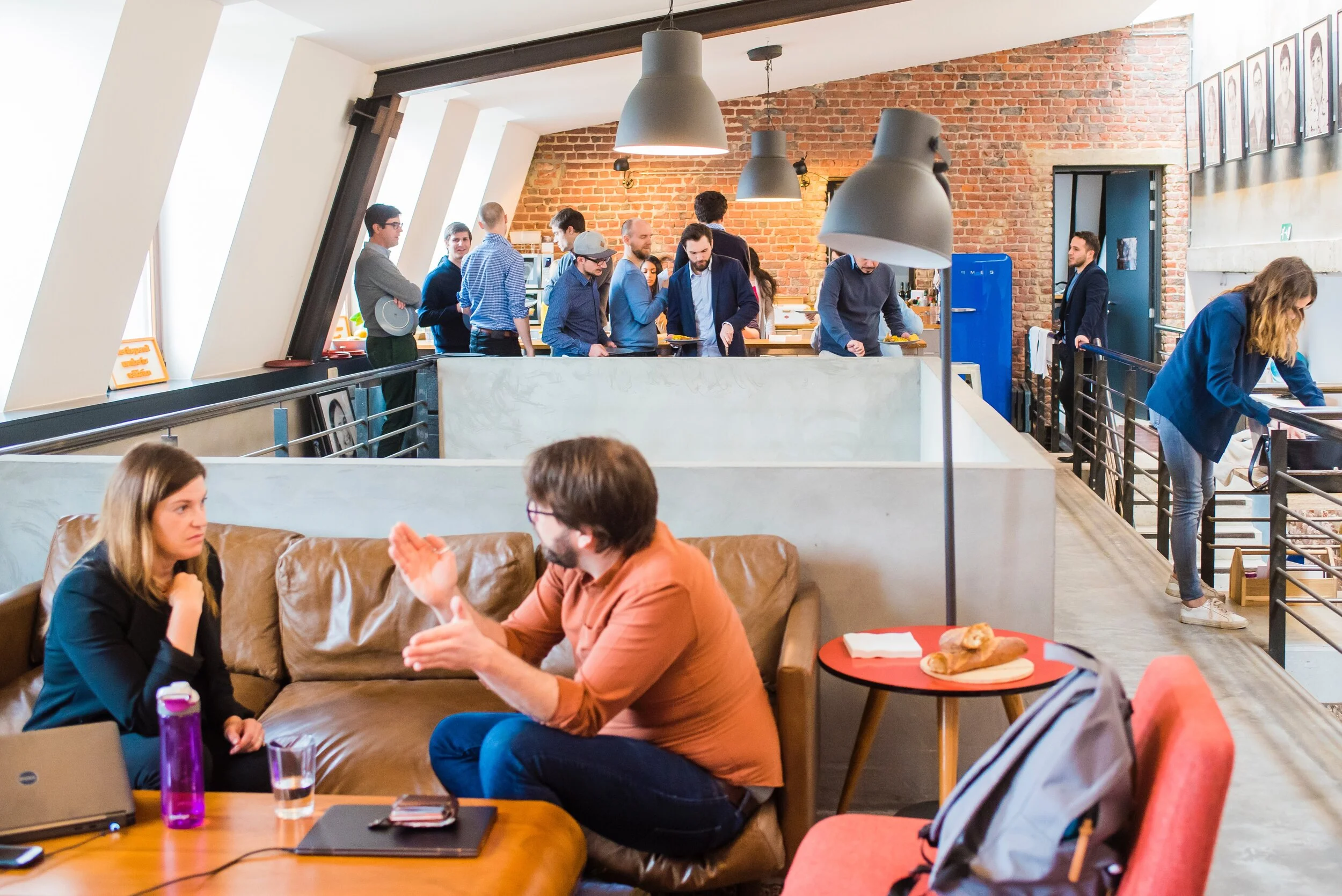
The Rise of “Office Optional”, and how entrepreneurs and leaders ought to approach the office place, post-COVID

I think it is safe to say that, as we reopen office spaces around the country, the way we view their utility and function will change. These past 8–10 weeks have arguably been the biggest organizational psychology experiment in the history of man. Were it only a week or two, most people could and would probably revert to old habits and views of the office environment. But past 30 days, new habits form, and conventional wisdom begins to be questioned. Even amongst the most seasoned executives, many of whom have found themselves working out of bedrooms and closets, the very idea of “office space” is being challenged.

Talking regularly with my cohort of entrepreneurs and operators, I see a growing trend in how our offices will be reconfigured for usage. Call it the rise of “office optional”. I predict three distinct uses coming out of this trend:

The office is still essential, but…

My team at BuzzShift has found that they have been VERY productive working from home, probably even more productive that pre-COVID. And they do their work in less time, have less of a commute, and save money (they are eating out less, spending less on gas, etc.). In fact, they are almost TOO productive, and our leadership team has had to gently remind some of them to shut it down at 5:30pm, and not work on the weekends. That’s a good problem to have, and we are proud of them for their work ethic.

However, some team members have been honest about not getting their best ideas germinated and developed because the IRL collaboration is not there. In our industry, creative collaboration is THE differentiator in our deliverables, and it goes without saying that creative problem solving is essential across almost all organizations and industries. This collaborative creativity is not impossible through remote work, but it is made infinitely easier (with the proper frameworks) when people are all together in the same room. It’s qualitative, but it is a real thing. So if the office is considered a tool in your business arsenal, and an expensive one at that, then the highest and best use of office functionality is a gathering place for creative collaboration. I predict you will see offices turn into spaces that both inspire a creative group dynamic, as well as encourage individual and small meeting “deep work”. Our current traditional desk space fulfills neither of those needs.

Perks Perks Perks

This sounds a bit contrarian, but I also predict the best and most innovative companies will make their offices a more deliberate part of their employee retention strategy. For businesses that are geographically scoped, the attraction of a corporate office that is a creative alternative to their home office setup is definitely alluring. Employees will weigh out the pros and cons of working from home, but I foresee a not-to-distant future where people who work from home for the majority of time, and love doing it, will still want an alternative space and change of scenery every once in a while. Creating a private club feel for its employees, where they can go and work, know the people around them, but not be in a corner coffee shop — that’s an intriguing setup for any business, and an attractive one for employees. I can also see a large portion of that being outdoor space as well. I know that fresh air, green space and reliable WiFi is an unbeatable combination for a lot of workers.

Pressure Valve

The last facet of this trend is the most practical, and the most overlooked. People who work from home, especially if they have kids or have a partner who is also working remotely, need pressure valves from that routine. While the dream is to “Tim Ferriss” it and work from exotic locales, the reality is that for the vast majority of workers, they can’t or don’t want to make that jump. Maybe they have kids in school and don’t want to roam the world and homeschool. Maybe they have a partner who isn’t interested in that lifestyle. Maybe they like the stability of an honest-to-goodness home. Combined with the fact that the collaborative nature (see point #1) of their jobs may not allow them to do that type of work configuration, employees may want the next best thing in an office space that they can “get away” to during the work week. It sounds weird, but I do believe it will happen.

If you are a business owner or operator with traditional office space, now is the time to rethink and reshape your work environment. We are all in survival mode, but it doesn’t mean that you stop looking ahead to the future. Good leaders were built for times such as these, and vision is even more essential now. In the coming years, look for the best companies to employ the brightest minds in architecture, interior design, landscaping, and organizational psychology to convert their commercial office spaces from bland necessity and contrived delight, to true centers of collaboration and creative inspiration.

Related articles

——

[ Photo by MEDIA PROFILE on Unsplash ]