FDE Podcast Quotes

— by FDE Team

Faith Driven Entrepreneur has been blessed by the wisdom, encouragement, and stories of the faith driven community. We’ve compiled a list of 10 of our favorite, most challenging and encouraging podcasts from the FDE community. You can find the full podcasts, and over 100 more, on our site.  

  1. Lecrae and Ben Washer, FDE Episode 127, “The Reach Records Origin Story”
    “If God came to Earth as Bill Gates, he still would have been taking a step down. You know what I mean? And he goes below that. And that just blows my mind. And then at the same time reminds me when he says the first shall be last and I shall be first. He really exemplified that like he really laid out as an example of saying, “listen, I’m first.” There’s no one more first than me. And I’m coming in. Born into an impoverished situation in a Palestinian barn. And that just reminds me to stay low, to stay humble, to stay. Trying to serve and to try to remember that the first will be last and last will be first.”

  2. Peter Irvine, FDE Episode 121, “Global Franchising Redemptive Culture”
    “God doesn’t wake up in the morning and say ‘I’ve run out of money.’ But the world thinks he has. And Christians often think that he has. He hasn’t run out of resources or money. What he births, he’s got to make happen. But the thing is, He’s saying to me, ‘it’s not always your interpretation of what I’m going to do. So you’re going to have to wait for me. And when you step out of the boat, you’ve got to keep walking.’”

  3. Jena Nardella, FDE Episode 81, “The Redemptive Nonprofit”
    “I think that founders of nonprofits, especially those who feel like they have a line to their calling to their work, have the greatest challenge around the nobility trap and start to believe that the organization is theirs, start to believe that they are indispensable to the organization. And the encouragement we are making is really to have our leaders surrender their identity and really their organizations to God and to be able to practice. The mindsets and habits of stewardship, which is really to hold the organization open handedly and very difficult to do.”

  4. Rob Thomas and Jeff Parker, FDE Episode 103, “99% Confession Equals 0% Freedom”
    Jeff Parker, “Conflict is a constant opportunity. Right. I think God’s glorified when we preserve the unity of the spirit or the unity of a company…I just really want to just push in and go, man, if you’ve got breath in your lungs, you’re not irredeemable. Your sin is not have to be what defines you. And so get it in the light. Confess one hundred percent of it. And if even if it’s because you’ve wounded your business partner, confess it and trust God.”

  5. Pat Lencioni, FDE Episode 100, “The motivation of Faith Driven Entrepreneurs”
    “It’s a different calling. And if you’re not doing it with the cost in mind and feeling like you’re called to that, then you shouldn’t do it. And it’s just too easy for people to slide into that thinking, well, this is the next step of my career…sometimes in discernment, we get caught up in trying to understand exactly what God wants us to do. And maybe he just wants to step out in faith and then learn from there.”

  6. Alan Barnhart, FDE Episode 51, “God Owns It All”
    “We decided to protect ourselves against wealth by putting a cap on our lifestyle and say we’re going to draw a certain salary from the company and live a certain lifestyle. And if God chooses to prosper the business, we’re not going to see that as a call to increase lifestyle, but instead see it as an opportunity to use the dollars that God provides through the business for Kingdom purposes.”

  7. Ron Blue, FDI Episode 11, “A Founding Father in the Faith Driven Investor Movement”
    “Two questions that the wealthy needed to ask. Number one was: Who owns it? And there’s a lot of implications to that. And secondly: How much is enough? Be it a lifestyle or be it accumulation or whatever it may be, because if you don’t set a finish line, you’ll never finish. And we help people give away a lot of money, but it was primarily because they said, ‘You know want? I have enough. I don’t really need any more.’”

  8. Phil Vischer, FDE Episode 55, “Have You Ever Had a Dream?”
    “God does not call us to outcomes. He calls us to obedience. He doesn’t care how big you get, how successful you get. He actually doesn’t care what you accomplish. He cares who you are. He cares about your character. He cares about how you treat people. He cares about obedience. And joy comes from letting go of outcomes and embracing obedience.”

  9. Don Flow, FDE Episode 71, “Letting Trust Drive Business”
    there is a sense in which all of us get up every day for people of faith and say, Help me imagine with you, Lord, a way of doing business, aligning myself with your purposes in this world, which your purposes are always about, the restoration of renewal of this world to reflect your deepest desires.

  10. Pete Ochs, FDE Episode 83, “Jailhouse Business”
    “There are 5 things that lead to courage: the first one is truth. We’ve got to seek the truth. The truth will make us free. I don’t care whether it’s economic, social, spiritual marketplace. We have to know the truth. When you know the truth and you can go to the second step, which is faith, you’ll start believing it. And as you start believing the truth, God gives you through the Holy Spirit this ability to start living it out. And what I call character. So it’s truth, faith and character. You work through that system. And then I think the fourth step after you’ve started living it out is I think God begins to give you a vision for your business or for whatever he’s put on your heart. And as you get that vision, and for me, I get really excited about vision. There comes a point when I say that vision is so big. I don’t think I can do that. And that’s where the fifth step humility comes in. And if we understand that this isn’t going to happen unless God comes along beside us and makes it happen, then it’s going to work. And then at that point in time, you are going to probably run into a roadblock. There is going to be something that happens in this journey of entrepreneurship. So as you start your business, start with truth, believe it through faith, start living it down with character.”

Recent articles

——

[ Photo by Jonathan Velasquez on Unsplash ]

Entrepreneurship Is Skyrocketing During the Pandemic

— by Kerry McDonald

The pandemic and related government lockdowns have caused widespread economic and social disruption over the past several months. There is much to despair about, as tens of thousands of small businesses have permanently closed and rates of depression and suicide rise. Yet, there are signs of hope. Uncertainty and fear might stop many of us from taking risks or thinking imaginatively during this tumultuous time, but recent data show that entrepreneurship is surging during the pandemic. Seizing new opportunities and spotting unfulfilled needs, entrepreneurs may help to lift our economy from its sickly slump.

According to a Wall Street Journal analysis this week, “Americans are starting new businesses at the fastest rate in more than a decade.” These startups don’t outpace the number of companies closing this year due to the pandemic, but they do suggest that entrepreneurial individuals are launching new enterprises to satisfy changing demands. According to government data, there have been 3.2 million applications for employer identification numbers (EIN) this year. Required to start a US company, EIN applications reached only 2.7 million at this same time last year. The Journal cites additional data to confirm an increase in entrepreneurship, beginning in June, as some individuals turned layoffs or reduced work hours into opportunities to build a business. While startups are always precarious and many small businesses fail, these new ventures can be catalysts for sustained economic growth. According to the Journal: “Even though new businesses inevitably start small, they are a critical engine of job creation. Startups have historically accounted for around one-fifth of job creation…”

Click here to read the full article, where it was originally published by Foundation for Economic Education.

Recent articles

——

[ Photo by Tyler Franta on Unsplash ]

How Entrepreneurship Can Achieve Creative Restoration Through Sacrifice

Dave Blanchard, co-founder of Praxis, inspires faith driven entrepreneurs and investors to pursue redemptive entrepreneurship–“following the pattern of creative restoration through sacrifice”–as they venture into the business world. 

In today’s episode, he presents a gospel-centered plan encompassing redemptive strategic vision, a biblical operating model, and the value of intentional, sacrificial leadership.


Episode 134 – How Entrepreneurs Can Design a Different Future with Dave Blanchard

Dave Blanchard, co-founder of Praxis, inspires faith driven entrepreneurs and investors to pursue redemptive entrepreneurship–“following the pattern of creative restoration through sacrifice”–as they venture into the business world. 

In today’s episode, he presents a gospel-centered plan encompassing redemptive strategic vision, a biblical operating model, and the value of intentional, sacrificial leadership.


Episode Transcript

*Some listeners have found it helpful to have a transcription of the podcast. Transcription is done by an AI software. While technology is an incredible tool to automate this process, there will be misspellings and typos that might accompany it. Please keep that in mind as you work through it. The FDE movement is a volunteer-led movement, and if you’d like to contribute by editing future transcripts, please email us.

Henry Kaestner: Welcome to the Faith Driven Entrepreneur podcast if you’re an entrepreneur driven by your faith or want to be driven by your faith, then you’re in the right place. The best way to stay connected is to sign up for our monthly newsletter at Faith Driven Entrepreneur Dog. This podcast doesn’t exist without you, our community. One of the things that the community is asking us for is helping connecting them with Like-Minded faith driven investors. We’re in the process of launching a marketplace, a new platform to present your venture and connect with like minded investors that are serious about honoring God as you are everything from philanthropic to market rate deals from here in the U.S. to emerging markets. Check it out at faith driven investor dog sports marketplace. While you’re there, please send us any thoughts you have about how this podcast might better serve you or any questions you might have about being a Faith Driven Entrepreneur.

Dave Blanchard: I’m Dave Blanchard from Praxis, and it’s great to be with you today. I’m going to speak about designing a different future and the Faith driven entrepreneurs opportunity for redemptive action. Copart once said that the church exists to set up in the world a new sign which is radically dissimilar to the world’s own manner, in which contradicts it in a way that is full of promise. As an entrepreneur like you, I believe that as founders and builders we can be full of promise to see entrepreneurs, can be bold cultural witnesses, and our ventures can be demonstrated apologetics. See, as an entrepreneur goes out into the world, they give an organization, culture and meaning and mission. And as that organization touches other stakeholders, those stakeholders build on best practices that ultimately create norms and industries. And as norms go in industry, so goes the broader culture. A Praxis we’ve been able to help over 200 ventures around the world. Businesses, non-profits across every conceivable sector do work and advance their missions. And as we’ve done that, we’ve developed a new way of thinking about the role of Christians in the world and how they go about doing things. It’s called redemptive entrepreneurship. Redemptive is following this pattern of creative restoration through sacrifice, creative, and that we are made in the image of God restoration and that we are joining God in the renewal of all things and sacrifice in the sense that we can’t just be out for ourselves. We have to look out for others and put and put our neighbor in front of our minds as we go about our work. We have developed a framework for redemptive action that hopefully will be helpful to you in your work as a Faith Driven Entrepreneur that basically says that there’s three different ways organizations and individuals go out in the world. One is exploitative. These have a model that say, I’m going to win and everyone around me may lose, but I’m going to use the culture for my benefit.

The second is ethical, a lot of times seen as the highest bar in our business world today. It says that as long as I do no harm, I’m OK and I’m not going to break any rules. And hopefully I can win and you can win to an ethics really works well inside a justice system. But as Christians, we know the world is falling and we know we need to go beyond ethics. And that’s where we can start to talk about the redemptive edge. That edge is where we can renew culture, bless people and go on the journey that the gospel calls us to in dying to self as leaders. As we die to self, we can then sacrifice so that others around us can win and win others around us when we actually all win together because we experience the joy of human flourishing and flourishing justice systems. Every organization has kind of three different ways they go out into the world, there’s a strategic vision and an operating model and then the intent of the leadership themselves. So let’s dig in on each one of those real quickly, if we can. First, let’s talk about redemptive strategic vision as you’re building out the direction for your organization and really what it puts out into the world, you need to think about it. Are you leveraging that around you? Are you just advancing, making something more efficient or more productive or are you really renewing it? See, we believe that the outputs of the organization, its mission, vision products, services, programs, brands, narratives, spaces and all of that can be reimagined to be God glorifying, humanizing, restorative, truthful, beautiful and really have lasting impact out in the world. But this is, of course, not what we typically see in the pinnacles of entrepreneurship. In fact, of course, one easy example to pick on is Tinder, something I’m sure none of you have ever used but you might be familiar with. Listen to a Tinder co-founder, Sean Rad said. He said, look at what’s happening in society. We’re living in a technical age. It’s creating transparency and equality and connecting us. But Tinder is not redefining romance. Progress is, of course, this is the same progress that Vanity Fair called the dating apocalypse. Contrast that with redemptive entrepreneur and Praxis fellow Steve Zizic, the founder and CEO of Lasting. Steve, came out of the knot, which touches 80 percent of the marriages in the country, and said, we’re really good at helping people get married. How about helping them stay married? He created an app that leaned on many, much, much history of how to how to create flourishing marriages and created what became Apple’s app of the day for Valentine’s Day last year. Hundreds of thousands of downloads later, they see in ninety four ninety two percent effectiveness rate in growing stronger relationships through couples using their app. That is cultural renewal.

At the same time, we need to think closely about our operating model, it’s not great just to have an interesting product or mission, but really so much redemptive possibility purely inside the organization and how it operates. And here we believe that common practices can be reimagined to we can think about Graceville, workplace cultures, generous compensation for all in the organization, developing people with a mind towards their whole person, and sales and customer relationships that have justice and patience in them. As we think about ownership and capital and partnerships, see, we’re not supposed to use people for the benefit of the organization or even just merely respect them while they’re on their own journeys. But think about how the workplace, the business, the business market can really bless people. How great would it be if organizations that we lead people came out of them and said, I just can’t imagine how much this organization blessed me while I was growing as an individual? Of course, that’s not what we see mostly in the world either. Today, one famous extreme example is Theranos, as Elizabeth Holmes built a culture around lies and deceit and and really trying to create as much for herself as possible around some product that had actually no existence. They lied to their manufacturers, their vendors. They created all sorts of systems of deception that ultimately did not bless anyone who worked there. In fact, it became a mark of shame if you had the Rhona’s on your CV. Contrast this to a mentor of ours in the Praxis community, Dr. Richard Park, who is the founder of City Sidahmed, the largest urgent care network in the Northeast with many, many locations in Manhattan. Richard Park set out with the vision that he wanted to create a culture of kindness. In fact, that would be the primary organizational culture, cultural principle. If you talk to a doctor or nurse, a Sidahmed and you ask them what their job was, it was to be kind. And of course, that kindness was supposed to be aimed at neighbors. In fact, Dr. Park intentionally set up locations in neighbors, in neighborhoods that would not be as profitable as some others, knowing that there was an immediate need for great health care in those areas. That is a beautiful way to bless people inside the organization and out of it. Of course, nothing happens as far as his strategy or into operations without really thinking about what our intent is as leaders, if at the end of the day we’re living for ourselves or even on sort of Project Self where we want to improve who we are as a person, we haven’t quite gotten where the gospel is asking us to really die to ourselves. A lot of times this locates itself inside of our daily capacities and practices where as Christian entrepreneurs, faith driven, we should be rested, thinking about our time as if the whole world doesn’t depend on us. We should be generous with our money. We should be transformed by the renewal of our minds. We should be decision making with the Lord next to us submitted to him. In our process, we should be sharing power with those around us and ultimately we need to be accountable and community, not just building islands of power where we get to control things and people don’t really know who we are. This is all circling around the idea of ambition, of course, and really what we’re setting out to do in the world. Of course, this, too, is very, very challenging ground for entrepreneurs. Consider Adam Newman from we work almost as self-appointed messiah who is going to bring a new world into being a new way of thinking about work that no one had ever fathomed or imagined before, at least in his own mind. We saw how these things ultimately played themselves out in his own practices, the way he had the imagination, he had the decision making, the way he thought about his time and his money ultimately led. We work as an organization to be an exploitative venture that destroyed so much around it and ultimately needed rescue without him being a part of that. Contrast that to one of the speakers here at the Faith Driven Entrepreneur event, Joel Burks. She’s the founder of Papic, which was acquired by Amazon. And as she had that acquisition, she thought, what can I do for other people around me? And she said, I really want to help people of color get more access to capital. And instead of just going out and creating her next great win or her next great venture, she went out and said, I’m going to create the CoLab Fund and think about how I can use the things that have been given to me, the great experiences that she’s had and the breakthrough opportunities and and share them with her brothers and sisters around the world. And that’s just another beautiful story of of Jewel not saying I’m going to live for myself or even improve myself, but really did to myself on this journey of redemptive leadership. So at the end of the day, redemptive work is hard work, let’s be honest, this is not a simpler journey. It would be nice if we could say, well, if we do all the right things, then things will go better for us, easier for us. We’ll make more money. But we can’t always promise that as we try to renew culture, there are systems that are pushing against us as we try to bless people in the organization. There’s only so much to go around and we’re going to have to make difficult decisions. But ultimately, I want to encourage you to take on this challenge, show the world that a Faith Driven Entrepreneur is a redemptive entrepreneur, someone who has a different vision, a new sign that you can put up in the world. And there is opportunity there. One of my favorite psychologists, Mihai ChiX and Mehi, says this, that the unifying similarity among geniuses and innovators is not cognitive or affective, but motivational. What is common among them is the unwillingness or inability to strive for goals that everyone else accepts. I hope that as you walk away from this talk and this event, you’ll be encouraged not to strive for the goals that everyone else accepts in entrepreneurship, another big company, even a unicorn, or your own great autonomy and independence, but instead that you would be a signpost for the kingdom out in a world that desperately needs a demonstration of faith.

Host: Thanks so much. Thanks so much for joining us on today’s show. We hope you enjoyed it. We are very grateful for the opportunity to serve you the larger Faith Driven Entrepreneur community, and we want to stay connected. The best way for you to do that is to sign up for our monthly newsletter at Faith Driven Entrepreneur ERG. And while you’re there, we want to hear from you. We derive great joy from interacting with many of you. And it’s been very rewarding to see people come to the site and listen to the podcast now for more than over 100 countries. But it’s even more important to us that you feel like this is your show and that you’ll help make it something the best equipped you on your entrepreneurial journey, one that you’re proud of and one that you’re going to share with others. Hey, this podcast wouldn’t be possible without the help from many of our friends, executive producer Justin Forman and program director Johnny Wells. Music is by Karl Capewell. You can see and hear more of his work at the summer Drugstore.com audio and editing by Richard Bahle of Cornerstone Church in San Francisco.

A Solution for the Lack of Collective Christian Capital (CCC)


This is one of the 2020 CEF Whitepapers. For more information on the Christian Economic Forum, please visit their website
here.

— by Johan du Preez

Note: Some of the introductory comments in this paper were taken from the CEF paper I wrote in 2016. 

Capital always has an agenda. Whether by design or default, explicit or subtle, positive or negative, the application of capital facilitates and drives a bigger agenda.

Furthermore, an agenda driven by an individual is limited in scope, effectiveness, and sustainability when compared to a collective one. The more resourceful and influential the individual, the bigger the agenda that he or she can drive, but it remains less impactful than a collective effort.

At the Tree of Life Foundation, we are advancing a God-inspired (and “God-owned”) solution to the lack of Collective Christian Capital in South Africa. Before I dive into that, allow me to first recap on how financial markets leverage collective capital. 

The Collective Nature of Financial Markets

Financial markets allow for the effective combination of individual capital pools to achieve what the individuals cannot achieve on their own. Examples include:

Life insurance: By collecting monthly insurance premiums from thousands of clients (policy holders), it is possible to make large lump sum payments to the family of deceased clients. From that perspective it can be argued that insurance is one of the godliest business models around – a large group of people contribute what they can and want as long as they are alive, and the benefit of these contributions are paid to those who need it most after their death (the family and dependents of deceased clients). It is an “automated Acts model” (compare Acts 4:35 where the apostles distributed contributed money to those in need).

Banking: By creating a facility where those with excess cash resources at any given time can store it at a central location, the bank could also create the ability to advance some of these as loans to people who have a lack of cash resources at any given time. Since those depositing the money receive interest, and those borrowing the money pay interest, both the person making the deposit and the one receiving the loan make a contribution and receive a benefit.

Asset managers: By creating products that allow individual entities to pool their capital into a central pool for defined investments purposes, asset managers have the ability to make sizable investments that would otherwise not be possible. Examples includes infrastructure funds that provide capital for roads, airports, and other infrastructure developments. 

The Solution We Are Advancing

Imagine a financial institution offering cutting edge investment, banking and insurance services whilst being explicit about its Christian worldview (the Chick-fil-A or the Hobby Lobby of financial services!). Imagine the shareholding of this institution being held by a Christian charity, so that any profits are available to fund the Kingdom. Imagine the size of this institution ultimately being such that it will have a comparable influence on the economy to the leading investment banks on Wall Street – enjoying a business relationship with the biggest public and private companies, being consulted by government on policy issues, influencing funding mechanisms and the way business is conducted. This is the vision we see in the distance, and this is the calling we have embraced.

If one wanted to do an experiment to see if the above can work, you could hardly find a better country to do so than South Africa.

  • 84.2% of the population is estimated to be Christian. (1)

  • Efficiency of financial markets, quality of banking system, and integrity of the financial services regulatory environment are reflective of a first world economy.

  • Entrepreneurial activity and regulatory arbitrage are reflective of a third world type of economy.

  • Small enough to do a meaningful experiment – only 55m people, but the second largest economy in Africa with significant influence and a key leadership role in the region. 

  • Big enough problems to make a meaningful difference – unemployment rate 29.1% (2), rising debt as percentage of GDP (projected to be 65.6% by Feb 2021) (3), several credit rating downgrades since 2012. 

  • Turnaround potential in economy subsequent to the ousting of a corrupt president in 2018 (Jacob Zuma who took office in 2009). He was replaced by a pragmatic and level-headed President (Cyril Ramaphosa – an accomplished businessman). 

Building a financial institution is no small task – especially if 100% of the shareholding thereof is to be set aside for God (in our case held by the Tree of Life Foundation – a Christian charity that provides funding to various charities in South Africa). To begin with, this ownership structure precludes us from raising private capital in exchange for shareholding in the financial institution. 

When God provides a larger-than-life vision, however, it is not for us to question it or to demand to see it all unfold in our lifetime. Similar to Abraham, to whom God promised that he would be the father of many nations (Genesis 17), our response should be to embrace it and live accordingly. 

Foundational Steps

In 2007 we formed the Tree of Life Foundation (TOL) as a Christian charity – in South Africa this is known as a Public Benefit Organization (PBO). All we had to begin with was equity in two private companies that two businessmen made available. 

For the first nine years of TOL’s existence, the team focused on investing the returns generated from these businesses wisely and was blessed to experience miraculous growth. During this period, no donations were solicited or received and TOL did not incur any debt.

As TOL’s balance sheet continued to grow through various investments, the trustees adopted a ‘progressive distribution policy’ in 2014, which in essence calls for a percentage of TOL’s Net Asset Value to be distributed to charities every year. 

Going Collective

Towards 2015 we felt the time was approaching for TOL to offer its expertise to others also wishing to participate in the sphere of donor capital, and we launched a project to see how we could move towards collective capital by using a Donor-Advised Fund (DAF) platform. This culminated in the launch of the Tree of Life Donor-Advised Fund (TOL DAF) in mid-2016.

This was a big step forward in becoming a financial institution. For TOL to become a major player in the deployment of capital, it needed to have clients entrusting us with capital. Although the vision is to offer these clients all types of financial services products, the pragmatic thing was to offer them various investment portfolios for the DAF money as a first step. In this sense it would be different compared to the conventional DAF platform in the US for instance – i.e. it also provides DAF clients with products through which they can collectively advance Christian investing. It was with excitement that we created and seeded the first three investment portfolios in 2016 (cash, listed equities, private equity), and added a fourth (Impact portfolio) in 2019. More detail on these portfolios is available at www.tol.org.za.  

Today we have many stories of businesses that we could serve due to the availability of Christian capital, thereby supporting the growth of Christian marketshare. Take Inovo Telecom, for instance: a very successful company providing call centre technology and optimization (www.inovo.co.za), founded in 2006. When one of the two founders wanted to retire, he had a dilemma – he wanted to sell his equity (>40% of the business) at a market related price to reap the just reward for his contribution, but he did not want to sell to a shareholder that would not appreciate and help foster the strong Christian culture he and his co-founder subscribe to. Due to the size of the business, the typical buyer would be institutional (rather than private), and as such, agnostic. Via the TOL DAF platform’s private equity portfolio, we acquired his shares and now find great joy in not only helping to shape the commercial strategy and execution, but also as a shareholder supporting biblical initiatives they undertake. (They recently became the first client of the newly launched Workplace Chaplains Africa, they developed a cutting edge mobile app for use by a charity at no charge, etc.). (see https://youtu.be/Mg3w60Sp0Hk)

Similarly, as an example of our Impact Investment portfolio, we recently backed two young entrepreneurs (both are Chartered Accountants) that created a marketplace for entry level jobs. In a country with an unemployment rate of 29% and many entry level job seekers having to overcome significant logistic issues to access the jobs that are available, Jobjack connects employers and job seekers via a platform that can be accessed by a mobile phone. The founders are devout Christians that believe they have a calling in this space. Based on financial metrics, this investment would not meet the stringent criteria of our private equity portfolio, but given the potential impact and a business model that will lead to financial sustainability, we were happy to invest from the Impact portfolio. If they had to approach an institutional impact investment fund, they would typically have to exclude the Christian aspect of their planned impact. (see https://youtu.be/SL1ZQ5ywCik)

Swiss Army Knife

The design philosophy of the TOL DAF is to address as many donor and societal needs as possible within one solution / structure. We want to be the Swiss Army knife of charitable giving, allowing the donor to use the features that are most important to him/her at the time, bearing in mind that these can change over time and will differ from donor to donor.

Features include normal DAF functionality with associated vetting of recipient charities, investment options that allow sustainable giving, tax-efficiency, low-cost cross-border granting, contributing to CCC while the money is on the platform, and maximizing impact via impact investment opportunities. 

We realize that contributing to CCC may not be the main aim of most donors and therefore aim to meet most donor needs. We allow donors to allocate as they see fit, but do try to encourage them to allocate a portion of their giving to CCC.

Limitations and Challenges

I have listed the factors that make South Africa an ideal place to launch a Collective Christian Capital venture such as the TOL DAF platform above. There are obviously challenges as well, notably limited tax incentives for charitable giving and scarcity of Christian donor capital compared to a country like the US. 

Due to South African tax legislation, almost all of the money from South African donors that flows into DAFs does not qualify the donor for a tax benefit. It goes without saying that the market of donors who are prepared to donate without a corresponding tax deduction is small. On the other hand, those South African donors who open DAFs with us are “hard core” and great clients to have!

The scarcity of donor capital needs a bit further context. The overwhelming need in South Africa has given rise to an increase in effective and strategic charities, and many donors support these. What we are talking about in this paper – collective capital – requires significant donor capital in excess of donations to fund the immediate charitable needs – i.e. capital that can be invested in a way that promotes the Kingdom whilst creating sustainable long-term funding.

International Giving and Trustbridge

We have been fortunate to participate in discussions on the topic of international giving conducted by a core group of thought leaders since 2012. It became obvious that the complexity of the tax systems in different countries and the restrictions on the flow of charitable money across borders in certain areas of the world were major impediments to international giving.

These discussions ultimately culminated in the establishment of Trustbridge Global Foundation (https://www.trustbridgeglobal.com/our-network), which today is a well-entrenched and successful movement that aspires to “make global giving easy”.

The benefit for the TOL DAF platform is that international (non-South African) donors using Trustbridge can open a DAF on the TOL platform in South Africa and still get their tax benefits locally. For example, a US tax resident can open a DAF with TOL and get a US tax deduction by working through the Trustbridge affiliate in the US (namely the National Christian Foundation).

Different countries have different strengths / competitive advantages. The beauty of the example above is that US donors with capital available for Christian investments (of whom there are arguably more in the US and who enjoy a purchasing power advantage due to the strong position of the US dollar internationally) can access Christian investment opportunities in a country with an abundance of Christian entrepreneurs but a lack of Christian capital, whilst benefiting from the generous tax dispensation in the US.

The Future

More and more Christians are not only aware of the importance of capital, but also want their capital to help drive the bigger agenda – even more than just a desire; there is an increased sense of urgency to do so. As such the limiting factor has shifted from apathy / ignorance / limited intentionality on the topic to lack of product. 

Those stewards of capital who are active investors themselves are less dependent on product. They can leverage the multiple networks and platforms that are available to get involved in Christian-based investing, and typically experience great joy from doing so. But those who are allocators of capital, rather than active managers, are more dependent on product.   

In both cases however, the scale benefit of collective capital is often not achieved. This is not to say that the individual Christian-based investments that family offices or informal investment networks do are wasted effort – definitely not – but simply that it cannot represent the total Christian capital strategy. We absolutely also need Collective Christian Capital initiatives with the economic engine and influence comparable to Wall Street investment banks in the US.

Ultimately there are only two competitors when it comes to the battle for market share: Light and Darkness. All market players that desire to represent the Kingdom in business are actively working to grow the market share of the Light, and therefore have the same Shareholder. They should actively be looking at ways to cooperate by pooling their resources and effort for maximum impact, and collective capital vehicles represent an integral part of such a strategy.

If you want to join the Collective Christian Capital party in South Africa, please let us know!

(1) Statistics South Africa: South African religious demography: The 2013 General Household Survey

(2) Statistics South Africa, Q3 2019

(3) Budget speech, Minister of Finance: Tito Mboweni, February 2020
Related articles

——

[ Photo by Kelly Sikkema on Unsplash ]

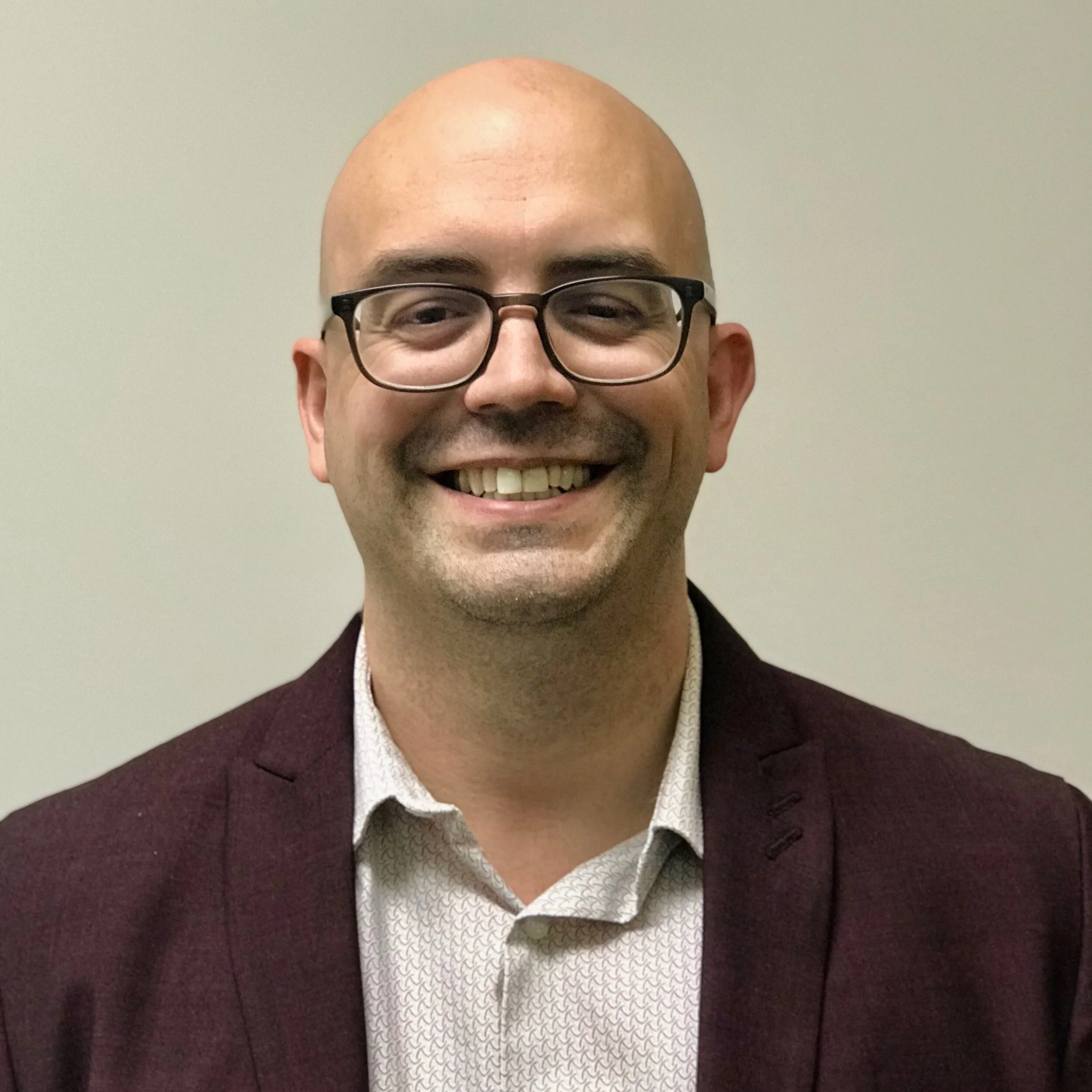
Matthew Elsberry

President | LivFul

Matt Elsberry is an explorer and adventurer who loves working and interacting with people from different cultural backgrounds. After helping a nonprofit expand from three to 80 countries in six years, Matt decided to dedicate his life to blurring the line between mission and business. He and his wife spent five years in Jakarta, Indonesia, building the Kingdom of God while they increased the Bumi Raya Group’s profitability through their three listed companies and several private ones. He sees his work at LivFul as a shining example of how a company can build the Kingdom while building a profitable business.

At LivFul, our vision is to transform the lives of people with accessible health innovations that help us all
live free, live well, and live to our full potential. Through the LivFul LIFE™ Platform, we achieve this by discovering, developing and deploying innovative products through equitable business models that reach all people in the pyramid.

LINKS

CONTRIBUTIONS TO FAITH DRIVEN ENTREPRENEUR