Are You A “Rich Young Ruler”? How Priorities and Identity Reveal Heart

Are You A “Rich Young Ruler”? How Priorities and Identity Reveal Heart

— by Paul Michalski

Jesus is saying that the greatest concern of life is to place our relationship with God first, and everything else second.” (Oswald Chambers)

Don’t stop reading just because you are not “rich” or not “young” or not a “ruler”–being a “Rich Young Ruler” is not about status or circumstances. It is about your heart, as reflected in your primary identity.

“Are you a rich young ruler?” is a question every faith-driven leader must honestly assess if they are to lead an organization with faithful integrity in alignment with Biblical beliefs, principles, and priorities (what I will call business a better way).

This commentary was prompted by one of the segments in the recent Faith Driven Entrepreneur global conference. It was a conversation between Pat Lencioni and Henry Kaestner in which Lencioni vulnerably admitted that he wasn’t sure whether he would step out in faith if doing so could result in the loss of his business. He was asking himself the rich young ruler question.


The Biblical Rich Young Ruler Story

If you’ve read the Bible, attended Bible studies, or listened to sermons, you have probably heard the story of the “rich young ruler.”  It is one of the “biggies.”

Rather than try to summarize it myself, I decided to ask BibleChat – a new AI-driven engine that will answer any questions about the Bible (give it a try). Here is its answer:

The rich young ruler is a character mentioned in the New Testament of the Bible, specifically in the books of Matthew, Mark, and Luke. He approached Jesus and asked what he must do to inherit eternal life. Jesus told him to keep the commandments, to which the young man claimed he had done since his youth. Jesus then challenged him to sell all his possessions, give to the poor, and follow Him. The young man went away saddened because he was very wealthy and could not bring himself to part with his possessions (Matthew 19:16-22, Mark 10:17-22, Luke 18:18-23). The story serves as a lesson about the importance of prioritizing God above material wealth.

Although I don’t really know what happened to this man (he is never mentioned again in the Bible), everybody seems to assume he did not give everything away (if he did, he was certainly not a “joyful giver”). BibleChat is more honest when asked if he gave away his wealth:

The narrative does not provide any follow-up or indication of a change in the young man’s actions. Therefore, we cannot definitively say whether he eventually gave away his wealth or not. The story serves as a lesson about the challenge of prioritizing God above material possessions and the potential obstacles that wealth can present in following Jesus.

In both responses, BibleChat nails the key to determining if you are a rich young ruler – do you truly “prioritize” God?


What Do You Prioritize?

The word “priority” has an interesting history, and it plays an integral part in this commentary.  In his book Essentialism: The Disciplined Pursuit of Less, Greg McKeown observes:

The word priority came into the English language in the 1400s. It was singular. It meant the very first or prior thing. It stayed singular for the next five hundred years.

Similarly, the Bible suggests a person can have only one “priority.”  In Matthew 6:24, we are told, “No one can serve two masters.”

Notwithstanding the historical root of the word and the Biblical warning, today, we often talk about having numerous priorities–plural priorities.  “Plural priorities” are a reality of how we use the word “priority” today, how we think about our lives, and how we think about leading an organization.

Priority problems underlie business in the way of the world (what I will call business as usual) and the brokenness caused by business as usual. They are also at the root of many of the trials, fears, mistakes, and missed opportunities we face in our personal lives.


Equal Priorities Problem

While a person (or an organization) can have “plural” priorities, they can’t have equal priorities. The nature of something having priority is that it is prior to every other “priority” other than any priority that ranks even higher.  At the end of the day, there can only be one primary priority that will win out–other “priorities” usually get reduced to being “means” or “strategies,” which means they will be sacrificed if they no longer serve the higher priority or if they jeopardize the higher priority.


Real Priority Problem

A person (or an organization) may say they have one priority, but they are actually pursuing a different priority–or they may think they are pursuing equal priorities but there is a “real” priority.


Disordered Priorities Problem

A person (or an organization) has disordered priorities when they set priorities that are not aligned with Biblical priorities.

For a faith-driven leader to assess the “Are you a rich young ruler?” question, the leader must make an honest assessment of their priorities and, most importantly, their ultimate priority.


Priority in the Bible

People often cite Matthew 6:24 (“no one can serve two masters”) when talking about Biblical priority, but that principle weaves its way through many Biblical stories.

    • God asks Abraham to choose – God or Abraham’s son Isaac.
    • Jesus asks the rich young ruler to choose – God or money.
    • In Luke 14:26 Jesus tells his followers they must choose – God or father/mother/wife/children/brothers/sisters/life (“If anyone comes to me and does not hate his own father and mother and wife and children and brothers and sisters, yes, and even his own life, he cannot be my disciple.”)

In commenting on Matthew, Oswald Chambers observes:

Jesus is saying that the greatest concern of life is to place our relationship with God first and everything else second.

I believe priority in the Bible is about heart.

    • God didn’t actually want Abraham to kill Isaac–God just wanted to know that Abraham prioritized God over his son and was willing to sacrifice him.
    • We don’t know what Jesus would have done if the rich young ruler had prioritized God and been willing to liquidate his assets.  He might have told him to give just a percentage away and keep stewarding the rest in a way that glorified God.
    • Jesus isn’t really telling us to hate our family or our life–he is saying that we must prioritize God by being willing to sacrifice our relationships and even our lives if God calls us in a direction that puts those at risk.

I also believe priority in the Bible is “all or nothing.”  There is no grey.  God did not give Abraham the option of just giving Isaac a little cut.  Jesus didn’t negotiate with the rich young ruler over a specified percentage or tell his disciples they might have to have a slight disagreement with family members.  God calls people of Biblical faith to make Him THE priority.

“Grey” can feel good because it is better than black.  It also feels good because it will get affirmed–even from the church and faith community.  Grey is still black — the way of the world.  Remember 1 John 2:15: “Do not love the world or the things in the world.” Grey may be better than black, but it is not the heart to which people of Biblical faith are called and commanded–not the priority required for faithful integrity.

In the words and commentary of Oswald Chambers: “The greatest enemy of the life of faith in God is not sin, but good choices which are not quite good enough.”


Understanding Your Heart

The rich young ruler followed all the rules, which in the Matthew account even included the great commandment to love his neighbor as himself.  Actions do not necessarily reveal the heart of a faithful leader (or organization) – their true priority.

Larry Crabb and Frederick Buechner have insightful observations:

Larry Crabb:  Biblical principles are reduced to basic principles of the world when they’re followed in order to gain the “better life'” we demand.

Frederick Buechner:  A man can be basically interested in nothing so much as feathering his own nest and still give generously to the Cancer Fund, be on the Board of Deacons, run for town office, and have a soft spot in his heart for children and animals.

I believe identity is a clue to a person’s heart–to what “god” is truly their priority.  There are really two gods from which to choose–the God of the Bible or the “gods” of this world.  Although “gods” of the world come in various forms—wealth, success, happiness, power, influence, fame, leisure–I believe they are all manifestations of the spirit of mammon (mammon is not money, and if you are unsure about the evil of mammon, look back at Andy Crouch’s chilling description of the demonic spirit of mammon from the 2022 Faith Driven Investor global conference).

For a faith-driven leader assessing their heart, I want to focus on two identity choices–a WHAT identity or a WHO identity.  Every faith-driven leader has both, but the question is which one is their primary identity and which one is a secondary identity.

Although a person can only have one primary identity, they can have many secondary identities.  For example, a person can be a Christian, a businessperson, a wife (or husband), a mother (or father), a daughter (or son), all at the same time.

But when push comes to shove, there is one identity they view, consciously or subconsciously, as the primary identity—the one they will protect, even if it means sacrificing success in their secondary ones.  Our self-worth and value are wrapped up in whatever we see as our primary identity. Any primary identity other than the Biblical priority of a child of God or a follower of Jesus is an RYR identity. Dr. Skip Moen beautifully describes the facets of that Biblical identity:

I am a child of God.  I am an adopted son.  I am a member of Abraham’s nation.  I am beloved by the Father.  I am a follower of His chosen Messiah.  I am part of the family.  I am a citizen of the Kingdom.  I am a resident alien tasked with repairing a broken world.


How Identity Shapes Behavior

With a WHO identity, the faith-driven leader’s primary identity is WHO they are in relation to God (e.g., a child of God or follower of Jesus).  With a WHAT identity, the faith-driven leader’s primary identity is WHAT they do in the world’s eyes (e.g., a businessperson, lawyer, barista, Uber driver, nurse, banker, consultant, teacher, mechanic).  Let’s compare how a WHO identity and a WHAT identity might impact a faith-driven leader’s behavior.


With a WHO Identity

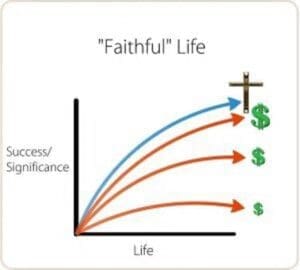
She will see herself as “a Christian engaged in the business”, with faith being the primary identity and business being an activity in which that identity is lived out.

She may have to make sacrifices in her worldly business success to follow God’s principles and priorities.

    • WHAT she does will be determined by God’s leading rather than its potential for worldly success.
    • WHO she is where God places her will be more important than WHERE God places her.
    • She will wear WHAT SHE DOES lightly and will be able to change disguise at a moment’s notice.
    • She will need to trust God with her provision and circumstances.
    • Her identity will push her to go beyond “good” to pursue “Godly”.
    • She will be on the path to operating with “faithful integrity”.

      This is a picture of a faithful leader.  They accept the “success” that comes with obedience to God’s call and commands.

      With a WHAT Identity

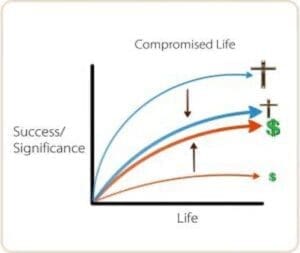
      They may see themselves as a “Christian businessperson”, with faith being merely a modifier describing how they carry out their primary identity as a businessperson. There are numerous problems that can flow from work being his primary identity and source of worth and value.

        • They may sacrifice the two great commandments (love your God and love your neighbor) or the pursuit of God’s Kingdom and His righteousness to achieve “success” in their primary identity as a businessperson (possibly rationalizing that they are still doing better than the people with no faith inspiration).
        • They will hold on very tightly to their worldly identity.
        • They will always need a worldly identity to latch on to.
        • They may be “good,” but they probably won’t be “Godly”.
        • They may operate with “integrity,” but it won’t be “faithful integrity”
        • There are numerous problems that can flow from work being their primary identity and source of worth and value.
        • An employer or investor has the power to take away “who they are”, if even for a short period of time.
        • If those to whom they answer (e.g., managers, investors) are driven by profit and power, they are vulnerable to extreme manipulation in their pursuit of worth and value through their job.

      Most importantly, because a person can only have one primary identity, and they will sacrifice their secondary identities to ensure success in their primary identity, their identity is grounded in things like faith, family, and fitness will be compromised or even sacrificed to ensure success at work.

      This is a picture of a faith-driven leader with a WHAT identity – a rich young ruler.  They will compromise their faith, ever so slightly, to ensure heightened worldly success, rationalizing that their faith remains much better than most of the broken world.

      Maintaining a WHO Identity in a Broken World

      I do not mean to suggest that maintaining a WHO identity and avoiding becoming a rich young ruler is easy.  We live in a fallen world in which most people (and organizations) operate according to the priorities and systems of the kingdom of the world.  A purely linear or hierarchical approach to implementing Biblical priorities misses the reality of our world.

      A faith-driven leader may be a husband, wife, father, or mother in a world in which marriage is viewed as a contractual rather than a covenantal relationship, and divorce is seen as an easy and acceptable path to the “happier” life a person deserves.  A faith-driven leader of a business is also a “business leader” building a business in the world.  They face pressure from analysts, markets, investors, employees, and customers. Sustainability comes with financial metrics to track and hurdles to achieve.  The world of business measures success in terms of profit and growth.

      I believe there are four keys to a faith-driven leader successfully ordering priorities, personally and professionally, to avoid the path of the rich young ruler:  Humility, Trust, Patience, and Prayer.

      Humility.  Navigating the tension between the world’s priorities and God’s priorities requires Godly wisdom, and humility is a key to wisdom.  The link between humility and wisdom can be seen in Proverbs 11:2:

      When pride comes, then comes disgrace, but with humility comes wisdom.

      God is the source of all wisdom, and the Bible tells us that God will give wisdom to those who ask (James 1:5). The faith-driven leader who operates without the humility to recognize the need for God’s wisdom and the need to pray for guidance is destined to run aground on the rocks of the “priorities” dilemma.  An honest assessment of the “real” priority in the leader’s life (and an organization’s culture) absolutely requires humility and will yield wisdom.

      Trust.  Of course, even the faith-driven leader who has the humility to recognize the need for God’s wisdom will only get the benefit of that wisdom by trusting God’s process, timing, and outcome:

        • Process: God’s process is often counter-intuitive and counter-cultural.
        • Timing: God’s timing often seems excruciatingly slow.
        • Outcome: God’s best outcome (the “all these things” promised in Matthew 6:33) may not be the world’s best outcome.

      Prayer.  The importance of prayer in pursuing Biblical priorities seems so obvious. Unfortunately, many faith-driven leaders do not associate God with business decisions.  Oswald Chambers observed:

      In spiritual issues, it is customary for us to put God first, but we tend to think that it is inappropriate and unnecessary to put Him first in the practical, everyday issues of our lives.

      God’s wisdom comes through prayer.  Of course, praying for a particular process, timing and outcome is NOT praying for God’s wisdom, and ignoring God’s wisdom to pursue your own process, timing or outcome is NOT wise–it is choosing disordered priorities.

      Patience.  It is difficult to read the Bible and not walk away feeling woefully impatient.  God’s story is full of people who patiently waited and persevered (the first cousin of patience) for a LONG time – a VERY LONG time.  Remember Abraham (waited 25 years for Isaac), Jacob (waited 14 years to marry Rachel), and the most patient of all, Moses (40 years in exile and then 40 years in the desert).

      There are also stories of characters who got impatient and tried to short-circuit God’s timing (and God was not pleased).  Remember Sarah (Ishmael was NOT the fulfillment of God’s promise) and Saul (he got impatient and offered the burnt offering himself – NOT a blessing after all).

      Choosing, ordering, and balancing Biblical priorities is “playing the long game”, and that takes Biblical patience (and perseverance).

      Joining Pat Lencioni in honestly asking yourself the rich young ruler question is the first step toward choosing the priority, the primary identity, and the heart that will glorify God, which is, after all, the only reason we are here.

      Copyright © 2023 Integrous LLC.  Integriosity is a registered Service Mark of Integrous LLC.

      About the Author

      Paul Michalski has been on a life-long journey that resulted in the creation of Integrous LLC, a law firm providing integrity advice and legal counsel to faith-driven clients. Integrous is committed to helping faithful leaders lead with faithful integrity. It also reflects Paul’s life-long commitment to “integrity” as a core value and his personal purpose statement: “To serve by redeeming work through the impartation of wisdom, spotlighting God’s truth and connecting its meaning to organizational cultures and practices.” 

      Paul graduated from Harvard College, magna cum laude, in 1983 and Harvard Law School, magna cum laude, in 1986.  He became a partner with Cravath, Swaine & Moore and for over 22 years practiced corporate law in New York and London.

      Dive further into what it means to put your identity in Christ by exploring the Marks of a Faith Driven Entrepreneur. We offer videos, scripture references, and inspiring stories to shape how you view your business.

      IDENTITY IN CHRIST

       

      Donec sollicitudin molestie malesuada. Vestibulum ac diam sit amet quam vehicula

      Cras ultricies ligula sed magna dictum porta. Curabitur arcu erat, accumsan id imperdiet et, porttitor at sem. Vivamus magna justo, lacinia eget consectetur sed, convallis at tellus. Donec sollicitudin molestie malesuada. Mauris blandit aliquet elit, eget tincidunt nibh pulvinar a. Pellentesque in ipsum id orci porta dapibus. Vivamus suscipit tortor eget felis porttitor volutpat. Vestibulum ac diam sit ame

      Related Articles

      Top 25 Faith Driven Entrepreneur Podcasts

      We’re admittedly biased and think all the shows are packed with powerful truths to encourage you on your journey. But here’s a few of our most popular episodes. If you’re new to the show, this is a great place to start.     TIM KELLER Who Do You Think You...

      Top Apps

      It's amazing how much we are able to be in God's presence through technology.  Below are a few of the apps we at Faith Driven Entrepreneur use to stay connected to Him. YouVersion On more than 250 million devices around the world, people are reading, listening to,...

      Top Co-Working Spaces

      As one of the fastest-growing workplace movements of the last decade, co-working enables people from diverse backgrounds to work together in a common space. The number of co-working spaces around the world has increased by nearly 700% since 2011. Globally, an...

      Stay Up to Date With The Latest News & Updates

      Access Premium Content

      Sed ut perspiciatis unde omnis iste natus error sit voluptatem accusantium doloremque

      Join Our Newsletter

      Sed ut perspiciatis unde omnis iste natus error sit voluptatem accusantium doloremque

      Follow Us

      Sed ut perspiciatis unde omnis iste natus error sit voluptatem accusantium doloremque

      A Business Leader’s Guide to Ethical AI

      A Business Leader’s Guide to Ethical AI

      — by Chantal Bacon and Ben Bacon

      Or How I Learned to Stop Worrying and Love AI

      “Machine intelligence is the last invention that humanity will ever need to make.”

      – Nick Bostrom, Swedish philosopher

      As Believers and business leaders, the curious question of artificial intelligence (AI) is one facing each of us.  In what ways should we embrace this generational revolution?  In what ways should we reject it?  The ethical pendulum swings hard in either direction, depending on who sets it in motion.

      Resistance to technological revolutions has been commonplace over our history:

        • The printing press was heavily criticized by religious leaders, who feared that it would undermine proper control over doctrine and derail learning.  The printing press went on to fuel the Renaissance, the scientific revolution, and even the Protestant Reformation.  (Interesting Engineering)
        • Automobiles were deemed by The New York Times in 1902 as “impractical” and a threat to horse owners, railroad companies, and environmentalists.
        • Personal computers (PCs) were dismissed as a toy, a fad, and a threat to privacy. (EducationWeek)  
        • Cell phones were resisted by landline users who felt they would be unnecessary, expensive, and unreliable.  In the past two decades, US households using only wireless devices (with no landline) have skyrocketed nearly 1,000%, while landline usage has plummeted to less than 5% of homes. (Statista, The Conversation)

      We cannot, however, drive forward while looking in the rearview mirror.

      As we approach this inevitable wave of innovation, where the rules and ethics of business are seemingly being rewritten, how should we approach such a hotly-debated topic as AI?

        • Avoidance
        • Augmentation
        • Acceleration

      Avoidance

      History is littered with examples of companies that failed to seize seismic shifts in the market:

      Kodak topped the film camera market at 85% in the late ‘70s.  By 1996, they were the fifth most valuable brand in the world, with nearly $16B in revenue.  While brands like Canon, Sony, and Nikon embraced the market move towards digital, Kodak resisted.  Currently, Canon, Sony, and Nikon own 84% of the market, while Kodak has been all but erased, having filed for Chapter 11 bankruptcy in 2012. (PhotoSecrets, cameraprism)

      At its peak, Blockbuster owned a market share of more than $5B. Reed Hastings, frustrated over $40 in late fees, saw a market opportunity for a subscription-based, late-fee-free DVD rental-by-mail service, creating Netflix. Blockbuster decided against purchasing a 49% share in Netflix for $50M. Their stagnation against the market move caused them to close all but one store.  Meanwhile, Netflix continues to innovate, aligning with market and consumer behavior shifts, offering streaming services, content licensing, binge-watching, and original production.  (Business Insider, VdoCipher)

      Xerox, a brand so famous they became the generic term for the verb “to copy,” failed to embrace the personal computer revolution.  Their leadership rebuffed the digital revolution, doubling down on copy machines.  They have bled nearly 60% of their annual revenue since their peak in 2011. (Valuer, Zippa)

      As with each tale of warning and woe before, many businesses in this current era are content to steer clear of AI systems.  This is often driven by:

        • Lack of understanding
        • Fear of change
        • Deficiency of technical skills

      As the market moves forward, businesses that fail to adapt—whatever the cause of their rebuke of AI systems—will lose out against the blistering gains in efficiency and effectiveness their competitors will harness.

      Boston Consulting Group stated, simply, that companies “can either make a serious commitment to AI—or ignore this impending change and risk losing the ability to compete with their peers.”  Avoidance is a risky maneuver, and unlikely to support long-term growth in the businesses we are entrusted to lead.

      Augmentation

      Decades ago, a teacher stood in front of my math class, pleading for each of us to memorize specific mathematical processes.  Waiving his calculator in front of us, he said, “You will not always have a calculator with you.”

      It turns out that his prediction has fallen rather flat, as few of us are frequently more than a few steps from our phone, tablet, or computer.  (Pew Research Center

      There are only a handful of careers where the ability to conduct mathematical calculations without the aid of a computer of some persuasion is both respected and requisite.

      As business leaders, we value the ability to bracket a once-arduous process: properly programming the input and understanding the output, utilizing the tools at one’s disposal to speed up the process sandwiched therein.  

      AI augmentation, therefore, places a premium on the input and output edges of any task.  Those who so deeply understand their role that they can master the inputs, and who so strongly have a vision for the end goal that they can deduce and form the output, delivering insights and outcomes more effectively than ever before.  

      While alarmists fear that AI is simply a sharp sickle to cull the workforce, ethical AI sees gains in augmentation:  

        • How can AI reduce the burden of repetitive tasks?
        • How can AI capitalize on the experience and expertise of your workforce?
        • How can AI make work more fulfilling and meaningful?

      Invest in continuous learning for your teams as they gain AI literacy, and hire individuals with a strong desire for continual improvement.  (Deloitte)  This applies to both technical and non-technical employees.  Software is more valued than ever before, and so is wetware.  

      Seek employees who: 

        • Exhibit strong critical and creative thinking
        • Embrace innovation and change
        • Explore new methods of work

      How you hire, train, and evolve your staff into the bright light of “no-code platforms” and “prompt engineering” will lay the foundation for the future of your business.

      Acceleration

      The final category belongs to the trailblazers: those who focus on delivering the next generation of technology to the market.

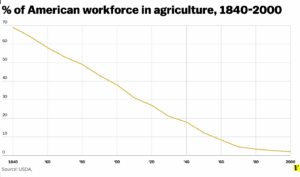
      In the 1800s, nearly 70% of the American workforce was in agriculture. 

      The first industrial revolution permanently altered the way businesses operated (Times Agriculture).  As agricultural jobs evaporated, did workers simply find themselves without a path forward?  New technology created new careers: 

        • Factory workers to produce goods
        • Railroad workers to lay tracks, drive trains, and load/unload cargo
        • Miners to extract coal, iron ore, copper, gold, and other minerals and metals from the ground
        • Service workers to maintain and repair the new technology used in the fields and factories

      Nearly 200 years later, only 1.3% of the American workforce is involved in agriculture.  (Business Insider)  Have the displaced workforce found themselves suddenly with no means to produce income?  Technology changes with the times, creating a wellspring of new opportunities.

      The second industrial revolution, known as the Technical Revolution, was characterized by the emergence of new sources of energy (electricity, oil, and gas) and new modes of transportation (automobiles, airplanes) (Interesting Engineering)

      The third industrial revolution, known as the Digital Revolution, brought forth new information and communication technologies, such as computers, the internet, and digital media.  (Economist)

      We are now in the midst of the fourth industrial revolution: the convergence of emerging technologies, digital production, and smart automation.  (Salesforce)

      Humankind is marked by our ability to adapt.  This generational shift in technology has created an entirely new landscape of opportunities.  Who, in the late 1800s, could have ever dreamt of quantum computing modeling researchers, no-code prompt engineers, or large language model developers?

      AI From Personal Experience

      Both Chantal and I have been involved with more than 300 organizations in our careers.  In that time, I have seen every plot point on the spectrum of technology adoption.  Some organizations see technology as a strategic advantage, others as a means to keep pace, and others still as no more than a cost center.

      The AI explosion, just like the personal computer, internet, and social media revolutions before it, comes with a lot of promise, hype, fear, and uncertainty.

      Over the past few years, we have both watched companies give lip service to AI, while providing solutions more akin to digital parlor tricks than true artificial intelligence.  Since the calendar flipped to 2023, and LLMs (large language models) have made their way into the cultural mainstream, AI is now an irrevocable element of our lexicon.

      Companies that rely on legacy methods and products are spiraling downward, falling out of favor with the market.  They face the unenviable challenges of losing ground to more nimble competitors, clawing to hit already-reduced sales targets, waning attention from their customer base, and bleeding workforce due to downsizing and departures.

      Avoid, Augment, or Accelerate: It’s Your Choice

      Yes, progress for the sake of progression can be an empty pursuit—after all, our new era of interconnected, algorithmic lives has also created a pathway for revenue as far-flung as a TikTok influencer—the merits of which are certainly disputable.

      Ultimately, any seismic shift in business cannot be boiled down to a single directive.  Complexity is inherently multivariate and requires a careful, prayerful approach.  Just as it would be unwise to avoid AI altogether, it would be even more devastating to approach AI as an immediate means of workforce reduction.  As the Lord has given us positions of leadership, we are called to be wise stewards, recognizing the impact our decisions have on the lives of those who work for us.

      Unless one is specifically in the business of accelerating the innovation of artificial intelligence, Christian leaders are wise to examine if—and therefore how—augmenting their workforce with artificial intelligence platforms and tools can make their work more personally meaningful and organizationally impactful, equipping their employees with skills and growth that will propel them forward in this bold new era of work.


      Image Credits

      All of the images in this article were produced by Midjourney, a generative artificial intelligence text-to-image engine.  All images are royalty-free and are suitable for both commercial and noncommercial use.

      Bios

      Chantal is the Founder and President of CornerstoneX, an AI innovation lab with a $50M valuation.  She is an Oxford University alum and board member, a Doctoral candidate in AI and Innovation, and the proud daughter of Sri Lankan parents who fled civil war to give their family a chance at safety and success.  Chantal has served the Lord through Ravi Zacharias International Ministries (RZIM), Emma Stark’s Global Prophetic Alliance, and within the church as a Children’s and Youth Pastor.


      Her husband, Ben, is the CEO of CornerstoneX.  He has been involved with half a billion dollars in committed capital towards digital innovation initiatives across more than 300 organizations.  He is a self-described “recreational theologian and apologist,” desiring greater Biblical literacy amongst Believers, and a jazz/funk drummer who gigs on Sunday mornings to worship the Lord.

      Keep up-to-speed on the latest tech and business news affecting faith driven entrepreneurs. The easiest way to do so is to join our newsletter. Click below to connect with the FDE ecosystem.

      JOIN THE NEWSLETTER

      Donec sollicitudin molestie malesuada. Vestibulum ac diam sit amet quam vehicula

      Cras ultricies ligula sed magna dictum porta. Curabitur arcu erat, accumsan id imperdiet et, porttitor at sem. Vivamus magna justo, lacinia eget consectetur sed, convallis at tellus. Donec sollicitudin molestie malesuada. Mauris blandit aliquet elit, eget tincidunt nibh pulvinar a. Pellentesque in ipsum id orci porta dapibus. Vivamus suscipit tortor eget felis porttitor volutpat. Vestibulum ac diam sit ame

      Related Articles

      Top 25 Faith Driven Entrepreneur Podcasts

      We’re admittedly biased and think all the shows are packed with powerful truths to encourage you on your journey. But here’s a few of our most popular episodes. If you’re new to the show, this is a great place to start.     TIM KELLER Who Do You Think You...

      Top Apps

      It's amazing how much we are able to be in God's presence through technology.  Below are a few of the apps we at Faith Driven Entrepreneur use to stay connected to Him. YouVersion On more than 250 million devices around the world, people are reading, listening to,...

      Top Co-Working Spaces

      As one of the fastest-growing workplace movements of the last decade, co-working enables people from diverse backgrounds to work together in a common space. The number of co-working spaces around the world has increased by nearly 700% since 2011. Globally, an...

      Stay Up to Date With The Latest News & Updates

      Access Premium Content

      Sed ut perspiciatis unde omnis iste natus error sit voluptatem accusantium doloremque

      Join Our Newsletter

      Sed ut perspiciatis unde omnis iste natus error sit voluptatem accusantium doloremque

      Follow Us

      Sed ut perspiciatis unde omnis iste natus error sit voluptatem accusantium doloremque

      5 Keys to Success in Business: The Total Quality Life Approach

      5 Keys to Success in Business: The Total Quality Life Approach

      — by Chris Paliska

      Hi, I’m Chris Paliska. In my early 20s, I landed my dream corporate promotion, the one I’d been grinding my whole career for. But the euphoria lasted all of 15 seconds. That fleeting moment led me to some uncomfortable truths: I was distant from God, emotionally unavailable to my family, physically unfit at 312 pounds, and mentally on the brink with stress and anxiety. I realized then that success in business meant nothing if I was failing in every other aspect of my life which lead me on my entrepreneurial journey to start Total Quality Lending. I want to share with you the five key areas that every Christian entrepreneur should focus on for what I call The Total Quality Life.

      Remember as an entrepreneur, living a total quality life has to start with YOU to have an impact in your business. You are massively in control. You are in the driver’s seat based on your actions. Everybody follows the example of the leader. 

      1. Faith: Implementing Spiritual Growth

      Personal Action Steps:

        • Daily Prayer and Reflection: Start each day by aligning yourself with God’s will.
        • Active Church Community: Don’t just go to church; be a part of the church. Join small groups or volunteer to serve.

      Workplace Implementation:

        • Incorporate Faith into Company Values: Let faith guide your company’s mission and decisions. Lead with faith-based energy that is contagious for the environment you are influencing. 
        • Community Service: Allow employees to take paid time off for charity work or organize team community projects.

      2. Family: Cultivating Relationships

      Personal Action Steps:

        • Scheduled Family Time: Block out time on your calendar solely for family activities.
        • Open Communication: Keep an open line with your family about your work schedule and commitments. Bring them in on the mission with you. 

      Workplace Implementation:

        • Family Integration in the workplace: Implement flexible qualities that allow a welcoming environment for families of all shapes and sizes. We have a kid’s room if employees need to bring their kids into the office. We harness and encourage families in similar stages of life to band together, sharing childcare, doing family events together, children’s sports teams, etc. 
        • Our company core value & definition of Family: Our culture is based on this definition of family. What do YOU stand for? Who can you count on when times get tough? Who believes in you? Who holds you accountable? Who is going to push you to press on? Those are the things that define our work family.
        • Family Events: Host family-friendly company events to help integrate work and family life.

      3. Fitness: Honoring God with Your Body

      Personal Action Steps:

        • Regular Exercise: Plan a workout regimen and stick to it. For me, it’s hitting the gym every day at 5 a.m.
        • Nutritional Plan: Eat balanced meals that give your body the fuel it needs without sacrificing health.

      Workplace Implementation:

        • Fitness Challenges: Start a fitness challenge and invite all employees to participate. (Example: Spartan Races, 75 Hard, etc.) 
        • Healthy Office Snacks: Replace the vending machine snacks with healthier alternatives.
        • Challenge & Check in: If people tell you they want to improve challenge and check in with them to make sure their eating healthy and exercising

      4. Wellness: Mind, Body, and Soul

      Personal Action Steps:

        • Mindfulness Practices: Incorporate practices like meditation or breathwork into your daily routine.
        • Mental Breaks: It’s important to take time off to relax and reset.

      Workplace Implementation:

        • Wellness Room: Create a space in the office where employees can take a mental break.
        • Productivity Breaks: Encourage small, regular breaks for employees to recharge.

      5. Business: Faith-Driven Success

      Personal Action Steps:

        • Ethical Business Practices: Make sure your business operations align with your Christian values.
        • Financial Goals: Set realistic financial objectives aligned with personal and spiritual growth.

      Workplace Implementation:

        • Holistic Goal Setting: Require employees to set goals in faith, family, fitness, wellness, and business.
        • Financial Literacy & Growth: We are dedicated to the financial growth of our employees. We share knowledge and resources that have helped us, such as tax-saving tips and wealth-building opportunities. Employees are also held accountable for their financial goals, creating a culture that fosters both personal and professional growth.

      This approach to integrating faith, family, fitness, wellness, and business into the fabric of your business leads to a unique company culture and business model.  The dedication to these five key areas doesn’t just make for a successful business but enriches the lives of those who are part of it. While the world often presents a zero-sum game between personal happiness and professional success, Chris’s journey demonstrates that when you nurture all aspects of life, not only do they co-exist, but they also complement and enhance each other.

      It’s hard to live a full life alone. We need other people to some alongside us and support us. That’s partly why we’ve created Faith Driven Entrepreneur Groups. Meet local entrepreneurs and share your faith journey.

      YOU’RE INVITED TO JOIN AN ENTREPRENEUR GROUP


      Donec sollicitudin molestie malesuada. Vestibulum ac diam sit amet quam vehicula

      Cras ultricies ligula sed magna dictum porta. Curabitur arcu erat, accumsan id imperdiet et, porttitor at sem. Vivamus magna justo, lacinia eget consectetur sed, convallis at tellus. Donec sollicitudin molestie malesuada. Mauris blandit aliquet elit, eget tincidunt nibh pulvinar a. Pellentesque in ipsum id orci porta dapibus. Vivamus suscipit tortor eget felis porttitor volutpat. Vestibulum ac diam sit ame

      Related Articles

      Top 25 Faith Driven Entrepreneur Podcasts

      We’re admittedly biased and think all the shows are packed with powerful truths to encourage you on your journey. But here’s a few of our most popular episodes. If you’re new to the show, this is a great place to start.     TIM KELLER Who Do You Think You...

      Top Apps

      It's amazing how much we are able to be in God's presence through technology.  Below are a few of the apps we at Faith Driven Entrepreneur use to stay connected to Him. YouVersion On more than 250 million devices around the world, people are reading, listening to,...

      Top Co-Working Spaces

      As one of the fastest-growing workplace movements of the last decade, co-working enables people from diverse backgrounds to work together in a common space. The number of co-working spaces around the world has increased by nearly 700% since 2011. Globally, an...

      Stay Up to Date With The Latest News & Updates

      Access Premium Content

      Sed ut perspiciatis unde omnis iste natus error sit voluptatem accusantium doloremque

      Join Our Newsletter

      Sed ut perspiciatis unde omnis iste natus error sit voluptatem accusantium doloremque

      Follow Us

      Sed ut perspiciatis unde omnis iste natus error sit voluptatem accusantium doloremque

      In Partnership

      Partnering With Someone Else’s Vision
      Tommy Tjiptadjaja

      After a decade living abroad, Tommy Tjiptadjaja returned to his native home of Indonesia to co-found Greenhope. In partnership with scientist and co-founder Sugi, Tommy Tjiptadjaja started Greenhope to tackle the plastics problem by creating plastic products that degrade much faster.

      Discussion Questions

      Putting to Death the Lone Wolf

      As entrepreneurs, we need to put to death our lone wolf tendencies. In its place, we can embrace the truth—and the strength—that comes from truly believing that only together are we better.

      • What are the lone wolf tendencies that are distancing you from God and from others?

      • What loner habits are getting in the way of you finding the people you need for the journey ahead?

      Misplaced Values

      In Tommy Tjiptdajaja’s journey, he found that living sustainably is not just a scarcity or technological problem, but a problem of misplaced values.

      • Are there values you hold that might be preventing people or places from flourishing?

      • Sustainability is only about the here and how, it is also about the yet-to-come. In what ways can you make changes now that will have a ripple effect for years to come? How might your decisions today impact the next generations?

      Business As a Force for Good

      Tommy talks about bringing business back to its original intent—an engine that drives good in the world. He believes that is the only way the systemic problems of the world can be solved.

      • What do you believe is the role of business in the world? How can it earn profit while also being a force for good in the world?

      • What role does partnership play in business truly shaping culture and bring about human flourishing in real, meaningful, and lasting ways?


      Ideas to Explore the Mark Further

      Looking for some practical ways to put this mark into action? Here are some ideas that can help you develop an even greater understanding of In Partnership.

      •  

        Would you benefit from a full-time, paid group leader and coach from a CEO Network? Our list of Top Advisory Groups feature business groups that resource and equip Christ-following leaders.

      •  

        One way of developing partnership with others is to surround yourself and your team with like minded entrepreneurs and creators, by operating out of shared workspaces. Check out our list of Top Co-Working Spaces to explore opportunities to regularly connect with other creatively-minded individuals.

      •  

        How can you see your family as partners in your entrepreneurial journey? Involve your spouse or children in your business by inviting them into your decision making process, or taking them alongside you during work retreats, trainings, and meetings.

      Financing, Fundraising, and Bootstrapping

      What to Look For in a Partner
      Jessica Kim

      Jessica Kim shares her entrepreneurship journey and discusses the importance of good partnerships. But more than just being complementary pieces of a puzzle, we need to understand and recognize the motivations of all parties involved. Afterall, mutually beneficial relationships that stand tall in the storms of business and life are not transactional. They are life-giving.

      Discussion Questions

      Love People

      Jessica talks about the innocence she exhibited in her first start-up while in college. And it would be easy for us to brush it aside as youthful exuberance. And yet God calls us to rely completely on him as a child does a parent.

      • How might you re-establish a childlike faith? And how might this simplifying of love for God translate into the ways we love people? Can our business partnerships reflect this same kind of love?

      Empathy for the End User

      So often in our pursuit to create and build businesses, we focus more on acquiring than caring for our customers and partners. But as Faith Driven Entrepreneurs, we can have both a mind for profits and a heart for serving.

      • In what ways does your venture care for others? How might that become more of an integrated way that you can love people with the same intent that you love God? How can you monetize this approach while still holding strong to the heart posture of making the world a better place?

      Seek True Partnership

      The entrepreneur/investor relationship is ripe for posturing. The entrepreneur puffs up in order to look bigger and more impressive than what the numbers might suggest. The investor fears missing out on the next big hit. In both cases, a relationship is built on shifting sand.

      • In what ways might you be posturing in order to gain or give financing? How might you realign your vision and your business to invite a more transparent partnership?