

Podcast Episode 29 – Hunger for Authenticity in a Post Christian Era: Part 2 with Mike Sharrow (CEO of C12)

Subscribe on ITunes or Other

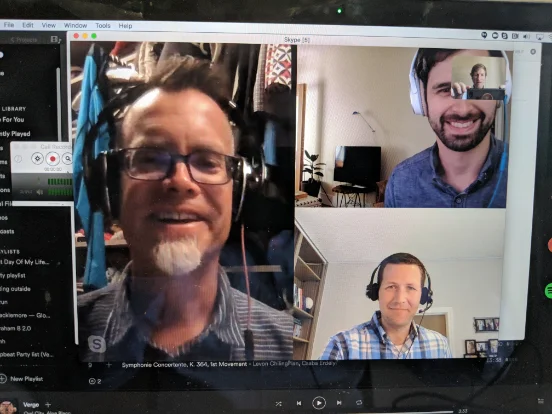
Mike Sharrow is back for Part 2 of our interview. As you likely gathered from Part 1, Mike leads C12 one of the largest and most successful organizations that put together groups of like minded, and similarly staged groups of Christian CEOs for local community, fellowship and best practices. Think about all the things you’ve heard about YPO, but imagine something better :). If you’re only going to listen to one of the parts of the interview (but why would you??) , listen to this one. The team asks Mike to share his observations on what’s happening in the marketplace from a faith perspective. Mike shares the fact that the Post-Christian era has people desiring authenticity in faith expressions. In fact, according to him, they hunger for it. C12 is seeing a tide lift in activity across the globe of more people wanting to live authentic lives for Christ at work as well as at home and in church.

 Mike goes on to share how C12 seeks to guide members towards accountability and integration. According to him, it’s not just what you’re doing but how you’re doing it. Jesus taught through disequilibrium. C12 is about keeping members in a healthy state of disequilibrium so that they can learn continuously, a key skillset for any business person. C12 really assists in the personal transformation of individuals as it addresses the whole person – all of one’s life is bought together in one place under Christ.

 We hope you enjoy this week’s podcast and we’d love for you to tell us how you are pursuing the integration of your work, faith, family and community in your daily lives in the comment section below.

Episode 29 – Hunger for Authenticity in a Post Christian Era: Part 2 with Mike Sharrow (CEO of C12)

Subscribe on ITunes or Other

Mike Sharrow is back for Part 2 of our interview. As you likely gathered from Part 1, Mike leads C12 one of the largest and most successful organizations that put together groups of like minded, and similarly staged groups of Christian CEOs for local community, fellowship and best practices. Think about all the things you’ve heard about YPO, but imagine something better :). If you’re only going to listen to one of the parts of the interview (but why would you??) , listen to this one. The team asks Mike to share his observations on what’s happening in the marketplace from a faith perspective. Mike shares the fact that the Post-Christian era has people desiring authenticity in faith expressions. In fact, according to him, they hunger for it. C12 is seeing a tide lift in activity across the globe of more people wanting to live authentic lives for Christ at work as well as at home and in church.

 Mike goes on to share how C12 seeks to guide members towards accountability and integration. According to him, it’s not just what you’re doing but how you’re doing it. Jesus taught through disequilibrium. C12 is about keeping members in a healthy state of disequilibrium so that they can learn continuously, a key skillset for any business person. C12 really assists in the personal transformation of individuals as it addresses the whole person – all of one’s life is bought together in one place under Christ.

 We hope you enjoy this week’s podcast and we’d love for you to tell us how you are pursuing the integration of your work, faith, family and community in your daily lives in the comments section.

Entrepreneurship Meets Scripture Journal-ling

Entrepreneurs solve problems and take advantage of opportunities in all sectors in the marketplace, so why not in the Church….and why not in one of the most basic disciplines that many of us undertake on a daily basis?

Two Christ following entrepreneurs from Hong Kong, Kelly and Josh, thought that there was a way to improve the process of journal-ling from Scripture and to bring a community element to it.

The result, the ThredJournal.  They’ve sold more than 40,000 of them.

Here’s a short video that YoungLife produced for them: 

Have a story of entrepreneurship meeting the church? Let us know!


Seasons Change…But God

Brittany Norman

What did you dream of doing/being “when you grew up”?  Are you doing it? For many of us, what we dreamed of becoming may not be what we are currently doing.  If you are like me, somewhere along the way you made a change—whether you wanted to or not.  Seasons of life bring change. Does change mean you failed at what you tried? Or could it mean that choices were made along the way that have brought you to a different place than you planned?  

I didn’t dream of being an entrepreneur and owning my own business but it happened (with a lot of hard work).  And I didn’t dream that I wouldn’t be working as an entrepreneur in a business I loved—it happened also.  Seasons changed. But God.

Ecclesiastes 3 (or maybe The Byrds!) is commonly what springs to mind when we say “seasons”:  “For everything there is a season, and a time for every matter under heaven….”. Some of the seasons I loved and wanted and were easy; some of the seasons have been very painful and not what I wanted!  But just as I can’t live in spring or fall only, my journey of family and business has also not stayed still in my favorite season. You can’t have it all.

Season One

I began my company with three other women the year my husband began law school.  We lived on school loans and lacked for nothing. We were young, had amazing friends, a tiny little adorable rental house, parents who occasionally came to town and took us to dinner and maybe slipped us a $20. We had nothing to lose—we agreed that at the end of 3 years (law school duration) one of us would have a job.  And we did—we both did.

Season Two

After three years, my company was great, we had had our first child and I was in my dream place, working and traveling with baby in tow, doing what I loved and was passionate about.  My husband had graduated, had clerked in several firms during his summers, and had multiple offers in the city we wanted to live in. It was all “perfect”. But choices began and seasons changed.  

Season Three

Our company grew quickly and successfully.  It was the glory days. I loved what I was doing and the people I was doing it with, and the demands of the balance of work and family were manageable.  My husband and I made the choice for his career to join a law firm with more family-friendly expectations so that I could continue at the pace I was moving, and we could co-labor in child-rearing, traveling for work and managing life.  He (we) made a choice that we thought was best for our family—he couldn’t have it all. It worked well for many years, weathering multiple children, lots of travel, a relocation and family changes. And then it didn’t.

Season Four

If you know me or about me, you know I love(d) working.  I love study abroad and how people’s lives are changed through it.  I love my company and all the people who have been and are involved with it.  It’s the best in the world! But for me, 11 years and 4 children into it, the demands of what I loved doing came at a cost to my family that we decided was too much.  I (we) made a choice that we thought was best for our family: I stepped back from working daily and changed roles.

I recognized that I couldn’t have it all and do it all without damaging some of the people I loved most (I know, fighting words).  That wasn’t because I was a woman—my company was and is woman run. It was because it’s a false idea that anyone can have and do it all without costs and trade-offs—male or female. There are costs to success in any field, and I hit a season when I had to make choices not for the benefit of myself, but for the blessing of our group.  For me, that meant that I needed to start a new season of being a full-time, at-home mom. It wasn’t a better or worse choice, but it was a choice that had to be made. It was a change of season for our family. And it was huge. But God?

Season Five

I grieved.  We struggled.  This was not the plan!  This wasn’t how we had set up our household, our budget, our schedule, anything.  My identity fell apart—it felt like who I was was gone; my identity, my family’s identity, my professional identity, my airline status, my “what do you do?” was all gone.  I had to start again and it was a definite winter. I felt like God had pushed me off the edge of a cliff and it wasn’t what I wanted.  But God.  

Throughout scripture, those are two of my favorite words.  God IS. He is always in control and nothing can thwart His plan.  I did know that He was good, I was loved and just as we had done years before, we did again: one day at a time, trusting that though we were confident this new season was inside His will, that didn’t mean it was fun or easy.  It lasted 10 years. And maybe it’s still lasting, I’ve just finally adjusted to my “new normal” (remind me I said that). It’s been challenging; it’s been costly; we’ve had to make other choices resulting from that choice; I miss what “was” some days – I loved the good times.  There are days when I still would love to be back “how it was.” But that season is over. Isaiah reminds us, “Remember not the former things, nor consider the things of old. Behold, I am doing a new thing: now it springs forth, do you not perceive it? I will make a way in the wilderness and rivers in the desert.” (Isaiah 43: 18-19).  Look forward not backward. I am excited and expectant some days; nostalgic and a little sad on others. A change of season.

Season Six

Begun and yet to be written.  Five kids, several new businesses and entrepreneurial journeys with my husband later.  Do I know what is next? No. But God. Right? Right. I no longer even try to plan it out honestly.  I try to do today with what God has given me today.  Not tomorrow or next month or year.  He gave me an amazing husband and co-laborer.  We plan together; we work together; we dream together by God’s grace; we make hard choices together and try to consider what might be better for the other person and our family, and that might mean change for one of us; and He unfolds the season.  Neither of us can do or have it all. “Many are the plans in the mind of a man, but it is the purpose of the Lord that will stand.” (Proverbs 19:21) What’s next? I’m still figuring that out! A new season…But God.

What’s your season?

It’s highly likely your seasons don’t look like mine.  They shouldn’t. But they will exist: winter, spring, summer, fall.  Some will be by your choosing: to marry or not, to birth kids or adopt or not, to take one job or another, to choose to be a stay-at-home mom or dad while the other spouse works full-time, or to both work outside full-time and share all the inside jobs; to invest or not.  And some will be seasons not of your choosing: a divorce or death leaving you solo with or without kids; a child or spouse with a life-long medical condition that crushes your dreams for them (and you); financial struggles that mandate a plan you don’t want to execute, a relocation that isn’t voluntary, a mid-life career change that leaves you married to a person you didn’t bargain for.  Some will be seasons you choose but don’t necessarily want to choose—those are the ones when you choose something that might put you second because you need to put someone else first.

What I have learned over the last 25 years is that seasons aren’t just a change in weather or age and stage of life. Seasons describe choices and decisions that you will make (or have made for you) regarding family, business, school, church, living location, and more.  One thing I repeat regularly is that there are very few absolutes. There are seasons, and no season lasts forever. Making a change doesn’t mean right or wrong or failure at what you are changing. It means something new. And not “having it all” or “being able to do it all” isn’t based on gender. It’s based on the fact that I don’t live and operate in a me-vacuum.  I live and operate within my family group, as a partner with my husband and a mother to the five loves of my life—four of those are girls, by the way. And my message is the same to all five of my kids: your goal can’t be to have and do it all. You will have to make choices for family and work and there are costs and trade-offs over your lifetime.

Who you are is not what you do; who you are is a person, made in the image of God, living on this planet with the mandate to love people and build relationships and be stewards in the world—as an employee or a business owner, a coach or nurse, a secretary or a teacher or lawyer or pilot or soldier or social-worker.  What you do will likely change over your lifetime; who you are doesn’t.  Your seasons – the barren and bountiful; the challenging and easy; in want and in plenty–they bring change, and that’s okay.  It’s okay to “change the plan” and do something different. For every season there is a purpose….press on/in. More to come…

Editor’s Note: If you liked this piece from Brittany, we encourage you to check out her other FDE blogs as well:

FDE Blog – “I can’t do play dates” and Other Mantra of the Working Mom
FDE Blog – Yes, I have Staff And That Doesn’t Make Me Inferior

Special thanks Joel Staveley on Unsplash for the cover photo

Can Money Buy Happiness?

The following post was first published on billhigh.com by our friend Bill High, co-author of Giving It All Away…And Getting It All Back Again: The Way of Living Generously.

Bill High

Can Money Buy Happiness?

It’s an age-old question. Some researchers sought to end the debate.

Two researchers from the University of British Columbia studied whether those who make frequent material purchases are happier than those who make experiential purchases.¹

They focused upon the momentary happiness that people get from material purchases like skateboards, speakers, coffee makers, etc. in contrast to experiential purchases like spa gift cards, weekend ski trips, or tickets to a sporting event.

Their conclusion? Well, it depends.

Those who like the rush that they get from frequent purchases of material things have doses of happiness of over time, whereas those who purchase experiences get an intense but fleeting dose of happiness. On the other hand, those who looked back on their purchases after 6 weeks or more tended to feel more satisfaction over their experiential purchases.

As one of the researchers noted, “The new couch will never provide a thrilling moment to match the concert but will keep the owner snug and comfortable throughout the winter months.”

Of course, there’s something that the researchers missed altogether.

In the end, whether skateboards or concert tickets, neither kind of purchase can satisfy for any enduring length of time. That’s why the Apostle Paul said if “we have hope in this life only, we are of all people most to be pitied” (I Corinthians 15.19 ESV). King Solomon, who had the opportunity to partake of any of the material purchases and experiential purchases he wanted, said it this way: “Then I considered all that my hands had done and the toil I had expended in doing it, and behold, all was vanity and a striving after wind, and there was nothing to be gained under the sun” (Ecclesiastes 2.11 ESV).

You see, the research is flawed. The only lasting happiness we can experience this side of heaven is when we know that there is something more than this life. It is the knowledge that there is something more than this life that gives us hope.

Here on this earth, we will always be reminded that we lack permanence and substance. There will always be a gnawing inside of our souls that there is something more, something more meaningful—until heaven.

Notes ¹http://www.lifehack.org/352030/science-finds-something-surprising-about-the-effect-material-purchases-happiness

Special thanks to lucas Favre on Unsplash for the cover photo.

The Dangers of Globalism

Article originally hosted and shared with permission by The Christian Economic Forum, a global network of leaders who join together to collaborate and introduce strategic ideas for the spread of God’s economic principles and the goodness of Jesus Christ. This article was from a collection of whitepapers compiled for attendees of the CEF’s 2018 Global Event.

— by Jeff Holler

The term globalism is used freely in our world today, but what does it mean and/or imply? In reviewing many definitions and philosophies regarding globalism, I found a definition I like in an article by Colin Stief. He explains globalism as the process of increased inter-connectedness among all countries of the world, most notably in the areas of economics and economic development, politics, and culture. Ikea stores throughout the United States, U.S. fast food in South Africa, Apple phones with American technology manufactured in China, global customer service call centers in India, and the influence of the United Nations are a few small examples of globalization.

Conceptually, globalism seems to make sense as a strategy to improve everyone’s lives, in poor and rich countries alike. The idea is that everyone should benefit from increased efficiency of how people, knowledge, and things move and communicate throughout the world with constantly improving technology, and with the increasing ease of transportation around the globe. In theory, globalism should encourage free trade among all countries and should increase competition such that prices for everyone are ultimately reduced. It should also provide poor countries a chance to develop economically as developed countries invest in their people and resources as a cost-effective way to expand their own capabilities and reach. As poor countries grow economically, it should likewise create new markets for multi-national companies to sell their goods, as well as open new markets to which the developing country can export their goods and services. It is believed that this ease of transfer of information, ideas, people, goods, and services should also foster more transparent and democratic governmental systems throughout the world. And, as we learn more about each other through increased communication and interaction, the world should become a more open and respectful place for all cultures and people to peacefully co-exist. These are just a few of the many benefits cited by the articles available on the subject.

While we have, in fact, seen our interconnectedness help improve the lives of many around the world, globalism is not a utopia. There are winners and losers as jobs leave one country for another, localized and traditional values diminish, and some individuals with great power become self-serving and corrupt. Additionally, not every country plays the game fairly, which creates results that are far less efficient or beneficial than the ideal. Furthermore, the increasingly interconnected global monetary systems seem to be backed by less and less substance as global growth, and in some cases simply maintaining the economic status quo, are fueled by debt.

Most concerning to me, however, are the early indications regarding how the process of globalism is developing. While articles on the subject point to a lot of different dangers, my opinion is they all fall into one of three categories.

First, there has been a consolidation of power politically and economically. A smaller number of developed and wealthy countries and their politicians and bureaucracies are driving the political process. Likewise, a small number of very large and powerful multinational companies are exerting their influence. Combined, this relatively small group—rich, powerful, intellectual, and politically connected individuals and entities—are propelling the globalist policies and processes. Globalism is promoted as a solution to most of the troubles in the world today, but we are beginning to see that those who encourage and push its policies are benefiting more than others. For example, while extreme poverty is rapidly on the decline, there is a well-documented, growing gap between the richest and the poorest around the globe. The OECD (Organisation for Economic Co-operation and Development) states that the average income of the richest 10% of the world’s population is about nine times greater than that of the poorest 10%, which is the largest gap to date. It has also been documented that the middle class is in decline in many societies. Additionally, the UN Development Program reports that the richest 20% of the world’s population consume 86% of the world’s resources while the poorest 80% consume just 14%.

The second category of dangers is the loss of freedoms we are beginning to experience because the process of globalism is being built on a politically correct, faithless foundation. The pursuit of “globalist policies” and the associated large (and growing) godless government bureaucracies as a problem solver, are leading to the loss of many freedoms. These include the freedoms of religion and religious liberty, freedom of speech if it threatens the “accepted norm,” and even freedom of parental rights. For example, the United States Supreme Court will soon decide if a Christian baker in Colorado can be forced to create artistic expression that violates his faith. In Germany, Christian parents recently had their home raided and children forcibly removed and taken into custody. Their crime? Homeschooling.

The third category of dangers is rooted in a globalist trend toward a governmental “nanny state” approach to providing for individual’s core needs. In my opinion, this approach is proving to be harmful as it is diminishing individual responsibility, work ethic, and human dignity. A governmental “nanny state” is also eliminating the traditional role of the church to be the primary influencer, problem solver, and special needs provider in people’s lives. The “nanny state” approach is also expensive and unsustainable economically, as indicated by the growing global debt burden, much of which is being used to fund social welfare.

We also must consider how technological advances, particularly rapidly emerging artificial intelligence, will be used to advance globalism. What kind of decisions will machines make when God’s commands, teachings, and principles are not allowed to be considered in their programming? How will this technology be used in godless hands?

The problems with globalism are many and multi-faceted. I believe, however, that at the core of these problems is the removal of our Judeo-Christian history, practices, teachings, and values from the public domain, as well as an effort to silence the church in the public and corporate realms around the globe. What can possibly be more dangerous than taking God out of the equation and replacing Him with godless bureaucracies and corporations?

Ted Malloch, PhD, is chairman and CEO of The Global Fiduciary Governance LLC, a leading strategy and thought leadership company. He has served on the executive board of the World Economic Forum, held an ambassador-level post at the United Nations, worked in international capital markets on Wall Street, held a senior position in the U.S. State Department, and is author of Davos, Aspen, and Yale: My Life Behind the Elite Curtain as a Global Sherpa. In a recent article published on WND.com, Malloch said, “To some degree, I would say if you want to understand globalism, you need to get at the spiritual underlying currents in globalism, which is not only relativistic, but it’s a divorce, a great divorce, from religion and from any notion that there is a God who exists or that you can know him personally.”

Malloch goes on to convey that globalists have lost touch with the foundations of their culture in Western civilization, “which is actually Greco-Roman, Judeo-Christian.” Furthermore, he believes globalists not only want to attack the pillars of Western civilization, but also are “radically against the family.” He implies that the globalists want to shape how people think and interrelate, a role historically and scripturally reserved for the God-guided nuclear family in conjunction with the church. Globalists want their global government solution to become our god, as it is theirs. Without a core of God’s natural law, serving God, and love for God’s people, I believe those who are driving globalism forward will become ever more self-serving and corrupt, and in the end will hurt significantly more people than they help.

Special thanks to Chelsea London Phillips on Unsplash for the cover photo