




Why Passion Isn’t the Holy Grail of Work

  — Dr. Michaela O’Donnell Long

At FDE, we love hearing from female leaders and what they’ve learned. Dr. Michaela O’Donnell Long is the senior director of Fuller’s De Pree Center for Leadership. She is also the co-founder of Long Winter Media, a creative agency that helps brands make an impact. Michaela teaches as an adjunct professor of Practical Theology and Leadership at Fuller.

This piece was originally published on Fuller’s De Pree Center for Leadership website.

——

I graduated seminary in 2011, on the heels of the Great Recession. Very few companies were hiring. In fact, many were laying people off. Let’s just say that in a depressed economy there is very little demand for someone with an advanced degree in theology and no record of success in any industry. To complicate matters, I had just gotten married to someone who—like me—had just graduated seminary and had very little work experience.  So there we were, excited to be married, but with no jobs, no money, and no prospects.

We filled in with odd jobs, me writing for websites and Dan editing a few videos for a friend. But, in December of 2011, we got two calls that would help us launch our business. The first was from one of my seminary professors. He knew I was jobless and wondered if I might help an organization he worked with develop a keynote presentation. The other call was from an interior designer friend of my father’s. She wanted to know if Dan could help her make a video. Driven by financial necessity, we immediately said yes to both opportunities.  After the projects were finished we decided that we should turn “creative work” into an official side hustle—a way to save money for a house. We put together a quick website and officially launched in an email to family and friends. Within three months of that email, we had full time work. We had accidently started a full-fledged business.

When we started Long Winter, I didn’t have the time to stop and ask myself if I was passionate about “creative work.” That lack of space to process is one of the great gifts of my life. If I had had too much time to think about things I might have realized, “I don’t even know how to make videos or do branding. I don’t actually even know what branding is. So, no I suppose I’m not passionate about this work.” In other words, if passion had been a measure for discerning God’s call I would have missed what has been—by far—the most formative work experience I have ever had.

Our cultural obsession with passion as a prerequisite for work threatens to cut vocational formation off at the head. In other words, if we insist on using passion as a measure for what we ought to do—or worse, proverbially prostrate to passion as if it were the holy grail of work—we will stunt the rate at which we try things, iterate, and reflect. Trying things, iterating, and reflecting are some of our greatest tools for learning about how God is forming us and fitting us for this world.  In this, we are reminded that vocation is formed, not found through an ongoing—and often complicated—process of discernment rooted in context, convictions, and community.  In other words, action precedes reflection. Thus, experimentation precedes formation.

Readying ourselves for this formation journey starts with accepting that we are God’s beloved—and that God’s call to us as beloved is the underpinning of any work we do in this world. The good news here is that we need not know what we are passionate about in order to know that God calls us—regularly and with fervency—both to commune with God but also to unique opportunities in our world.  Our passions may very well be formed as we engage God’s callings, but they, themselves are not what we live in pursuit of.

I have learned much about my vocation, my gifting, and even my passions through the starting and running of Long Winter. Had I not leapt before I looked, these learnings might still be unknown to me. My two hopes for us are this: First, that we fear not in trying new things when we sense God’s activity in our midst—that we open ourselves up to the possibility that sometimes we will need to leap before we look. Second, I hope that we can cultivate new mental models about passion and work because most people only know what they are passionate about after they’ve experimented, iterated and reflected.

[Special thanks to Steve Johnson on Unsplash for the cover photo.]

Invest in Emotional Health

Article originally hosted and shared with permission by The Christian Economic Forum, a global network of leaders who join together to collaborate and introduce strategic ideas for the spread of God’s economic principles and the goodness of Jesus Christ. This article was from a collection of White Papers compiled for attendees of the CEF’s 2018 Global Event.

— by David Park

Culture and Leadership are Important
Many of the attributes of great companies and organizations are well known: A high-performing team, sustainable competitive advantage, appropriate capitalization, and sound governance often lead to excellent outcomes in profit or impact. In addition to these attributes, having an exceptional organizational culture has become critical to attracting and retaining the best people. Even when a culture has not yet been established, founders and investors choose to work with each other partly based on shared values.

The culture of an organization will embody the values and personality of the leaders, so much so that changing an organization’s culture usually means changing its leaders. Much has been written about organizational culture and even more has been written about leadership. This literature tends to focus on personal or team effectiveness, strategies, and tactics for improving productivity, as well as reviews of aspects of popular corporate cultures. I am increasingly convinced, however, that we have missed an important foundation of healthy culture and effective leadership.

Emotional Health Matters
Daily, there are stories in the media about leadership failures ranging from fraud to scandal. Most individuals have experienced dysfunctional management and culture stemming from poor leadership within their organizations. For leaders who seem to lead from insecurity, fear, or anger, the consequences are apparent. For even the most talented leaders, though, often it seems there is a dark side to their brilliance and drive. Too late, we read about a hidden sin that was corrupting their lives from within. Christian leaders are not exempt from these failures.

Why are these stories so frequent? I contend these failures are principally matters of the heart, the consequence of neglecting to identify and address issues of emotional health. Expecting emotionally unhealthy leaders to build healthy cultures is not reasonable. How leaders handle relationships, failure, stress, and conflict is all driven, to a large degree, by their interior state. Without regular investment in improving their emotional health, they are hampered in their ability to lead well. Leaders who are not emotionally healthy often struggle to reconcile what they believe with how they behave. They also have difficulty managing their fear and insecurity, and are often overwhelmed by circumstances and pressure.

Emotional health is not a popular or familiar topic. Very little in formal or informal education addresses issues of emotional health. To cope with the challenges of life, people often default to their personalities, or to examples from their family of origin, which may include behaviors that can lead to process addictions and substance abuse. Many people naturally seek coaching and education in the areas of professional knowledge or physical health, but they do not do the same with emotional health. Working on improving emotional health is often hard, painful work. In addition, many view going to see a counselor or therapist as shameful, so they only do so as a last resort.

Examples of Emotional Health Issues
The following are a just a few examples of causes or symptoms of emotional health issues.

Trauma
Childhood or developmental trauma often goes unidentified, so the wounds fester into adulthood. These become the lens through which individuals experience the world and often spur the development of unhealthy coping mechanisms. Trauma is not limited to sexual or physical abuse, but can be the result of many life experiences including divorce, death, injury, or neglect.

Compulsive behavior
To distract from or become numb to pain, many individuals resort to process addictions (e.g., shopping, eating, and pornography) and substance abuse. These individuals may be highly functioning but are living with destructive behaviors that may eventually cause significant damage.

Poor understanding of personalities
Most people lack a useful framework for understanding different personalities, including their own. Gender, ethnic, or other stereotypes are of limited use in understanding individual motivations and temperaments.

Lack of boundaries
Many individuals struggle with differentiating themselves from those around them. For these individuals it is difficult to be honest, self-aware, and not manipulative.  

What Can Be Done
These issues cannot be fully resolved by the human resources department of a company. They also cannot be fully addressed through a Corporate Chaplain program. Professional counseling or therapy is needed for individuals to be equipped with the appropriate tools, awareness, and resources.

Make counseling or therapy mandatory for company leaders and provide the resources for it

Too often, we require counseling or therapy only after a problem has been publicly identified. By then, significant damage has already occurred, and more work is required to repair trust. In addition, individuals who are receiving help have been singled out and bear a social burden that can be detrimental to progress. The reality is that everyone has something to work on in emotional health. Making this known and establishing it as the norm would allow individuals to address issues before they become acute and will create more tools for honest and informed dialogue when issues do arise.

Look for alignment with stakeholders

The organization’s intentional investment in emotional health must be transparent, with buy-in and accountability from key stakeholders including the board and investors. The effort is likely to be material in impact, both in cost and benefit, and should be recognized as such.

Seek non-judgmental awareness and growth over uniformity or perfection

There is no ideal personality or temperament. The expectation for counseling or therapy is not perfection. The hope is for personal and collective awareness and growth that will lead to better communication and effectiveness.

The Hidden Key to Building a Great Organization
An organization’s greatness cannot meaningfully exceed the emotional health of its leadership. Eventually, unhealthy leaders will create unhealthy cultures and limit the ability of the company to achieve or sustain success. Fortunately, something can be done about this. Just as we would expect investments in professional training and capital assets to generate a return on investment, we should expect that improving emotional health will pay dividends as well. It is time to bring attention to the need for emotional health in our leaders and invest significantly toward this end.

——

[Special thanks for the cover photo to Ben Sweet on Unsplash]

Podcast Episode 36 – Living in a material world: Mailbag questions answered.

Subscribe on ITunes or Other

In this week’s podcast, the team answers a few of your questions around profit making and taking as well as consumerism. One Bay Area listener shares his struggles with being in what he believes is a money-driven industry. The team challenges us all to think about how we can redeem the industries we’re in by making figuring out the best way to serve it our number one goal. William believes that almost all industries are redeemable, Henry encourages us in the ways we can show love for the people in these industries for the purposes of transformation and Rusty reminds us of our true identity as a guide to ensure optimal motives while bringing in those returns. One of our listeners in Nairobi, Kenya asks the team for a biblical viewpoint on consumerism in response to the rise of the global middle class and the team takes us back again to a discussion of heart motive by realigning a few marketing and product design concepts back to the kingdom. And no good podcast on entrepreneurism would ever leave out a few quotes from “Wall Street”.

 As we do our mad dashes this Christmas season to show love for the people in our lives, let’s stop and take note of our heart motives in the doing and giving. Tell us who and what you want to partner with our Father God in redeeming this Christmas season by commenting below.

Photo by Steve Johnson on Unsplash

Episode 36 – Living in a material world: Mailbag questions answered

Subscribe on ITunes or Other

In this week’s podcast, the team answers a few of your questions around profit making and taking as well as consumerism. One Bay Area listener shares his struggles with being in what he believes is a money-driven industry. The team challenges us all to think about how we can redeem the industries we’re in by making figuring out the best way to serve it our number one goal. William believes that almost all industries are redeemable, Henry encourages us in the ways we can show love for the people in these industries for the purposes of transformation and Rusty reminds us of our true identity as a guide to ensure optimal motives while bringing in those returns. One of our listeners in Nairobi, Kenya asks the team for a biblical viewpoint on consumerism in response to the rise of the global middle class and the team takes us back again to a discussion of heart motive by realigning a few marketing and product design concepts back to the kingdom. And no good podcast on entrepreneurism would ever leave out a few quotes from “Wall Street”.

 As we do our mad dashes this Christmas season to show love for the people in our lives, let’s stop and take note of our heart motives in the doing and giving. Tell us how and what you want to partner with our Father God in redeeming this Christmas season in the comment section below.

Photo by Steve Johnson on Unsplash

The Heart of an Investor

It’s Monday so that means a video to start the week off!

We continue to highlight The Lion’s Den and their work. With their conferences in Dallas and Birmingham, they have been partners in the Faith Driven Entrepreneur movement for more than 5 years.  Think “Shark Tank” meets the Kingdom of God and you have a sense as to what happens at these events.  This is installment #3 of 4 highlighting their work.  In this video, the TLD team asks Do you want to invest in something you’re passionate about and be engaged in things that excite you? Where is the Lord directing you?

Check out this short video about walking out your faith and growing spiritually by helping and teaching others.

If TLD is something that you think you’d be interested in presenting at, or going to, please go to: https://www.thelionsdendfw.com/pitch-application  — Applications are open until 12/31/18.

——

[Special thanks to Omer Salom on Unsplash for the cover photo.]

Generosity Path’s Entrepreneur Profile: Surya Gunadi

Generosity Path

We are excited to share with you some of the great Entrepreneur Profiles from around the world, compiled by our friends at Generosity Path. Below, we meet a Christian who is on the generosity path and ask them what God has taught them about giving.

This week, meet Surya Gunadi from Indonesia.


THREE LESSONS ON GIVING FROM SURYA GUNADI
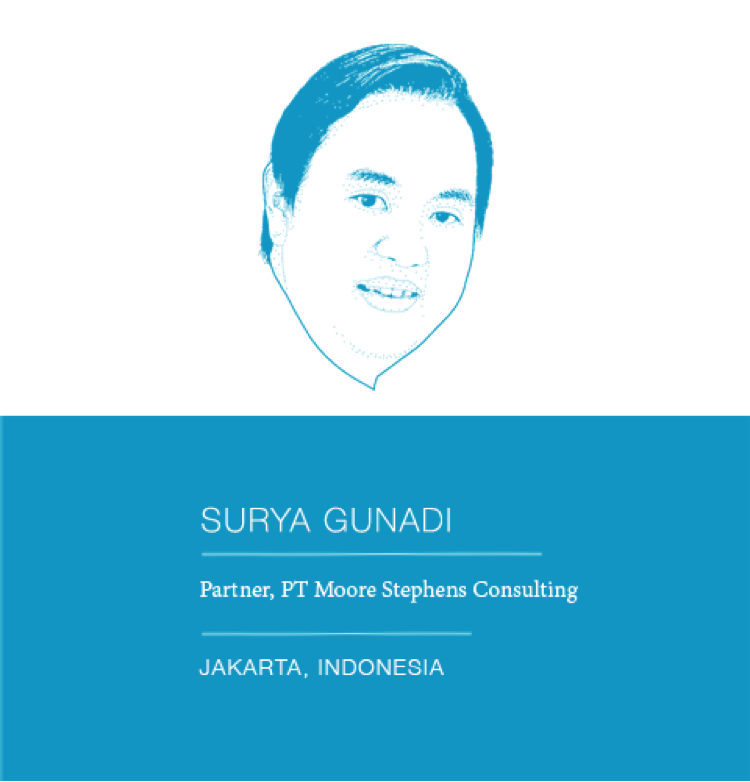
1. Recognize How Amazing it is that the Word Became Flesh.
Surya was on track to become a Buddhist monk. At Christmastime, we always remember that “the Word became flesh and dwelt among us.” This has special meaning for Surya. “I was eighteen years old and three months away from becoming a Buddhist monk,” says Surya. “I thought Buddha was just a man who died and people worshipped him, and Jesus was just a man and people worshipped him. So what’s the difference between them and me? Maybe someday I could become like them and someone will worship me.”

But the book pointed to John 1. “I had all the holy books at home,” explains Survya, “so I looked up John 1. I was shocked! I thought man could become God. But ‘the Word became flesh and made his dwelling among us.’ It’s not about man becoming God; God became man. I realized that Jesus is from the beginning and is God Himself, born as a man.” Merry Christmas!


2. Even in Tragedy, Follow God’s Pillar of Cloud and Fire.
“Two years ago, my wife and my son passed away,” says Surya. “I waited until I was 37 to get married on September 26, 2010; we were married five years and tried to have a baby through IVF (got 5 embryos in December 2013), but failed… But in September 2014, a pastor prophesied that my wife and my sister would become pregnant next year. And they did. God gave us double miracles in January 2015.”

Then, Surya’s wife delivered his son prematurely on July 16, 2015; she passed away from a ruptured liver two days later. Seventy days after that (September 25, 2015), the son for whom Surya had prayed passed away as well. Surya recounts, “I asked God, ‘What happened? Why did you take my wife and my son? What do you want from me, God?’ Then I got this rhema from God. I thought of myself as one of the Jewish people following the pillar of cloud and fire. Then, the pillar stopped, and stayed for a day, and then a week, and then a month. So I started to plant [figurative] trees, make more permanent dwellings, and make a life at the place where the pillar stopped. And then, the pillar started moving again. So, I had a choice. Do I stay with the life I thought I was going to have with my wife and my son? Or do I follow the pillar?” Following God’s pillar has led Surya to a fiancée; he will be remarried next year (January 2018).


3. Serve God in the Marketplace.
“Some people think you should leave your career and your job to follow God,” says Surya. “I thought I might become a pastor, but He showed me that my calling is to serve God in the marketplace. The marketplace has great potential. Through the marketplace I’ve been introduced to government leaders, military leaders, and business leaders. I get to share my testimony and I’ve seen people give their lives to Jesus,” says Surya.