


Rusty Rueff Wants to Stop Bad Hires

Today we share an article from one of our very own Podcast hosts, Rusty Rueff! It was originally published online by Recruiting Trends. Enjoy his thoughts below 🙂

— by Rusty Rueff

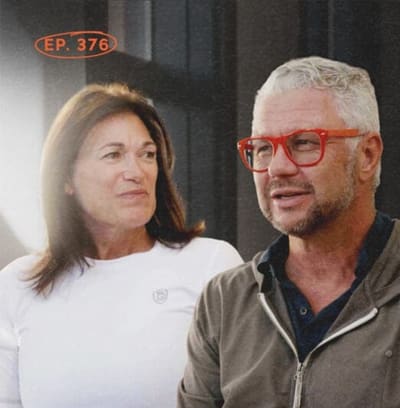
Rusty Rueff is concerned about hiring. Actually, he’s more than concerned, saying in an interview ahead of his keynote at the recently concluded Recruiting Trends and Talent Tech LIVE! conference that he feels “a real responsibility to eliminate the bad hire.” He defines these hires as candidates who look good initially but things go downhill shortly after they’re hired. Chances are, somewhere in the recruiting process were signs that went overlooked.

The Personal Costs

In conventional thinking, a bad or wrong hire has negative implications for the employer—and mostly, this means money lost. It’s about the cost to the organization, something that’s well quantified, averaging out to $17,000 per person. And while Rueff wants to solve this issue, and ensure that companies remain productive and growing, he looks at bad hires from another perspective. Most companies will recover from a hiring mistake, but on the other side, he says, “it’s the person that matters—they don’t always recover.”

Rueff explains that in today’s world, work is more than what we do, it’s who we are. So, when a person becomes a bad hire, the core of their identity gets taken away and their self-esteem takes a hit. Rueff theorizes that if a person is teetering already, being the wrong hire could be an irrecoverable moment in their life, where they lose confidence in themselves.

Bad hires don’t just impact the individual, of course. There are financial implications to consider, not to mention the partners and spouses who have to live with the person, plus kids faced with switching schools and moving away from friends. The effects ripple out and, as Rueff says, “marriages break up over bad hires.”

There’s also the sheer effort it takes for someone to get out of that negative space and back into positive-employment standing. Recruiting doesn’t necessarily account for wrong-fit scenarios, and job seekers know it. Rueff breaks down how this can play out, starting from, “Can you talk about that three-month gig you had?” Candidates will likely to go on the defense, worried that the recruiter will think they got fired for doing something wrong when, in fact, they didn’t. In reality, that previous position was the result of a poor decision, and this person continues to hurt because of it.

An Ethical Problem

Being the wrong hire changes the way people think about work and how they show up for their employer, which is why organizations need to revisit the role recruiting plays on a personal level.

“If we cut corners, we take shortcuts, we talk people into things they shouldn’t be talked into because we’re trying to fill the job, then it’s an ethical problem,” says Rueff. “It’s a moral problem, and I think we should think about it that way. I think we should be so serious about what we do that we shouldn’t hire somebody unless we’re sure that they could never be fired.”

After all, he concludes, “all things that we can do to elevate that as an issue, that as a commitment, part of our values, is good for the world. It’s good for the world. It will change our country; it will change our world if we didn’t have bad hires.” 

——

[Photo credit to Recruiting Trends]
Identify the Right Hire

— by Jon Kontz

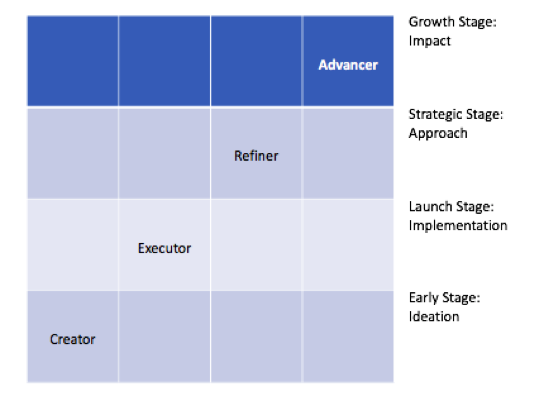
It is very hard to identify the right hires very early on. Here are three things I think about when evaluating candidates. There are minimum-viable success factors when making early hires. Two common factors between past experience and current position is a minimum. Three is important. Four is ideal when the stakes for a hire’s performance are high. The four factors we look at to see how well they will fit are;


1)    Industry Context; fintech, pharma or home services

2)    Team Size; small team, large team

3)    Role; finance, sales, marketing, product

4)    Stage; ideate, launch, scale, build/explore


The importance of momentum and the scarcity of resources makes switching contexts and roles a huge distraction for most new hires and the teams they are hired onto. For instance; the questions people learn to ask at a big company are very different than those at a small company.

The Team Dimensions Profile 2.0 linked here gives a helpful assessment to identify where your new hire will fit if you are expecting them to take on leadership;

•       Creator: Generates ideas

•       Advancer: Communicates ideas

•       Refiner: Challenges ideas

•       Executor: Implements ideas

•       Flexor: Steps in to fill the gaps


For leadership hires, consider both the hire’s ideal role and the stage that your company is in. This is one reason dynamic equity splits can be so helpful for early stage companies. Dynamic operational leadership through different stages helps to maintain a cohesive team and capture opportunity.

Interview lots of people. Bringing in the ‘right’ hire at the ‘wrong stage’ is very disillusioning. For further reading, I recommend Ray Dalio’s “Principles”, and Lawrence Miller’s “Barbarians To Bureaucrats.”

Podcast Episode 47 – The Science of Building and Managing Hall of Fame Teams – Phil Olsen, President of Know Your Strengths

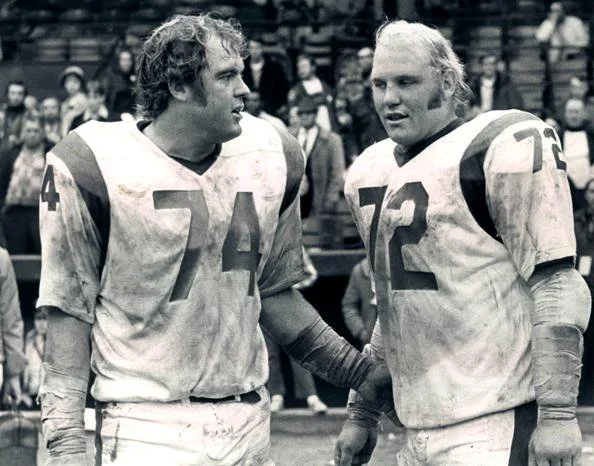
In this episode, Henry sits down with former NFL player and first round draft pick Phil Olsen, currently President of Know Your Strengths, a human resource consulting firm that guides clients and executive-level management through processes for talent discovery, training and people management. Phil helps us see how hiring people who are clones of ourselves leaves our organizations open for execution issues and why learning to appreciate and collaborate with those who are just wired differently from us actually builds a stronger organization. He takes a lot of queues from the sports arena and shares a great deal on his learnings from Coaches John Wooden of UCLA fame and Chuck Knox of the Buffalo Bills and L.A. Rams.

God’s treasure is people. Knowing how to be the best stewards of them is the fastest way of ensuring you give Him pleasure in how you do what you do within your organizations. Share with us some of the ways you are fulfilling the responsibility of stewarding people in a manner that gives Him glory in the comment section below.

We also have a very brief survey we’d love for you to take that will help us shape the direction and future of the FDE podcast. As always, we love taking your questions and hearing your comments. Feel free to submit your thoughts in general here.

Useful Links:

The Chuck Knox Development Process

Episode 47 – The Science of Building and Managing Hall of Fame Teams – Phil Olsen, President of Know Your Strengths

Subscribe on iTunes or Other

In this episode, Henry sits down with former NFL player and first round draft pick Phil Olsen, currently President of Know Your Strengths, a human resource consulting firm that guides clients and executive-level management through processes for talent discovery, training and people management. Phil helps us see how hiring people who are clones of ourselves leaves our organizations open for execution issues and why learning to appreciate and collaborate with those who are just wired differently from us actually builds a stronger organization. He takes a lot of queues from the sports arena and shares a great deal on his learnings from Coaches John Wooden of UCLA fame and Chuck Knox of the Buffalo Bills and L.A. Rams.

God’s treasure is people. Knowing how to be the best stewards of them is the fastest way of ensuring you give Him pleasure in how you do what you do within your organizations. Share with us some of the ways you are fulfilling the responsibility of stewarding people in a manner that gives Him glory in the comment section below.

We also have a very brief survey we’d love for you to take that will help us shape the direction and future of the FDE podcast. As always, we love taking your questions and hearing your comments. Feel free to submit your thoughts in general here.

Useful links:

The Chuck Knox Development Process

Faith & Co. Video Story: “The Top 1%”

This content was originally published here out of Seattle Pacific University’s Initiative called Faith & Co. This is the third video of many that we plan to share as their business documentaries are world class! Beyond videos, they also offer an open online course and a group study guide. Check it all out here.

I Have a Bean offers a chance at redemption and helps change attitudes about previously imprisoned people returning to society — all while making great coffee. The company is dedicated to roasting phenomenal coffee beans, procuring beans at the top 1% and winning numerous taste competitions. I Have a Bean is also committed to hiring individuals released from prison, whom founder Pete Leonard notes are often considered the bottom 1% of society.

Enjoy the short documentary below!

——

[Special thanks to Nathan Dumlao on Unsplash for the cover photo.]

The Work Rap

This content was originally published here by the RightNow Media (RNM).

HAPPY FRIDAY!

We wanted to end the week on a fun note with a parody music video. For those of you familiar with the movie Office Space’s famous video… this is a great cheesy take on it, haha.

From Bluefish TV, the creators of the viral sensation “The Parent Rap” (2.5 million views), comes the long awaited sequel all about the thrill of the 9 to 5! This rap is part of RNM’s video series on the significance of our work featuring insights from J.D. Greear. Visit here for more!

Enjoy the music video below 🙂