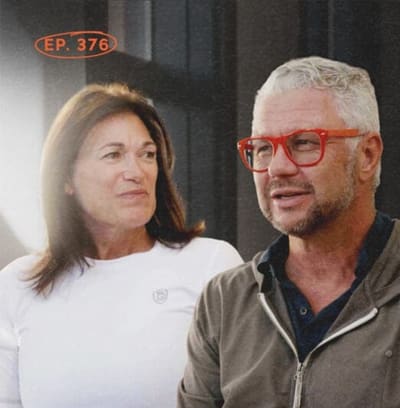
Today we’re connecting with Matt Bird, who is based in the United Kingdom. Matt is the author of several books, including Relationology, The Secrets of Story, and Freedom: How to Live Your Life for Jesus Free From Anxiety and Worry. Another one of his books, Transformation, takes a look at how God is connecting churches across communities, cities, and countries to bring about social, political, economic, cultural, and spiritual transformation. This book is the product of Matt’s work with businesses and churches in helping them both improve one another as they increase their impact, which is the subject of this episode.
In addition to writing books, Matt runs a company called Cinnamon International. What they’re doing is looking at how cities and churches can work together to increase their respective impact. In this episode, Matt breaks down what churches and businesses are good at and how they can help each other. All you have to do is listen to just the handful of stories he shared with us today to see that that venture has been extremely successful in both its growth and impact.
Matt’s work gives him a very unique perspective on how movements begin in a city, and then what it takes to see something grow beyond our immediate sphere of influence to catalyze much bigger change. When we spoke with him, we got a chance to hear how entrepreneurs and business leaders can work with their churches to drive this kind of change.
We were all encouraged to find out how Matt sees entrepreneurs using their skills of measuring impact to help churches become “bilingual.” What he meant was churches are so often great at telling stories about how their work changes lives, but when it comes to measuring impact they often lack the skills and vocabulary to do so. Matt has witnessed countless business leaders and entrepreneurs come in and help churches communicate the numbers and stories that show the effect they have in the community. It’s a great example of how the body of Christ works together!
And lastly, Matt provided exceptional insight into a profound model of social change. His approach to sharing secrets is countercultural, but, as he pointed out, there’s no reason for churches to continually reinvent the wheel in every city. Instead, he points out how useful it is to look to other organizations that are doing great things and how choosing to partner with them instead of creating similar initiatives to compete against them is often the most effective way to serve.
We hope you enjoy this episode! At the very least, we think Matt’s polished English accent will be enough to keep you engaged. But we also know that his experience and insight will be helpful for entrepreneurs and business leaders everywhere.
Useful Links:
Matt Bird Amazon Author Page
Matt Bird’s Personal Website
Cinnamon International
We also have a very brief survey we’d love for you to take that will help us shape the direction and future of the FDE podcast. As always, we love taking your questions and hearing your comments. Feel free to submit your thoughts in general here.
EPISODE TRANSCRIPT
*Some listeners have found it helpful to have a transcription of the podcast. Transcription is done by an AI software. While technology is an incredible tool to automate this process, there will be misspellings and typos that might accompany it. Please keep that in mind as you work through it. The FDI movement is a volunteer-led movement, and if you’d like to contribute by editing future transcripts, please email us.
Henry [00:03:00] Guys, welcome back. The podcast say we’ve got a special guest and a friend of mine, Matt Bird from Cinnamon International. Matt has written lots of great books that help folks to understand how to get involved in equipping and empowering in their local communities. And he’s written a book on really Scholls Gee, he’s a great speaker. He’s become a good friend. And we’ve got him on the podcast today because I wanted to be able to get a perspective from somebody who’s an expert about what does it look like for a business owner to be able to help catalyze a community in their church and in their broader community on having people to work together for greater social impact. One of the things we’d like to look at in terms of the marks of an entrepreneur, of course, are the leader transformed in the identity. And we look at the servant leader and we look at things like stewardship versus ownership and ministry in word. But a big part of that also is ministry indeed. And we get a chance to do that, of course, by having great programs for our employees and those that are around us, but also in the broader community. A Christ fine entrepreneur has a great opportunity to be a blessing to the community in which they live. Partnering with the local church. And that’s an expert in that. Matt started off his career in the U.K. and has since taken Cinnamon International overseas and most recently here to America. He’s joining this podcast from Los Angeles. So, Matt, it’s awesome to have you on the program. Thank you for agreeing to be on it. Tell us what in the world Cinnamon International is and how might it actually matter to an entrepreneur?
Matt [00:04:34] Hey, Henry, it’s so good to be with you and excited to tell you and your friends about Cinnamon International. We help churches catalyze churches to serve and transform their communities and cities. So often we just preach at people. But actually, in today’s age where much of our society is skeptical of where the church has lost credibility and lost ground, actually the most powerful apologetic for faith is actually faced in action. And so Simmons nationally is all about catalyzing the church to serve its community and service cities in powerful ways. And we’ve launched a similar network now in the United Kingdom, in the U.S. and South Africa and the Netherlands. And we’re now exploring what cinema looks like in Australia.
William [00:05:19] That’s amazing. I really appreciate that quick overview. I assume other than sermon bones or sermon raisin bagels, there’s something else you do to catalyze these actual movements. But I assume that’s the etymology story. You don’t have to get into that with us right now, but you use the word catalyze a few times. What are some of the things you do? There’s sentiment to catalyze these movements.
Matt [00:05:40] Yeah. I mean, the most powerful resource we have is always relationships. Yeah. For any business owner, business executive, you know, their ability to deliver value to the customer is based upon the relationships they build in the team, relationships with investors, their relationships with clients and suppliers and ultimately the end user. So for me, you know, the press and the air of doing business or doing social impact is about the quality of relationships. And I believe the quality of relationships that we build in life and business determines the impact that we have on the world around us. So for me, it’s all about relationships that people think often that business about money, it’s not about money. Actually, the true currency of business is relationships.
Henry [00:06:29] So to unpack that a little bit more for us. I think that at some level we all kind of innately understand that loving on our. Cloisonne our partners and vendors and customers. It’s really important to be able to to lead and get people on our side and be able to learn more about them and what makes them tick in a way that they feel really comfortable and being aligned with our own mission. But what are some mistakes that you see people making when they start being intentional about building relationships? What does that look like when it’s not done well?
Matt [00:07:00] What has not done well? Well, it looks like networking. I mean, I started my business relation, LG International, because I was asked to speak at a business conference about networking. I find networking grubby and disingenuous and just yucky. So I think when people do relationships badly, it feels like you’re being networked. Nobody likes to be networked. Nobody likes it. Well, very few people like networking. But people love to build authentic, long term, high trust relationships. And the less our relationship building feels like networking, the less it feels like networking. The more successful we will be. So in terms of you, what what does it look like when it’s bad? It’s networking. What did it look? It is viewed as genuine. It’s real. It’s authentic. It’s about serving the other and not just serving yourself.
William [00:07:52] OK. OK. I want you to go one layer deeper there, because that’s fascinating. The necessary networking and building deep relationships. But at the same time, you think about an entrepreneur on the journey. There’s only so little time you have. Your time is the precious commodity. Right. And there are people that you meet that, you know, kind of do fit in that networking bucket. And I think I’d love for you to change my perspective of that. Well, give me one layer deeper into the differences between those two and how you see it.
Matt [00:08:19] Yeah. You know, as a business person, you know, ultimately you have to create a sustainable entity. I mean, even with a nonprofit, you have to create sustainability. So sustainability requires great focus, great intention, great execution, and it requires that intentionality about relationships as well. So it’s not to say that you just fluff around spending time with anybody who wants to chat with you. It is actually very intentional about Jesus. He was very intentional about the relationships he built. You know, he loved to cycle through the 12 seventy two thousands, but he couldn’t have the same relationship with everybody he knew. And so if Jesus can’t have the same relationship with everybody he knew, then neither can we. So we have to learn to what I call differentiate our relationships. We have to be intentional and deliberate about understanding the purpose of the relationships we build and what role we play in those relationships. Because as business people, as nonprofit leaders, you have to build sustainability. And you can only do that by being very deliberate, very proactive and very intentional about the relationships you build. But at the same time is keeping something of yourself back for anybody and everybody. So always trying to play the Perito principle, you know, the 80/20 rule, 80 percent my time and energy and my resources into the people who I believe can join me in building what I’m building. But I try and keep something of myself back 20 percent myself back to give to other people for whom they’re not helping me build my thing, but I’m being generous with them. I’ve been generous to other people. I’m not only serving my own interests. So that’s the kind of way that I try and do it and try and encourage others to do it.
Rusty [00:10:01] Yeah, it makes a lot of sense. This is Rusty and Matt. Thank you for being generous today with us to share with us. And I’m looking forward to having your book, Relation Allergy. It’s 101 secrets, right? Is that what you got? 101 secrets? Yeah. Good morning, guys.
Matt [00:10:15] Yes. Available on Amazon.com in paperback or Kindle. That’s and lots of other books as well. I just published my tenth book. My most recent book is called Freedom House A Little Life for Jesus Free from Anxiety about Money, which is something we all restaurants and all work on. So I’m excited about that one.
Rusty [00:10:31] That’s great. Talk to us a little bit about the relationship between a business leader, entrepreneurs in this case, and the church. Because I know you do a lot of work with the church to help, I think, in your language around franchising and building metrics of churches being able to establish themselves in the communities. And I’ve always found with entrepreneurs, if any institution, whether it’s a church or a nonprofit or even another company, if they’re not responding in a way which feels like, hey, there’s a problem to be solved in a let’s go scale it and, you know, let’s put metrics around it. Let’s go make this happen. They withdraw almost like they’ve had an allergic reaction. And, you know, pastors aren’t always ready for that conversation. So how do we help entrepreneurs and business people engage with their pastors, have a relationship there that they can help them?
Matt [00:11:27] Yeah, I mean, pastor and entrepreneur relationships, when they are good, they can be really good at their worst. You know, the business guy or business girl feels like the past only wants their money. And the most they ever get asked to do is to give out to coffee on a Sunday and their business skills are latent and dormant. So the benefit of the church is work. And so I’m passionate about how we actually bring nonprofit leaders and for profit leaders together to empower the world to Gaza and Cinnamon International. Harnish is a lot of. Business approaches and skills for the benefit of the past and the benefit the church and that community. So, for example, we find absolutely brilliant. Church based community projects and we help franchise them. Because if one church has found a really good way to solve a social problem, why should another church have to reinvent the wheel? Why can’t we package up the solution and replicate it across multiple churches and in the UK? I think that what we’ve done, we’ve now developed a menu, a portfolio of over30 based community projects that we’ve franchised and replicated over three and a half thousand churches across the country through each church doesn’t have to reinvent the wheel, but they can pick a project from a menu. So that’s one way that I see entrepreneurial approaches and local churches and pastors actually collaborating and benefiting from each other to create scale and impact, which is ultimately what drives the entrepreneur. The other thing we’ve done is was actually taken the business practice of measuring because what you measure moves as they teach us. And it’s all about helping churches in cities work together to measure their impacts on the life of the city because churches communicate and story. They express the value to society in story. But actually, civic leaders, institutions don’t understand that. They understand numbers and metrics. So we help the churches become bilingual to tell their stories, to communicate their value in numbers as well as story. So here in the US and we’ve done this in 92 cities across the UK, but here in the US we’re now working with churches in cities to help them measure their social and economic impacts so they can communicate to civic leaders and institutions. The value of what the church brings to the life of the city and when the church starts measuring this stuff itself, becoming intentional about it, and they begin to move the dial over the next five years, cinema network US. There’s going to be supporting the Church of 50 cities across the United States to work collaboratively to measure their social and economic impact and build this interface with civic leaders and institutions. So again, it’s another business practice applied to the mission of God through his church to impact cities and communities.
William [00:14:22] That’s that’s amazing. You tell us maybe a few examples. So it’s only, you know, 30 to 50 in this kind of menu. Could you maybe take us into a few of those stories and walk us through the game about how they’ve been franchised?
Matt [00:14:34] Yeah. And I’d love to talk about a couple of the cities that we’ve worked in as well. And what’s happened there for a young friend of mine, Rachael. She doesn’t serve as a leader, but she’s an entrepreneur. She really is an amazing leader. And she became aware of the social issue of holiday hunger, the fact that in the UK, 1.4 million children go hungry in the holidays. And so she phoned three friends and three church. Will well-performing kids get free school dinners in term time? The government pays for their lunch, but when the schools are closed and the kitchen door closes, kids go hungry. So we call that holiday hunger. She became aware of holiday hunger and she found three friends and three churches that this holiday let’s make lunch for Cubans, otherwise go hungry. Cinnamon network. Mattawa At that point we said, Rachael, we love what you’re doing. Why can’t we give this model to lots of churches, join to work together? So we helped her. And in the first two years of her running that project, she replicated and make lunch in fifty six churches and they sent eleven and a half thousand children. So that would be one example of how we help apply business entrepreneurial practices to franchising and replicating best practice within the life of the church to benefit the community. Another one would be in the UK. We have a serious issue around isolation and mental health and we’ve found a church that was running an intervention in the community. There’s a safe place model of mental health support to sign out. They say this is a place where it’s okay to not be okay. So this church was running this project where people in the community knew they could go and hang out there. And if they were not feeling okay, that’s the place they could go and they would be safe and they’d be careful. And that’s after a brilliant model of early intervention, mental health support. And we met the church leader who started the project as a relatively small church. And in the first 12 months, we supported it to replicate that project in nine other churches. And now the end of the first year, she actually resigned as the pastor to focus on helping other churches take up this project to address mental health issues in the community. So in the UK, we found 30 models like that who have now seen replicated in three and a half thousand churches on the measurement side, helping churches and the city work together to measure their social and economic impact in one city where the church has done the research. They took it to the local government and the government just published the community strategic plan and the only place it mentioned the church. A section under the heading mitigating extremism and having seemed to face such an audit results, a measurement tool that government said will work with us to rewrite the community’s strategic plan to integrate the church throughout and another city where they run the government like, wow, we have no idea. The church was doing so much in our city. We would love to work with you. But there’s a problem. There were actually so many churches in the city. It would be impossible for us to work with you unless that is you think you could work together. So actually, the city government became a catalyst for the churches to get their act together and say, let’s work in unity. And now the city government and the city churches work together and they’ve identified six areas of social concern that they both share across the city. And they’ve got six work streams are working on together to address a wide range of social issues. These are sort of projects we see replicate. This is sort of the impact we see when entrepreneurs are involved in administration, the value of what the church does to city authorities.
Henry [00:18:03] What are the lessons that you’ve learned and been able apply from your time in co-hosting the TV show Top Gear? Thank you so much. Jeremy Clarkson It’s amazing, but more seriously, you did actually host a TV show in those kind of tank, but for social itineraries and one of the things that we want to make sure that we focus some amount of what we do here at Federov Nitrogen or is that this is a show for entrepreneurs of all types in its itineraries and business owners, and it’s for social entrepreneurs and church planners. And you hosted in the UK a shark tank, teto Joe focused on social media. Tell us about that and tell us about some of the successes, some of the best ones that you saw on the show.
Matt [00:18:49] Yeah, great. Well, we ran a public campaign and we say, guys, if you’ve got a brilliant project, you apply to present Shark Tank like you bank for non-profits. And we’ve got a process for picking five and we’d run with him by all our resourceful business friends. And each project would have the opportunity to pitch themselves to the audience. And then the audience would have an opportunity to grill and ask them questions, just like on the show. And at the end of the evening with palls, we pray and we’d invite people to pledge to give to one or more or all of the five projects it presented. And it was just electric. It was exciting. And people, of course, with such money. But there’s also pledge skills and expertise and strategic help. And actually, I did a review on all the beneficiaries at one stage has been over 50 projects that presented at these events. And I went back and asked them what was the most valuable thing that came out of pitching your projects at this event? And you know what? Not one of them said it was the money. They all said it was somebody they met, a relationship that started that actually helped shift their work from where they were to a whole nother level. The people joined the board. They helped write strategic plans. They sorted out agency issues. I mean, they just catapulted these projects forwards. And that’s what I love to see. You know, when business entrepreneurship meets church community impact and our impact goes through the roof.
Henry [00:20:25] If you’re an entrepreneur or it’s a business owner, let centers bind cash right now and you want to get more involved and relying on your community and working with the local church, how to get started. There are some things that you might do if you’re an Wilkesboro North China right now and you know that your business ganda place of blessing by employment. But you want to be maybe a lot more intentional about some of the other activities as some of the other opportunities in your town.
Matt [00:20:51] Yeah, I’d really encourage you to reach out to Cinnamon Network International. Cinnamon International dot com is the website. Talk to us. We would love one of our team to come and visit you. And maybe, maybe we could be the catalyst to help the churches in your city work more closely together to measure their impact and begin to build that interface with civic society.
[00:21:13] Or maybe you’re listening and your church is doing on an amazing project that you think could be scaled up. We’d love to talk to you, but one of the places I often start with with churches is only five questions and they will begin with the letter C.. So one is super community, one the most pressing needs in your community? No point in starting something your community doesn’t need. Second question is civic. What civic provision is being made and where is that provision most stretched in most strains? Thirdly, c church. What resources, assets and capabilities does your church have that can offer on a sustainable basis? A fourth is a business and commercial. What actually is the interest of commercial organizations in your community, in your city, in actually leaning into the community? And then the FSC is calling therefore. What is Jesus calling you to do as a church? The commercial outfit within that community and civic space in your city? What is he called me to do? And so that’s one of the processes that we also work with people through community, civic church, commercial and calling. What is Jesus calling you to do in the community? And I think that’s the most important question we need to ask.
William [00:22:24] That’s really good. That’s really good. So helpful to sort of walk through. And thank you for giving that our audience as energy centers, hopefully a lot of different people from pastors and social entrepreneurs to people involved in their church community. So I really appreciate that as we come towards our close here. One of the questions we really love to ask is try to figure out where God has you right now and where he’s taking you through scripture. And so I really wanted to ask, you know, what, maybe story or verse or something is coming alive, maybe in a different way over. It could be this morning, could be the last week, could be the last month or year. But where’s God taking you through his word these days? And could you let our audience know about that?
Matt [00:23:05] That’s a great question. Week after next, I’m preaching in Dallas and I’ve asked to preach on greed later in sort of seven part series of the Seven Deadly Sins. But I want to share that with you. Let’s talk to a lot of internal review press today.
William [00:23:19] But book for me, you get to give the classic guest speaker, Joe, get the beginning of, you know, that has been his big. And why did I get. I agreed.
Matt [00:23:27] And I think the pastor obviously didn’t want to do that. You know, the biggest challenge for me. And it’s the place that I always come back to that I always wrestle with is how much my trusting Jesus, you know, proverbs says, Trust in the Lord with all your heart. Rely not on your own. Understand about all your ways, acknowledge him and he will make your path straight. And it’s a lovely verse is so simple. But the distance between understanding and execution of that can be enormous. We can know it in our head. But we live in in our lives, with our future, the future, our relationships, our families, the future of our business, the future of our social impact. Are we truly, truly trusting everything? Can I live? Can I live? I can live on a daily basis, trusting Jesus. Everything. And all I’m doing. And some days I get that right. And some days I’m wriggling and wrestling all over the place. But for me, finding that place of trust puts me in a place of peace and centeredness in Christ that cannot be wavered regardless of what’s happening around me. And when you’re out there, as I am as an entrepreneur in the social space, a lot of the time I’m taking huge risks putting it all out there.
[00:24:56] And if God doesn’t turn up, I’m going to look awfully stupid, which I don’t mind if you put a lot of time. But unless George shows up in what I’m doing, it’s not going to work.
[00:25:08] And so trust for me is everything.
Rusty [00:25:12] And then and then group message there. Hey, man.
Henry [00:25:16] Thank you, brother. It was good to be a good go. Tell me tell us just in a minute or two what the new podcast is going to be about is going to be about the work of Cinnamon International.
Matt [00:25:26] Yeah, it’s called Talking Transformation. It’s a podcast focused on leaders. And my first interview is a guy who Paul Bartlett from Sydney, Australia. So I’m going to do this around the world. And I travel find great leaders involved in pioneering community impact. And this guy turned up to our podcast interview with a toy giraffe under his arm with a long neck. And I was like, what is this guy doing? And he told me how they run something called the giraffe awards for their community. And they find somebody in that community, not normally somebody in the church, somebody outside the church who stuck their neck out for other people and they give them the giraffe award.
[00:26:11] I think you have to take him with a giraffe. And I just thought that was just so great. So Paul is the first guest on us talking transformation, sort of an international podcaster.
Henry [00:26:23] Brother, great being with you. Thank you, friend you. Thank you for hanging with us and logistic challenges at the beginning. And we’re going without a rudder and a leader there for a little bit. But I think that guides both through you and grateful for your time.
Matt [00:26:35] Thank you, guys. Bye for now.
Henry [00:26:37] So I like Matt’s work because I think that it brings in the Atzmon oil business owner mindset into the work that the church is doing in the world. It’s interesting to see something that has been successful in the UK come out of the United States, and maybe I should think this way. Yes, I think it goes the other way. But there’s been some innovation in partnering with a local church over there. It’ll be really interesting to see how that works here in America. But I love the idea of our listeners being really intentional about going out there and loving on their local communities.
Rusty [00:27:09] Yeah, it actually does go the other way. Remember the founding fathers? They came here first and they were in Europe before we have it. We sent them the Beatles. Right. Exactly. That’s yeah, that’s right.
William [00:27:20] No bias here on this podcast.
Rusty [00:27:22] I’ll tell you, I’ll tell you a couple of things that really stood out to me. One is that entrepreneurs can work with their local churches. They can use their skills around measuring and bringing metrics to bear so that the church can actually and I think he said, become bilingual. That means both numbers and stories that they can speak with both of those, because we know the churches speak in stories, but they’re not always as literate with metrics and measures. And when we go in to our communities, if we as churches and faith and work leaders inside of our churches can actually bring metrics that measure economic and social impact in the community. Credibility goes up, right? Because it’s one thing to bring anecdotal stories and say, well, we know we did this, we did that, you know, we made this. But to bring metrics with us, that’s where we can gain credibility. And I wrote all that down because what he said is what you measure moves. And if we’re trying to move in our communities, we’ve got to have something that we’re measuring.
William [00:28:36] And I really love just the model right of replicating things, I feel like you see so many people trying to start so many things and you realize they’re all kind of doing some version of the same thing and just being able to grab that and move it and find enough people that aren’t holding it tightly that they’ll kind of give away their blueprint. It’s just amazing. I mean, that is how things happen. That is how things really move, in my opinion. I know our church here in San Francisco, we started Avid we thought was a brilliant move. We actually don’t have any nonprofits that have birthed out of the church. We just partner with local people that have been doing this for 30 or 40 years and send our congregants there. And now there’s always a reason. Sometimes it starts up the news. So it’s not a disparagement against that. But I thought the core principle was good was, you know, we we know a lot of people do great work here. We met him when we were planning the church. We don’t need to start five nonprofits out of here. Let’s just send our people to people that are already doing great things.
Henry [00:29:29] You know, we recently had Scout Weiss on our podcast and he talked about the work that’s been done in Cincinnati through a city like where a bunch of folks got together and said, let’s love on our community.
[00:29:38] I know that there are also issues that are done in Denver and I know Portland and also Nashville. I know that there’s something really powerful when the church can go into a government and say, how can we be a blessing? You know, Ed Sullivan so talked about this a bunch on the podcast interview we had with him as well. And if you can find out that there’s a homeless problem, maybe there’s 550 homeless people and you can go ahead and make a dent in that. If you find out that there are eight hundred kids in the foster child program and you can make a significant dent in that by measuring the outcomes of that equips our civic leaders to be able to partner with us better because they’re looking for ways to really move the needle in some of the different metrics that really matter to them. And I think that’s super important. That’s why we as business guys are wired. And I think that if we can bring that into the church, which can oftentimes be reluctant to measure outcomes, because a lot of times the outcomes that we measure or how many people came to us saving faith this Sunday, but we can also help them to think through what are some of the measurements, they’re outcome related goals that are impacting the larger community. They’re really important to our politicians. Then we can really have a great partnership there.
Rusty [00:30:48] Yeah, I was inspired by that. I think that any entrepreneur or business person who’s listening to this today, who’s maybe been reluctant to try to plug into their church, I think the resources that they provide to their organization would be a great resource.
[00:31:01] But we should feel encouraged after today to take that step, because one of the things that the church can do as a church can multiply and magnify efforts. Right. When a church gets rallied around anything, amazing things happen. And we know God shows up when God is sought around what that movement should be. And so I’m inspired. I’m inspired and encouraged and others should be, too.