Podcast Episode 107 – Pruning One Business to Grow Another with Lara Casey

If you’ve ever tried gardening before, you know that it is some hard work. You’ve got to plant, water, prune, get rid of weeds, watch for varmints sneaking in, and a whole host of other problems. It really is no joke. 

And today’s guest knows a lot about gardening and the value of hard work. Her name is Lara Casey and she’s the author of multiple books, including Make it Happen: Surrender Your Fear. Take the Leap, Live on Purpose, and Cultivate: A Grace-Filled Guide to Growing an Intentional Life

Her story of building and then leaving Southern Weddings Magazine is a testament to what can happen when you take a leap toward God. Lara is full of wisdom, pep, and one heck of an entrepreneurial story. If you want to learn more about putting in the work and taking big risks, you’ll want to hear what Lara had to share…

Useful Links:

A New Chapter

Lara Casey Website

Cultivate What Matters

Pruning to Grow

Episode 107 – Pruning One Business to Grow Another with Lara Casey

If you’ve ever tried gardening before, you know that it is some hard work. You’ve got to plant, water, prune, get rid of weeds, watch for varmints sneaking in, and a whole host of other problems. It really is no joke. 

And today’s guest knows a lot about gardening and the value of hard work. Her name is Lara Casey and she’s the author of multiple books, including Make it Happen: Surrender Your Fear. Take the Leap, Live on Purpose, and Cultivate: A Grace-Filled Guide to Growing an Intentional Life

Her story of building and then leaving Southern Weddings Magazine is a testament to what can happen when you take a leap toward God. Lara is full of wisdom, pep, and one heck of an entrepreneurial story. If you want to learn more about putting in the work and taking big risks, you’ll want to hear what Lara had to share…

Useful Links:

A New Chapter

Lara Casey Website

Cultivate What Matters

Pruning to Grow


Episode Transcript

*Some listeners have found it helpful to have a transcription of the podcast. Transcription is done by an AI software. While technology is an incredible tool to automate this process, there will be misspellings and typos that might accompany it. Please keep that in mind as you work through it. The FDE movement is a volunteer-led movement, and if you’d like to contribute by editing future transcripts, please email us.


Henry Kaestner: Welcome back to the Faith Driven Entrepreneur. Awesome to have you with us. We’re in Chapel Hill, North Carolina. One of my favorite places on the planet with Laura. Laura, thank you very much for joining the show today.

Lara Casey: Thank you. Thank you for the great support of Chapel Hill, North Carolina, too. He showed me earlier the Tar Heel belt that you’re wearing today. So I feel like I’m in the company of kindred spirits.

Henry Kaestner: Indeed you are. So we’re excited to hear all about your story. But first, tell our listeners in a bit about yourself. Yeah. Then just, you know, and tell us a little bit about the work you do today. But then we’re also going to spend a good amount of time, of course, talking about some of the pivots, some of the changes you’ve made over time, which is a message we think is super timely. But tell you tell us more. Who’s Laura?

Lara Casey: I am a mom to three. I, like many of us right now, have children at home. I have two four year olds, one through the gift of adoptions. They’re six months apart, their proverbial twins. And then I have an eight year old second grader. I’ve been married to my husband, Ari, for this will be 14 years for us now. And we have quite the story of God really changing his faith journey and my faith journey and us really learning what real grace means in that. And that informed all that I do right now in my work and informed all that I do through. And like you mentioned, I have another business that I recently let go of that we’ll talk about soon. But they confirmed what I did right now with my current company, Cultivate What Matters some the CEO of Cultivate What Matters. We are an online multi-media e-commerce platform where we sell essentially we sell paper. That’s the easiest way to say it. We sell products that help women live out what matters most and help them to uncover what matters to them and make an action plan and then do something about it. So we have our power shifts, intentional goal planner, Bible journals, various things to meet them in the stage of life where they are. But I say more than that. We do business as ministry. We are not an overt ministry. We’re reposting Bible versus online constantly. We really do business as ministry from the inside out. So that is the central focus of what I do on a day to day basis is helping us to walk that out and all that we do.

Henry Kaestner: So tell us about your faith journey and your husband Ari’s faith journey.

Lara Casey: My husband is Jewish, grew up in a reformed Jewish household. And when we met, it was at the height of the Iraq war. My husband was doing his training with the Navy. I was living in Pensacola, Florida at the time and I was a personal trainer back in the day. So he came into the gym and asked me for workout advice, or at least that’s what I thought he was asking me for. He had an interest in me as well. But we struck up a conversation in a relationship and we quickly fell for each other and did not know at the time how deep these faith routes that we each came from me, from a very strong Christian background, him from this reformed Jewish background, how those would later clash in our relationship. In the early parts of our marriage, we were like two ships passing in the night. And as you can imagine, in such a heightened time in our world as we find ourselves in right now with his deployment looming and he ended up being deployed with the Marines for a year in the first year of our marriage, actually, we went through a lot of heartache together. And when you go through any difficult thing in a marriage that can, of course, reveal where your foundation is, and for us, it was very shaky. So in a nutshell, we went through many years of being two ships passing in the night until we finally came to the point in our relationship after his deployment many years later where we both said, you know what, we’re both not going anywhere right now, we’re not leaving this relationship. So what are we going to do about it? And it was right around the time of our fifth anniversary issue of Southern Weddings magazine, which I had started. And God did something completely miraculous in that time. My husband had said to me multiple times over. I will never believe in Jesus. I will never have a faith in God. Just very point blank statements like that. And I’m making a very long story, very short. But in that time, God did get a hold of his heart. And the one thing. I wanted him to do to bridge the gap between us and that time of us realizing we’re not going anywhere, what are we going to do about it is to come to church with me. And that was a very scary thing, of course. And I remember going into the church building and praying, please don’t talk about Jesus, please. That’s right. Yeah. Huh. And of course, they did. And see in that old books they stay in the old book. Just just stay back there. Just talk about Moses for a little while. But they did. And as the gospel can be for so many of us. And I’m sure for all of us sitting around this proverbial table right now, at moments, it’s offensive and it can really get under our lives and under our skin. And I think what it did for him is it made him start to ask the question, what am I doing with my life, where my finding my happiness and my satisfaction as I am certainly not finding and threw myself into my work right now. So, again, long story short, he did end up coming to faith. And it was the impossible happening. I mean, I have chills just sharing this with you. I still can’t believe it happened. I hear him leading our church small group even this week.

And I just think to myself, God, you are the God of the impossible. Like, if you can make this man’s heart change and come to your feet, you can’t actually do anything. And it is with that lens that I have led our business and let the Lord lead me in our business. It is with that lens that at that point of our fifth anniversary issue, we really had a change in trajectory in our business where instead of just talking about weddings, which is what the magazine was about, we started to focus on building marriages that lasts longer than a wedding day ever could. And that was a big turning point for us. We started to be a mission centered business and that led us to where we are now.

Henry Kaestner: So tell us about the Southern Weddings magazine and the story behind that. And then ultimately the decision you made to pivot.

Lara Casey: Southern weddings was not something that I had on my life plan. I’m sure many of the things that we find ourselves sinking our teeth and do come to be. I have a degree in music and theater. I do not have a formal degree in publishing or business. And it’s even shocking for me to say those words out loud, considering how God has grown me in those things over these years. But I don’t. This was a very grassroots thing, too, in the middle of Ari’s deployment to start a magazine out of a sheer desire to bring beauty into a world that felt very broken. It was the time when you would see the names of fallen soldiers pass across the screen constantly. And I just thought my own little way, like here I am, you know, living in my parents house while my husband’s deployed and just wanting so much to do something in this world, even in the tiniest little way. Like even if we put the magazine in grocery stores and local churches, I just want to do something. And I needed a project to keep my minds off of bomb threats, you know? So we did. We just thought to ourselves, as perhaps many people are thinking right now in this time that has felt so bleak and so uncertain and so heavy. What do I have to lose? What if there’s another opportunity out there? What if this is maybe the perfect time to think about doing something different? And so I ask myself that question and I went for it with no experience. And of course, he made a ton of mistakes along the way. But Southern wedding snowballed. It snowballed to the point where we had a partnership with Southern living five years in and where it was a very profitable business with a growing team. And again, this is the very short version of the story. I could spend lengthy time telling you about all the hardship in between, but God did bless that, especially when we came to the point of starting to tell people’s love stories from a place of wanting to cultivate marriages. And this became a dream come true. Was the dream I never dreamed. And it was a dream come true to be able to create and to collaborate and to tell loved stories and to get to celebrate engagements and connections. There was a really beautiful thing to experience, and I still miss that many times. But there came a point where I sat down myself at my desk one day. I was a new mother. Our relationship, my marriage had recently changed and grown, and God had done the impossible in my marriage and had a lot of things on my plate. Everything from back then managing our Facebook page to budgets to, you know, photo shoots and creative direction. So many things, plus motherhood and being a wife. I sat down on my desk and I thought, this is a lot.

Can I just someone please tell me what to focus on because I cannot do it all and do it well. So I made myself a list of all the things and I started to sort through them one by one. What is the priority here? And that list ended up becoming what’s now the power sheet’s intentional goal planner. It’s a guided. Process to help you lay out all the things in your life and come to a place where you understand very clearly what matters and what doesn’t and where to spend your time and where not to spend it. And I had no idea when we first made that goal plainer that that was ever going to turn into a business. We made it. We used it ourselves. We used it. I was doing branding and business consulting with people at the time. And we used it with clients and they loved it. And we thought, well, if they love it and they’re getting a great benefit out of this, I wonder if a whole lot of other people would be blessed by this, too. And so as we tend to do as young business owners, we decided to just go for that, too. Let’s put it out there and see what happens and take the risk. And once again, that snowballed. And now here we are with hundreds of thousands of people who have now been touched by this process. But as you can imagine, you’re probably asking yourself right now, OK, wait a minute, you’ve got a wedding magazine and you’ve got this other growing company. Something’s got to give here. And your mom like, how are you doing it all? The answer is you don’t do it all.

And we came to a time of tension, like you said, a time of wrestling of, wow, this new business. Cultivate what matters is what we call it. It’s growing actually exponentially. We can’t even handle the growth right now. And southern weddings is also growing. Not only that, it’s so mission centered. We have to keep this going, right? Mike? It’s good. It’s really good. But we kept coming back to the conversation of, you know what where nine people were nine women on a small team. If we were to decide to grow both of these things in the way that they deserve, that would mean hiring a whole new team. That would mean getting backing from folks like you.

That would mean doing this completely differently and for me at the time. And this is where it comes down to how you make a decision about things like this. For me, at the time, I knew God was calling me to homeschool my daughter Grace and knew that very clearly. And I thought, if I’m going to grow both these things, I’m not going to be able to do that well. And even if on paper, it would seem that to growing businesses would be the thing that you would choose. But with the Lord’s power and his insight and his wisdom, he can help us see what the real priority is, even if it doesn’t make sense on paper. And so we started to have these difficult conversations of what if we were to I couldn’t say the words out loud at first. What if we were to let go of this really good thing that God is clearly blessed us with? What if we weren’t let go of southern weddings? And this is where I would charge everyone listening, and that is that sometimes you have to let yourself go there with the possibilities to even open up new possibilities beyond that without letting ourselves even say the words of what if we were to let that go, we would not have gotten to the second thought, which is what if there is potential to meet women in not just a marrying stage of life, but in every stage of life with cultivate what matters?

And that’s where we started to see the balances start to change. There is I can’t help but look outside of my garden and look at this peach tree that we’ve had for so many years. And I remember a couple years ago it was just heavy with early green fruit, so heavy that the branches were almost touching the ground. And I knew in my mind this peach tree cannot support 200 peaches. This thing is so small, I’m gonna have to cut off some of this fruit. And it stung. Even cutting off, I took my big clippers out. It stung to cut those big branches off the peach tree and just to look at them laying there on my asphalt driveway now.

But that is essentially what God is calling us to do in every aspect of our lives is to choose where is there going to be? And you take a risk, where is there going to be potentially more fruit? Would it be worth it to be pruned in this area? So we did make the difficult decision to close southern weddings.

And I say that was a little bit of hesitancy because right before we did that, I really felt God saying to us, you’re not closing this. You have completed the work I’ve given you to do. I just needed you to get up to this point for me to tell you that. So we felt a great piece about that. And I have chills and it still makes me teary eyed to talk about it. Here we are two years after that transition. But we did. And I will tell you that right now, where we are in our world and in our business, it is unmistakable why he had us do that.

We would never be in the place we are now. It’s people to minister, to women with such great need to families, to people everywhere who are asking themselves, being faced with the brevity of life, what matters in my life and how am I going to spend this time? We’re going to be here for a while. So what am I going to do with it? And I praise the Lord for that now. I praise the Lord for the pain of pruning that led us to right here.

Rusty Rueff: Lara, that’s a beautiful story. It’s so hard to prune. Yeah. Right. And so, you know, just it’s. You mentioned that. You know, we’re in this moment. As we record this, we’re a week away from Palm Sunday in the COVID 19 crisis. Most of us are in shelter in place across the country. We have entrepreneurs who are being forced to make very, very tough decisions, not only about their entire companies in some cases, but in probably all cases. Something’s got to go right. I got to let something go. In order to be able to survive. And so you heard God, you know, and God spoke to there. Take us down even deeper into that road. That would turn into advice for these entrepreneurs who are trying to figure out how do I hear what God’s telling me to prove.

Lara Casey: Yes. And I will agree with you there that we’re there right now, like we’re there in our business. Not just trying to prune, but trying to re-imagine what our business model looks like. Well, looking at the ingredients that we have on the table and what are we going to make with this right now? What does the new path that we’re going to take forward, not just for this acute season, but for the long haul? This is going to change us for the long haul. And so to take you back to that time of how do you discern how do you hear? Number one is I got a lot of counsel about this. Tons.

I listened and sometimes I didn’t like what I heard. I remember, you know, as you guys know, a part of the C 12 group and my C 12group has just been I have no words for how God has used them in my life. But I remember sitting around the table with them during this time and wrestling with these things and had this one conversation where one of the gentlemen, our group who is probably the one with the most revenue at his hands, he’s like, you are crazy. Like, how in the world are you not considering letting go of this? Looking at the revenue possibilities that you have with cultivate what matters. And and I heard that with my ears, but my heart was so deeply connected to my business and to the work we done with southern weddings.

That’s where, like you said, it gets painful. But no one is counsel, counsel, counsel and constantly asking people for wise guidance. Number two, and I know this sounds like an obvious answer, but it is always wrestling with it with the Lord. I can’t leave that out of the equation. For me, that was constantly reading scriptures about pruning. It was him bringing examples of pruning to my head and my heart all the time. I mean, sometimes God’s trying to get our attention. He’s not very subtle about it. And I would say that the next thing is to wait on things. We may feel like there is an urgent need to change and we may be very anxious to finally make a decision. I was anxious, but I’m so glad I did not make the decision until the day that we did, because a whole lot changed.

I was ready actually to announce to the world February of that year we had had our plan. And then I went to my C 12 group the week before and God completely changed the direction of that and we didn’t end up announcing it for six months beyond that point, we explored acquisition, we explored so many acquisition offers for this company and ultimately decided it wasn’t the right choice. We wanted to keep it the way that it was and hold on to it the way that it wasn’t. Keep the content integrity where it was. So I would not have come to that conclusion had I not gone through a little bit more wrestling. So I’m there now and that is to say move fast and break things like they say at Facebook, but also make sure that you are doing things in his timing and with a slowness that feels a little bit more painful than you’re comfortable with. But sometimes that pruning is not just about your business. It’s about growing your faith. And I will say that, too, that that time, even after I made the decision, was so hard financially for us. It was hard in our team. And yet it prepared me to lead well in a more deep way than I ever could.

Rusty Rueff: Right now, you said the word I was gonna go to next: team. So you hear God talk to you about it’s time to prune, it’s time to set this aside and entrepreneurs will hear that as they seek the Lord because the Lord will speak to them. Now is the time to translate that to team. What advice and guidance do you have in that front?

Lara Casey: In a transition like this when entertaining it for us, I think one thing we did very well was giving each team member who had invested a lot. I mean, I have team members that have been with me for a decade or more, and they had great investments in this company of heart and soul and story and creativity. And the one thing I think we did very well and I praise God for this is to let them grieve this as we explore it, to let them have as many opportunities as possible to share their feelings and their ideas. And I’m not sure about this. And to hear them on those things, to genuinely hear them, even if you think you have a decision in your mind to genuinely hear them and there is a purpose in that. Number one is you want to honor where people are. You want to honor your team. But number two, if you’re going to project yourself to the next spot, you have to have that trust bill and that foundation and you have to allow it really is grief that people are going to experience in a transition like that. Even if there’s something amazing on the other side of it. Right. No matter what changes, change. And so I think no one honoring our team was really important. Number two, once we got to the point of making that transition, I don’t think I realized how long and how lingering the effects of that transition would be. And they weren’t overt things. We had a ton of turnover after that of people who maybe didn’t want to move on to the next thing or thought they did, and then they didn’t or just weren’t right for the mission of this new business. And I think that in any transition like that, especially a good one, you got to give it time. And I wish I would have had that perspective to begin with. And I’m sure that you guys know this stuff better than I do. But when you’re marching off to a new thing, especially a great new thing, you still got to give that new things some time to take root. And I have to always remember back that Southern weddings took a lot of time to take root and to become this sweet magic sauce that it became. And we’re now starting to see that even earlier with Cultivate. But I think that knowledge has really helped us.

Henry Kaestner: So you mentioned something, I think that is also actionable and that is that your C12 group has been really formative. I think maybe half of our audience knows what C12 is and the concept of getting together with other faith driven peers running businesses. But once you speak a little bit more to C12 through your eyes and your group.

Lara Casey: Yes. Like I said, I don’t have a formal degree in business and I have learned so much more by association and by trial and error and asking a whole lot of dumb questions. In my early days of publishing, literally calling up a publishing house and saying, hey, I have some really basic questions for you. So I think that stepping into a group like C 12, where you’re sitting around the table with business owners of various levels, various industries, mostly people that are not at all in my sphere, I’m really one of the only people that’s in any type of digital content marketing. But I have learned so much from that interdisciplinary mix. And the thing that I have to pull into here, too, is that it’s great to learn alongside other business owners. It really is. It is even greater to learn alongside. Like you said, faith driven business owners that when you get together with other people in your opening the word together, that’s where the real power happens. So when we’re aligning our businesses in that way with the word, I think that’s where the real change starts to happen. So I’ve been really grateful for that and just really grateful for the genuine connections that I’ve made there to.

Rusty Rueff: Lara is just such a blessing to have you on the episode today, because we don’t get the chance to speak with as many women entrepreneurs as we would like. And we would like why we have you so have you impart your words of encouragement or even exhortation for women who might be listening right now? I’m not sure. I don’t know how I would balance at all. I don’t know if this is what I should do or not. This is a moment to hear from you. Yeah, we would love to have you bring that forward.

Lara Casey: I greatly appreciate that. And thank you for highlighting that for people, too. The first thing I would encourage us all with male or female is that it’s OK to grow slow. And there are very few times when we have something that is pressing on our heart, whether it is a business idea or a leadership path we want to take or really any creative pursuit or business pursuit where things happen overnight.

And I think that one thing that holds us as women back very often is thinking that we’re actually afraid of success. We’re definitely afraid of failure in a lot of ways. But what if we actually do succeed in whatever this idea is that God has placed on our hearts? And obviously, that comes with a lot of complicating factors. The reason why we’re afraid of success is because what responsibility will that call us to when we have children? Motherhood right now, we’ve got home school on our plates. We have the duties of being a wife, perhaps, or the Mary out of things. Our community we’re taking care of. We take care of a lot of things. So how in the world are we going to balance that? And I think that especially in our society right now, we are in a very much a microwaved type culture where we expect things to happen very quickly. We see a lot of great success stories of people making things happen really quickly. And that sounds real great. We pay a lot of money to some people to make that happen for us. Right? We buy courses, we buy books, all kinds of things. We want it. But actually, do we really want it? That’s where I have to just encourage us that I often ask myself that question when I start to feel overwhelmed by the idea of starting something new or leadership as a woman or going off on a new venture, I think to myself, how quickly do I really want this? And when you do that, it takes the fear out of it, because I always come to the conclusion, no, I don’t want this overnight. That would be terrible. I see what this other person is doing. That sounds great. I would love to have my book gross that much money or I’d love to have as much reaches that ministry does. But man, if I did that overnight, my whole life would be like upheaval. Right? And so I think that’s really encouraging because when you start to realize that good things do grow little by little by little over time and sometimes with some very big, bold steps along the way, you realize that God will equip you along the way. And I say that very confidently from my own journey.

None of what I did happened overnight and without a whole lot of missteps along the way and pruning and all the things we’ve talked about, it happened little by little by little. And I think people look at a journey like mine, which has a lot of twists and turns in it, too. Or various female entrepreneurs and entrepreneurs across the board. And we think to ourselves, man, I’d really like to do that. I want to do that. But I just want you to know all of this did not happen overnight. And it gives you a lot of freedom to know that you can just take the first step and then the next step and then the next step. And that fourth, fifth, sixth, 6000 step may lead you to somewhere that you never thought it was gonna lead you. And that’s where I am now. I never thought when I took that first step that I would be here or that I would feel as equipped as I do right now to do the work he’s given me to do.

Henry Kaestner: Laura, when you talk about the things we’ve already talked about, I go through my list. The fact that you are a physical trainer to a Marine. You started a business, you shut one down. You adopted a kid. I understand that you make 30 minute brownies in 20 minutes. You got all these things going on. What are some final words that you might leave with a Faith Driven Entrepreneur? And just to timestamped this again. We’re going through the stay at home shelter in place. It’s a time where every entrepreneur has to take this honest stock of where are we? What would be your final counsel that you’d give to a Faith Driven Entrepreneur who living through this time right now, please?

Lara Casey: Now is the time for leadership. Now is the time. And in saying that now is the time to double down on our faith. And that has been where my head and my heart has been this entire time since whatever day it was just a few weeks ago that this started to escalate. Is I have to be so deeply committed to my relationship with the Lord so that I’m at the ready. I mean, we really are in, in essence, a wartime and our businesses where we are faced with like we’ve talked about this invisible enemy that we don’t have any control over how this virus is going to change us, how the economy is going to change. But what can we do right where we are with what we have? Number one, it starts with letting ourselves. Be led by God in this time, and that I think more than any other time we’ve ever experienced in our history. This is the time when we have to double down on that.

And in that, the beautiful thing, the hope that I have in this and what I think we’ve seen in, you know, more distant history come out of times like this is beautiful. Creativity is businesses that pivot to truly serve people where they are. And for us, that’s where we are. I think the number one thing we can do right now is to listen and act quickly and take the long view. We have to be listening to our people. And, you know, like we’ve seen a lot lately. I’m getting newsletters in my inbox that are sales driven, newsletters that have no relevance to my life right now. I don’t trust that company anymore. That’s what’s happening to consumers right now. So if you’re not relevant, if you’re not willing to work really hard right now to meet your customers, consumers, whether it’s B2B or B, to see whatever it is, if you’re not willing to speak to them in a relevant way right now, that trust is going to get broken. And so I think the beautiful opportunity for us in this in listening is to be able to build trust and to truly serve people in a time when we’re essentially being handed needs to fill as believers.

There’s never been a time in our lives again where we’ve had a more heightened sense of the brevity of life of the unknown. People are wanting women especially. We’re seeing this even in our sales numbers. They are purchasing so many more faith centered products because they want a connection with God. They want to open their Bibles and find something that is certain right now. So right now, business owners listen, listen, listen, and then be willing to pivot on a dime. And I will ask all of us and myself I’m asking myself right now, what is the great opportunity for us in this? What is the great opportunity for us in this? And when I say great opportunity, I mean in the kingdom, what is the great opportunity in this for us to really serve people?

Rusty Rueff: Lara, you just gave us the recipe. The recipe which is to, you know, open God’s word and to listen to what he has to say to that point. Our other co-host is not here today, William. We always miss him because he has the best question of all of which is as we wrap up, you know, what’s God speaking to you about right now in his word or in any other way? What are you hearing from the Lord?

Lara Casey: I’m hearing a lot from him lately. And I think that times of trial can do that. They can open our ears. It is a beautiful gift in the midst of this truly awful time. But one section of scripture has come to mind very often. That’s lamentations three. I think we are all in a time of lament. We’re grieving the loss of life as we knew it. We’re grieving the loss of businesses as we knew it, of business models, as we knew them. And we’re having to re-imagine things. And in Lamentations, the writer starts to speak about how he’s lost faith and is feeling like he’s grinding gravel in his teeth and really at the bottom of the pit. I mean, you just imagine that visual coming to life and you’re grinding gravel in your mouth. That’s about what some of this feels like sometimes. Right. And I think especially for us as business leaders, as people of God, there’s a heavy weight on us in some ways. But how light that becomes when we do what the scripture says and Lamentations 322 325 says. But I call this to mind and therefore I have hope. The steadfast love of the Lord never ceases. His mercy has never come to an end. They are new every morning. Great is your faithfulness. So I just love how scripture allows us to lament. It allows us to grieve. It allows us to wrestle. And yet, when we are intentional about calling our hope to mind, we not only get that ourselves, but we get to give it back to other people.

Rusty Rueff: Amen, thank you for that. Now I’m going to have that in my head. Yeah. The song, He is new every morning. He is new every morning.

Henry Kaestner: Lara great being with you. Thank you for the time. Thank you for the breath of fresh air from the Tar Heel State. And I’m grateful for what God is doing through you. It’s great to get to know you better.

Lara Casey: Ditto. Thank you, all of you, for all that you’re doing for the kingdom. And thank you so much for allowing me the chance to share this hope.

5 Companies Radically Shaped by the Faith of Their Owners

This article was originally published here by CT Creative Studio

— by Christianity Today and C12 Group

A vocation of ministry isn’t just for churches and nonprofits.

In a business world that prioritizes productivity, speed, and profits, Christians may feel like Monday through Friday belongs to the world while Sunday belongs to God. But Scripture beckons Christians toward a more holistic lifestyle. “Whatever you do,” Paul says in 1 Corinthians, “do it all to the glory of God.”

We spoke to five Christian CEOs—including a co-CEO of the nationally renowned Camp Gladiator, Jeff Davidson—who want to do more than simply run another successful company. These leaders want their faith in Christ to be fully integrated into their business practices, influencing everything from production to employee relations, from hiring practices to strategic planning.

Jeff Davidson, Camp Gladiator

Overhauling benefits to create a company culture of abundance

 Image: Photo by Jeff Wilson | Jeff Davidson, Camp Gladiator

Image: Photo by Jeff Wilson | Jeff Davidson, Camp Gladiator

Jeff Davidson’s wedding day wasn’t just the beginning of his marriage union, it was the first step toward a professional partnership as well. While food was prepared and flowers were delivered, hours before their wedding, Ally snuck away to try out for American Gladiator and made it back just in time to walk down the aisle.

A few months later, Ally won the American Gladiator Grand Championship. With the winnings, Jeff and Ally started Camp Gladiator with a stack of cones and 40 people in a parking lot. Now, Camp Gladiator is one of the nation’s fastest-growing fitness company with over 1,000 trainers who have impacted over 300,000 lives.

It would have been easy for the Davidsons to coast, riding the wave of success. But instead they want to live generously in every way. “God has created a world where there’s enough to go around,” Jeff says. “He clothes the flowers and feeds the birds, and he’s going to take care of us. So, we have an abundance mentality because we have faith in God.” As he works to pass on this abundance mentality, addressing the needs of members and employees, Jeff is also keenly aware of businesses that eat away at the Camp Gladiator client base: “Our main competition is Netflix.”

While he studies the ways other fitness companies operate, Jeff believes he will lose the most members to couches and chips as people settle in for an evening of entertainment, holding on to the hope that they will exercise tomorrow. Recognizing this reality, Camp Gladiator designed their packages to be as accessible as possible. Their classes meet in low-pressure, community-based environments like parks, schools, and church parking lots. And Camp Gladiator keeps their rates flat, contracts clear, and class schedules updated online.

 Image: Photo Courtesy of Camp Gladiator | Ally Davidson, Camp Gladiator“

Image: Photo Courtesy of Camp Gladiator | Ally Davidson, Camp Gladiator“

Some boutique fitness companies are open to the first 20 people, or they’re for the people who are wealthy, or for the pretty people, or for the fit people” Jeff says. “But Camp Gladiator has always been for all fitness levels, for all people, for all backgrounds. We offer unlimited classes, unlimited workouts, and unlimited access to certified trainers, all for one low price. We believe there’s enough to go around, and we want people everywhere to be able to experience a life-changing fitness community and a location convenient to them. We want to be everywhere there are people.” The Davidsons didn’t want their staff to espouse the abundance mentality only to clients; they wanted them to experience it for themselves. Camp Gladiator employees enjoy unlimited time off, a relaxed, “fitness professional” dress code, and a free Camp Gladiator Membership. Since the company’s inception, many of their benefits have drastically changed as well. They’ve improved their maternity leave, instituted an adoption and foster care benefit, started a book club, and created a Spirit Squad that focuses on cultivating a positive company culture. A set of community guidelines provides instructions and processes that keep people safe, promote respect, and encourage the communication of problems and escalation of concerns when necessary.

Jeff and Ally also created CG Gives, a granting organization that supports nonprofits in the communities where Camp Gladiator hosts group workouts. And then there’s CG Victory, a summertime youth adventure camp with half-day and overnight programs that shares the gospel through sports with children of all athletic levels. To date they have seen more than 1,500 people respond to the gospel through CG Victory and CG Gives.

From benefits and charitable giving to group workout classes that cultivate community, the Davidsons guide people away from scarcity-minded elitism and toward abundance and generosity. Their ultimate goal for CG is to honor God and serve others.

Peter Demos, Demos’ Restaurants

Actively listening to serve employees and customers alike

Peter Demos grew up in the family restaurant but began his career as a lawyer. Yet, his heart quickly called him back to the hospitality industry and restaurants rich with memories and possibilities. After successfully running a restaurant for 12 years, he gave his life to Christ in his forties. This was the first act of listening to God that would allow Demos to become who he is now—not only a successful restaurateur of four Demos’ Restaurant and two PDK Southern Kitchen locations but also an author, speaker, and the man at the helm of a dozen entities.

 Image: Photo by Austin Lord | Peter Demos, Demos' Restaurant

Image: Photo by Austin Lord | Peter Demos, Demos’ Restaurant

Demos’s understanding of his mission and purpose was further clarified when a trusted mentor told him that he isn’t actually the managing director of the company—God is. Ever since then, Demos has viewed himself as a steward. He reads Scripture every day and fills a board at his office with prayer requests he believes God has asked him and his fellow Christian employees to pray for. And he listens to the needs that arise among his 500+ employees so that he can ask God for ways to help meet their needs.

Take transportation, for example. As gentrification has increased in the Nashville neighborhood surrounding Demos’ Restaurant, some employees had been forced to sell their cars in order to afford housing. Demos realized these employees were walking three to four miles home after long hours on their feet during their shifts at the restaurant. So he created a bike ministry to give away 20 bikes. Each bike was prayed over and given in the name of Jesus.

This careful listening and intentional response coupled with clarifying his motive is imperative to Demos. “I talk about the parable of the talents,” Demos says. “We can sit there and talk about all the nice, good stuff we do [like giving away bikes], but if we don’t share the gospel? Jesus calls that wicked. So we make sure that in our business, we try to [share the gospel] through boldness.”

Demos also listens to his employees through his company’s monthly review process in which employees can provide feedback and submit prayer requests. “Everything that’s written down, whether it’s a joke or a criticism, comes across my desk,” he says. “I carefully review and respond to the needs expressed by my employees.”

Listening and learning from one another finds its fullest expression in the way Demos positions his restaurants as a place where customers’ needs are served with excellence.

“We aren’t being judged compared to everybody else,” he says. “We’re being judged [by our customers] based off the last time [they] came in and ate with us. Every day needs to be an improvement.”

Demos communicates this point however and whenever he can: Other restaurants are not his competition. He is his own competition. And God is his managing director.

“I don’t care what the restaurant down the street is doing,” Demos continues. “If God wants my business to fail, I can’t do anything to stop him. If he’s done with our restaurant, I can’t thwart his plan. However, if he wants it to succeed, he doesn’t have to use me for that. I have to work really hard to be in alignment with what he wants or he’s going to find somebody else to come in and take over the business.”

It’s with this clear-eyed, determined focus that Demos works. He’s still listening—to his customers’ feedback about the menus or his decision to give away Bibles at his restaurants (if they’re upset, Demos says that’s just a chance to share the gospel), to his employees wearing out their shoes trudging to work, to that heart whisper that brought him back to the restaurant industry, and, above all, to his Managing Director.

Simon Lee, Buy On Purpose

Focusing on front-end processes to facilitate future success

Simon Lee always thought he’d grow up to run his father’s company. He even worked for his father for seven years. But then, he had a dream.

 Image: Photo by Jeff Wilson | Simon Lee, Buy On Purpose

Image: Photo by Jeff Wilson | Simon Lee, Buy On Purpose

Not a grand aspiration, but a literal dream. Lee had this dream every night for 30 days straight, and he thought he was going crazy. In the dream, a neon sign flashed the number 50. Over the course of three months, Lee prayed, fasted, and sought counsel about what this dream could possibly mean for his life. Eventually, he knew. God was calling him to start a company and to give away 50 percent of the profit. Lee’s father was hesitant for Lee to strike out on his own. Rather than leaving against his parents’ wishes, Lee asked them to pray for unity. Three months later, in December 2003, his father walked in with a check for $50,000 for Lee to start his own company.

This unusual start to a company and uncommon practice of giving away such a high margin of profits was just the beginning of the unique dynamics of Lee’s company, Buy On Purpose. When Lee and his employees talk to prospective clients, they don’t start by talking about the office supplies they provide or the free same-day delivery they offer. Rather, Lee says, “when we call our potential customer, we open up with a statement similar to, ‘Hey, we’re a Houston company, and we’re passionate about giving back our profits to local charities. We want to have a meeting with you to talk about it. We happen to sell office supplies, and maybe that’s something you need.’”

Lee says this approach is what separates Buy On Purpose from its competitors. “If we try to compete with price and what we sell, we’d be telling the same story as everyone else,” he says.

Buy On Purpose tells a different story in its interview process as well. Rather than informing candidates of the three or six steps to come, Lee lays out a ten-step process.

Lee learned a few of those steps from his C12 group (a peer advisory group for Christian CEOs and business owners), including a new way of talking to references for potential employees. Rather than speaking only to the standard three references who have likely been warned that a call is coming, Lee calls those references and asks them to provide three more people who can serve as secondary references.

“That one extra step has helped us tremendously in making better hiring decisions,” Lee says. “It’s saved us tons of money.”

Lee also focuses on front-end processes when it comes to customer satisfaction. Rather than waiting for complaints to arise, Buy On Purpose issues two Net Promoter Score (NPS) surveys per year. These surveys begin with a single question: “Would you refer our company to a friend of yours or another company?” Customers answer with a number between one and ten. Depending on how the respondents answer, they’re asked a few more questions, including inquiries into how Buy On Purpose can improve.

“The industry average NPS is 42,” Lee says. “Our score for Buy On Purpose is 88.”

Buy On Purpose doesn’t have an answering machine—you’ll always get a person when you call. They say “my pleasure” instead of “no problem” or “you’re welcome.” Their delivery drivers smile and interact with the customers they’re serving. Maybe it’s things like these that lead to that astronomical NPS rating. Maybe it’s the radical profit donations. Or maybe it’s some combination of it all—of trusting a dream, patiently awaiting a parents’ blessing, and faithful diligence on the front end, over and over again.

Sam Thevanayagam, Parts Life, Inc

Reframing obsolescence to make all things new

Sam Thevanayagam is as warm as he is professional, as Spirit-filled as he is strategic. As the CEO of Parts Life, Inc., he leads his company in providing supply chain and obsolescence solutions by sourcing replacement parts and acting as a strategic partner to numerous military branches and primarily aerospace, automotive, and construction equipment companies. Thevanayagam started his career in the automotive industry. But after 12 years, he lost his job. Due to a strict non-compete clause, Thevanayagam realized he would have to reinvent himself as a professional. He consulted for a while, and then in 2007, right at the beginning of the recession, he founded Parts Life. Money was tight. Thevanayagam struggled with worry as he tried to keep a roof over his family’s head and his five children, three of whom were regularly risking injuries as they played football, covered by health insurance.

 Image: Photo by Colin Lenton | Sam Thevanayagam, Parts Life, Inc.

Image: Photo by Colin Lenton | Sam Thevanayagam, Parts Life, Inc.

“It was a difficult time,” Thevanayagam says, “but the Lord actually used the things I learned while I was consulting to create sustenance for my family. In 2010, I got my first million-dollar purchase order from a customer. That really set up the company. Today, I’ve acquired two other companies and have about 110 employees.”

Thevanayagam doesn’t see the 2010 order as the moment when his luck changed. Rather, he sees it as one example of God’s ongoing faithfulness to him, a type of faithfulness that does not waiver in plenty or in want.

As Thevanayagam steers his company through recessions, spending cuts, and a volatile political climate, he keeps focused on what he believes God has called him to: re-creating.

“I have a unique ability and a unique process— it’s actually trademarked—that not only re-creates a technical data package but then re-creates a part. That [addresses] a huge issue for readiness in this country,” Thevanayagam says.

“I spoke to the Department of Defense in the Kingdom of Saudi Arabia recently, and the Lord told me to talk about a ‘strategic gap.’ So, I said that there’s a strategic gap between bringing on new assets to the forces and the ability of existing assets to be sustained until the new assets come on board.” Thevanayagam refers to this method as “obsolescence solved,” which he calls his catchphrase. “If you think about it,” he says, “what we’re doing is creating a technical data package then re-creating that part. And then if you think about God, that’s what he’s doing to us from a heart perspective.’”

This parallelism between his and God’s roles brings great significance to Thevanayagam’s work. He’s not only re-creating parts; he’s helping to re-create lives. Recently, for example, a Parts Life employee was able to end his incarceration early because Thevanayagam offered him a job. And Thevanayagam didn’t stop there; the Parts Life community is helping this employee not only reintegrate into the workplace but assimilate back into his role as a husband and father. The company is there for him—with support, accountability, and confidence that re-creation is real, that it can happen for a part needed by the US Army and in the hearts of people, too.

Whether he’s deciding new HR policies or negotiating government contracts, there’s one Bible story that moves Thevanayagam and influences how he runs his business. He says, “Part of my call to leadership and to the people I am around is, ‘Who are the Zacchaeuses in my life who are looking for transformation, and what are you willing to do with that?’”

“Jesus was right there ready to receive the willing Zacchaeus and transform his life. We don’t know if Zacchaeus lived happily ever after,” says Thevanayagam. “But what we do know is that Jesus took the time to give him an opportunity to be transformational.” So that’s what Thevanayagam will be doing, too, whether with his own career trajectory, or an outdated part that a client needs to be re-created, or with an employee who has failed a drug test. He’ll be there, waiting, working, and participating in making all things new.

Joan Maxwell, Regulator Marine

Pursuing holistic excellence to increase productivity

Joan Maxwell founded Regulator Marine with her husband, Owen, in 1988. Owen oversees design of their sportfishing boats; everything and everyone else reports to Joan. The first female chairperson of the National Marine Manufacturers Association, Maxwell knows what it feels like to be in uncharted waters. She was the first person in her family to finish college, and she’s often the only woman in the room when it comes to her professional life. When it comes to Joan’s C12 group, however, she says, “when we enter that room, we aren’t male or female. We are God’s business leaders learning to run his companies better.”

 Image: Photo by Alex Boerner | Joan Maxwell, Regulator Marine

Image: Photo by Alex Boerner | Joan Maxwell, Regulator Marine

It’s in this life-giving, nondiscriminatory context that Maxwell learned how to instill discipline and accountability throughout the company to execute her vision. In November 2019, she says, they began “a new chapter” in the way they run Regulator Marine: “to learn how to honor our commitments, hold productive meetings, and measure success,” Joan says. “We’re off on a new journey to grow God’s company in a way that brings glory to him and honors both the team he has given us and the wonderful customers who buy the boats we build.” For Joan, faith fuels a commitment to strategic execution and results.

Maxwell certainly notices the unique ways her gender intersects with her position. She said in a 2016 interview with Boating Industry that navigating her career has been difficult at times, “especially being not only a woman but also [the] wife of the person people perceive as ‘the owner.’” At this point, though, she’s simply not focused on the nuances of being a female CEO. “I had to learn to toughen up my skin and just do my job,” she told Boating Industry. “Today, I am so pleased to see the number of women in our industry—especially in the dealer networks.”

These luxury offerings are built in Edenton, North Carolina, where Regulator Marine’s commitment to quality serves employees and customers alike. “To ensure that our team stays focused on building very high-quality sport fishing boats,” Maxwell says, “it is important for them to work in the best environment possible. Regulator’s lamination facility has a state-of-the-art air handling unit to make conditions better for our team.”

In addition to caring for the Regulator Marine staff physically, Maxwell also wants to see their spiritual and emotional needs met. “We have a team called In His Service,” she explains. “This group of dedicated employees, led by our In His Service Coordinator Toni Gibbs, administers the company’s employee emergency assistance fund and its corporate giving. It also plans events for the rest of the factory.”

The Regulator Marine teams gather every morning to pray for one another, discuss the day’s work, and do some stretching. “Each day,” Maxwell says, “they review either the mission and vision or one of the core values. We aren’t perfect in our execution here, but we continue to stress that Regulator is different.” Several years ago, they decided to demonstrate their difference in part by placing Bibles in their boat owners’ kits. “I have been humbled by the owners who have come up to me at boat shows or sent emails thanking me for Regulator placing that Bible in the kit,” she says.

Whether ensuring quality working conditions, strategizing for next year’s fleet, attending an In His Service meeting, or pairing Bibles with boats, Maxwell captains Regulator Marine with grace and strength, come sunshine or storm.

At the beginning of the millennium, Christianity Today founder Billy Graham said, “I believe that one of the next great moves of God is going to be through the believers in the workplace.” CEOs are living that out with every replacement part, sportfishing boat, and office supply sold. From plates of spaghetti served around the table to morning fitness classes that leave people sweaty but empowered, services are more than tools to ensure customer loyalty. For these business owners, they’re acts of faith to serve a glorious God.

——

[ Image from original article ]

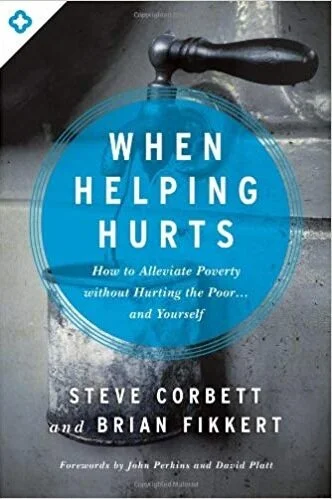
When Helping Hurts by Steve Corbett and Brian Fikkert

We continue to count down the Top 100 Books for Faith Driven Entrepreneurs with…

When Helping Hurts

by Steve Corbett and Brian Fikkert

With more than 225,000 copies sold, When Helping Hurts is a paradigm-forming contemporary classic on the subject of poverty alleviation and ministry to those in need. Emphasizing the poverty of both heart and society, this book exposes the need that every person has and how it can be filled. The reader is brought to understand that poverty is much more than simply a lack of financial or material resources and that it takes much more than donations and handouts to solve the problem of poverty.

While this book exposes past and current development efforts that churches have engaged in which unintentionally undermine the people they’re trying to help, its central point is to provide proven strategies that challenge Christians to help the poor empower themselves. Focusing on both North American and Majority World contexts, When Helping Hurts catalyzes the idea that sustainable change for people living in poverty comes not from the outside-in, but from the inside-out.

Click on the book cover to check out the Reviews and Purchase at Amazon

Click here to listen to our podcast episode with Brian!


The Company of Second Chances

This article was originally published here by The Wall Street Journal.

— by Ruth Simon


At Nehemiah Manufacturing, workers with a criminal past are the norm. But the company has learned that giving someone a job is just half the battle.  

CINCINNATI—While some companies try to attract and keep employees with yoga classes and lavish cafeterias, Nehemiah Manufacturing Co.’s perks include a social-service team and an attorney.

When two consumer-product veterans started Nehemiah a decade ago, their idea was to create more opportunities in a struggling part of Cincinnati. Increasingly, that meant hiring people who had a particularly hard time finding jobs: those with criminal backgrounds.

Click here to read the full article!

——

[ Photo by Markus Spiske on Unsplash ]

The Coronavirus Pandemic and BAM: Seven Things We Can Do

This article was originally published here by Business as Mission

— by Mats Tunehag

The effects of the coronavirus are disruptive beyond comprehension. The situation is changing by the hour. The consequences vary from difficult to dire for billions of people, and nobody knows what the timeline is for this crisis.

Media across the world updates us constantly on the negative effects on businesses and on people’s lives, so this short article will have a different focus: what can we do?

But first let’s note that throughout history the Church has a track record of serving others in the midst of major plagues and catastrophes.

The sociologist Rodney Stark has written (in The Rise of Christianity) that one reason the church overcame hostility and grew so rapidly within the Roman empire traces back to how Christians responded to pandemics of the day, which probably included bubonic plague and smallpox.  When infection spread, Romans fled their cities and towns; Christians stayed behind to nurse and feed not only their relatives but their pagan neighbors.” (Living in Plague Times – Phillip Yancy)

Why has the Church done this for centuries and why should we do it now? One fundamental reason is that we are to love God and our neighbors, and the two are connected. As Bishop Barron says: “Why are the two commandments so tightly linked? Because of who Jesus is. Christ is not simply a human being, and he is not simply God; rather, he is the God-man, the one in whose person divinity and humanity meet. Therefore, it is impossible to love him as God without loving the humanity that he has embraced. The greatest commandment is, therefore, an indirect Christology.” [1]

Many businesses are facing challenges with cashflow, lockdown, sales, having to let staff go, supply chain disruptions, bankruptcies, et cetera. So, what can we do now?

Let me suggest seven areas for action as it relates to BAM businesses and the global BAM community. We also invite you to add your suggestions. 

Please do share your thoughts and suggestions by responding to our Reader Survey

1. Pray

Seek God, listen to Him.

  • Pray for BAMers and BAM businesses.

  • Pray for divine wisdom and intervention.

  • Pray for creative thinking and innovative solutions.

  • Use St. Patrick’s BAM prayer, available in five languages.

  • Ask friends in business how you can pray for them!

  • Start or join online prayer groups for BAMers and businesses

Please check Larry Sharp’s helpful blog for some ideas on BAM-related prayer points.

How else can we pray for BAMers and BAM business?

2. Buy

We can help BAM businesses by engaging their services and buying their products:

  • Support local businesses by buying their products and services when possible.

  • Shop online.

  • Do your Christmas shopping now!

  • Buy gifts and give to neighbors, family and people in need.

How else can we help businesses, both local and far away?

3. Give

There is a need for financial, intellectual and social capital.

Loans:

Many businesses face issues with sales, revenue and cashflow, and could benefit from donations and loans. We need contingency funds.

Advice:

Can you help a business with advice, can you be a coach and mentor? You may be an experienced business person who has gone through tough times and learned important lessons.

Connections:

Can you help connect BAM business with people who can help? With sales? Marketing? Access to loans? To support peer groups?

Do you know of contingency funds? Mentors that are willing, qualified and available? Practical suggestions regarding helpful connections?

4. Remember the poor

The coronavirus crisis affects the poor more than most others. Millions of self-employed have lost their jobs and thus income. There are even more people who are day laborers who work in the informal economy, have no safety nets, and in a lockdown situation they may lose income day 1, and may be out of food soon after. And they have limited access to healthcare. [2]

The mantra many of us hear – “work from home, wash your hands frequently, and keep physical distance” – is not possible for millions of people.

Some headlines from India, Africa and Nepal:

India’s poorest ‘fear hunger may kill us before coronavirus’ 

In Africa, social distancing is a privilege few can afford

Daily wage workers are more worried about starving to death than Covid-19

One group in Thailand provides care packages of food to vulnerable women in the sex industry, who lost their daily earnings because of lockdown.

Another example is an African American woman in North Carolina, USA, who “feeds more than 100 families every day during the COVID-19 pandemic”, see report and video.

What other encouraging initiatives do you know of?

5. Learn

Many of us have to stay home, and this may open up opportunities to study. Being mindful that our present crisis is unique,  albeit not the first one, we should also study lessons learnt from previous significant world changing events. We should also – even now – try to draw lessons in and from the present crisis.

Let me give a few concrete suggestions:

  • In a time of “corona imposed monasticism”: let the Word of God come alive, learn from those who have gone before us, and enjoy God’s creation. See Bishop Barron’s reflections of these three things in this video.

  • Check the BAM Global Reports and study two foundational documents for the BAM Movement: The BAM Manifesto and the Wealth Creation Manifesto.

  • In a time with major dramatic changes we should remind ourselves about countries which have been transformed in our lifetime. It will give hope and inspiration during these stressful times. Learn from Israel, Singapore and Rwanda, which have succeeded against many odds. See four recommended books in footnote.[3]

I am just now reading a book which describes, analyses and compares 12 Church encyclicals from 1891 to 2009.[4] They deal with topics like business, wealth creation, profit, workers rights, private property, democracy, socialism, theology of work, human dignity, human rights, free markets, democratic capitalism – all from a Bible based perspective mindful of both historical roots and contexts.[5] One of the best is the John Paul II encyclical from 1991: Centesimus Annus.[6] I also warmly recommend the book!

What books, articles, videos, and podcasts do you recommend? What are you learning?

6. Regroup

This global crisis is bigger and more complex than we have ever experienced before in our generation. We are not just going through it and coming back to normal. Things are and will be changing. Thus, we need to review our business presuppositions, and possibly regroup even now. There are of course also new business opportunities during and after the crisis.

Praxis is “a creative engine for redemptive entrepreneurship, supporting founders, funders, and innovators motivated by their faith to renew culture and love their neighbors”. Three of Praxis’ leaders have written a thought-provoking essay dealing with these issues: “In this essay we will explain why we think that for most organizations — businesses, nonprofits, and even churches — this is a time to urgently redesign our work.” This is highly recommended reading!

What are you and your business and/or organization doing to regroup?

7. Don’t give up!

Why pursue BAM? God wants it, the world needs it and we are called to it! It is part of a greater godly plan which the Jews call tikkun olam: repairing the world.[7] We are living in the tension of the world that is and the world as it ought to be. Thus, we pray “may your Kingdom come, and may your will be done on earth as in heaven”.

Tikkun olam means co-creating with God, bridging the gap of the world which is to a world as it ought to be. During and after the corona crisis we are to repair and heal people’s lives and improve the world, bringing hope and healing to the world, also through business.

As the markets plunge due to the corona crisis, let us learn from Jeremiah: “The prospects were not good. Actually really bad, even disastrous. The city was under siege, and everything pointed towards a defeat. People would be assaulted, hurt and killed; houses burnt down and the remaining citizens of Jerusalem would be deported to a foreign land. In this doomsday context the prophet Jeremiah was told by God to make an investment – in the doomed city!

Sounds like bad advice, maybe like investing during the corona crisis. But God showed that the marketplace will be restored again one day, and God was engaged to that end, and He still is. See my earlier blog God Restores the Market Place.

As we pursue BAM and tikkun olam, we mustn’t lose hope or give up as we are facing tough times. Emmanuel – God is with us.

For more information on COVID-19, please see our page highlighting some of the best resources out there for Faith Driven Entrepreneurs in this season.


Footnotes

1. Bishop Barron’s reflection on today’s gospel reading from Mark 12:28 – 34, on March 20, 2020. 

2. These are very vulnerable people who in some cases also are badly treated when they are just trying to survive these dire circumstances, see for example this report.

3. Israel is an example of a small nation with limited natural resources and with hostile neighbors, which has been transformed to a prosperous world-leading innovator. Singapore was poor and became independent in 1965. It looked at Israel as a model. Today it is another world-leading country; amazingly well functioning, green, safe, clean, and prosperous. Rwanda went from a genocide and devastated country in 1994, to become a beacon in many ways in sub-Saharan Africa. It gleaned on Israel and Singapore.

* Start-up Nation: The Story of Israel’s Economic Miracle, by Dan Senor &Saul Singer

* From Third World to First: The Singapore Story – 1965-2000, by Lee Kuan Yew

* Rwanda, Inc.: How a Devastated Nation Became an Economic Model for the Developing World, by Patricia Crisafulli and Andrea Redmond

* Beating the Odds Together: 50 Years of Singapore-Israel Ties, by Mattia Tomba. 2019

4. Papal Economics: The Catholic Church on democratic Capitalism, by Maciej Zieba. 2013

5. The world has gone through major changes in the last 150 years, sometimes through major wars and political upheavals. The industrialization, unbridled capitalism, the growth of dictatorial communism, the end of the cold war, and the greatest lift out of poverty in the history of mankind – which has happened through business. Significant Christian thinking has gone into analyzing these developments from Biblical and church related perspectives.

6. The context is the upheaval of the cold war, the collapse of communism, and a cataclysmic change for hundreds of millions of people. Read Encyclical here.

7. Learn more about the concept, and how Israel applies it. I also strongly recommend a lecture by Rabbi Sacks: To heal a fractured world.

——

[ Picture taken from original post ]