




Podcast episode
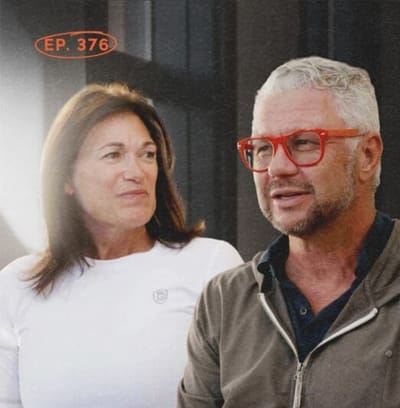
Episode 320: Building a Life of 100X Impact with Lloyd Reeb

TRANSCRIPT
Justin Forman [00:00:06] Welcome back to the Faith Driven Entrepreneur podcast. What a gift it is to be with you guys again another January to kickstart another new year. We are thrilled to hear what God has in front of you and the venture that He has you the place in the season that he has un as well as the ways that we get to serve. And so we’re excited about some of the new things that are in store, both with the podcast the Ministry of Faith Driven. Solving the World’s Greatest Problems feature in students and initiative for the next generation of entrepreneurs. There is so, so much in store and so it is a gift to set off this new year with you guys in the house. With us today is a friend, a mentor, Lloyd Reeb, that has been with us both in this journey with half time, but somebody that has spoken into so much of this faith and work conversation for many, many years. Welcome to the podcast.
Lloyd Reeb [00:00:57] Boy Hey Justin, So great to spend some time together.
Justin Forman [00:01:00] It is great to spend time together. What you guys don’t know is this is a fun chance for me to flip the script where I get to ask a little bit more of the questions because so often times I feel like I’m on the other end of it and it’s a delight to do that. But grateful for the advice, the counsel, the coaching that Lloyd offers just along the journey. But it’s fun to flip the script and to get to share a little bit more about your story and just kind of what brings you to this point and the Faith Driven Entrepreneur audience. So to start us off there a little bit, Lloyd, maybe you could tell us a little bit about your journey, your story and how you connect.
Lloyd Reeb [00:01:35] Yeah. You know, I’ve always loved real estate. Justin, I bought my first piece of land when I was 14. My dad was driving us back from the beach, and he said, You know, your kids are probably not going to be able to afford land down at the beach. Prices are going crazy. And just the way I’m wired up, I thought to myself, well, why sit back and wait for prices to go up?
And so the next day I said, okay, dad, I going to save money and, you know, mowing lawns and shoveling snow and would you take me back down to the beach? I’d like to try to buy a piece of land. And he said, you know, would you just be normal? Would you go out and play football? And but this entrepreneurial bug was just in me. And sure enough, he took me down to the beach. I bought five acres of land and he charged me interest. I put some of the money up and charged me interest, but when I walked out onto that piece of land, something inside me just exploded. Justin I can still feel it today. This incredible sense of possibility of what you could build with just some creativity and some initiative and some hard work and grit.
So I kept that. I sold it, got a great education in Montreal at a grade school and started working at TD Bank, got married to Linda 43 years ago. And I realized in the first months working at the bank that I’m an entrepreneur. I am dying inside this big organization. And so I bought 18 acres and we started our first subdivision. And from there I leveraged that money and built retirement communities with a business partner that we still own some of today.
And along the way, I realized this is just in me. I am an entrepreneur. I love seeing opportunities and I love creating sustainable organizations that will tackle those. And then over time, when the Lord blessed our business, I realized, wow, you can build enterprises that have sustainability factor because they have some revenue but are making a lasting impact in this world, either compassionately or in terms of advancing the gospel in some way. So that has been my journey into entrepreneurship. I think from literally age 14 to this very moment, really looking for opportunities where we can build enterprises that advance God’s kingdom.
Justin Forman [00:04:00] You know, Lloyd, one of the things I loved most when you talked about the story of real estate, you talk about building. You talk about the journey of what you’ve been on. You talk about the success. But one of the things I loved when you talked about with you and lenders when there was a certain point of building. That sometimes building things that it adds to the next build, the next project. But there was a point along the way where he said building actually creates freedom. Can you talk us through that journey of where you guys came to as a couple that said, actually there’s a building point where it gives us a chance to focus on some of the other things we want to do?
Lloyd Reeb [00:04:34] Yeah. You know, I sat down when we started developing independent care facilities for seniors, and I asked myself the question, to what end? Like, why are we doing this? Is it just to pay for our family’s expenses? And if we’re successful, what are we trying to accomplish?
And so I wrote out a five year plan in 1987, and I decided that I wanted to create freedom with our buildings, passive income, so that I could explore with maybe a third of my time what the Lord could use with a recovering real estate developer. Maybe it’s just grow more buildings. I mean, we’re in the seniors housing business. We get to take care of people’s lives in very stressful circumstances. We get to take care of lots of grandmas and grandpa and bring love and compassion into very difficult circumstances. So there’s nothing that’s insignificant about taking care of people’s grandpa and grandmas.
And yet I thought, I’m going to have to have some freedom in order to decide what my core calling is. So I wrote out this five year plan, typed it up in a typewriter, put in my drawer and kept checking it once in a while. And along the way, I could see God accomplishing it. One building after another was contributing to our passive income, and it was soon going to be that it would fund our family. Our kids were eight, six and three. I was in my early 30s, so I started reading Operation World Handbook. It’s a guide to pray for every country in the world. Tells you all about each country.
And at the back, I stumbled on a list of 40 different ministry, nonprofits, ministries like World Vision, Focus on the Family, Compassion International. And I thought, well, maybe I should just start by offering my time. So I sent my resume to 40 different ministries. I said, Here’s my background, here’s my resume. My time is free. How can you use me? And I got 39 rejection letters just in, and I still have them in a file over there. In fact, I remember I was doing something with Richard Stearns when he was running World Vision, and I brought the original letter that his h.R. Department sent me saying that they couldn’t use my time for free. 20 years before they said you could have had 20 years of my time for free.
But that was a wake up call for me to realize that there’s no one making a market between talent and business and professional leaders and some of the deepest needs in the world. But along the way, I came home one day and I said to Linda, You know, I’ve been running the numbers and I think our buildings will fund our family. Now, if we live the way we are for live simply, we can do whatever God has for us next. And that was interesting because once you have some freedom. Whether you like it or not, you got to decide how you invest your time.
Now, if you go back to just kind of doing your normal thing, which could be wonderful, you’re doing it on purpose. If you decide to do something else, you’re doing that on purpose. So once you have freedom, you’re forced into a situation where you have to make eye contact with the Lord. Get your unique assignment and go do it. And it’s probably a blend or a portfolio of things, some marketplace things, some maybe non-profits type stuff. But freedom is such an important piece to be able to really push the pause button and look up and ask the Lord, What is my Ephesians 210 calling those works prepared in advance for me to do?
Justin Forman [00:08:02] Why is it you think that more people don’t pause and take advantage of that freedom? Why is it that they pour right back into the thing of what they’re doing that they’re afraid of the pause, the for the quiet.
Lloyd Reeb [00:08:14] Well, for some, I think it’s just the norm in our culture that as your income goes up, your lifestyle goes up. And when your lifestyle goes up, you need to stay on the treadmill and keep generating income. And then you start comparing yourself with other people and you realize, wow, that guy’s got more than me. And so for some people, not everybody, it’s a creep. It’s a slow creep. For some others, it’s just a lack of exposure for how much joy they would have if they were willing to just let go of what they’re holding tightly to and see what adventures God might have for them.
And then a third reason often is a lack of process. They’re not really sure how you stop and deconstruct your life and then put it back into a cohesive plan. And this is one of the things that you guys are working on at factories and movement. Is adding a component to the journey that enables someone to work among peers with a proven process to take life apart and to look under each rock and then put it back together and keep the parts that really are high value and that are contributing to your calling and abandoned some things that are low value that are really just standing in the way of the life Garden vision for you.
Justin Forman [00:09:34] Indeed it is. To echo what you were saying, Lloyd, it starts sometimes with content. There’s some conversation that gets provoked from something you’ve seen or something you’ve read or something you watched. But we know that you don’t watch a video go through a couple of weeks of a course and then suddenly flip everything upside down in the beautiful paradigm and then stick with it. And so I think what you’re speaking to is that deep need of coaching to have that framework so that you can start out with a clear vision, but also keep with it and not just burn out after a couple of years. You know, one of the things I’d love to hear you break down is this idea of coaching. It’s a buzzword that can mean a lot of things. But as parents, we’re kind of going through this phase with our kids where it’s like in the early stages where the cop then we move into a stage where this coach and then suddenly and then later in life we become this counselor that people turn to whenever they need us, but not necessarily maybe at our time in choosing. How would you describe what coaching is? How would you break that down for our audience?
Lloyd Reeb [00:10:34] Well, you know, the fastest swimmer in the world still has a coach, right? And I remember when I had Bob Buescher, who was alive, and he’s the author of Half Time and created lots of different social enterprises that are still making an impact today, long after he’s gone. I noticed that he had a mentor, Peter Drucker. He met with him every quarter and he recorded their conversations. And here he was in his early 60s and Drucker was in his 90s. And I realized that the most talented leaders in the world need someone looking into their life.
And a coach provides a wide array of things. Sometimes it’s mentoring where they’re sharing their life story alongside you and you’re absorbing things. I don’t know what part of me is me and what part of me is Bob you’ve heard after 22 years of that kind of mentoring. Other times he was just simply asking questions. And that’s a big characteristic of coaching is asking open ended questions. But they’re thoughtful questions, you know, to curate a good question question and to ask the right question at the right time takes skill, and yet it brings a lot of clarity.
There are some times that the coaching is discipling. If you’ve been following the Lord for a long time, I came to know the Lord at seven and I’m 63 today and I’ve made lots of mistakes along the way. Sometimes what I’m really doing is discipline. I’m taking the truth of the Bible and helping someone learn how to apply it in their own life. There’s sometimes it’s counseling where you’re asking a question that’s prodding someone to get some healing from the past.
And so a good coach comes alongside you with no agenda other than to help you get clear, get free and get going in alignment with God’s call in your life. But they’ve been trained and equipped and they have the personality to know when to ask a question, when to share a story, when to give you encouragement, when to make an introduction for you, and when to just be quiet and listen. I spend probably 80% of my time listening.
Well, you know, mentoring, I believe, is giving someone the opportunity to work alongside you. And just look deep into your life, look under the hood and see how you’re processing life and to learn from what the Spirit of God has taught you and what others have taught you along the way. And a good mentor takes time to be involved in your life and what they want to know about your spouse. If you’re married, they want to know about your kids. They want to know how you treat your puppy at home. They want to know, like when you guys walked into my home not long ago. That’s a big part of our journey together is just being here, sitting by the fire, talking to Linda, seeing how things work and so much.
I mean, when you think about read the stories of Jesus throughout the Bible, he was walking alongside with guys and just letting them look into his world. The good in his case. But in my case, they get to see good and some things that aren’t so admirable. I was with a younger guy that I’m mentoring on the weekend and we’re talking about learning. And I was saying that two of our grandkids were over here. I take them on Thursday afternoons and we go do these adventures. And I said, So, girls, we’re coming to the end of your fall. Tell me, what are some of the things you’ve been learning?
And I said, Well, you know, it’s good to be learning all the way through life. Grandpa is learning. And they said, Well, what do you mean, grandpa? I said, Yeah, I’ve learned I want to be kinder when you hang out with me. And I’m 83 and not 63. I hope that Grandpa is Kinder and Parker, who’s four, she said, Yeah, because sometimes you’re not kind. Grandpa, I don’t like what Honey gave me. And she held her little chin like this. And she said, yes. Sometimes you say, Look at me, young lady.
And I said, Yeah, that’s kind of trying to teach you obedient and teach you to focus on Grandpa tells you to do something. That’s a mentoring story right there, because there’s so much baked into that that’s not coaching. That’s like, how do you come alongside a seven year old and a four year old as a pure learner without abdicating leadership and open their hearts up and then have these teachable moments? Right. So that’s mentoring. That’s what I was doing with him as I was showing him inside my life. How do you decide to a 17 four year old by sharing something that you could say was a little awkward when she said, because sometimes you’re not kind, grab it.
Justin Forman [00:15:05] When I think about coaching and I think about the framework of timing, like for me, growing up in a Christian home and I talked a little bit about this recently is I believed in the father, the son, and then this retired officer that didn’t speak very often, but yet what I’ve had this great delight and joy of the last ten years is seeing God work and speak in the little things in those moments. What is that like for you as a coach? Doing so much of what you’re doing is the timing of the conversations. How are you led by the Spirit seeking God in those moments to know what’s the right timing to ask that tough question?
Lloyd Reeb [00:15:38] Yeah, well, that of course, just as a journey, right. And it’s a romance. It’s a dance of listening to the spirit of God. In fact, this year, my passwords are all a derivative of here, the spirit of God. Every password that I type in, with a few exceptions that are legacy passwords, I change the password every year around a big area of growth where I’m trying to grow. And that’s a that’s an area.
Now, one way is I got a note from someone today saying thank you for the coaching lunch we had last Thursday. And it was a breakthrough moment for me because and then they told me and so I reverse engineer I see how the Spirit of God prompted me. And then I learn from that. But the next time I wish that 20 years ago, when I was trying to learn to hear the Spirit of God, I didn’t have some mysterious idea in mind of what that was like. But I would just be willing to try and start and then look for those clues along the way. I see how it worked. There’s an irrefutable time where I obviously was prompted by the Spirit of God because I would have never come up with that. Now I can see the results. So sometimes you have to wait a little bit and look and keep a record of where the Spirit of God led you and the impact it had, and then use that as you are experiencing a conversation in the future.
And one thing that my mentor taught me was to keep a book of days. And so just over here, I have 13 binders that are spiral bound. $3 books from CVS Pharmacy, and they start out January 1st as a completely blank book. And then I look for an artifact every day of where the Spirit of God used me to bless someone’s life. And in the last two weeks of December, I would get all those out of a file over there and create the book for 2024. And it’s not a book of look at Lloyd go. It’s a book of look at God go. And I’m just artifact. I’m taking a time to really say thank you and put it in the book with a glue stick or a staple and witness how he spoke through me.
And so it’s little by little. It’s like, how do you know when my wife Linda’s like, she needs a new car? Her car broke down yesterday, and I was disappointed that I didn’t get ahead of the curve. You know, it’s not really old, 7 or 8 years old, but so at lunch today, I was asking her, what do you think would be your favorite car? And then listening to her, I realized she’s telling me what she thinks I want her to buy. Now, how did I learn that through 43 years of listening? And I said, Honey, are you saying that because, you know, I think that’s a cool concern. I mean, she really wants like a forester. You know, it’s not very cool. And you learn by listening. Yeah, right. It’s the same with the spirit of grub. Yeah.
Justin Forman [00:18:49] Well, Linda and my six year old can go car shopping together, and that could be a fun excerpt for the Faith Driven Entrepreneur podcast, but we’ll save that one for another day. Hey, one of the things I want to touch base on is one of the very first opportunities for us to connect was through halftime. And there’s such legacy there from Bob in the book. And, you know, one of the things I was struck by that is so many people from a distance hear the tagline. They hear this from success to significance. And I think one of the things that I missed early on is it wasn’t necessary prescribing. You need to go find success to have significance. But when I look back on the hindsight of history, it feels like it was more of it was speaking to the moment of the movement. There were a lot of people that achieved some success. They built some things, but they were kind of going through exactly what you talked about with this idea of like searching for purpose. They’re searching for that next thing. Can you talk about just kind of how you’ve seen the message of halftime evolve over the decades and over the 30 years since? Like, how has that message changed really to kind of some of the things you’re working on today with this social entrepreneur book?
Lloyd Reeb [00:19:57] Yeah. Well, some of the things that changed were simply Buford and I learned more about how God can use entrepreneurs in that you don’t have to sell your company in order to go make a really meaningful impact in the world. In fact, very often you need a for profit company so that it has an economic engine. And I’m grateful I didn’t sell our business, but I bolted my calling on top of it.
But, you know, 20 years ago, Bob asked me to write a book that’s called From Success to Significance. And his first title suggestion was Have time for the rest of us. Because he was trying to tell his story of having built well. And then one day his administrative assistant came in and shut the door, and she said. I’m watching you as I watch you go through life. I’m scared for you. And he said, what? And she said, Yeah. I think you’re trading priceless things for things that are just merely valuable. And that was a disruption in his world that forced him to start and say, what is all this winning costing me?
So halftime, in that sense of moving from success to significance is more of a remedy than a strategy. If you find yourself in a place where you’ve been trading priceless things for valuable things your whole life and you’re long on cash and short on vision and long on cash and short on purpose, then for goodness sakes, you want to start infusing more meaning and purpose into your success, or you’re going to be disappointed at the end of the day. And it starts at home. It starts with loving your spouse extravagantly, starts with nurturing your kids journey and their faith. It starts with taking care of your health. And then you build purpose and meaning alongside that.
So I would think of it as infusing more significance into your success. But the other part of it is that with the drop in the faith component, particularly in America, but in other parts of the world as well, the nonprofit sector is largely funded by people with strong faith, and that’s on the decline. And yet what’s on the rise is both partners that are building enterprises that have not only compassion, a great commitment impact, but a great commercial impact as well. And they don’t require funding from people who donate to nonprofits. And so there’s this whole demographic sweep now of people building great enterprises that are sustainable and have an economic engine but do a lot of good at scale.
Justin Forman [00:22:32] So, Lloyd, one of the things I love that when we’ve talked about this deep dive with half time is there is always this challenge, as you said, that people get this framework and suddenly God’s calling them to a different where I love the perspective of what you talk about, even how you personally it just gives you a better purpose in and intentionality of where God had you planted and you said, Hey, let’s bolt this and let’s we listen to what it is that we’re already doing. Where do you think that challenge is today? When you wrote this recent book? What’s the challenge that at the earliest forks of the road where we make the decision to either pursue something for self or pursue something with this redemptive or 100 fold kind of impact?
Lloyd Reeb [00:23:14] Well, you know, the core is the belief in what is going to give me the best return on life. If you think about yourself as an investor, a chief life officer, investing your life, you have 168 hours a week and you’re either going to live for something that has value for the short term or you live for something that has value for the short term and the long term.
My dad ran a national valuation consulting company and he valued the assets for the city of New York in the mid 70s, which was very complex. He valued the Howard Hughes estate as an expert witness for the IRS. And he taught me that value always has a little tiny component to it. If I told you you could have my classic Mercedes sports car. Justin, you and I drove the other day.
Justin Forman [00:24:00] Great car. There’s a lot on the line here. This is a really, really big deal.
Lloyd Reeb [00:24:05] What’s the value of that? Well, it depends. If I said you could have for the weekend or if I said you to have it for the month or if you can have it for good, is there a whole different value? And so at the core, you and I have to decide how am I going to invest my time to get the maximum return? What do I really want at the end of the day? And what I know for sure is that the things that are seen are temporary and the things that are not seen or eternal.
So what I was struck with as a teenager is that phrase that no fool is he who gives what he can keep to gain, what he cannot lose. And I just decided and I encourage every one of us to decide that I’m all in for being a long term investor. I’m going to take the time, talent and treasure I have and invest it in a way that multiplies at 30, 60 or 100 fold.
What I’ve learned about multiplying, I’ve watched how do people live lives that are the soil that produced 100 people. And I think that if I had to do a billboard, Justin, that you could read in three seconds driving by, it gave you everything I’ve learned about building a life that has 100 fold return. Here’s what my billboard would say. It would say focus plus leverage, plus persistence equals 100 x compounding return on life.
And it’s not just 100 x return on life, but your return on life compounds over time, just like your wealth compounds over time. And if you’ve ever experienced or studied how wealth compounds, it’s breathtaking. Now, imagine if you get clear and you focus. So focus. That’s my calling. And it should include your strengths, your passions, what you’re good at, what you care about.
So if you get clear on your purpose, your calling, and then if you leverage that across the right platforms and the right people that you need, and then if you persist, you will get a compound return on life. So at the core, when you start out thinking about how do I invest the rest of my life and how do I infuse more meaning and purpose and joy and impact into my life? The fundamental question to ask is, do I want to be the soil that produced 100 for the Lord would open the door for that.
Now, the disclaimer, of course, is that you and I, we’re the sort of agents in the hand of the Spirit of God, but it’s ultimately the spirit of God who produces the result. And once you’ve decided that you want to be the soil that produced 30, 60 or 100 fold, I mean, why not aim for 100 and ask the Lord to use you? And you have to ask. It’s my calling. And if you’re an entrepreneur, then use your entrepreneurial skills.
If you’re not an entrepreneur and if you don’t see any evidence, you’re an entrepreneur, then join a team where you can make your best contribution. I’ve seen a lot of miserable people trying to do entrepreneurial things that don’t have that unique ability. And there are different kinds of entrepreneurs.
So one of the things that Chris Crane and I did in the book, the social Entrepreneur, is to try to frame up how do you decide that? How do you get clear on your purpose? How do you leverage. And there are chapters on each of those components. But if you just start in on to be a great kingdom minded social entrepreneur and you’re truly not gifted as an entrepreneur, that’s going to be frustrating. If you’re not clear in your calling, then you’re going to get dissipated. You’re going to just spread your time and talent across too many things. And if you don’t know how to create leverage, you’re just going to have to run harder and harder and harder.
But if you can get clear on the kind of entrepreneur you are, know your calling and create leverage, then if you persist over time, you will see compounding return. This is what I see in my life now. 28 years after starting the Halftime Institute with Bob Schieffer, I see results happening that are the result of things I did 15 or 20 years ago, and it’s truly breathtaking.
Justin Forman [00:28:16] I love the compounding impact, that side of things. We talked about that phrase a lot when we talk about feature in investing and I love the way that you’re leveraging that conversation to impact and seeing the return to that. That’s such a beautiful phrase, and I think it’s something that investors and entrepreneurs alike can get. They can wrap their minds around and they know the wonder of compounding interest. I think to see that played out in the legacy of people’s lives, it certainly shows us that it is the thing worth pursuing, both in the short and the long term, like you described. You know, one of the things I want to hit on before we kind of come to a close is you talked about this idea that not everyone is wired to be an entrepreneur, but Bob and yourself and others are really believing that entrepreneurship is where this leverage begins. And there’s a unique season that we’re in as a world is a country where people are turning towards entrepreneurs from this unique time and season. What are some of the things in the book you talk about four distinct things that make entrepreneurs and great. Can you kind of give us a quick flyover of some of the things that you see in entrepreneurs and the change agents that they are for this time and they see them?
Lloyd Reeb [00:29:21] Yeah. You know, first of all, let me just say that if someone doesn’t feel like they have entrepreneurial skills, that’s not in any way lesson. It’s different. And those skills, there’s not entrepreneurial skills are essential. And I would never want to be in an enterprise where I wasn’t teamed up with someone who is able to keep the trains running on time and doesn’t like taking big risk.
But, you know, a great entrepreneur is someone that can see opportunities and you have to be able to keep your eye open for where there are gaps in the market that you can fill. They have to be willing to risk and risk your time, risk your money and risk your reputation. And then you need to be able to start without having all the clarity.
I love starting on something and having, you know, 50 or 60% clarity, knowing that I’m going to make mistakes and we’re going to build stuff as we go. And those are all classic characteristics of someone. And if you’re truly an entrepreneur, you will sleep on the floor for the cause because you can see it, you can visualize it and you don’t let up.
And you know, one of the things that happened for me recently was I’d be coaching someone through halftime and I would ask them what was the most fulfilling part of the last part of your career? And they would often say to me, mentoring the young leaders inside my company. So I started asking the question, Have you thought about mentoring people in the next season of your life now that you’re selling the company or leaving your role or whatever? And they would say to me, Well, I’m not sure how to find people to mentor. I don’t feel like I’m equipped to mentor their whole life.
And so Chris Crane and I started something called Ardent Mentoring, called specifically to match seasoned leaders that have entrepreneurial experience with young Christian social entrepreneurs that just need a piece of expertise. Maybe they need technological help. And here’s a guy that was the chief technology officer for PayPal, just is on my lake here is, you know, sitting in the hammock over there in the summer. And and he’s just one task away from helping you with your fintech problem. Right. And for every kind of need you have, we can find somebody that’s sitting on the sideline with that skill and has a kingdom mindset. Would love to help you.
That’s what an entrepreneur does. But then I had to overcome the fear that it might fail, and then I had to put some capital in, and then I had to start recruiting people with a big vision. And now I have to persist. We have 137 mentors. I’m dreaming of a day there. 500. World-Class mentors mentoring 500 of the world’s best Christian social entrepreneurs every single month. And that for the mentor it is the most fulfilling and joyful hour of their month.
So that’s a dream. And what an entrepreneur does is they hang on to that dream and they stick with it until they see it come to pass. So now, you know, embedded in that story are four kinds of leverage. One is I had to create a platform. You can’t really get 100 X return count, create a platform. This is what faith driven movement is for you and for your team. Justin. And then you people, you leverage people in the best sense of the world who the people you need around you to make it happen. So we have more people working at our mentoring now. They’re very talented. They love this and they’re equipped to do it.
And then you need process. So we have a matching process. It’s very rigorous to figure out what someone needs for a mentor and how to find just the right person for them. And then most of all, you have to leverage the power of the spirit of God. That’s what you were talking about earlier this deep listening to what God’s showing you or where he’s leaving you, what you need to stop doing. And those four points of leverage. I haven’t found any other points of leverage other than those for Justin. And maybe some of our listeners will come up with some, but those are the four that we put in this book, The social entrepreneur that will help you get the 100 X return on life that you’re looking for. I love that.
Justin Forman [00:33:23] I love the balance. You talk about the soil and being that soil, but yet there’s some difference, obviously, that we show that the hand of God is working in our life, but just making yourself available into that. But it’s beautiful to hear the vision in terms of connecting the body of Christ to when you talk about the generations learning from each other, inspiring each other, challenging each other in that when you think about that difference, that person that makes that one X impact for the 100 X impact, where’s the place where people often get caught up the most? What’s the thing that stops people from that exponential vision or impactful return?
Lloyd Reeb [00:33:57] Well, I think there are kind of three things that are linked together. The first one is complexity. We let our life get so complex and cluttered up with things that are low value, you know, TV, social media, travel, entertainment, things that are just easy but not strategic investments. We let our investments go. I mean, there’s one guy in coaching as 114 K ones. You know, that’s a lot of complexity in your investments.
So to apply this to myself, I have to ask myself every year ruthlessly declutter your life. And so I make a list of everything I commit to and I score it based on hard impact, growth and obligation. And then I cut the bottom 2 or 3 things. The second is. Comfort. Comfort sneaks up on us. And you don’t want to go across town and help somebody that’s poor or suffering or sick or obnoxious. I don’t want to give up my money to help somebody else come to know Jesus. It’s just comfort. So how do I learn to live with less comfort knowing that I’m a long term investor? I’m thinking about a return 100 years from now.
And then the last one that comes with the complexity and comfort is complacency is pretty soon my heart becomes just disconnected. You know, not long ago, we had a chance with a friend of mine to write a meaningful check for two little kids that needed to be adopted in a Christian home. Now, I don’t know if I’ll ever meet those two old geezers, but what I know today is they’re going to bed in a warm bed with a mom and dad that love them and are going to pray with them. And I might have had a new jet ski instead. Like, seriously? Seriously. You think that freaking Jet ski is going to bring me any joy compared to meeting those two little geezers someday in heaven? I mean, get real with your. Be a great investor of your life. Go for broke. And 100 years from now, we’re going to be celebrating together. And if I get that freaking jet ski, it’s going to be in a landfill site in 20 years.
Justin Forman [00:36:07] Well, Lloyd, it’s always good to spend time together. You know, one of the things that we do at the end of every podcast is we really try to point it to God’s word and scripture that may be coming alive in this unique season. So maybe if you’ve got your 2025 password theme, kind of figure it out, that’s going to remind you of kind of a spiritual vision and reminder there of the year ahead. What’s God speaking to you in the season when you think about the year ahead?
Lloyd Reeb [00:36:31] You know, there’s a lot because we’ve got four grandchildren and another one on the way and I watch where our culture is going. And so you think about what are the things I can do now to frame up for this little newborn baby that’s coming along in March to be able to thrive in this season when our culture is changing and to be able to be salt and light in a dark background.
And I just think about how the church grew in the year 240 when there were 5000 people dying every day of a disease, and them because Christians showed up and they made a difference and the church just exploded in population. And so, you know, I think of Galatians six, four and five, give careful thought to who you are and the work you’ve been given and sink yourself into it. Don’t be impressed with yourself. Don’t compare yourself with others. Each of us must do the creative best we can with our own life. And that’s in a message translation. And I have memorized that because it’s disruptive in my thinking. Give careful thought to who you are and the work you’ve been given. Those are two different things. And then don’t dabble in it, so sink yourself into it.
Justin Forman [00:37:43] Love it. What a great way to finish. Well, I just want to say how I encourage Diane just with the intentionality. There are few people I’ve met that have such intentionality to be a steward of the things that they’ve been entrusted. And when I see the impact that you, Bob and so many others have had on my life, so many others in this movement, it’s truly one of those things where the fruits of that movement, the fruit of those conversations are now blooming. They’re growing, they’re alive and well, and they’re growing on so many different trees around the world, and we are the better for it. And the Kingdom of God is certainly advanced through it. And so we are so grateful for you. It’s a joy to think about ways we might do more together as half time becomes a part of the faith through movement and merging together in that. But thank you for investing the time here to share about just the way that God’s been working in your life.
Lloyd Reeb [00:38:32] You’re so welcome. Justin. They could care that beautiful family you have, right? Christmas is a great time to rest and you need a great rest.
Justin Forman [00:38:41] Amen. Amen. Indeed. Well, that’s a great way to finish it. Friends, as you’re listening, this going be our final podcast for 2024. We’ve got some fun things in store when we think about the year ahead, some video, podcasting, some different things we might be doing on location with friends as we think about ways to highlight just a big broad movement of what God is doing. So stay tuned for that. Until then, enjoy a wonderful holiday season with your friends and family rejoicing in the gift that’s been given and the one who has given it to us. So grateful to be with you. We’ll see you again next year.
Speaker 3 [00:39:12] Thanks for listening to the Faith Driven Entrepreneur podcast. Our ministry exists to equip and resource entrepreneurs just like you. With content and community. We know entrepreneurship can be a lonely journey, but it doesn’t have to be. We’ve got groups that meet in churches, coffee shops, living rooms and boardrooms around the world. Find one in your area or volunteer to lead one and bring this global movement to your own backyard. There’s no cost, no catch, just connection. Find out more at Faith Driven Entrepreneur dot org.


Stay Connected to the Movement
Listen on your favorite podcast platform: